Cape Floristic Kingdom
Cape Floristic Kingdom, South Africa
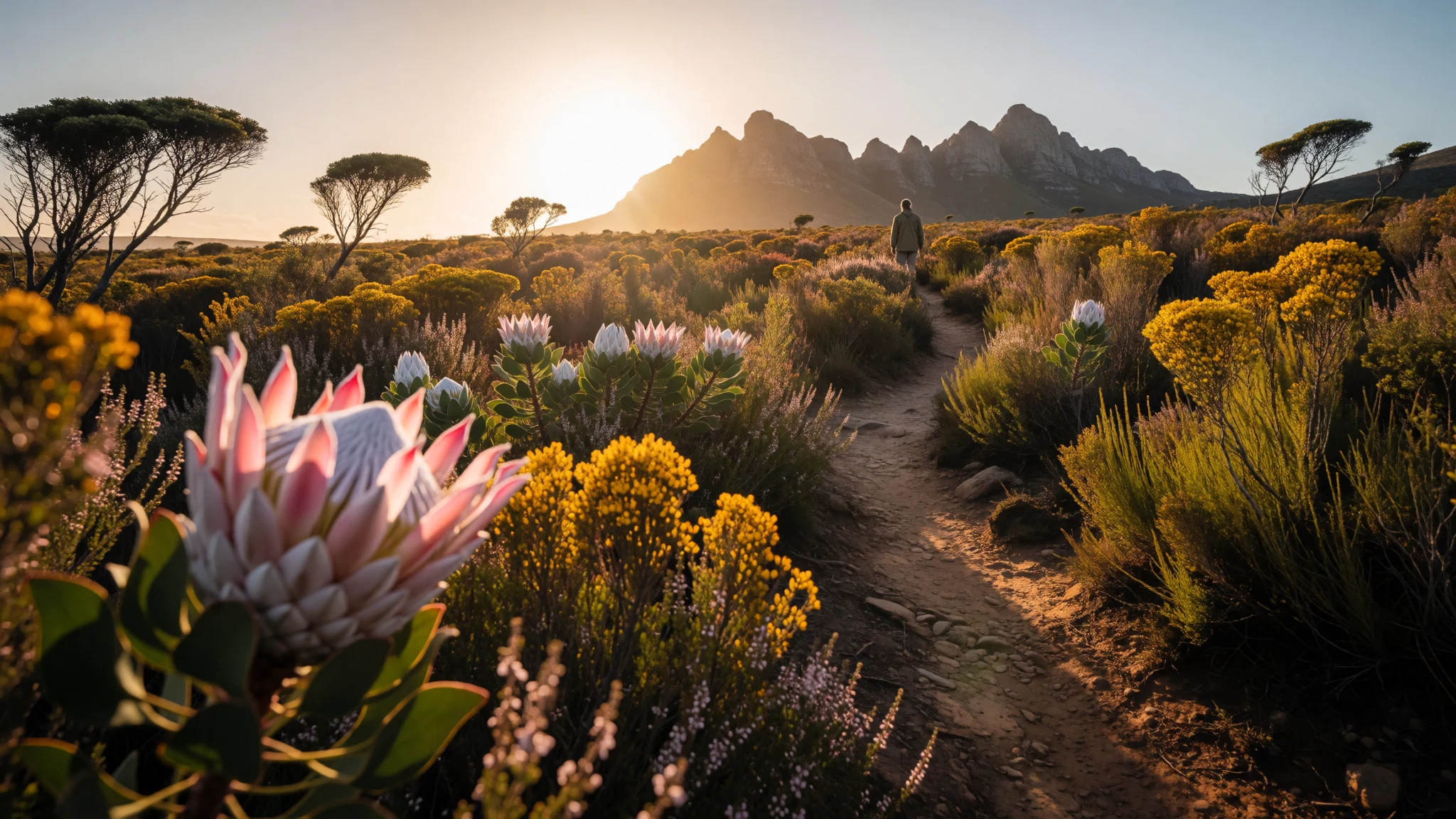
Go for a whole floral kingdom compressed into a relatively small patch of South Africa, where fynbos shapes the landscape.
The place
The Cape Floristic Kingdom sits near the southern tip of South Africa, and it’s known for one big thing: botanical richness. It’s one of the Earth’s floristic kingdoms, and in this case the whole kingdom is represented by a single floristic region—the Cape Floristic Region—centred in the Western Cape and stretching eastward into the Eastern Cape.
This area is closely associated with fynbos, a Mediterranean-type shrubland that evolved to cope with a landscape shaped by seasonal weather and recurring fire. Instead of “forest” in the usual sense, the vegetation here is often low, dense, and colourful, with many plant species found nowhere else. That endemism is the point: the Cape’s flora is not just diverse, it’s locally unique.
For travellers, the real payoff is that the scenery changes as the terrain and rainfall patterns shift—coastal edges, mountain slopes, and inland valleys can all feel like different worlds. The climate is also a big clue to what’s happening on the ground. Much of the region sits inside South Africa’s winter-rainfall zone in the west, then transitions as you move east towards summer rainfall.
Practically, the Cape Floristic Kingdom is best approached as a nature and landscape experience rather than a single “site”. Expect drives, short walks, and stops that make sense based on flowering seasons, recent burns, and the mood of the day—often with the ocean wind doing its own version of field research.
Its story
The Cape Floristic Kingdom earned its reputation because it’s an ecosystem that plays by its own rules—and it’s legible once you start looking. The shrubs and flowers don’t just decorate the hills; they respond to the Cape’s climate and to fire, which is a recurring part of how fynbos maintains itself. After a burn, vegetation patterns reset, and over time the landscape takes on a new look.
That rhythm is one reason botanists and photographers keep returning. In the Cape, plant diversity isn’t evenly spread like a carpet. It’s patchy, tied to local conditions: altitude, slope angle, soil, and how close you are to the ocean’s moderating influence. The result is a mosaic, where two nearby viewpoints can show very different plant communities.
There’s also a human angle, because the Cape’s natural heritage has value beyond science. The economy of fynbos-related products (including wildflowers) and eco-tourism is part of why conservation gets attention in the first place. It’s not only about protecting something “out there”, but about maintaining a living system that people can benefit from in sustainable ways.
For visitors, the story translates into small observations. Watch how vegetation changes from coast to higher ground. Notice the difference between areas with recent fire signals and longer-unburnt patches. And when crowds show up around obvious routes, it’s often better to spend time slightly off the main loop—because the Cape rewards wandering, not just checking boxes.
What to see
- Fynbos landscapes across the Cape Floristic Region — Western Cape and Eastern Cape transition
Fynbos isn’t a single “look”; across the Cape Floristic Region, shrubland forms vary by terrain and rainfall. Walks on hillsides and coastal slopes show different textures of vegetation and seasonal flower colour.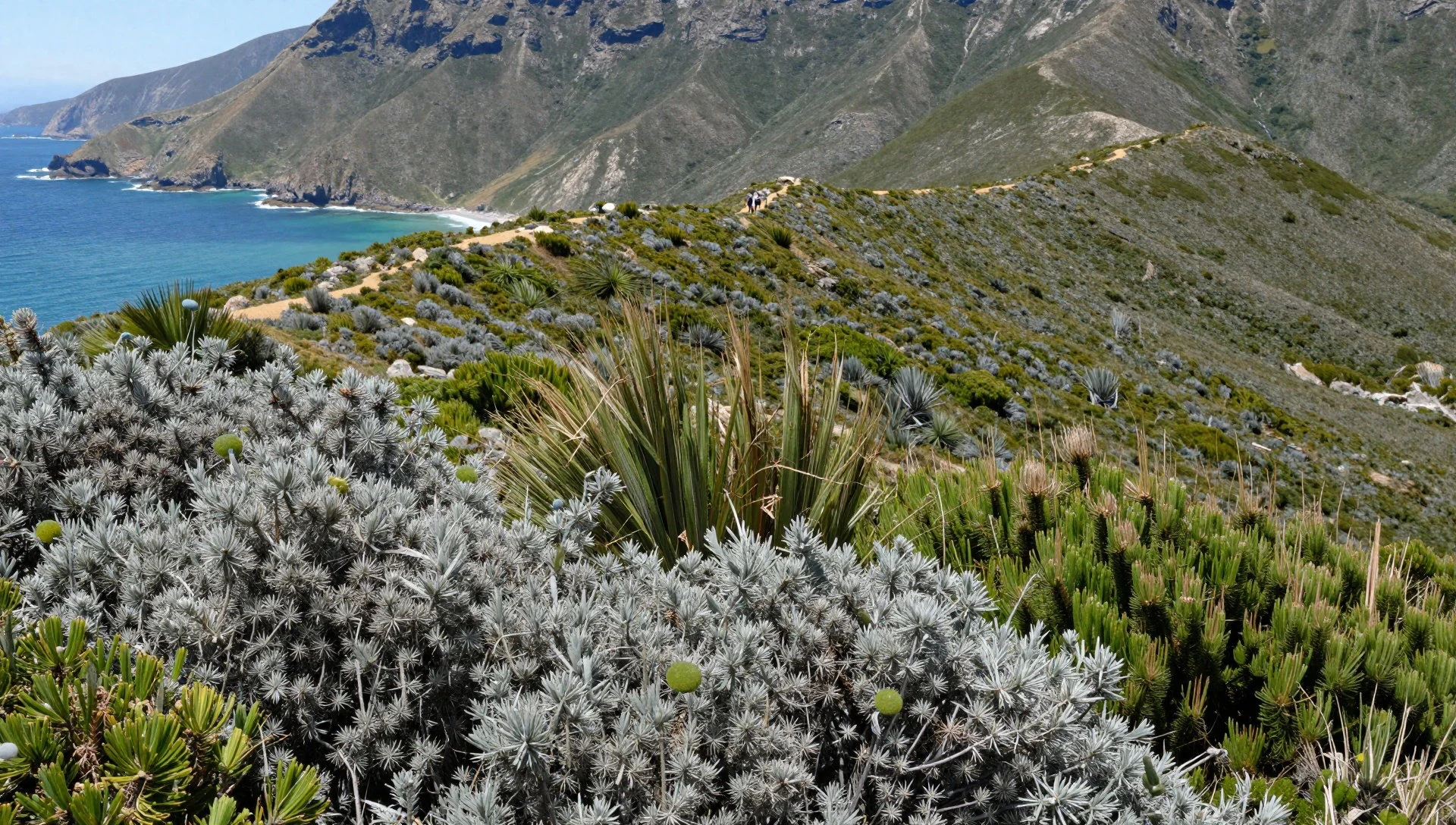
- Fire-shaped regeneration in fynbos — Selected reserves and mountain slopes
In the Cape, fire is part of the ecological story. Regrowth patterns after a burn can look distinctly different from long-unburnt areas, giving the landscape a visible cycle rather than a static “wild”.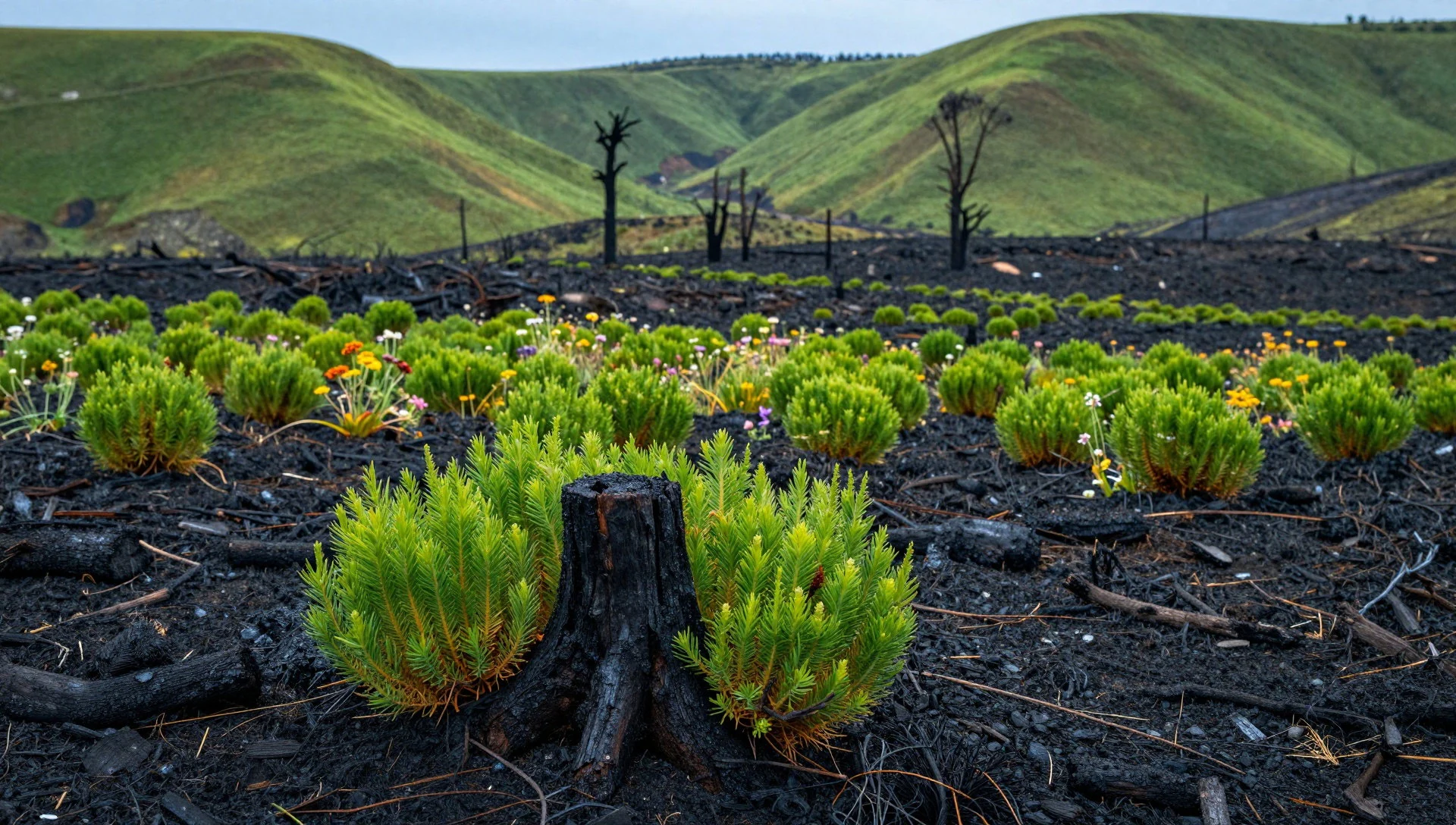
- Cape Peninsula vegetation variety — Cape Peninsula
Along the Cape Peninsula, plant communities shift with exposure to wind, salt, and terrain. Even within a limited area, you can spot different vegetation types that reflect microclimates and local soils.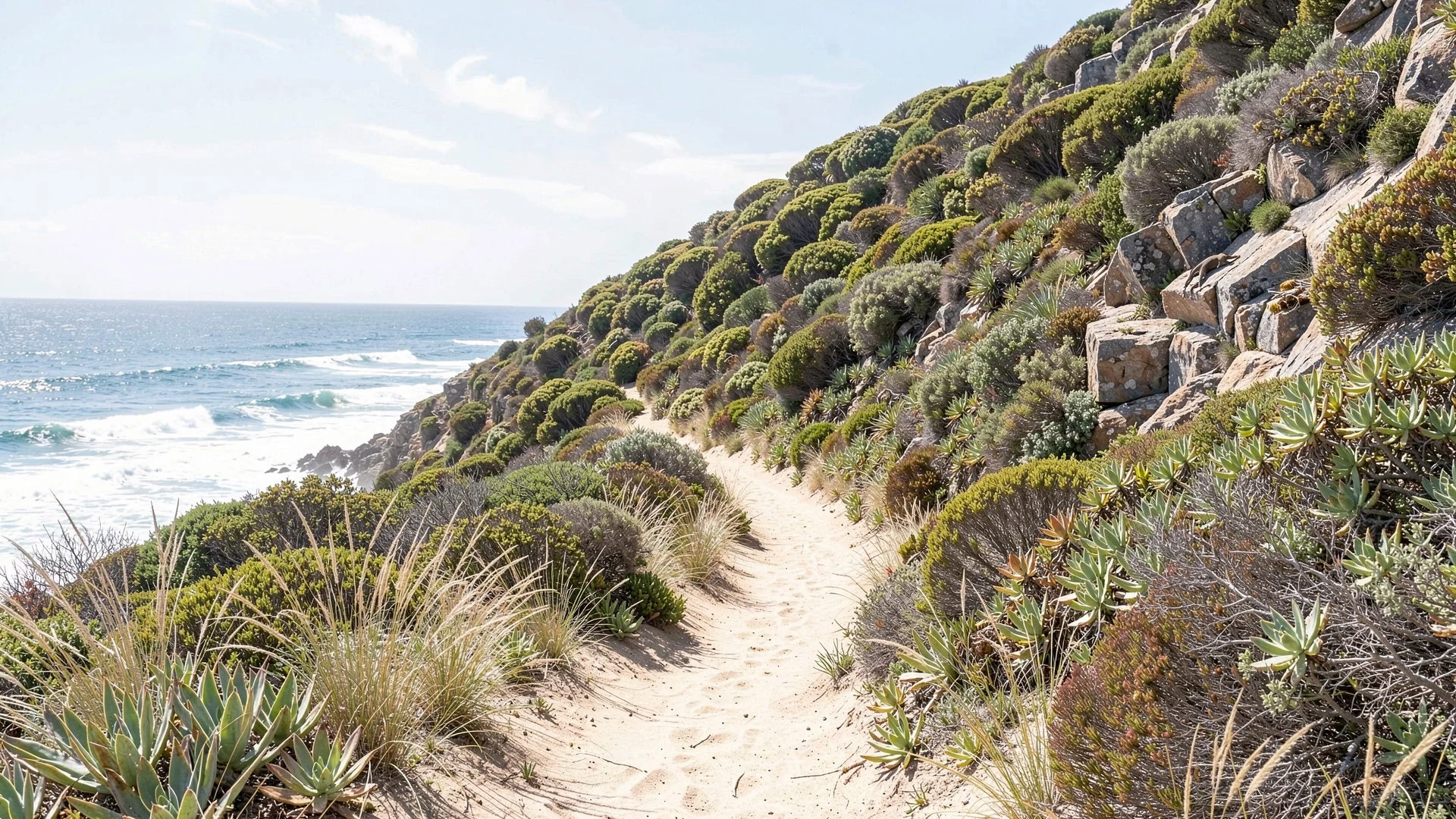
- Greater Cape Floristic Region from above — Western Cape and wider Cape region
From satellite views, the Cape Floristic Region reads like a textured patchwork. The imagery helps make sense of how the landscape is distributed across Western Cape and beyond, rather than being one uniform green.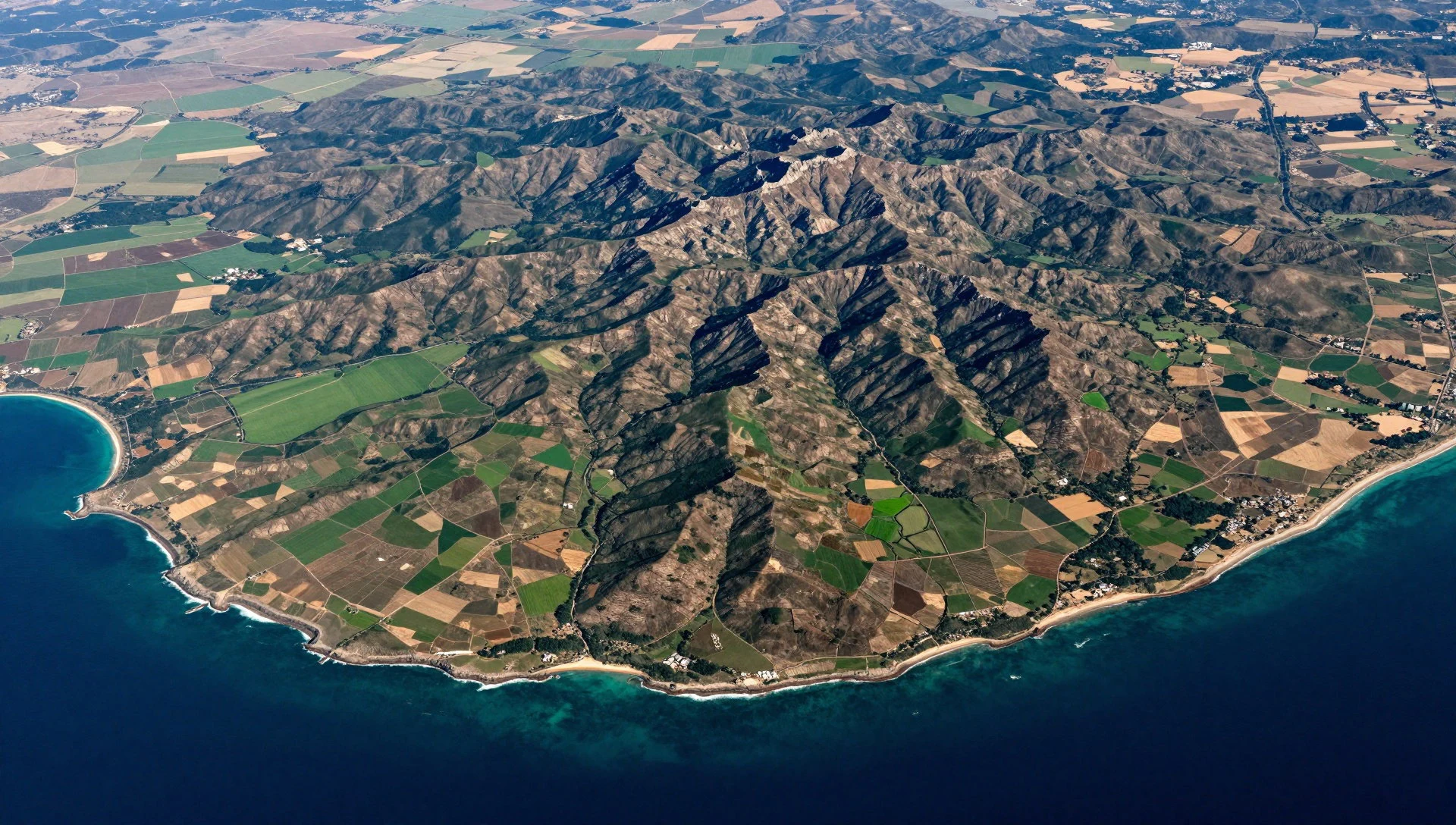
- Cape Town vegetation-type mapping — City of Cape Town
Vegetation maps over the City of Cape Town show how many natural vegetation types sit inside a relatively compact urban-and-coastal area. It’s a useful guide to why certain hills feel wilder than others.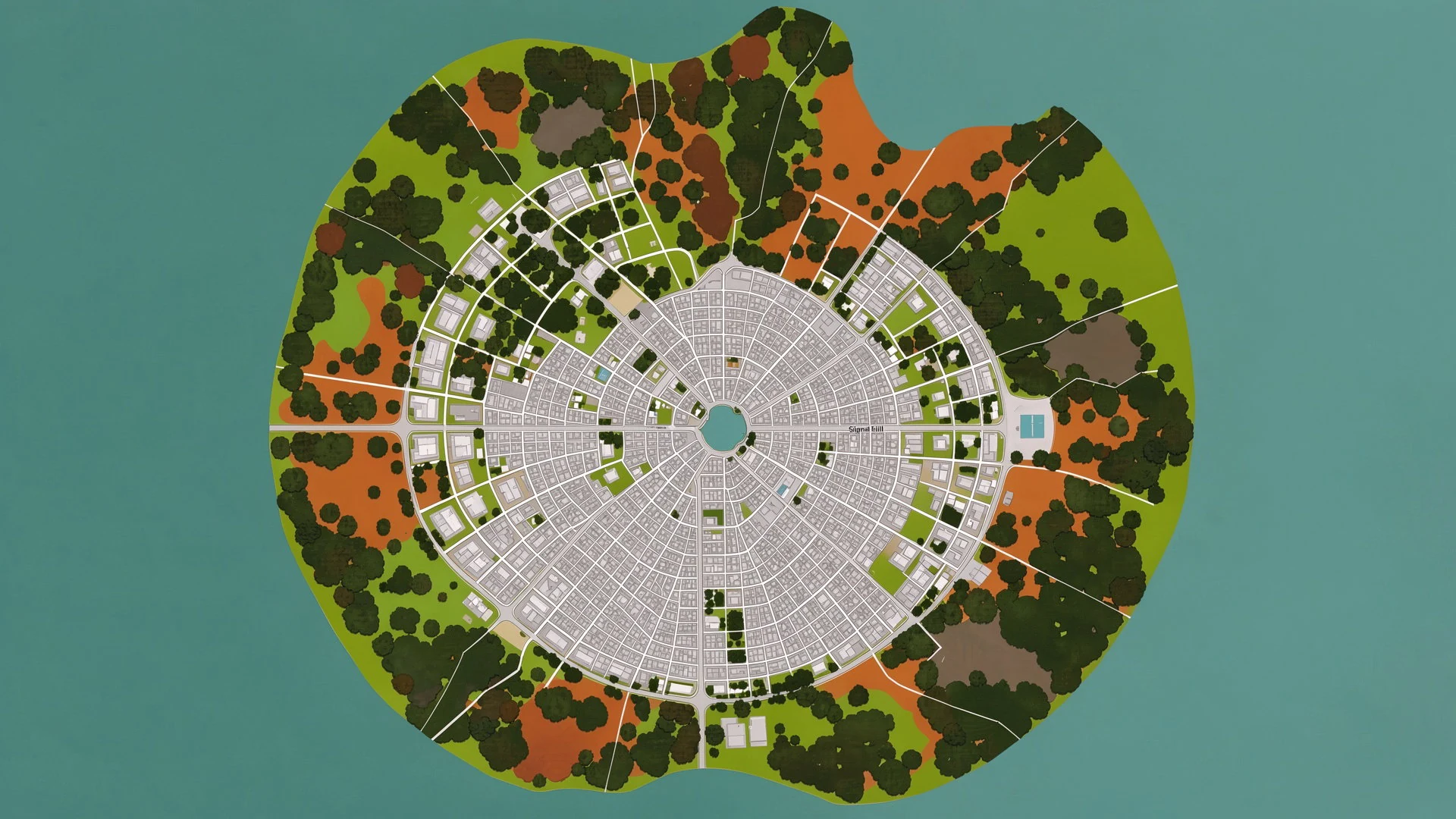
Culture
The Cape Floristic Kingdom is a conservation-minded destination because the flora it protects is so locally specific. Fynbos ecosystems are adapted to fire and seasonal rainfall, so management decisions matter: different areas recover on their own timelines, and “leave it alone” policies help maintain ecological balance.
For visitors, the culture here is about noticing without disturbing. When walking through shrubland, stay on established paths where possible, because the vegetation is delicate and the ground can be easily damaged. If an area is marked after a burn, it often looks raw—respect that it is part of a living cycle rather than “unfinished” nature.
Also, keep expectations grounded. Some viewpoints are busy at peak times in the Western Cape, especially around coastal routes and well-known trailheads. Going early usually helps, but even then, wildlife and plants aren’t “performance”: you’ll get better results by moving slowly and letting the landscape set the pace.
Where photography is concerned, treat people and sensitive habitat as equally important. Don’t trample to get a shot, and avoid handling plants or collecting “souvenirs”, even when something looks common.
Visitor etiquette: stay on marked paths, don’t pick plants or step into regenerating fynbos, and keep voices low in reserve areas.
What to wear
Cape Floristic Kingdom travel is less about fashion trends and more about being prepared for Mediterranean-type weather and scrubby terrain. Traditional dress in South Africa varies by community and event, but in the Cape-region context, what visitors often see locally is everyday clothing that leans practical: breathable layers for sun, and a light outer layer for wind.
What people wear now: in and around Western Cape nature areas, comfortable trousers or leggings, trainers or grippy walking shoes, and a hat are common. Layers matter because coastal breezes can turn warm afternoons cool quickly.
What a visitor should wear: for walks through fynbos, choose long trousers that protect from scratchy shrub edges, and footwear with decent grip for uneven ground. Bring sunglasses and sunscreen for bright days, plus a light rain layer in shoulder seasons because coastal weather can shift fast. If visiting viewpoints near busy trailheads, keep clothing modest enough for any informal cultural spaces encountered along the way.
Finally, pack a small bag for essentials: water, a sun layer, and a dry spare top—because the terrain makes it easy to underestimate how much the sun and wind can wear down an afternoon.
What to eat
- Fresh bread and pastries at morning markets — Cape Town-area markets
In Cape Town and nearby town centres, morning markets and deli-style stalls often have fresh bread, koeksisters, and pastries. It’s a simple way to start warm before heading out into cooler coastal morning air.
- Cape-style braai (grilled meat) — Local braai spots and casual eateries
Many travellers eat Cape braai-style grilled meat—often served with salads and vegetables—at family-run spots and casual eateries. The best results come from places where locals actually queue for the fire-grilled plates.
- Roasted vegetables and salads in casual cafés — Café strips near trailheads and waterfront areas
After hikes, casual cafés commonly do roasted vegetable sides, fresh salads, and hearty bowls that match fynbos-flavoured landscapes without feeling heavy. Look for places near popular trailheads and waterfront promenades. - Seafood by the coast — Coastal restaurants in the Cape Peninsula area
Coastal areas around the Cape frequently offer seafood dishes—think grilled fish, calamari, and simple sides—because it’s part of everyday dining. The most reliable strategy is to choose a sea-facing eatery rather than a specific menu myth.
Plan it
Best time. March–April and October–November are good for enjoying the region’s flowering season energy and generally calmer travel days; June–August are the wettest and coolest months, while summer months (December to February) are warmest and drier.
How long. 3–4
Getting there. Fly into Cape Town International Airport, then drive to reserve areas in the Western Cape; for eastward stretches into the Eastern Cape, continue by road after reaching the Cape Town area.
Budget. mid
Tips
- Start drives early to avoid midday glare and heat on open viewpoints.
- Build routes around the type of day: coastal wind for viewpoints, sheltered valleys for easier walks.
- If an area is after a burn, expect it to look different—aim to see the recovery cycle rather than hunting for “perfect” scenery.
- Carry water and sun protection; shrubland trails can be deceptive on how quickly you warm up.
- Keep some cash for smaller stalls at markets and roadside stops.
Etiquette
- Stay on marked paths and avoid stepping into sensitive fynbos patches.
- Don’t pick plants or collect seeds as souvenirs.
- Keep noise down near reserve areas so wildlife and other visitors can enjoy the landscape.
Nearby
Sources
- Wikidata Q1974274 (CC0)
- Wikipedia (rev 1379570339) — Cape Floristic Region (CC BY-SA 4.0)
- Photo photos/01-floraregio-van-de-kaap.jpg (CC BY 3.0)
- Photo photos/02-bioscape-vir-2023275-lrg-south-africa.jpg (Public domain)
- Photo photos/03-bioscapeviz-lrg-south-africa.jpg (Public domain)
- Photo photos/04-flora-at-cape-peninsula.jpg (CC BY 3.0)
- Photo photos/05-fynbos-18-months-after-fire-360-degree-photo.jpg (CC BY-SA 4.0)
- Photo photos/06-cape-town-vegetation-types-1-original-vegetation.jpg (CC0 1.0)
- Photo photos/07-cape-towns-surviving-vegetation-types.jpg (CC0 1.0)
- Photo photos/08-global-200-fynbos.png (CC BY-SA 4.0)
- Wikivoyage (CC BY-SA 4.0)


