Cango Caves
Cango Caves, South Africa
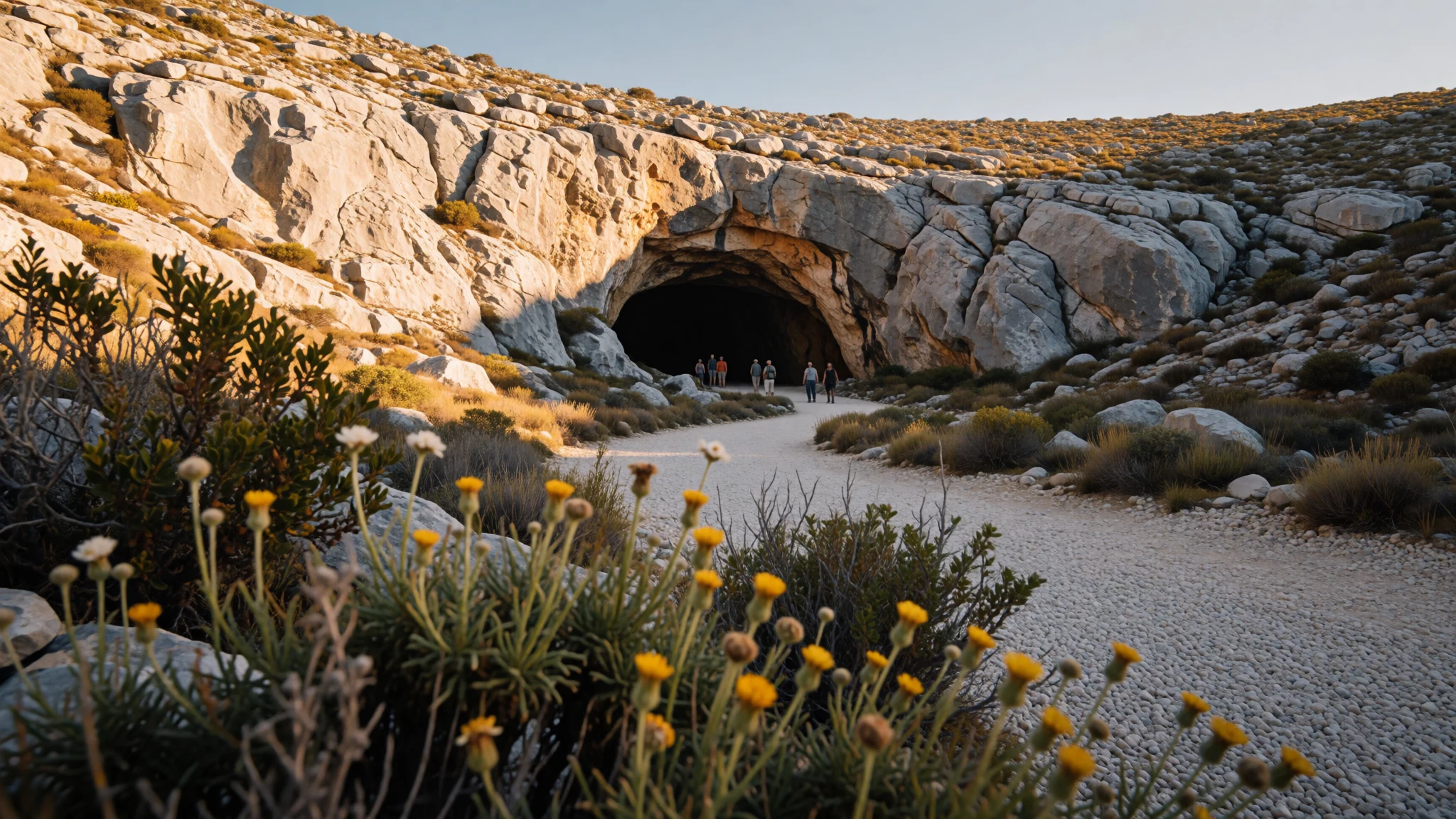
Cango Caves, near Oudtshoorn, offers a guided walk through large limestone halls beneath the Swartberg, with ostrich farms and the scenic R62 close by.
The place
The Cango Caves lie in old limestone at the foot of the Swartberg range, a short drive north of Oudtshoorn in South Africa's Western Cape. The town sits in the Little Karoo, a dry inland region, and the caves are about 660 m above sea level. The system runs for more than 4 km of tunnels and chambers, yet only around a quarter is open to the public, and always with a guide. That limit shapes the visit: the halls on show are lit and walkable, while the rest stays dark and is left mostly to specialists.
Oudtshoorn itself is the base. It was founded in 1847, and water was always scarce, so growth came from an unlikely source: ostriches. Feather booms in the nineteenth and early twentieth centuries made the town rich, and a few grand buildings from that era still stand. Today tourism and ostrich farming carry the local economy, and with about 67,000 people the town is the largest in the Little Karoo.
The caves are roughly fifteen minutes by road from town, and most people combine them with a drive along the scenic R62 or the Garden Route. Tour groups are common, especially in school holidays, and the surrounding country is open, dry and hot in summer. Underground it is a different world: cool, damp air, curtains of dripstone and halls that echo. Most visitors give the caves half a day and spend the rest at a farm, the museum or a mountain pass.
Its story
The Cango Caves have a human history far older than the farmers who gave them their modern reputation. Paintings and artefacts show that people used the caves over a long stretch of prehistory, in the Middle and Later Stone Ages. In 1930 an archaeologist from the University of Cape Town, A.J.H. Goodwin, dug a test pit and found stone tools and other traces of that use.
The modern account begins in 1780, when a local farmer, Jacobus Van Zyl, was lowered through an opening and found a chamber about the length of a football pitch. It carries his name today as Van Zyl Hall. A second chamber followed in 1792, and the caves soon drew visitors. In 1829 Dr Andrew Smith came, drawn by scientific curiosity.
Legend adds a deeper strand. Johnny van Wassenaer, the first official guide, is said to have spent 29 hours pushing on in 1898, following an underground river, and to have reckoned he ended 25 km from the entrance and 275 m below ground. Nobody has confirmed the journey, though explorers keep finding further passages that make it sound less far-fetched.
Today the caves fall under a 1999 ordinance, and the municipality of Oudtshoorn runs them from day to day.
What to see
- Cango Caves — North of Oudtshoorn, Swartberg foothills
The main attraction is the guided walk through the lit halls, including Van Zyl Hall. Two tours run on most days: a standard tour of about an hour, and an adventure tour of about an hour and a half that involves crawling and climbing by small lights. The narrowest gap on the adventure route is just under 15 cm to exit. - CP Nel Museum — Oudtshoorn town centre
Oudtshoorn's town museum explains how the ostrich trade built the place, with displays on the feather booms and on everyday Little Karoo life in the Victorian era and early twentieth century. It makes a sensible stop before or after the caves, especially in midday heat, and gives context for the grand buildings along the town's streets. - Highgate Ostrich Farm — South-west of Oudtshoorn
Highgate is listed as the largest farm in the area, south-west of town. Visits follow a set pattern shared by most farms: a guided tour on incubation and ostrich products, a chance to feed the birds, and a gift shop. Remember these are working farms with domestic birds, not wild ostriches, and some visitors find that uncomfortable. - Cango Wildlife Ranch — Between Oudtshoorn and the caves
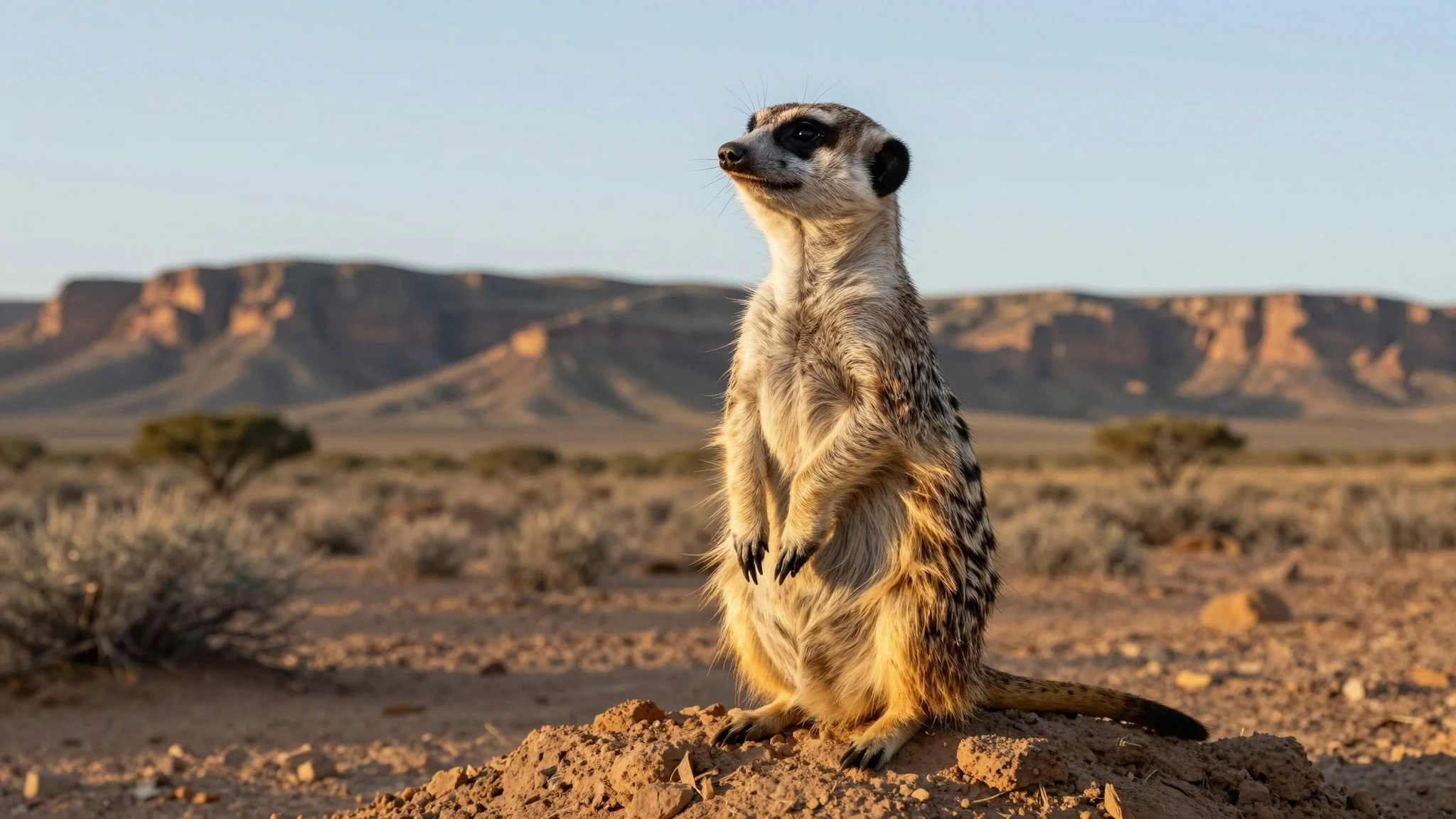
Cango Wildlife Ranch, between the town and the caves, breeds reptiles and wild cats for conservation. Some enclosures can be entered where possible, which makes it a hands-on stop for families. It is a commercial attraction, so ask about how animals are kept and which encounters are offered before choosing. - Meerkat Adventures — Countryside south-west of Oudtshoorn
Meerkat Adventures takes visitors to sit a few metres from a wild family of meerkats, led by a local guide with a reputation for enthusiasm. The animals are wild, so sightings depend on the weather and the colony's mood. Outings are usually timed around the animals' waking hours, so expect an early start.
Culture
Cango Caves sit in the Little Karoo, a region shaped by farming, Afrikaans-speaking communities and the memory of the feather booms. The 'feather barons' who profited then left behind showy town houses, and Oudtshoorn still calls itself the ostrich capital of the world. That pride runs through the museum, the farm tours and the menus.
The best-known cultural event is the Klein Karoo National Arts Festival (Klein Karoo Nasionale Kunstefees, KKNK), held in Oudtshoorn in March–April. It fills the town with theatre, music and visual art, and beds are scarce while it runs.
The caves add an older layer. Paintings and artefacts show that people used them through the Stone Ages, and the tours today lean on storytelling as much as geology: guides tell of Van Zyl's descent, of early explorers and of the long-walk legend, each with a showman's timing.
Daily life outside town is unhurried. Farm stalls and roadside stops along the R62 are where conversation happens, and a greeting and a question about the road or the weather is the usual opening. Braais, meaning outdoor grills, are the standard way to share a meal, and a meal on a farm often runs long.
Follow your guide's instructions underground and never touch the dripstone, because skin oils stop the formations growing and leave marks that do not fade.
What to wear
Cango Caves country has no single regional costume, and the story of its dress begins with the birds. Ostrich feathers from the Little Karoo trimmed fashionable hats, fans and boas abroad during the feather booms, which is how local farmers grew wealthy. Rural Afrikaans communities historically wore sturdy cotton, wool and khaki, with the kappie, a cotton bonnet, and veldskoen, soft leather shoes, as familiar pieces. Across South Africa, beadwork and printed cloth appear at weddings and festivals, and can be seen in museums and craft stalls.
Everyday wear in Oudtshoorn is practical: shorts or jeans, cotton shirts, caps or wide-brimmed hats, and closed shoes or sandals on farms. Smarter dress turns up at festival evenings and weddings, but nobody expects formality. Ostrich leather and feather goods are sold in farm shops and are the ordinary local souvenir.
For a visit, summer calls for light cotton, sunscreen, a hat and water, because the Little Karoo is dry and hot. Underground it is cooler and damp, so a thin layer helps. Visitors should wear closed shoes with good grip, since cave floors are uneven and can be slippery. Those taking the adventure tour should choose clothes that can get dirty and fit close, with no dangling straps or bags. Winter mornings can be cold, so a fleece is useful. No dress code applies at the caves.
What to eat
- Ostrich fillet — À la carte restaurants in Oudtshoorn and restaurants at the show farms
Lean, dark red meat that cooks like beef and is best left pink. Oudtshoorn is the obvious place to try it, grilled as a steak, in a stew or as carpaccio. Some cooks add peppery or fruity sauces. - Venison — Restaurants in town that specialise in ostrich and venison
Game meat such as kudu or springbok appears on menus beside ostrich, often as a slow-cooked stew or a seared loin. The flavour is richer and leaner than farmed beef, and portions are generous. Ask what is in season. - Braai with boerewors — Ostrich farms with braai areas, and guest farms around Oudtshoorn
South Africa's outdoor grill: meat over wood or charcoal, typically with boerewors sausage, lamb chops and a side of pap or salad. Many ostrich farms offer braai facilities, so a meal can follow a tour. It is a social meal, usually unhurried. - Koeksisters — Farm stalls along the R62 and town bakeries
Plaited dough fried and soaked in cold syrup, crisp outside and sticky inside, are an Afrikaans favourite. A spiced, coconut-dusted cousin comes from Cape Malay cooks. Both are very sweet, so share a few. - Malva pudding — Restaurants and guest farms in and around Oudtshoorn
A warm, spongy baked pudding with apricot jam, soaked in a hot cream sauce, served as the finish to a farm or restaurant meal. It is rich, so it is usually shared. Custard or ice cream often goes alongside.
Plan it
Best time. March–May and September–October are the comfortable months: summer afternoons in the Little Karoo are hot, though the caves stay cooler underground, and winter mornings can be cold. March–April brings the KKNK arts festival, so book beds early.
How long. 1–2
Getting there. Oudtshoorn has no airport. The nearest are George and Port Elizabeth (Gqeberha), both domestic only, and Cape Town for domestic and international flights. From there go by bus, minivan taxi from George, or hire car: the R62 from Montagu is scenic, and the road from George over the Outeniqua Pass has fine views. The caves are about 15 minutes' drive north of Oudtshoorn.
Budget. mid
Tips
- Check the official site, https://www.cango-caves.co.za, for tour times and prices, and book ahead in school holidays and festival weeks
- Choose the standard tour if anyone is claustrophobic, has limited mobility or dislikes crawling; the adventure tour includes very tight gaps
- Go early to avoid both the heat and the tour groups
- Carry water and sun protection for the farms and the drive, and bring cash and a card for farm stalls
Etiquette
- Stay with your guide and keep to the marked paths underground
- Do not touch the dripstone formations
- Ask before feeding or riding animals at the farms and follow handlers' instructions
Nearby
Sources
- Wikidata Q1033211 (CC0)
- Wikipedia: Cango Caves (rev 1364806946) (CC BY-SA 4.0)
- Wikivoyage: Oudtshoorn (rev 5413564) (CC BY-SA 4.0)
Wildlife
- Meerkat (animal)
The meerkat is a small mongoose with big eyes, a pointed nose, long legs and a faintly striped, grey-to-sandy coat, built for digging in dry country. Visitors can spend time with a meerkat family in their natural Karoo home through the Meerkat Adventures experience, watching how the family lives together and searches for food. Keep a respectful distance, stay quiet and move slowly so they carry on naturally, and never feed them; their strong front claws mean they can find their own meals.