Cape Point
Cape Point, South Africa
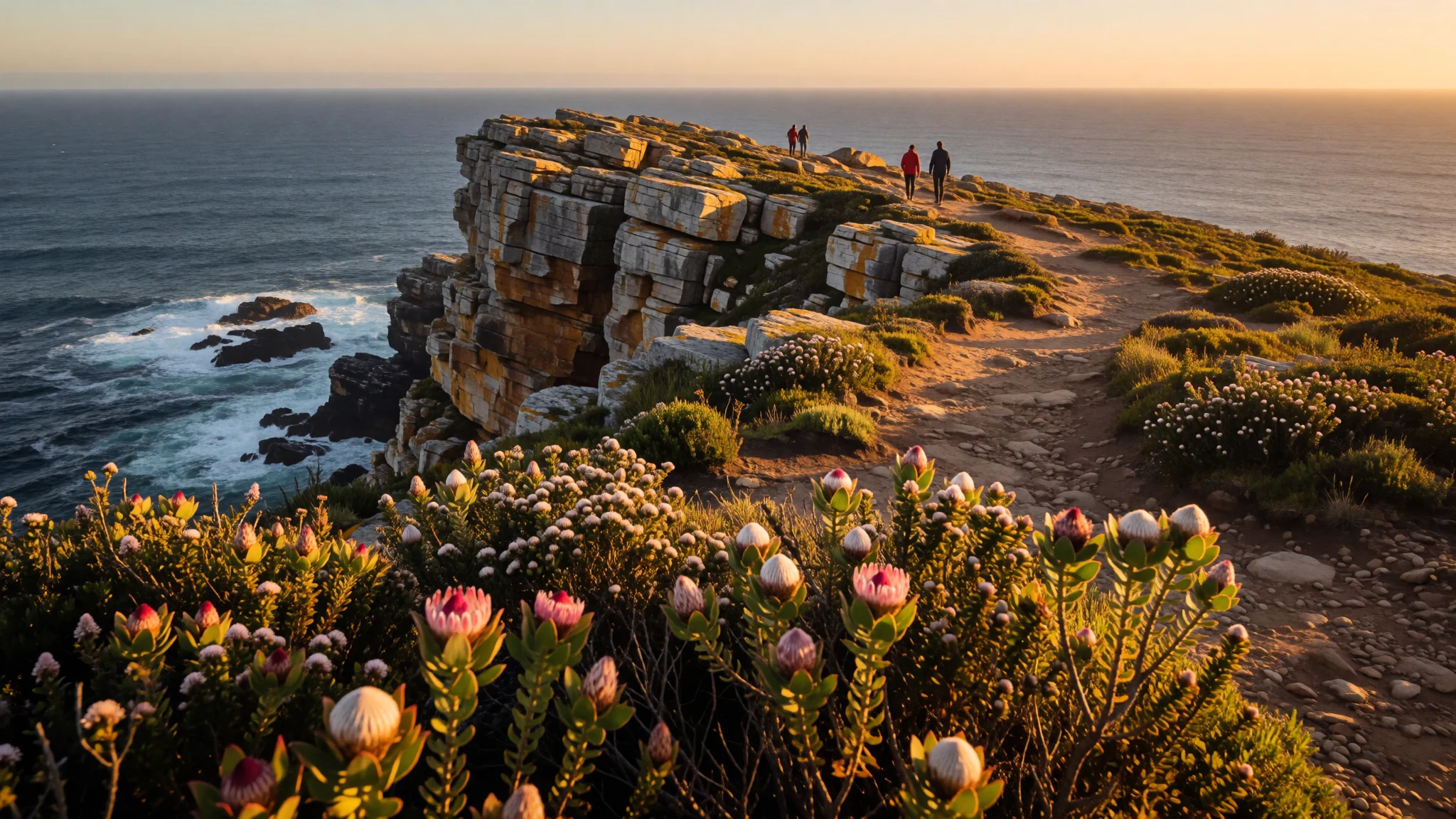
Cape Point is a dramatic rocky headland at the end of the Cape Peninsula, where walking, wildlife and wide ocean views come together.
The place
Cape Point is a headland at the south-eastern corner of the Cape Peninsula, in the Western Cape of South Africa. The peninsula is a mountainous finger of land running north to south, and Table Mountain and Cape Town sit at its far northern end. Cape Point itself rises only a little above the sea, with the facts block giving its elevation as 8 m at the listed coordinate, though the cliffs and the ridge behind it feel far higher when the wind is blowing. It is a place of bare rock, low fynbos scrub and constant weather.
The Cape of Good Hope lies a short distance to the west and slightly south, around 2.3 km away, on the peninsula's south-western corner. The two capes are often muddled together, and many visitors assume one of them is the southern tip of Africa. Neither is. That title belongs to Cape Agulhas, roughly 150 km to the east-south-east.
What Cape Point does offer is a clear sense of an edge. Paths lead up to the old lighthouse and along the cliffs, with the sea below on three sides. The Afrikaans name is Kaappunt. Visitors come for the views, for the coastline, and for the feeling of standing at the end of a long road. Expect wind at any time of year, quick changes in cloud and temperature, and a busy car park and viewpoint around midday, especially in the holiday season.
Its story
Cape Point has long been tied to the story of sailing round Africa. Ships heading between the Atlantic and the Indian Ocean had to pass this corner, and the headland, with its cliffs and its tangled weather, became a landmark that sailors knew and feared. Two lighthouses now stand on the ridge above the point. The older one sits high up, and the newer one was placed lower on Dias Point, a change usually explained by the habit of cloud and mist wrapping the upper ridge and hiding the light from ships. The sea here is shaped by two great currents. The Benguela Current brings cold water up the Atlantic side, while the Agulhas Current flows warm along the east coast, and the meeting of the two helps explain the changeable conditions and the rich marine life.
The place also has a scientific side. It hosts one of the research stations of the Global Atmosphere Watch, where the air is measured because it arrives over a long stretch of open ocean. And there is a curious footnote about ice. In the early twentieth century, icebergs from Antarctica were now and then sighted from the point. No reliable sightings have been reported in recent times, which some climatologists connect to global warming. It is a reminder that this headland sits where southern oceans, weather and history all meet, and that the view from it has changed more than the rock has.
What to see
- The old lighthouse — Cape Point ridge
The old Cape Point lighthouse stands on the high ridge, reached by a footpath from the lower station. The climb is short but steep in places and exposed to wind. From the top the cliffs fall away to the sea, and the view of the coast curving north is the one most people photograph.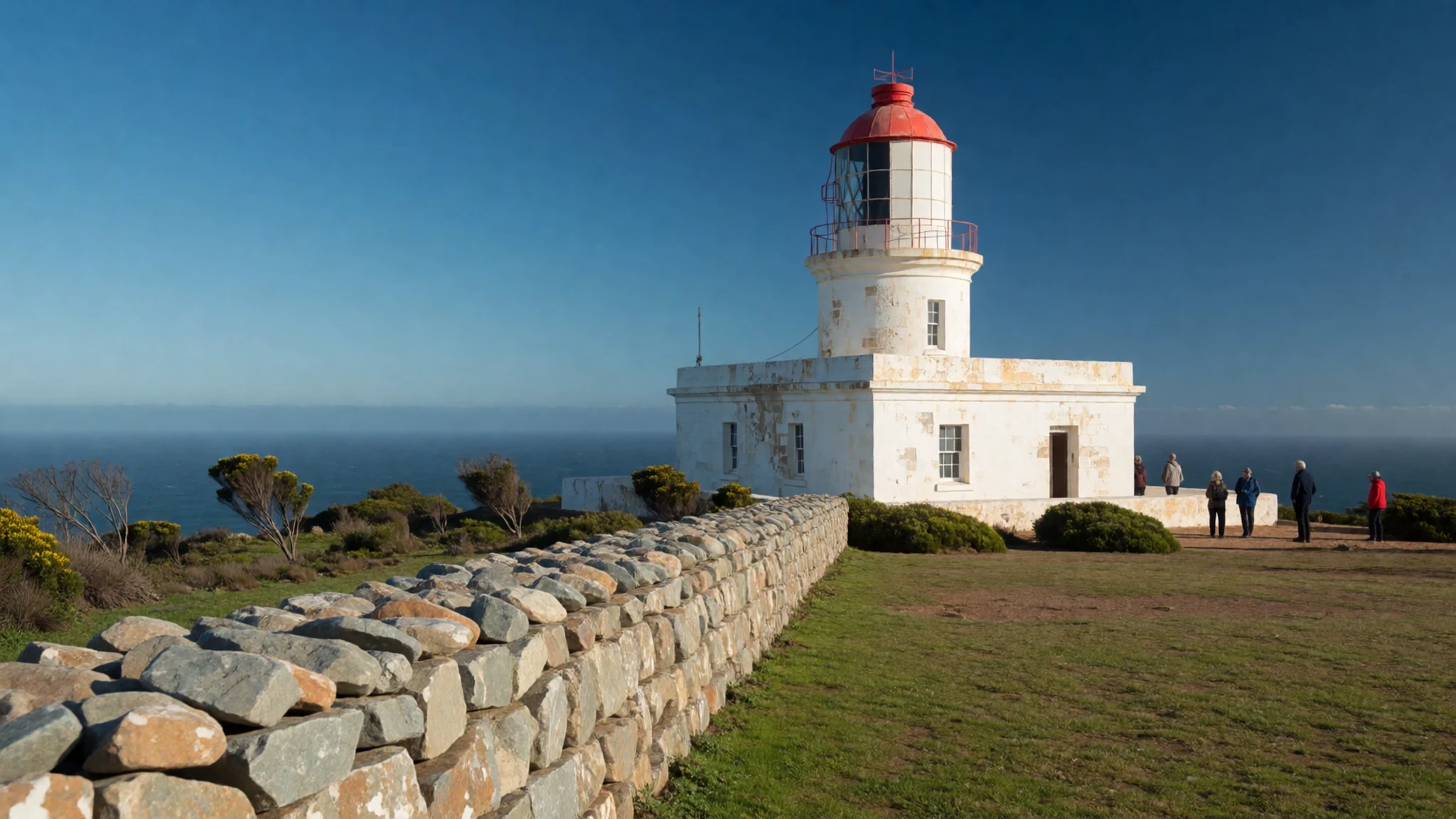
- The newer lighthouse on Dias Point — Dias Point
Lower down, on Dias Point, the newer lighthouse was built where it could be seen from the sea. A path runs out along the cliff towards it, with good views back to the ridge. It is a quieter walk than the climb above, though the wind can be strong near the edge.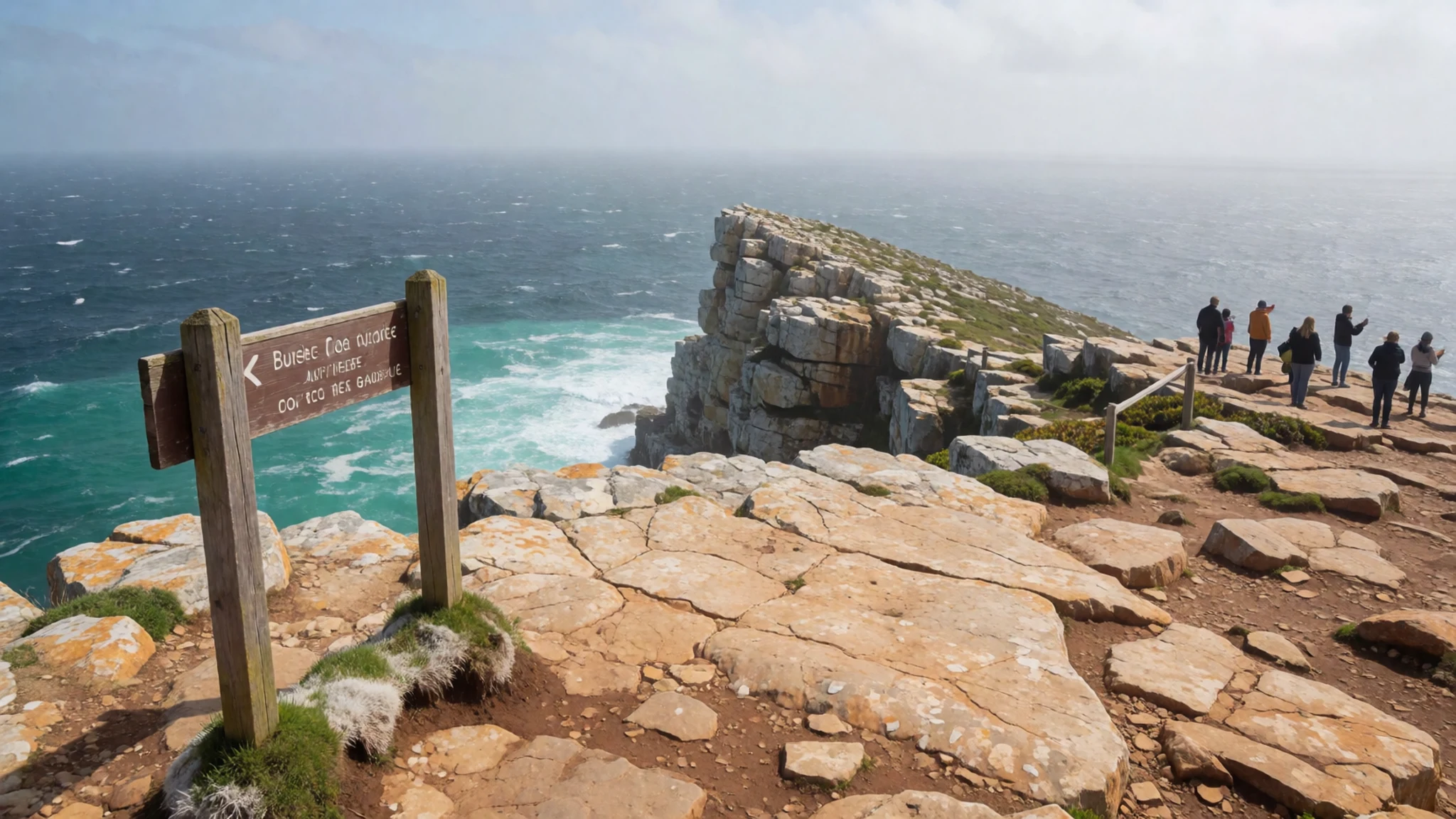
- Cape of Good Hope — South-western corner of the peninsula
The Cape of Good Hope is the rocky south-western corner of the peninsula, about 2.3 km from Cape Point. Visitors come for the signpost photograph, and for the coastal paths that run along the cliffs. It is a good place to see how raw and open the shoreline is.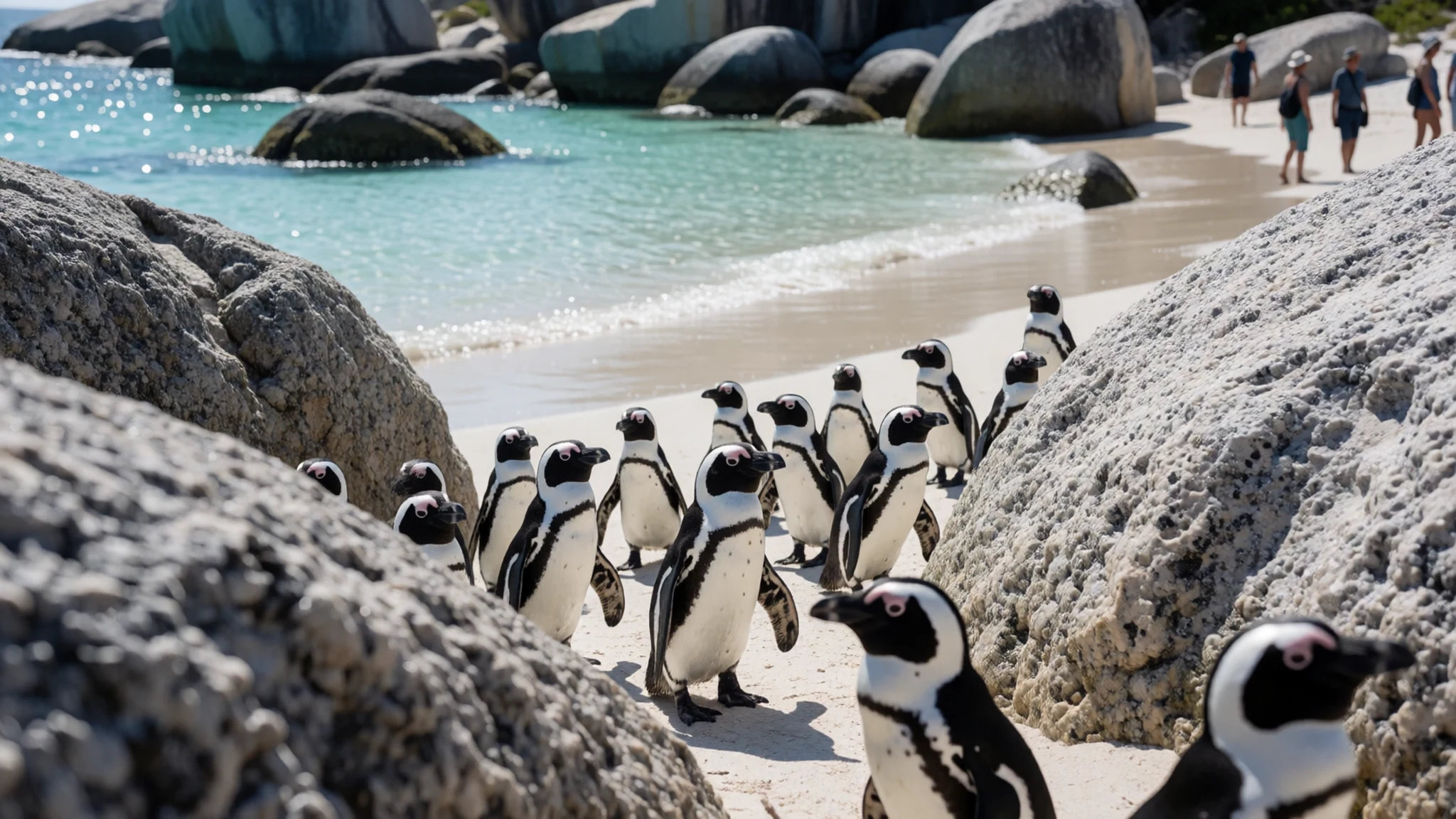
- Clifftop viewpoints — Cape Point paths
The headland is best understood from above, and several viewpoints along the paths give wide panoramas of the cliffs, the sea and the long ridge behind. Early in the day the light is soft and the crowds thinner. Keep back from unfenced edges, as gusts can be sudden.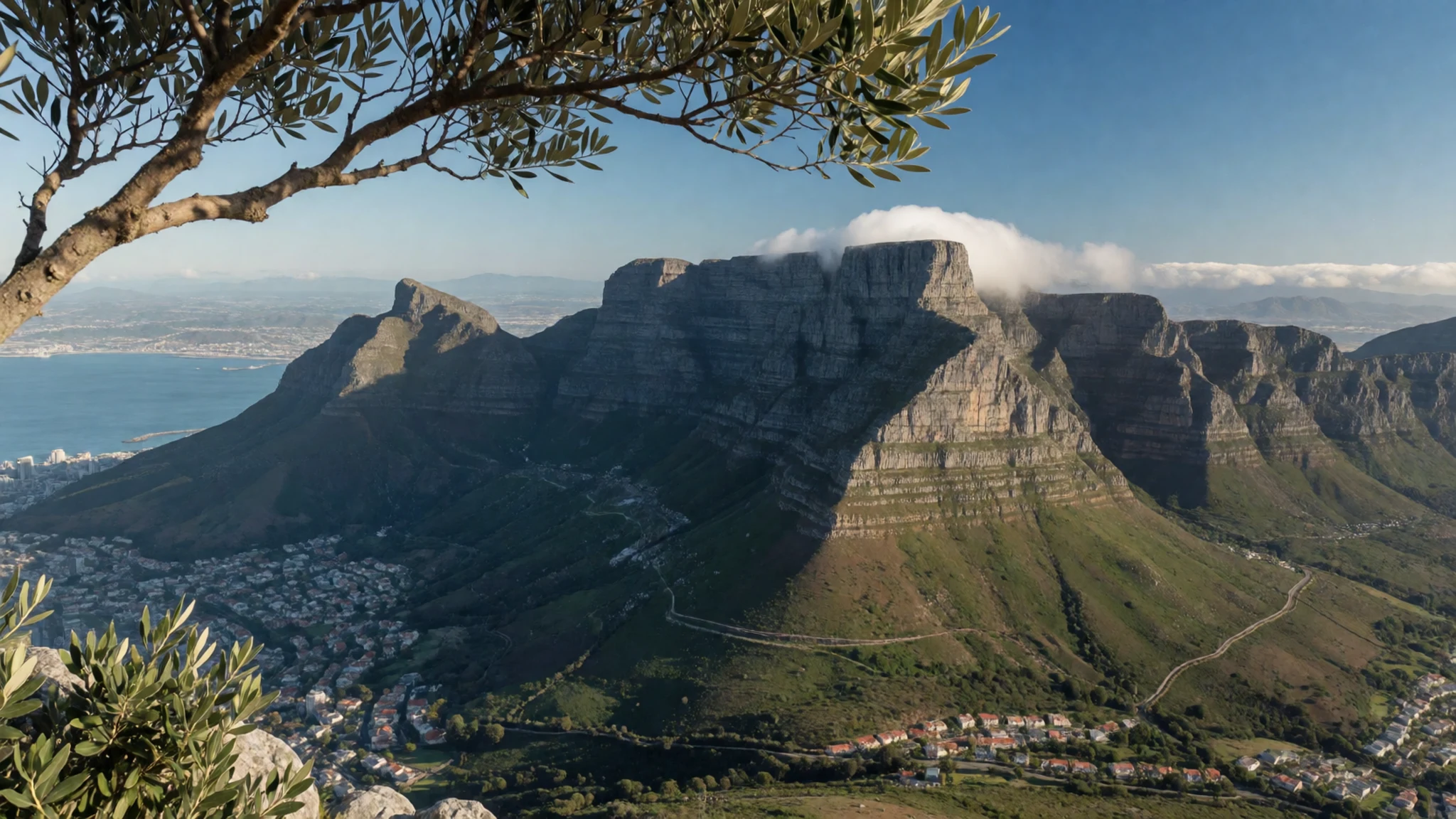
- Boulders Beach penguins — Near Simon's Town
On the way back towards Cape Town, near Simon's Town, Boulders Beach is the usual stop to watch penguins among the granite boulders. Wikivoyage lists it as a highlight of any visit to the Cape of Good Hope area. Go early, as parking and boardwalks fill up.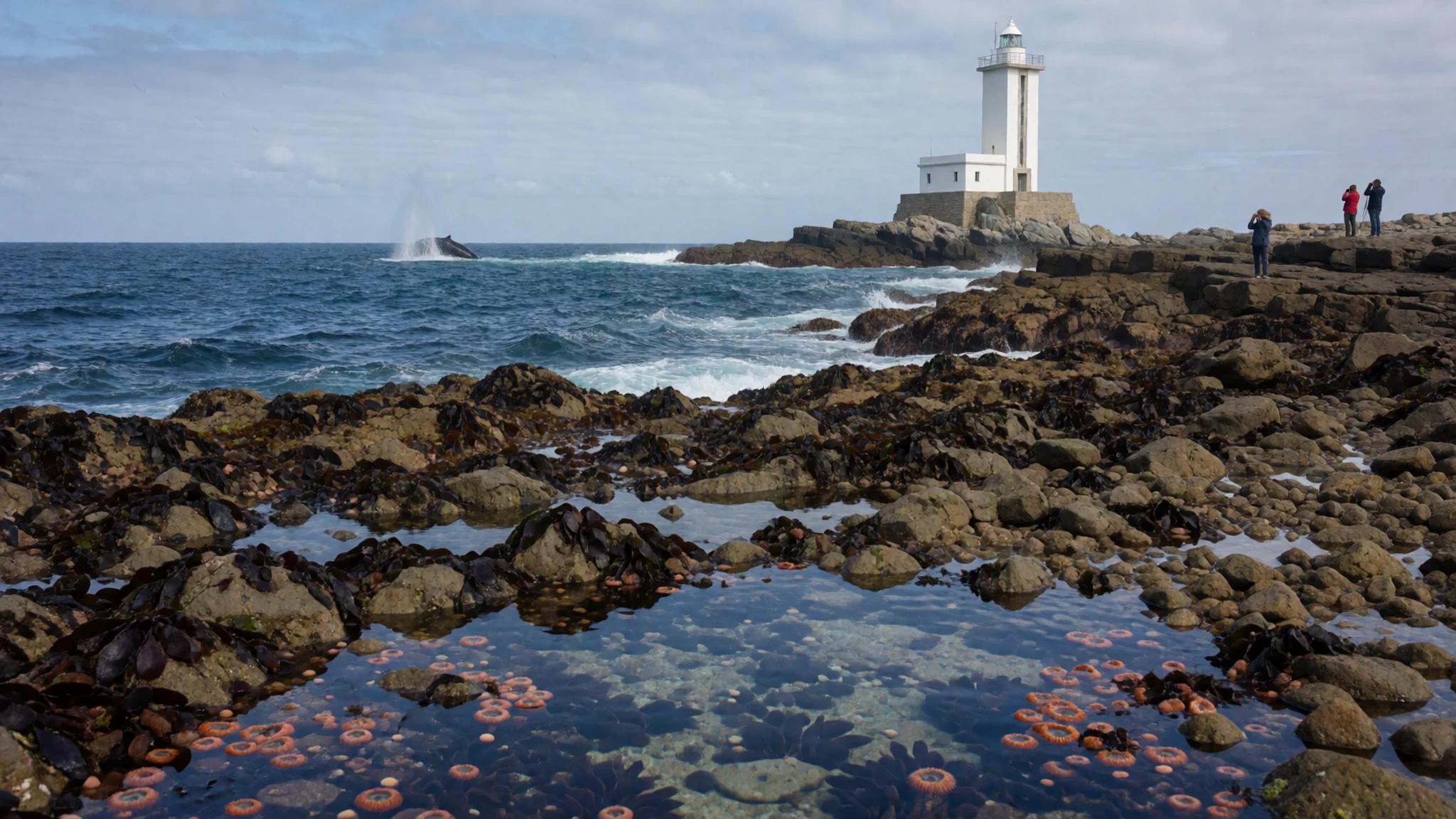
Culture
Cape Point sits inside a landscape shaped by Cape Town's wider story, and the culture around it is that of the Western Cape: a mix of Afrikaans, English and Xhosa speakers, and communities with long roots in the region. Afrikaans names such as Kaappunt are still common on maps and signs, while English is widely used in tourism and everyday life. Visitors will hear several languages in a single day.
The headland itself has a strong maritime character. Its meaning to sailors, as a corner to be rounded with care, still colours how people talk about it, and the lighthouses are treated as local landmarks as much as attractions. Outdoor life matters here: walking, surfing, diving and picnics are part of how people in Cape Town spend weekends, and visitors will often share paths with locals doing the same.
The food and wine culture of the wider Western Cape is also part of the picture, and many people combine a day at the point with a meal by the coast or a trip to the winelands. Conversation is generally relaxed and friendly, and a greeting is expected when dealing with staff, guides or shopkeepers.
Please keep to the marked paths and do not feed or approach the wild animals, including baboons, which can be bold around food and bags.
What to wear
Cape Point has no single traditional dress, because the region is culturally mixed and most daily clothing is modern and practical. Historically, Cape communities have worn a range of garments, from cotton and wool everyday clothes to the printed fabrics and headwraps associated with Cape Malay and other local traditions. These are more likely to be seen at festivals, family occasions and religious events than in a tourist car park, and a visitor should not expect to meet them at the headland.
What people actually wear now is outdoor clothing. Locals heading to the coast dress in layers: a light jacket over a T-shirt, trousers or shorts, and sturdy trainers or walking shoes. Fleeces and windproof shells are common even in summer, because the weather turns quickly. In the city, smart-casual clothing is normal for restaurants and the winelands.
For a visitor, the key is wind and sun together. Bring a windproof layer, a hat that will not blow away, sunglasses and sunscreen. Wear closed shoes with good grip, as paths can be steep, uneven and slippery. Long trousers are comfortable on cooler days, and a warm layer is wise even if Cape Town felt hot that morning. There are no special modesty rules at the headland, though more covered clothing is respectful if you visit a mosque or church elsewhere in the region. Pack a small rucksack so your hands are free on the climb.
What to eat
- Fresh line fish — Harbour and seafront restaurants near Simon's Town
Along the Cape coast, restaurants and harbour-side eateries serve the day's catch grilled or fried, often with chips and salad. Ask what came in that morning. It is a simple, good way to eat after a windy walk.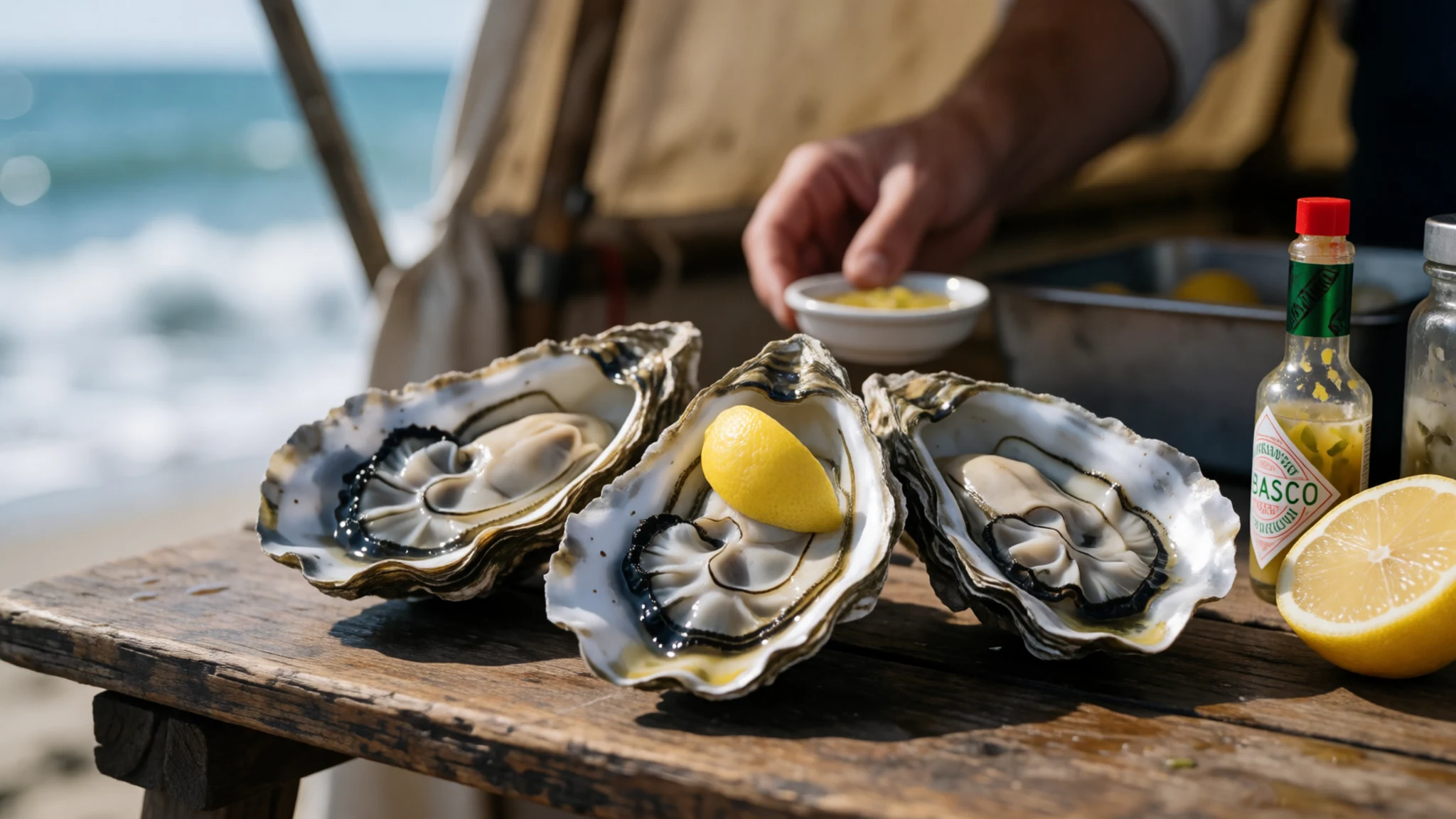
- Oysters — Coastal restaurants along the peninsula
Wikivoyage points travellers to oysters along this coast. They are usually served on ice with lemon, and are best eaten at a coastal restaurant where turnover is high and the shellfish are fresh.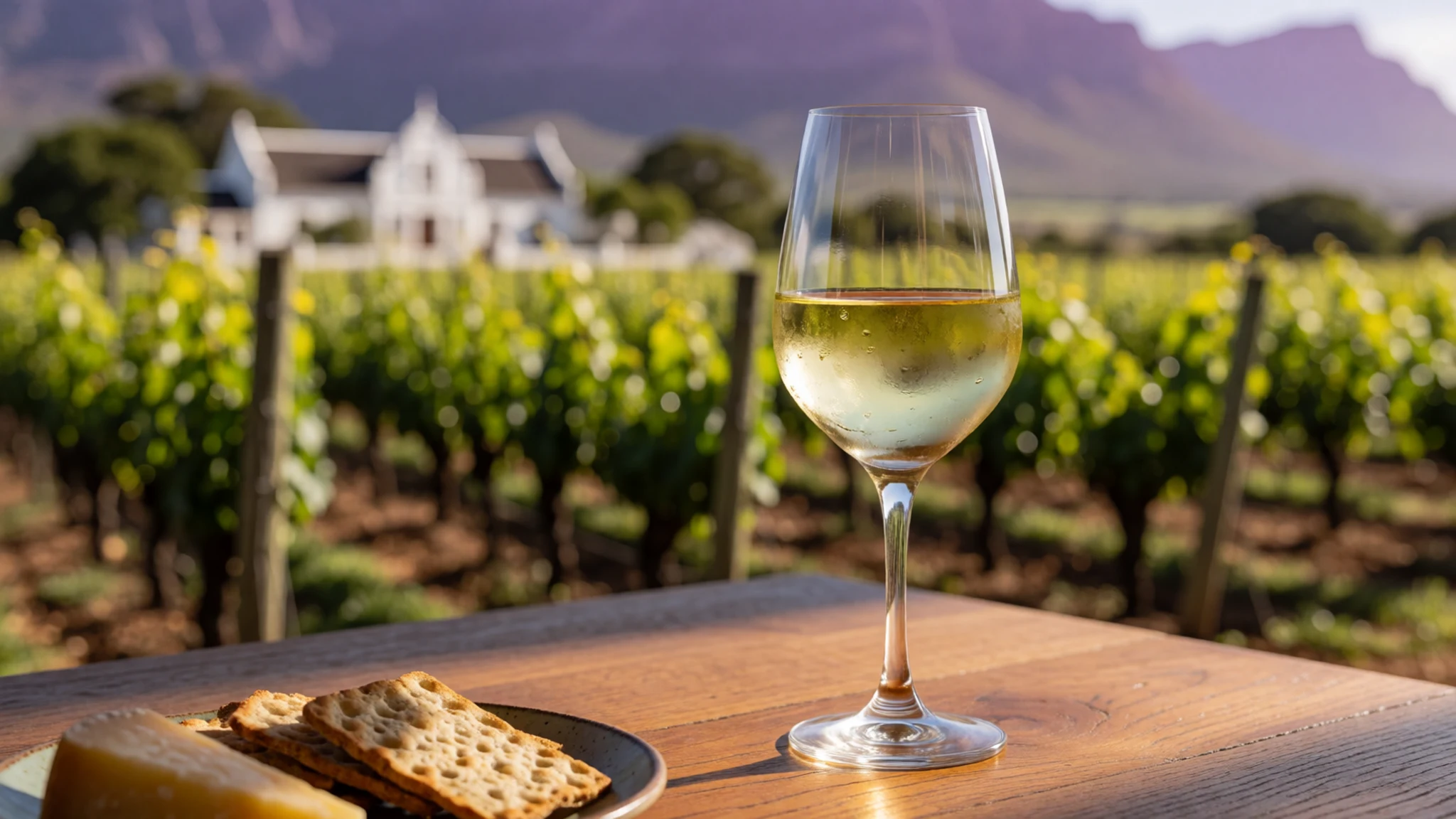
- Fish and chips — Seafront takeaway counters in the peninsula's small towns
A casual favourite on the Cape coast, wrapped or served on a plate, often eaten outdoors by the water. Expect plenty of salt and vinegar, and watch for gulls. - Cape wines — Winelands estates, a day trip from Cape Town
The nearby winelands around Paarl, Stellenbosch and Franschhoek are where the region's best-known wines are made. Tastings are common, and Wikivoyage advises arranging a driver before a day of tasting. - Cape Malay curry — Family-run eateries in Cape Town
Cape Malay cooking is mild, fragrant and slightly sweet, with spices and dried fruit. Bobotie, a spiced baked mince dish, is a well-known example and worth trying on a city day.
Plan it
Best time. November to March is the usual choice, with longer days and warmer weather, though wind is common all year. Cooler months can be clearer and quieter but wetter.
How long. 1
Getting there. Fly into Cape Town International Airport, then drive south along the peninsula, as there is no regular public rail to the point itself. MetroRail runs to Simon's Town, and a car or organised tour is needed for the final stretch.
Budget. mid
Tips
- Start early to beat tour buses and the midday wind
- Check the official site for entry fees, hours and path closures before you set off
- Carry water, sunscreen and a windproof layer
- Combine it with Boulders Beach and Simon's Town on the way back
- Keep food out of sight, as baboons are opportunistic
Etiquette
- Stay on marked paths and away from cliff edges
- Do not feed or approach baboons or other wildlife
- Take your rubbish with you
Nearby
Sources
- Wikidata Q378109 (CC0)
- Wikipedia: Cape Point (CC BY-SA 4.0)
- Wikivoyage: Western Cape (CC BY-SA 4.0)
- Kap der Guten Hoffnung vom Flugzeug gesehen — Bgabel (CC BY-SA 2.0)
- Kap vun der Gudder Hoffnung — Ernmuhl (CC BY 3.0)
- Cape Point, South Africa — Diego Delso (CC BY-SA 4.0)
- Map of the Cape Peninsula — Oggmus (CC BY 3.0)
- Benguela and Agulhas Currents — Oggmus (CC BY-SA 4.0)
- Cape Point mit Leuchtturm — Bernhard Hecker (CC BY-SA 2.0 de)
- Old Cape Point Lighthouse — Diego Delso (CC BY-SA 4.0)
- View from the Cape of Good Hope — Habib M'henni (CC BY 4.0)


Wildlife
- African penguin (animal)
A penguin is a bird that has swapped flying for swimming, and the African penguin is the one that lives on southern African shores. Look for it at Boulders Beach, a sweep of white sand scattered with giant granite boulders where a colony gathers. Its black back, white front with spots and a dark band, and pink patches over the eyes make it easy to know. Keep your distance, speak softly, and never feed it.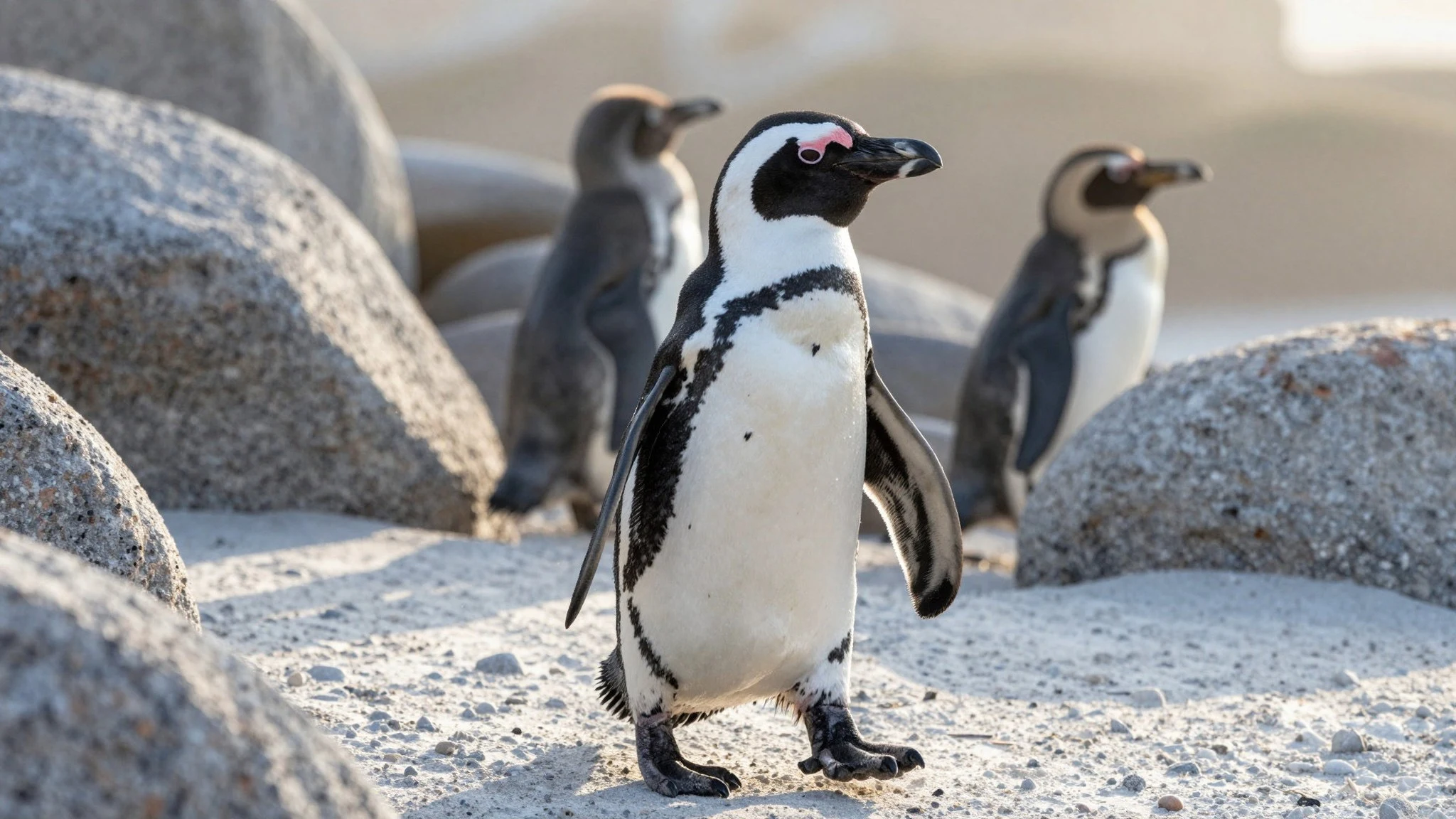
- African penguin (bird)
A penguin is a bird that has swapped flying for swimming, and the African penguin is the one that lives on southern African shores. Look for it at Boulders Beach, a sweep of white sand scattered with giant granite boulders where a colony gathers. Its black back, white front with spots and a dark band, and pink patches over the eyes make it easy to know. Keep your distance, speak softly, and never feed it. - Whale (animal)
Imagine a huge whale with a smooth, broad back, no fin on top, and pale rough patches on its head like a crown. That is the southern right whale, a baleen whale with a long, arching mouth. Hunted almost to extinction over centuries, it is now protected, which makes every sighting precious. Watch from a respectful distance, keep voices low, go with a knowledgeable guide if you can, and never try to feed it.