Bloemfontein
Bloemfontein, South Africa
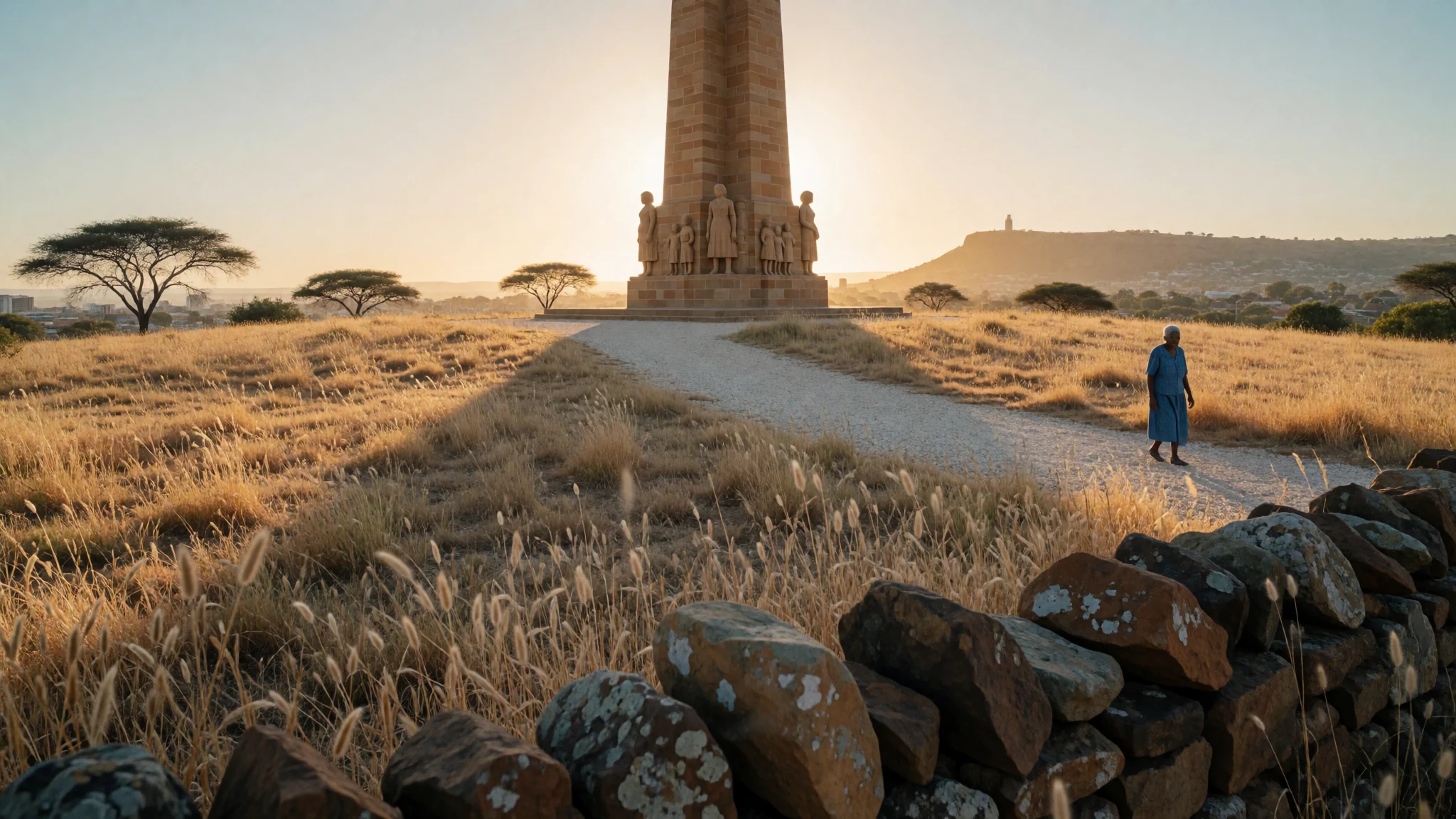
Bloemfontein is a calm highveld city of courts, museums and rose gardens, and a useful, unhurried stop between Johannesburg and Cape Town.
The place
Bloemfontein sits on the open highveld at the centre of South Africa, 1,395 metres above sea level, and the altitude explains much of its character: bright light, dry air, hot summer afternoons and cold, frosty winter mornings. About 256,000 people live in the city itself, and the wider Mangaung municipality is considerably larger. Locals call it Bloem. It is the capital of the Free State province and the country's judicial capital, home to the Supreme Court of Appeal, while Cape Town holds parliament and Pretoria houses the executive. The Constitutional Court, however, has sat in Johannesburg since 1994. The feel is provincial rather than grand: low buildings, wide streets, sandstone civic architecture and a flat horizon broken by Naval Hill, a wooded ridge just above the centre. The city likes to call itself the city of roses, and it holds a rose festival every year. Three national highways, the N1, N6 and N8, meet here, so most travellers arrive on the way to somewhere else. That is fair, because Bloemfontein is not a city of headline sights. It rewards a day or two of museums, a game-reserve drive on the hill, a night under properly dark skies and a few good meals. The centre is quiet once the shops close, while the main restaurant strip stays lively. Expect space, sun and a slower pace than the coastal cities.
Its story
Bloemfontein's recorded history starts before the town. The land was home to !Orana and Barolong communities, and later Trekboers, Griqua and others moved through the district. A farm here belonged to Johannes Nicolaas Brits, who sold it to a British officer, Major Henry Douglas Warden. In 1846 Warden built a fort on the site as a British outpost north of the Orange River. He valued the position for its open grazing, its access to the road towards Winburg and the absence of horse sickness, a real danger for transport animals in that era. Political control shifted quickly. The area became the Orange River Sovereignty in 1848, then the independent Orange Free State Republic in 1854, which lasted until 1902. After the South African War it became the capital of the Orange River Colony, and in 1910, when the Union of South Africa was formed, Bloemfontein was given the judicial role it still holds. The war of 1899 to 1902 left the deepest mark. Boer families were held in British camps, and about 27,000 women and children died there. The National Women's Monument commemorates them, and the Anglo-Boer War Museum covers the conflict. That history belongs to Afrikaner memory above all, and the many Black South Africans who also suffered in the war are less often told. Good local guides and museum staff are worth listening to on the subject.
What to see
- National Women's Monument — South of the city centre
The National Women's Monument in Bloemfontein is a sandstone obelisk with sculpted figures, built to remember the Boer women and children who died in British camps during the South African War. It is sober and well kept. The neighbouring Anglo-Boer War Museum gives the wider story, so allow time for both.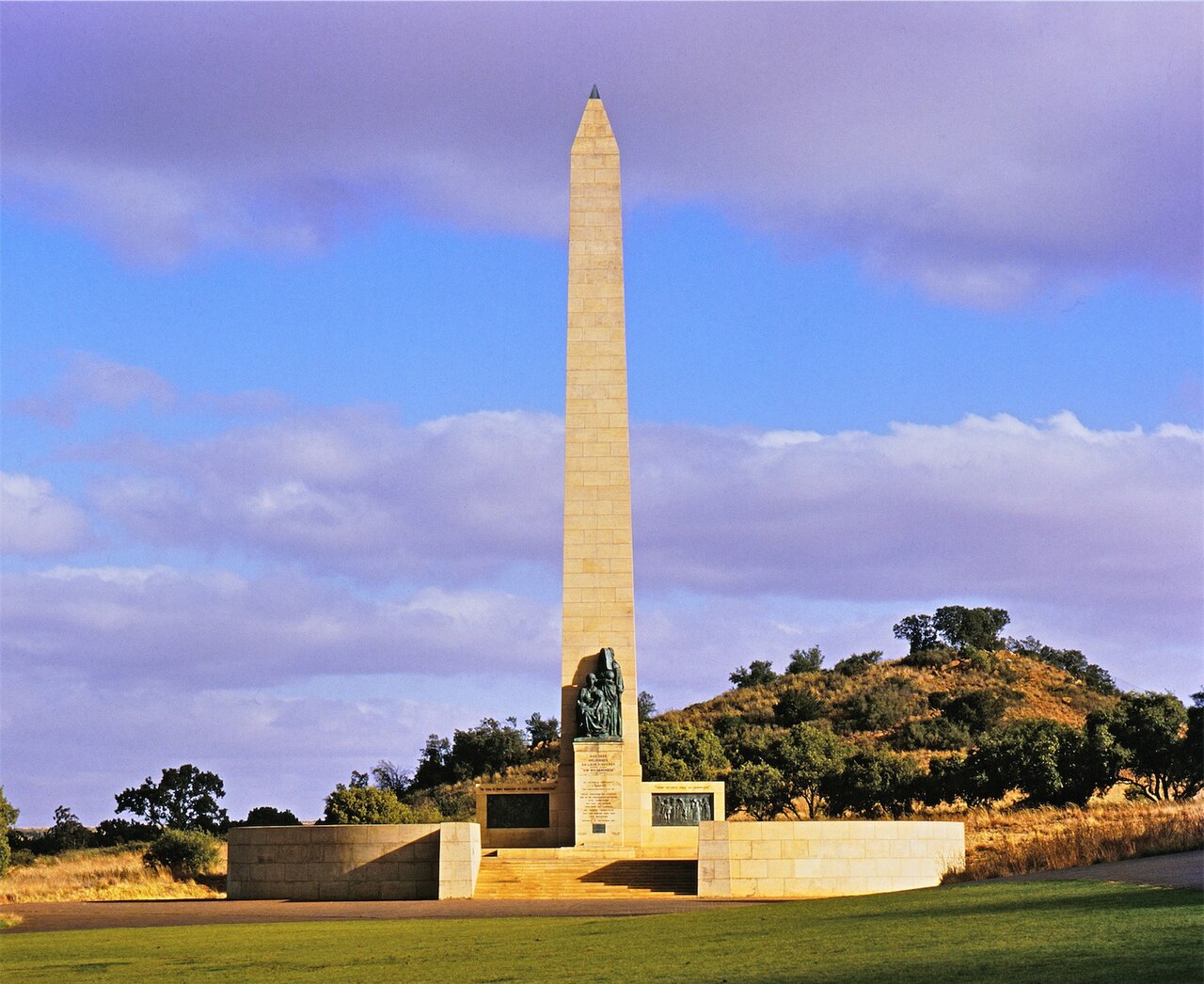
- Supreme Court of Appeal — Central Bloemfontein
The Supreme Court of Appeal gives Bloemfontein its title of judicial capital. The courthouse is a formal public building, best appreciated from the street and its gardens. It is a quick stop, but it makes sense of why a mid-sized highveld city carries national weight.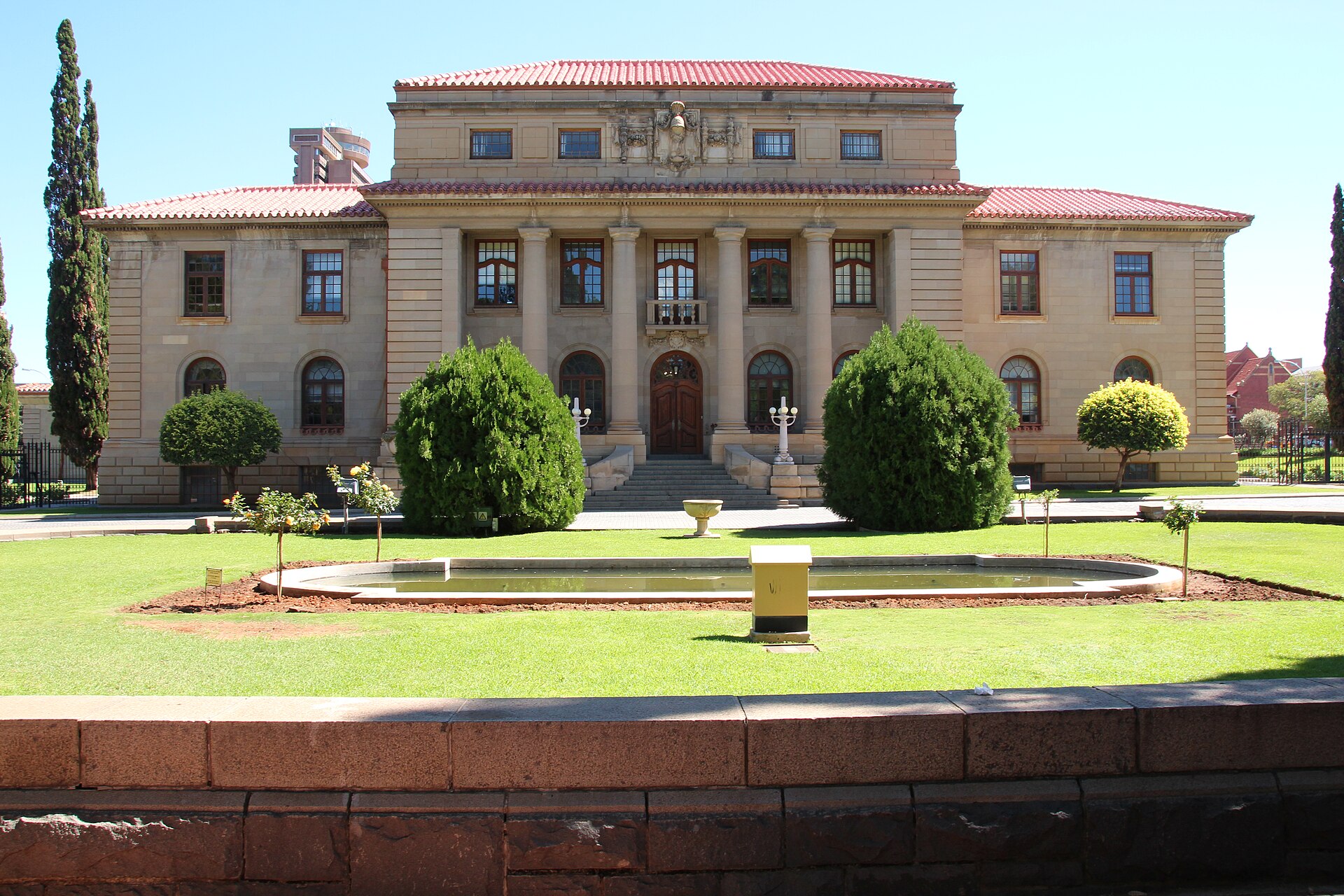
- Naval Hill and Franklin Game Reserve — Naval Hill, just north of the centre
Naval Hill rises above the centre, and the Franklin Game Reserve on top holds antelope, zebra and other grazers, with nothing dangerous. A driving loop follows the rim, giving long views across the city and the plains. Late afternoon light is kind, and the hill is also home to a digital planetarium. - Oliewenhuis Art Museum — Eastern suburbs
Oliewenhuis Art Museum occupies a restored Cape Dutch style house set in gardens. It shows South African art, including work by Black and white artists across different eras, in rooms that are calm and uncrowded. Pair it with a slow coffee afterwards. Check the museum's current exhibitions before visiting. - Boyden Observatory — Outside the city, to the north-east
Boyden Observatory is an astronomical research station out of town, chosen for its clear, dark Free State skies. Public visits and night sessions depend on the programme, so check ahead through the city's official information site before driving out. On a cloudless night the southern sky here is rewarding. - National Botanical Garden — Western edge of the city
The National Botanical Garden covers 70 hectares and grows about 400 plant species, mostly native to the Free State, the Northern Cape and Lesotho. Birds are plentiful, and small mammals and reptiles live in the grounds as well. Spring brings the best colour, and shade is limited in summer.
Culture
Bloemfontein is a meeting point of Afrikaans, Sesotho, Setswana and English speakers, and the city's culture reflects all of them. Christianity is strong: the Dutch Reformed Church, Anglican and Catholic congregations, Baptists and many newer churches all have buildings here, and Sunday mornings are quiet in the centre. The Anglican diocese of the Free State and the Catholic archdiocese both have their seats in the city. Rugby is close to a second religion in the Free State, and a match day brings out supporters in team colours and fills the bars and braai fires. The braai, the South African barbecue, is a social ritual more than a meal: people gather around the fire for hours, and invitations are casual and warm. The annual rose festival reflects the gardening pride that gave the city its nickname. Museums here handle a heavy past, including the South African War, the Boer republics and later apartheid, and visitors will meet more than one version of the story. Listening before judging is the right approach, and conversations about politics are usually frank but friendly. People tend to greet shopkeepers, drivers and neighbours before asking for anything, and that small courtesy goes a long way. At the Women's Monument and in the war museums, keep your voice low, dress respectfully and ask before photographing other visitors or any ceremony taking place.
What to wear
Bloemfontein's traditional dress depends on community. Among Basotho and Batswana families, the thick wool Basotho blanket, pinned at the shoulder, is worn at weddings, funerals and initiation events, often with the conical straw mokorotlo hat. Shweshwe, a printed cotton dyed in indigo and other colours, is common in dresses and skirts for celebrations and church. Afrikaner heritage dress, such as the long Voortrekker dress with a kappie bonnet, appears at heritage days and school events rather than daily life. Everyday clothing is practical and casual. Jeans, shorts, cotton shirts and trainers are normal, with rugby jerseys on match days, and office wear in the centre around the courts and government buildings. Church-goers dress smartly on Sundays. A visitor should think about sun and altitude first. Summer is hot with bright light, so bring a hat, sunglasses, sunscreen and light cotton. Winter nights are cold and frosty, so a fleece or jacket is needed even when afternoons feel mild. Closed, comfortable shoes suit the game-reserve loop and botanical garden paths. Modesty rules are relaxed in general, but covered shoulders and knees show respect in churches and at the war memorials.
What to eat
- Braai with boerewors — Steakhouses along the main restaurant strip, or a local's braai
A braai means meat cooked over wood or charcoal, with boerewors, a coarse, spiced sausage, as a staple. Most steakhouses grill in this tradition, and locals cook at home on weekends. Order it with pap, a stiff maize porridge, and a tomato-onion relish. - Pap and sous — Township eateries and family-run kitchens
Pap is a maize meal porridge eaten with a savoury tomato-and-onion gravy called sous, often alongside grilled meat. It is filling, cheap and everyday food across the Free State. Texture ranges from stiff to crumbly. - Biltong — Butchers and farm stalls on the roads in and out of town
Biltong is cured, air-dried meat, usually beef or game, sliced thin or cut in chunks and flavoured with coriander and pepper. It is a road-trip snack for the long drives that cross the Free State. Dryness varies, so ask for a sample. - Melktert — Bakeries and tea rooms in the suburbs
Melktert is a custard tart flavoured with milk and dusted with cinnamon, a long-standing Afrikaner favourite. The pastry is short and the filling silky. It suits a mid-morning coffee stop and is on offer at most bakeries. - Vetkoek with mince — Weekend markets and informal roadside stalls
Vetkoek are deep-fried dough balls, split and filled with curried mince, cheese or jam. They are a common lunch at markets, school fêtes and roadside stalls. Eat them hot and with plenty of napkins.
Plan it
Best time. March–April and September–October are the most comfortable months, with sunny days and mild air. November to February brings hot weather and afternoon thunderstorms on the highveld; June to August has clear skies but cold nights and frost.
How long. 1–2
Getting there. Bloemfontein has an airport with domestic flights, so check airlines for current routes. Passenger trains run only a few times a week, from Johannesburg towards Port Elizabeth and East London. Long-distance buses link the main cities. By car, the N1, N6 and N8 all meet here: Johannesburg is about 398 km north and Cape Town about 1,004 km south-west, and the N1 towards Gauteng has tolls.
Budget. low
Tips
- Plan a car or ride-hailing for the game reserve, botanical garden and observatory, as sights are spread out
- Carry water, a hat and sunscreen, since the sun at this altitude is strong
- Walk in the centre by day only, as it is very quiet after shops close; the main restaurant strip is fine in the evening
- Check the official site for museum, observatory and planetarium opening details before going
- Pack layers for winter evenings, which turn cold fast
Etiquette
- Greet people before asking a question or making a request
- Ask before photographing people, and keep voices low at memorials
- Dress modestly for church services and ceremonies
Nearby
Sources
- Wikidata Q37701 (CC0)
- Wikipedia: Bloemfontein (rev 1379656785) (CC BY-SA 4.0)
- Wikivoyage: Bloemfontein (rev 5424423) (CC BY-SA 4.0)
- Photo: Bloemfontein, Free State, South Africa (South African Tourism) (CC BY 2.5)
- Photo: Vue du Free State en Afrique du Sud (South African Tourism) (CC BY 2.5)
- Photo: Supreme Court of Appeal, Bloemfontein (Ben Bezuidenhout) (CC BY-SA 4.0)
- Photo: Bloemfontein City Hall (South African Tourism) (CC BY 2.5)
- Photo: Women's Monument, Bloemfontein (Janek Szymanowski) (CC BY 3.0)
- Photo: The Fourth historic Raadzaal in Bloemfontein (Ben Bezuidenhout) (CC BY-SA 4.0)
- Photo: NALN Old Government Building (Marief100) (CC BY 3.0)
- Photo: Bloemfontein Eiffel Tower reproduction (Rute Martins, Leoa's Photography) (CC BY 3.0)


