Kaş
Kaş, Turkey
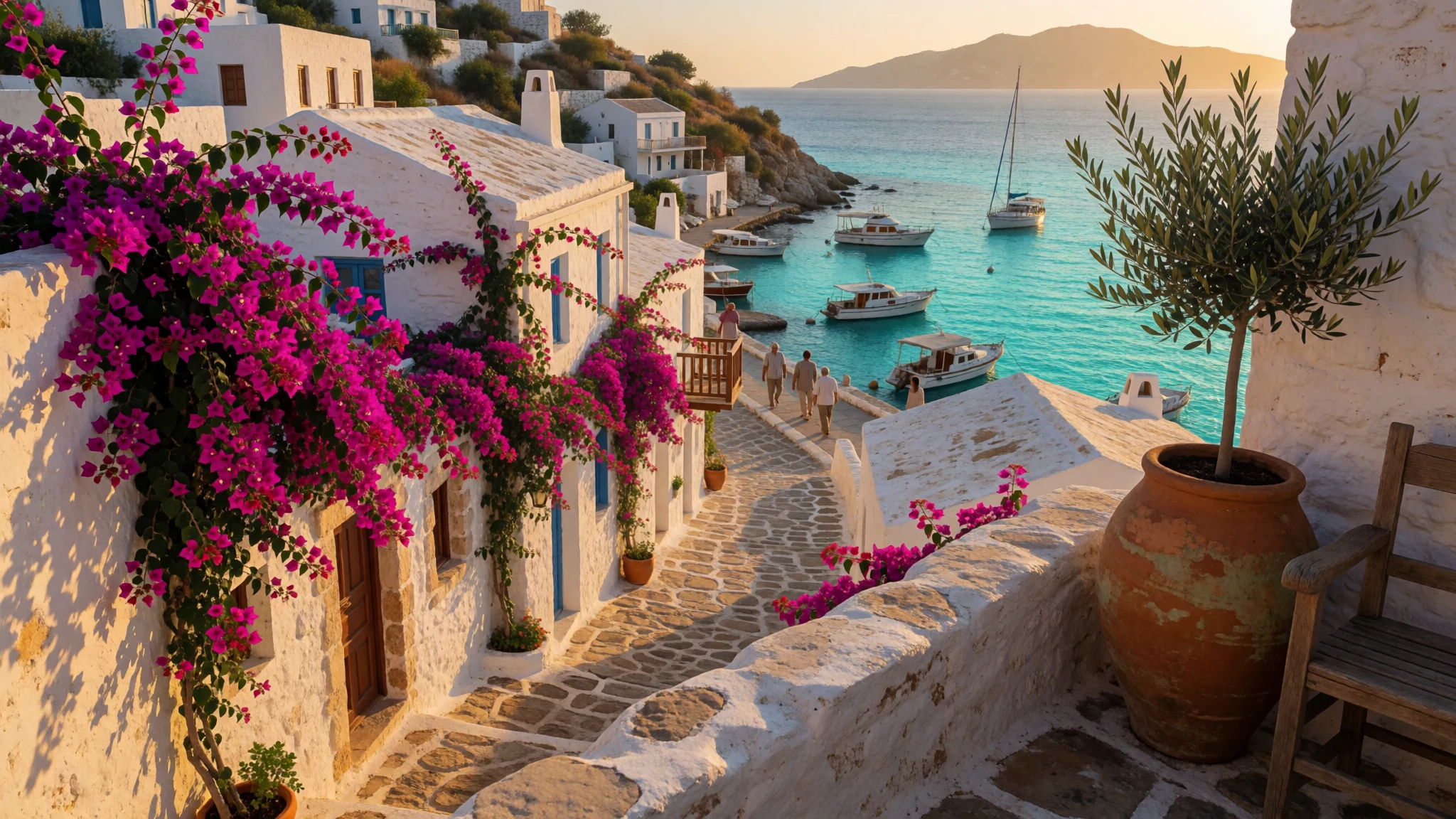
Kaş is a Turkish harbour town where Lycian tombs, clear water and a short ferry to a Greek island share one slow, sunlit hillside.
The place
Kaş is a small harbour town on the Turquoise Coast of south-western Turkey, part of Antalya Province, with about 58,600 residents. It climbs a hillside above the sea, and across a narrow stretch of water lies the Greek island of Kastellorizo, close enough that the two feel like neighbours. Fishing, diving, yachting and tourism keep the town going, and the mood is that of a relaxed resort rather than a polished one. Old stone houses with a Greek look line the main road, with Lycian tombs standing among them, so an errand for bread can pass a sarcophagus. The beaches are mostly shingle rather than sand, with coves such as Çınarlar just south of the marina and Büyükçakıl a little further along. Many visitors spend their days on boats or in the water, and the surrounding hills hold ruined cities that few people reach. The climate is subtropical Mediterranean. Summers are hot and sticky, with daytime highs averaging around 35°C and almost no rain, while winters are mild at about 15°C but can bring very heavy downpours. September is a sweet spot, with warm sea and less punishing heat. Beyond the town, the district grows oranges, lemons and bananas in the lowlands, often under glass, and produces honey and almonds on the slopes, with pine forest higher up. Tourism is now the main earner, and prices have climbed in recent years, so an evening out costs closer to what many European towns charge.
Its story
Kaş has been settled for a very long time, and its first recorded identity was Lycian. The Lycians, who ran their own league of cities in this corner of Anatolia, called the place Habesa or Habesos, and the size of the rock-cut cemeteries around the modern town shows that it mattered. Under the Hellenistic rulers and then Rome it became Antiphellos, the harbour serving the hill city of Phellos above it, and in time the port outgrew its parent. Later centuries were less settled. Raids from across the sea hurt the town, after which it passed to the Seljuk Sultanate of Rum, when it was known as Andifli, and then to the Ottomans. The twentieth century brought a sharp break. After the war between Greece and Turkey, the compulsory exchange of populations in 1923 sent the local Greek-origin community to Greece, leaving behind houses and a former church that still stand in the old streets. Through much of the century that followed, Kaş stayed small. Tourism arrived in force only in recent decades, led by British and German visitors, and the town grew quickly. A good deal of that growth was apartment building, some of it without permits, and it has put real pressure on the coastline and hills. The Çukurbağ Peninsula west of the centre, once open land, now carries luxury resorts. The result is a town with a layered past that is still deciding how much more to build.
What to see
- Antiphellos: theatre and king's tomb — Old town
Antiphellos is the ancient port that lies under and around modern Kaş. The best-preserved pieces are a small amphitheatre facing the sea and a carved sarcophagus on a tall base, known as the king's tomb, set among the old-town streets. The remains can be explored freely at any hour, and early evening light suits them best.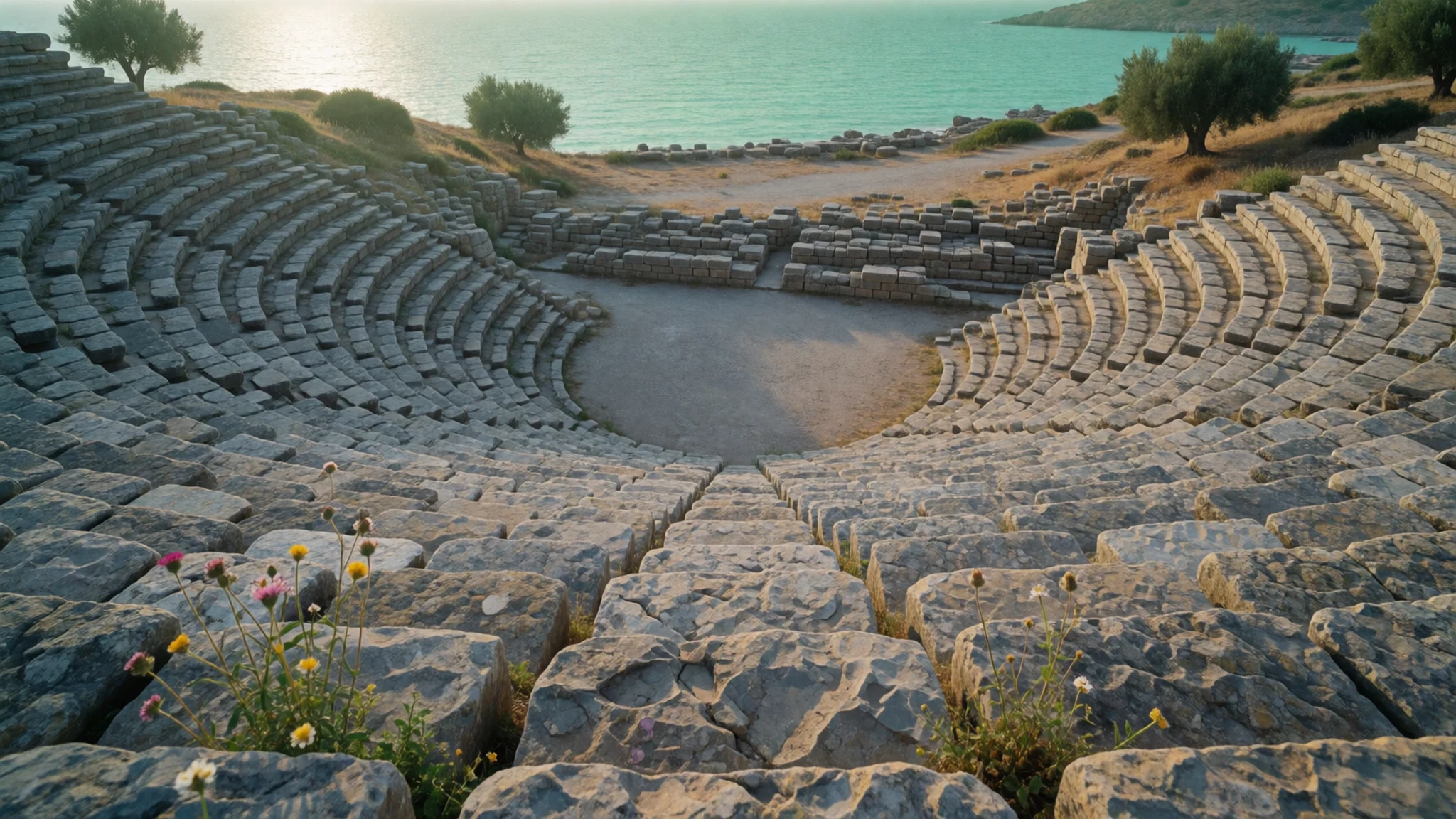
- Rock tombs along Likya Caddesi — Behind the town centre
The cliffs behind Kaş are pocked with Lycian tombs cut into the rock face like doorways, and a good selection can be reached on foot from the centre along Likya Caddesi. Some copy timber houses in stone. Go in the morning or late afternoon, as the rock holds heat in summer and shade is scarce.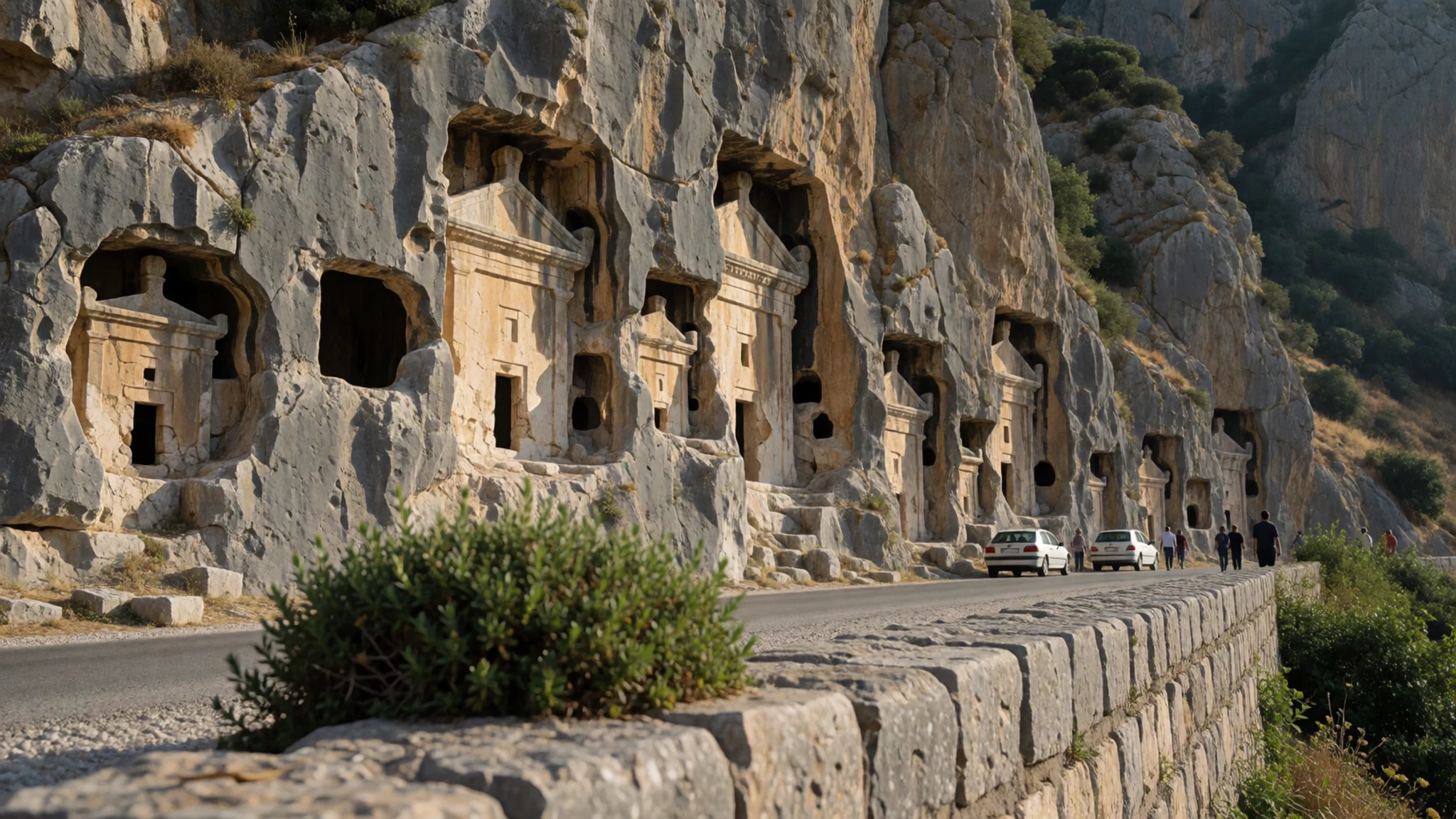
- The Sleeping Giant (Uyuyan Dev) — Hills above Kaş
The Sleeping Giant is the name given to the rocky skyline above town, which reads as a reclining figure when seen from the water. Walkers can climb it from the east side; heading straight up from the centre is steep and risky. Treat it as a proper hike, with water, sturdy shoes and an early start.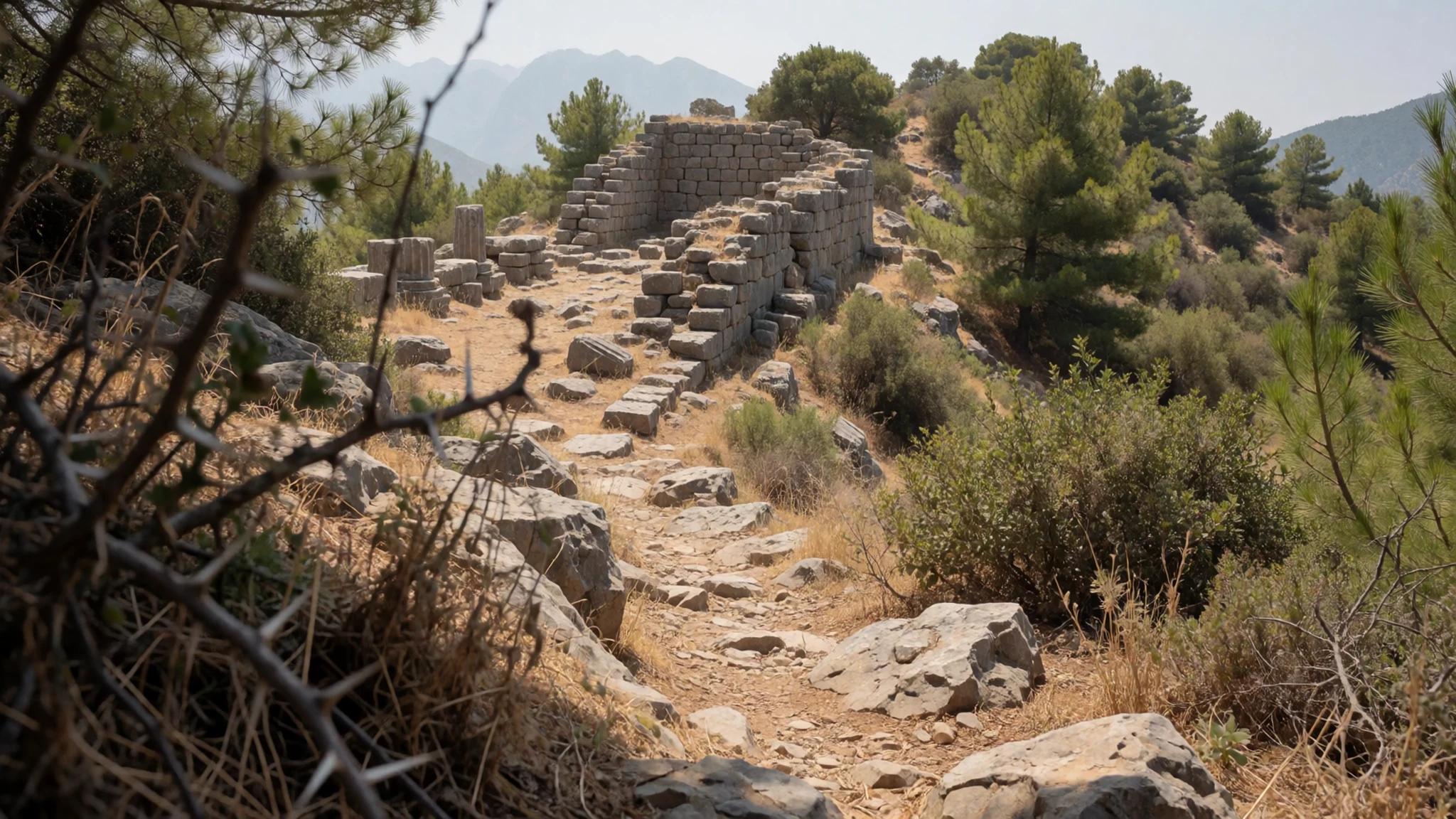
- Phellos — North of Çukurbağ
Phellos is what remains of the hill city that Antiphellos once served: a few acropolis walls and scattered tombs on the slope north of Çukurbağ. The ruins are modest, and the appeal is the setting and the quiet. Wear long trousers, because hawthorn scrub tears at bare legs, and stay alert, since bears are reported in the area.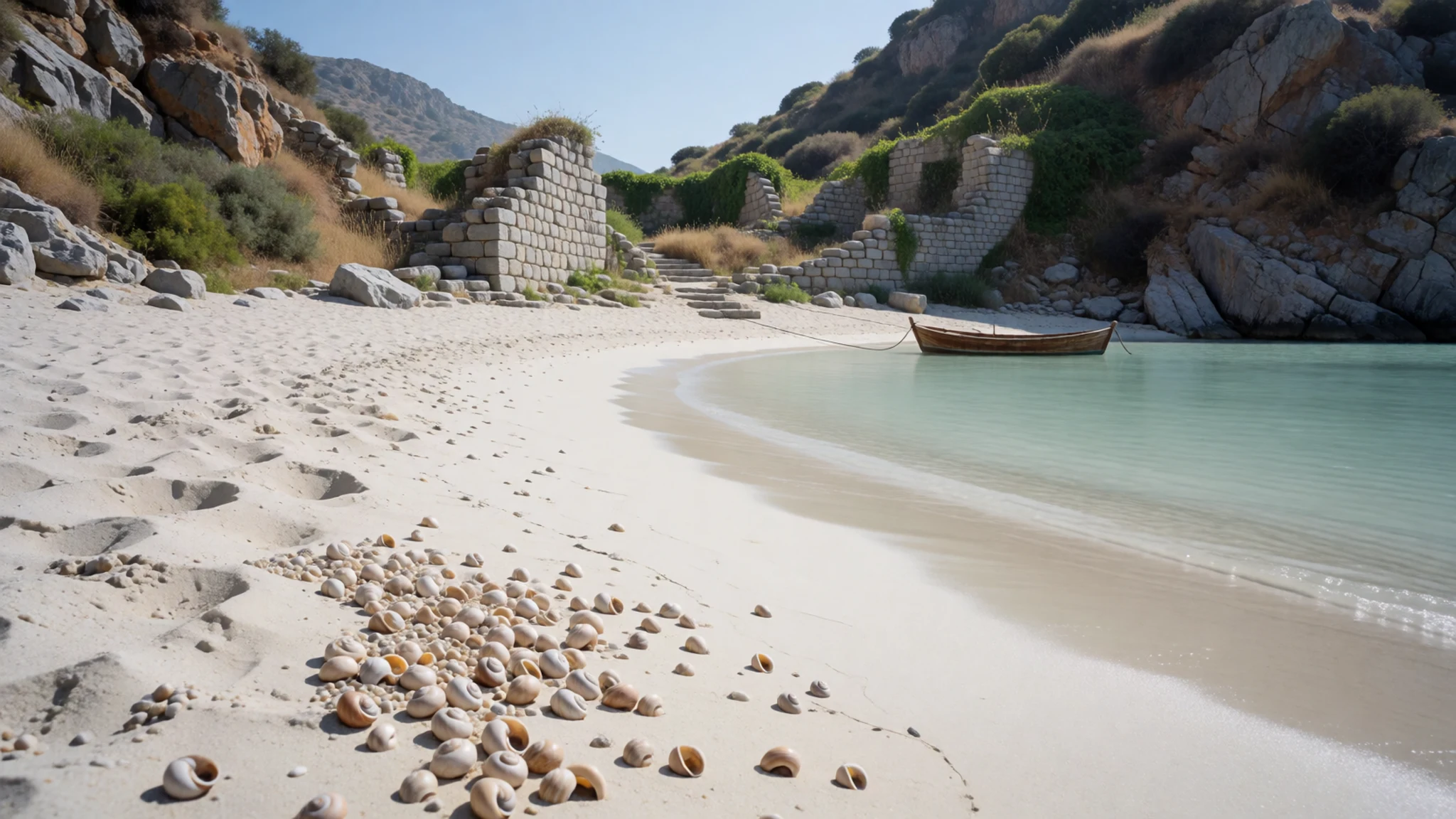
- Aperlae — Coast east of Kaş, by boat
Aperlae is a Lycian coastal city of low walls and tombs. The route there by land is a long, rough hike, so most visitors arrive on a boat trip. Its quirk is that snail shells were found here in huge numbers, which suggests they were burnt to make lime for building. Entry is free at any hour.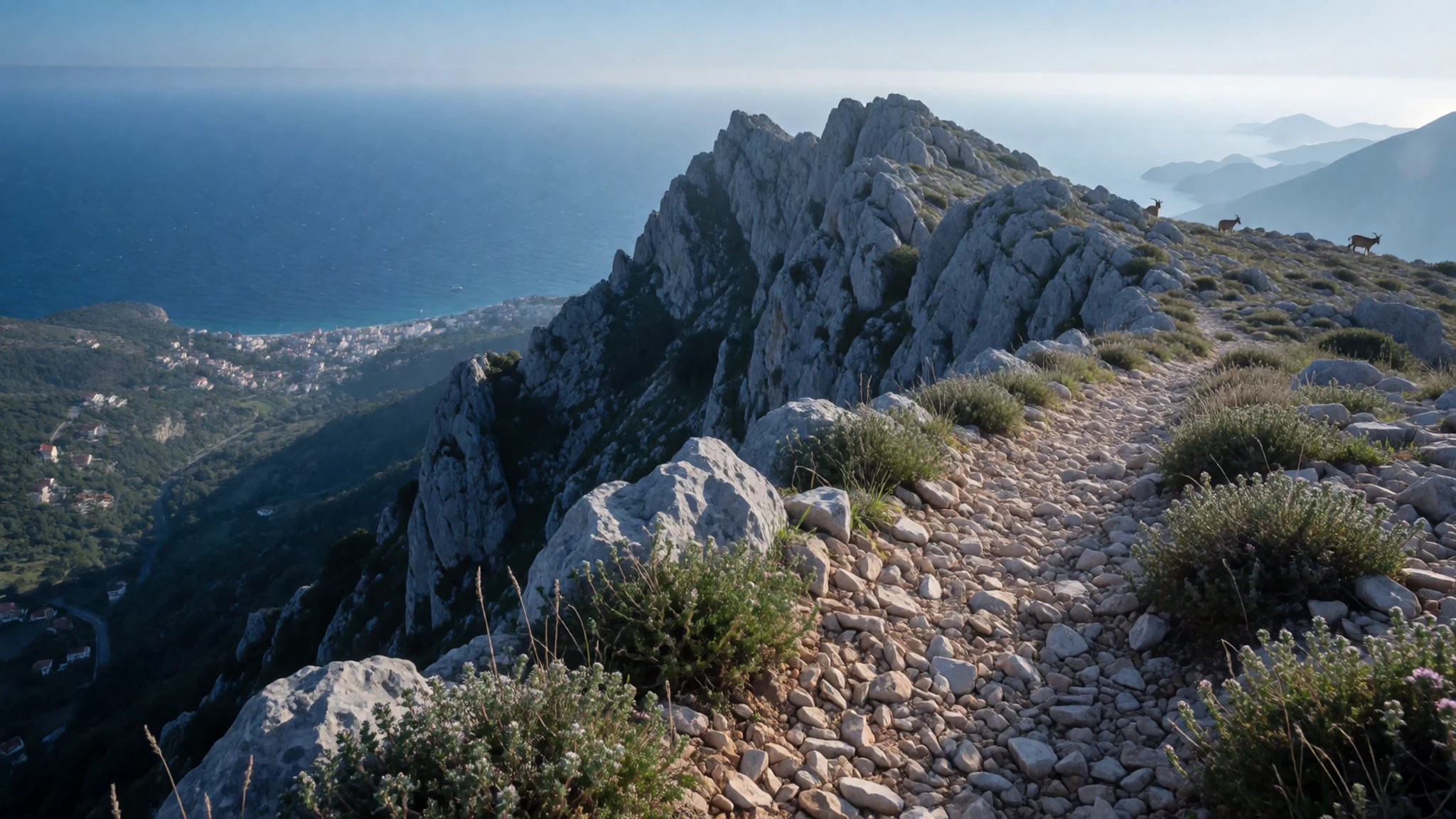
- Kastellorizo (Meis) — Kaş marina, ferry pier
Kastellorizo, called Meis in Turkish, is a Greek island about 6 km offshore, reached by a daily ferry from the marina at the south end of Kaş. The crossing takes about 20 minutes, and a day trip leaves roughly six hours on the island. Carry a passport; the same day trip does not work in reverse from the Greek side.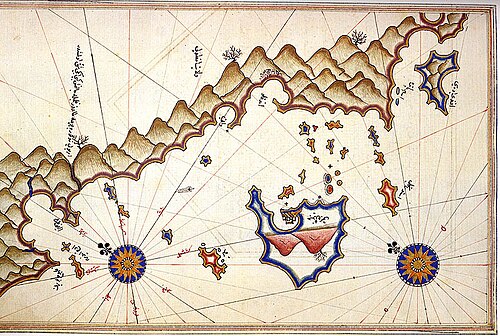
Culture
Kaş carries three layers of culture at once: Lycian, Greek-Ottoman and modern Turkish seaside. The Lycian layer is literal, with tombs set into cliffs and sarcophagi standing beside shops. The Greek layer survives in old houses on the main road and in the Yeni Camii, or New Mosque, near the foot of the peninsula, which began as a Greek Orthodox church and has been changed little. The Ottoman and Turkish layer shows in the retro-Ottoman main mosque, the call to prayer over the harbour and tea drunk slowly in the old town. Daily rhythm follows the heat: mornings on boats or at the harbour, a long pause in the afternoon, then evening walks, meze and music once the air cools. From April to October the free-standing bars near the marina stay open until the small hours, so the town is lively at night in season and much calmer in winter. British and German visitors have shaped its cafés and guest houses for decades, and a good deal of English is spoken, but greetings in Turkish are noticed and warmly returned. Cats are a feature of the old streets and are happy to sit on the tombs. Dress modestly with covered shoulders and knees, and take your shoes off before entering a mosque such as the Yeni Camii, keeping your voice low while anyone is praying.
What to wear
Traditional dress around Kaş follows wider Turkish village custom rather than anything unique to the town. Women's festive outfits pair şalvar, baggy trousers gathered at the ankle, with a long tunic or blouse, usually in cotton or wool, and a printed headscarf (yazma) edged with oya, a needle-made lace of tiny flowers. Embroidered waistcoats and woven sashes complete the look. These outfits now appear mostly at weddings, folk festivals and dance performances, while hand-woven kilims and other textiles are found more in homes and shops than on people. What people wear day to day is simple and sea-minded: linen shirts, shorts, light dresses, swimwear under cover-ups and sandals by day, and neat casual clothes for dinner. Boat crews favour sun-faded caps and old T-shirts, and in the damp winter locals switch to jackets and jumpers. Visitors should pack light cotton or linen, a hat, sunglasses and strong sun protection for the summer heat. Carry a scarf or a sleeved shirt for mosques, where shoulders and knees should be covered. Shoes matter more than clothes: sturdy trainers or walking shoes for ruins and the Sleeping Giant ridge, long trousers for overgrown sites such as Phellos, and water shoes for the shingle beaches, which are hard on bare feet.
What to eat
- Meze spread — Family restaurants in the old town
A table of small plates, such as aubergine, yoghurt dips, beans, herbs and salads, shared before the main course. Kaş suits slow evening eating, and the family-run restaurants of the old town serve meze well, usually with fish or grilled meat to follow.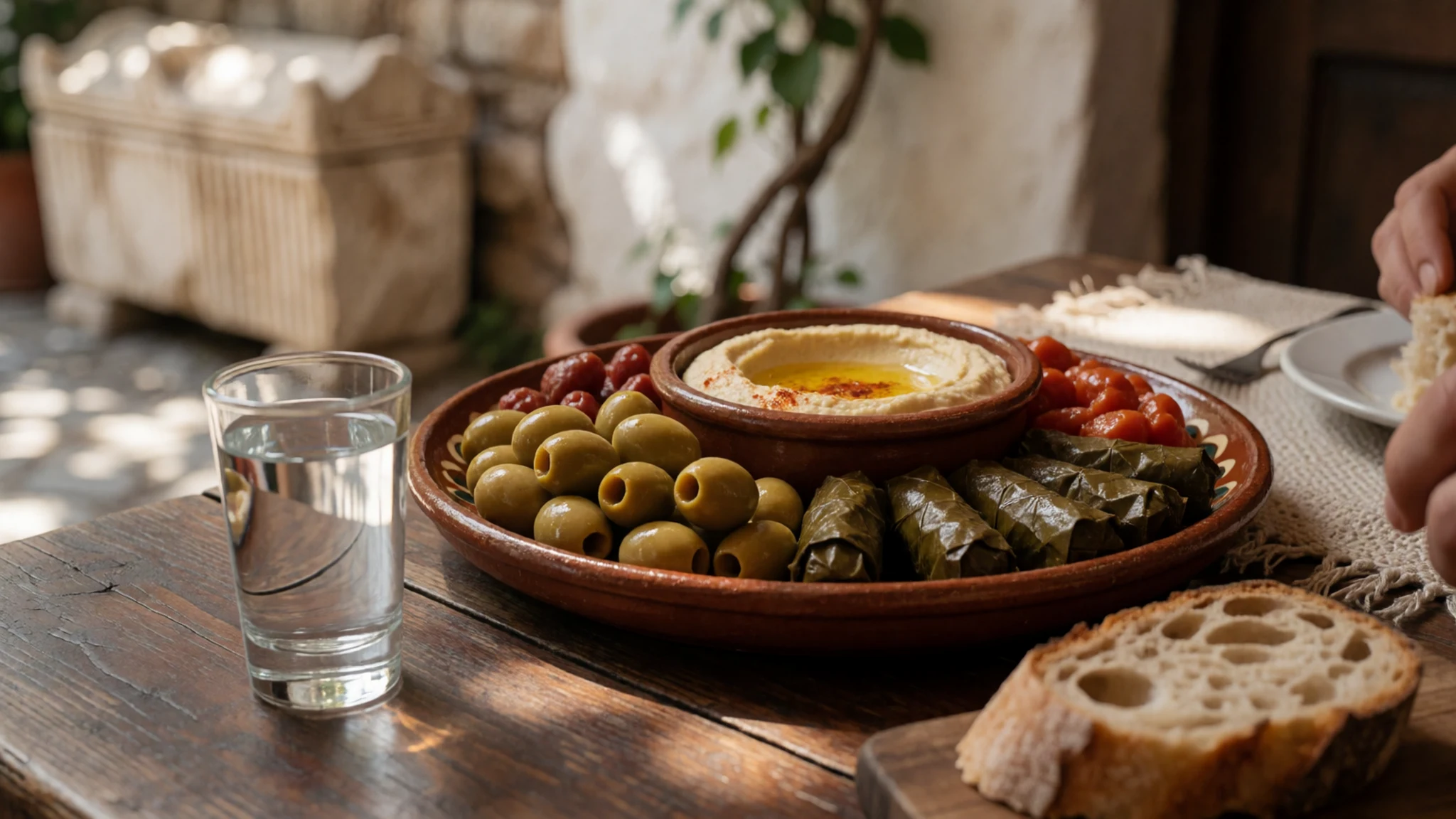
- Grilled local fish — Restaurants around the harbour and marina
Fish landed along this coast, usually grilled whole with lemon and olive oil, is the town's signature plate. Ask what came in that day and how it is charged before ordering, as fish is often sold by weight.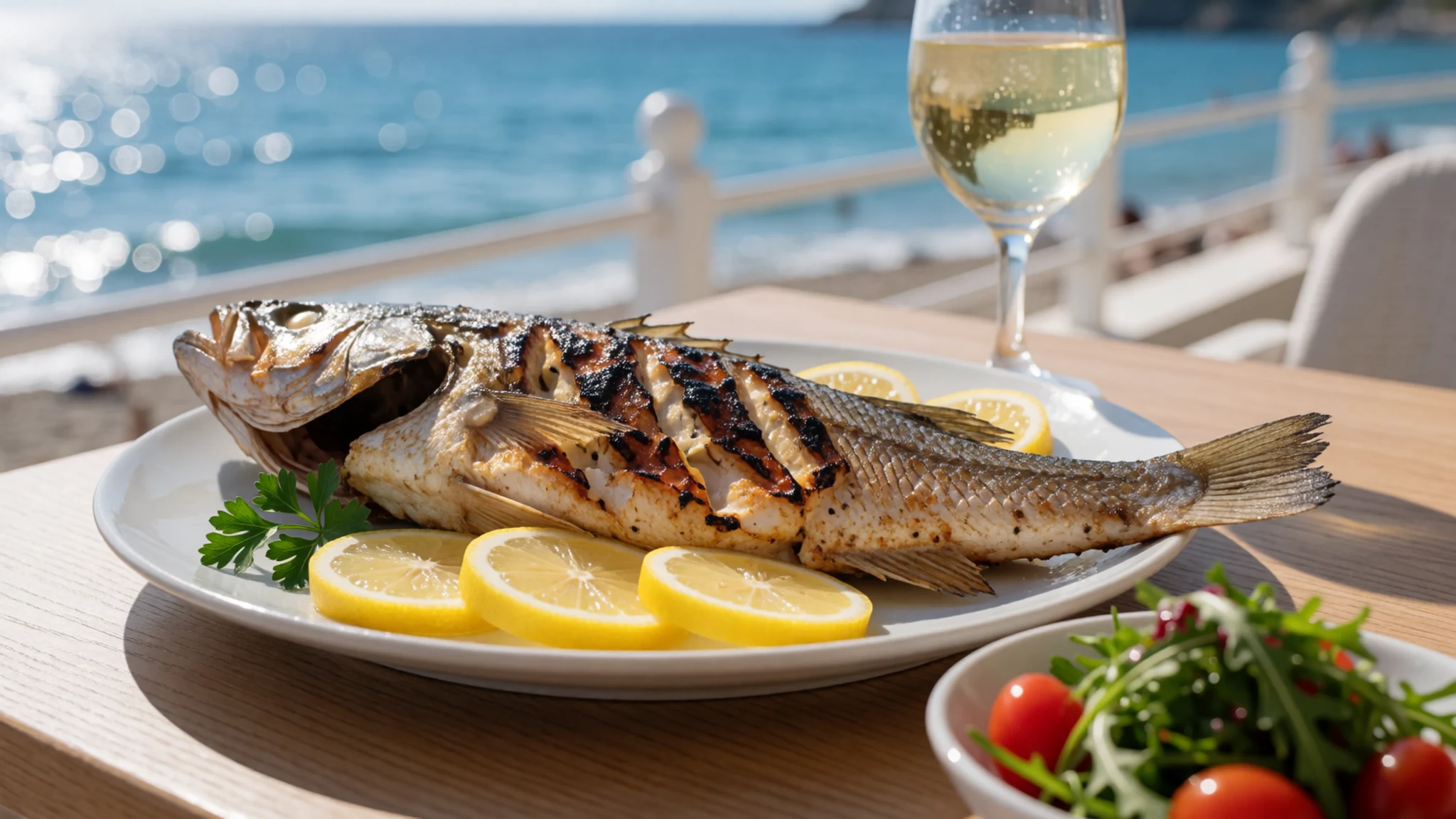
- Tzatziki (cacık) — Any meze restaurant in the old town
A thick yoghurt dip with cucumber, garlic and herbs, called cacık in Turkish, served as a meze or a cooling side to grilled food. It is especially welcome in summer, when the afternoons are hot and sticky. - Gözleme — Market stalls and simple cafés
Thin hand-rolled flatbread filled with cheese, spinach or potato and cooked on a griddle. It makes a light daytime meal, and the best are made to order while you watch. - Local honey and almonds — Guest-house breakfasts and small shops in the old town
The hills above Kaş produce honey and almonds, and both turn up on breakfast tables and in small shops. A jar of honey or a bag of almonds is an easy thing to carry home.
Plan it
Best time. May–June and September–October. Summers are hot and sticky, with highs around 35°C, while September keeps the sea warm without the worst of the heat. Winters are mild, around 15°C, but can bring heavy rain, and many bars and boat trips wind down outside April–October.
How long. 2–4
Getting there. Fly to Dalaman Airport, which has seasonal flights from Europe and the UK, then take the airport bus to Fethiye and a regular coach on, or a taxi; the drive is about 2½ hours. From Antalya, buses run about every 45 minutes and take around 4 hours. The new bus station is on the highway east of town, so ask about a dolmuş or take a taxi into the centre.
Budget. mid
Tips
- Visit ruins and tombs in the morning, before the heat builds and the rock gets hot
- Book boat trips and the Kastellorizo ferry ahead in high season, and carry your passport for the island
- Carry water, a hat and sun protection, as shade is thin on the hills and at the ruins
- Expect prices closer to a European town than to a budget resort, and carry some cash as well as a card
- For local information, check the municipality website at http://www.kas.bel.tr/
Etiquette
- Cover shoulders and knees and remove shoes before entering a mosque
- Ask before photographing people, especially in small shops and at mosques
- Keep noise down on the old-town streets late at night, where people live above the bars
Nearby
Sources
- Wikidata Q1004438 (CC0)
- Wikipedia: Kaş (rev 1378555043) (CC BY-SA 4.0)
- Wikivoyage: Kaş (rev 5406892) (CC BY-SA 4.0)
- Photo: KAŞ, Haluk Comertel (CC BY 3.0)
- Photo: View of Kaş, Turkey, Luc Coekaerts (CC0 1.0)
- Photo: Kaş and Kastelorizo, Piri Reis (Public domain)
- Photo: A street in Kaş, Alessandro57 (Public domain)
- Photo: C-47 Dakota Kaş nose, Wusel007 (CC0 1.0)
- Photo: KAŞ, Haluk Comertel (1) (CC BY 3.0)
- Photo: Stone grave and cat-Kaş, Haluk Comertel (CC BY 3.0)
- Photo: Türkiye Antalya Kaputaş Beach, Tbakky (CC BY-SA 4.0)


Wildlife
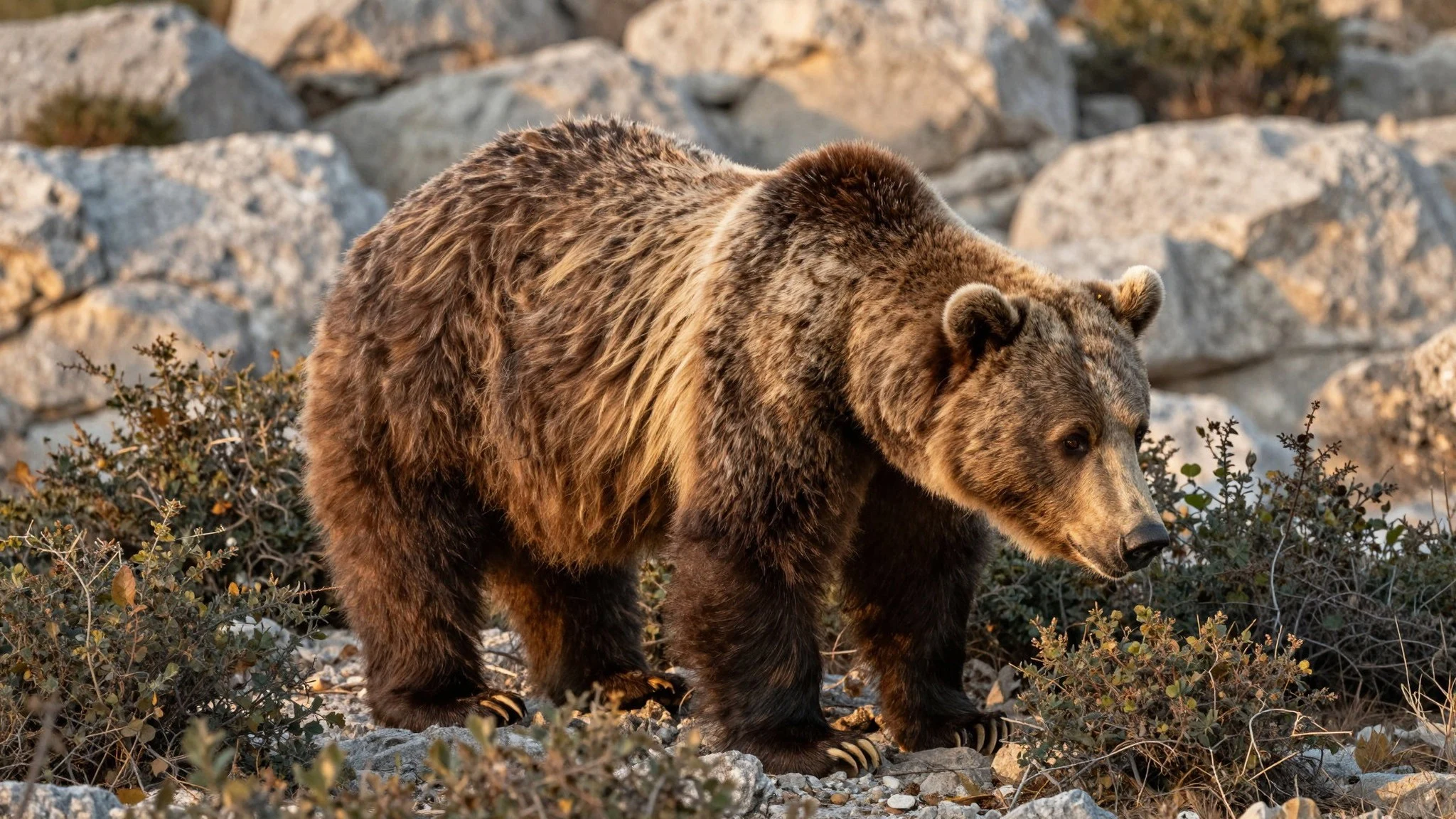
- Wild bear (animal)
The brown bear is a huge, shaggy bear, with a muscly hump on its shoulders and big paws made for digging, and its fur can be cream, reddish or deep brown. Near Kaş, you may occasionally cross paths with one on the rugged trek to the site, among thorny scrub. Wear sturdy boots, keep a long way back, stay calm and quiet, go with a local guide, and never offer food.