Kaohsiung
Kaohsiung, Taiwan
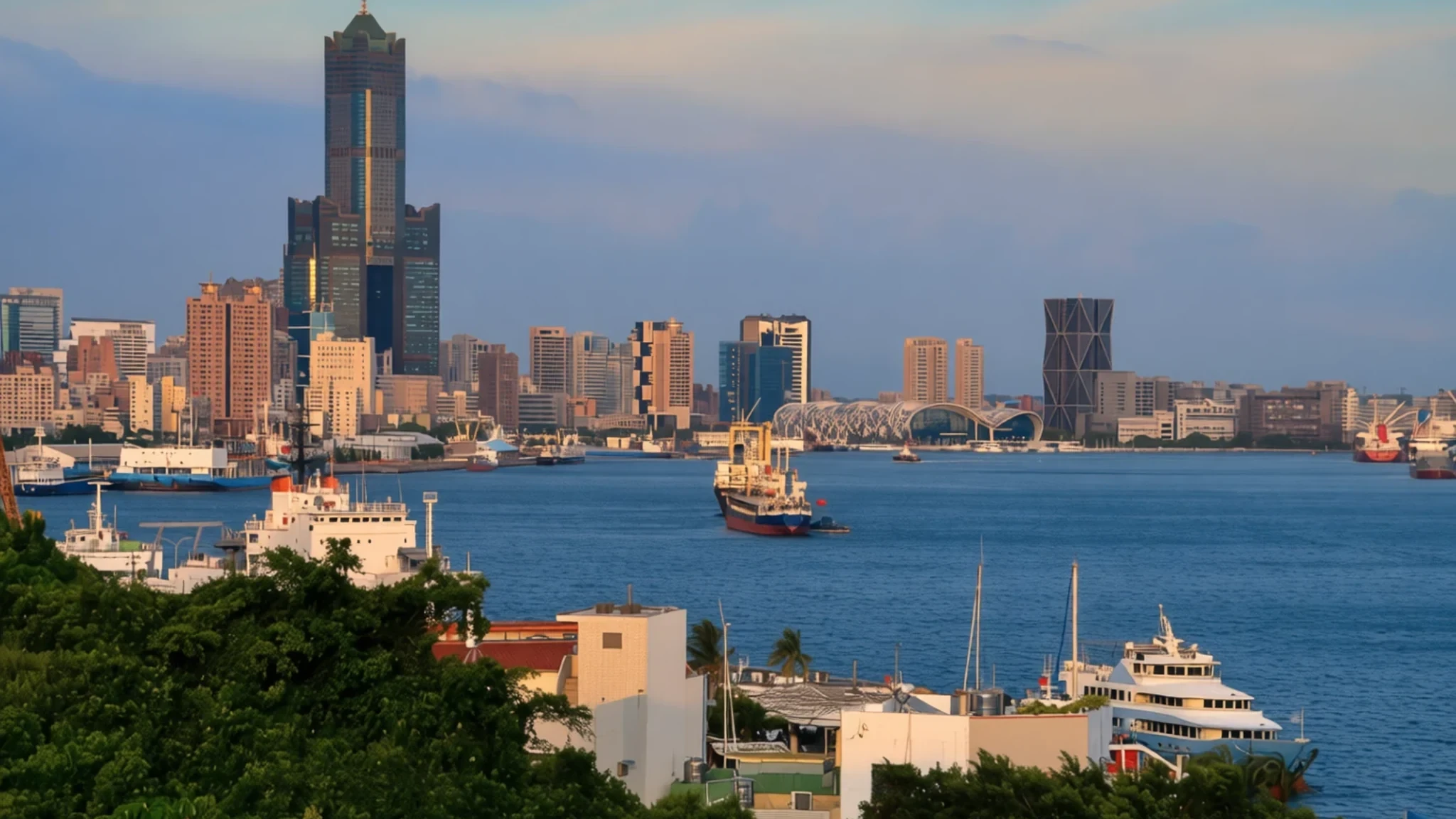
Kaohsiung pairs a working harbour and night markets with river walks and lotus-lake temples.
The place
Kaohsiung (高雄) sits on Taiwan's south-western coast, a port city where the harbour still sets the pace of daily life. The waterfront is not a backdrop: cranes, ferries and fishing boats share the shoreline with walkways, warehouses turned into studios, and a skyline that reads clearly after dark. Inland, the Love River cuts a green corridor through the urban grid, its banks lined with paths, cafés and bridges that fill in the evening. To the north, Lotus Lake holds a cluster of temples and the Dragon and Tiger Pagodas, their tiled roofs facing the water. The old commercial streets around Yancheng and Hamasen keep low shop-houses and former civic buildings, including the Kaohsiung Museum of History in what was once the city government. Cijin, a thin island across a short ferry ride, remains a fishing settlement with a beach, a lighthouse hill and seafood stalls facing the channel. Further out, Shoushan rises at the edge of the city, a limestone ridge with trails and a long association with Formosan macaques. The climate is tropical: summers are long, hot and wet, with typhoons possible from mid-year into autumn, while winters are mild and comparatively dry. Mandarin is the public language; Taiwanese Hokkien is widely spoken, and Hakka and indigenous communities are part of the city's mix. Kaohsiung is less a museum piece than a working city that has spent recent decades turning a heavy industrial port towards the river and the sea.
Its story
Kaohsiung's older name, Takau or Takow, belonged to a small harbour used by local fishermen and by traders moving along the Taiwan Strait. The sheltered lagoon and the narrow entrance past what is now Cijin made it a natural anchorage long before it was a metropolis. Through the Qing period it stayed a modest southern port, secondary to larger centres farther north, with a walled county town at Fengshan whose south gate still stands. Visiting photographers recorded the harbour, and printed maps of the island marked the port as a place worth naming. Under Japanese rule the harbour was enlarged and the city laid out on a modern grid. The port was renamed Takao, using the characters still written today, which Mandarin later reads as Kaohsiung. Rail, warehouses and civic buildings followed the docks. The city grew as an industrial and shipping centre, with steel, shipbuilding and petrochemicals clustered around the port. The Love River, badly polluted in those factory decades, was later cleaned and given back to walkers. Warehouses at the pier head found new lives as galleries and music venues, and the night markets never really paused. The story of Kaohsiung is a harbour story: a fishing anchorage that became a heavy port, then a city learning how to live beside its own water again.
What to see
- Love River — Yancheng and the central districts
The Love River is Kaohsiung's inland water axis, a cleaned channel with paved banks, banyan shade and bridges lit after dusk. Residents walk and cycle the paths; boats run on the central stretch. Evening is the social hour, when the heat drops and the banks fill. Cafés and small parks sit just off the water, so the river links neighbourhoods rather than offering a single viewpoint.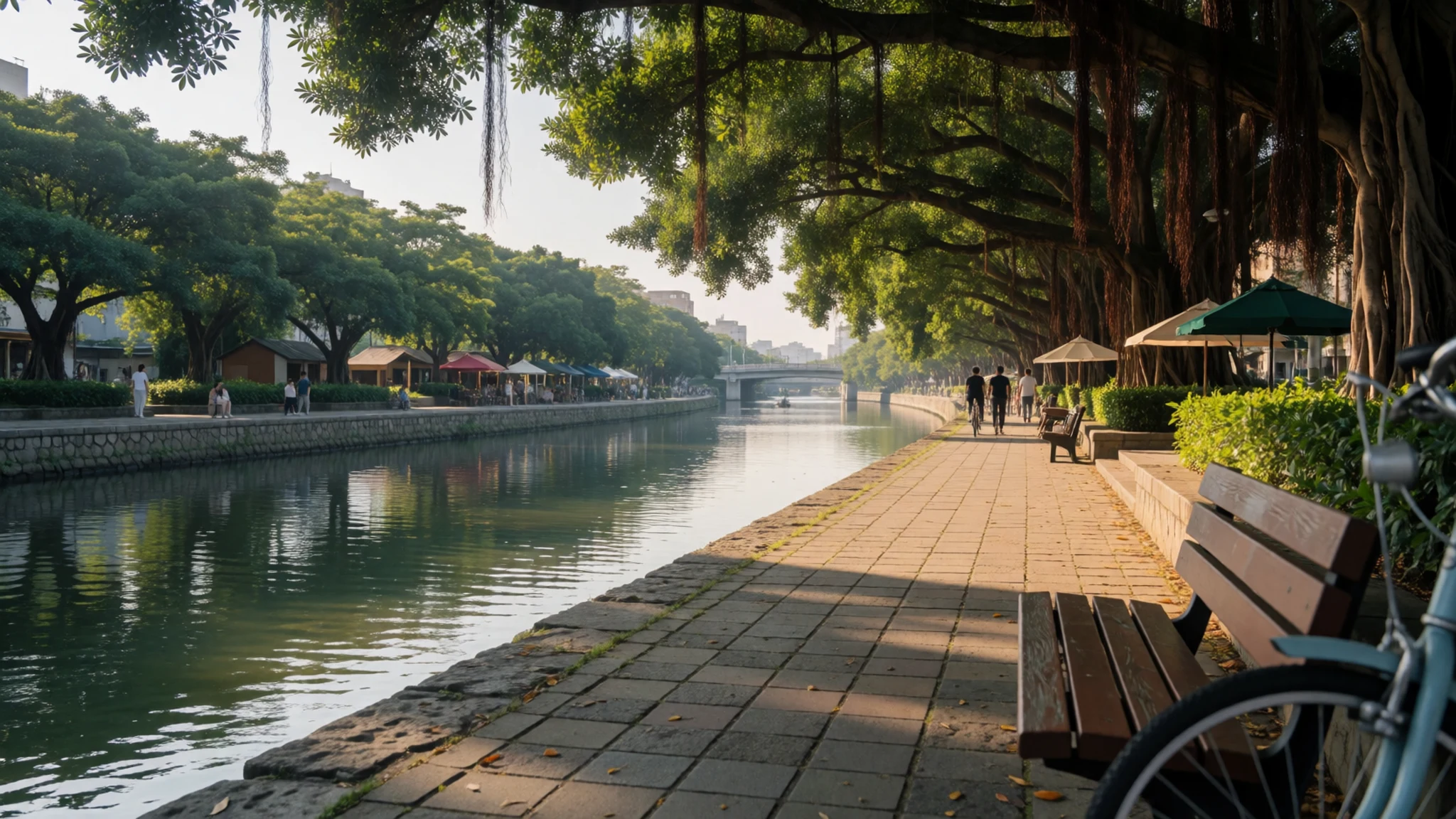
- Dragon and Tiger Pagodas — Zuoying
The Dragon and Tiger Pagodas stand in the water at Lotus Lake, in Kaohsiung's Zuoying district, reached by a short walkway. Visitors step in through the dragon and out through the tiger, along a covered passage lined with painted scenes. Further temples share the shore, so the pagodas belong to a sacred waterfront rather than standing alone. Come early; the courts heat up and coach groups arrive later.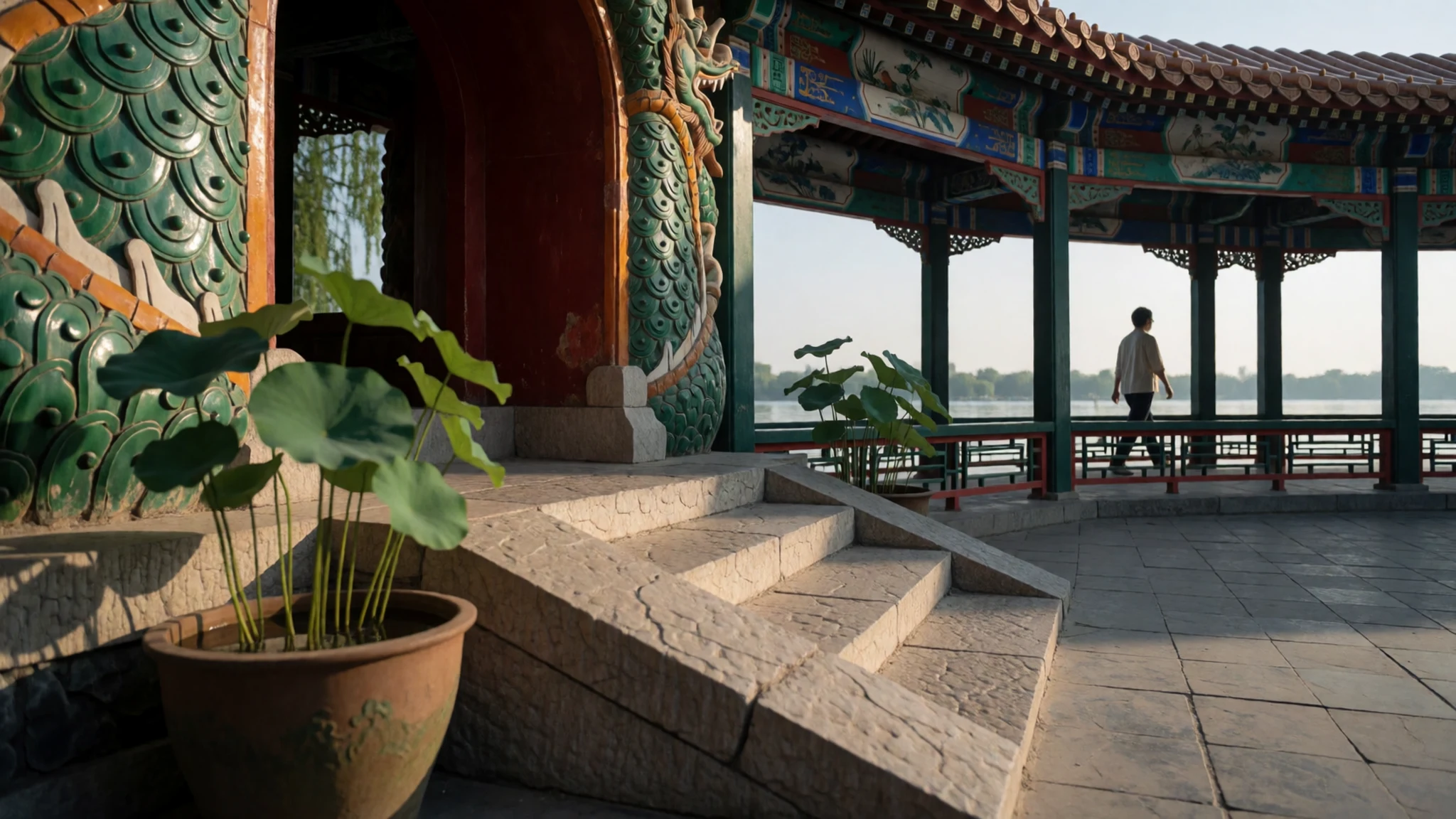
- Kaohsiung Museum of History — Yancheng
The Kaohsiung Museum of History occupies the former city government building in Yancheng, a colonial-era block with a symmetrical façade and a deep colonnade. Displays follow the port from fishing anchorage to industrial harbour, through photographs, models and everyday objects. Hamasen's older streets sit just outside the door. Allow time for the façade as well as the rooms.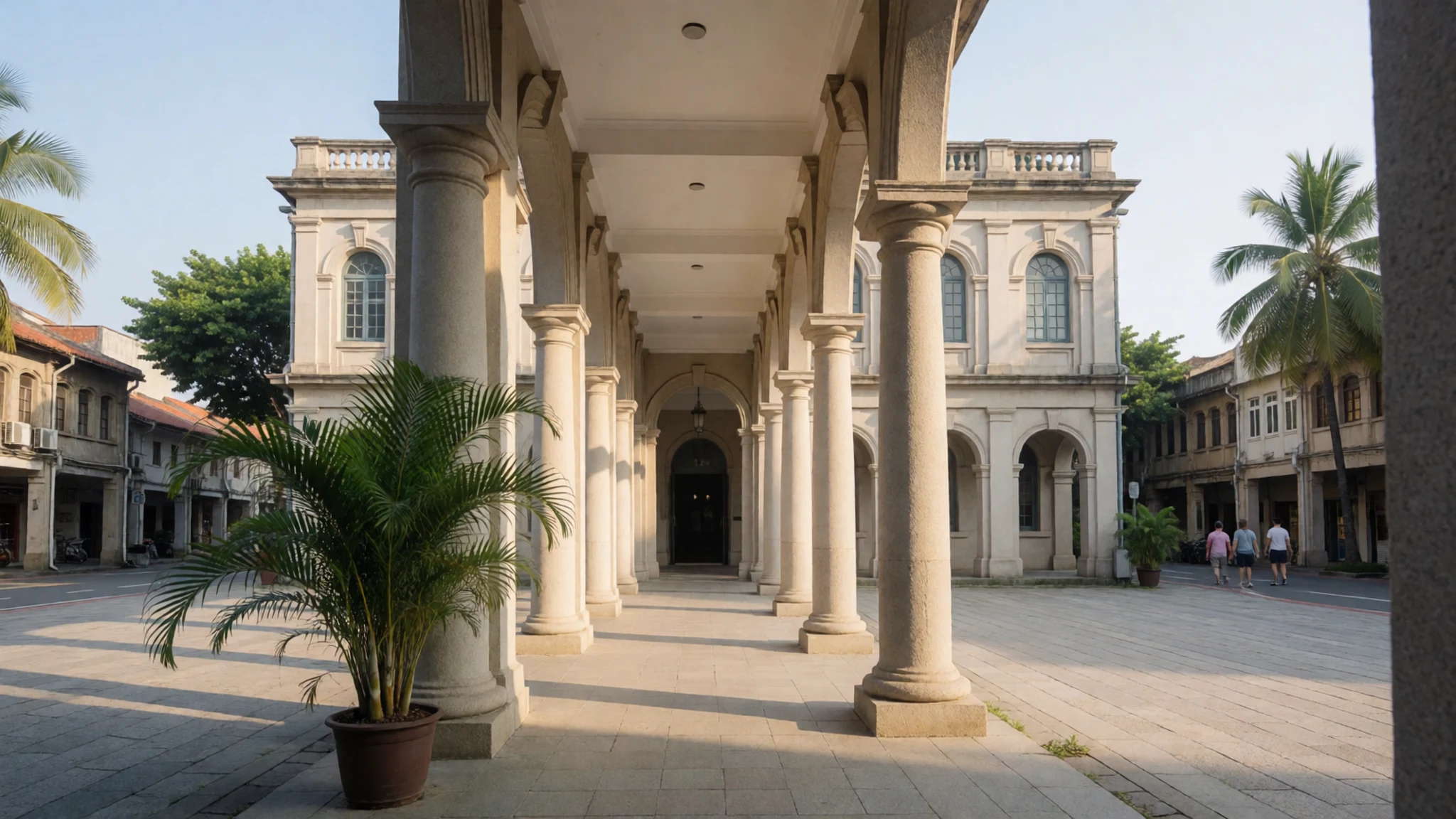
- Cijin — Cijin, via the Gushan ferry
Cijin is the long sand island sheltering Kaohsiung's harbour, a short ferry hop from Gushan wharf. Fishing boats and seafood stalls line the channel, while a beach and a low hill face the open strait. A lighthouse and old fortifications occupy the ridge above the houses. The crossing, the sea wind and a meal tied to the boats are the point; the island is small enough to walk.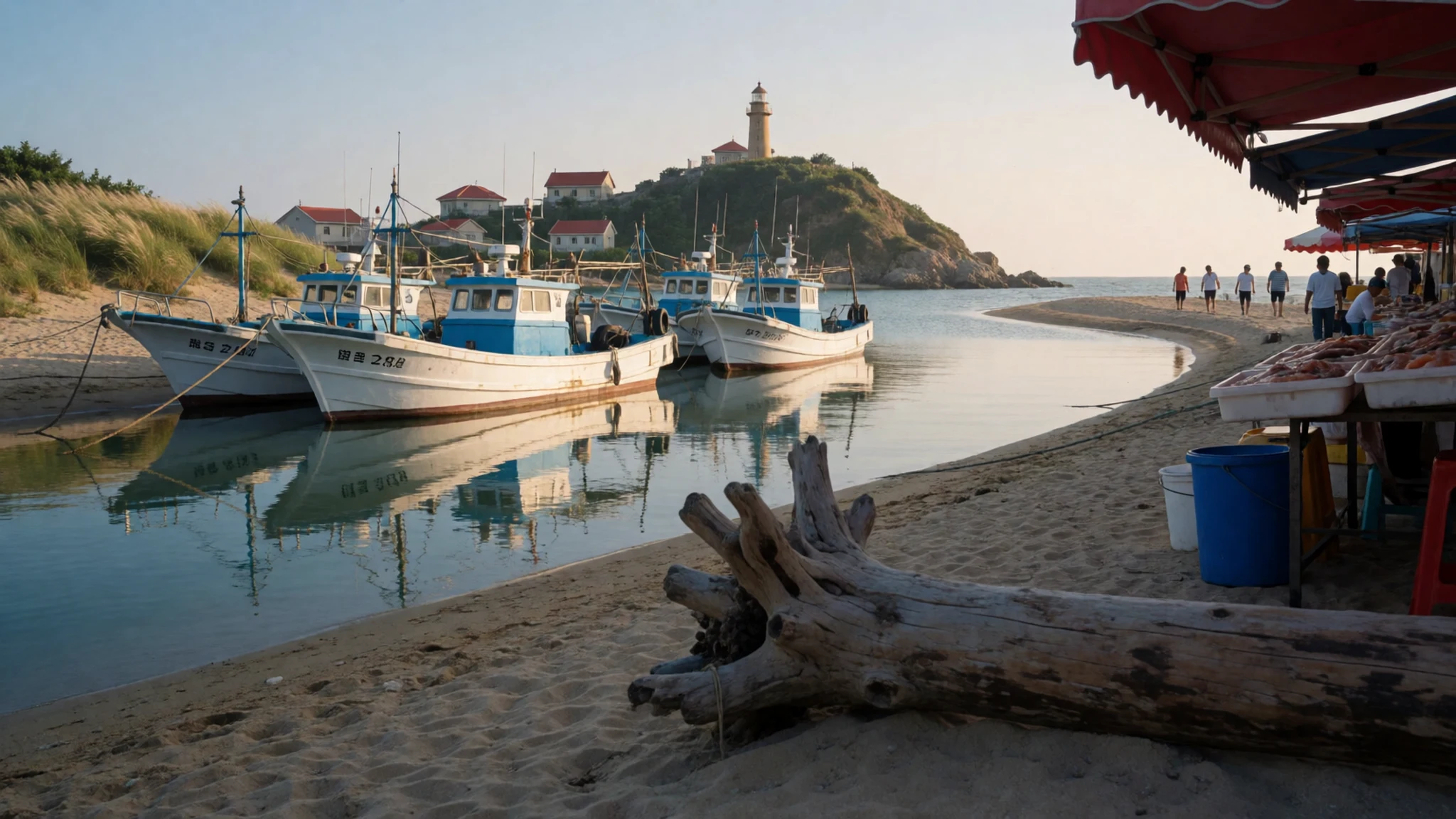
- Kaohsiung Music Centre — Yancheng, on the Love River
The Kaohsiung Music Centre sits on the Love River near the harbour, a cluster of white, wave-like halls built for performance. The Great Tiger Bridge, striped and angular, crosses beside it and joins the same view, especially when lantern festivals use the river as a stage. By day the plazas are open public space; after dark the complex joins the lit waterfront. Concert nights follow the official programme.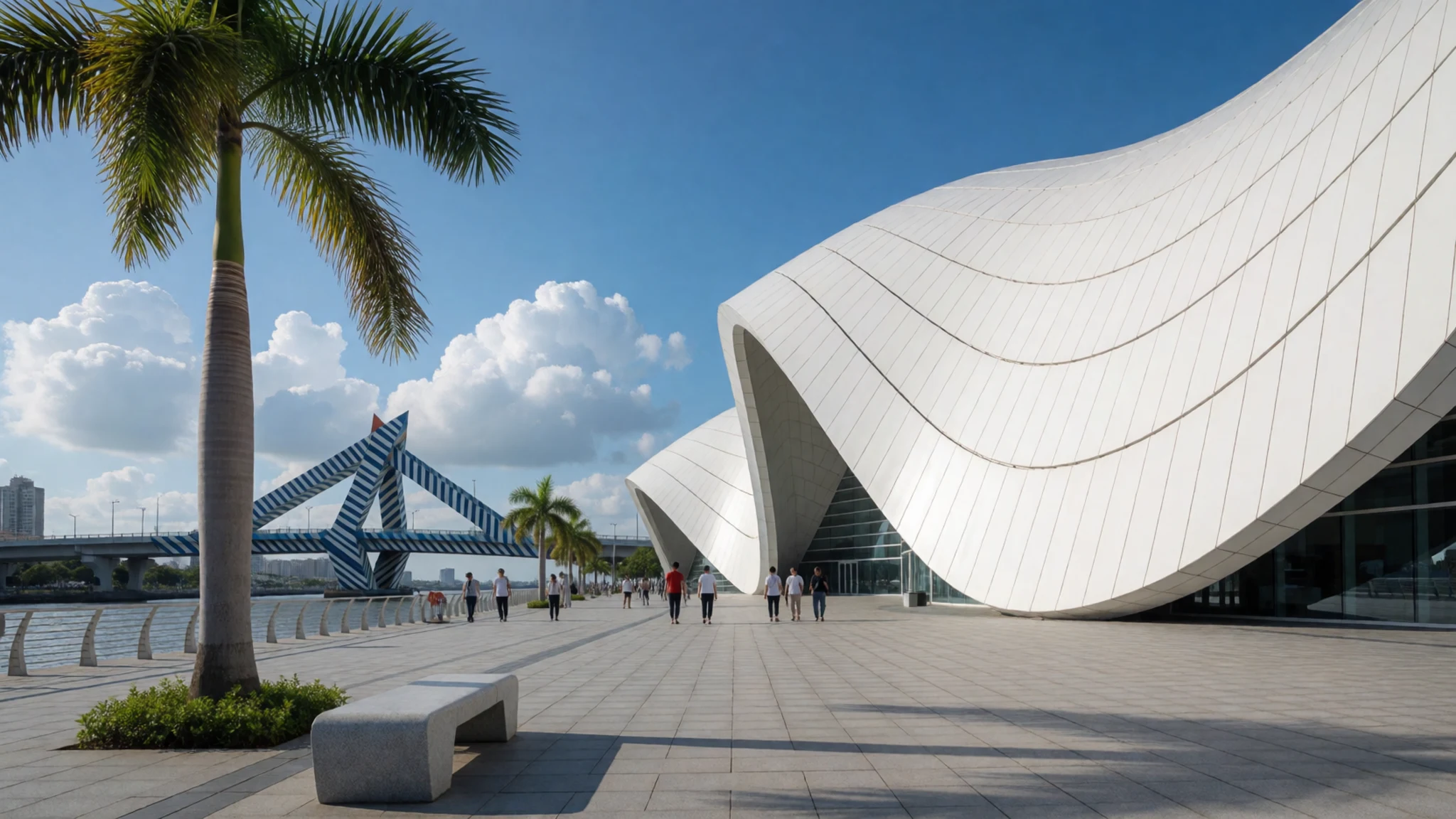
- Shoushan — Gushan
Shoushan, also called Monkey Mountain, is the limestone ridge on Kaohsiung's western edge. Trails cross restored forest above the harbour, with lookouts towards the skyline and the strait. Formosan macaques live on the hill and are used to people, so food stays in the bag and distance is wise. Water matters, and an early start is kinder in the hot months.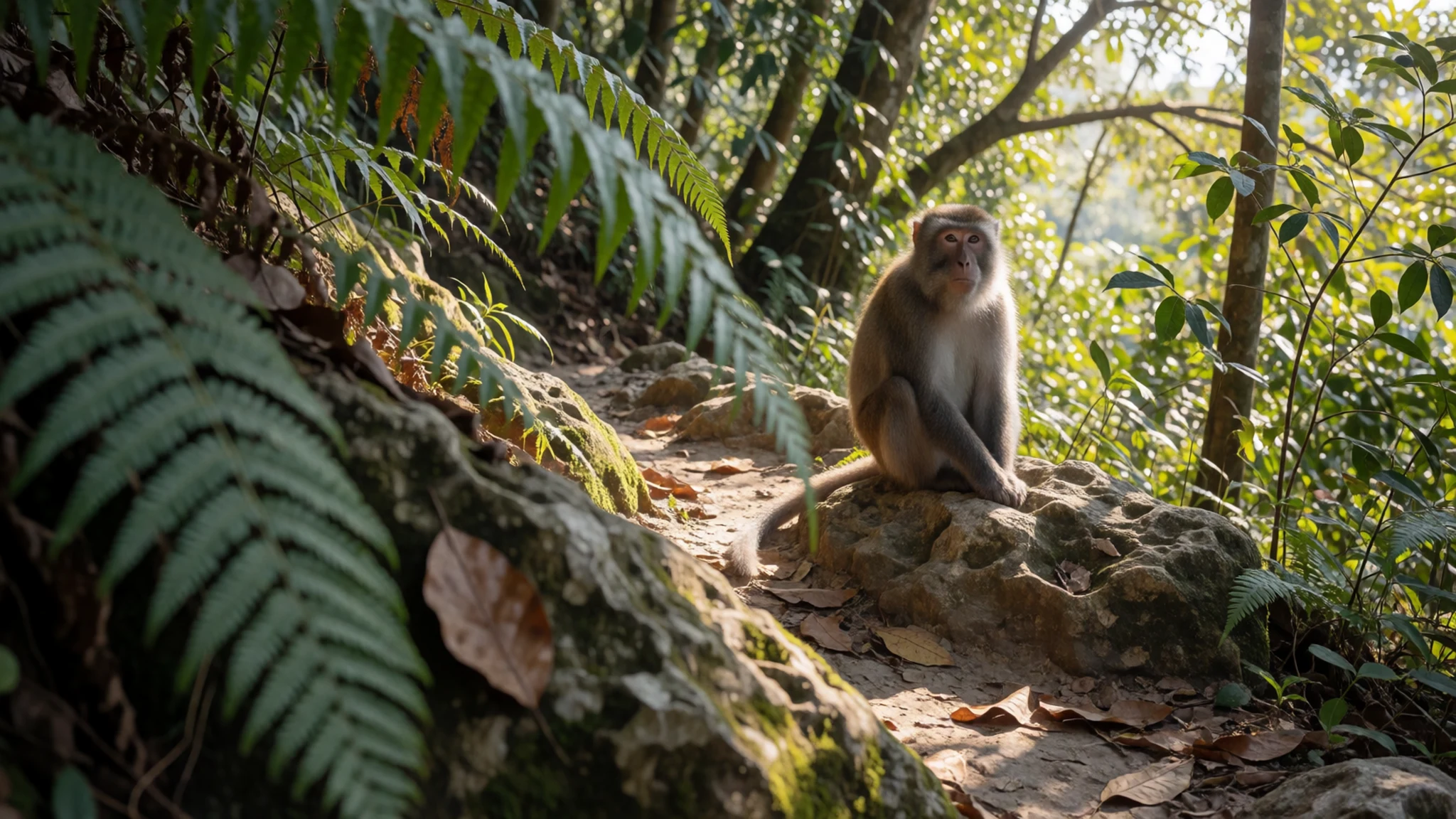
Culture
Kaohsiung's cultural life runs on temples, night markets and the harbour rather than on a single museum district. Lotus Lake and neighbourhood shrines keep a busy calendar of Mazu and other deities: incense, drumming, festival days and the ordinary habit of stopping in on the way past. Night markets are where the city actually gathers: families, students and shift workers eating standing up, shopping for cheap clothes and fruit, and treating the street as a public room. Taiwanese Hokkien carries a lot of that street talk; Mandarin dominates schools, offices and the metro announcements; Hakka associations and indigenous communities from the nearby ranges add their own festivals and food. The Japanese-era grid and the post-war industrial yards still shape how people move, but the river clean-up and the pier warehouses have given the city new rooms for music, design and lantern festivals. Everyday manners are practical and direct. At Kaohsiung's temples, keep your voice down, do not block worshippers for photographs, and remove your shoes wherever a step and slippers show that you should.
What to wear
Kaohsiung dresses for heat first. Festival and formal dress still includes the qipao, or cheongsam, a tailored silk or satin sheath worn for banquets, weddings and Lunar New Year visits, and simpler cotton jackets or mandarin-collar shirts appear at temple fairs. Hakka communities keep the blue tunic and the bright floral cotton associated with Hakka making, while indigenous groups from the southern ranges — including Rukai and Paiwan families with ties to the city — wear patterned textiles, beadwork and embroidery for ceremony rather than for the commute. On an ordinary day Kaohsiung chooses light, loose clothes: breathable cotton and synthetic sports fabrics, shorts, sandals or trainers, sun sleeves and a hat from late morning. Young people around the pier warehouses and the music halls dress in the same casual city fashion seen across Taiwan, with lighter cloth than in the cooler north. A visitor does well to copy that practical layer: shoulders and knees covered when entering active temple halls, shoes that can come off quickly at a threshold, a hat and sunscreen for Lotus Lake and Cijin, and a light waterproof in the wet months. A thin layer helps on winter evenings by the river. Trainers or sturdy sandals beat smart leather on temple courts, market streets and Shoushan paths.
What to eat
- Coffin bread — Liuhe Night Market and other night markets
Coffin bread is a Kaohsiung street classic: thick white toast hollowed, fried and filled with a thick stew, often seafood, then closed with the lid. Eat it hot at the stall. Liuhe Night Market is the usual place to look, along with other large night markets in the city.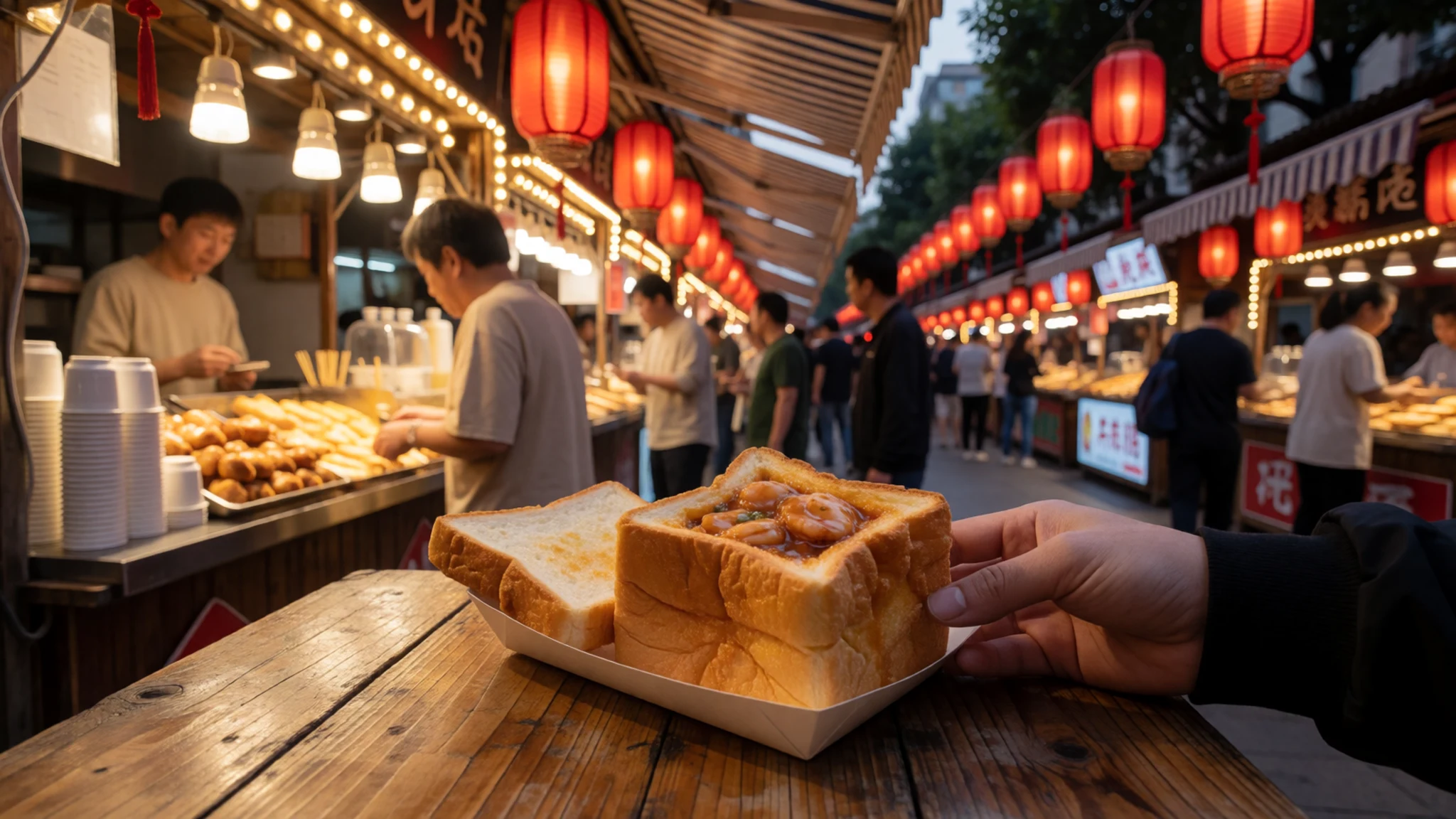
- Eel noodles — older commercial streets and night markets
Eel noodles are a southern Taiwanese bowl: a dark, slightly sweet eel sauce on wheat noodles, with strips of eel on top. Kaohsiung shops ladle them out from morning into the night. Try older commercial streets and night-market noodle counters rather than a general snack stall.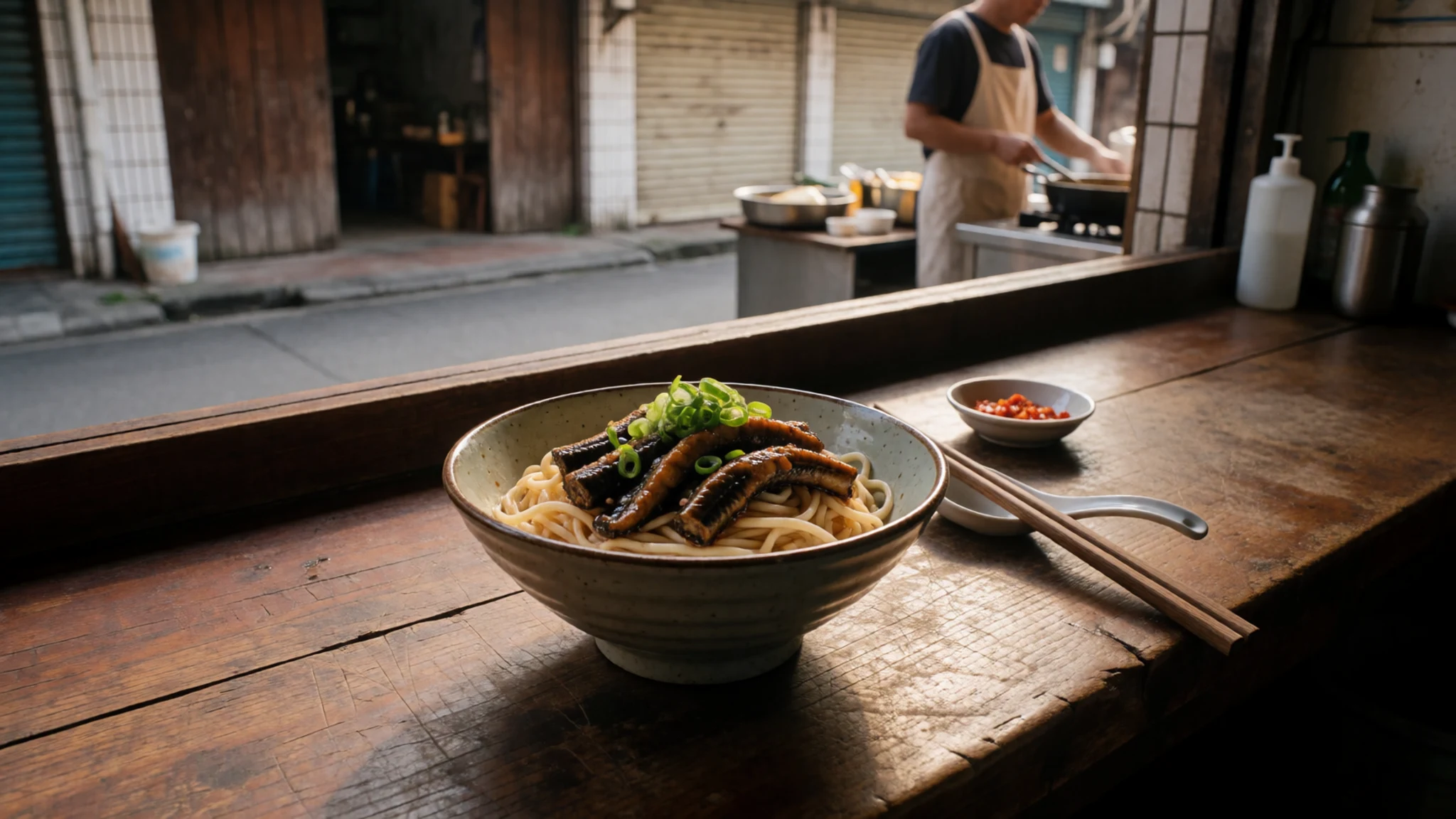
- Papaya milk — juice stalls at Liuhe and other night markets
Papaya milk is the night-market drink Kaohsiung is known for: ripe papaya blended with milk into a cold, thick cup. The same stalls often blend watermelon, wax apple and mixed fruit. It is drunk standing up, between savoury snacks. Find it at juice stalls in any busy Kaohsiung night market. - Oyster omelette — night markets across the city
The oyster omelette is a sticky, crisp-edged starch pancake with small oysters and greens, finished with a sweet-savoury sauce. In Kaohsiung it is standard night-market cooking, eaten at a table beside the stall. A queue at a busy market is a better guide than a quiet side street. - Harbour seafood — Cijin and the Gushan side of the ferry
Grilled squid, shrimp and whole fish are everyday harbour food in Kaohsiung, often cooked near where the boats tie up. Cijin and the Gushan side of the ferry are the areas to wander. Choose a busy open-front eatery by the crowd. Freshness matters more than a long menu.
Plan it
Best time. December to March is the kinder season in Kaohsiung: days are warm rather than punishing, rain is lighter, and the river paths and Cijin are comfortable to walk. From late spring through summer the city is very hot and humid, with heavy showers, and typhoons are possible into autumn. A river lantern festival is a lively extra when it falls; confirm the dates on the official city site.
How long. 2–3
Getting there. Kaohsiung International Airport lies within the city, and the metro runs towards the centre. Taiwan High Speed Rail arrives at Zuoying, on the northern side, where the metro continues; conventional trains use Kaohsiung Main Station. The last leg is the metro, a bus or a short taxi hop. A passenger ferry crosses from Gushan to Cijin.
Budget. low
Tips
- Ride the metro between the airport, Zuoying and the riverfront, and start Lotus Lake or Shoushan early, before the heat builds.
- Night markets are busiest after dusk and at weekends; go early in the evening if a slow shuffle does not appeal.
- Carry some cash for small stalls. Cards are widely used in larger eateries and malls, but many market counters still prefer cash.
- In the wet months, read the typhoon forecast before committing a day to the Cijin ferry.
- For an evening at the Kaohsiung Music Centre, follow the official programme rather than hoping to walk up.
Etiquette
- At temples, speak quietly, let people finish praying before you photograph them, and take off your shoes where slippers are waiting.
- Do not feed the macaques on Shoushan, and keep food sealed in a bag.
- Queue for the metro, and at a night-market stall order, eat and step aside so the queue behind you can move.
Nearby
Sources
- Wikidata Q181557 (CC0)
- Wikipedia: Kaohsiung (CC BY-SA 4.0)
- Wikivoyage: Kaohsiung (CC BY-SA 4.0)
Wildlife
- Formosan macaque (animal)
The Formosan rock macaque is Taiwan's own native monkey: apart from people, it is the only primate that belongs naturally to the island. In Kaohsiung, these monkeys live on the hill and have grown accustomed to visitors. Watch them calmly from a sensible distance, and never offer them anything to eat; keep every snack zipped away in your bag, and simply enjoy their company.