Kaas Plateau
Kaas Plateau, India
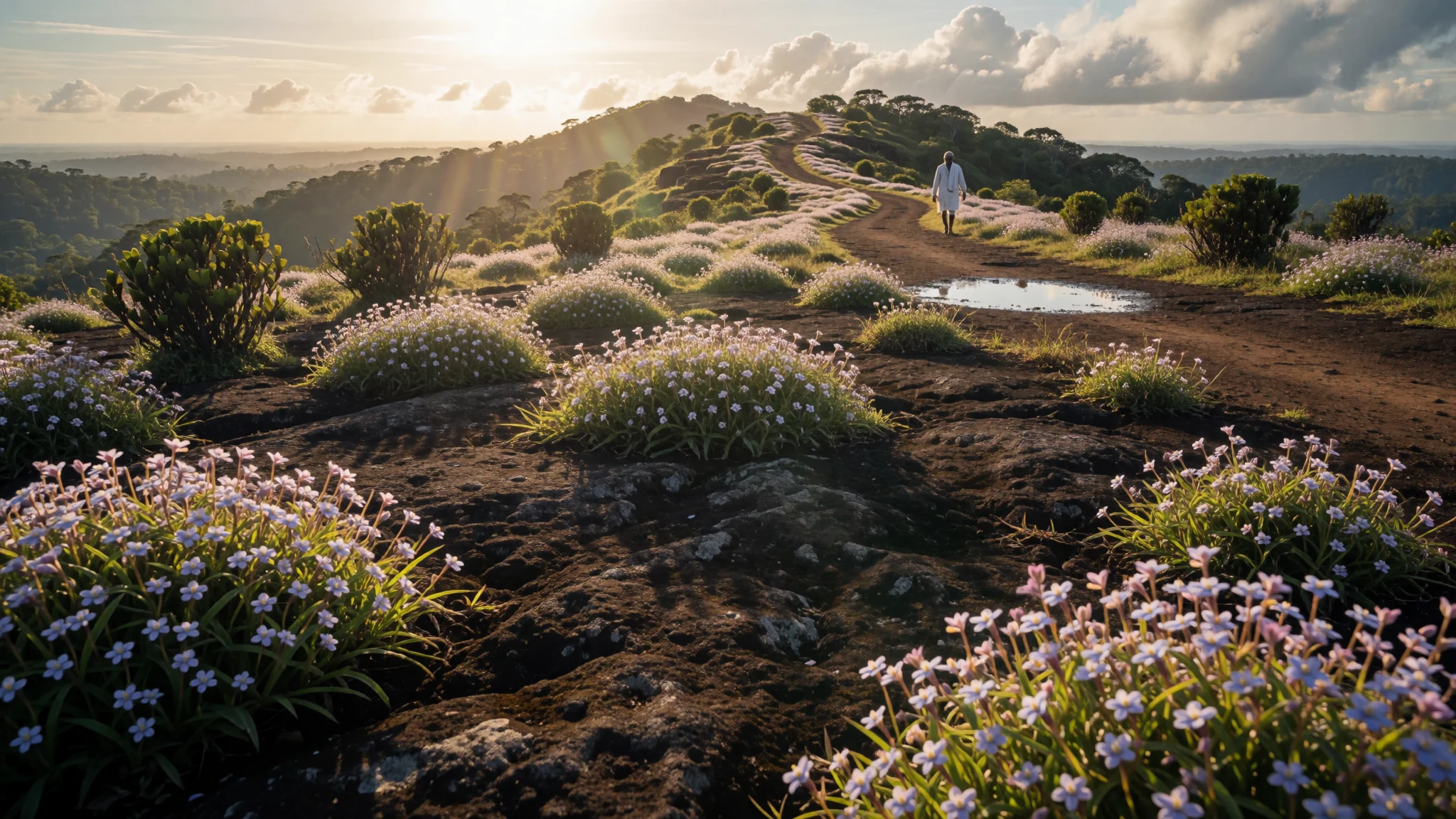
Kaas Plateau is a high basalt tableland in Maharashtra that turns into a carpet of tiny wildflowers and butterflies after the monsoon.
The place
Kaas Plateau sits in Maharashtra's Satara district, about 25 km west of Satara city, at an altitude of 1200 m. It is a flat-topped shelf of volcanic basalt covering roughly 10 square kilometres, part of the Sahyadri section of the Western Ghats, and mostly protected as reserve forest. Signboards and maps also write the name as Kas Pathar, and 'pathar' simply means a rocky tableland. What makes the place unusual is how little soil it has. The rock lies close to the surface under a skin of eroded earth rarely thicker than 25 mm, so trees cannot take hold. Grasses and small herbs can, and they have adapted to the thin, quickly drying ground. Where the uneven rock holds a puddle, a different set of plants gathers around the water. After the monsoon rains, the brown-green top becomes a patchwork of small flowers: orchids, the shrub known as Karvy, and insect-eating sundews such as Drosera indica. Endemic butterflies arrive alongside them. The display is brief, concentrated in August and September, and which flowers are out depends on the week and on that year's rain. Outside the season the plateau is quieter, drier and plainer, a grassy upland with the Ghats around it. It became part of the UNESCO World Natural Heritage listing in 2012. Reaching it is straightforward, either directly from Satara or from Tapola by the link road that joins Mahabaleshwar and Panchgani to the plateau.
Its story
The story of Kaas Plateau is one of rock and water rather than kings and battles. The basalt that forms the plateau is volcanic in origin and lies exposed to the air, so wind and rain have worked on its surface for a very long time without ever building deep soil. That thin, patchy layer explains why the plants are mostly low herbs and grasses, and why many of them are tied to this one locality. The uneven surface catches seasonal pools, and each pool becomes a small habitat of its own. People came here for water as much as for flowers. Kas Lake was built about 100 years ago and still supplies the western part of Satara city by gravity alone, with no pumping needed. Much of the plateau is reserve forest, which gives the open grassland a formal layer of protection, and the northern part of the Koyna Sanctuary lies about 20 km away. Wider recognition came in 2012, when Kaas was included with other Sahyadri sites in the UNESCO listing of the Western Ghats. Fame has brought its own difficulty. The flowers last only a few weeks, and soil of 25 mm does not forgive trampling. Managing how many people walk on a surface this fragile is an ongoing balancing act, which is why entry rules are controlled and tend to change from season to season.
What to see
- The main flower beds — Kaas Plateau Reserved Forest, Satara district
The open basalt top of Kaas Plateau is where the bloom is easiest to read: broad patches of single colours, one species taking over each stretch of ground for a week or two before another replaces it. Early morning light and low mist make it most photogenic, and the rock stays slippery after rain.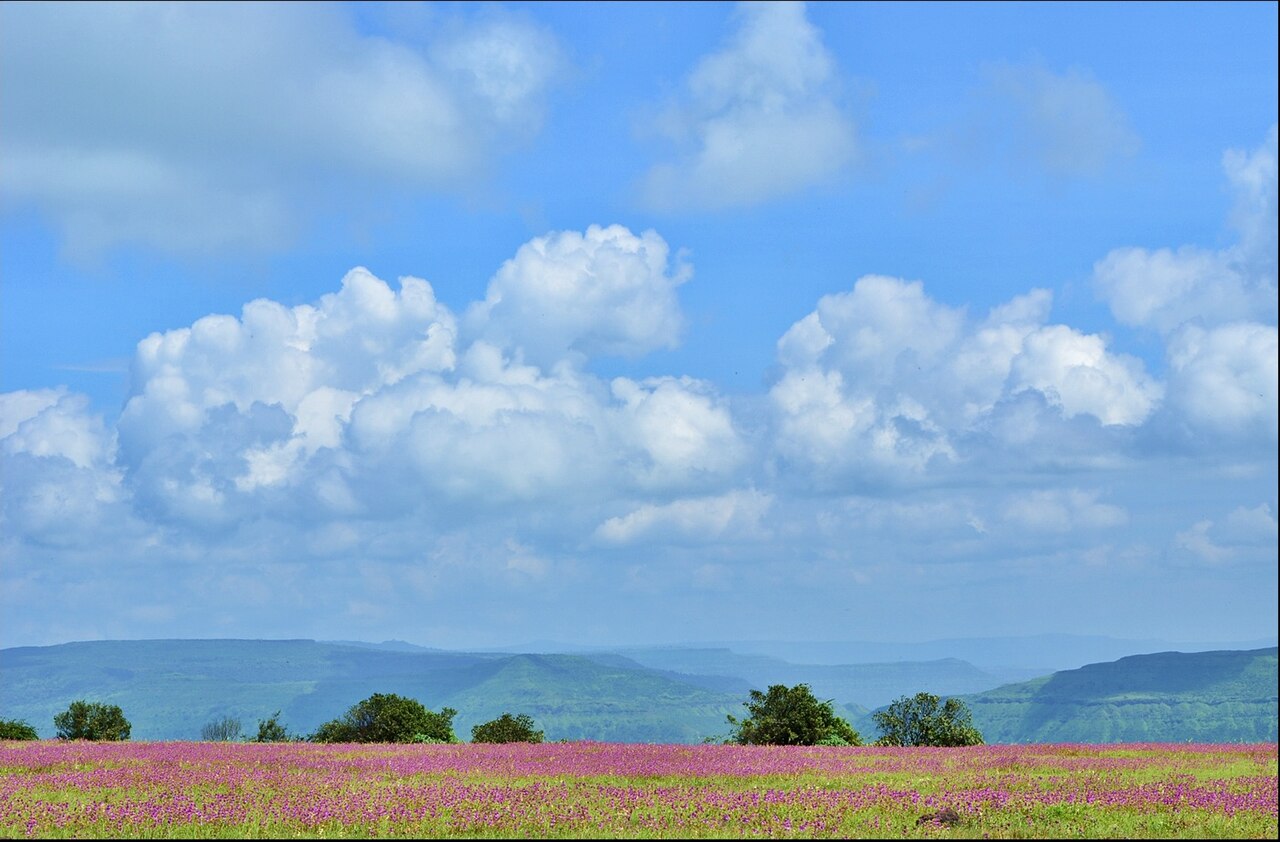
- Aabhali and other tiny commelinids — Along the marked trails
Small blue and purple flowers such as aabhali (Cyanotis tuberosa) and Murdannia lanuginosa are easy to miss at standing height. They sit close to the rock in clusters, and a macro lens or a patient crouch beside the path rewards the effort. Each flower is only a few days old at best.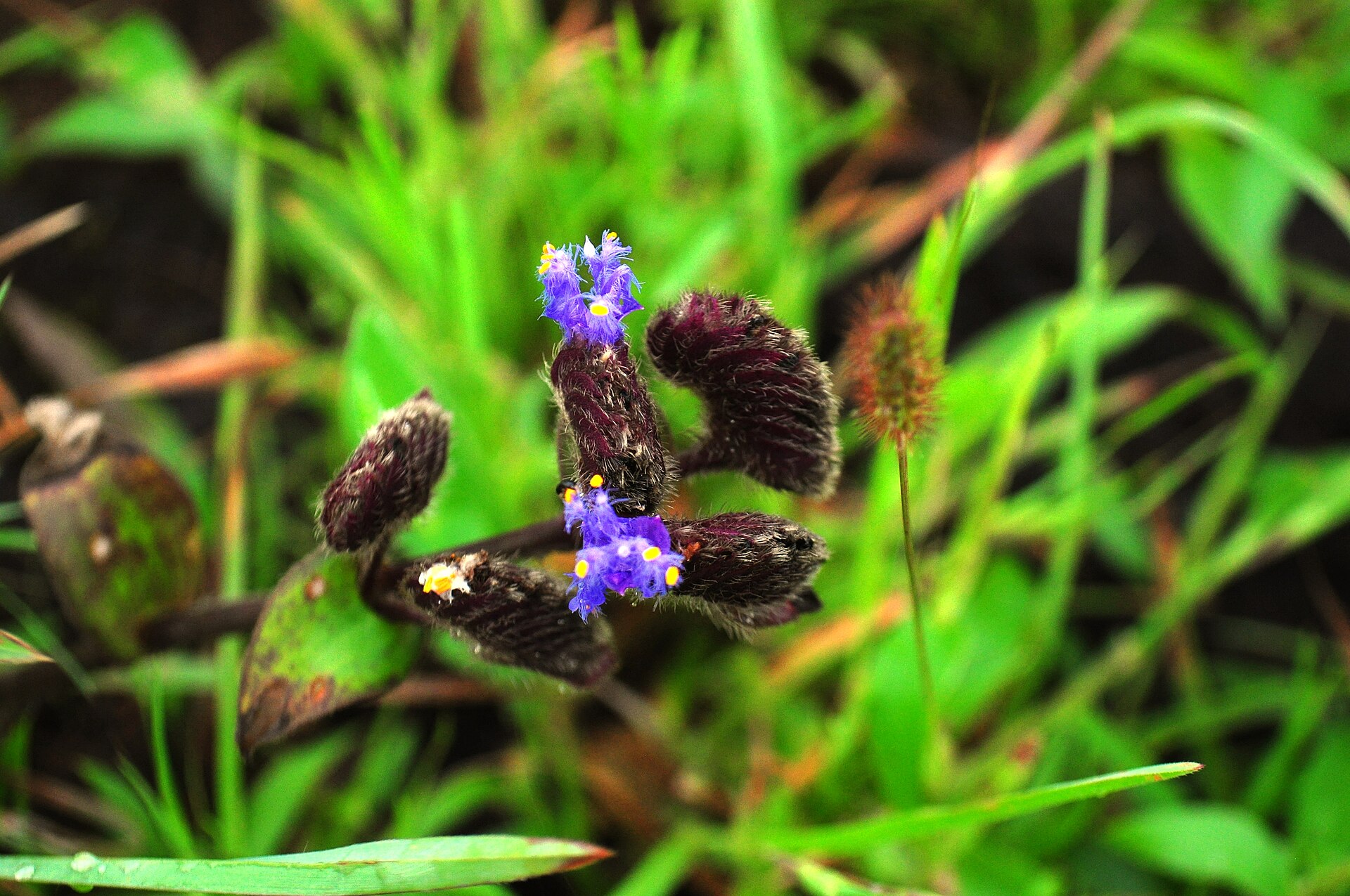
- Kandil kharchudi (Ceropegia vincifolia) — Grassy margins of the plateau
This odd little wildflower, known locally as kandil pushpa or kandil kharchudi, has a narrow lantern-like bloom that Marathi names compare to a hanging lamp. It grows among the grass and shrubs rather than in showy mats, so spotting one feels like a small find. Local guides can point it out.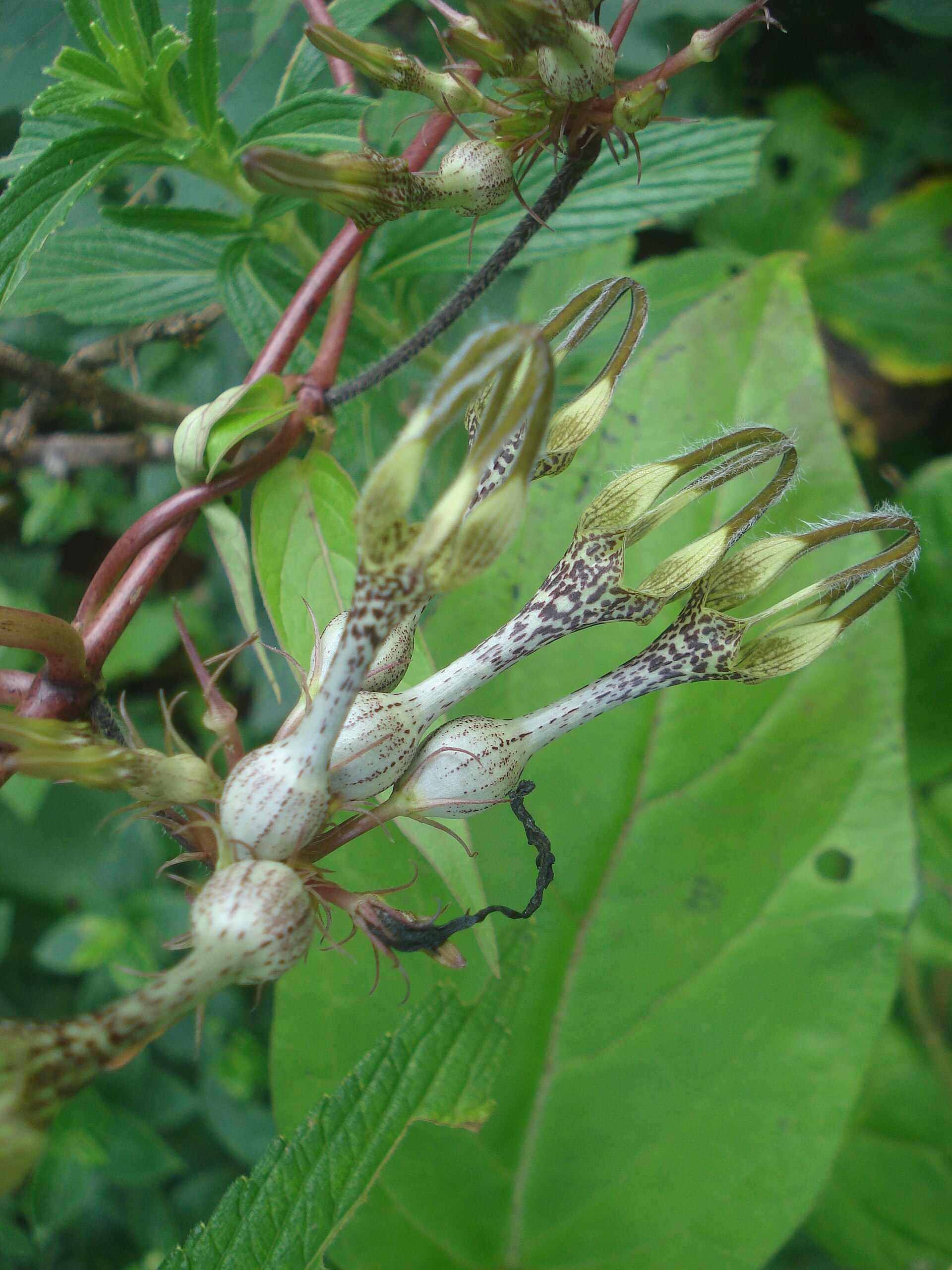
- Sundews and orchids — Damp hollows and rock pools
The carnivorous Drosera indica, a sundew with sticky, glistening leaf hairs, grows in wetter hollows and traps tiny insects for extra nutrients. Orchids and the flowering shrub Karvy share the plateau. These are best admired from the path, since a single misplaced foot can crush a whole colony.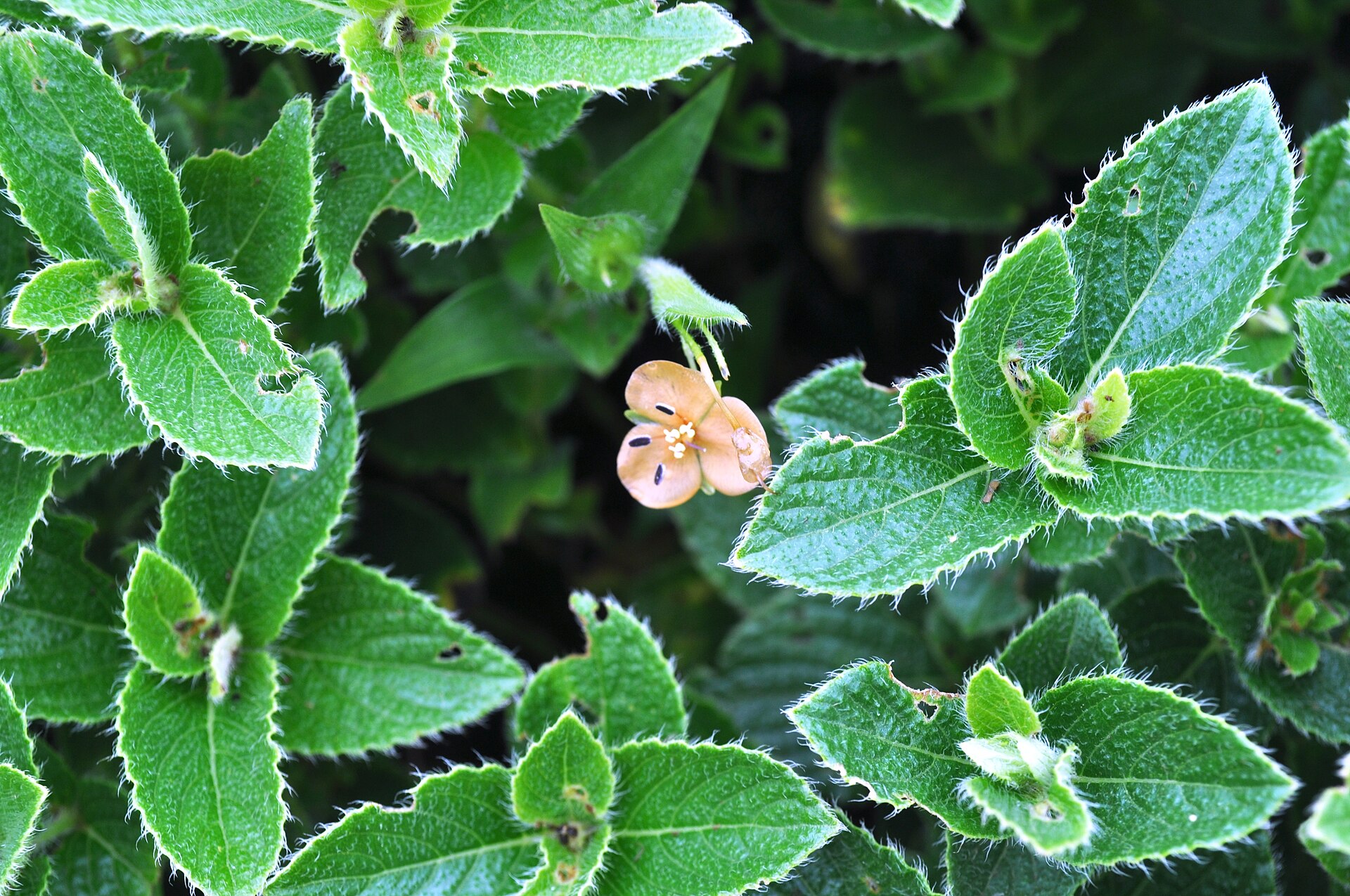
- Kas Lake — Below the plateau, near Kas village
Kas Lake was built about 100 years ago and still sends water by gravity to the western part of Satara city. The reservoir lies below the plateau in forested hills and gives a calmer, greener contrast to the open rock above, with a good place to sit once the flower walk is done.
Culture
Kaas Plateau lies in Marathi-speaking country, in the hills of Satara district, where the monsoon shapes the calendar as much as any festival. Farming villages along the Sahyadri edge plant and harvest by the rains, and the flower season has become a yearly event that fits into this rhythm. Ganesh Chaturthi, the big Maharashtrian festival for the elephant-headed god Ganesha, usually falls in late August or September, so a flower visit can coincide with processions, drumming and busy roads around Satara. The district has a strong Maratha heritage, and pride in that history shows in local conversation, in statues and in the hill forts of the region. On the plateau itself the culture is mostly that of day-trippers: families, school groups, photographers and botany students, many arriving from Pune and Mumbai at weekends. Local people run simple stalls selling tea, snacks and roasted corn, and a friendly 'namaskar' goes down well. Photography is the main activity, but people deserve a polite request before being photographed, especially women and children. Some visitors treat the plateau as a picnic ground, which the forest authorities discourage, and the quiet early hours attract the most serious naturalists. Keep to the marked paths, never pick or step on the flowers, and carry all your litter out, because the thin soil and short bloom cannot take damage.
What to wear
Around Kaas Plateau, traditional Maharashtrian dress means the nine-yard nauvari sari, also called kashta, worn in a draped style that passes between the legs for ease of movement. It is made in cotton or in Paithani silk with woven borders and peacock motifs, and is kept for weddings, Ganesh Chaturthi and other festivals. Men wear a dhoti or kurta with a pheta turban or a white cap on ceremonial days. Day to day, most people near Satara wear far simpler clothes: cotton salwar kameez or saris for women, shirts and trousers for men, with jeans and T-shirts common among younger people and weekend visitors from Pune and Mumbai. Farm workers often wear rubber sandals or plain closed shoes in the wet. A visitor in August or September should plan for rain, wind and cool mist at 1200 m. A light waterproof jacket, quick-drying trousers and a hat are more useful than anything fashionable. Footwear matters most: wet basalt is slippery, so shoes with a real grip are far better than flip-flops. Modest, loose clothing is comfortable and fits local norms, with shoulders and knees covered if the group stops at a village shrine or temple. Bring a change of socks, since the grass and puddles soak feet quickly.
What to eat
- Kande bhaje — Roadside tea stalls near the plateau entrance and in Satara town
Crisp onion fritters made with sliced onion and gram-flour batter, and a classic monsoon snack across Maharashtra. They taste best hot from the pan on a damp, misty day, with a cup of sweet tea, and are a natural reward after walking the plateau. - Pohe — Small eateries and tea shops in Satara and the villages on the way
Flattened rice cooked with onion, mustard seed and curry leaves, often finished with lemon and fresh coriander. It is the usual breakfast and the snack a Maharashtrian host offers a guest. A batata pohe variant uses diced potato instead of onion. - Vada pav — Snack stands at bus stands and crossroads along the Satara approach
A spiced fried potato dumpling squeezed into a soft bun, served with a garlic and chilli chutney and a fried green chilli. It is cheap, filling, and easy to carry onto the plateau as a packed snack on a long walk. - Chivda — Provision shops and sweet shops in Satara
Spiced flattened rice mixed with peanuts, curry leaves and sometimes dried coconut, crunchy and dry enough to keep well in a bag. It is a sensible trail snack when the rain makes sitting down to eat unappealing. - Solkadhi and kokum sherbet — Local thali restaurants and eateries in Satara and on the Mahabaleshwar–Panchgani road
Solkadhi is a pink, tangy drink of kokum and coconut milk, popular on the Konkan side of the state, while kokum sherbet is the sweeter cooler. Both are refreshing and aid digestion after a spicy meal, and are worth ordering if offered.
Plan it
Best time. Late August to late September, when the post-monsoon wildflowers and butterflies are at their peak; the exact weeks shift with each year's rain, so check recent reports before booking. Expect rain, mist and wet, slippery rock at that time. Outside the season the plateau is drier and plainer.
How long. 1–2
Getting there. Fly to Pune (PNQ) or Mumbai (BOM), then continue by road to Satara city; the plateau is about 25 km to the west. A second route runs from Tapola, along the link road that joins Mahabaleshwar and Panchgani to Kaas. The last leg is by road, so a hired car or local taxi is the simplest way to go.
Budget. low
Tips
- Check the forest department's official booking and entry arrangements before travelling, as visitor limits and timings can change each season
- Go on a weekday or at the earliest permitted hour, since weekends in peak bloom bring large crowds
- Carry a rain jacket, water and snacks, and wear shoes with a firm grip for wet basalt
- Bring cash for small tea and snack stalls, as card and mobile network coverage can be patchy
- Allow a second day if the weather is cloudy, because mist can hide the flowers and the views
Etiquette
- Stay on the marked paths and do not pick or step on any flowers
- Carry out all litter, including food wrappers and plastic bottles
- Ask before photographing local people
Nearby
Sources
- Wikidata Q6343582 (CC0)
- Wikipedia: Kas Plateau Reserved Forest (rev 1379422035) (CC BY-SA 4.0)
- Wikivoyage: Maharashtra (rev 5372363) (CC BY-SA 4.0)
- Photo: Kaas Plateau - A World heritage site (Parabsachin) (CC BY-SA 4.0)
- Photo: Aabhali flower, Cyanotis tuberosa (Ghumakkar Punit) (CC BY 3.0)
- Photo: Murdannia lanuginosa at Kaas Plateau (Ghumakkar Punit) (CC BY 3.0)
- Photo: Ceropegia vincifolia, Kandil kharchudi (Kvvaibhav) (CC BY 3.0)
- Photo: Kaas Pathar (Koushik 7) (CC BY-SA 4.0)
- Photo: Kaas Pathar, Satara, 2018 (Koushik 7) (CC BY-SA 4.0)
- Photo: A bright morning on the fully bloomed Kaas plateau (Apoorva Karlekar) (CC BY-SA 4.0)
- Photo: Kas Flowers (Sumit Magdum) (CC BY 3.0)


