Joal-Fadiouth
Joal-Fadiouth, Senegal
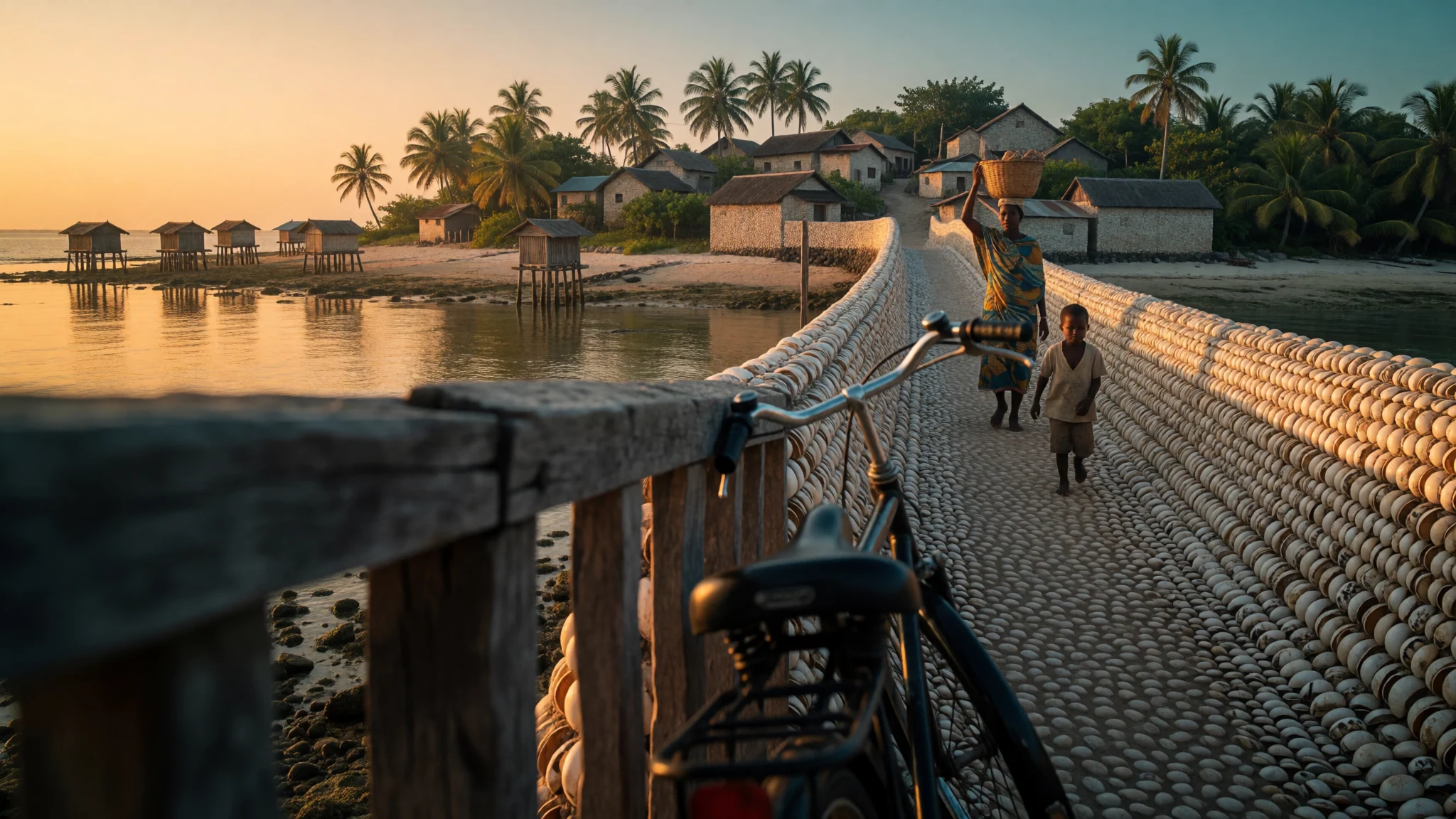
Joal-Fadiouth is a car-free island built of clam shells, with a shared Christian and Muslim cemetery and mangrove creeks full of birds.
The place
Joal-Fadiouth sits at the southern end of Senegal's Petite Côte, south-east of Dakar in Thiès Region. It is a commune of about 62,000 people, and the land lies almost at sea level, around 7 m. It is really two places. Joal is the mainland town, with a busy fishing shore and a main road lined with small eateries. Fadiouth is the island across a bridge, raised over generations from discarded clam shells that now fill its paths, walls and courtyards. No motor vehicles run there, which gives the island a calm that is rare on this coast. Christians and Muslims live side by side, and their dead rest together on a neighbouring shell island reached by a second bridge. Granaries on stilts stand in the water around the village. Beyond the settlement the land turns to estuary: mangroves, tidal channels called bolongs where river water mixes with the sea, and small shell islets where baobabs and acacias grow. Pelicans, flamingos and gulls feed in the shallows. Much of the commune floods in the wet season. The climate is hot and semi-arid, with no rain from November to May and moderate to heavy rain from June to October, and the area sits between the drier Sahel and the greener Casamance to the south. Most visitors come on a day trip from the beach resorts or Dakar, though a night near the mangroves gives the place more room to breathe.
Its story
The origins of Joal-Fadiouth are still argued over. One account holds that Serer ancestors reached the Petite Côte and the Sine river country after Almoravid pressure in the eleventh century drove them from the Sénégal valley. Another credits the Guelowar, exiles from the kingdom of Kaabu. Both lean on the spread of family surnames to show where people came from, which is suggestive rather than conclusive. Later, Joal grew into a significant trading station. Dutch and Portuguese merchants were operating here by the end of the sixteenth century, and for a time Jewish traders of Portuguese origin lived openly in the town under a local chief's protection, a arrangement that Catholic officials in the Portuguese camp resented. European posts also brought missionaries in the seventeenth century, but local people resisted conversion firmly, and mass evangelisation had to wait until Senegal became a French colony in the nineteenth century. That layered past helps explain today's mix of Catholic and Muslim families sharing one small place. The shell island itself is a slow record of daily life: generations of people gathering clams and tipping out the shells until the heap became ground to build on. Joal is also where Léopold Senghor, Senegal's first president, spent his childhood, and his family home is now open to visitors.
What to see
- Fadiouth island — Fadiouth
Fadiouth island is the reason most people come. Its lanes are paved with shells and free of engines, and the footbridge from Joal sets the pace. Look at how shells are packed into walls, yards and floors. A local guide adds stories, though wandering alone is possible. Early or late in the day avoids tour groups and midday heat.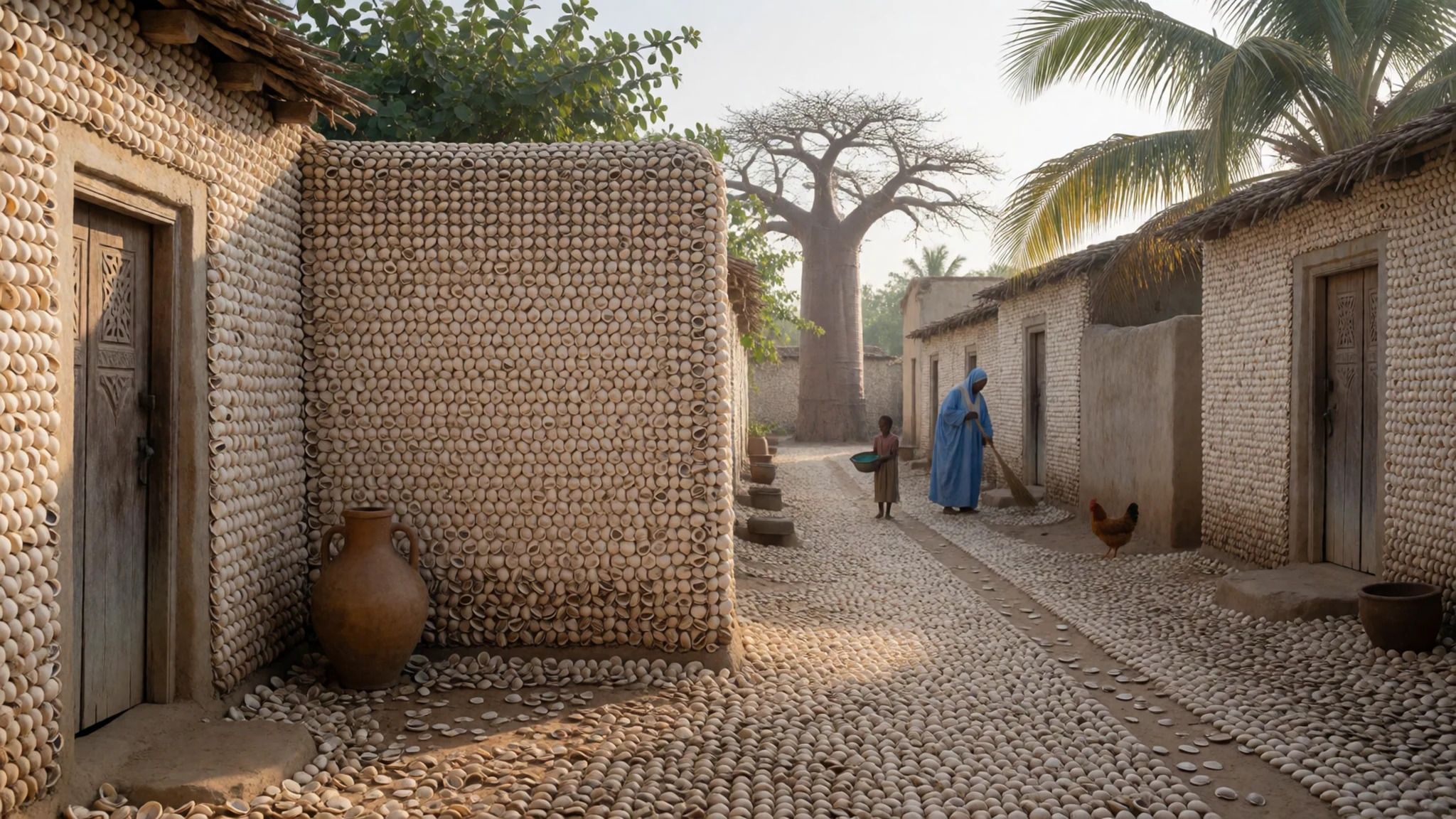
- The shell cemetery — Fadiouth, cemetery island
The cemetery lies on its own shell island, reached by a second bridge. Christian and Muslim graves share the same pale ground, with baobabs rising between them. It is a place for quiet rather than for photographing mourners. Ask your guide what is appropriate, and keep to the marked paths.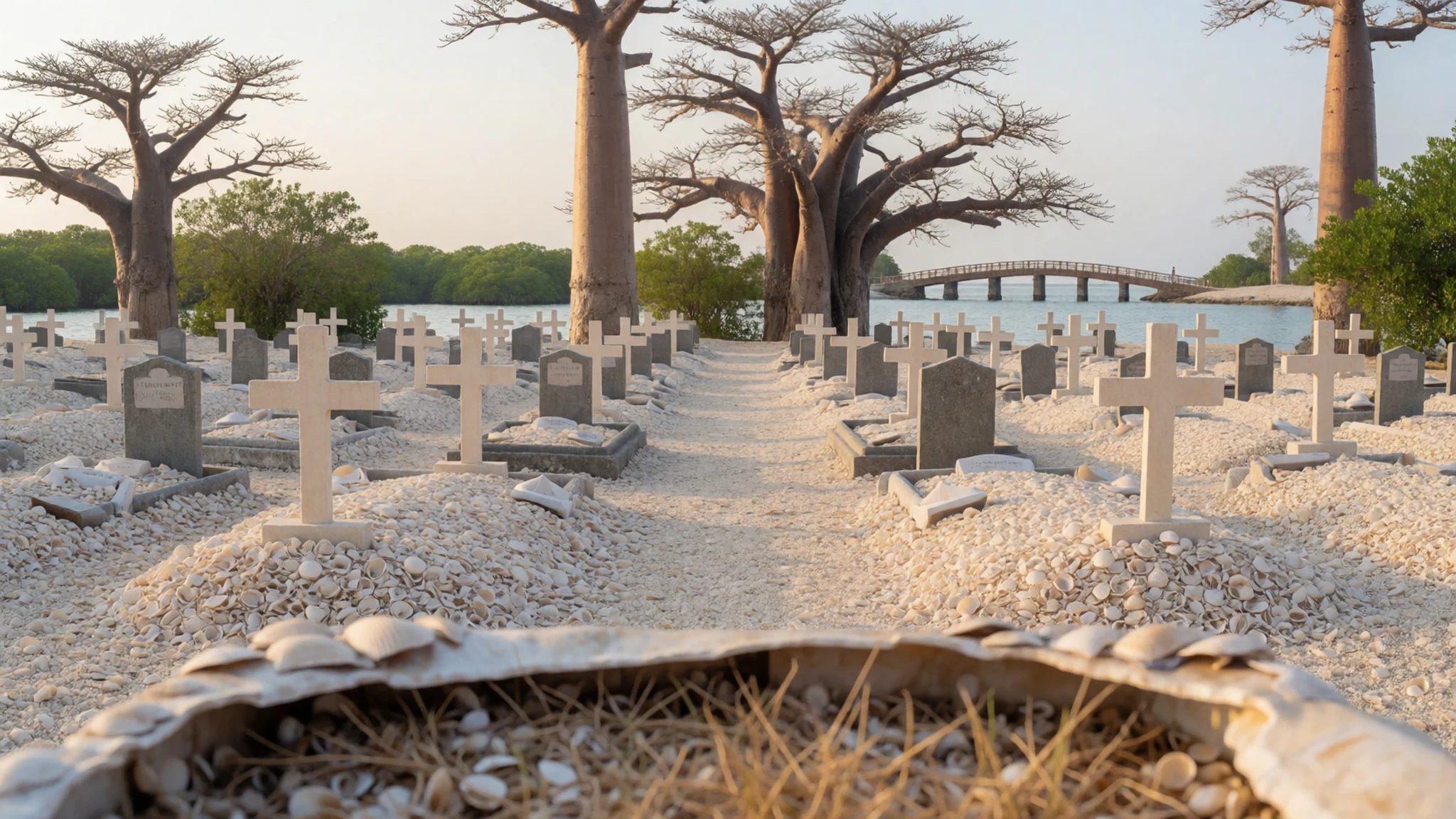
- Fadiouth church — Fadiouth
The island's Catholic church stands among the shell-built houses and shows how deeply Christianity took root here after the colonial period. The interior is simple and bright. If a service is on, stay at the back, and ask before taking any pictures inside.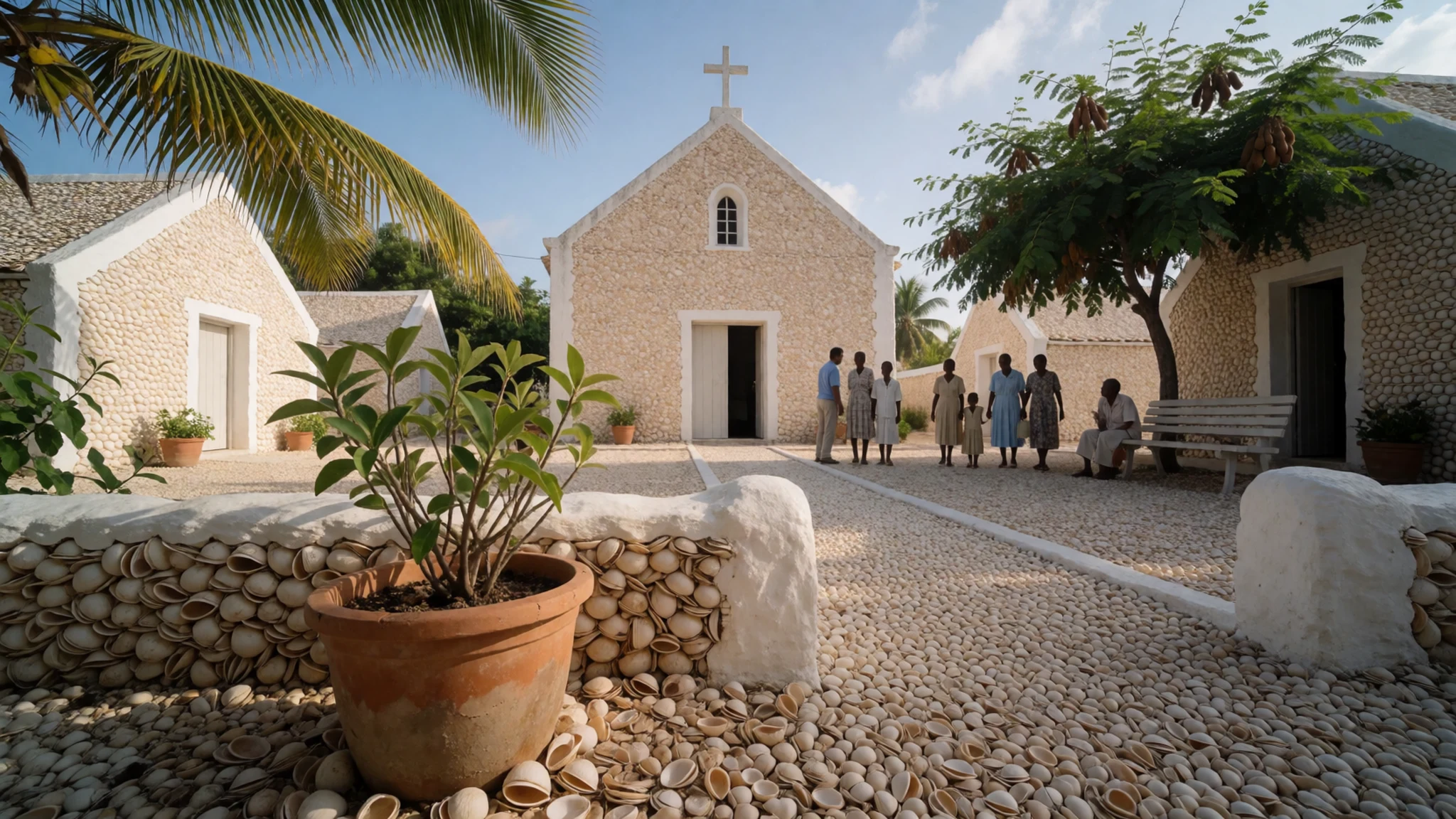
- Joal fishing port — Joal, town entrance
The artisanal fishing port at the town's entrance is busiest when the pirogues come in, around mid-morning and late afternoon. Catches are hauled ashore, sorted and sold in a noisy scramble. It is wet, smelly and lively, so wear shoes that can get dirty and keep belongings close.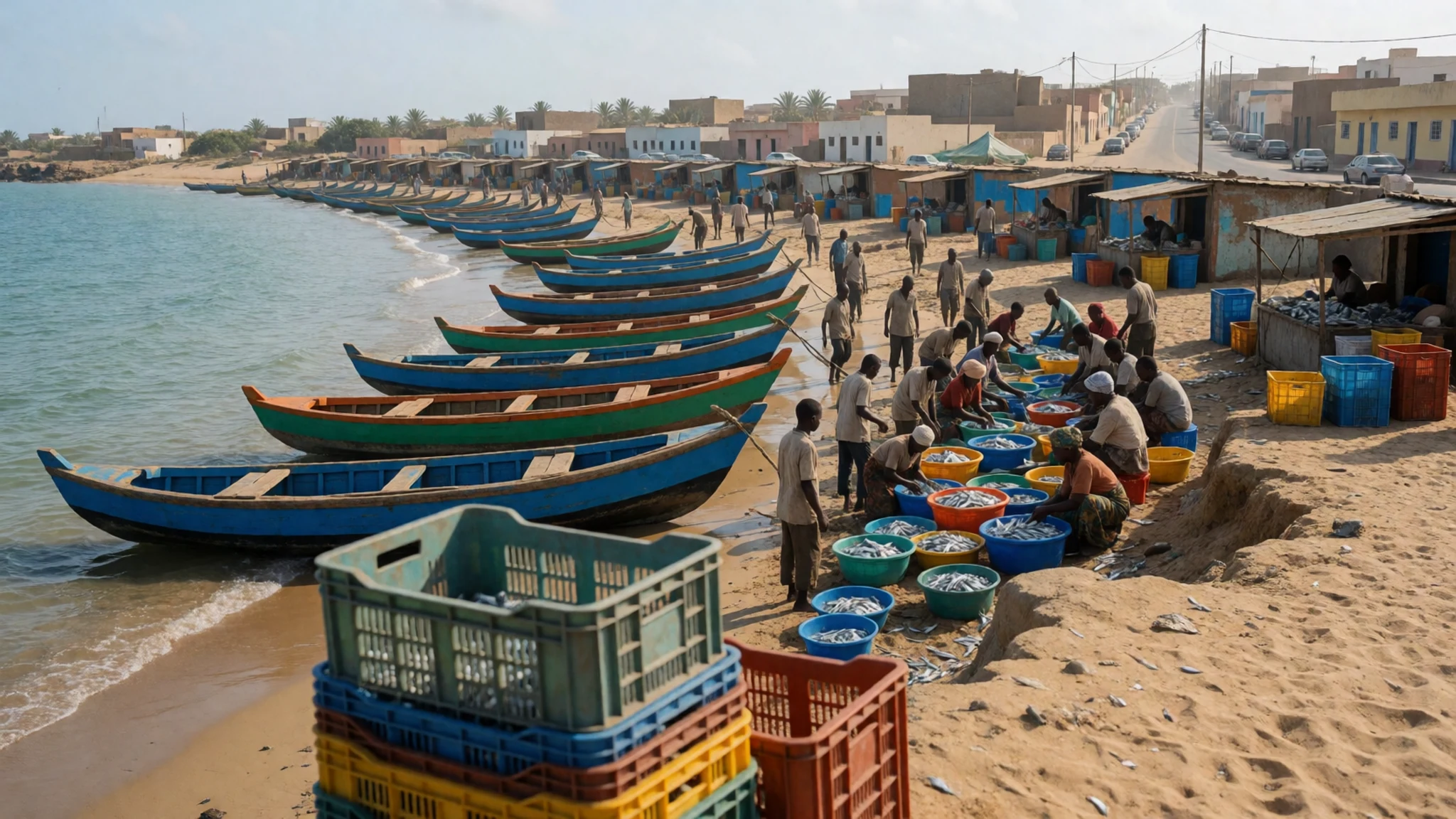
- Mangroves and the marine protected area — Estuary around Joal-Fadiouth
The mangrove channels around the town form a protected marine area. A pirogue trip with a local boatman threads through the bolongs, past shell islets with baobabs, and gives a good chance of seeing pelicans, flamingos and gulls. Tides and season shape what you see, so ask your boatman.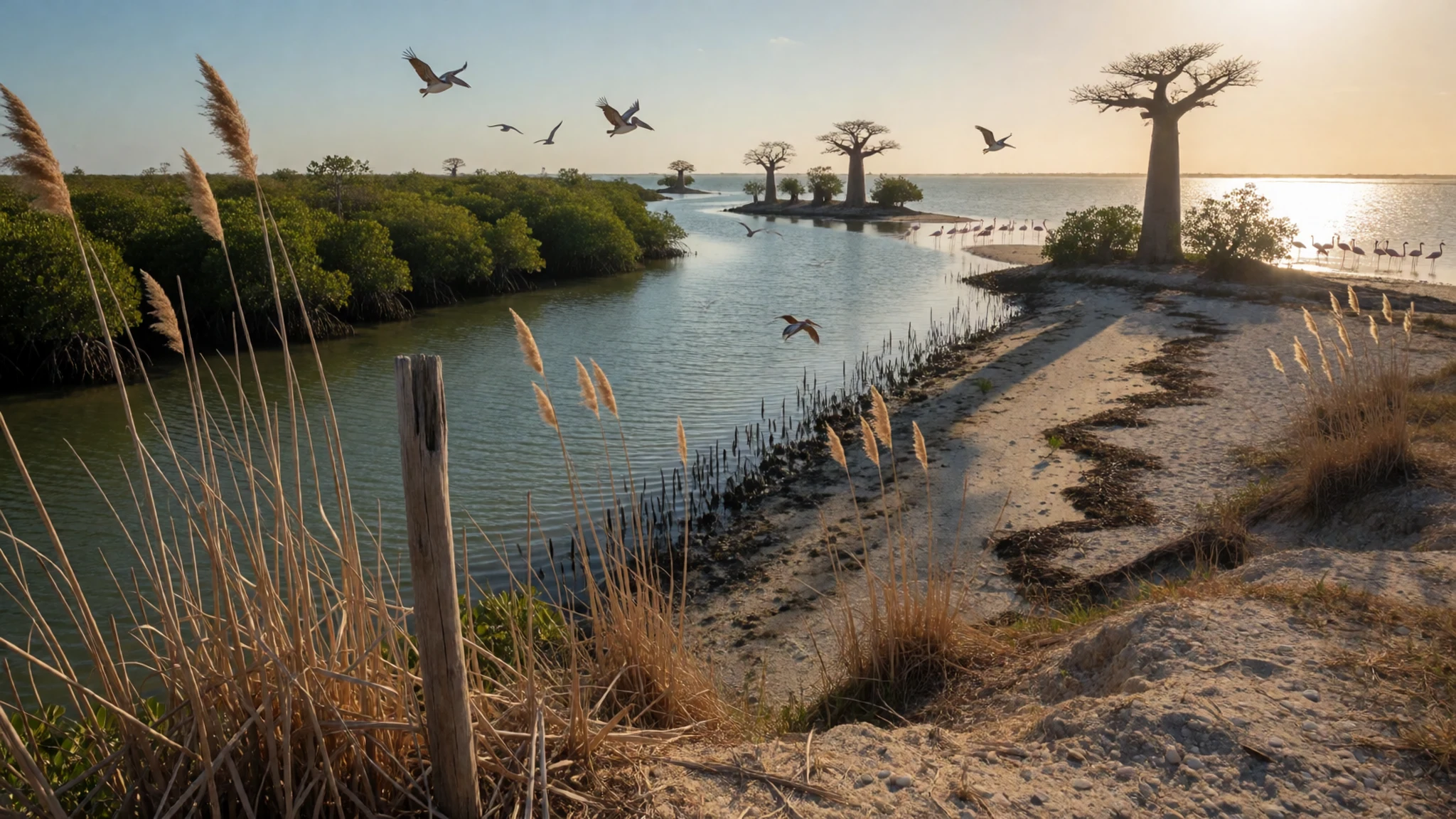
Culture
Joal-Fadiouth is a small place where greetings matter. People here are warm and hospitable, and a proper hello, with a question about how the day is going, opens far more doors than a rushed request. Learning a few words of Wolof helps, even if French is the common language with visitors. Social habits follow wider Senegalese custom. The left hand is considered disrespectful for shaking hands or passing things, so use the right. Calling someone a liar, even when you suspect it, causes serious offence. On Fadiouth the most striking custom is coexistence: Christians and Muslims share the island, and the shell cemetery holds both communities side by side, a fact locals mention with quiet pride. Everyday life runs on fishing, shell gathering, small trade and farming on the mainland. Visitors will often be asked for money or gifts. Many residents and guides say that handing out cash encourages dependence rather than helping, and it is better to pay for a guide, a boat trip, or crafts and food bought directly from the people who make them. Dress and manners at the church and the cemetery should be respectful. Always ask permission before photographing anyone on Fadiouth, and ask your guide before photographing the graves.
What to wear
Joal-Fadiouth shares the dress traditions of coastal Senegal. For ceremonies, church feasts and Friday prayers, women wear the boubou, a long, wide gown, often in dyed bazin damask or in wax-print cotton, with a matching headwrap and wrapper. Men wear a long tunic with trousers, or a kaftan-style grand boubou, usually in plain or finely embroidered cotton. Tailors cut these from cloth bought at market, so outfits are often unique. Day to day, most people dress more simply. Fishermen and boatmen wear shorts, T-shirts and sandals or bare feet, women often tie a wrapper over a top, and younger people favour jeans, football shirts and trainers. Church-goers dress up on Sundays. A visitor should choose light, loose cotton or linen for the heat, with a hat and sunglasses, as there is little shade on the shell paths. Covering shoulders and knees is sensible for the church, the cemetery and the mainland town, and it avoids unwanted attention. Shoes matter more than clothes. Wear closed sandals or trainers that can get wet, since shells are sharp underfoot, the port is messy, and a boat trip means stepping through shallow water at the landing.
What to eat
- Fresh grilled fish — near the fishing port and the main road in Joal
Fish landed that morning is grilled over charcoal and served with onions, lemon and bread or rice. Joal's fishing makes this the freshest option in town. Look for grills near the port, or small eateries on the main road marked 'Resto'.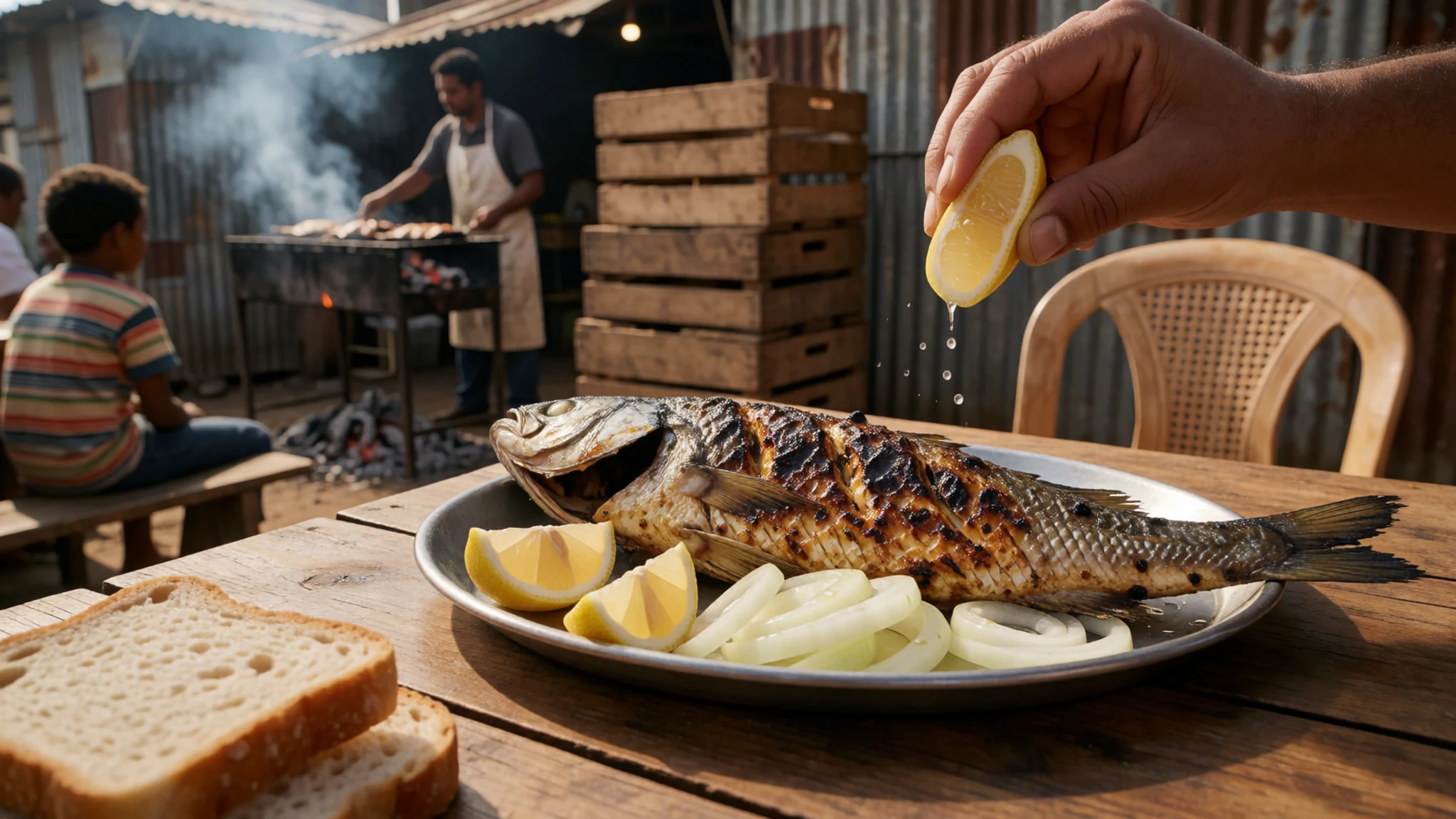
- Rice with fish or vegetables — rice shacks along Joal's main road
A plate of rice with a tomato-based fish or vegetable sauce is the daily meal for many families. Rice shacks along Joal's main road serve it by the plate, and it is filling, cheap by comparison with resort restaurants, and usually a safe bet.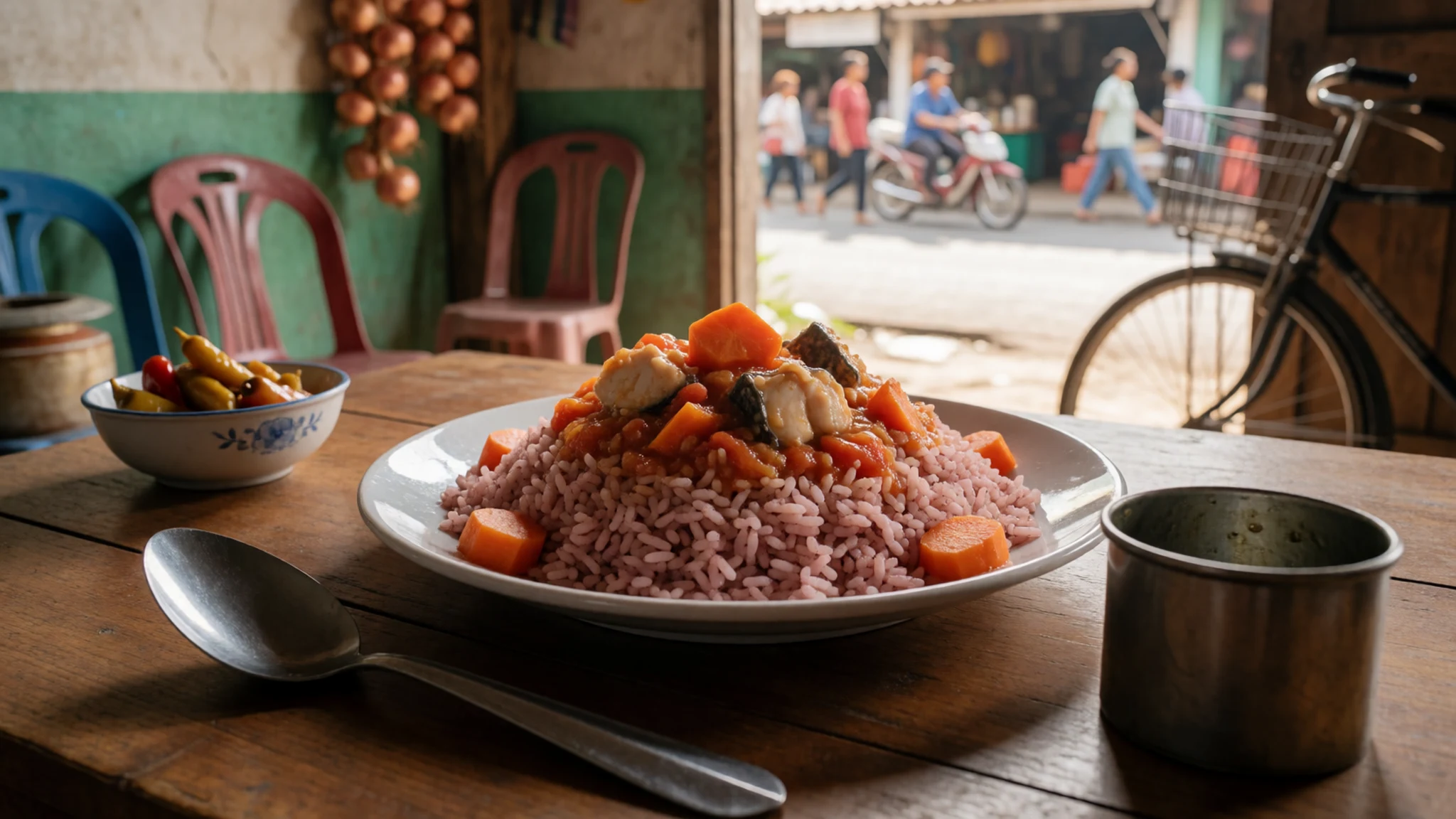
- Lalo — Joal-Fadiouth markets
Lalo is a powder of dried baobab leaves, sold in small heaps and bags. Cooks stir it into sauces and porridge to thicken them and add a green, earthy taste. It makes a lightweight, useful souvenir if you like to cook. - Dried and smoked shellfish — market stalls on Fadiouth and in Joal
Shells are everywhere here, and dried shellfish are used as a flavouring in Senegalese cooking. Piles of dried clams and other seafood are sold for stews and sauces. The smell is strong, but the flavour is the point. - Street sandwiches — street stands along Joal's main road
Bread filled with meat, egg, fries or fish and sauce is the quick lunch of choice. Hot, filling and made to order, sandwiches are sold from small stands and fast-food signs along the road, and they work well between a morning on the island and a boat trip.
Plan it
Best time. November to April, when there is no rain and temperatures are mild; June to October is the rainy season, when the estuary floods, the air is humid and some paths turn muddy.
How long. 1–2
Getting there. Fly to Dakar's Blaise Diagne International Airport, then continue by road along the national road to Mbour and on to Joal, which is straightforward on good roads. By public transport, shared seven-seat taxis (sept-places) run from Dakar's garage and from Mbour. The last leg to Fadiouth is a short walk across the bridge from Joal.
Budget. low
Tips
- Visit the fishing port mid-morning or late afternoon, when the boats come in.
- Hire a local guide on Fadiouth for context and for the cemetery.
- Carry cash in small notes, as cards are rarely used for guides, boats and market stalls.
- Bring water, sun protection and closed shoes that can get wet.
- Check the commune's official site, http://commune-joalfadiouth.sn/, for local news and events.
Etiquette
- Use your right hand to greet people and pass things.
- Ask before photographing anyone, and ask your guide before photographing graves.
- Give money for services and goods, not as handouts.
Nearby
Sources
- Wikidata Q1340331 (CC0)
- Wikipedia: Joal-Fadiouth (rev 1381356925) (CC BY-SA 4.0)
- Wikivoyage: Joal-Fadiouth (rev 5343035) (CC BY-SA 4.0)
- Photo 01-fadioutheglise.jpg (MyriamLouviot) (CC BY 3.0)
- Photo 02-faddiouth-sign.jpg (Madison Gray) (Public domain)
- Photo 03-coquillagesfadiouth.jpg (seriocomico) (CC BY-SA 2.0)
- Photo 04-lalo-baobab-tree-dry-green-leaf-powder-senegal.jpg (Manuele Zunelli) (CC BY 2.5)
- Photo 05-fadiout.jpg (Pierre.Lescanne) (CC BY-SA 1.0)
- Photo 06-a-friend-by-your-side-is-priceless.jpg (Sosoanis) (CC BY-SA 4.0)
- Photo 07-aire-marine-prot-g-e-amp-de-joal-fadiouth-14.jpg (Wuzyprod) (CC BY-SA 4.0)
- Photo 08-aire-marine-prot-g-e-de-joal-fadiouth-20.jpg (Wuzyprod) (CC BY-SA 4.0)


Wildlife
- Great white pelican (animal)
Remember the great white pelican as the white-plumed cousin in the pelican family, sometimes known as the rosy pelican, which raises its young in swamps and shallow lakes. Around Joal-Fadiouth you will find pelicans feeding in the shallows, but the notes do not give a season or time of day. Stay at a respectful distance, be still and quiet, and go with a guide who knows the water. Never throw it food.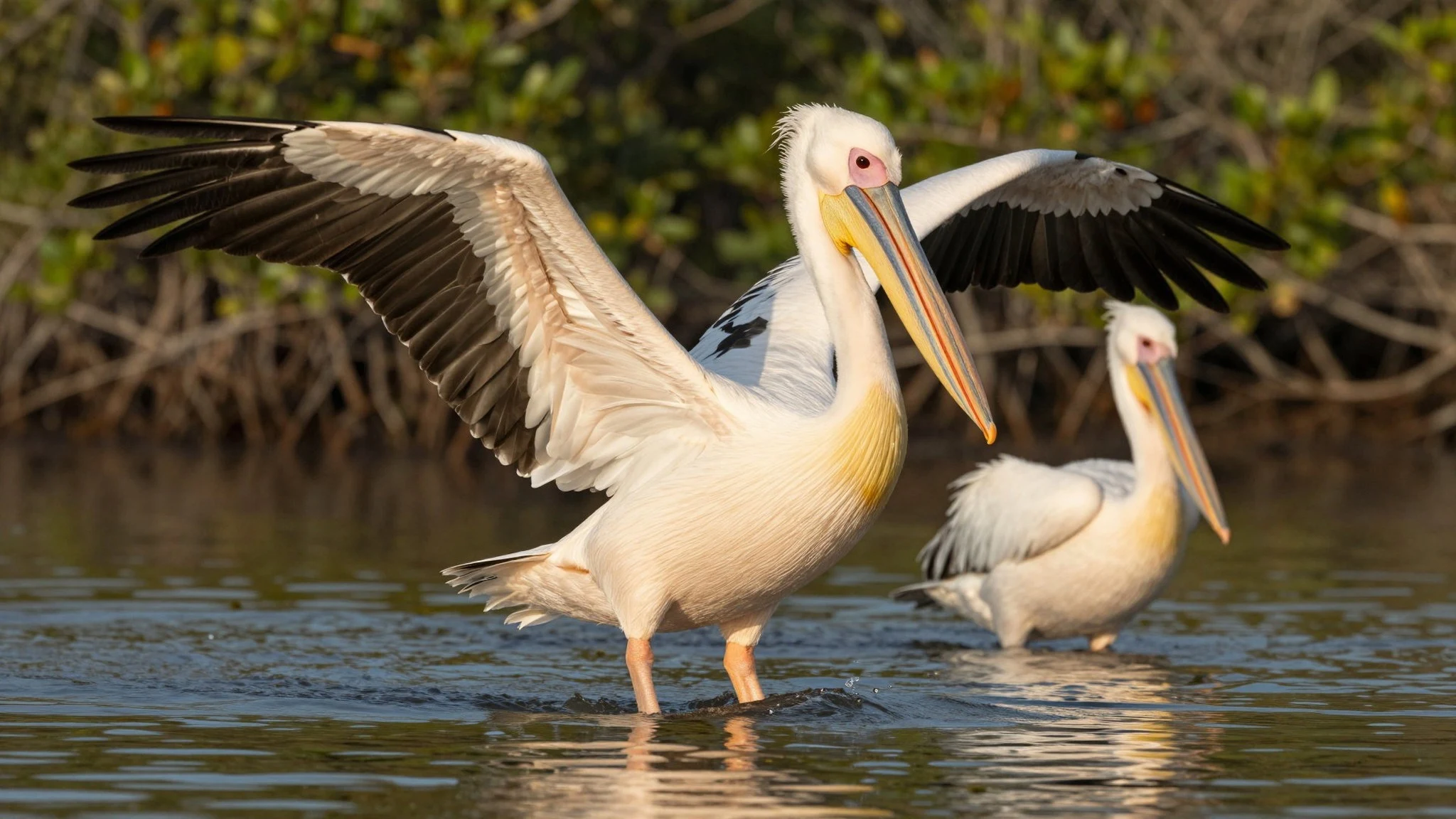
- Greater flamingo (animal)
The greater flamingo is the biggest kind of flamingo, and it lives widely across Africa and far beyond. At Joal-Fadiouth, flamingos feed in the shallows, though I cannot tell you the best season or hour. Watch from afar so they are not startled, speak softly and move gently, and take a local guide to find a good vantage point. Never feed them, because their wild feeding habits matter and should not be disturbed.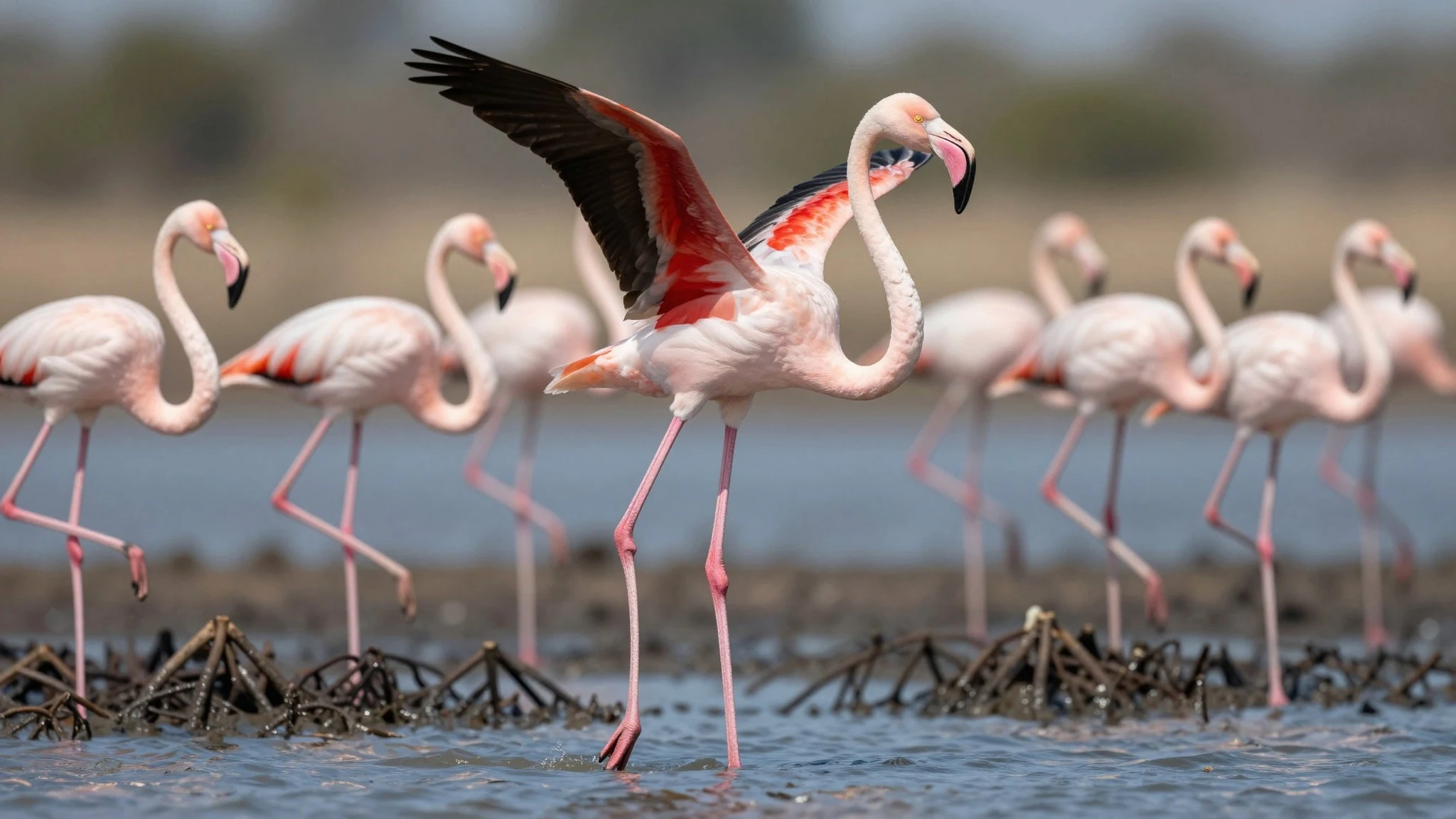
- Pelicans (bird)
Remember the great white pelican as the white-plumed cousin in the pelican family, sometimes known as the rosy pelican, which raises its young in swamps and shallow lakes. Around Joal-Fadiouth you will find pelicans feeding in the shallows, but the notes do not give a season or time of day. Stay at a respectful distance, be still and quiet, and go with a guide who knows the water. Never throw it food. - Flamingos (bird)
The greater flamingo is the biggest kind of flamingo, and it lives widely across Africa and far beyond. At Joal-Fadiouth, flamingos feed in the shallows, though I cannot tell you the best season or hour. Watch from afar so they are not startled, speak softly and move gently, and take a local guide to find a good vantage point. Never feed them, because their wild feeding habits matter and should not be disturbed.