Lake Retba
Lake Retba, Senegal
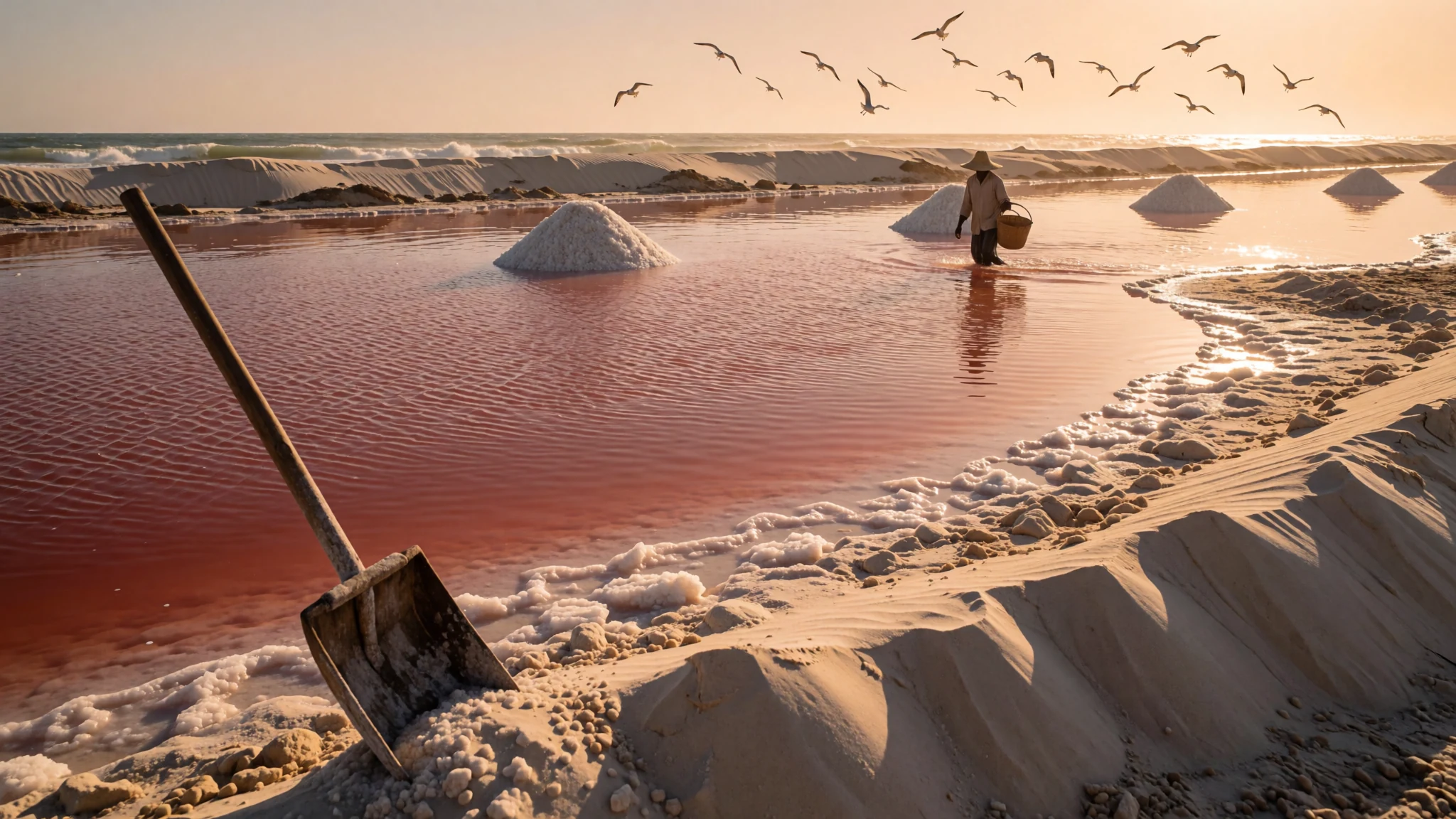
A pink lake on Senegal's Atlantic coast, best seen in the dry season when its colour runs deepest.
The place
Lake Retba, also called Lac Rose or Pink Lake, lies roughly 35 km north-east of Dakar, the Senegalese capital, just north of the Cape Verde peninsula. A narrow ridge of dunes is all that separates it from the Atlantic, so on a quiet day you can hear the surf before you see the sea. The lake takes its name from its colour, which comes from Dunaliella salina, a tiny alga that makes a red pigment to help it catch light.
The water is far saltier than most visitors expect. In some areas the salinity reaches about 40 per cent, much denser than seawater, so swimmers float with little effort. Salt is harvested here commercially, and the shallow margins are dotted with workers who dig out the crust and pile it on the shore to dry.
The colour depends on season and weather. It tends to be strongest from late January into early March, when dry air and sunshine suit the algae, and it fades when the rains arrive. Flooding in 2022 disrupted harvesting and turned much of the water green, and the lake has partly recovered since, though it is not always the vivid shade seen in photographs.
Its story
The story of Lake Retba is partly a story of water and weather. Its pink tint depends on the algae, the algae depend on sunlight and salt, and the salt depends on a lake shallow enough for workers to reach the bottom. When those conditions hold, the surface turns a striking rose and the shore fills with drying salt. When they break, the lake's character shifts.
In September 2022 flooding spilled into the lake and changed its chemistry. Salt harvesting was disrupted, livelihoods took a hit, and the loss of colour made the lake less appealing to visitors. The damage reached both the salt trade and the tourism that had grown up around the colour.
By 2025 the lake had regained some of its colour, though not all of it. That recovery is a reminder that the lake is not fixed. Its colour, depth and salt levels respond to rain and the seasons from year to year.
Interest in its future has grown as well. As of May 2026 the lake is under consideration by UNESCO as a World Heritage Site. Consideration is not designation, and the outcome is still open, so treat any talk of inscription as pending rather than settled.
What to see
- Lake Retba itself — Lake centre, about 35 km north-east of Dakar
The lake is the reason to come. From the dune track or a boat, the water shows its strongest rose tones in the dry months, and the colour sits oddly against the pale sand and white salt crust at the edges. Look for the pink band where the shallows meet deeper water. The water is dense enough that you float without effort, a fact that surprises first-time swimmers.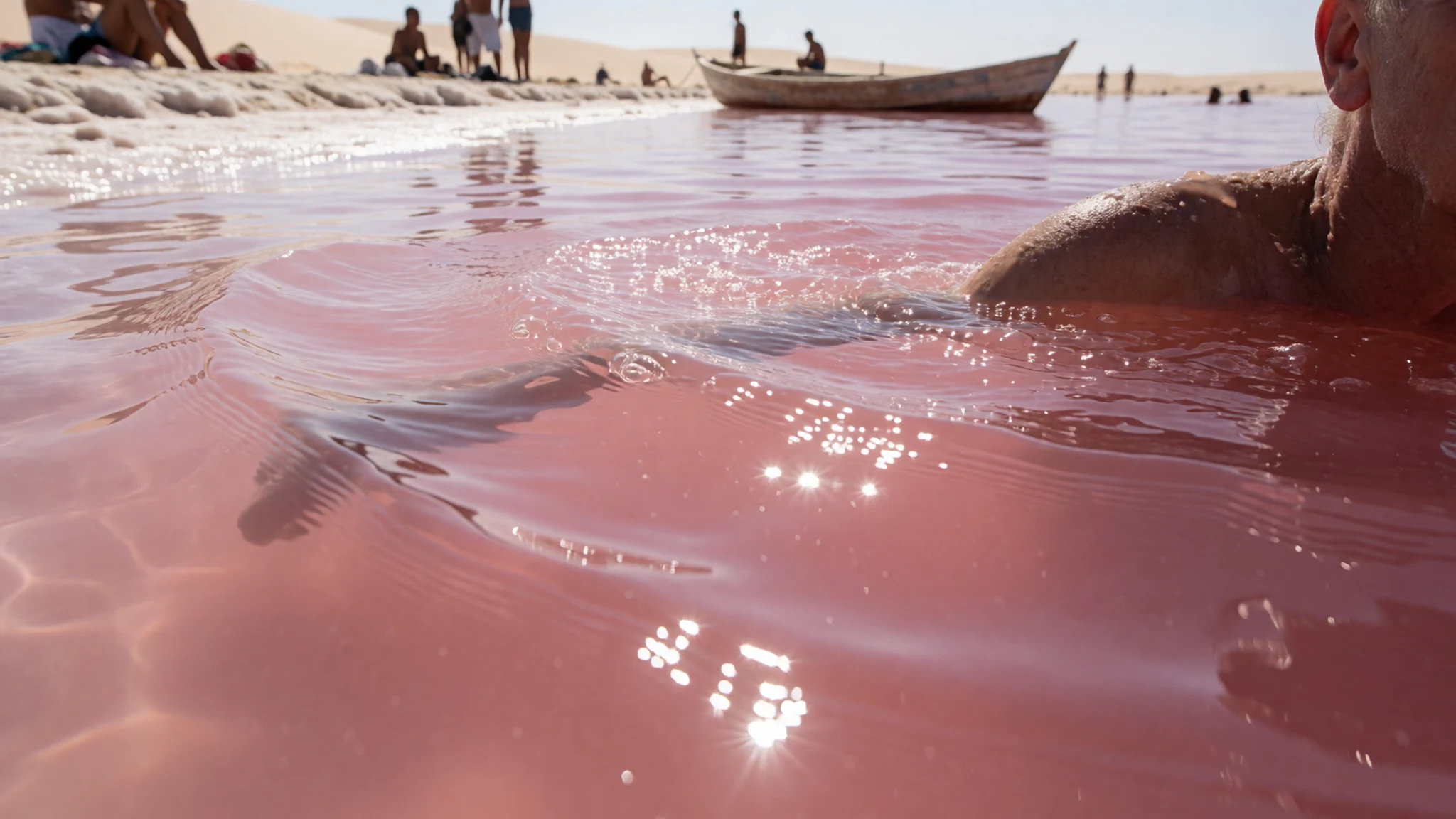
- The shore at the dune edge — Northern shore, where the dunes meet the water
The northern shore is where the lake meets the dunes, and the walk along it is the easiest way to watch the water change colour. The sand is soft and deep, so wear closed shoes you do not mind getting gritty. Early morning and late afternoon give softer light and less heat, and the shore is quieter then than at midday.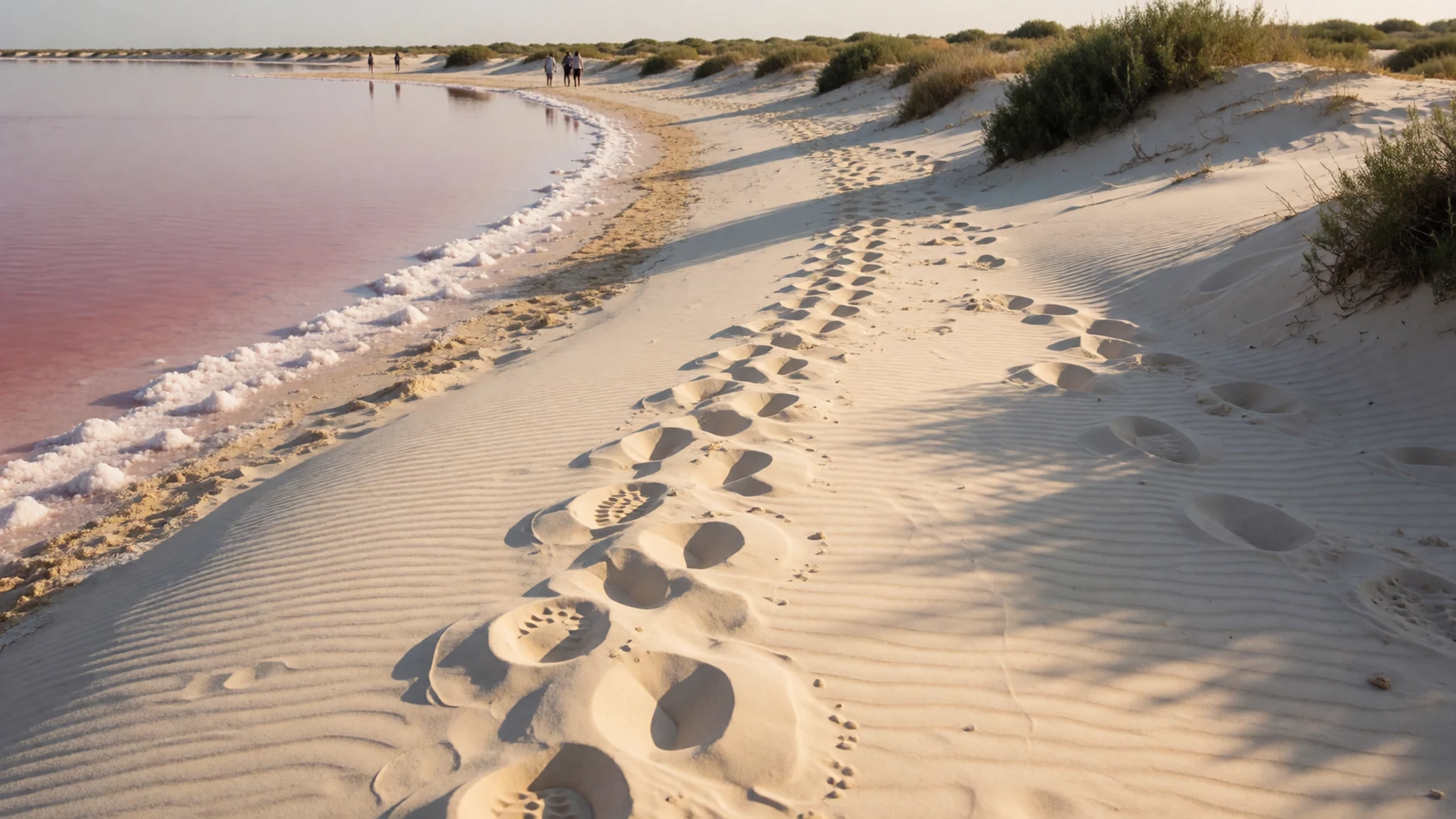
- Salt workers in the shallows — Shallow margins near the salt-drying shore
Salt harvesting is real work here, not a show. Workers wade into the shallows, dig out the crust and carry it to the shore to dry. Watch from a respectful distance and keep to the path rather than walking across the working beds. If you want a closer picture, ask first and be ready to hear no.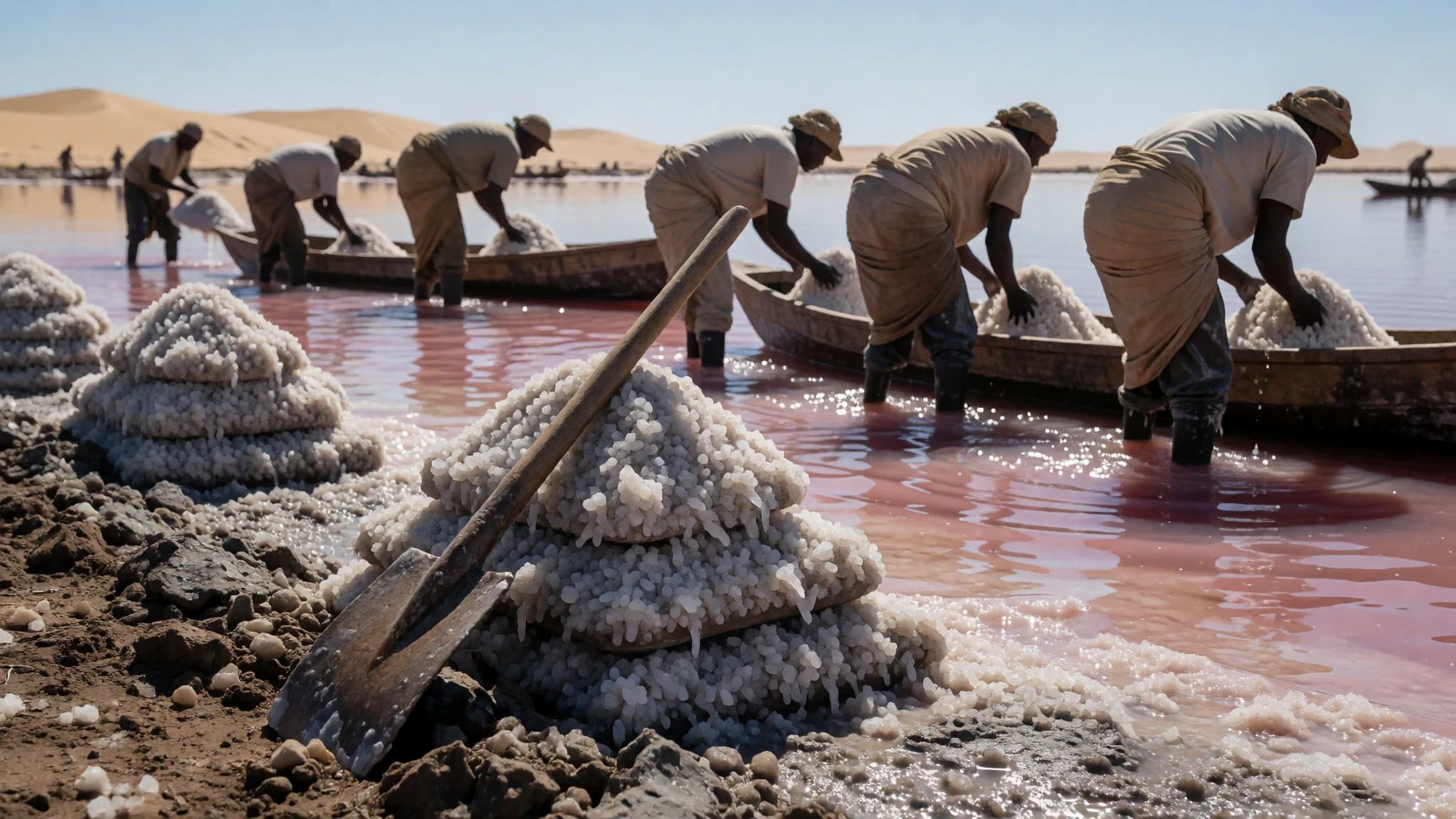
- Boats on the sand — The landing on the lake beach
Boats are drawn up on the sand at the landing, and they give the water a sense of scale. Their painted hulls stand out against the pale beach and the pink water beyond. Stand back so you do not block the path of people hauling salt, and ask the boatmen before you climb aboard.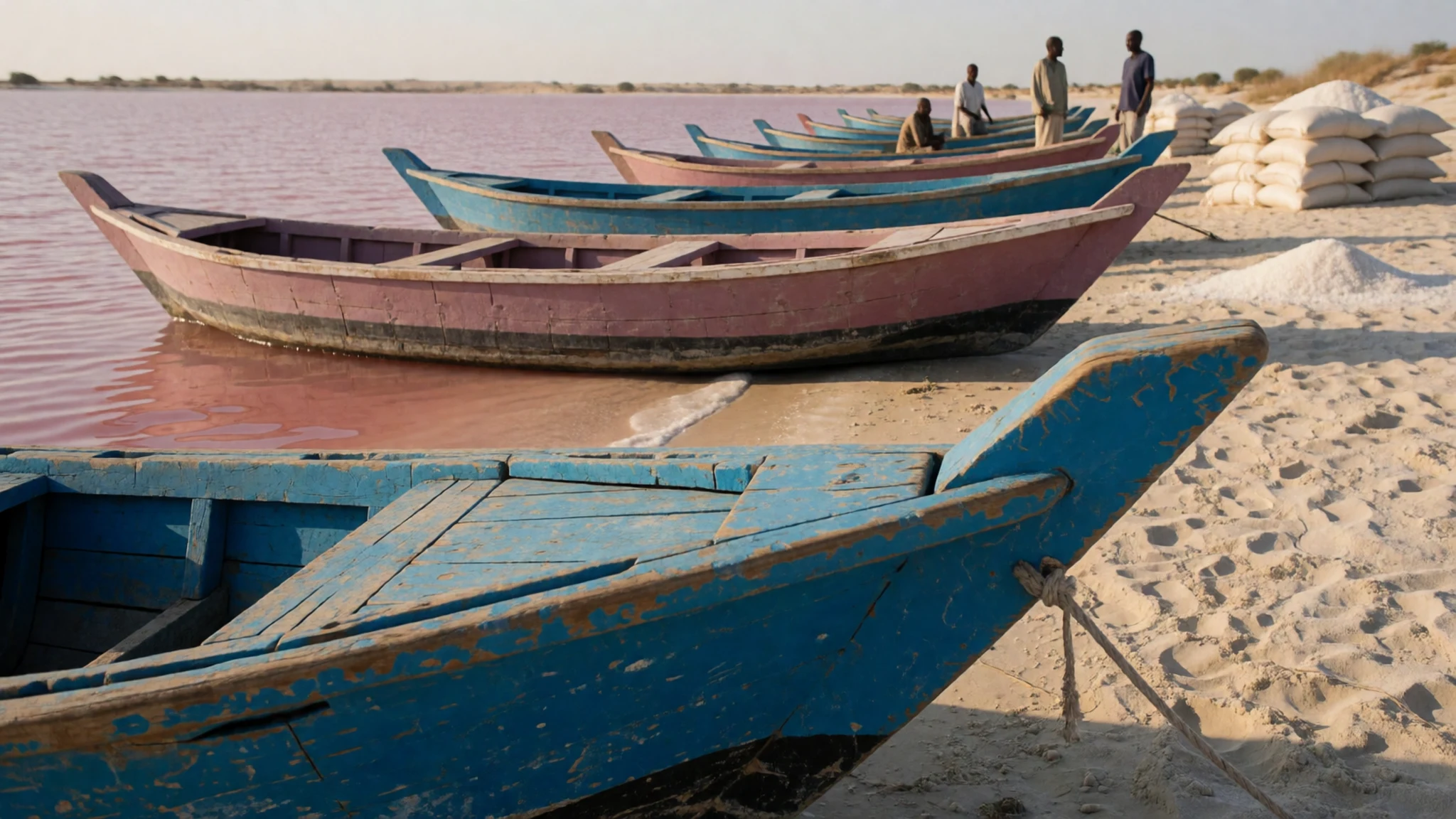
- The lake at dusk — Open shore beyond the landing
Dusk is the best time to see the colour settle. As the sun drops, the water shifts from bright rose to a deeper, duller pink, and the shore grows quiet as the work finishes. Bring a layer, because the breeze off the Atlantic cools quickly once the sun is low. Plan your return before dark.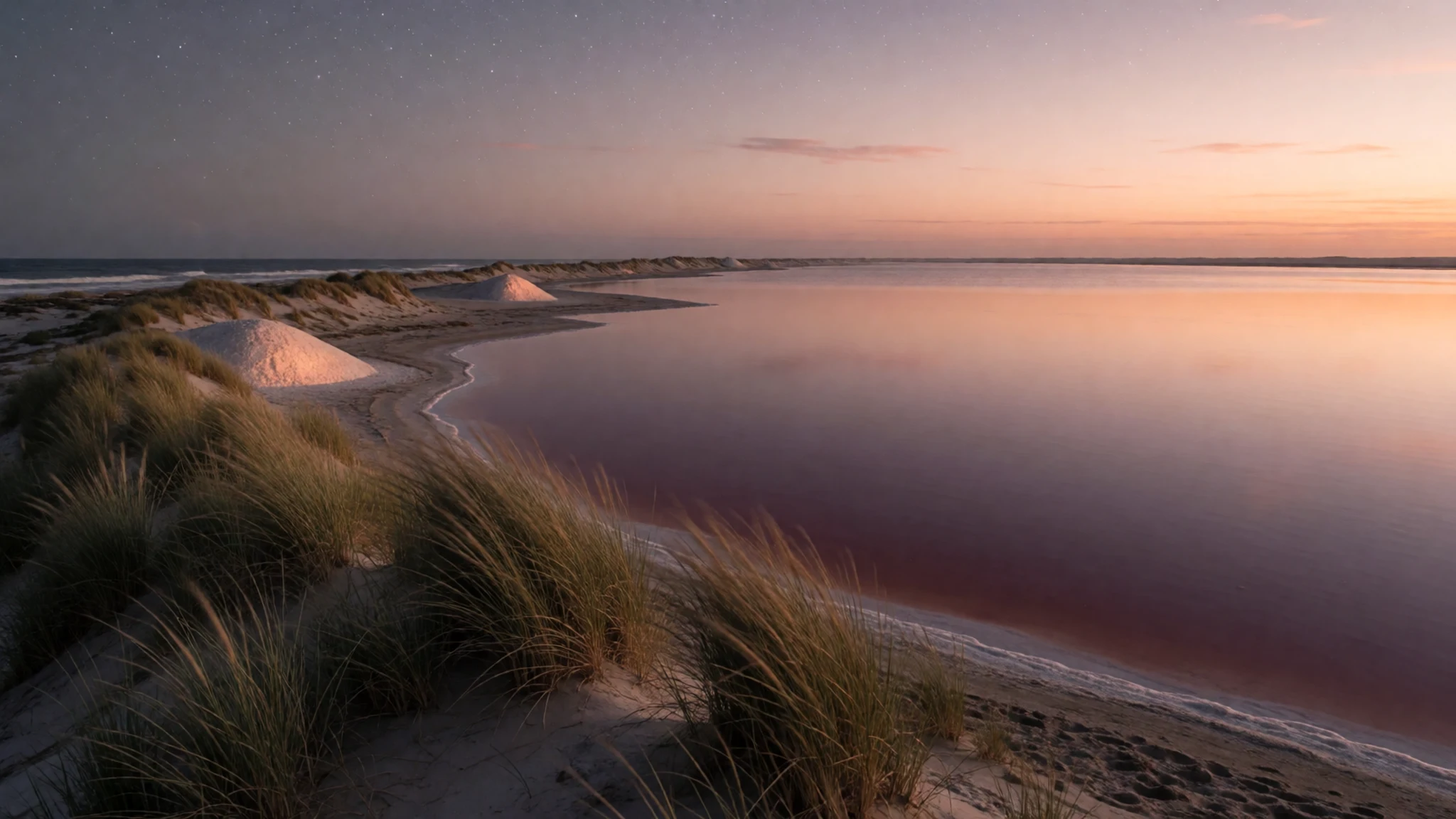
Culture
Lake Retba is a working lake before it is a view. Salt is raked and carried by hand, often by people who have done the job for years, and the shore is their workplace as much as a place for visitors. Greetings matter in Senegal: a brief "Salaam aleikum" or a French "Bonjour" opens a conversation far better than a direct request. Ask before you photograph anyone, especially workers and women, and accept a refusal without argument. Visits are easier when you keep to the marked tracks, leave the salt beds undisturbed and take your rubbish back with you. If someone offers you tea, accepting politely is a kindness. Religious practice is part of daily life across Senegal, so dress modestly in the villages near the lake and keep music quiet on the shore. Ask before photographing anyone working on the salt beds, and accept a no without argument.
What to wear
The traditional dress of Senegal is built on long, loose forms and bold cloth. The boubou, a wide robe worn by men and women, is often sewn from plain or embroidered cotton and can be dressed up for weddings and religious days. Women commonly wear a wrapper skirt with a matching blouse, and many choose wax-print cotton, a brightly patterned fabric widely sold in Dakar's markets. Bazin, a stiff, sheen-finished cloth, is a favourite for formal occasions. Around the lake today you will see a mix: work trousers and T-shirts for the salt workers, jeans and sports shoes for visitors, and boubous or wax prints on people heading to the village or the mosque. For your own clothes, choose light, loose cotton in long sleeves with trousers or a long skirt, which keep the sun and salt off your skin. Bring a wide-brimmed hat and sunglasses, and wear closed shoes you do not mind getting dusty. Carry a scarf so you can cover your shoulders when you visit villages or religious sites.
What to eat
- Thiébou dieune (thieboudienne) — Lunchtime eateries along the coast road near the lake
Senegal's best-known dish: rice cooked in a rich tomato base with fish and vegetables, with a crisp layer of rice at the bottom of the pot. It is traditionally eaten from one shared dish. Ask for it at lunchtime eateries along the coast road near the lake.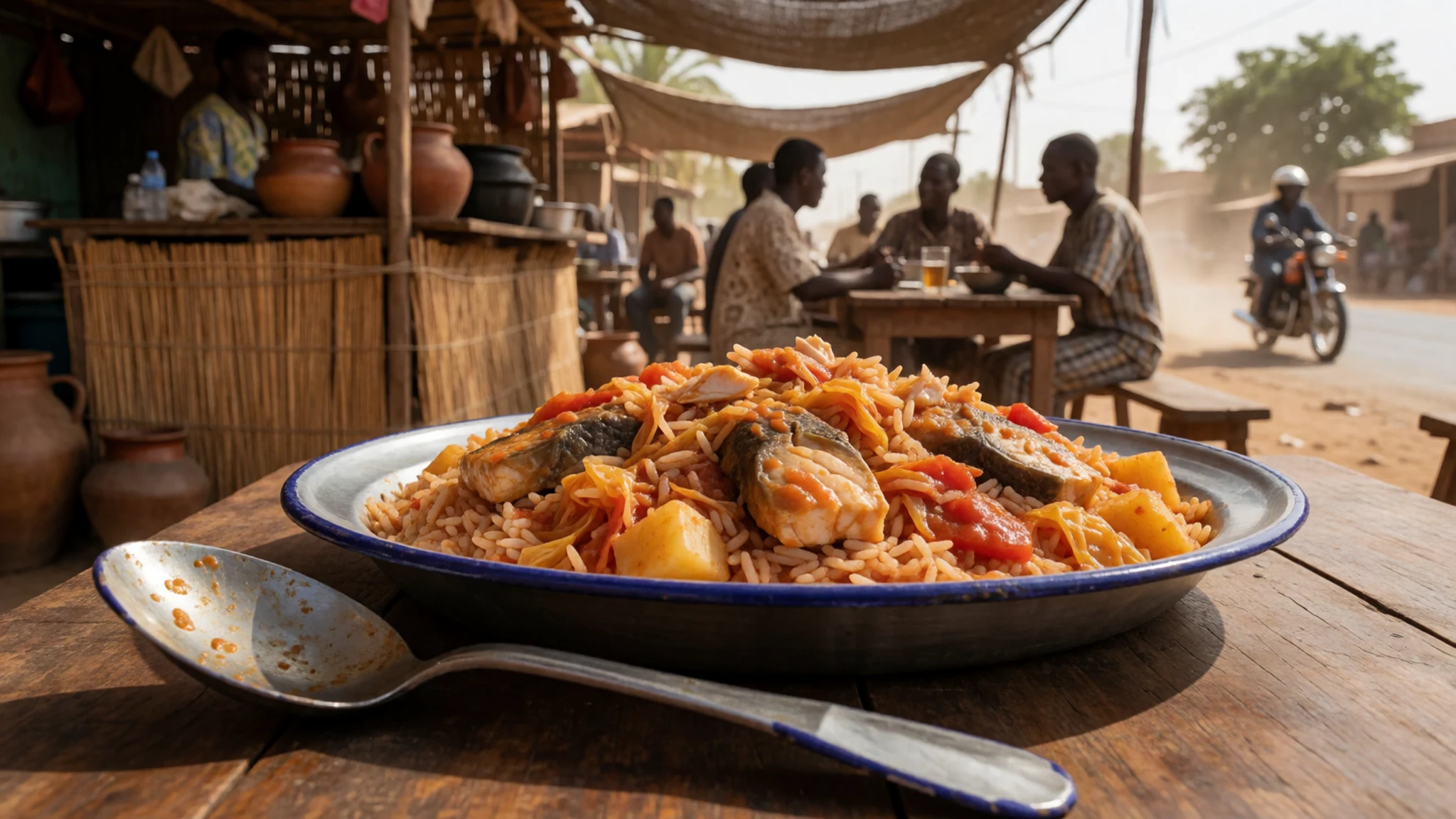
- Yassa — Roadside grill stalls on the way to the lake
Chicken or fish marinated in lemon, mustard and a generous amount of onion, then grilled or braised until the onions turn sweet and jammy. It is usually served with rice and tastes tangy rather than hot.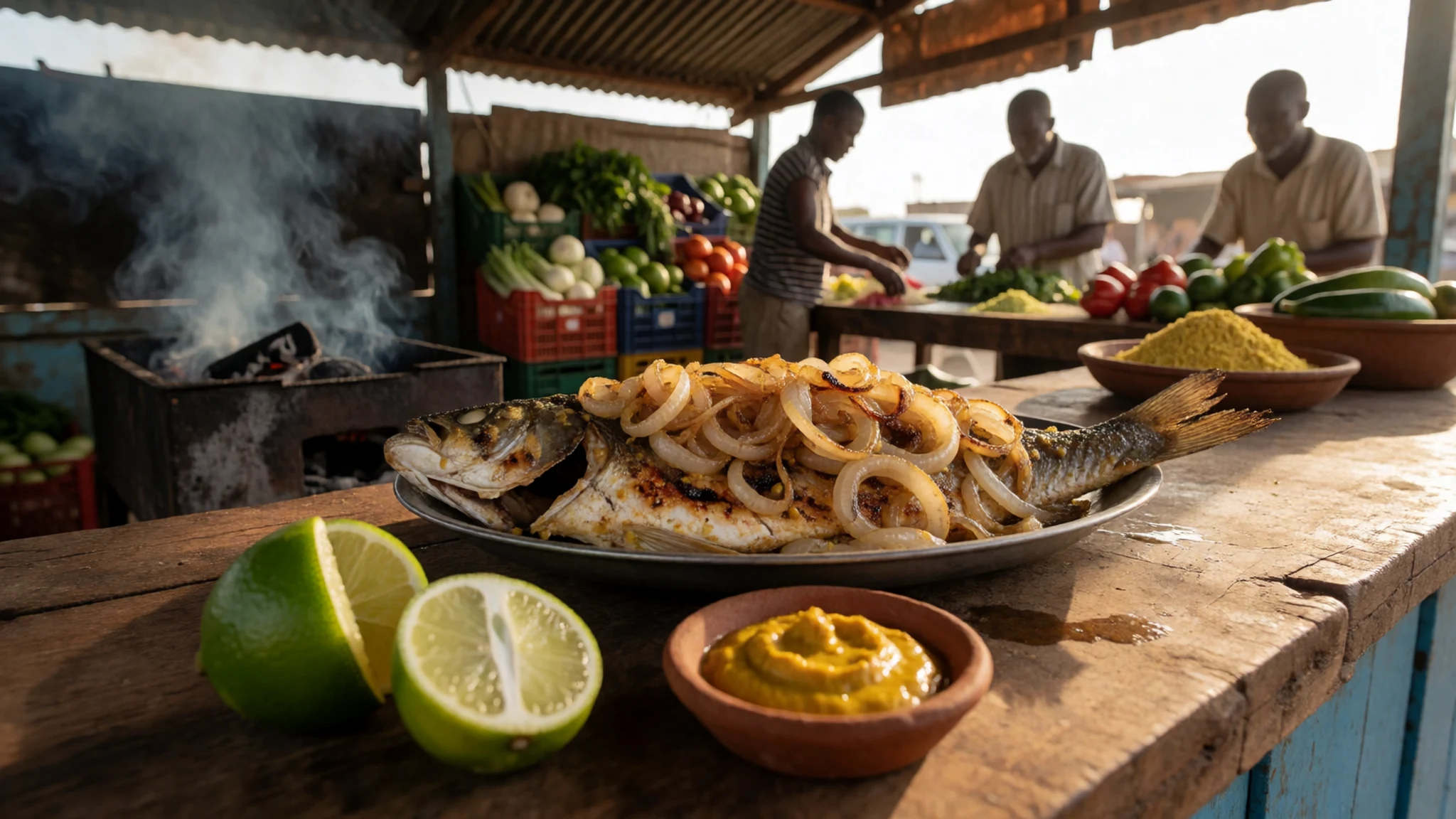
- Thiakry — Village market stalls and family eateries nearby
A sweet, cooled dessert of millet couscous mixed with thick yoghurt or milk, sugar and vanilla. It makes a refreshing end to a hot afternoon. Look for it at market stalls and in family eateries in the villages around the lake. - Bissap — Roadside stands and shaded tables near the landing
A deep red drink made by steeping dried hibiscus flowers in water with sugar and mint, served cold. It is the drink most often offered to visitors. Ask for less sugar if you prefer a drier taste.
Plan it
Best time. The dry season runs from November to May, and the colour is strongest from late January to early March, when the sun is steady and the algae are most vivid. April and May are hot and almost rainless, with clear skies that keep the colour vivid until the rains begin in July. July to October is the rainy season, when most of the year's rain falls and the pink is least visible.
How long. 1–2
Getting there. Fly into Blaise Diagne International Airport near Dakar, then take a road transfer north-east to the lake. A driver or an organised day tour from Dakar is the simplest option for the last leg.
Budget. low
Tips
- Aim for late January to early March if the colour matters most to you
- Check recent photos before you travel, since colour has changed after flooding
- Bring cash for small fees and tips, as shore vendors rarely take cards
- Carry water and sun protection, because the shore has little shade
- Choose a guide who asks before taking you near the working salt beds
Etiquette
- Ask before photographing salt workers or anyone else at work
- Stay off the working beds and keep to the marked path
- Greet people in Wolof or French before asking questions
Nearby
Sources
- Wikidata Q1522557 (CC0)
- Wikipedia: Lake Retba (rev 1366268208) (CC BY-SA 4.0)
- Wikivoyage: Lake Retba (CC BY-SA 4.0)
- Photo: Lac Rose in Senegal (Arnault) (CC BY-SA 2.0)
- Photo: RetbaLakeShore (Jjm2311) (CC BY-SA 4.0)
- Photo: Lake Retba salt worker (林戈亮) (CC BY-SA 4.0)
- Photo: DSC_8467 (jbdodane) (CC BY 2.5)
- Photo: Arriving from work (PGskot) (CC BY-SA 4.0)
- Photo: Baol-Géologie (geological map, 1901) (Public domain)
- Photo: Barque Sénégal au lac rose (ShirleyDoss) (CC BY-SA 4.0)
- Photo: Bateaux au lac rose (Pitele) (CC BY-SA 4.0)


