Langue de Barbarie
Langue de Barbarie, Senegal
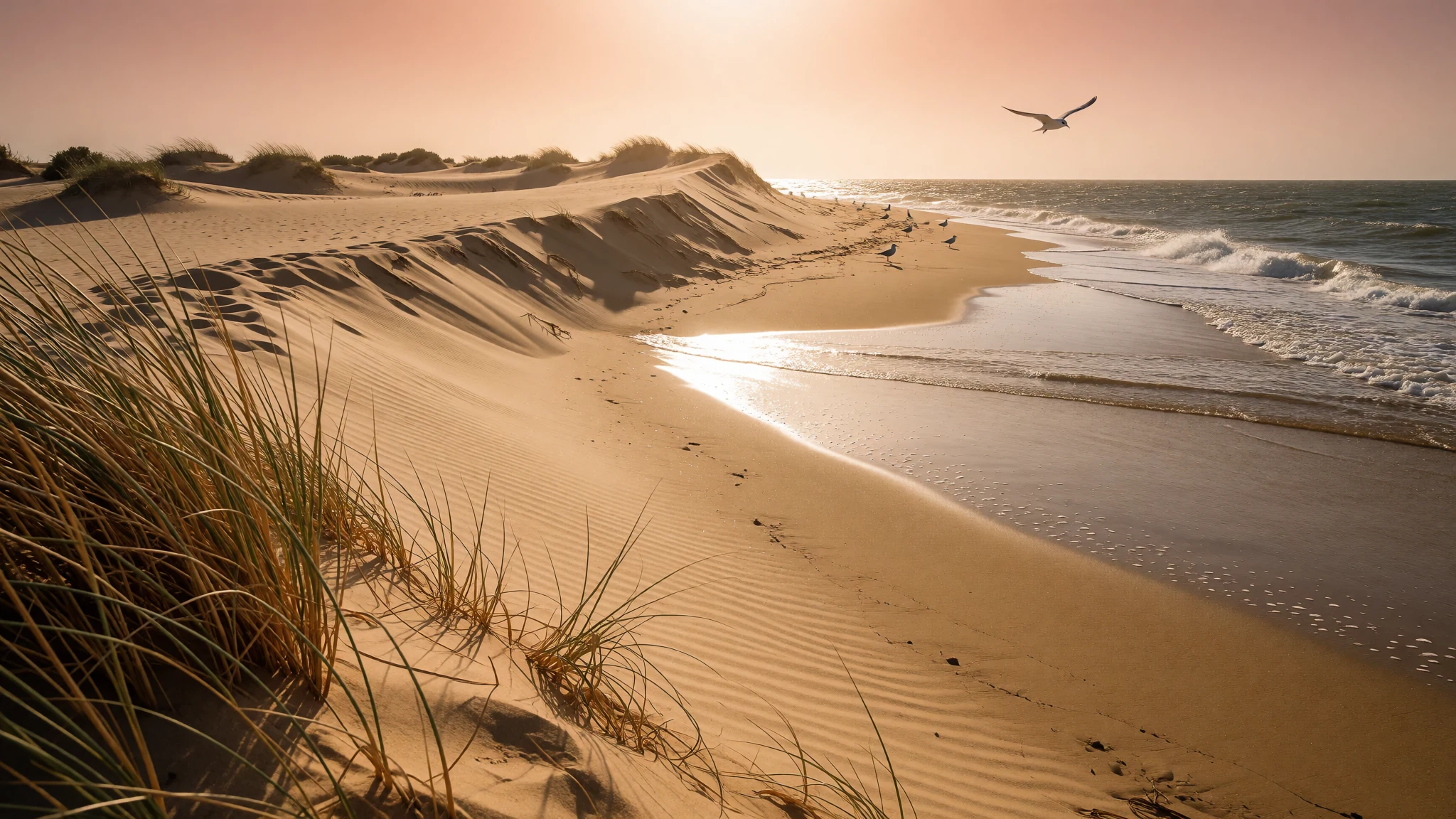
Langue de Barbarie is a thin Senegalese sand spit where mangroves, river and ocean meet and migrating birds nest in their thousands.
The place
Langue de Barbarie is a narrow sandy spit in north-western Senegal, running between the Atlantic and the last stretch of the Senegal River just south of Saint-Louis. The national park, protected since 1976, takes in the spit together with mangroves, dunes, tidal flats and the river itself, so a short boat ride passes through several landscapes. The park headquarters lie about 18 km south of Saint-Louis, in the Gandiol area, and most visits start there. Water dominates: the river channel on one side, surf on the other, and between them low sand held together by scrub. Birds are the draw. Over 160 species have been recorded, from gulls and terns to waders that stop here on journeys between Europe and Africa. Crabs scuttle through the mangrove mud, lizards cross the dunes, and the park was set up partly to protect beaches where sea turtles nest. This is not a place of lodges and promenades. Facilities are simple, shade is scarce, and the light off the water is hard by midday, so mornings suit best. Fishing and salt-making villages line the Gandiol road, and the rhythm of the place follows tide, wind and season rather than any schedule. Saint-Louis, with its colonial island town, makes the natural base, and the park fits comfortably into a half day or a full one. Expect wind, sand in everything, and a lot of quiet outside the nesting months.
Its story
Langue de Barbarie takes its name from the Barbary Coast, the old European label for North Africa's shoreline, applied here to a spit of sand that has shifted and reshaped itself with river and tide. Its life as a protected area began in 1976, when Senegal created the national park. Two aims drove the decision: guarding the beaches where sea turtles come ashore to lay eggs, and securing a refuge for birds, since the area is a staging post for travellers between Europe and Africa. The island used for breeding gulls and terns became the park's emblem. Nesting there runs in waves from February, with one species after another claiming the ground until the season closes in late May. Human history sits alongside the natural kind. During the colonial era, French presence in the region helped secure the approach to the Senegal River and the capital of Saint-Louis. Its ruins, and a cannon beside the Gandiol road, still stand. Around them, villagers have long lived from fishing, small-scale farming and salt, drawn from ponds that fill in the rainy season and dry to a crust. Park guides and rangers now carry that local knowledge into conservation work, which is why a visit here is as much about people reading water and sky as about the birds themselves.
What to see
- Pirogue trip to the bird island — Park headquarters, Gandiol
Boat trips by pirogue, the long wooden fishing canoe of the coast, leave from the park headquarters and wind through the river channel and mangroves towards the bird breeding island. Trips take roughly one and a half to two hours. Nesting is busiest from February; confirm times and costs with the park.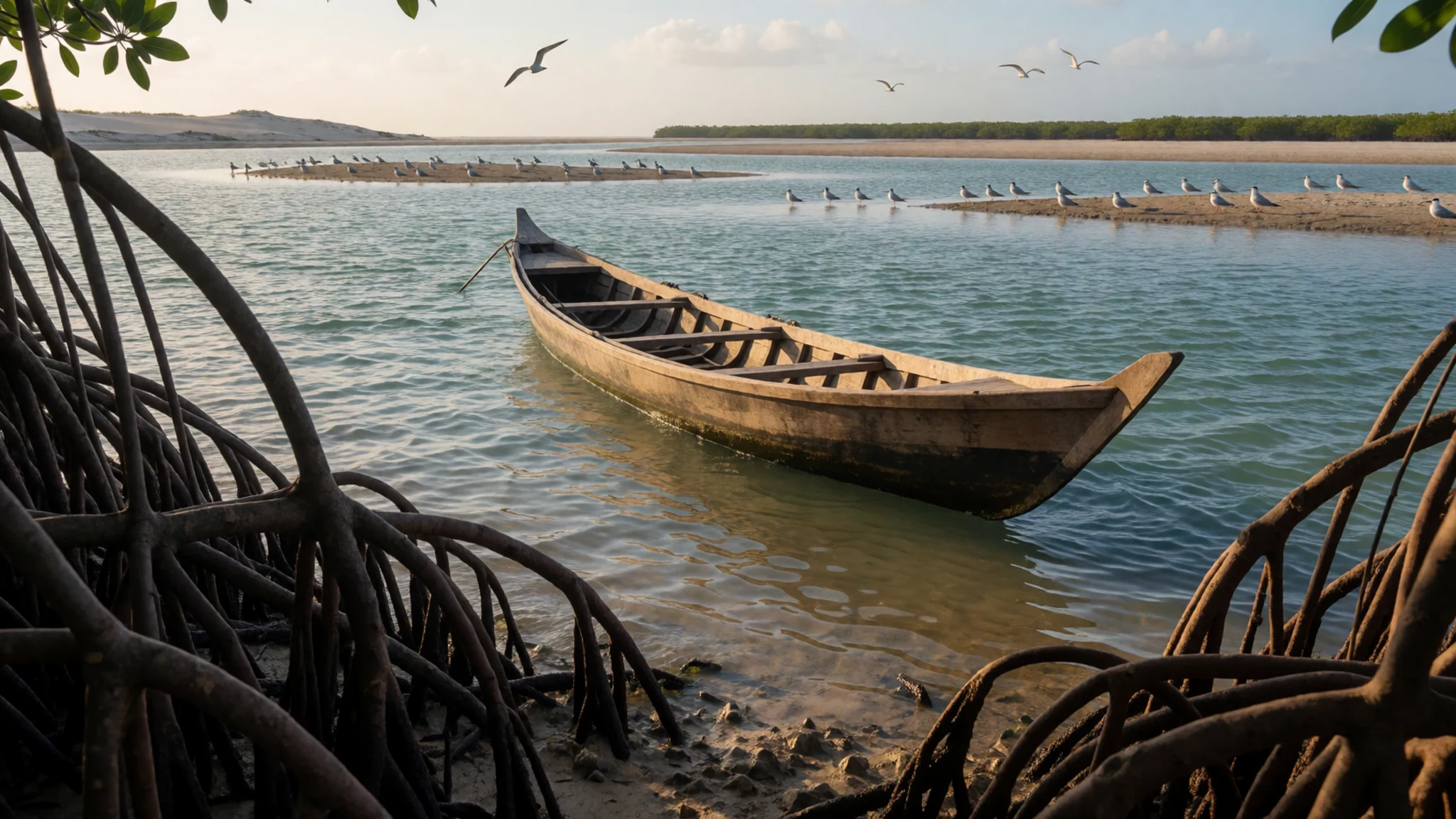
- Bird counts with the rangers — Park headquarters, Gandiol
Park rangers, the écogardes, hold regular bird counts on foot and by boat, and visitors can join in. It is a good way to see how species are picked out at a distance and why the figures matter for protection. Confirm dates and meeting points with the park office beforehand.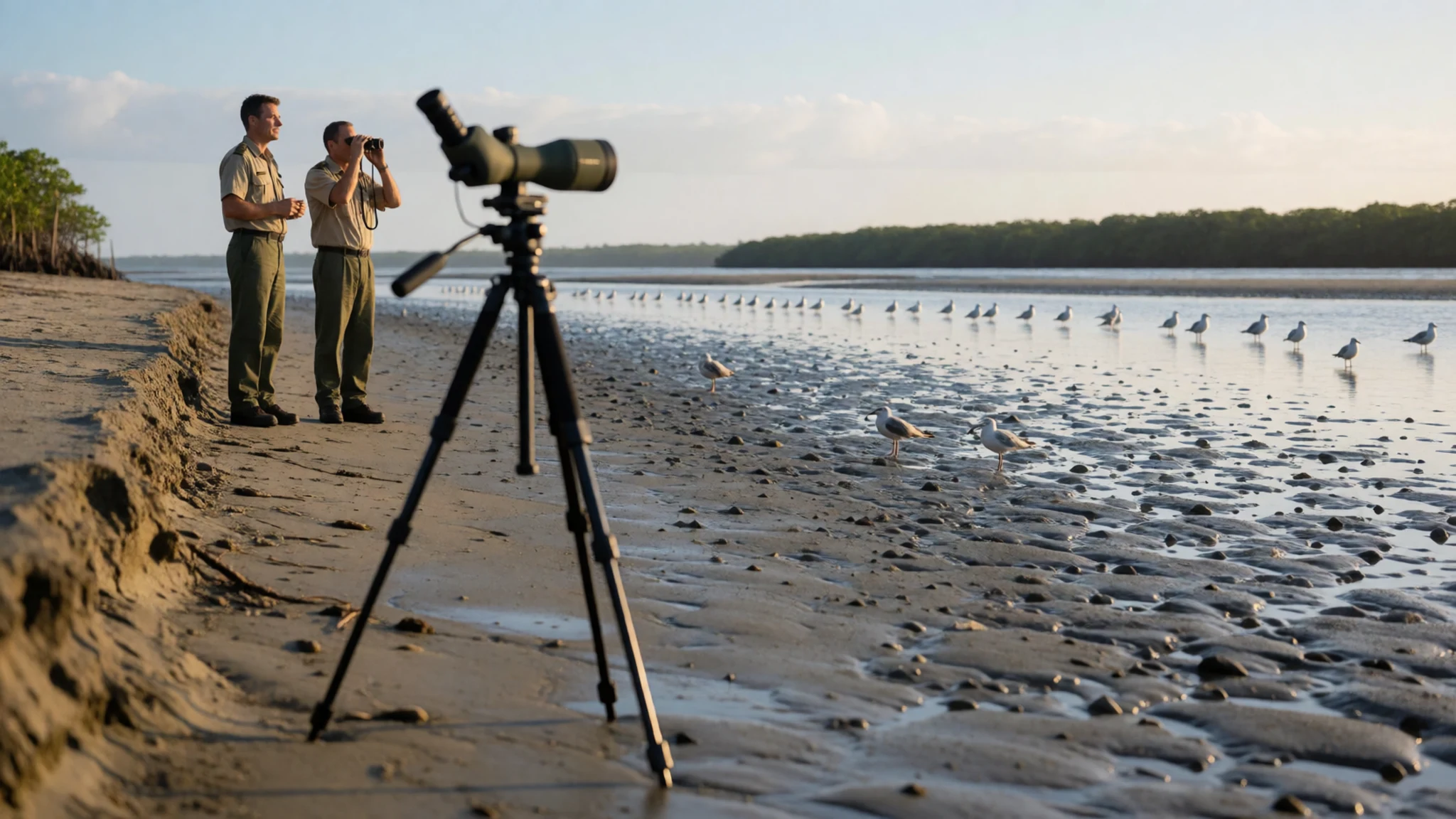
- The Lawmare — Eastern edge of the park
The Lawmare is a small tidal wetland shaped like a crescent moon, marking the park's eastern limit. Shorebirds and other migrants feed on its mud and shallows, so it rewards slow, patient watching with binoculars more than any long walk. Early light and a falling tide usually bring the most activity.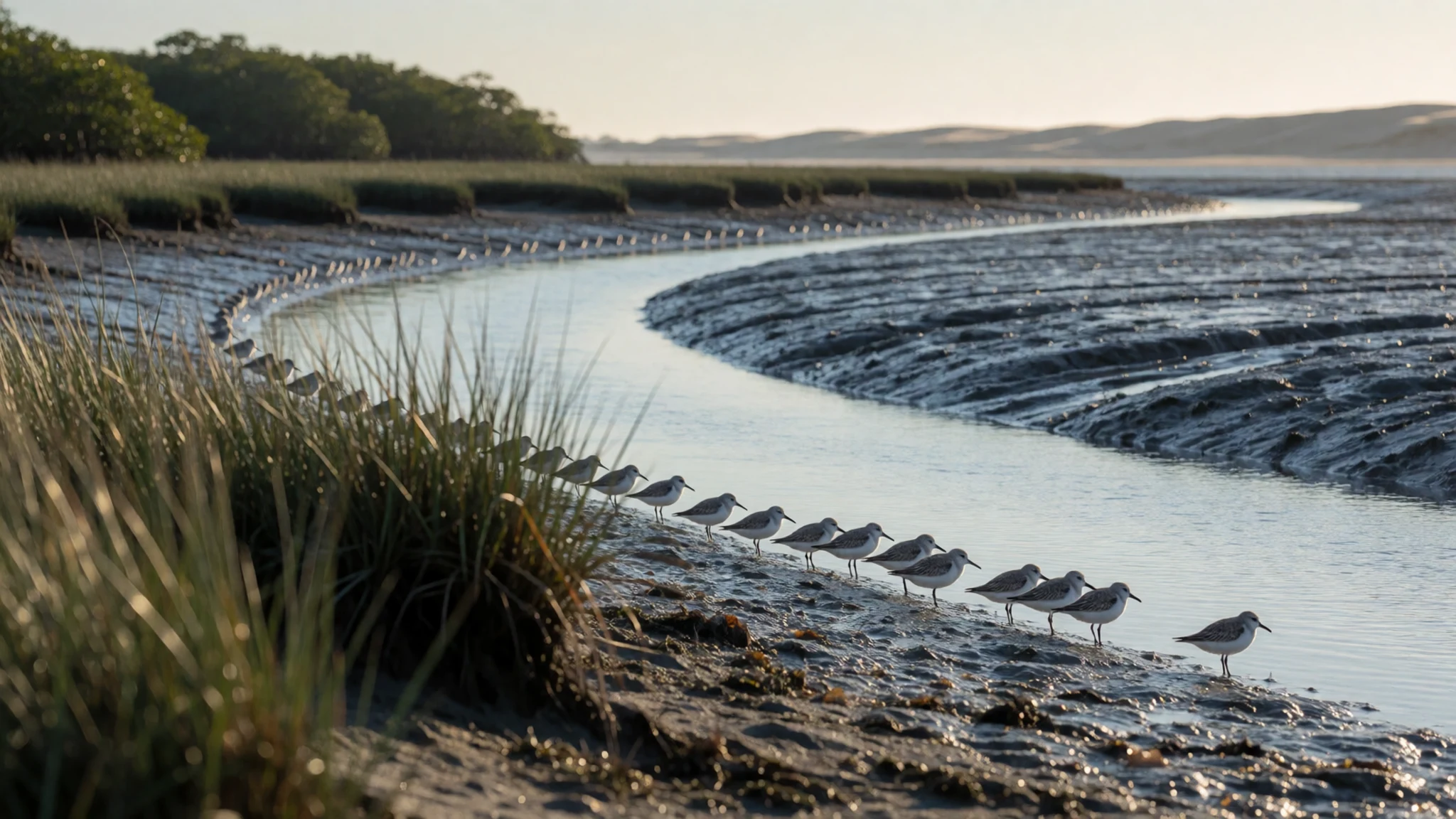
- Colonial ruins and the cannon — Gandiol road, near Gouye Ren
The area retains traces of French colonial rule, from when the coast was monitored to control boats heading for the Senegal River and Saint-Louis. A cannon from the fort stands beside the main Gandiol road near the village of Gouye Ren. It is a short stop, best paired with the salt ponds.
- Gandiol salt ponds — Gandiol
Small salt ponds dot the Gandiol countryside. They fill with water in the rainy season, then dry out and leave a crust of salt that is gathered, processed and sold. The pale flats and pink-tinged water suit photographers, and a local guide can explain how the work is organised.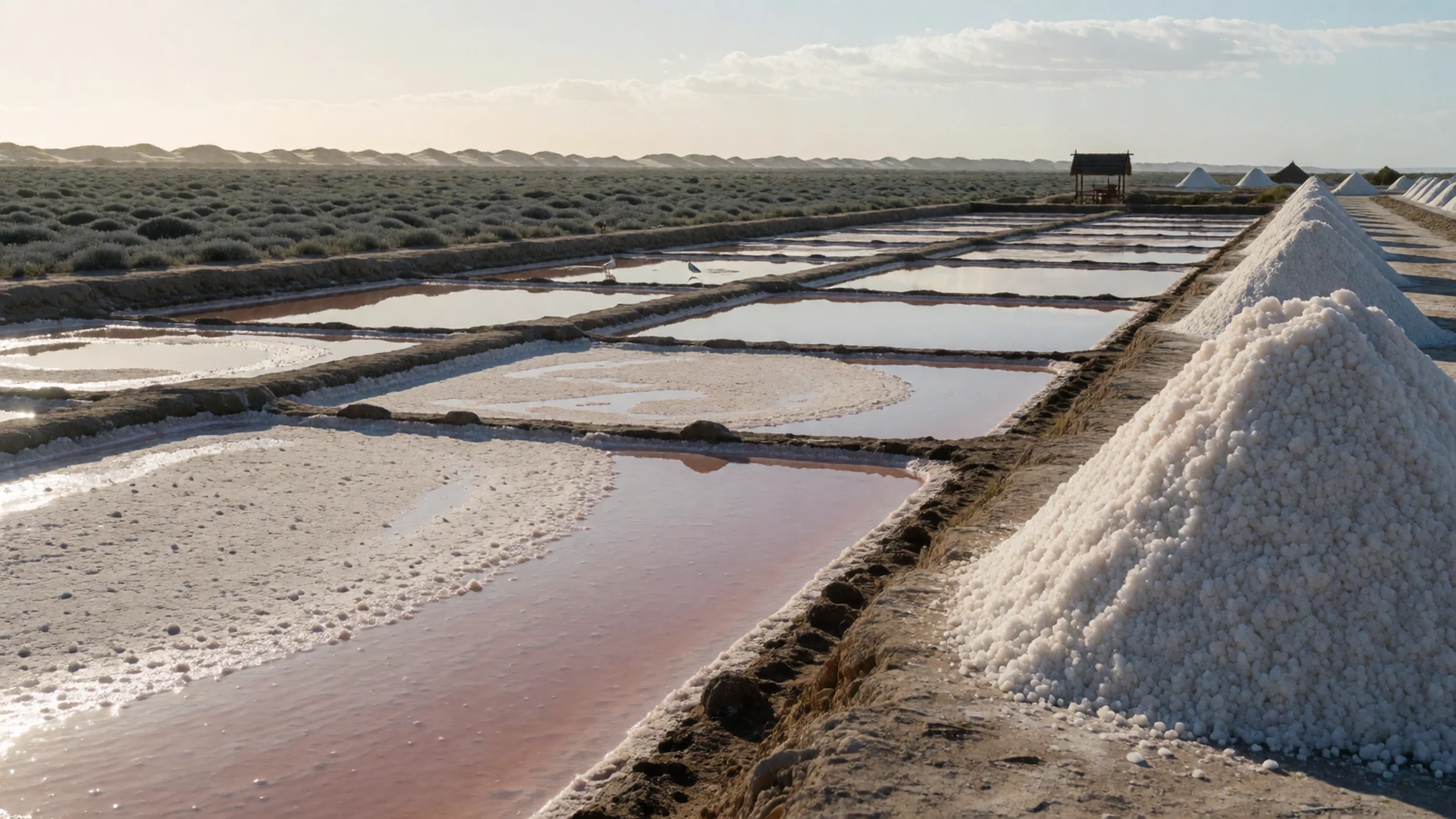
- Dara Salam village — South of Mouït
Dara Salam is a small village about 7 km south of Mouït, offering a look at Moorish (Maure) traditions. Visits are arranged through the local guides, who can introduce residents and explain village life. Go with time to sit, drink tea and listen rather than rush through with a camera.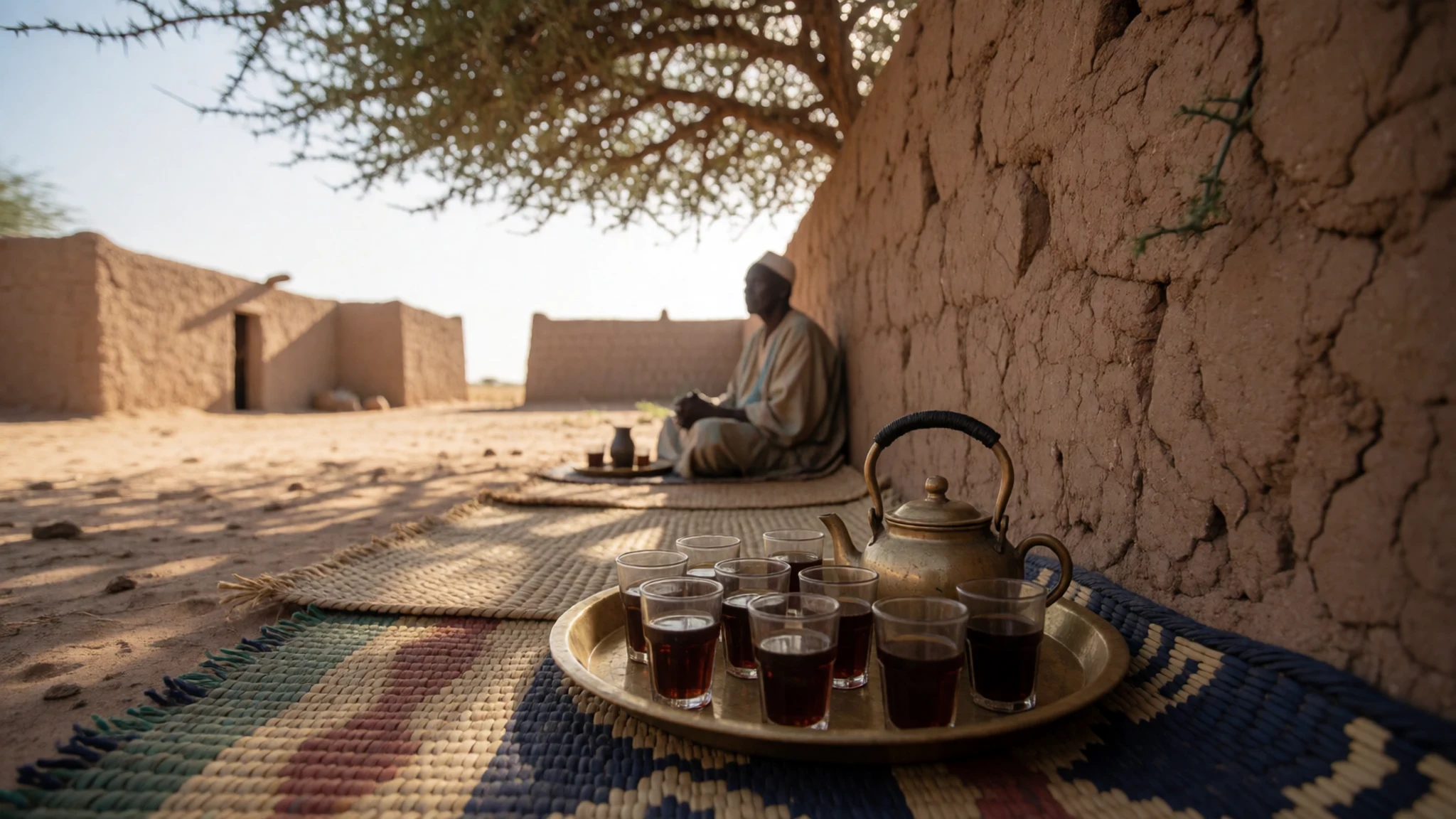
Culture
Langue de Barbarie sits in Gandiol, a stretch of villages south of Saint-Louis where Wolof and Moorish (Maure) communities have long lived from fishing, farming and salt. Senegal is largely Muslim, and daily life follows the call to prayer, Friday gatherings and the rhythm of Ramadan, when eating or drinking openly in daylight is best avoided around fasting neighbours. Hospitality, called teranga in Wolof, is a point of pride: greetings are long and unhurried, with questions about family and health, and visitors are often offered tea or a place at a shared bowl. Greeting comes before any request, including asking a guide for help. Saint-Louis, close by, claims ceeb-u jen, the rice-and-fish dish created there by a local woman around the turn of the twentieth century and now eaten across the country. Pirogues, painted in bright colours, are working boats and family property, not props for pictures. Local guides, many of whom run small enterprises of their own, bring the most to a visit, and hiring them keeps money in the villages. Conversation is mostly in Wolof and French, and a few words of either are warmly received. Ask before photographing people, their homes or their boats, and accept a refusal with a smile rather than an argument.
What to wear
Langue de Barbarie's villages show the mix of Senegalese and Moorish dress found across the Saint-Louis region. Traditional women's dress is the boubou, a wide flowing gown, often worn with a matching headwrap, in cotton, bazin (a stiff dyed damask) or printed wax cloth; the grand boubou comes out for Friday prayers, weddings and religious feasts. Men wear a long boubou or a tunic with loose trousers. In Moorish households, women drape a melhfa, a long single piece of light cloth, and men may wear a daraa, a wide robe, usually blue or white. Day to day, most people wear a mix: T-shirts, football shirts and jeans among younger people, tailored outfits cut from market cloth for work or events, and headscarves among many women. Fishers dress for the job, often in rolled trousers and wide hats. Visitors should dress for sun, wind and sand. Loose cotton or linen with long sleeves and a hat protects against glare on the water, and a thin windproof layer helps on the boat. Shoes need to cope with sand and mud: closed sandals or trainers, plus something easy to wade in. Covered shoulders and knees are more comfortable in villages and around mosques; swimwear belongs on the beach only.
What to eat
- Ceeb-u jen — Family eateries in Saint-Louis and Gandiol, and the restaurant run by park guides near the headquarters
Rice and fish, the everyday classic of the region, cooked in a sauce of onion, garlic, tomato, tamarind and hibiscus, with vegetables piled around the fish. Ceeb-u xonq is the red version, made with tomato paste; ceeb-u weer is white. It is eaten from one shared bowl.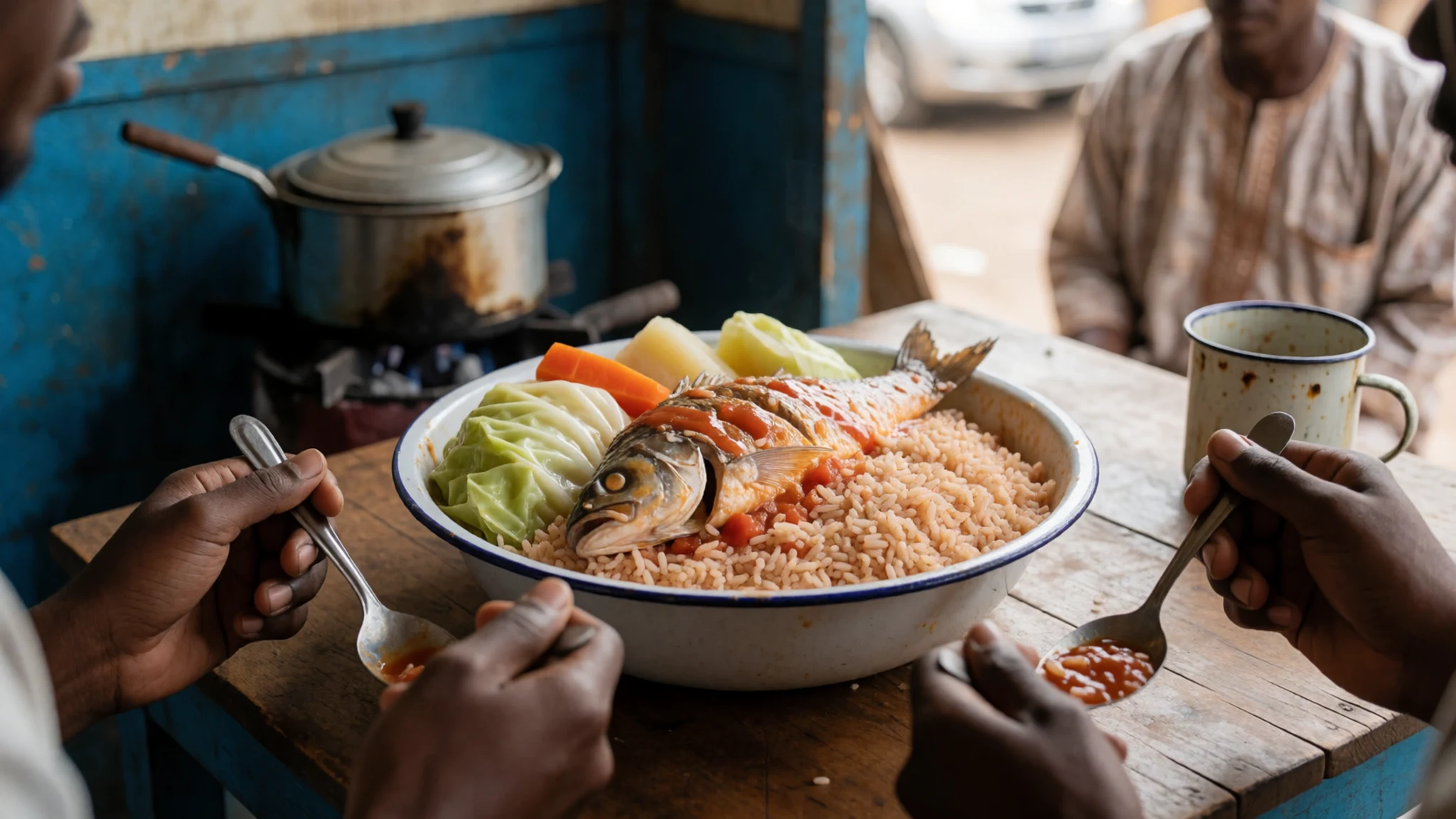
- Grilled fish — Fishing villages along the Gandiol road and beach stalls near Saint-Louis
Fresh catch from the Atlantic and the river, grilled over charcoal and served with onion sauce, bread or rice. The species depends on the day's landing, so ask what came in that morning and eat it the same day.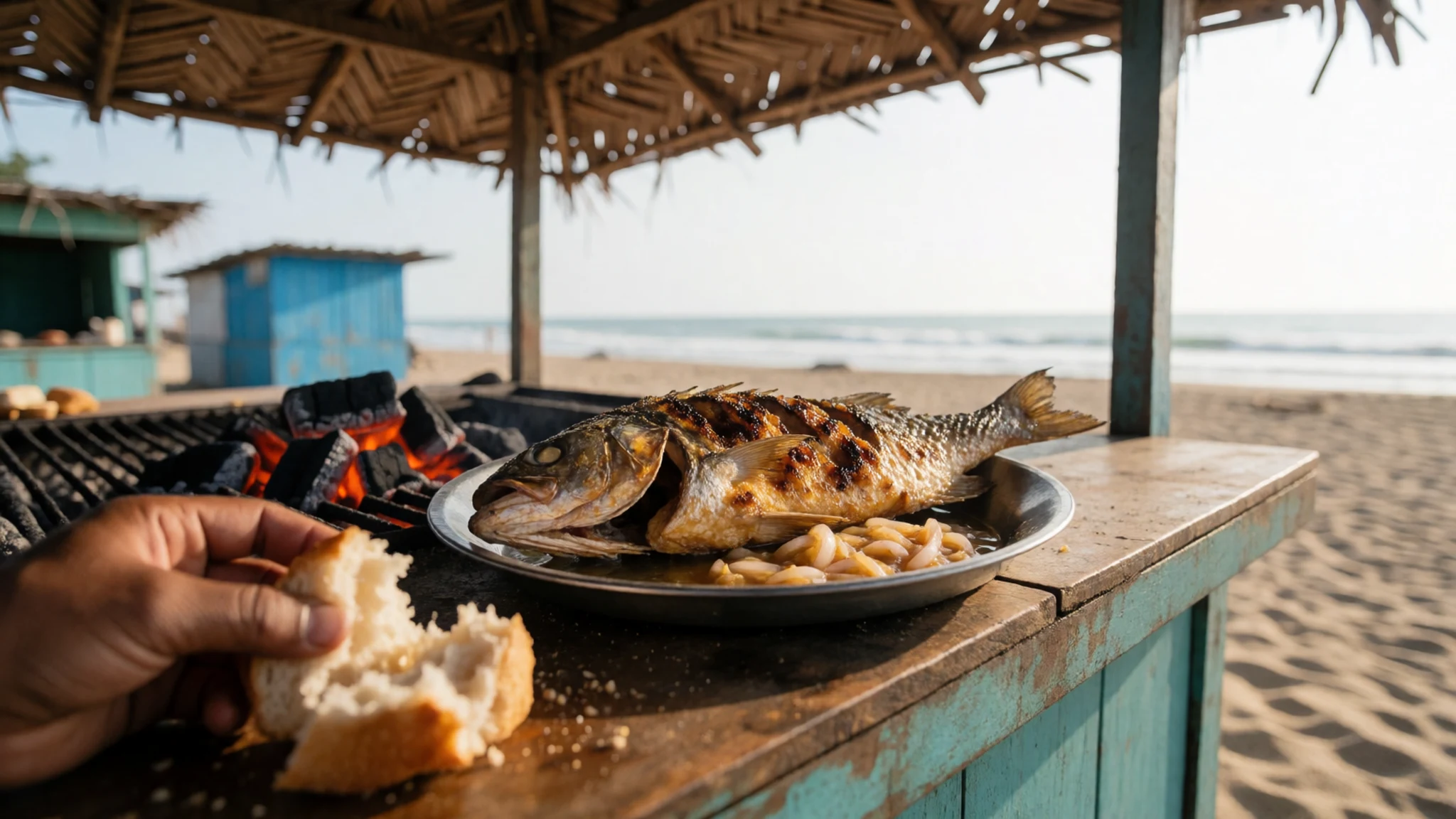
- Bissap — Street sellers, village shops and campements
A cold, deep-red drink made from hibiscus flowers, sweetened and sometimes flavoured with mint or ginger. It is sharp, refreshing in the heat, and sold in bottles and plastic bags. Choose sealed or clearly freshly made ones. - Yassa — Campements and local eateries
Chicken or fish slow-cooked with a heap of onions, mustard and lemon, then served over rice. The sauce is tangy and soft, and it suits anyone who finds tomato-based dishes too heavy. Ask for it a little ahead if the kitchen is small. - Fataya — Street stalls and markets in Saint-Louis
Fried half-moon pastries, usually filled with spiced fish or meat, sold hot as a snack. They make a handy fuel stop before a boat trip and travel well in a bag for an hour or two. - Ataya tea — Village courtyards and Moorish households, including around Dara Salam
Strong green tea brewed in small pots and poured from height into tiny glasses, in several rounds that grow gradually sweeter. Accepting a glass is a sign of friendship, and the sitting and chatting matter as much as the drink.
Plan it
Best time. February to May, when gulls and terns take turns nesting on the bird island until late May, which makes these the best months for birds. Outside that window the island is quieter. The sun is strongest from April to July, and the rainy season from July to September fills the Gandiol salt ponds.
How long. 1–2
Getting there. Fly to Dakar, then go north to Saint-Louis by shared sept-place taxi from Gare Pompier, by bus, or with a hired car and driver. From Saint-Louis, take a taxi to Gandiol and the park headquarters, about 18 km to the south.
Budget. low
Tips
- Start in the morning: the light is softer, the wind is lower and the birds are more active.
- Bring binoculars, a hat, sunscreen and plenty of water, as shade is scarce on the spit.
- Carry cash in small notes for boat trips, guides, food and village stops; cards are rarely accepted.
- Agree the boat trip, duration and cost at the park office before setting out, and check the official park channels for current information.
- Ignore anyone at the Dakar taxi station who claims you must pay a commission; fares are fixed.
Etiquette
- Greet people before asking for anything, including directions or a guide.
- Ask before photographing people, homes or boats.
- Dress modestly in villages and keep swimwear for the beach.
Nearby
Sources
- Wikidata Q969752 (CC0)
- Wikipedia: Langue de Barbarie (rev 1311463229) (CC BY-SA 4.0)
- Wikivoyage: Langue de Barbarie National Park (rev 5249818) (CC BY-SA 4.0)
- Entrée du parc national de la langue de Barbarie, Mich-nguyen (CC BY-SA 4.0)
- Parc national de la langue de Barbarie (cropped), Mich-nguyen (CC BY-SA 4.0)
- Parc national de la langue de Barbarie, Mich-nguyen (CC BY-SA 4.0)
- Plage sur la langue de Barbarie, Mich-nguyen (CC BY-SA 4.0)
- A la recherche de nourriture, Mouhamadou83 (CC BY-SA 4.0)
- Agent forestier du Parc National de la Langue de Barbarie, 6artphotographie (CC BY-SA 4.0)
- Arbre du parc, MariemeFALL8 (CC BY-SA 4.0)
- arbre mort du parc, MariemeFALL8 (CC0 1.0)


