Bassari Country
Bassari Country, Senegal
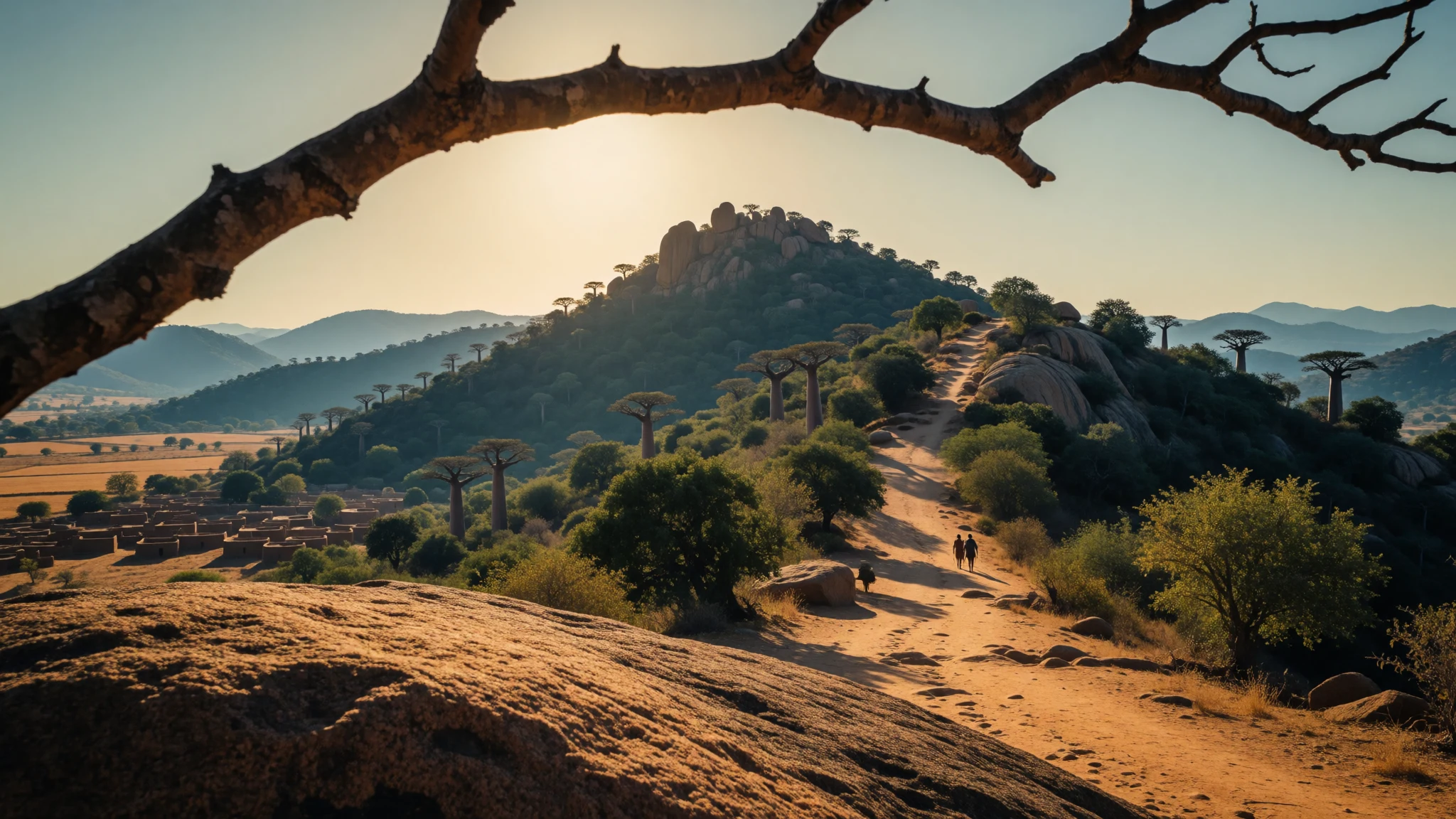
Bassari Country is a corner of southeast Senegal where three peoples' villages, fields and hills form a living landscape that UNESCO recognises.
The place
Bassari Country lies in the far southeast of Senegal, in the Kédougou region, near the borders with Guinea and Mali. It is not a single town or monument but a patchwork of villages, fields and hills shaped over generations by the people who live there. The World Heritage listing groups it into three areas: Bassari–Salémata, Bedik–Bandafassi and Fula–Dindéfello, each with its own terrain and way of settling the land.
Most of Senegal is flat, which is why this corner feels so different. The ground rises into foothills, and the country's highest point, 581 m near Nepen Diakha, is here. That is modest by world standards, but after the sandy plains of the west it reads as proper hill country, with wooded ridges, rocky outcrops and valleys that hold water in the wet months.
Three peoples give the landscape its names. The Bassari and the Bedik are known for their hill villages and their ceremonies, while the Fula, traditionally herders, work the lower country around Dindéfello. Each group has its own language and its own habits of building and farming, yet they have lived as neighbours for a long time.
Climate sets the rhythm. Rain falls from May to November, turning the hills green and some tracks to mud. The dry season, December to April, brings the harmattan wind, dust and heat. Kédougou, the regional town, is the usual base, and from there villages are reached by road and then often on foot. Facilities are simple, distances feel long, and the area rewards slow travel more than box-ticking.
Its story
Bassari Country's story is one of people settling in hills and holding on to their ways. Over the centuries, larger kingdoms rose and fell across the Senegal region, and Islam spread south from the northern kingdoms along the Senegal river.
Many smaller communities kept apart from those currents, living on rugged ground where outsiders found it harder to follow. The Bassari and Bedik preserved their own beliefs and rituals, including initiation ceremonies that mark the passage of young people into adulthood, and masked dances that still appear at festivals. The Fula, arriving as herders, brought a pastoral way of life that suited the valleys and plains below.
The result is a landscape where farming, grazing, sacred places and villages overlap, and where each group's habits are written into the land itself: the layout of a compound, the path to a field, the stand of trees left uncut. That layered quality is what UNESCO recognised in 2012, when the area was inscribed as a cultural landscape rather than as a single monument.
Change is arriving all the same. Young people leave for Dakar or abroad, phones reach the villages, and Islam and Christianity have drawn many families away from older practices. Some customs are now performed mainly for festivals or visitors, and honest guides will say which are which. The listing is partly an attempt to keep knowledge tied to the land from thinning out.
What to see
- Kédougou — Kédougou region
Kédougou is the regional town and the practical starting point for Bassari Country. Guides, vehicles and supplies are arranged here, and the market gives a first look at how the three peoples mix. Visitors do best to ask about village visits and ceremonies before heading out.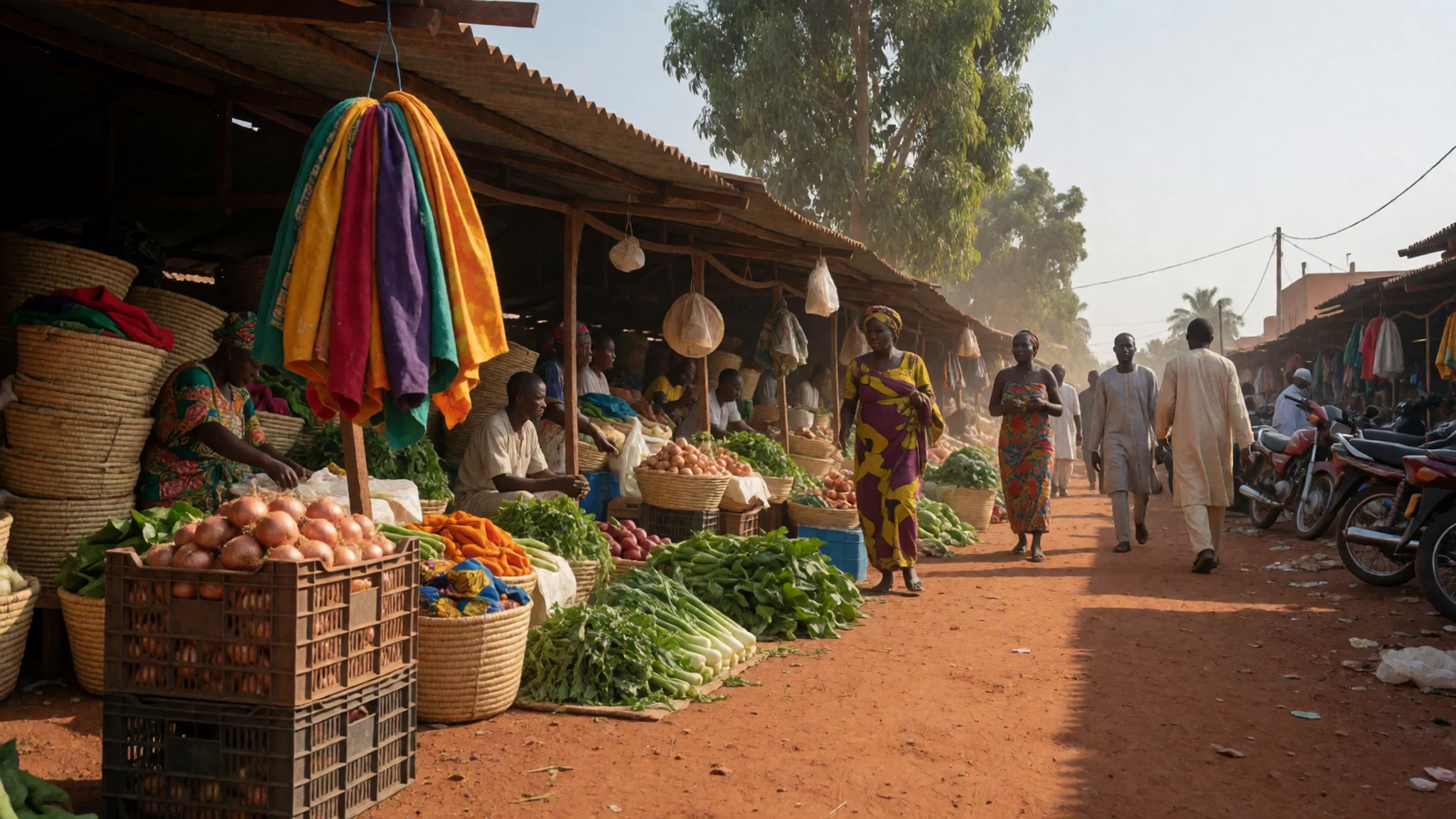
- Bedik villages near Bandafassi — Bandafassi
The Bedik–Bandafassi area is one of the three zones in the World Heritage listing, and its hill villages show how homes, granaries and fields sit close together on rocky slopes. Walking between them with a local guide helps explain how settlement follows the contours of the land. Early starts beat the heat.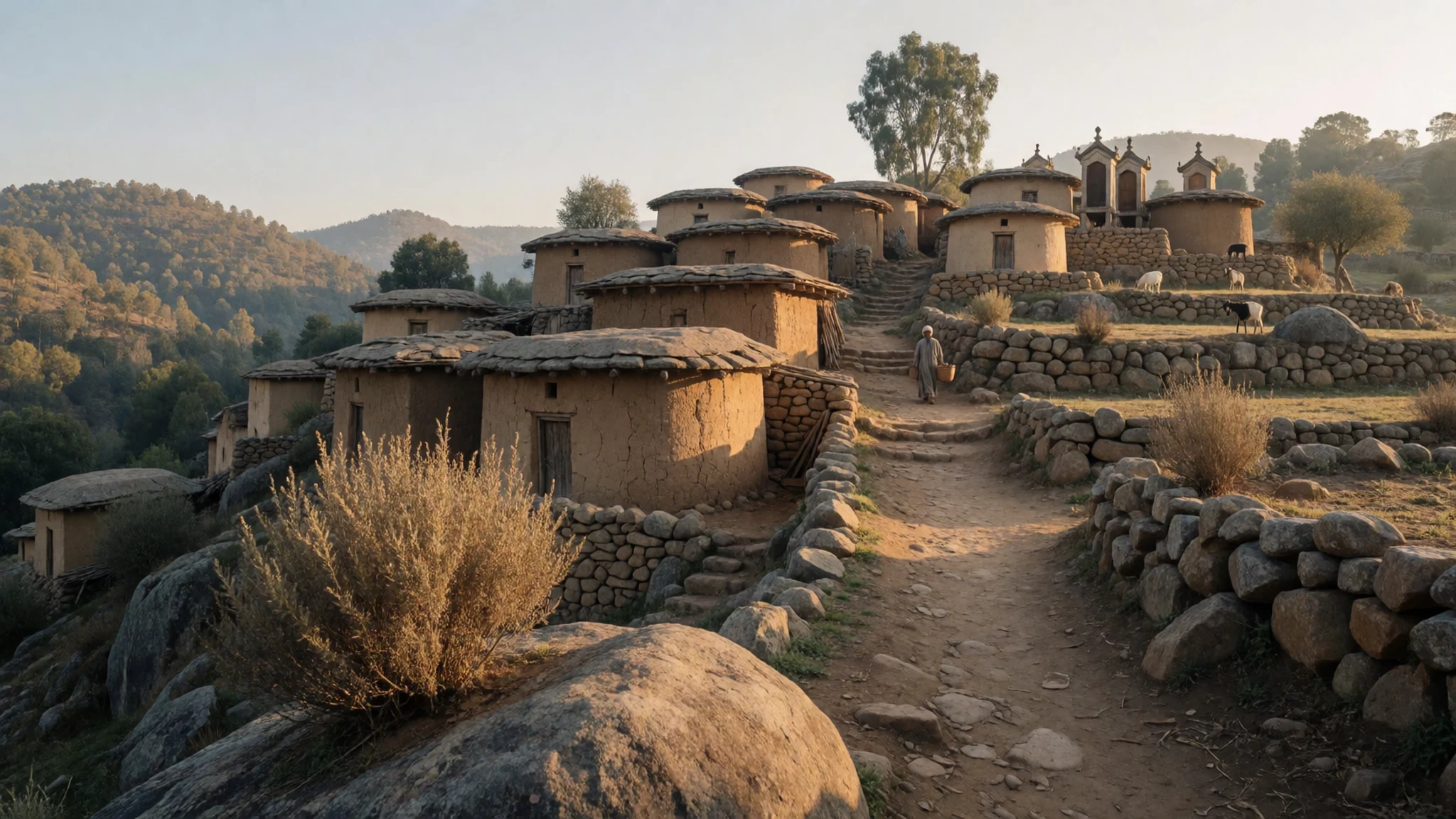
- Salémata and Bassari villages — Salémata
Salémata anchors the Bassari–Salémata area, set in the hills. The Bassari are known for dance and initiation traditions, and festivals offer a chance to see performances. Dates shift from year to year, so ask locally before planning around one. Visitors should behave as guests rather than audience.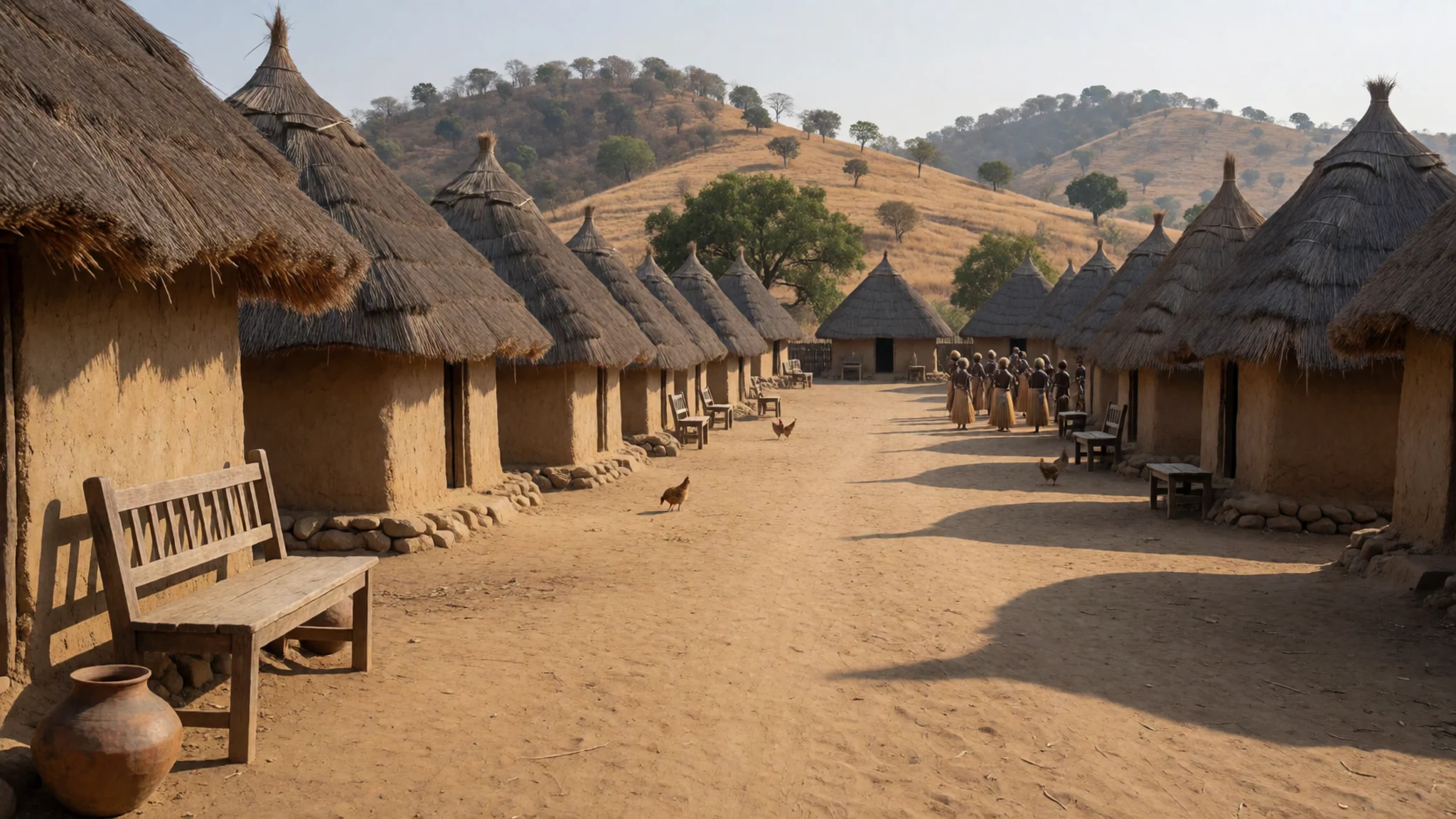
- Dindéfello — Dindéfello
Dindéfello gives its name to the Fula–Dindéfello area, the lower, more open part of the listing. The village is known locally for a waterfall in the surrounding hills, which is fullest in and just after the rains and thinner by the end of the dry season. Paths are rough, so sturdy shoes matter.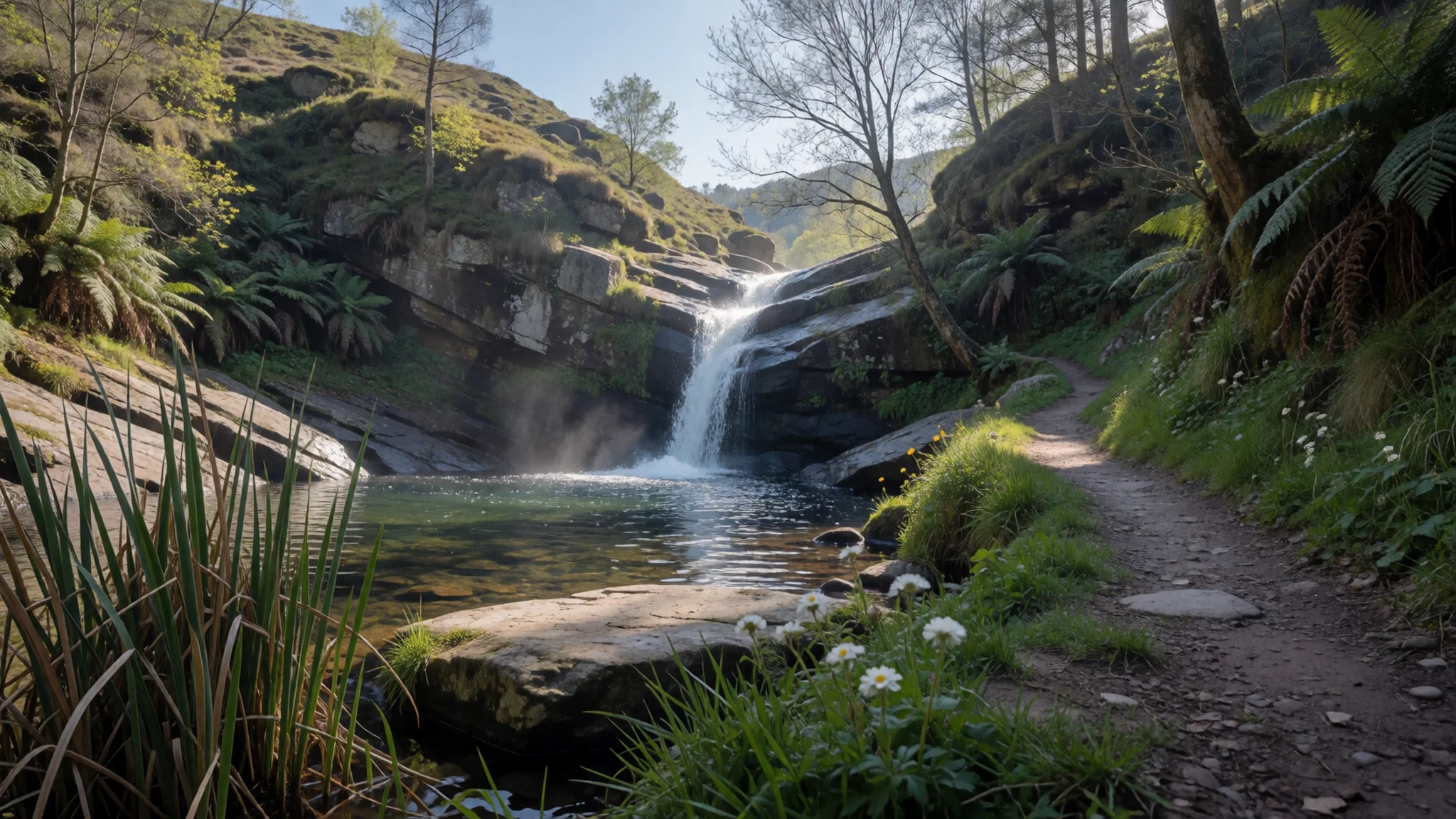
- Nepen Diakha — Near Bandafassi
Nepen Diakha lies near the highest point in Senegal, at 581 m. It is a modest summit by world standards, but the views over wooded hills show why this corner feels so different from the rest of the country. Go in the cool of the morning and carry water.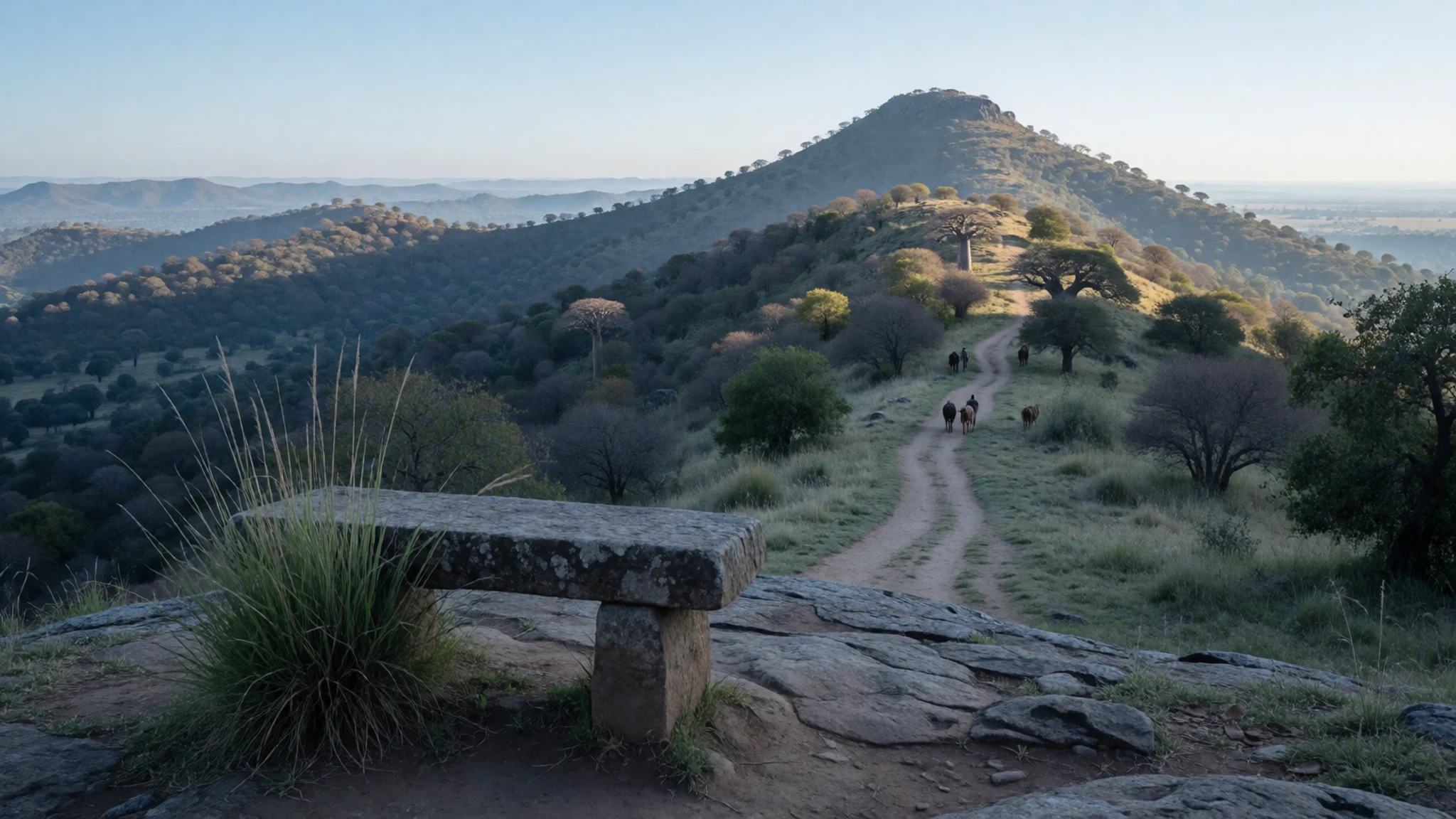
Culture
Bassari Country is home to several peoples, and the warmth of Senegalese hospitality is felt in every village. Greeting matters across West Africa, and walking past someone without a word is considered rude. In this largely Muslim country the standard greeting is "Salaam Aleikum", while the Bassari, Bedik and Fula each have their own languages, and a guide will teach a few words.
Senegal is a secular state, and the Islam practised by most people is relaxed. Faiths mix easily here, mixed-faith marriages are common, and people happily talk about religion. In these hills, older beliefs and rituals sit alongside Islam and Christianity, and some ceremonies, especially initiation rites, belong to the community alone. Dances and festivals may be open to visitors, but only through a guide whom the village trusts.
Meals are often shared from one bowl, eaten by hand, and an invitation to join is a mark of welcome. Beckoning someone directly with a finger is considered rude, so approach and speak instead.
Ask before photographing people, ceremonies or sacred sites, and take your shoes off before entering a mosque or any other religious place.
What to wear
Traditional dress in Bassari Country differs from one group to the next. Ceremonial costume among the Bassari and Bedik draws on plant fibre, leaves, beads and painted decoration, and is worn for initiations and festivals rather than day to day. Fula women are known for bright wrappers and heavy jewellery, and Fula herders often wear long robes and wide hats against the sun. Cotton, woven in narrow strips or dyed locally, is the base fabric across much of West Africa.
Everyday clothing now is practical and mostly modern. Women wear cotton wrappers, long skirts or dresses, often with a headscarf, and men wear shirts and trousers or a loose long tunic called a boubou. Football shirts and flip-flops are common. For weddings, festivals and Friday prayers, people dress up in boubous and wrappers of bright printed or dyed cloth.
Visitors should dress for heat, sun and rough ground. Light, loose cotton with long sleeves and long trousers or skirts protects against sun, thorny scrub and insects, and also suits village modesty, where shoulders and knees are best covered by men and women alike. Bring a wide-brimmed hat, sturdy closed shoes or hiking sandals for stony paths, and a waterproof layer for the rains between May and November. Avoid copying ceremonial costume or wearing camouflage.
What to eat
- Ceebu jen — Simple eateries around Kédougou market, at lunchtime
Ceebu jen is rice and fish with vegetables, served in red and white versions. Families usually eat it from one shared bowl, by hand. Look for it at lunchtime in the simple eateries around Kédougou's market.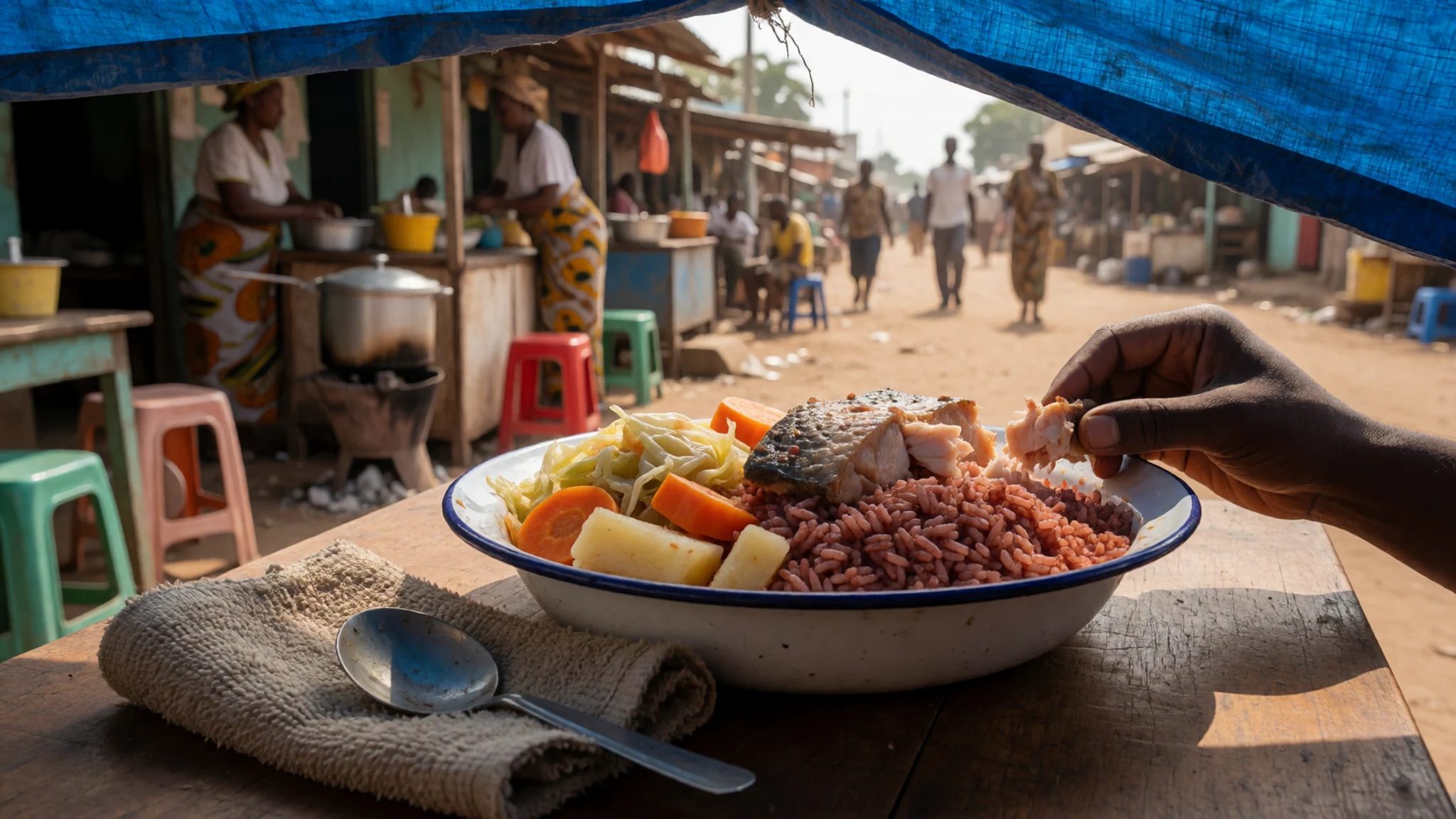
- Maafe — Family-run eateries and market stalls in Kédougou and larger villages
Maafe is a thick, rich peanut sauce cooked with meat and spooned over white rice. It is filling, so it suits a day of walking. Find it at family-run eateries and market food stalls in Kédougou and larger villages, often cooked in big pots for lunch.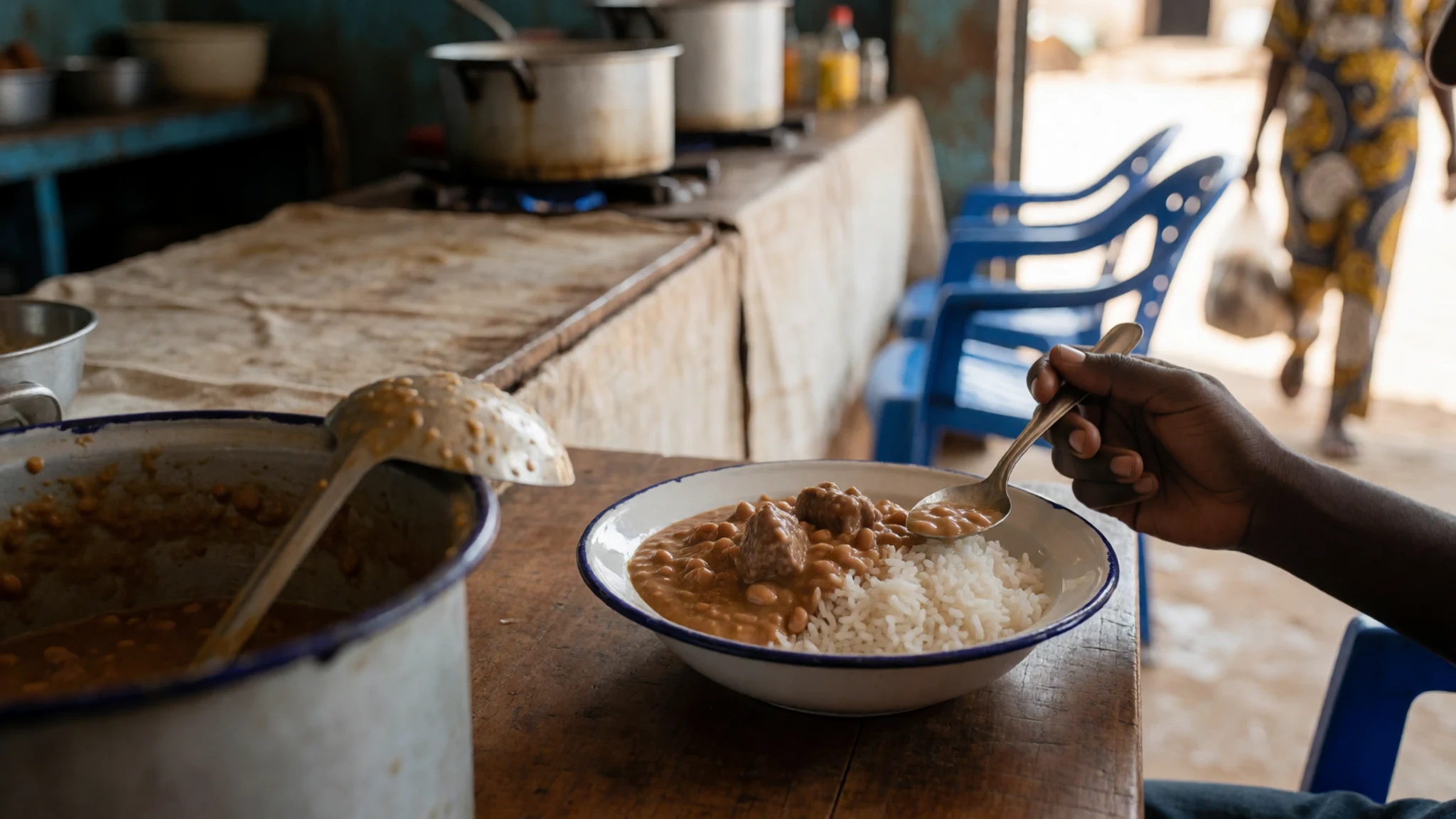
- Yassa — Market canteens and town eateries
Yassa is an onion sauce, sharp and sweet at once, poured over rice with either chicken (yassa poulet) or fried fish (yassa jen). Look for it in market canteens and town eateries, and, as with any roadside food, choose busy places where the pot is freshly cooked. - Bissap — Markets and roadside stalls
Bissap is a deep red, tart drink made by steeping dried hibiscus flowers, then sweetened and served chilled. It is a welcome relief in the dry-season heat. Sold at markets and roadside stalls across Senegal; choose sealed bottles or stalls with a clean-looking water supply. - Attaya — Shaded spots outside shops and homes, wherever people gather
Attaya is strong green tea brewed slowly on a small charcoal stove, poured between glasses to raise a foam, and served round after round in small glasses. Being offered a glass is part of hospitality; it appears wherever people gather for a chat in the shade.
Plan it
Best time. Late November to February: the rains have ended, the hills are still green and the harmattan is only beginning. From March the heat and dust build towards the end of the dry season in April, and from May to November the rains turn some tracks to mud.
How long. 3–4
Getting there. Fly into Blaise Diagne International Airport near Dakar, then continue overland to Kédougou, a long road journey of a day or more that many visitors break with a night on the way. The last leg to the villages is by road and often on foot with a local guide. Check current transport options before you go.
Budget. mid
Tips
- Hire a local guide for village visits and ceremonies; it is respectful and keeps the money in the community
- Carry cash in small notes, as cards are unlikely to work outside Kédougou
- Start walks early and carry plenty of water, since dry-season heat is strong
- Most nationalities can get a visa on arrival, but check the rules for your passport before travelling
- Check current security advice for Senegal, including the Casamance region, before you set out
Etiquette
- Greet everyone you meet, starting with "Salaam Aleikum"
- Ask permission before photographing people, ceremonies or sacred sites
- Take your shoes off before entering a mosque or other religious place
Nearby
Sources
- Wikidata Q2916296 (CC0)
- Wikipedia: Bassari Country (rev 1366152501) (CC BY-SA 4.0)
- Wikivoyage: Senegal (rev 5414955) (CC BY-SA 4.0)
- Bedik village, southeast Senegal — gbaku (CC BY-SA 2.0)
- Map of the departments of the Kédougou region of Senegal — Maximilian Dörrbecker (Chumwa) (CC BY-SA 2.0)
- Bassari dancers in Kedougou — Dorothy Voorhees (CC BY-SA 2.0)


