Cap Skirring
Cap Skirring, Senegal
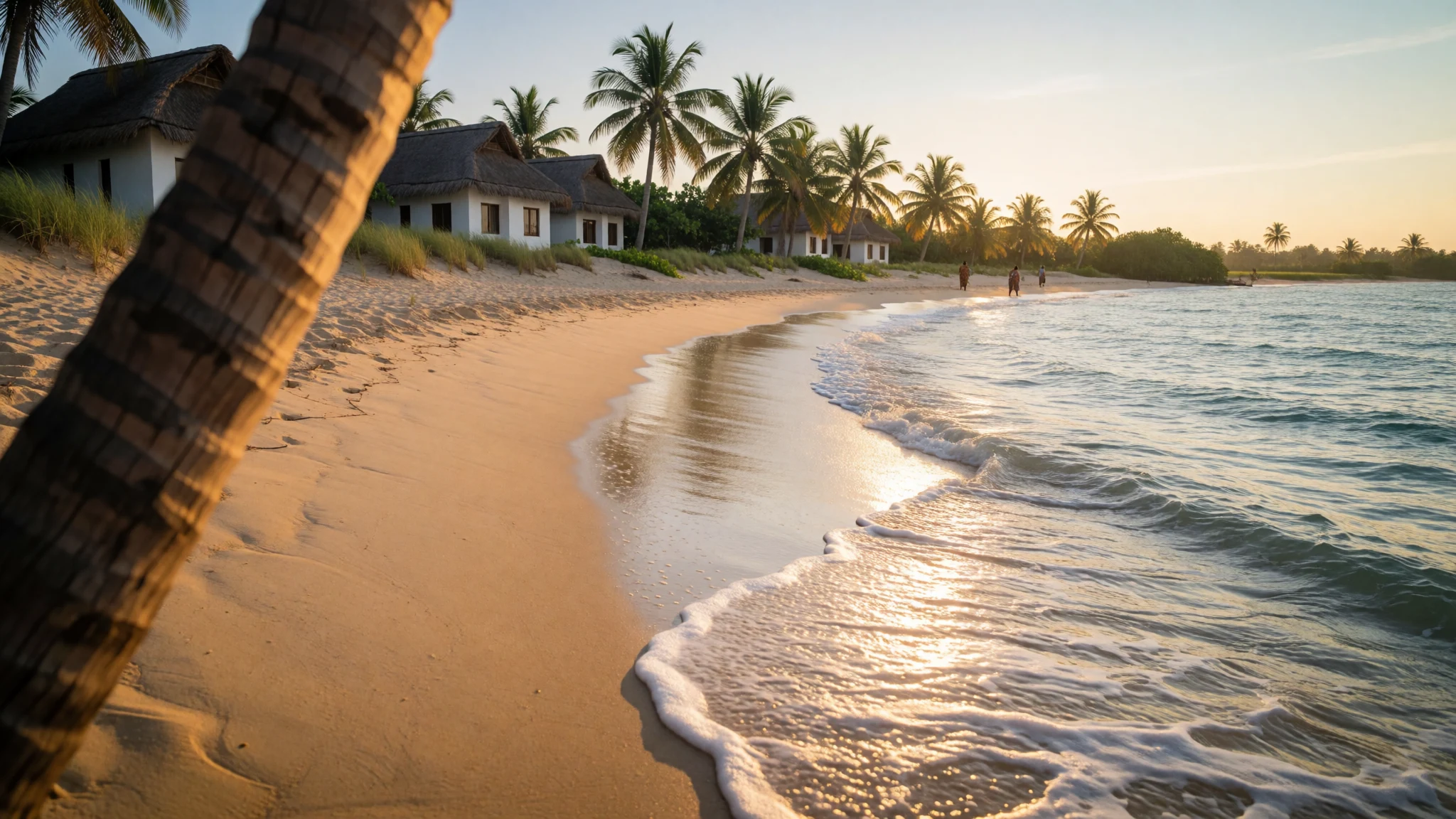
Cap Skirring is a small Casamance beach town of long sand, fresh fish and slow days, far calmer than the resorts nearer Dakar.
The place
Cap Skirring sits on the Atlantic coast of Basse Casamance, the green south-western corner of Senegal, close to the border with Guinea-Bissau. Wikidata lists it as both a village and a seaside resort, and both labels fit: a short main road, a scatter of low guesthouses, and a long beach that accounts for most of the reason anyone comes. The land is flat, only about 16 m above sea level, with palms, mangrove-lined creeks and rice fields behind the sand. This is not the dry, dusty Senegal of the north. Casamance is wetter and leafier, and the rains, roughly from June to October, turn everything vivid and thin out the visitors. The resort has a Club Med, an airport and a golf course, yet it stays small in scale. Boutique guesthouses, beach bars and a few late-night spots fill the gaps between them. Kabrousse, its twin town a little further along the coast, is quieter still. Crowds are modest compared with the Petite Côte resorts closer to Dakar, though the dry-season weeks around Christmas and the new year bring European holidaymakers and higher prices. Heat is constant, softened by the sea breeze. Cap Skirring suits people who want sand, grilled fish and unhurried days, with side trips into villages and creeks, rather than monuments or a packed itinerary.
Its story
Cap Skirring began as a place to fish. Families working this shore lived off the sea long before outsiders took an interest, and the creeks behind the beach gave them shelter, shellfish and rice land. The change came in the 1960s, when French residents of Ziguinchor, the regional town inland, began driving out to the coast for weekends and found the long empty beach to their liking. Their flying club soon cleared a short runway for light aircraft, so a journey that had depended on rough roads could be made in a quick hop. That modest decision shaped the town. Once an airfield existed, it was easier for holiday companies to picture a resort here, and a Club Med village arrived, bringing European guests and the first guesthouses, restaurants and bars. The town now also has an airport and a golf course, giving it the facilities of a resort in miniature. Even so, the scale never ballooned. Fishing continues alongside tourism, and neighbouring Kabrousse grew up in step with it. Casamance has had a troubled recent history, and official travel advice for the region has shifted over the years, so the calm of the resort sits inside a wider context worth checking before any trip. Cap Skirring is best understood as a fishing coast that learned, over several decades, to host guests without entirely changing its pace.
What to see
- Cap Skirring beach — The seafront
The main beach at Cap Skirring runs in a broad pale curve towards the Guinea-Bissau border, backed by palms and low buildings. It is wide enough that even in the busy weeks there is room to walk alone. Mornings are cooler and best for long walks; the afternoon sun is strong.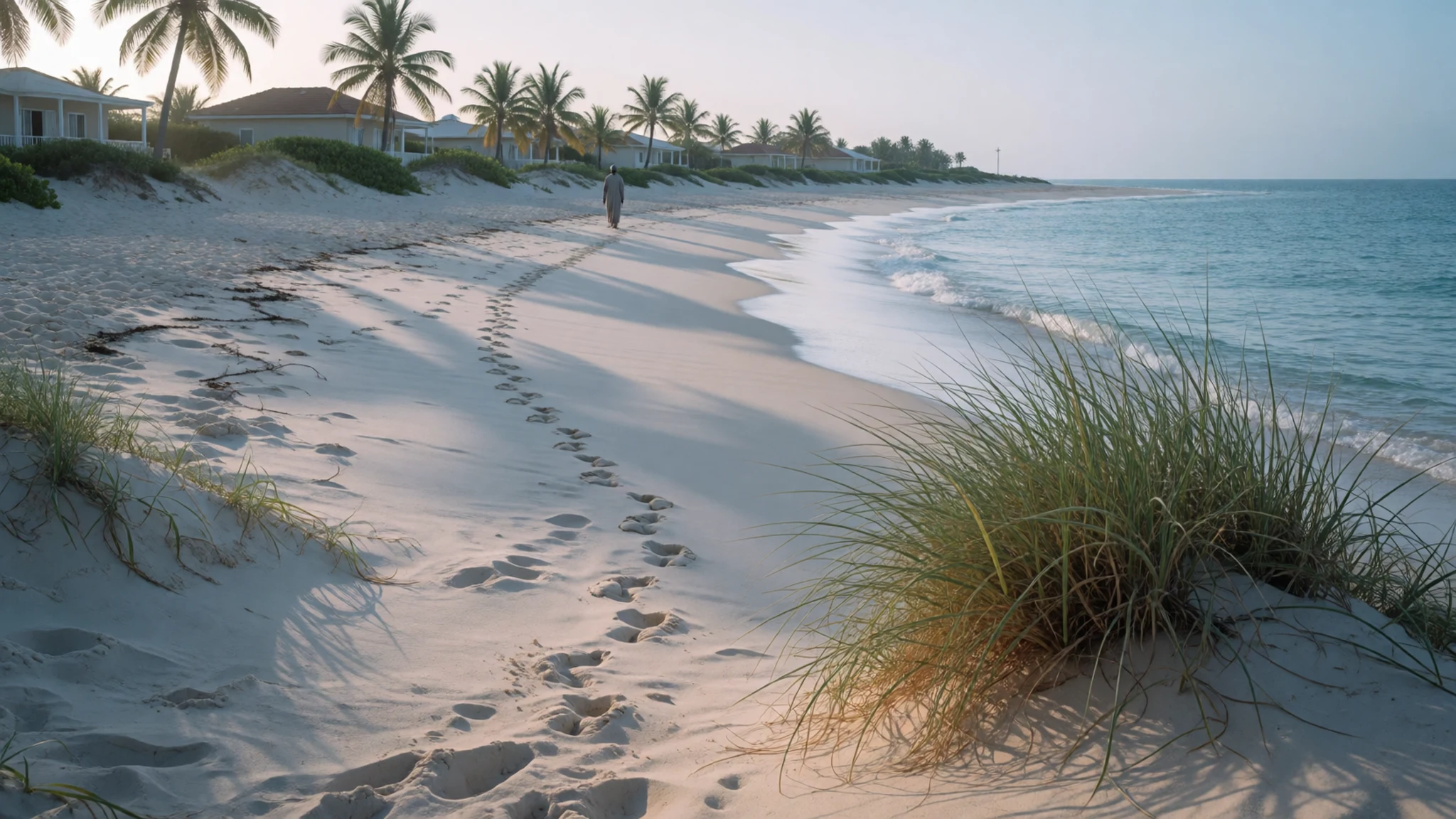
- The bolong — Creeks behind the village
A bolong is a tidal creek, and the ones near Cap Skirring wind through mangroves behind the beach. Local guides take visitors out by small boat or pirogue, and the trip is a quiet contrast to the surf side. Herons, oyster collectors and village landings are typical sights.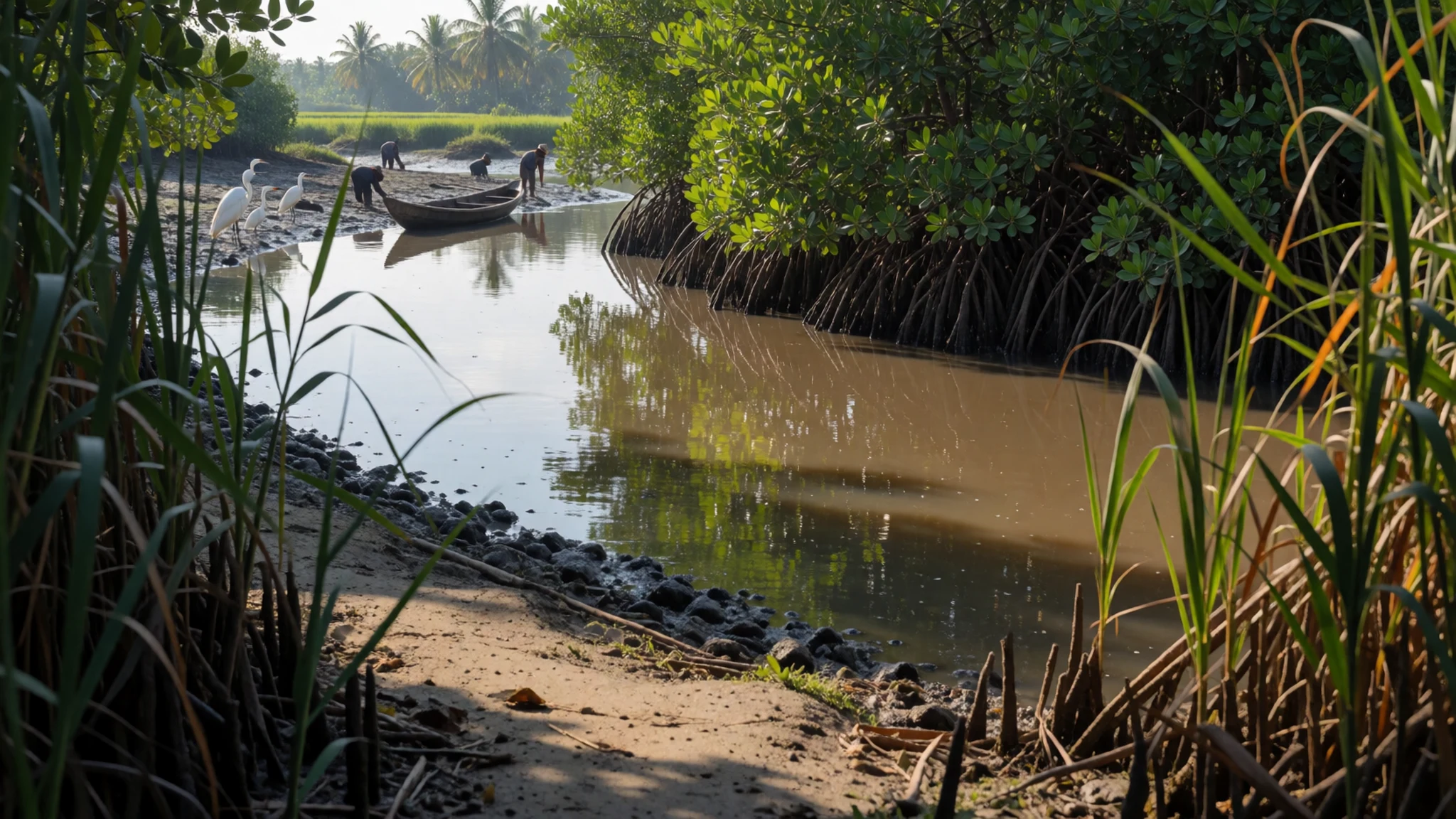
- Sunset on the shore — Beachfront, west-facing
The beach faces the Atlantic, so evenings end with the sun dropping straight into the sea. Beach bars and guesthouse terraces fill gently around dusk. It is a simple ritual rather than an event: a cold drink, a few fishing boats and the light going orange over wet sand.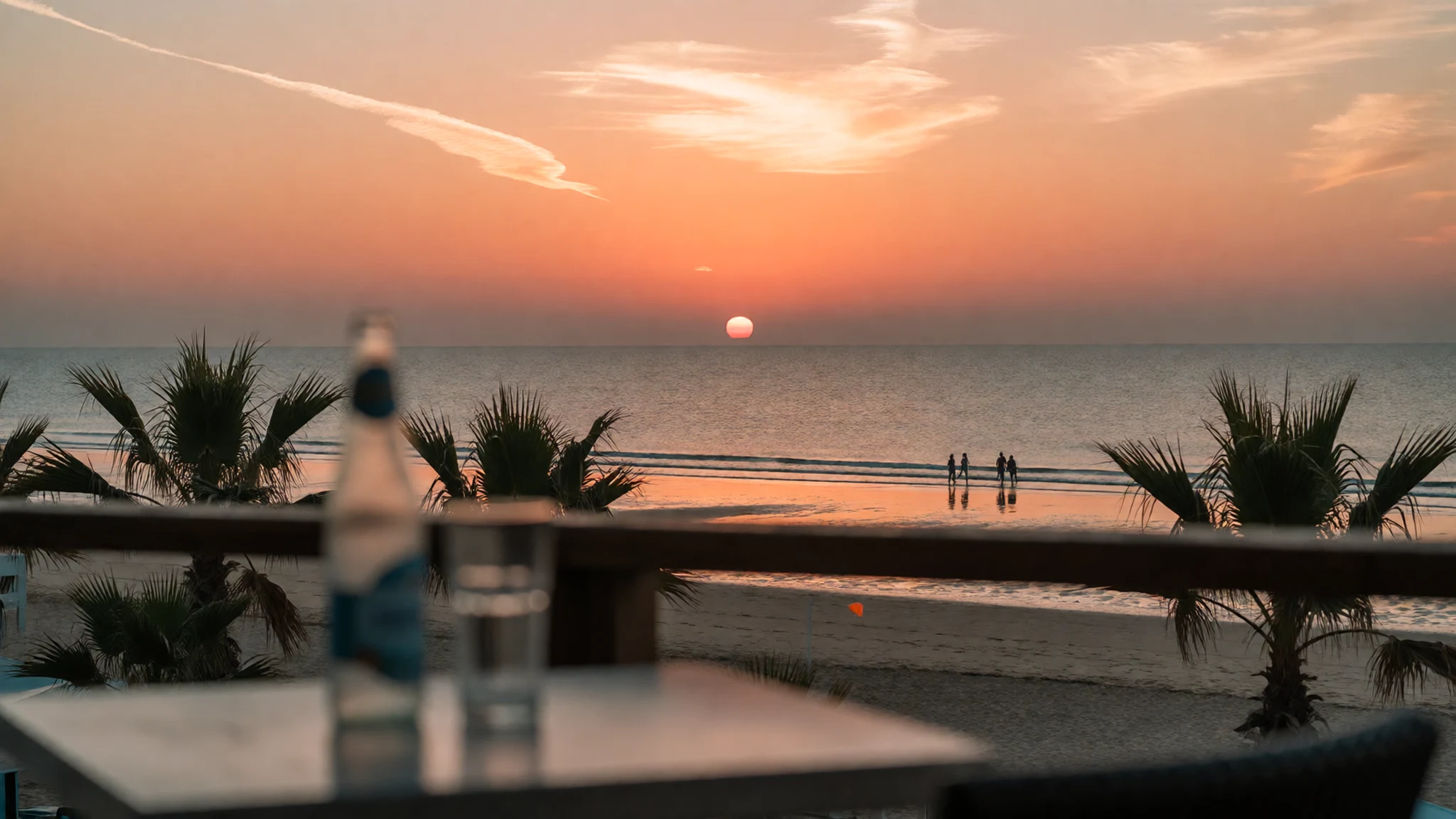
- Kabrousse — South along the coast
Kabrousse is the twin town of Cap Skirring and feels slower and more residential. Visitors come for a quieter stretch of the same shoreline, small guesthouses and walks between the sand and village lanes. It works as a half-day trip or as a calmer base for a longer stay.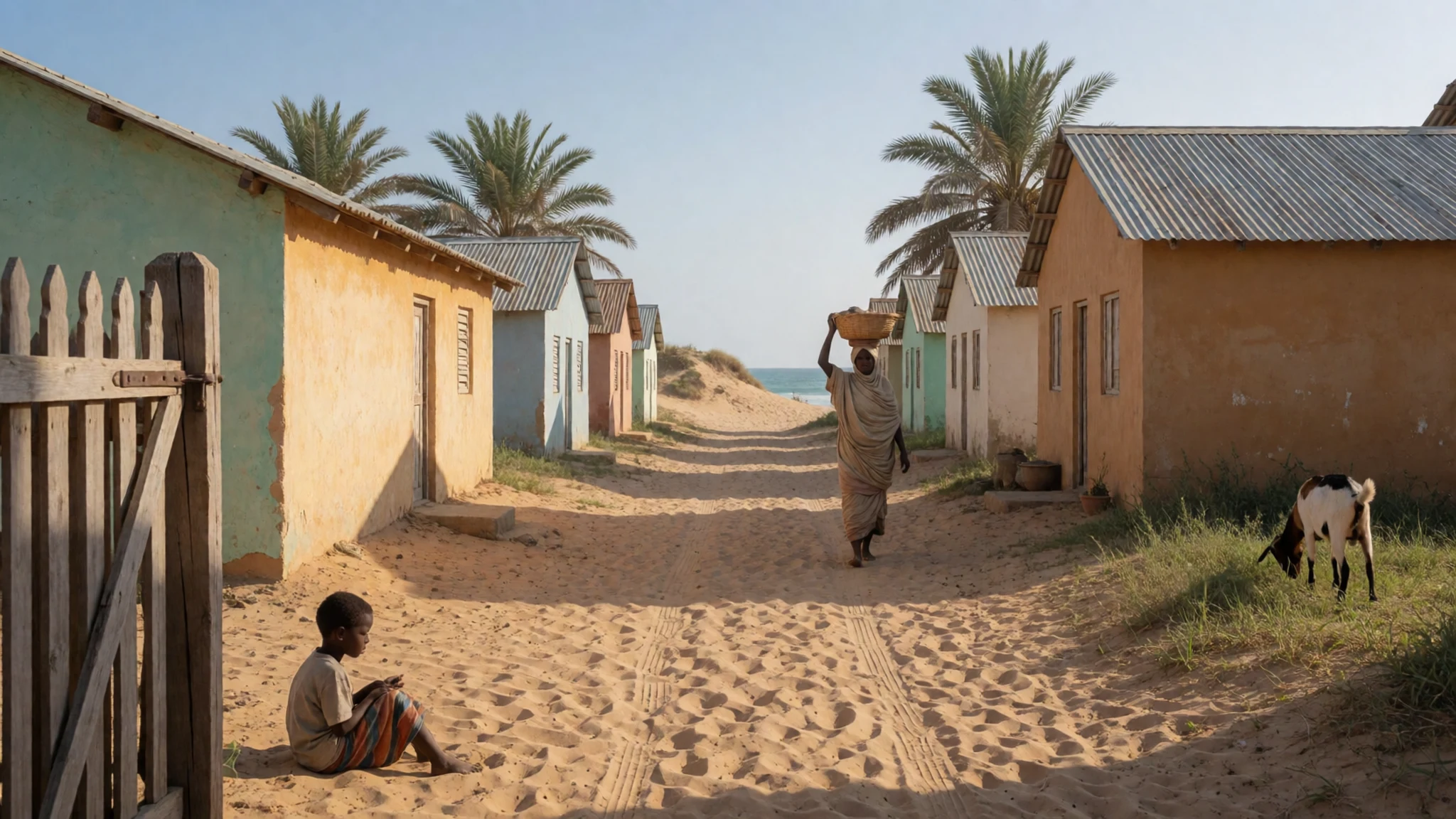
- The village centre — Main road, Cap Skirring
The centre is a compact strip of small shops, craft stalls, eateries and money-changing counters, with motorbikes and shared taxis passing through. It is the place to buy sandals, fabric or carved souvenirs, to eat something simple and to watch everyday life carry on beside the resort trade.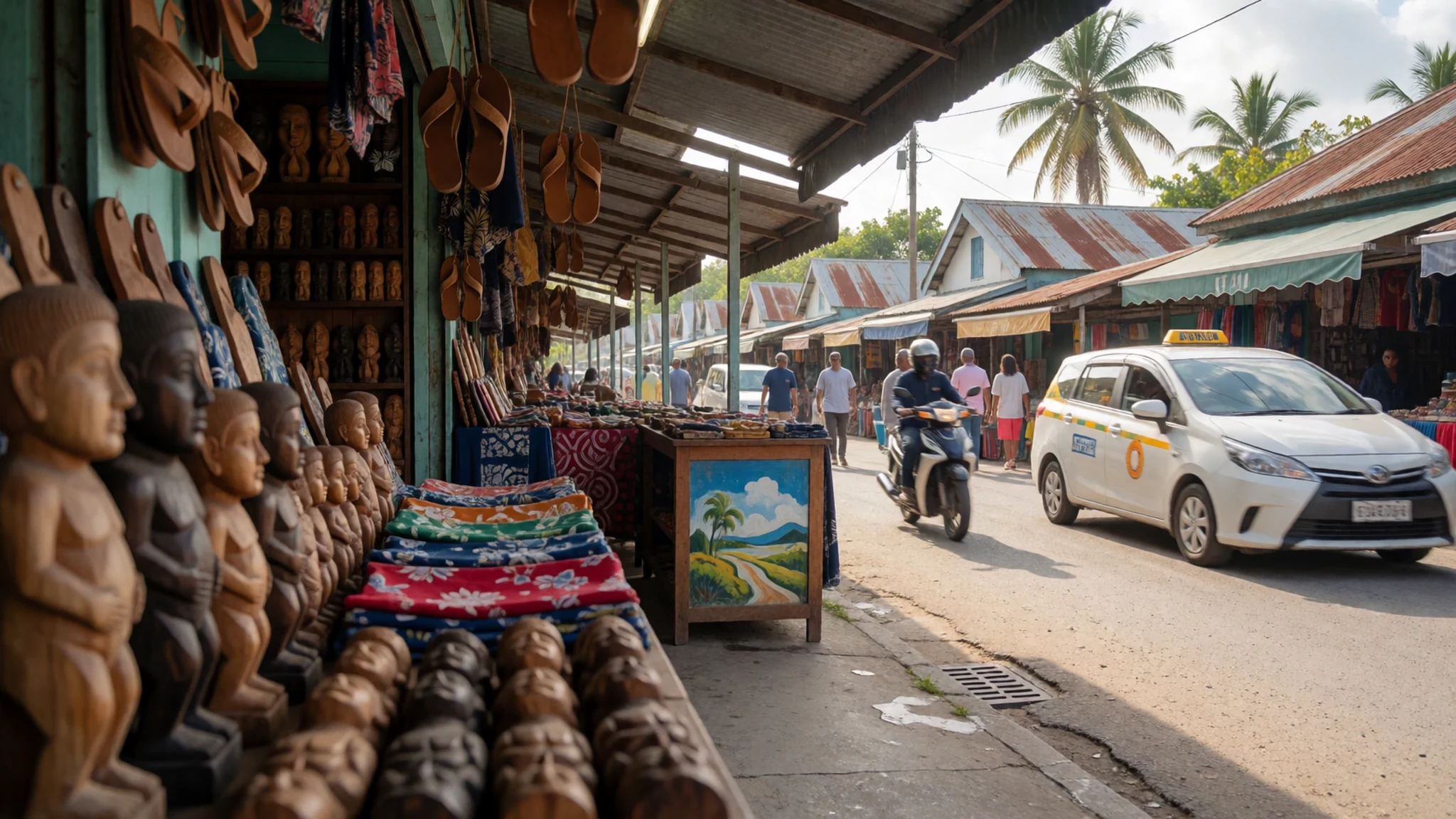
Culture
Cap Skirring lies in Casamance, a region whose character differs from the rest of Senegal. The Diola (Jola) communities are prominent here, living from rice, fishing and palm products, and the area has a mix of Muslim, Christian and older local beliefs that sit side by side without much friction. French is the language of business and signs, Wolof is widely understood, and Diola languages are heard in the villages. Greetings carry weight: a proper hello and a question about the family or the day come before any request or bargain, and visitors who rush past them are noticed. Hospitality is a point of pride, so invitations to share tea or a meal are often sincere. Fishing shapes the rhythm of the shore, with boats going out early and returning to be unloaded, sorted and sold on the sand. Tourism is a major income, but daily life in the villages behind the resort strip still follows seasons, markets and family obligations. Music and drumming turn up at celebrations and in some restaurants and bars, and are best enjoyed with a bit of curiosity rather than a camera held up from the start. Ask permission before photographing people, boats being unloaded or village homes, and respect a refusal with a smile.
What to wear
Dress in Cap Skirring reflects Senegal's wider traditions as well as local ones. Traditional clothing includes the boubou, a long, loose robe worn by men and women, often cut from bazin, a stiff dyed cotton damask, or from wax-print cotton in bold patterns. Women also wear wrapped pagnes (cloth skirts), matching tops and carefully tied headwraps, and the most elaborate outfits appear at weddings, religious festivals and family ceremonies. Local tailors make clothes to order from fabric bought at the market. Day to day, people now wear a mix: T-shirts, jeans, football shirts and light dresses, with traditional cloth kept for special days and for work in the village. Staff in the resort trade often wear simple uniforms or casual cotton. A visitor should dress for heat and humidity: light cotton or linen, a hat, sunglasses and sandals that handle sand and uneven village lanes. Swimwear belongs on the beach and at the pool; away from the shore, cover shoulders and thighs as a courtesy, especially in villages and when visiting mosques or churches. In the rainy season, add a light waterproof layer and quick-drying shoes. Mosquito repellent is part of the wardrobe, and long, light sleeves help at dusk.
What to eat
- Grilled fish (poisson braisé) — Beachfront eateries and the fishing landing
Whole fish grilled over charcoal and served with onions, lemon, chilli and rice or chips. The catch is landed nearby, so choices vary by day. Pick the fish at the stall or restaurant, agree how it will be cooked, and expect a relaxed wait.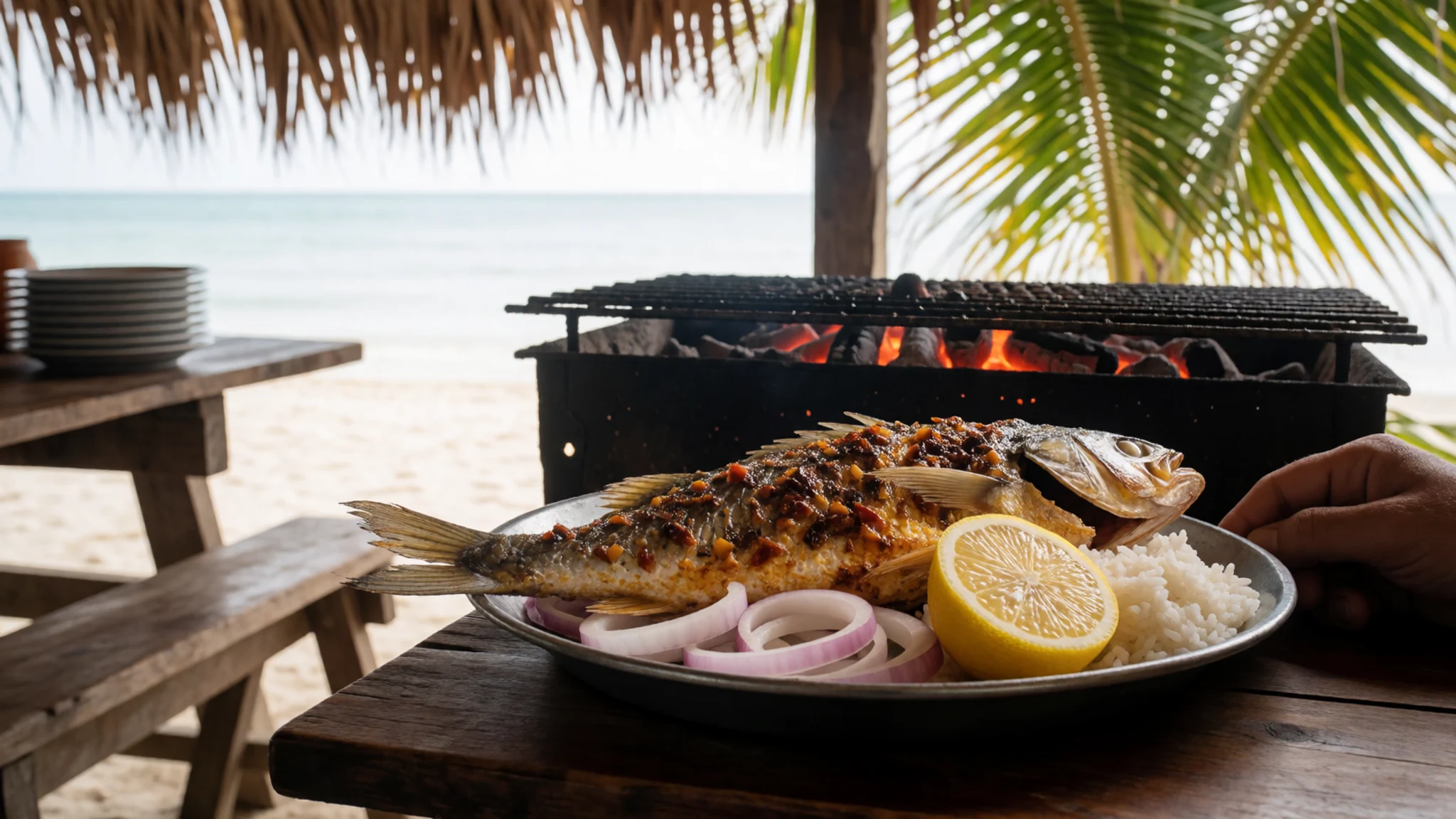
- Thieboudienne — Local family-run eateries and village lunches
Senegal's best-known rice-and-fish dish, cooked in a tomato base with cassava, carrots, cabbage and other vegetables. It is usually a lunchtime meal, served from one large dish and often shared, and portions are generous.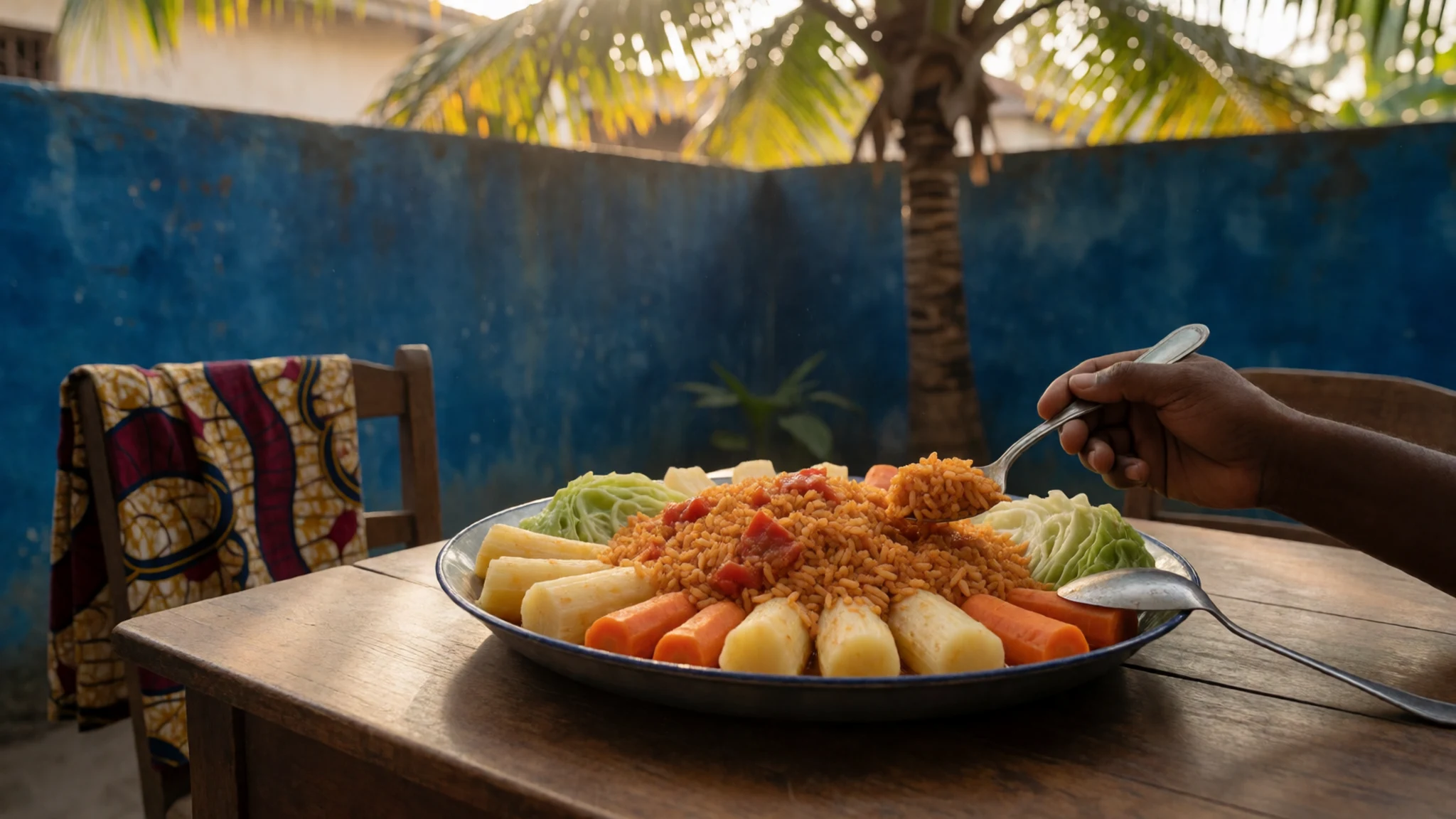
- Yassa (chicken or fish) — Simple restaurants along the main road
Meat or fish marinated in lemon, mustard and a lot of onions, then grilled and slowly simmered until the onions turn soft and sweet. It is served over rice and suits those who like tangy rather than very hot food. - Oysters and shellfish — Creek-side stalls and restaurants near the bolongs
Oysters gathered from mangrove roots are a Casamance speciality, often eaten with lemon or grilled. Prawns and other shellfish also appear on menus. Choose busy places with fast turnover and ask how recently the shellfish were collected. - Bissap and fresh juices — Market stalls and guesthouse terraces
Bissap is a deep red drink made from dried hibiscus flowers, served cold and sweet, sometimes with mint. Baobab-fruit (bouye) and ginger juices are also common. They are a cheap way to cool down, though sugar levels vary.
Plan it
Best time. November to April, when the weather is drier and less humid and the sea breeze keeps the heat bearable. June to October is the rainy season: lush and quiet, but humid, with heavy downpours and some businesses closed.
How long. 3–5
Getting there. Cap Skirring has its own airport, but flight schedules change, so check with airlines. The usual overland route is via Ziguinchor, the regional town, then a sept-place (shared taxi) for the final leg to Cap Skirring. Travellers from Dakar often reach Ziguinchor by air or ferry; check operators for current services.
Budget. mid
Tips
- Check your government's current travel advice for Casamance before booking
- Book guesthouses early for the Christmas and new-year weeks, when the resort is busiest
- Carry cash in small notes, as card use is patchy outside the larger places
- Drink bottled or filtered water and use sun protection and mosquito repellent
- Walk the beach early in the morning, when it is cooler and quieter
Etiquette
- Greet people properly before asking for anything
- Ask before photographing people or their boats
- Keep swimwear to the beach and cover up in the village
Nearby
Sources
- Wikidata Q727560 (CC0)
- Wikipedia: Cap Skirring (rev 1377577857) (CC BY-SA 4.0)
- Wikivoyage: Cap Skirring (rev 5396862) (CC BY-SA 4.0)
- Photo: Sunset in Cap Skirring, Kateryna Serdiuk (CC BY-SA 4.0)
- Photo: Cap Skirring beach, Bjørn Christian Tørrissen (CC BY 3.0)
- Photo: Club Med village, Arroser (CC BY 3.0)
- Photo: Bolong at Cap Skirring, Olivierkeita (CC BY 3.0)
- Photo: CapS 8415, GuillaumeG (CC BY-SA 4.0)
- Photo: CapS 8422, GuillaumeG (CC BY-SA 4.0)
- Photo: CapS 8428, GuillaumeG (CC BY-SA 4.0)
- Photo: CapS 8430, GuillaumeG (CC BY-SA 4.0)


Wildlife
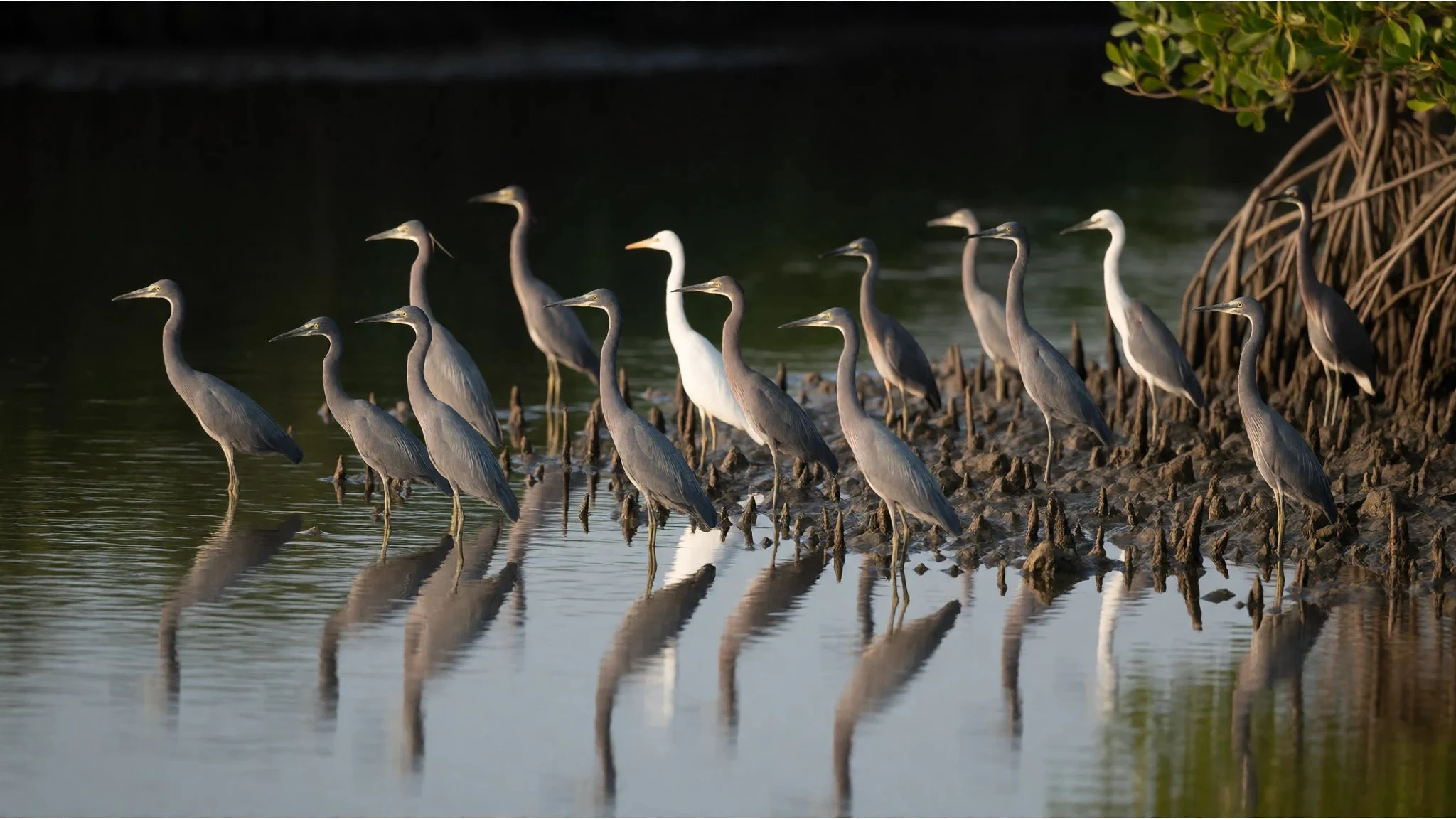
- Grey heron (animal)
The grey heron is a tall bird on stilt-like legs that wades in water and waits, still as a statue, for its dinner. In Cap Skirring it is one of the everyday sights, found near the village landings alongside the oyster collectors. Look for it in shallow water and along the coast. Watch from a good distance, keep quiet and still, go with a local guide if you can, and never feed it.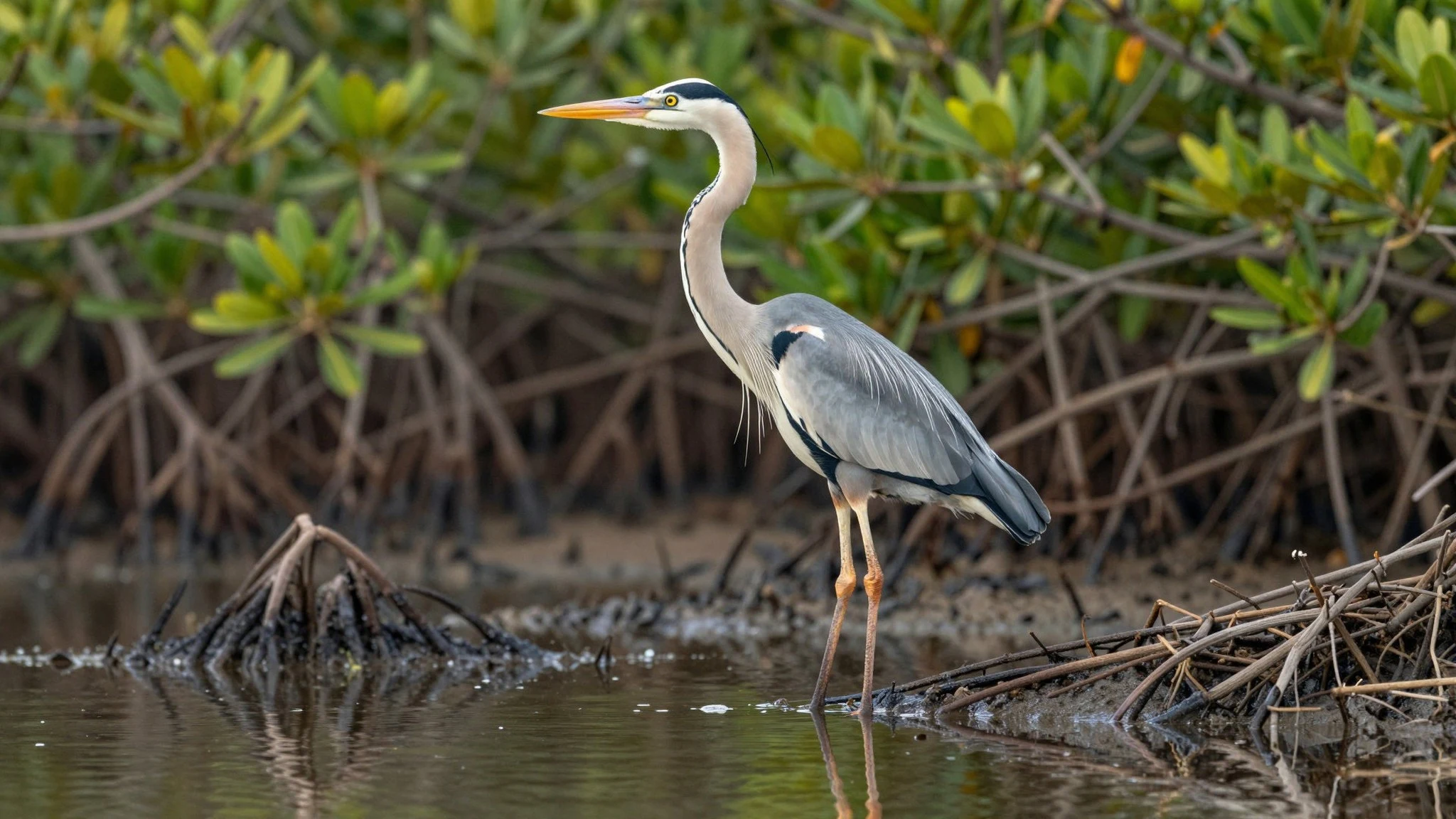
- Western reef heron (bird)
The western reef heron is a medium-sized seashore heron that wears different coats: grey, white, or, in West Africa, black with a white throat. In Cap Skirring it is a typical sight around the village landings, where oyster collectors work. Its pale form can resemble a little egret, so look closely at the bill, which is paler and larger. Keep your distance, stay quiet, ask a guide for help, and never feed it.