Saloum Delta National Park
Saloum Delta National Park, Senegal
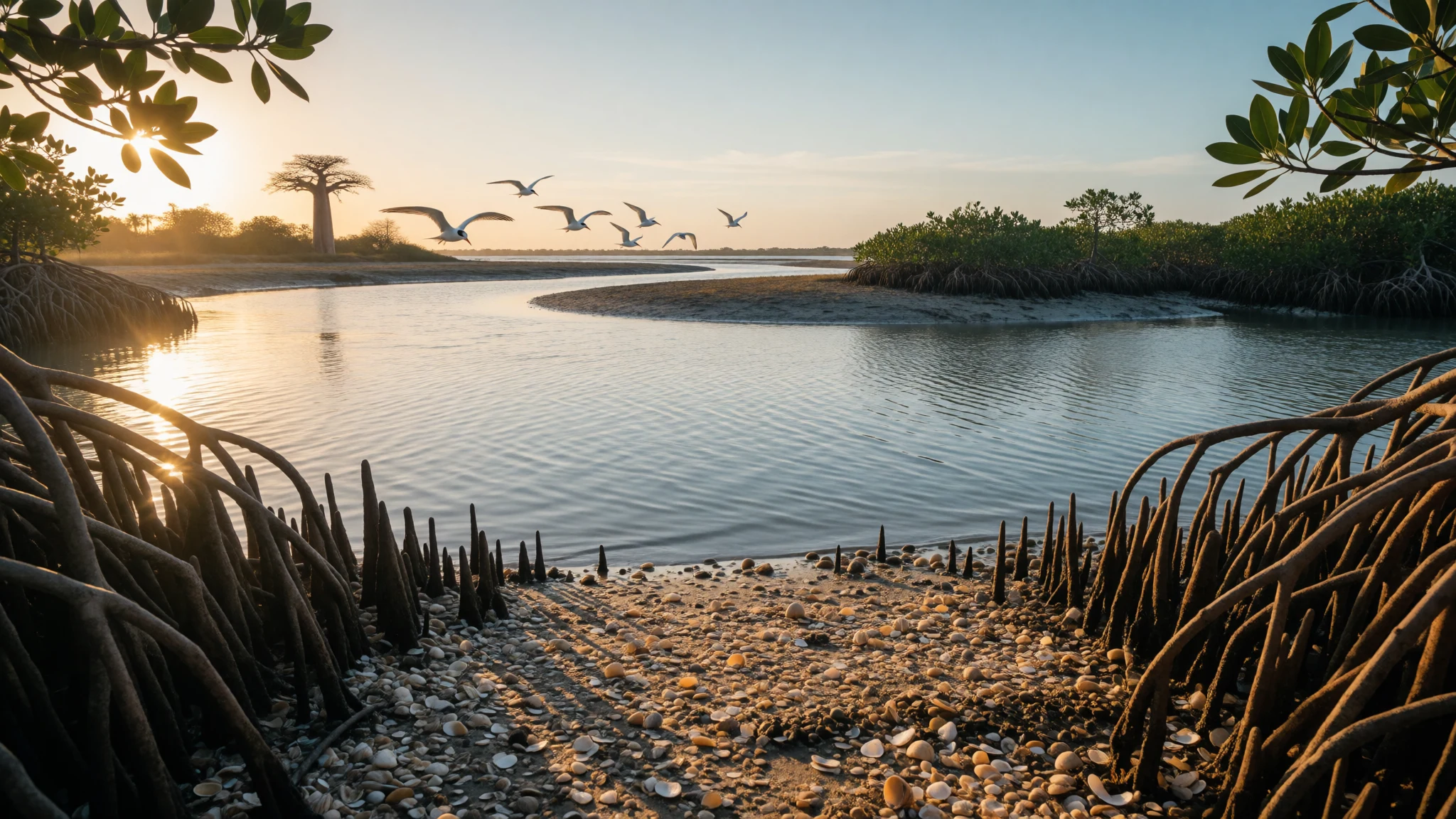
Saloum Delta National Park is a water-and-wildlife escape in Senegal, where mangroves, islands and birds shape the day.
The place
Saloum Delta National Park (Parc National du Delta du Saloum) sits in Senegal at the meeting point of the Saloum River and the North Atlantic. It’s a low, watery landscape laid out as a patchwork of channels, mangroves and flooded ground, with the sea pushing in and the river feeding the wetlands.
The park covers about 760 square kilometres and was established in 1976. Water dominates: intertidal mangroves and salt-loving vegetation run along the coast, while savannah and forest land sits in the mix farther inland. The area is also part of a wider biosphere reserve, and it lies along the East Atlantic Flyway, which helps explain why birds matter so much here.
Nature in the delta isn’t separate from people’s lives. Shellfish farming is a key livelihood, and it happens alongside the wildlife, in ways that can feel quietly symbiotic rather than fenced-off. It also makes the logistics different from a “classic” dry-season safari: the practical rhythm is boat time, tides, and the way the waterways look at different hours.
Expect heat and humidity most of the year, with a rainy season stretching from May to November and a drier period from December to April. The terrain stays generally flat, with higher ground only in the southeast where the landscape rises toward foothills.
If the idea of your “national park day” is mostly walking and viewpoints, Saloum will feel different. Here, the best views often come from being on the water—slowly moving through mangrove corridors, then turning back when the light and the tide say so.
Its story
Saloum Delta National Park is the kind of place that changes how you measure time. In many parks, you look for the big moment: a viewpoint, a waterfall, a dramatic landscape. In Saloum, the big moments arrive in small shifts—when a channel narrows and the mangroves lean closer, when the air turns steamy after a calm spell, or when the birds start calling and you realise you’ve been watching the water for a long time without noticing.
The delta’s layout—river and ocean together—keeps the scenery in motion. Channels branch, sand and mud show and hide, and the waterline feels alive. That same wet-and-salty reality shapes what people do here. Shellfish farming is well established, so the delta isn’t a distant wilderness with a polite boundary; it’s a working ecosystem where livelihoods depend on the same tides that guide the wildlife.
Wildlife is present, but it tends to reveal itself through patterns rather than spectacle. In the seasons when birds breed or winter here, the park becomes a living map: species use the wetlands like a seasonal address, and you’ll often spot them by scanning slowly rather than rushing.
And then there’s the human hospitality angle Senegal is known for. Conversations drift easily, greetings matter, and daily life still feels close even when you’re surrounded by conservation talk. Saloum doesn’t demand a rushed itinerary. It rewards a slower one: staying flexible, going out when conditions suit, and accepting that this delta is best met the way it works—on the water, with patience.
What to see
- Mangrove channels by pirogue — Mangrove channels within the delta
Saloum Delta National Park is made for slow boat travel. In the mangroves, the waterways twist between salt-tolerant vegetation, and you drift past quiet banks and shaded roots. It’s a calm, close-up way to understand how the sea and river overlap.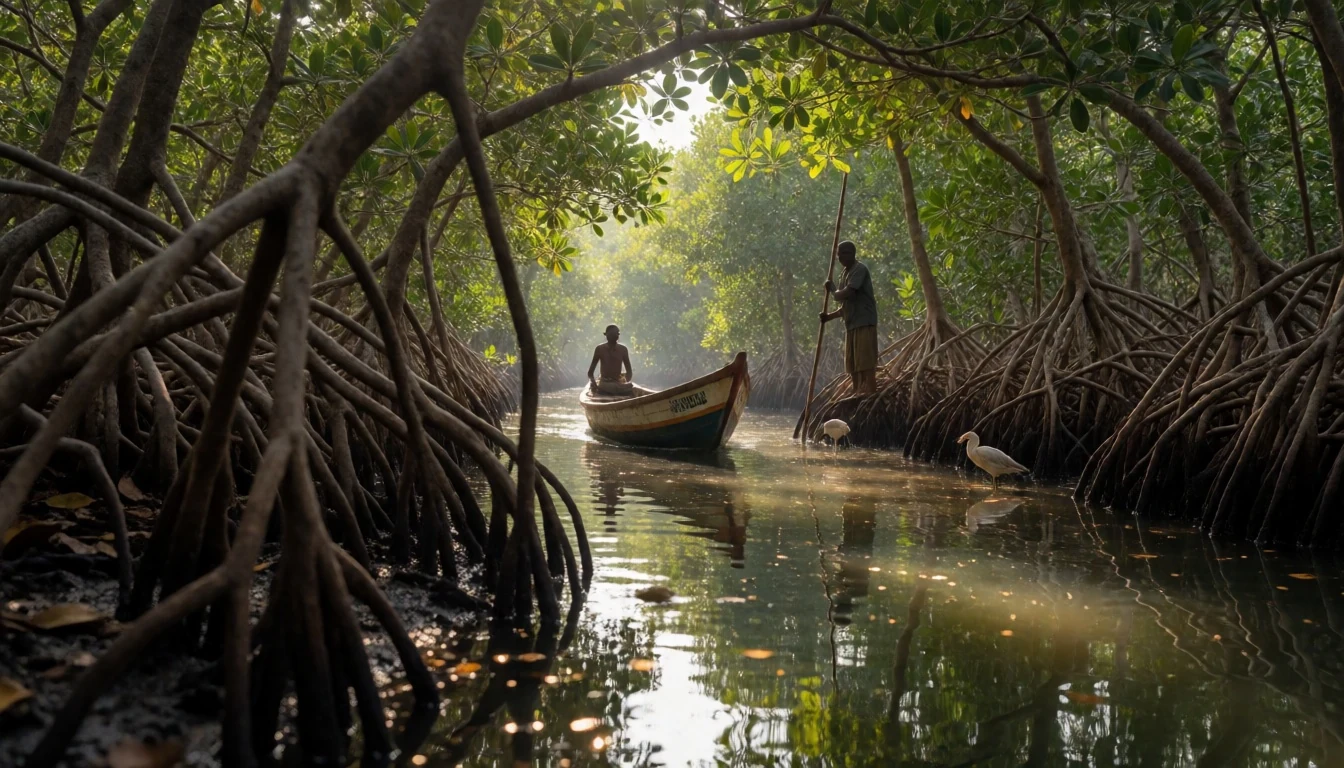
- River–ocean junction edges — Where the Saloum River meets the North Atlantic
At Saloum Delta National Park, the coastline feel and the river feel blend. Look for the moments where calmer, inland water meets the Atlantic influence—often brighter, windier and more changeable. The best views come from staying alert to how the horizon and water texture shift.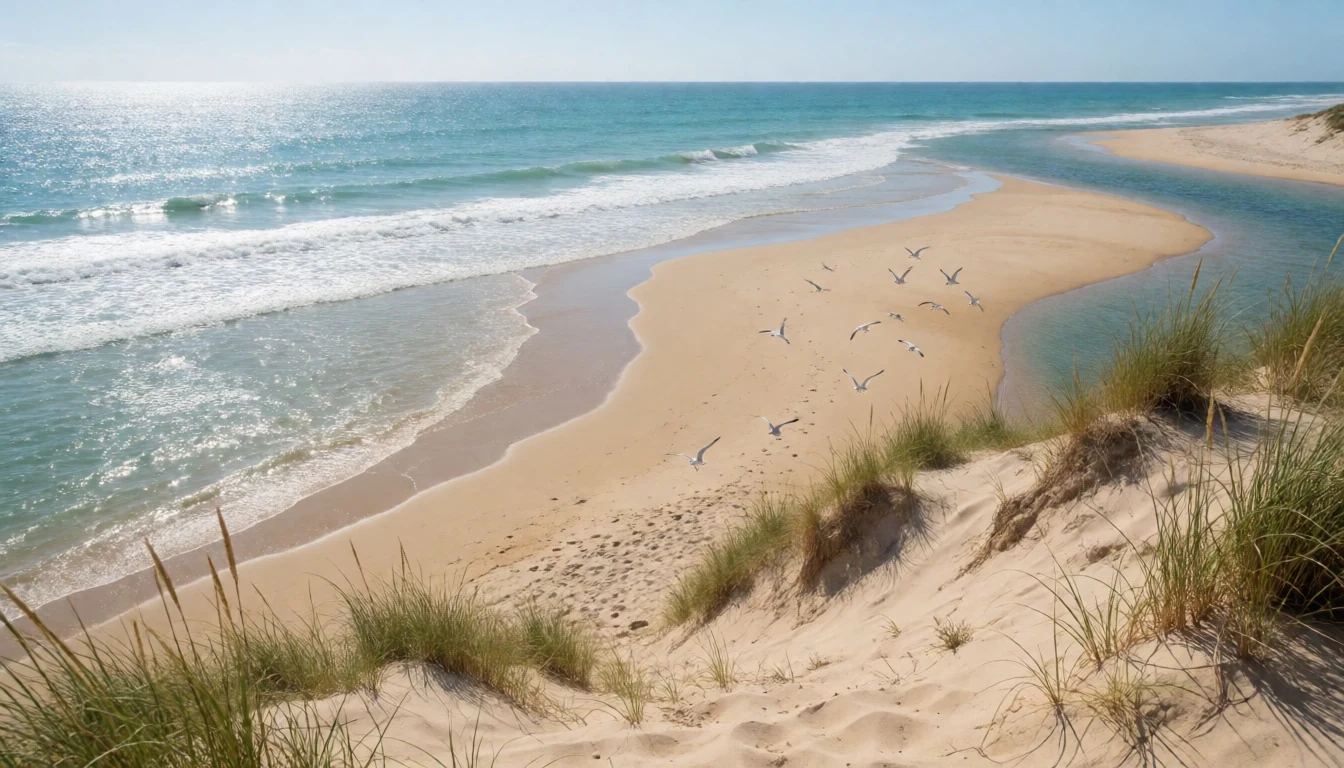
- Baobab on inlet banks — Banks near sea inlets
A baobab can stand out in a surprisingly watery setting at Saloum Delta National Park. On banks near sea inlets, the tree becomes a visual marker: twisting branches above and moving water below. It’s especially good for photos when the light rakes across trunks.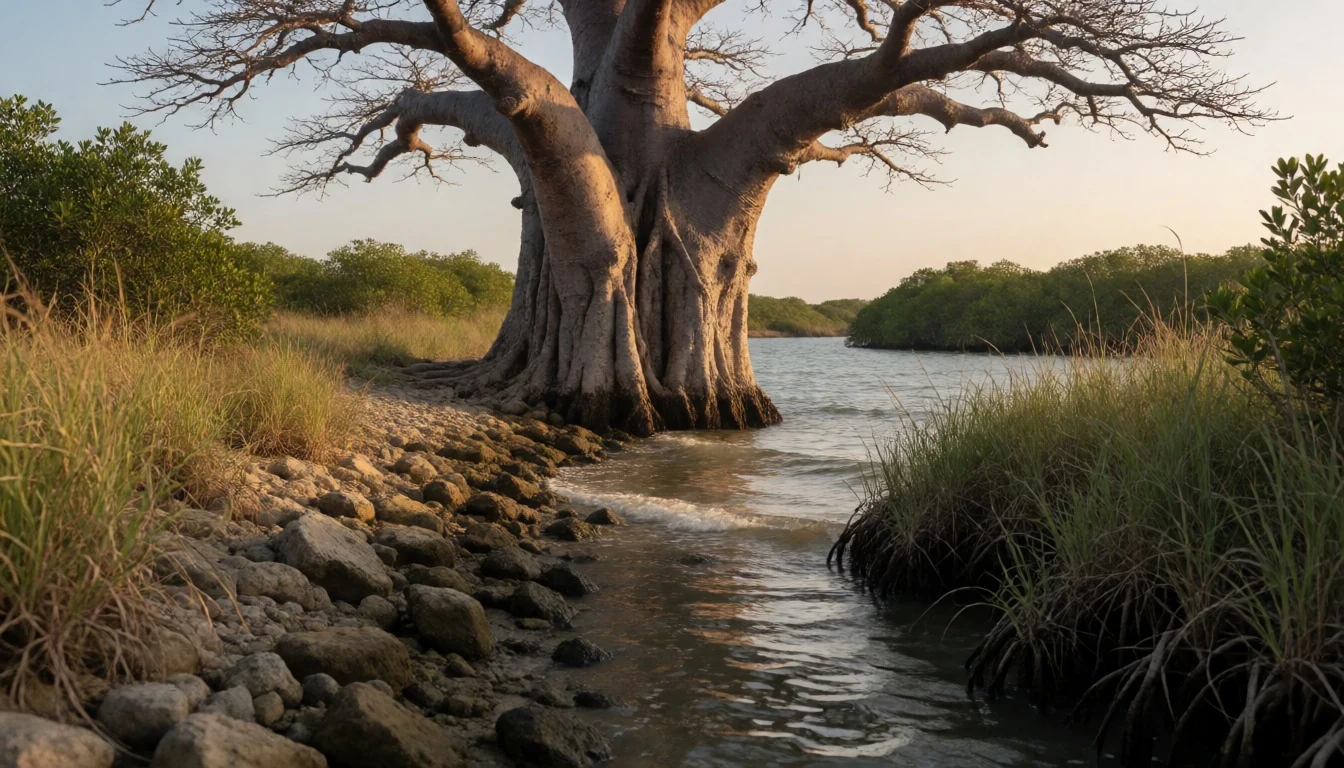
- Pirogue ride into the delta — Inland waterways of the delta
A pirogue ride into Saloum Delta National Park is the classic way to cover ground without forcing speed. You travel between channels and sheltered stretches, watching how vegetation gives way to open water. The journey itself becomes the entertainment as the delta opens around you.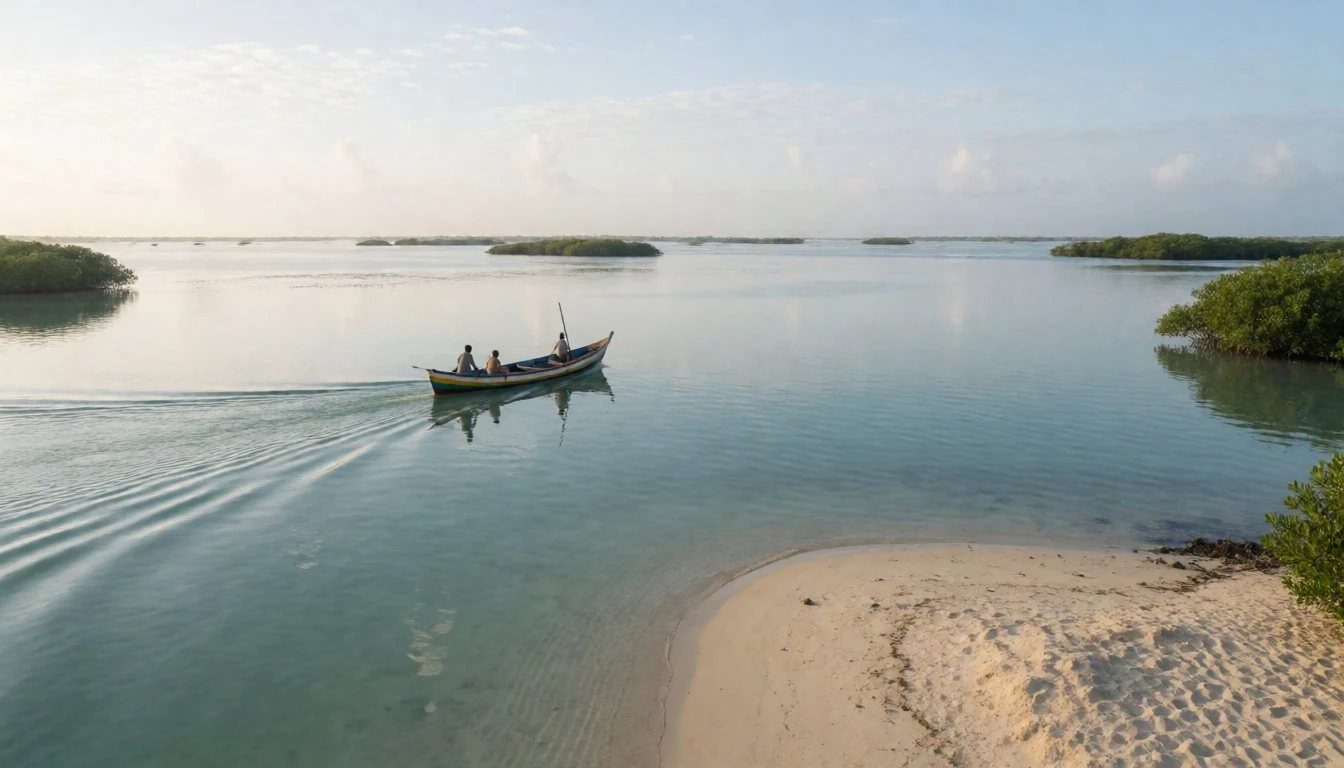
- Local island edges — Island edges in the delta
The delta’s islands and low-lying edges can feel like stepping into a different scale. At Saloum Delta National Park, shorelines are often reachable only by boat, with small landings and shallow-looking margins. It’s a nice contrast to the mangrove shade: bright open patches and quiet observation.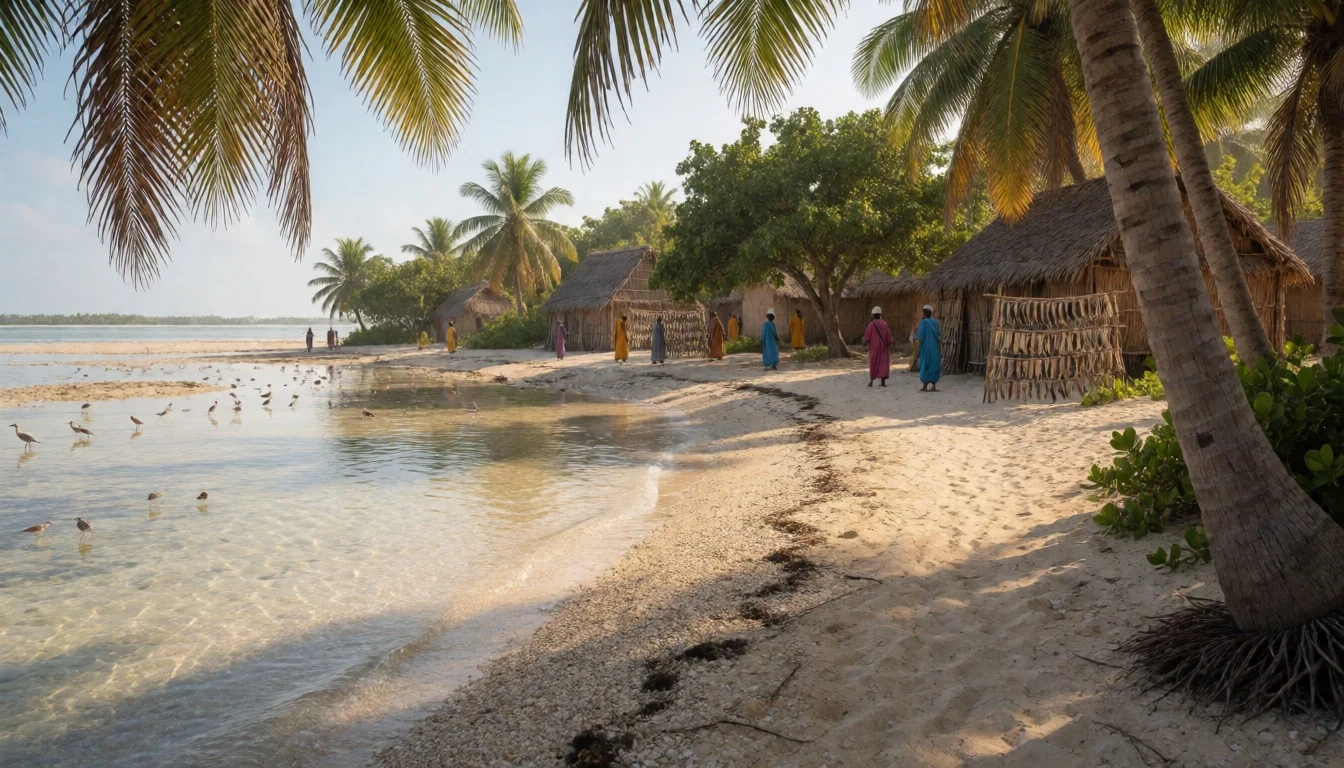
Culture
Saloum Delta National Park is in Senegal, and everyday social manners matter as much as the scenery. Senegalese people are widely described as friendly and hospitable, and a day in the delta often involves chatting before, during or after boat time.
Greeting is a simple but important routine across West Africa, and Senegal is no exception: greeting people wherever you go is expected, and skipping it can land badly. Islam is the dominant religion in Senegal, but the country is described as a secular state with religious tolerance and diversity. You can bring up religion as a conversation topic without automatically causing tension.
When visiting places of worship, keep footwear in mind: don’t enter mosques and other religious places wearing shoes. And if you’re asking questions or directing attention, avoid beckoning someone directly. It’s considered rude, and it can be particularly sensitive when done by a visitor.
In the heat and humidity of the delta, people may move at a slower pace, especially around water-based tasks. That’s not reluctance; it’s the local rhythm of daily life and practical safety.
Visitor etiquette: greet people first, avoid direct beckoning, and remove shoes where you see a clear instruction near religious buildings.
What to wear
In Saloum Delta National Park, clothing is mostly about heat, sun and respectful practicality around daily life. Senegal’s tropical climate can be hot and humid much of the year, with a rainy season from May to November and a drier, hotter period from December to April. That means lightweight fabrics help, and breathable layers are better than anything heavy.
Traditional dress in Senegal varies by region and context, but you’ll often see garments designed for everyday movement and warm weather, including flowing robes and wrap-style textiles that are easy to adapt to changing temperatures. Textiles tend to be vividly patterned, and they’re also part of how people mark ceremonies and social occasions.
What many visitors wear now is simple: a loose top, comfortable trousers or a long skirt, and sandals or closed shoes depending on the ground conditions near landing points. If the day includes boat trips through mangroves, footwear that can handle damp surfaces is a smart choice.
What to wear as a visitor: light-coloured, loose clothing for the sun; a hat and sunglasses for glare off water; and modest coverage for when you’re invited into local spaces or near religious areas. Bring a thin layer for windier moments on the water.
What to eat
- Ceebu jen (thebou diene) — In many restaurants across towns, including Dakar, Thies, Saint Louis and near big hotels
Ceebu jen is Senegal’s official dish: rice with fish, served in red and white varieties named after the sauce. It’s widely available, and it’s often treated as a “have you tried it yet?” kind of meal.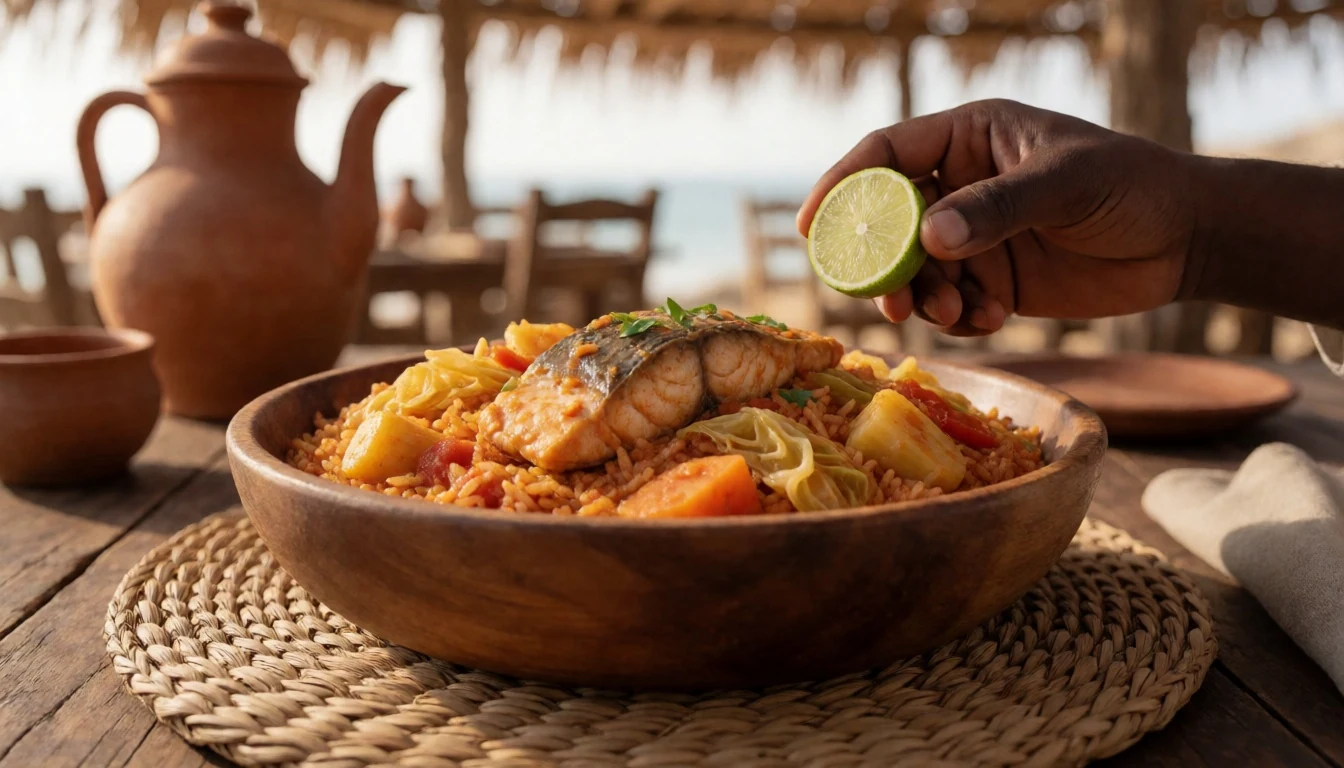
- Maafe — Senegalese restaurants and eateries that serve traditional dishes
Maafe is a rich peanut-based sauce usually served over white rice, often with meat. In Saloum and beyond, it’s a comforting, filling option when the air is humid and you want something warming rather than light.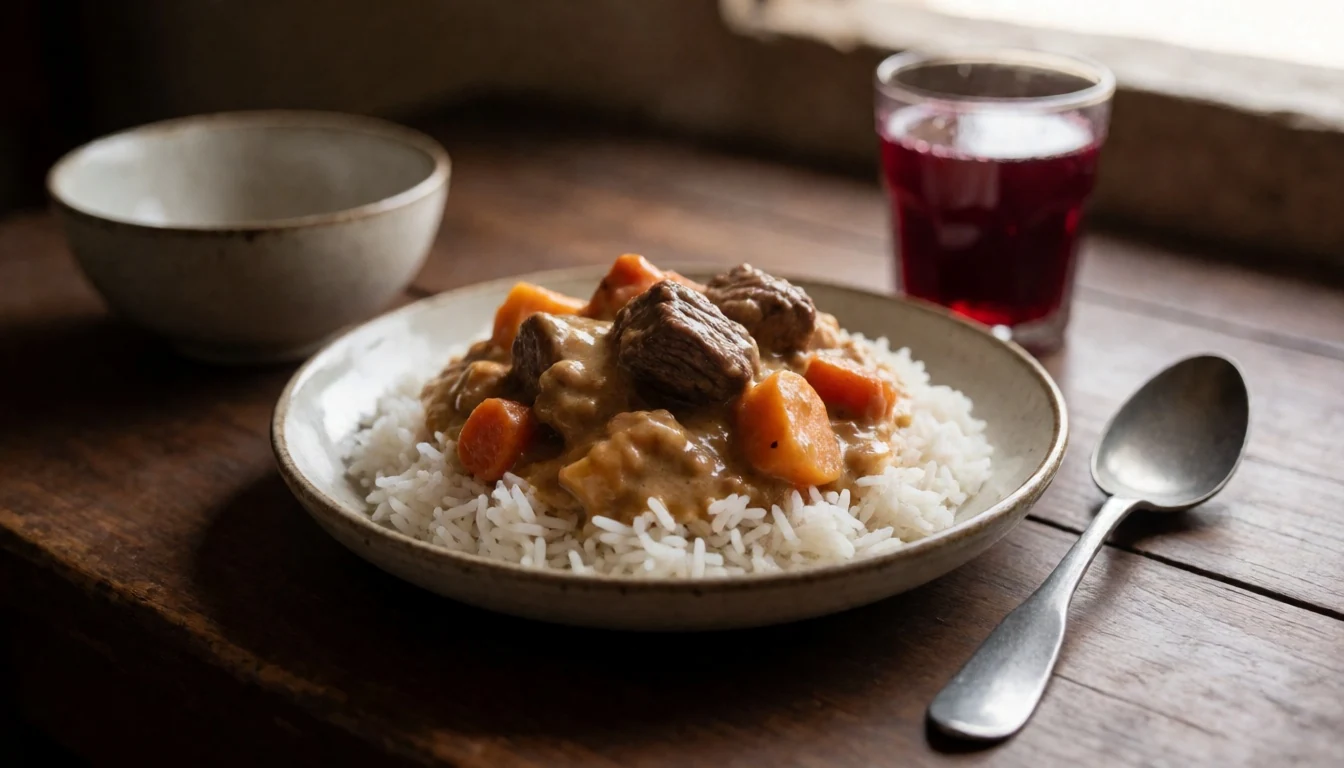
- Yassa (yassa poulet or fish yassa jen) — Food stalls and restaurants serving Senegalese staples
Yassa is an onion-based sauce served over rice. Chicken is a common choice and goes by the name yassa poulet; fish that has been deep-fried is another, known as yassa jen. It’s flavour-forward and works well if you like meals with a sharp, savoury tang. - Market-fresh snacks (seasonal fruit and small bites) — Local markets and supermarkets for fresh produce
If you want to keep things flexible, the markets offer fresh supplies for simple snacks or DIY meals. The key is to buy from busy, well-stocked places and build your plan around what looks fresh that day rather than a fixed menu. - Western-style meals — Restaurants in Dakar, Thies, Saint Louis and tourist regions near major hotels
Western-style meals are available too, especially in larger towns and tourist areas. If you’re travelling with someone who needs a predictable menu, this can be the easy fallback after a long, salty day out on the water.
Plan it
Best time. December–April is typically drier and suits a calmer trip planning rhythm; May–November is the rainy season when conditions can change quickly and humidity is higher.
How long. 3–4
Getting there. Fly into Blaise Diagne International Airport in Dakar, then take the road transfer toward the delta region; the last leg is usually by local boat access once you reach the appropriate water points.
Budget. mid
Tips
- Plan around the rainy season (May–November) and expect tougher conditions for boat days
- Use the drier months (December–April) if you want more reliable touring windows
- Bring water and pace yourself in the hot, humid stretches of the year
- If you’re eating from roadside setups, be cautious about hygiene and prefer places that look busy and clean
- Carry some cash for small purchases in markets and smaller stops
Etiquette
- Greet people as you arrive and leave; it’s considered extremely rude to skip
- Take your shoes off before you go into a mosque or any other place of worship
- Avoid direct beckoning; use respectful, indirect ways to get attention
Nearby
Sources
- Wikidata Q390208 (CC0)
- Wikipedia (rev 1379109897) (CC BY-SA 4.0)
- Wikivoyage (rev 5414955) (CC BY-SA 4.0)
- Photo photos/01-qp8a5198.jpg (CC BY-SA 4.0)
- Photo photos/02-aspecto-manglar.jpg (CC BY-SA 2.5)
- Photo photos/03-aspecto-manglarii.jpg (CC BY-SA 2.5)
- Photo photos/04-back-home-before-the-evening-dark-at-senegal-s-saloum-delta.jpg (CC BY-SA 4.0)
- Photo photos/05-baobab-du-bras-de-mer-delta-du-saloum.jpg (CC BY-SA 4.0)
- Photo photos/06-children-on-the-island.jpg (CC BY-SA 4.0)
- Photo photos/07-cours-d-eau-dans-le-parc-national-du-delta-du-sine-saloum.jpg (CC BY-SA 4.0)
- Photo photos/08-delta-du-saloum-s-n-gal-f-vrier-2023-01.jpg (CC BY-SA 4.0)


