Jiaoxi
Jiaoxi, Taiwan
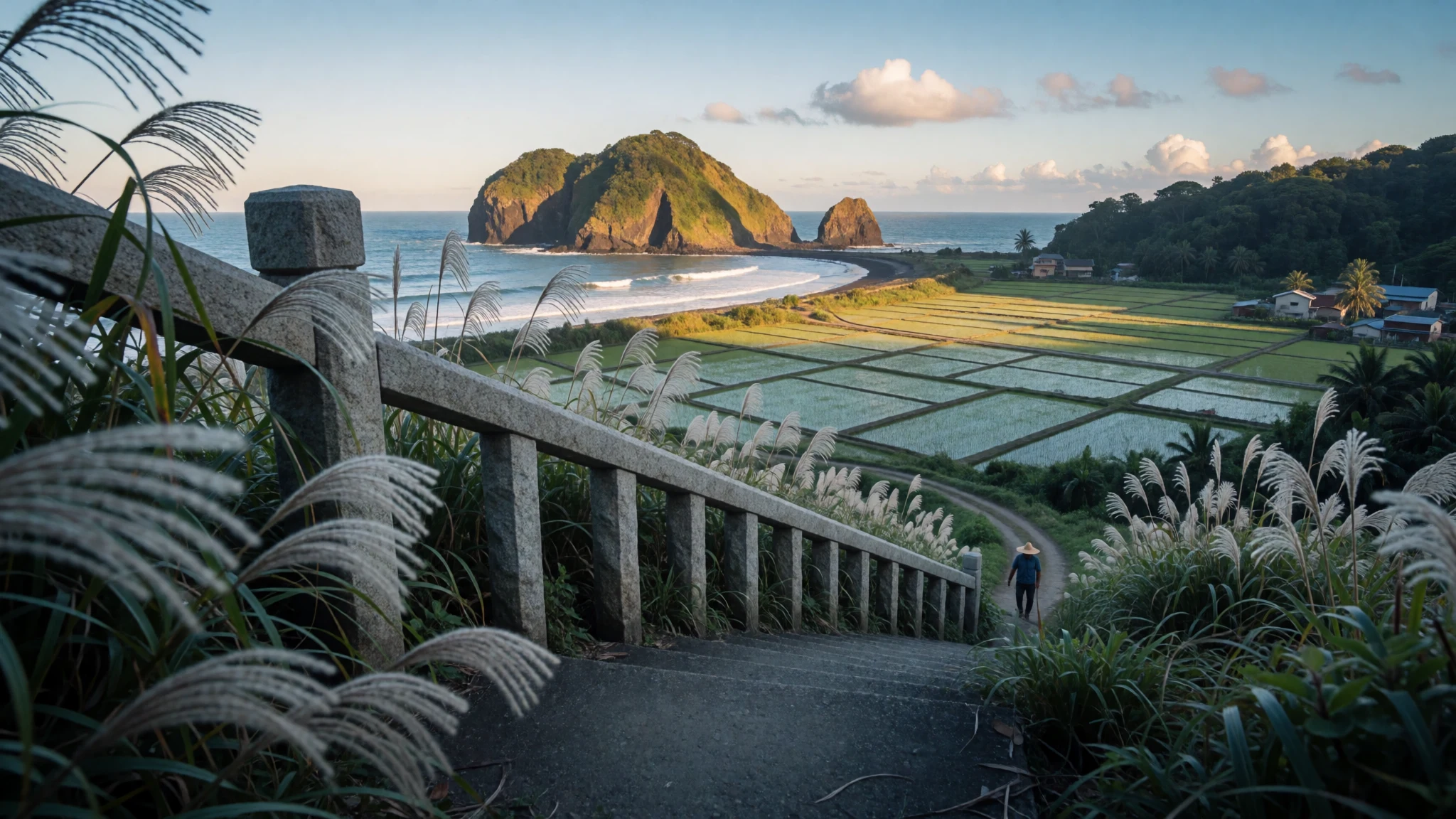
Jiaoxi is a small north-east Taiwan town where a rare ground-level hot spring, village temples and wet green hills sit within an easy train ride of Taipei.
The place
Jiaoxi is a rural township in the northern part of Yilan County, on Taiwan's north-east side, with a population of 36,608. Its listed elevation is 287 m, a figure that hides a split personality: the eastern side is flat, wet farmland on the Lanyang Plain, while the western side climbs into forested ridges with waterfalls and walking trails. On a clear day Turtle Island (Guishan Island), a small islet, shows on the sea horizon. The township took its present form in 1946, and it still feels more like a market town than a resort, with a railway station, a main street of shops and fields within walking distance. What sets it apart is the water. Jiaoxi has a hot spring that rises at ground level, which is unusual in Taiwan, and the hotels, bathhouses and foot-soak spots are packed into a tight zone around the town centre. Most visitors come from Taipei, reaching it by train or bus once the long Hsuehshan Tunnel is behind them, and many stay only one night. That makes weekends busy and weekdays calm. Beyond the hot-spring core are temples, a lake with a path around it, a hilltop Catholic sanctuary and a university campus with a view over the plain. Rain is frequent in this corner of Taiwan, so Jiaoxi suits slow soaking and short walks better than a tight sightseeing list.
Its story
Jiaoxi took its present shape as a township in 1946, but the settlement is older than that, and its story runs through water. The name joins characters for a rocky reef and a stream, and the streams that come down from the western ridges across the Lanyang Plain are what first made the land worth farming. Rice and vegetables came first; the hot spring came to matter later. Bathing in the naturally warm water became a habit well before it became an industry, and over time bathhouses and then hotels gathered around the springs, helped by the railway that runs along the north-east coast. For a long while Yilan felt cut off from Taipei by mountains and a slow, winding road. The freeway tunnel under the Hsuehshan range changed that, turning Jiaoxi from a distant farming town into a weekend escape for city families. Religion adds its own thread. Sietian Temple, built in the early nineteenth century, honours Kuankung, the deified general also known as Guan Yu. On set days in the first and sixth months of the lunar calendar, Kuankung images from across Taiwan return here to bless worshippers, with rites and ritual dances that the township treats as its own. A Catholic sanctuary on a hillside shows another layer of local history. Today the town balances these strands: farmland and temples on one side, a strip of spa hotels on the other.
What to see
- Hot spring district and Tangwei Brook Park — Town centre
The hot-spring hotels of Jiaoxi cluster close together near the town centre, and Tangwei Brook Park is the easiest way to try the water without booking a room. It has a foot-soaking area that is free, plus a small paid bath. Go in the evening, when locals and day-trippers sit side by side.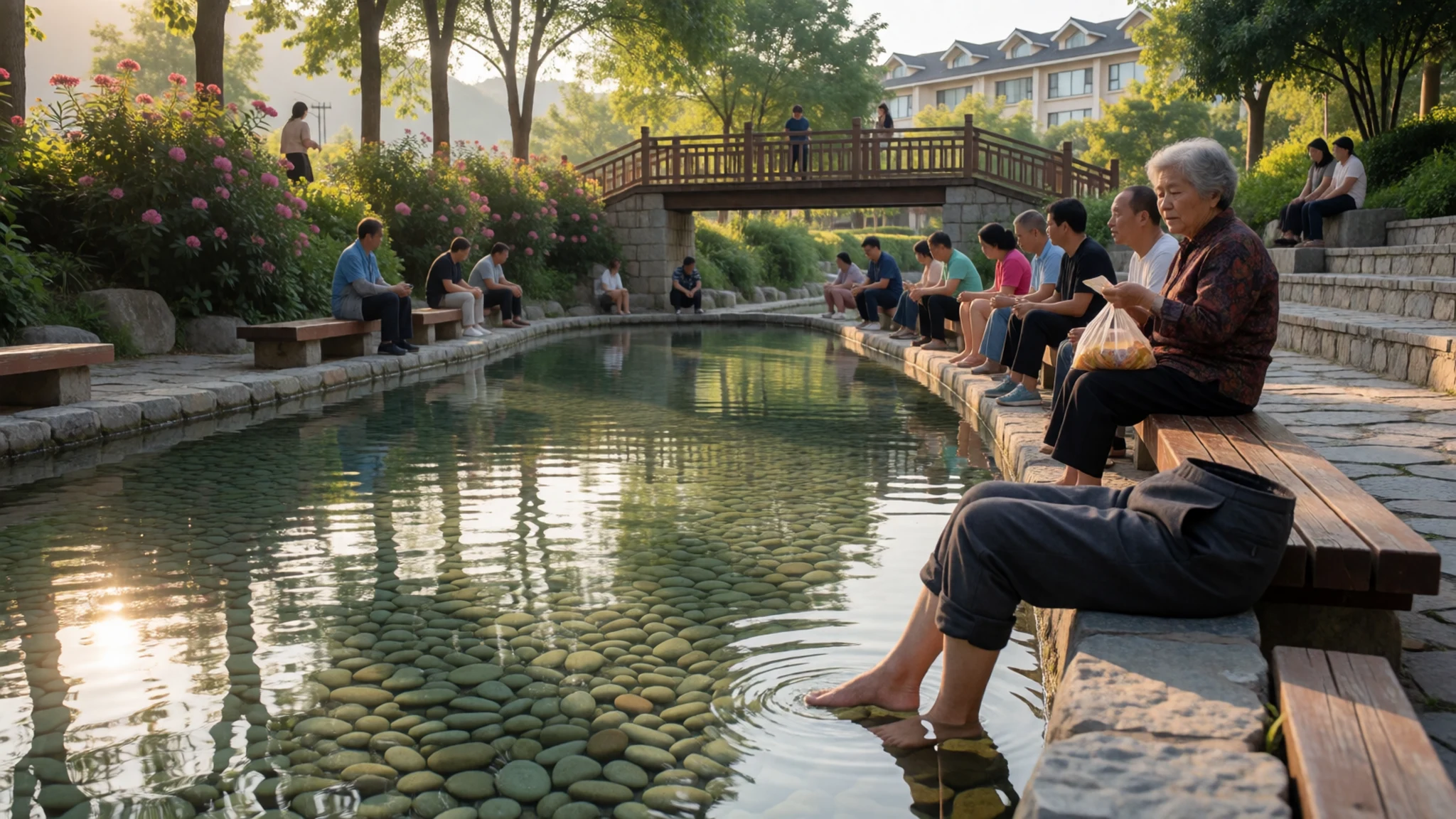
- Wufongci Scenic Area and waterfalls — Western hills, Wufeng Road
Wufongci is the township's waterfall walk, with a series of falls on a trail up the western hillside. The lowest has a small pond for resting, and a further stroll leads to a second fall with a pavilion. Paths are slick after rain, so wear shoes with grip and allow time to turn back.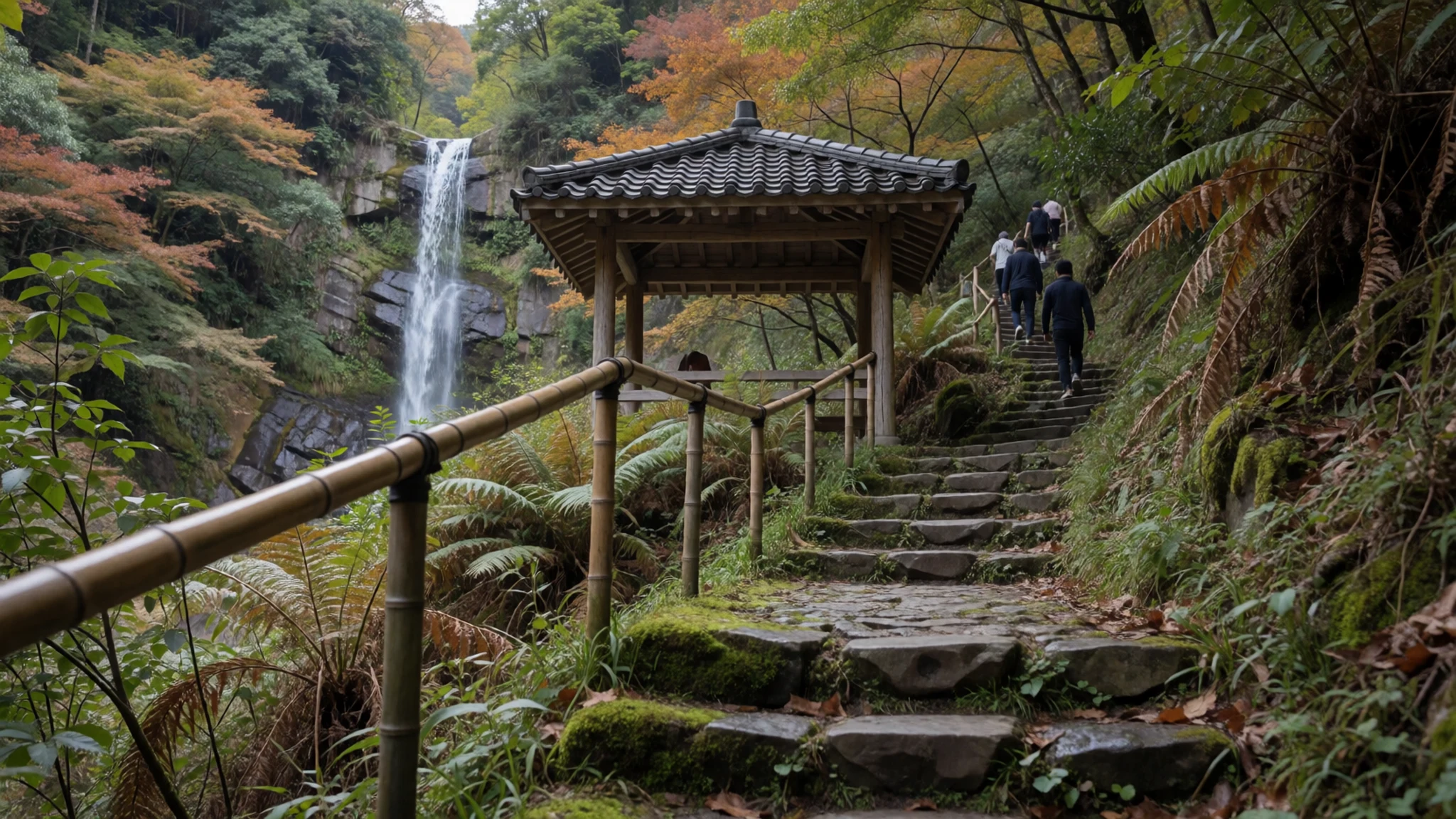
- Longtan Lake — South of the town centre
Longtan Lake is one of several lakes scattered across the Lanyang Plain, and it is ringed by hills with a trail running right round the water. Several temples stand on the slopes. It makes an unhurried half-day outing for walkers and cyclists, calmer than the hot-spring centre, especially on weekday mornings.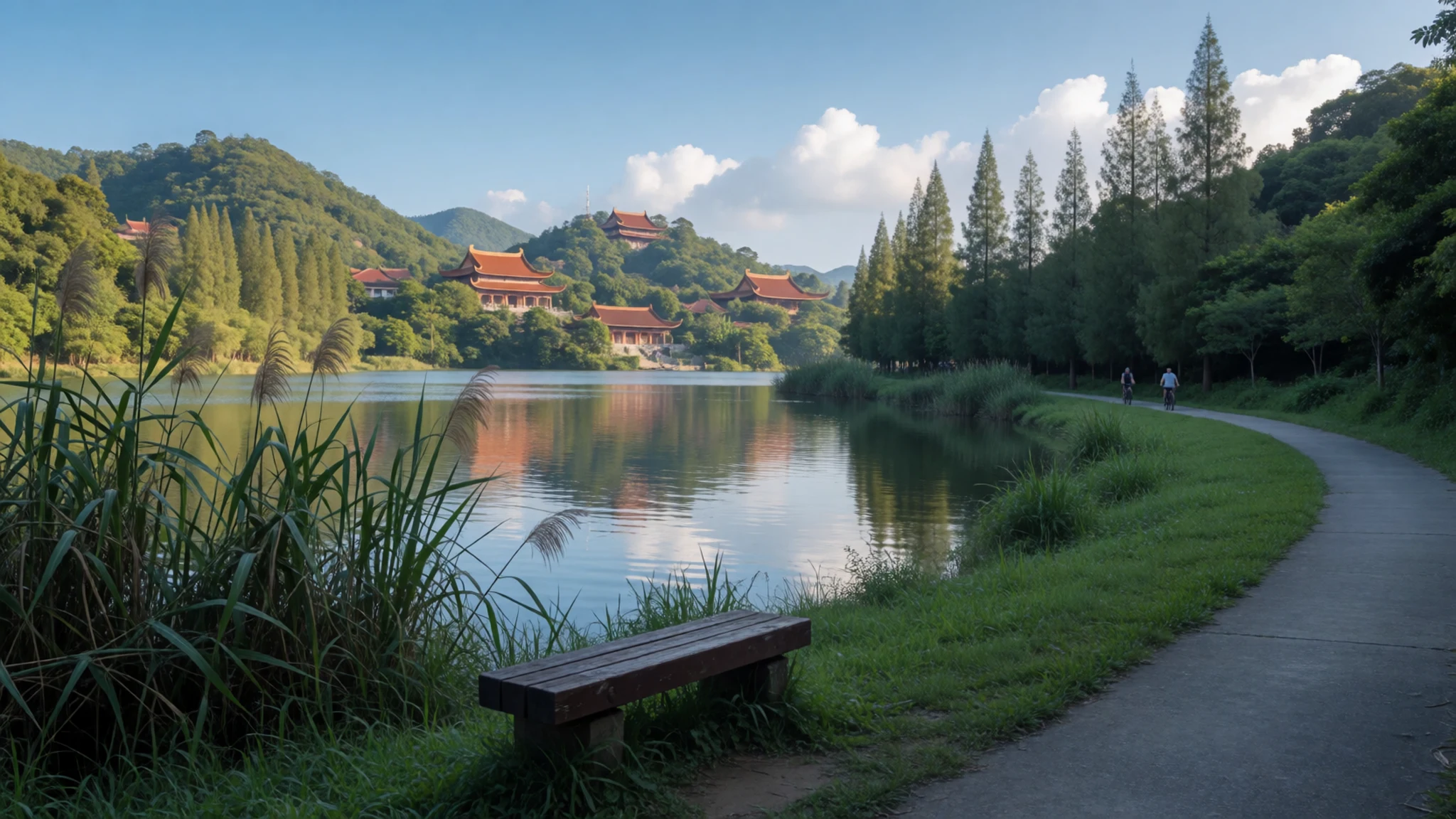
- Sietian Temple — Zhongshan Road, near the town centre
Sietian Temple is the township's main shrine to Kuankung, the deified general Guan Yu, and it was built in the early nineteenth century. It is busiest around the spring and autumn rituals, when Kuankung images arrive from across Taiwan. At other times it is a quiet place to watch local worship at close quarters.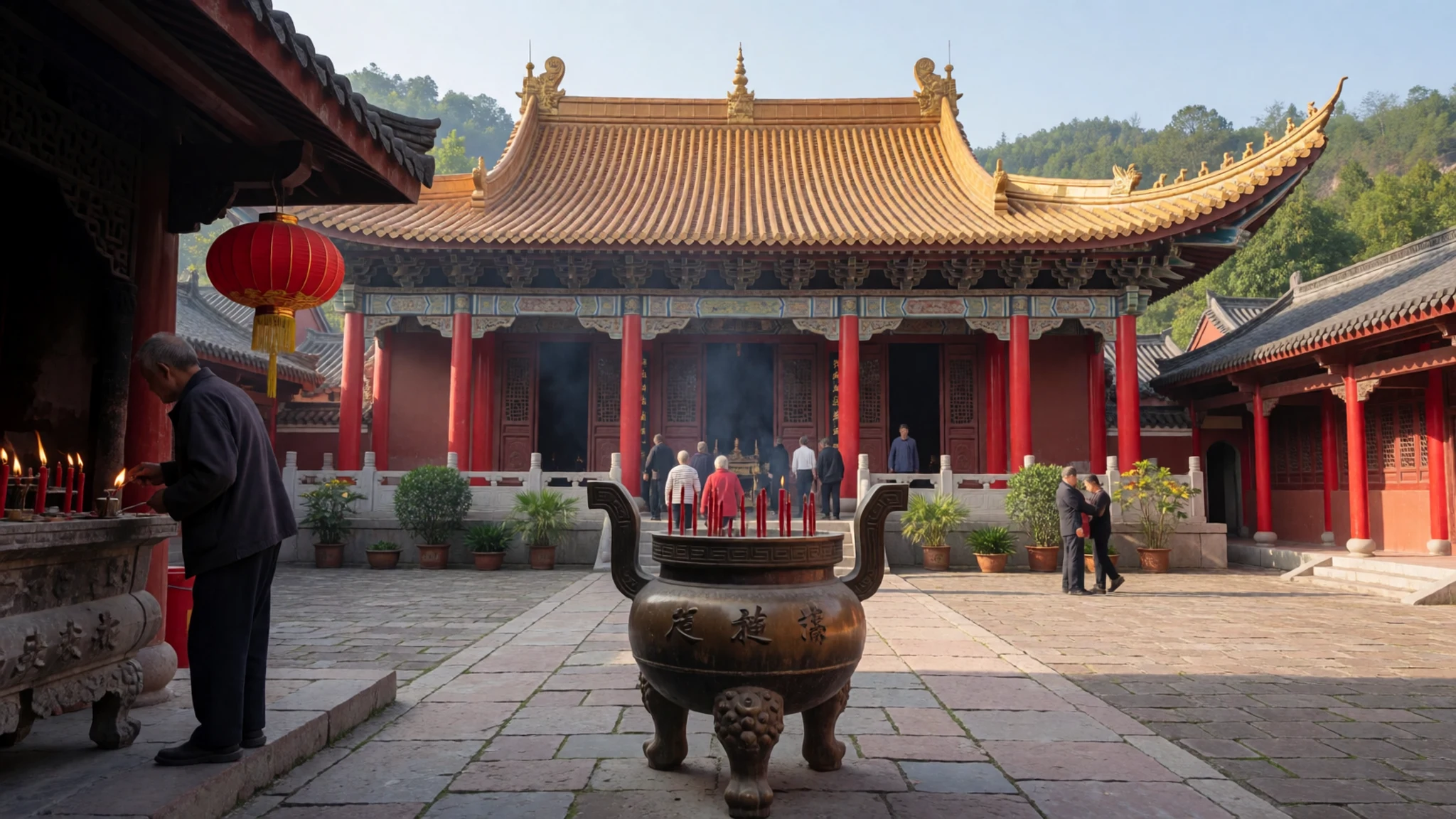
- Tamkang University Lanyang Campus — Linmei Mountain, west of the centre
Set on Linmei Mountain, this modern university campus is worth the climb for the outlook alone. By day the whole Lanyang Plain spreads out below, with Turtle Island on the sea horizon; at night the plain turns into a field of lights. It is a campus, so keep voices low and respect any signs.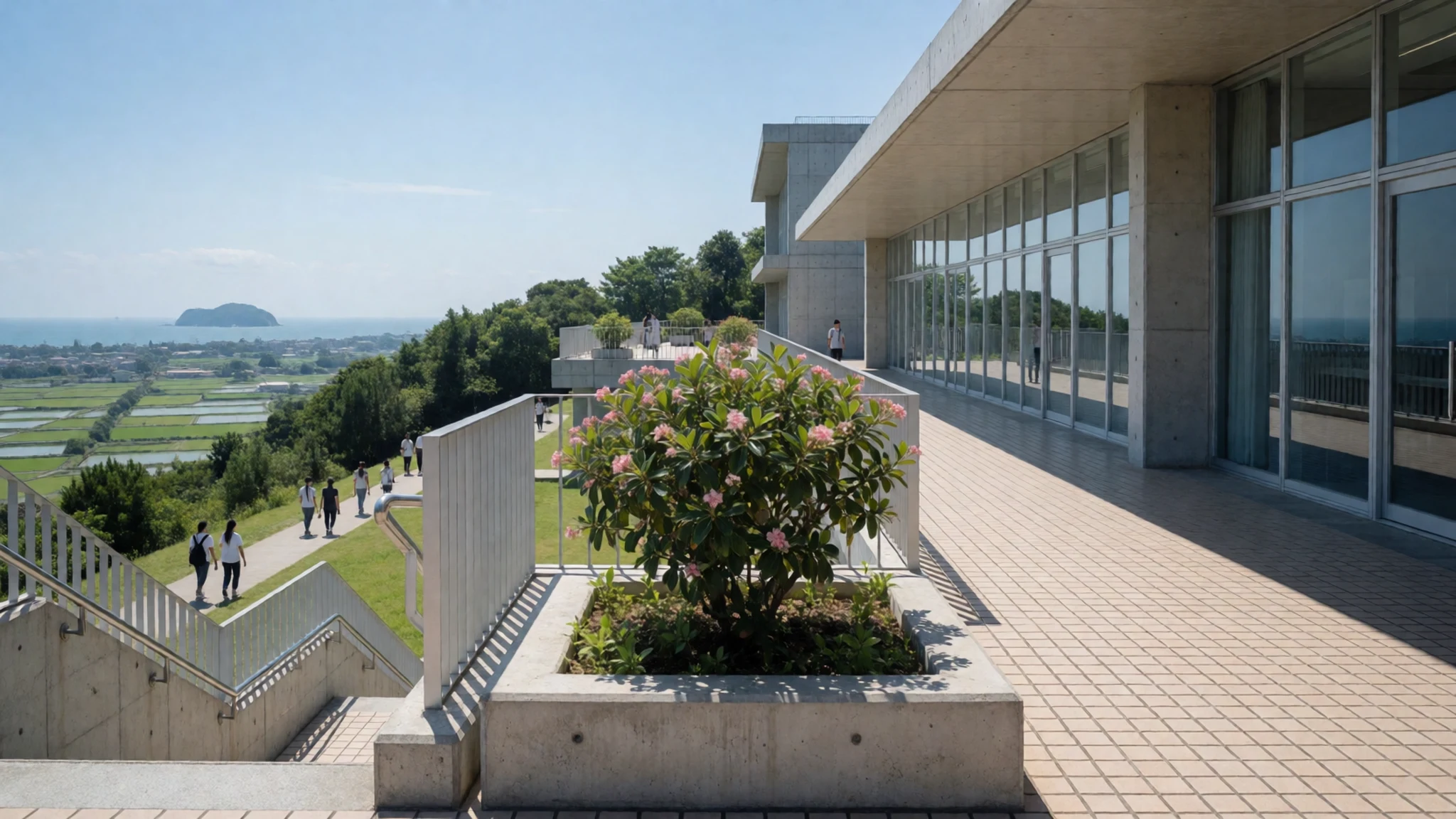
- Catholic Sanctuary of Our Lady of Wufengqi — Wufongci hillside
A round Catholic sanctuary sits on a hillside near the start of the Wufongci walks, with open views over the farmland below. It is a quiet stop on the way up to the waterfalls or the Marian hiking trail, and a reminder that Jiaoxi's religious life is not only Taoist and folk temples.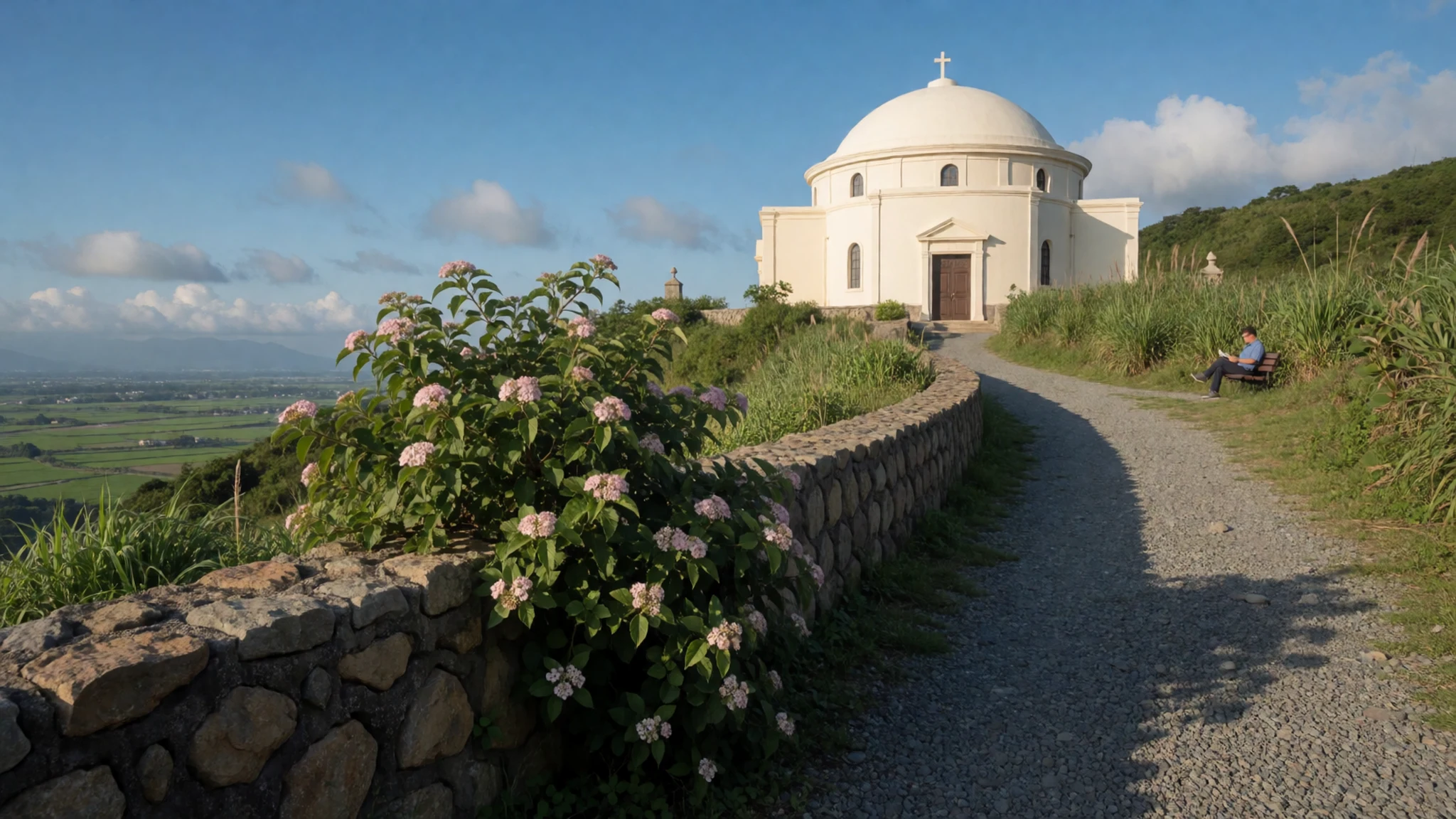
Culture
Culture in Jiaoxi is a mix of Taiwanese folk religion, farming habits and a long tradition of bathing in hot water. Sietian Temple is the clearest example. It honours Kuankung, the deified general Guan Yu, regarded by many worshippers as a figure of loyalty and protection, and its spring and autumn rituals draw Kuankung images from other temples around Taiwan. Worship here is practical and unfussy: incense, offerings of fruit, and the tossing of wooden divination blocks to ask a question of the god. Families bring children, and temple courtyards double as places to sit and talk. Mandarin is the common language, and Taiwanese Hokkien is still heard from older residents, who also know the township by its Hokkien name, Ta-khe. Bathing has its own etiquette, brought in from wider East Asian spa culture. Guests wash thoroughly before entering a shared pool, tie up long hair, and keep conversation soft. Public baths may ask for swimwear and a swim cap, so check the rules at the door. Hotels often offer private rooms with their own tub for those who prefer quiet. Weekends are the busiest time, and the town fills with couples, families and office groups from Taipei. At Sietian Temple, keep your voice low, step over rather than on any raised threshold, and ask before photographing worshippers at prayer.
What to wear
Fashion in Jiaoxi reflects the mix of peoples in Yilan. The highland Atayal communities of the north-east traditionally wove ramie cloth on backstrap looms, often in red and white geometric bands, and these garments appear today at festivals and cultural events. Among Han Taiwanese families, older generations wore dark cotton jackets, and the long qipao and changshan are now mostly kept for weddings and formal photographs. Day to day, people in Jiaoxi dress for rain and scooters: light jackets, practical trainers, helmets and rain ponchos, with farmers in rubber boots and wide hats. In the hot-spring streets it is normal to see guests padding about in hotel slippers and robes. Visitors should pack for a damp, changeable climate. Light layers work in most seasons, with a warm layer for winter and a proper waterproof jacket, since showers are common in every month. Shoes with grip matter for the waterfall trails and wet steps. For the hot springs, bring swimwear and a swim cap for public pools, and a small towel. At temples, cover shoulders and knees, and avoid anything very revealing. In summer, add a sun hat and a refillable bottle, as the plain can feel humid even under cloud.
What to eat
- Jiaoxi steamed buns — Stalls near the station and main street
Steamed buns are a staple snack in the town centre, sold fresh from bamboo steamers at small stalls. Fillings are usually savoury, with pork or vegetables, and the buns are best eaten hot between soaks. Look for queues near the station and main street.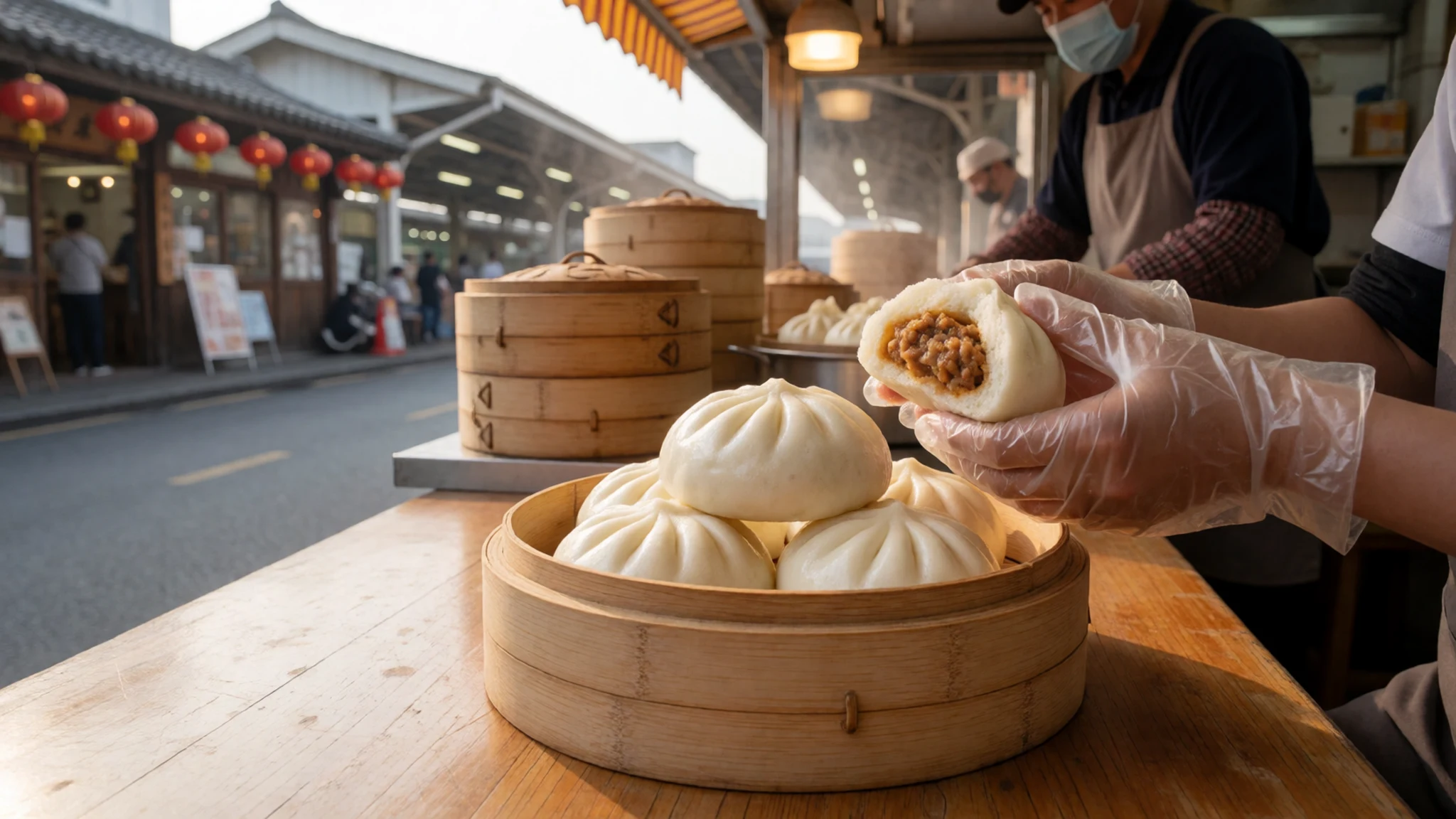
- Green onion pancake — Street stalls in the town centre
Yilan is known for its green onions, and in Jiaoxi they turn up in flaky, griddled pancakes. The pancake is crisp outside, soft within and often topped with egg. It is cheap, filling and easy to eat while walking between hot-spring spots.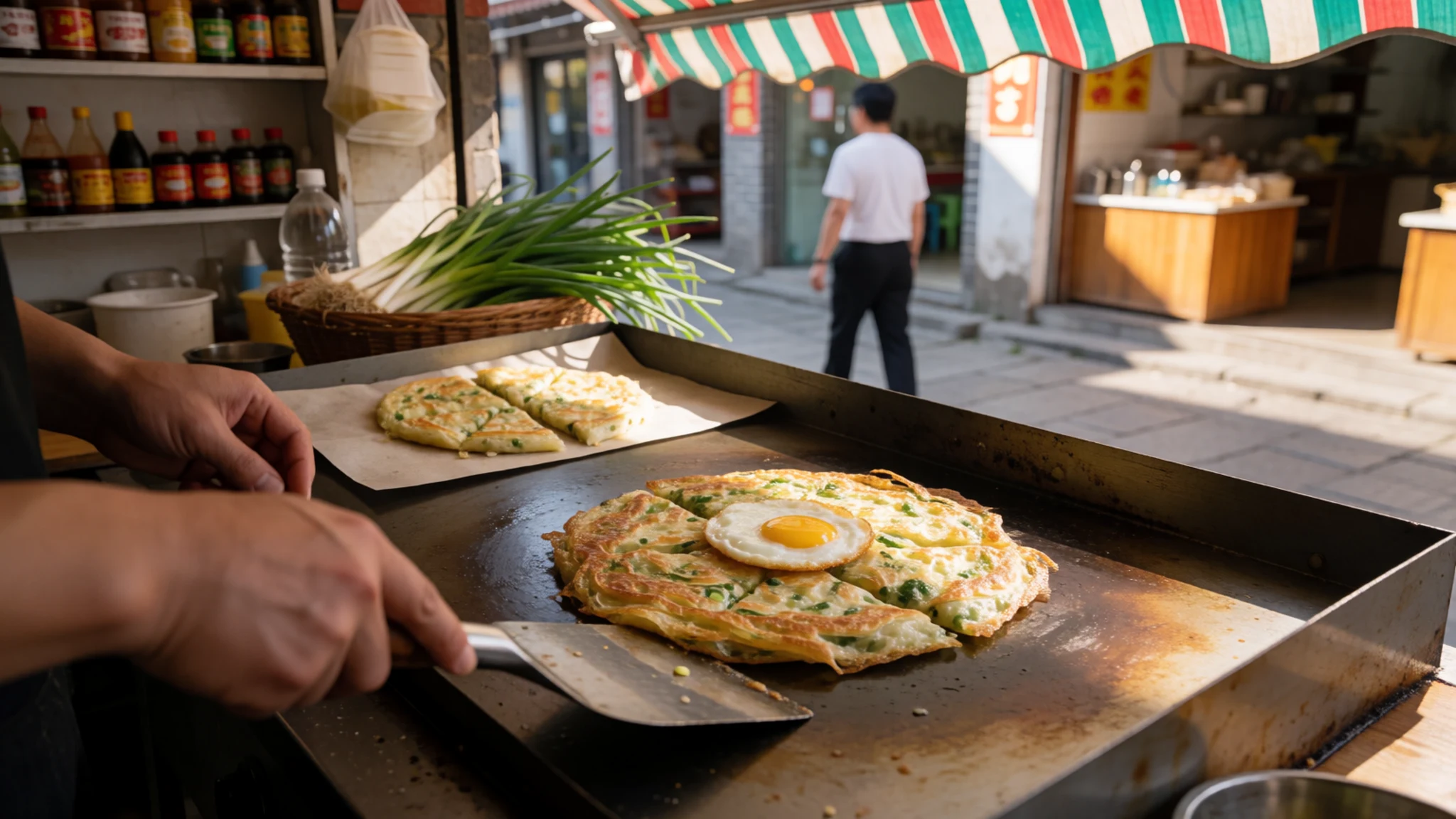
- Huo Che Tou snacks — Eateries near the station
Huo Che Tou is a snack eatery near the centre, serving the sort of small Taiwanese plates that make a casual meal: noodles, fried items and sides. It suits a quick bite after a soak, when the heat has made everyone hungry. - Hot spring water spinach — Local restaurants around the hot-spring area
Water spinach grown with local spring water is a common vegetable dish here, stir-fried with garlic until just tender. It is a good counterweight to richer meat dishes, and many restaurants in town treat it as a regional point of pride. - Yilan smoked duck — Shops and stalls across Yilan, including Jiaoxi
Smoked duck is a classic Yilan speciality, sliced cold and eaten as a snack or side. The skin is salty and aromatic, and the meat tender. Buy a portion from a shop or roadside stall to take back to the hotel.
Plan it
Best time. October–November and March–April, when the weather is mild enough to enjoy walking and hot water together. Winter is cool and often drizzly, which suits the springs but dulls the views. Summer is hot and humid, and typhoon season can disrupt travel.
How long. 1–2
Getting there. Fly to Taoyuan International Airport or Taipei Songshan Airport, then take a Taiwan Railway train to Jiaoxi Station from Taipei. Capital Bus and Kamalan Bus also run from Taipei to Jiaoxi, through the Hsuehshan Tunnel. Driving is possible via the freeway towards Yilan and then the provincial highway to Jiaoxi. Most hot-spring hotels are a short walk or taxi ride from the station.
Budget. mid
Tips
- Book hot-spring accommodation well ahead for weekends, as most rooms fill
- Visit on a weekday if possible for quieter baths and streets
- Carry a waterproof layer in every season; showers are common
- Check opening details for the waterfall area and temples on the official township site, https://jiaosi.e-land.gov.tw
- Carry some cash for stalls and small eateries
Etiquette
- Wash thoroughly before entering a shared hot-spring pool
- Keep voices low and ask before photographing worshippers in temples
- Check whether a public bath requires swimwear and a swim cap
Nearby
Sources
- Wikidata Q706720 (CC0)
- Wikipedia, Jiaoxi, Yilan (rev 1376259832) (CC BY-SA 4.0)
- Wikivoyage, Jiaoxi (rev 5328853) (CC BY-SA 4.0)
- Photo: Jiaosi Hot Spring Hotels (User:KasugaHuang) (CC BY 3.0)
- Photo: jiaoxi yilan aerial panorama 2022 (Chensiyuan) (CC BY-SA 4.0)
- Photo: Jiaoxi Township with Turtle Island on the horizon (Bob Tan) (CC BY 4.0)
- Photo: Jiaoxi Aerial Panorama with Jiaoxi Train Station (Bob Tan) (CC BY 4.0)
- Photo: Series L792 (AMS) (Public domain)
- Photo: Map of the Taichung area (Army Map Service) (Public domain)
- Photo: Aerial panorama of Jiaoxi rural township, December 2022 (Bob Tan) (CC BY 4.0)
- Photo: Aerial panorama of Jiaoxi Township (Bob Tan) (CC BY 4.0)


