Izumo Taisha
Izumo Taisha, Japan
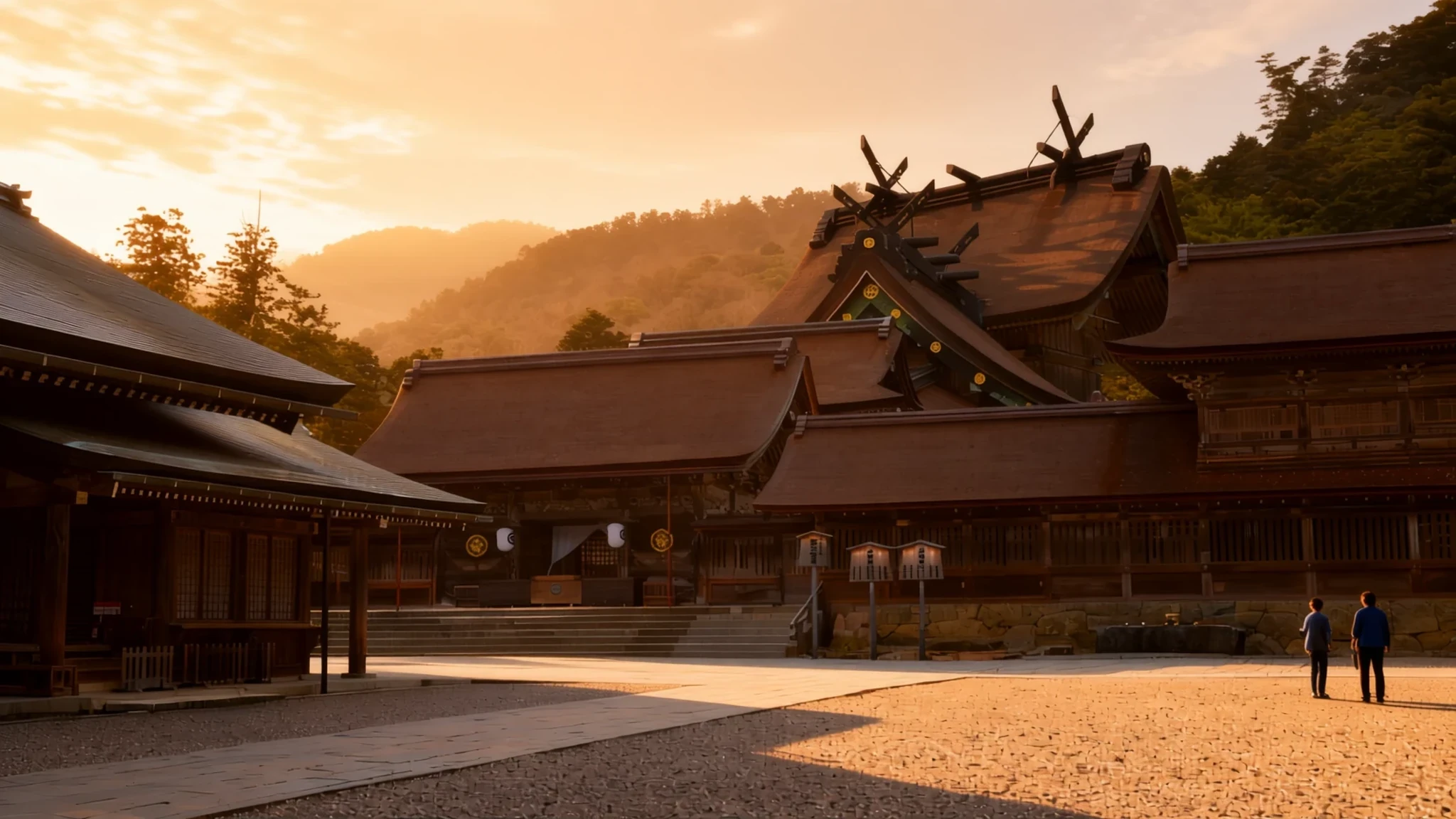
Izumo Taisha is the timber shrine where Ōkuninushi is worshipped and Japan's gods are said to meet.
The place
Izumo Taisha (出雲大社) stands in Izumo, on the Japan Sea coast of Shimane, in a precinct of pine, gravel, and timber halls that is still a working shrine. A great torii opens onto courts where the roofs sit low and dark under the trees, and the building that holds the crowd is the kagura-den, the hall for rituals, weddings, and prayer. Across its front hangs a huge rope of twisted rice straw, the clearest sign that the ground beyond is set apart. Behind the hall, and closed to wandering, is the honden, sanctuary of Ōkuninushi, the deity linked with the shaping of the land, with healing, and with the ties between people. Prayer happens in the court: a coin, a bow, a clap in the local rhythm, then a step back. Around that core the precinct works like a small sacred town, with long halls to the sides, lesser shrines, a place for treasures, and the offices that keep daily rites going. Weather arrives off the water. April, May, and November are the most comfortable for walking; July is the wettest month and August the hottest; winter is cold, often grey, and can bring snow. On an ordinary morning the gravel is thinly used and a priest's voice carries. In the season when the gods are said to assemble here, the same court fills with people asking for a marriage, a repaired friendship, or a wish they keep to themselves.
Its story
Izumo Taisha enters the old myths as the house given to Ōkuninushi after he yielded the land. In those stories he shapes the land, suffers, recovers, and helps a hare that has lost its fur, receiving in return news of a fortunate marriage still told to children in the precinct. When the heavenly gods demanded the land, he gave it up. The shrine is the palace he received in exchange, and people still ask him about illness, harvest, and the bonds between lives. Over most of the country, a month of the traditional year is spoken of as a time when the gods are absent; at Izumo Taisha that same stretch of the year is when they are present. They are said to travel to this precinct, to lodge in the long halls beside the sanctuary, and to meet over the ties that join people. The main hall is raised in taisha-zukuri, a form named for this shrine, with a deep roof and a gable-front entry in an off-center, asymmetrical plan. It is not the original hall on the site. The shrine is rebuilt every sixty to seventy years to preserve the kami's power and the building method, and a surviving drawing went with a formal request for permission to repair the Grand Shrine. A scale model shows an earlier conception, taller and more tower-like, which writing and miniature preserve after the standing hall took a lower form. Myth and timber agree: this is the house of the god who ceded the land, and the meeting ground of gods still believed to care about human promises.
What to see
- Haiden — Main precinct
The kagura-den at Izumo Taisha is the hall on the gravel court for rituals, weddings, and prayer, and it is where visitors pray. A thick rope of twisted rice straw, hung with paper shide, stretches under the deep eaves and sets the hall apart. An offering is thrown, the prayer is made toward the sanctuary behind, and then the step is left for the next person.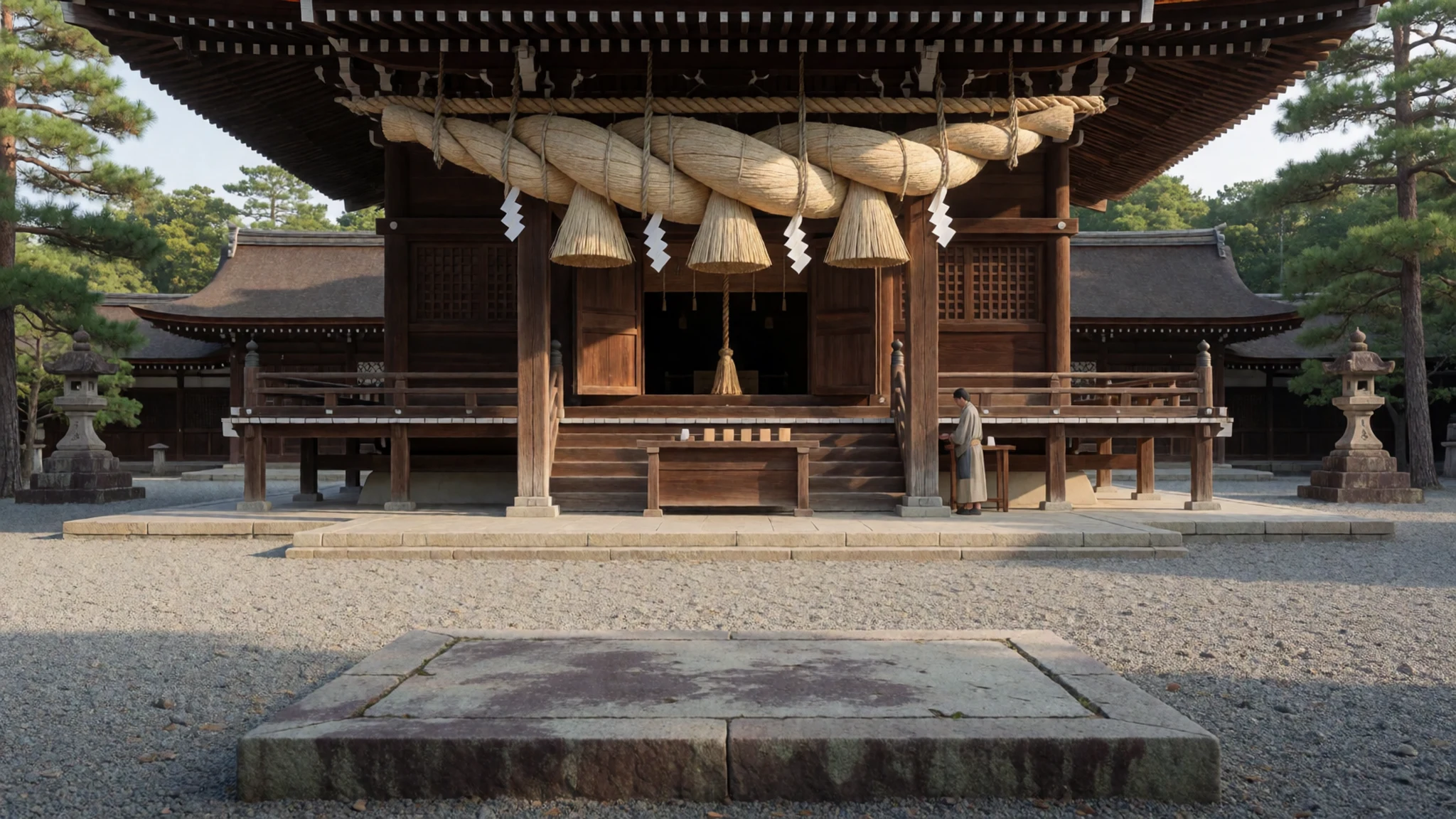
- Honden — Main precinct
The honden of Izumo Taisha is the main sanctuary of Ōkuninushi, set behind the worship hall and a fence. Taisha-zukuri, the building style named for this shrine, gives it a heavy roof and thick pillars, with a gable-front entry in an off-center, asymmetrical plan. Visitors look from the court while priests keep the interior. A scale model nearby shows an older, taller idea of the hall, remembered in miniature after later rebuilds.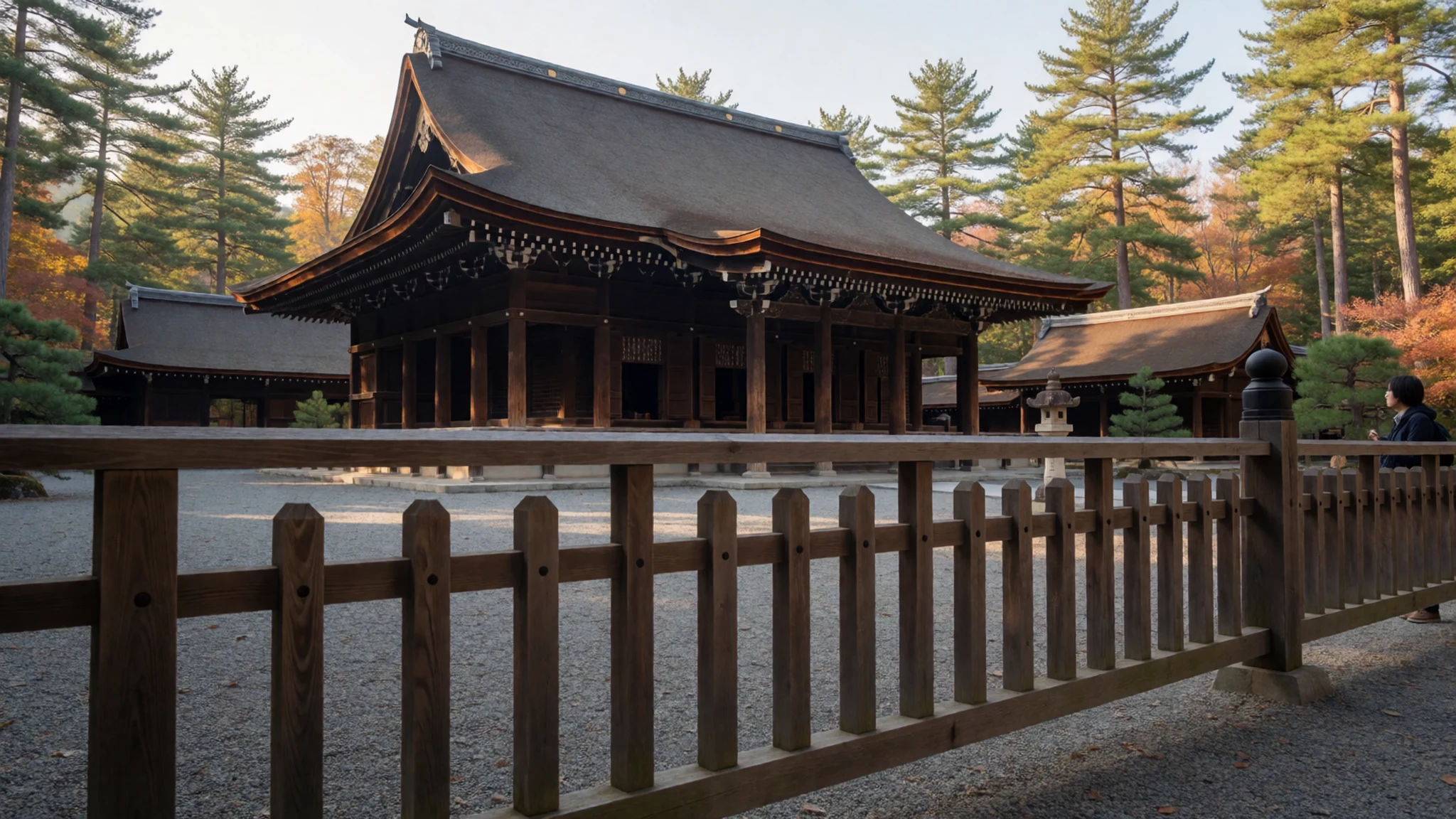
- Ōtorii — Approach to the precinct
The ōtorii of Izumo Taisha is the great gate on the approach, a timber torii that starts the precinct before any hall comes into view. Pass under it and the road becomes the shrine's own: pines, stone lanterns, and a slow gathering of roofs. It is a threshold, and the sensible pace is to pass through rather than hold up the path for a long pose.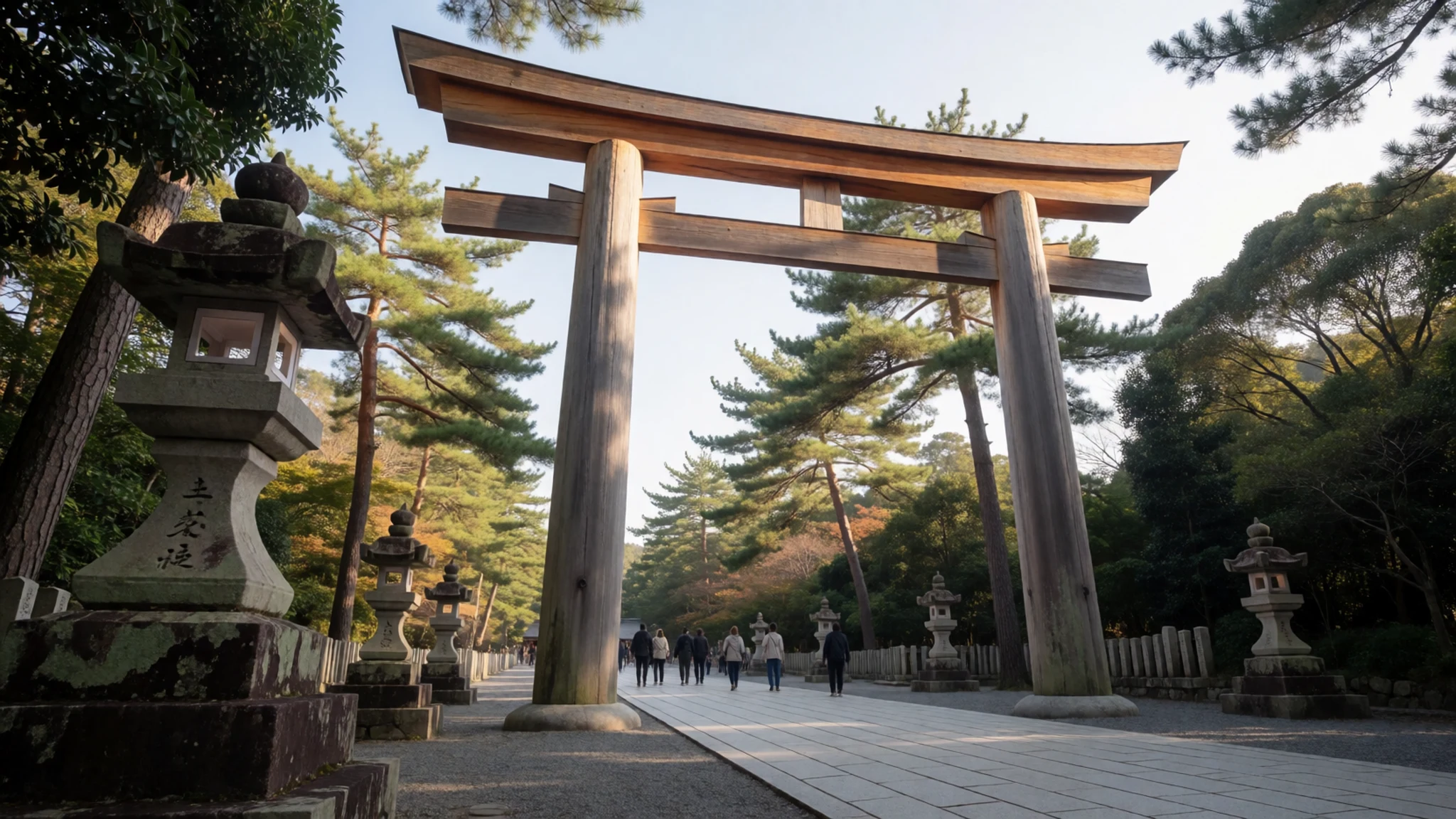
- Jukusha — Beside the main sanctuary
The jukusha at Izumo Taisha are the long halls beside the main sanctuary, understood as lodgings for gods who visit in the month when the kami are said to meet here. For most of the year they read as quiet subsidiary shrines, low and repetitive. In that meeting season the precinct becomes a gathering place rather than a single deity's house.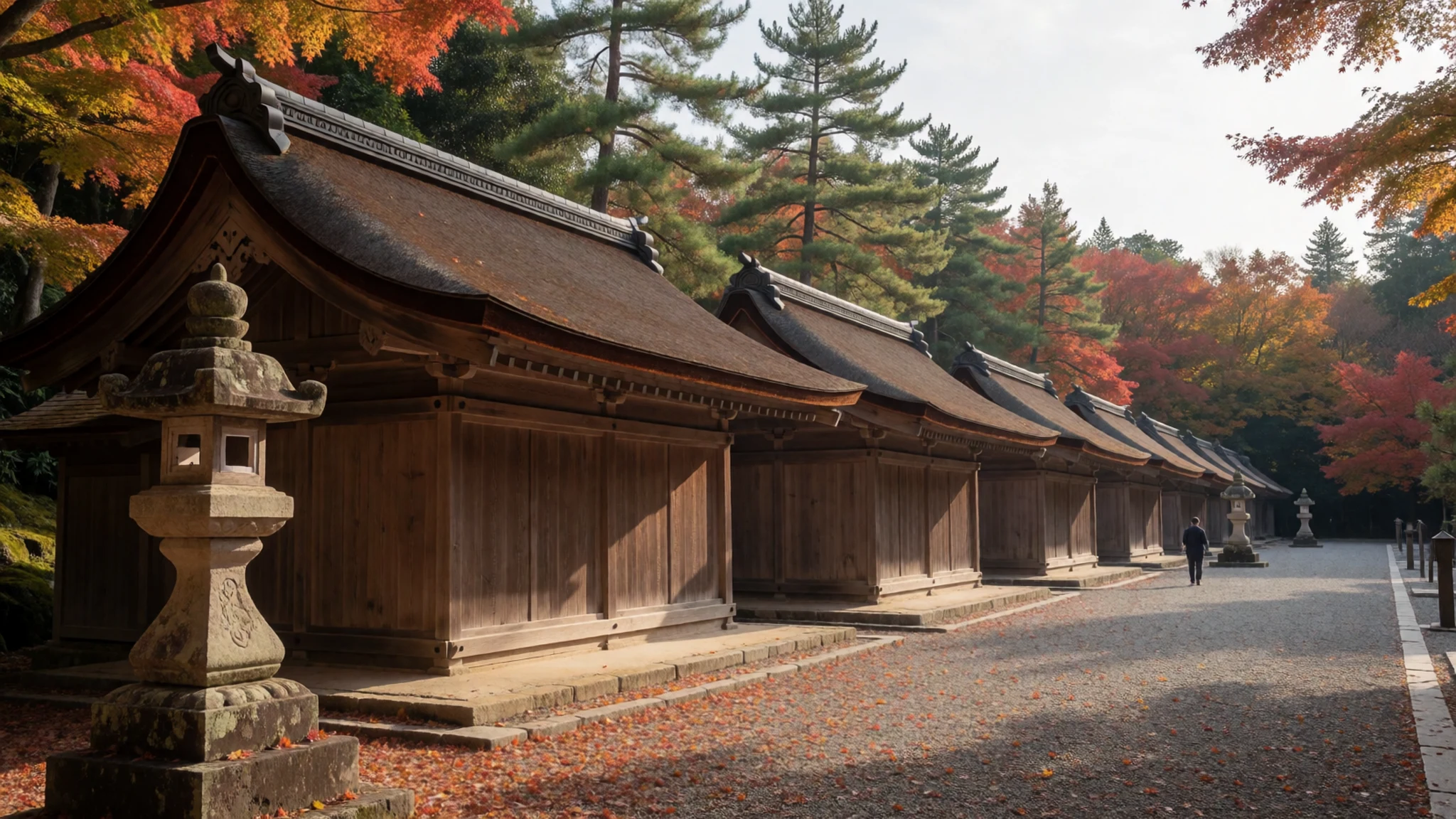
- Statue of the white hare — Court of the precinct
The white hare of Inaba is honoured at Izumo Taisha with a statue in the court, and the myth attached to it is why so many prayers here ask for a bond. In the story the hare, hurt and without its fur, is helped by Ōkuninushi and answers by guiding him toward a fortunate marriage. Visitors pause, bow, and sometimes leave a coin before walking on to the worship hall.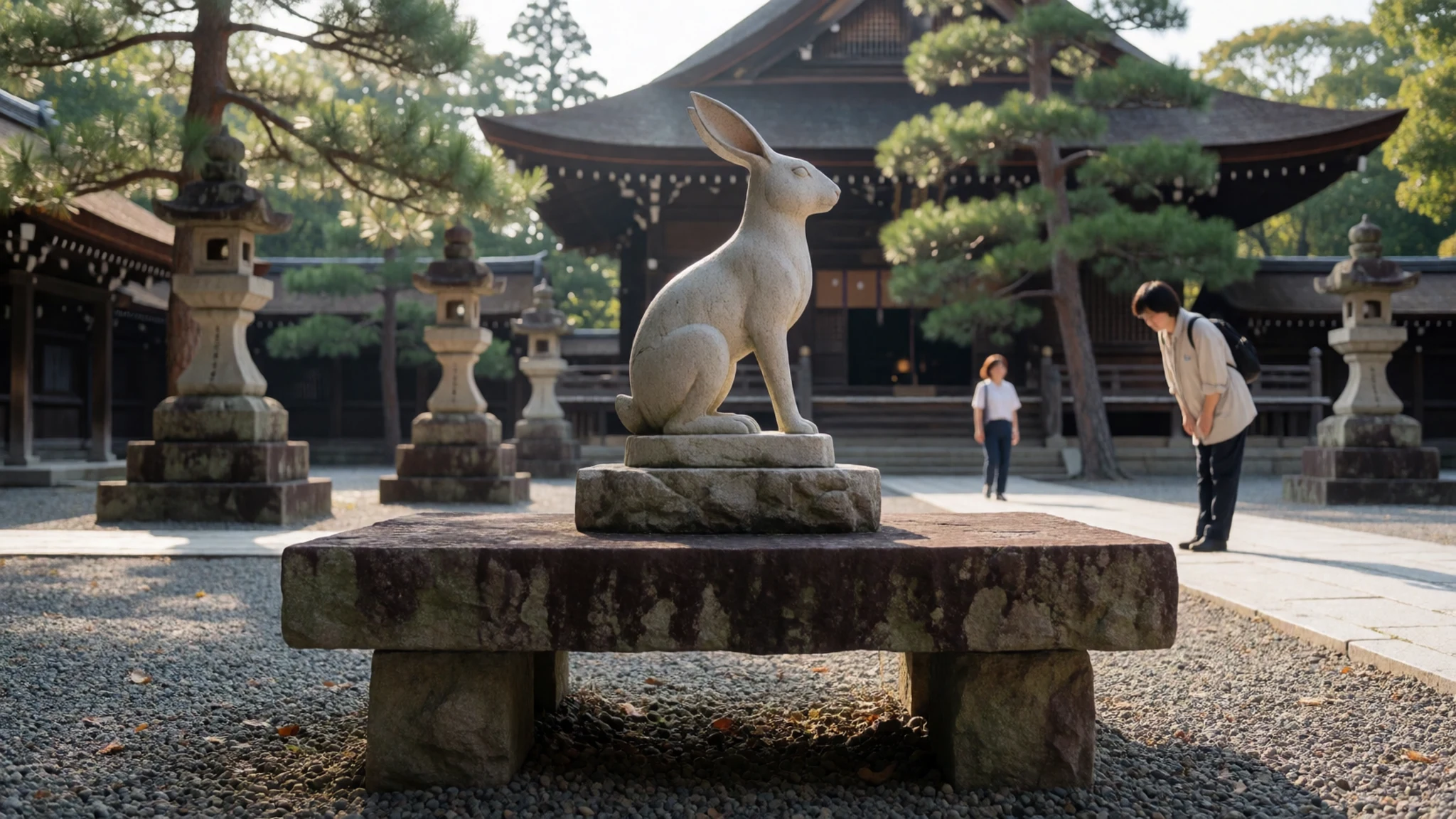
Culture
Culture at Izumo Taisha rests on beliefs that people here treat as practical. Ōkuninushi still hears prayers, and for part of the traditional year the gods of the whole country are understood to gather in this precinct. The prayer most visitors recognise is enmusubi, the making of a good bond: a marriage above all, but also a friendship, a working partnership, or the mending of a tie that has worn thin. Wooden plaques painted with wishes hang in rows. Paper fortunes are drawn and read; a welcome slip is kept, an unwelcome slip tied to a rack so that it stays at the shrine. The hare from Ōkuninushi's myth stands in the court as a small focus of the same hope, and passers-by greet it before they reach the hall. Priests in formal vestments carry the rites visitors usually only witness: purification, offerings of food and saké, and the reading of names. When the month of the gods' presence arrives, the long side halls change in meaning and become lodgings, and Izumo Taisha feels less like a single house and more like a brief capital of the kami. At Izumo Taisha, keep your voice low in the court, follow the longer clapping rhythm used at this shrine, and do not step past the fence into the main sanctuary.
What to wear
Clothing at Izumo Taisha divides between what a rite requires and what the town wears on an ordinary day. For a formal prayer or a festival, worshippers still choose kimono: silk for an important visit, the family crest on the formal robe, and an obi tied so the layers sit cleanly. Cotton yukata belongs to hot-weather festivals and is uncommon here outside high summer. Shrine maidens wear a white kosode under a scarlet hakama, in hemp or cotton for daily duty and in silk when the rite is formal. Priests' robes are layered jackets and stiff hats cut for offering and procession; the cloth marks rank and has to move, and it is work dress rather than something a visitor copies. Everyone else arrives as they would in any Japanese city: wool coats, quilted jackets, denim, neat dresses, school uniforms on a weekday morning. The Japan Sea climate picks the cloth. Spring and autumn want a layer that can come off once the sun is on the gravel. The rainy weeks want a coat that can soak and shoes that grip stone. High summer is humid, so breathable fabric, and a hat removed at the hall. Winter needs a proper coat; a thin fashion jacket is no match for the wind off the water. A visitor to Izumo Taisha should cover shoulders, keep hems modest, and wear shoes that can slip off where a step and a pair of slippers ask for it. Save beach sandals for the coast.
What to eat
- Warigo soba — Soba shops on the shrine approach and in Izumo city
Warigo soba near Izumo Taisha is buckwheat noodle served in stacked round lacquer boxes and eaten tier by tier with dipping broth, shredded nori, and spring onion. Shops on the shrine approach and in Izumo city sell it as the ordinary lunch. The noodles are darker than eastern soba.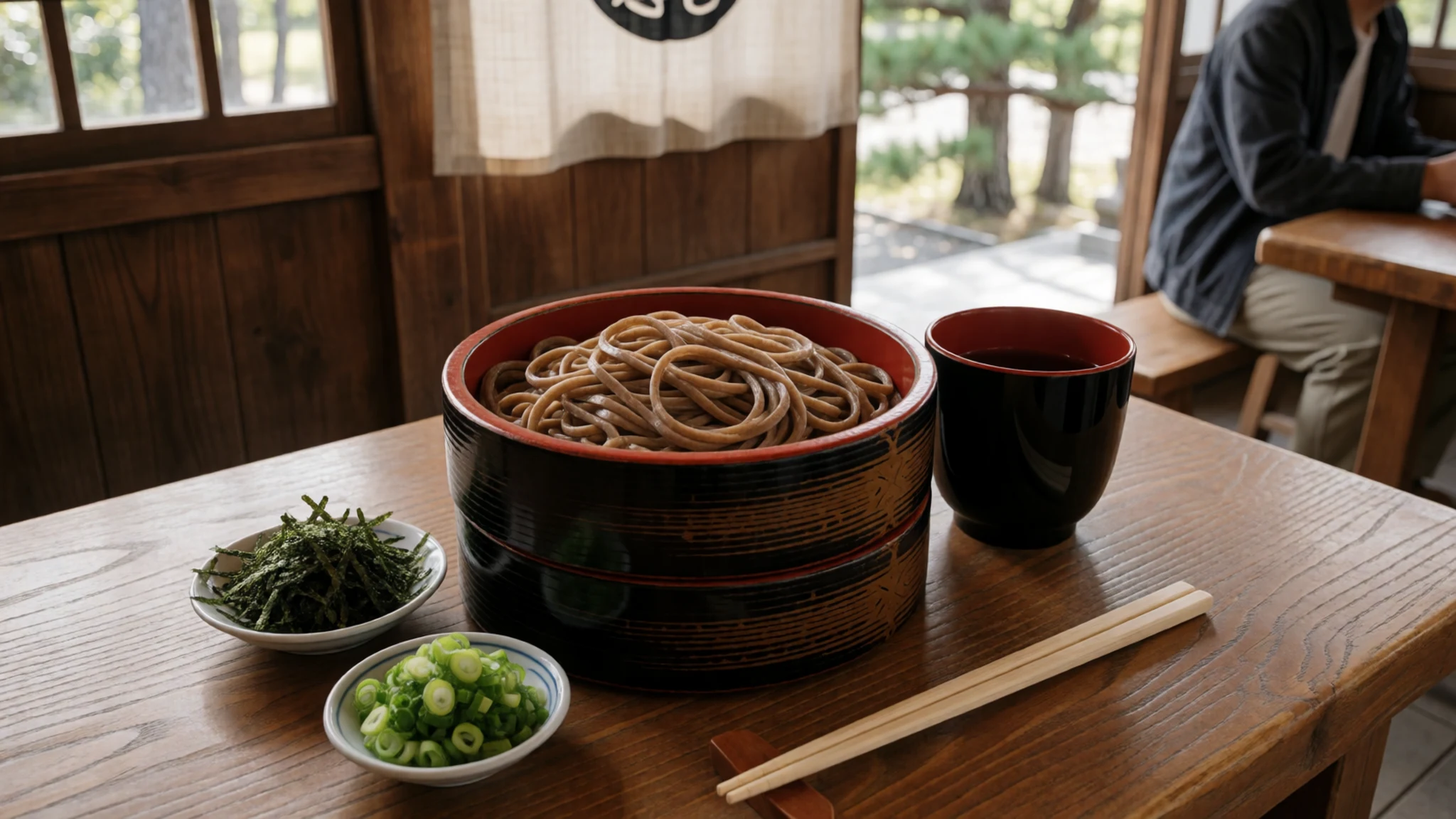
- Shijimi-jiru — Eateries in Izumo and on the road toward Matsue
Shijimi-jiru near Izumo Taisha is a miso soup of small freshwater clams from Lake Shinji, and it tastes of the lake rather than of the open sea. Eateries in Izumo, and along the road toward Matsue, serve it beside rice and pickles. It is the bowl for a cold day.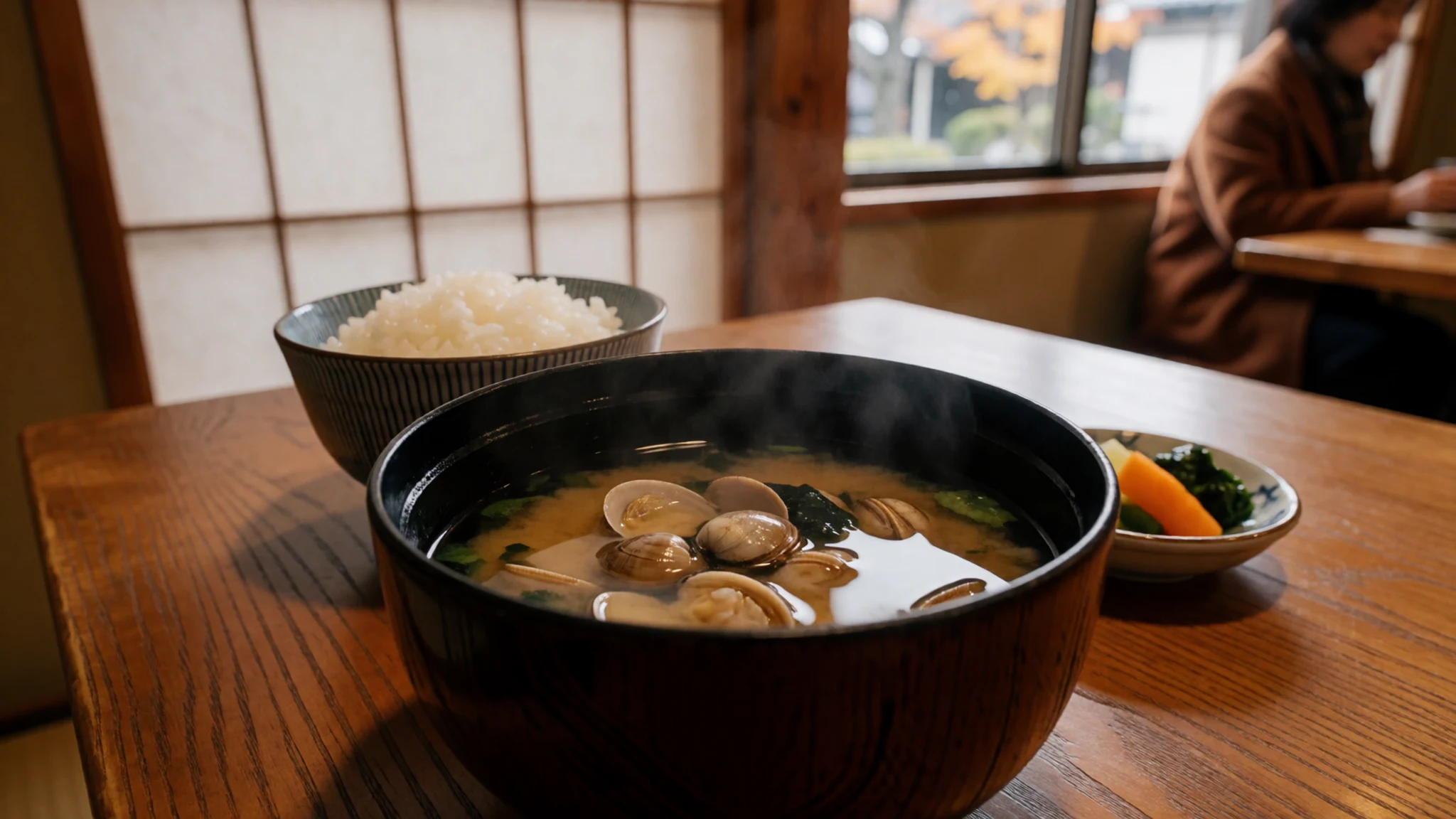
- Tai-meshi — Restaurants in Izumo that serve coastal fish
Tai-meshi near Izumo Taisha is sea bream cooked over or with rice so the juices season the grains, and it is a coastal Shimane dish that restaurants in Izumo treat as a full meal. The pot or lacquer box arrives with pickles and a clear soup. - Zenzai — Tea shops and confectioners on the shrine road and by the station
Zenzai near Izumo Taisha is a sweet soup of soft-boiled red beans with a grilled rice cake set in the bowl, eaten with a spoon in tea shops and confectioners on the shrine road and by the station. It is the cold-weather sweet between visits, not a full meal. - Shimane wagyu — Yakiniku eateries in Izumo city
Shimane wagyu near Izumo Taisha is local beef grilled in small cuts at yakiniku eateries and restaurant counters in Izumo city, a short bus ride from the shrine gate. Diners cook the meat at the table and eat it with rice and a sharp dipping sauce.
Plan it
Best time. April, May, and November are the most comfortable months at Izumo Taisha; late October and November bring autumn colour and the season when the gods are said to gather, July is the wettest and August the hottest, and winter is cold, often grey, and sometimes snowy on this Japan Sea coast.
How long. 2–3
Getting there. Izumo Airport serves the city, with a bus or taxi on to Izumo Taisha. By rail, a limited express reaches Izumoshi Station, and a local bus finishes at the shrine gate. From Osaka or Kyoto the trains run west through Okayama before that last bus or taxi.
Budget. mid
Tips
- Reach Izumo Taisha as the court opens if you want room to pray before groups arrive.
- Carry cash for offerings, paper fortunes, and the smaller soba shops.
- Check the official shrine site before travelling; rite days change how full the court becomes.
- Wear shoes for gravel and take a coat, because the courts give little shelter in rain.
Etiquette
- Follow the longer clapping rhythm of Izumo Taisha when you pray, copying a worshipper beside you if you are unsure.
- Do not enter the fenced main sanctuary or climb its steps.
- Ask before you photograph people at prayer, and lower the camera during a rite.
- Take off your hat at the worship hall, and remove your shoes wherever a step up and slippers are set out.
Nearby
Sources
- Wikidata Q696936 (CC0)
- Wikipedia: Izumo-taisha (CC BY-SA 4.0)
- Wikivoyage: Izumo (CC BY-SA 4.0)