Isle of Pines
Isle of Pines, France
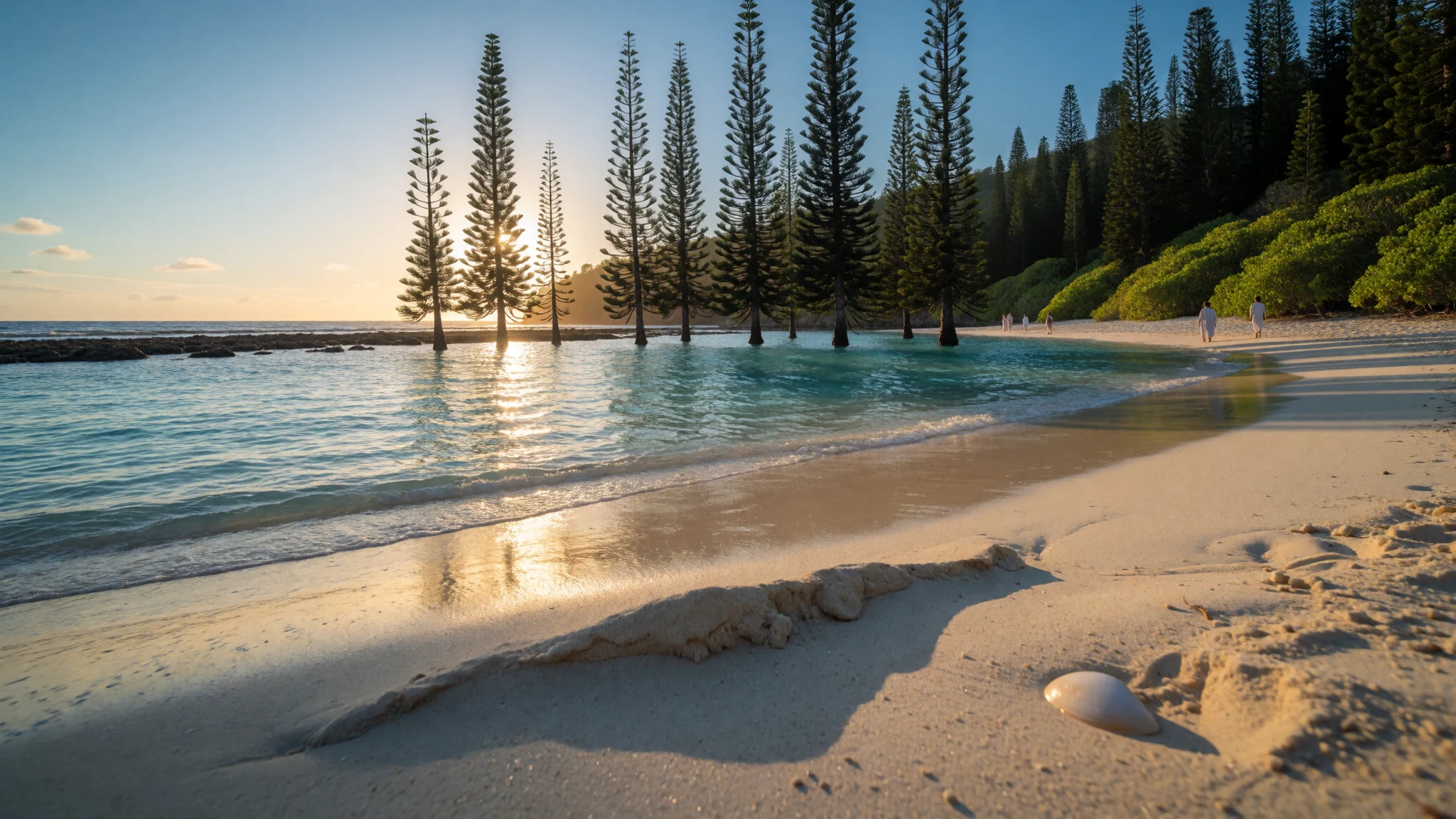
Isle of Pines offers white-sand bays, clear shallows and spires of native pine, set within living Kanak country and a quiet pace.
The place
Isle of Pines (Île des Pins, called Kunié in the Kanak language) sits off the south-eastern tip of New Caledonia, a low, forested island fringed with reef and pale sand. It belongs to France's Pacific territory, so French habits lie over Kanak custom: baguettes at breakfast, chiefly authority in the villages, and church at the centre of Sunday. Its look comes from two things. The first is the pine itself, Araucaria columnaris, a tall, narrow tree that rises in dark spires along the shore and across the hills, and gives the island its name. The second is the water. Kuto and Kanumera bays have gently shelving white sand and shallows the colour of glass, while Oro Bay leads to a natural pool sheltered by rock, calm enough for children and slow swimmers. Vao is the main village, with a church, a few shops and the town hall; the rest is bush, small tribal settlements and a scatter of guesthouses and bungalows. Most visitors come from Nouméa by short flight or boat. When a cruise ship anchors off Kuto, the beaches fill around midday, so early mornings and the farther bays are the quiet hours. The island is small enough to cross by bicycle or hired car in a day, though heat and sudden showers slow everything. The honest drawbacks are mosquitoes, strong sun and thin services: bring cash, reef-safe sunscreen and patience, and expect shops to keep their own hours.
Its story
Isle of Pines has been Kanak land far longer than it has had a European name. Kunié is the older name, and the island is still organised around chiefdoms whose authority decides who builds, fishes and gathers where. European sailors, Captain Cook among them, noted the tall pines and fixed the name that English and French still use. Sandalwood traders and missionaries followed, and the churches and strong Christian life of the villages come from that period. After France took New Caledonia as a colony, the island became a place of confinement. Convicts were held in a penal settlement at Ouro, while political prisoners deported after the Paris Commune were kept under a separate regime on the island, and some of that story survives in the stonework and graves they left behind. The ruins at Ouro are now roofless walls among trees, taken back slowly by roots and vines. When the penal system ended, the island turned towards fishing, small farming and, later, tourism. That shift is still tied to questions that run through all of New Caledonia: land rights, the place of Kanak custom, and the long argument over autonomy and independence from France. A visitor here is a guest of a living community, not of a theme park, and the history is easier to understand by listening to local guides than by reading signs.
What to see
- Kuto and Kanumera bays — Southwest of the island
Kuto and Kanumera are twin bays joined by a narrow sandy neck, so the island has calm shallows on one side and more open water on the other. Pines shade the upper beach, which helps in the midday heat. Cruise-ship days bring crowds to Kuto, so go early or walk to the quieter end of Kanumera.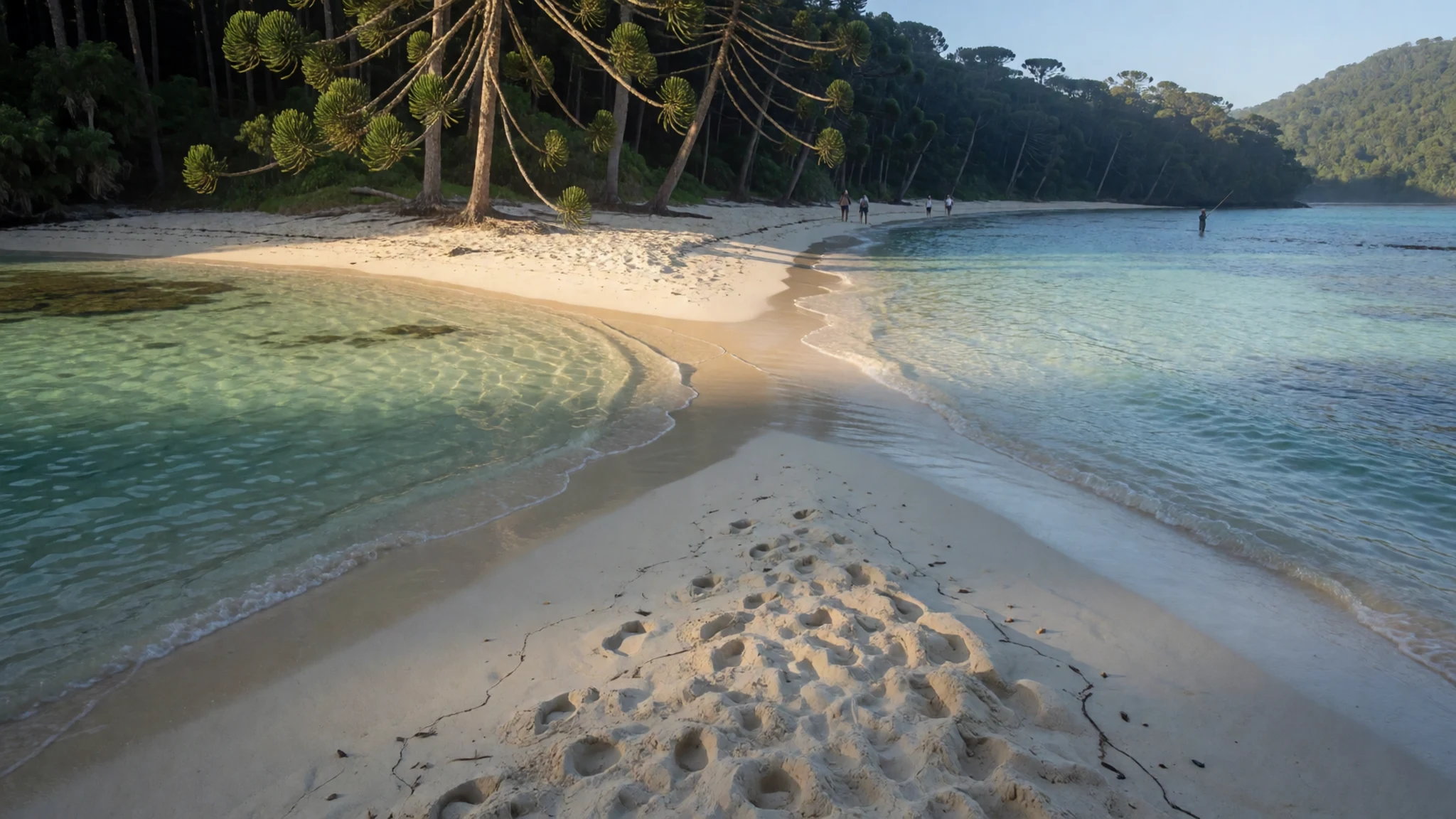
- Natural pool, Oro Bay — Oro Bay, east coast
Oro Bay's natural pool is a shallow, rock-ringed basin filled by the tide, with clear water and small fish that gather around swimmers. Getting there means a walk through forest or, more traditionally, a pirogue trip from Upi Bay. Time the visit with the tide, bring a snorkel and mask, and use reef-safe sunscreen.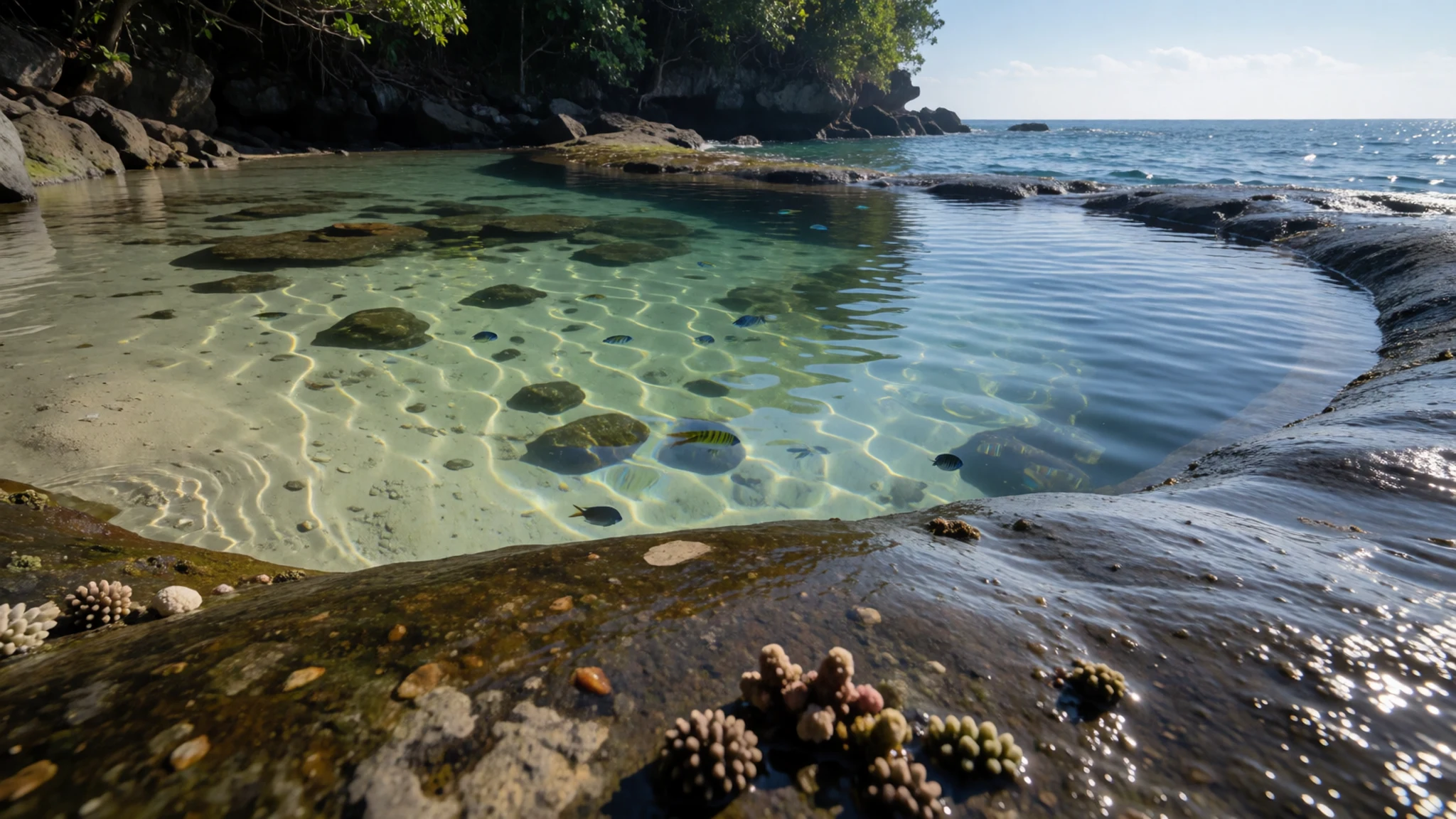
- Upi Bay and the pirogues — Upi Bay, east coast
Upi Bay is a wide, shallow inlet of pale sand, rocks and pines, best known as the departure point for outrigger sailing pirogues. The sail to the natural pool depends on wind and tide, and the pace is slow and quiet. Book through a guesthouse or a local operator, and ask about the day's conditions before committing.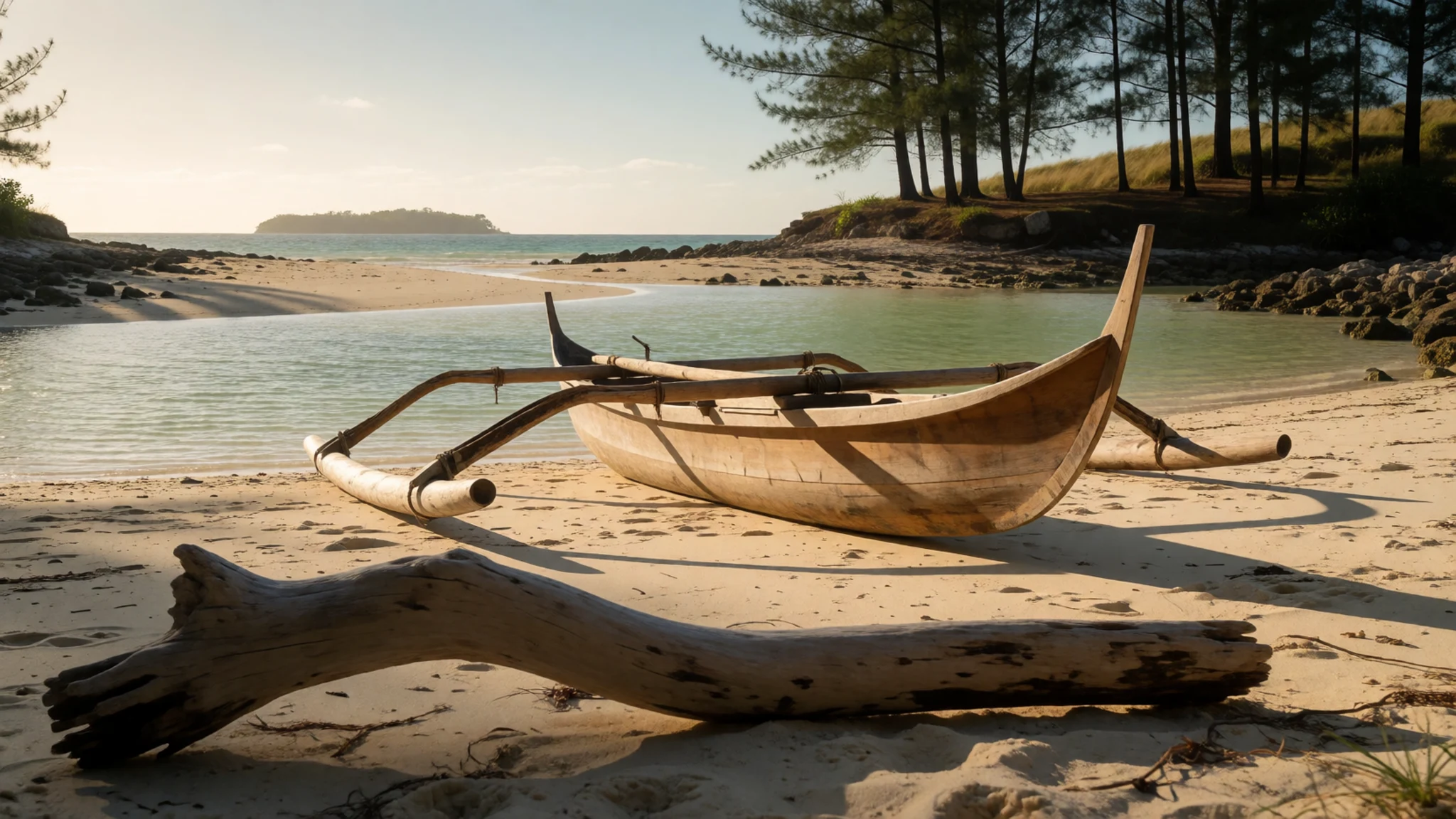
- Ouro penal colony ruins — Ouro, north-west of the island
The ruins at Ouro are what remains of the penal settlement: low stone walls, doorways and the outlines of cells half-hidden by trees. Signs are sparse, so a local guide adds a great deal of context. The place holds the memory of prisoners held here, so quiet, respectful behaviour matters more than photographs.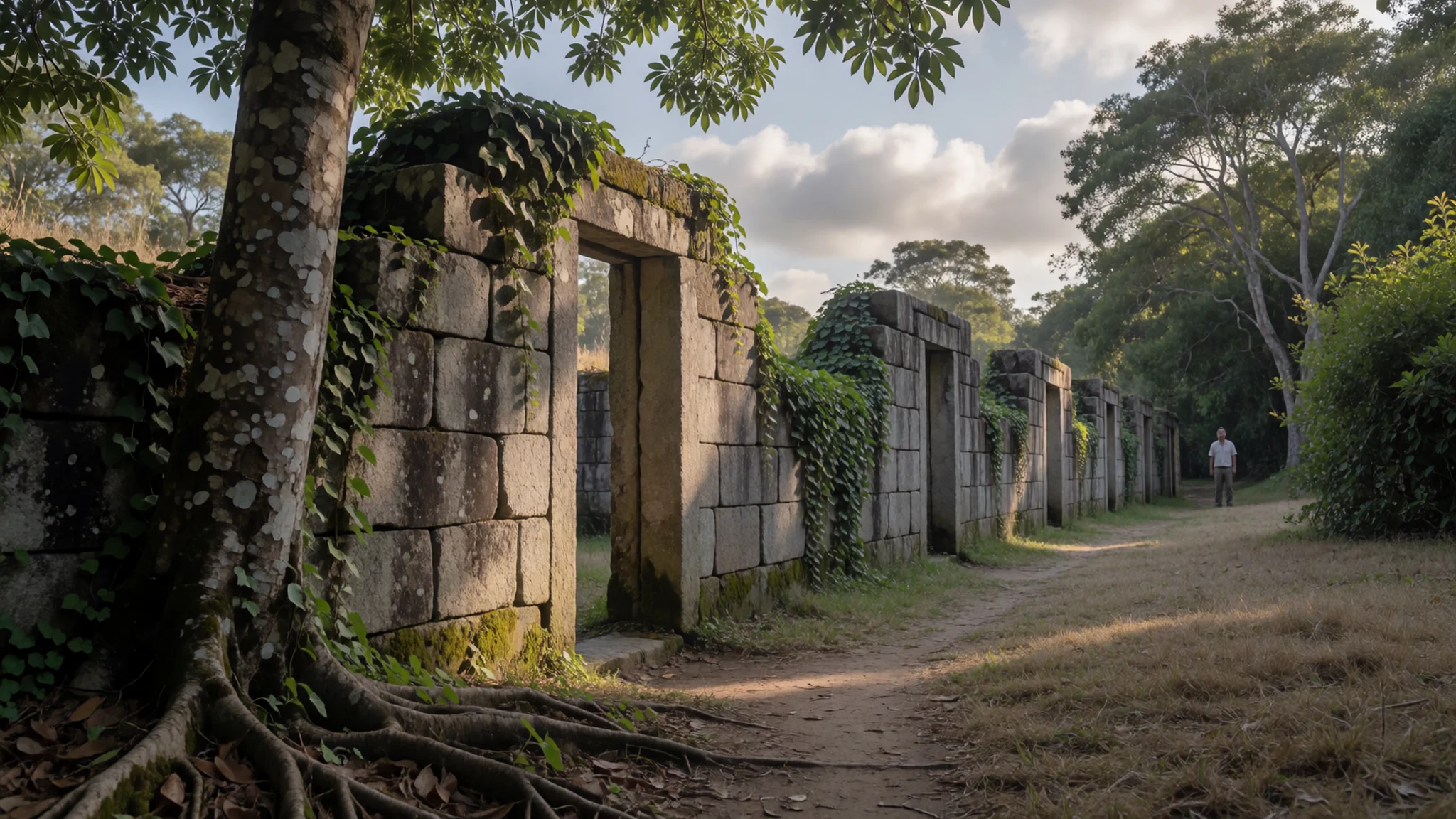
- Pic N'Ga — Centre of the island
Pic N'Ga is a rocky hill with a lookout over the reef, the pine forest and the bays, reached by a short but steep climb. The path is slippery after rain and the top has little shade. Go at dawn or late afternoon, carry water and wear closed shoes. The view shows how much of the island is bush.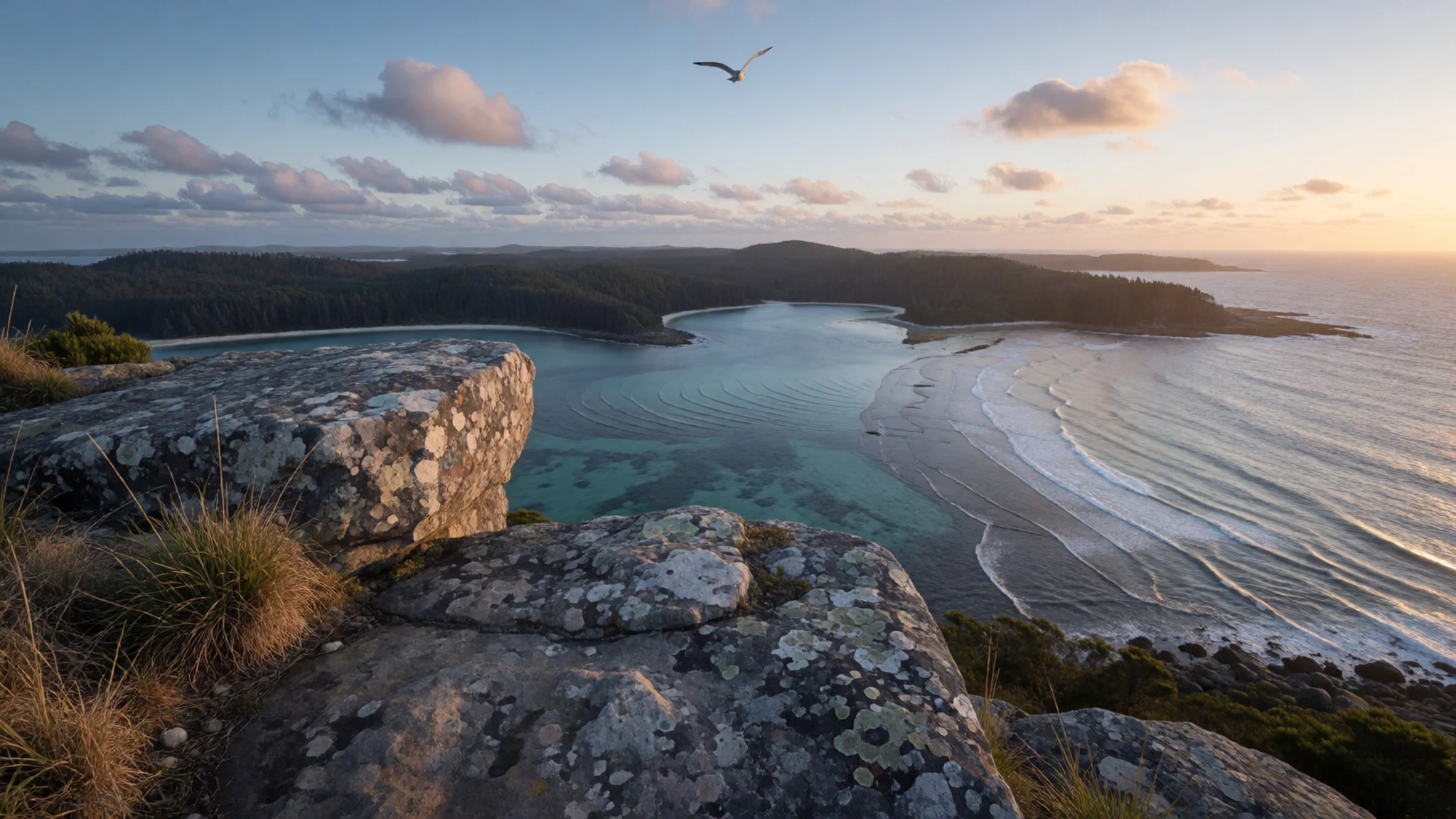
Culture
Isle of Pines is Kanak country, and custom here is practical rather than decorative. Land belongs to clans and chiefdoms, and reef, shore and forest are used for fishing and gathering, so a beach that looks open may still have an owner. The island's own language, Kunié, is spoken at home, with French used for school, shops and visitors. Church sits at the centre of village life. On Sundays congregations dress up and sing, the sound carrying a long way through the bush, and the pace of the whole island drops. Welcome is quiet and unhurried: a handshake, a few words of French and some patience count for more than enthusiasm. The yam has ceremonial importance, and gifts exchanged in a custom ceremony, often a length of cloth, mark arrivals, requests and respect. Staying at a tribal guesthouse can mean being introduced to the family or the chief, and a visitor asked to a ceremony should ask the host what is expected rather than guess. Fishing spots, graves and sacred places may be off limits without being marked, so a local guide is more than a convenience. Ask before you photograph people, enter a village or step onto land that looks private, and keep your shoulders and knees covered away from the beach.
What to wear
Traditional Kanak dress on Isle of Pines draws on plant fibre, beaten bark cloth and shell, and now appears mostly at ceremonies and dance. Fibre skirts and ornaments of shell and feather belong to those occasions rather than to everyday life. The most common local formal dress is the robe mission, a loose cotton gown with a yoke and puffed sleeves, introduced by missionaries and worn by women in bold prints for church, weddings and holidays. Men wear pressed shirts with trousers or wrapped cloth for the same occasions. Day to day, people wear what suits the heat: shorts, T-shirts, sundresses, rubber sandals and caps, with a clean, bright outfit kept for Sunday. Visitors should pack light cotton and quick-dry layers, a wide-brimmed hat and a long-sleeved rash vest, since the sun is fierce even on cloudy days. Reef shoes protect feet from coral, rocks and sea urchins, and sturdy closed shoes suit the climb up Pic N'Ga and the paths at Ouro. For villages and churches, cover shoulders and knees; a sarong or lightweight shirt in the bag does the job. Swimwear belongs on the beach, not in the shop or the village lane. Evenings bring mosquitoes, so a thin long-sleeved shirt and repellent are worth carrying, along with a light rain jacket for sudden showers.
What to eat
- Bougna — Tribal guesthouses and village gatherings
Bougna is a Kanak feast dish of yam, taro, sweet potato and banana, often with chicken, fish or lobster, wrapped in banana leaves with coconut milk and steamed in an earth oven. It is made for special occasions, so ask a guesthouse a day ahead whether it can be arranged.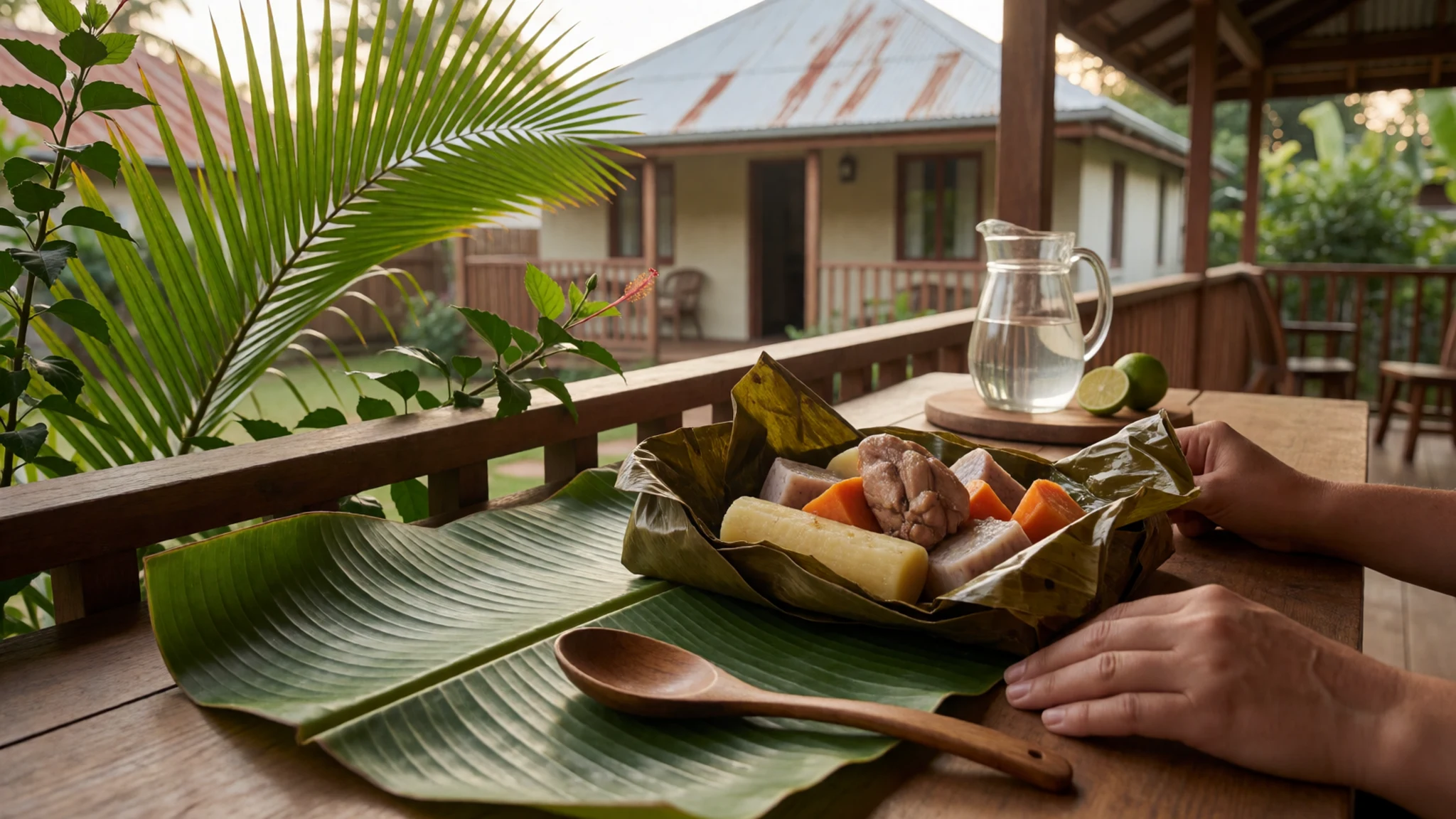
- Poisson cru au lait de coco — Guesthouse lunches and snack stalls near Kuto Bay
Poisson cru au lait de coco is raw fish cured briefly in lime juice and mixed with coconut milk, cucumber, onion and tomato. It is cool, sharp and creamy, and suits hot afternoons. Look for it at guesthouse lunches, beach snack stalls and small shops near Kuto.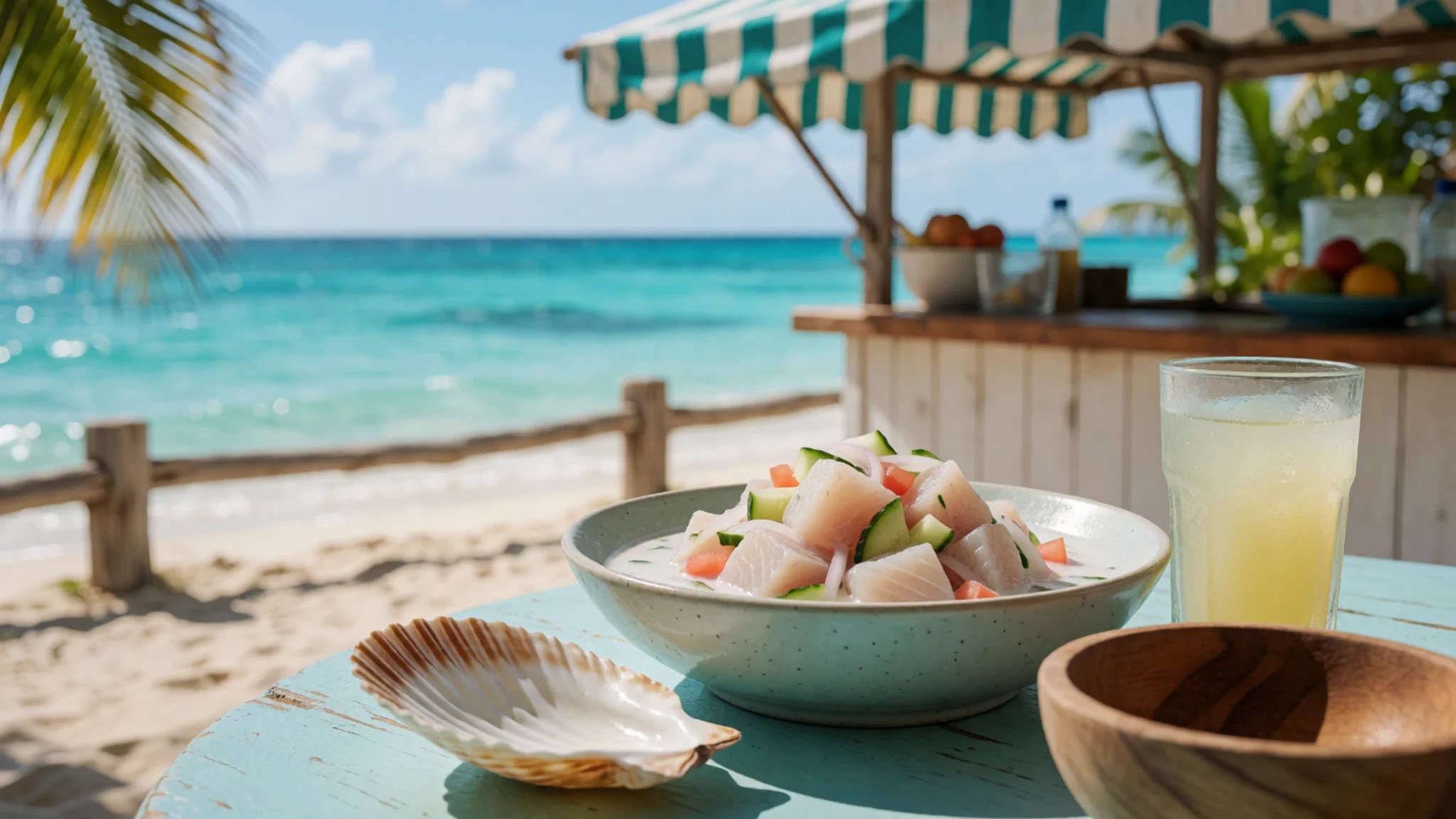
- Lobster and reef fish — Guesthouse dining rooms and beachside eateries
Grilled lobster and fresh reef fish appear on guesthouse and beachside menus, usually simply cooked with garlic, lime or butter. Availability depends on the catch and the season, so ask what came in that morning. Local fishers also sell directly in the villages. - Yam, taro and sweet potato — Tribal guesthouses and village feasts
Yam, taro and sweet potato are the everyday starches, boiled, roasted or mashed beside fish and chicken. The yam carries ceremonial weight in Kanak life, so it is treated with respect at the table. Try them at tribal guesthouse meals and village feasts. - Baguette and French pastries — Guesthouse breakfast tables and shop counters in Vao
Baguettes and croissants are French habits that reached the island's shops and guesthouse breakfasts, usually served with butter, jam and strong coffee. Order early, because supplies thin out by mid-morning, and carry a loaf for a picnic on the beach.
Plan it
Best time. September to November for warm, drier weather, calmer seas and lower humidity. The hot, humid, wetter months from December to March bring heavy showers and some cyclone risk.
How long. 2–3
Getting there. International flights land at La Tontouta airport, then it is a transfer to Nouméa. From Nouméa, take a short domestic flight from Magenta airport or a boat from the waterfront to the island. Check the airline and ferry operators for current schedules, then arrange a guesthouse pick-up or hire a car or bicycle for the last leg.
Budget. high
Tips
- Book guesthouses and transport well ahead, since the island is small and places fill in the drier months
- Ask your guesthouse which days cruise ships call at Kuto, and visit the beaches early on those days
- Carry cash, as cards and cash machines are limited outside Nouméa
- Bring reef shoes, reef-safe sunscreen, a hat, mosquito repellent and enough drinking water for day trips
- Arrange pirogue trips and Ouro visits through your guesthouse or a local guide
Etiquette
- Ask before entering villages, photographing people or stepping onto private land
- Dress modestly away from the beach and expect a quiet Sunday
- Treat Ouro and any graves as places of memory
Nearby
Sources
- Wikidata (CC0)
- Wikipedia, Isle of Pines (CC BY-SA 4.0)
- Wikivoyage, Isle of Pines (CC BY-SA 4.0)
- Wikimedia Commons (Public domain, CC BY 3.0, CC BY 2.5, CC BY-SA 4.0)