Hwaeomsa
Hwaeomsa, South Korea
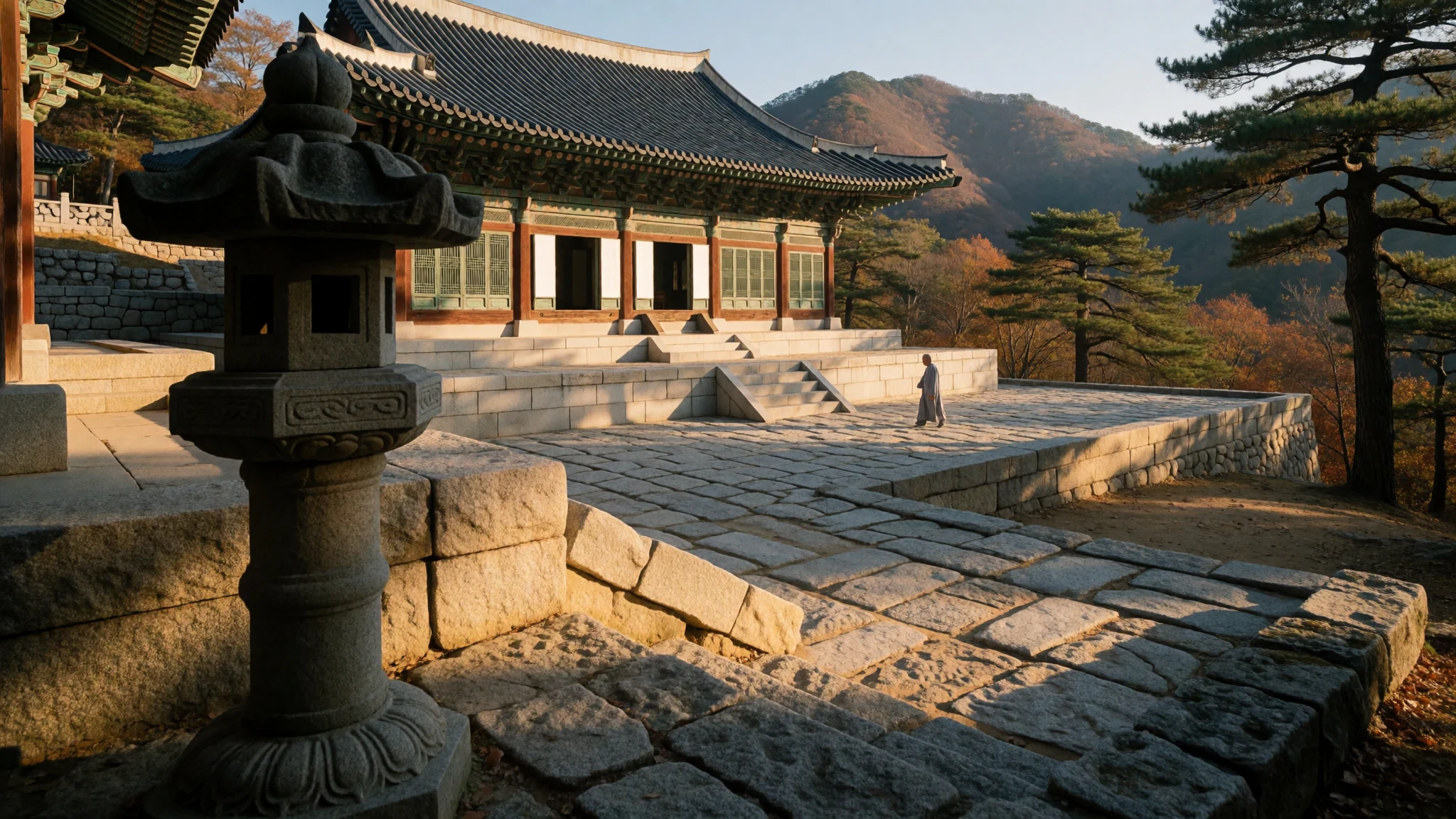
Hwaeomsa is a working mountain monastery in Korea's south-west, where old halls, stone lanterns and forest trails sit close together.
The place
Hwaeomsa sits on the south-western slopes of Jirisan, in Masan-myeon, Gurye County, South Jeolla Province, South Korea. The name means Flower Garland Temple (화엄사), after the Avataṃsaka Sutra, and it is a head temple of the Jogye Order, the main order of Korean Buddhism. The setting is a mountain valley rather than a town. Halls are strung along terraces that climb the hillside, with stone lanterns, pagodas and a painted drum tower among old trees, and a stream audible somewhere below. Gurye itself is a quiet rural county of farms, a river and small markets, not a resort. The climate is temperate and humid. Winters are mild but often bring snow, summers are cool and damp, and rain is spread through the year rather than falling in a few violent downpours. Spring and autumn are long and gentle, which suits a slow walk up through the grounds. The surrounding map helps with planning: Namwon lies to the north, Suncheon and Gwangyang to the south, Gokseong to the west and Hadong, across the provincial border in South Gyeongsang, to the east. The temple also runs temple-stay programmes for visitors who want to sleep on site and share in the daily routine. It remains a living monastery, so chanting, monks crossing the courtyards and a slower pace are the norm, a long way from the big-city sights of Seoul.
Its story
Hwaeomsa traces its beginnings to 544, when the monk Yeongi is recorded as founding it on the mountainside. In 643 the monk Jajang enlarged the site, adding a relic pagoda, a seven-storey pagoda and a stone lantern. Later, under King Munmu, the scholar-monk Uisang had the Avataṃsaka Sutra, the text behind the temple's name, cut into stone tablets and stored here, which made Hwaeomsa a place of study as much as of prayer. The monk Doseon enlarged it again in 875. In 943, in Goryeo times, the state began a programme of temples meant to correct places with unfavourable geomantic energy, and Hwaeomsa was the first to be renovated, with several further renovations under later kings. Disaster came in 1593, when Japanese invaders burned most of the buildings during the wars of the 1590s. The sutra tablets shattered in the fire, but fragments survive and are listed as Treasure No. 1040, the Hwaeom Seokgyeong. Rebuilding was led by the monk Byeogam Gakseong, whose work included the Main Buddha Hall between 1630 and 1636. By 1701, in King Sukjong's reign, the reconstruction was complete, and the king named Hwaeomsa the great temple joining the doctrinal and meditation schools. Halls and gates from that rebuilding, among them the Daeungjeon, the Gakhwangjeon and the Geumgangmun, still give the compound its layout.
What to see
- Daeungjeon and Gakhwangjeon halls — Main temple compound
The two main halls anchor the upper terraces and come from the post-1593 rebuilding. In front of the Gakhwangjeon stands a stone lantern worth a slow look for its carving. Go early, when the courtyards are quiet and the light comes low through the trees.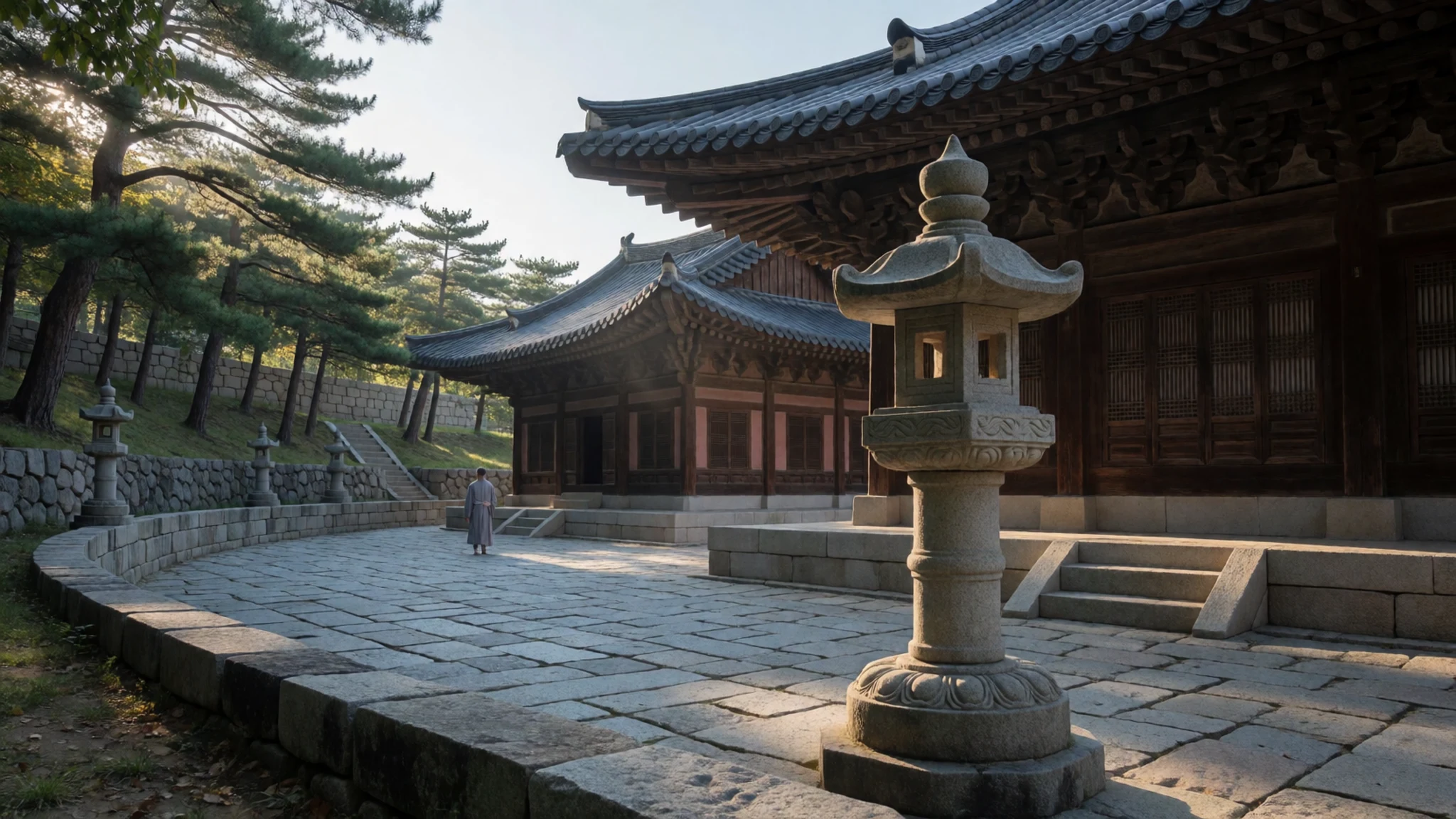
- The drum tower and its dancheong — Main temple compound
The drum tower shows dancheong, the painted pattern in greens, reds and blues that decorates the eaves of Korean temples. Look up at the brackets and rafters. The colour is not decoration alone; it protects the timber and marks the building as sacred.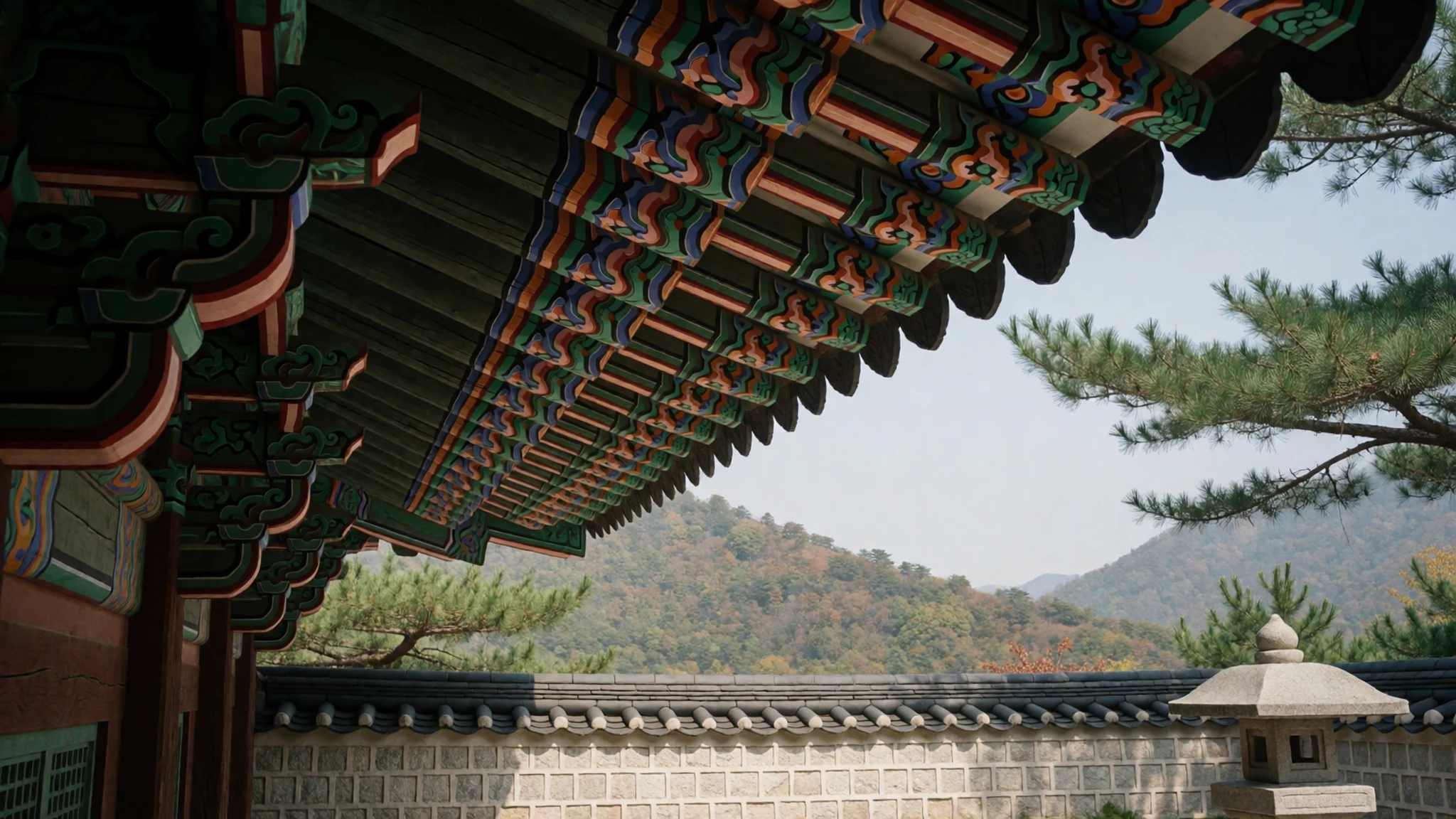
- Hwaeom Seokgyeong tablet fragments — Temple grounds
Pieces of Uisang's stone sutra tablets, shattered in the fire of 1593, are kept as Treasure No. 1040. They are small and easy to miss, so ask a monk or check the signage. They explain better than any hall why the temple matters to scholars.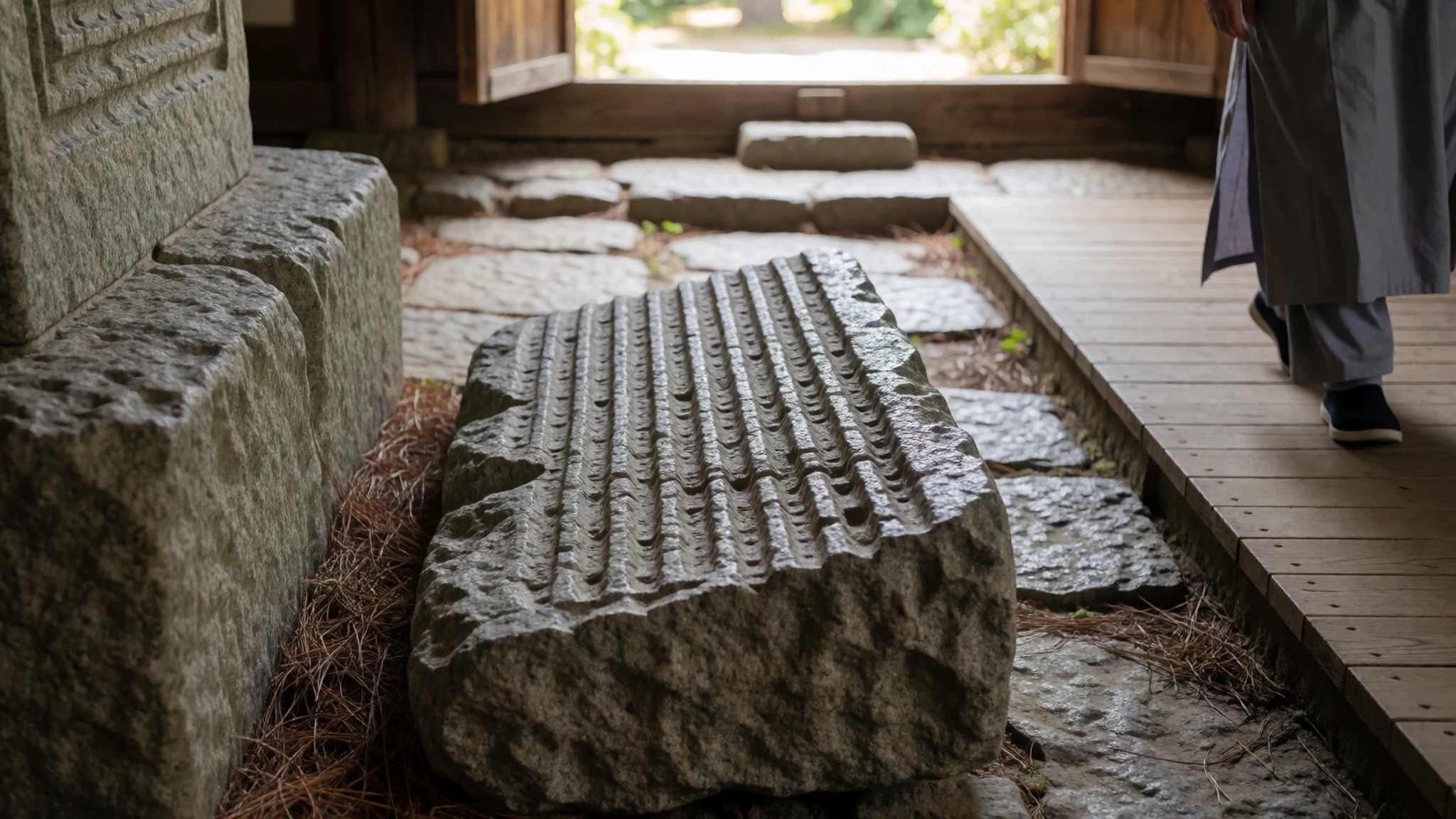
- Surak Waterfall — Gurye, near Hwaeomsa
A short drive or hike from the temple, this waterfall drops about 15 metres between rough rocks. It is popular in the warm months for standing under the falling water. Spring melt and summer rain give it more force; in dry winters it is a thin ribbon.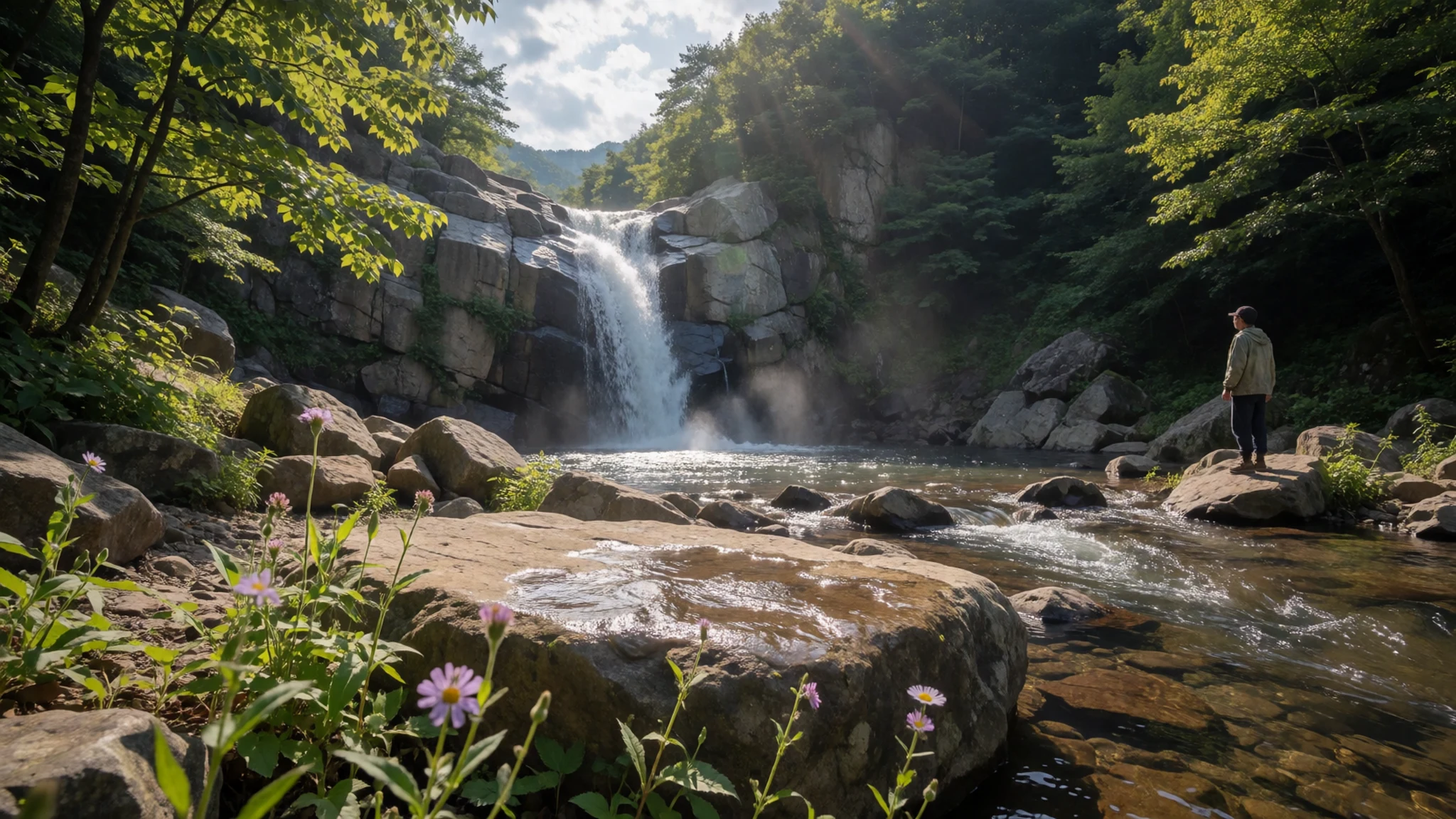
- Seomjin River bamboo path — Gurye, Seomjin River
Down in the valley, a bamboo-lined path follows the Seomjin River and links to gentler riverside trails. It makes an easy, flat counterpart to the temple's climb, and a pleasant place to end an afternoon, with a cafe or two nearby for a rest.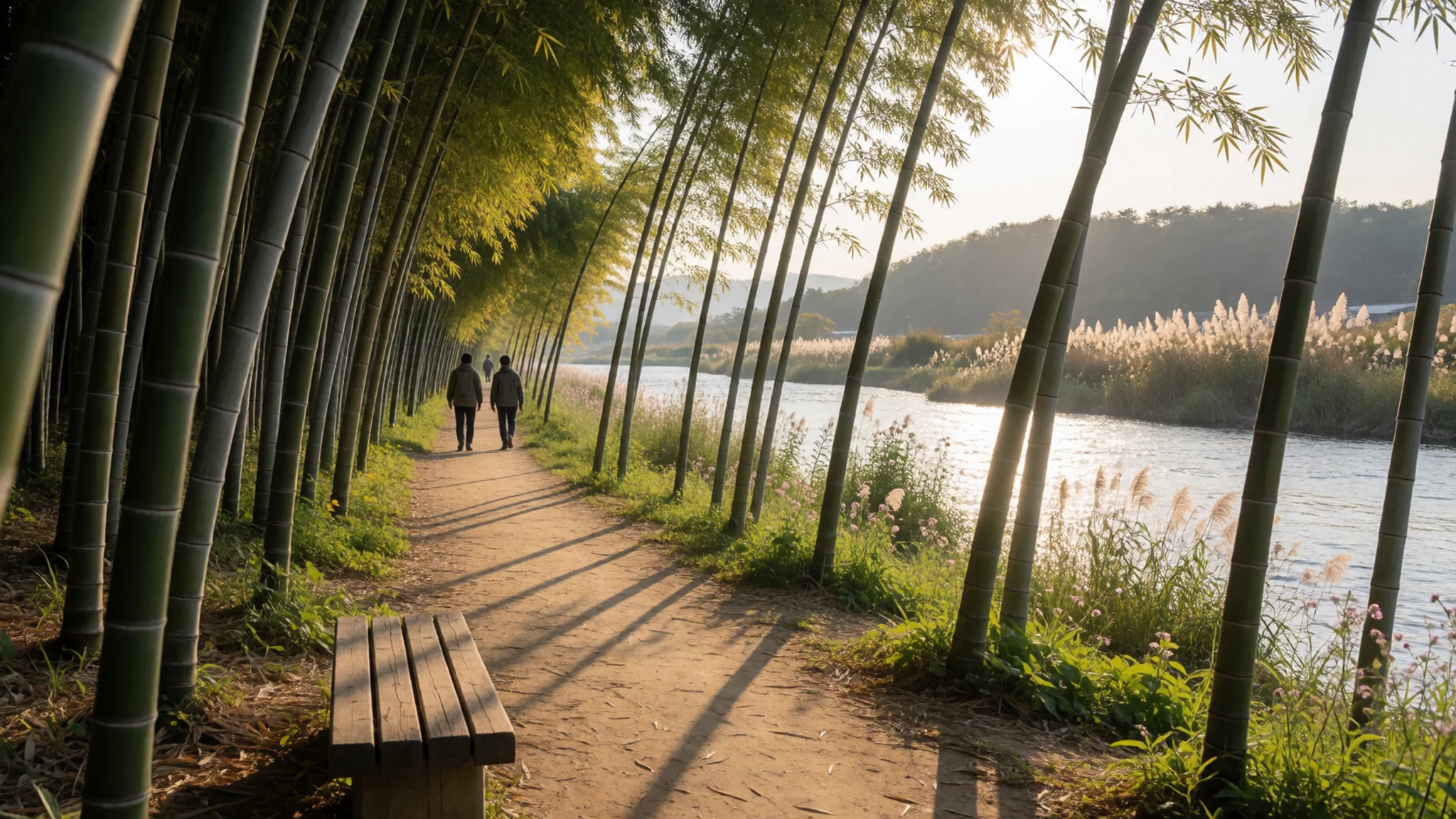
- Nogodan trailhead — Jirisan, east of the temple
Nogodan is a starting point for the long Jirisan ridge route. Most visitors only need a short stretch for the views over the valleys, but walkers with a full day and good boots can go much further. Check weather and trail conditions before setting out.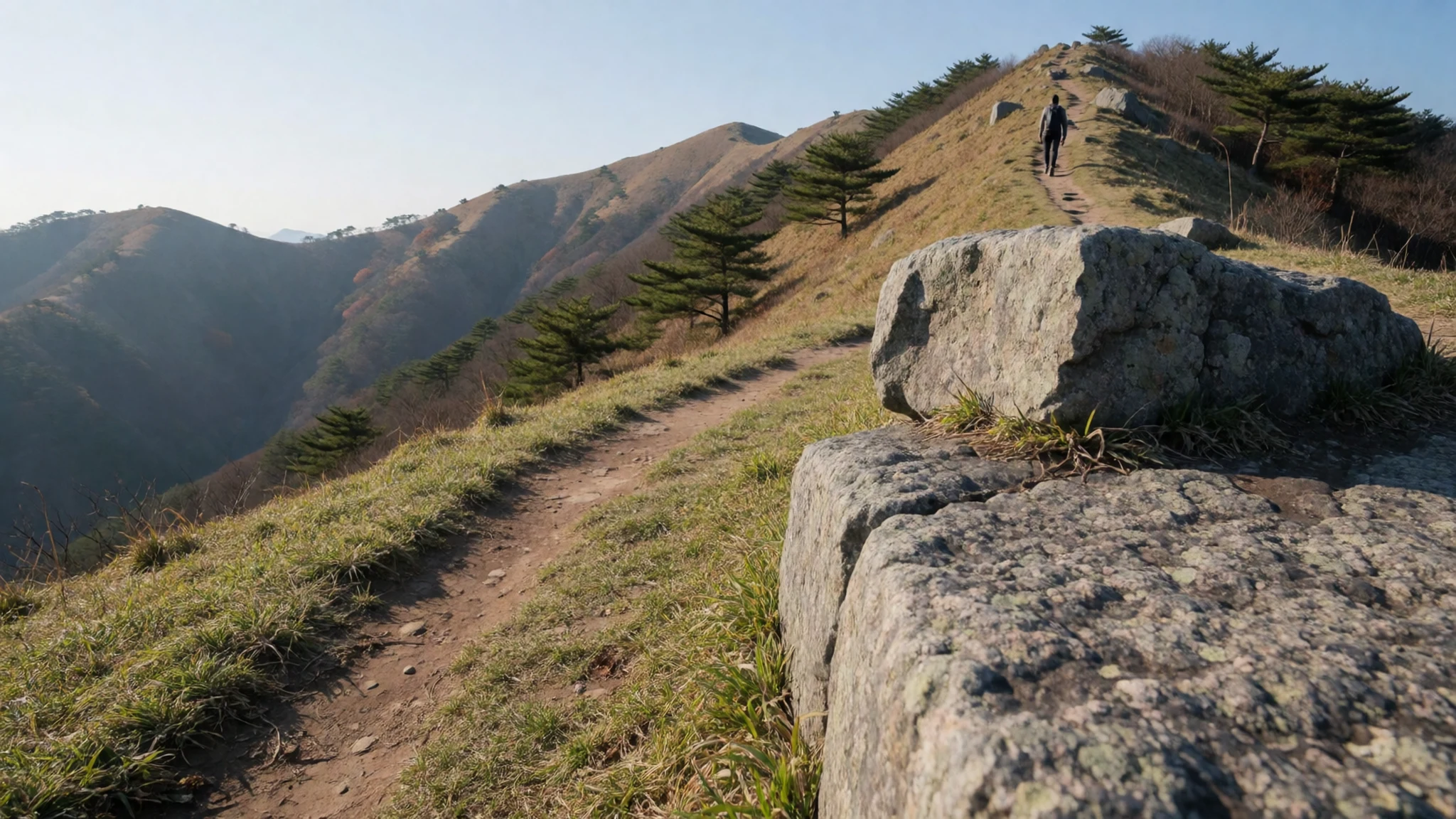
Culture
Hwaeomsa belongs to the Jogye Order, and its calendar follows Korean Buddhist practice. Mornings and evenings bring chanting and the beating of the drum and bell, a routine that has run, in some form, for well over a thousand years. The name points to the Avataṃsaka tradition, known in Korean as Hwaeom, which pictures the universe as a net of interconnected things, each reflecting the others. That idea shaped the temple's reputation as a centre of learning, and the sutra tablets once kept here tied it to the scholar-monk Uisang. In practice the compound feels less like a museum than a village of monks: laundry, brooms, kitchens and quiet conversations all share the courtyards with the formal halls. Temple-stay programmes let visitors join a day of meals, meditation and early rising, and they are a good way to understand the place beyond the buildings. The lantern festival around Buddha's birthday, usually in spring, fills Korean temples with colour, though crowds then are heavier. Local life in Gurye around the temple is rural and unhurried, built on farming, mountain vegetables and river produce. Visitors are welcomed, but the monastery's rhythm comes first. Etiquette line: take off your shoes before stepping into any hall, keep your voice low in the courtyards, and ask before photographing monks or worshippers.
What to wear
Hwaeomsa is a good place to see how Korean dress splits into the ceremonial and the everyday. The traditional dress is hanbok: a short jacket (jeogori) over a full wrapped skirt (chima) for women, and a jacket with loose trousers (baji) for men. Fabrics include silk for formal wear, ramie and hemp for hot weather, and cotton for ordinary clothes. Hanbok is worn now mainly at weddings, the Seollal and Chuseok holidays and in heritage settings. At the temple, the monks wear loose grey robes, often with a brown or reddish outer cloth for ceremonies. Most Korean visitors dress like people anywhere in the country: practical outdoor clothing, hiking shoes and layers, since Jirisan is a walking mountain. Gurye is rural, so smart clothes are rarely needed. A visitor should cover shoulders and knees for the halls, and wear loose, modest layers that suit mild, humid weather. Bring a light waterproof for rain and a warm layer for winter, when snow is common. Footwear matters twice over: sturdy shoes with grip for stone steps and forest paths, and shoes that slip off easily, because they come off at hall doors. Socks without holes are a sensible extra.
What to eat
- Sannamul bapsang — Restaurants along the road up to the temple
A set meal of mountain vegetables, wild greens and shoots, served with rice and many small side dishes. It is the natural lunch after the temple, and the flavours change with the season, from bitter spring shoots to earthy autumn roots.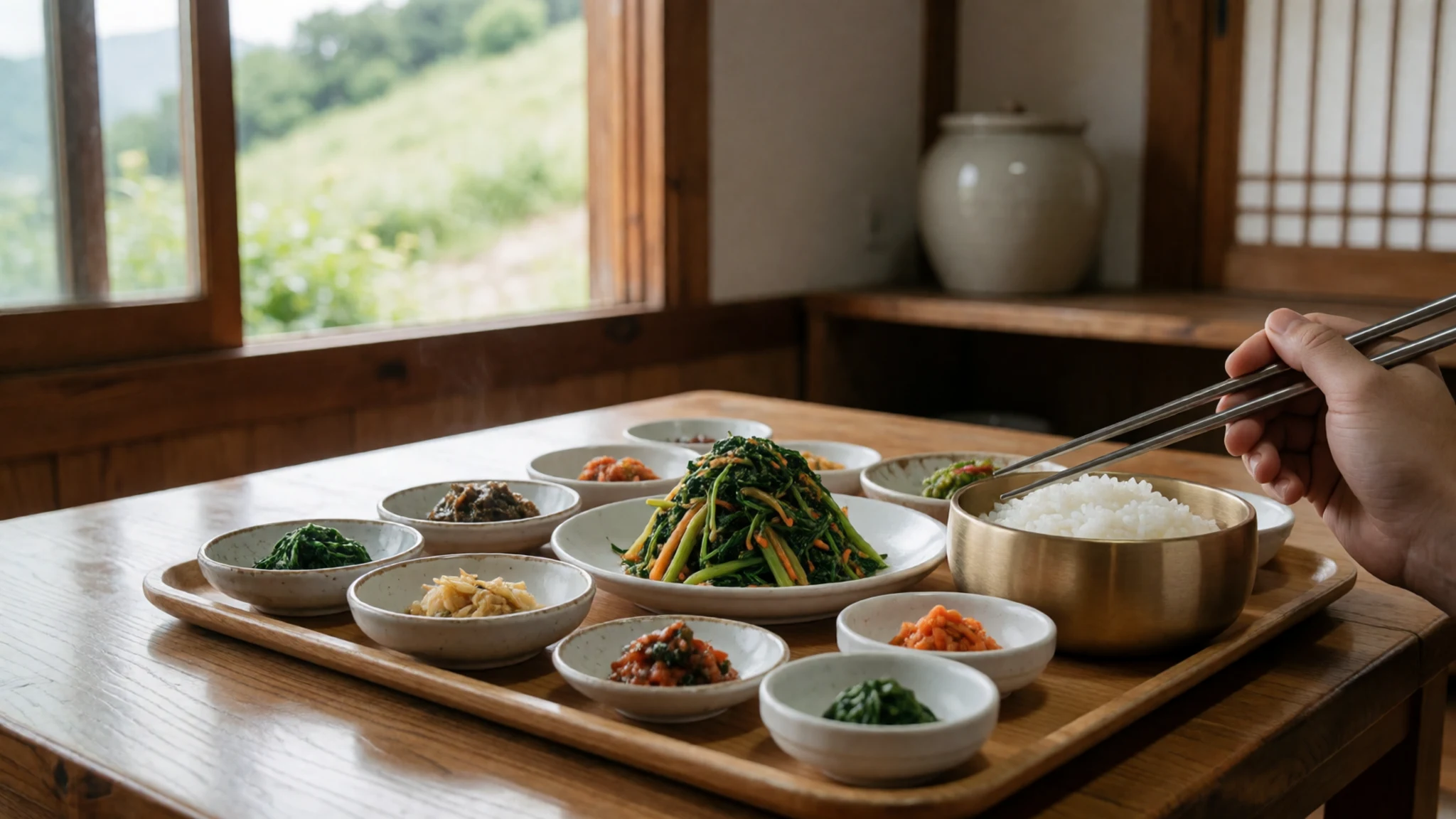
- Wild pine mushroom hot pot — Mountain-valley restaurants around Gurye
A fragrant broth built around pine mushrooms, which grow on Korean hillsides in autumn. It is rich, a little woody and better shared. Availability depends on the season, so ask what is in stock.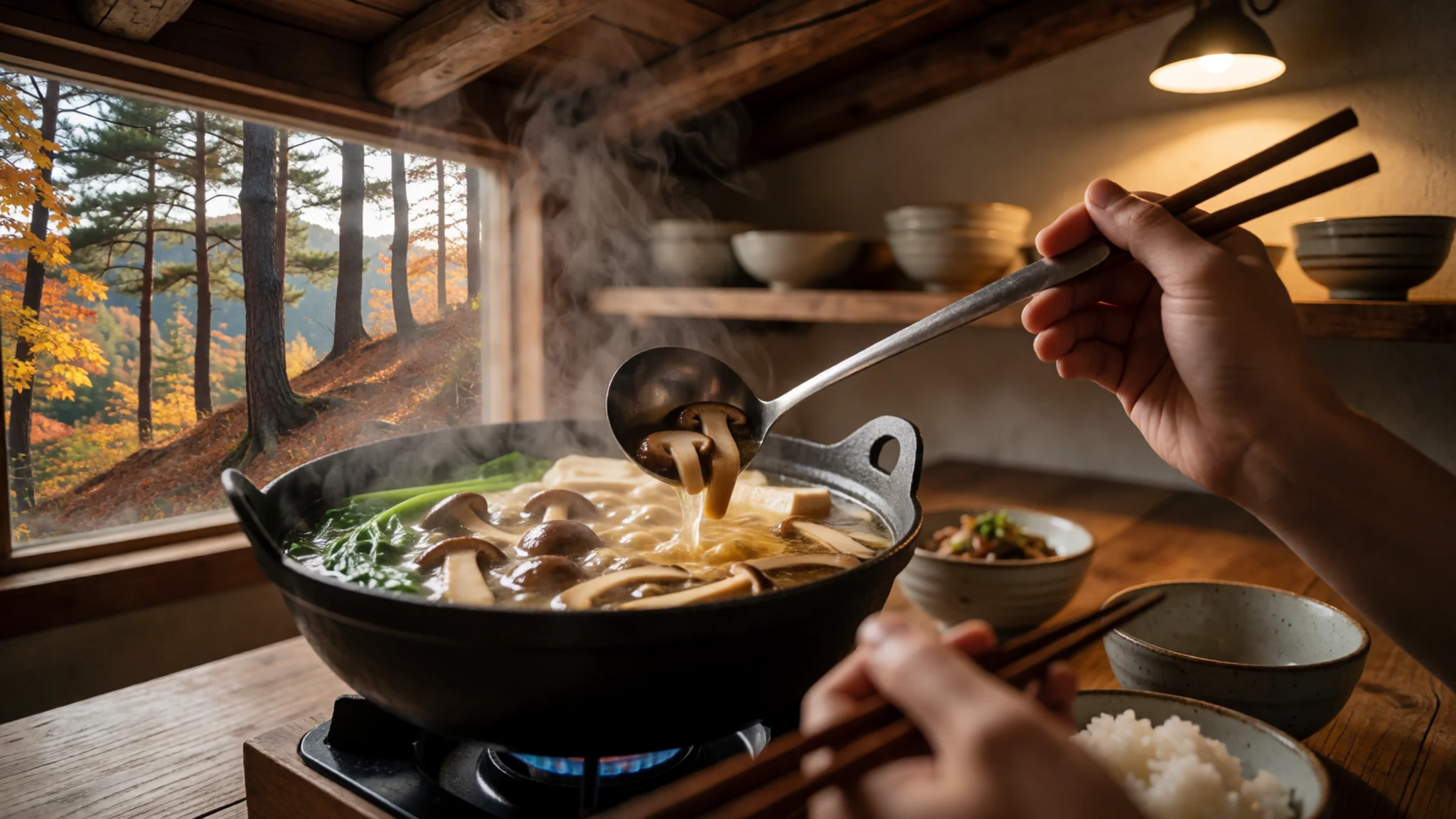
- Dasulgi-guk — Riverside eateries along the Seomjin
A soup of small freshwater snails from the Seomjin River, green and slightly bitter, and traditionally eaten as a restorative. Some eaters love it; others find the texture unusual. Worth trying once if you like local specialities. - Herbal chicken soup — Family restaurants near the temple
Chicken simmered with medicinal herbs and roots until the broth turns deep and slightly sweet. It is a standard rural comfort dish, filling after a morning on steep steps, and usually served with rice stirred into the broth. - Gurye wheat bread — Independent bakeries in Gurye town
Local bakeries bake loaves with Gurye-grown wheat and natural yeast, giving a dense, slightly sour crumb. It is a good picnic item for a riverside walk or a ridge hike, and a change from rice-based meals. - Temple food — On site, through a temple-stay programme
Vegetarian meals made without meat, fish or the strong alliums that monastic cooking avoids. Those on a temple stay eat these simply and in silence. Expect rice, soups, pickles and seasonal greens, with plain, clean flavours.
Plan it
Best time. April–May and October–November. Spring and autumn are long and mild, with good walking weather and colour on the mountain. Summers are cool but humid, and winters are mild with frequent snow, which is beautiful but can make steps and trails slippery.
How long. 1–2
Getting there. Gurye is served by trains, with Mugunghwa-ho, ITX-Saemaeul and SRT services stopping there and some KTX and ITX-Maum trains stopping on certain runs. Intercity buses reach Gurye Public Bus Terminal from Seoul, Gwangju, Suncheon and Yeosu. From the terminal, take a taxi or local bus to the temple. Suncheon is about 40 minutes away by bus or car. By car, the Namhae and Suncheon–Wanju expressways connect via Suncheon.
Budget. low
Tips
- Arrive early in the morning for the quietest courtyards and the best light
- Check the official site, http://www.hwaeomsa.org/, for temple-stay booking, opening times and any entry fee
- Carry some cash for small shops, snacks and rural buses, as card acceptance can vary
- Wear shoes with grip for stone steps, and pack a light waterproof for rain
- Pair the temple with the Seomjin River or Surak Waterfall to fill a second half-day
Etiquette
- Remove your shoes before entering any hall and keep your voice low
- Ask before photographing monks or people at prayer
- Cover shoulders and knees, and follow the temple's signs about restricted areas
Nearby
Sources
- Wikidata Q491233 (CC0)
- Wikipedia: Hwaeomsa (rev 1386341352) (CC BY-SA 4.0)
- Wikivoyage: Gurye (rev 5403406) (CC BY-SA 4.0)
- Photo: Hwaeomsa, Jirisan (01), eimoberg (CC BY 2.5)
- Photo: Stone lantern in front of Gakhwangjeon Hall, eimoberg (CC BY 2.5)
- Photo: Hwaeomsa, Jirisan (02), eimoberg (CC BY 2.5)
- Photo: Drum tower at Hwaeomsa (03), eimoberg (CC BY 2.5)
- Photo: Hwaeomsa, Jirisan (05), eimoberg (CC BY 2.5)
- Photo: Hwaeom temple (1), Korean Buddhist Culture Business Group (CC BY-SA 4.0)
- Photo: Hwaeom temple (2), Korean Buddhist Culture Business Group (CC BY-SA 4.0)
- Photo: Hwaeom temple (3), Korean Buddhist Culture Business Group (CC BY-SA 4.0)


