Huashan Rock Art
Huashan Rock Art, People's Republic of China
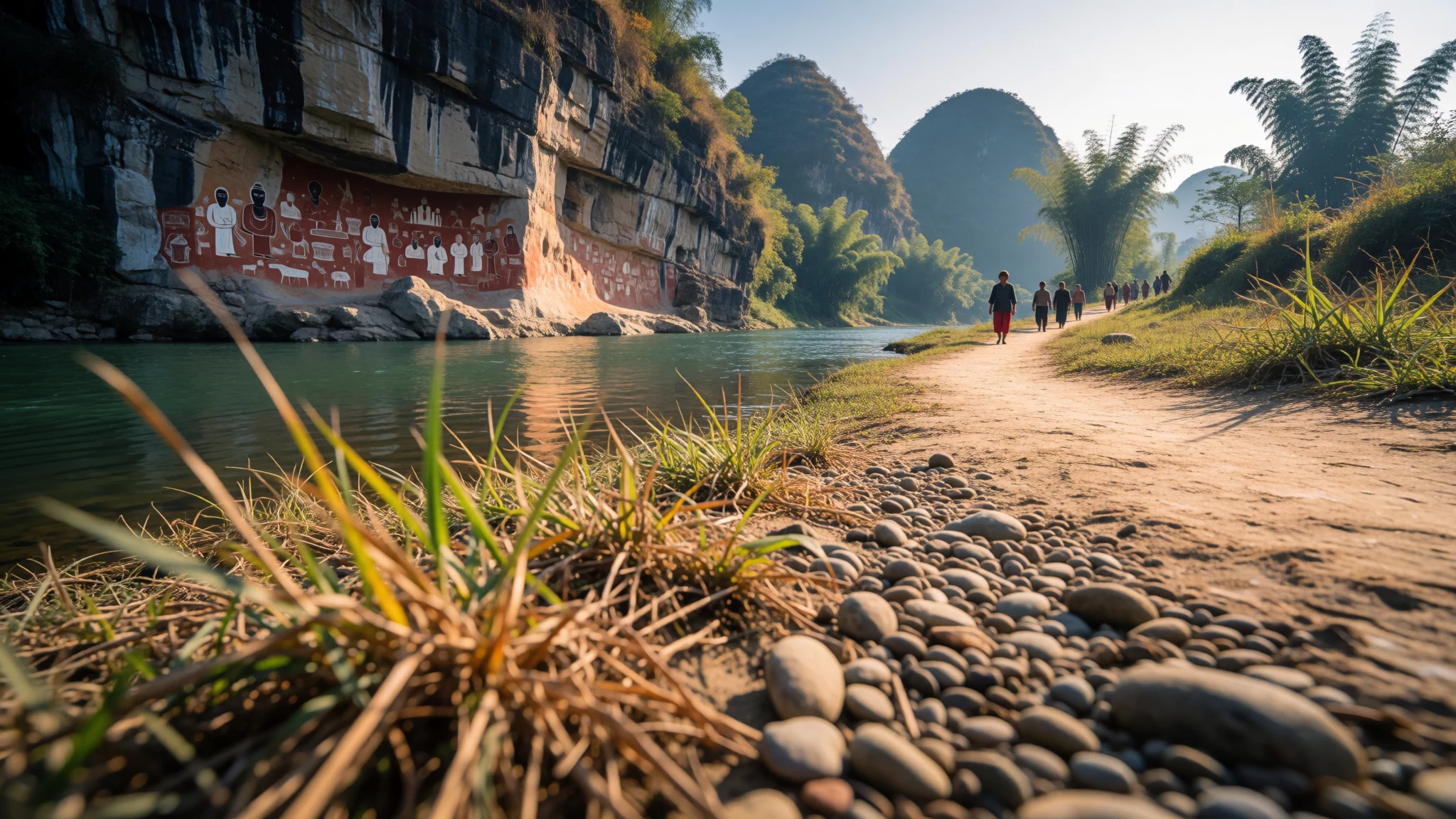
Huashan Rock Art in Guangxi is a long cliff face of red painted figures, drums and swords, made by the Luo Yue people about two thousand years ago.
The place
Huashan Rock Art sits in Ningming County, in Guangxi, southern China, on the west bank of the Ming River, a tributary of the Zuo River. The area falls within the Nonggang Nature Reserve, and the county belongs administratively to the city of Chongzuo. The setting is limestone country: steep grey cliffs rising straight from green water, with karst hills behind.
The painted panel runs for roughly 170 metres along the cliff and stands about 40 metres tall. The images begin well above the waterline and climb high up the rock, which is part of what makes them so striking and so puzzling. Someone had to reach those heights, whether from boats, scaffolding or ropes.
The main area holds about 1,900 countable images in around 110 groups. Everything is in a single colour, a rusty red, made from red ochre (hematite) mixed with animal glue and blood. Most figures are people, shown with arms raised and knees bent in a squatting pose. Human figures are mostly between 60 centimetres and a little over a metre and a half tall, though one stands at 3 metres. Alongside them are animals, bronze drums, knives, swords, bells and boats.
The site is listed by UNESCO as the Zuojiang Huashan Rock Art Cultural Landscape, inscribed in 2016. Visitors arrive at a scenic area with a visitor centre, then see the cliff from the water or a viewing point. It is quiet and rural, and far from the usual China circuit, which is much of its appeal.
Its story
The paintings are generally dated to somewhere between 1,800 and 2,500 years ago, though some estimates narrow that to 1,600 to 2,400 years. In Chinese history that spans the Warring States period through to the late Han dynasty. The window is wide because red pigment is hard to date directly, and researchers rely on the style, the objects depicted and surrounding evidence.
The usual attribution is to the Luo Yue, a people who lived in the Zuo River valley then. They are regarded as ancestors of today's Zhuang, as well as the Muong and Kinh peoples of Vietnam. That gives the cliff a living connection: it is not an anonymous relic but part of the heritage of communities still in the region.
What the paintings meant is open to interpretation. Many scholars read them as scenes of ritual and community life, and the bronze drums are a clue. Drums of this kind were important objects in the cultures of this region, and their repeated appearance suggests ceremonies, perhaps tied to rain, harvest, war or the dead. The big central figures, often shown with swords, may be leaders or ritual specialists.
What can be said with confidence is that a community returned to this cliff again and again, adding images over a long period. The river below was likely part of the story, as a route and a boundary. Today the Zhuang Nationality Museum in Chongzuo carries an exhibition on the paintings and how they are read, and it is a sensible way to put the cliff into context.
What to see
- The main painted cliff — Ningming County, west bank of the Ming River
The core of Huashan Rock Art is the long cliff panel above the Ming River. Its roughly 1,900 images are packed in groups, with large central figures surrounded by smaller ones. Binoculars or a camera with a good zoom help a great deal, since the highest paintings are far above the water.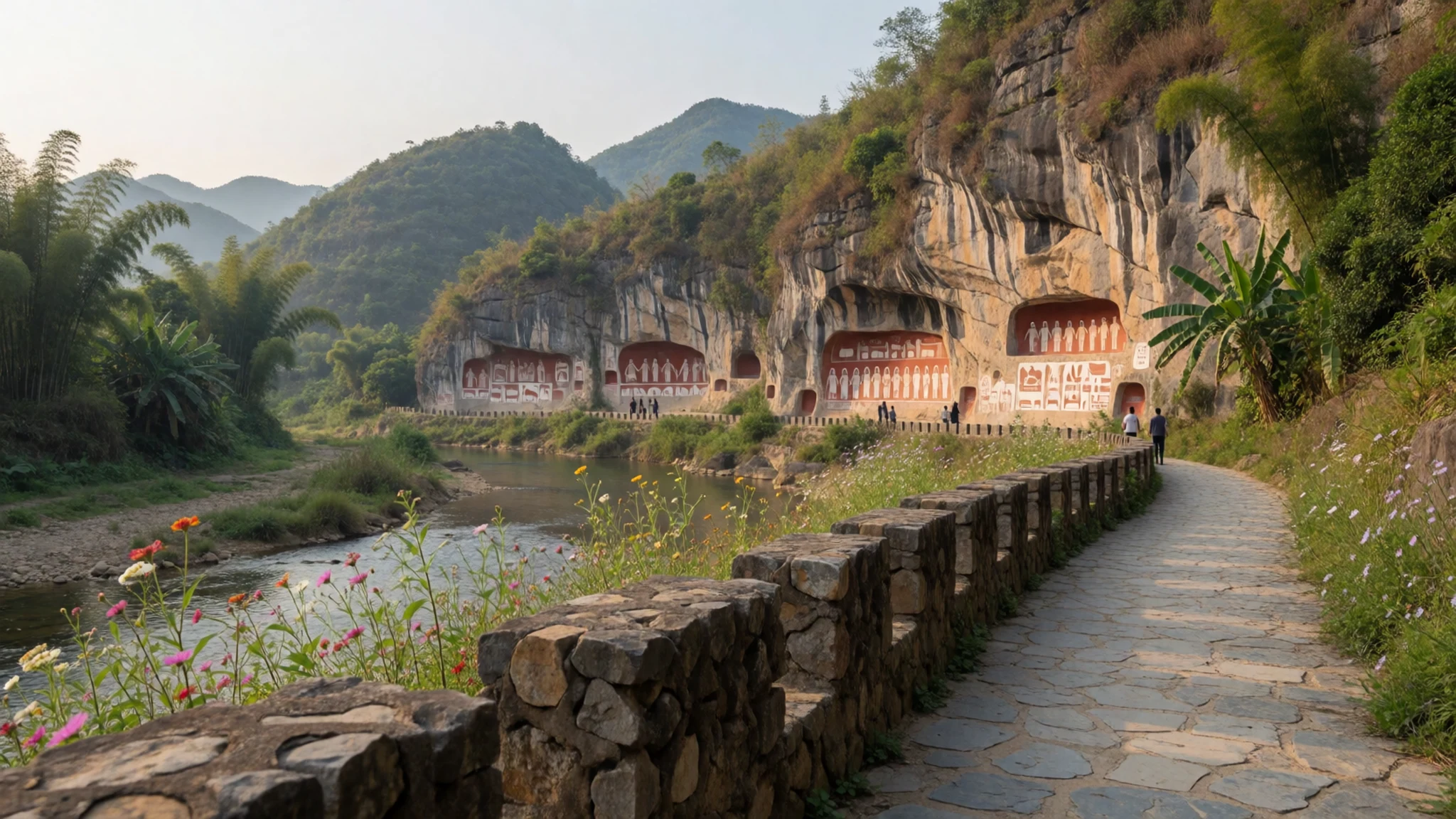
- The river viewpoint — Ming River, below the cliff
The cliff is best understood from the water or from the river's edge, where its full width and height become clear. From here the limestone face, the red figures and the green river sit together in one frame, and the effort of painting at such heights starts to make sense.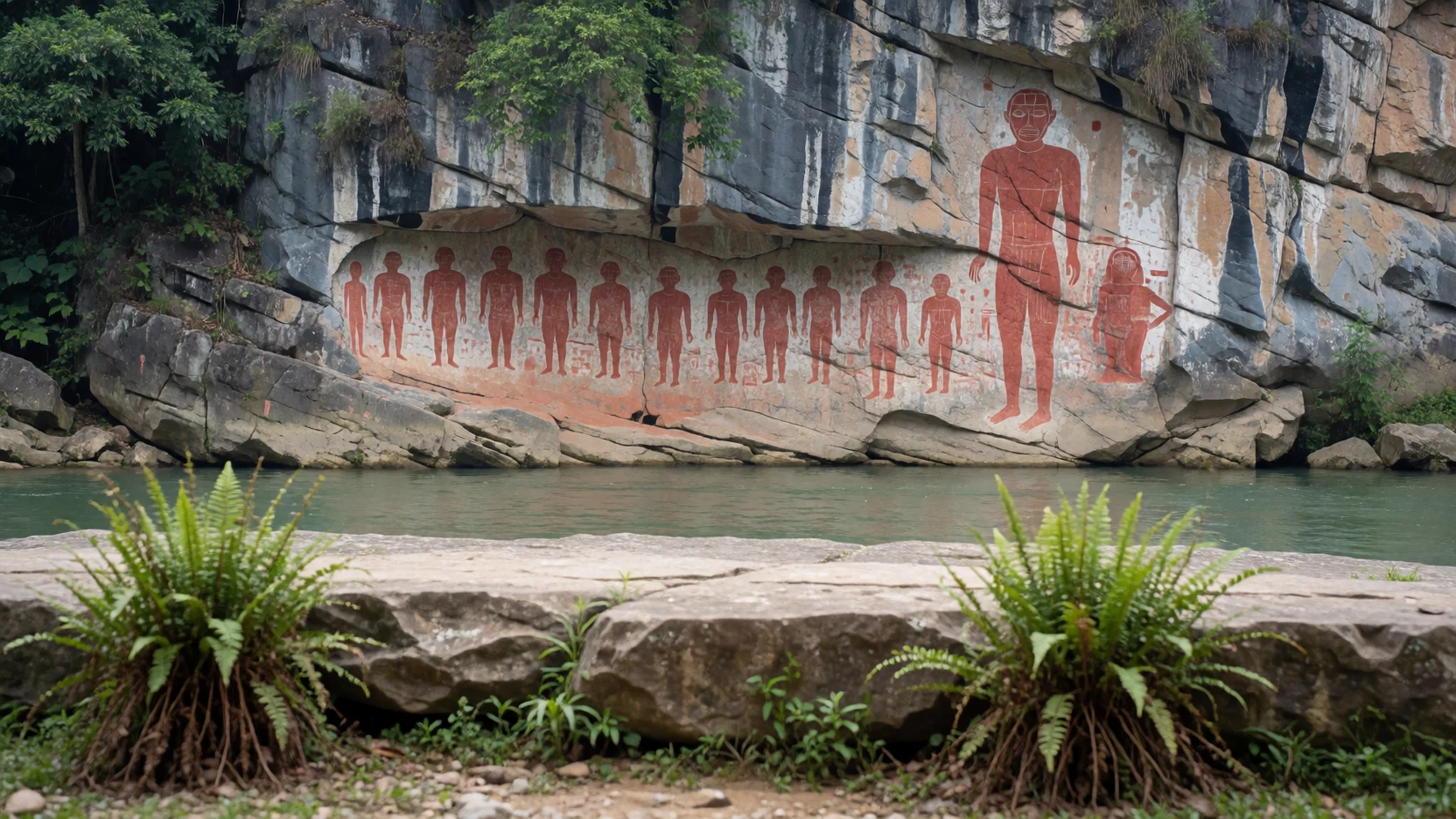
- Bronze drums and weapons motifs — On the cliff panel
Look for the objects among the figures: round drums, knives, swords, bells and boats. These are the clues scholars use to place the paintings in time and to link them to ritual life. The drums in particular recur, and finding them is a good way to learn to read the panel.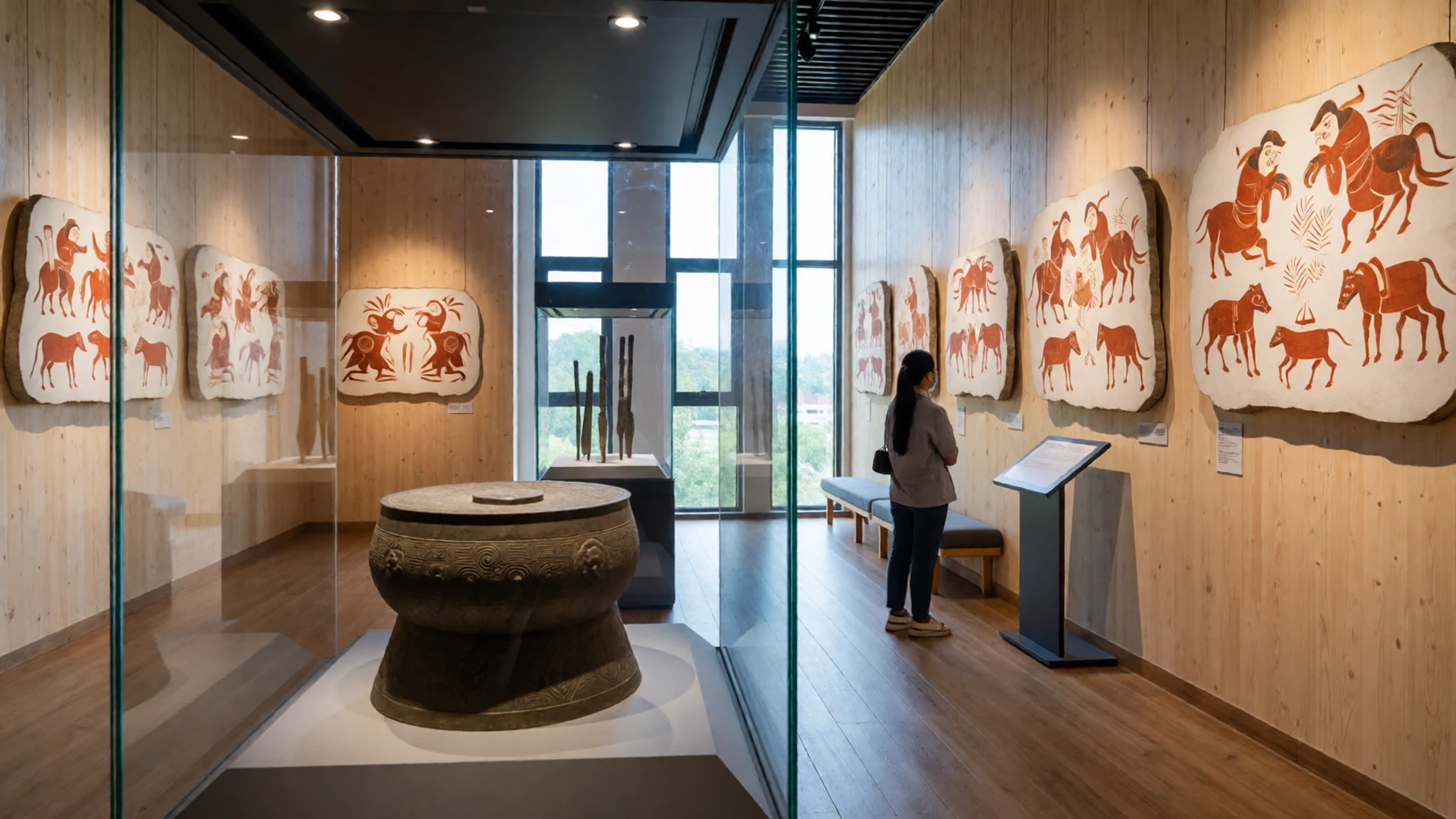
- The visitor centre — Huashan Rock Art Scenic Area
The scenic area's visitor centre is the practical starting point, with an upper-floor restaurant and information on the paintings. Spending a little time here before walking to the cliff helps, because the images are faint and easier to follow once someone has explained the usual poses and symbols.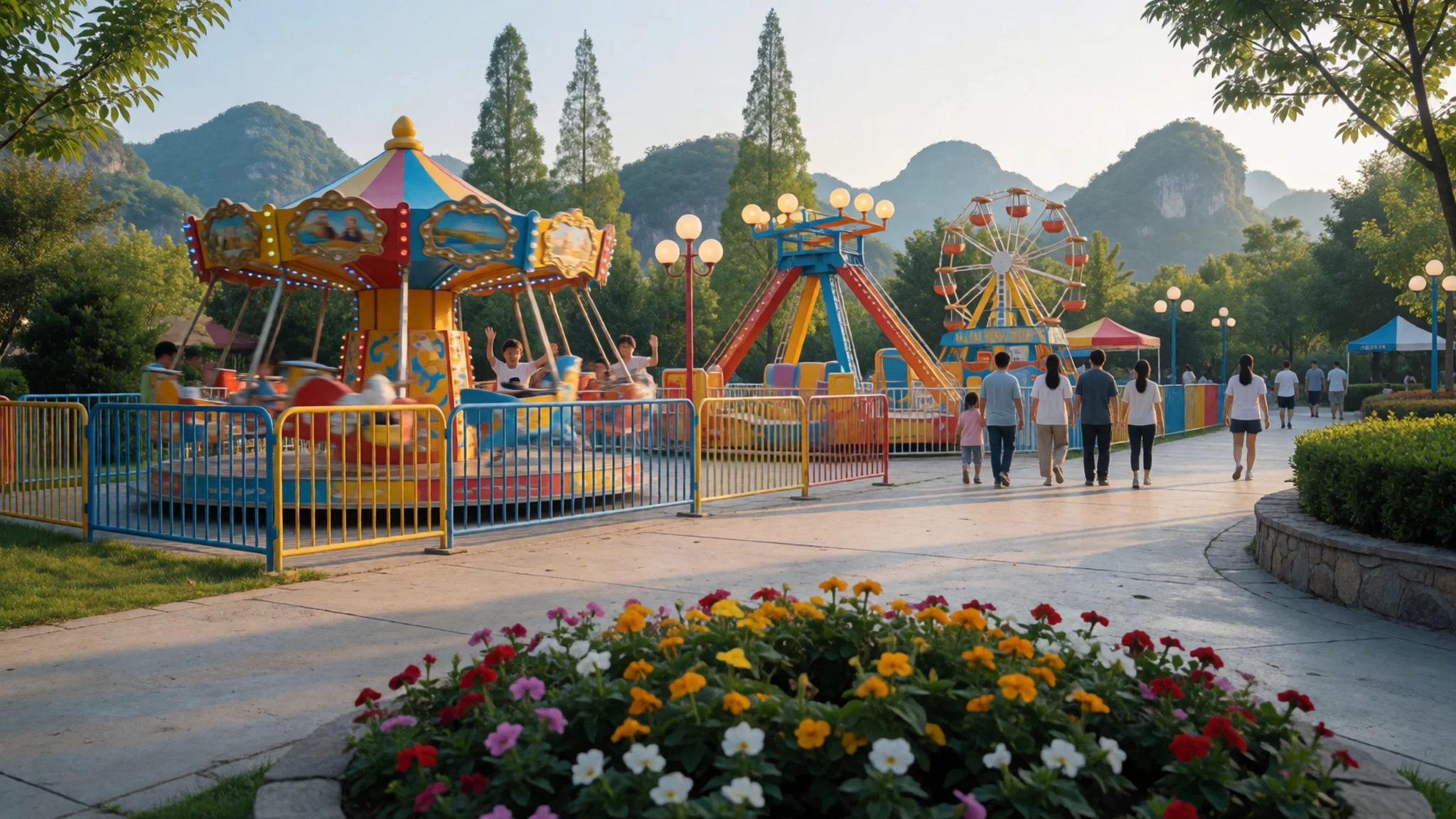
- Zhuang Nationality Museum, Chongzuo — Chongzuo city
This museum in Chongzuo city keeps a permanent exhibition on the Zuojiang Huashan Rock Art landscape and the history of the people connected to it. It is worth a visit either before or after the cliff, as it gives the interpretation and context that the site itself cannot. - Huashan Happy World — Near Huashan Rock Art Scenic Area
A children's amusement park near the rock art scenic area, useful if travelling with young children who may tire of a quiet cliff. It has nothing to do with the paintings themselves, so treat it as a break for the family rather than part of the heritage visit.
Culture
Huashan Rock Art belongs to the Zhuang heritage of Guangxi, and that is the cultural thread worth following. The Zhuang are the largest of China's minority peoples in this region, and they trace their ancestry in part to the Luo Yue who painted the cliff. For many local people the site is not only archaeology but family history.
Bronze drums, which appear throughout the paintings, remain symbolically important in the wider region. In Zhuang culture drums have long been tied to ceremony, community and the marking of important occasions, so the images carry meaning beyond decoration. Singing is another strong tradition in Guangxi, and song gatherings and festivals are part of life across the Zhuang areas, with dates that vary by place and year.
The cliff has also become a point of local pride since its UNESCO listing. The scenic area is managed as a protected cultural landscape, and the paintings are fragile: pigment, glue and blood have lasted two thousand years on open rock, but weather, moisture and touch can still damage them. Interpretation here is cautious, and guides will often say what is known and what is guessed.
A museum in Chongzuo adds the Zhuang perspective and is a good complement to the cliff. Respect for the site, and for the people who see it as their own past, is the right attitude to bring.
Keep to the marked paths and viewing points, and never touch, scratch or climb towards the painted rock.
What to wear
Huashan Rock Art lies in Zhuang country, and the traditional dress of the Zhuang is worth knowing about. Zhuang clothing is typically made from home-woven cotton and linen, often dyed deep indigo or black, and finished with embroidery along the collar, cuffs and hems. Women's jackets and aprons carry the most decoration, and Zhuang brocade, woven with colourful geometric patterns, is a well-known textile of Guangxi. This dress is mainly worn at festivals, weddings and song gatherings today.
Day to day, people in Ningming and Chongzuo dress as they do across southern China: T-shirts, light shirts, trousers or skirts, and practical shoes. Farmers wear wide-brimmed hats against the sun, and rain jackets or umbrellas are common. There is nothing formal about the everyday look.
For a visitor the climate and terrain matter most. Guangxi is warm and humid for much of the year, so light, breathable cotton or quick-dry clothes are best, with a hat, sunglasses and sunscreen for the exposed riverside. Bring a light rain layer, as showers can arrive suddenly. Wear shoes with a good grip, such as trainers or light walking shoes, because paths and landing areas can be damp. The site is not a religious one, so there is no strict dress code, but modest, sensible clothing is appropriate in villages and at the museum. In cooler months, a thin extra layer is enough.
What to eat
- Rice dishes — Restaurant at the scenic area's visitor centre
Plain steamed rice with stir-fried vegetables, egg or meat is the basis of most meals in Guangxi. The restaurant on the upper floor of the visitor centre serves mainly rice and noodle dishes, which makes it an easy lunch stop before or after the cliff.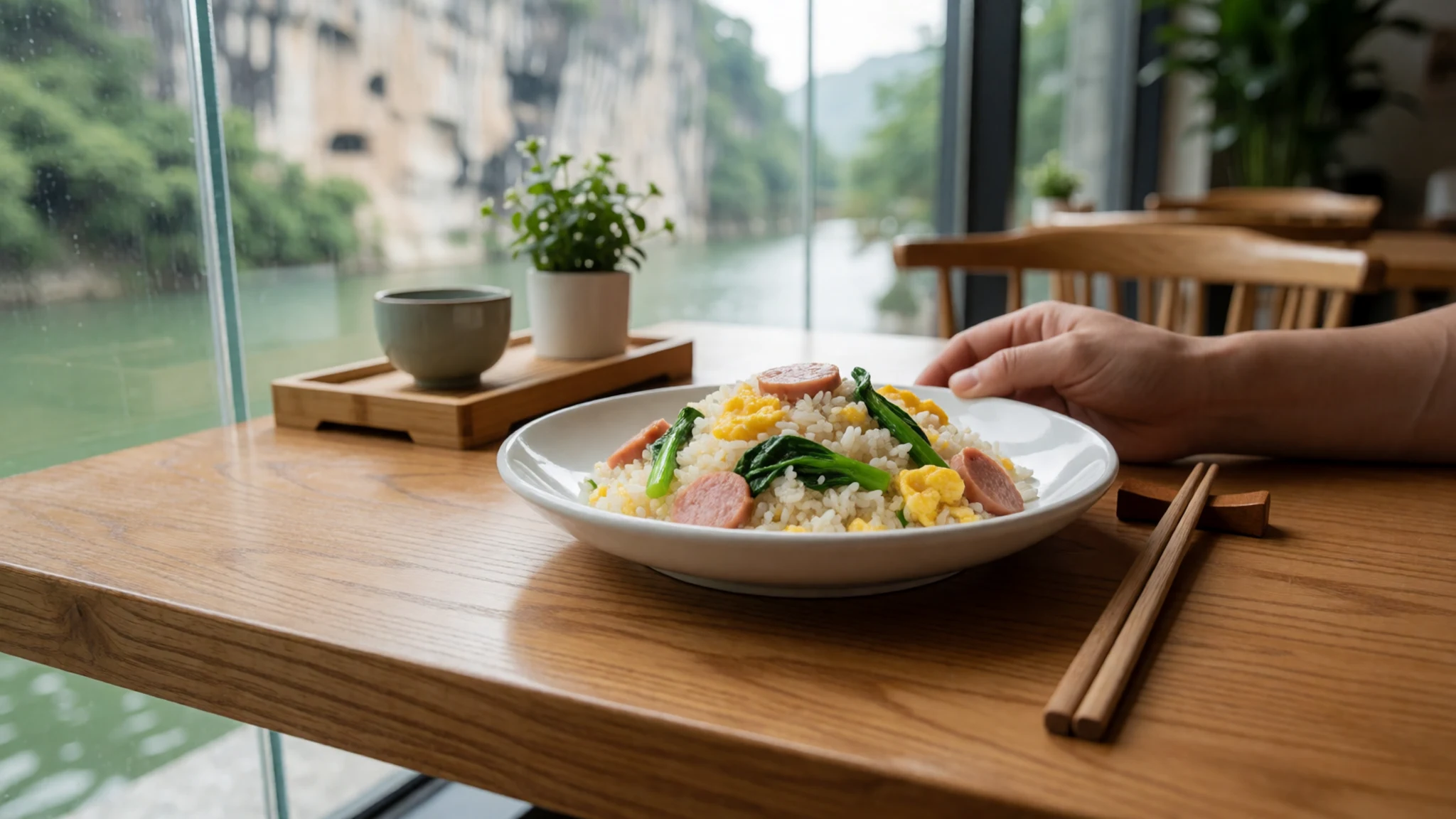
- Noodle bowls — Visitor centre restaurant and small eateries in Ningming
Rice noodles in a hot broth, topped with meat, greens and chilli, are the everyday quick meal across the region. They are filling, cheap by most standards and found almost everywhere, from the scenic area to small eateries in Ningming town.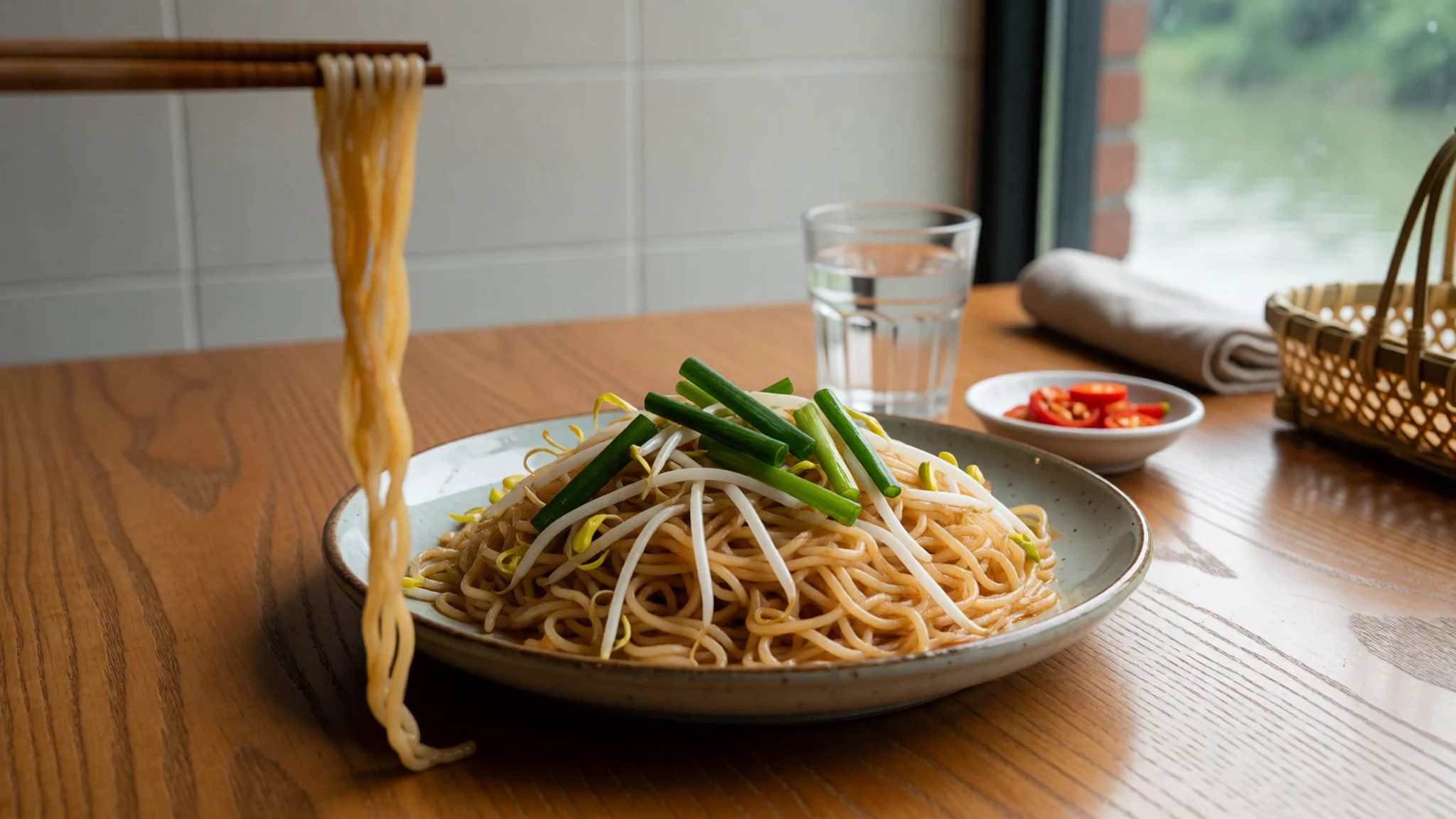
- Five-colour glutinous rice — Local markets and festival stalls in Zhuang villages
A Zhuang speciality, sticky rice dyed with plant juices into black, red, yellow and purple-ish shades and steamed together. It is made for festivals and spring celebrations, so availability varies, but local markets and festival stalls are the likeliest places to find it. - Rice-flour rolls — Breakfast stalls in Ningming and Chongzuo
Thin sheets of steamed rice batter, rolled and served with a savoury sauce, are a common breakfast in Guangxi towns. They are light, quick and a good way to start before an early trip to the river. - Stir-fried river fish — Restaurants at the nearby hotels and in Chongzuo
Freshwater fish cooked with ginger, spring onion and local herbs suits a riverside region. Ask in the restaurants of the nearby hotels what the day's catch is, and expect simple, home-style cooking rather than elaborate presentation.
Plan it
Best time. October–November and March–April, when Guangxi is milder and drier; summer is hot, humid and rainy, which makes the riverside heavy going.
How long. 1–2
Getting there. Ningming has two railway stations; the nearest large hub is Chongzuo, reached by rail or road. From outside Chongzuo International Bus Terminal, a Chongzuo bus runs directly to the scenic area without changing at Ningming Bus Station. Check current routes locally.
Budget. low
Tips
- Check the scenic area's official channels for opening times and ticketing before you travel
- Bring binoculars or a zoom lens, as the highest paintings are far above the water
- Carry water, a hat and sun protection, since the riverside has little shade
- Pair the cliff with the Zhuang Nationality Museum in Chongzuo for context
- Carry some cash and a mobile payment app, as rural vendors may not take foreign cards
Etiquette
- Stay on marked paths and viewing points
- Do not touch or mark the painted rock
- Ask before photographing local people
Nearby
Sources
- Wikidata Q1632877 (CC0)
- Wikipedia: Zuojiang Huashan Rock Art (CC BY-SA 4.0)
- Wikivoyage: Ningming (CC BY-SA 4.0)
- Rolfmueller, Rock painting hua mountain 2 (CC BY 3.0)
- Yumeto, Hua Shan (111353) (CC BY-SA 4.0)
- Yumeto, Hua Shan (114246) (CC BY-SA 4.0)
- Yumeto, Hua Shan (114344) (CC BY-SA 4.0)
- Yumeto, Hua Shan (114519) (CC BY-SA 4.0)
- Yumeto, Hua Shan (114627) (CC BY-SA 4.0)
- Yumeto, Hua Shan (114902) (CC BY-SA 4.0)
- Yumeto, Hua Shan (115213) (CC BY-SA 4.0)


