Hsinchu
Hsinchu, Taiwan
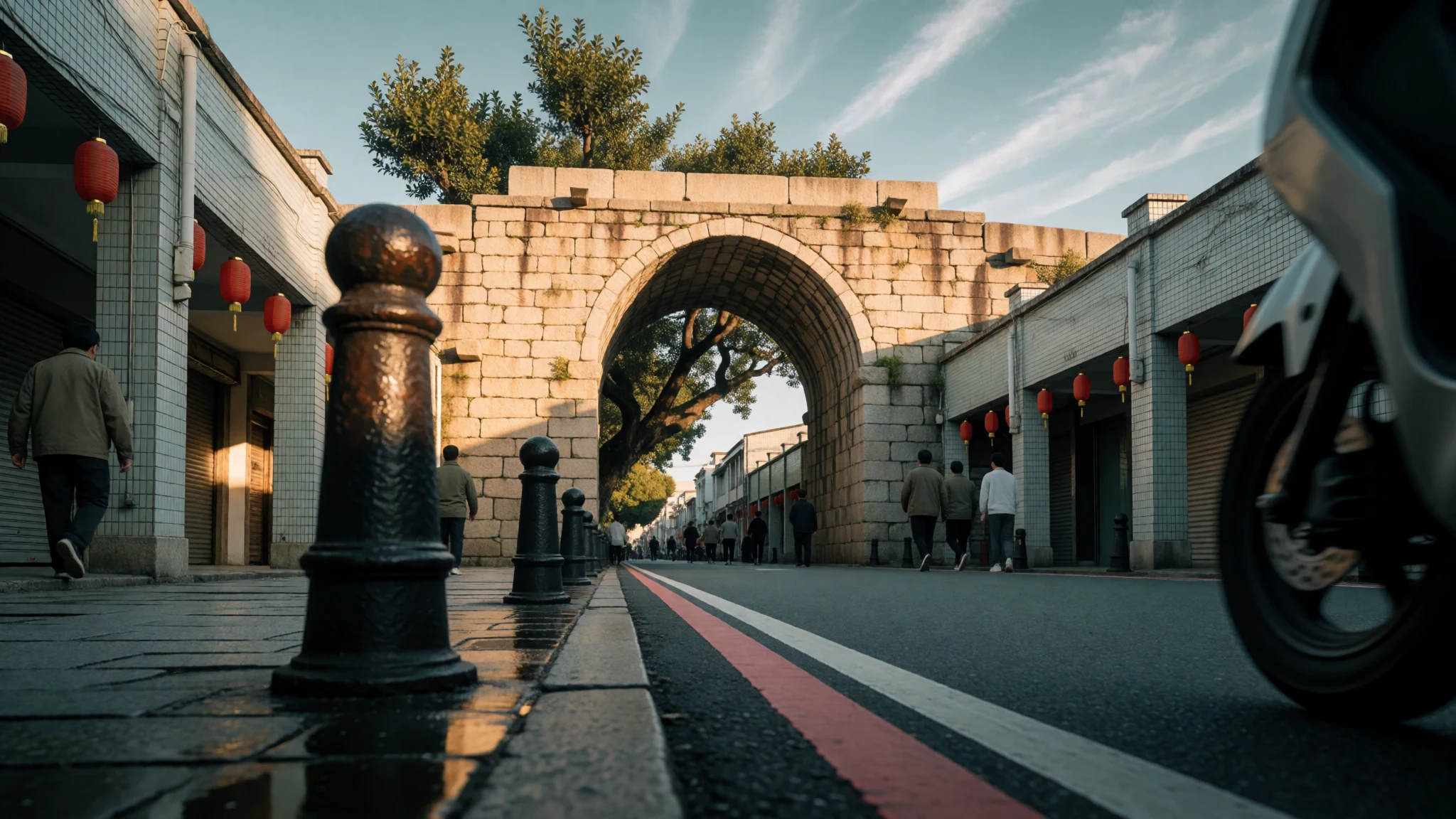
Hsinchu pairs a walled-town centre of Taoist temples and snack stalls with a semiconductor city, all within a short ride of Taipei.
The place
Hsinchu is a coastal city in northwestern Taiwan. It faces the Taiwan Strait to the west, with Hsinchu County curling around its north and east and Miaoli County to the south. About 455,871 people live here, on land roughly nine metres above sea level, so the sea and its weather are never far away. The nickname is the Windy City, because the northeast monsoon blows hard from autumn into winter, and visitors should expect gusts to shape their days. Two quite different Hsinchus sit side by side. One is the old centre, with a granite gate, Taoist temples and small eateries, built on ground that Hokkien and Hakka settlers took over from the Taokas people. The other is a technology city: the science park, opened in 1980, is home to the headquarters of TSMC, MediaTek and United Microelectronics Corporation. Its engineers and their families give the city an international edge, which shows up in the range of restaurants and in the number of people on trains and scooters at the end of the working day. Hsinchu is not a showpiece city and does not try to be. It is an everyday Taiwanese place of hillside parks, temple courtyards, noodle counters and traffic, and it rewards a slow walk more than a checklist. It works well as a day out from Taipei, or as a calm stop between the capital and the airport at Taoyuan.
Its story
Hsinchu's recorded history begins with the Taokas, an indigenous people who lived around the site when Spanish forces moved into northern Taiwan in the seventeenth century. Catholic missionaries reached the settlement, then called Tek-kham, in 1626, and the Dutch later forced the Spanish out. The Chinese town followed. Families from Kinmen under Wang Shih-chieh, more than 180 people in all, founded it in 1711, starting near today's Dongqian Street in the East District. Hokkien and Hakka settlers both shaped what grew from that camp. Names changed with each administration. When the Qing government reorganised Taiwan, Zhuqian was raised to a county and renamed Xinzhu in 1878, which is the Hsinchu of today. Japanese rule brought the name Shinchiku and a rise in standing: it became a town in 1920, a city in 1930, and the seat of a prefecture that took in Hsinchu city and county along with Taoyuan and Miaoli. After 1945 it came under the Republic of China and was organised as a provincial city. The last big turn came in 1980, when the government opened the science park and made semiconductors the city's trade. The story runs from Taokas land through Spanish, Dutch, Qing and Japanese eras to the chip factories, and the temples and the East Gate in the old centre are the visible layer in between.
What to see
- East Gate — Old centre, East District
The granite East Gate, with its single arched passage, is the landmark most people picture first in Hsinchu. It is a surviving piece of the old walled town, now standing amid the traffic of the busy centre. Beside it, a glass panel set into the ground lets passers-by look down at older foundations. Visit in daylight, then walk on to the temples.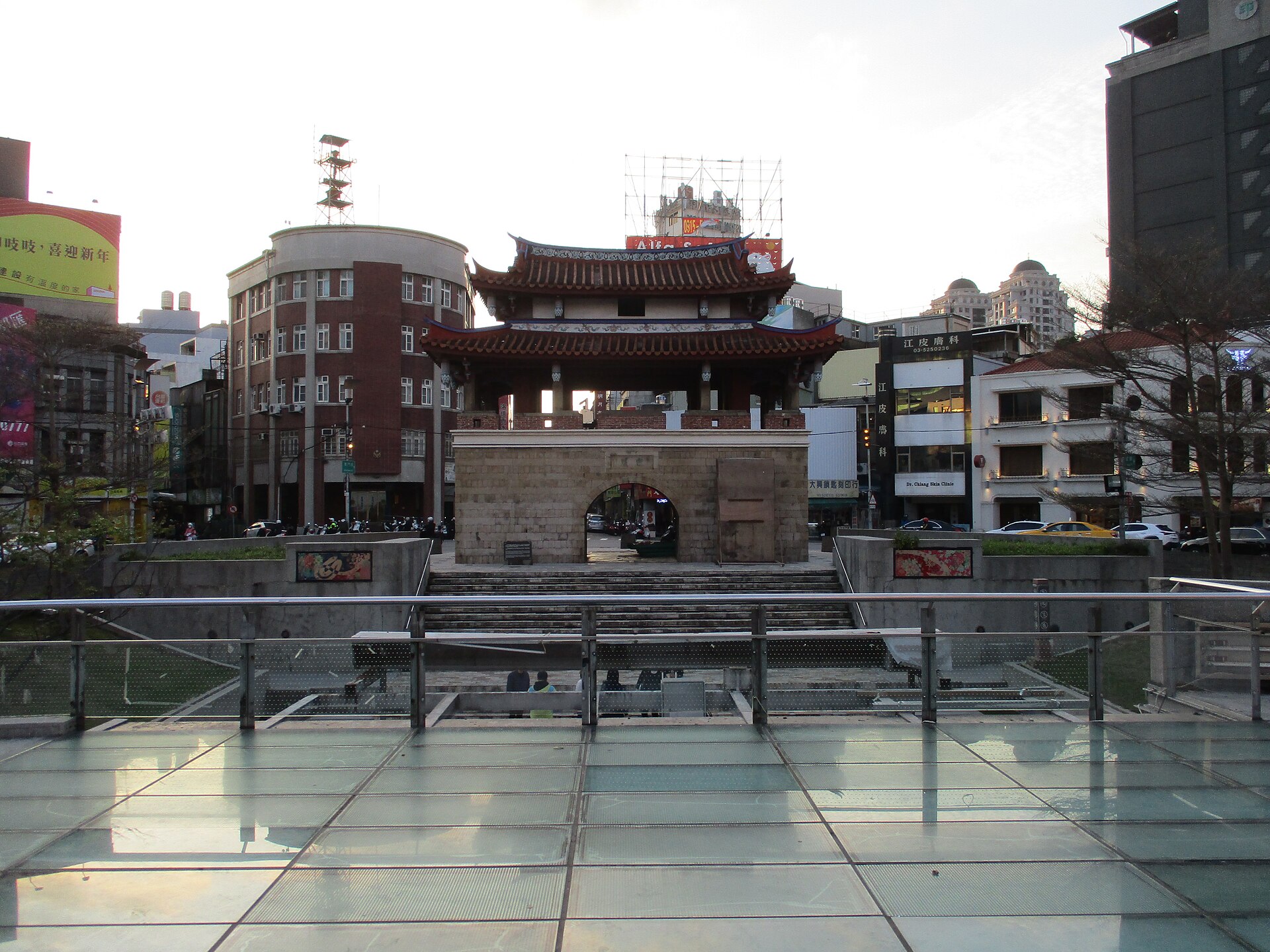
- City God Temple — Zhongshan Road and Dongmen Street
The City God Temple stands at the corner of Zhongshan Road and Dongmen Street, close to the East Gate. It is a classic Taoist temple, with colourful painted panels, crowded altars and a steady flow of locals bringing offerings. The stalls and small eateries around it are part of the visit, and make it a natural start for a snack walk.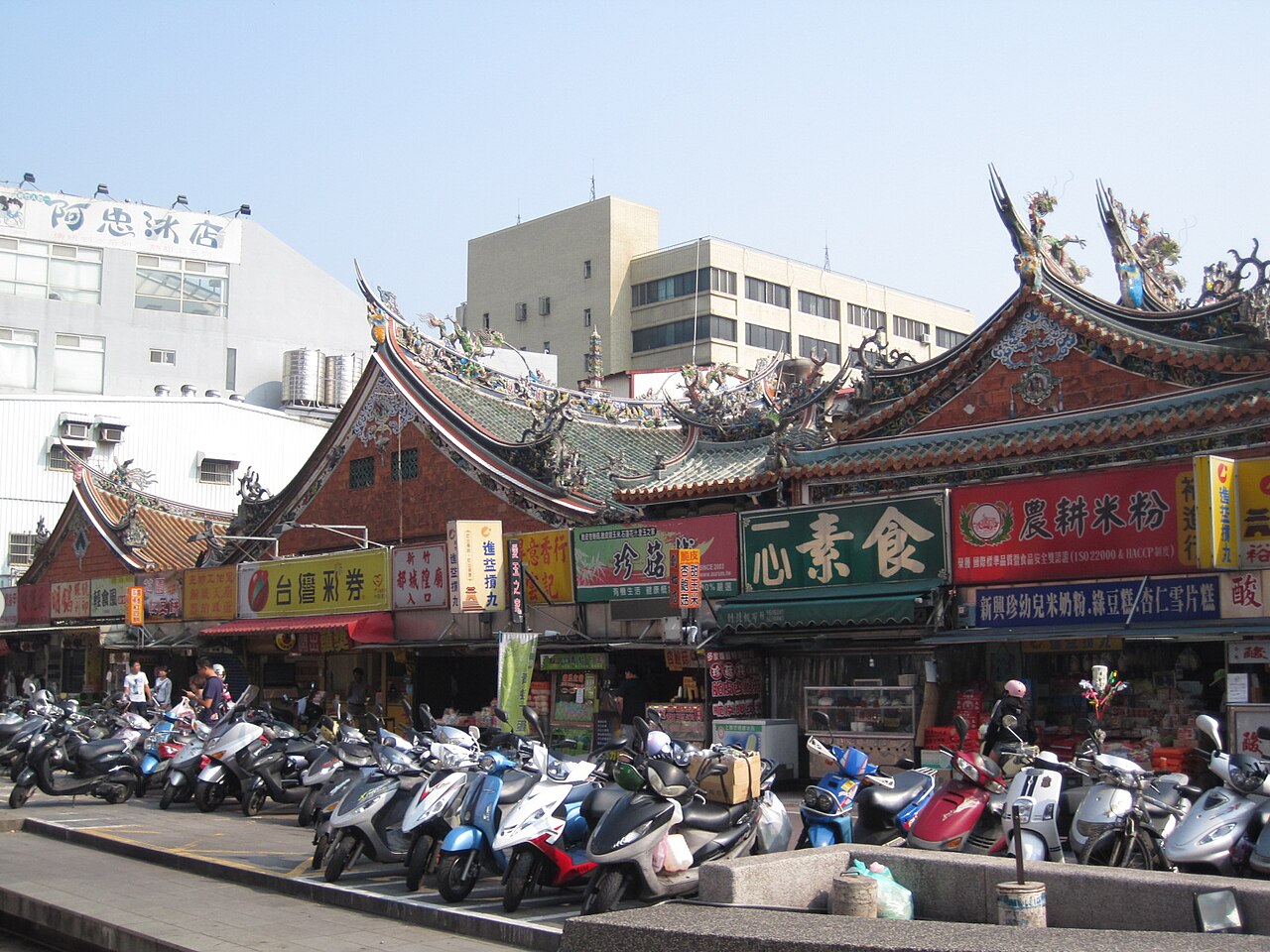
- Guan Di Temple — Wenchang Street and Zhongshan Road
The City God Temple area is a short walk from the East Gate, where visitors can explore the local atmosphere. The surrounding streets are quieter and more compact, known for their traditional feel and local character. Take time to wander the alleys and observe the architecture rather than rushing through. - Eighteen Peaks Mountain — Eastern and southern edge of the city
The city is surrounded by green spaces and low hills around the eastern and southern edges of Hsinchu. Paths run through nature and past small lookouts, giving a green break from the city and a sense of how the suburbs sit against the slopes. Go early, as wind and midday sun can both tire walkers. - Hsinchu Botanical Garden — Southeast Hsinchu, near the hills
Local parks lie in the southeast beside the hills, with walking trails and native Taiwanese greenery. They suit a slow morning outdoors. Wear shoes with decent grip, as paths can be damp, and carry water plus a light layer against the wind that blows in from the coast.
Culture
Hsinchu's cultural life is rooted in its temples and in the Hokkien and Hakka settlers who built the old town. The City God Temple, dating from the eighteenth century, is the best place to feel it. Worshippers come to ask the city's guardian deity for protection, good health, exam results or steadier business, and the courtyard smells of incense and fruit offerings. The old town's heritage honours the settlers who built the community, and the local architecture serves as a reminder that the city had a literate class as well as farmers and traders. Folk religion here is lived-in and practical rather than staged for visitors, and festival days bring drums, processions and crowds. Alongside it sits a newer culture shaped by the science park: engineers from many countries, an international restaurant scene, and a working rhythm that fills trains and evening eateries. Hakka heritage, in cooking and in blue cloth, is part of the local identity, though it is easy to miss unless you ask. The Taokas, who lived here first, are far less visible in the modern city, and their story is mostly told in names and local histories rather than monuments. When visiting a temple in Hsinchu, keep your voice low, step over the raised door thresholds rather than onto them, and ask before photographing anyone who is praying.
What to wear
Hsinchu's traditional dress comes mainly from its Hakka and Hokkien settlers. Hakka clothing is associated with plain blue shirts of indigo-dyed cotton, sturdy cloth made for farm work, and Taiwan's Hakka communities today also favour bold floral prints on cotton, often peony patterns, for bags, fans and festival wear. These outfits turn up at cultural events, performances and heritage celebrations rather than on ordinary days. Details of Taokas dress are poorly recorded in the sources used here, so this reading does not describe it. What people actually wear now is practical and modern. The wind and the scooter traffic mean windproof jackets, rain layers and helmets are everyday items, and the science park gives a smart-casual look of shirts, trousers and lanyards on weekday mornings. Young people dress much as they would in Taipei: sneakers, light layers, simple prints. Visitors should dress for weather before fashion. From autumn into winter the monsoon wind makes a windproof jacket and a light scarf worthwhile, and an umbrella or compact rain shell is wise year-round. Comfortable closed shoes suit both pavements and the hill trails. For temples there is no strict code, but covered shoulders and knees are respectful, and loud logos or beachwear feel out of place beside worshippers. Carry a small bag so that a jacket can be added or removed as the weather shifts.
What to eat
- Rice noodles (米粉, mǐfēn) — Stalls and small eateries around the City God Temple
Thin rice noodles are a local staple, served stir-fried or in broth with pork, mushrooms and vegetables. They are light, savoury and easy to share. Look for the small booths and eateries around the City God Temple, where they are made and sold both cooked and uncooked. - Pork ball soup (貢丸湯, gòngwántāng) — Booths around the City God Temple and local noodle shops
Springy pork meatballs served in a clear, gently seasoned broth, often as a side or an afternoon snack. The balls are pounded until bouncy, and many shops sell them fresh to take away. Find them near the temple booths and at neighbourhood noodle shops. - Taiwanese meatballs (肉圓, ròuyuán) — Temple-side stalls and old-centre streets
A translucent, chewy dumpling shell holds a filling of pork and other savoury ingredients, then comes with a sweet-savoury sauce. It is filling, inexpensive and eaten with a spoon. Look for it at temple-side stalls and in the older streets of the centre. - Fish ball soup — Specialist fish ball shops in the old centre
Hsinchu's fish balls are springy, mild and best eaten hot in a plain broth. Several specialist shops in the old centre make them, and a bowl makes a quick lunch between temple visits. Ask for the house style and watch what locals order. - Duck rice — Family eateries near the temple streets
Slices of braised or roast duck laid over steamed rice, often with a spoonful of sauce and a side of pickles or greens. It is simple, quick and satisfying after a morning of walking. Look for small family eateries on the streets around the temples.
Plan it
Best time. January, February and December are the most comfortable months for walking the old centre and hill trails. The northeast monsoon makes autumn and winter windy, so bring a windproof layer, and check the forecast for rain before heading to the hills.
How long. 1–2
Getting there. The nearest airport is Taoyuan International, roughly an hour by road to the science park and a little longer to the centre. Hsinchu sits on the main western rail and freeway routes, and it takes about an hour and ten minutes by road from Taipei; direct coaches run from Taipei and stop beside Hsinchu Railway Station. From the station, the old centre, East Gate and temples are within easy reach by taxi, bus or on foot.
Budget. low
Tips
- Pack a windproof jacket from autumn to winter, as the monsoon wind can be strong and cold.
- Allow about an hour from Taoyuan airport to the science park, and a little more for the old centre, especially at busy times.
- Visit the temples and food booths early or midweek for a quieter feel, and carry some cash for small stalls.
- Check the city's official site for events and festivals: https://www.hccg.gov.tw/hccg/index
- If driving, note that speed cameras and regular speed checks operate on the main highways.
Etiquette
- Keep your voice low in temples and step over door thresholds rather than on them.
- Ask before photographing worshippers or people at prayer.
- Queue at popular food stalls and wait to be served rather than pushing forward.
Nearby
Sources
- Wikidata Q249994 (CC0)
- Wikipedia: Hsinchu (rev 1382773367) (CC BY-SA 4.0)
- Wikivoyage: Hsinchu (rev 5430215) (CC BY-SA 4.0)
- Photo 01 (曾傳富) (CC BY-SA 4.0)
- Photo 02, Hsinchu City Moat Park (Tbatb) (CC BY-SA 4.0)
- Photo 03, East Gate (T Gordon Cheng) (CC BY-SA 4.0)
- Photo 04, City God Temple (Pbdragonwang) (CC BY 3.0)
- Photo 05, Army Map Service map of Shinchiku (Public domain)
- Photo 06, Ann Kao 2023-05-19 (總統府) (CC BY 2.5)
- Photo 07, Hsinchu City Government (勤岸) (CC BY 3.0)
- Photo 08, Hsinchu City Council Hall (勤岸) (CC BY 3.0)


