Hondarribia
Hondarribia, Spain
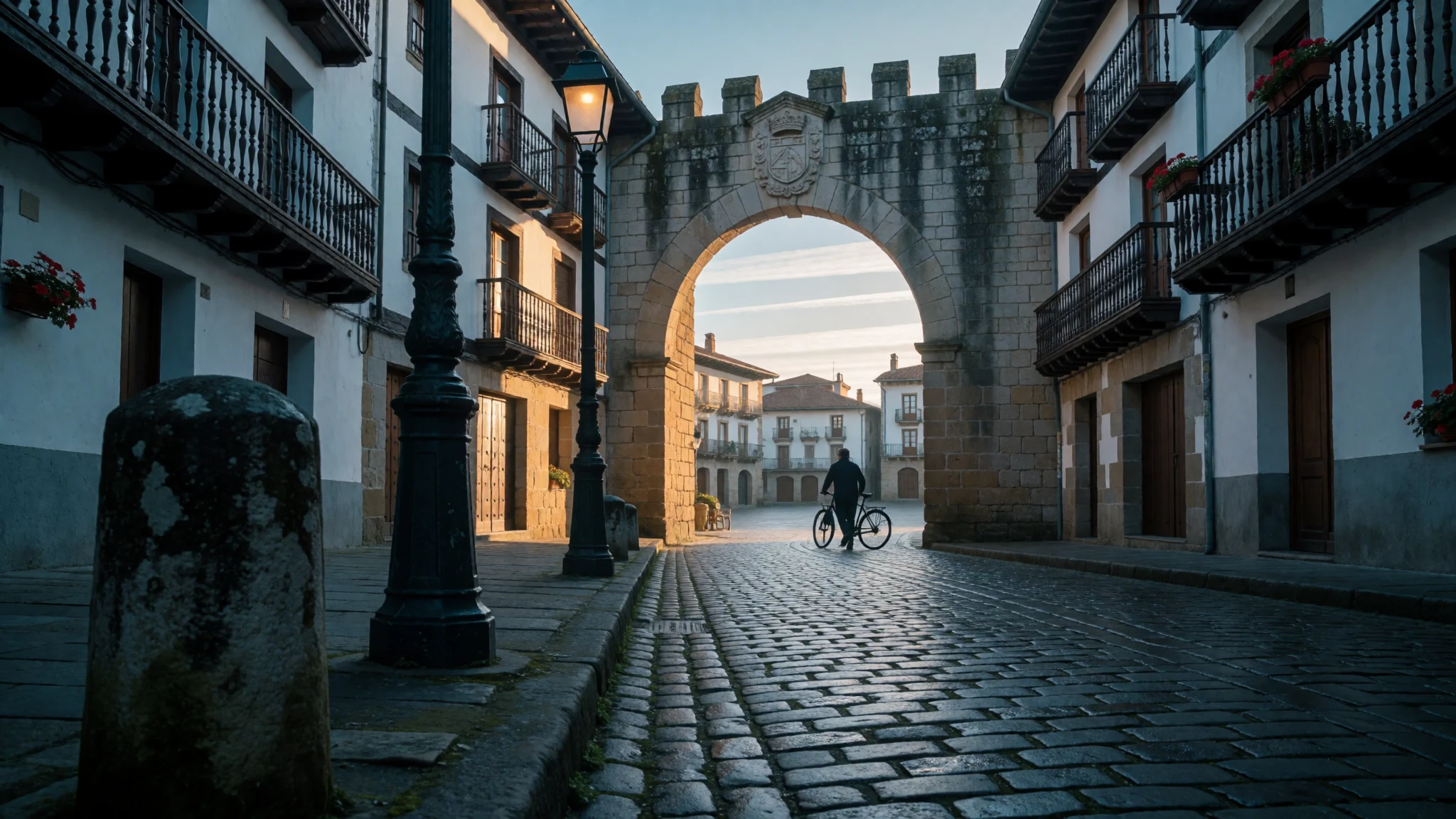
Hondarribia is a walled Basque border town where fishermen's houses, pintxos bars and a short ferry hop to France share one small bay.
The place
Hondarribia sits on a small promontory on the western side of the Bidasoa estuary, in Gipuzkoa, in the Basque Country of northern Spain. The river forms the frontier here, and the French town of Hendaye faces it across Txingudi bay, close enough that a small passenger ferry links the two shores. The town carries three names: Hondarribia in Basque, Fuenterrabía in Spanish and Fontarrabie in French. About 16,788 people live in the municipality, at an elevation of 16 metres, so the streets near the water are flat and the old centre rises only gently. The upper town is a walled quarter of stone houses, a castle and a church, still entered through old gates. Below it, the fishermen's district of La Marina runs down towards the harbour, its timber balconies painted in strong colours. Further along the shore a beach lies on the estuary, and a road runs out to Cape Higuer, where the coast opens to the Bay of Biscay. Behind everything the ridge of Jaizkibel forms a green backdrop with walking paths along it. One oddity is that the airport serving San Sebastian lies inside Hondarribia's own municipality, so planes pass low over the bay, mostly on domestic routes. Irún, the larger neighbour, lies a few kilometres inland, and San Sebastian is a short bus ride away. The town is compact enough to cover on foot in a day, though the mix of ramparts, harbour, beach and hills rewards a longer stay. Basque appears on signs alongside Spanish, usually first.
Its story
Hondarribia has been settled since Roman times, but its life as a recognised town begins in the thirteenth century. In 1203 its citizens sought the protection of the Castilian crown, and that choice made the place a frontier post for centuries. Castile and the kingdom of Navarre, which France supported, fought over it, and the town was besieged again and again, with its walls repaired and extended after each round. The attack still remembered most clearly came in 1638, when French troops under the Prince of Condé laid siege to the town. The defenders prevailed, and the victory is celebrated every 8 September with a civilian-military parade through the streets. The long run of fighting eased in the middle of the seventeenth century, when Spain and France agreed their border in the Treaty of the Pyrenees, and the estuary settled into being a line on the map rather than a battlefield. An eighteenth-century engraving among the reference images shows the walled town on its small hill with the bay beside it, an outline that remains recognisable today. Later centuries brought fishing, ferry traffic and, eventually, visitors from both sides of the frontier. Today the military past survives as stonework, street names and ceremony, and the 16,788 residents live with it lightly. Crossing into France is now a ferry ride or a short drive, and the town's character comes as much from that two-way traffic as from its fortifications.
What to see
- The walled old town — Upper old town
The walled upper town is the historic heart of Hondarribia, entered through old gates and laid out in narrow stone streets. Ramparts still circle much of it, and an interpretation centre set into the defences explains the sieges. Walk the lanes slowly and look up, since coats of arms and carved eaves reward the effort.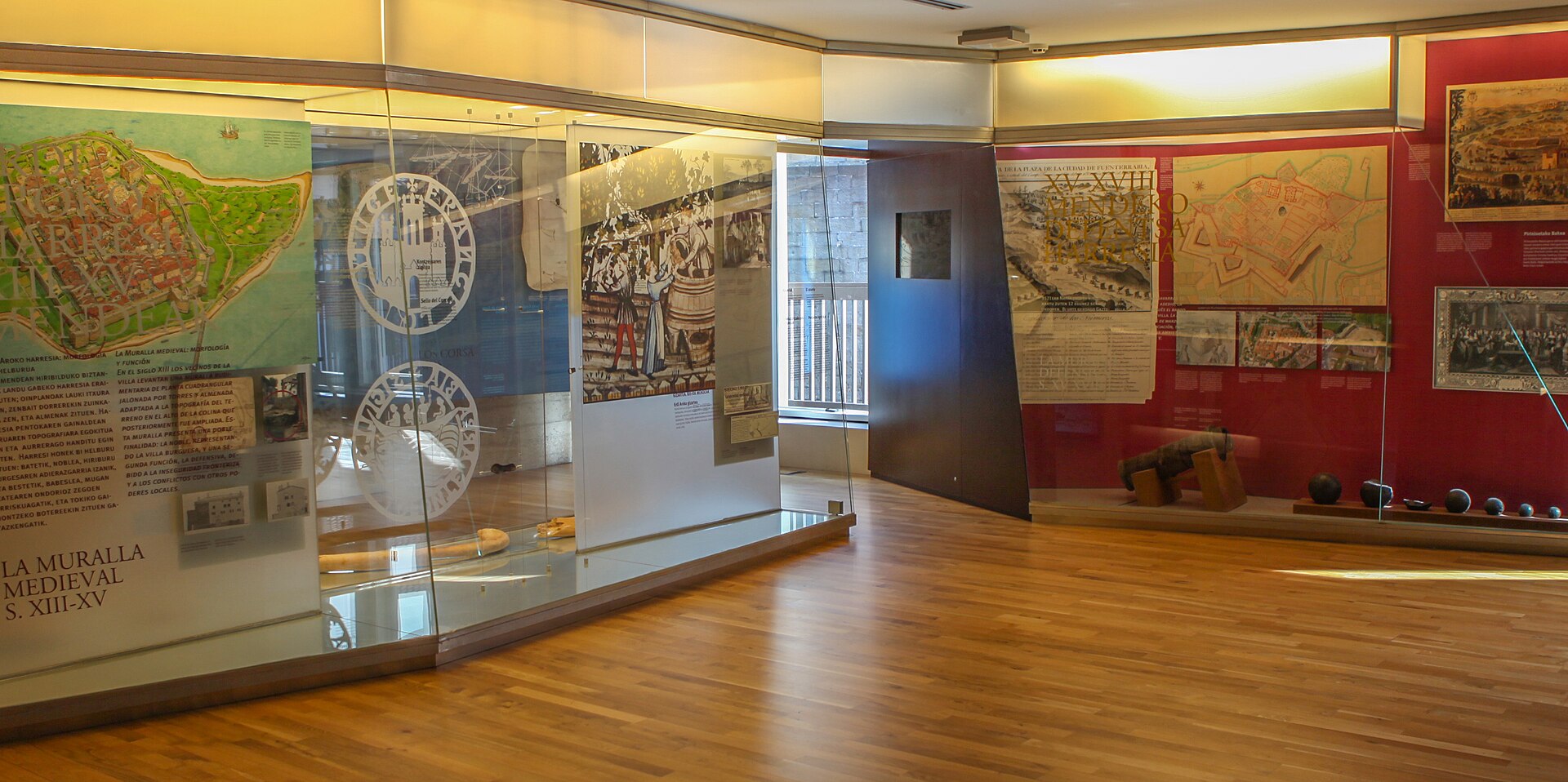
- La Marina fishermen's quarter — Harbour side, below the walls
La Marina is the old fishermen's district below the walls, known for terraced houses with timber balconies painted in blue, red and green. The street is narrow, so weekday mornings are calmer. Bars and eateries fill many ground floors, which makes it a natural place to end up for pintxos, with the harbour a few steps away.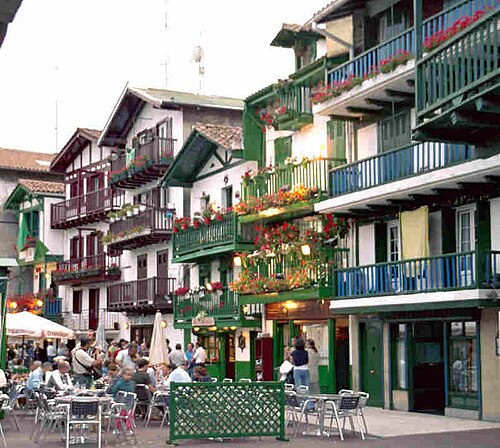
- The castle and main square — Top of the old town
The castle stands at the top of the old town beside the main square and anchors the town's defensive story. Check the official town site, hondarribia.eus, for current access rather than relying on guidebook hours. The square outside is a good place to sit and read how the walls and gates fit together. - Jaizkibel ridge — Ridge west of the town
Jaizkibel is the mountain behind Hondarribia, giving the town its hilly backdrop. Footpaths and a coastal road climb along it, with views back over the estuary, across to France and out to sea. Weather changes quickly on the ridge, with cloud and wind even when the town is sunny, so a spare layer helps. - Beach and Cape Higuer — Estuary shore and northern headland
A road leads north-east from the beach area to Cape Higuer, at the edge of the municipality. The beach faces Hendaye across the river mouth and is busy in summer, quiet otherwise. The cape is for sea air, wide views of the Bay of Biscay and watching weather roll in from the Atlantic. - Ferry to Hendaye — Harbour pier
A small, frequent ferry crosses Txingudi bay between Hondarribia and Hendaye in France, run by Jolaski. The crossing takes only minutes and gives a good view back at the walled town from the water. Check the operator's schedule before travelling, and carry photo ID in case it is asked for.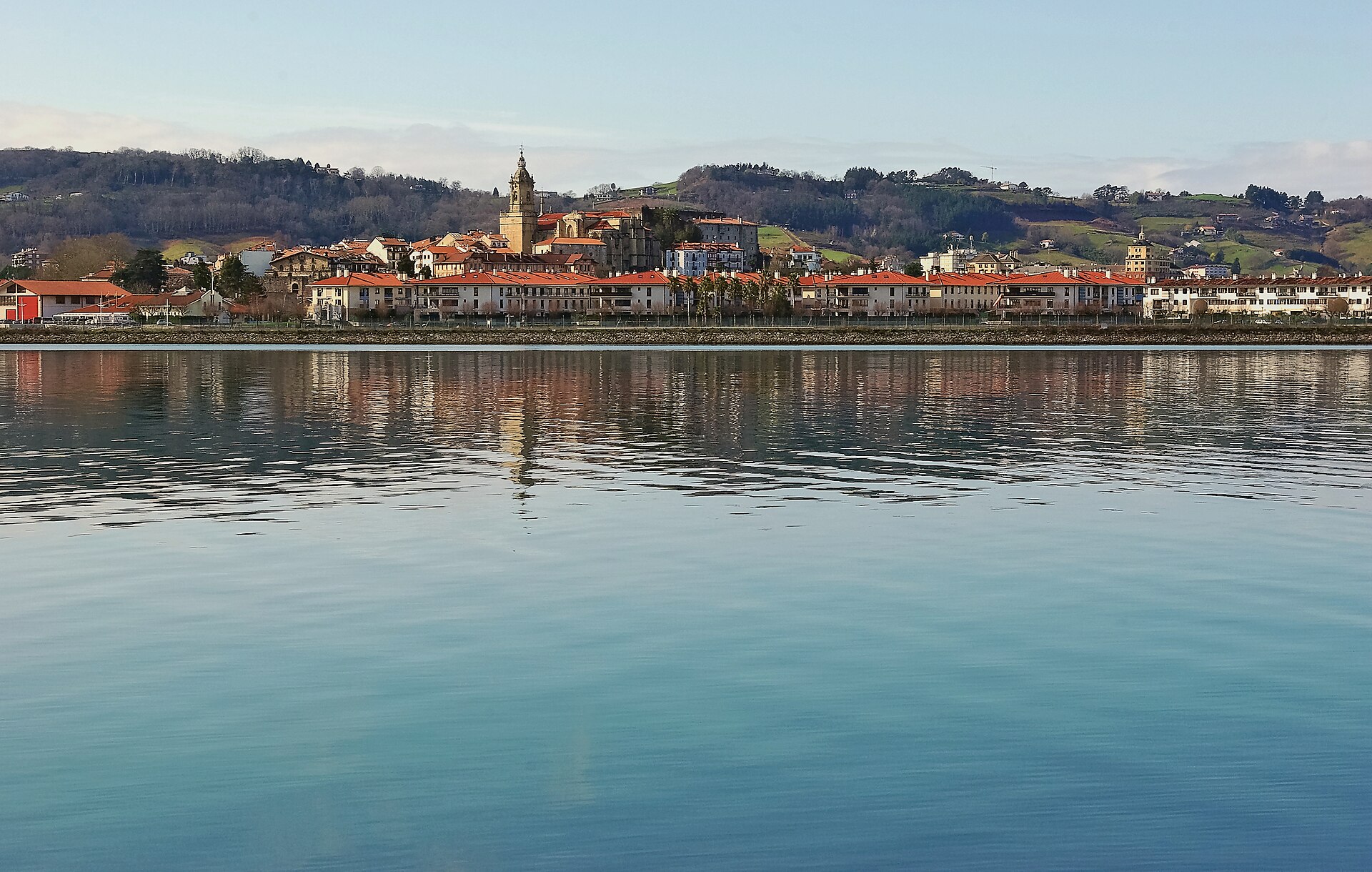
Culture
Hondarribia is a Basque town first and a border town second, and that shapes daily life. Basque (Euskara) appears on signs, in schools and in conversation next to Spanish, and local pride in the language is plain to see. The big date is 8 September, when a civilian-military parade commemorates the 1638 siege; neighbourhood companies march in period uniform and the town is crowded and loud. Many eateries run reduced menus on that day, so meals are best planned ahead. Smaller traditions fill the calendar too: fishermen's feast days in La Marina, rowing regattas along the Basque coast, and pelota, the hand-and-wall ball game that Gustave Colin painted beneath these ramparts in 1863. Food is a social ritual here. Friends move between bars in small groups, taking one drink and one or two pintxos at each, and standing at the counter is normal. Conversation is lively, Sunday lunch is a family affair, and French is heard often because Hendaye is so close. Locals tend to be reserved at first and warm once a greeting is returned, so a few words of Basque or Spanish go a long way. In pintxo bars, order at the counter, keep any plates or sticks you finish with so the bill can be worked out, and start with a friendly "kaixo" or "egunon" when you walk in.
What to wear
Hondarribia's traditional dress belongs to the wider Basque country and is now worn mainly at festivals, above all at the September parade. Men's outfits centre on the txapela, a flat wool beret, with a dark smock or jacket, a red sash and rope-soled alpargatas, the hemp or jute espadrilles. Women's festival dress uses wool skirts, aprons, shawls and neat headwear, while fishing families historically relied on oilskins and striped knit jerseys against the weather. In daily life people dress casually and practically: jeans, trainers, rainproof jackets and sailing-style knitwear, with a tidier look for restaurants and evenings out. Fashion is understated rather than showy. For visitors, the climate is Atlantic, so a light waterproof and a warm layer are useful in most months, even in summer. Comfortable shoes with grip matter, because the old town has cobbles and slopes, and the Jaizkibel paths turn muddy after rain. Swimwear belongs on the beach; in the old town and the church, cover shoulders and knees out of respect. Sun hats and sunscreen help in July and August. Bring a small day bag for a layer and a bottle of water, since walking is the best way to see the town.
What to eat
- Pintxos — Bars in the old town and La Marina
Pintxos are small bites on bread or skewers, laid along the bar and eaten standing with a glass of wine, cider or beer. Hondarribia counts alongside San Sebastian and Bilbao as a gourmet stop. Try them in the old town bars and along the streets of La Marina. - Gilda — Almost any pintxo bar counter
The gilda is the classic skewer of a green pickled pepper, an anchovy and an olive, salty, sharp and eaten in one bite. It suits a cold glass of the local white wine, txakoli, and is on the counter of most pintxo bars. - Grilled fish — Harbour and La Marina eateries
Fish cooked over a flame and served whole is the signature of Basque seafood cooking. Expect hake, bream or whatever the boats landed that day, finished with little more than oil, salt and garlic. Seafront and harbour eateries do it well, and weekday lunch is easier to book. - Txangurro — Fish restaurants near the harbour
Txangurro is spider crab, cooked, shredded and baked back in its shell with onion, tomato and a splash of brandy. It is rich and slow food, usually shared as a main course. Look for it at the seafood restaurants near the harbour. - Basque cheesecake — Pastry shops and bar counters in the old town
The Basque cheesecake has a dark, burnt top and a soft, creamy middle, and it has become a staple on bar counters and in pastry shops around the region. A slice with coffee makes a good end to an afternoon of pintxos.
Plan it
Best time. May–June and September, when days are mild and the beach and ridge walks are pleasant. July–August is the busy beach season, 8 September brings the parade and crowds, and winters are mild but often grey and wet on the Atlantic coast.
How long. 2–3
Getting there. San Sebastian airport lies in Hondarribia itself and handles domestic flights, with Lurraldebus services every 15–30 minutes. Biarritz airport in France is 20 km away. There is no railway station in town; Irún station (RENFE and EuskoTren) is 4 km away by frequent bus, and Hendaye station (SNCF, southern end of the TGV line) is 5 km away, with a small ferry across the bay.
Budget. mid
Tips
- Book weekend and festival-week tables well ahead, especially around 8 September
- Walk the walls and La Marina early in the morning before day-trippers arrive
- Carry a little cash for small bars, though cards are widely taken
- Pack a light waterproof in any season, as showers come off the Atlantic
- Check hondarribia.eus and the ferry operator's site for current schedules before planning a day trip to Hendaye
Etiquette
- Greet bar staff with kaixo or egunon when you walk in
- Keep your plates or sticks at the counter so the bill is correct
- Keep voices down in the old town's narrow streets in the evening
Nearby
Sources
- Wikidata Q492312 (CC0)
- Wikipedia: Hondarribia (rev 1376107022) (CC BY-SA 4.0)
- Wikivoyage: Hondarribia (rev 5384015) (CC BY-SA 4.0)
- Panoramic view of Hondarribia centre, Dr. med. Mabuse (CC BY-SA 2.5)
- Fontarrabie depuis Hendaye 2012, JLPC (CC BY 3.0)
- Hondarribia etxeak, JMSE (CC BY 3.0)
- Centro de interpretación de las Murallas de Hondarribia, Jasagarra (CC BY-SA 4.0)
- Placa de Fuenterrauia, Fuenterrabia, Leonardus de Ferrarys (Public domain)
- Placa de Fuenterrauia, Fuenterrabia (second map), Leonardus de Ferrarys (Public domain)
- Hondarribia grabatua, Juan Álvarez de Colmenar (CC BY 3.0)
- Partie de pelote sous les remparts de Fontarabie, Gustave Colin (Public domain)


