Aljafería Palace
Aljafería Palace, Spain
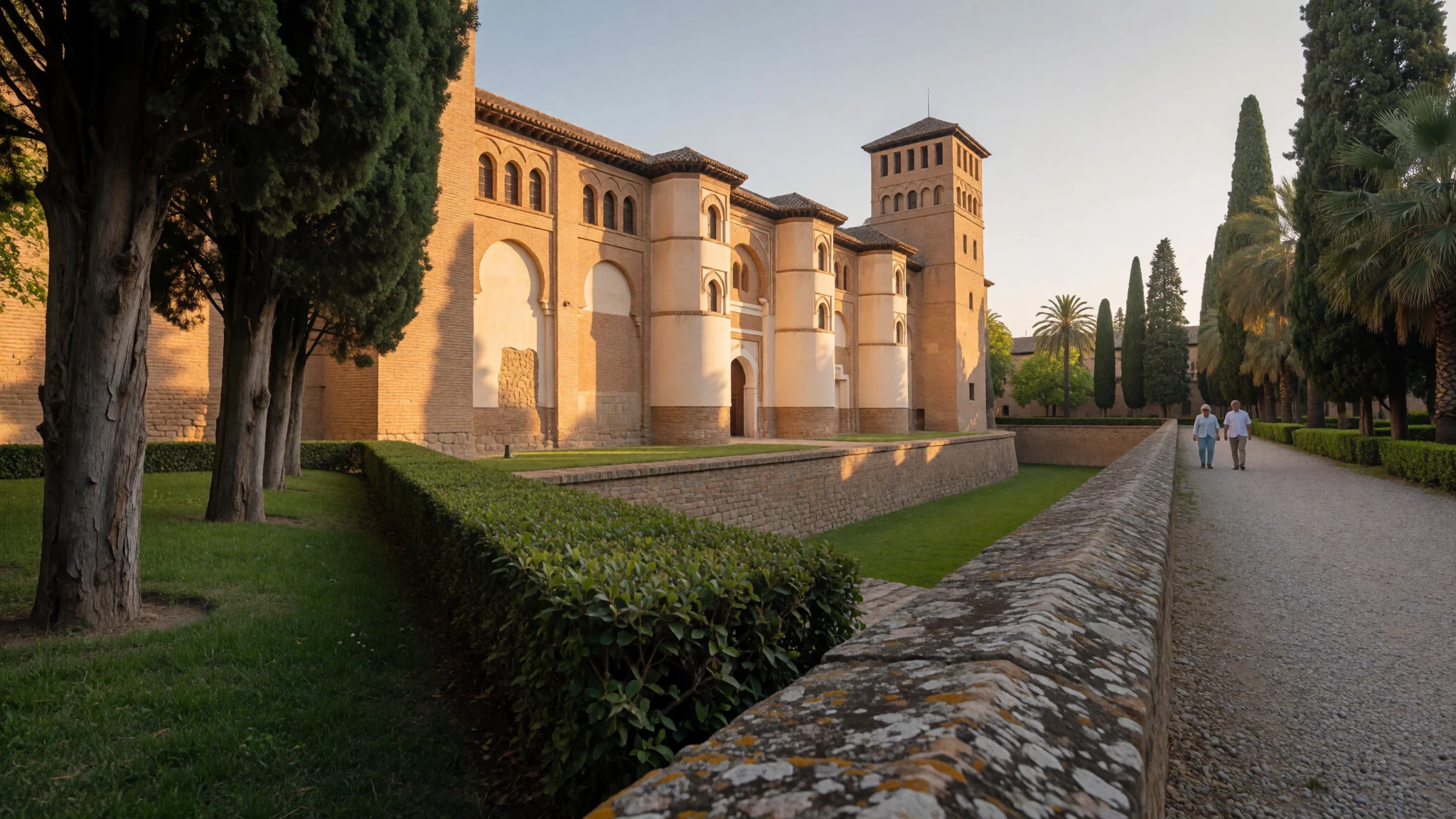
Aljafería Palace in Zaragoza is a fortified Islamic-era palace that later became a Christian royal home and now houses Aragon's parliament.
The place
Aljafería Palace stands on the western side of Zaragoza, the main city of Aragon in north-east Spain, a short way from the old town and the Ebro river. It was built in the second half of the 11th century for the Banu Hud dynasty, who ruled the Taifa of Zaragoza, one of the small independent kingdoms of Al-Andalus. The Arabic name, Qaṣr al-Jaʿfariyah, honours the ruler Abu Jaffar al-Muqtadir. The building does two jobs today. Part of it is a monument with Islamic-period rooms, and part is a working parliament, because the Cortes, Aragon's regional assembly, sits here. That mix gives a visit its odd texture: security desks and committee business share the site with carved plaster that has survived many centuries. The palace is better understood as layers than as one style. The Islamic core came first, Christian kings of Aragon altered and added to it, and Renaissance engineers wrapped it in defences. The moat and gardens around the walls belong to that last, military phase. The original restored structures are part of the Mudéjar Architecture of Aragon, a World Heritage listing dated 2001. Scale matters for planning. This is a compact complex rather than a sprawling royal estate, so most visitors need a morning or an afternoon, not a full day. It pairs naturally with the old town's churches and tapas bars, and the surrounding ground is flat, which helps in the heat.
Its story
Aljafería Palace began as a statement of confidence. In the second half of the 11th century the Banu Hud rulers of the Taifa of Zaragoza built a fortified residence that combined defence with a refined court life of poetry, ceremony and richly decorated rooms. Their carving style, with interlaced arches and spreading plant patterns that drifted steadily towards geometry, went on to influence later Islamic art in the Iberian Peninsula. The city changed hands in 1118, when Alfonso I of Aragon took Zaragoza. The palace then became a residence of the Christian kings, who kept much of the Islamic work and added rooms of their own. Peter IV used it as a royal home in the 14th century, and in 1492 it was turned into a palace for the Catholic Monarchs. The mood shifted in 1593, when the building was reworked as a military fortress. The Renaissance-style defences, the moat and the garden setting date from that phase, and later the interior served as quarters for regiments. Military use took a toll, and much of what visitors admire now owes something to later restoration. The final twist is political: the palace houses the Cortes of Aragon, which returns it to its old role as a seat of power after centuries of mixed fortunes.
What to see
- The Taifa palace courtyard — Inside Aljafería Palace, Zaragoza
The oldest rooms of Aljafería Palace gather around a small courtyard built for the Banu Hud rulers. Look for the interlaced, mixtilinear arches and the dense plaster carving, where plant forms are pushed towards abstract pattern. A small prayer room opens off the courtyard. This is the part of the visit that best shows the Islamic court of Zaragoza.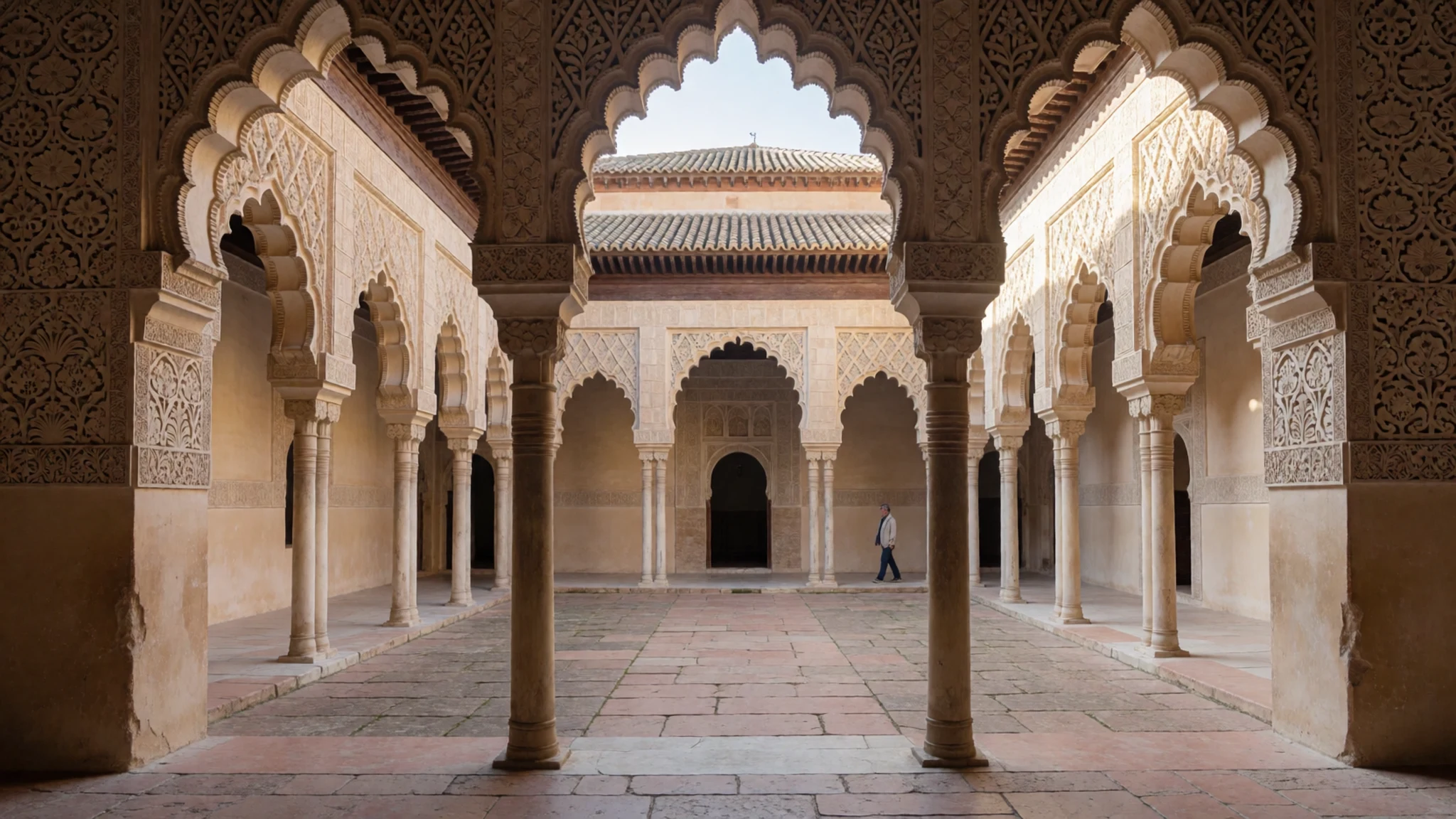
- The Troubadour Tower — Aljafería Palace, Zaragoza
Within Aljafería Palace, the Troubadour Tower is a tall, plain tower that anchors the fortress outline. Its name echoes a Romantic-era play set in medieval Aragon, which in turn inspired Verdi's opera Il trovatore. The thick walls and sparse interior make a useful contrast with the ornate rooms elsewhere in the palace.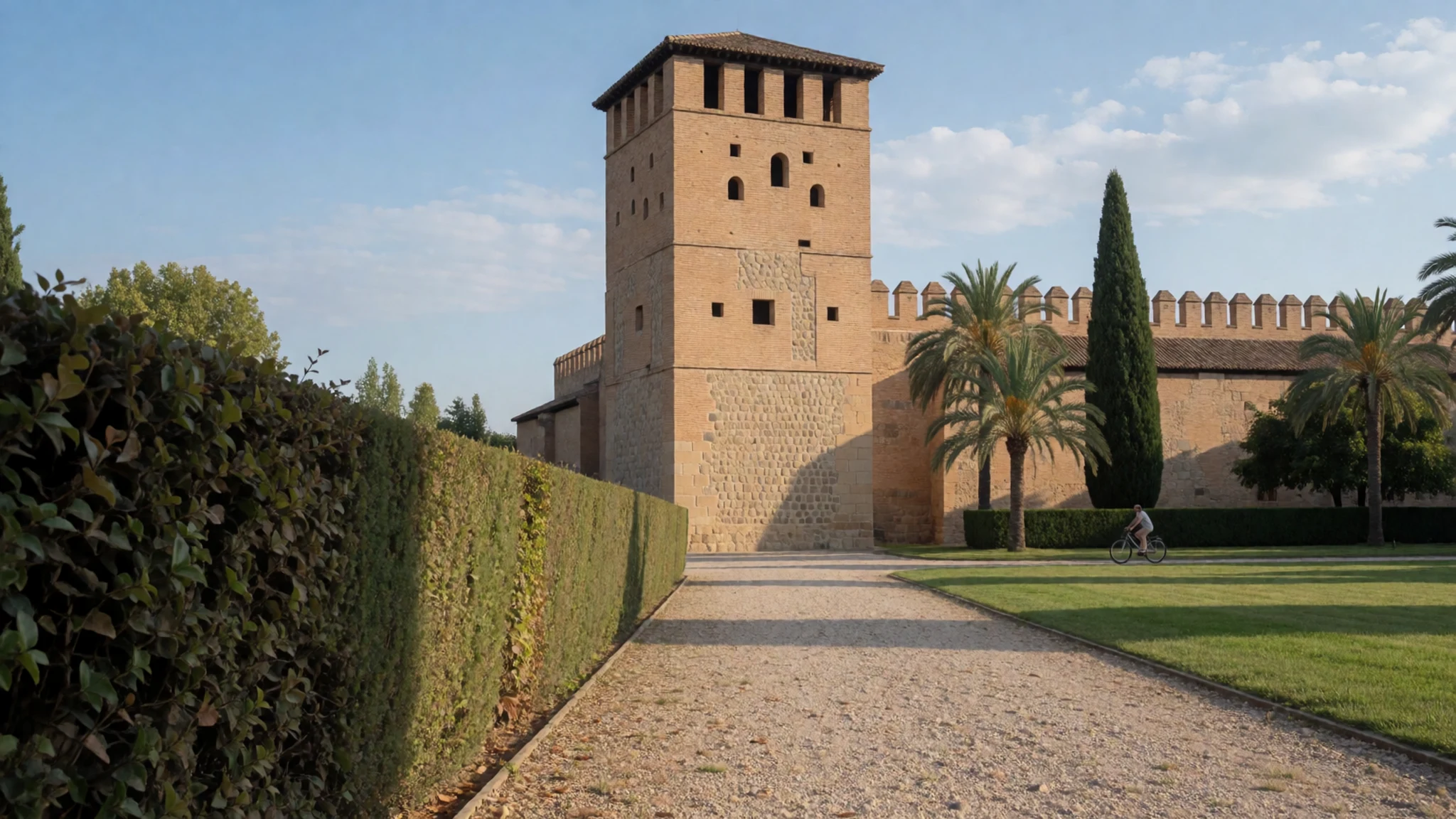
- The moat, walls and gardens — Grounds of Aljafería Palace, Zaragoza
Around Aljafería Palace, the dry moat, angled walls and lawns come from the Renaissance military redesign that began in 1593. A walk along the outside shows how a royal residence was turned into a fortress. The south-eastern corner above the moat gives a good view of the palace's mass.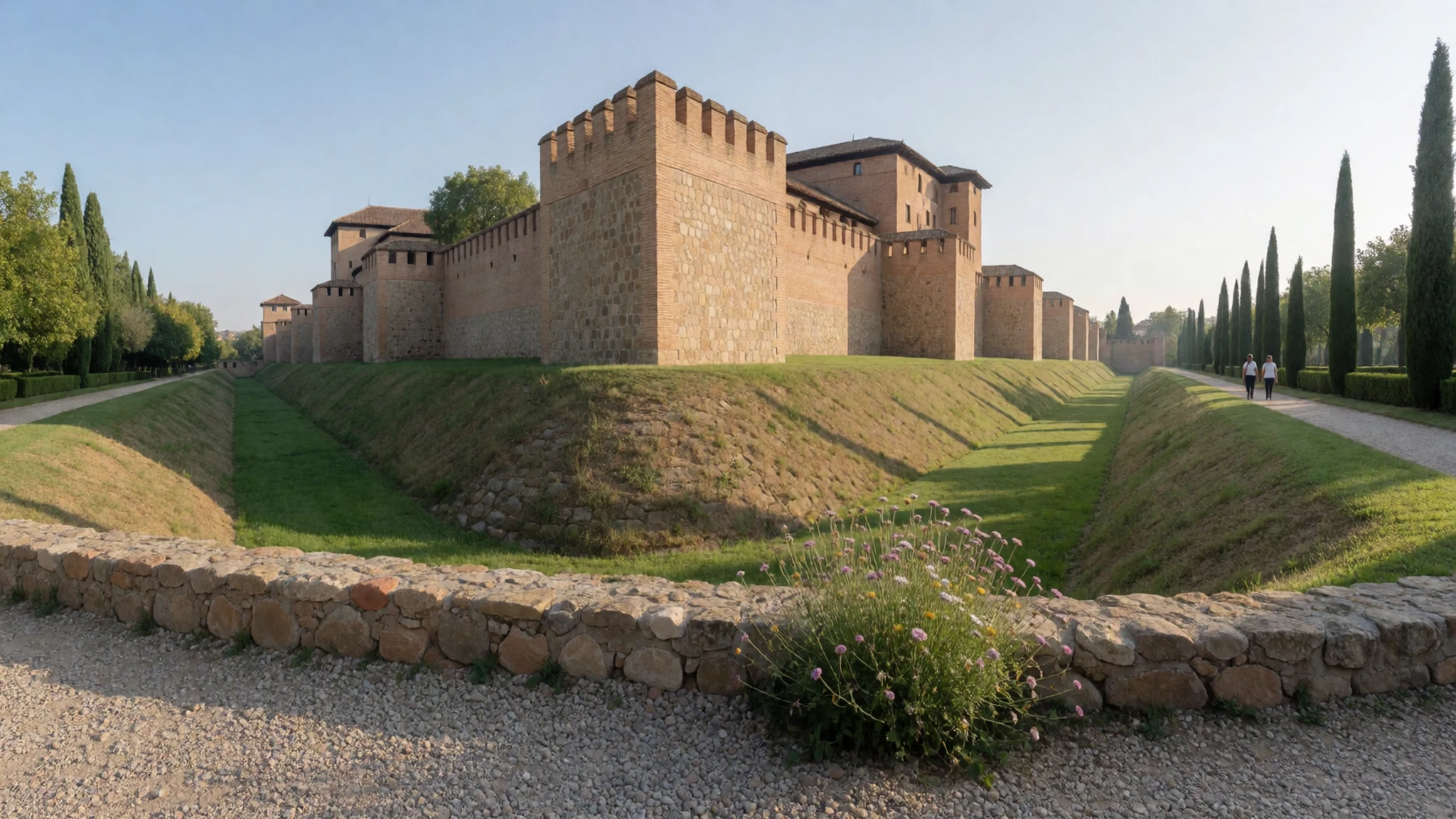
- The Cortes of Aragon — Aljafería Palace, Zaragoza
Aljafería Palace is also the seat of the Cortes, Aragon's regional parliament, so part of the building is a working institution. Access to the political areas depends on the parliamentary calendar and on how guided visits are organised. Check the official site before going, and expect some rooms to be closed.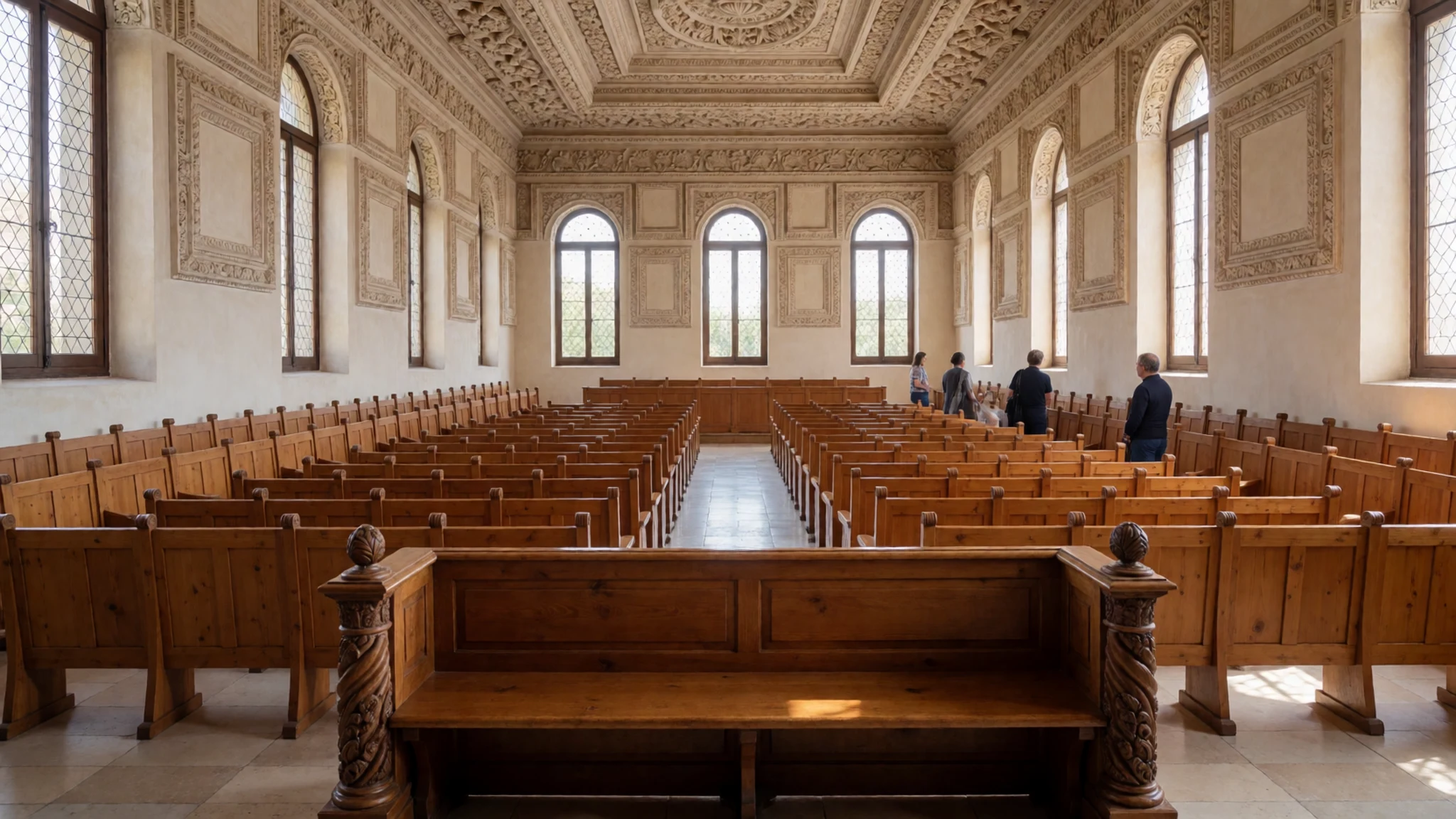
- Mudéjar churches of the old town — Old town, Zaragoza
A short journey from Aljafería Palace, Zaragoza's old town has several Mudéjar churches that carry the same craft tradition into Christian buildings. Santa María Magdalena has a square tower and a many-sided apse, and San Pablo has an octagonal tower. They make a good afternoon after the palace.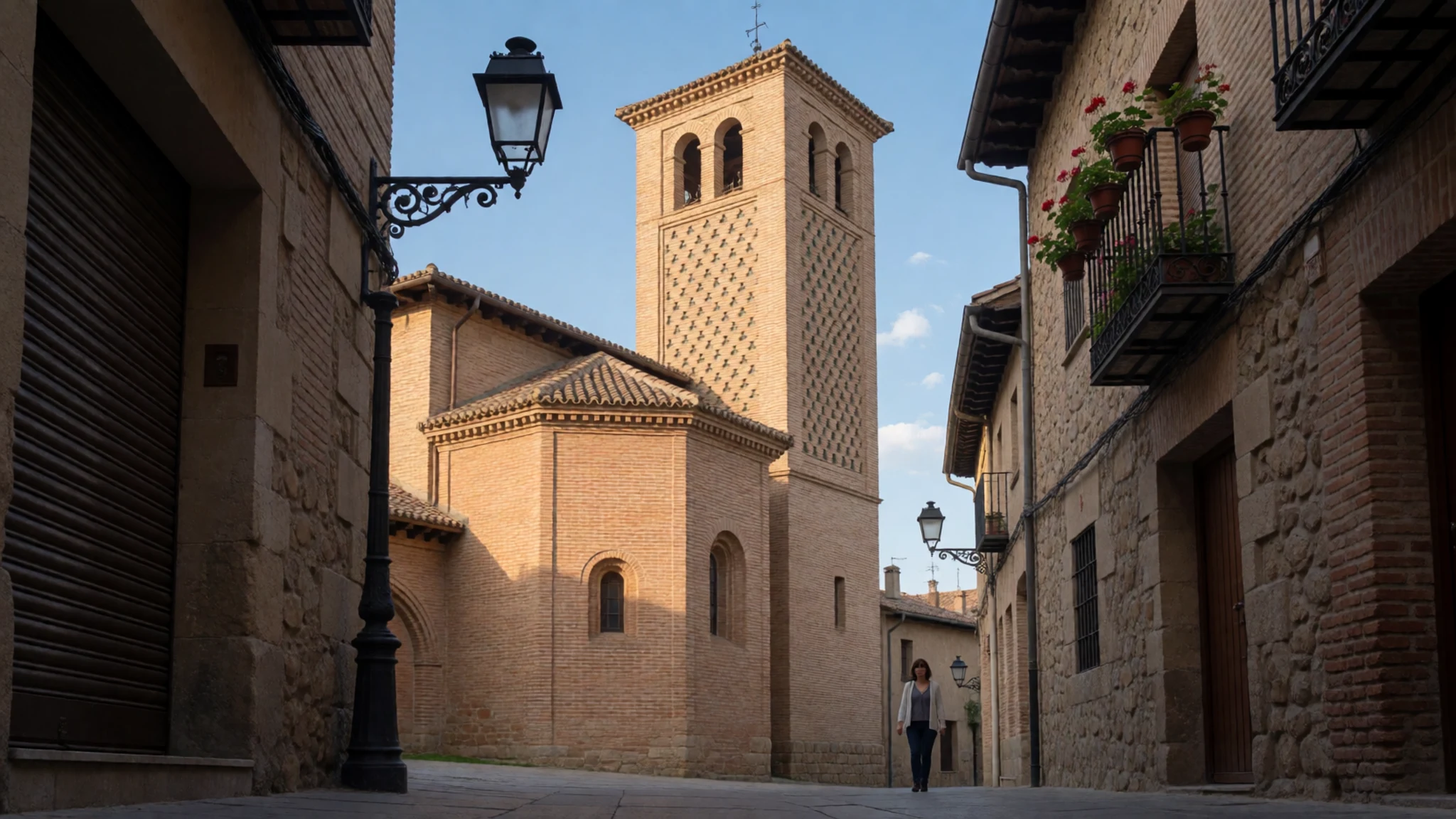
- Basilica of Our Lady of the Pillar and La Seo — Riverside and Plaza de la Seo, Zaragoza
Near the Ebro, the Cathedral-Basilica of Our Lady of the Pillar is a pilgrimage church tied to the tradition that the Virgin appeared to Saint James. La Seo, the other cathedral, stands on Plaza de la Seo and has Mudéjar parts. Both are a short walk apart and busy at weekends.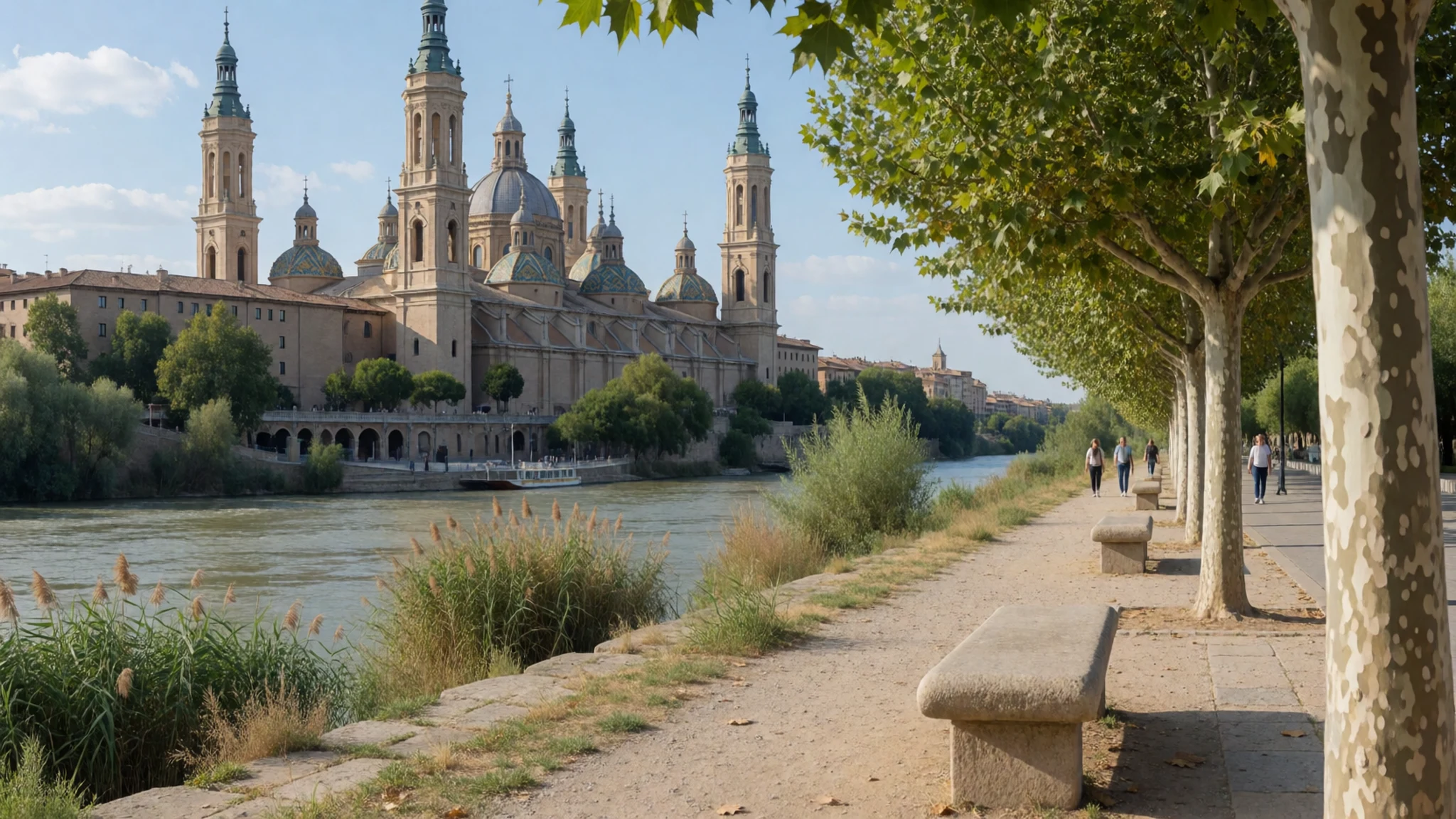
Culture
Aljafería Palace sits where three cultural strands meet in Aragon: Islamic, Christian and the hybrid Mudéjar tradition that grew from them. Mudéjar refers to the Muslim craftsmen who kept working under Christian rulers, building in brick and decorating with geometry, and the old town's churches show the result. The palace gives the earlier, courtly side of that story. Zaragoza's calendar leans heavily on the Virgin of the Pillar, whose festival each October fills the city with processions, music and flower offerings. Daily life follows the Spanish clock: lunch is late, many shops close for part of the afternoon, and evenings revolve around tapas, so a palace visit works best in the morning. Locals are proud that their regional parliament sits in a building this old, and they are used to visitors but not to being treated as scenery. The palace also has a literary afterlife, because the name of the Troubadour Tower echoes a Romantic-era play and Verdi's opera set in medieval Aragon. That connection is worth knowing before the tower comes into view. Because the Cortes still sit in part of the building, follow staff directions on which areas are open, keep your voice low in shared corridors, and check the official site before photographing inside.
What to wear
Aljafería Palace belongs to a region with its own folk dress, the baturro costume of rural Aragon. Men traditionally wore a waistcoat and dark trousers, a sash at the waist, a headscarf knotted on the head and rope-soled alpargatas. Women wore full skirts, a fitted bodice, a shawl and a headscarf. Fabrics were practical: wool for the cold, linen and cotton for warmer months, and esparto rope for soles. The costume appears today at festivals, especially around the Pilar celebrations in October, and with folk dance groups. Day to day, people in Zaragoza dress like most Spanish city dwellers: neat, smart-casual, usually in trousers or dark jeans, with fewer beach clothes than a tourist might expect. In the evening people dress up a little for tapas. A visitor should plan around climate and terrain. Summers inland can be very hot, so light cotton or linen, a hat and sunscreen help, while winters and shoulder seasons call for a warm layer, as the wind can feel sharp. The palace has stone floors, gravel paths and steps, so comfortable closed shoes are better than flip-flops. For churches in the old town, carry a scarf or wear sleeves that cover the shoulders, and keep clothing tidy for the parliament areas.
What to eat
- Ternasco asado — Traditional restaurants in Zaragoza's old town
Roast young lamb is Aragon's best-known main course, usually cooked slowly until the skin is crisp and the meat soft. Look for it in traditional restaurants in the old town, especially at weekend lunch, often served with potatoes and a simple salad.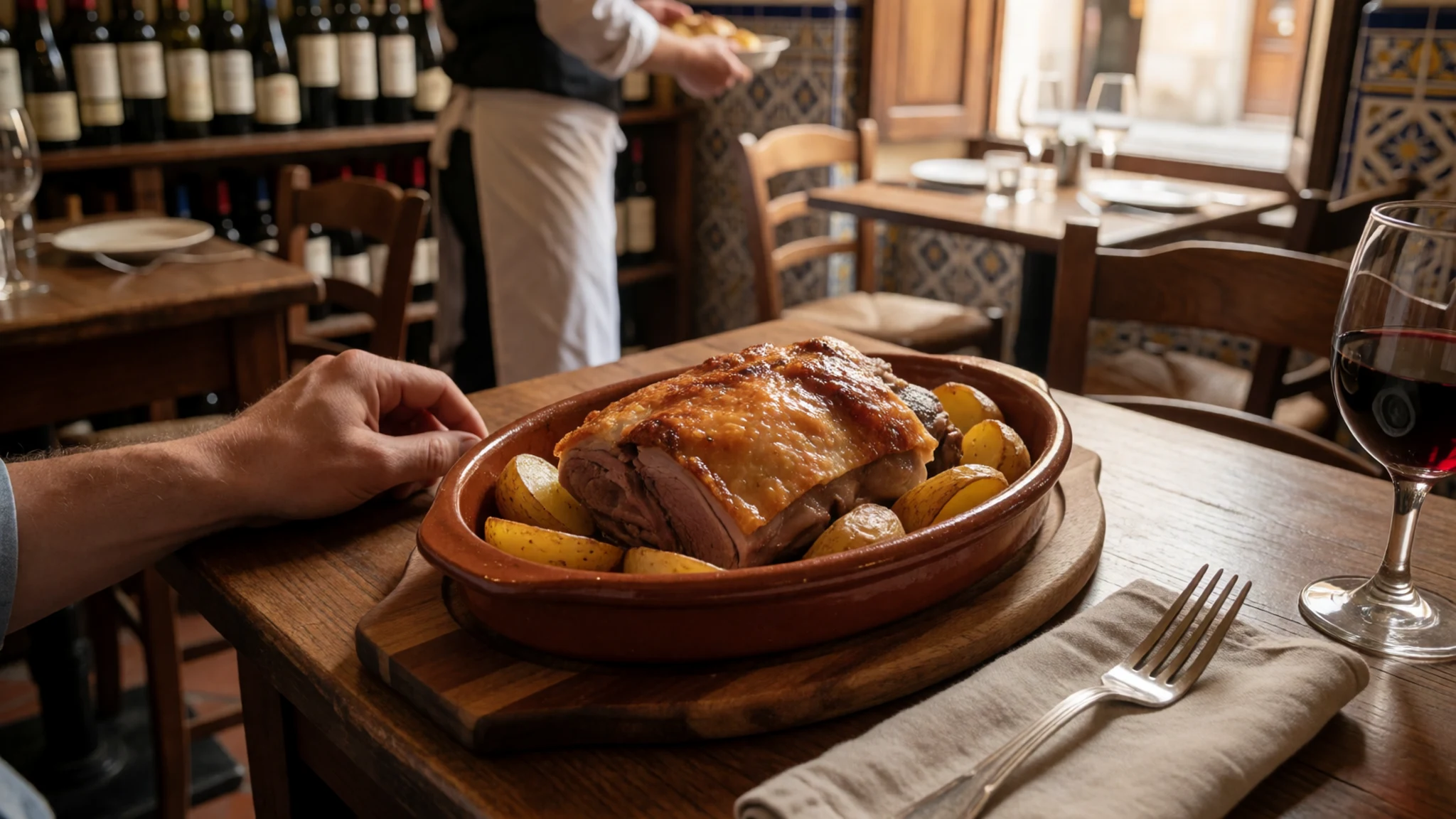
- Migas a la aragonesa — Home-style eateries serving a midday menu
Fried breadcrumbs scrambled with chorizo, often topped with egg, this is a shepherd's dish that has become a hearty lunch. Order it at home-style eateries and bars that serve a set midday menu, and expect a filling plate.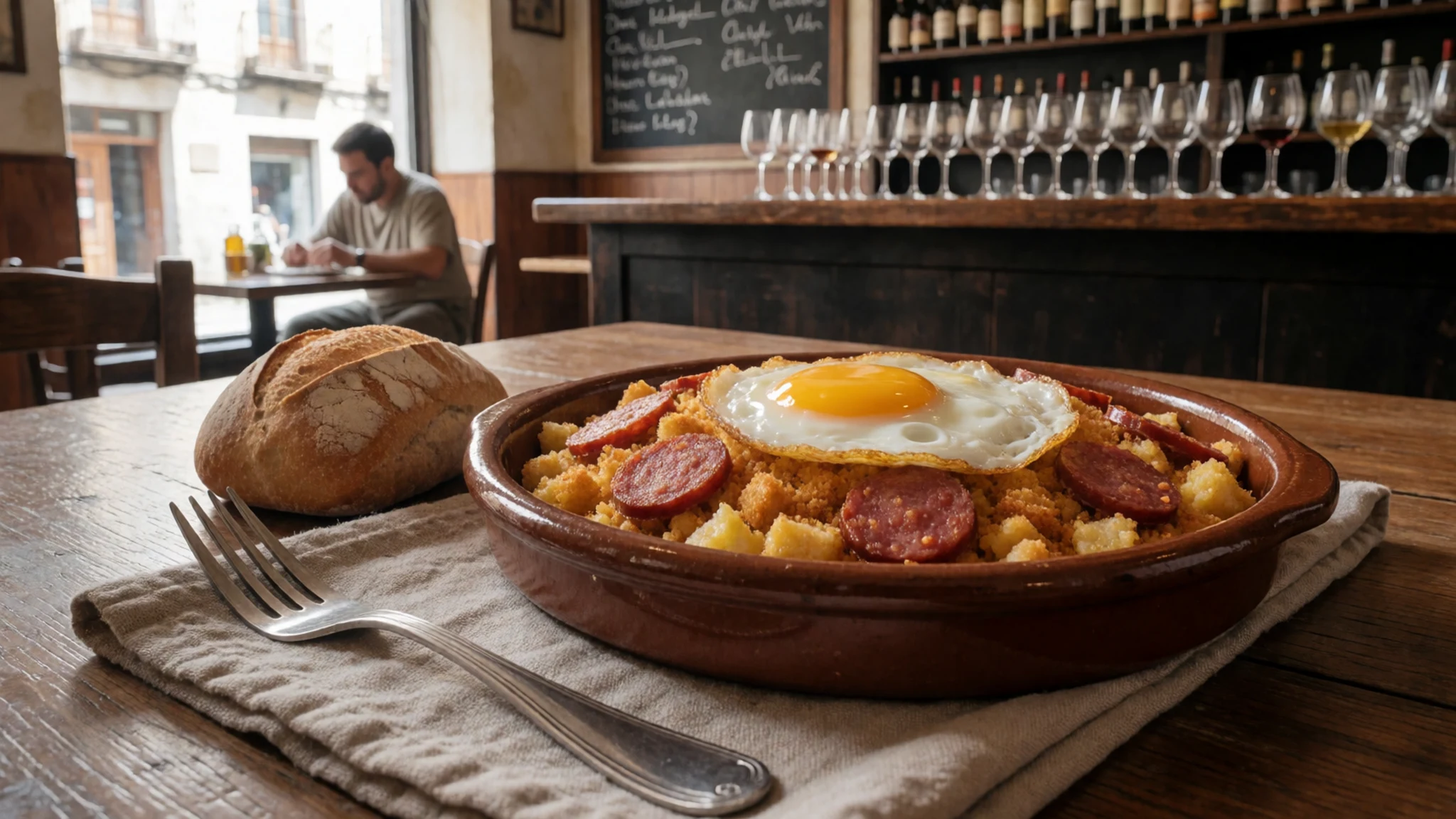
- Pollo al chilindrón — Family-run restaurants in the old town
Chicken braised in a sauce of tomatoes, onions, peppers, paprika and cured ham. The sauce is sweet-savoury and a little smoky, and it goes well with rice or bread. Common in family-run restaurants across Aragon, usually as a main course. - Bacalao al ajoarriero — Traditional restaurants and tapas bars
Salt cod cooked with garlic into a rich, rustic stew, sometimes with eggs added. The dish comes from the muleteers' tradition and is good for a cooler day. Find it in traditional restaurants and in some tapas bars as a small plate. - Borrajas — Restaurants with a regional menu in the old town
Borage is a vegetable strongly associated with Aragon, usually boiled and served with potatoes, olive oil and garlic, or added to a vegetable stew. It has a mild, slightly earthy taste and is mainly seen in cooler months. - Croquetas and tapas — Tapas streets around the old town centre
For a lighter meal, the tapas bars near the old town serve croquetas, tortilla, cured ham and small plates of the regional dishes. Standing at the counter with a drink and a few plates is a good way to spread a meal and cost.
Plan it
Best time. April–May and October–November, when the weather is milder for walking the grounds and the old town. Summer inland can be very hot, so visit early in the morning, and winter can be cold and windy.
How long. 1–2
Getting there. Zaragoza Airport has limited flight connections, with an airport bus into the city centre. Many visitors fly into Madrid or Barcelona and take the high-speed AVE train to Zaragoza, about an hour and a half from Madrid and about one hour 45 minutes from Barcelona. From the centre, reach the palace by local bus, taxi or a longer walk.
Budget. mid
Tips
- Check the official site for opening days, hours, ticketing and guided-visit times before you go, as the Cortes may limit access
- Visit in the morning to avoid the worst of the heat in summer
- Combine the palace with the Mudéjar churches and the two cathedrals in the old town in the afternoon
- Carry some cash for small tapas bars and refill water bottles in warm months
- Remember that lunch is late and many places close in the afternoon, so plan meals around that
Etiquette
- Follow staff directions in the parts of the palace used by parliament and keep your voice low
- Cover your shoulders and keep quiet when entering churches in the old town
- Ask before photographing people, and check the rules on photography inside the palace
Nearby
Sources
- Wikidata Q1354033 (CC0)
- Wikipedia: Aljafería (rev 1373363645) (CC BY-SA 4.0)
- Wikivoyage: Zaragoza (rev 5423078) (CC BY-SA 4.0)
- Photo: Palace of the Aljafería, in Zaragoza, Spain (Fernando) (CC BY-SA 4.0)
- Photo: The southern façade of the Aljafería Palace in Zaragoza, Spain (2026) (Stch2022) (CC0)
- Photo: Viewing the south east corner above the moat of the Aljafería Palace (Stch2022) (CC0)
- Photo: The southern façade of the Aljafería Palace in Zaragoza, Spain (2026) .02 (Stch2022) (CC0)
- Photo: Plano Aljaferia224.jpg (unknown author) (CC BY 3.0)
- Photo: La Aljafería - Troubadour tower (ecelan) (CC BY 3.0)
- Photo: Torre del Trovador, planta baja (Escarlati) (CC BY 3.0)
- Photo: La Aljafería - Palacio taifa - Detalle (ecelan) (CC BY 3.0)


