Badajoz
Badajoz, Spain
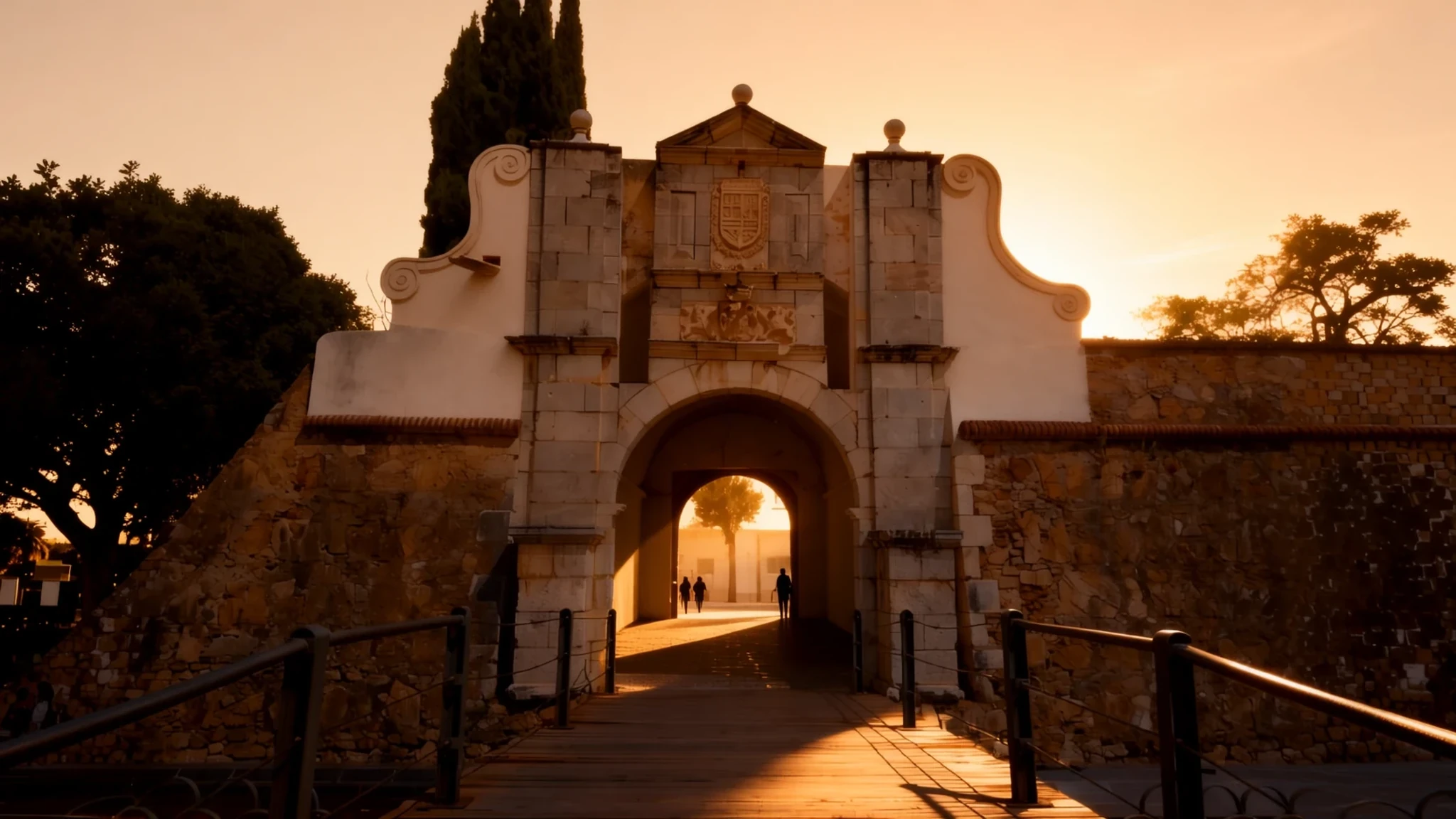
Badajoz is a quiet frontier city on the Guadiana, with a Moorish citadel, good tapas and Portugal a few minutes away.
The place
Badajoz sits in the southwest of the Iberian Peninsula, on the left bank of the Guadiana, almost on the Portuguese border. It is the capital of its province in Extremadura, and about 150,000 people live in the city. The municipal territory is huge and takes in a scatter of smaller villages and farming hamlets, so the city feels like the centre of a wide, flat, sun-baked countryside rather than a place hemmed in by suburbs.
The old town climbs gently from the river towards a hilltop citadel, and its centre is compact enough to cover on foot. Narrow streets open onto squares where people gather for coffee in the morning and for drinks late in the evening. At 185 m above sea level it is not high, but the summers are fierce, and the rhythm of the day bends around the heat: quiet in the afternoon, lively after dark.
Badajoz is not a city of famous queues. Visitors tend to be Spaniards on the way to Portugal, Portuguese coming over for shopping and food, or travellers working their way through Extremadura. That makes it relaxed and fairly inexpensive, and it means a plain lunch in a neighbourhood bar is usually full of locals rather than tourists.
The border shapes everything. The A-5 road runs from central Spain towards Portugal, and a cross-border scheme links Badajoz with the Portuguese towns of Elvas and Campo Maior. Portuguese is heard on the streets, and the town works well as a base for day trips on both sides of the frontier.
Its story
Badajoz has a long, restless past. Burial chambers and carved stones from the Bronze Age and earlier show that people lived along this stretch of the Guadiana for thousands of years. When Rome moved into the peninsula, the area became part of the province of Lusitania, and there are Roman villas in the surrounding countryside, though the town itself barely features in Roman writing.
The city as we know it began under Muslim rule. Ibn Marwan, a local leader, founded it around 875, and the place grew in importance under the caliphs of Córdoba and later under North African dynasties. Its great moment came when it was the capital of its own small Muslim kingdom, the Taifa of Badajoz, ruled by the Aftasid family. Politics and war were unstable, yet poets and scholars thrived at court.
The Kingdom of León took the city in 1230. It became a royal possession and the seat of a wealthy diocese, but its position on the frontier brought trouble. Civil wars in Castile and repeated conflicts with Portugal left the town besieged, damaged and rebuilt again and again over the medieval and early modern centuries.
That explains the look of Badajoz today: thick defensive walls, a fortress-like cathedral and gateways that were meant to impress as well as protect. Layers of Moorish, medieval and later building sit close together, and a short walk can take you across several centuries of a place that was always near the edge of something.
What to see
- Alcazaba de Badajoz — Old town hill
The Alcazaba crowns the hill above the old town. The citadel dates back to the 9th century, though most of the walls and towers standing now are Almohad work from the 12th. Walk the ramparts for views over the river and rooftops, and allow time to wander the quiet inner grounds.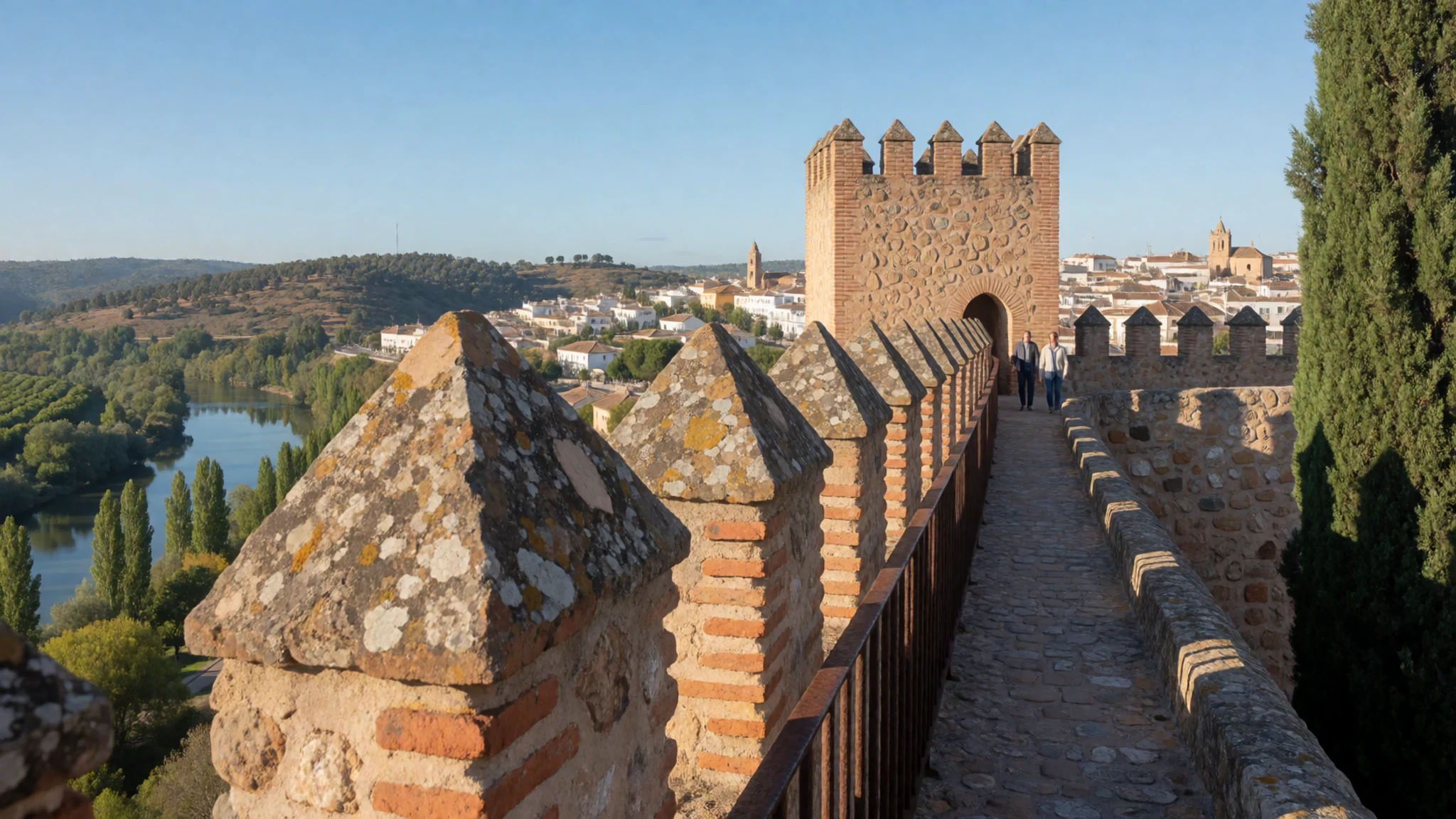
- Plaza Alta — Below the Alcazaba
Just south of the Alcazaba, Plaza Alta is the old main square, ringed by arcades and houses with decorated upper floors. It is a good place to sit with a coffee and watch the city drift by. The square looks best in the gentler light of morning or early evening.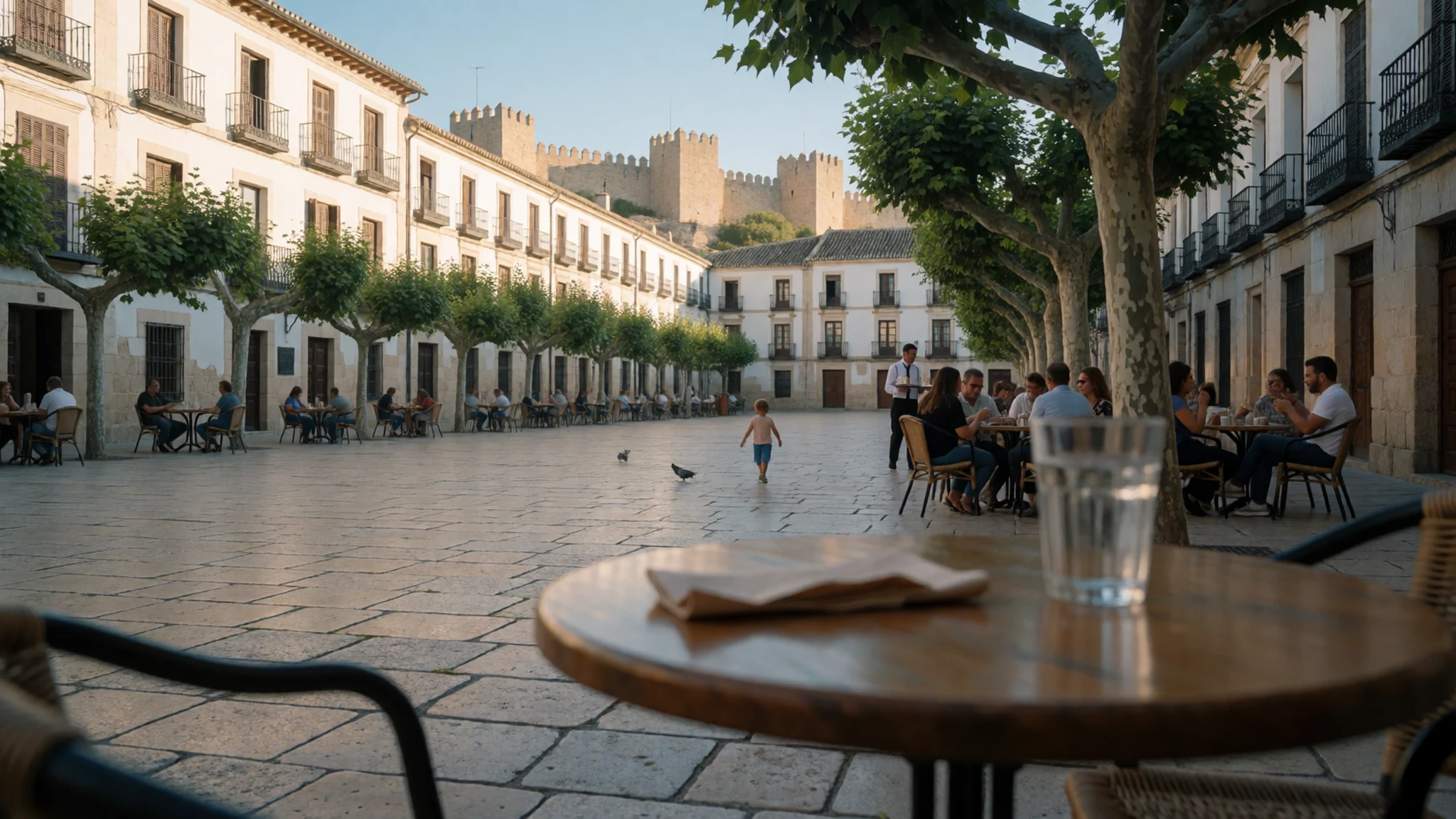
- Catedral de San Juan Bautista — Old town centre
The cathedral was begun in the 13th century and altered many times since, so it looks more like a fortress than a church, with heavy walls and a squat, solid profile. Inside, a museum of religious art and objects is worth a slow look. Dress modestly and check opening times.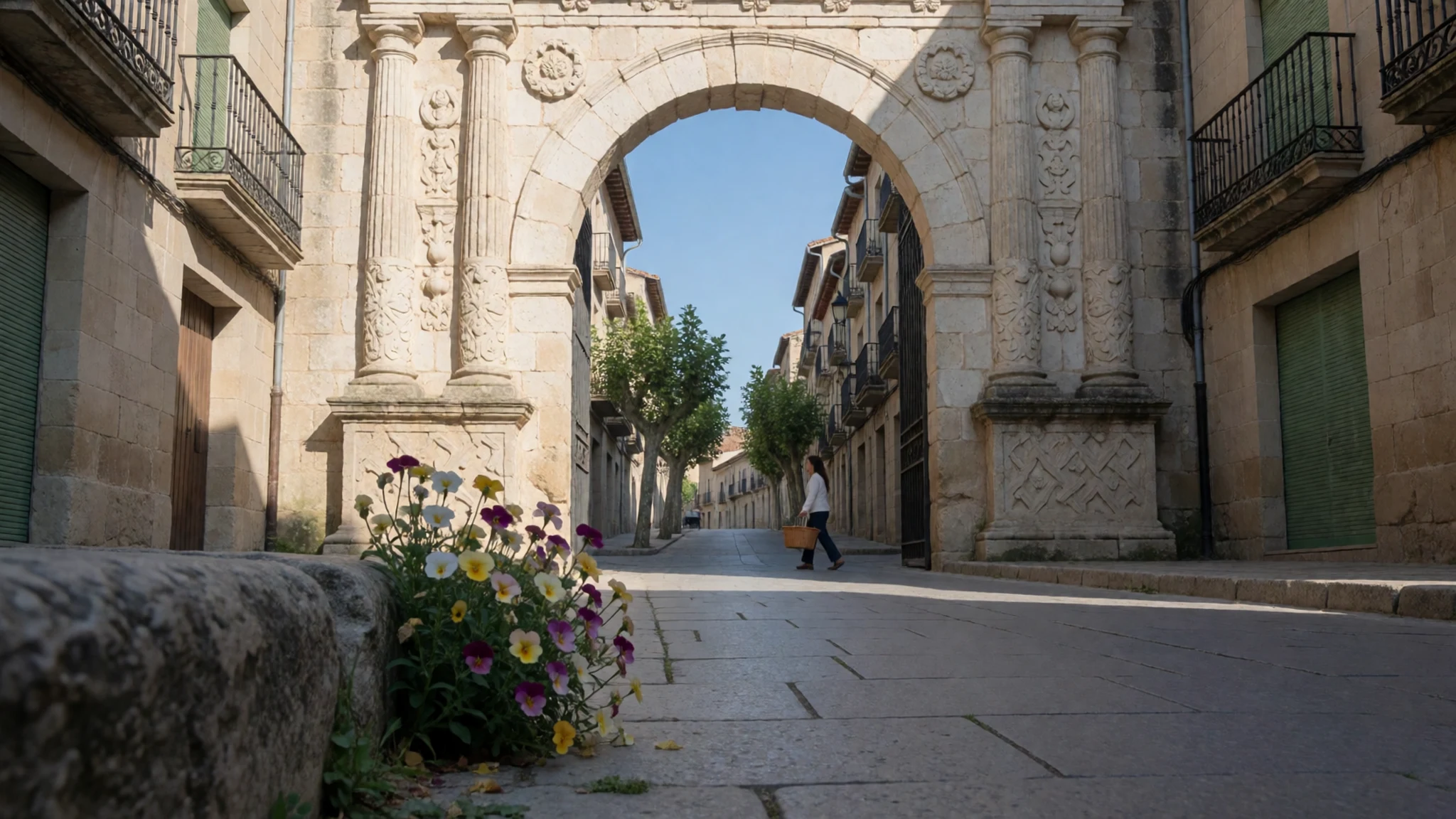
- Museo de Bellas Artes — Old town
This art museum fills two 19th-century mansions and shows works by painters whose names you will know, among them Zurbarán, Luis de Morales, Goya, Picasso and Dalí. Morales, born in Badajoz, is the local hero. It is a calm, unhurried place for a hot afternoon.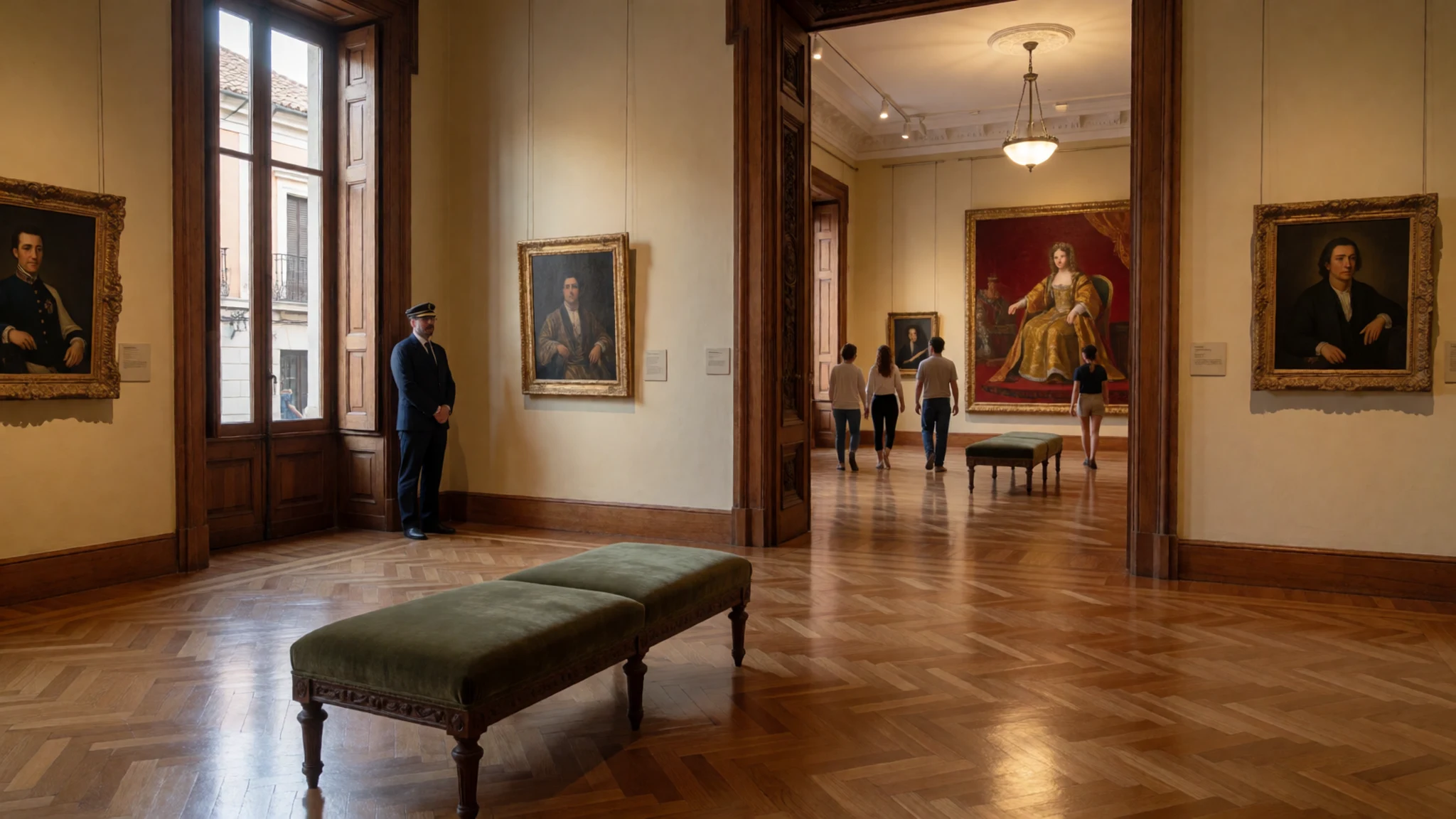
- MEIAC — Near the old town
The Museo Extremeño e Iberoamericano de Arte Contemporáneo holds modern and contemporary work by Spanish, Portuguese and Latin American artists. The building stands on the site of a former detention centre, which adds weight to the visit. Check the official site for current exhibitions and opening days.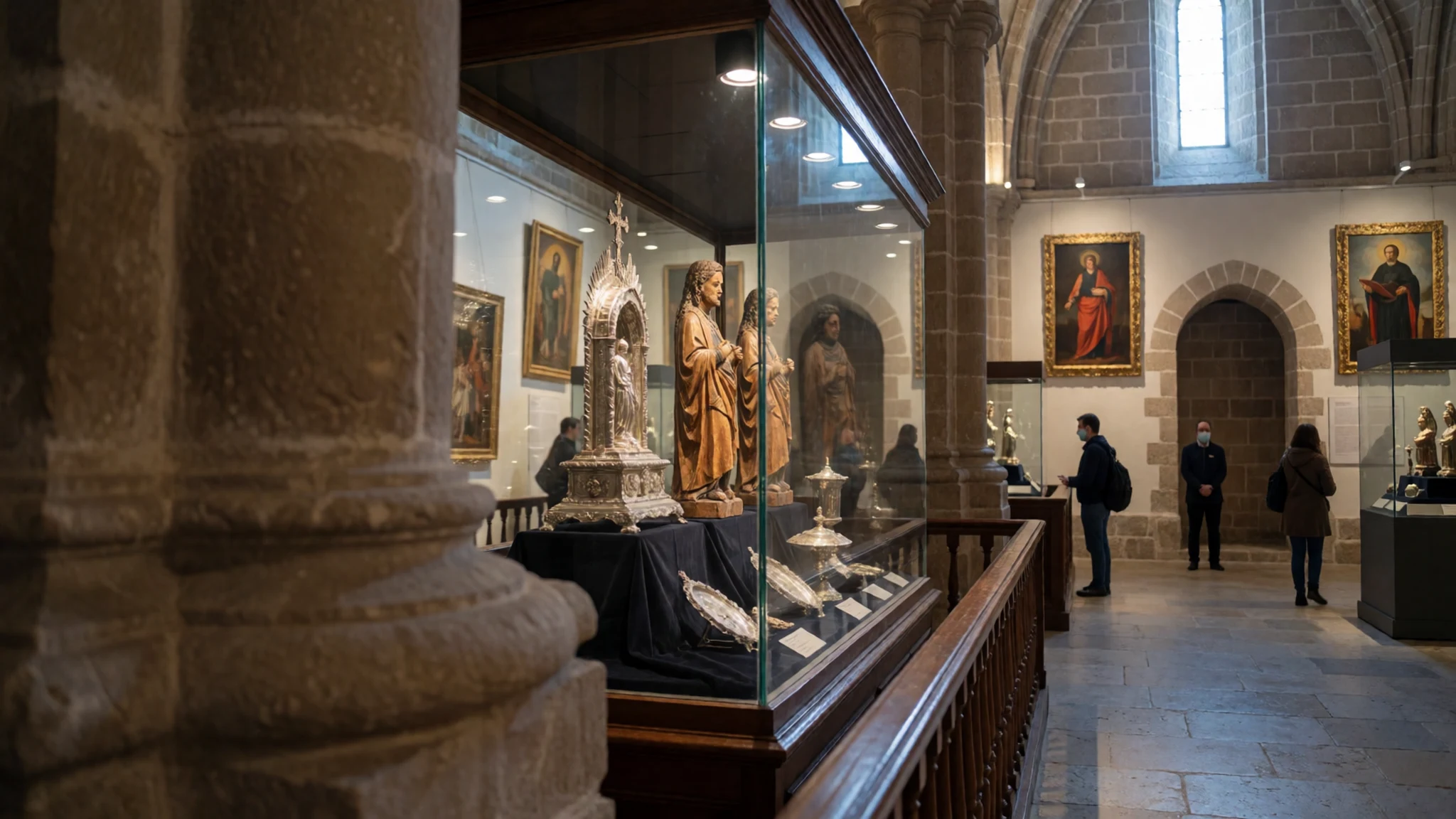
- Puerta de Palmas — Riverside, west edge of the centre
Puerta de Palmas is a ceremonial gateway built in 1551, with twin towers and a broad arch facing the river approach. It once welcomed important visitors into the city and now stands as a handsome landmark. It is easy to pair with a walk along the Guadiana, especially at dusk.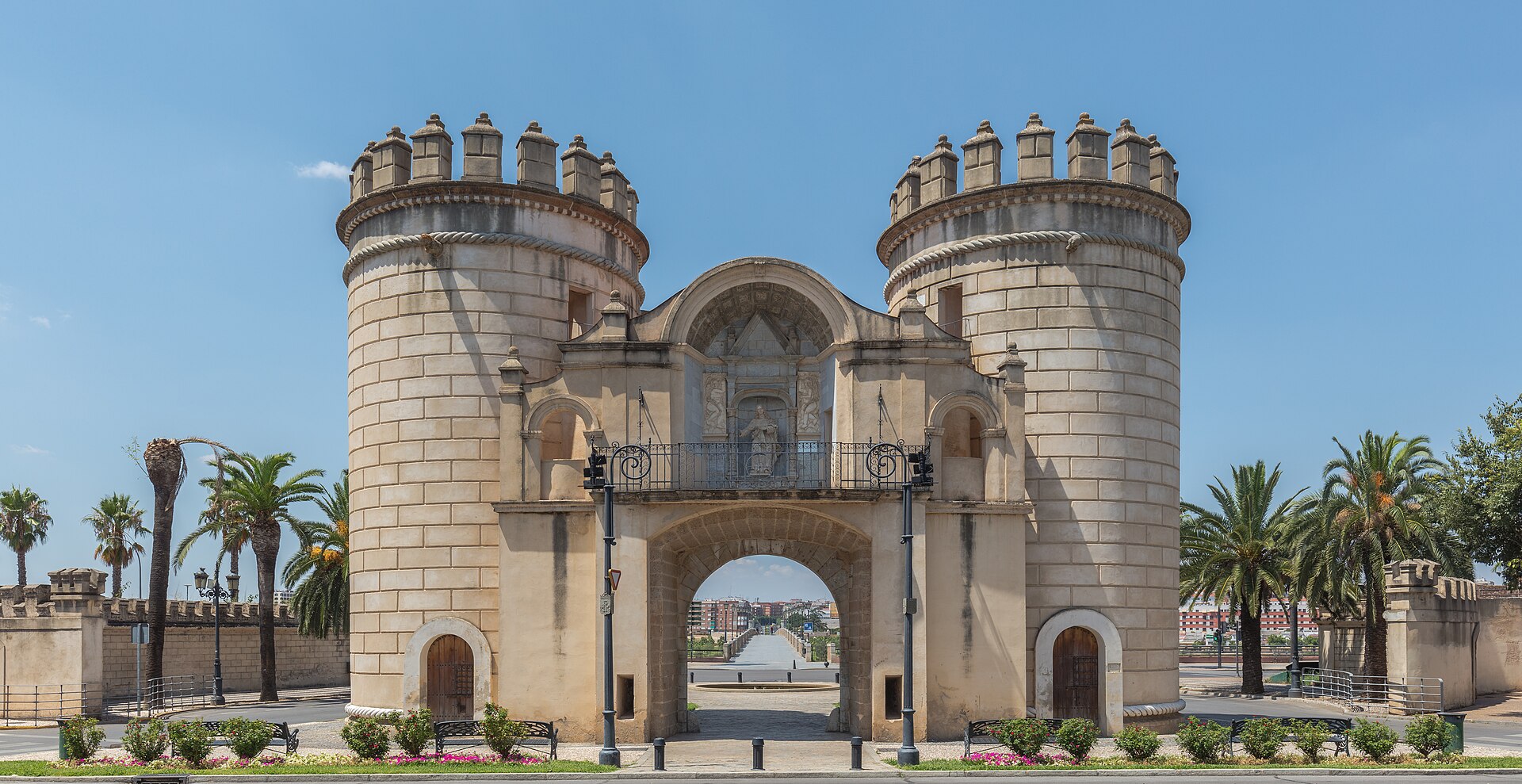
Culture
Badajoz is not famous as a cultural capital, but the city has produced a good number of artists, writers and musicians. The painter Luis de Morales, the novelist Arturo Barea and the pianist Esteban Sánchez were all born here, and the flamenco-rooted singers of Extremadura have local names such as La Caita and Porrina de Badajoz. The city's art museums reflect that creative streak.
The liveliest cultural moment of the year is Carnival, and the city even has a museum devoted to it, full of costumes and props. Carnival here is loud, colourful and very local, with parades, satire and street parties, and people spend months preparing. The trade fair institution IFEBA, set up in 2006, also hosts a wide range of events through the year.
Daily life follows the usual southern Spanish pattern. Lunch is late, shops often close in the afternoon, and evenings stretch on, with families and friends filling squares and terraces well after dark. Because of the border, Portuguese and Spanish influences mix easily, in speech, in food and in the habit of crossing over for a meal or an errand.
People are friendly but not showy, and a greeting when you enter a small shop or bar goes a long way. When you visit a church or the cathedral, dress modestly, keep your voice low and do not take photographs during services.
What to wear
Badajoz has no single everyday costume, but Extremadura has a strong folk-dress tradition that appears at festivals, folk dances and religious processions. Women's outfits usually involve full skirts, embroidered bodices, shawls and aprons in wool, cotton or linen, often in deep reds, blacks and greens, with lace and bright trimmings. Men wear dark waistcoats, short jackets and broad hats, and rural tradition favoured sturdy wool and leather for work in the fields.
In daily life, people dress the way most southern Spaniards do: neat, simple and a little smart. Linen shirts, light dresses, tailored trousers and clean trainers or leather shoes are common, and people usually dress up a little for an evening out. At Carnival the streets fill with elaborate costumes, so expect fancy dress, sequins and feathers in the parades.
For visitors, the main challenge is the heat. Summer is very hot, so pack light, breathable cotton or linen, a hat, sunglasses and sunscreen. Winter evenings can turn cool, and a light jacket or scarf helps in spring and autumn. Comfortable shoes are essential, because the old town has cobbles and slopes, and the citadel involves a climb. For the cathedral and other churches, cover shoulders and knees, and carry a light scarf for that purpose.
What to eat
- Tapas with Iberian ham — Bars around Plaza Alta and the old town
Extremadura is pig country, and cured Iberian ham is the signature order. It is sliced thin and served with bread or in a small tapa alongside a drink. Try it in any neighbourhood bar in the old town, where small plates are a normal part of an evening.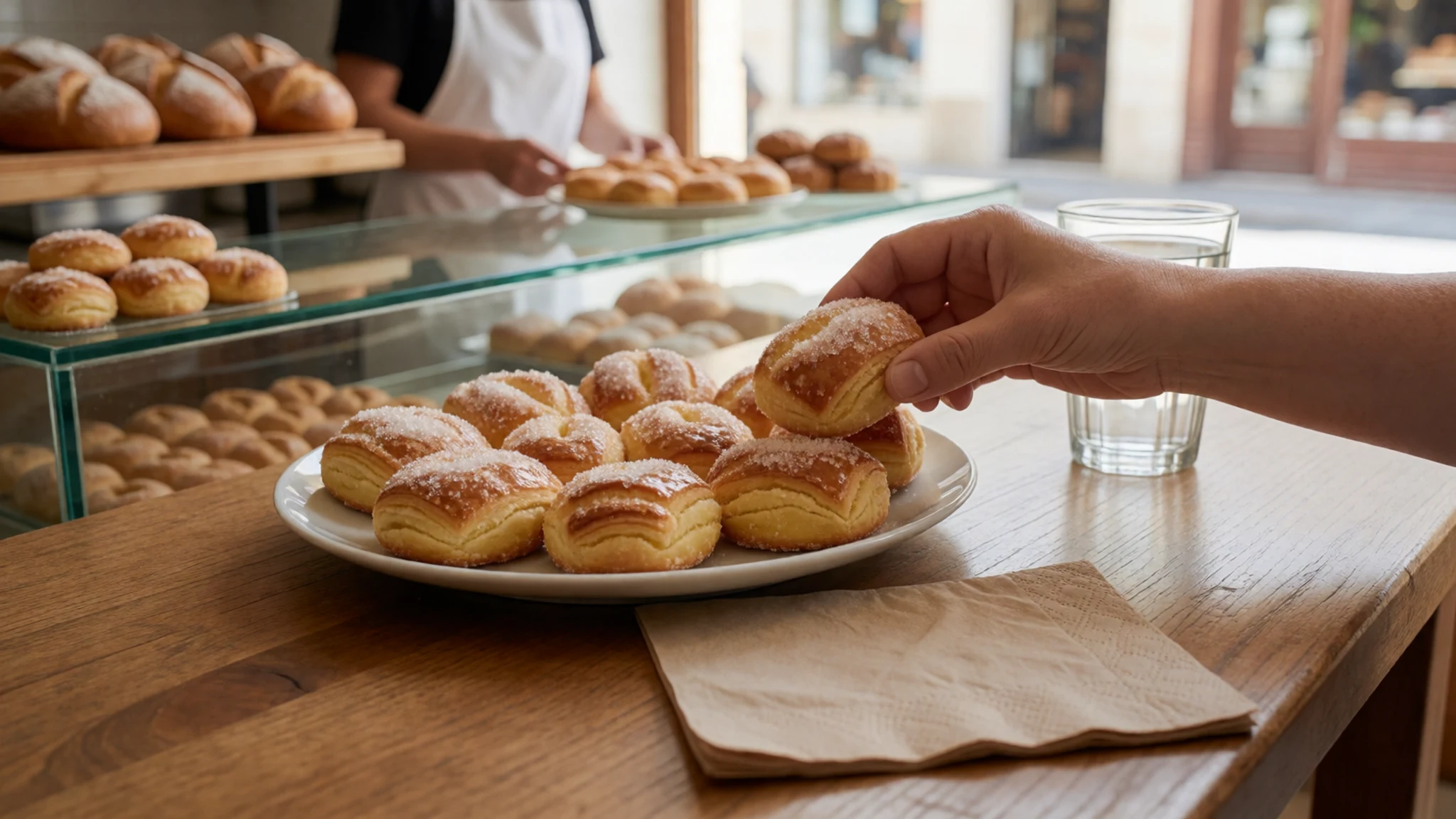
- Migas extremeñas — Traditional mesones in the town centre
Migas are a hearty dish of fried breadcrumbs, cooked with garlic, paprika and pieces of pork. It started as a way to use stale bread and is now a regional comfort food. It is filling and best in cooler months, usually at a traditional mesón.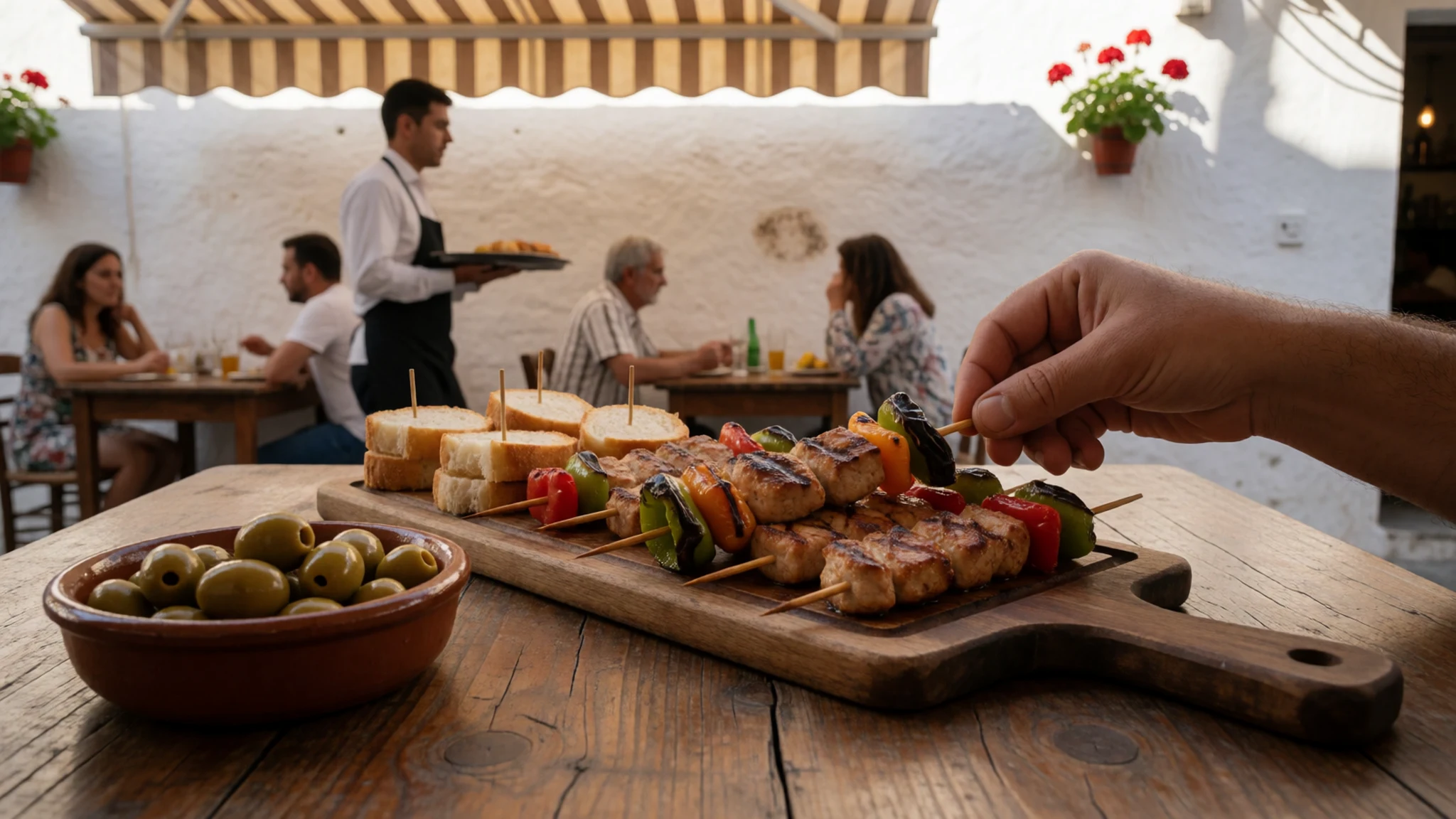
- Caldereta and lamb dishes — Family restaurants south of the river
Lamb and kid are slow-cooked in stews with paprika, garlic and wine. These are rich, rustic dishes, usually eaten at lunch with bread. Look for them on the daily menu at family-run restaurants, especially during colder weather and at festival times. - Torta del Casar and local cheeses — Delicatessens and tapas bars in the centre
Torta del Casar is a soft, creamy sheep's-milk cheese from the region, eaten by scooping it out with bread or spreading it on toast. It is strong, rich and slightly tangy. Look for it on cheese boards and in small food shops and delicatessens. - Pastries and sweets — Neighbourhood pastry shops (pastelerías) in the centre
Small pastry shops in the town centre sell traditional sweets, often made with almonds, honey and eggs. They are inexpensive and rarely touristy, and make a good mid-morning treat with coffee. Ask what is freshly baked and point at what looks best. - Ribera del Guadiana wines — Bars and restaurants across the city
Ribera del Guadiana is the local wine appellation, producing reds, whites and rosés from the river valley's warm vineyards. Ask for a glass with your tapas, since bars often pour regional wine by default. Beer is widely available if wine does not suit.
Plan it
Best time. April–May and October–November. Spring is warm and green, and autumn is mellow, while summer is very hot and midwinter can be chilly in the evenings.
How long. 1–2
Getting there. Badajoz Airport had no commercial flights at the time of the brief, so fly into Madrid (MAD) or Lisbon (LIS) and continue by train or coach. Trains from Madrid take around five hours, and coaches from Madrid take about six. The station is about 1 km north of the river, with local buses and a walk into the centre. Check the current timetable before you travel.
Budget. low
Tips
- Avoid the afternoon heat in summer and do your sightseeing in the morning or evening
- Carry some cash for small bars and pastry shops, though cards are common elsewhere
- Check the official website for museum opening days, as many close on Mondays
- Carry a water bottle for the climb up to the Alcazaba
- Combine Badajoz with a day trip to Mérida or across the border to Elvas
Etiquette
- Greet people when entering small shops and bars
- Dress modestly and stay quiet in the cathedral and churches
- Do not expect dinner before about nine in the evening
Nearby
Sources
- Wikidata Q15679 (CC0)
- Wikipedia: Badajoz (rev 1384413519) (CC BY-SA 4.0)
- Wikivoyage: Badajoz (rev 5424283) (CC BY-SA 4.0)
- Photo: Badajoz visto desde la torre espantaperros (Marsupisupilami) (CC BY-SA 4.0)
- Photo: Vista de Badajoz desde la Torre de Espantaperros (Alonso de Mendoza) (CC BY-SA 4.0)
- Photo: Ibn Marwan en la Alcazaba de Badajoz (Icorbacho) (CC BY-SA 2.0)
- Photo: Palmas Gate, Badajoz (Diego Delso) (CC BY-SA 4.0)
- Photo: Plaza Alta (Stephen Colebourne) (CC BY 2.5)
- Photo: Town hall of Badajoz (Diego Delso) (CC BY-SA 4.0)
- Photo: Ibn Marwan (Gianni86) (Public domain)
- Photo: Luis de Morales (Luis de Morales) (Public domain)


