Alcazaba of Badajoz
Alcazaba of Badajoz, Spain
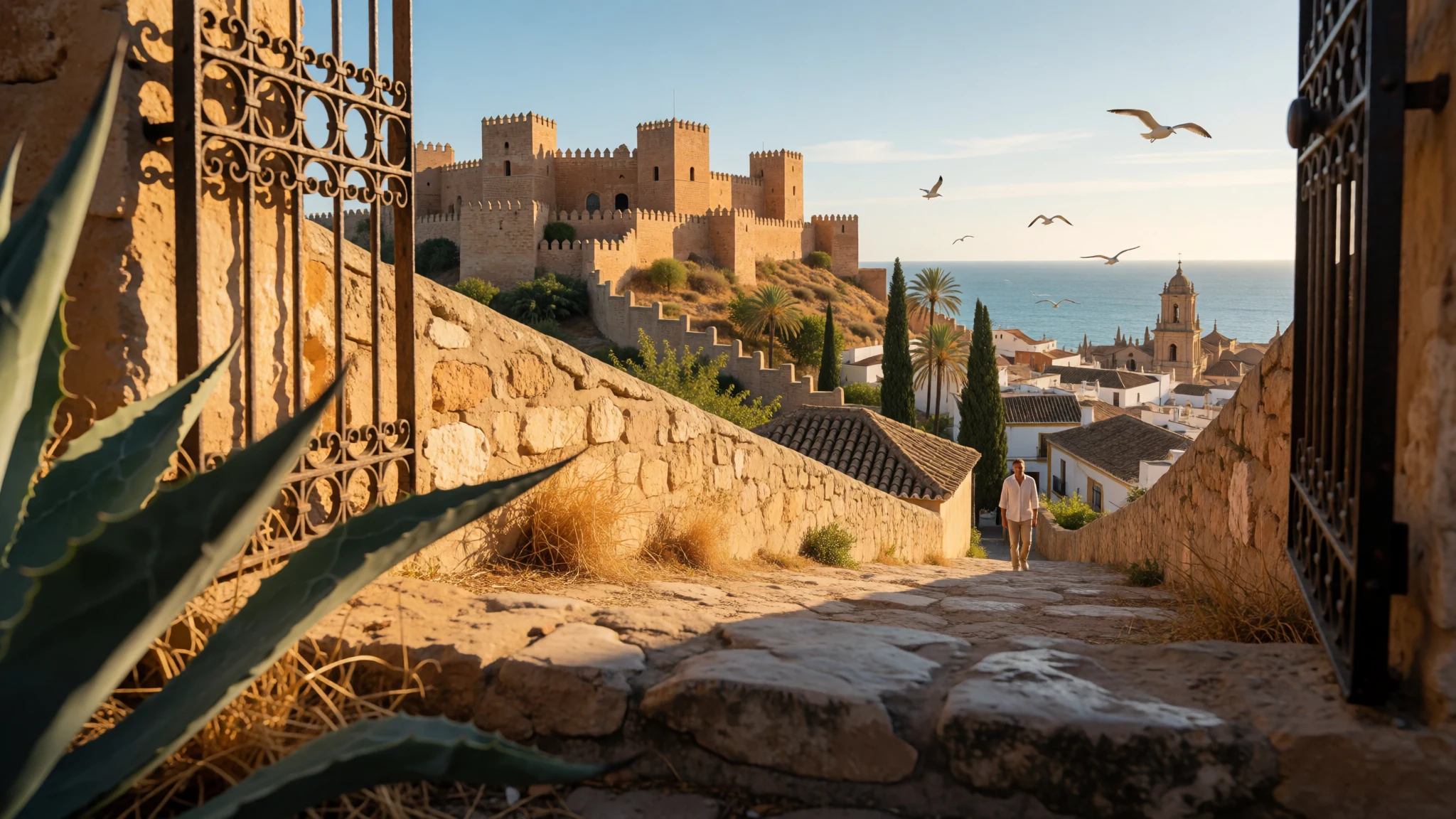
Almería's hilltop alcazaba shows three layers of rule in stone, Islamic, Christian and later, with sea views and tapas bars waiting below.
The place
The Alcazaba of Almería is a hilltop fortress above the city of Almería on Spain's southern coast, and it gives the old town its skyline. The word alcazaba comes from Arabic and means a walled citadel inside a city. This one is laid out as three enclosures climbing the slope, each from a different period. The lowest and widest was a refuge: townspeople could shelter there during a siege, and large cisterns kept them supplied with water. A dividing wall, the Muro de la Vela, is named after a bell that rang to warn the town of ships, fires and other danger. Above it sits the second enclosure, where governors, soldiers and servants lived among baths, a mosque and water tanks. The highest and outermost enclosure is the newest, a Christian castle designed with gunpowder artillery in mind. The city's name is Arabic too, usually read as 'mirror of the sea', and the sea is exactly what these walls look over. Almería is a mid-sized Mediterranean city, so the fortress is reachable on foot from the centre, with the cathedral and the tapas streets close below. The climate is hot and dry. Winters are gentle, summers are long and fierce, and July and August can be punishing on exposed stone with very little shade. Cabo de Gata, a volcanic coastal park, lies a short way along the coast.
Its story
The Alcazaba of Almería began as a statement of power. In 955 the Caliph of Córdoba, Abd ar-Rahman III, raised Almería to the rank of medina, a proper city, and work started on a defended citadel on the high ground. It was meant to be more than a barracks. Walls and towers enclosed squares, houses and a mosque, and from there the local government could watch over both the town and the sea. Later rulers kept building. Al-Mansur extended the complex, and Khayran, who founded the independent taifa kingdom of Almería, added to it again. The scholar Abul Walid Al-Baji is reported by a later biographer to be buried somewhere in the grounds. After the Christian conquest, the Catholic Monarchs, Isabella of Castile and Ferdinand of Aragon, added the highest enclosure, a castle far better suited to cannon fire than the older walls. Charles III of Spain later built the Muro de la Vela. The interior suffered while the site was neglected: much of the fine stucco, once compared with the work at the Alhambra, was lost or taken away. Finds from excavations are now divided between the Museo de Almería and a museum at the Alhambra, so the full story needs more than one stop.
What to see
- The first enclosure — Lower slope of the alcazaba hill
The widest and lowest ring of walls was the original military camp and a refuge in time of siege. Today it is a broad, open space on the slope, with the footprint of the great cisterns still readable. It gives the clearest sense of how many people the hill once had to protect.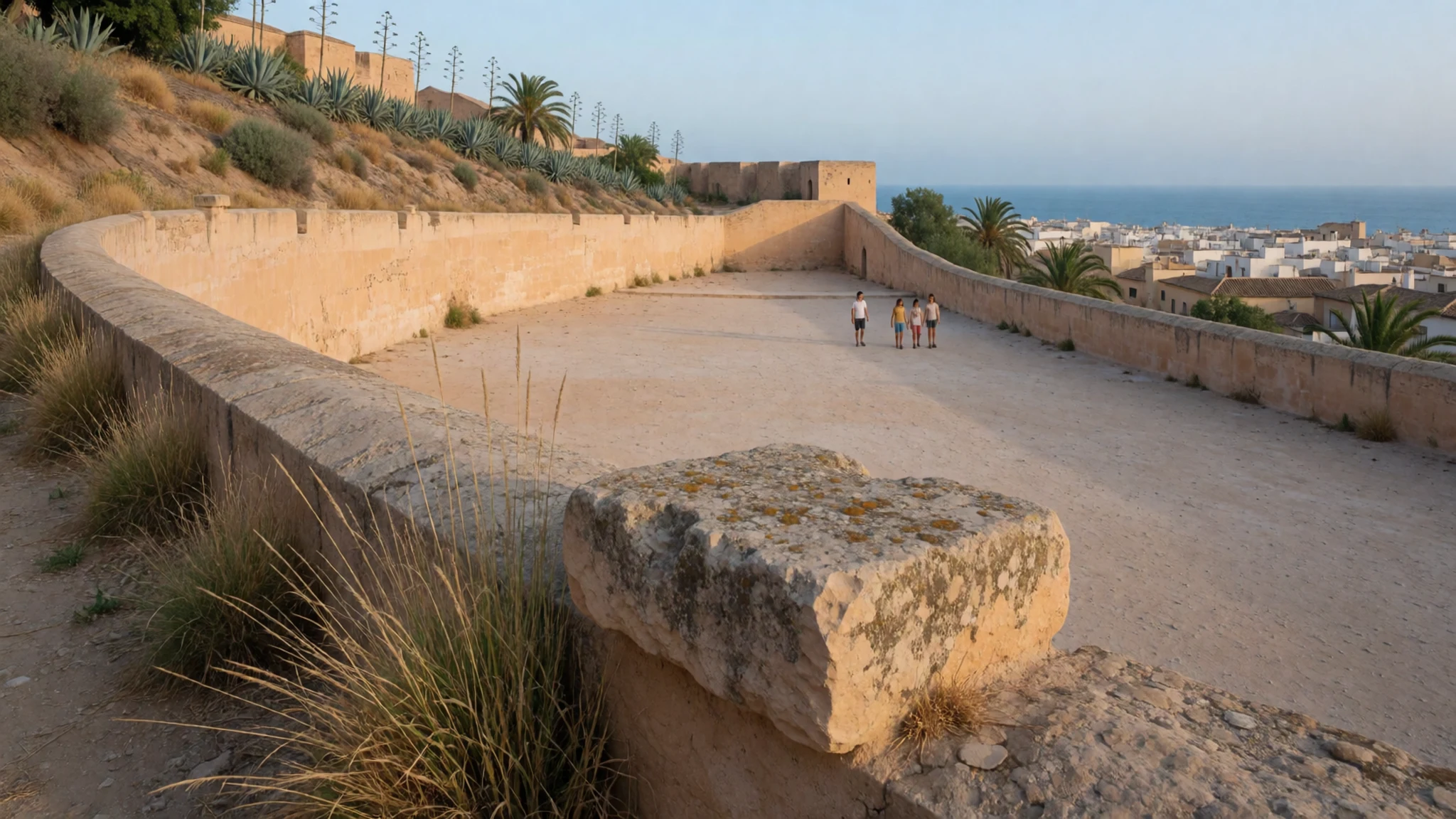
- Muro de la Vela and the second enclosure — Middle level of the alcazaba
The Muro de la Vela divides the first enclosure from the second, and its bell once warned the town of danger. Beyond it lie the remains of the governors' quarters, baths and mosque, plus the gatehouse and courtyard. Stucco was lost here, so imagination and the museum finds fill the gaps.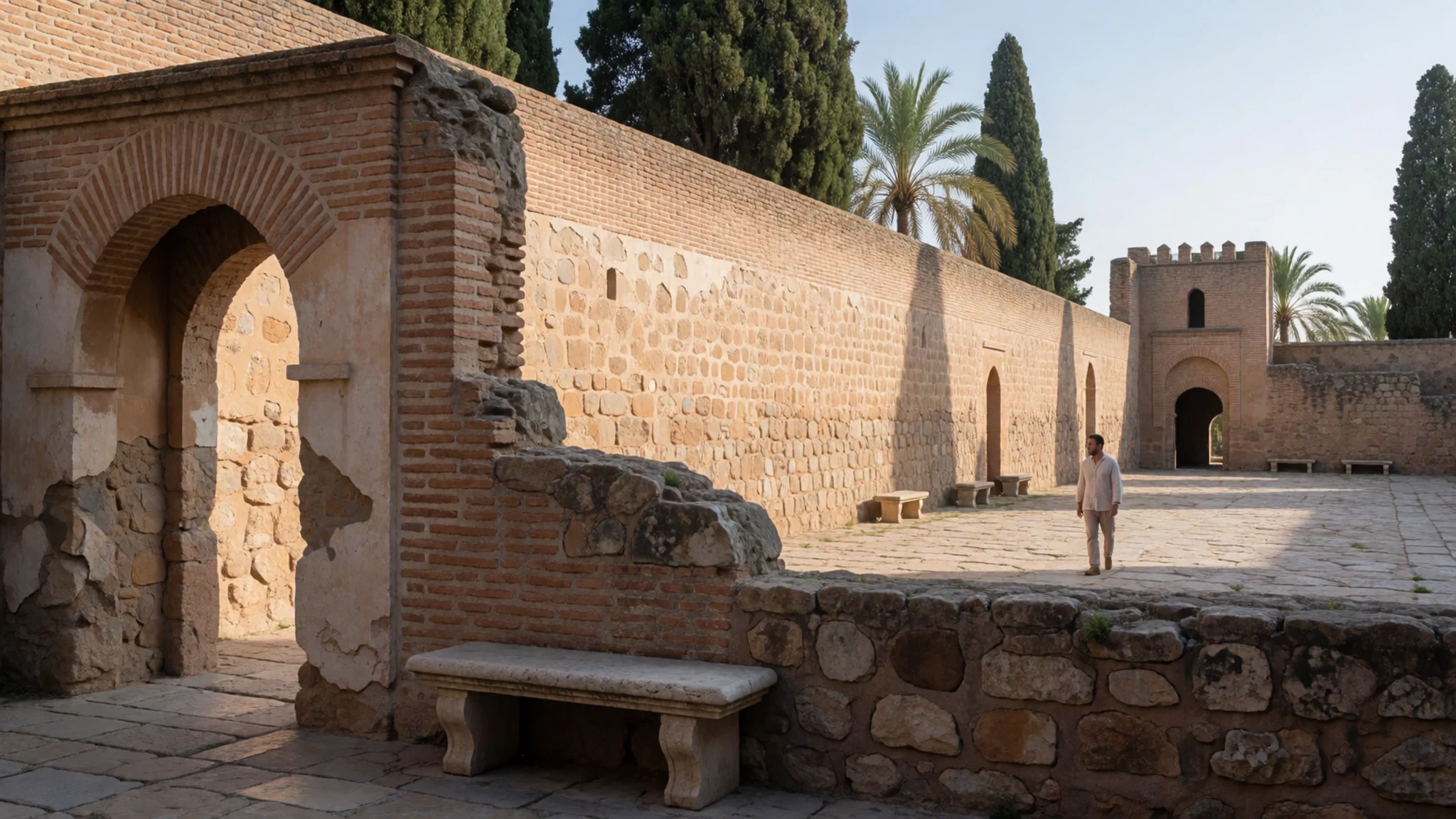
- The Christian castle and battlements — Top of the hill
The highest enclosure was built by the Catholic Monarchs after the reconquest, with thick walls meant to withstand gunpowder. The crenellated walls make a good place to photograph the fortress itself, and the views over the rooftops and out to sea reward the climb.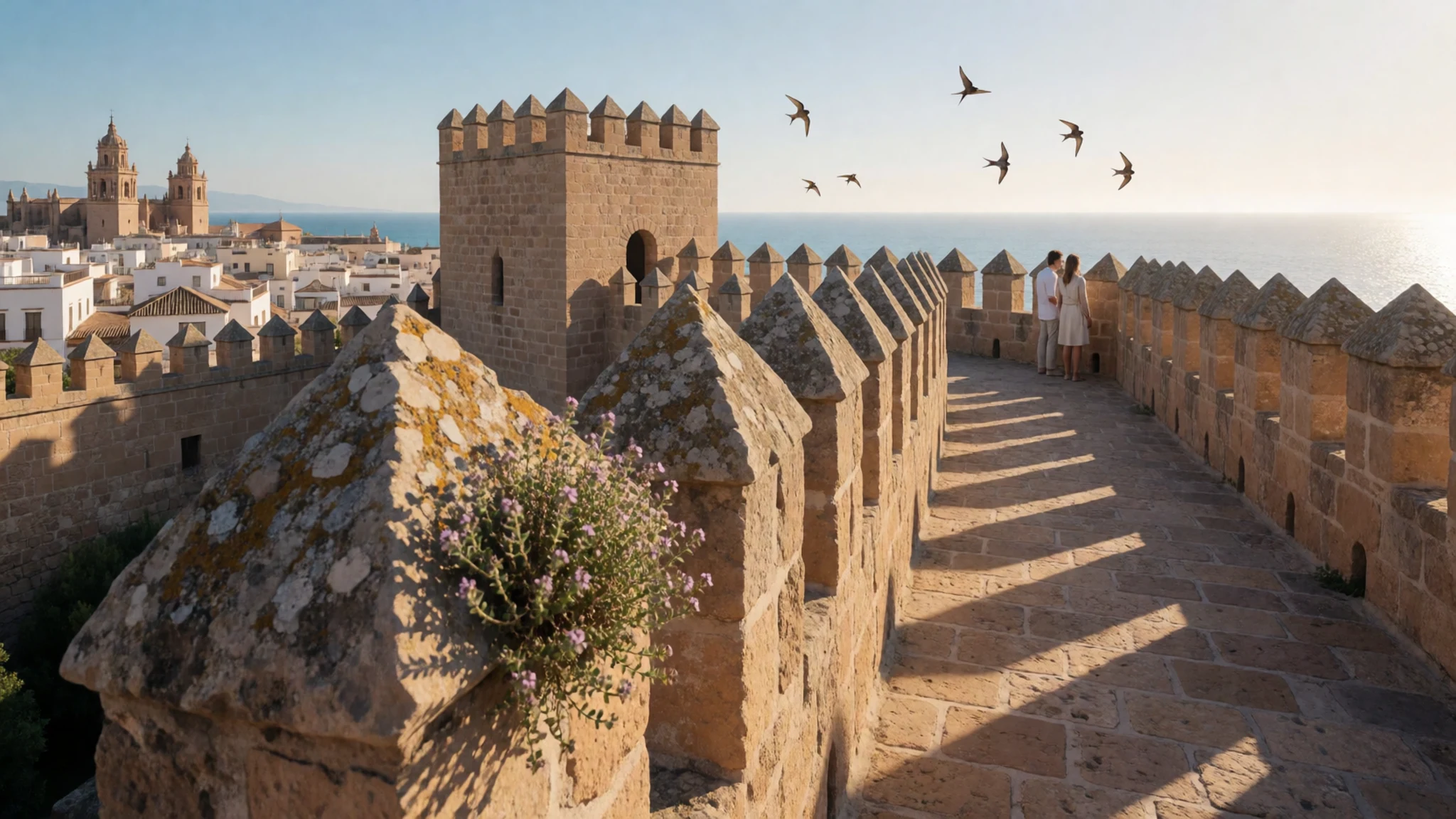
- Cathedral of Santa María de la Encarnación — Old town, below the alcazaba
The cathedral looks more like a fortress than a church, with towers, merlons and protected walkways added to defend it against Mediterranean pirates. It is an easy walk from the alcazaba and a useful reminder that coastal Almería long lived with the threat of raids from the sea.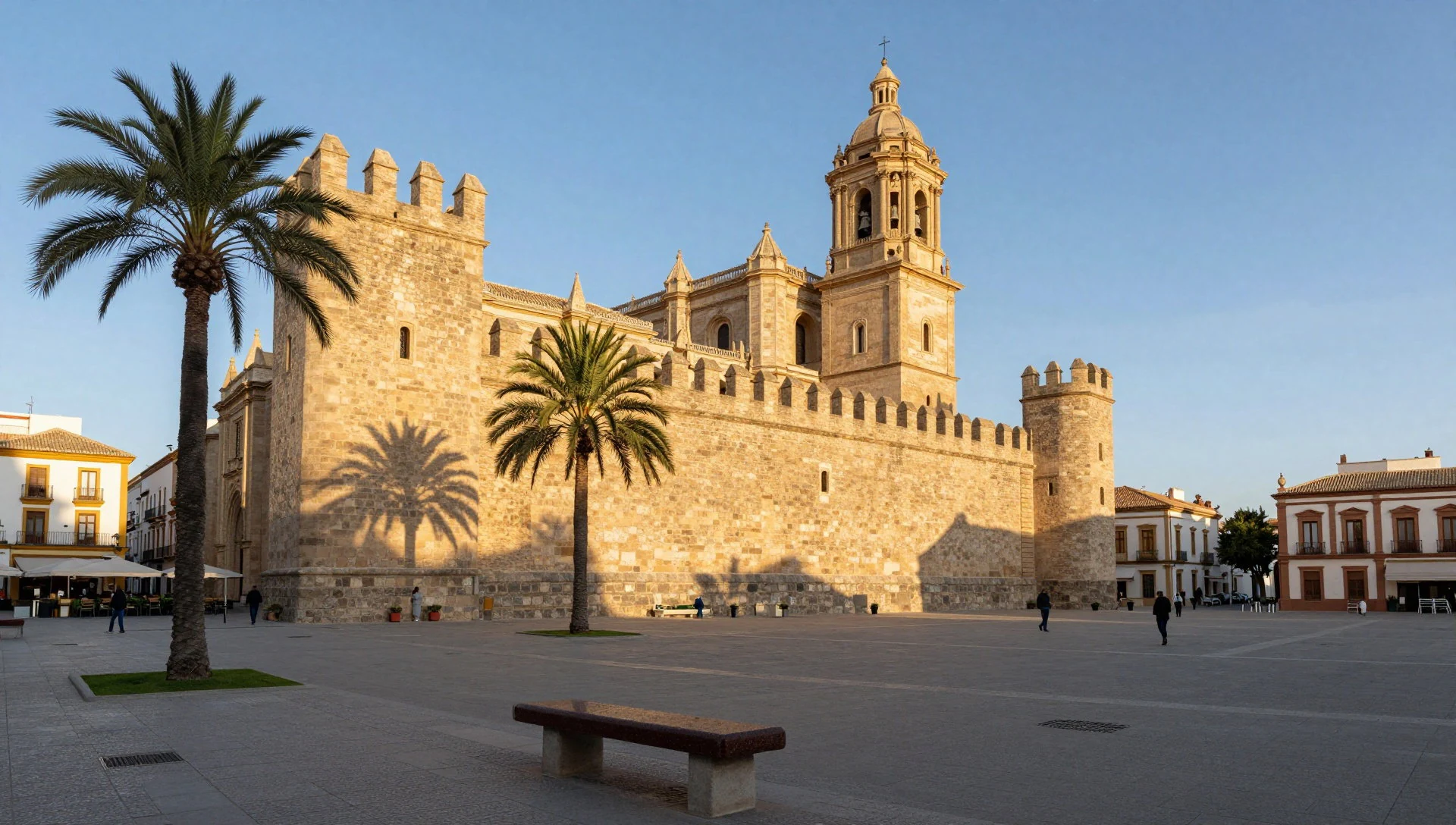
- Las Claras Convent — Old town
A quieter stop in the old town, set in the streets between the cathedral and the alcazaba hill. It suits a slow wander after the fortress, when the heat is high and shady lanes are welcome. Check locally whether the building can be entered before making a special trip.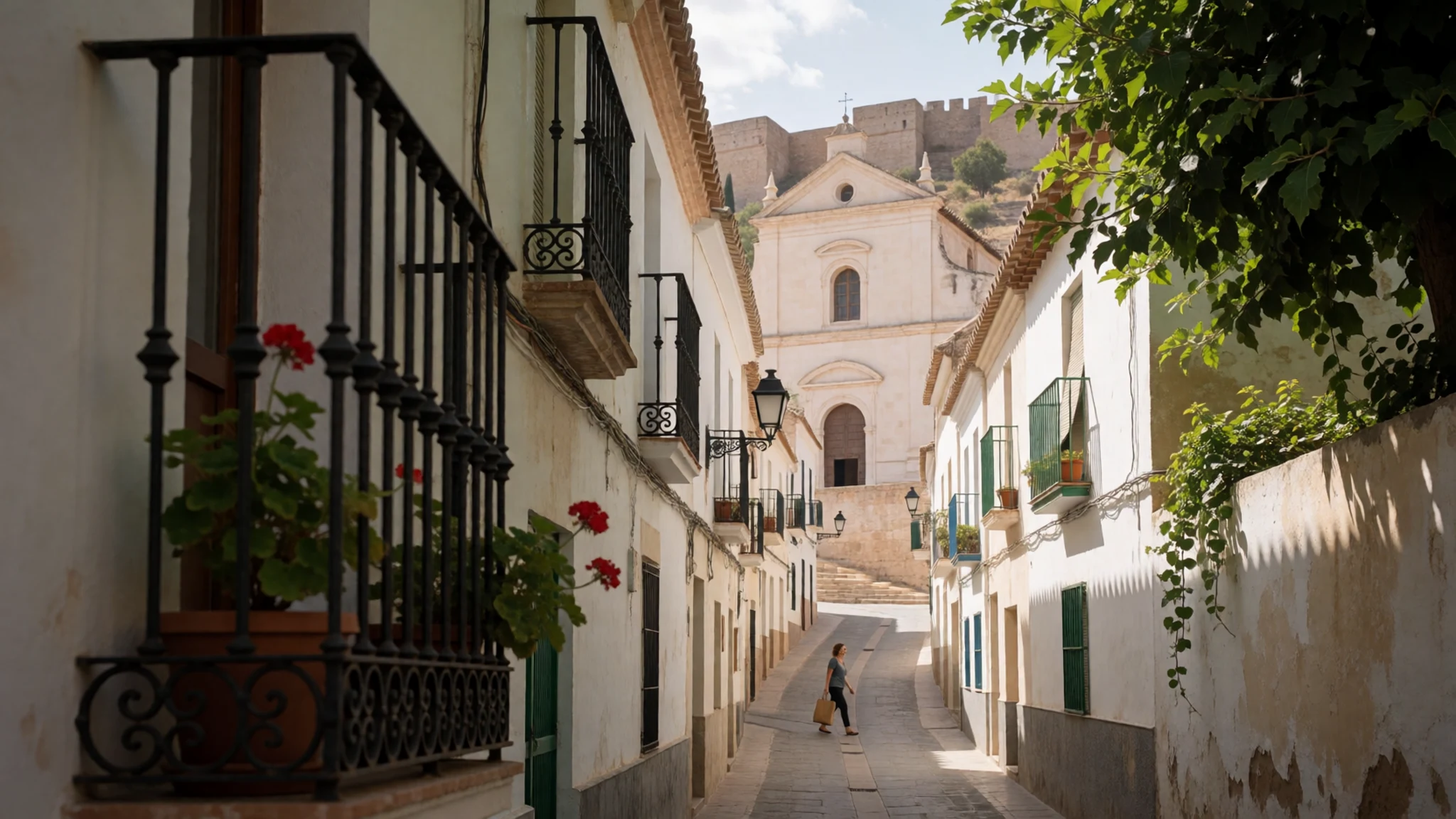
- Cabo de Gata-Níjar Natural Park — East of Almería along the coast
Just outside Almería, this volcanic coastal reserve has quiet beaches and small, isolated coves. It needs its own day, ideally with a car, and it suits the cooler months best. Bring water and sun protection, because shade is scarce along much of the coast.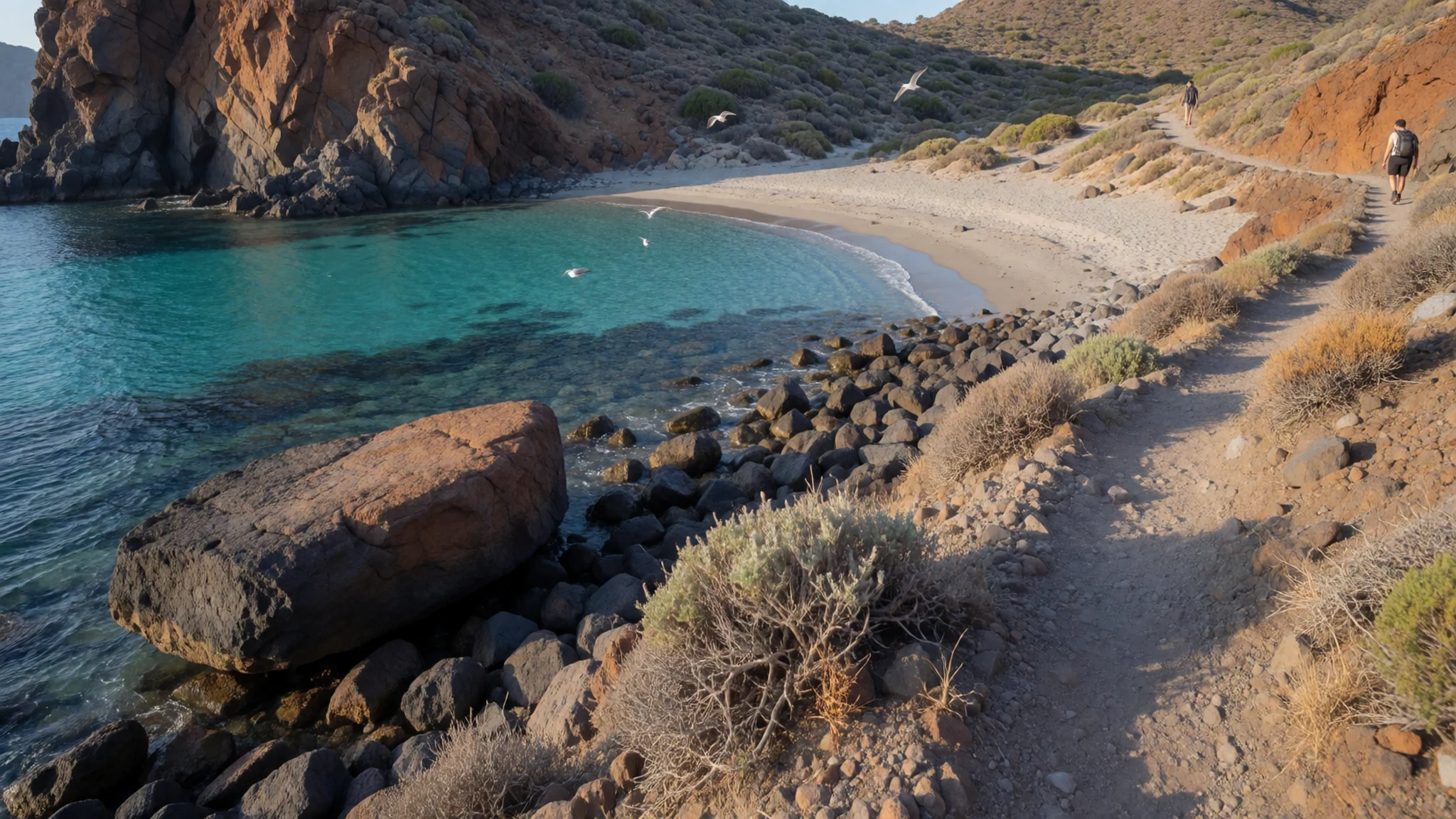
Culture
The Alcazaba of Almería carries several cultures in its stones. Its core is Islamic, built under the caliphate of Córdoba and the taifa kingdom that followed. The upper castle is Christian, raised by the Catholic Monarchs, and the Muro de la Vela belongs to the reign of Charles III. Almería's name is Arabic, and like many Andalusian cities it kept that name after Spanish rule returned. That layering is the real reason to visit: the hill was never the work of one people, but of successive rulers re-using the same strategic ground. The city below has its own rhythm. Tapas bars fill with locals before the late evening, and the afternoon is slow and quiet in the heat, when many streets empty. The cathedral's defensive towers show how recently the sea was a source of danger as well as trade. The wider region also has a film history: desert studios nearby have been used for spaghetti westerns and for scenes in large adventure productions, and some sets can be visited. Spanish daily life tends to start late and finish later, so an early walk on the walls and a long evening of tapas fit the local day. Keep to the marked paths on the ramparts and speak quietly inside the cathedral if a service is under way.
What to wear
At the Alcazaba of Almería and in the city around it, dress follows Andalusian custom and Mediterranean heat. The best-known traditional outfit is the flamenco dress, a fitted, ruffled gown usually made of cotton or lighter fabrics, worn with an embroidered silk shawl. Men's equivalent, the traje corto, is a short jacket with high-waisted trousers and a flat-brimmed hat, often in wool or cotton. These are worn mainly at fairs, festivals and religious processions rather than on ordinary days. Everyday clothing in Almería is plain and practical: light cotton and linen, shorts and sandals in summer, a jacket on cooler winter evenings, and slightly smarter clothes for dinner and tapas outings. Visitors should dress for sun and stone. A wide-brimmed hat, sunscreen and sunglasses matter more than style, as the upper walls have little shade. Flat, sturdy shoes with a good grip suit the worn ramps and uneven paving, and sandals with thin soles are a poor choice. Light long sleeves protect shoulders from the sun, and also help in the cathedral, where covered shoulders and knees are the safer choice. In winter, a thin layer is enough, since the days stay mild. In summer, the biggest clothing decision is simply to carry a bottle of water and wear something that breathes.
What to eat
- Tapas in the cuatro calles — The cuatro calles, central Almería
Most of the town's tapas bars cluster in the area locals call the cuatro calles, a compact knot of lanes right at the heart of town, just below the cathedral square. Go in the evening, order a drink, and move between bars as the locals do.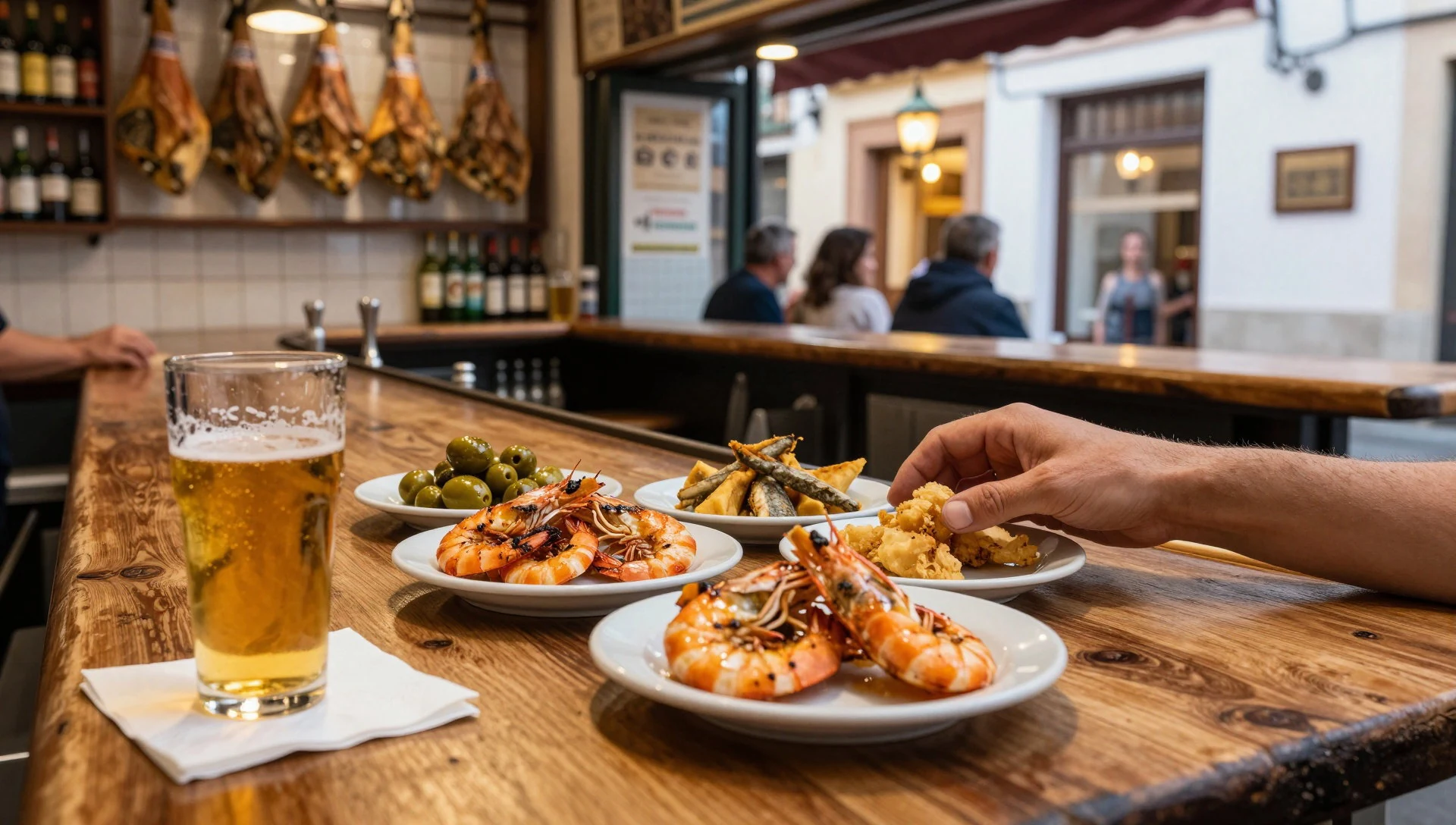
- Tortilla española — Any tapas bar in the centre
The thick potato-and-egg omelette is a staple of the tapas counter, eaten warm or at room temperature. A slice with bread makes a cheap, filling lunch, and it suits a walk up to the fortress afterwards.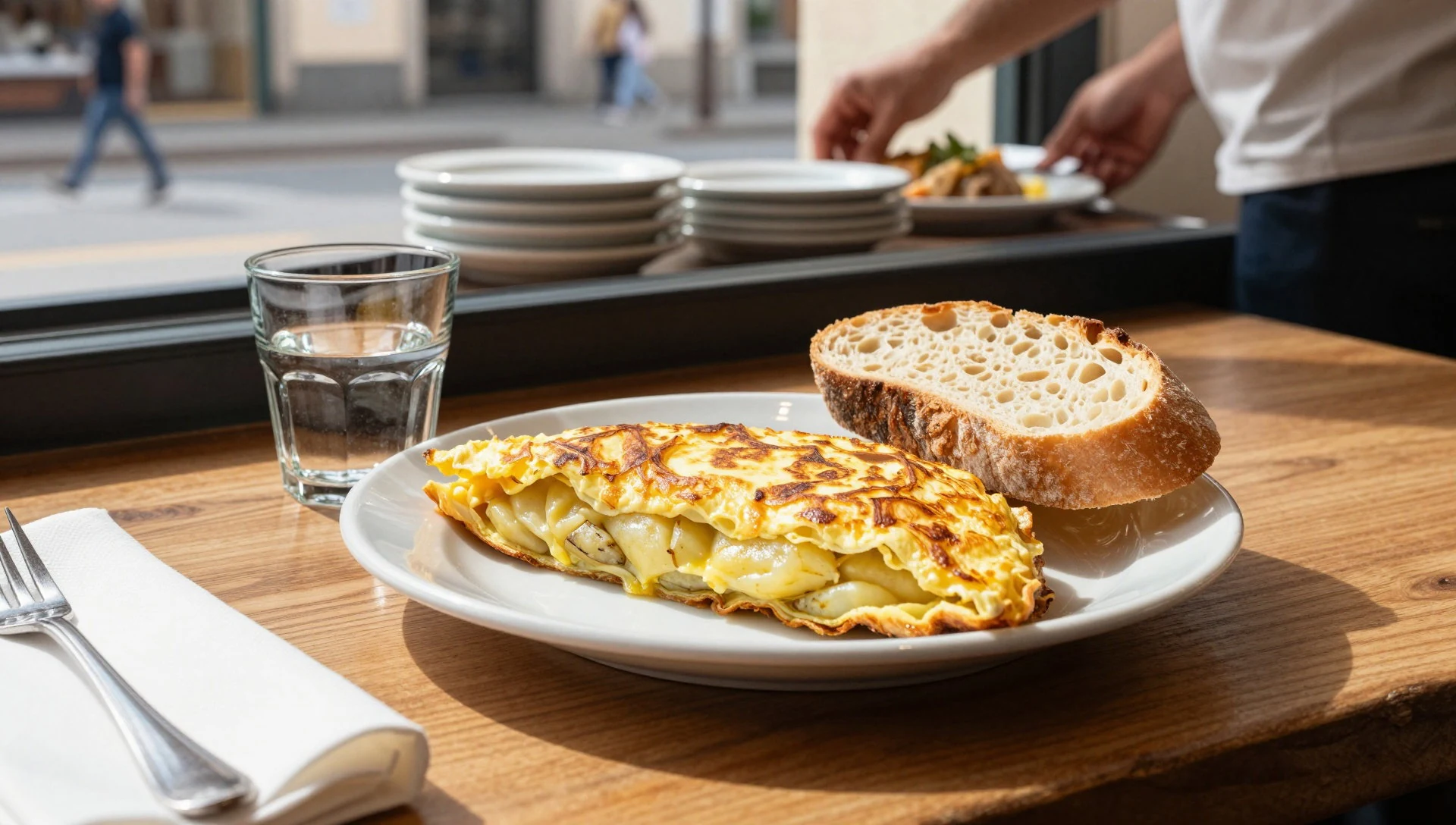
- Potato tapas — Tapas bars near the cathedral plaza
Potato dishes appear on nearly every bar menu, fried, stewed or dressed with sauces. They are simple, hearty plates for sharing, and a good way to taste the local cooking without ordering a full meal. - Fish and seafood plates — Bars and eateries along the Paseo Marítimo
Almería sits on the Mediterranean, so fish and shellfish feature heavily on menus, often grilled or fried in small portions. Ask what is fresh that day, and pair it with a cold drink on the seafront. - Seafront breakfast — Paseo Marítimo, the seafront promenade
The pedestrian promenade by the sea has many bars serving breakfast, coffee, fresh juices and light tapas with a view of the water. It is a gentle start before climbing to the alcazaba in the cooler morning air.
Plan it
Best time. March–April and October–November, when days are warm rather than fierce. Winters are very mild, so the walls are pleasant then too. Summers are long and hot, and July and August can be punishing on the exposed stone.
How long. 1–2
Getting there. Málaga Airport has the widest choice of flights; from there take a bus to Málaga's main station and an ALSA coach to Almería's Estación Intermodal, a journey of several hours. The train from Madrid is slow but scenic, crossing desert country. From the centre of Almería, walk uphill to the alcazaba.
Budget. mid
Tips
- Check opening times and tickets on the official site, http://www.museosdeandalucia.es/web/conjuntomonumentallaalcazabaalmeria, before going
- Visit early in the morning or late in the day from June to September, as the walls offer little shade
- Carry water, a hat and sunscreen, and wear flat shoes with grip for the ramps
- Save the evening for tapas in the centre, when locals go out
- Give Cabo de Gata-Níjar a separate day, ideally with a car
Etiquette
- Stay on marked paths and off the ramparts' edges, as the old walls are fragile
- Cover shoulders and knees, and keep your voice low, when entering the cathedral
Nearby
Sources
- Wikidata Q24024872 (CC0)
- Wikipedia, Alcazaba of Almería (rev 1364547878) (CC BY-SA 4.0)
- Wikivoyage, Almería (rev 5423942) (CC BY-SA 4.0)
- Photo: Alcazaba de Almería, by ANE (CC BY 3.0)
- Photo: Zinnen der Alcazaba in Almería, by Frank C. Müller (CC BY-SA 2.5)
- Photo: Alcazaba de Almería (2007), by Calapito (Public domain)
- Photo: Alcazaba of Almeria, by Dodo Dodo (CC BY 2.5)
- Photo: Courtyard and gatehouse of the Alcazaba of Almería, by Willem van der Horst (CC BY 2.5)


