Bellver Castle
Bellver Castle, Spain
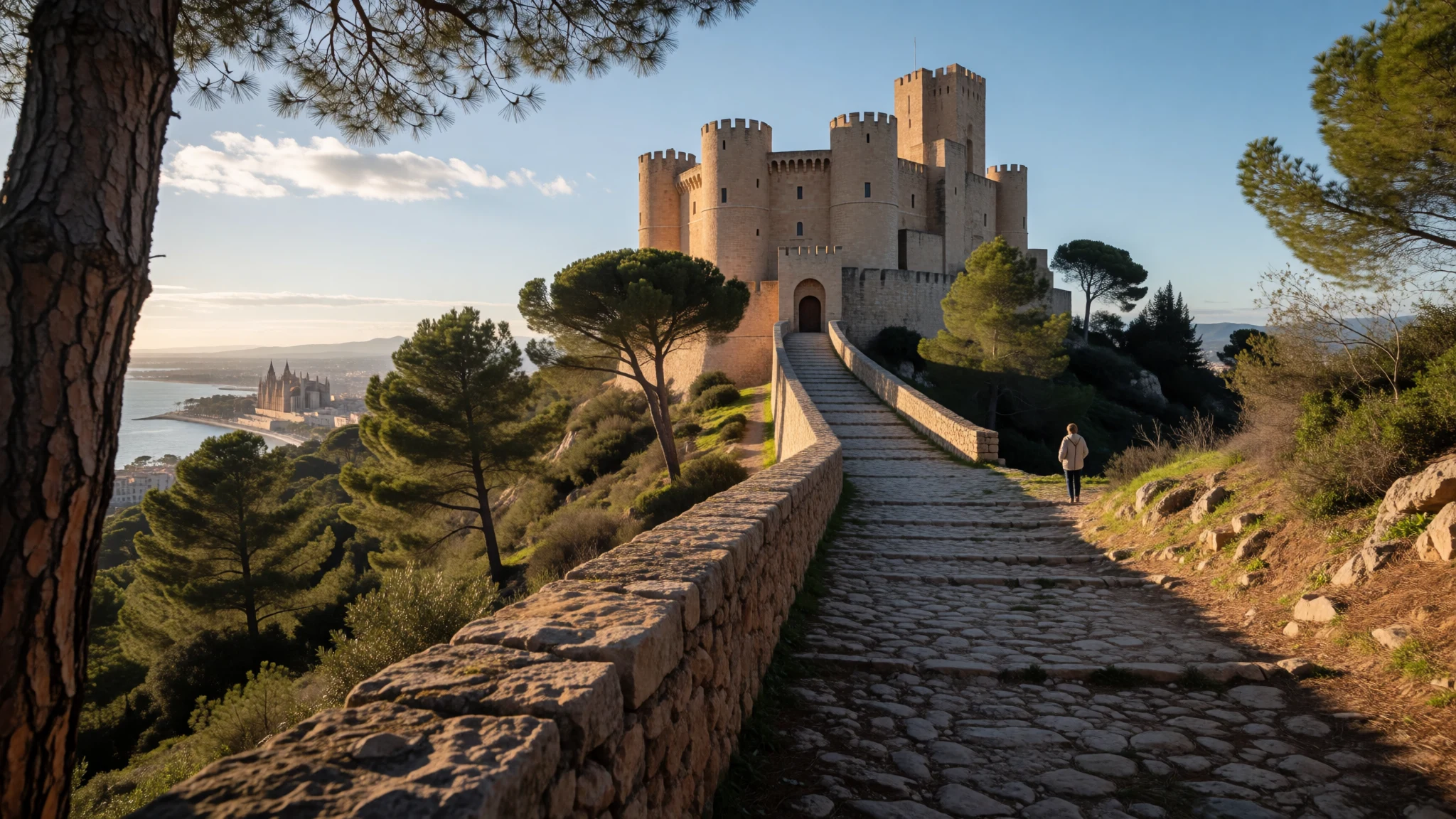
Bellver Castle is a rare round Gothic fortress on a pine-covered hill above Palma, with a circular courtyard and wide views over the bay.
The place
Bellver Castle stands on a hill about 3 km west of central Palma, on the Spanish island of Mallorca. The summit is 112 m above sea level, high enough to lift the castle clear of the city and give it long views over the bay, the old town and the cathedral on the waterfront. The Catalan name, Castell de Bellver, hints at that: it means roughly 'the castle with the fine view'.
Pine woods cover the slopes, and the hill works as a green lung for Palma, with locals walking, running and picnicking in the shade. The approach is by road or on foot along paths through the trees, and the last stretch is steep, which is worth remembering on a hot afternoon.
The building itself is a rarity. Its plan is a circle around an open courtyard, with three small round towers attached to the wall and a taller keep standing slightly apart, tied to the rest by a high bridge across the moat. Round castles are uncommon in Europe, so this one reads at once as unusual.
The castle is no longer a military site. It is under civilian control and holds Palma's history museum, so one visit covers architecture, a collection and a viewpoint. It is also among the island's major attractions, which means tour groups and heat bouncing off pale stone in summer; early mornings and the shoulder seasons are calmer. Bellver usually fits as a half-day trip alongside the cathedral and the royal palace of La Almudaina near the harbour. Opening days and ticket arrangements change, so check the official site, castelldebellver.palma.cat, before setting out.
Its story
Bellver Castle was built around 1310 for James II of Majorca, when the island was a kingdom in its own right with Palma as its capital. The royal court wanted a residence on high ground outside the city. The architect usually credited is Pere Salvà, who also worked on the Almudaina palace by the cathedral, with other master masons alongside him.
The design draws on more than one tradition. A round plan with attached towers and a detached keep resembles the Herodion, the hilltop palace in the West Bank, while the double arches around the courtyard show Moorish influence. The stone was cut from the hill itself, an economical choice that later left the structure with cracks.
The royal household did not use it for ever. From the 18th century into the middle of the 20th, Bellver served as a military prison. The arrival of artillery had already changed its defences: the battlements on the upper balconies and the barbican were removed, and loopholes for firearms were cut in their place, leaving a plainer skyline than the one its builders intended.
Today the castle is under civilian control and houses the city's history museum. Its courtyard, once the centre of a royal residence and later of a prison, is now a place where visitors with cameras and audio guides stand under the same arches and look up at the keep.
What to see
- The circular courtyard — Bellver hill, west of Palma
The courtyard is the heart of Bellver Castle: an open ring surrounded by arcades on its upper and lower levels, with pale stone throwing back the Mallorcan sun. The plan feels closer to a cloister than a fortress. Standing in the middle shows, better than any diagram, how unusual a circular castle is.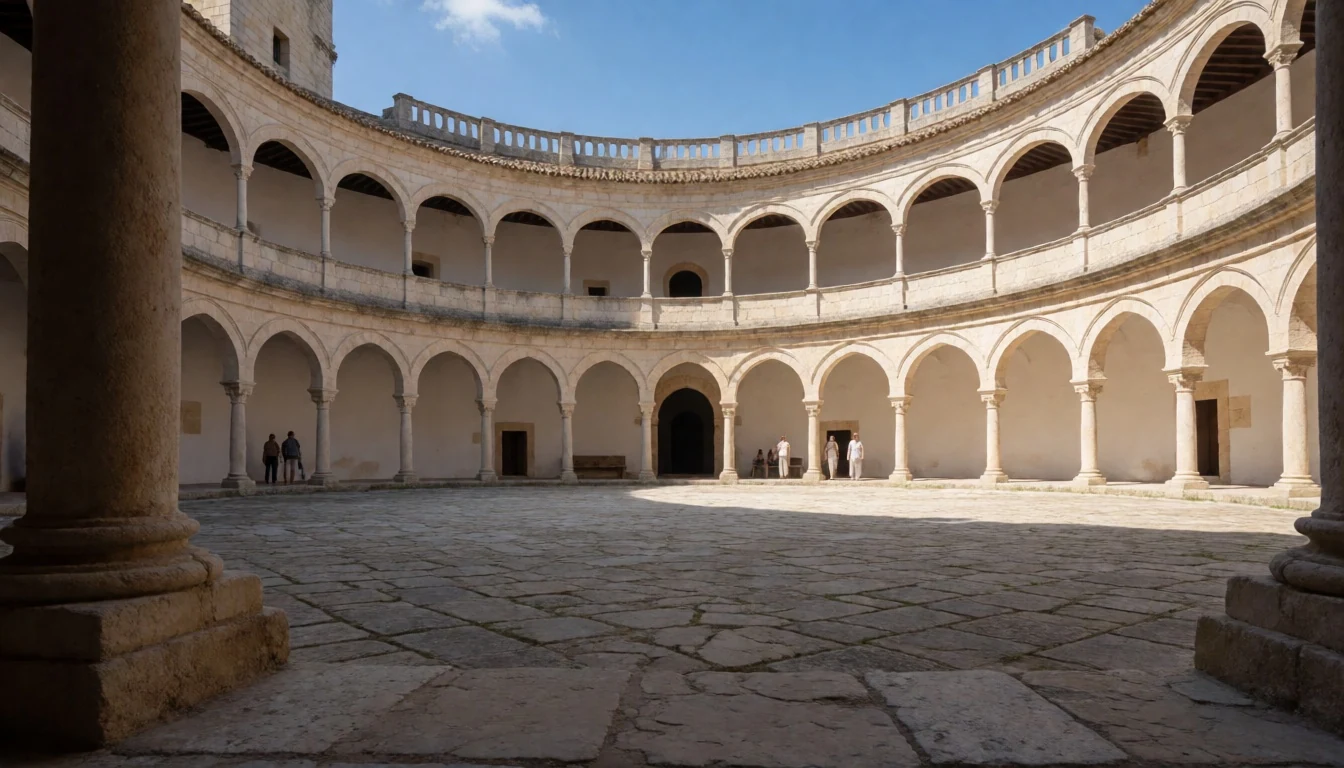
- The keep and its bridge — Bellver hill, west of Palma
The main tower stands apart from the ring and is joined to it by a high bridge over the moat. The arrangement was clearly meant to let defenders cut it off from the rest. The steps are narrow, so go when the castle is quiet, and look out at the building itself from the top.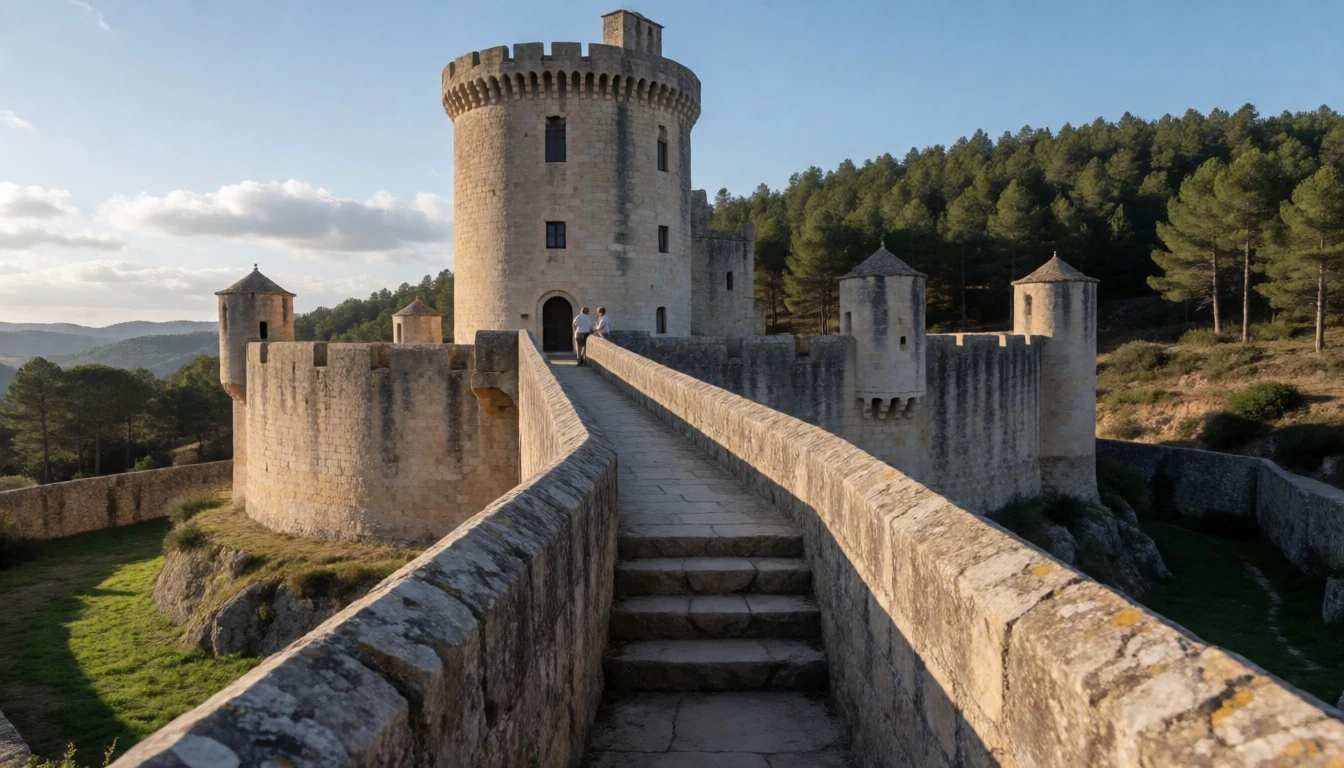
- The entrance portal and moat — Bellver hill, west of Palma
The main entrance and the moat around it show how thick the walls are and how the castle was meant to be approached. Walking the outer edge also reveals the cracks that came from quarrying the hill for its own stone. Late afternoon light warms the walls and softens the shadows.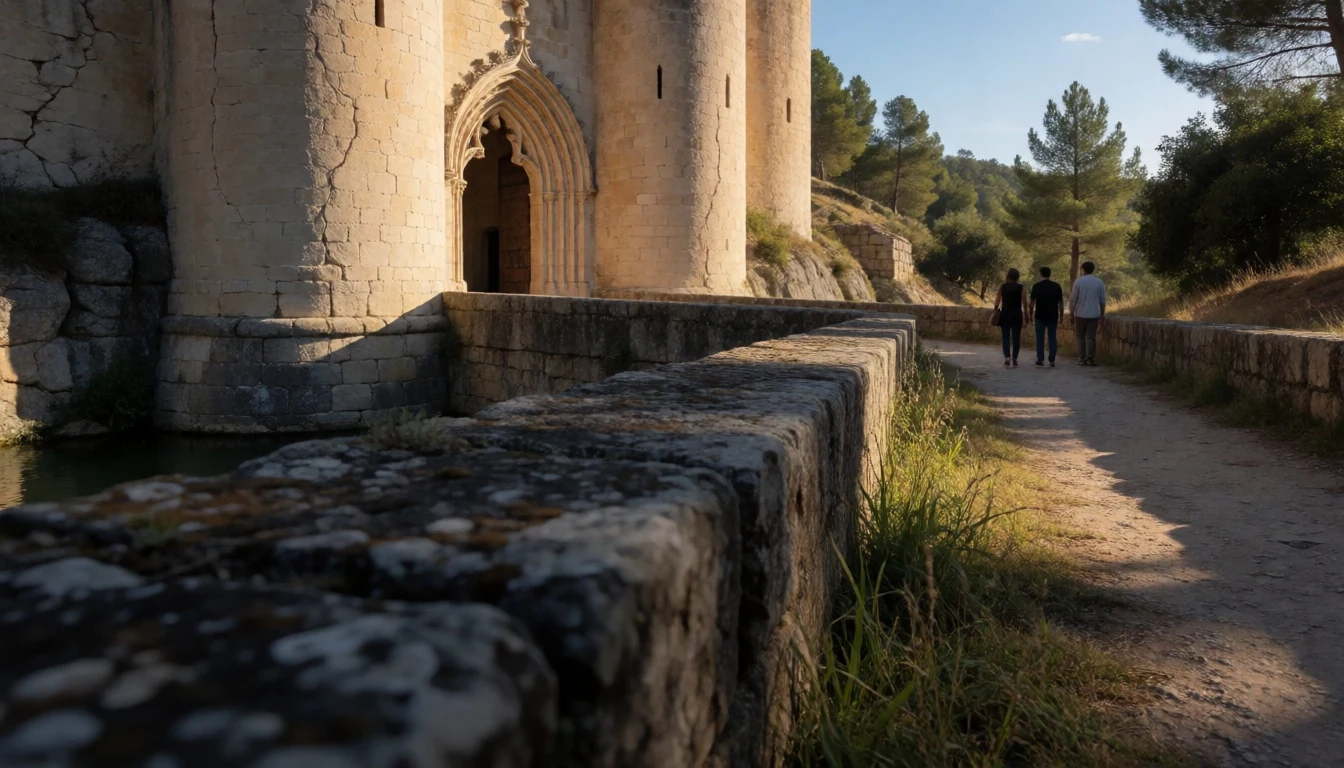
- The roof walk and views — Bellver hill, west of Palma
The roof gives a full panorama over Palma: the bay, the old town, the cathedral and the harbour, with pine woods dropping away below. Clear mornings and late afternoons give kinder light and less haze. Midday in summer is hot, and there is little shade on the stone, so bring water.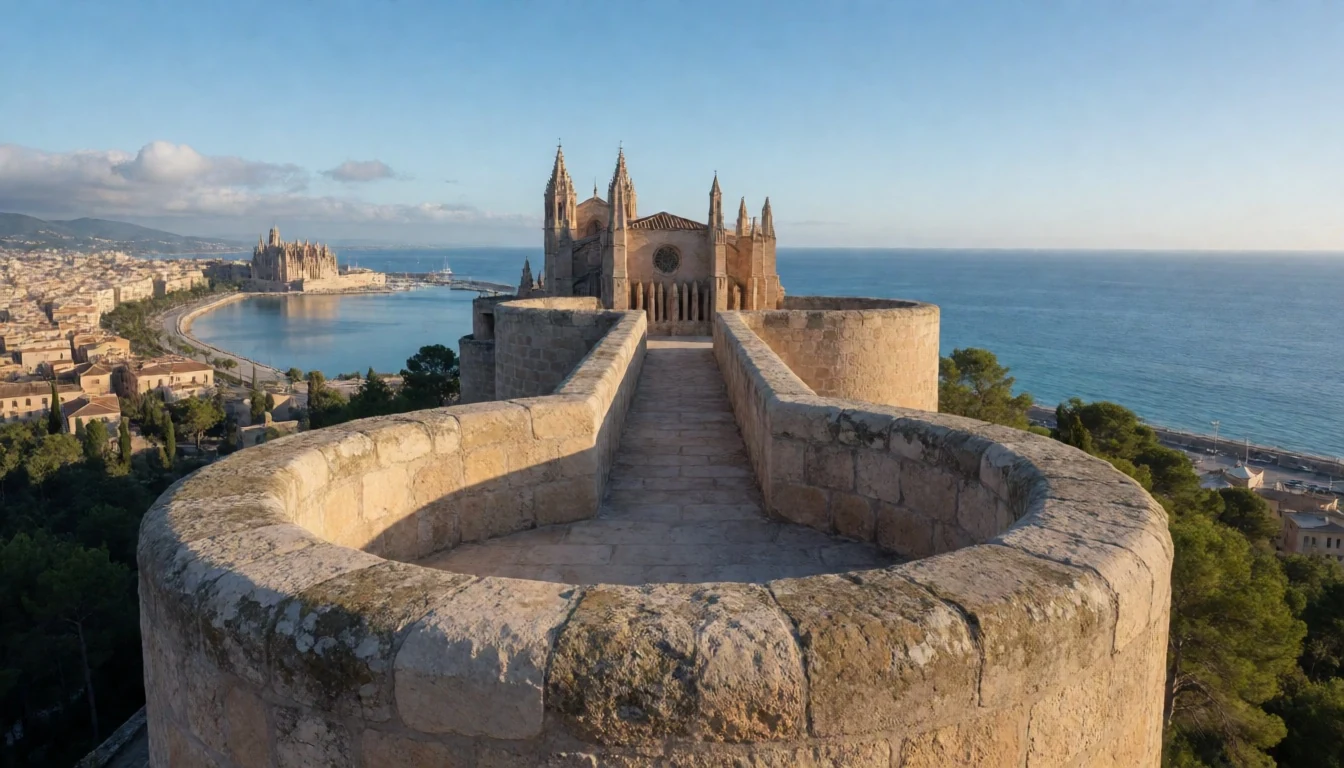
- The city history museum — Inside Bellver Castle
Inside the castle, the Museum of the History of the City of Palma follows the town's past, from its Roman foundation through later centuries. The galleries sit within the castle's own rooms, so the building is part of the display. Check the official site for current opening arrangements and ticket details.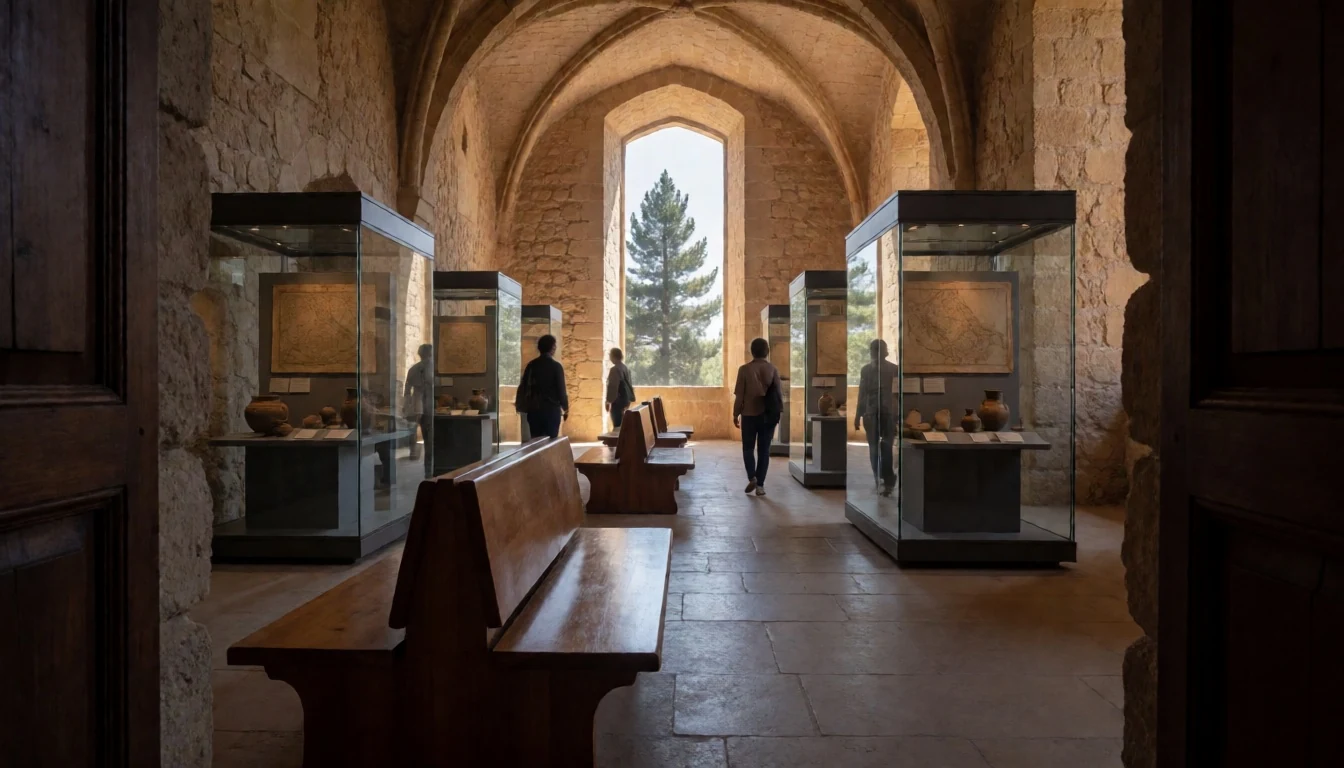
- Palma Cathedral — Old town, Palma waterfront
Palma Cathedral rises over the waterfront in the old town, a Gothic building that took centuries to finish and that Antoni Gaudí also worked on. It pairs naturally with Bellver, since the castle looks down on it across the city. Expect queues in summer and check the official site for visiting rules.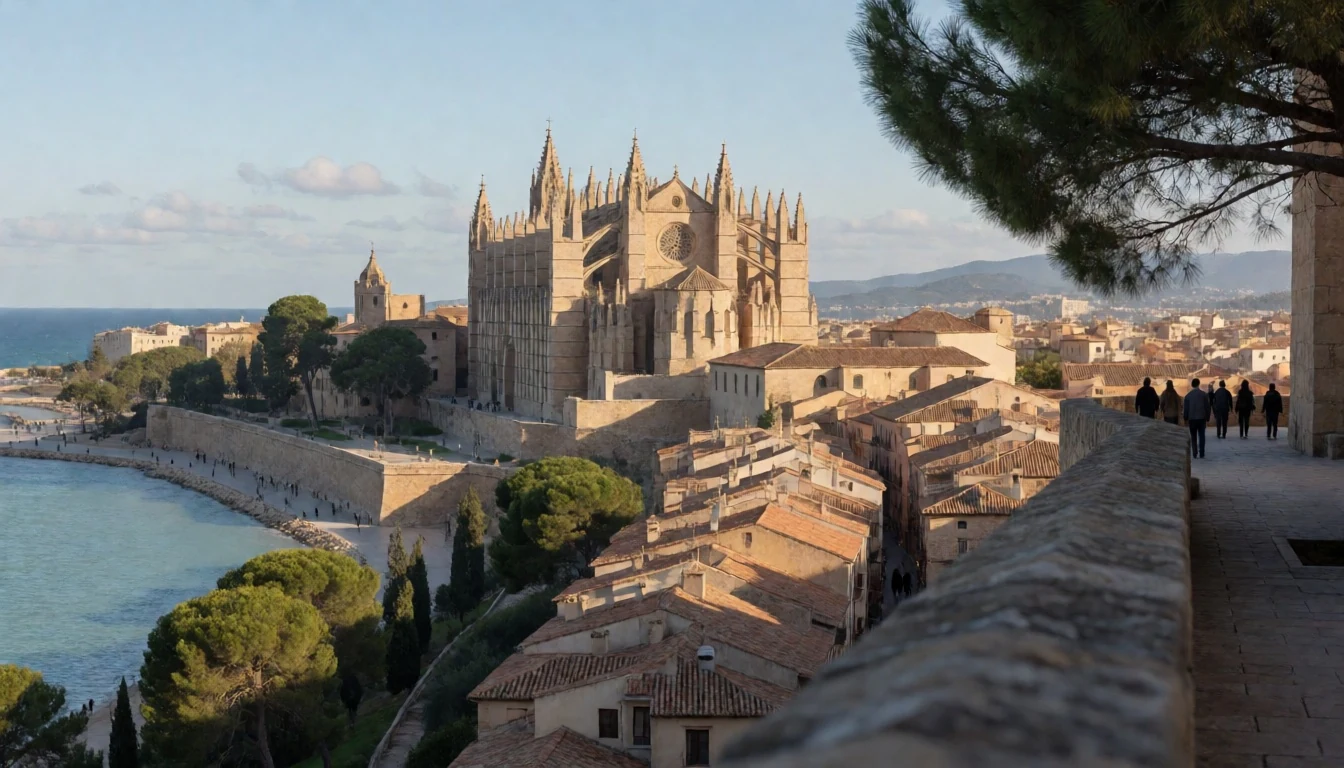
Culture
Bellver Castle sits in a place where Catalan is an everyday language alongside Spanish, and the Mallorcan variety is heard on the hill, in the museum and on Palma's streets. Signs are often in Catalan first, and a simple bon dia (good morning) lands well. Local life keeps a Mediterranean rhythm: a long midday meal, quiet streets in the afternoon heat and late dinners.
The castle carries two layers of memory. It began as a residence for the kings of Majorca, whose short-lived kingdom is still part of how islanders think about their past, and it later served as a military prison for a long stretch, so for many people it is more than a picturesque ruin. The history museum inside tells Palma's story in the setting of the castle itself, and families come up the hill for walks and picnics in the pine woods on fine weekends.
Festivals in Palma follow the Catholic calendar and island tradition, with fire, music and food in the streets in winter and processions around Easter. Crowds are heavier on those days and rooms fill early, so it helps to book ahead if the trip is built around a feast.
Visitors should keep their voices low in the museum rooms and avoid climbing on the arcades or walls, where the stone is already cracked.
What to wear
Near Bellver Castle, as across Mallorca, traditional dress is best known through roba de llengües, a cloth whose name means 'cloth of tongues' for the flame-like, tongue-shaped patterns in its weave or print. Made in cotton or linen, in bold stripes and colours, it was long used for curtains, bedding and clothing. Folk costume made with it, often with a lace headdress or shawl for women, appears today at festivals, dance displays and village celebrations.
Everyday clothing in Palma is Mediterranean casual: linen shirts, light dresses, shorts in summer, espadrilles or trainers, and sunglasses on almost everyone. The old town dresses a little smarter in the evening, and people put on their best for dinners and church feasts. Winter calls for a jacket and sometimes an umbrella.
Visitors to the castle need sun protection and sensible shoes: flat, closed shoes with grip suit the steep hill paths, worn steps and stone floors that can be slippery after rain. A hat, sunglasses and a light layer for the breeze at the top all help. The castle itself has no strict dress code that the brief records, but covered shoulders and knees are expected in churches, Palma Cathedral included, and beachwear looks out of place in the old town.
What to eat
- Ensaïmada — Any old-town bakery or café, in the morning
A spiral of light yeast dough made with pork lard (saïm) and dusted with icing sugar. Locals eat it at breakfast or mid-morning with coffee, and some versions are filled with cream or pumpkin preserve. It travels well but crumbles easily, so eat it fresh.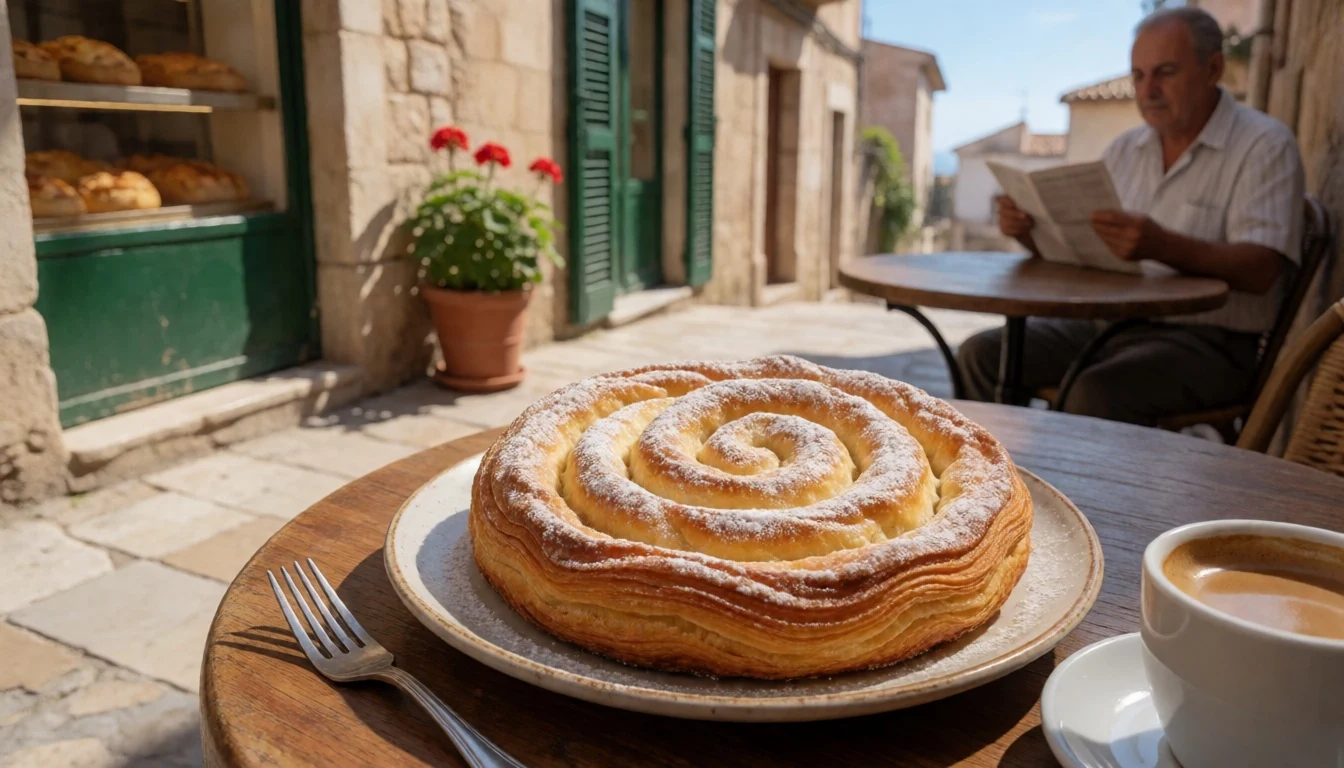
- Sobrassada — Delicatessens and the covered market stalls in Palma
A soft cured pork sausage coloured and flavoured with paprika, spread on bread rather than sliced. It is rich and salty, sometimes served with a thread of honey. Look for it hanging in delicatessens and sold in jars to take home.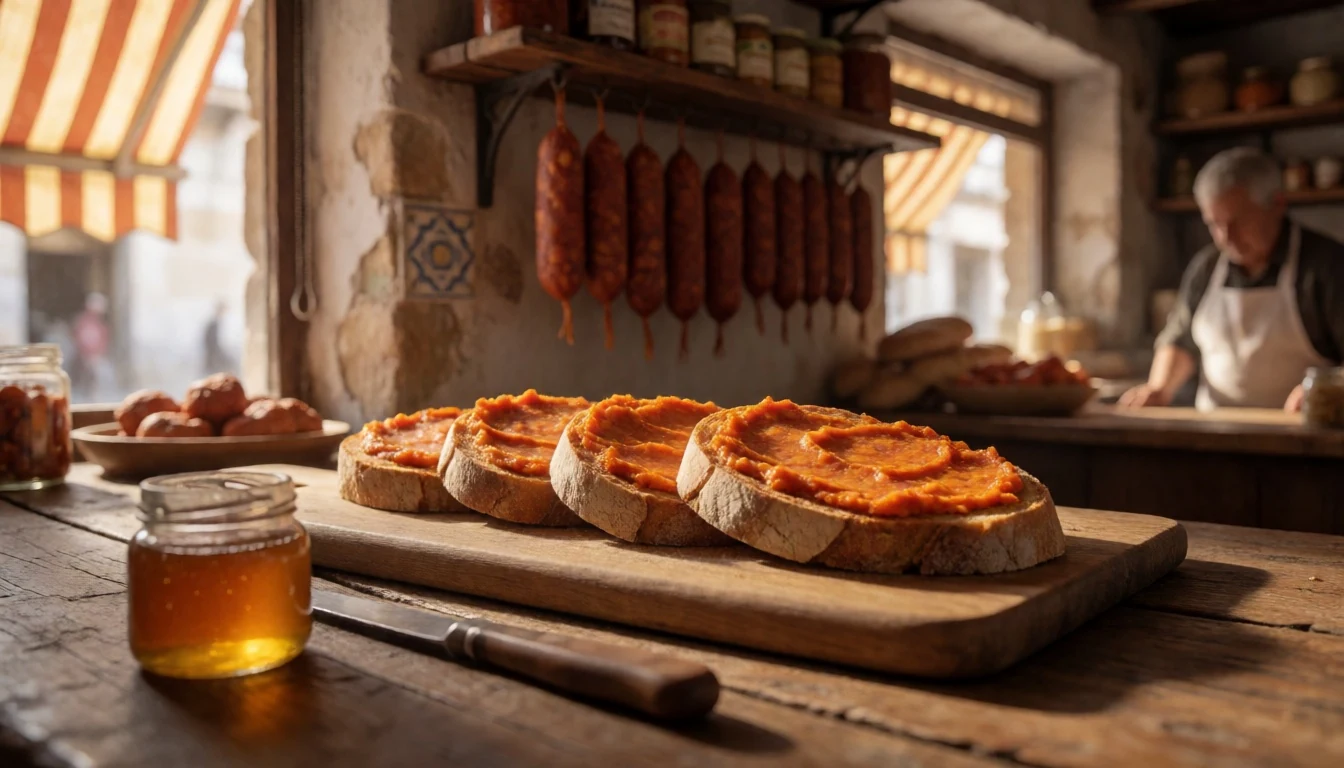
- Tumbet — Traditional lunch places serving a set midday menu
A layered dish of fried aubergine, potato and pepper under a tomato sauce, served as a side or a vegetarian main. It is a home-cooking staple and tastes best in summer when the vegetables are ripe. Vegetarians will find it a reliable option. - Pa amb oli — Tapas bars and market-hall counters
Country bread rubbed with ripe tomato and olive oil, then topped with ham, cheese, olives or sobrassada. It is a simple, filling snack and a good answer to a hot afternoon when a full meal feels too much. - Arròs brut — Family-run restaurants serving traditional Mallorcan food
The name means 'dirty rice', and it is a brothy rice dish with meat, vegetables and warm spices, more a thick winter stew than a dry paella. Portions are generous, so it suits a long lunch with company.
Plan it
Best time. April–June and September–October for warm, comfortable days that suit the climb to the castle; July and August are hot and the busiest, while winter is mild but can be wet and breezy on the hilltop.
How long. 2–3
Getting there. Palma de Mallorca airport, then EMT bus A1 or a taxi to the city centre; ferries also reach Palma from Barcelona, Valencia and Denia. From the centre the castle is about 3 km west: take a city bus or taxi, or walk up through the pine woods.
Budget. mid
Tips
- Go at opening time or late afternoon to avoid summer heat and tour groups
- Wear flat shoes with grip; the hill paths, steps and stone floors can be slippery
- Bring water, a hat and sun cream, as the roof walk has little shade
- Check the official site, http://castelldebellver.palma.cat, for opening days and tickets before going
- Keep valuables close in the busy city centre, where pickpockets operate
Etiquette
- Keep voices low in the museum rooms
- Do not climb on the arcades, walls or keep
- Greet staff and shopkeepers with a bon dia or buenos días
Nearby
Sources
- Wikidata Q261707 (CC0)
- Wikipedia: Bellver Castle (rev 1371940781) (CC BY-SA 4.0)
- Wikivoyage: Palma de Mallorca (rev 5413753) (CC BY-SA 4.0)
- Castell de Bellver, Palma de Mallorca. Main tower — pjt56 (CC BY 3.0)
- Bellver-portal.jpg — Unknown author (CC BY 3.0)
- Castell de Bellver panorama — pjt56 (CC BY 3.0)
- Castell Bellver Palma de Mallorca — Antonio De Lorenzo (CC BY 3.0)
- Torre del Homenaje del Castillo de Bellver — Aadrover (assumed) (Public domain)
- Castell de Bellver (Palma), plànol informatiu — Enric (CC BY-SA 4.0)
- Secció de les fortificacions exteriors del castell de Bellver — Antoni I. Alomar (assumed) (Public domain)
- Castillo de Bellver / Museo de Historia de la Ciudad de Palma, 2022 — MiguelAlanCS (CC BY-SA 4.0)


