Hienghène
Hienghène, France
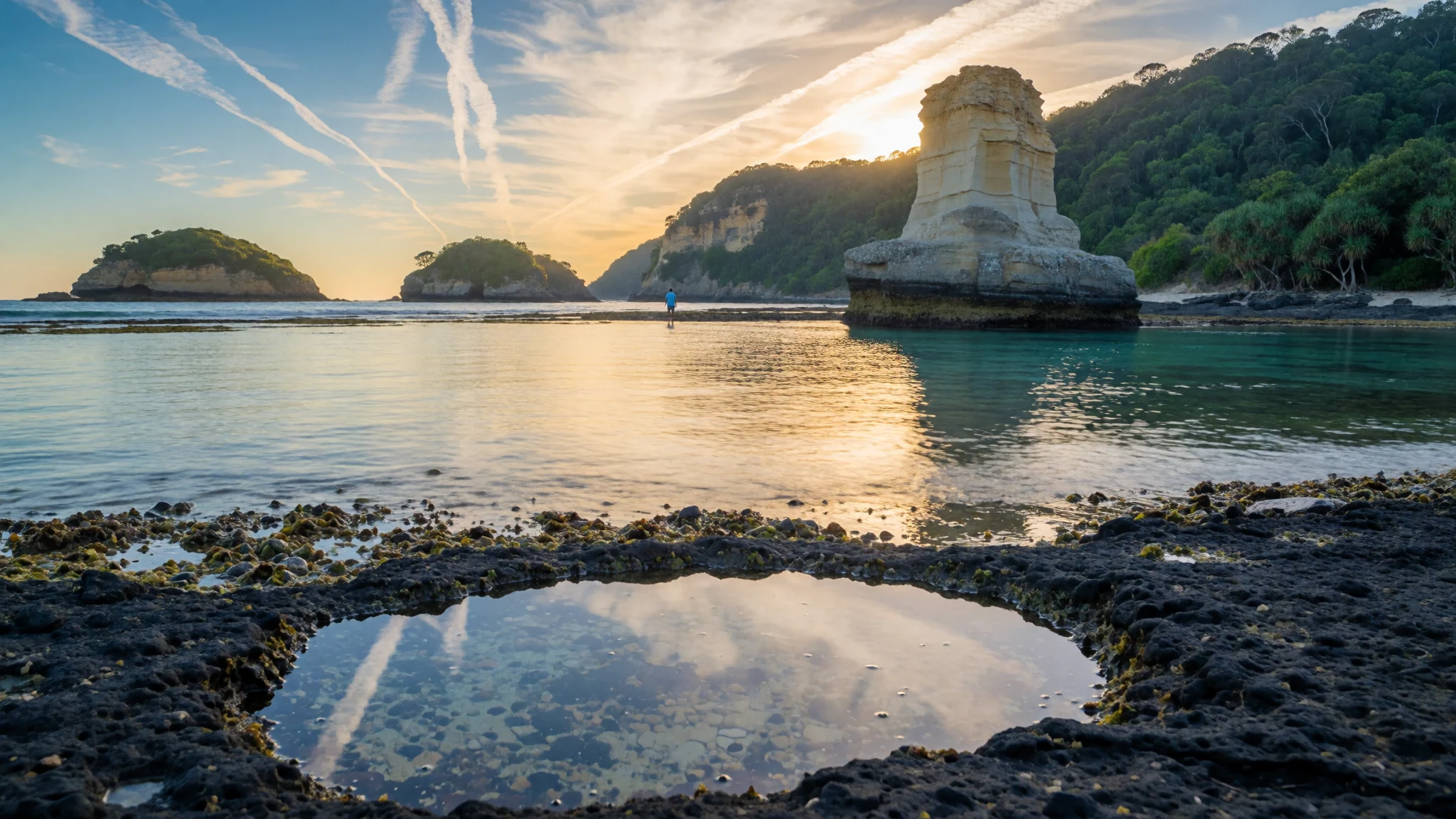
Hienghène is a quiet Kanak-country bay on New Caledonia's east coast, where sculpted limestone stacks rise from the water and village life moves slowly.
The place
Hienghène is a commune on the north-east coast of Grande Terre, the main island of New Caledonia, within the North Province. About 2,500 people live here, divided between a small village on the bay and tribal communities along the shore and up the valleys. New Caledonia is a French territory that makes its own laws on most matters, while defence and foreign policy stay with Paris. The result is a place that feels French in its bakeries and road signs and Melanesian in almost everything else. The bay is what draws people. Steep islets and stacks of limestone stand in the water, survivors of a formation that, about 40 million years ago, blanketed the entire bay. Weather over a vast span of time wore down the weaker stone and left the tougher, silica-rich pieces upright. Several carry nicknames: the Sphinx, the Towers of Notre-Dame and a rounded rock called the Brooding Hen. Behind the coast the land climbs into green hills, and the Ouaième river reaches the sea close by, still crossed in places by a small ferry. Tourism is light. There are a few lodges and a handful of eateries, so evenings are quiet and mornings start early. Nouméa, the capital, is a long drive away, and that distance is the main reason the crowds stay elsewhere.
Its story
Hienghène lies in country that Kanak people have inhabited for far longer than any European presence in the Pacific, and the district still runs on that older order. Clans and tribes hold land here, led by chiefs whose traditional authority French law formally recognises. A body of custom, known as la coutume, governs gifts, visits, land and marriage alongside the state's own rules. The name itself comes from Fwâi, the local Kanak language, in which the place is Hyehen. European contact brought missionaries, settlers and a colonial administration that took land and confined many Kanak families to reserves. Over time other communities settled too: the Caldoches, descended from European and North African convicts and free settlers, and newer arrivals from metropolitan France, whom locals call zoreils. Disagreement over whether New Caledonia should remain French or become independent turned violent in a period remembered as les Événements. Hienghène was one of the places where that struggle was felt directly, and Jean-Marie Tjibaou, the independence leader honoured by the cultural centre near Nouméa, came from this district. The territory's future status is still a live political question, and people here hold a range of views. What visitors find today is a community that is proud, practical and invested in keeping its language, ceremonies and land ties alive, with the Goa ma Bwarhat cultural centre in the village playing a part in that.
What to see
- Hienghène Bay and its rock stacks — Hienghène Bay
The bay is the main sight: limestone islets and spires standing in sheltered water, with green hills behind. The shapes read best in low morning or late afternoon light. Roadside pull-ins give wide views, and local operators or tribal hosts may offer boat trips; ask in the village first.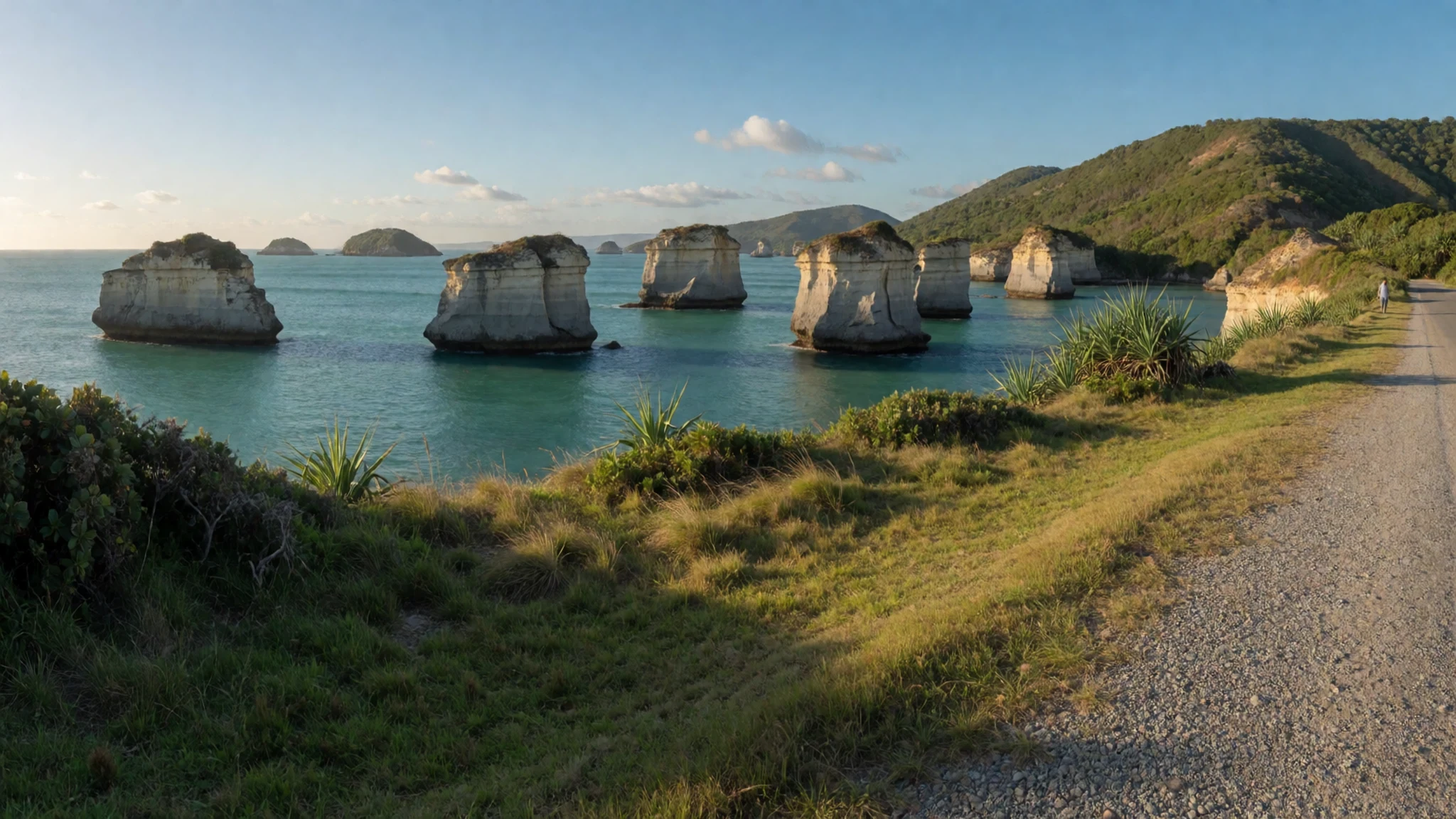
- The Brooding Hen (La Poule Couveuse) — Coast road by the bay
The most photographed stack looks, as its name says, like a hen sitting on a nest, with a rounded body and a small head turned to one side. It is best seen from the road above the water. Allow time for the light to change, since the outline shifts with the sun.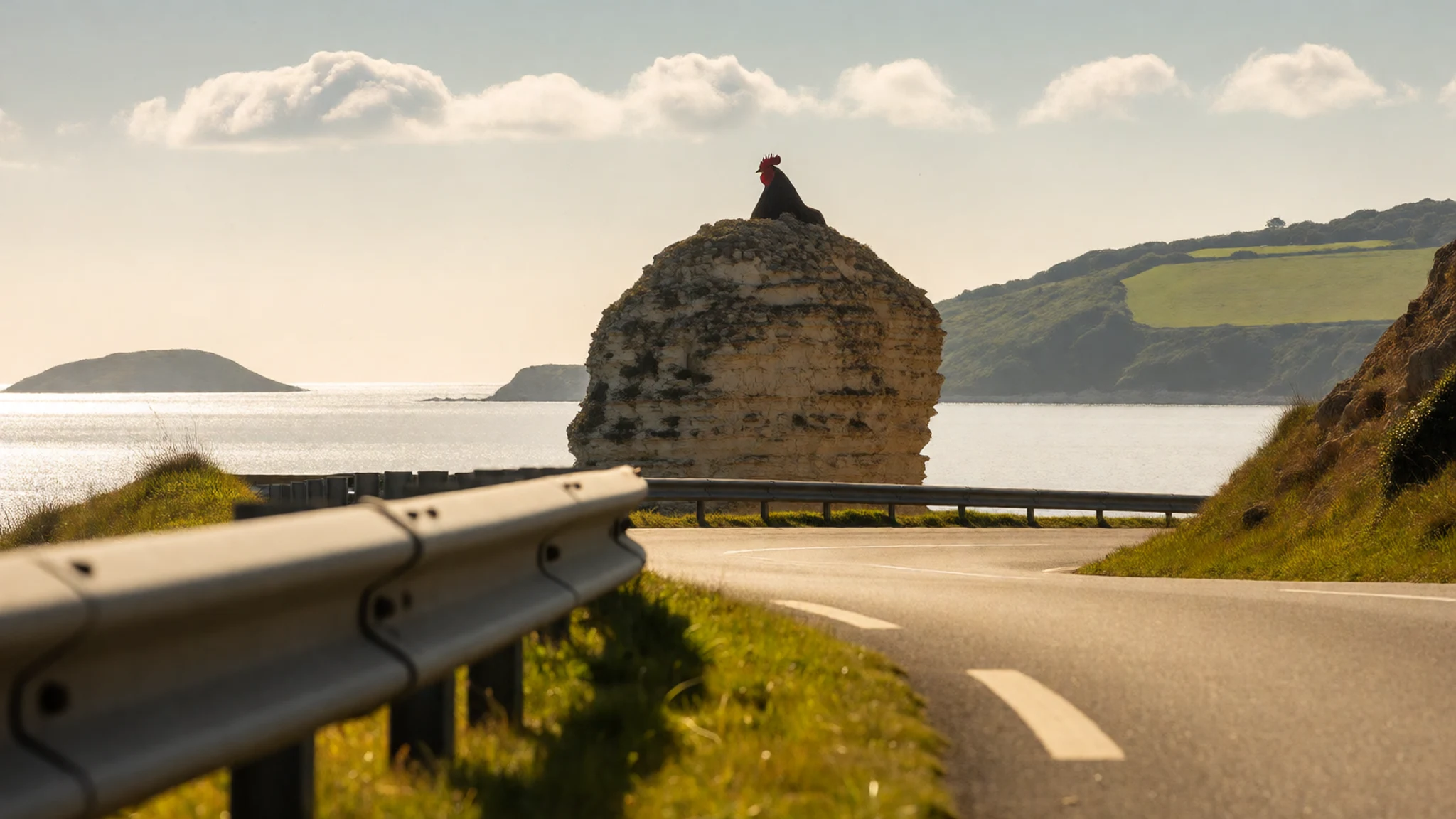
- Goa ma Bwarhat cultural centre — Hienghène village
This community cultural centre in the village shows how Kanak identity is kept alive through architecture, language and ceremony. It is worth a visit to understand the district before going further. Opening times vary, so ask locally or check with the commune's tourism contacts before making the trip.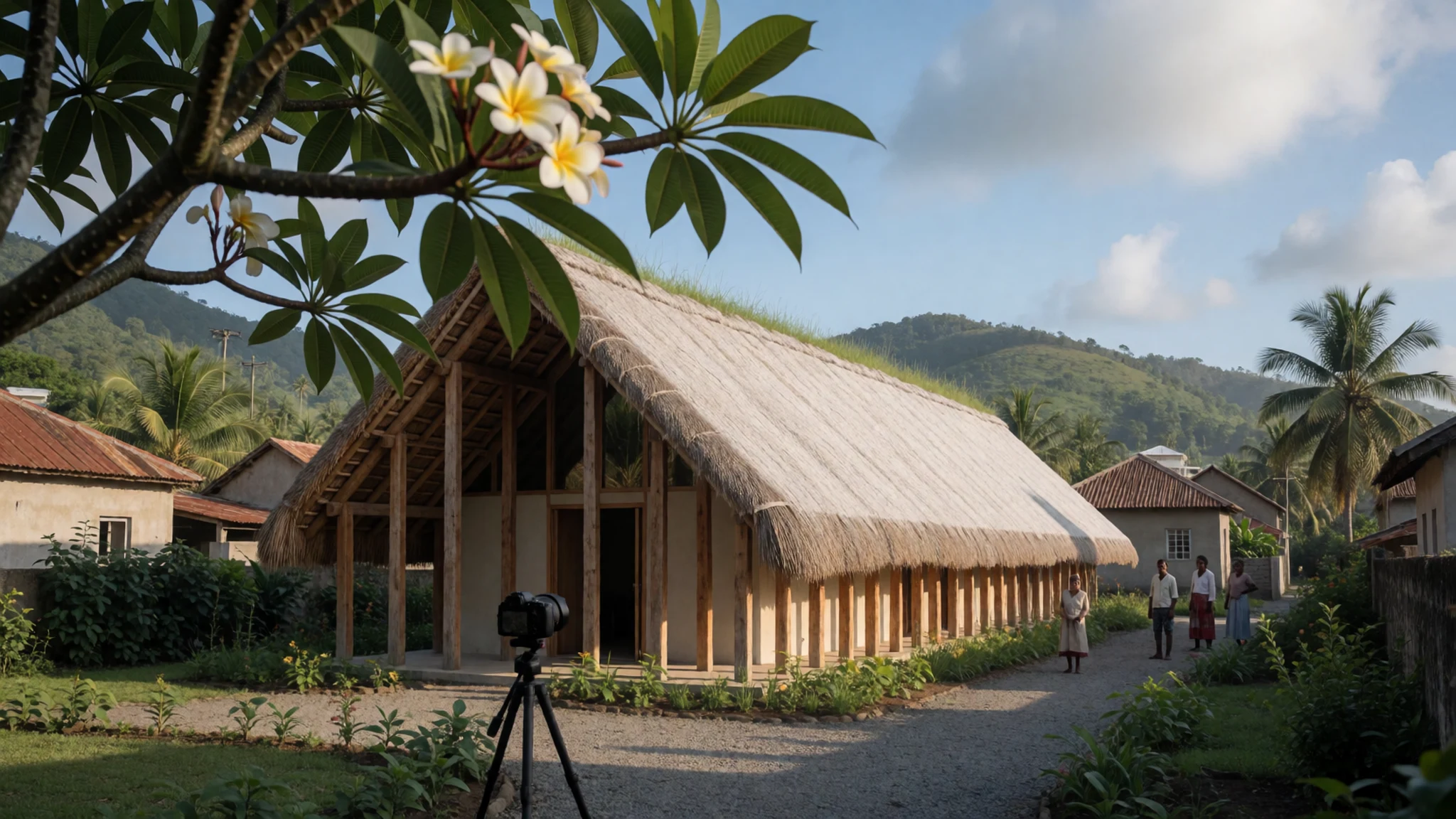
- The Ouaième river ferry — Ouaième river, south of the village
A small cable ferry carries vehicles and passengers across the Ouaième, and the crossing is a short, unhurried glimpse of everyday travel on this coast. Expect to wait if the ferry is on the far bank. Check locally whether it is running after heavy rain, when the river rises.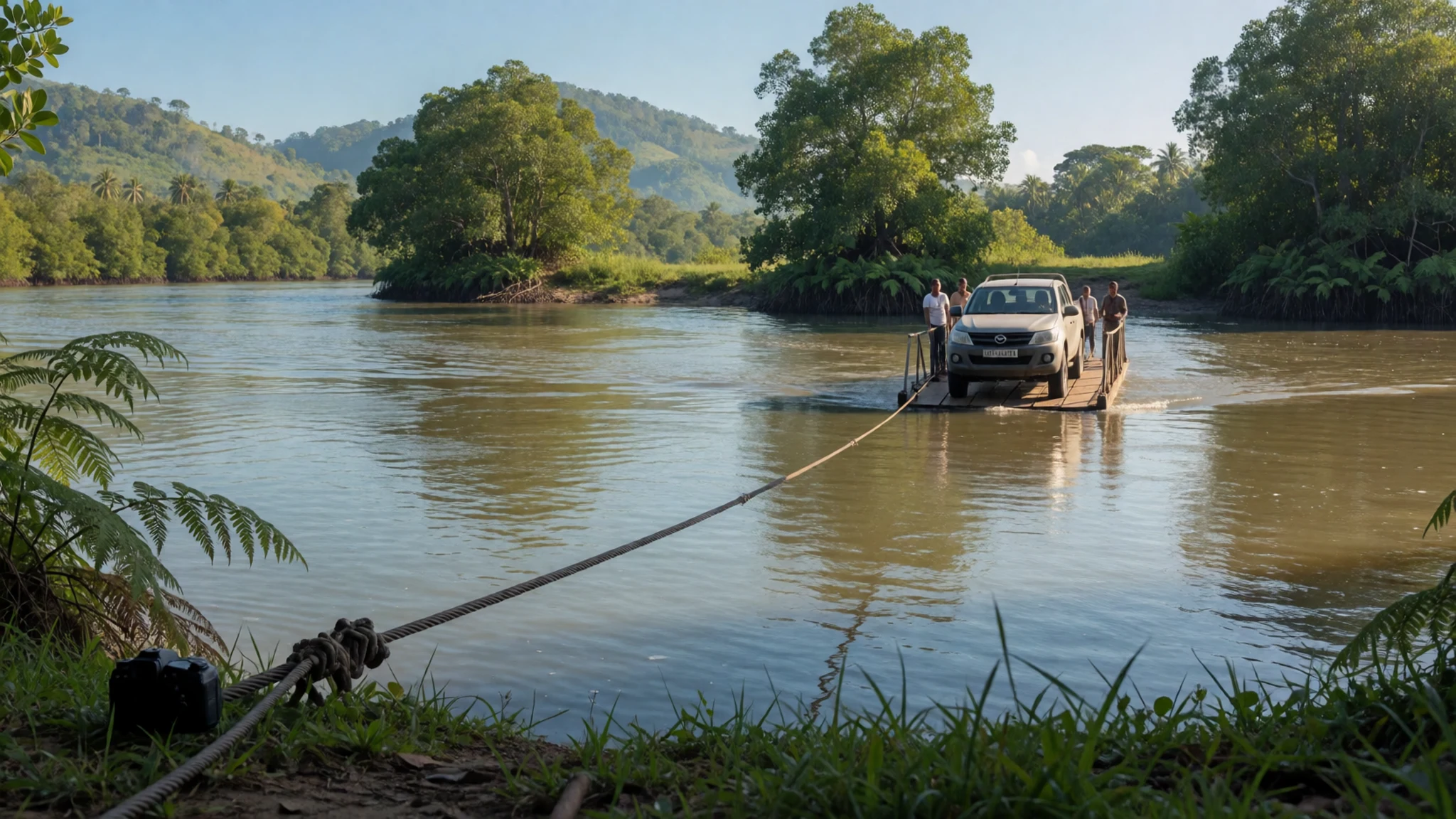
- Hienghène village centre — Hienghène village
The village is small: a main street with shops, a market corner, a church and a seafront. It is the place to buy supplies, find a bakery, and ask about boat trips, walks or tribal visits. Shops close on Sundays, so plan purchases for earlier in the week.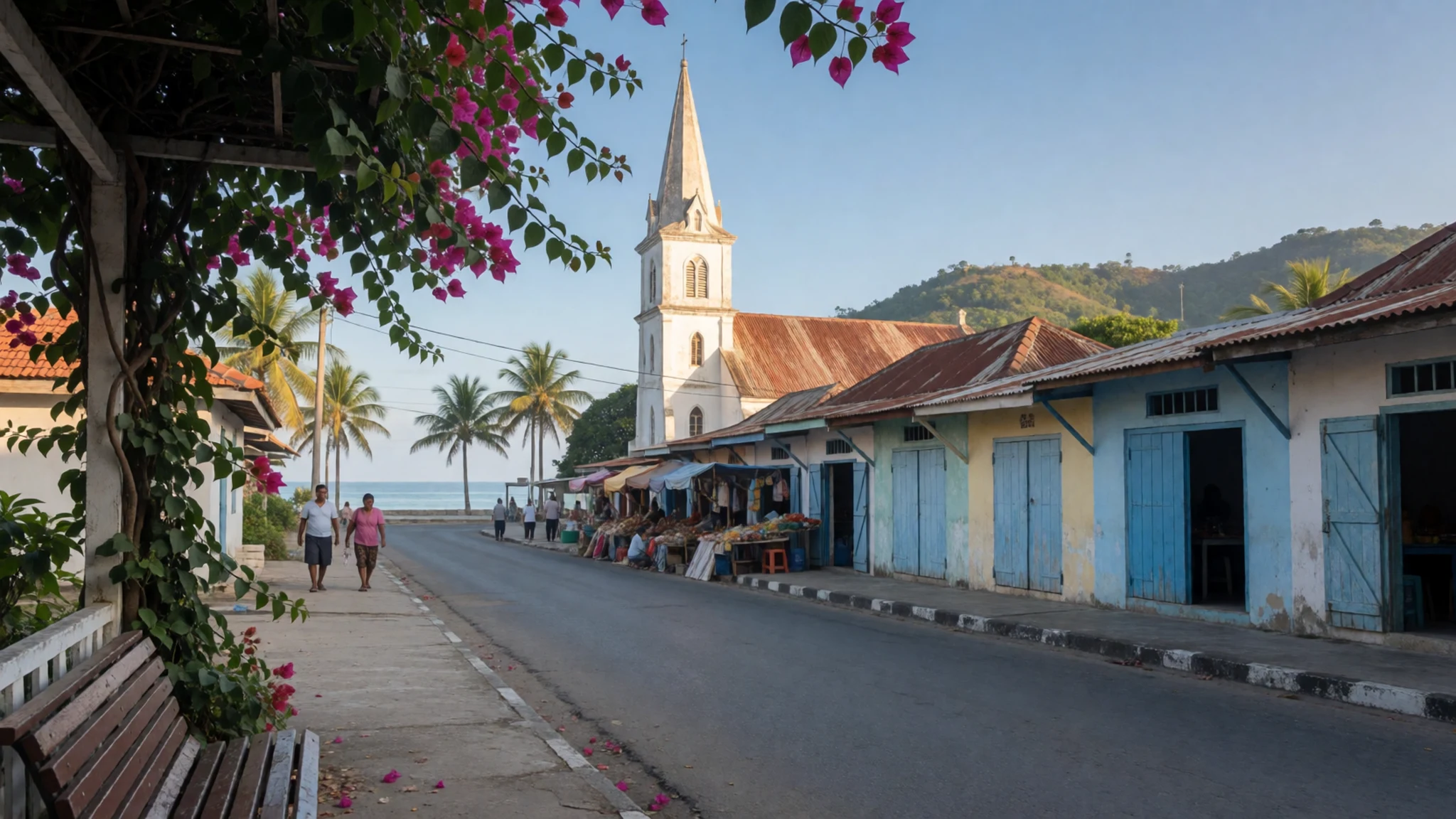
Culture
Hienghène is a community where Kanak custom and French public life sit side by side, and visitors will notice both. Most people are Christian, with Roman Catholicism the largest denomination across New Caledonia, and Sunday is given to church, family and rest. Nearly every shop and business is shut, so the day is for quiet walks and long meals, not errands. Greetings matter. Begin any conversation with a bonjour in the daytime or a bonsoir in the evening, and return the greetings that people offer on the road, because ignoring them is read as rude. Keep a polite distance, roughly a handshake's length, when talking. Tribal land is not public space. The idea of la coutume applies here: the chief and elders have authority over who comes in and how, and a visit normally begins with a short exchange of words and a small gift, often a length of cloth or a modest sum, handed over with respect. Ask your host or your lodge how it is done. Conservative dress is the norm outside the tourist beaches, and open displays of affection or revealing clothing can cause offence in tribal areas. French is the shared language, and a few words of it go a long way, though the Kanak languages are spoken at home. Ask permission before you enter any tribal land, greet the chief or elder, and offer the customary gift before taking photographs of people or their homes.
What to wear
In Hienghène, the garment most closely tied to everyday Kanak life is the robe mission, a loose, long-sleeved cotton dress with a yoke and a full skirt. Missionaries introduced the pattern, but it has long since become local, cut from bright floral or geometric prints and worn to church, to gatherings and on Sundays. Ceremonial dress is another matter: dance costume uses plant fibres, shell and bark, and appears at festivals and customary events rather than in the street. In customary exchanges, lengths of printed cloth are given as gifts. Day to day, people wear whatever suits the heat: T-shirts, shorts, flip-flops and sundresses by the sea, football shirts when the local club, Hienghène Sport, plays, and caps and work boots for farming and fishing. Around the village and tribal land the tone is modest. Visitors should pack light cotton or linen that covers knees and shoulders, a sun hat, and a thin rain jacket for sudden downpours. Sandals suit the village, but closed shoes with good grip are better for river crossings, rocky shores and bush tracks. Keep swimwear for the water's edge and pull on a shirt or sarong before walking into a settlement or going near a church. Insect repellent and sun protection are worth more than any extra outfit.
What to eat
- Bougna — Tribal lodges and community gatherings, by arrangement
The best-known Kanak dish is made of yam, taro or sweet potato, with chicken, fish or other meat, cooked in coconut milk inside banana leaves in an earth oven. It is a communal dish for celebrations, so ask a tribal host or lodge whether it can be arranged.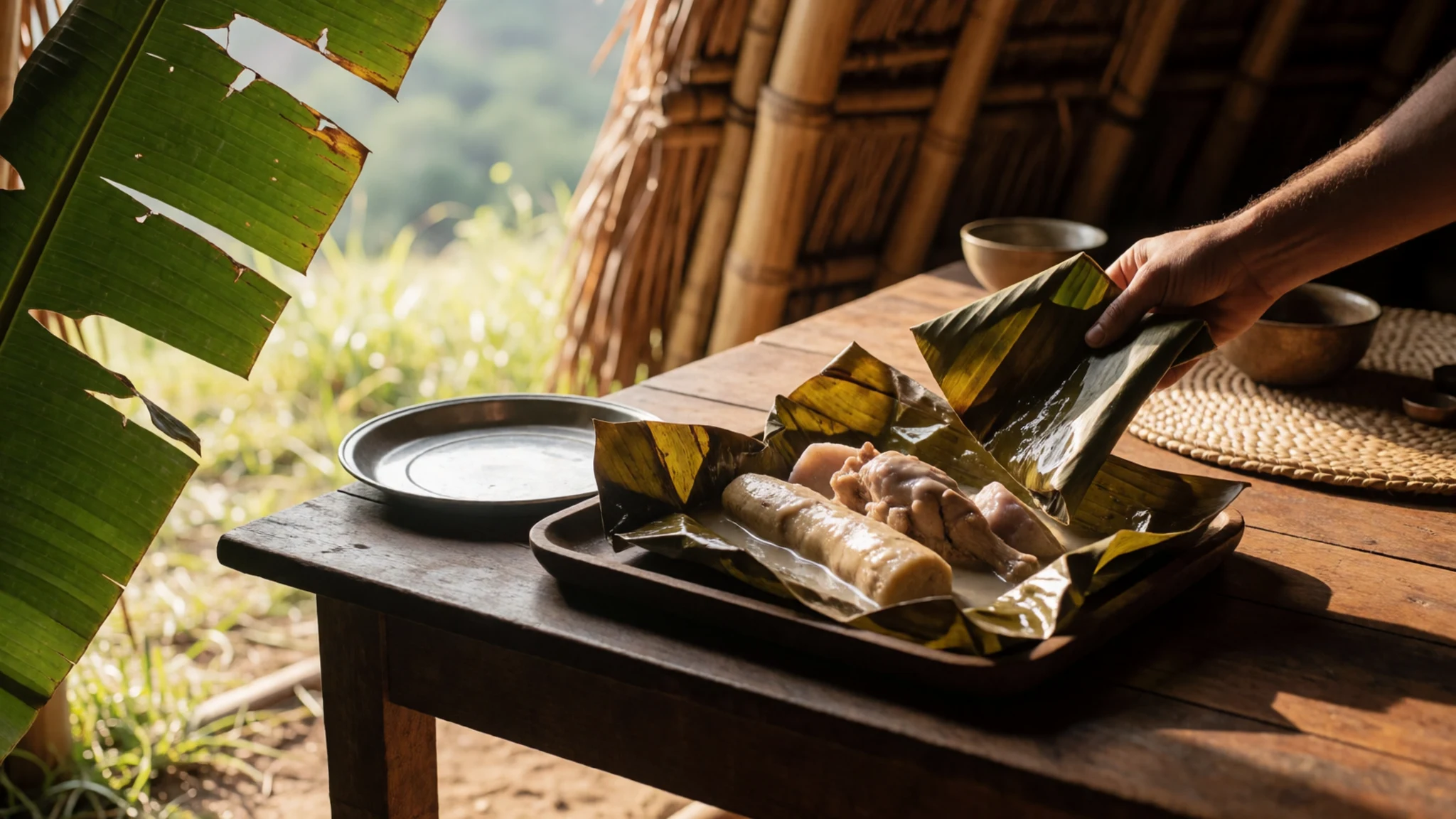
- Porc au sucre with rice — Snack counters in the village and along the main road
A snack-bar favourite with an Asian influence: pork in a sweet soy-based sauce, served with rice or tucked into half a baguette. It is filling, quick and one of the cheaper ways to eat out in New Caledonia.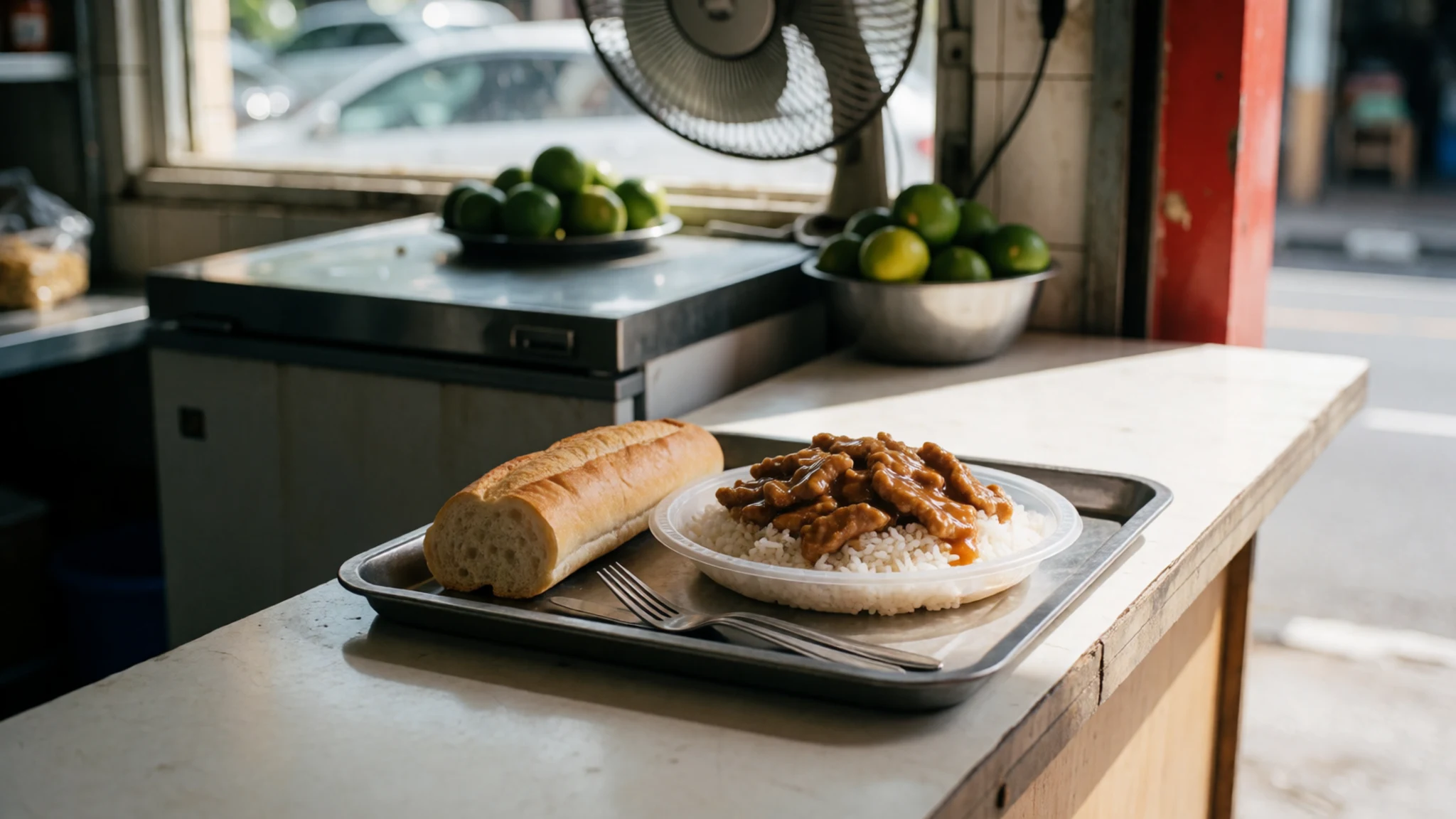
- Croque madame — Village snack bars and cafés
A hot sandwich of ham, cheese and toast topped with an egg, a French standard that turns up on most snack menus. It is a dependable lunch when you are between walks and want something simple and warm. - Fresh crab and reef seafood — Coastal lodges and tribal hosts near the bay
Crab and fish from the coast are part of local eating, usually grilled or cooked in coconut milk. Availability depends on the day's catch and the season, so ask at your lodge rather than expecting a fixed menu. - Baguette and boulangerie pastries — The village boulangerie and small stores
Being French territory, bakeries are everywhere, and a fresh baguette, a pain au chocolat or a crêpe is the cheapest breakfast going. Buy early, as the best items sell out by mid-morning.
Plan it
Best time. September to November is usually the most comfortable window, with milder, drier weather than the hot, humid and wetter months that follow. Cyclones can disrupt travel in the hot season.
How long. 2–3
Getting there. Fly to Nouméa's international airport; from Europe, flights usually stop in Singapore, Thailand or Japan. Then hire a car and drive north along the island's roads to Hienghène, which takes several hours; public transport is limited. Check entry rules before booking, because New Caledonia is not in the Schengen Area and controls its own immigration, and everyone except French citizens needs a passport.
Budget. high
Tips
- Book lodges well ahead; there are few beds in the district.
- Carry cash as well as a card, since small shops and tribal hosts may not take cards.
- Stock up on food and fuel before Sunday, when almost everything is closed.
- Bring water, sun protection and insect repellent for coastal walks and boat trips.
- Read the customs and biosecurity rules before you pack, as several items are restricted.
Etiquette
- Greet people with bonjour or bonsoir and return greetings on the road.
- Ask before entering tribal land or photographing people, and follow la coutume.
- Dress modestly away from the beach.
Nearby
Sources
- Wikidata Q9714 (CC0)
- Wikipedia: Hienghène (rev 1381997164) (CC BY-SA 4.0)
- Wikivoyage: New Caledonia (rev 5399121) (CC BY-SA 4.0)
- Photo: Le village de Hienghène (TPE-BP) (CC BY 3.0)
- Photo: La Poule Couveuse, Hienghène (Fourrure) (CC BY-SA 2.0)
- Photo: Locator map of Hienghène (Tschubby) (CC BY 3.0)
- Photo: Bac de la Ouaième (gérard) (CC BY-SA 2.0)
- Photo: Carte foncière Hienghène (TRIBALMAN) (Public domain)
- Photo: Case traditionnelle, Koulnoué (gérard) (CC BY-SA 2.0)
- Photo: Centre Culturel Goa ma Bwarhat (gérard) (CC BY-SA 2.0)
- Photo: Crabe, Hienghène (gérard) (CC BY-SA 2.0)


