Heron Island
Heron Island, Australia
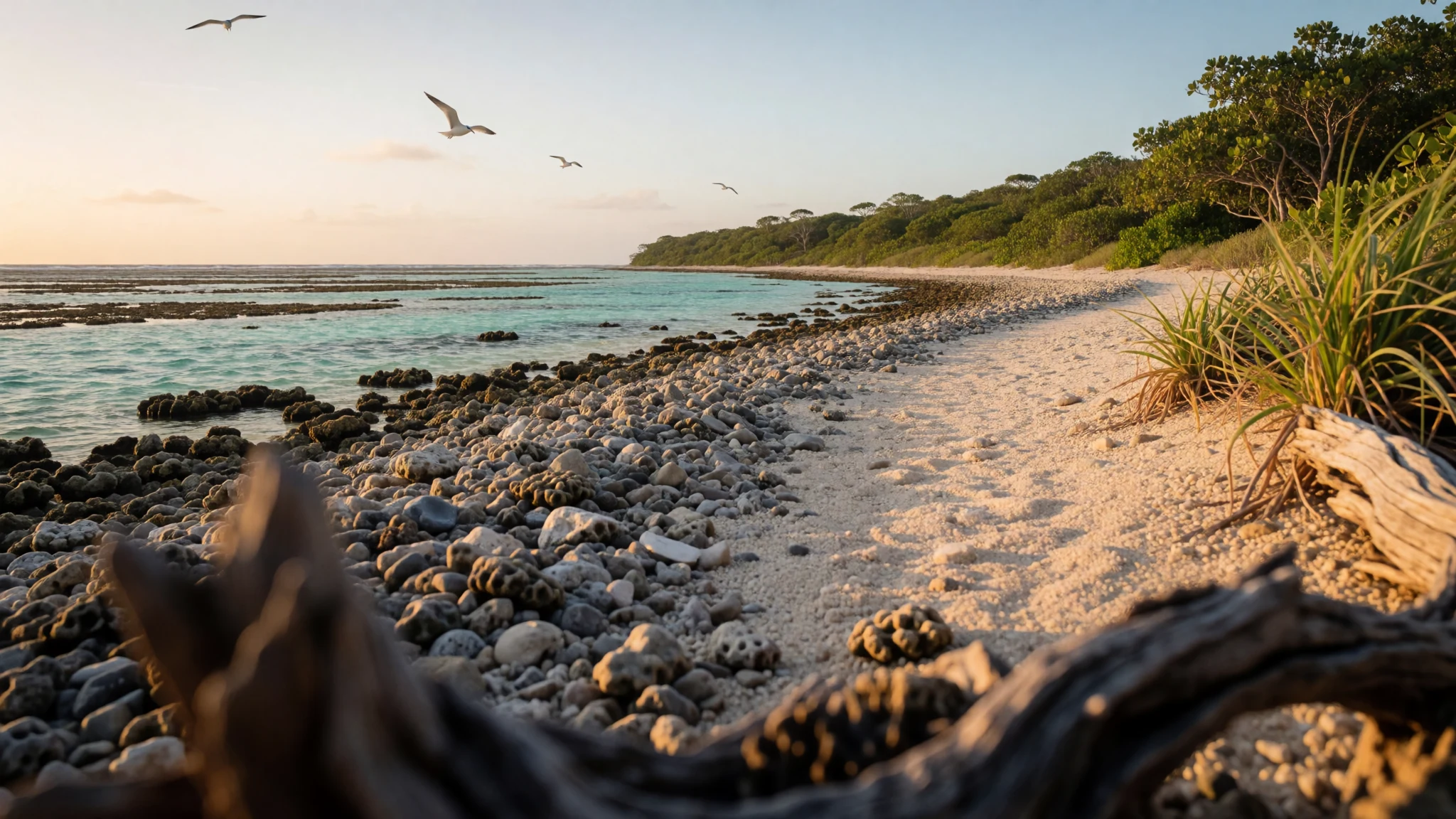
Heron Island is a tiny coral cay where nesting turtles, seabird colonies and a living reef are all within a few steps of each other.
The place
Heron Island is a coral cay in the southern Great Barrier Reef, close to the Tropic of Capricorn and about 87 km north-east of Gladstone in Queensland. It is tiny: roughly 800 m from end to end and 300 m across at its widest, around 16 hectares of sand, coral rubble and low forest. Nothing on it rises more than a few metres above the sea, so the island feels like a raft set on the water, and a walk around the shore takes very little time.
The cay lies on the sheltered western side of Heron Reef, a platform reef that surrounds the island with shallow flats and a deeper outer edge. Strong tides sweep across it, keeping the water moving and open to the ocean. That goes a long way towards explaining the reef's richness. It holds around 900 of the 1,500 fish species recorded on the Great Barrier Reef, and 72% of its coral species.
Above the waterline, the island belongs to birds. Over the summer more than 200,000 of them, noddy terns and mutton birds among them, crowd the trees and paths. Turtles come ashore to nest too. The result is a place with a single lodging operator, no campsites and a constant soundtrack of seabird calls. Heron Island suits people who want reef and wildlife on the doorstep. It is not a place for shops, nightlife or variety.
Its story
Heron Island lies more than 65 km from the Australian mainland, and there is no evidence that Indigenous people ever lived on it or used it. Its recorded history begins with the Royal Navy. In January 1843 the corvette HMS Fly and the cutter Bramble, under Captain Francis Blackwood, were charting the outer edge of the Great Barrier Reef to work out safe routes through it. Bramble's commander, Lieutenant Charles Bampfield Yule, gave the island its name.
Permanent settlement waited until the early twentieth century, when a turtle cannery opened to profit from the green turtles that gather here each season. The business struggled, and other fishing ventures on the cay were dropped as well.
The island's future turned on a different idea. In 1932 Captain Christian Poulsen, who took fishing parties out to the reef, saw that people might come for the place itself. He bought the lease in 1936, and the cay began its shift from processing site to holiday destination. In 1943 the whole island was declared a national park, which is why it is protected land today, with a research station alongside the resort.
The green turtles that were once tinned for sale now nest on the beaches each summer, and visitors come to watch them, not harvest them. Writers noticed the island too: Arthur C. Clarke set much of the first part of his novel The Deep Range here, using an imagined enlargement of the research station.
What to see
- Heron Bommie — Reef edge, a short boat trip from the island
Heron Bommie is a dive site that has appeared in many underwater documentaries. Mantas, rays, reef sharks and turtles are regular sightings, and the coral is bright and in good shape. Dive and snorkel trips to the reef edge run from the island's resort, so no private boat is needed. - Nesting turtles — The island's beaches
From November to January turtles haul themselves onto Heron Island's beaches to nest, in their thousands. Evenings and after dark are when the activity happens, so going with a guide from the resort is sensible. Keep your distance, stay quiet and let the animals finish without interruption. - Seabird colonies — Trees and paths across the cay
Between October and April the island's trees and paths belong to nesting seabirds, including noddy terns and mutton birds, with more than 200,000 birds present over summer. Expect constant calling and a strong smell of droppings. That is the price of seeing a colony from arm's length. Watch where you step. - Semi-submersible reef trip — Offshore from the harbour
For visitors who do not dive or snorkel, the resort operates a semi-submersible vessel that shows the reef through underwater windows. It suits children, anyone uneasy in open water, and days when the sea is too lively for swimming. Check with the resort for timings and conditions on the day.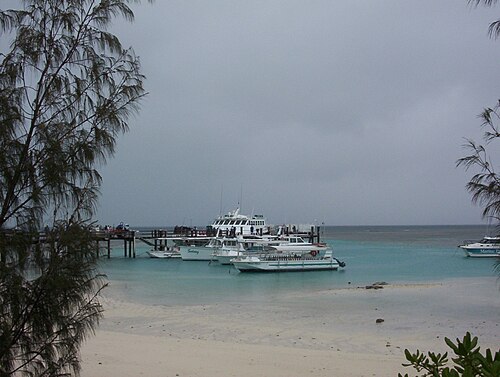
- Harbour and research station — Southern side of the cay
The island's research station and small harbour sit close together, and both are easy to pick out from a helicopter on the approach. Boats come in at the jetty, where passengers transfer to launches. A short stroll shows how compact the place is, and how completely everything depends on the sea.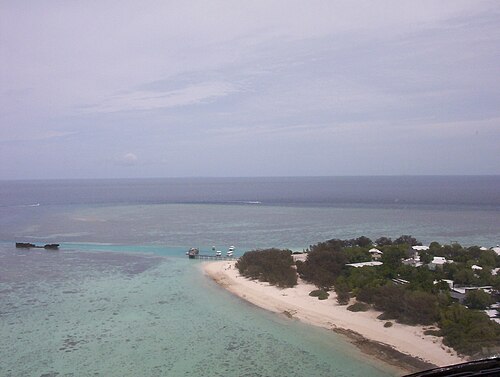
Culture
Heron Island has no deep-rooted local culture of its own. Nobody is known to have lived here before the twentieth century, and the community today is a small mix of resort staff, visiting guests and reef researchers. What shapes behaviour is the wildlife. Birds nest beside the paths, turtles use the beaches, and the reef is treated as something to study and protect, not only to enjoy. National park status sets the tone, and the resort is the only place to stay.
The island's older human stories come from the sea. Ships have come to grief on this stretch of reef, and the schooner Jane Lockhart shows how muddled the accounts could get. She left Sydney with general cargo, and early newspaper reports placed her wreck on several different reefs before settling on Heron Island. Her crew escaped in a boat and reached a pilot station on Great Keppel Island safely, and a boat sent back to the wreck recovered her sails and some of her rigging.
Life here follows the boat and seaplane schedules, the tides and meal times. Staff are usually glad to explain the wildlife, and an informal Queensland manner is the norm.
Keep to the marked paths, give nesting birds and turtles plenty of room, and use only a dim red torch on the beach after dark.
What to wear
Heron Island has no traditional dress or local textile of its own, because nobody lived here before the twentieth century. What exists is the casual dress of coastal Queensland, shaped by sun, salt and boats. Staff and guests alike wear shorts, light cotton tops, swimwear, rash vests and flip-flops, and nobody dresses up. Even in the dining room the mood is relaxed beach-resort rather than formal, though it is worth checking the resort's guidance before you pack.
For a visit, think of sun and coral first. Bring lightweight, quick-drying clothes, a long-sleeved UV-protective shirt, a wide-brimmed hat that will not blow off on a boat, and sunglasses. Pack sunscreen suited to reef water and use it sparingly where you will swim. Reef shoes or sturdy water sandals matter more than fashion, because the reef flats are hard on bare feet and coral cuts are slow to heal. A light windproof layer is useful on the crossing and in the evening.
There are no temples or shrines here, so religious dress rules do not apply. Ordinary modesty off the beach is enough: cover up when walking through the resort, and keep swimwear for the shore and pool. Seaplane arrivals involve wading ashore, so choose clothes you are happy to get wet.
What to eat
- Cooked and cold buffet breakfast — The island's main restaurant, early morning
Breakfast on Heron Island is a buffet that mixes hot cooked dishes with cold items, fruit and bread. It is the sensible meal to eat before a morning dive or reef trip, and the restaurant is where nearly all guests gather. - Lunch buffet — The island's main restaurant, midday
Lunch is another buffet, so you can choose a light plate or a full meal depending on whether you are diving, snorkelling or just walking the shore. It tends to be a relaxed, informal meal with salads and hot dishes. - Table d'hôte dinner — The island's main restaurant, evening
Dinner alternates between a set table d'hôte menu and a buffet, so the evening meal changes character from night to night. The set menu is the more structured option, with courses brought to the table. - Fresh seafood of the day — Ask at the restaurant
Queensland coast menus often feature fish and shellfish, so it is worth asking what is being served that day. With no shops or markets on the cay, everything is brought in, and what you eat depends on the delivery and the season. - Island bar drinks — The island's bar, open through the day
The island's bar serves a range of drinks all day, from cold beer and wine to soft drinks and coffee. It is a natural spot for a sundowner after the day's dive, with the reef beyond the shore.
Plan it
Best time. November to January for nesting turtles, and October to April for the seabird colonies, which are noisy and smelly but remarkable. The island is near the Tropic of Capricorn, so expect strong sun and warm, humid summer days. Diving is good through the year, so the season depends on the wildlife you want to see.
How long. 2–4
Getting there. Fly to Gladstone Airport in Queensland, then take one of three routes: a seaplane (daily, subject to tides and a minimum of two passengers, with a knee-deep wade at the end), a helicopter (about 30 minutes, with a minimum of four passengers), or the daily boat from Gladstone Marina. Check the resort's website for current schedules and prices.
Budget. high
Tips
- Book your room and transfer early, as there is a single lodging operator and no camping anywhere on the island
- Check seaplane and helicopter conditions, since flights depend on tides and passenger numbers
- Bring earplugs for the bird breeding season, when the colonies are noisy from dawn
- Pack reef shoes, reef-safe sunscreen and a hat, and put valuables in the safety deposit boxes at reception
- Take a dry bag for the water landing if you arrive by seaplane
Etiquette
- Keep to the paths and give nesting birds and turtles space
- Use only a dim red torch on the beach at night
- Never touch or stand on coral when snorkelling or walking the reef flats
Nearby
Sources
- Wikidata Q2719889 (CC0)
- Wikipedia: Heron Island (Queensland), rev 1385770893 (CC BY-SA 4.0)
- Wikivoyage: Heron Island, rev 4974301 (CC BY-SA 4.0)
- Photo: Heron Island (Ciambue) (CC BY 2.5)
- Photo: Heron Island, Australia - Harbour and HIRS from helicopter (CC BY 3.0)
- Photo: Heron Island, Australia - HIRS (CC BY 3.0)
- Photo: Heron Island, Australia - Harbour and jetty, loading passengers onto launch (CC BY 3.0)
- Photo: Heron Island, Australia - Leaving Heron Island by launch, HMCS Protector in foreground (CC BY 3.0)
- Photo: Pisonia grandis (Forest & Kim Starr) (CC BY 3.0)
- Photo: Euphorbia cyathophora (jam343) (CC BY 2.5)
- Photo: Cordia subcordata (Tauʻolunga) (CC BY-SA 2.5)


Wildlife
- Green turtle (animal)
The green turtle is a big sea turtle that eats only seagrass, so the fat under its shell turns green, even though the shell itself is olive to black. On Heron Island the turtles come up to nest on the beaches each summer, and visitors now come to watch them rather than harvest them. Watch from a respectful distance, keep quiet and still, go with a guide if you can, and never feed them.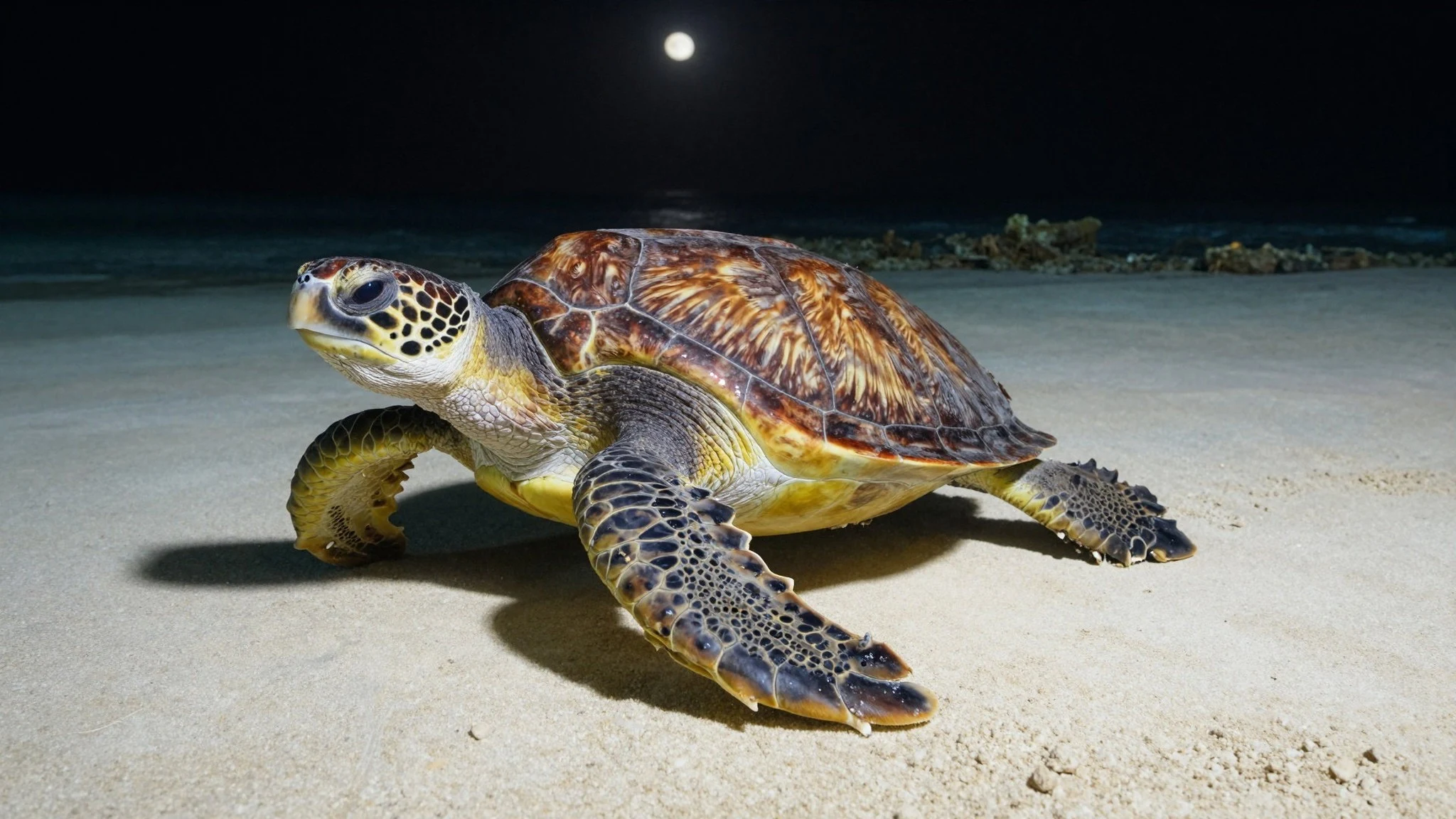
- Noddy tern (animal)
Think of the brown noddy as a chocolate-coloured seabird that loves company, for whole colonies nest side by side. Over the summer on Heron Island, great crowds of them fill the trees and paths, mostly nesting up in short trees or shrubs, though now and then on the ground. Each pair raises just one egg a season. Please watch from a good distance, stay quiet, go with a guide, and never feed them.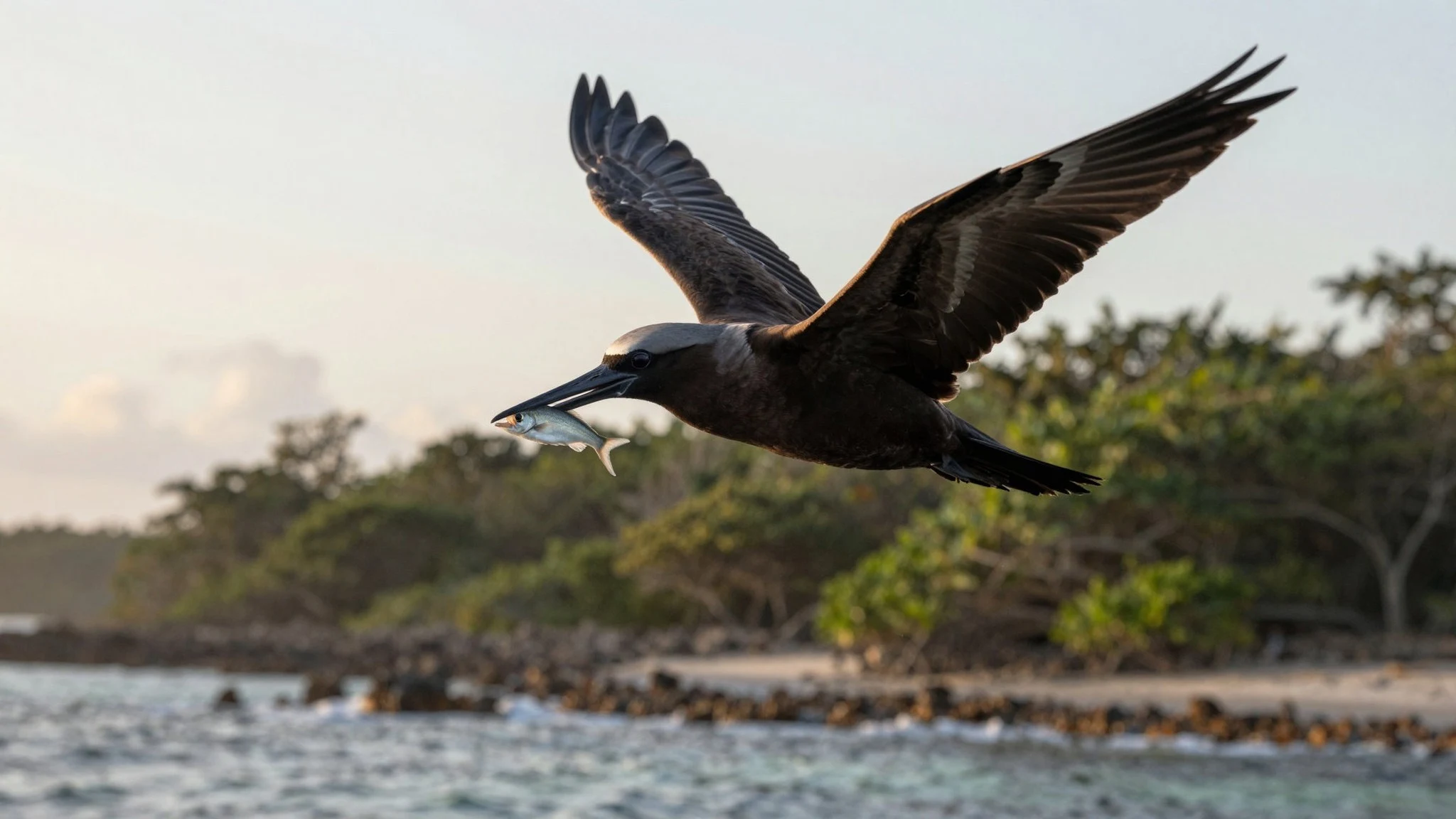
- Brown noddy (bird)
Think of the brown noddy as a chocolate-coloured seabird that loves company, for whole colonies nest side by side. Over the summer on Heron Island, great crowds of them fill the trees and paths, mostly nesting up in short trees or shrubs, though now and then on the ground. Each pair raises just one egg a season. Please watch from a good distance, stay quiet, go with a guide, and never feed them.