Hermopolis
Hermopolis, Egypt
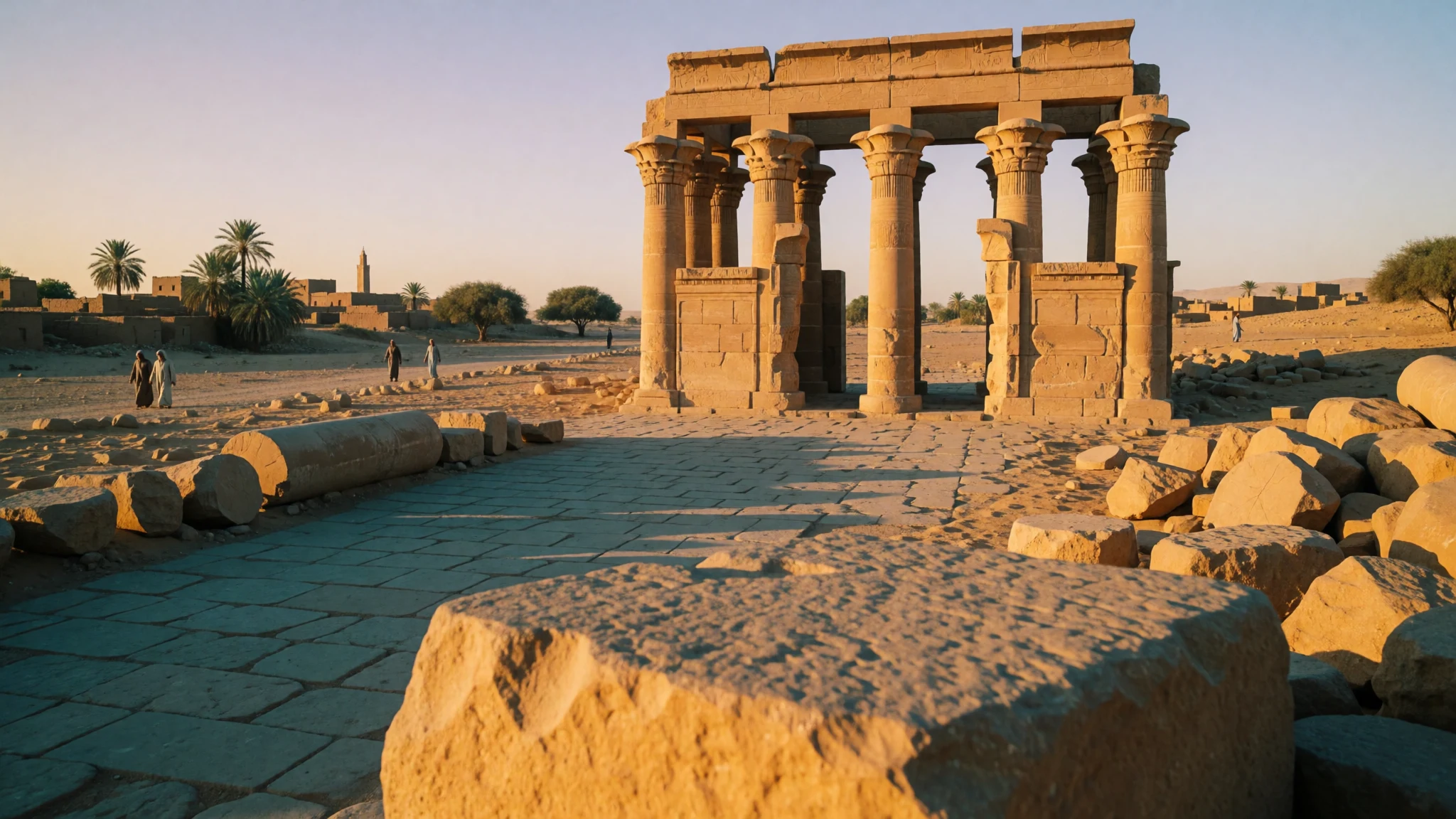
Hermopolis is a quieter slice of ancient Egypt where Thoth’s “city of the Eight Gods” still shows itself in stone and fragments.
The place
Hermopolis (also known as Hermopolis Magna, and linked today with the modern town of el-Ashmunein) sits in Egypt’s Minya Governorate, near the line where Upper and Lower Egypt once met. In antiquity, it mattered. It served as a provincial capital from the Old Kingdom period and later grew into a significant city under Roman rule, with an early Christian presence developing from the third century.
What you’re really visiting is an archaeological story written on a landscape that’s both dry and open: the remains around el-Ashmunein give you the sense of a big urban centre that has had a long afterlife. The local place-name threads are part of the appeal. The Egyptian name Khemenu is tied to the Ogdoad, the eight deities said to reside there, while the Greek name Hermopolis Magna—“City of Hermes”—reflects how Greek-speaking communities read Egyptian gods through their own pantheon.
Hermopolis also feels different from the flashier tourist hubs: fewer crowds, more space, and a pace that depends on transport and daylight. That’s a good thing if you enjoy reading the site like a puzzle—portico pillars, open-air museum displays, and the quiet logic of burial grounds. If you’re expecting lively bazaars every step of the way, it’s not that kind of stop; plan for a slower day and for the practicalities of Egypt’s interior weather. The rewarding part is the context: Thoth’s temple traditions, the city’s border-town identity, and how layers of history overlap here rather than replacing each other.
Its story
Hermopolis began as a border-city idea—an in-between place where people, religion, and administration all had reasons to cross lines. Hermopolis served as the administrative centre for the Hare nome, which was the fifteenth in Upper Egypt's Heptanomis region. With the city positioned near the boundary between Upper and Lower Egypt, the Thebaid could stretch farther north in earlier periods, and Hermopolis benefited from that strategic location.
Border towns collect travellers, commerce, and stories, and Hermopolis was no exception. Rivercraft from the Thebaid paid tolls connected with a “castle” at Hermopolis, and even the logistics of burial reflect the city’s geography. Common cemeteries for Hermopolitans were on the other side of the Nile, at the grottos near Antinoöpolis—an arrangement shaped by the difficulty (and distance) of transporting remains by land compared with ferrying them over water.
Religion gives the city its signature. Thoth—linked by the Greeks to Hermes through shared associations with magic and writing—was worshipped alongside Typhon (Set). In iconography, Typhon appears with hippopotamus imagery, while Thoth is associated with the ibis. The city’s identity as a “city of the Eight Gods” (Khemenu) ties this all together: Hermopolis wasn’t just an administrative centre, it was a place where myth, ritual, and governance sat side by side.
Later chapters add more layers. After the Muslim conquest of Egypt, the site was abandoned, then restored as both a Latin Catholic titular see and a Coptic Orthodox titular see—evidence that even when the city itself faded, its names and religious significance lingered.
What to see
- Hermopolis Magna archaeological site — el-Ashmunein / Hermopolis Magna site area
Hermopolis Magna archaeological site is where you see the portico remnant of the temple complex: a double row of pillars, six in each row. Nearby, an open-air museum sets out large Thoth statues (as a baboon worshipping the sun), making the religious theme feel tangible even without a full reconstruction.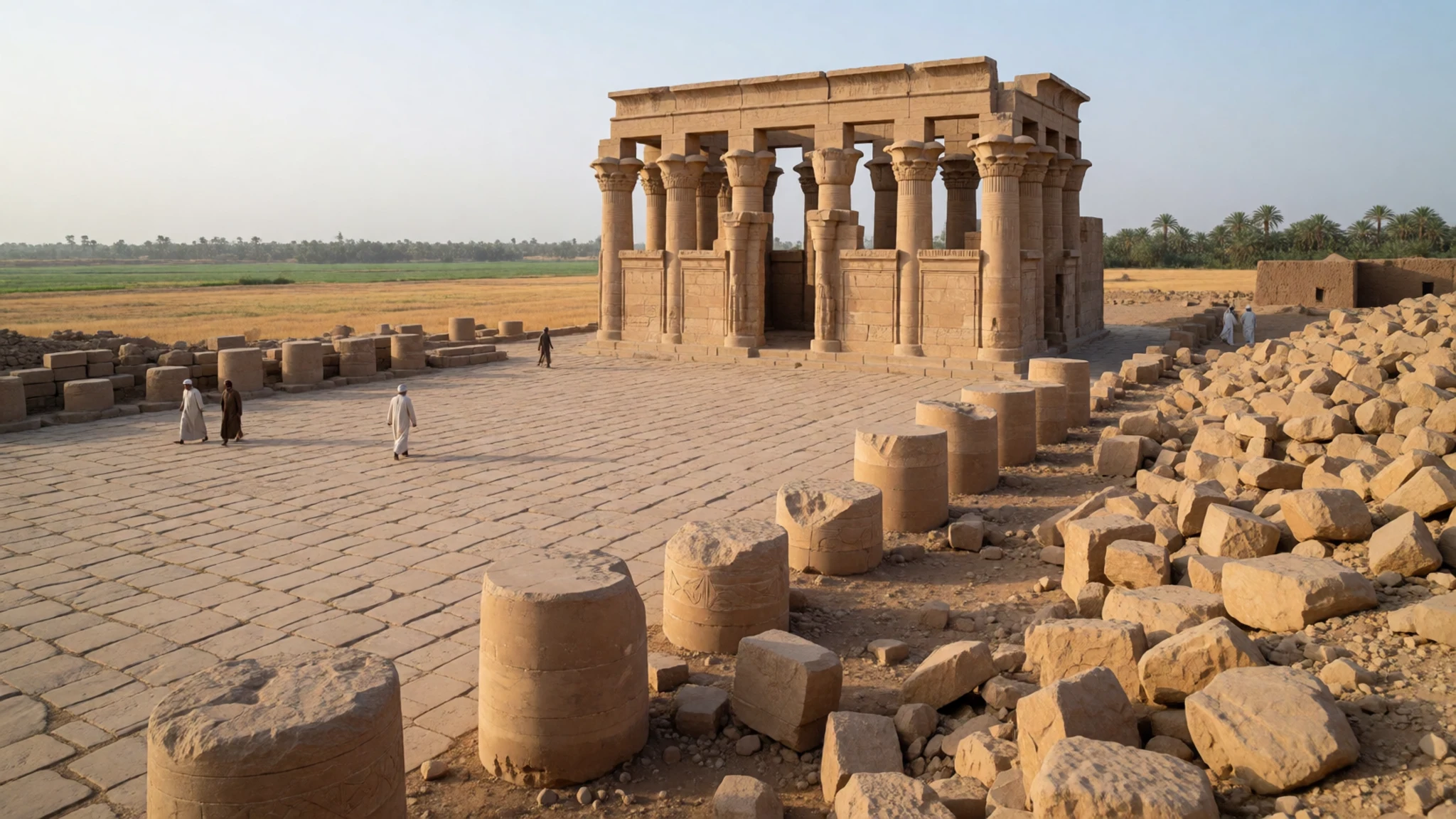
- Open-air displays tied to Thoth — within the Hermopolis Magna museum area
At Hermopolis Magna, the small open-air museum matters because it bridges gap between scattered fragments and a coherent idea: Thoth’s presence in the city’s life. The statues of Thoth as a baboon facing the sun give you a clear visual anchor for the “city of the Eight Gods” setting described in ancient sources.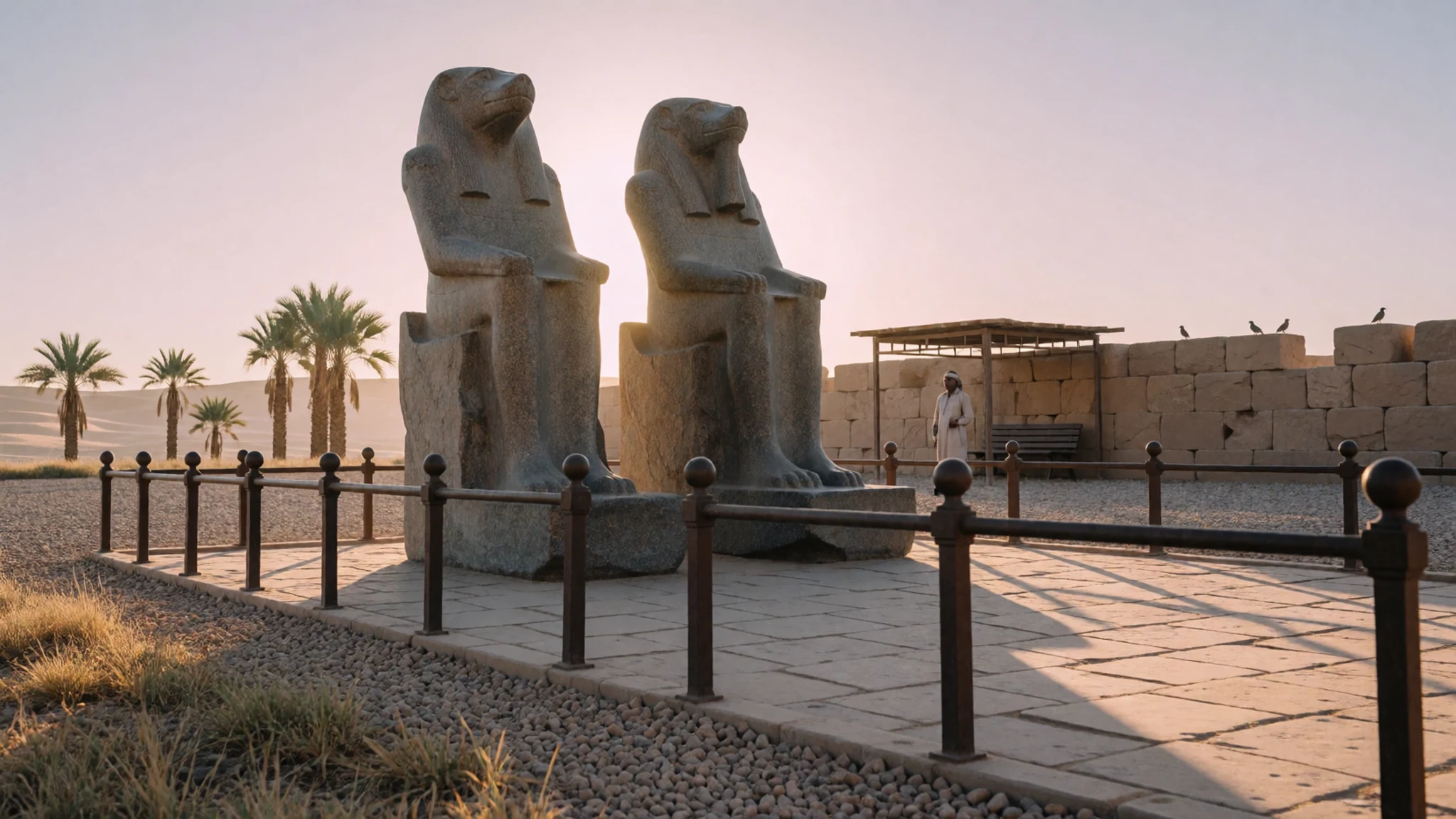
- Hermopolis Magna necropolis — necropolis area near Hermopolis Magna
Hermopolis Magna’s necropolis is where you go for the boundary between everyday life and long-term memory. One of the oldest monuments is a boundary stela set into the cliffs—less “see it up close” and more “read it carefully without erosion.”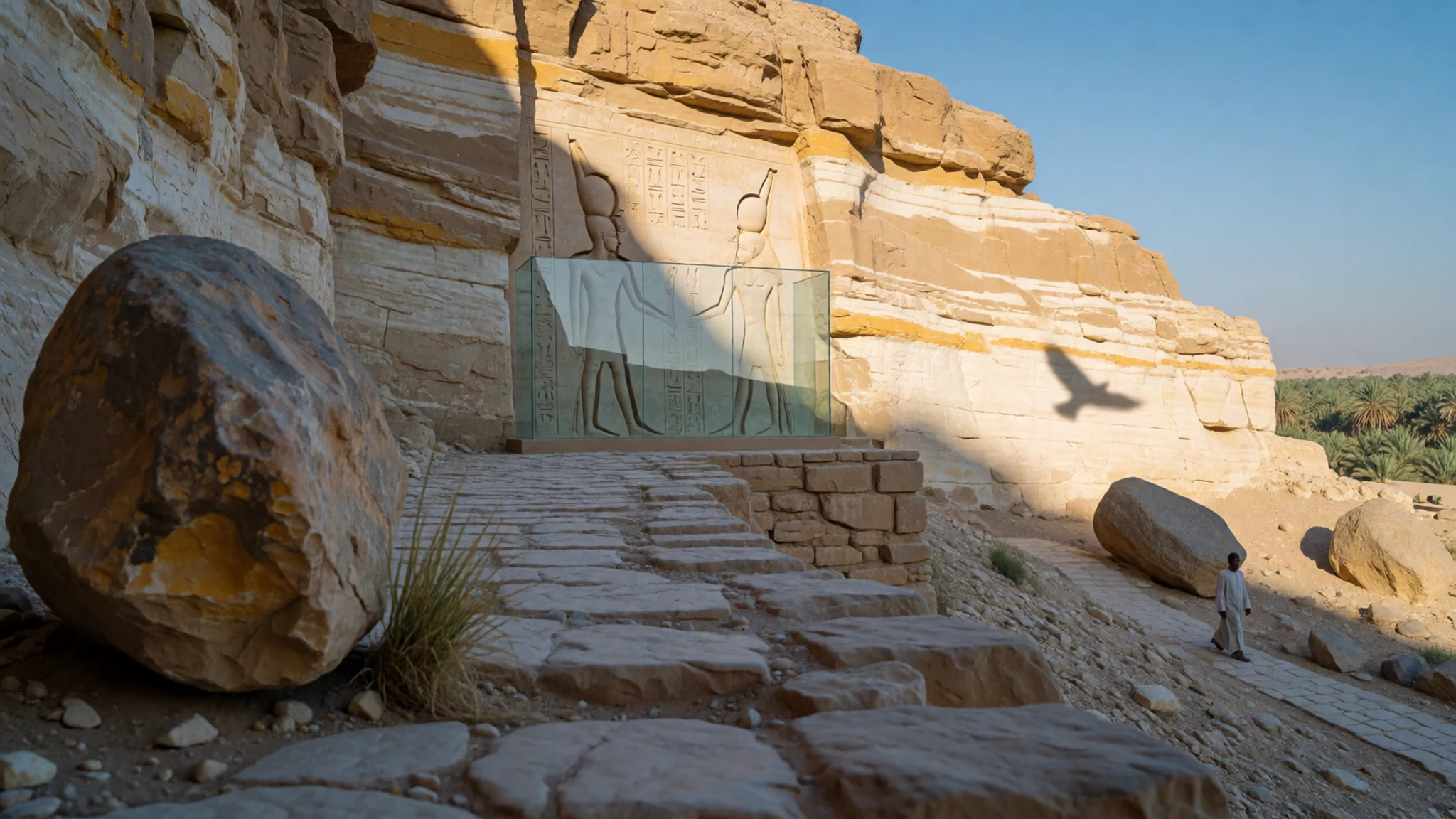
- The stone language of power: obelisk fragment — museum viewing context (object displays rather than the open-air portico)
If you catch relevant museum or display items, look for the city’s link to state authority in stone forms. An obelisk pair is the kind of object that helps you visualise the scale and seriousness of temple-era craftsmanship behind Hermopolis’s religious reputation.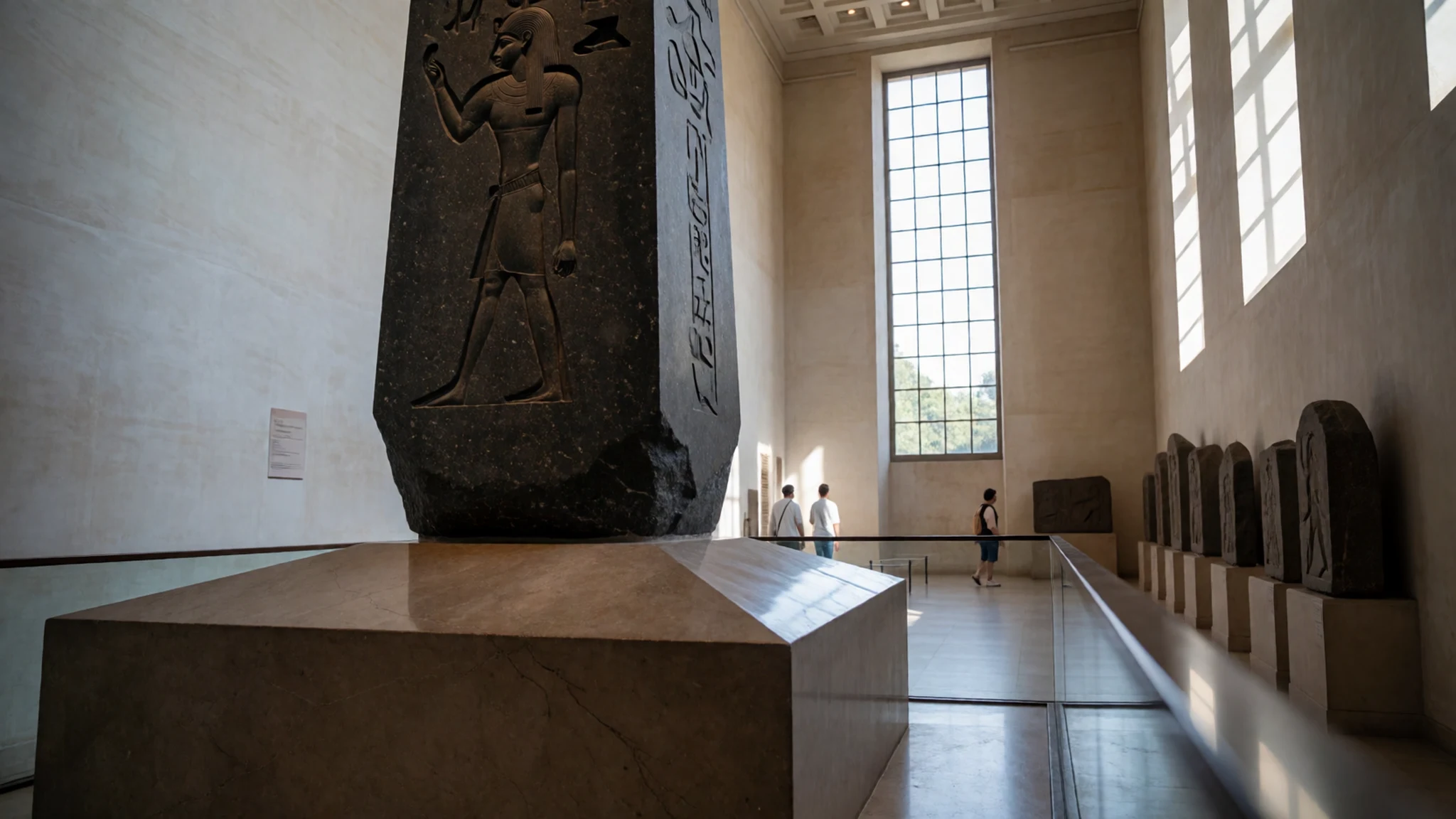
Culture
Hermopolis is about respect for archaeology as much as respect for religion. The site and its displays are there to be studied—so keep your movements measured, avoid touching stonework, and don’t treat gaps in the ground as photo props. Egyptian heritage spaces often involve families and local staff managing entrances and paths; letting them guide you is the fastest way to stay comfortable.
Dress tends to be practical and modest for hot interior conditions, and it’s worth dressing with temple contexts in mind even when you’re mainly walking ruins. In places where people are praying or preparing offerings, keep voices low and keep your camera work from blocking access. If you’re moving from one area to another (temple zone, then necropolis), take a moment to breathe and plan your route rather than rushing between viewpoints.
Hermopolis doesn’t feel like a high-intensity crowd site, but that’s precisely why behaviour stands out: fewer people means your actions have more visibility. Keep to marked paths where they exist, and if you’re unsure about rules for entry or photography, ask first rather than assuming.
Visitor etiquette: Keep voices low, avoid touching artefacts or pillar surfaces, and photograph without blocking anyone’s access to display areas.
What to wear
At Hermopolis, clothing is driven by sun, dust, and the fact you’re walking archaeological ground. Traditional Egyptian clothing is not required, but knowing what locals wear helps you blend in. In many parts of Egypt, traditional everyday dress centres on long, loose garments that move with heat: women may wear a long dress and headscarf, and men often wear long trousers with a light shirt—comfy choices that also cover shoulders and legs.
What you’ll see today is usually practical heatwear: breathable tops, light trousers or long skirts, and light layers for shade. Footwear matters. Even when the ruins look “open”, the ground can be uneven, so opt for closed-toe trainers or sturdy sandals with support rather than fashion flip-flops.
For visitors, aim for modest coverage (especially near temple-associated spaces), light colours that don’t absorb too much sun, and something to protect your head if you burn easily. Bring a light scarf or shawl—not for formality, but because it can help with sun, dust, and comfort in indoor or shaded display zones. If you plan to spend time in open-air areas, also bring water-safe clothing: quick-drying fabric makes the day easier.
What to eat
- Kushari-style lentil and pasta comfort — local street-eat eateries and casual restaurants in and around el-Ashmunein / Mallawi
Look for a filling, shared-style plate of lentils, pasta, and chickpeas topped with sauce and crispy bits. It’s the sort of hearty meal that suits a day walking ruins, and you’ll commonly find it at casual eateries and local menus.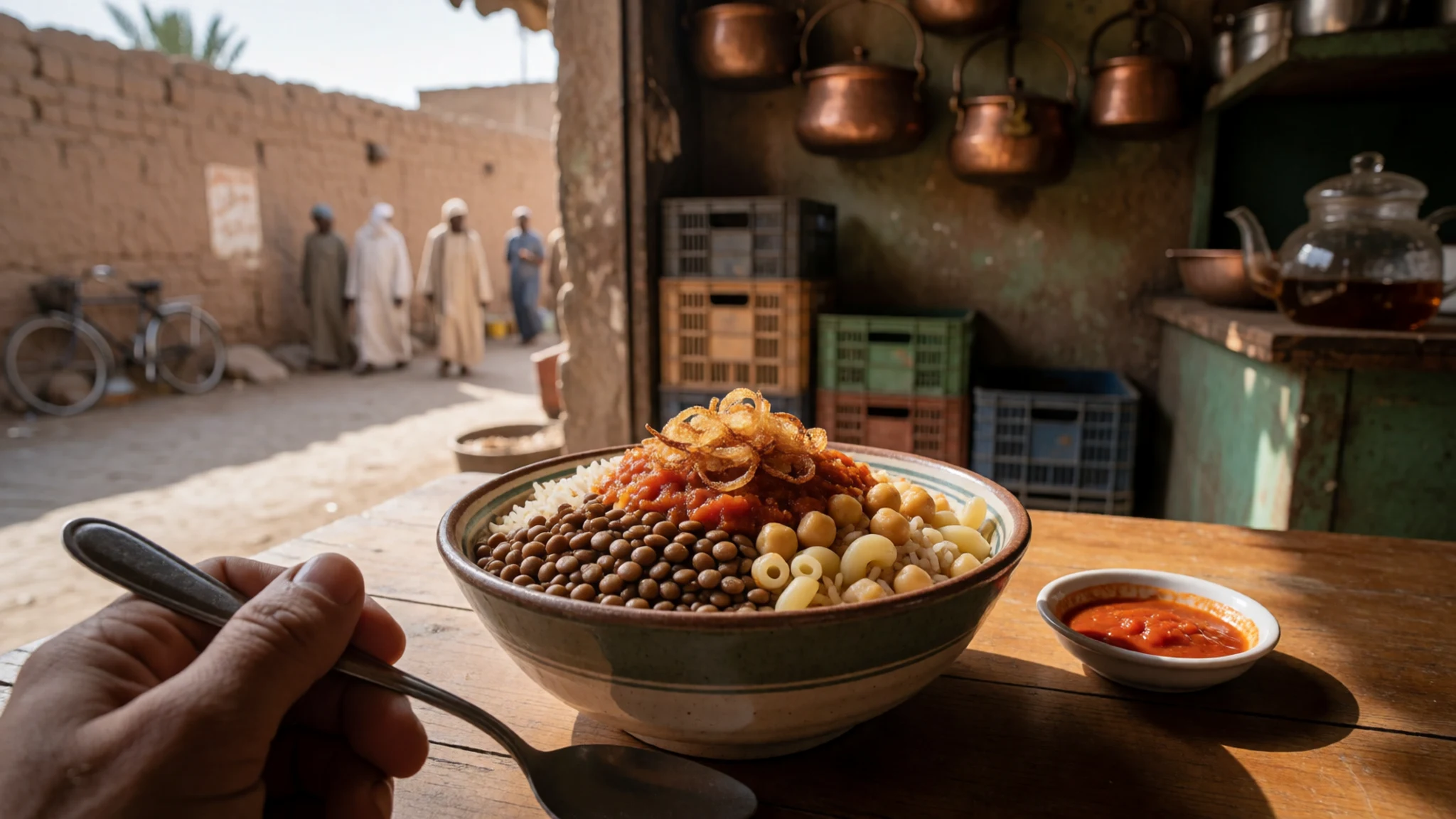
- Ful medames at breakfast — breakfast spots and everyday cafes in el-Ashmunein or nearby towns
Ful medames—slow-cooked fava beans—is often served with bread, lemon, and herbs. It’s a reliable start for a museum-and-site day because it’s filling without being fussy.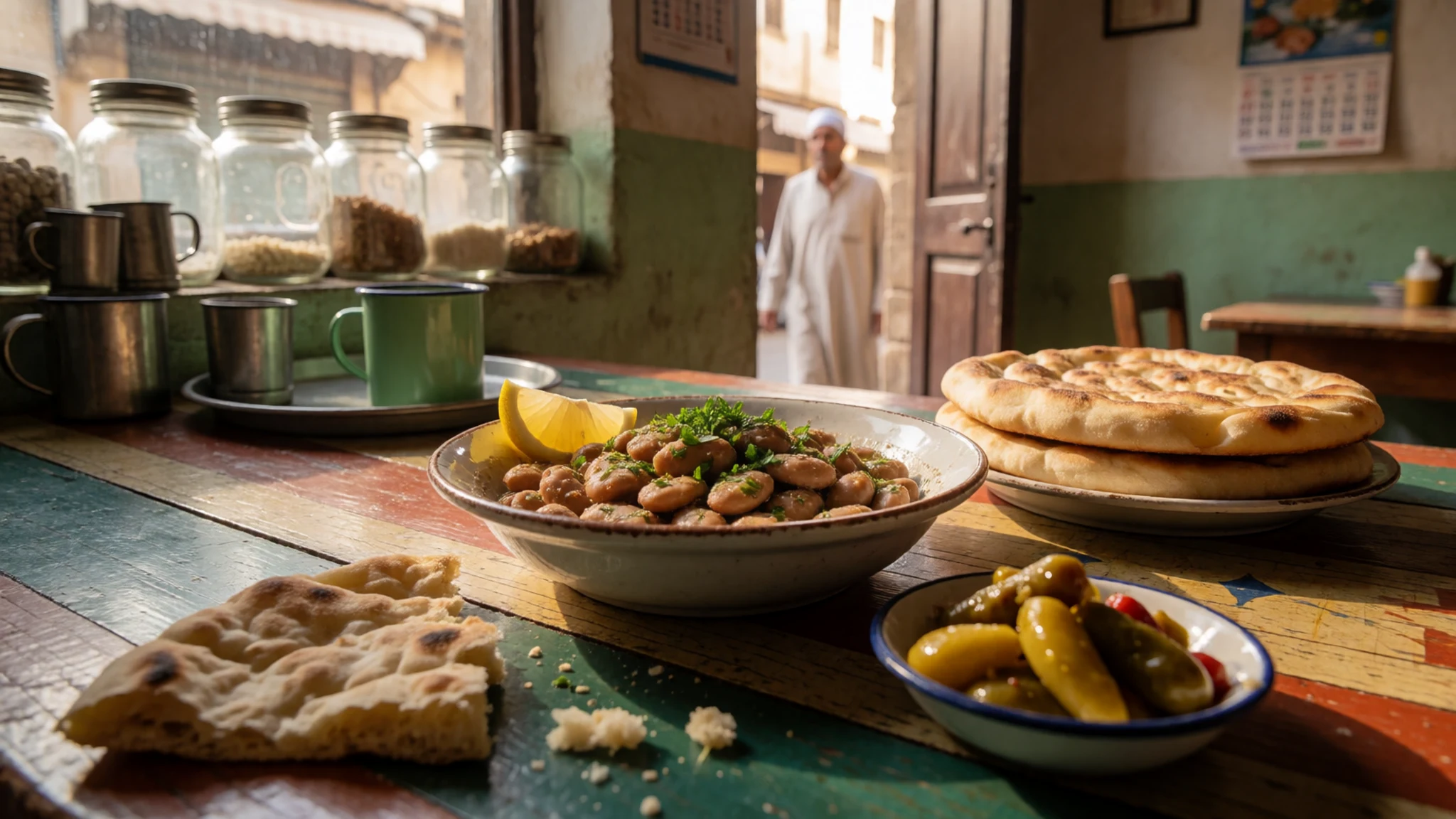
- Egyptian bread and simple mezze — local cafés and family-run eateries
Expect big-flavoured, small-portion sharing: warm bread, a few dips, and salad-style sides. It’s a practical way to eat on the move when timings are flexible and you don’t want to plan a full sit-down meal. - Grilled chicken or kofta plates — any practical lunch stop around Mallawi and el-Ashmunein
A grilled or charcoal-style plate—often chicken or kofta—works well after hours outside. It’s usually served with rice or bread and a simple salad, so it’s easy to find a version that matches your appetite. - Sugar tea and sweet bites — tea shops along main streets and near market areas
After a hot walk, a small sweet and minty tea can be a pleasant reset. It’s commonly offered in informal tea stops and casual dessert counters.
Plan it
Best time. October and November are usually the most comfortable months for Hermopolis: they’re cooler than the summer heat (and there’s still very little rain). February through May and September are hotter, and December has the most noticeable rainfall, while June through September stays dry.
How long. 2–3
Getting there. Hermopolis is close to el-Ashmunein, with both Minya and Mallawi served by railway services; the last leg is a short road transfer from either of those towns to the archaeological areas.
Budget. mid
Tips
- Start early in daylight to make the open-air sections easier to manage in heat and glare.
- Build your day around the two main zones: Hermopolis Magna site and then the necropolis, with time for slow looking.
- If you’re combining with nearby towns, check local transport arrangements ahead of time and keep some buffer for the last leg.
- Carry water and a hat; the walkable parts of the archaeological areas are exposed.
- Use cash for smaller purchases and keep change handy for tea stops or snacks.
Etiquette
- Keep voices down and avoid blocking paths around display areas.
- Don’t touch stonework or artefacts; photograph from a respectful distance.
- If you see people working or praying, pause and let them pass before you resume filming or photos.
Nearby
Sources
- Wikidata Q732908 (CC0)
- Wikipedia (rev 1364714389) (CC BY-SA 4.0)
- Wikivoyage (rev 4055048) (CC BY-SA 4.0)
- Photo photos/01-ashmuneinmerenptahtemple.jpg (CC BY-SA 1.0)
- Photo photos/02-ashmuneinbasilica.jpg (CC BY-SA 1.0)
- Photo photos/03-the-black-siltstone-obelisk-of-pharaoh-nectanebo-ii-c-350-bc.jpg (CC BY-SA 4.0)
- Photo photos/04-tomb-of-djehutynakht-21.jpg (CC BY 3.0)
- Photo photos/05-arabic-papyrus-with-an-exit-permit-dated-january-24-722-ce-p.jpg (CC BY-SA 4.0)
- Photo photos/06-landesmuseum-w-rttemberg-stuttgart-mumienmasken-01.jpg (CC BY-SA 4.0)
- Photo photos/07-landesmuseum-w-rttemberg-stuttgart-mumienmasken-01a.jpg (Public domain)
- Photo photos/08-mus-e-picardie-arch-o-10.jpg (Public domain)


