Herakleopolis Magna
Herakleopolis Magna, Egypt
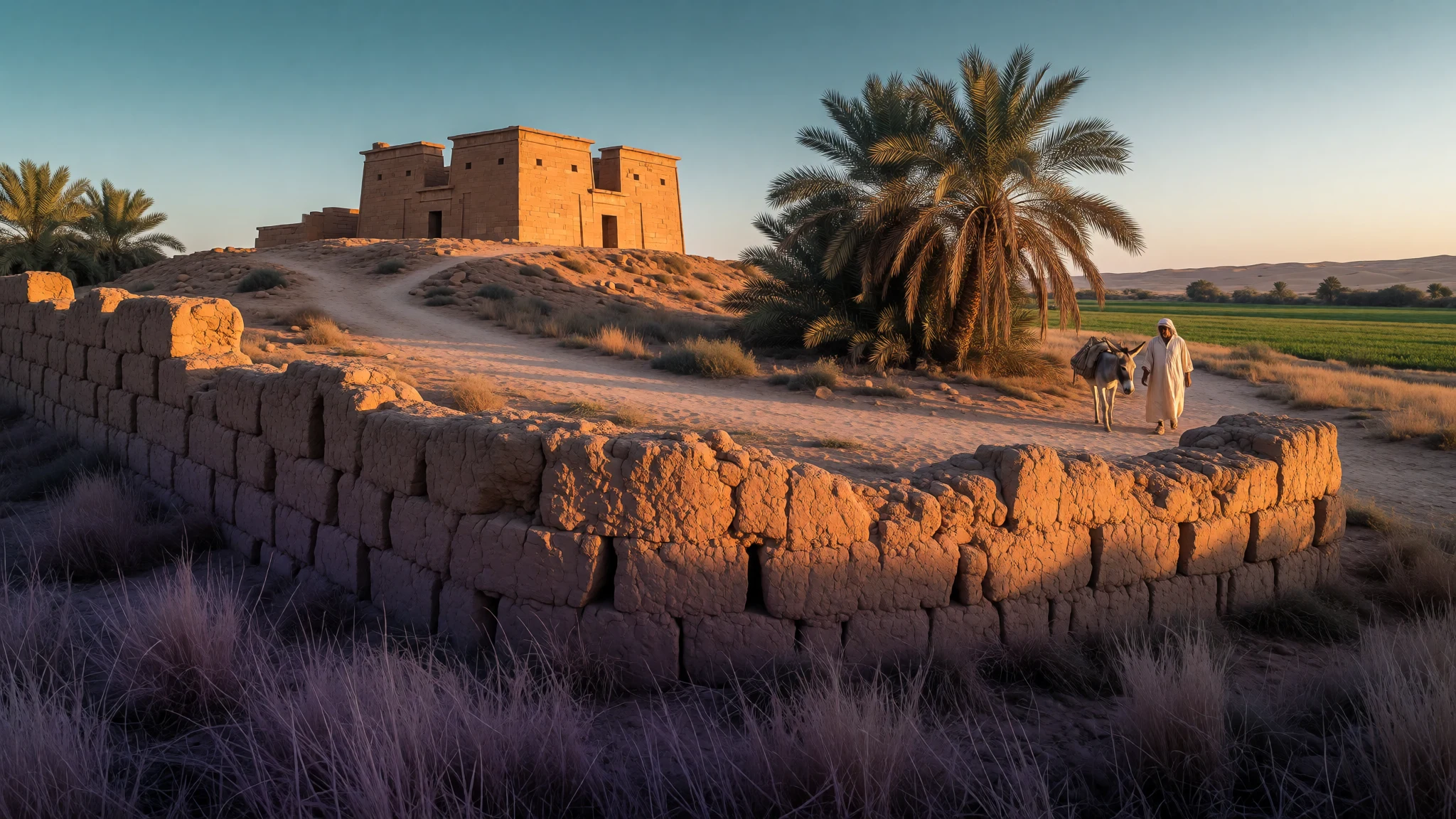
Herakleopolis Magna is a quiet Nile-valley mound where a rival dynasty once ruled, for travellers who like reading history from the ground up.
The place
Herakleopolis Magna sits on the western side of the Nile valley, about 15 km west of Beni Suef, in the governorate of the same name. Today the site is known locally by its Arabic name, Ihnasya, and the modern town around it has a population of about 40,001 according to Wikidata. It is an archaeological site and an ancient city, not a polished visitor attraction, and that shapes everything about a visit.
The ground is low, at about 30 m above sea level, with green irrigated fields pressing close to the dry edge of the desert. What remains are mounds, scattered stones, excavated areas and tomb cemeteries rather than standing temples with ticket queues. Much of what made the city important now sits in museums, including the Petrie Museum in London, which holds an ushabti figure from here.
In ancient Egyptian the city was called nn nswt, and the Greeks later named it for Herakles, hence 'Magna' to set it apart from other cities of the same name. It was the capital of the 20th nome, or province, of Upper Egypt.
This is a place for people who already know a little, or who are happy to read before they arrive. Expect heat, dust, few facilities and almost no other foreigners. Beni Suef is the practical base, and a local driver or a guide arranged through the antiquities authorities will make the day far easier than turning up unannounced and hoping to find the way in.
Its story
Herakleopolis Magna was already a settled place early in Egyptian history. An entry on the Palermo Stone records King Den visiting the sacred lake of the god Heryshef here, which suggests the city existed by about 2970 BC, in the middle of the First Dynasty.
Its great moment came after the Old Kingdom fell apart. Between 2181 and 2055 BC, in the First Intermediate Period, Egypt split, and Herakleopolis became the leading city of the north and held sway over much of the region. The span of the 9th and 10th Dynasties, 2160–2025 BC, is sometimes called the Herakleopolitan Period because of this. The rulers here spent much of that time in conflict with Thebes, the effective capital of the south.
The rivalry ended in the early Middle Kingdom, when Mentuhotep II defeated the Herakleopolitan dynasty and brought the country back under one king. The city did not vanish, though. It had become the religious centre of the cult of Heryshaf, and a temple to the god was built, keeping the place important long after its kings had lost their power.
The Greeks later equated Heryshaf with Herakles and gave the city the name it carries in English. Romans kept it going as a provincial town. For a visitor, the interest lies in this long arc: a modest provincial centre that for a few generations ruled half a country, then settled back into the valley's slow rhythm of fields, floods and tombs.
What to see
- The Heryshef temple area — Ihnasya el-Medina
The main excavated zone is the old sacred precinct of Heryshaf, the ram-headed local god. Little stands tall, so go with a plan: fallen blocks, foundations and mounds make sense only if you know the god mattered here for centuries. Bring a hat, water and patience.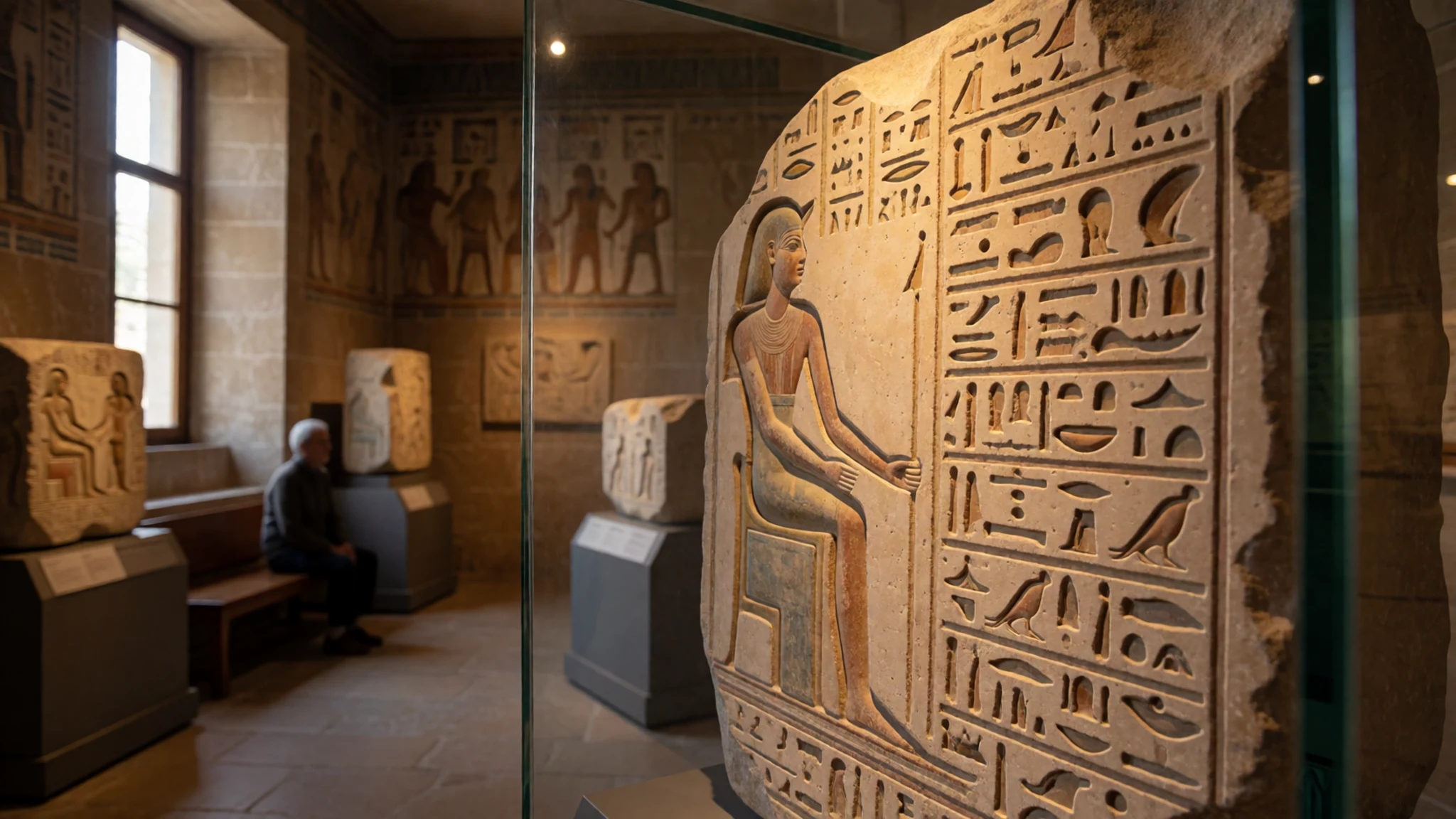
- The tomb cemeteries — Desert edge, west of the town
Rock-cut and shaft tombs of local officials lie in the desert edge near the city. Reliefs from a funerary chapel here, with the names of people such as Satbahetep, now sit in the National Archaeological Museum in Madrid. Access varies, so check with the local antiquities office first.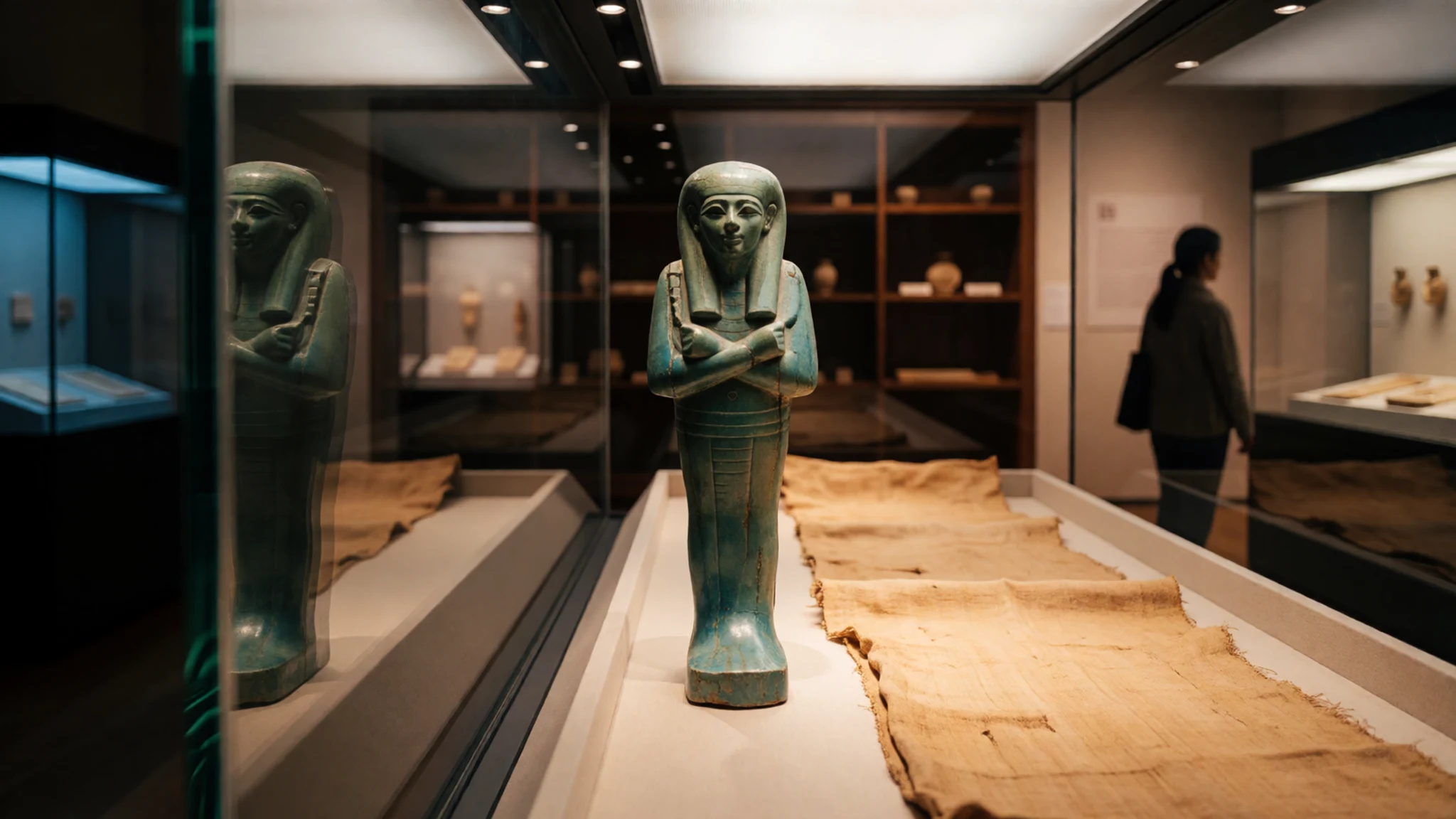
- The 1938 survey map — Online archive
A map of Ihnasya made by the Egyptian Survey Authority in 1938 shows how the town and mounds sat before modern building crept over them. It is worth studying before you go, as it helps you read the ground, and shows how much has changed in under a century.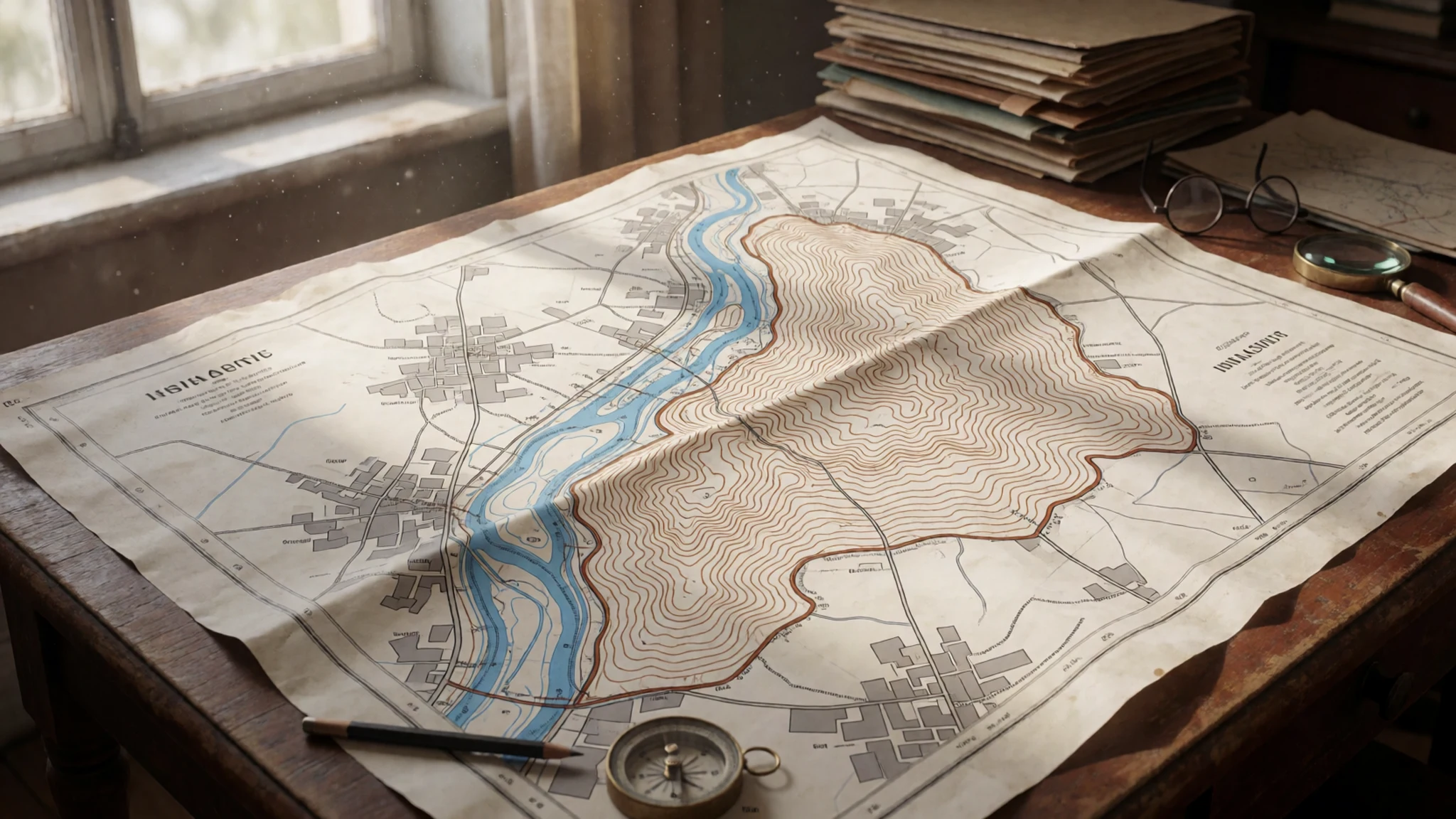
- Ushabti figures from the site — Petrie Museum, London
A pottery ushabti, a funerary servant figure wrapped in linen, was found at Herakleopolis Magna and belongs to the 19th Dynasty. It is in the Petrie Museum in London. Seeing it there, then the site itself, gives a fuller picture of how the dead were provided for.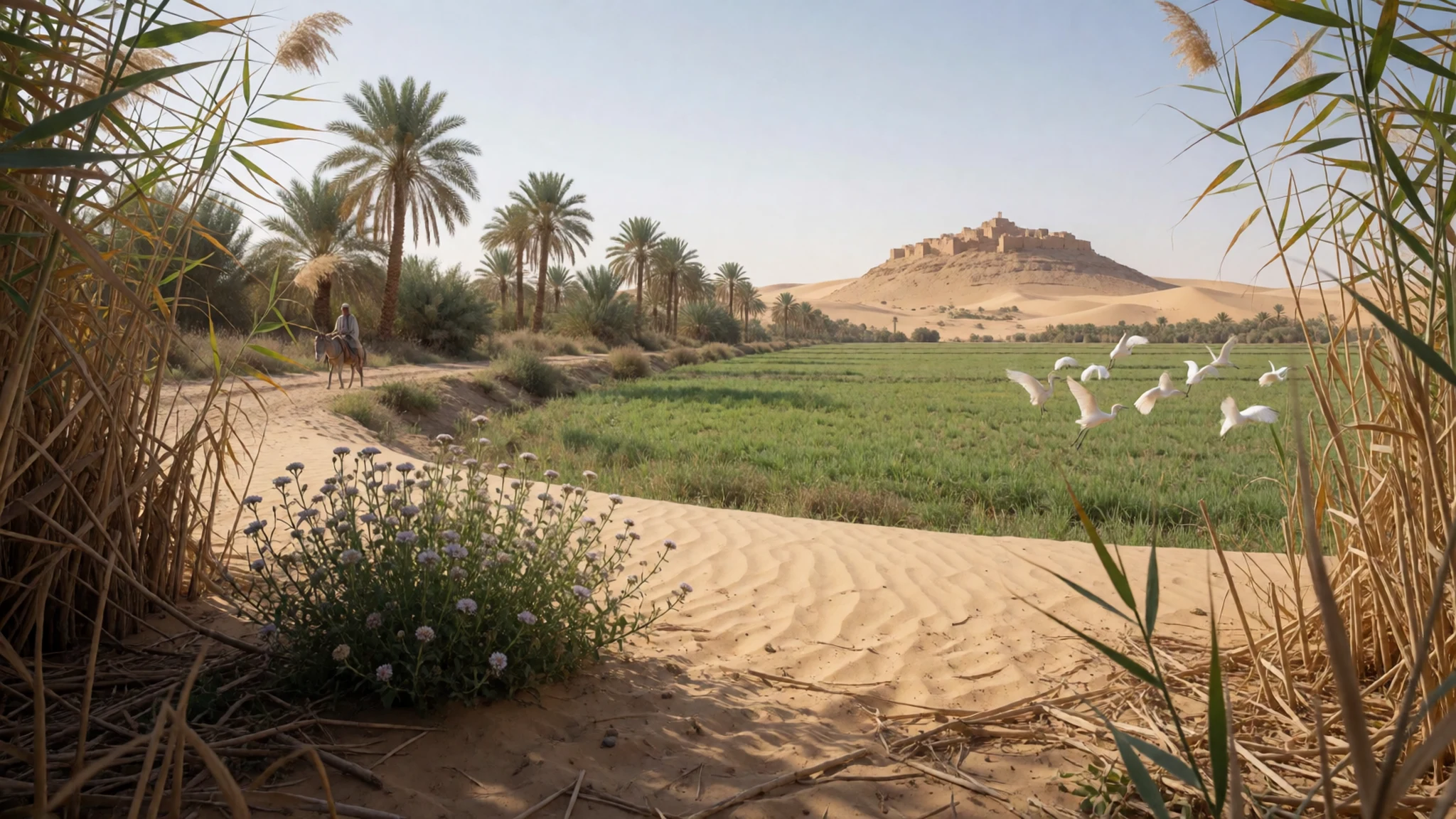
- Beni Suef museum and town — Beni Suef
Beni Suef, the nearest city, is where you will sleep, eat and organise transport. Its regional museum is the sensible place to ask about finds from the area. Opening arrangements change, so check with the Ministry of Tourism and Antiquities before planning around it.
Culture
Herakleopolis Magna lies in rural Middle Egypt, where daily life follows the farming year and the call to prayer. Families here are generally welcoming to visitors, and offering a guest tea or food is a point of pride. Accepting graciously, even if you only sip, is part of the exchange.
Honour and face matter in Egyptian social life. Criticising someone openly, even if they have clearly made a mistake, goes down badly. If something goes wrong, such as a driver arriving late, raise it quietly and kindly, and balance any complaint with thanks for what went well.
Religion is woven into everyday conversation, and Egyptians are usually happy to talk about it, but with respect. Casual scepticism or joking about faith can be met with bewilderment or offence. Many people here are Muslim and a significant number are Coptic Christian, and both communities are part of the area's long story.
The ancient culture is a living point of local identity too. Villagers know the mounds as part of their landscape and may have family connections to excavation work, so a curious, unhurried visitor is often met with real interest. Small talk about family, football and the Nile will get you further than any lecture on pharaohs.
When you meet someone at the site or in a village, ask before photographing them or their children, and never photograph women without their clear agreement.
What to wear
Traditional dress in Middle Egypt is the galabeya, a long, loose robe worn by men and women in the countryside. Men's versions are often cotton in plain stripes, blues, greys and creams, worn with a skullcap or a wrapped head cloth for sun. Women wear colourful or dark galabeyas with a headscarf, and cotton is the staple because it breathes in the heat. Embroidery and printed patterns appear on festive and wedding clothes.
In the ancient city, people wore linen, woven from flax, and linen grave clothes survive on figures like the ushabti from this site. That textile link still shows in the preference for light, plant-based fabrics.
What people wear now is a mix. In Beni Suef town, many men wear trousers and shirts, and many women wear long skirts or trousers with a tunic and a hijab, though styles vary and not all women cover their hair. Younger people follow Cairo trends, with trainers and jeans. Farmers and site workers favour the galabeya.
Visitors should dress modestly and for heat. Choose loose cotton or linen trousers or long skirts, and tops that cover shoulders and upper arms; this applies to men too, since shorts draw attention in rural areas. Bring a wide-brimmed hat, sunglasses and sunscreen. Closed shoes with grip are best for uneven, dusty ground and loose stone. A light scarf is useful for sun, dust and any mosque you may enter.
What to eat
- Fūl medames — Small breakfast stalls in Beni Suef town
Slow-cooked fava beans mashed with oil, lemon, cumin and sometimes chopped tomato, eaten with flatbread for breakfast. It is cheap, filling and found everywhere in Egypt, and a good fuel for a hot morning at the site.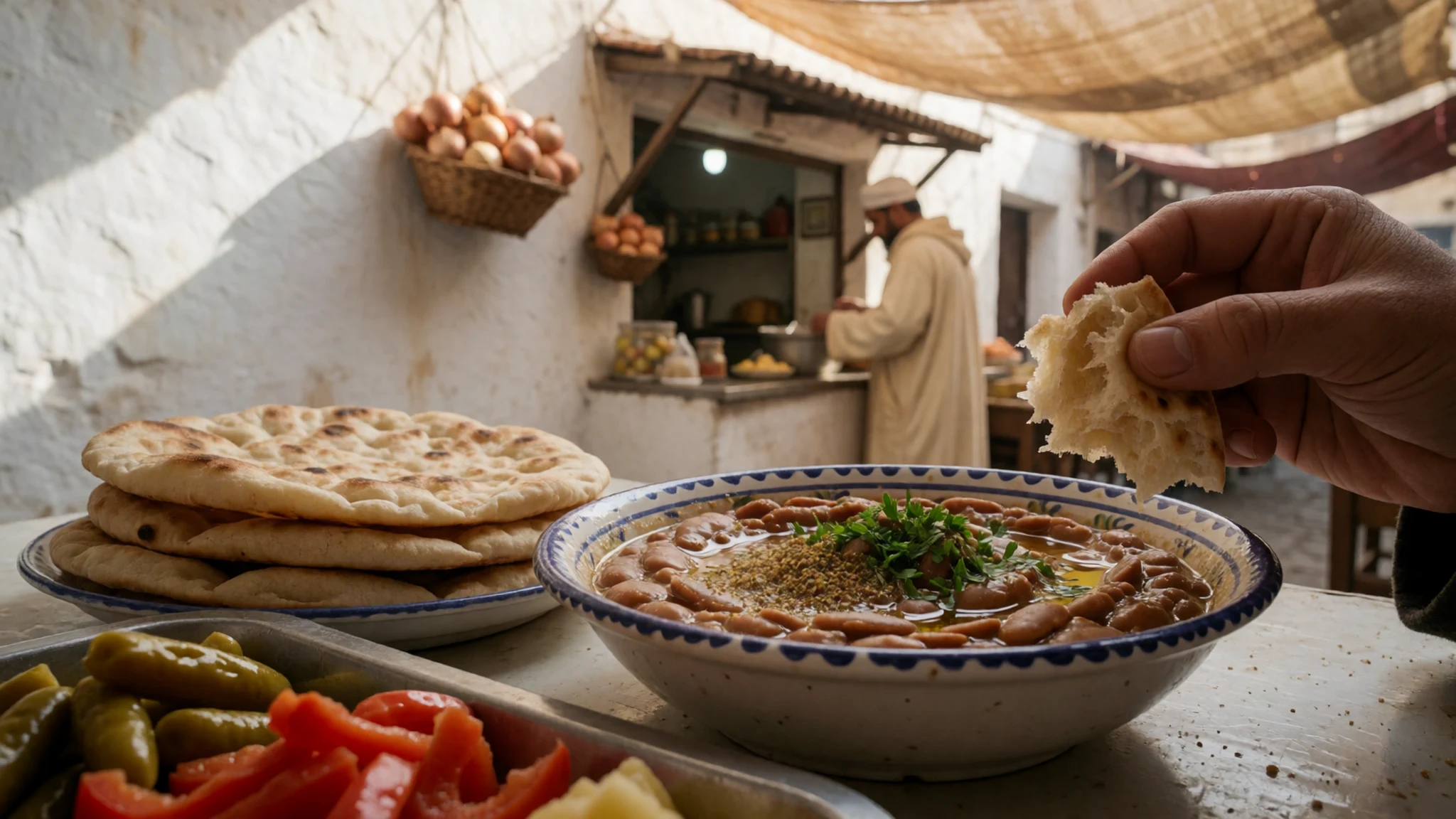
- Ta'miyya — Street stands near Beni Suef's main market
Egypt's version of falafel, made with fava beans rather than chickpeas, giving a green, herby centre. It is fried to order and stuffed into baladi bread with salad and tahini, usually eaten standing at the counter.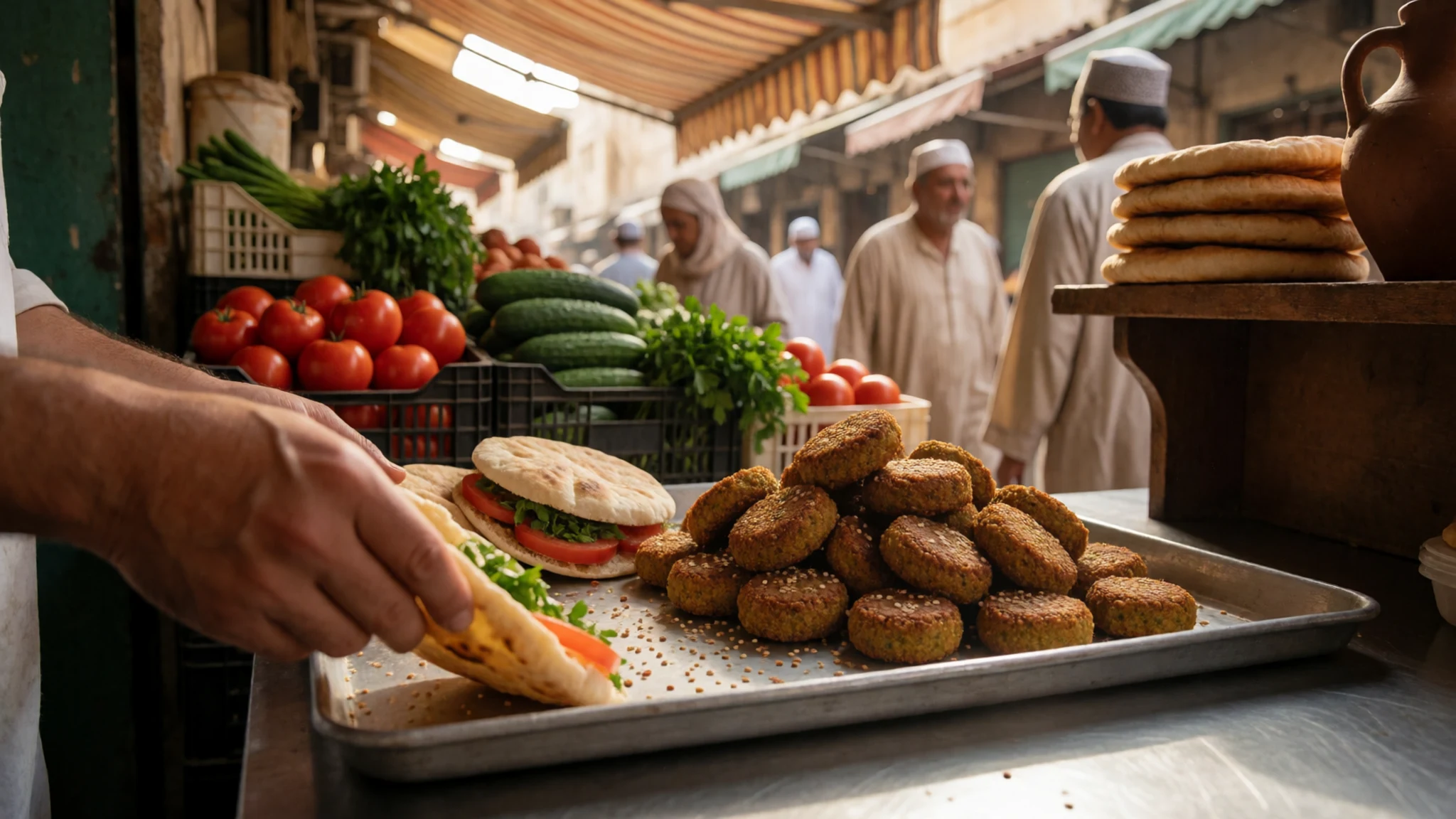
- Koshari — Koshari eateries in Beni Suef
A mix of rice, lentils, macaroni and chickpeas topped with spiced tomato sauce, crisp fried onions and a splash of garlic vinegar. Hearty and vegetarian, it suits travellers from India and the UK alike. - Baladi bread — Neighbourhood bakeries
Round, wholemeal flatbread baked in local bakeries and often sold hot in the morning. It is the base of most meals, used as a scoop and wrapper, and is lovely torn fresh with a little cheese. - Molokhia — Family-run eateries and home-style restaurants
A glossy green soup of finely chopped mallow leaves with garlic and coriander, often served with rice and chicken or rabbit. The texture is unusual at first, but it is a staple of home cooking in the Nile valley.
Plan it
Best time. October to March, when days are warm rather than fierce and exploring on foot is comfortable. Summers are very hot in Middle Egypt, so if you must go then, start at first light.
How long. 1
Getting there. Fly to Cairo International Airport, then take a train or road transport south to Beni Suef (about 15 km east of the site). From Beni Suef, hire a driver or taxi for the last stretch to Ihnasya.
Budget. low
Tips
- Arrange a driver and, if possible, a guide in Beni Suef the day before
- Check with the local antiquities office that the site is open and accessible
- Carry cash in small notes, as cards are rarely accepted in the area
- Bring more water than you think you need, plus sun protection
- Start early to avoid the midday heat
Etiquette
- Dress modestly, covering shoulders and knees
- Ask before photographing people
- Accept tea or hospitality politely
Nearby
Sources
- Wikidata Q249480 (CC0)
- Wikipedia: Heracleopolis Magna (rev 1365245446) (CC BY-SA 4.0)
- Wikivoyage: Egypt (rev 5410102) (CC BY-SA 4.0)
- Photo: relief from the tomb of Satbahetep (CC BY-SA 2.5)
- Photo: pottery ushabti from Heracleopolis Magna (CC BY-SA 4.0)
- Photo: 1938 map of Ihnasya (Public domain)


