Hemis Monastery
Hemis Monastery, India
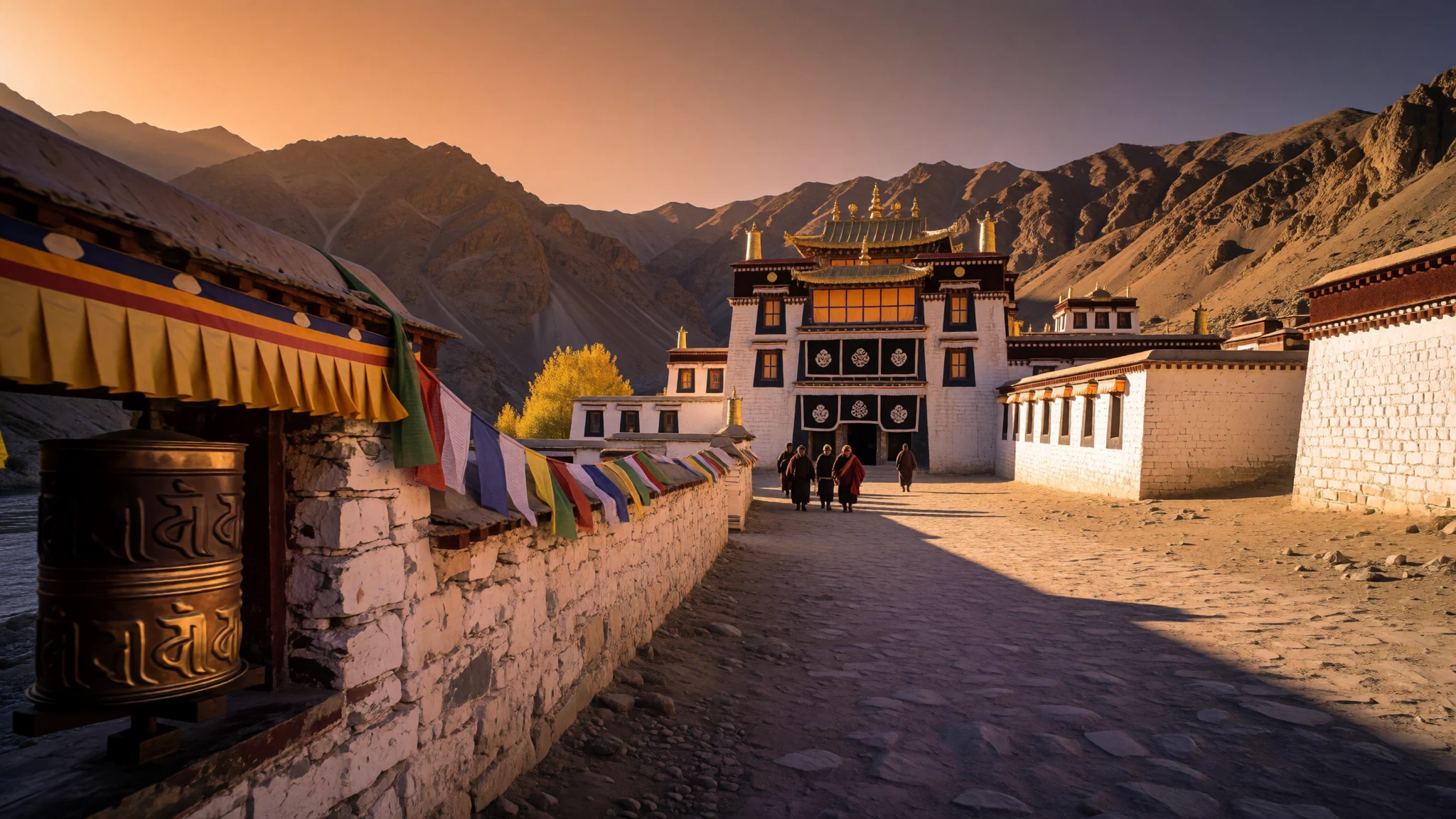
Hemis Monastery is a Drukpa Lineage gompa beside the Indus in Ladakh, with a painted courtyard and a June festival for Padmasambhava.
The place
Hemis Monastery is a gompa of the Drukpa Lineage of Tibetan Buddhism, standing in the village of Hemis beside the Indus in Ladakh, India. Depending on the source it lies roughly 40 to 45 km from Leh, on the Leh–Manali highway, which makes it an easy half-day trip by taxi. The setting is high, dry and almost treeless: whitewashed buildings climb a bare brown slope, with a thin ribbon of barley fields and willows along the river below. Ladakh has long sat between Tibet, Central Asia, Kashmir and the plains of India, and its monasteries carry the marks of that crossroads. Caravans once hauled pashmina wool, salt, turquoise and spices over the passes, and monks and merchants followed the same routes. Hemis belongs to that world as a working religious house rather than a museum, so the experience changes with the hour: quiet courtyards in the morning, prayers and the sound of horns at set times, and in early June the annual festival honouring Padmasambhava, when pilgrims and visitors fill the place. King Sengge Namgyal of Ladakh gave the monastery new life in 1672, while a photo caption in the brief dates its founding to 1630 under the first Stagsang Raspa, so the sources differ on the details. Altitude and sun are the practical facts of any visit: the air is thin, the light is harsh, and the shade stays cold even in summer.
Its story
Hemis Monastery is older than the 11th century according to the brief, and its fortunes were reset in 1672 when King Sengge Namgyal of Ladakh re-established it as a major seat of the Drukpa line. Its best-known modern controversy has little to do with Buddhism. In 1894 the Russian journalist Nicolas Notovitch published a book claiming that monks at Hemis had shown him an unknown scroll, the Life of Saint Issa, placing Jesus in India during the years the gospels skip. He said he had been laid up with a broken leg and that his guide translated the text aloud. The story passed from Tibetan into Russian, then French, then English, which is one reason scholars distrust it. Historians treat the whole account as fabricated, and Notovitch is reported to have admitted as much. The Bible scholar Bart Ehrman says no recognised specialist doubts that it was a hoax that made its author money and fame. In 1921 Swami Abhedananda, an Indian monk, visited Hemis and later wrote that he had seen the same manuscript, read out to him by an interpreter from among the lamas, with contents close to Notovitch's version. That later claim did not rescue the tale. For a visitor the lesson is simple: Hemis has a library and a long monastic history, but the Issa story belongs to the history of publishing rather than to anything the monastery teaches.
What to see
- The main courtyard — Hemis village, Leh district
The courtyard at Hemis Monastery is where most visits begin. Prayer flags, painted woodwork and the surrounding galleries make it the heart of the complex, and it is also where festival crowds gather in early June. Go early, when the light is soft, the space is quiet and the monks are going about their routines.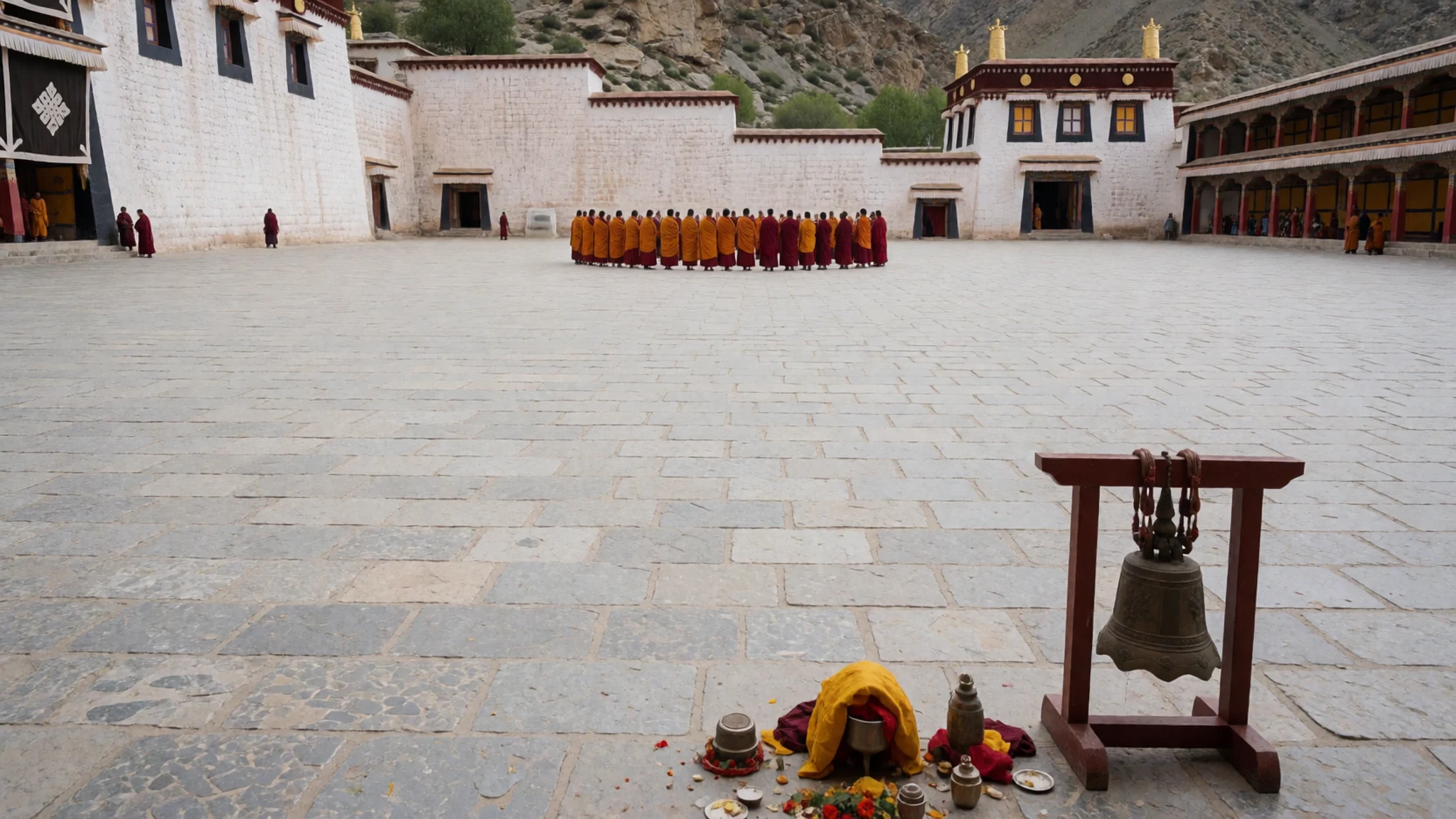
- The Mahasiddha paintings — Hemis village, Leh district
Hemis Monastery keeps a gallery of paintings of the 84 Mahasiddhas, the tantric masters of Indian Buddhist tradition, on the courtyard walls. The photo captions describe them as 17th-century work in ground mineral pigments. Look at the faces, postures and small details of each figure, and remember that touching the paint is not allowed.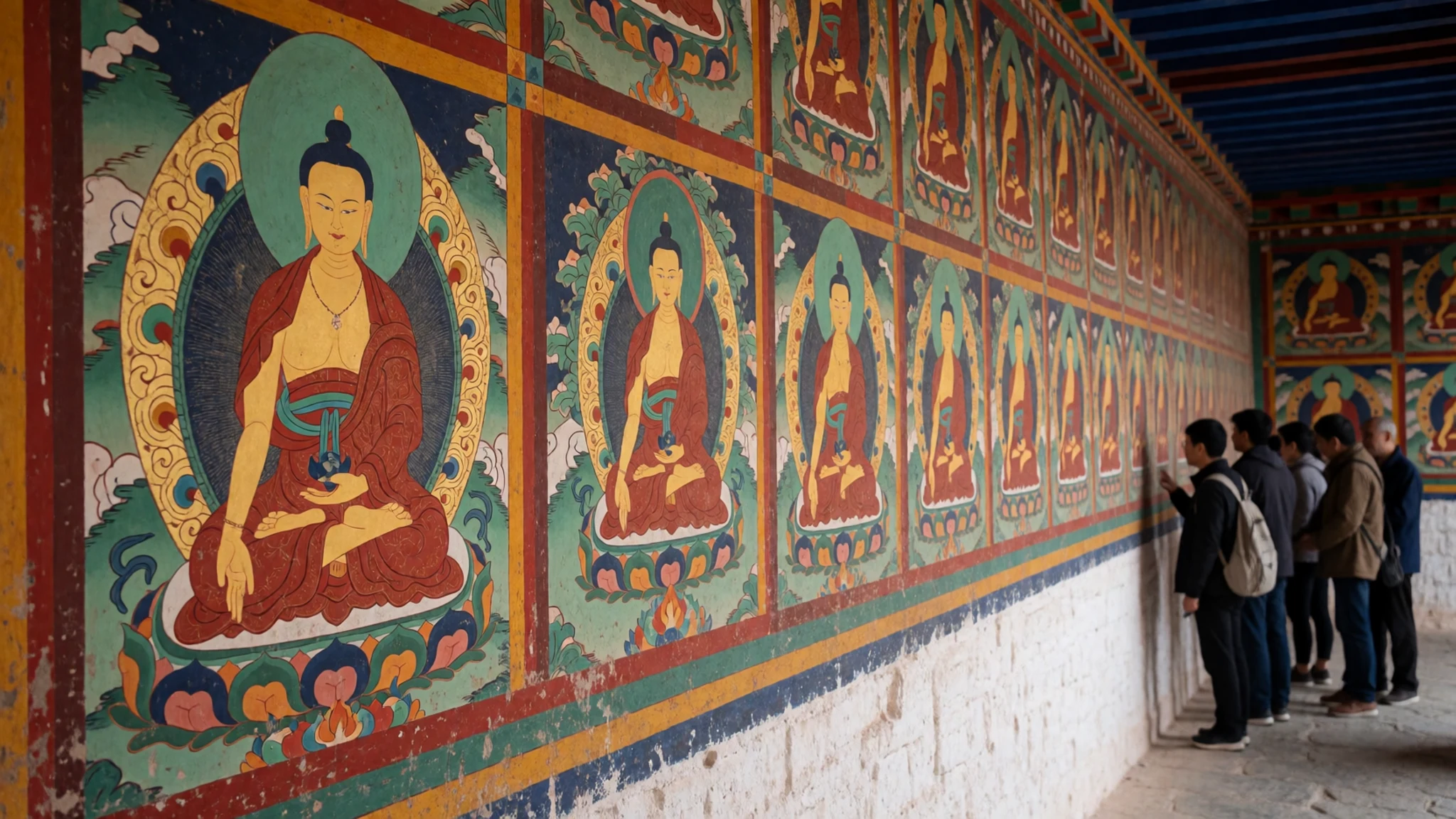
- The monastery from the outside — Hemis village, Leh district
Hemis Monastery is best taken in from a distance first. Its white walls and flat roofs stack against a bare slope above the Indus valley, and the contrast with the green fields below explains why so many photographers come. The hillside setting also helps you read how the buildings were laid out.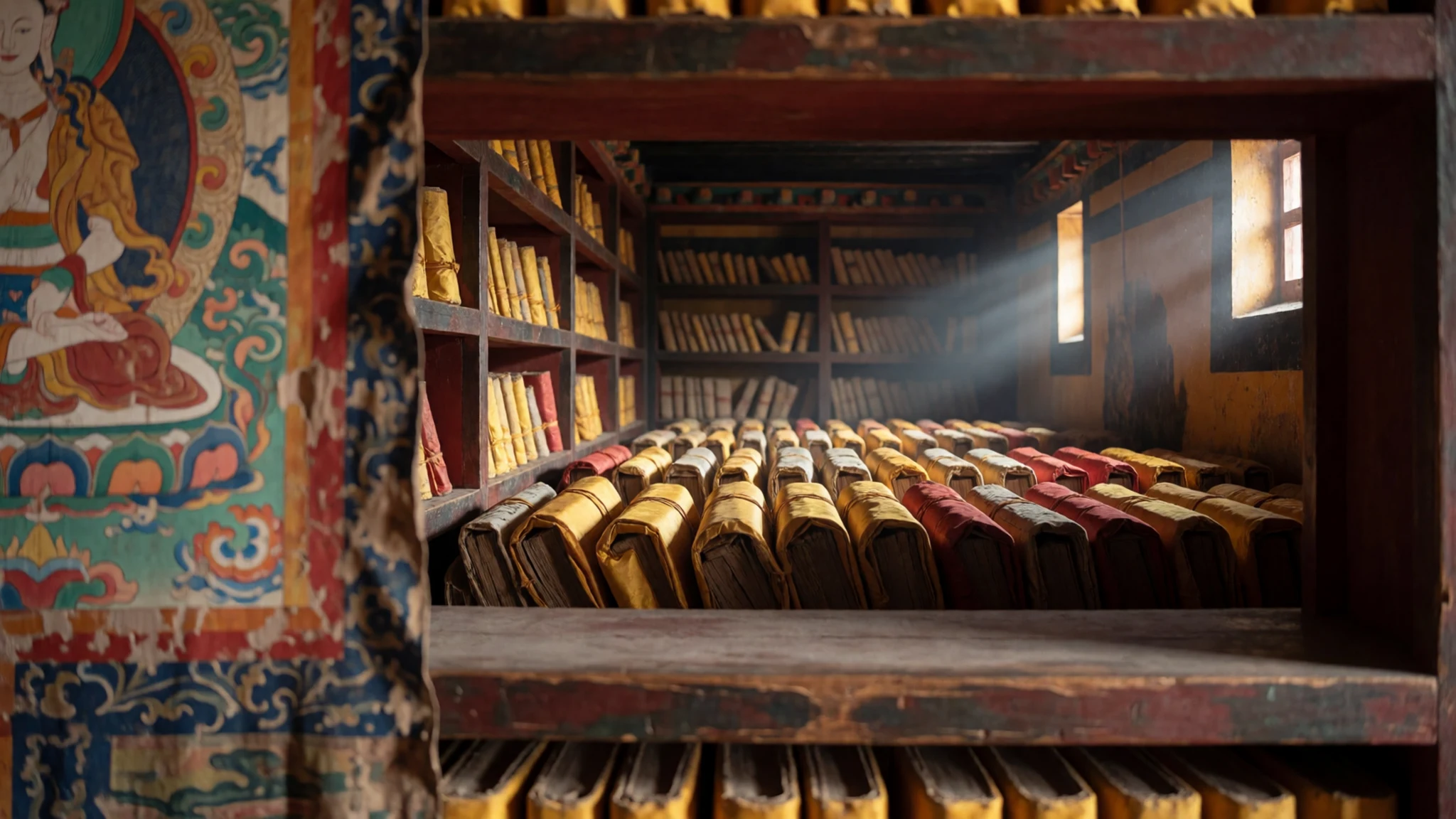
- The Hemis festival — Hemis village, Leh district
The annual festival at Hemis Monastery honours Padmasambhava and takes place in early June. It is the busiest time of year, with local families in festive dress alongside visitors from across the world. Book Leh rooms well ahead, check dates with local sources, and arrive early for a place in the courtyard.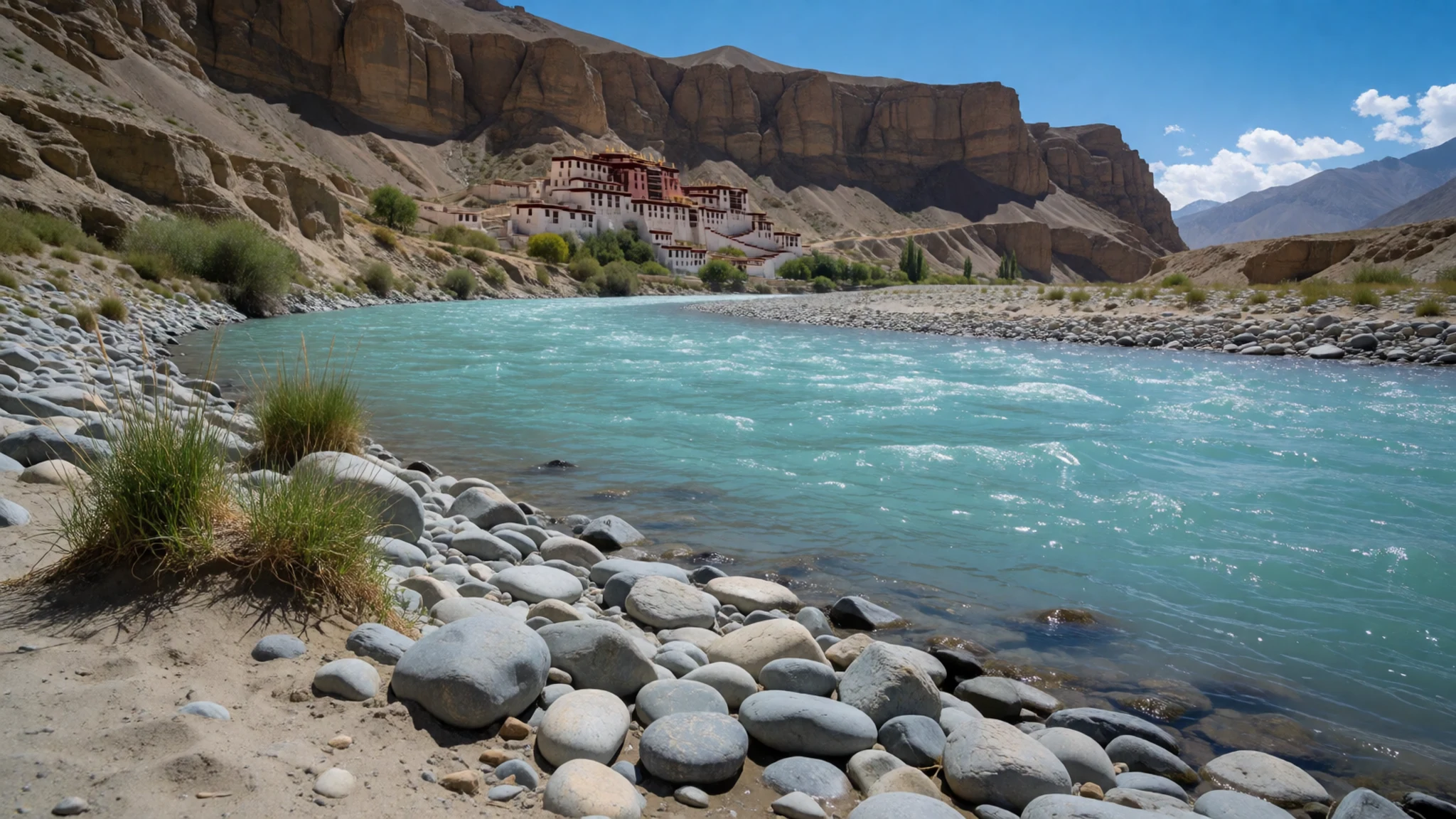
- Hemis village and the Indus bank — Hemis village, Leh district
Hemis village spreads along the Indus below the monastery, with barley fields, irrigation channels and white-painted homes. A slow walk here shows what ordinary Ladakhi life looks like away from the gompa, and the river valley gives a sense of why this route has been a travel corridor for centuries.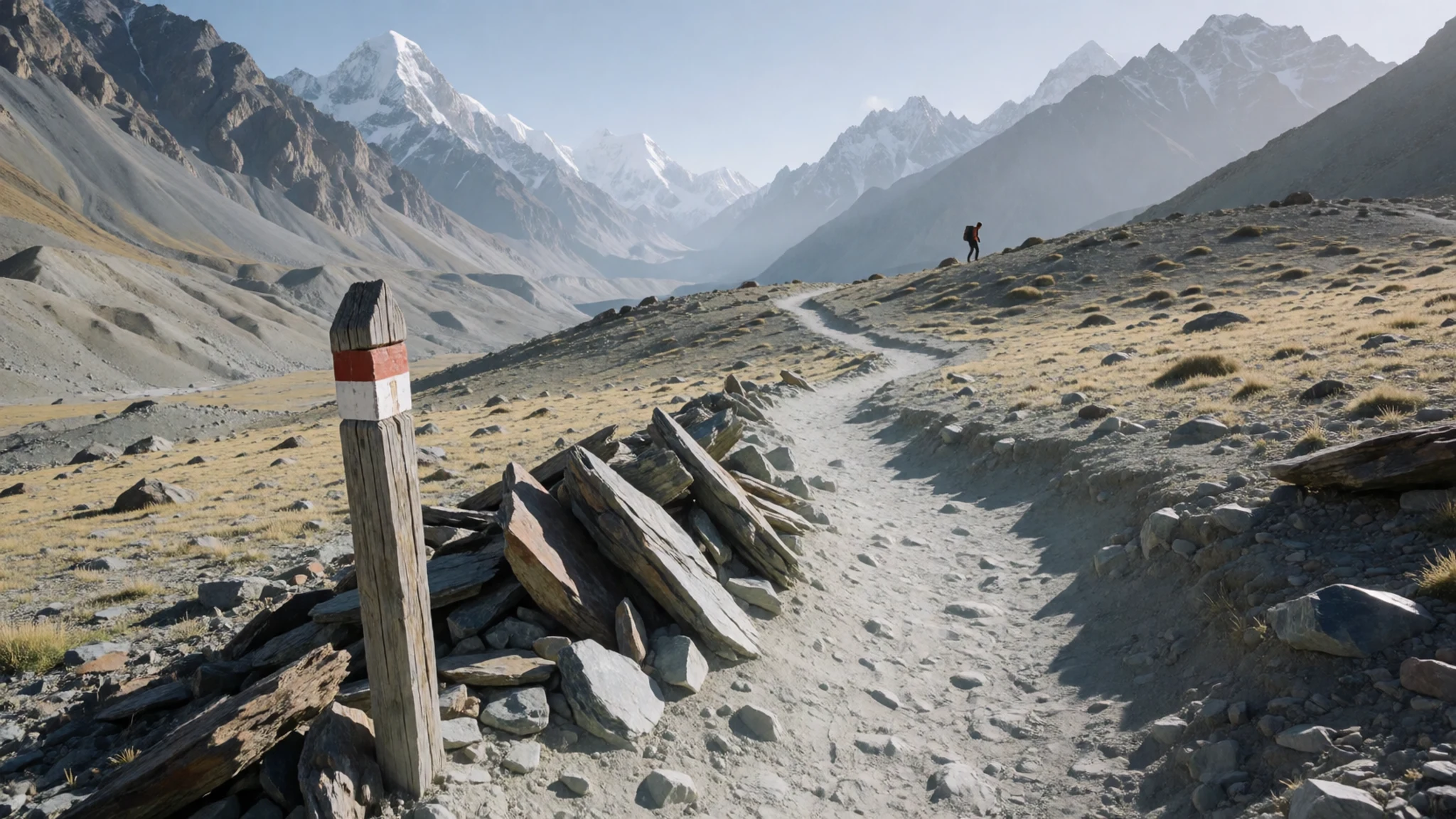
Culture
Hemis Monastery sits in a part of Ladakh where Tibetan Buddhism shapes daily life, and the monastery is a place of practice before it is a sight. Ladakhis are their own ethnic group, distinct from Kashmiris, and being called Kashmiri can cause offence, particularly since Ladakh stopped being part of Jammu and Kashmir. Travellers generally describe local people as friendly and unhurried, and Ladakhi women commonly run shops or eat out alone, a contrast with much of northern India. The Drukpa Lineage, to which Hemis belongs, is one of several Tibetan Buddhist schools, and its monks follow a rhythm of prayer, study and ritual that visitors can sometimes glimpse from the courtyard. The annual festival in early June honours Padmasambhava, the teacher credited with carrying Buddhism into Tibet, and draws local families in their best clothes as well as outsiders. Pilgrims turn prayer wheels as they pass, spin them clockwise, and circle shrines the same way, keeping the sacred object on their right. Photography rules vary between halls, so watch for signs or ask a monk before raising a camera inside a prayer room. Offerings are usually made quietly at a donation box rather than handed to individuals. Walk clockwise around the monastery buildings and chortens, take your hat off indoors, and never smoke or touch the painted walls.
What to wear
Hemis Monastery draws on the dress of Ladakh, where the traditional garment is the goncha, a long wool robe tied at the waist with a sash. Older women also wear the perak, a headdress covered in turquoise that is passed down in families, and pashmina and other wool have long been traded across the region. Monks wear maroon and saffron robes, and during the early June festival, local families put on their finest goncha and jewellery. Day to day, most people in Leh and the villages now wear practical modern clothes: fleece jackets, jeans, trousers, trainers and sunglasses, with the goncha kept for festivals, weddings and elders. A visitor should dress for thin air and strong sun. Layers work best, since mornings and evenings are cold even in summer while midday is hot, and a warm jacket should always be in the bag. Cover shoulders and knees inside the monastery as a courtesy, and carry a sun hat and sunglasses for outdoors, though the hat comes off indoors. Footwear should be sturdy with a good grip for steps and uneven courtyard stones, and easy to slip off at prayer-hall doors. Sun cream and lip balm matter more than most people expect at this altitude.
What to eat
- Thukpa — Small family-run eateries in Leh bazaar and along the Indus road
Thukpa is the noodle soup that anchors Ladakhi cooking, usually with mutton, vegetables and a spicy chutney on the side. It is a sensible warm meal after a morning in the cold courtyard and is easy to find at small eateries in Leh and on the road to Hemis.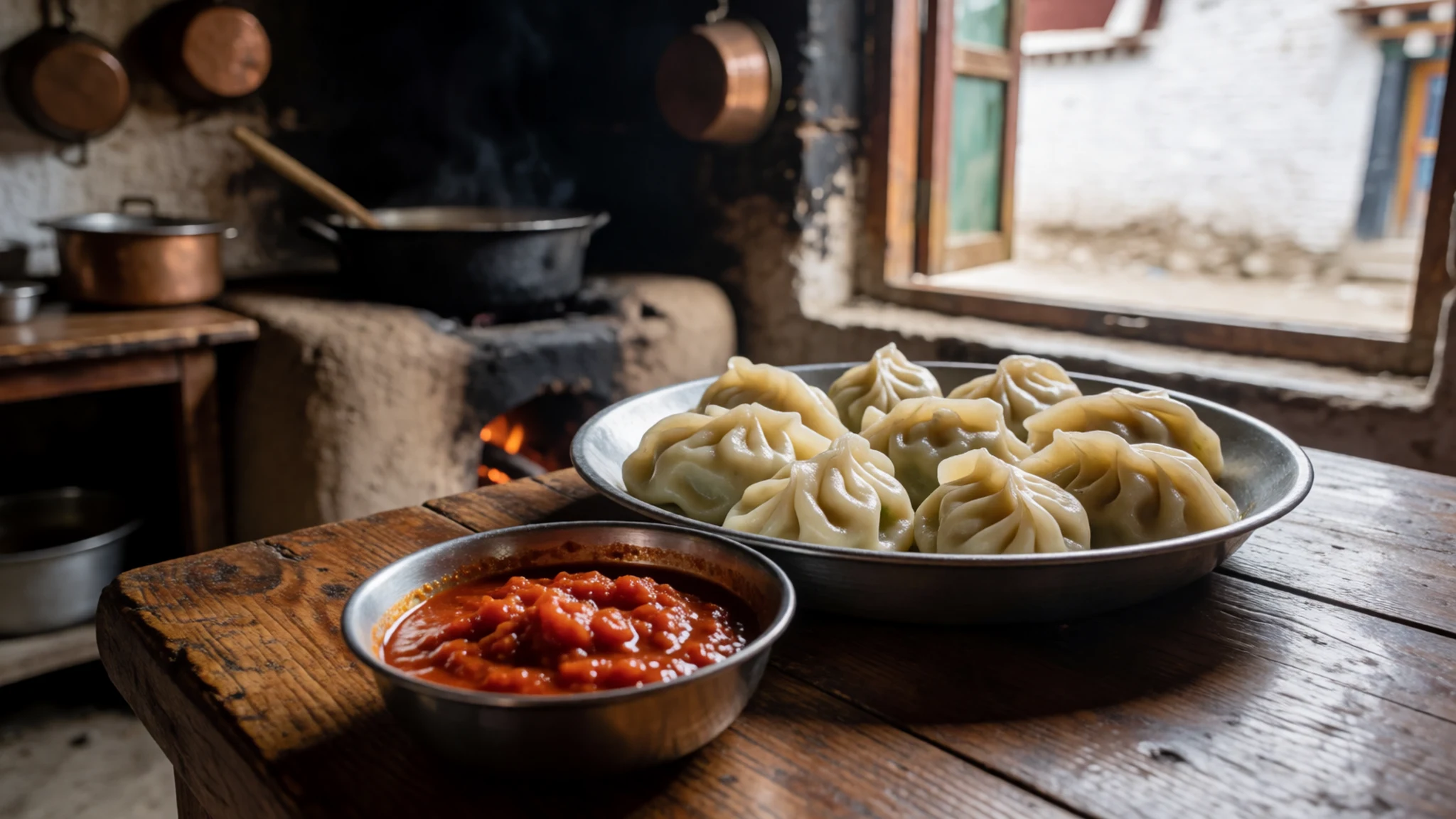
- Momos — Cafes and snack stalls around Leh's main market
Momos are steamed dumplings, filled with vegetables or meat and served with a hot red chutney. They are a favourite with Ladakhis, shared at tea stalls and cafes, and a cheap, filling stop before or after a monastery visit.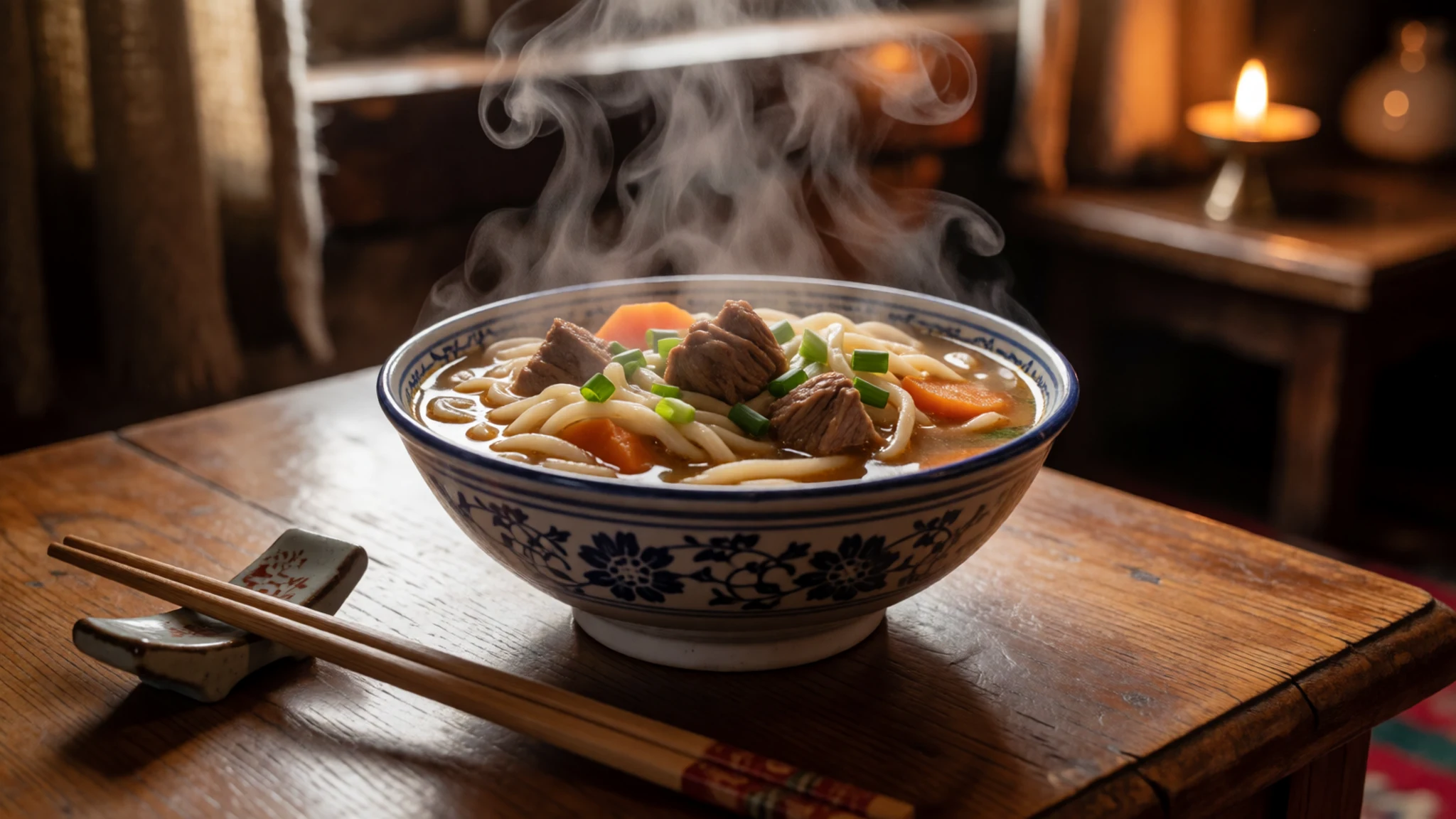
- Skyu — Village guesthouse kitchens and Ladakhi restaurants in Leh
Skyu is a thick, hearty pasta dish cooked with root vegetables, closer to a stew than a noodle plate. It is home cooking at its most filling, so ask at a village guesthouse or a restaurant that serves traditional Ladakhi food. - Tsampa (ngamphe) — Village homes, guesthouse breakfasts and Leh's local grain shops
Tsampa is roasted barley flour that can be eaten without cooking, often mixed with salt tea or butter into a dough. It tastes plain, but it is the long-time staple of trekkers and farmers, and a good way to try the grain the valley grows. - Ladakhi pulao — Sit-down restaurants in Leh
Ladakhi pulao is rice cooked in mutton stock and layered with caramelised onions, carrots and nuts. It is not street food, so look for it on the menu of a proper sit-down restaurant, usually as a celebratory dish.
Plan it
Best time. June to September, when the roads are open and days are warm; early June adds the Hemis festival, though mornings and evenings stay cold and winters are severe.
How long. 1
Getting there. Fly to Kushok Bakula Rimpochee Airport (IXL) at Leh, which has regular flights from Delhi. From Leh, Hemis is roughly 40–45 km away on the Leh–Manali highway; the easiest last leg is a taxi, with buses and motorbikes as other options.
Budget. mid
Tips
- Spend your first days in Leh acclimatising before heading higher, and drink plenty of water
- Book Leh rooms well in advance for the early June festival, and arrive at the monastery early
- Carry some cash, as small eateries and village shops may not take cards
- Bring sun protection and a warm layer, because the sun is strong and the shade is cold
- If you plan to add Nubra Valley, Pangong Lake or Tso Moriri, check the permit rules at Leh before you go
Etiquette
- Walk clockwise around the monastery buildings, chortens and prayer wheels
- Remove your hat and keep your hands off the painted walls inside
- Ask before photographing monks, worshippers or the inside of a prayer hall
Nearby
Sources
- Wikidata Q4497698 (CC0)
- Wikipedia: Hemis Monastery (rev 1367096615) (CC BY-SA 4.0)
- Wikivoyage: Leh district (rev 5393479) (CC BY-SA 4.0)
- Hemis Monastery 02, Bernard Gagnon (CC BY-SA 4.0)
- 17th century Hemis Monastery in Ladakh, Stanzin1945 (CC BY-SA 4.0)
- Hemis Monastery India, Prof Ranga Sai (CC BY-SA 4.0)
- Hemis Monastery courtyard, Prof Ranga Sai (CC BY-SA 4.0)
- Hemis Mahasiddhas 1, Prof Ranga Sai (CC BY-SA 4.0)
- Hemis Mahasiddhas 2, Prof Ranga Sai (CC BY-SA 4.0)
- Hemis Mahasiddhas 3, Prof Ranga Sai (CC BY-SA 4.0)
- Hemis Mahasiddhas 4, Prof Ranga Sai (CC BY-SA 4.0)


