Haridwar
Haridwar, India
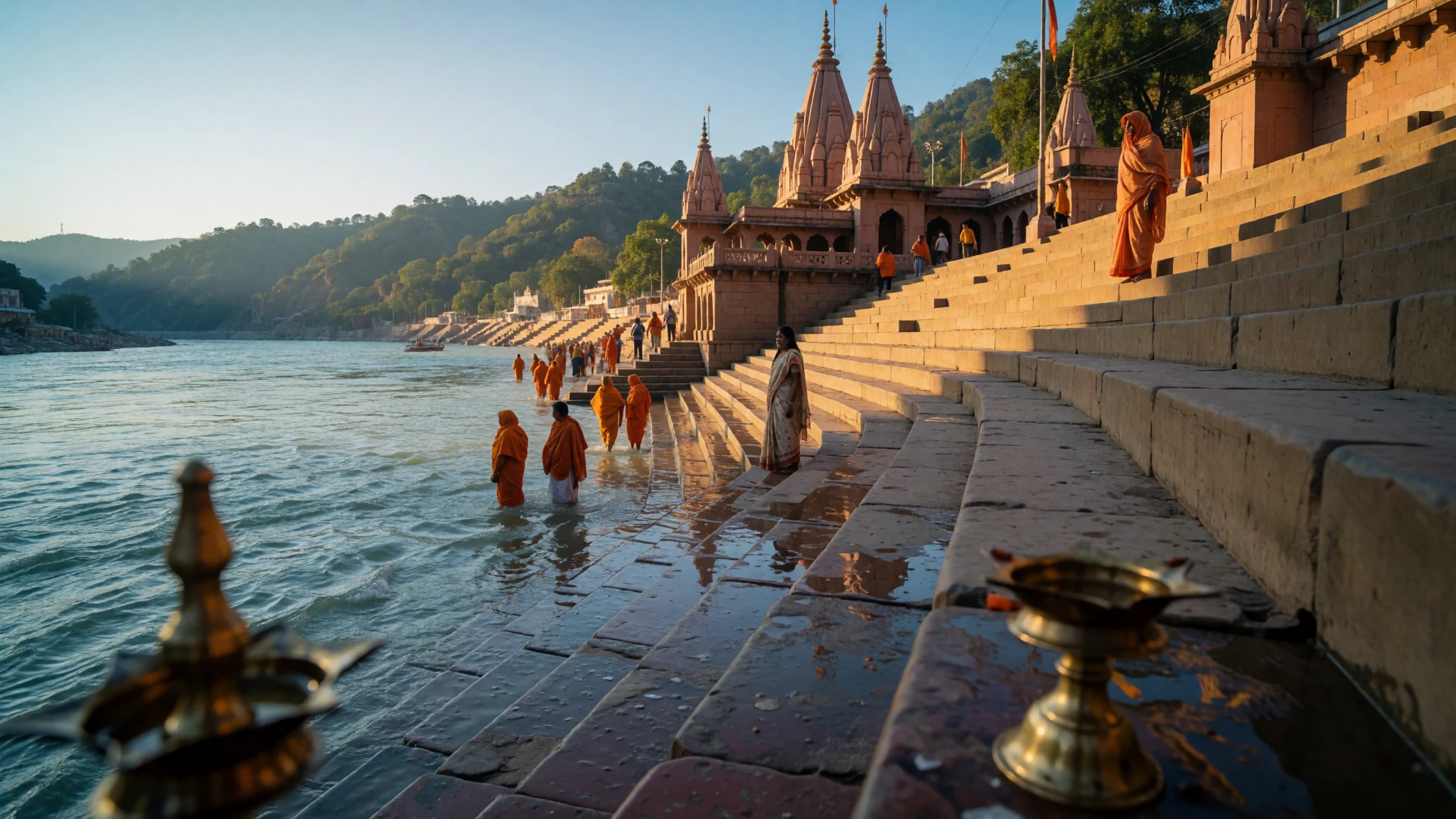
Haridwar is where the Ganges leaves the hills and meets the plains, and where pilgrims bathe, pray and watch the evening lamps.
The place
Haridwar sits about 314 metres above sea level in Uttarakhand, on the right bank of the Ganges, just where the river leaves the Shivalik foothills and begins its run across the plains. The name is usually read as 'gateway to Hari', and the town does work as a gateway: pilgrims bound for the Char Dham, the four Himalayan shrines of Badrinath, Kedarnath, Gangotri and Yamunotri, pass through here, and many bathe before going on. Older names include Mayapuri, Gangadvara and Kapilasthana.
The centre is compact and built around the water. Ghats and canals run beside the river, lanes of small shops sell brass lamps, rudraksha beads and sacred threads, and temples crown the hills at either edge. Evening is the busiest hour, when crowds gather for the river lamp ceremony.
Two local rules shape daily life. The town is strictly vegetarian, with no meat, fish or eggs sold within the city limits, and alcohol is banned. Delhi lies about 200 km to the south-west, which makes Haridwar an easy overnight trip for many north Indian families, and weekends and festival dates fill every guesthouse. Rishikesh, about an hour upriver by bus, draws a different crowd of yoga students and rafters, while Haridwar stays mostly about worship, ritual bathing and family rites.
Expect noise, bells, loudspeakers, cows, monkeys and large crowds, and also real calm at dawn, when the ghats are freshly washed and the river runs cold and quick. April to June is hot, the monsoon is wet, and pilgrim seasons can block the main roads.
Its story
Haridwar appears in Sanskrit texts under several names, among them Gangadvara, Kapilasthana and Mayapuri. The Mahabharata treats it as a sacred crossing where the Ganges comes out of the mountains. In the Vana Parva, the sage Dhaumya describes India's pilgrimage sites to Yudhishthira, and Gangadvara and nearby Kankhal are on his list. The same passage says the sage Agastya did penance here with his wife Lopamudra, and tradition places the ashram of the sage Kapila in the area, which gave the town one of its older names.
The best-known legend explains why the river is here at all. King Bhagiratha, descended from the line of Sagara, is said to have spent years in austerity to bring the Ganges down from heaven, so that its water could free his ancestors from Kapila's curse.
A second story explains the Kumbh Mela. After the gods and demons churned the ocean of milk, the divine bird Garuda carried away the pitcher holding amrita, the nectar of immortality, and drops spilled at four places: Haridwar, Ujjain, Nashik and Prayag. Haridwar hosts its Kumbh every 12 years, and the ritual bathing then draws pilgrims in their millions.
These are accounts of belief, not recorded events, and no date can be set on them. What can be said is that Haridwar has been a stopping place for pilgrims for long enough that scripture treats it as ancient, and that it remains the first stage of the Char Dham route.
What to see
- Har Ki Pauri — Northern centre, on the Ganges
Har Ki Pauri is the main bathing ghat of Haridwar and the point the rest of the town is measured from. Pilgrims step into the cold, fast water at dawn, and at dusk the steps fill for the lamp ceremony. Arrive well before sunset for a place to sit; the walk out afterwards is slow and packed.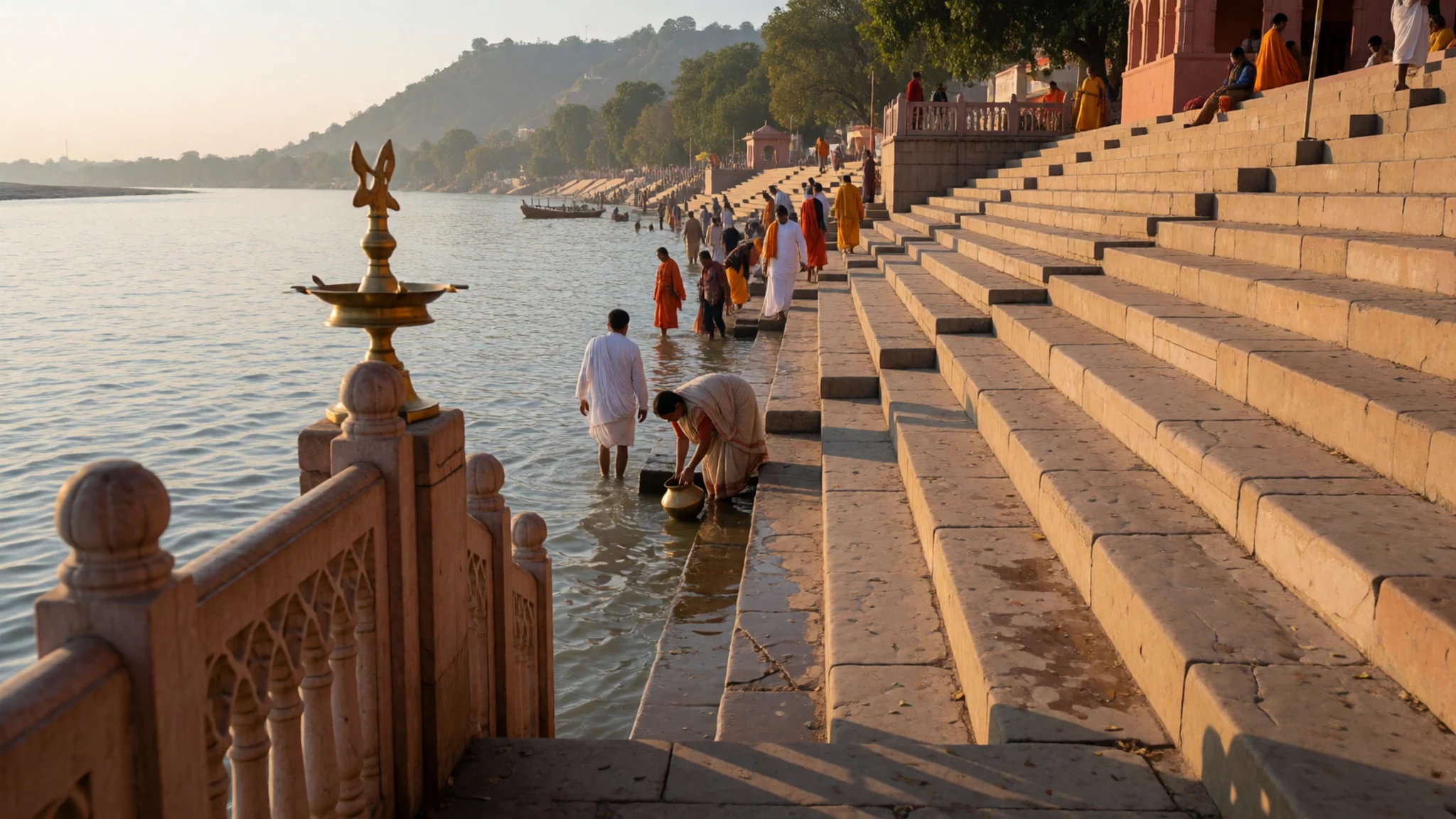
- Mansa Devi Temple — Hilltop near the town centre
Mansa Devi Temple stands on a hill close to the centre, with views over the river and the rooftops. Visitors can take the cable car or walk the road that winds up from Railway Road, a steady climb of about 2 km. Queues build on festival days, and monkeys watch bags closely.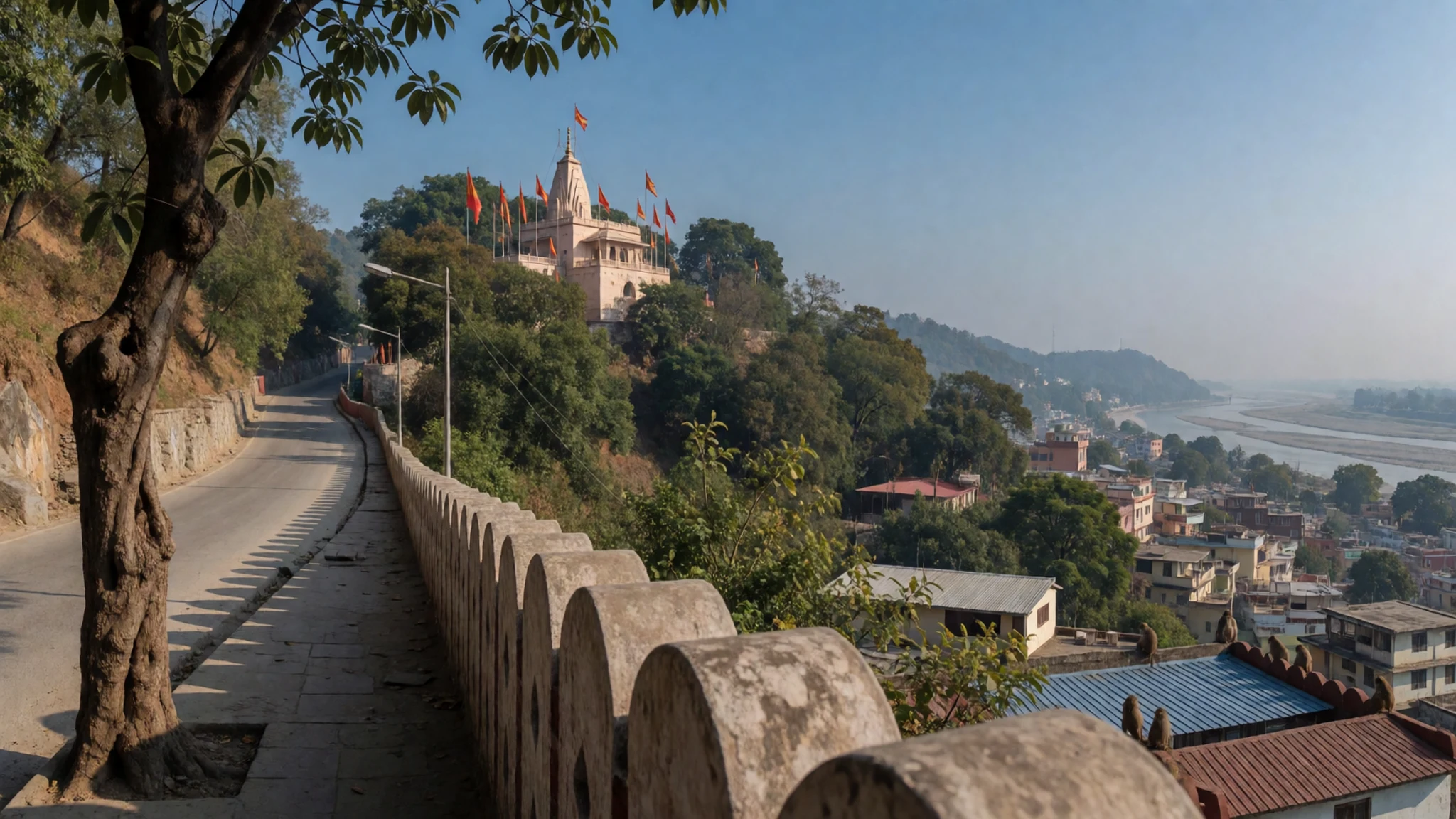
- Chandi Devi Temple — Neel Parvat, across the river
Chandi Devi Temple crowns Neel Parvat on the far side of the Ganges. The present building dates from 1929 and was raised by Suchat Singh, king of Kashmir, though the deity is said to have been installed by Adi Shankaracharya in the 8th century. A ropeway and a hill path both lead up.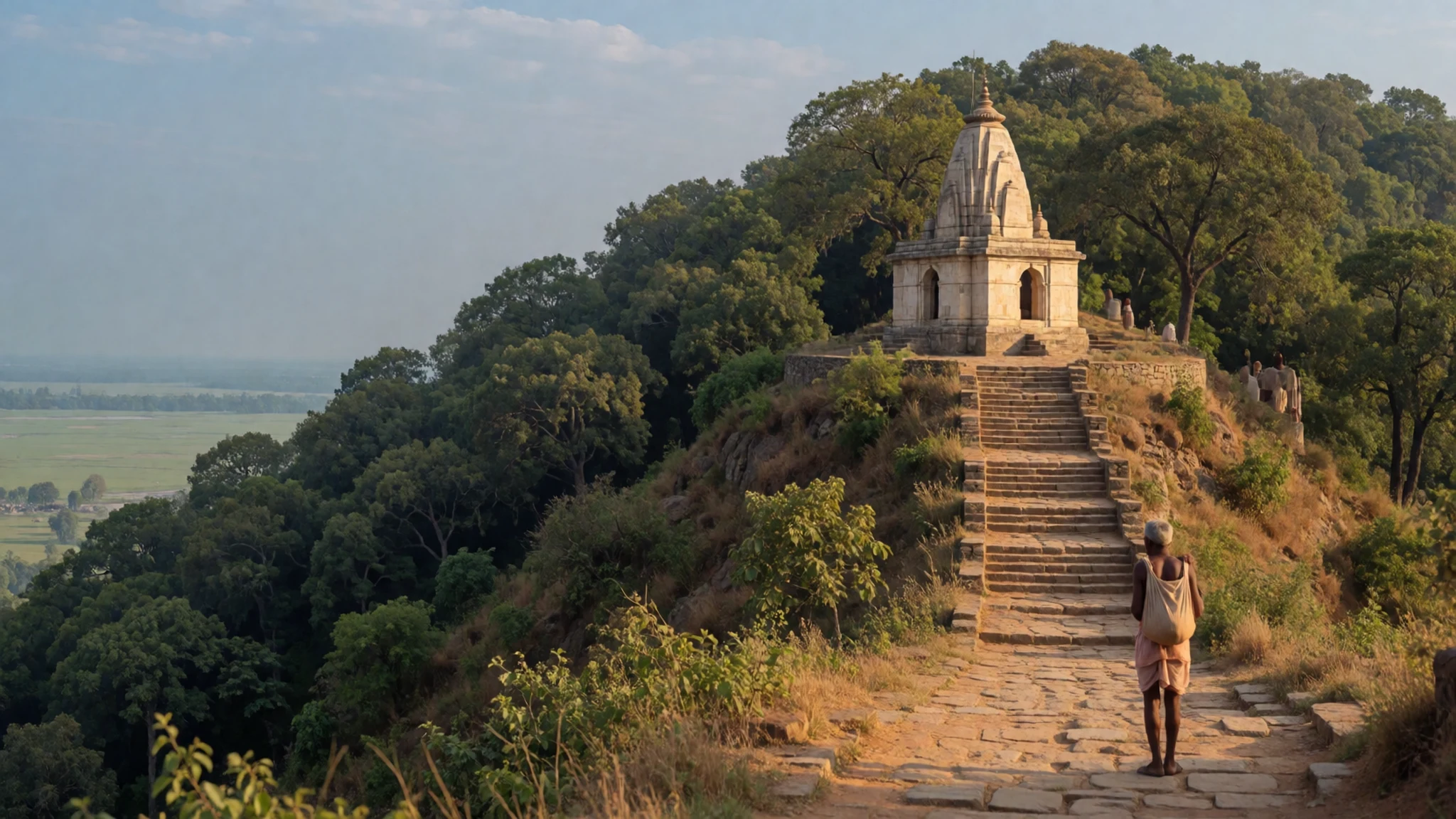
- Maya Devi Temple — Upper road, central Haridwar
Maya Devi Temple is counted among the Shakti Pithas and is regarded as the presiding deity of Haridwar, which is why the town carries the older name Mayapuri. It is smaller and quieter than the hill temples, a good stop between the ghats and the station when the crowds elsewhere feel heavy.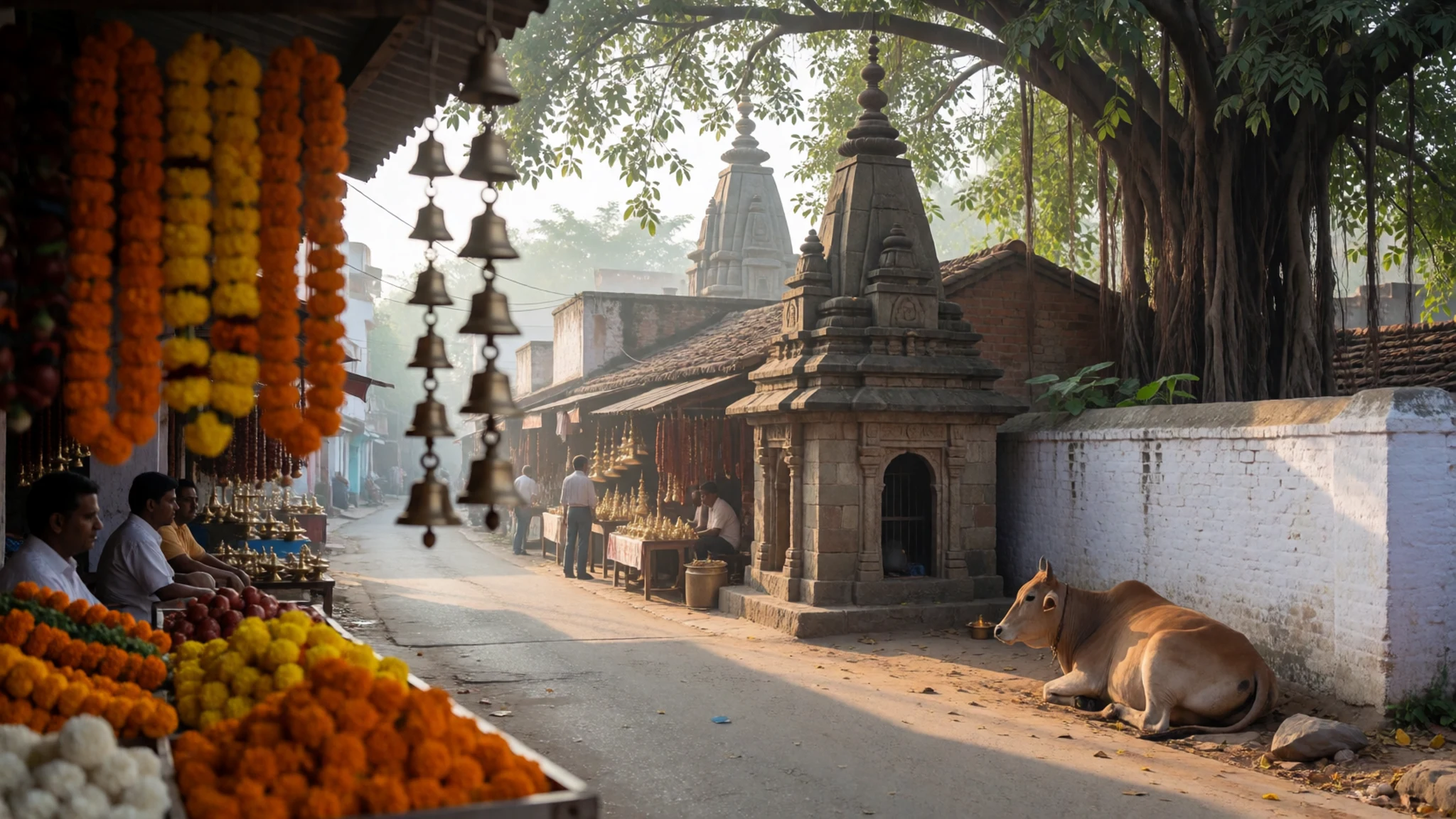
- Bharat Mata Mandir — North of the centre, near the river
Bharat Mata Mandir is dedicated to Mother India and reads as part temple, part national gallery. Seven floors are filled with deities, saints and public figures from many faiths. Some signs are in English. Climb to the top floor and work down; the quiet upper rooms are a break from the ghats.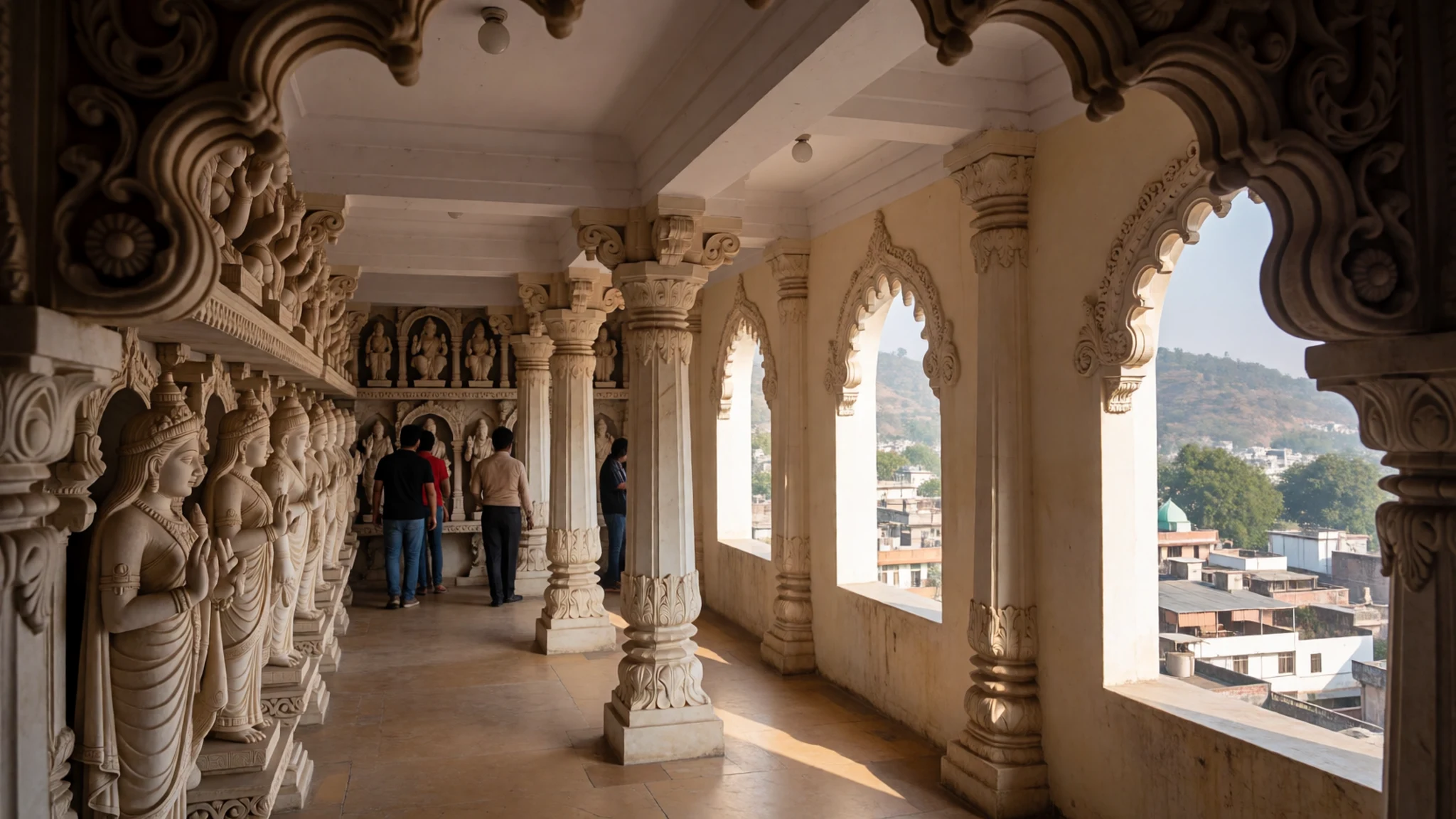
Culture
Haridwar is a working pilgrimage town, and religion here is practised in public, all day. Hindus come to bathe in the Ganges, believing the water washes away sin and helps the soul towards moksha, release from rebirth. Families also come to perform rites for the dead, and priests keep long family records of the pilgrims who have visited. Sadhus in saffron robes sit along the ghats, and many people carry water from the river home in small containers.
The daily rhythm follows the river. Dawn belongs to bathers and quiet prayer. Evening belongs to the lamp ceremony, when priests wave large flames to the sound of bells and chanting, and families float small leaf boats carrying flowers and a lit wick. Every twelve years the Kumbh Mela turns the whole town into a vast camp of devotees.
The town's rules are part of its character. Meat, fish and eggs are not sold within the city limits, and alcohol is banned, so every eatery serves vegetarian food. Many shops close for a rest in the afternoon heat, and the lanes are liveliest in the early morning and after dark.
People bathing are usually happy to share the ghat with respectful visitors, but they are there to pray, not to pose. Do not photograph bathers, women in particular, without asking, keep your shoes off at temple doors, and leave leather, tobacco and any food from outside the temple area behind.
What to wear
Haridwar's traditional dress follows the wider north Indian pattern, with a strong religious colouring. Women wear saris in cotton or silk, or salwar kameez, a tunic and trousers with a long scarf called a dupatta, often in bright festival colours. Men wear kurta and pyjama or a dhoti in cotton. Sadhus wear saffron or ochre cloth, sometimes only a wrap, with strings of rudraksha seeds around the neck. Plain white and undyed cotton is common for rituals and mourning.
What people wear day to day is simpler. Locals in town wear shirts and trousers, kurtas and track pants, jeans and shirts for younger people, with sandals or rubber slippers that slip off easily. Pilgrims often bathe in their clothes and then walk about damp, which dries quickly in the dry months.
For visitors, modesty matters more than style. Cover shoulders and knees, and choose loose cotton or linen that copes with heat and with sitting on stone steps. Women may find a light scarf useful for temples, and anyone going in the river should wear shorts or a long cotton wrap rather than a swimsuit. Slip-on sandals are practical, since shoes come off at every temple, but bring sturdy closed shoes if you plan the hill climbs. A shawl or fleece helps on winter mornings by the river, and a hat and sunscreen help the rest of the year.
What to eat
- Chole bhature — Breakfast counters in the old bazaar and near Har Ki Pauri
Chole bhature pairs spiced chickpeas with soft, puffed fried bread. It is the standard heavy breakfast in Haridwar, eaten standing or on benches. Shops often sell out by late morning, so go early, and ask for the chutney and pickled onion that come with it.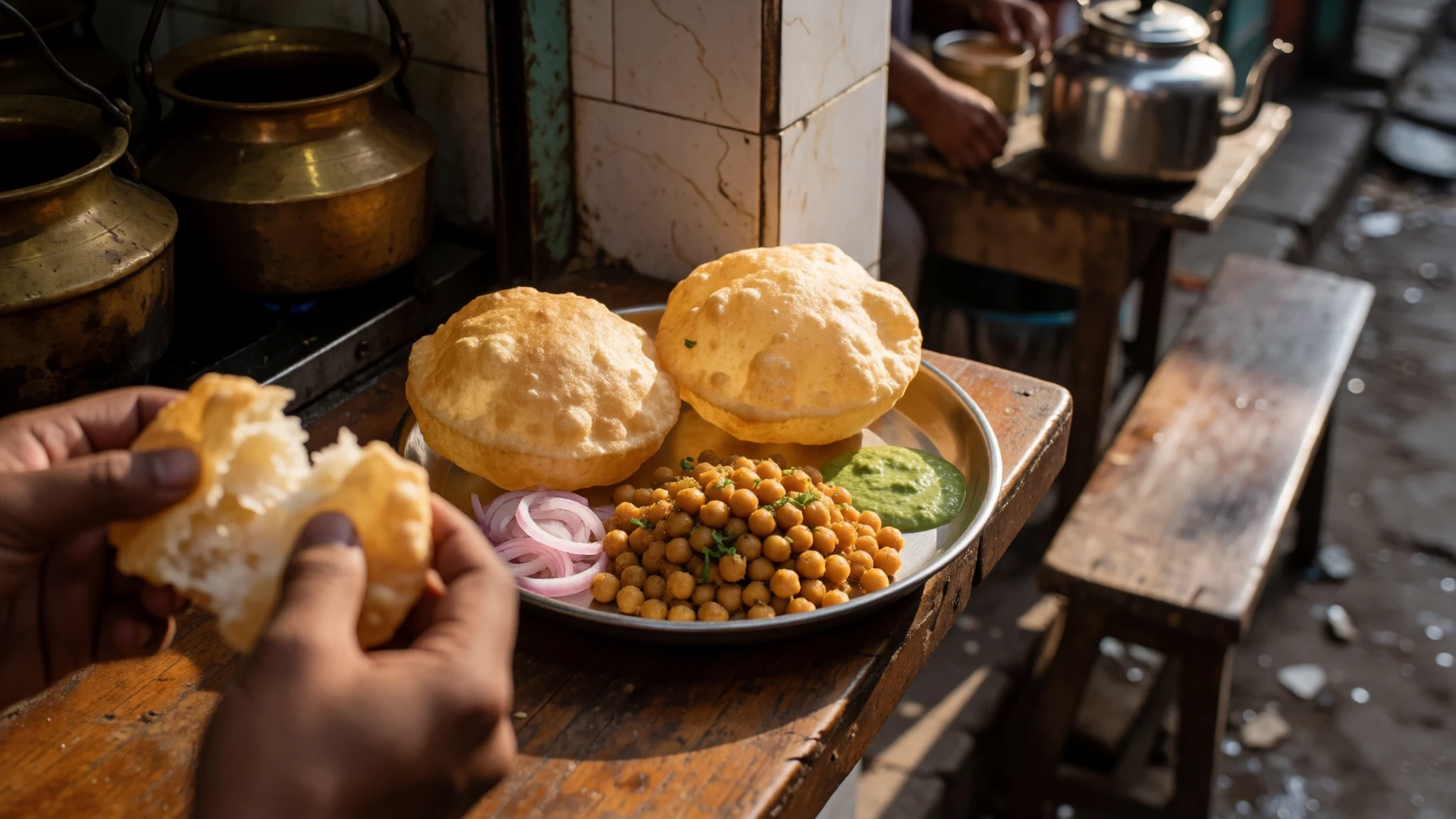
- Poori sabzi and kachori — Sweet shops and snack stalls along the main ghat roads
Deep-fried poori or stuffed kachori arrives with a thin potato curry, usually mildly spiced. Pilgrims often eat it before a long day of temples. It is filling and cheap, and the stalls turn over so quickly that the oil stays fresh.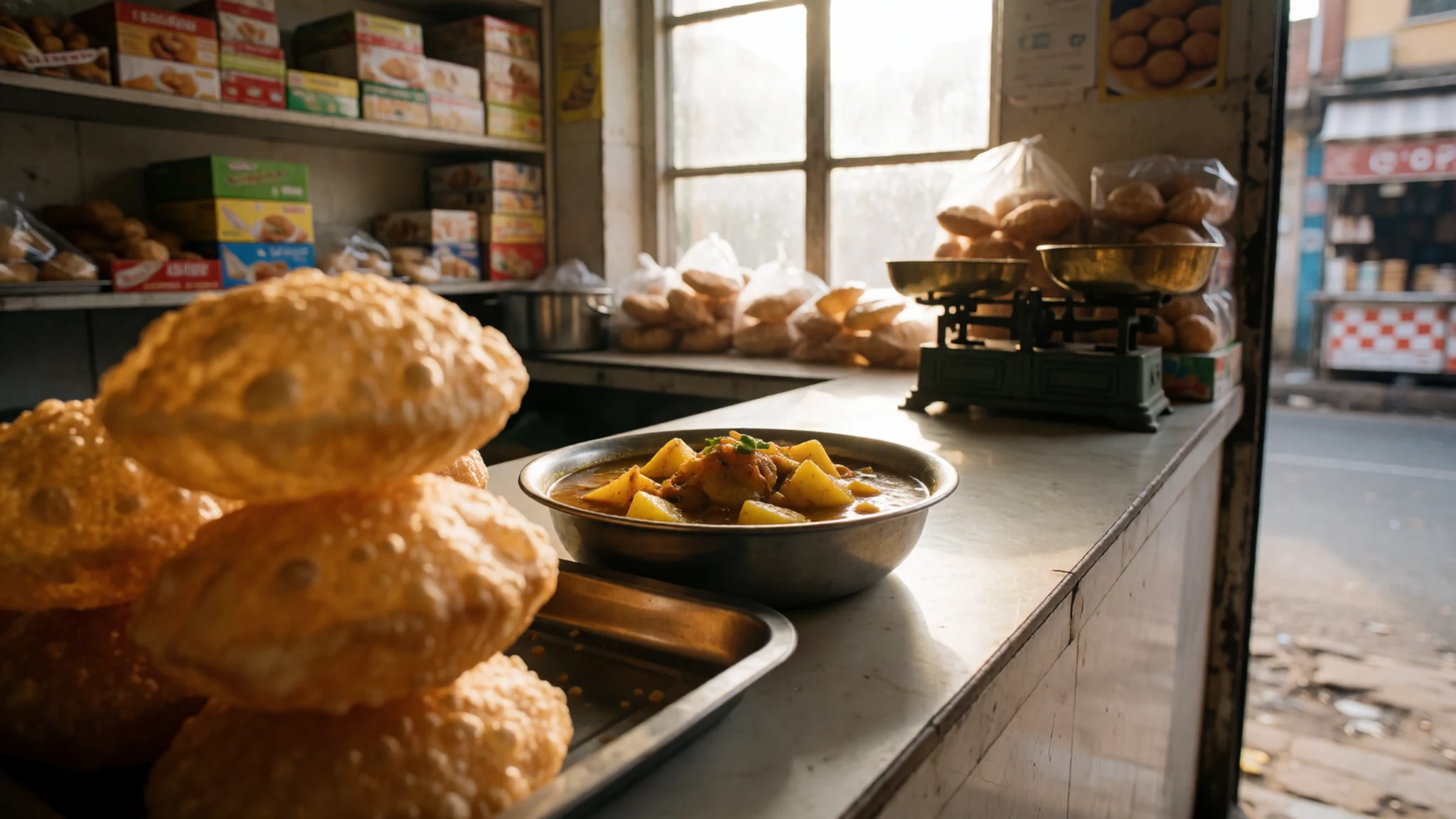
- Vegetarian thali — Family eateries near Vishnu Ghat and the railway station
A thali brings rice, bread, dal, two or three vegetable dishes, curd and pickle on one steel plate, often with free refills. Because of the city's vegetarian rule, every eatery serves it, and it is the easiest way to taste regional home cooking. - Dosa and South Indian snacks — Dosa shops and chain eateries around the main market
Dosas, thin fermented crepes folded around potato filling and served with sambar and coconut chutney, are common in town. They suit visitors who want something lighter than fried breakfast food, and many places also offer idli and uttapam. - Lassi and milk sweets — Dairy and sweet shops in the main bazaar
Dairy shops sell thick lassi in clay cups and trays of milk sweets such as peda and barfi, often offered as prasad at temples. They are rich and sweet, and best enjoyed on a warm afternoon after the ghats.
Plan it
Best time. February–March and October–November, when days are mild and dry and the ghats are comfortable. April to June is hot, late May to August is monsoon, and the Hindu month of Sawan, around July, brings very heavy crowds and blocked roads.
How long. 1–2
Getting there. Dehradun's Jolly Grant Airport is the nearest, about 20 km from the city centre, with domestic flights from Delhi and a taxi for the last leg. Delhi, about 200 km away, is the nearest international airport. Trains and buses run from Delhi, and buses from Rishikesh take about an hour. Haridwar Junction is the main station.
Budget. low
Tips
- Book trains and rooms well ahead, especially in pilgrimage season and on weekends
- Be at Har Ki Pauri early for the evening lamp ceremony, and leave a few minutes after it ends or wait out the crush
- Carry small cash for temples, stalls and tuk-tuks; check the official municipal site for local notices
- Keep bags zipped on hill temples, where monkeys snatch food
- Avoid the bridges across the Ganges at festival times, when crowds become unsafe
Etiquette
- Remove shoes before entering temples and do not carry leather or tobacco inside
- Ask before photographing bathers or priests
- Do not bring meat or alcohol into town
Nearby
Sources
- Wikidata Q273030 (CC0)
- Wikipedia: Haridwar (rev 1384020792) (CC BY-SA 4.0)
- Wikivoyage: Haridwar (rev 5430066) (CC BY-SA 4.0)
- Livefree2013, Har Ki Pauri, Haridwar (CC BY 3.0)
- pavankunar, Ganga aarti Haridwar (CC BY-SA 4.0)
- Ssriram mt, Chandi Devi Temple (CC BY-SA 4.0)
- Sanatansociety, Evening view of Har-ki-Pauri (CC BY-SA 2.5)
- Engineercad, The River Ganga at Haridwar (CC BY-SA 4.0)
- Ekabhishek, Chandi Devi temple, ropeway (CC BY 3.0)
- Ssriram mt, Mansa Devi Temple (CC BY-SA 4.0)
- World8115, Haridwar Junction railway station (CC BY 3.0)


