Hakone
Hakone, Japan
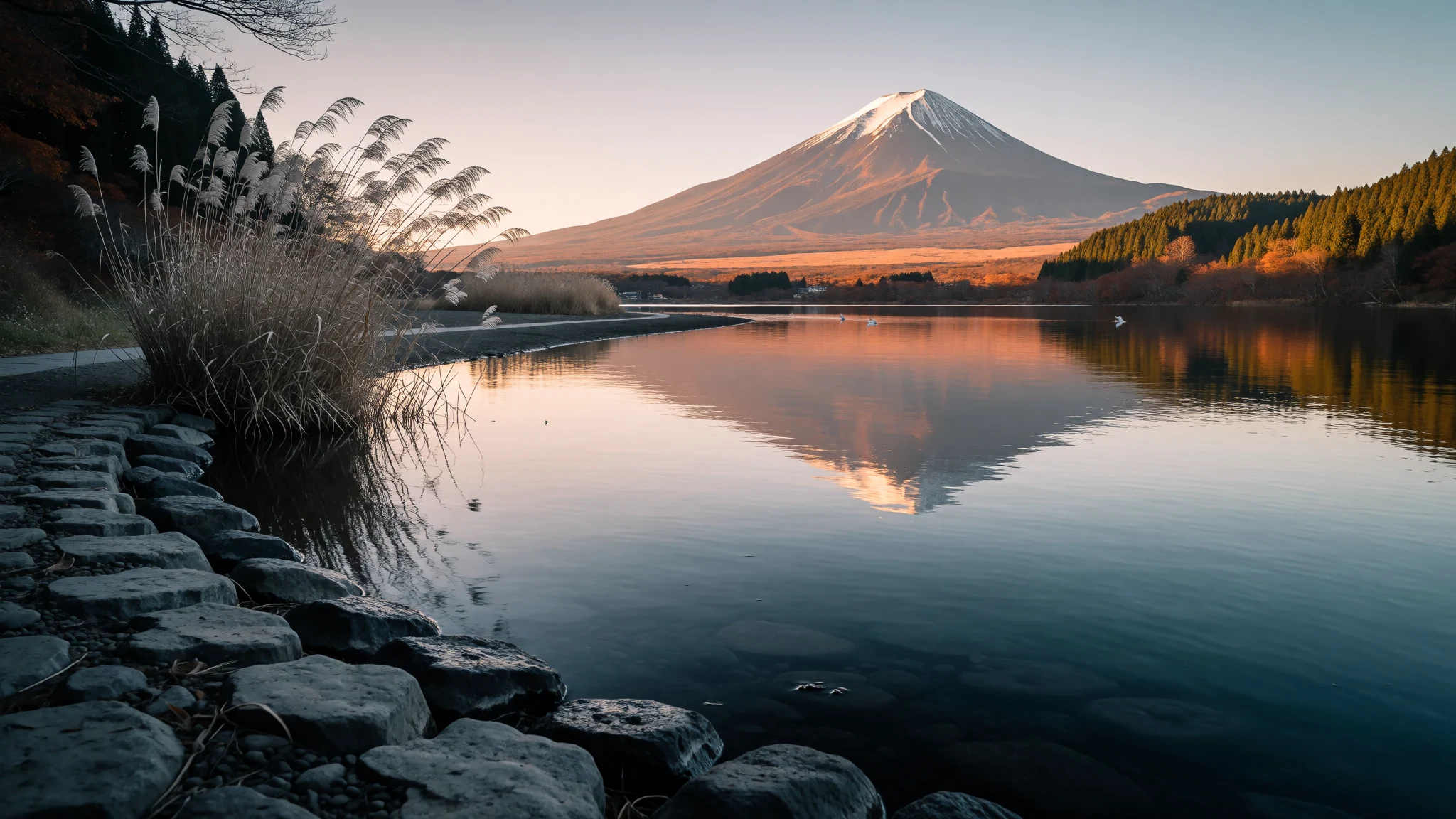
Hakone pairs volcanic steam, hot-spring inns and a mountain lake with Mount Fuji beyond, all within easy reach of Tokyo.
The place
Hakone is a mountain town in Kanagawa Prefecture, Japan, set at 734 m in volcanic country south-west of Tokyo, with 10,925 residents. Most of its land lies inside Fuji-Hakone-Izu National Park, and the park's centre of gravity is Lake Ashi, a long lake ringed by forested ridges. The town took its present shape in 1956, when it merged with neighbouring settlements, which is why "Hakone" is really a scatter of separate places: hot-spring villages, a lakeside shrine district, a former post town on the old highway, and open moorland above. The ground is still active, so steam vents and sulphur-stained slopes sit a short ride from quiet roads lined with trees.
The appeal is simple. Hakone is close to Tokyo, it has hot springs, and on a clear day Mount Fuji hangs above the water. The clear day is the catch. Cloud often hides the cone, above all in the wet months, and the humid subtropical climate brings warm summers, cool winters and very little snow. It is also fair to say that Hakone is crowded, expensive and a little kitsch in places, because it is a fixture on the well-worn route between Tokyo and Osaka. Weekends and holidays are the busiest. Travellers with time to spare do better midweek, on the quieter trails, treating the famous view as a bonus rather than a promise.
Its story
Hakone's recorded past starts with its shrine. Hakone Gongen, a Shinto shrine beside the lake, appears in literature of the Heian period, and during the Genpei War the warlord Minamoto no Yoritomo prayed there for victory after losing the Battle of Ishibashiyama nearby. Later the area passed to the Hōjō clan, who ruled from Odawara, below the mountains, through the Sengoku period, when rival warlords divided the country. The pass between eastern and western Japan was worth controlling, and everyone knew it.
The great change came in the Edo period. Hakone-juku became a post station on the Tōkaidō, the highway linking Edo (now Tokyo) with Kyoto, and an official barrier was set up here to mark the edge of the Kantō region. Under the Tokugawa shogunate, officials at the gate read permits and searched baggage, with weapons and the movement of women their chief worries. Inns, tea houses and bathing lodgings grew up to serve the people held waiting at the gate.
The Meiji era brought a different kind of visitor. An imperial villa was built close to the lake, and Hakone developed into a summer retreat for wealthy Tokyo families and the foreign community of Yokohama. After the town merged with five neighbouring towns and villages in 1956, it reached the borders it has today.
What to see
- Ōwakudani (Great Boiling Valley) — Mountains above the town
Ōwakudani is a volcanic basin of yellow-stained rock, hissing vents and drifting sulphur steam, high above the town. The smell is strong and the ground is not to be wandered on, so keep to the marked paths. Access can be restricted when volcanic gas levels rise, so check the town's official site before planning around it.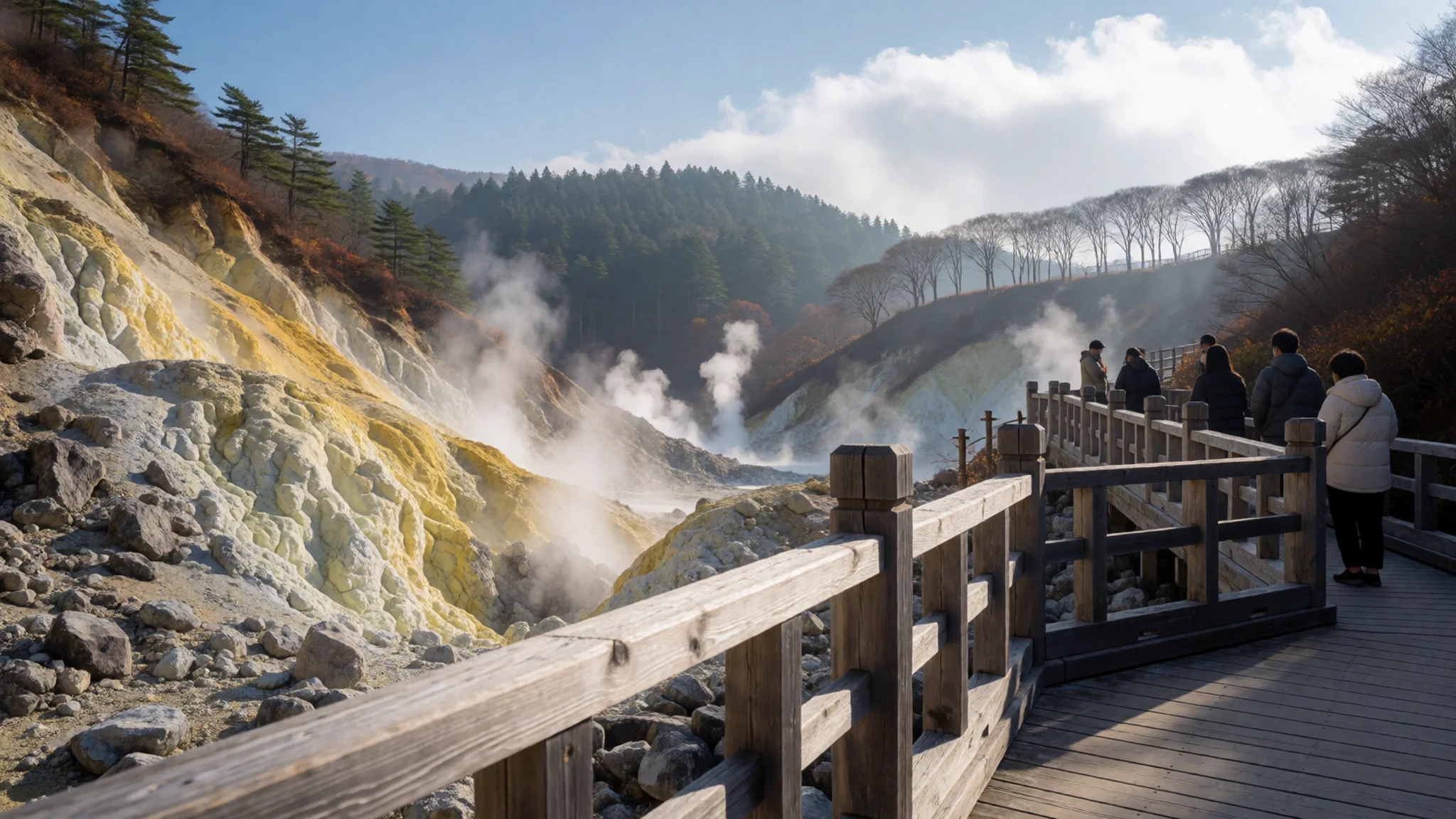
- Lake Ashi — Centre of the national park
Lake Ashi fills the heart of the national park, with wooded shores and sightseeing boats crossing between its villages. Mount Fuji appears above the far shore on clear days, most reliably in cooler, drier months. Many visitors arrive and find only cloud, so treat the view as luck and enjoy the water, the ridges and the boat ride regardless.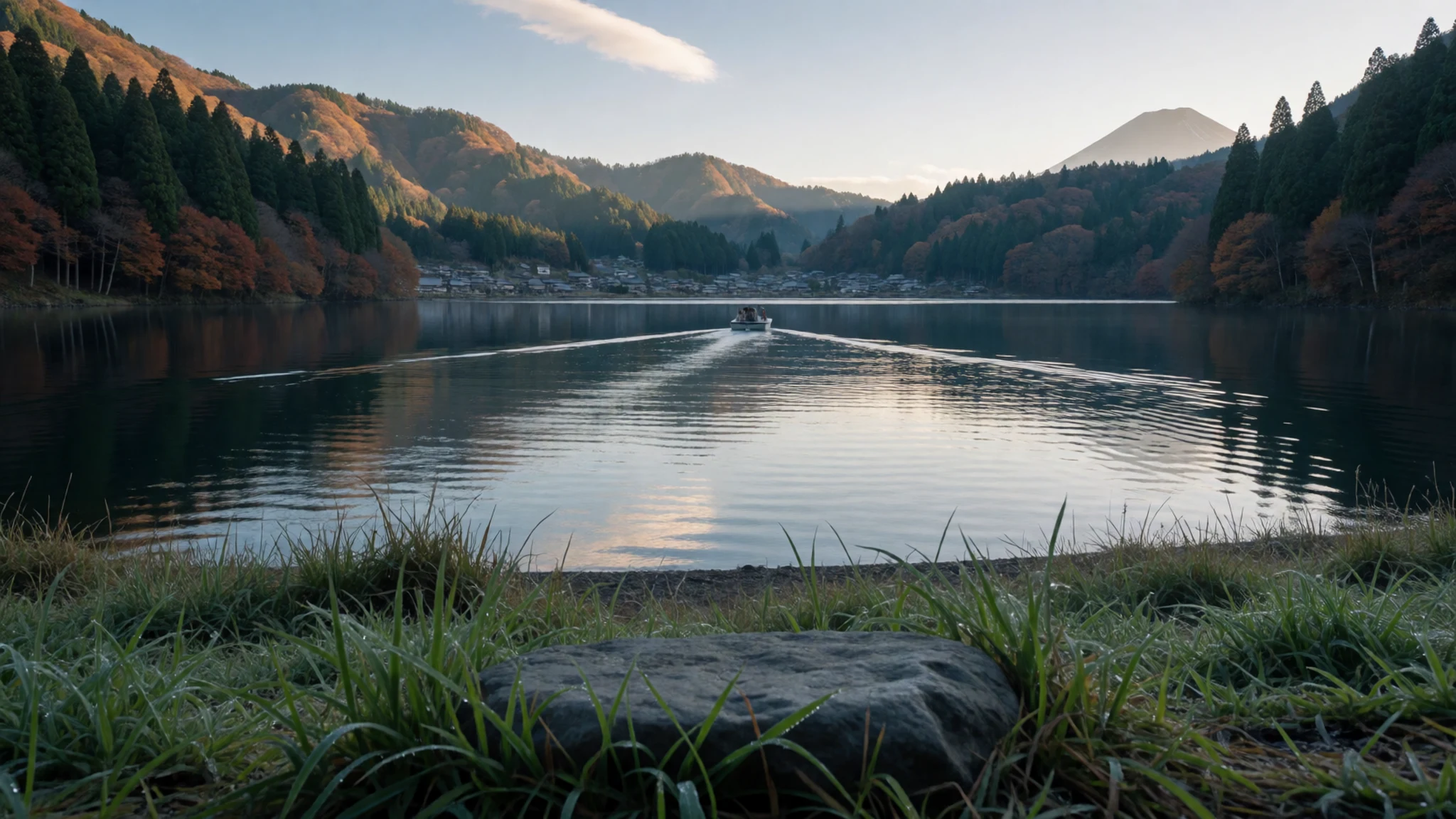
- Hakone Shrine (Hakone Jinja) — Moto-Hakone, south shore of Lake Ashi
Hakone Shrine sits on the south shore near Moto-Hakone, with a torii gate standing in the water at the lake's edge. The gate draws a steady queue of photographers, so go early for a quieter frame. Beyond it, a path leads up through old trees to the shrine buildings themselves, calmer than the shoreline.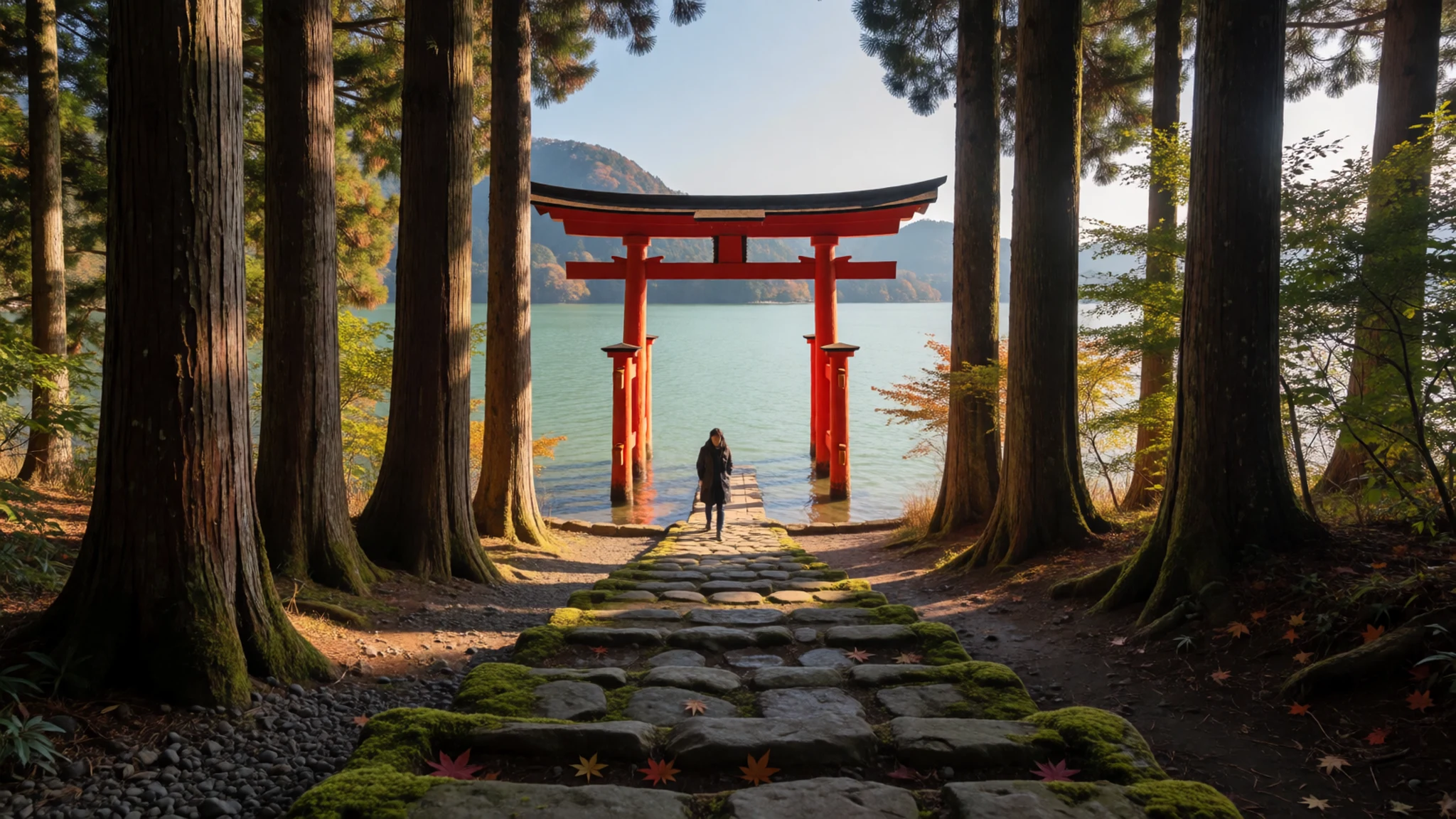
- Hakone Open Air Museum — Slopes above the town
The Hakone Open Air Museum spreads sculpture across parkland on the slopes above the town, so most of the viewing happens outdoors, in whatever weather the mountains offer. Works by Japanese and Western artists sit among lawns and hills. Bring a light waterproof, and check the museum's own site for opening details.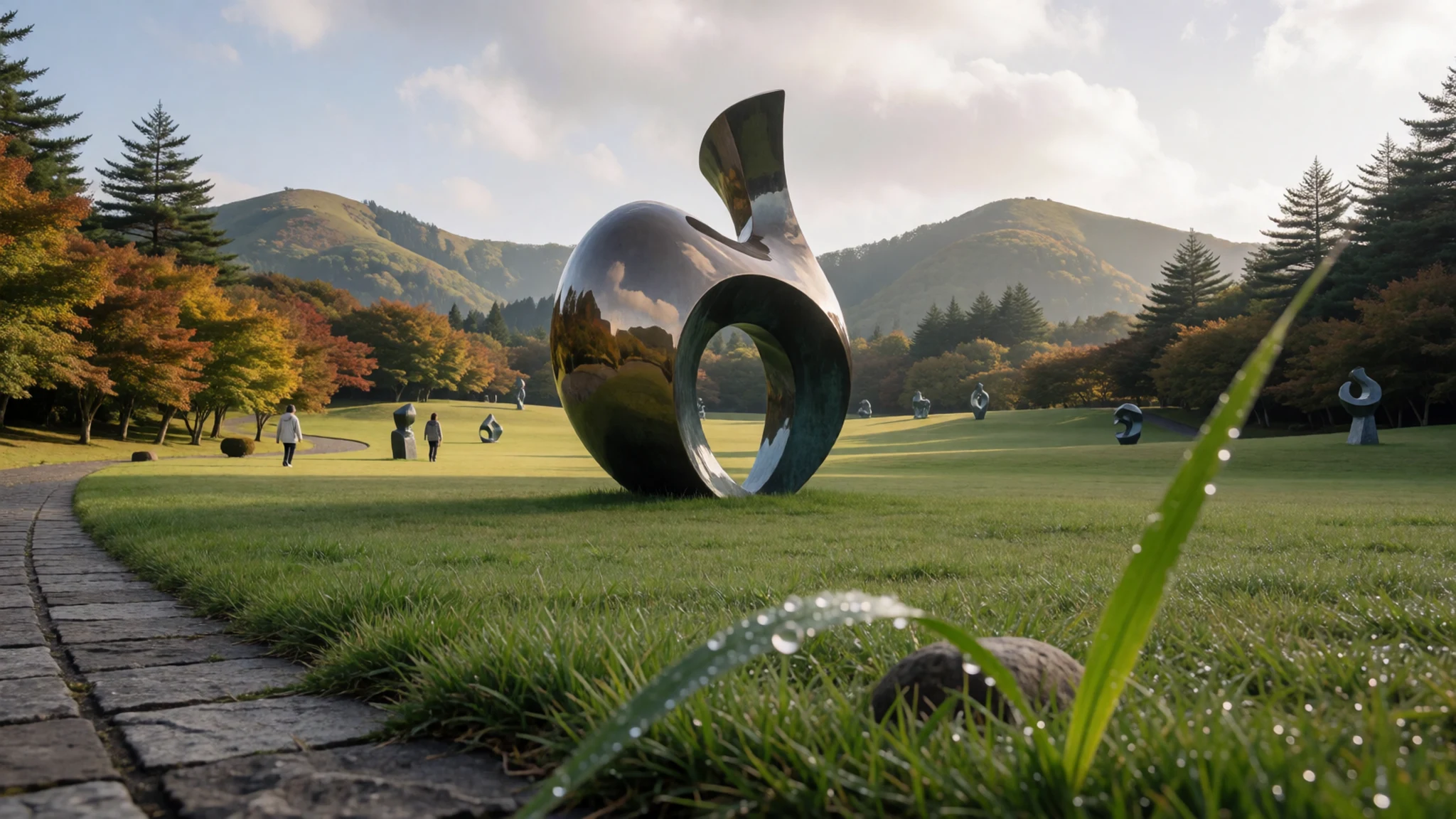
- Hakone Checkpoint — Lakeside, on the old Tōkaidō road
The Hakone Checkpoint is a reconstruction of the Edo-period barrier where officials once examined travel permits and baggage on the Tōkaidō. Standing on the old road beside the lake, it makes the town's history physical: the wooden gates, guardhouses and watch posts show how strictly movement was controlled. Allow a short visit, and combine it with a lakeside stroll.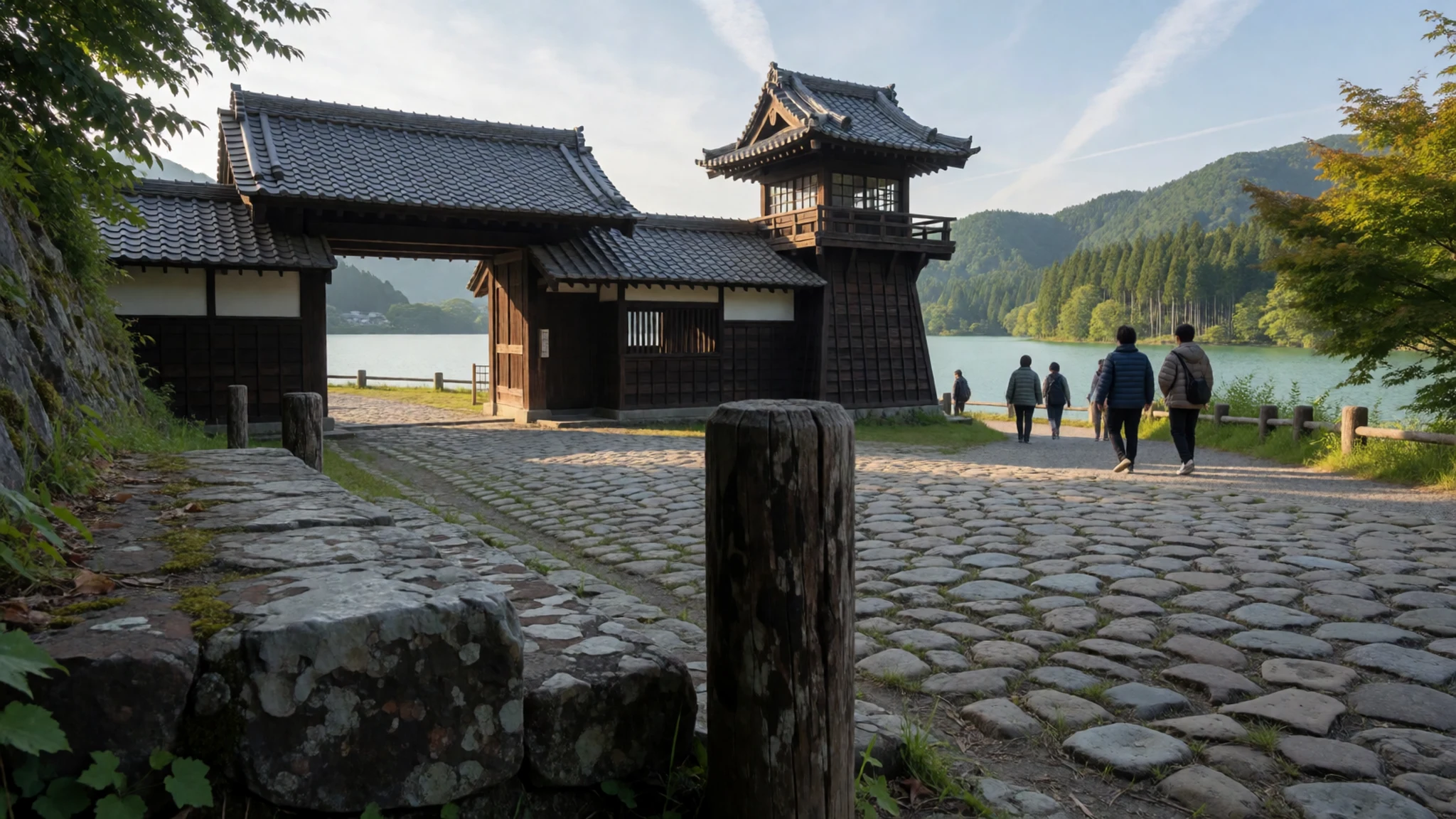
- Hot-spring baths at Hakone-Yumoto — Hakone-Yumoto, eastern edge of the town
Hakone-Yumoto, the rail gateway to the town, is where the hot-spring habit begins. Large bathhouses here offer indoor and outdoor pools, some with shuttle buses from the station, and many ryokan inns run their own baths. A soak after a day's walking is the sensible way to end it. Check the official site for current hours and fees.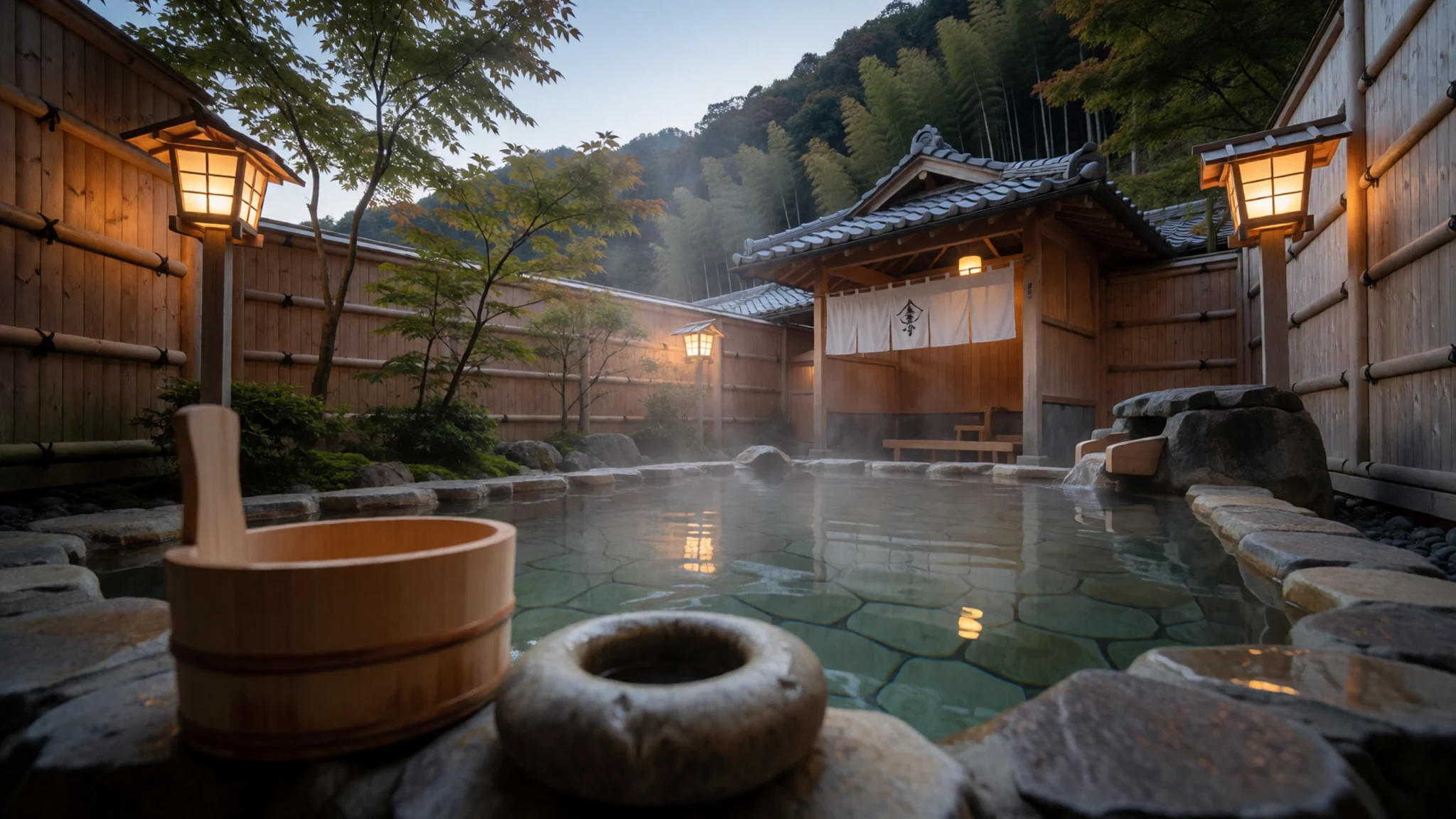
Culture
Hakone's culture rests on two old habits: pilgrimage and bathing. Shinto shrines such as Hakone Shrine have drawn worshippers since the Heian period, and the Tōkaidō road brought a steady stream of travellers, officials and traders through these mountains. Many present-day customs grew from that travelling life: the inn as a place of rest, the meal brought to the room, the bath as the daily reward.
The ryokan, or traditional inn, is the clearest expression. Guests change into a cotton robe, eat a set multi-course dinner at a fixed hour, and sleep on futons laid over tatami mats. Hot-spring water, known as onsen, is treated as both pleasure and remedy, and shared bathing areas are usually separated by sex, with firm rules about washing first. Mount Fuji, glimpsed across the lake, carries its own spiritual weight, and local souvenir imagery returns to it constantly.
Tourism has shaped the town since the Meiji period, when wealthy Tokyo families and the foreign residents of Yokohama came for the summer cool. Hakone is therefore practised at hosting visitors, even though life inside a ryokan stays formal and unhurried.
Wash thoroughly at the shower stools before entering any shared onsen bath, keep your towel out of the water, and check the venue's tattoo policy before you go.
What to wear
Hakone's traditional dress is the kimono, a wrapped robe woven in silk for formal wear and in wool or cotton for everyday use in the past. In Hakone the yukata, its light cotton cousin, matters more. Ryokan provide one for each guest, usually in indigo or a small printed pattern, tied with a sash called an obi, and in cooler months a padded jacket (tanzen) goes over the top. Tabi, split-toed socks, and wooden geta or flat zori sandals complete the look. Full kimono appear at weddings, festivals and shrine ceremonies rather than on ordinary days.
What people wear now is practical: jackets, trousers, fleeces and sturdy shoes, since this is a mountain town with steep roads and quick changes of weather. Smart-casual is the norm in restaurants, and staff at inns may wear kimono-style uniforms.
Visitors should dress in layers, as the lake can be cool and breezy while the valley is warm. Pack a waterproof, because September is the wettest month, and wear comfortable shoes with grip for wet paths and steps. Slip-on shoes help, and so do socks without holes, since footwear comes off at ryokan, some restaurants and shrine buildings. Neat, covered clothing is respectful at shrines. Swimwear belongs in the water-park pools only; traditional onsen baths are enjoyed without it.
What to eat
- Black eggs — Stalls and shops at Ōwakudani, beside the steam vents
Eggs boiled in the sulphurous pools at Ōwakudani, their shells turning mottled black through a reaction with the water. The inside tastes like an ordinary boiled egg, with a faint mineral edge. Sold in paper bags from stalls beside the vents, best eaten warm.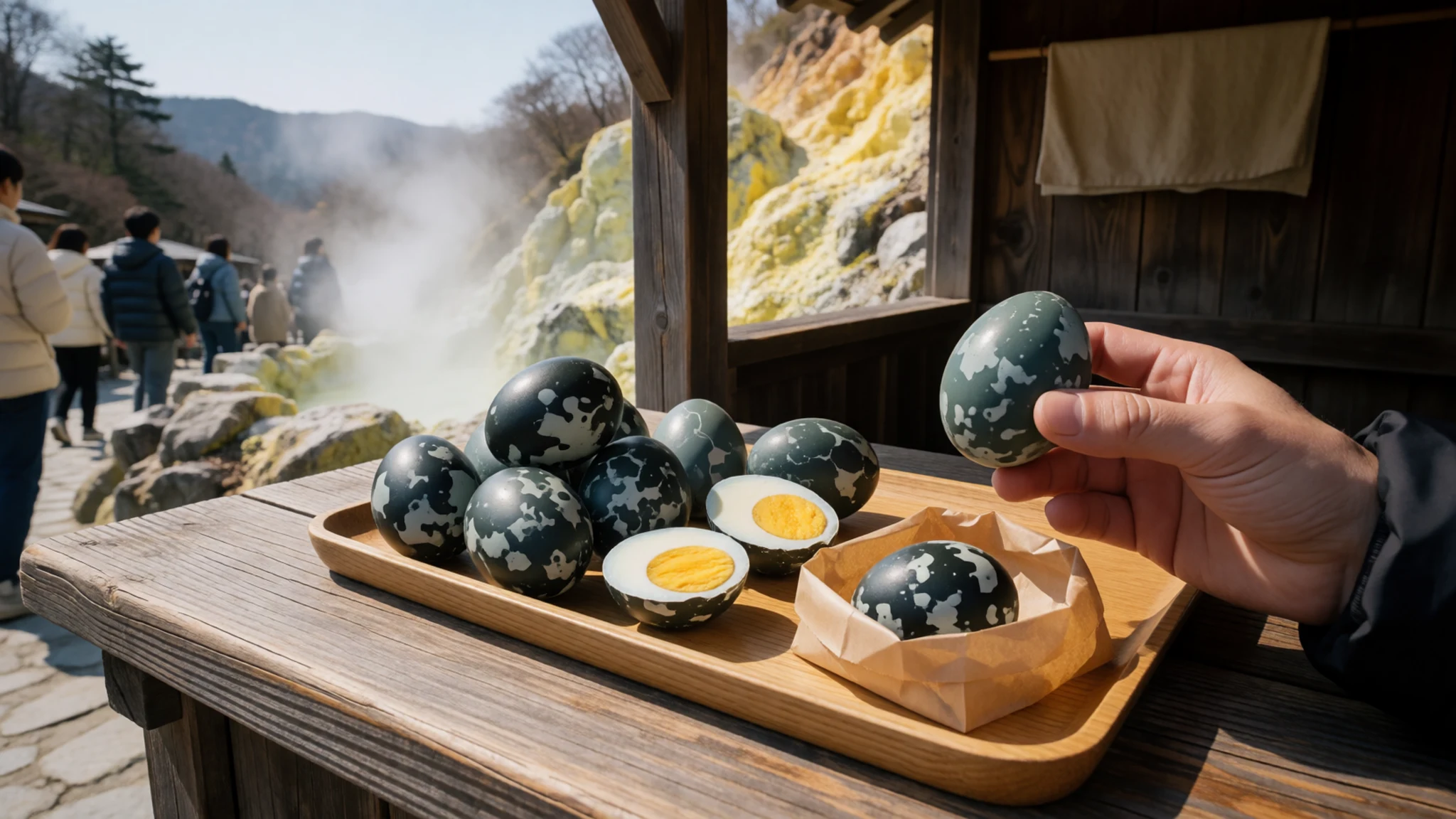
- Hakone soba — Noodle shops around Hakone-Yumoto and Moto-Hakone
Thin buckwheat noodles, made here with the area's spring water, served cold on a tray with a dipping sauce or hot in broth. A light lunch after a morning's walking, and easy to find in simple noodle shops along the old road.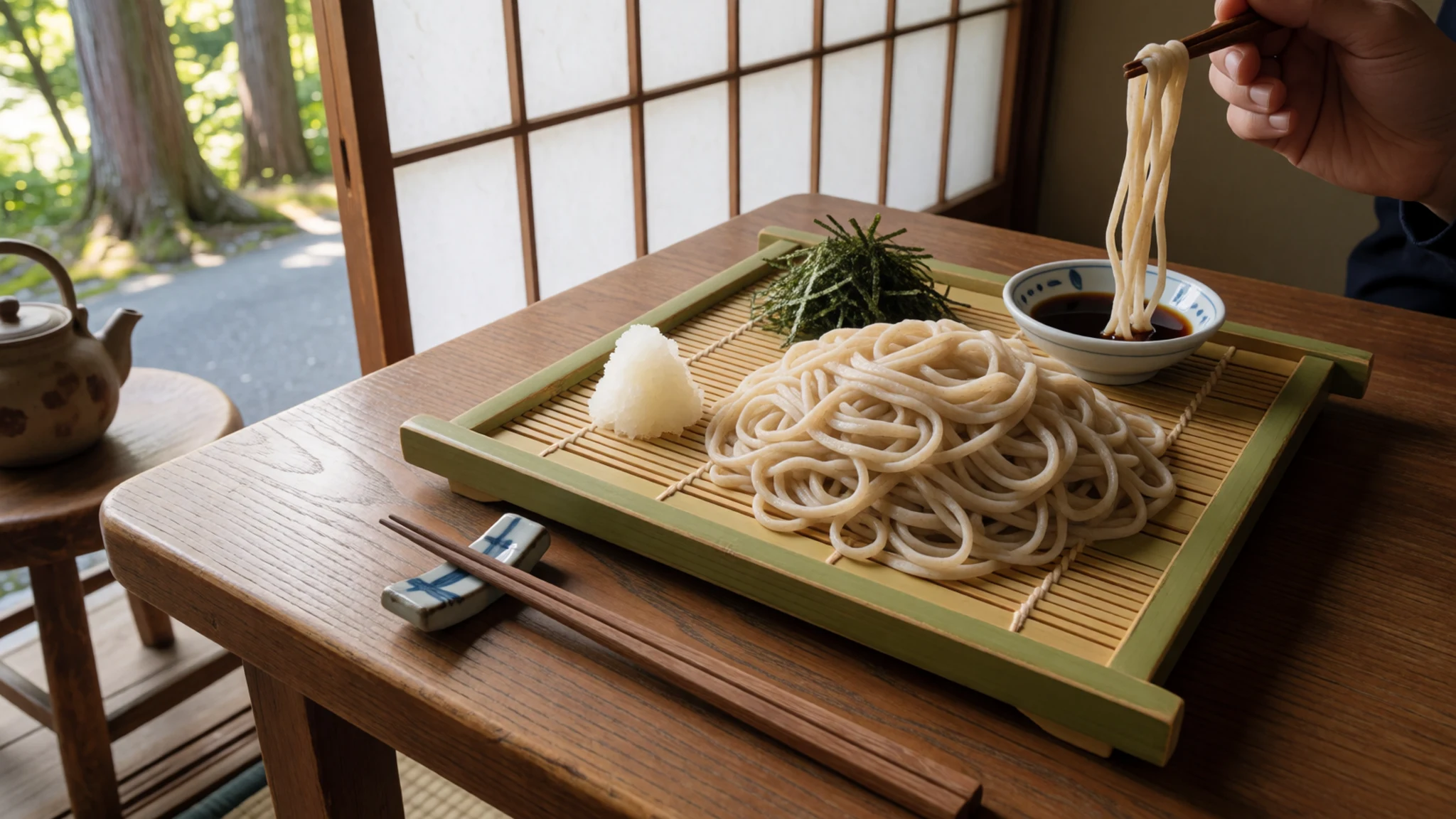
- Tofu katsuni — Restaurants in the Gōra area
A dish of tofu and pork in a savoury simmered sauce, a comfortable mountain meal when the weather turns cold. One restaurant in the Gōra area specialises in it, and a vegetarian version can be made on request, so ask when ordering. - Mountain brownies — Bakery shops near Hakone-Yumoto station
Dense, warm chocolate brownies baked on site at a shop in Hakone-Yumoto, where the smell announces them from the street. A good snack to eat while walking, and an easy one to share on the train back down the valley. - Rice bran sweets and doughnuts — Souvenir shops in the Gōra area
Doughnuts and sweets made with rice bran, sold at a bakery inside a souvenir shop near Gōra. The range includes vegan and gluten-free choices, which helps visitors with dietary limits, and they travel well as gifts. - Hakone craft beer — Small bars in the Gōra area
Local draught beer from Hakone's craft brewers, poured in small bars around Gōra, often alongside pizza with vegetarian and vegan options. A fair reward after a long walk, with the hot-spring soak best taken first.
Plan it
Best time. Late October to November for autumn colour and cooler, clearer air; April and May for fresh greenery. Summer is warm and humid, September is the wettest month, and cloud often hides Fuji in the rainy spells. Winter is cool with little snow and gives decent odds of a clear view.
How long. 2–3
Getting there. The nearest airports are Haneda and Narita in the Tokyo area, and there is no direct link from Narita. From Haneda, take trains to Odawara (JR Tokaido Line, or the shinkansen via Shinagawa), then the Hakone-Tozan Line to Hakone-Yumoto, about two hours in all; a direct bus also runs from Haneda. Check current timetables. From Hakone-Yumoto, local buses and trains climb into the mountains.
Budget. high
Tips
- If you are staying at a ryokan, arrive at least a day after landing in Tokyo, or you may miss the included dinner or reach a locked door after curfew
- Book ryokan well ahead, especially for weekends, holidays and autumn colour
- Start at Lake Ashi and Ōwakudani early in the morning, before the crowds, for the best chance of a clear Fuji
- Carry some cash for small shops and stalls, though many places accept cards
- Check the official town site (https://www.town.hakone.kanagawa.jp/) for any closures at Ōwakudani before you go
Etiquette
- Remove your shoes where you see a step up and slippers waiting
- Wash and rinse before entering any shared hot-spring bath, and keep towels out of the water
- Keep to marked paths around the volcanic vents
Nearby
Sources
- Wikidata Q671040 (CC0)
- Wikipedia: Hakone (rev 1386031642) (CC BY-SA 4.0)
- Wikivoyage: Hakone (rev 5403565) (CC BY-SA 4.0)
- Photo: Ōwakudani in Hakone, Kanagawa prefecture, Japan (663highland) (CC BY 3.0)
- Photo: View of Mount Fuji from Lake Ashi (Quercus acuta) (CC0 1.0)
- Photo: Ōwakudani Station in Hakone, Kanagawa prefecture, Japan (663highland) (CC BY 3.0)
- Photo: Lake Ashi from Mt. Komagatake (Σ64) (CC BY 3.0)
- Photo: At Sengokuhara in Hakone, Kanagawa prefecture, Japan (663highland) (CC BY-SA 4.0)
- Photo: Hakone Checkpoint (Jun Seita) (CC BY 2.5)
- Photo: Hakone Town Hall (Waka77) (CC0 1.0)
- Photo: Fujisan from Kamiyama (CC BY 3.0)


