Gyantse
Gyantse, People's Republic of China
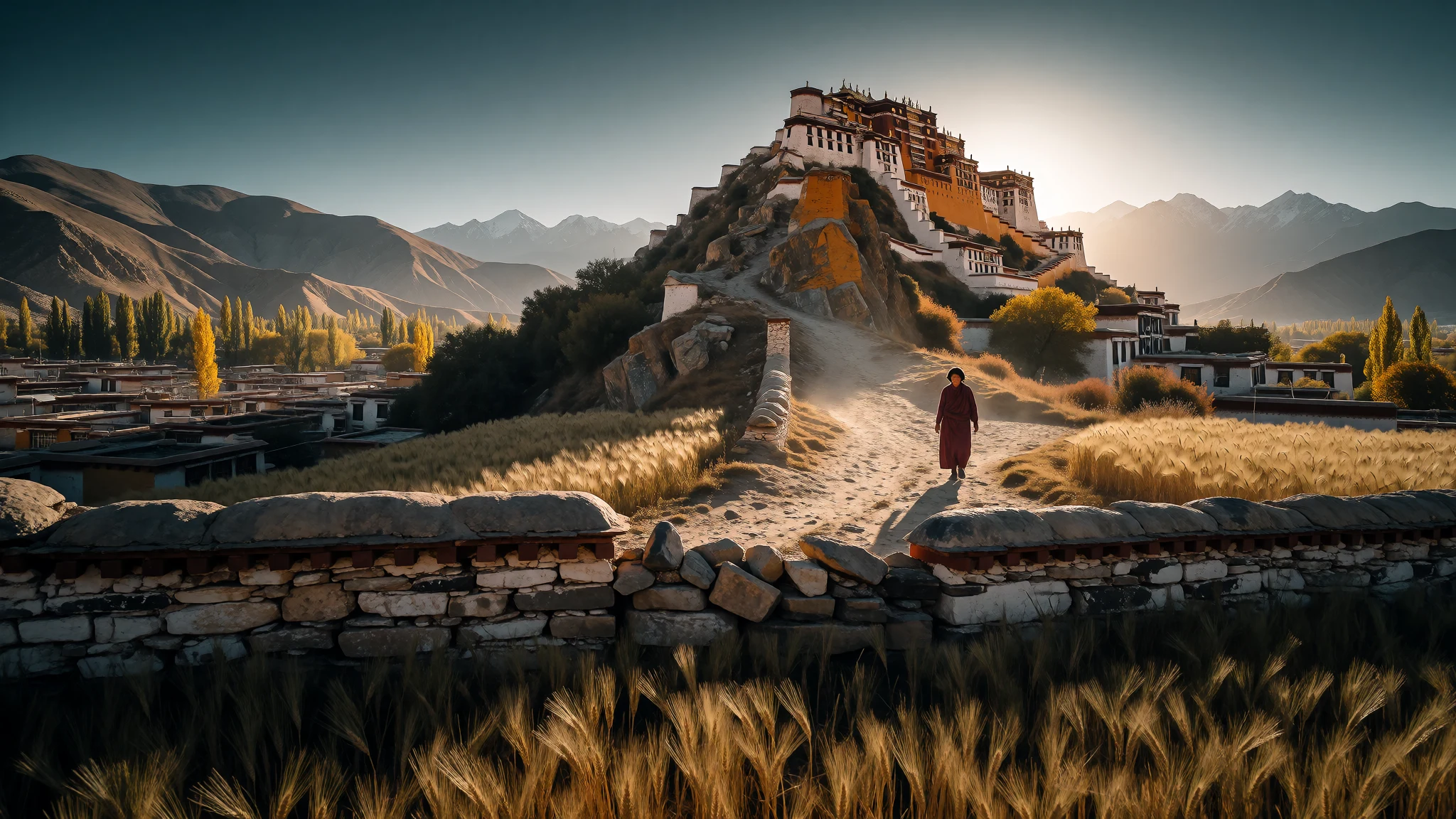
Gyantse is a small Tibetan market town where a hilltop fortress, a monastery with a many-storeyed stupa and unhurried lanes sit close together.
The place
Gyantse stands at 3,977 m above sea level in the valley of the Nyang Chu, in Shigatse Prefecture of the Tibet Autonomous Region (Tibetan: རྒྱལ་རྩེ; Chinese: 江孜镇, Jiāngzī). Historical records note a population of about 8,000, so it feels like a market town rather than a city: one fortress on a rock, one large monastery compound and a web of lanes between them. Its importance came from geography. Caravans from Sikkim, Yatung and the Chumbi Valley met here, and from the town the road ran downstream to Shigatse or climbed the Kora La pass towards central Tibet and Lhasa. That made it a sensible place for a stronghold, and the dzong, built in 1390, watched over the southern approach to the Yarlung Tsangpo valley. A wall about 3 km long once ringed the town. The trade with India that fed Gyantse has dwindled, and larger Tibetan towns have overtaken it, but it has kept a lived-in character that bigger places have lost. Three communities share it: Tibetans, Muslim traders who work the market stalls, and Han Chinese newcomers who run many of the shops and restaurants. In the residential lanes, cows, horses and dogs wander past front doors. The altitude shapes everything: a slow first day, headaches for some, sun that burns quickly and nights that stay cold even in summer. Most visitors arrive on a tour from Lhasa and stay a night or two, which is about right for the sights.
Its story
The chapter of Gyantse's past best known outside Tibet is the British expedition of 1904 under Lieutenant Colonel Francis Younghusband. The column reached the town on 11 April and found the garrison already gone. The gates were opened, and the town was occupied without a shot. Later in the campaign, Gyantse became a battlefield. Daily life carried on around the occupiers. Officers explored the lanes and went fishing and hunting in the countryside, while the expedition's medical officer, Herbert James Walton, treated local people, including operations on children and adults with cleft palates. Some officers also visited Palcho Monastery and took away statues and scrolls, an act that is still remembered with resentment. The expedition eventually agreed a treaty with the Tibetan authorities under which a British trade agent and a garrison would be based at Gyantse. In 1919 Sir Walter Buchanan of the Royal Geographical Society visited the post and described it as small, manned mostly by Indian troops. During the reign of the 13th Dalai Lama, the British also ran a military academy in the town to train Tibetan Army officers. The garrison was kept on through the Second World War and was disbanded by 1947. For readers in India and the UK the story has a double edge: it belongs to the Raj's northern frontier, with Indian soldiers posted on a high plateau far from home. Today the exhibition at the dzong tells the same events as a story of resistance to imperial power.
What to see
- Gyantse Dzong — Hill above the old town
The fortress on its rock above Gyantse dates from 1390 and is the town's landmark. The climb to the top is steep and, at this altitude, slow, but the view over the rooftops and barley fields repays it. Exhibitions inside cover the fort's history, and a newer centre by the main gate deals with the 1904 conflict.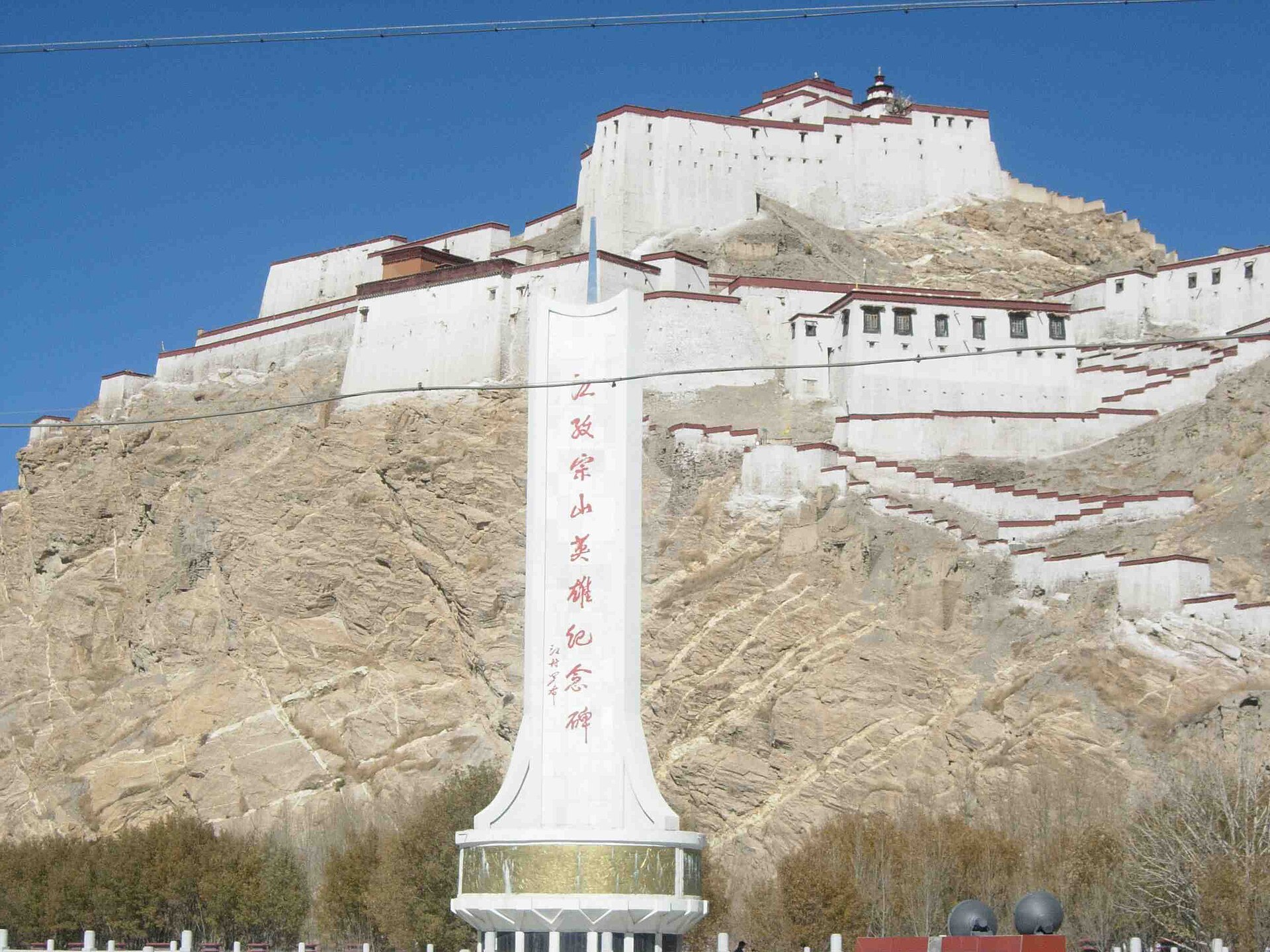
- Pelkor Chode Monastery — Town centre
Pelkor Chode, also known as Palcho, is the monastery at the centre of town and was an important centre of the Sakya school. It came through the Cultural Revolution in good condition, though upkeep has been thin, and much of the interior painting is hard to make out in dim light. A small torch helps.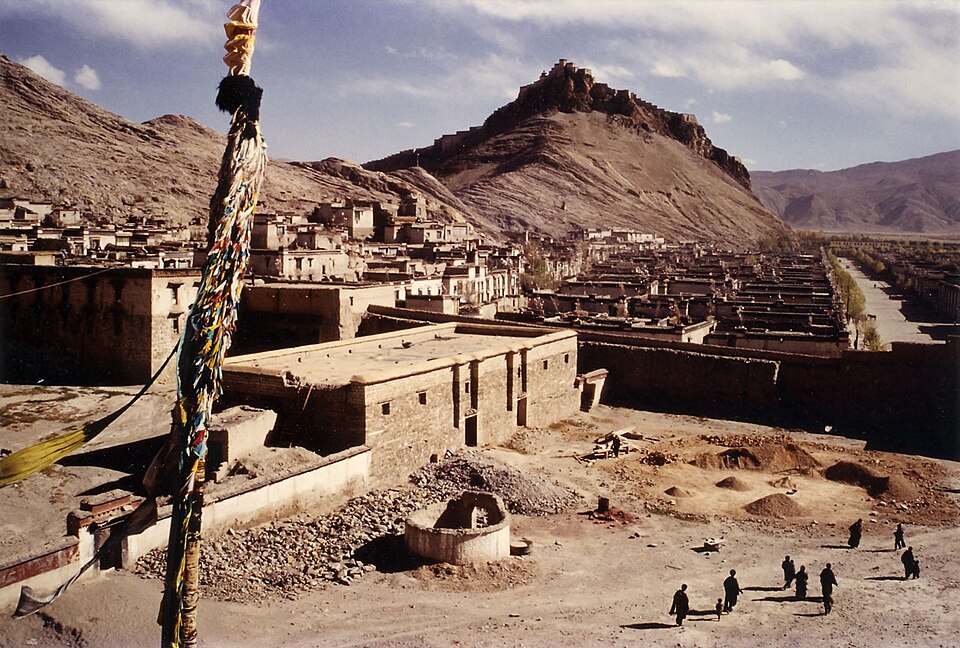
- Gyantse Kumbum (Pelkor Chorten) — Inside Pelkor Chode
The Kumbum stands inside the Pelkor Chode compound, a six-storey stupa filled with Buddhist images and statues. The figures are modelled and painted in fine detail, and visitors climb through it level by level. Many find the second floor the most rewarding, so save some breath for it.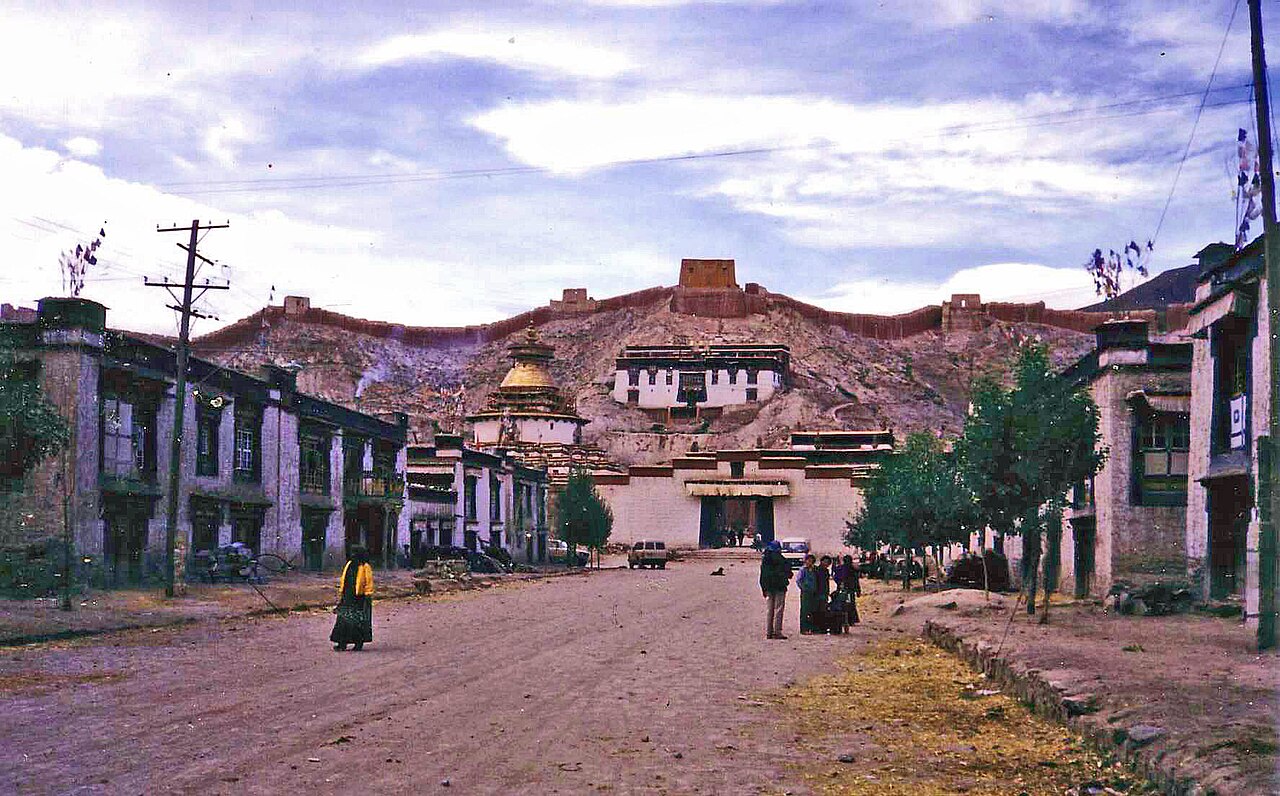
- The residential lanes — Old town below the dzong
Away from the monuments, the old residential lanes show how most people in Gyantse still live, with livestock and dogs outside the doors. A small Buddhist temple a few steps from the old fort makes a good place to sit and watch people come and go.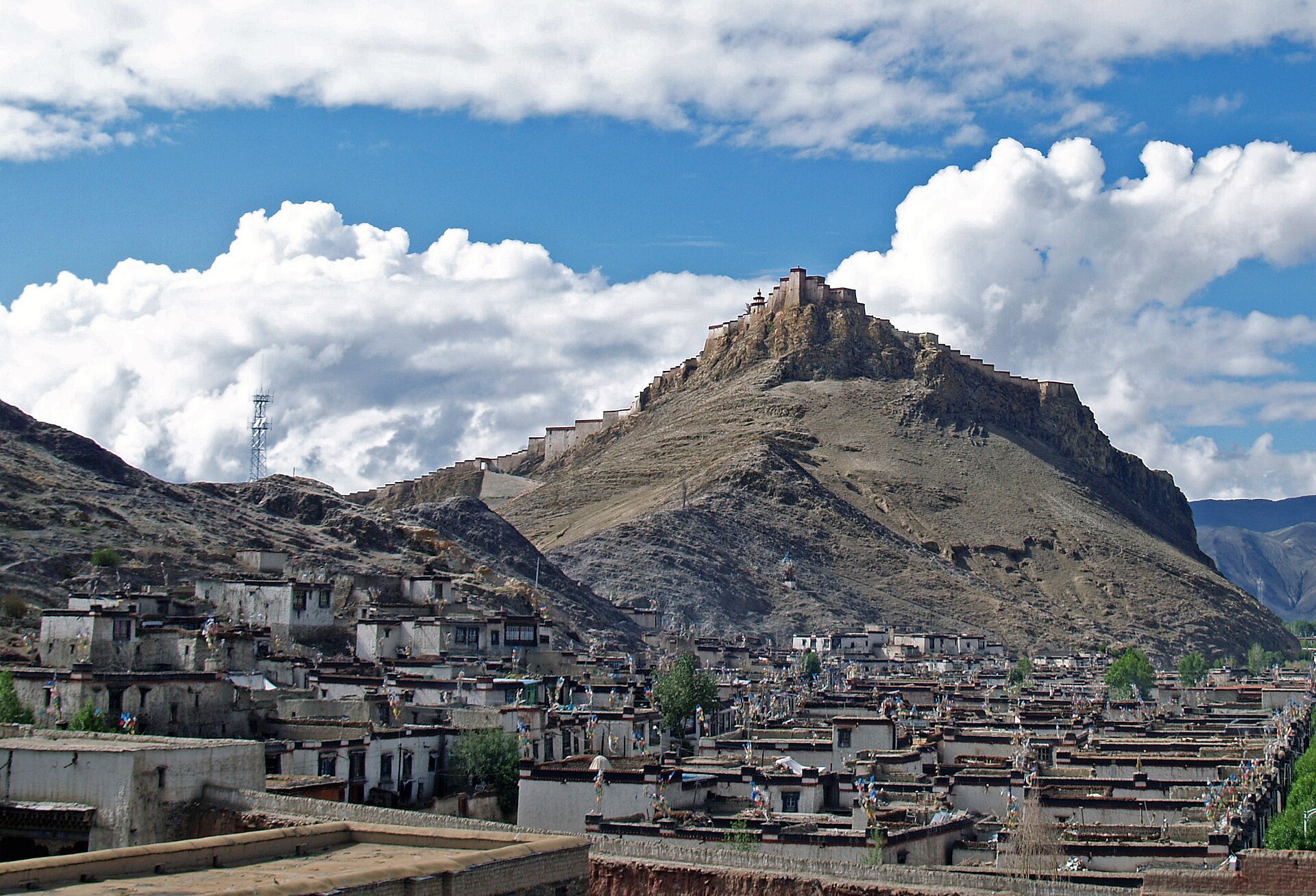
- Market and main shopping streets — Central streets
The main shopping streets and market are where the town's mix shows most clearly: Tibetan customers, Muslim traders at their stalls and Han Chinese shopkeepers. It is an easy place to buy water, snacks and warm layers, and to take a break from the climb and the monastery dimness.
Culture
Gyantse is a Tibetan Buddhist town, and its rhythm follows the monastery. Pelkor Chode has deep historical ties to the Sakya school, and pilgrims arrive from the surrounding valley to walk the circuit of the compound, spin prayer wheels and add butter to the lamps. The Kumbum draws devotion as much as admiration, and the images inside are objects of worship, not only art. The town's history is layered. Caravans from Sikkim and the Chumbi Valley brought Indian and Nepali goods and people, the British post left its mark, and the Cultural Revolution spared the monastery but not everything else. Today the town is shared by Tibetans, Muslim families who have long run market trade, and Han Chinese settlers. Tibetans here are often reserved with strangers, and a smile and a few words of greeting go further than direct questions. Politics is a sensitive subject, and the dzong's exhibition presents one official account of 1904, so it is wiser to listen than to debate. Festivals fill the monastery with colour and crowds, and dates move with the Tibetan calendar, so check with a guide or the local tourism office before planning around one. At this altitude, many people also rise early and keep the evenings quiet. In monasteries and around stupas, walk clockwise with the flow of pilgrims, and ask before photographing monks, worshippers or the inside of a chapel.
What to wear
In Gyantse, traditional Tibetan dress is built around the chuba, a long wrapped robe made of wool or, in colder places, sheepskin, tied at the waist with a sash. Married women have traditionally worn a striped woollen apron, the pangden, over a sleeveless chuba, while felt and leather boots and wool hats suit the cold. Wool and yak hair are the staple materials. The chuba is still worn daily by many older people and comes out for festivals, weddings and pilgrimages. Everyday dress for most younger residents is practical modern clothing: fleeces, padded jackets, jeans and trainers, often with a scarf against wind and dust. Muslim traders in the market may wear white prayer caps. A visitor should dress for the altitude and the sun. Wear layers, because mornings and evenings are cold while midday sun is strong, and bring a windproof jacket, hat, sunglasses and high-factor sunscreen. In the monastery, cover shoulders and knees and avoid very tight or revealing clothes. Comfortable closed shoes with a good grip suit the steep dzong path and the stone stairs of the Kumbum. In winter, add thermal layers, gloves and a warm hat, and carry a light scarf for dust at any time of year.
What to eat
- Thukpa — Small eateries on the main shopping streets
Thukpa is a noodle soup with vegetables or meat, and the standard warm meal in Gyantse. It is filling, easy on the stomach at altitude and available at most small eateries along the main shopping streets. - Momos — Local eateries and tea houses in the town centre
Momos are dumplings, steamed or fried, filled with meat or vegetables and served with a chilli sauce. They are an easy snack between sights, and many local eateries make them to order. - Butter tea and sweet milky tea — Tibetan tea houses near the monastery and market
Butter tea is salty and rich, made with tea, butter and salt, and warms the body against the cold. Sweet milky tea is a gentler alternative and widely offered in tea houses. - Tsampa — Tibetan family eateries and guesthouse kitchens
Tsampa is roasted barley flour, mixed with butter tea into a dough or eaten as porridge. It is the traditional staple of the Tibetan plateau, plain in taste but sustaining for long days. - Nepali-style dal bhat — Restaurants on the main shopping streets serving Nepali and Indian food
Because trade routes and tourism connect Gyantse to Nepal and India, several restaurants serve Nepali and Indian dishes, including dal bhat, lentils with rice and vegetable sides. Many visitors find it a welcome change from noodles.
Plan it
Best time. May–June and September–October, when days are milder and the roads and sights are easiest; the climate is humid continental and shaped by altitude, so winters are cold and nights stay cool even in summer.
How long. 1–2
Getting there. Fly or take the train to Lhasa, then travel by road via Shigatse; buses run regularly from Shigatse and from Lhasa via Shigatse, though most visitors arrive on an organised tour from Lhasa. Foreign visitors should check current permit rules with a licensed operator before booking.
Budget. mid
Tips
- Spend a night or two in Lhasa or Shigatse first to adjust to the altitude before climbing the dzong
- Carry water, sunscreen and a warm layer; sun is strong and weather changes quickly
- Take a small torch for the dim monastery interiors
- Minibuses and jeeps for Shigatse leave early from the south side of the main traffic circle, so plan an early start
- Carry some cash, as card payment is not dependable in a small town
Etiquette
- Walk clockwise around stupas, prayer wheels and monastery buildings
- Ask before photographing monks, pilgrims or chapel interiors
- Dress modestly in monasteries and keep voices low
Nearby
Sources
- Wikidata Q1999606 (CC0)
- Wikipedia: Gyantse (rev 1375962695) (CC BY-SA 4.0)
- Wikivoyage: Gyantse (rev 5081509) (CC BY-SA 4.0)
- Photo: Gyantse, Shanghai Middle Road — Banja-Frans Mulder (CC BY 3.0)
- Photo: A view of Gyantse from the Dzong of Gyantse — Antoine Taveneaux (CC BY-SA 2.5)
- Photo: Map of Gyantse (Gyangtse) area, Tibet — Army Map Service (Public domain)
- Photo: The town Gyantse in Tibet with Dzong — Thilo Schön (CC BY 3.0)
- Photo: Gyantse with Kumbum & fort — John Hill (CC BY 3.0)
- Photo: Gyantse Fortress — Alberrosidus (CC BY 3.0)
- Photo: A view of Gyantse from the top of its fortress — Alberrosidus (CC BY 3.0)
- Photo: Old Gyantse and the Gyantse Dzong — Steve Hicks (CC BY 2.5)


