Gun-Galuut
Gun-Galuut, Mongolia
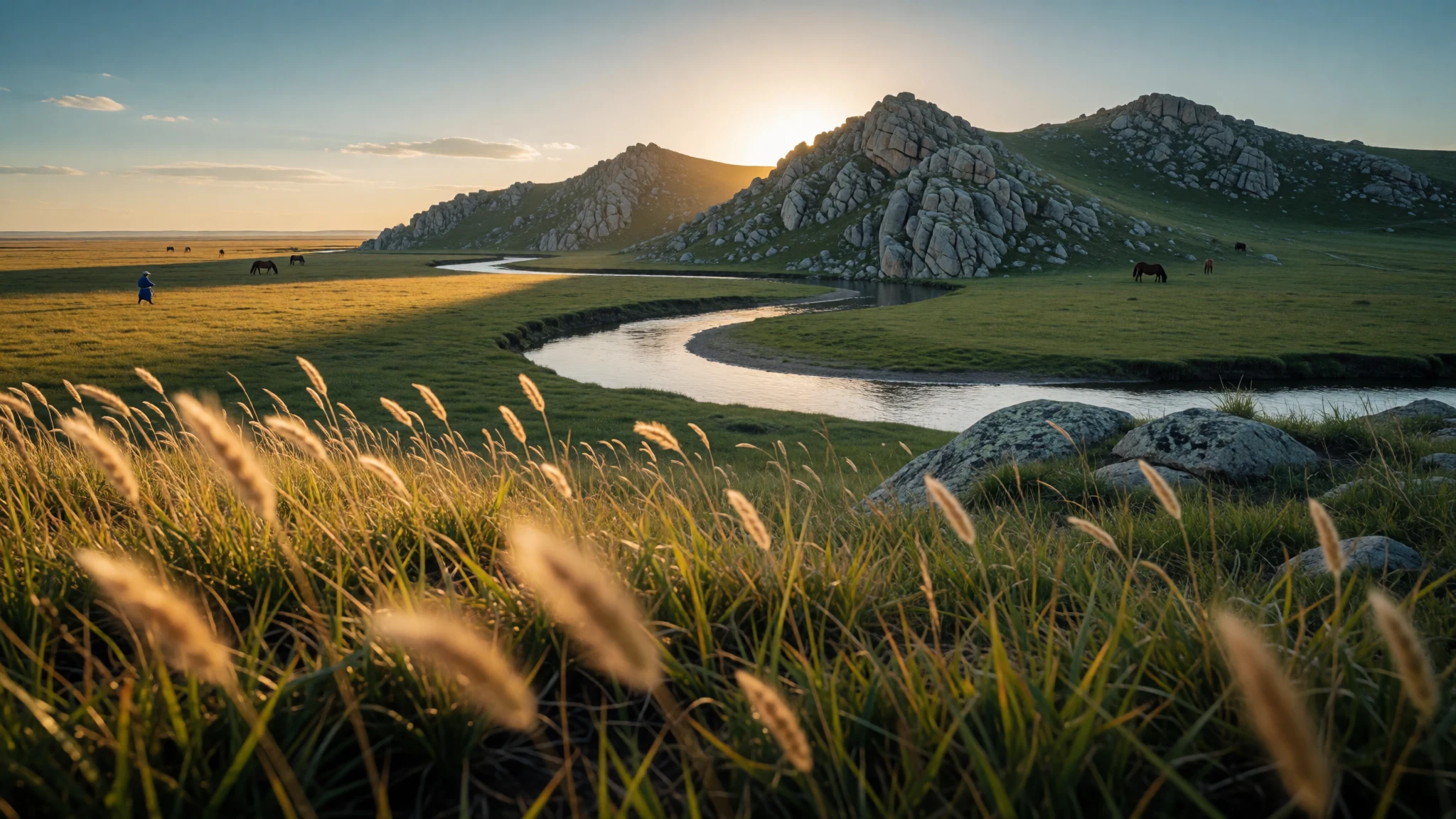
Gun-Galuut gives a quiet, close look at Mongolian steppe, river and wetland life, a short drive from Ulaanbaatar, with nomad families as hosts.
The place
Gun-Galuut Nature Reserve lies in Tuv Province, roughly 130 km east-south-east of Ulaanbaatar, and fits an unusually wide mix of landscapes into a modest area of about 20,000 hectares. Rocky mountains, open steppe, small lakes, streams, a river and marshy ground sit side by side, and the whole block is managed to stay close to its natural state. Three zones organise it: a tourism zone where visitors are directed, a limited zone where herding and light use continue, and a core zone left to wildlife. Grassland dominates the view. It is flat or gently rolling, pale gold in dry spells and bright green after summer rain, with a horizon so distant that sky and grass seem to touch. The mountains of Baits and Berkh interrupt the line and shelter some of the rarer animals. Ikh-Gun and Ayaga lakes draw waterbirds, and the Kherlen river loops through the area before feeding the Tsengiin Burd wetland, where cranes, swans and geese breed. Away from the water, marmots stand sentry beside their burrows, small rodents dart through the grass, and wolves and foxes live here but are rarely seen. The reserve is a local protected area, not a polished national park, so facilities are basic: one ger camp, a few herding families who take guests, and long tracks between them. The reward is time outdoors, on horseback, on foot or by the river, with very little traffic noise. It stays open all year, though most visitors come between late spring and early autumn.
Its story
Gun-Galuut Nature Reserve is young as protected areas go. It was established in 2003 by the local assembly of Bayandelger county in Tuv Province, rather than by the national government, with the aim of safeguarding species that are threatened worldwide. That local origin helps explain its small-scale, practical feel. The case for protection rests on wildlife. The plants and animals have not yet been studied thoroughly, but the records already show a long list of mammals, birds, fish and amphibians. Grey wolf, marmot, pika and jerboa are among the common residents. Rarer names matter more to conservationists: the argali, a wild mountain sheep, and several cranes, including the Siberian, white-naped and hooded, together with the swan goose and black vulture, all appear on the IUCN Red List. Whooper swan, black stork, bearded vulture and bar-headed goose are counted as threatened within Mongolia. The wetlands, lakes and river corridor explain why so many birds stop here. Herding is the older story. Nomadic families have long moved livestock across this grassland, and the limited zone allows that to continue. Tourism arrived later, in the form of a ger camp and homestays, and the balance between grazing, visitors and wildlife is still a work in progress, as in many protected areas where people live and work.
What to see
- Open steppe on horseback — Tourism zone of the reserve
Gun-Galuut's grassland is the main attraction, and horseback is the traditional way to cover it. Local families lead riders across flat ground at a walk or trot, past grazing herds and low hills. Early morning and late afternoon give softer light and cooler air. Expect wind, huge skies and almost no shade, so a hat matters.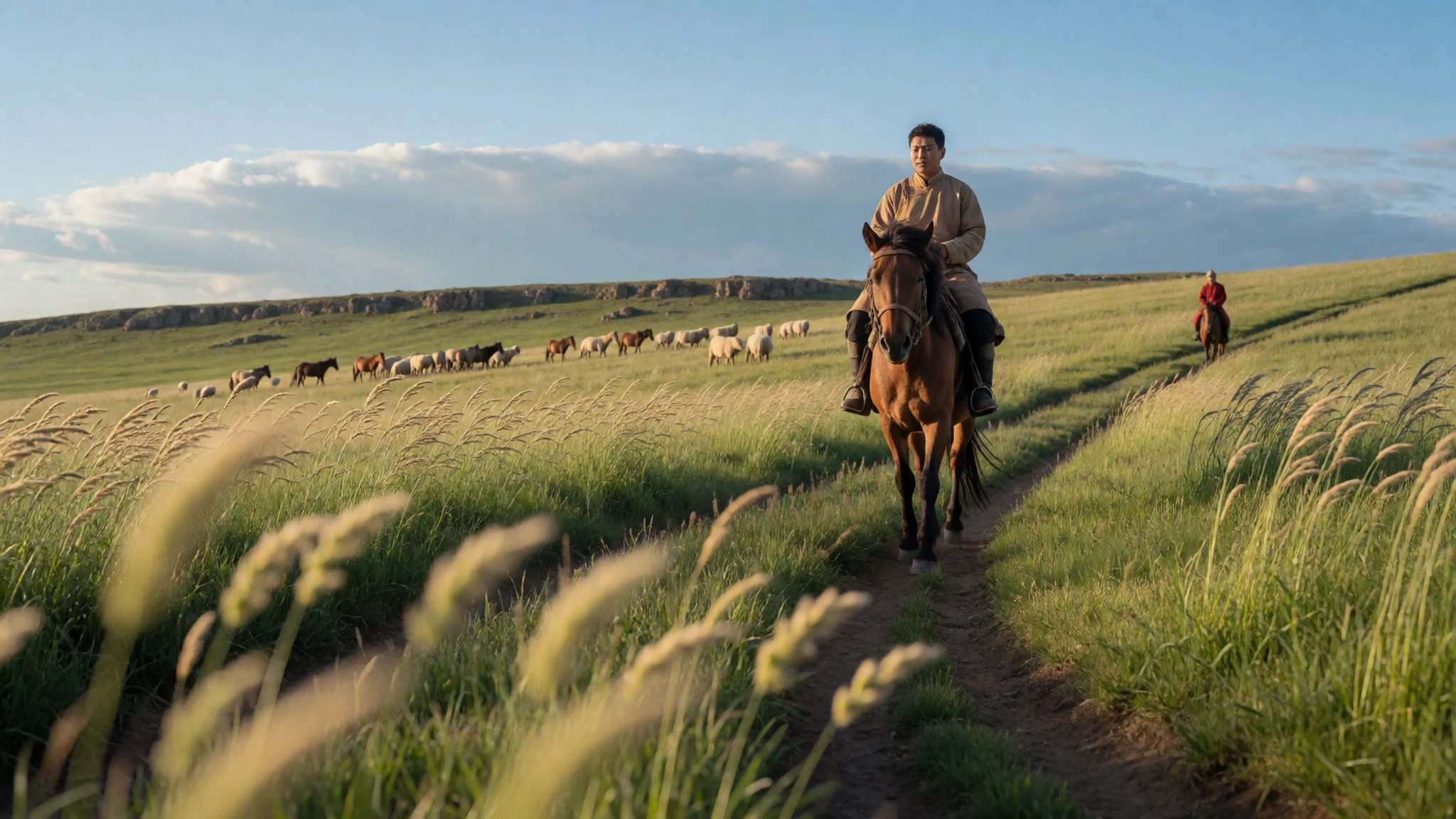
- The Kherlen river — Near the Steppe Nomads Eco Camp
The Kherlen river passes close to the tourist camp and shows a gentler side of the reserve. Its banks suit slow walks, picnics and birdwatching, and the water is used for kayaking and rafting in season. Horses and cattle come down to drink, so the shoreline shows herding life as well as birds. Check conditions locally before launching any boat.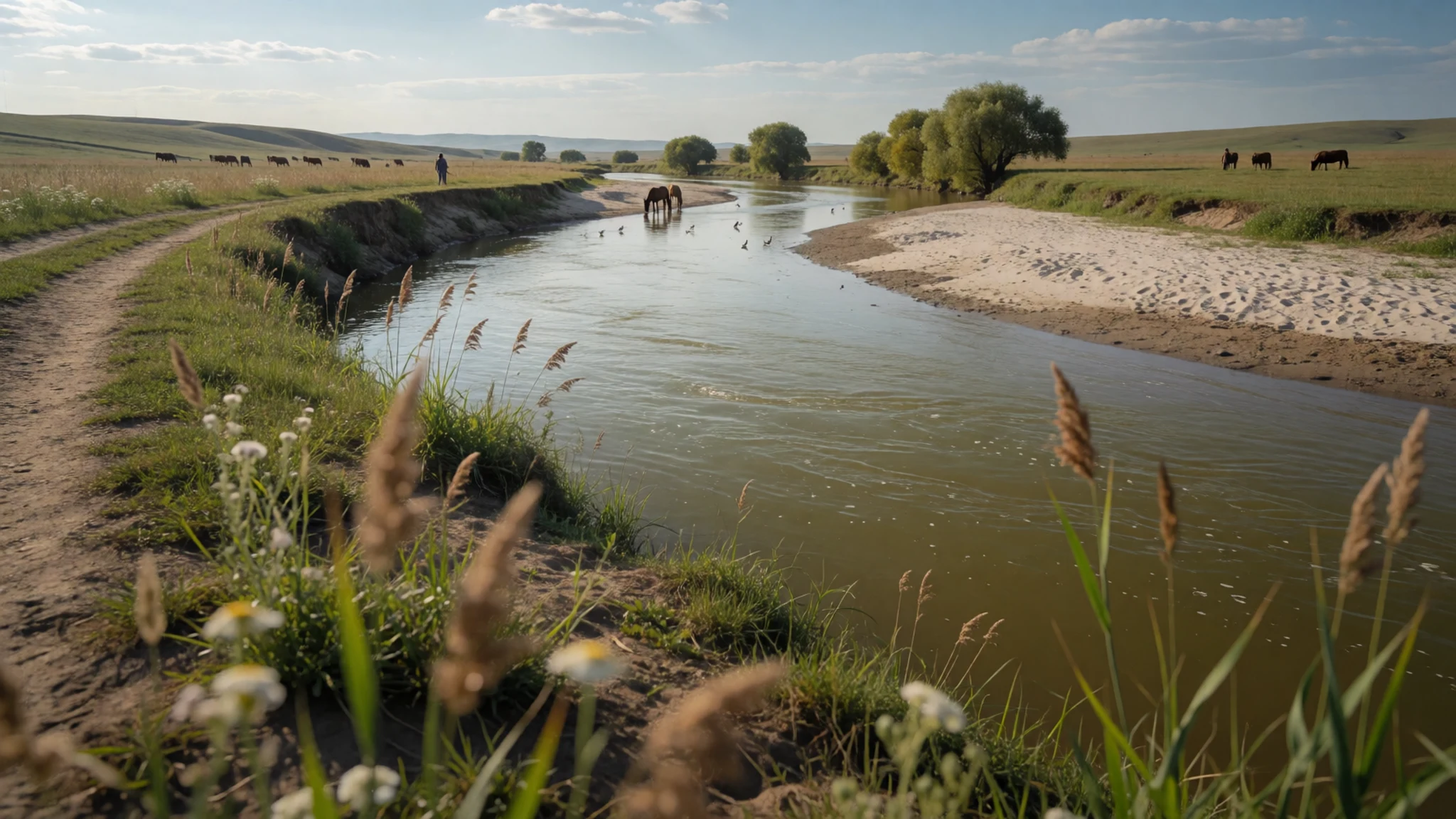
- Ikh-Gun and Ayaga lakes and the Tsengiin Burd wetland — Wetland and lake area of the reserve
These lakes and the neighbouring Tsengiin Burd wetland form the reserve's main bird habitat. Cranes, swans and geese use the shallows to feed and nest, and spring and summer bring the most activity. Binoculars are essential, and a patient hour at the water's edge beats rushing between viewpoints. Keep well back from nests, because disturbance can make birds abandon eggs.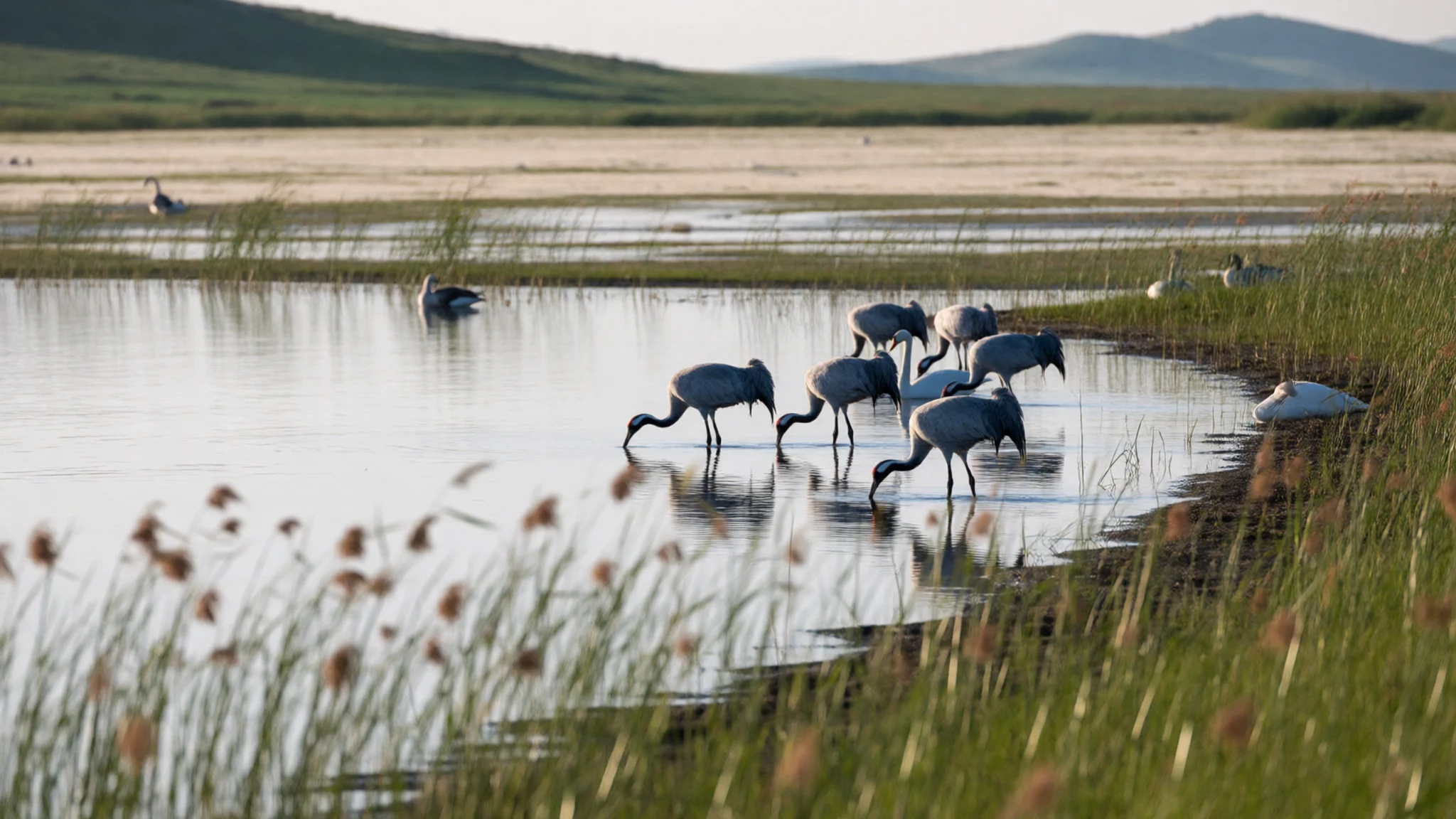
- Baits and Berkh mountains — Rocky uplands within the reserve
The Baits and Berkh mountains rise from the grassland as rocky ridges and are a place to look for argali, the wild mountain sheep listed on the IUCN Red List. Sightings are never guaranteed and the animals keep their distance. Walks here give wider views over the steppe and the river bends below, and a local guide improves the odds.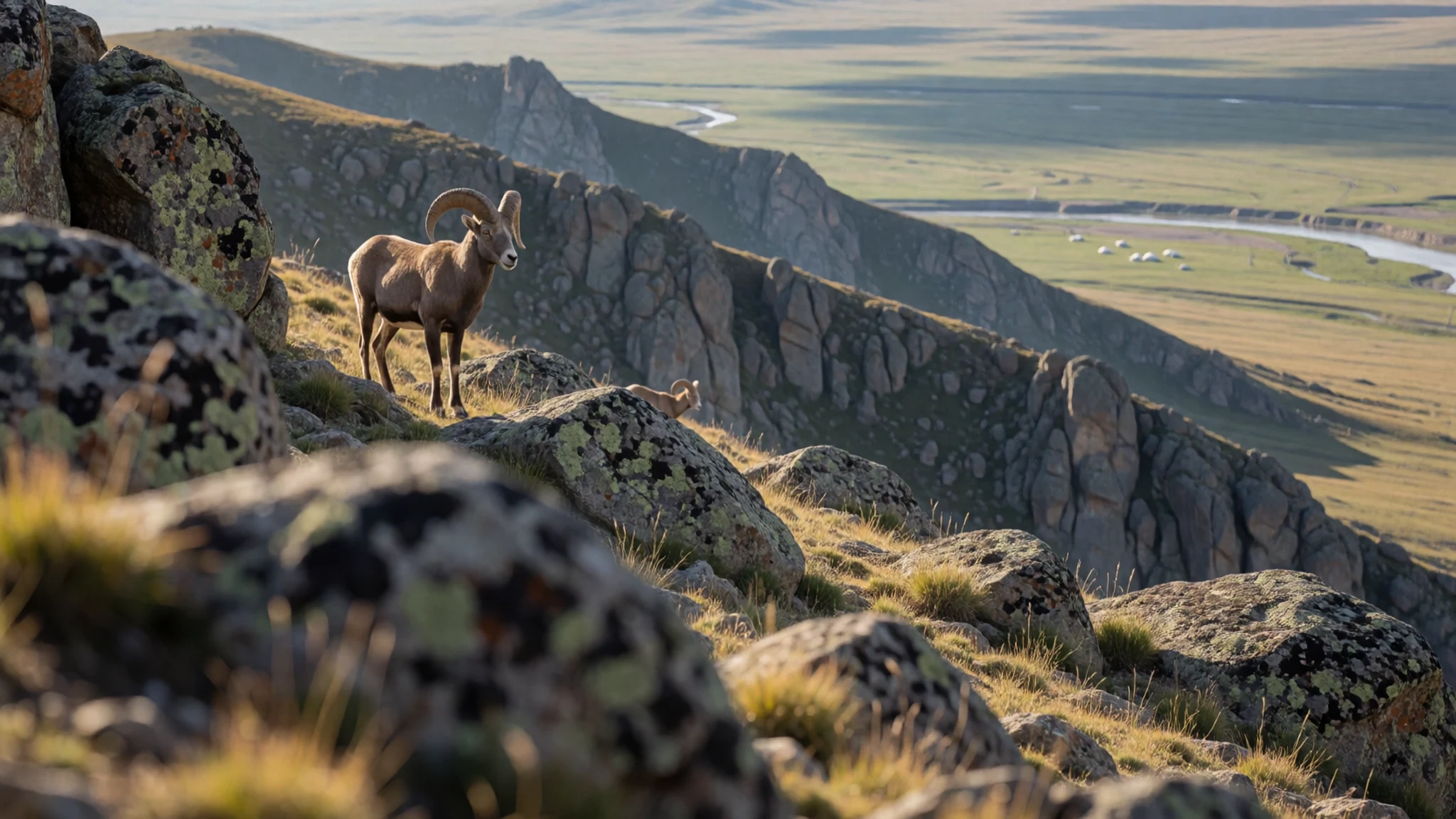
- A nomadic family's ger — Herding households around the reserve
Staying with a nomadic family is a direct way to see how the steppe is actually used. Visitors can watch livestock being gathered, share simple meals and sleep in a ger. Arrangements are informal, so organise them through the camp or a tour operator beforehand, and bring a small gift such as tea or sweets for your hosts.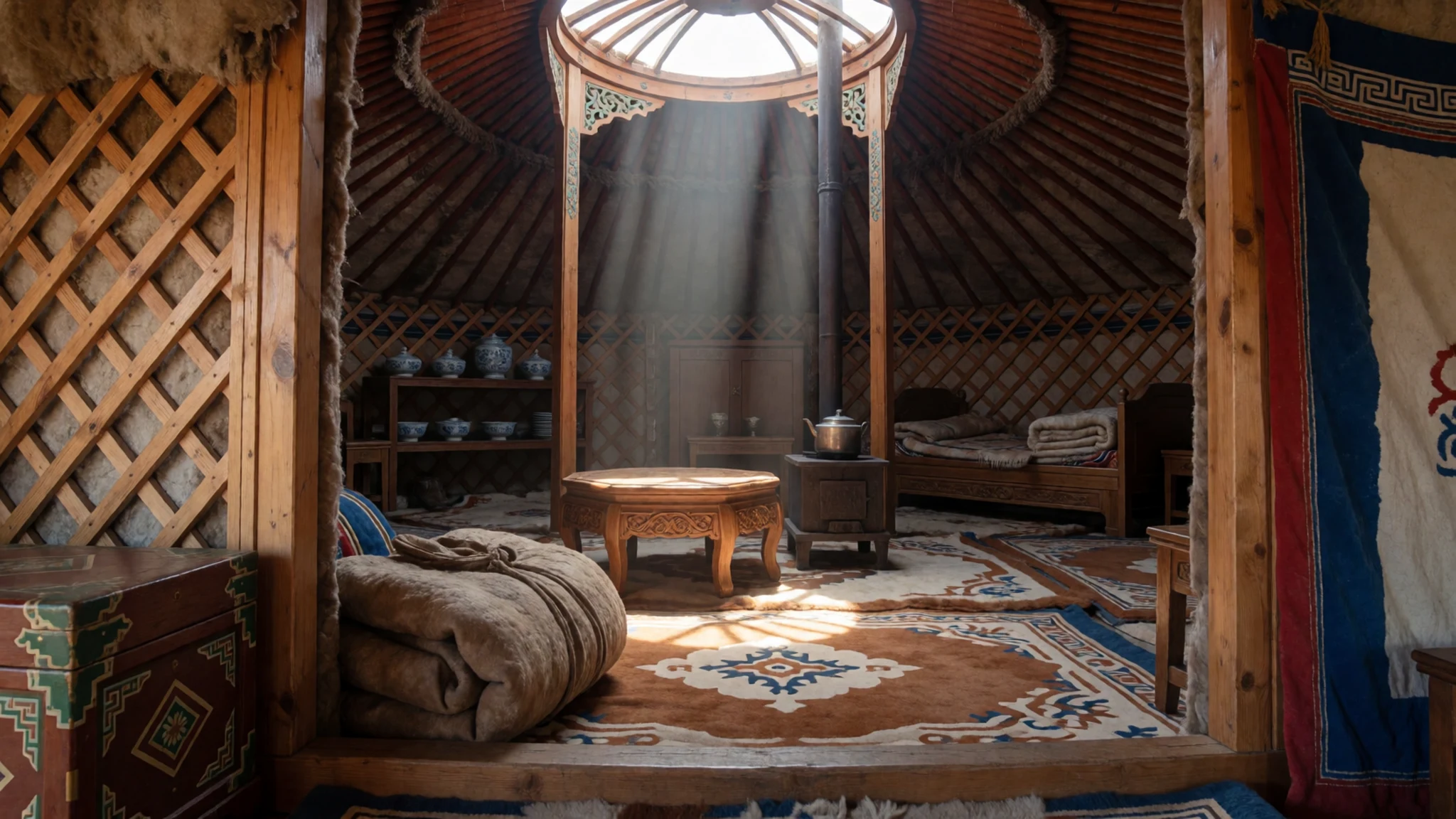
- Steppe Nomads Eco Camp — Tourism zone, near the Kherlen river
The Steppe Nomads Eco Camp is the reserve's only lodge, a cluster of gers set a short run of earth track off the paved road. It is the usual base for horse riding, camel riding, yak-cart rides, hiking and fishing. Check the official website for booking and what is currently offered.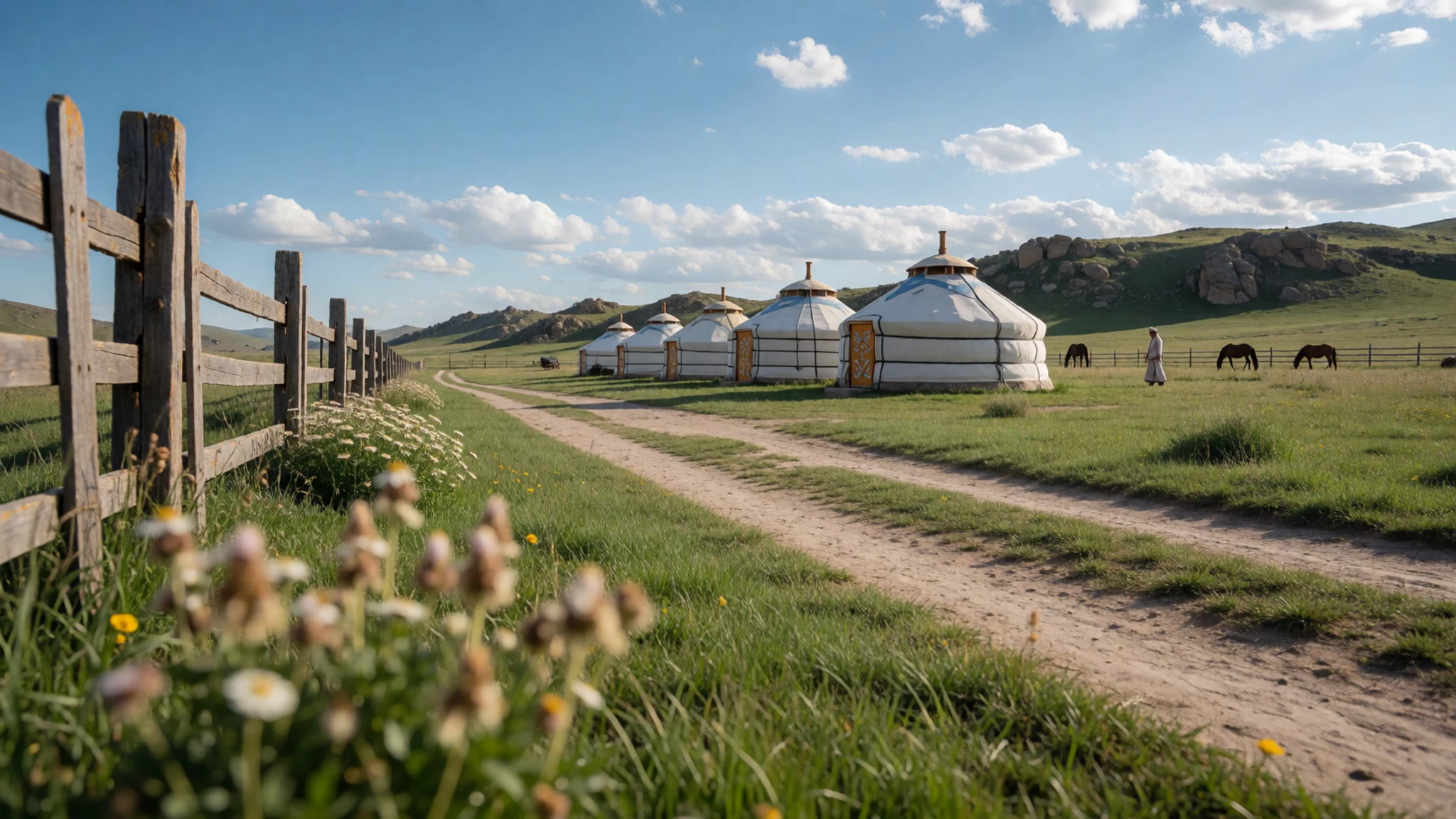
Culture
Gun-Galuut sits within the traditional range of Mongolian nomadic herders, and the culture a visitor meets here is pastoral rather than monumental. Families live in gers, round felt-covered tents that can be taken down and moved with the seasons, and their routines revolve around horses, sheep, goats, cattle and camels. Hospitality is a point of pride: a traveller arriving at a ger is expected to be offered tea, dairy products and a place to sit. Daily life follows the livestock, with milking, gathering animals at dusk, and in summer making dried curds and fermented drinks. Horses hold a special place, and children learn to ride very young. Naadam, the national summer festival held around early July, brings wrestling, archery and horse racing to towns and villages across the country, and smaller local versions are held in the countryside. Buddhist and older shamanic customs both shape belief, visible in stone cairns, blue scarves and small offerings to the land. Many herders see the steppe, rivers and mountains as inhabited by spirits, so careless behaviour toward them is frowned on. Tourism has added a second source of income without displacing herding, but the two ways of living are still adjusting to each other. Call out from outside any ger and wait to be invited in, step over the threshold rather than on it, and take the first cup of tea or milk offered with your right hand.
What to wear
Gun-Galuut's herding families still wear the deel, Mongolia's traditional long wrap-over robe, which fastens at the right shoulder and is held at the waist by a long sash. Summer deels are cotton or light silk, winter ones are lined or padded, and the warmest are sheepskin. Deep blue, burgundy and green are common, often with contrasting trim at the collar and cuffs. Thick-soled riding boots with upturned toes, called gutal, and felt or brocade hats complete the outfit, and the full set appears at Naadam, weddings and the lunar new year. On an ordinary day, families mix the deel with modern clothes: fleece jackets, jeans, baseball caps and trainers or rubber boots, and motorbikes are as common as horses. Visitors should dress for weather rather than ceremony. Temperatures swing widely between early morning and midday, and wind on open ground is constant, so layers work better than one heavy coat. Pack a windproof and waterproof shell for the late-summer rains, a brimmed hat and sunscreen, and long trousers for riding. Sturdy closed shoes or boots with ankle support suit uneven ground and river banks. Modest dress is not strictly policed, but covered shoulders and knees are polite when visiting a family. The reserve has no religious sites, so no special coverings are needed. Insect repellent and a scarf for dust are worth packing.
What to eat
- Suutei tsai (salted milk tea) — Any herding family's ger and the camp's dining area
Salted milk tea is the first thing offered in almost any ger and the everyday drink of the steppe. Tea leaves are boiled with milk and a little salt, so the taste is savoury rather than sweet. It takes a cup or two to get used to.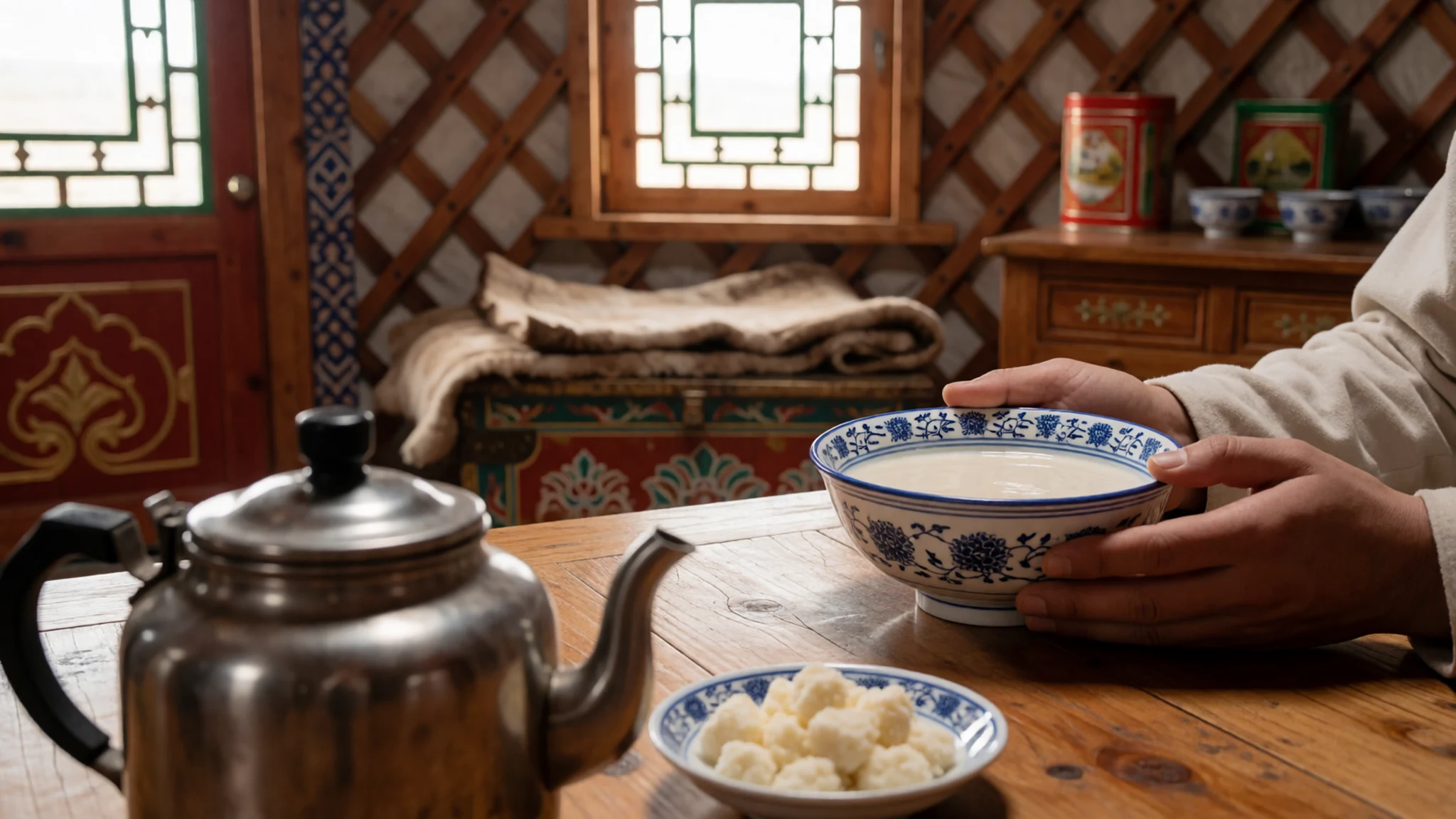
- Buuz — Family gers and simple eateries on the road from Ulaanbaatar
Buuz are steamed dumplings filled with minced mutton or beef and onion, juicy inside and eaten by hand. They are family and festival food across Mongolia. Meat is the default, so vegetarians should ask about fillings and expect limited choice.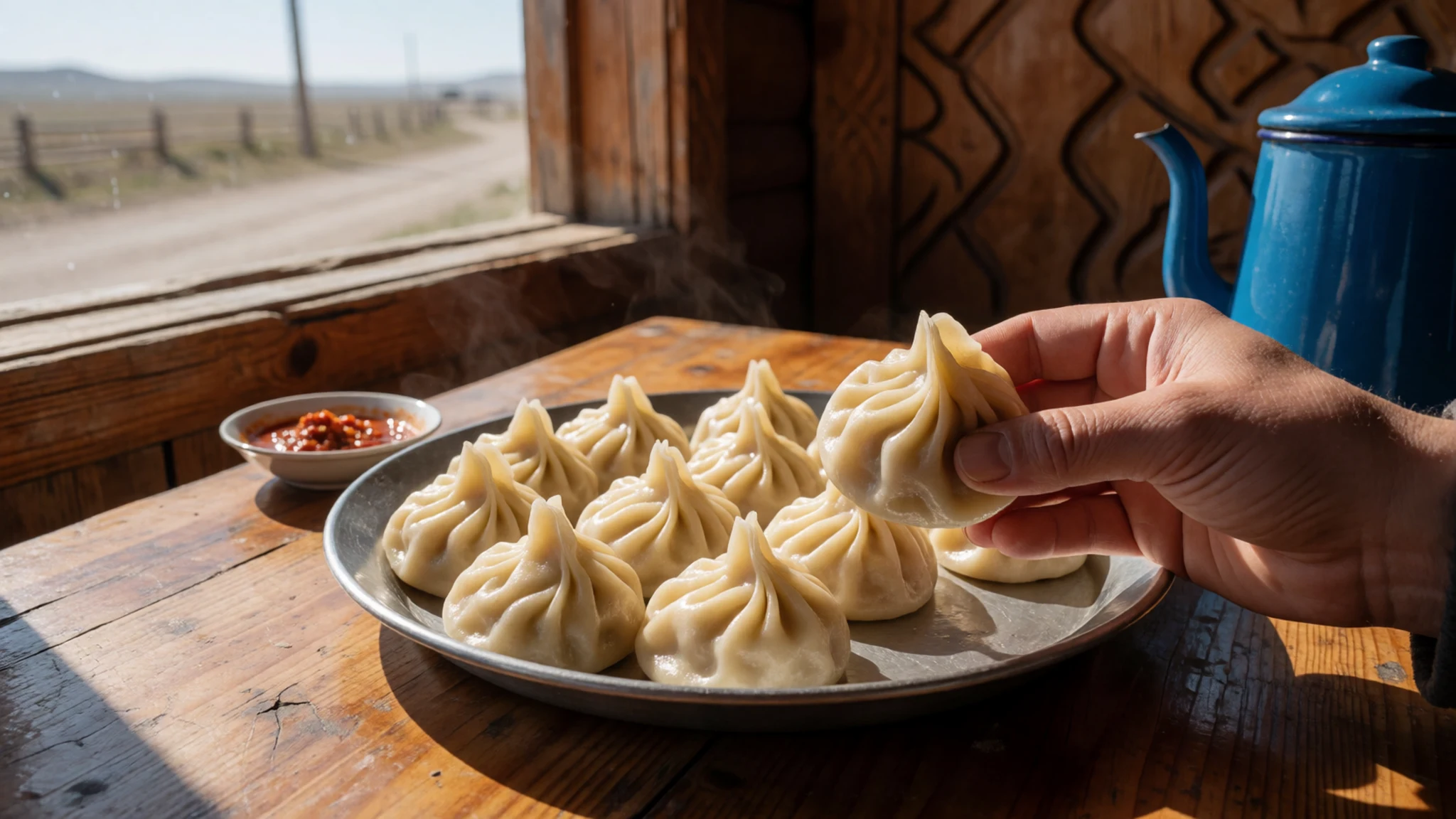
- Khuushuur — Roadside eateries on the way from Ulaanbaatar and at the camp
Khuushuur are flat, fried pastries of minced meat with crisp edges and a juicy centre, a standard snack on steppe journeys. They arrive hot and greasy, and are best eaten straight away with tea or a cold drink. - Aaruul — Herding households, often set out to dry on a ger roof
Aaruul is hard dried curd, made by herding families from soured milk and left to dry in the sun, often on the roof of a ger. It is sour, chalky and keeps for months. Try a small piece first, usually offered alongside tea. - Airag (fermented mare's milk) — Herding families in summer
Airag is lightly fizzy, sour fermented mare's milk, made mainly in summer when the mares are in milk. The taste is acquired and a small bowl is plenty. Hosts offer it as a welcome, so declining politely is fine after a sip.
Plan it
Best time. June and September are pleasant, and early July has the most settled weather but coincides with Naadam, so expect busier roads and camps. Late July and August bring rain that cools the air and turns the grass green. The reserve is open all year, but the main season runs from May to early October.
How long. 2–3
Getting there. Fly into Ulaanbaatar and drive about two hours east-south-east on paved road towards Baganuur; at the signed junction where the old and new roads meet, turn south onto earth tracks and follow the camp markers for about 17 km. Most visitors arrive by pre-arranged car or transfer.
Budget. mid
Tips
- Book the ger camp through its website (http://www.argalipark.com/) before travelling, especially around early July
- Carry cash and do not rely on cards once off the paved road
- Bring binoculars, a windproof layer, sun protection and plenty of drinking water
- Start rides and bird walks early, when the light is soft and the wind is lower
- Ask the camp or a guide about the state of the earth tracks after heavy rain
Etiquette
- Call out from outside a ger and wait for an invitation before entering
- Keep well clear of nesting birds and do not chase wildlife or livestock
- Ask before photographing people, their animals or the inside of a ger
Nearby
Sources
- Wikidata Q5618269 (CC0)
- Wikipedia: Gun-Galuut Nature Reserve (rev 1366331643) (CC BY-SA 4.0)
- Wikivoyage: Gun-Galuut Nature Reserve (rev 5099815) (CC BY-SA 4.0)
- Photo: This Way My Friend, Chanindh Homsilpakul (CC BY 3.0)
- Photo: Relief map of Mongolia, NordNordWest / Виктор_В (CC BY 3.0)
- Photo: Der Kherlen in Nähe des Steppe Nomads Eco Camp, GerritR (CC BY-SA 4.0)
- Photo: Gun-Galuut Nature Reserve banner, GerritR (CC BY-SA 4.0)
- Photo: Steppe Nomads Eco Camp, GerritR (CC BY-SA 4.0)


Wildlife
- Whooper swan (bird)
The whooper swan is a big swan of northern lands, the Eurasian answer to North America's trumpeter swan. This reading counts it among birds under threat in Mongolia, which makes a sighting at Gun-Galuut something special. Be patient and watch from a good distance with binoculars, keeping your voice low and your movements slow. A local guide will know how to approach without upsetting the birds. Please never feed them, and never push closer for a better view.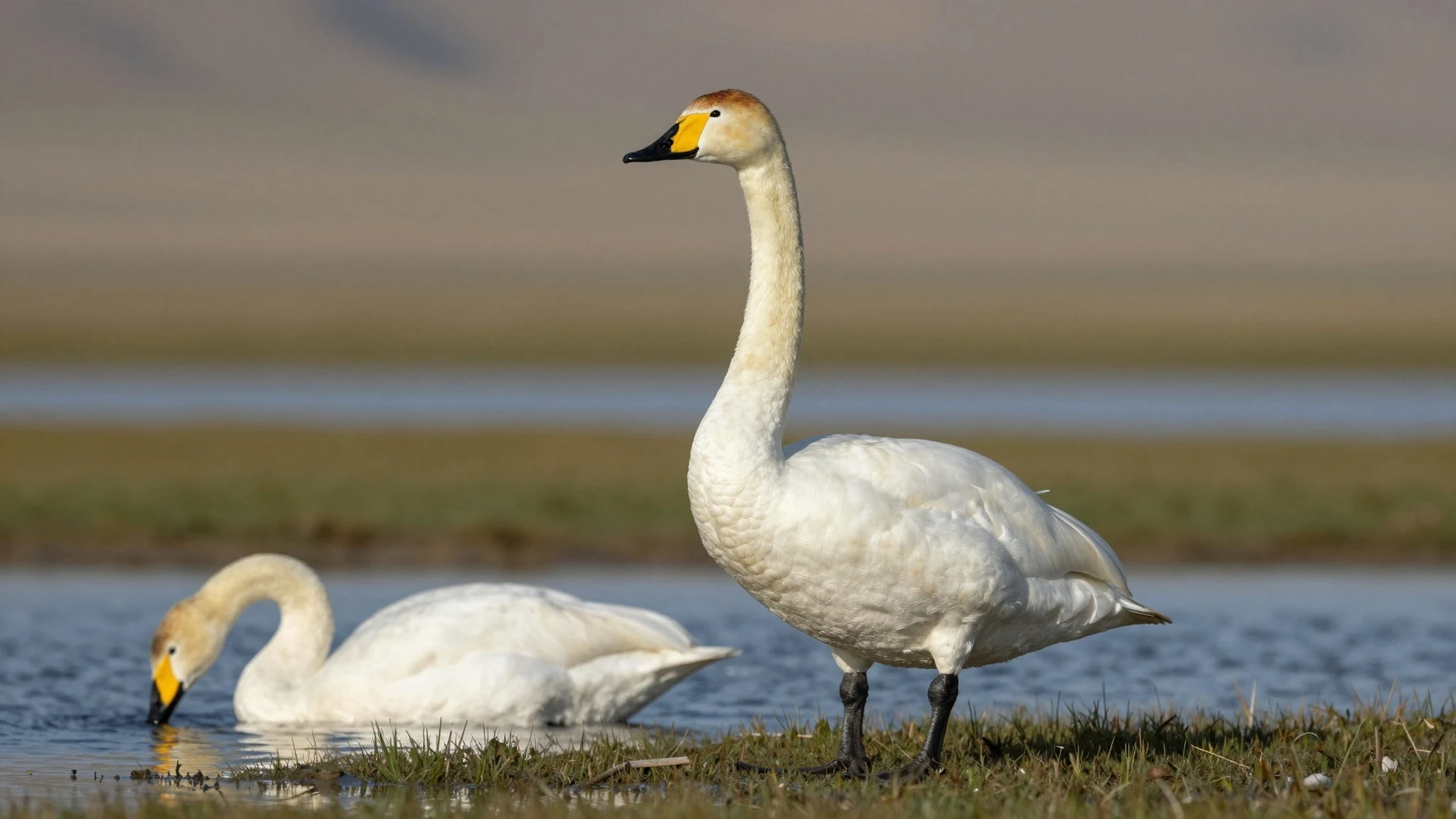
- Argali (animal)
The argali is the biggest of all wild sheep, a creature of high, rocky country. In Gun-Galuut, look for it on the stony ridges of the Baits and Berkh mountains, which rise abruptly out of the grassland. It is on the IUCN Red List, so it deserves gentle manners. Scan the slopes with binoculars from far away, stay quiet and keep still, and go with a local guide who knows the ridges. Never offer food, and let the sheep carry on undisturbed. - Grey wolf (animal)
The grey wolf is the largest wild member of the dog family, with a coat of mixed pale and dark shades. It is a familiar resident of Gun-Galuut, living there rather than just passing through. Watch from a long way off, stay quiet, and go with a guide who can read the land. Never feed a wolf, and let it keep its wildness. - Siberian crane (bird)
The Siberian crane is a bird that looks almost entirely snow-white, with black wing feathers that appear only when it takes flight. It nests on the Arctic tundra of Russia, and eastern birds spend winter in China. Conservationists rank it among the rarer species on the IUCN Red List, so treat any sighting at Gun-Galuut as precious. Watch from far away with binoculars, stay quiet and still, and go with a guide. Never feed it or approach to photograph.