Guanziling Mud Springs
Guanziling Mud Springs, Taiwan
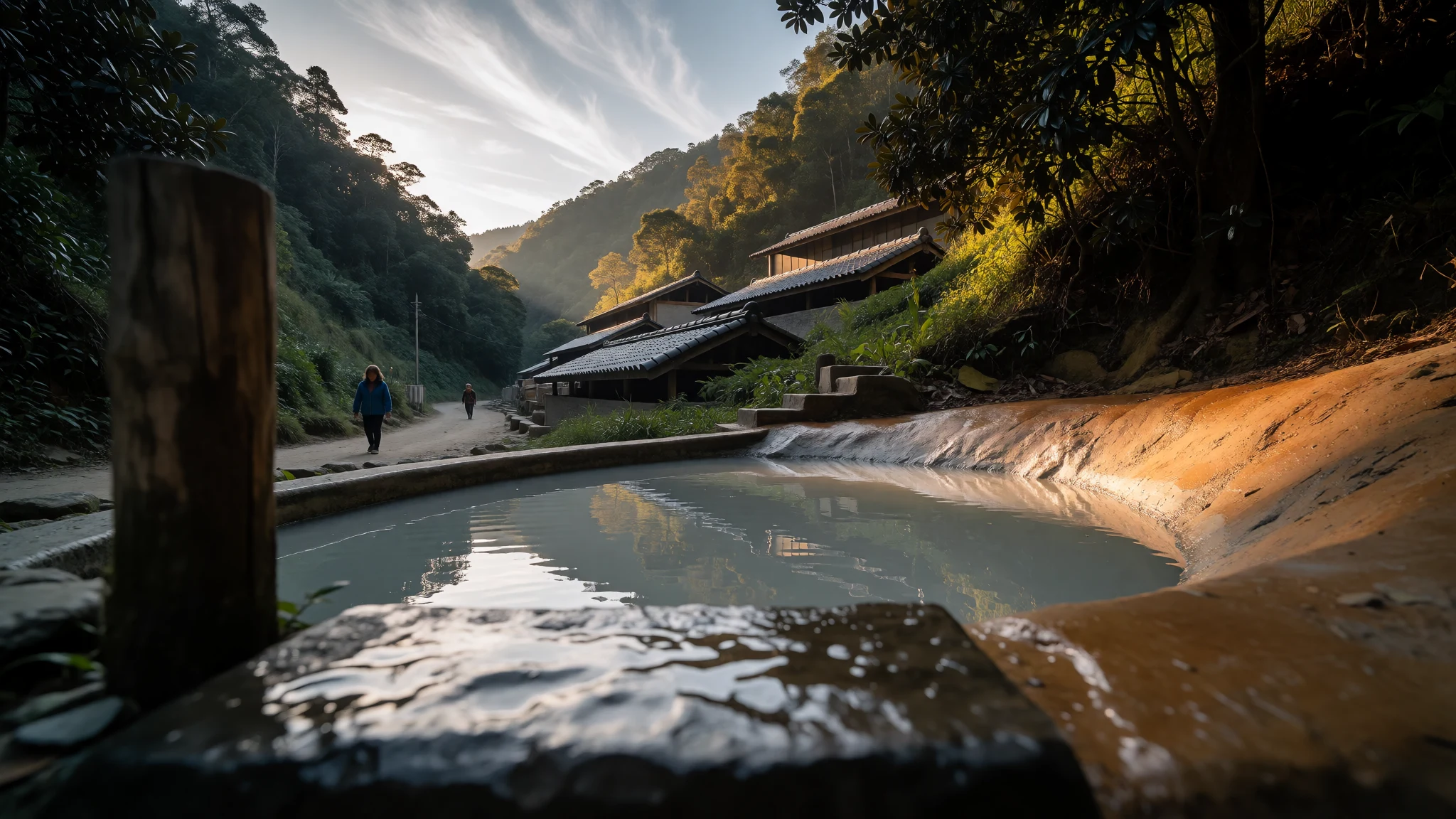
Guanziling is a Tainan hill resort where grey mud hot springs, a flame that has burned for centuries and a hillside setting meet.
The place
Guanziling Mud Springs (關子嶺, Guānzilǐng) lies in Baihe District, on the foothills where the Tainan plain begins to rise, about 270 metres above sea level. The name is spelled in several ways, including Guanzihling and Kuantzuling, and older signs even write the middle character differently, so a map search sometimes needs a second attempt. The settlement is really two neighbourhoods. Old Guanziling sits in the valley close to the spring source and has the older, plainer bathhouses and lodgings. The summit area occupies the hill above, with newer resorts that cost more and look out over the lowlands. The draw is the water. It comes up cloudy with fine grey mud, and bathers coat their skin with it, wait for it to dry, rinse in a pool and repeat. Locals and visitors alike credit it with easing skin complaints, though that is a reputation rather than a medical promise. Mud springs of this kind are rare; one source puts the world total at only three, the others being in Kagoshima in Japan and on Vulcano in Italy. A second oddity is a gas vent where methane burns as a steady flame. The setting is quiet and wooded, closer to a weekend retreat than a place with big monuments. Weekends and holidays are busier, while midweek visits are calmer. Public transport is thin once the last buses stop, so planning the return matters as much as the soak.
Its story
Guanziling Mud Springs has two stories: a flame that is older than the resort, and a resort that grew around a rediscovery. The flame comes from methane escaping alongside the spring water and has been alight for roughly three centuries, according to the sources used here. It became the local landmark, and one valley restaurant still advertises itself with a flaming torch at the door. The bathing side of the story begins with Japanese troops stationed in the area, who are credited with finding the hot spring while Taiwan was under Japanese rule. Their interest fits a wider pattern, since colonial authorities developed many of the island's hot springs into bathing resorts. In 1920 the spring was named the best on the island, a title that brought publicity and drew visitors up from the plains. Bathhouses and lodgings followed, first in the valley beside the source and later on the hilltop, which explains the two-part layout seen today. The older valley buildings keep a faded, practical look, while the summit shows later investment. Roads and local bus services made the climb easy enough for day trips and weekends, and that rhythm still defines the town: bathe, rest, eat mountain food, go home. Few places in Taiwan combine a working flame, a rare mud spring and this much quiet in one small area.
What to see
- Fire and Water — Old Guanziling, Baihe District
The methane vent known as Fire and Water is the site's signature curiosity. Gas escapes alongside spring water and burns as a steady flame that sources say has lasted around three centuries. It is a short stop rather than a full outing, best paired with a look at the spring source. Check locally for current access and viewing rules. - The mud spring source — Old Guanziling, Baihe District
At the source in the old valley, the water appears as a cloudy grey slurry that looks more like thin clay than a bath. Seeing it here explains the local routine better than any sign: coat the skin, let it dry for a few minutes, rinse in a pool, repeat. Look first, and only touch where invited.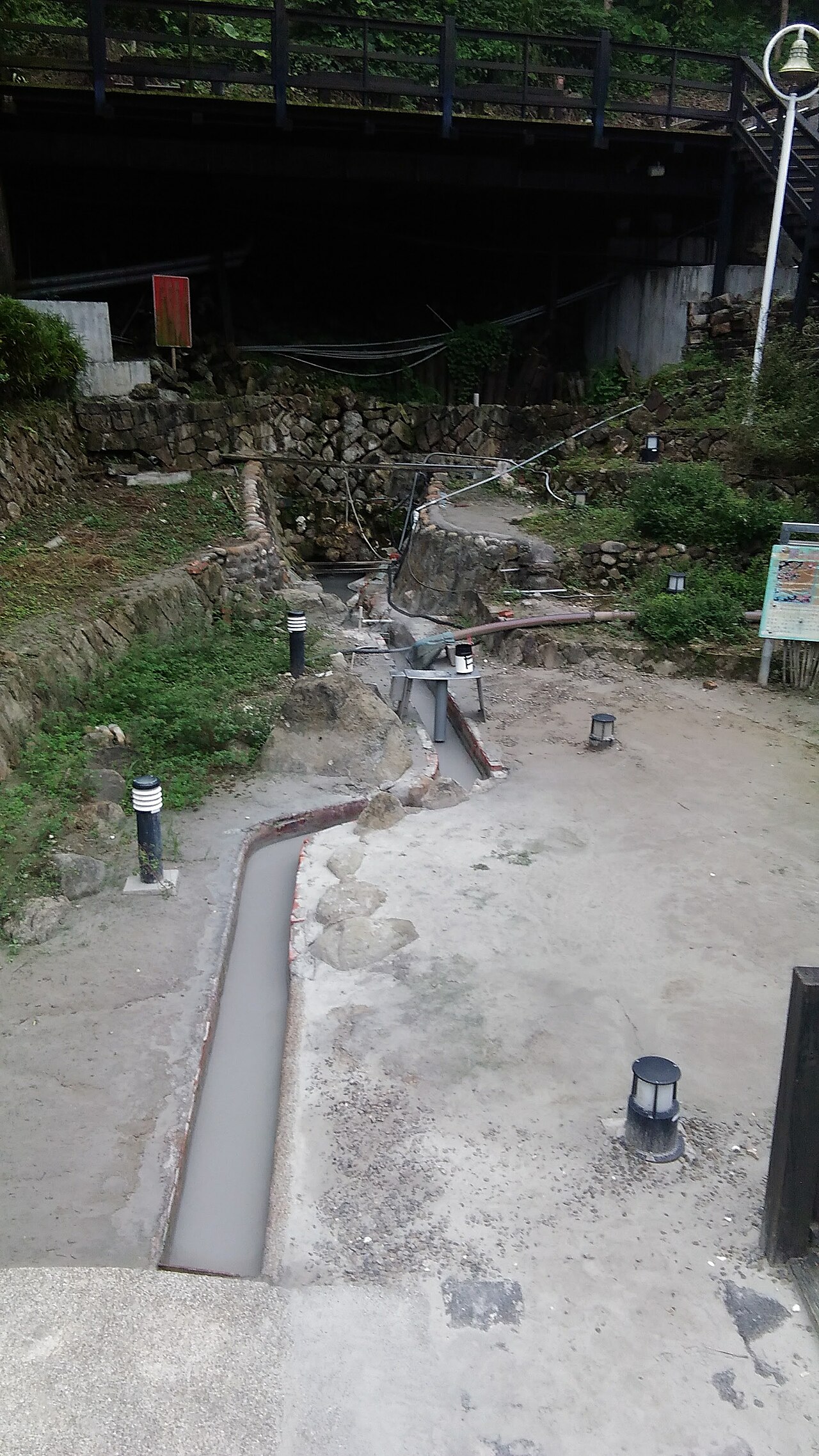
- Old Guanziling bathhouses — Old Guanziling, Baihe District
The valley around the source holds the older, plainer bathhouses, where the mud routine is done in simple tiled rooms rather than designer spas. The buildings have a lived-in, slightly faded look that suits the place. Spend an hour walking the lanes before choosing where to soak, and compare the options on site.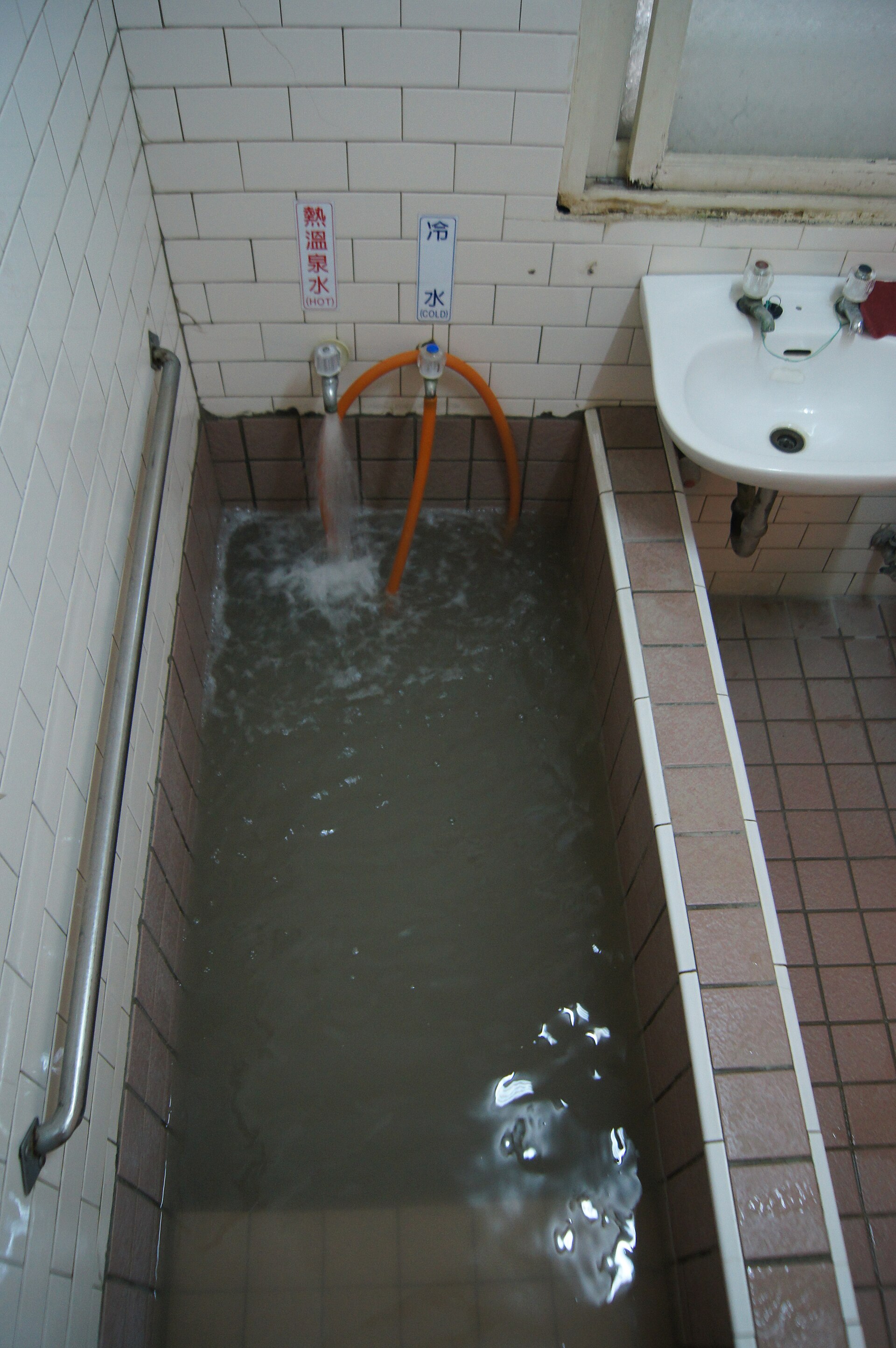
- The summit resorts — Summit, Guanziling
On the hill above the valley, the summit area has newer and pricier resorts, among them the Toong Mao complex, with views over the lowlands. The atmosphere is calmer and more polished than the valley. It suits stays built around private baths and long evenings, though the cost is higher and the walking is steeper.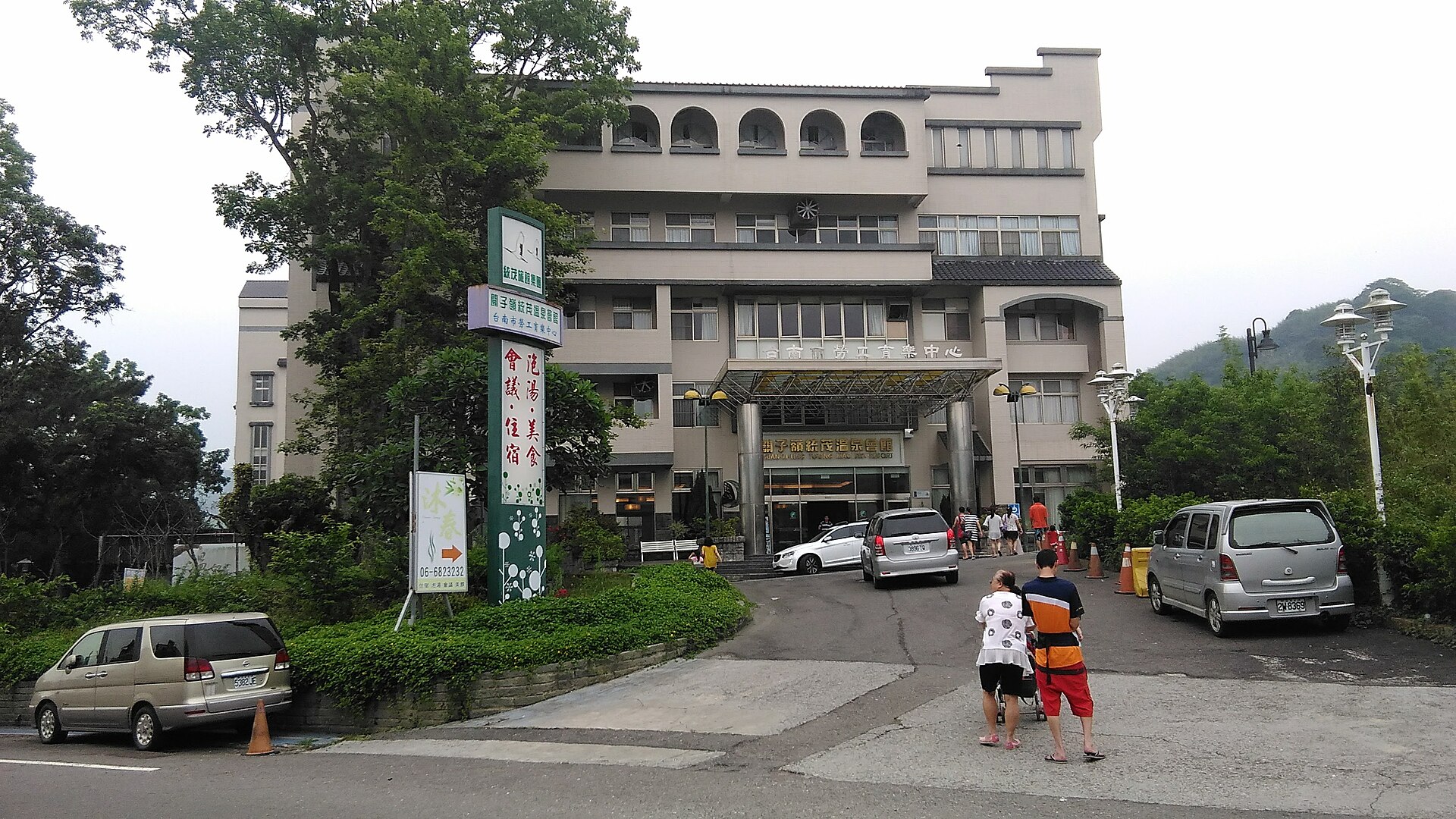
- Dachu Coffee Estate (Daichu Farm) — Dongshan coffee route, near Guanziling
This organic, family-run coffee farm started the Dongshan coffee route and sits a short drive south of the hot spring area. The draw is the sunny mountain outlook, a cup brewed on site, simple filling food and a crowd of friendly farm cats. It makes an easy half-day break from bathing. - The local bus up from Chiayi — Chiayi to Guanziling summit
The slow local bus from Chiayi is part of the experience, climbing through Baihe and the old valley before ending near the summit resort. It rattles, stops often and gives a feel for the foothills that a taxi skips. Check the current timetable before relying on the return trip.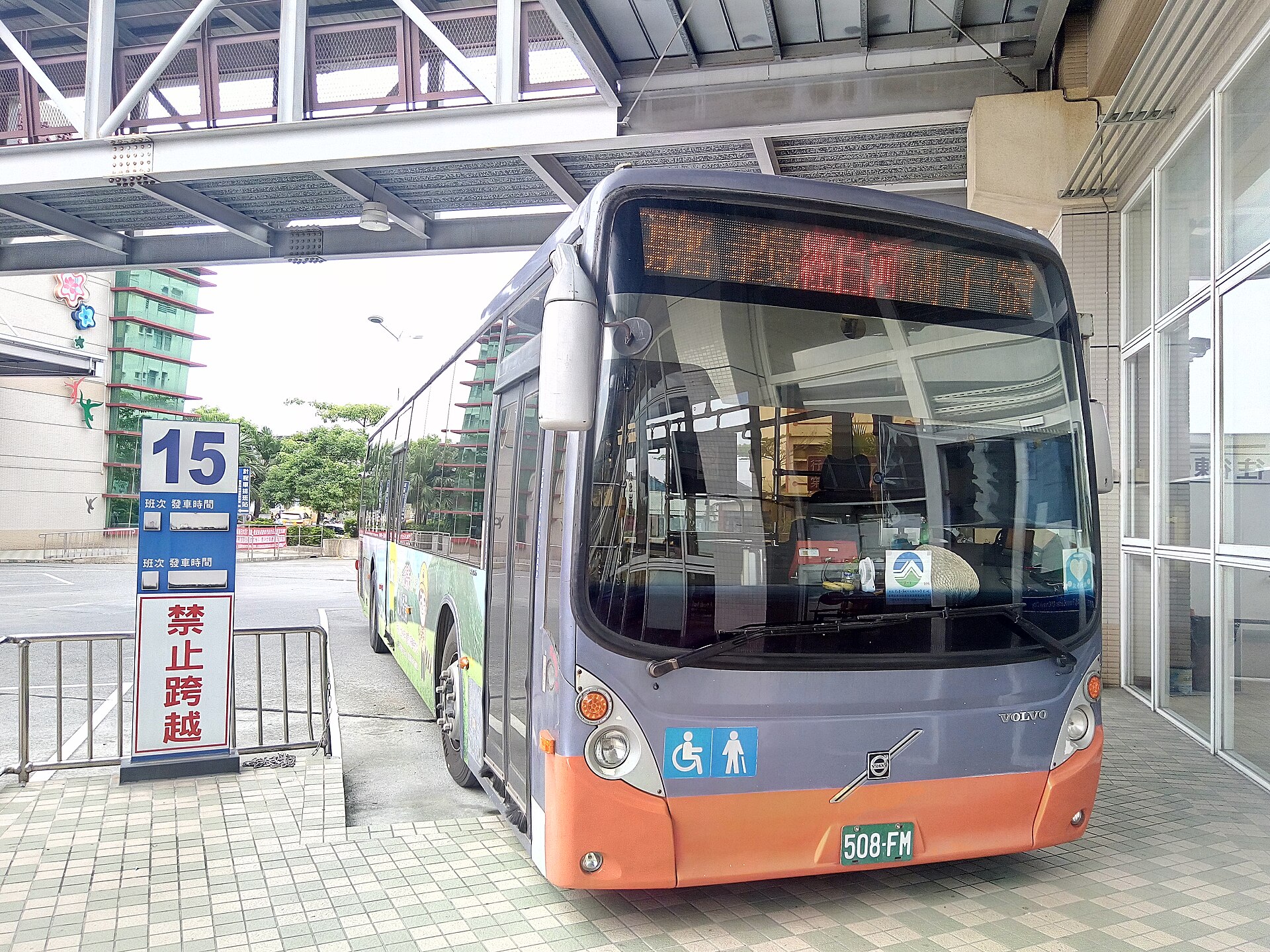
Culture
Guanziling Mud Springs belongs to Taiwan's hot-spring bathing culture, a habit shaped partly by the Japanese period, when springs across the island were turned into bathing resorts. Today it is mostly a leisure custom: families, couples and groups of friends come for a weekend, soak, eat a long meal and rest. Mud bathing adds its own routine. Visitors coat themselves, let the layer dry for a few minutes, rinse in a pool and repeat, treating it as skin care and relaxation rather than a cure. Pools may be shared and sometimes divided by temperature, and many resorts also offer private rooms for individual or family bathing. The valley and the summit feel different. Old Guanziling has an unhurried, slightly faded air, with older bathhouses and small eateries, while the hill resorts are more polished and geared to group stays. Food is part of the ritual, with mountain ingredients, chicken and coffee all tied to the hills around. Local life follows the weekend and holiday calendar, so the mood changes sharply between a quiet weekday and a full Saturday. Because the town depends on bathers, staff are used to explaining the routine to first-timers, and asking is welcome. Rinse off any mud and wash before stepping into a shared pool, and follow each bathhouse's posted rules on swimwear and caps.
What to wear
Guanziling Mud Springs has no local costume of its own, so traditional dress here means the clothing of Taiwan more widely. Hakka communities are known for indigo-dyed blue cotton jackets, and Han Taiwanese dress includes the changshan and qipao in silk and brocade, now mostly worn at weddings, festivals and performances. Indigenous Taiwanese peoples weave and embroider cloth in cotton and ramie, often with bead and stripe patterns that differ by community, and wear it at ceremonies. Day to day, people in Baihe and the hills wear what suits the weather and the activity: T-shirts, light trousers, trainers or sandals, and a rain jacket in showery months. At the resorts, dress follows the bathhouse: swimwear in public pools, robes and slippers in the corridors, and nothing special after. A visitor should pack swimwear, flip-flops, a quick-dry towel in case the resort does not supply one, and a swim cap in case a pool asks for it. Summer is hot and humid, so thin breathable layers work, while winter evenings on the hill feel cool and damp, so a fleece or light jacket helps. The lanes slope, so shoes with grip are useful, and covered shoulders are sensible if a temple visit is added. Avoid wearing anything precious near the mud, which can stain.
What to eat
- Mountain-ingredient set meals — Restaurants in old Guanziling, some marked by a flaming torch at the door
Meals built on produce from the surrounding hills are the local style, usually served as several shared dishes. Expect vegetables, mushrooms and meat cooked simply, with rice or soup to follow. They suit a post-soak appetite and are easy to order by pointing. - Free-range chicken — Mountain eateries around the hot spring area
Free-range chicken is a common order at hill eateries across the area, often steamed, roasted or simmered in soup so that the firm, flavourful meat stands out. It is usually shared among a group, so it works best for two or more diners. - Stir-fried bamboo shoots and mountain greens — Family-run eateries in Guanziling and Baihe
When in season, bamboo shoots and wild-style greens turn up as quick garlic stir-fries beside the meat dishes. They are crisp, lightly bitter and a good counterweight to richer plates. Ask the staff what is fresh that day. - Dongshan coffee — Farm cafés along the Dongshan coffee route, including Dachu
The hills south of the spring grow coffee along the Dongshan route, and farm cafés serve it brewed on site. A cup with a view makes a calm break from bathing, and some farms add simple meals and snacks. - Baihe lotus dishes — Eateries and snack stalls in Baihe town, on the road to the hot springs
Baihe town, on the way up, is associated with lotus, and lotus root and lotus seed appear in soups, stir-fries and sweet desserts. Stop on the way to or from the hot springs and look for them on menus.
Plan it
Best time. November to February, when the air is cooler and a hot soak is most pleasant. Summer is hot and humid with heavy showers and the risk of typhoons, and late spring brings a rainy spell, so check the forecast before booking.
How long. 1–2
Getting there. Fly to Taoyuan, Tainan or Kaohsiung, then take the high-speed rail to Chiayi, or a local train from Tainan to Houbi. From Chiayi, local buses climb through Baihe to the summit in about an hour, and a taxi is quicker. From Houbi station a taxi takes about 25 minutes. Check current bus timetables.
Budget. mid
Tips
- Get your taxi driver's phone number before you step out, because few taxis wait in the hot spring area
- Book resort stays ahead for weekends and holidays, and use each resort's own site for current prices and bath rules
- Visit midweek if possible, when the valley and pools are quieter
- Choose old Guanziling for simpler, cheaper lodging and the summit for newer resorts with views
- Check the typhoon and rain forecast in summer, as hill roads can be affected
Etiquette
- Wash and rinse off mud before entering a shared pool
- Follow posted rules on swimwear and swim caps in each bathhouse
- Keep voices low in corridors and rooms, as many guests are resting
Nearby
Sources
- Wikidata Q717027 (CC0)
- Wikipedia: Guanziling Hot Spring (rev 1364830896) (CC BY-SA 4.0)
- Wikivoyage: Guanzihling (rev 5403328) (CC BY-SA 4.0)
- Photo 01-guanziling-11.jpg — Kamakura (CC BY-SA 4.0)
- Photo 02-guan-zi-ling-toong-mao-spa-resort-20170528.jpg — Kamakura (CC BY-SA 4.0)
- Photo 03-chiayi-guanziling-volvo-b7rle-bus-508-fm.jpg — Shouji Hasegawa (CC0 1.0)
- Photo 04-guanziling-02.jpg — Kamakura (CC BY-SA 4.0)
- Photo 05-guanziling-03.jpg — Kamakura (CC BY-SA 4.0)
- Photo 06-guanziling-04.jpg — Kamakura (CC BY-SA 4.0)
- Photo 07-guanziling-police-reception-20170528.jpg — Kamakura (CC BY-SA 4.0)
- Photo 08-hotel-kuanzuling-20170528.jpg — Kamakura (CC BY-SA 4.0)


