Guana Island
Guana Island, United Kingdom
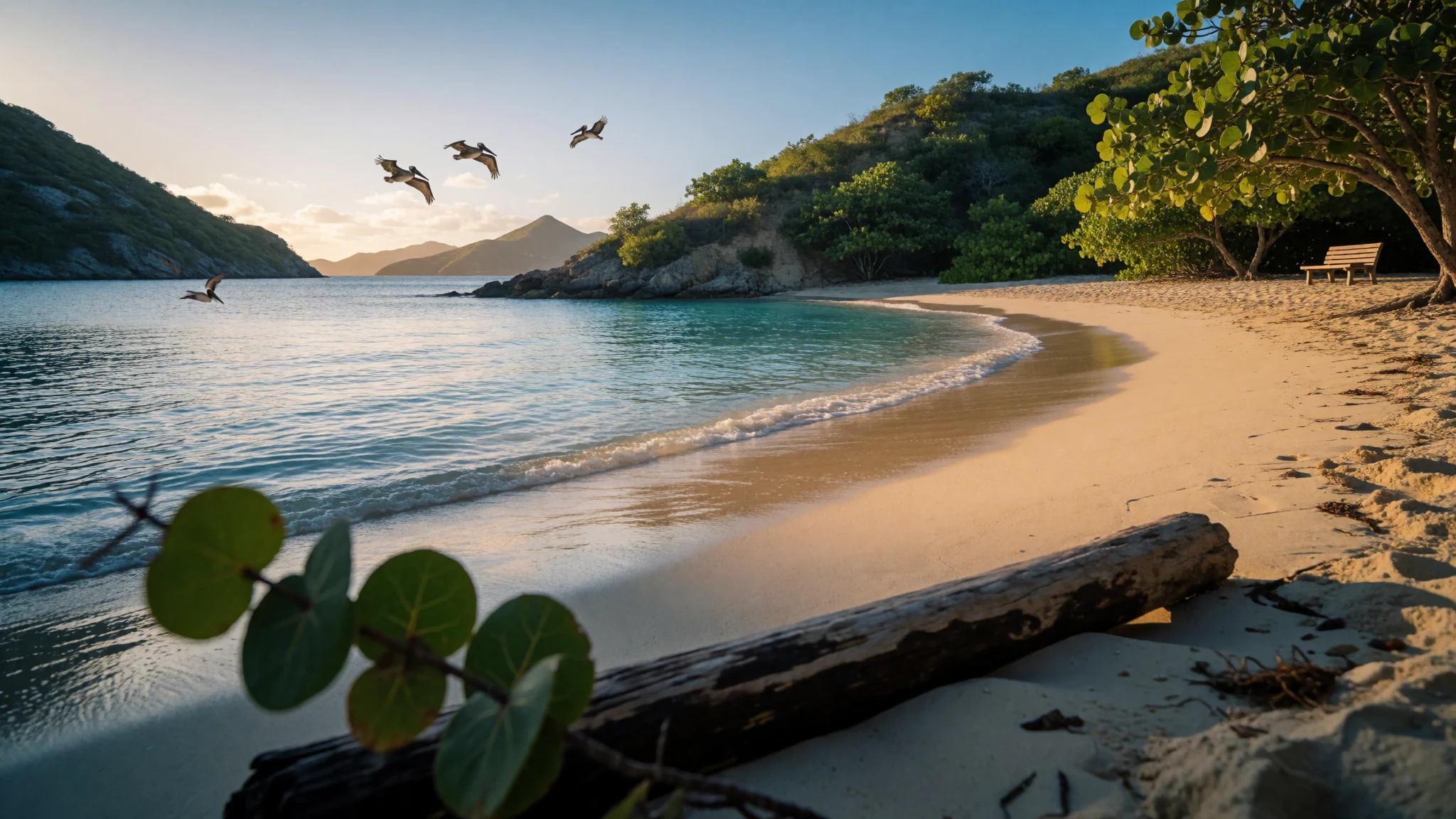
Guana Island is a private British Virgin Islands sanctuary of quiet beaches, ridge walks and wildlife, reached by boat from Tortola.
The place
Guana Island sits just north of Tortola in the British Virgin Islands, a private island kept for wildlife and a small number of guests. From the water it shows as a green ridge with pale beaches in the coves, the Atlantic on the north shore and a calmer channel towards Tortola. The island works as a sanctuary as much as a place to stay: iguanas, flamingos and seabirds share the hills with the people who walk them. There is no town and no public ferry. Boats come from Tortola, and the days that follow are for walking, swimming and doing very little.
The shore changes in a short walk. Leeward coves stay sheltered, with clear water over sand and rock, while the north shore takes the swell and feels rougher, with fewer places to linger when the wind is up. Inland, a ridge track climbs through dry scrub and thicker trees, opening towards Tortola and the smaller islands nearby. By late morning the trails are hot; shade is in the gullies and under the trees by the cottages, not on the open sand.
The quiet is both the point and the limit. There is no cruise traffic, and the land is managed so that animals and plants come first. Guana Island is not a stop for an afternoon swim from a day boat, and a stay costs more than a night beside a public beach. Days follow the sun, the wind and the kitchen. Evenings come quickly, with Tortola's lights across the channel.
Its story
Guana Island takes its name from the iguana, the guana of these islands, and the lizards still have as much claim on the paths as any guest. Before the plantations, Indigenous people of the eastern Caribbean fished these channels and used the dry hills. European settlement turned Guana, like neighbouring Tortola, towards sugar and estate labour. Stone traces remain: the old works where cane was processed, and the cisterns a dry island needed in order to live.
That estate did not last as a working plantation. The island passed into private hands and, later, into a deliberate bargain: keep the land as a wildlife sanctuary and let a small guest house pay for the care of it. Flamingos were returned to a pond they had lost. Iguanas, easily lost once rats, goats and collecting arrive, were given room again. Seabirds nest on the quieter headlands. The hills stayed scrub and native plants rather than a second built coast.
What a visitor walks is that change. A path leaves orchard trees for dry forest; a beach that could have been lined with sunbeds stays largely empty; the boat that brings guests also marks who may land. Guana Island's history is a short arc from Indigenous shoreline to colonial estate to a private reserve that chose animals over more rooms. Conservation here depends on exclusion — few people, no public landing — and on owners who kept the island whole.
What to see
- White Bay — leeward shore
White Bay is Guana Island's sheltered swimming beach, a pale crescent on the leeward side where the water stays clear and the wind is kinder than on the Atlantic shore. Guests walk down to it. Snorkelling stays close in, over sand and rock, and the beach is left without rows of sunbeds or music.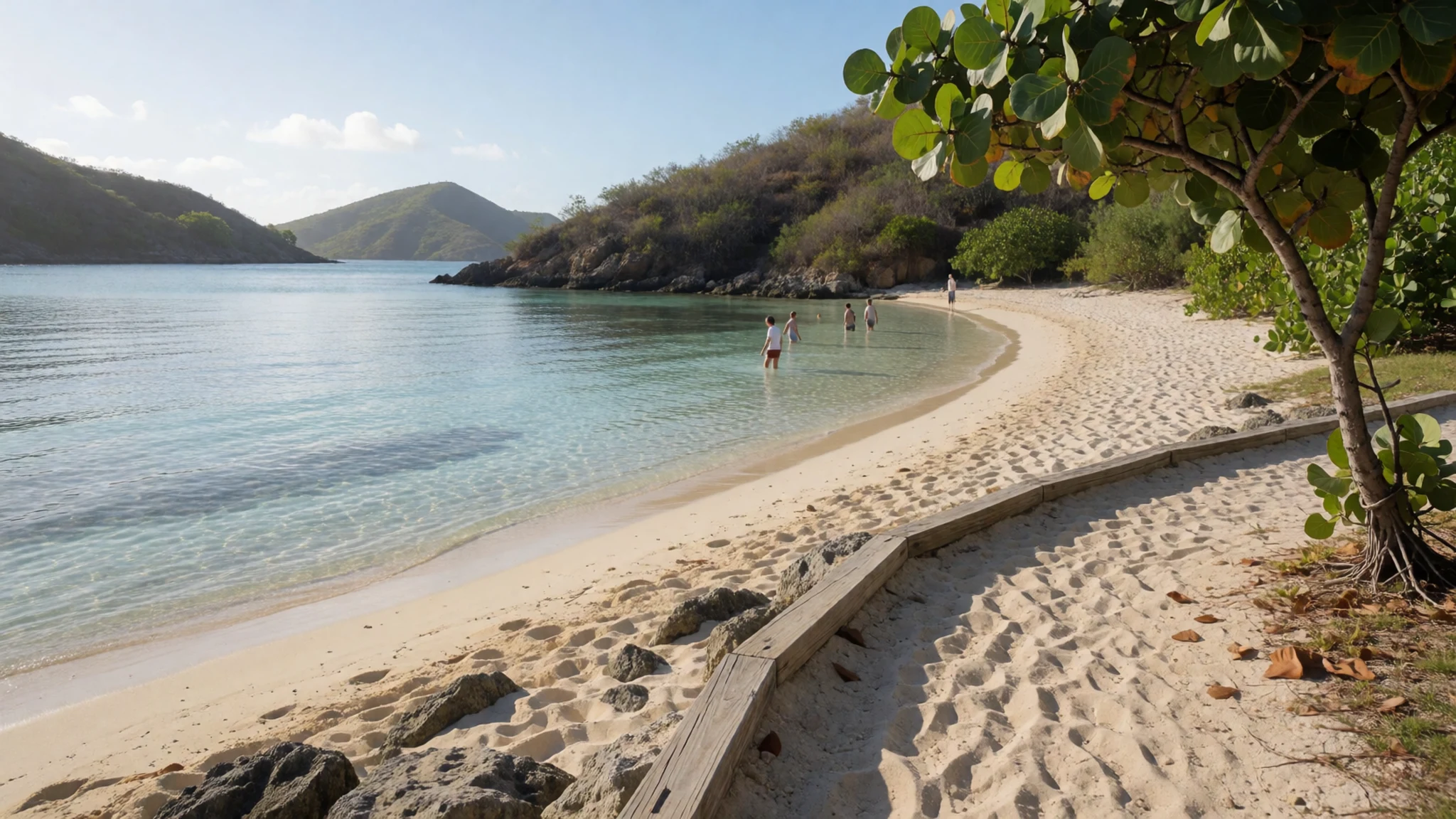
- North Beach — north shore
North Beach on Guana Island faces the open Atlantic, a longer and wilder strand than the leeward coves, with cottages set back from the sand and the swell often visible offshore. It suits a walk better than a sheltered swim when the sea is up. Shells collect after a rough night, and the water may be too stirred to snorkel.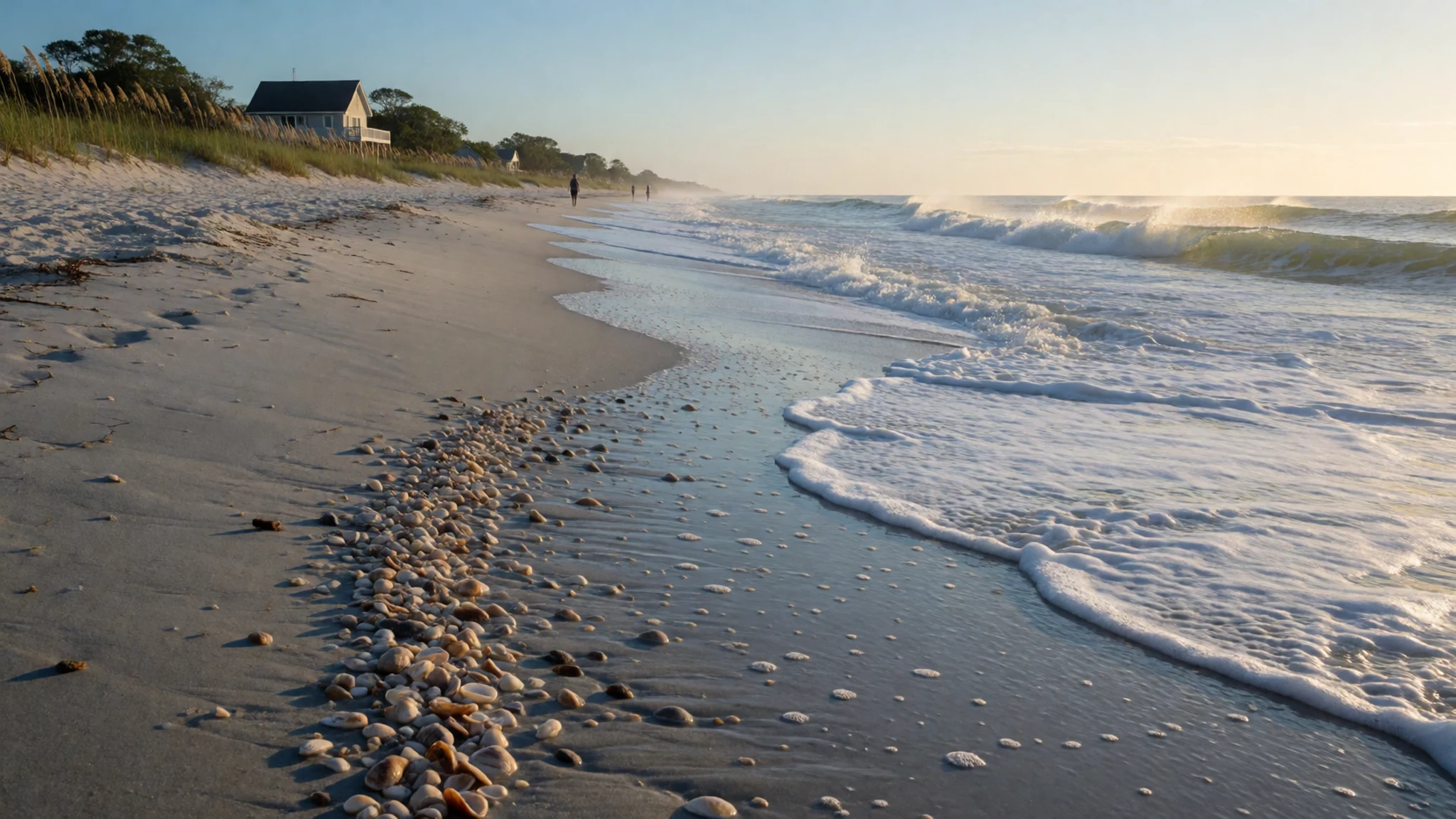
- Long Point — north shore
Long Point is a northern headland of Guana Island, where the Atlantic swell meets rock and spray lifts on a breezy day. It is a place to stand and watch the sea, not a sheltered beach. The walk out is exposed, with little shade, so a hat and water matter more here than in the coves.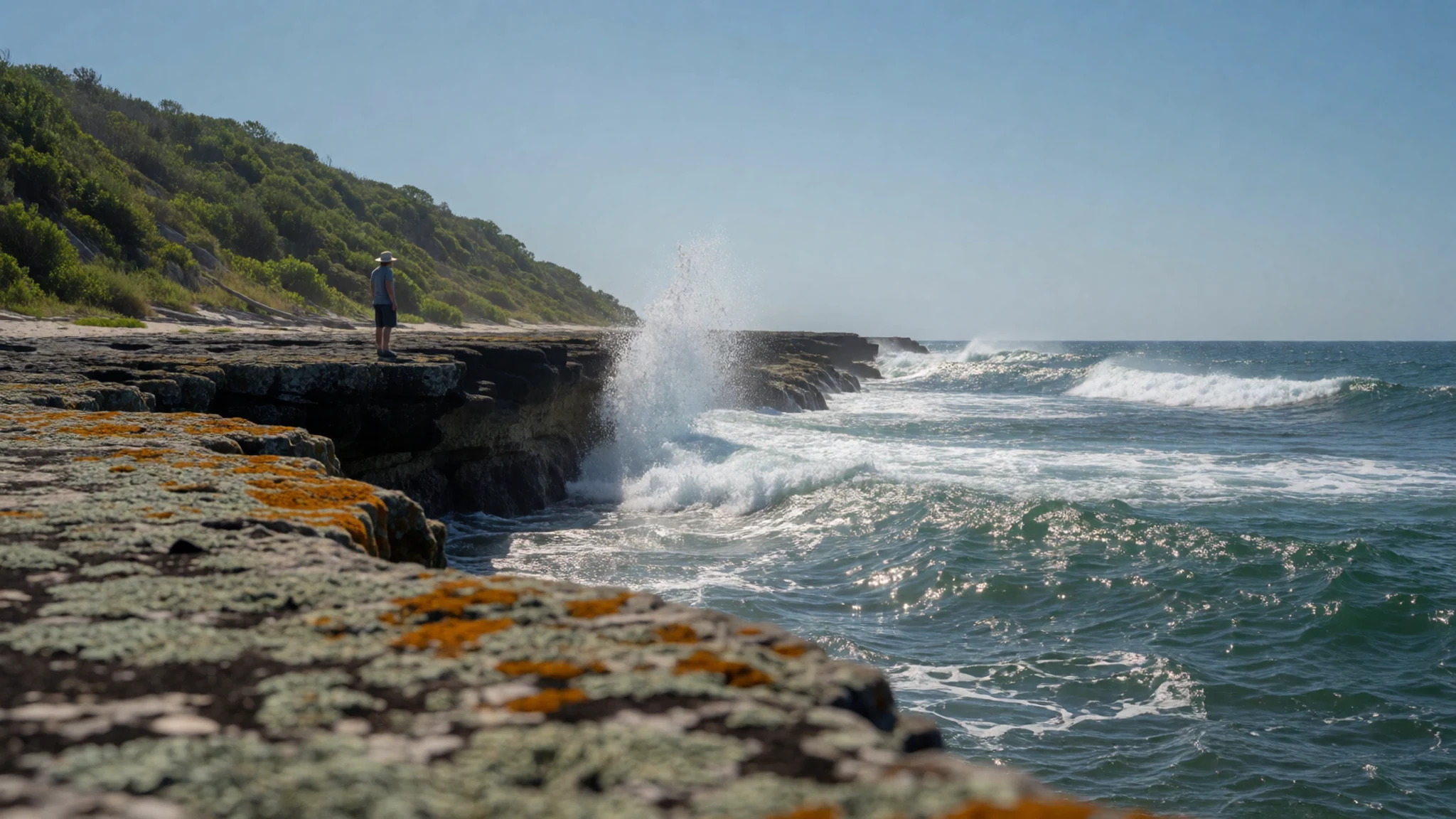
- The harbour — harbour side, facing Tortola
The harbour side of Guana Island is where boats land and where cottages look back towards Tortola across a short stretch of water. It is the practical heart of a stay: arrivals, departures and the walk between a room and dinner. The channel can chop up on a trade-wind afternoon, and a wet landing is ordinary.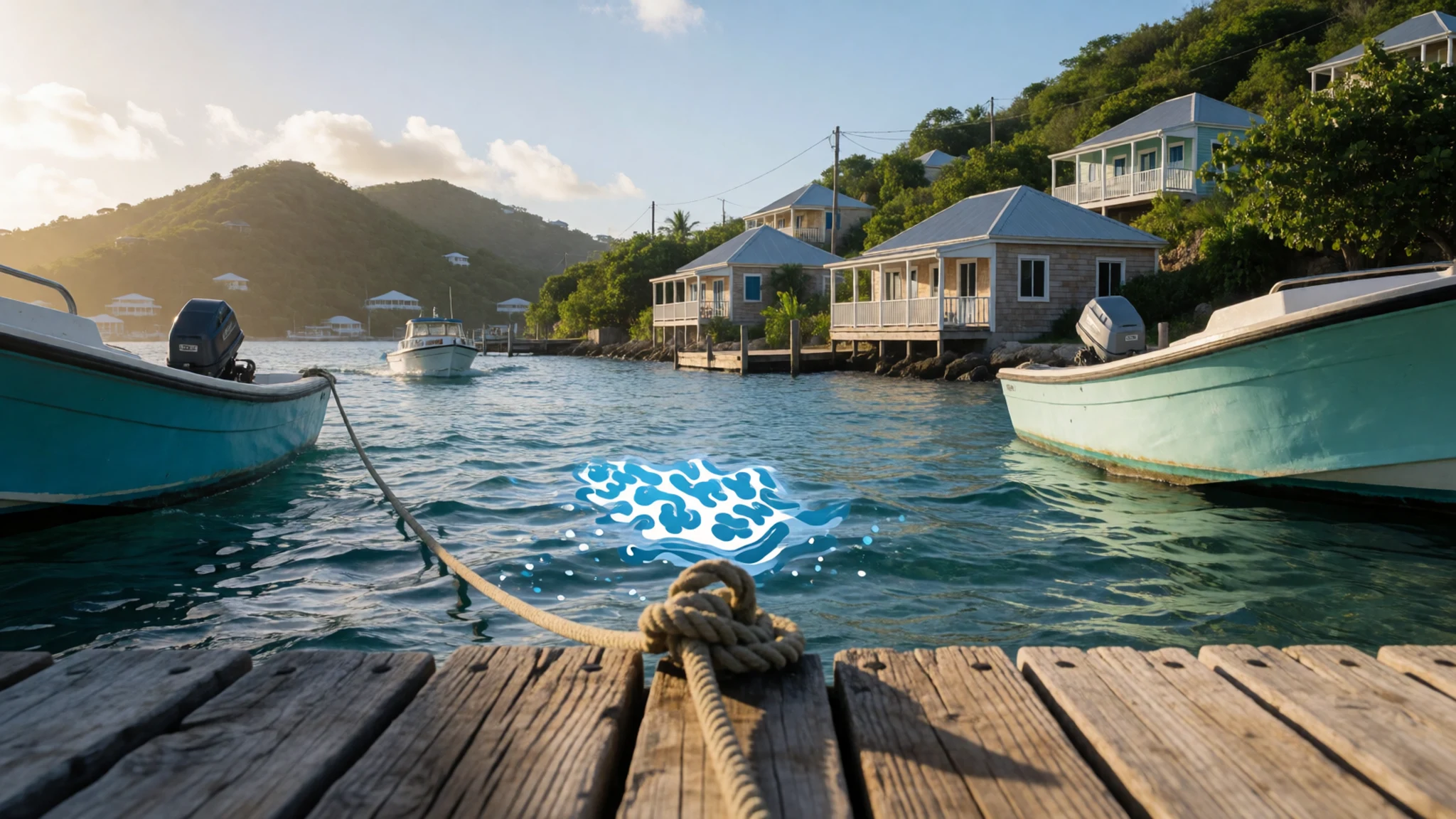
- The ridge — central ridge
The ridge on Guana Island is the clearest way to read its shape: a spine of hill between the Atlantic and the Tortola channel, with dry scrub, a rough track and views of both shores. Walking at midday is hot and exposed. Early morning is kinder, before the haze, and iguanas are more likely on the path than other people.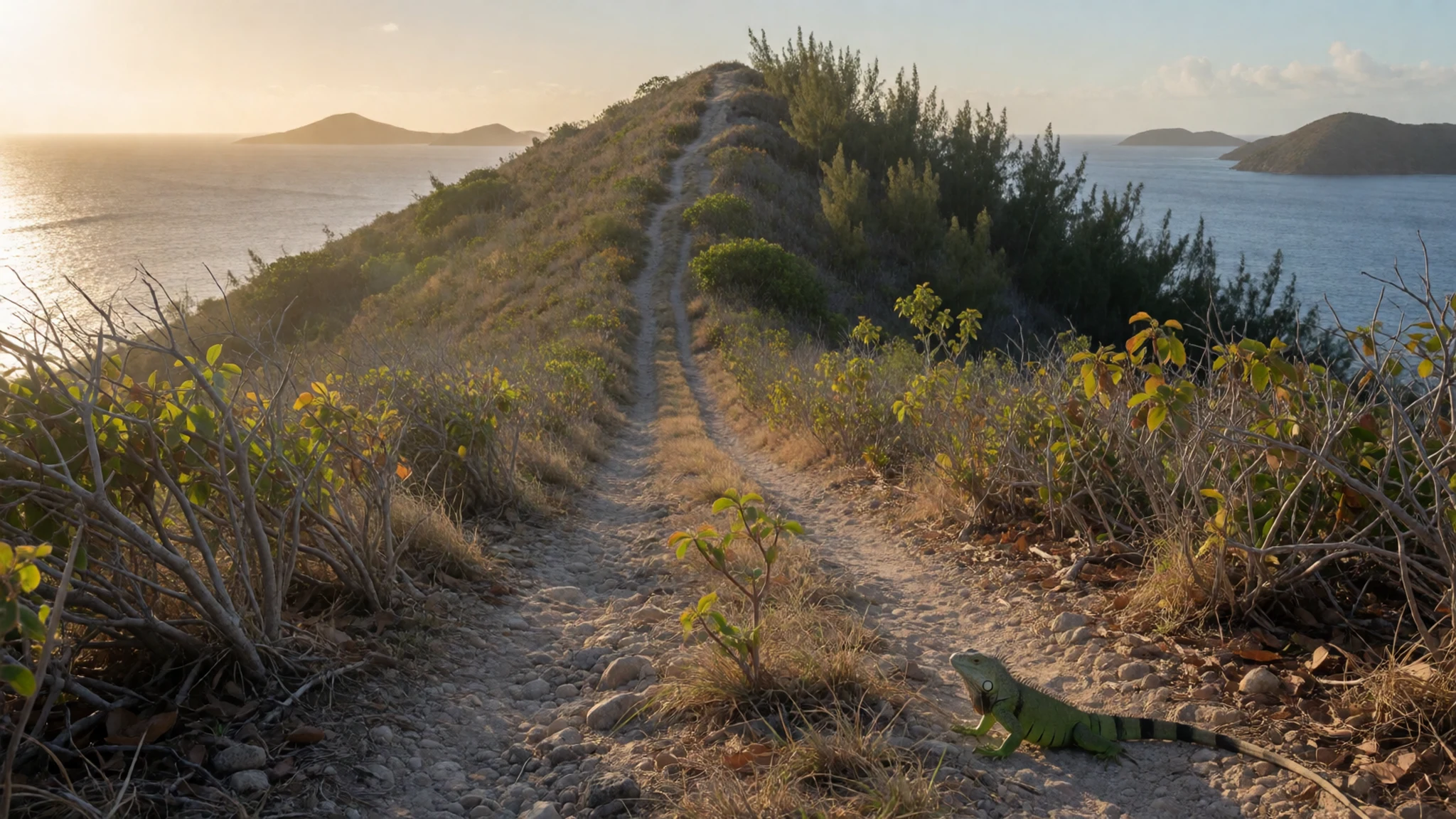
Culture
Guana Island's culture is Virgin Islands life at close range: few guests, and staff who know the paths, the weather and the kitchen. English is the language of the day, spoken with the rhythm of Tortola rather than a British accent laid on for visitors. Courtesy is small and constant — a greeting for people one passes, no treating an empty-looking beach as a private stage, and an understanding that a boat's arrival is everyone's business. The cottages run more like a house than a town. Meals are often shared, so names are learned and lateness is noticed. Wildlife is not a sideshow. Iguanas on the path and birds on the pond are why the shore is closed to casual landings, and treating them as pets or props misses the point of the place. Music, when it happens, is the fungi tradition also heard on Tortola, not a pool soundtrack. Festival, church and sailing belong to the wider territory; the island itself stays quiet. Ask before you photograph staff or other guests, keep to the paths, and do not feed or handle the animals.
What to wear
Guana Island has no dress of its own, so clothing follows the British Virgin Islands. Historically that meant cotton and madras checks, headties and full skirts for Sundays and festival days, and coarser cotton for work in the heat. Madras, a light checked cotton long traded in the Caribbean, still appears at cultural events on Tortola — sashes, skirts and shirts for Emancipation and other public days — not as daily wear on this island. What people wear here now is hot-weather cloth with a little care at dinner. Cotton and linen, shorts by day, sandals or bare feet on sand. Anything that does not breathe is a mistake by noon. A visitor should pack for sun, a rough track and a shared table. Swimwear stays on the beach; a shirt or wrap is expected once you leave the sand, and dinner wants covered shoulders rather than a jacket. Shoes need grip for the ridge: smooth soles slip, and flip-flops punish a long walk. Sandy feet and bare chests at the table read as bad manners.
What to eat
- Fungi and fish — the communal table
Fungi and fish is the plate Guana Island shares with the Virgin Islands: cornmeal and okra cooked soft, beside grilled or stewed fish. It is ordinary food, not a showpiece, and it appears when the kitchen is cooking in a local way rather than for a formal night.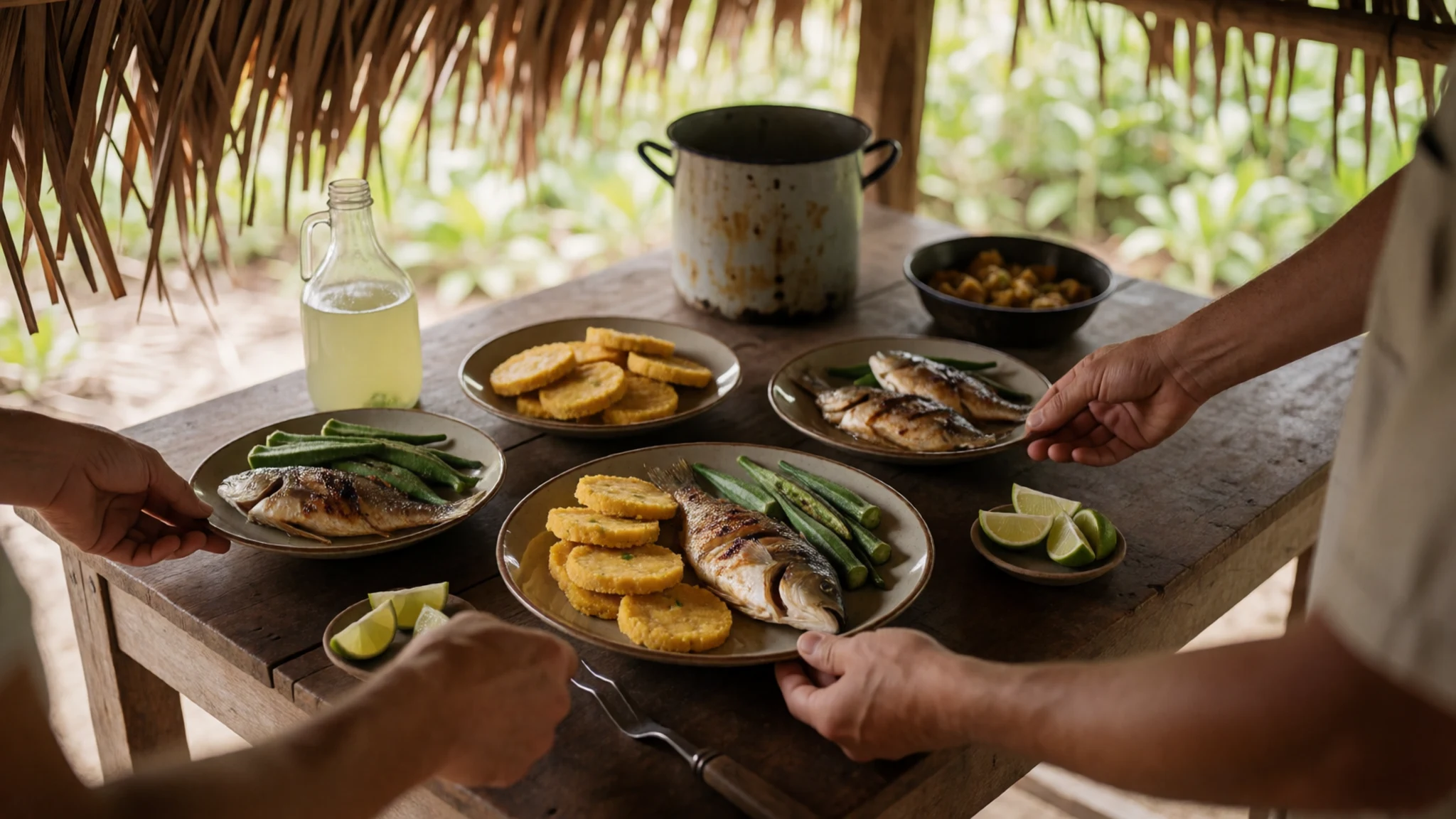
- Conch — a beach lunch
Conch on Guana Island comes as fritters or a plain grill, with lime and pepper rather than a heavy sauce, and it is only tender if someone has taken time with it. You are likelier to meet it at a beach lunch than at dinner.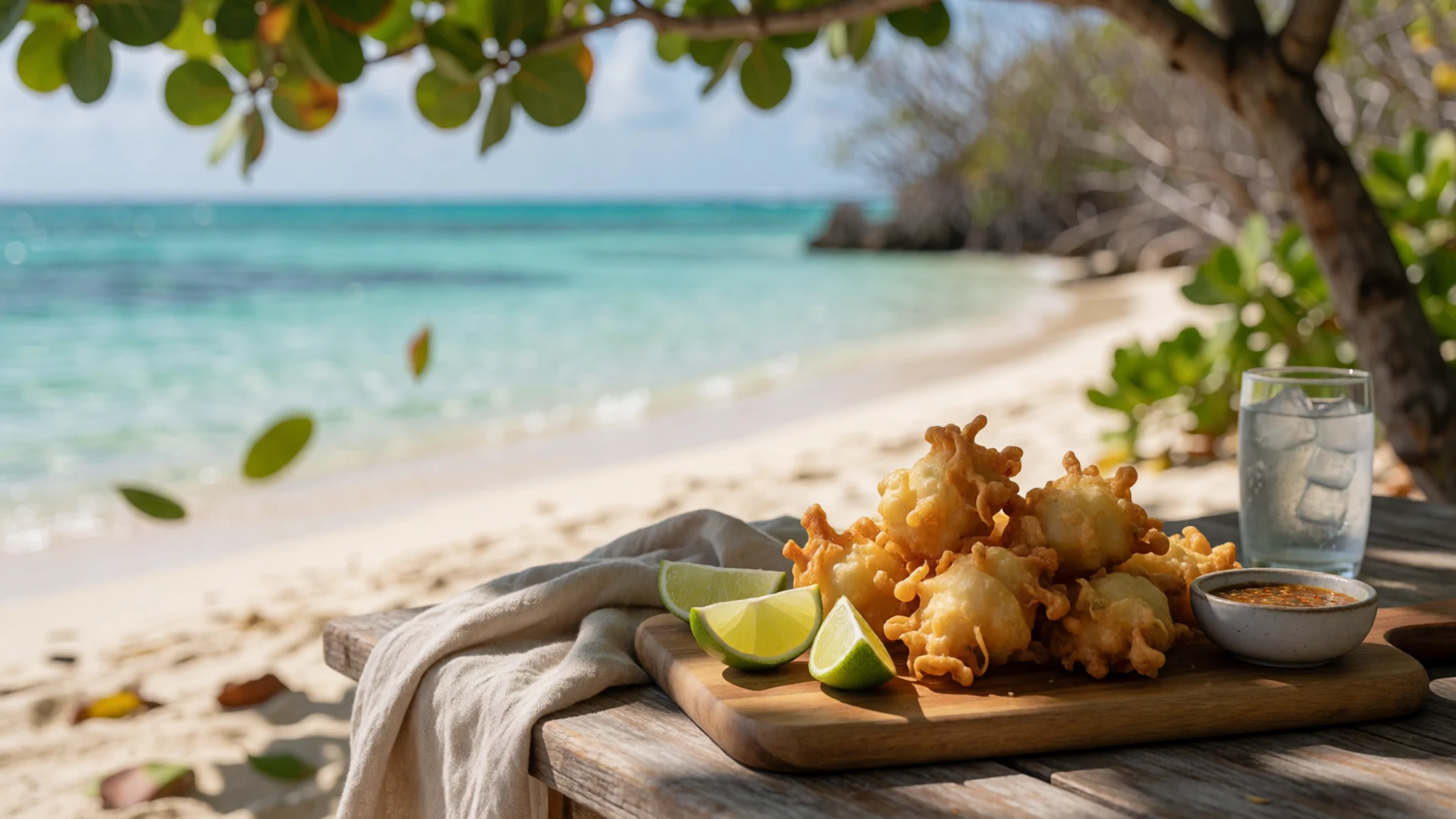
- Johnny cake — the breakfast table
Johnny cake on Guana Island is fried or baked dough, a little sweet, eaten with salt fish, eggs or butter in the morning. It is the same everyday bread known on Tortola, made here in the island kitchen. Have it hot, before it cools and firms. - Callaloo — the dining table
Callaloo at Guana Island is a slow green soup of amaranth and similar leaves, often with coconut milk, pepper and a little meat or crab if the kitchen has them. It is a way of using the garden, not a special printed on a card. - Grilled catch — dinner on the terrace
The grilled catch on Guana Island is the local fish of the day, seasoned with lime and herbs and served with peas and rice or provisions such as yam, sweet potato or green banana. Very little stands between the sea and the plate.
Plan it
Best time. December to April is the more settled stretch, with drier weather and easier seas. Summer and early autumn are hotter, wetter and inside the hurricane season, so plans need room to bend. The trade winds blow through much of the year and roughen the north shore when they strengthen.
How long. 3–4
Getting there. Fly to Terrance B. Lettsome International Airport on Beef Island, linked to Tortola, then cross by boat to Guana Island. The island arranges that last leg; there is no public ferry to join. Confirm the transfer, and a rough-weather alternative, when you book.
Budget. high
Tips
- Book well ahead; the island takes few guests and fills in the drier months
- Walk the ridge early, before the midday heat
- Carry drinking water; there is no shop on the trails
- Agree the boat transfer, and a plan for rough water, before you fly
Etiquette
- Keep to the paths and do not feed, touch or crowd the iguanas, flamingos or nesting birds
- Ask before you photograph staff or other guests
- Keep swimwear to the beach and cover up for meals
Nearby
Sources
- Wikidata (CC0)
- Wikipedia (CC BY-SA 4.0)
- Wikivoyage (CC BY-SA 4.0)
Wildlife
- Flamingo (animal)
The American flamingo, also called the Caribbean flamingo, is a large bird and the only flamingo that lives naturally in North America. On Guana Island, flamingos were brought back to a pond they had once lost, so that pond is the place to ask about. Your guide will know the best times. Watch from a good distance, keep your voice low, and never feed them, so they stay calm and wild.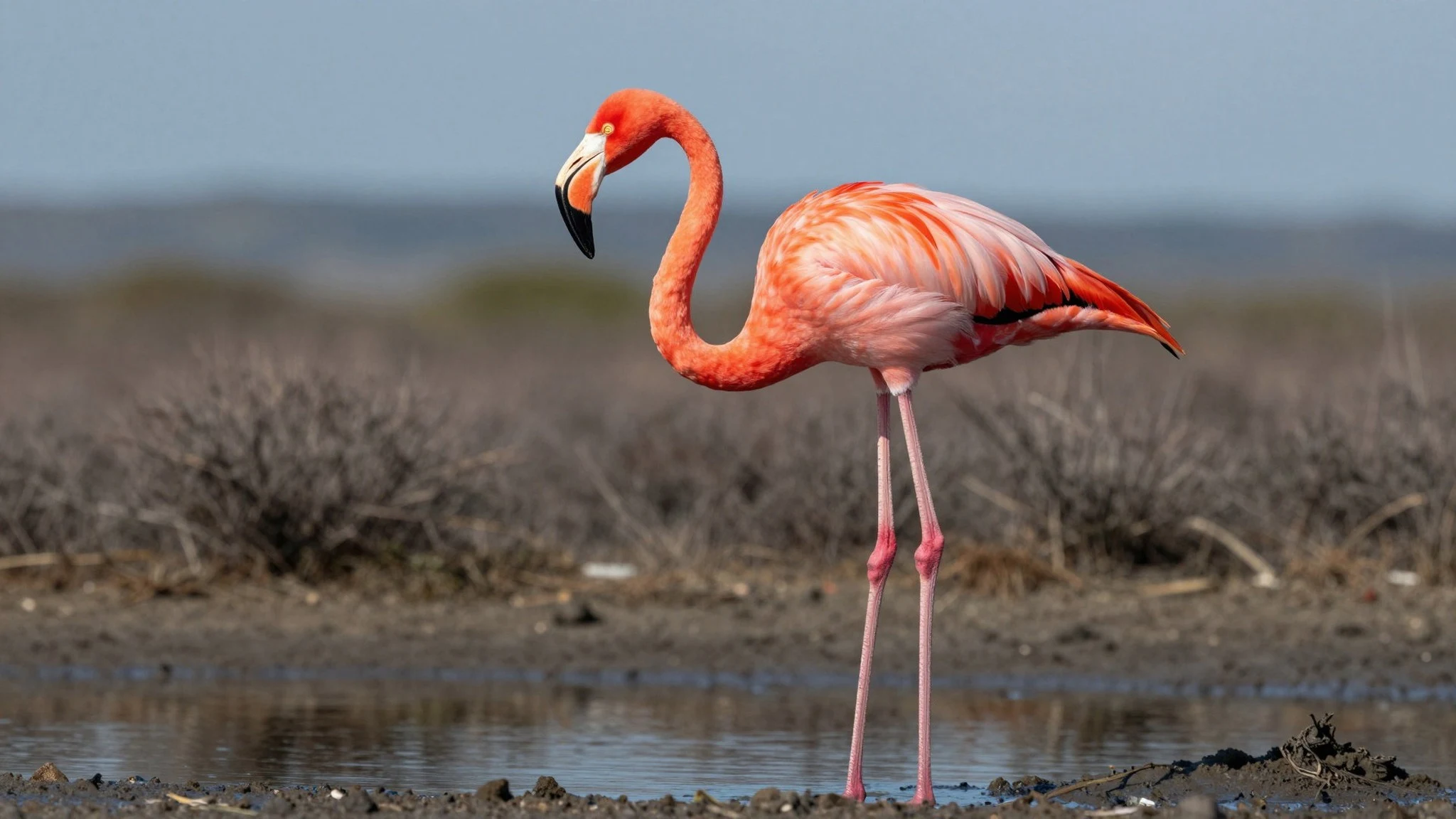
- Flamingo (bird)
The American flamingo, also called the Caribbean flamingo, is a large bird and the only flamingo that lives naturally in North America. On Guana Island, flamingos were brought back to a pond they had once lost, so that pond is the place to ask about. Your guide will know the best times. Watch from a good distance, keep your voice low, and never feed them, so they stay calm and wild. - Iguana (animal)
The Anegada rock iguana is a stout, chunky lizard, rather like a small dragon from a storybook. Only Guana Island and Anegada are home to it, and the island takes its name from these lizards, which still share the paths with guests. Ask your guide when and where to look. Keep well back, move slowly, stay quiet, and never offer food. It is critically endangered, so every calm and respectful visitor helps it.