Great Gobi B
Great Gobi B, Mongolia
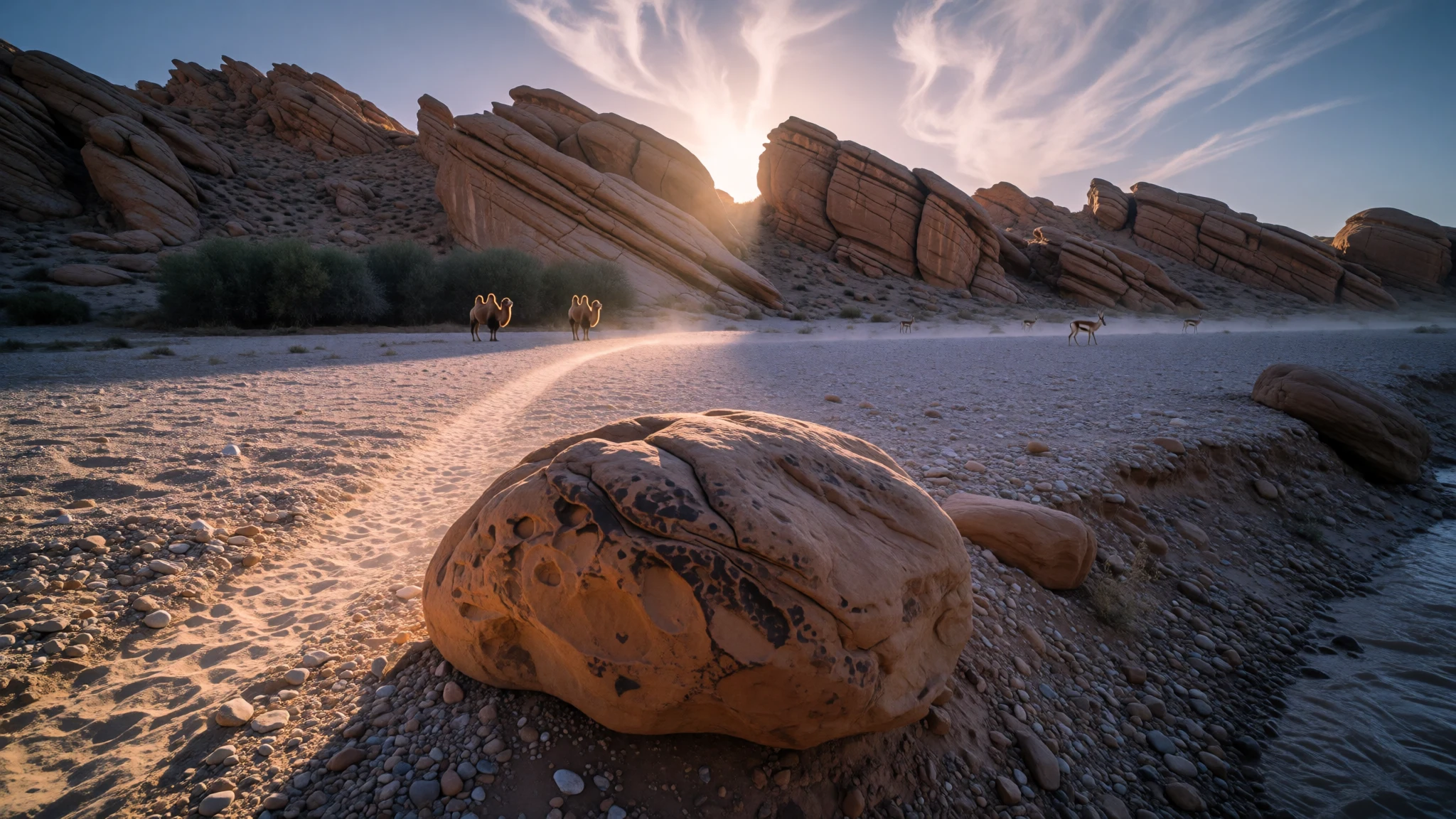
Great Gobi B is a remote desert reserve in south-west Mongolia where wild camels, wild asses and rare bears live far from roads and crowds.
The place
Great Gobi B Strictly Protected Area sits in the far south-west of Mongolia, in the Gobi Desert, right up against the Chinese border. It is a nature reserve rather than a place with sights in the usual sense, and that shapes everything about a visit. Its sister reserve, Great Gobi A, lies further east in a drier stretch of the desert, so B is the part with more springs, scrubby valleys and mountain edges that hold water when much of the Gobi does not. The ground is mostly gravel plain, broken by low ranges, dry riverbeds and the occasional oasis fringed with reeds and poplars. Distances are long, tracks are faint, and mobile signal cannot be relied on. Wildlife is the reason the area was set aside. Wild Bactrian camels, wild asses known as khulan, goitered gazelle, ibex on the rocky slopes and the rare Gobi bear, called mazaalai in Mongolian, all belong to this part of the country, and Przewalski's horses have been reintroduced here after disappearing from the wild. 'Strictly protected' is a legal category, not a marketing phrase. Access is controlled, and entry normally needs a permit arranged in advance, partly because of the border zone. Most people who go do so with a local driver-guide and a vehicle built for rough ground, often as an extension to a longer journey through western Mongolia. Expect big skies, silence and very few people, and expect to see animals mostly at a distance.
Its story
Great Gobi B was set up as a protected area in 1975, at a time when Mongolia was beginning to treat its desert wildlife as something to be safeguarded rather than simply hunted or driven off the best grazing. The wider Great Gobi was divided into two separate reserves, A and B, because the landscapes and the animals differ so much between the drier east and the more watered west. The border with China matters to the story. Wild camels, asses and gazelles move across a landscape that does not recognise frontiers, while fences, patrols and restricted zones shape where they can go and where people may travel. For most of its history the reserve has been quiet and little visited, which has helped the animals but also means that knowledge of them is thin and long-term monitoring is hard. Conservation here has been practical and slow. Rangers keep watch over scarce springs. Herders and reserve staff negotiate over grazing at the edges. Przewalski's horses were brought back from captive herds elsewhere and released in stages. Efforts to help the Gobi bear, whose numbers are small, have included supplying food in harsh seasons. None of this is dramatic from the outside. The reserve's record is mostly one of keeping a fragile desert ecosystem quiet enough to carry on, and of balancing that against the needs of the people who have herded in the region for generations.
What to see
- Desert springs and oases — Reserve interior
Great Gobi B depends on its springs, small patches of reeds, poplar and willow where water reaches the surface. Animals come to them at dawn and dusk, so a patient hour with binoculars from a respectful distance often shows more than a day of driving. Your guide will know which ones are flowing.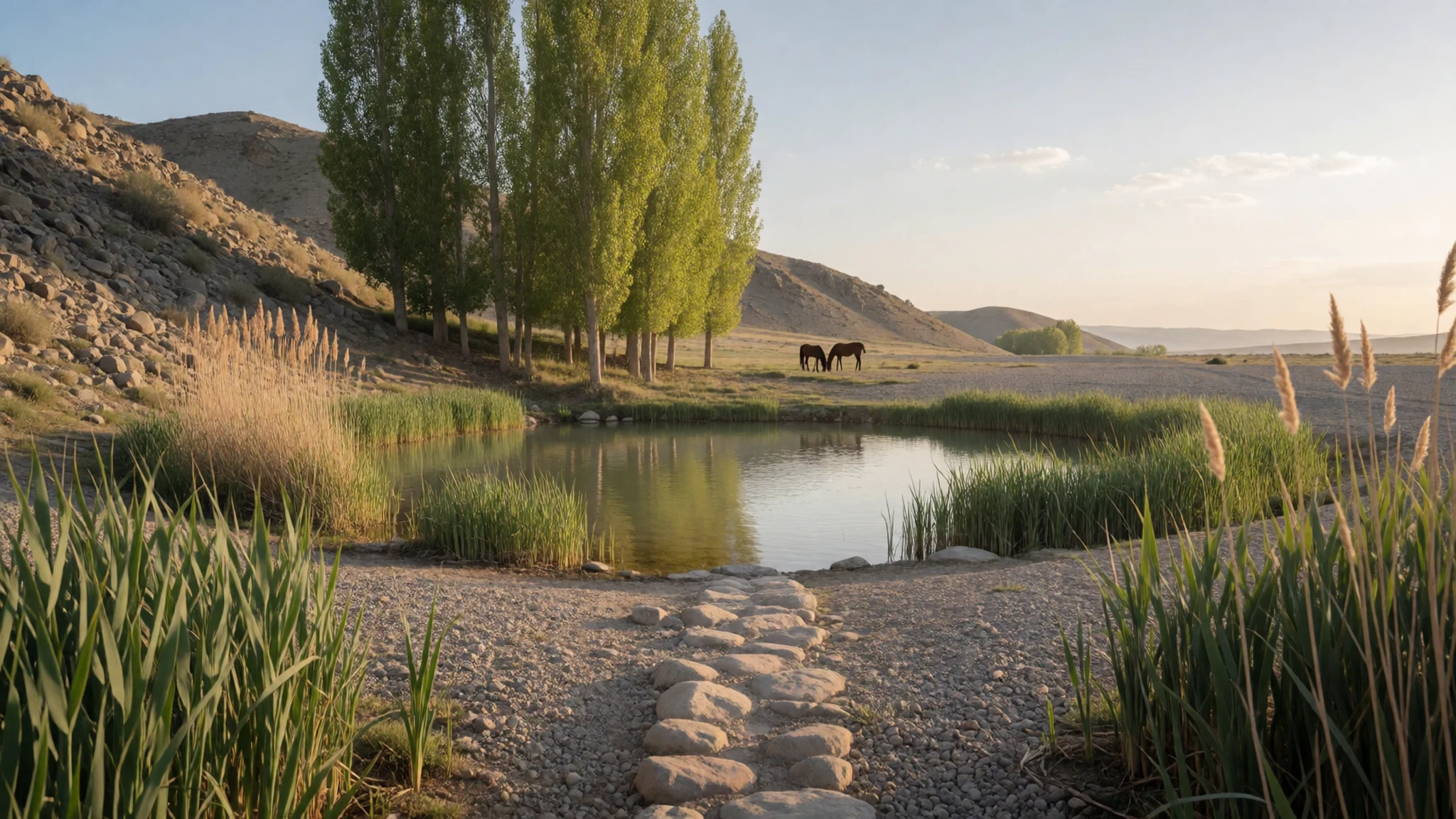
- Wild Bactrian camel country — Southern plains and watered valleys
Wild Bactrian camels are leaner and shaggier than the domestic herds seen elsewhere in Mongolia, and they are wary. Sightings come at long range across open ground, usually near water. Treat a clear view as a bonus, not a promise, and keep engines off and voices low when animals are in sight.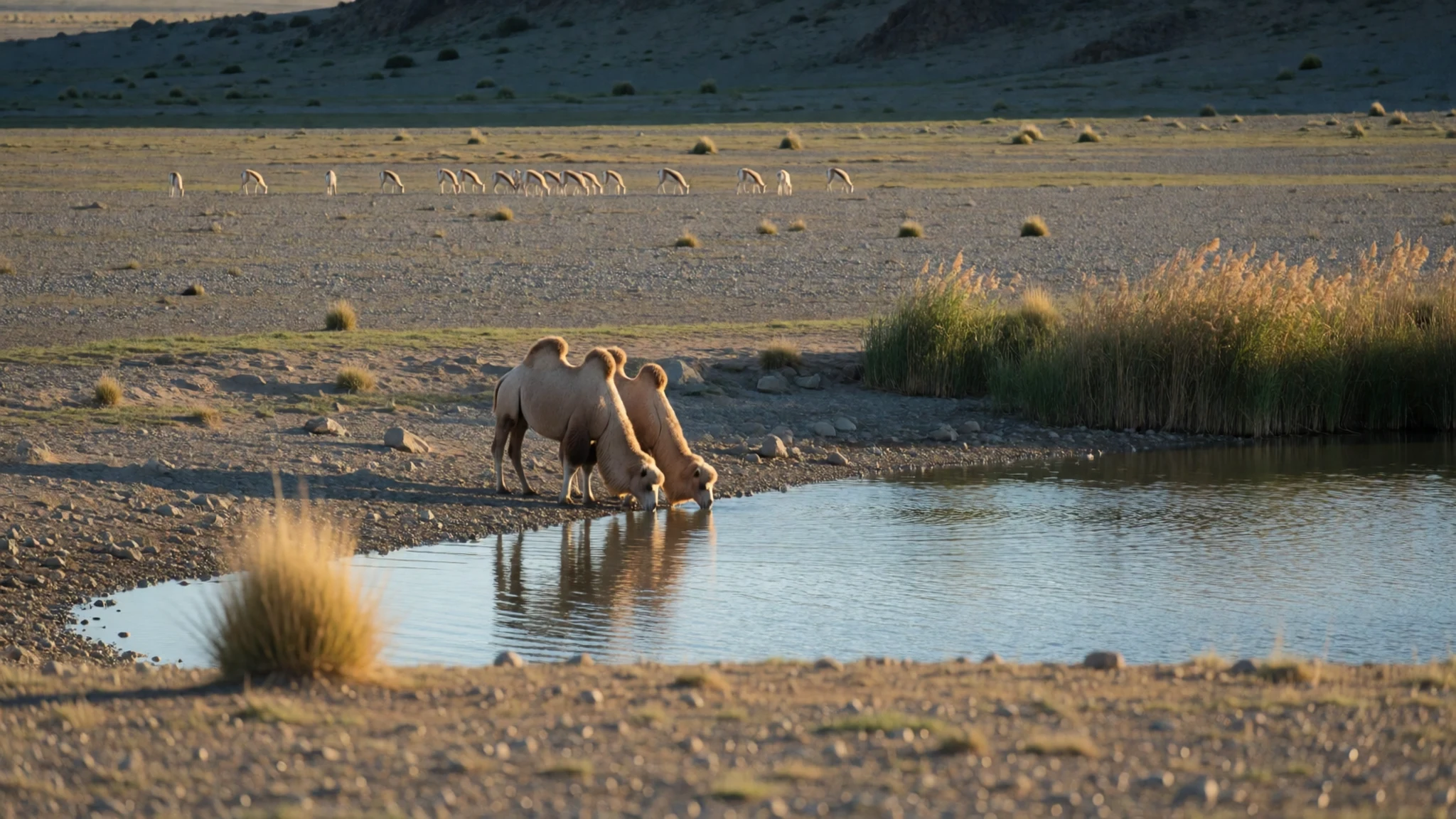
- Takhin Tal and the Przewalski's horse release area — Northern part of the reserve
Takhin Tal is the part of the reserve linked to the return of Przewalski's horses, a stocky, pale-muzzled wild horse brought back from captive herds. Groups graze in open steppe and move off if approached. Rangers or guides can say where recent sightings have been, and visits are managed with the reserve office.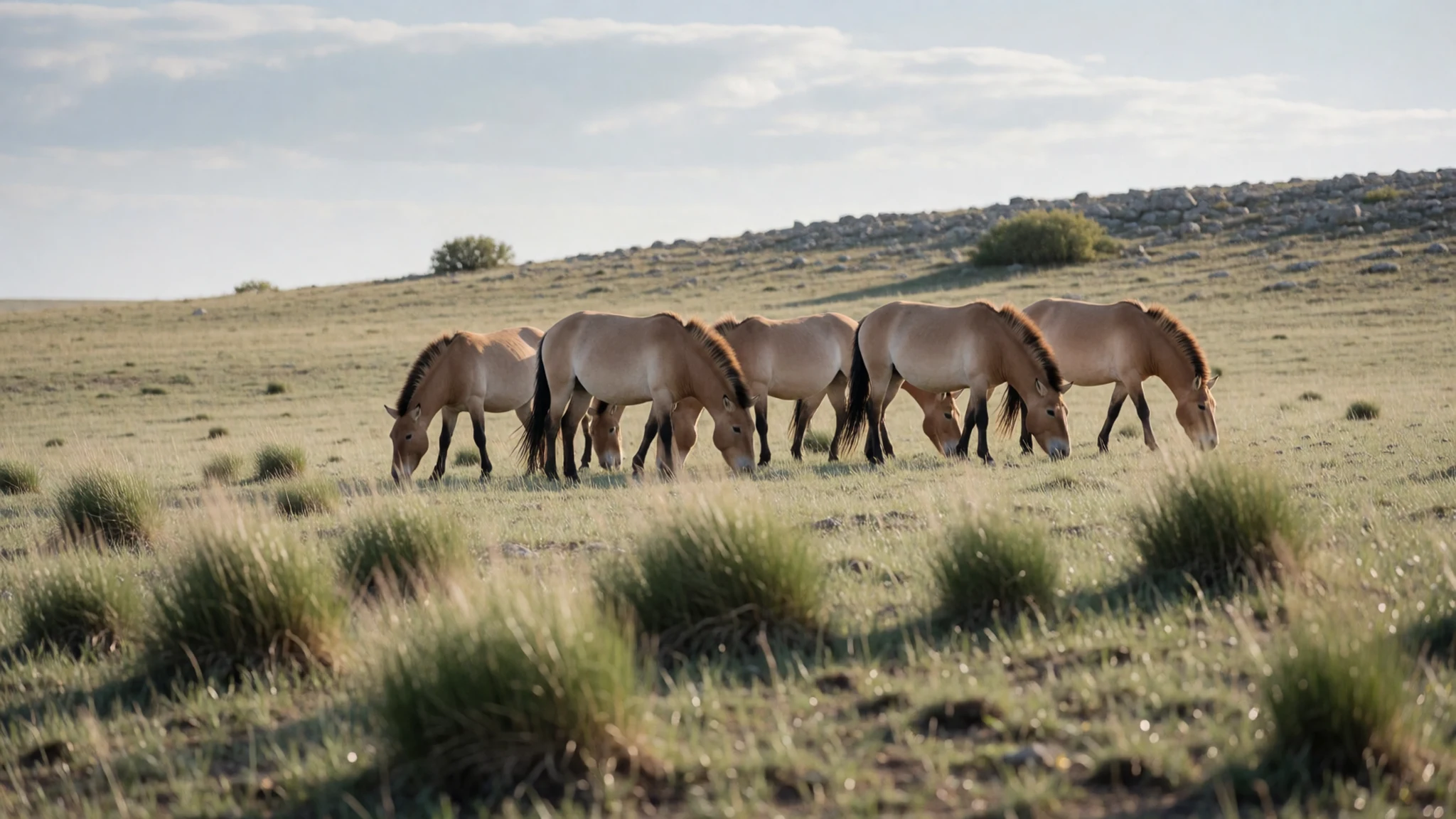
- Khulan on the gravel plains — Open plains
Wild asses, called khulan in Mongolian, are the animals most likely to be seen, running in loose groups across the flat gravel. They are fast and cautious, so photographs tend to show dust and distance. The wide, empty plains themselves are part of the experience, especially in early light.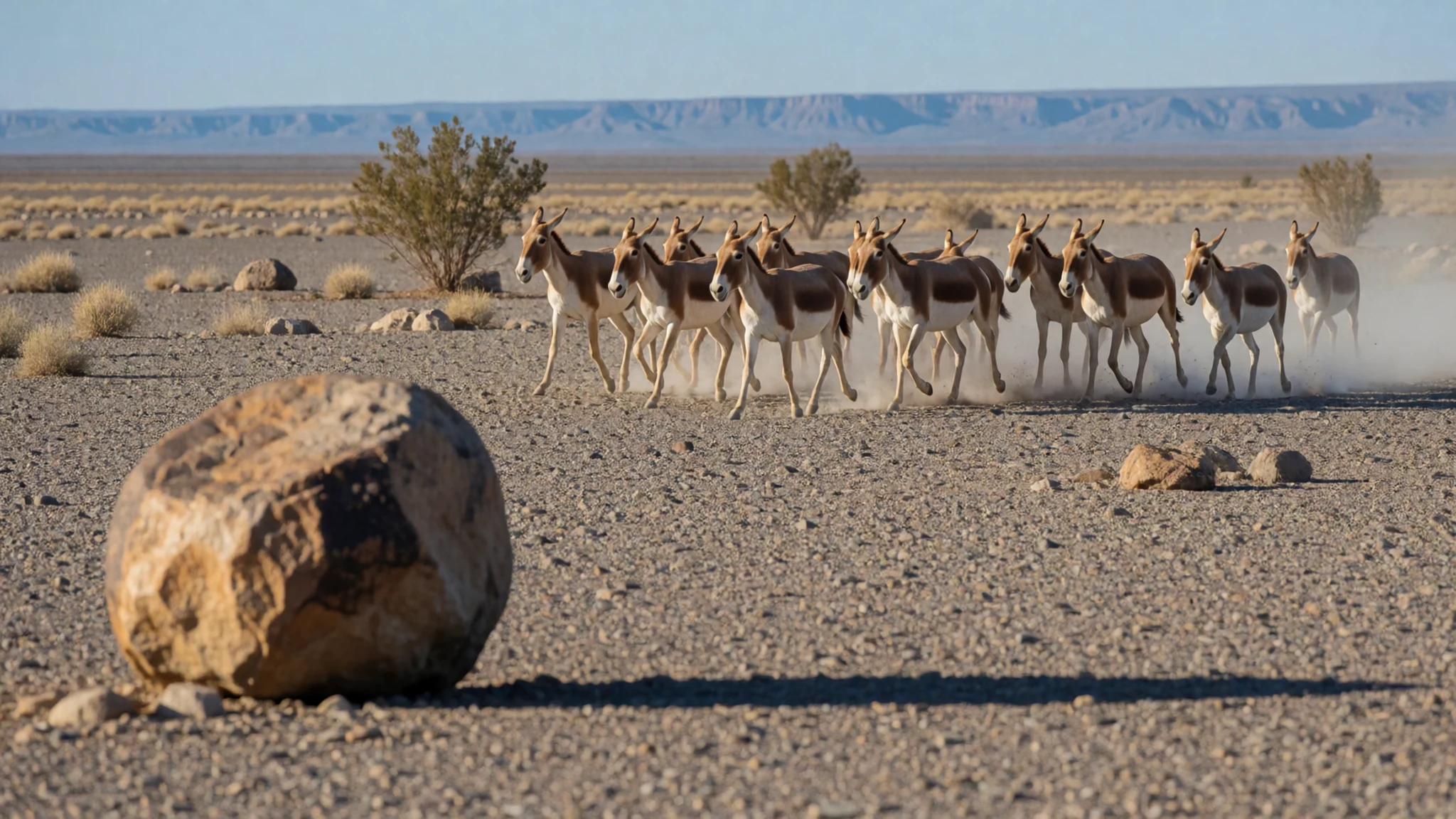
- Rocky mountain edges and ibex slopes — Mountain margins
Where the plain meets low mountain ranges, the ground turns to scree and dry gullies. Ibex pick their way across the steep faces and the rare Gobi bear is thought to range in these uplands. Walking here is rough, so sturdy boots, water and a guide are essential.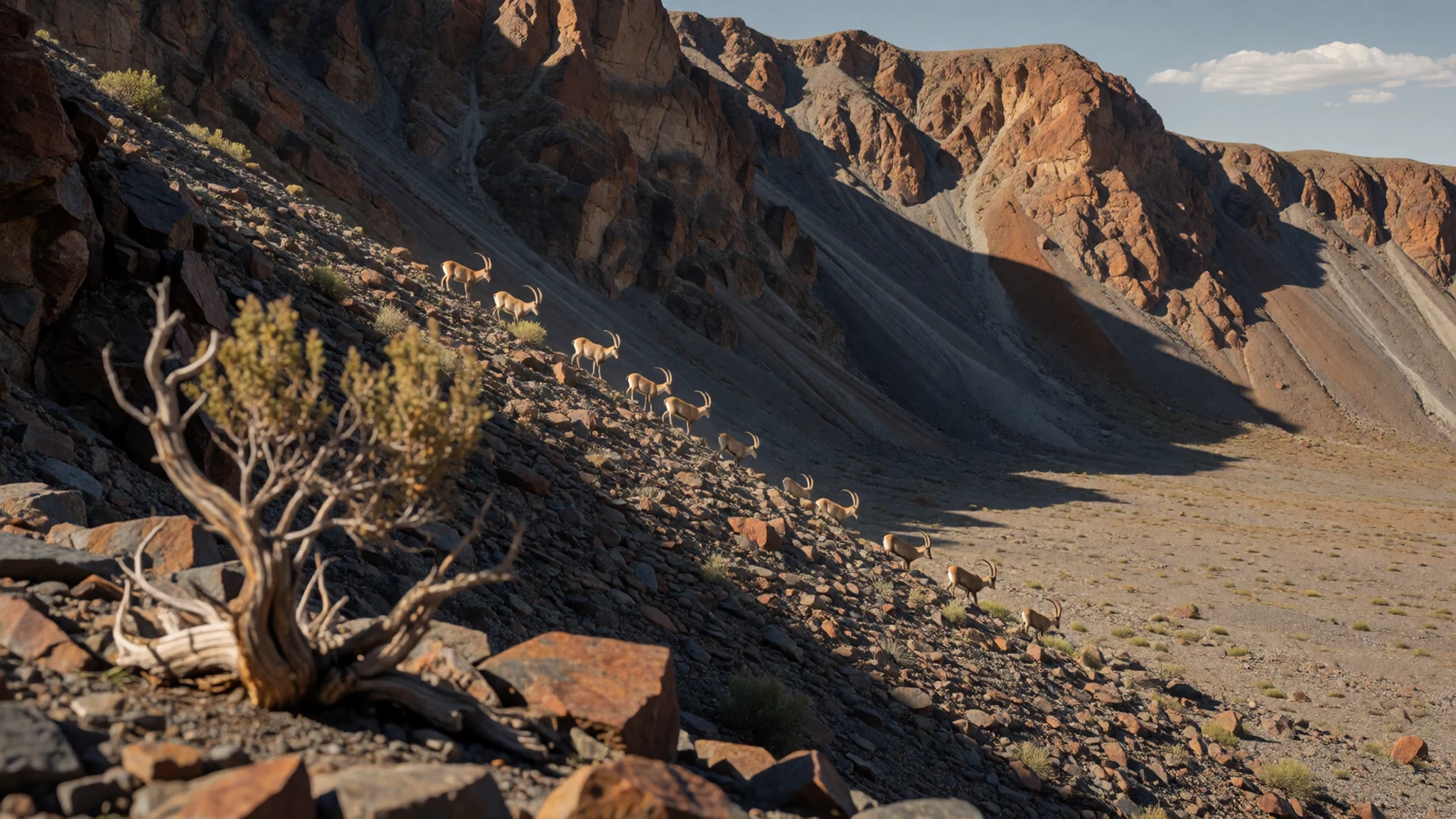
Culture
Great Gobi B lies in a part of Mongolia where life is still shaped by herding. Families live in felt-covered gers, move their animals between seasonal pastures and measure wealth in horses, goats, sheep and camels. The reserve is not a cultural site, but the people who live around it are central to any trip. Hospitality is a strong custom. A passing traveller is usually offered salty milk tea and something to eat, and refusing outright is thought rude, though a small taste is enough. Distances are so great that a visit to a neighbour is a real journey, so news, favours and shelter are shared freely. Mongolians also hold the landscape in respect. Mountains, springs and certain rocks are treated as places with spirit, and cairns of stones, called ovoo, are marked with blue cloth. Visitors walk round them clockwise and may add a stone, but should not take anything away. Wild animals are viewed with a mix of pride and practicality, since herders and conservationists do not always want the same things from the same grass and water. Many Mongolians are used to guests from abroad arriving with strong opinions about wildlife, and a modest, curious attitude goes down better than lecturing. When visiting a ger, step over the threshold without touching it, avoid stepping on the sill, and accept anything offered with your right hand or both hands.
What to wear
Great Gobi B is far from any town, and the clothing that matters here is practical, but Mongolia has a strong dress tradition that shows up all around it. The traditional garment is the deel, a long wrap-over robe fastened at the side and tied with a sash, made from wool, cotton or silk depending on season and occasion. Winter deels are lined or padded, summer ones are lighter, and festival versions use bright silk brocade with contrasting trim. Boots called gutal have turned-up toes and thick soles, and felt hats and fur-trimmed caps are worn in cold weather. Today herders in the region often wear a deel for work and ceremony, but plenty of people choose jeans, jackets, fleeces and rubber or leather boots for everyday tasks, especially on motorbikes. Younger people in towns dress much as elsewhere in Asia. A visitor should dress for an extreme desert climate: layers that handle cold nights and hot days, a wide-brimmed hat, sunglasses, sun protection and a scarf or buff for dust. Sturdy walking boots are better than trainers on rough gravel. Clothing should be modest rather than skimpy, particularly when visiting a family ger, with shoulders and knees covered. Bring a warm jacket even in summer, because temperatures can drop sharply after sunset, and a windproof layer for the open plains.
What to eat
- Suutei tsai — Herder family gers and ger camps
Salty milk tea is the everyday drink of Mongolian herding families, made with milk, water and tea, and sometimes a little butter or millet. It is served in a ger the moment a guest sits down, and a first sip is polite even if the taste is new.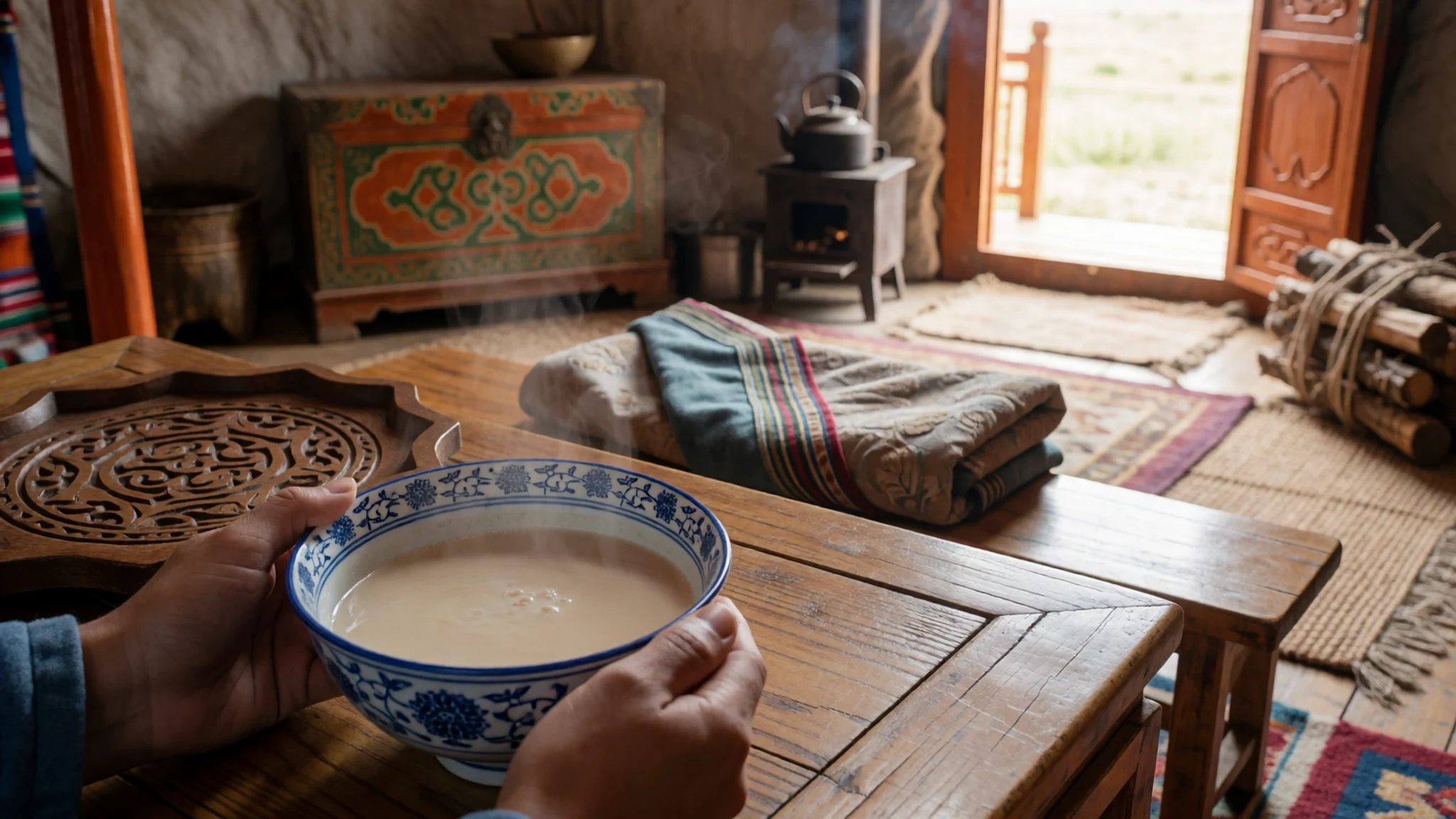
- Buuz — Ger camps and small eateries in Altai town
Steamed dumplings filled with minced mutton or beef, seasoned simply and eaten by hand. They are a staple of holidays and also appear on ordinary days. Dip them in a little sauce if offered and expect them to be hot and fatty.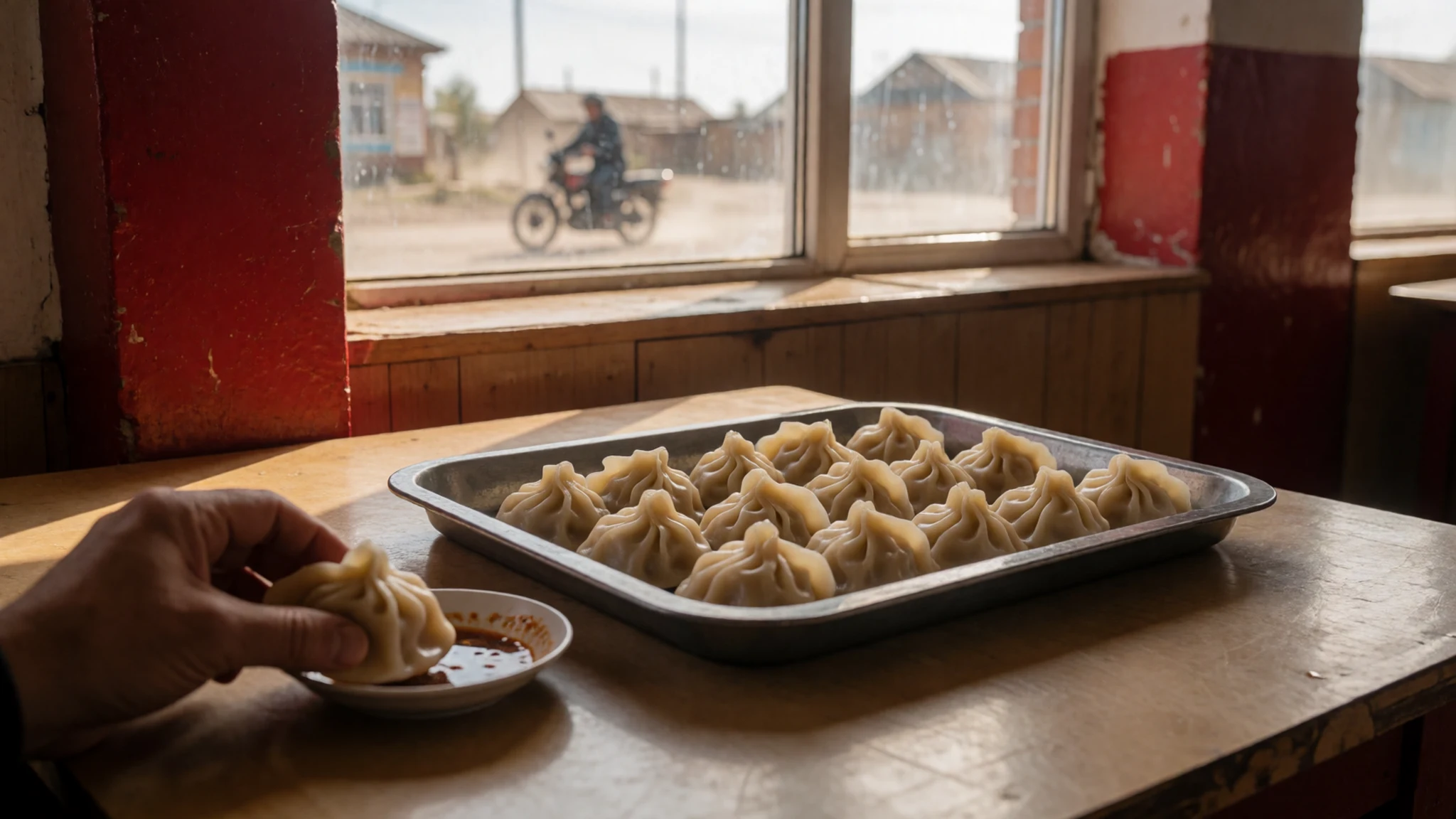
- Khuushuur — Roadside canteens and town markets
Flat, fried pastries filled with minced meat, crisp at the edges and juicy in the middle. They are a travelling food, popular at roadside stops and festivals. Eat them fresh, ideally with tea, and expect plenty of grease. - Airag — Herder camps in summer
Fermented mare's milk, lightly fizzy and sour, is a summer drink in herding country. It is offered as a welcome and has a strong, tangy flavour that visitors often find an acquired taste. A small bowl is polite, and it is fine to stop there. - Aaruul — Town markets and family gers
Hard dried curds, sold in pale lumps or strips, are a durable snack that herding families make from milk. They are sour and chewy, and they keep for months, which is why they travel well across long desert drives.
Plan it
Best time. Late May–June and September are usually the most comfortable, with warm days and cold nights; July and August can be hot, and winter is very cold and difficult for travel. Spring can bring dust and strong winds.
How long. 4–6
Getting there. Fly from Ulaanbaatar to Altai, the provincial centre in the west (check current domestic schedules), then continue by 4x4 with a driver-guide on long desert tracks. Entry to the reserve needs a permit, so arrange it well ahead through a local operator or the protected area administration.
Budget. high
Tips
- Arrange permits and a local driver-guide well before you travel, as access is controlled and the border zone is restricted
- Carry extra water, food and fuel, and expect no mobile signal for long stretches
- Start early and stay late at springs, when animals are most likely to appear
- Pack layers, sun protection and a dust scarf, because temperatures swing sharply between day and night
- Carry some cash for towns and gers, as cards will not work in the desert
Etiquette
- Keep your distance from wildlife and never chase or crowd animals for photographs
- Take all rubbish with you and do not disturb springs, nests or stone cairns
- Accept hospitality in a ger politely and ask before photographing people or their homes
Nearby
Sources
- Wikidata Q1549166 (CC0)
- Wikipedia, Great Gobi B Strictly Protected Area (rev 1379091523) (CC BY-SA 4.0)
- Wikivoyage (CC BY-SA 4.0)
Wildlife
- Wild bactrian camel (animal)
The wild Bactrian camel is the shaggy, two-humped camel that still lives free, rather than behind a herder's fence. It is leaner and woollier-looking than the tame herds you will pass elsewhere in Mongolia, and it is very wary. Its kind comes from the open grasslands of Central Asia. Take a guide, keep well back and stay quiet, so it does not slip away from you. Use binoculars rather than walking closer, and never offer it food.