Grand Anse Beach
Grand Anse Beach, Grenada
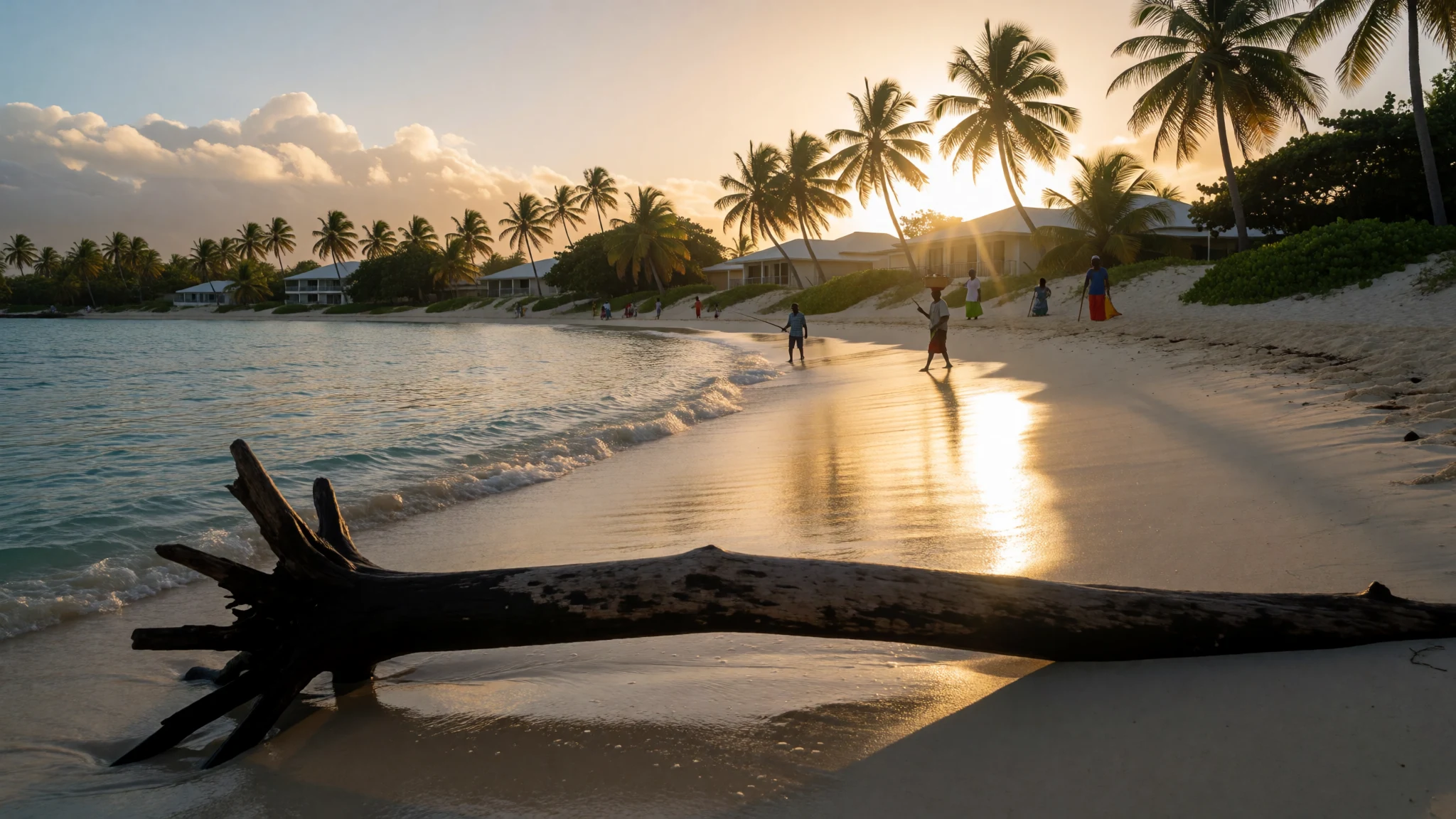
Grand Anse Beach is Grenada's long southwest crescent of pale sand, where capital life meets open Caribbean water.
The place
Grand Anse Beach is the long public crescent of pale sand on Grenada's southwest coast, in St George's parish, just south of the capital. The bay swings between low headlands, Caribbean water on the open side and a belt of coconut palms, sea-grape and low buildings on the landward side. The sand is fine and light in colour. Near shore the sea is a bright turquoise over a sandy bottom; farther out it turns a deeper blue. A trade wind usually comes in off the water, which takes the edge off the heat, though shade is mostly the tree line and the verandas.
The sand is not fenced off by the hotels that face it. People from St George's and the villages nearby swim, walk and lime here — lime being the local habit of lingering with friends for no particular errand. Vendors stroll the upper beach with baskets of nutmeg, cinnamon, cocoa and handmade jewellery. The northern end tapers toward the road that runs into town. The southern end continues toward Morne Rouge, a smaller cove also known as BBC Beach, set under the headland of Quarantine Point. The middle of Grand Anse is the broad stretch, where families spread out and where small sailboats and windsurf boards go out when the breeze fills in.
Grand Anse Beach is a working shore of the capital region rather than a distant cove. Buses, the airport road and the evening traffic of the southwest coast all pass just inland of the palms. That is why the beach feels lived-in: a swim before the market, a walk after work, a horizon shared by residents and visitors.
Its story
Grand Anse Beach has long been the open door on Grenada's southwest, a bay whose French name — grand anse, the big cove — still marks the island's first colonial layer. French settlers gave the coast many of its names before the island passed to Britain, and British rule left the language, the parish system and the capital's harbour forts. Through those centuries the beach itself stayed a working margin of St George's: a place to land a small boat, to walk, to pull a net, rather than a resort shore. Estate agriculture, above all nutmeg, cocoa and other spices, shaped the island behind it, which is why Grenada is still called the Spice Isle.
In the modern era Grand Anse Beach became a busy visitor shore because it is long, sandy and close to both the capital and the airport. Hotels rose along the landward side, but the sand remained open. The beach also sat beside a hard chapter in recent Grenadian history: the years of revolution and the foreign intervention that followed, when the southwest of the island, including the airport beside this coast, was at the centre of events. Residents still speak of that time as a break, after which weekends and festivals returned to the sand.
Fishers, students, hotel guests and families from the hills have shared the same crescent. Carnival season brings costume colour down toward the coast, and on ordinary Sundays the beach fills with cook-pots, music and children in the shallows. Grand Anse Beach is a civic shore: the place the island shows to anyone arriving in the southwest, and the place it keeps when the visitors go home.
What to see
- Grand Anse Beach — St George's parish, southwest coast
Grand Anse Beach is the long pale crescent itself, public sand with hotels and houses set back under the palms. Swimmers tend to stay in the middle, over a sandy bottom, while the ends grow rockier. Vendors walk the upper beach, and the late afternoon is when local families arrive to lime.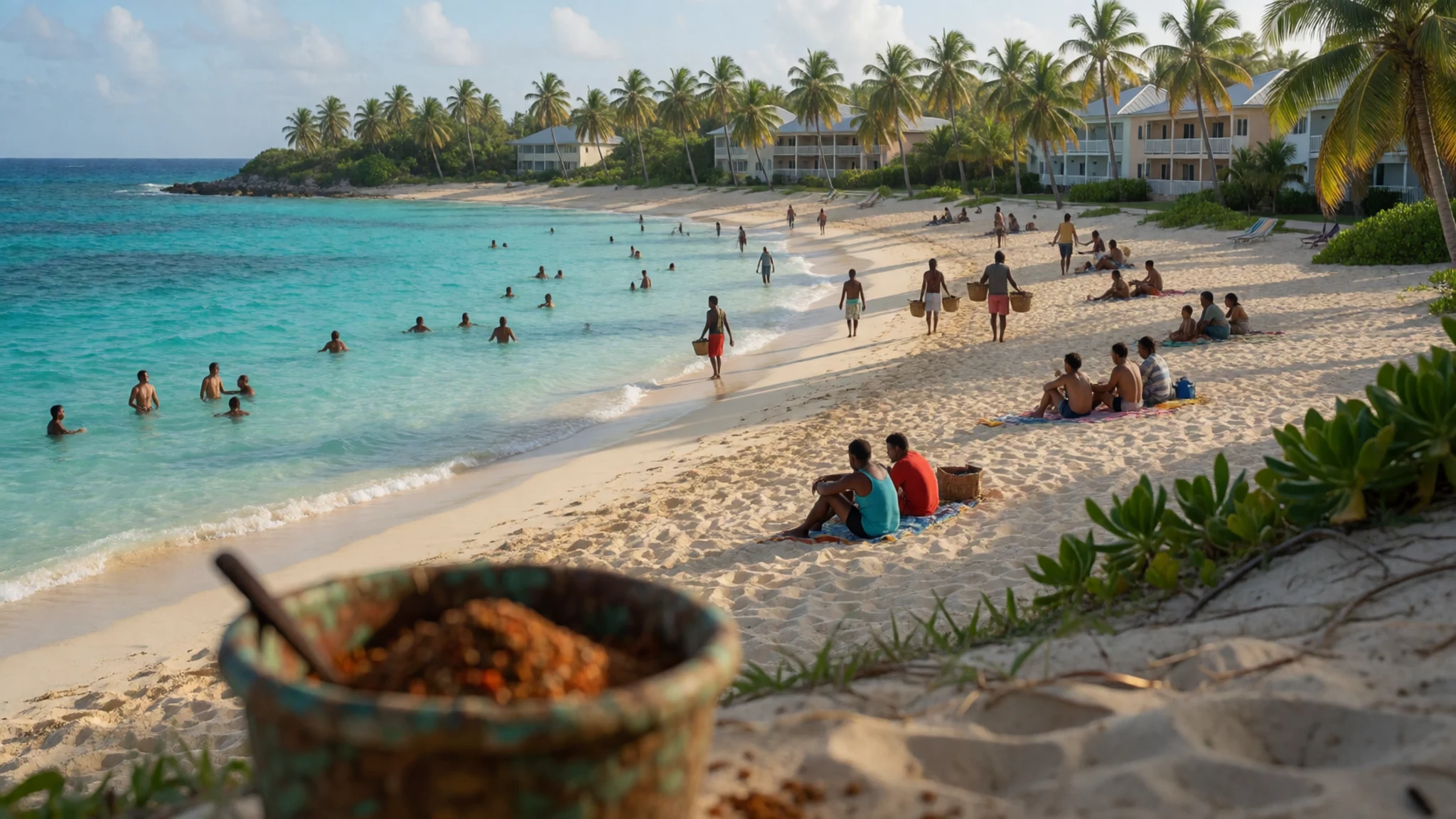
- Morne Rouge Beach — Southern end of Grand Anse
Morne Rouge Beach, often called BBC Beach, is the smaller cove beyond the southern end of Grand Anse Beach, beneath Quarantine Point. The walk from the road is short, and the cove feels more enclosed than the main crescent. People swim and picnic here when the longer beach is crowded. The headland cuts the wind, so the water is often calmer.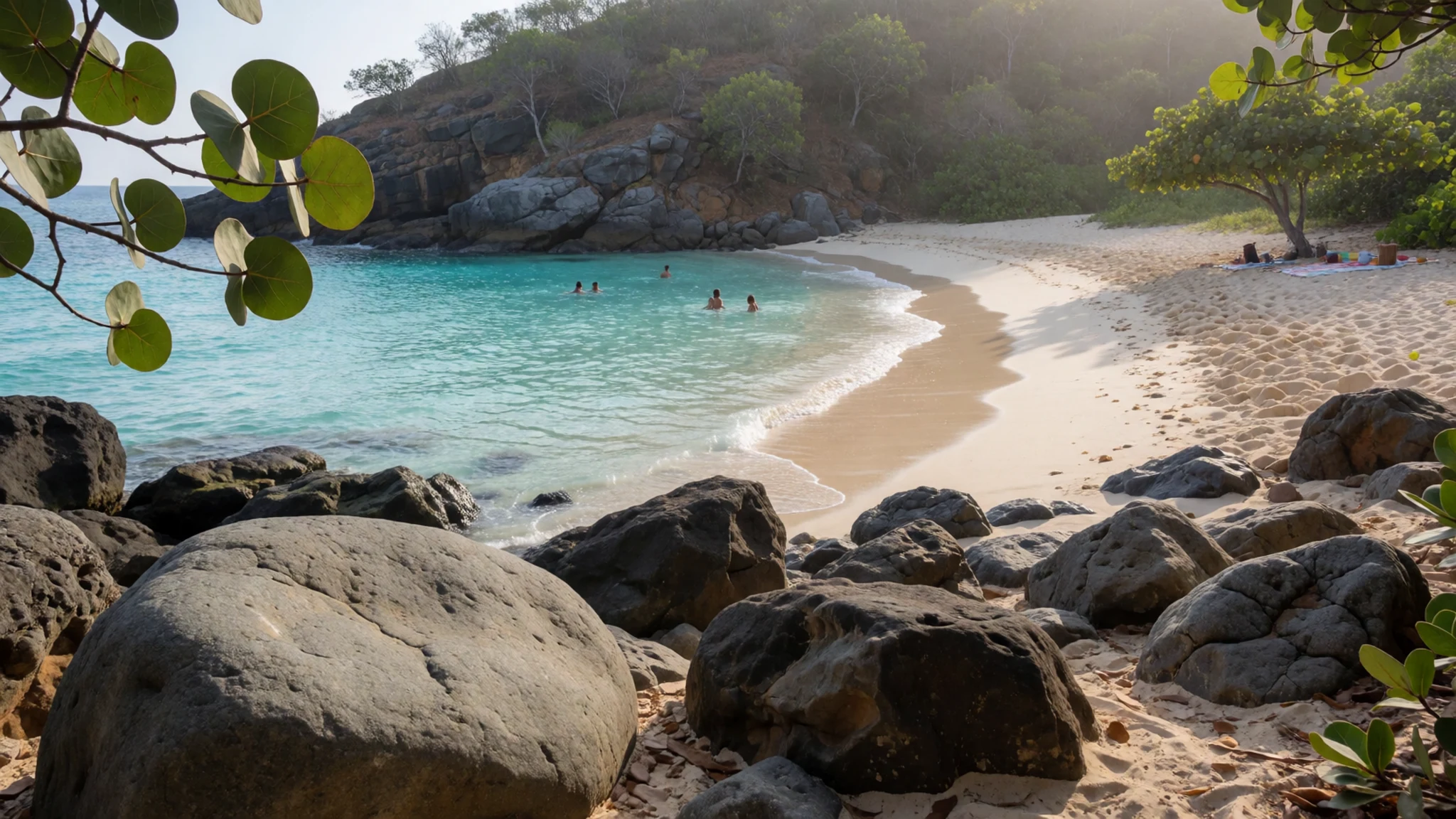
- Quarantine Point — Southern headland
Quarantine Point is the rocky headland at the southern end of Grand Anse Beach. A short rough path leads up to a view along the crescent toward St George's, with the airport plain inland and open water in front. The point makes the shape of the bay obvious. Shoes with a grip help on the stone, and there is little shade.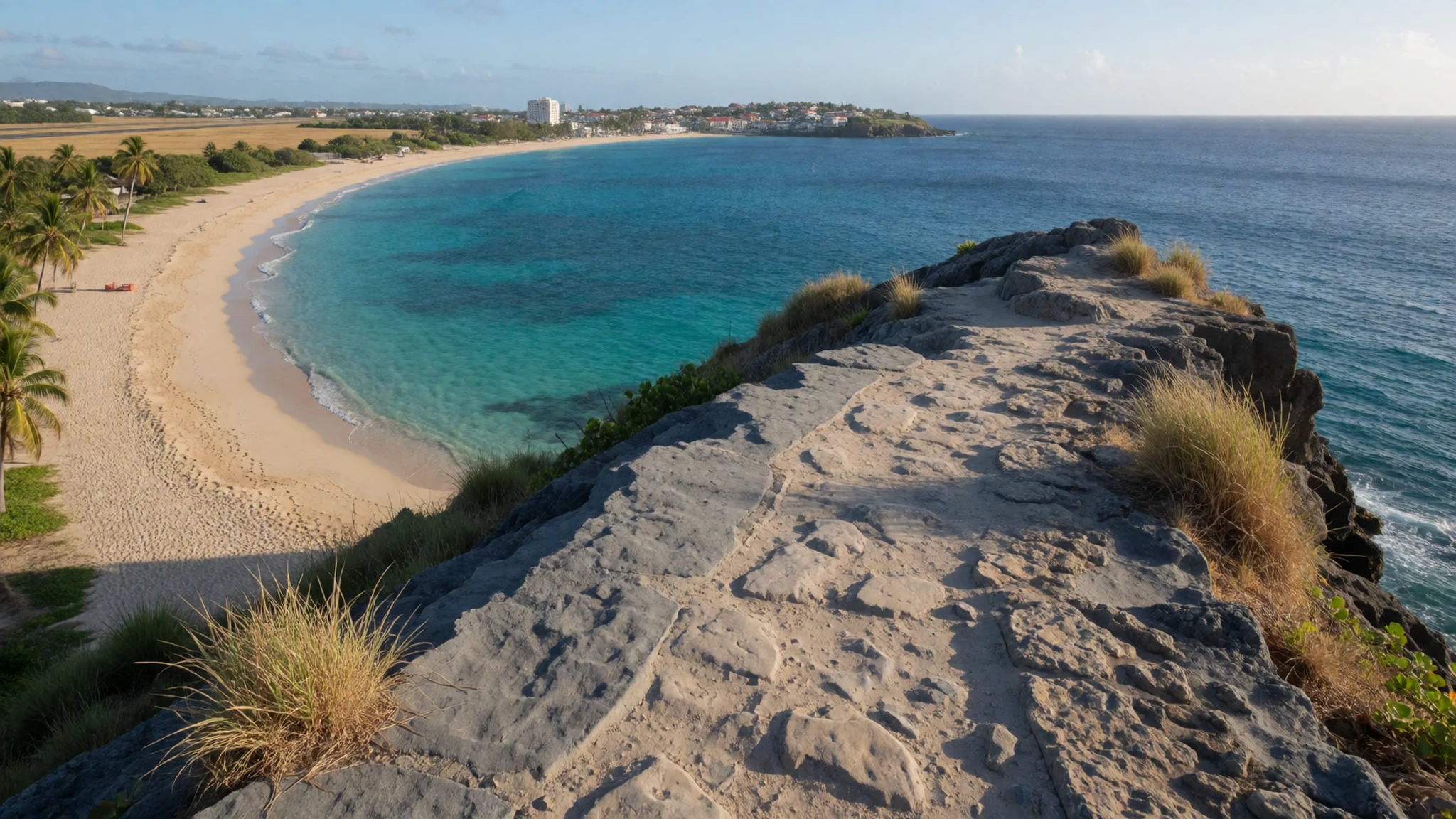
- The Carenage — St George's harbour
The Carenage is the curved inner harbour of St George's, a short ride north from Grand Anse Beach by bus or taxi. Brightly painted warehouses follow the quay, where fishing boats and small inter-island craft tie up. Fort George sits on the point that guards the entrance. The walk around the water shows the capital's harbour character.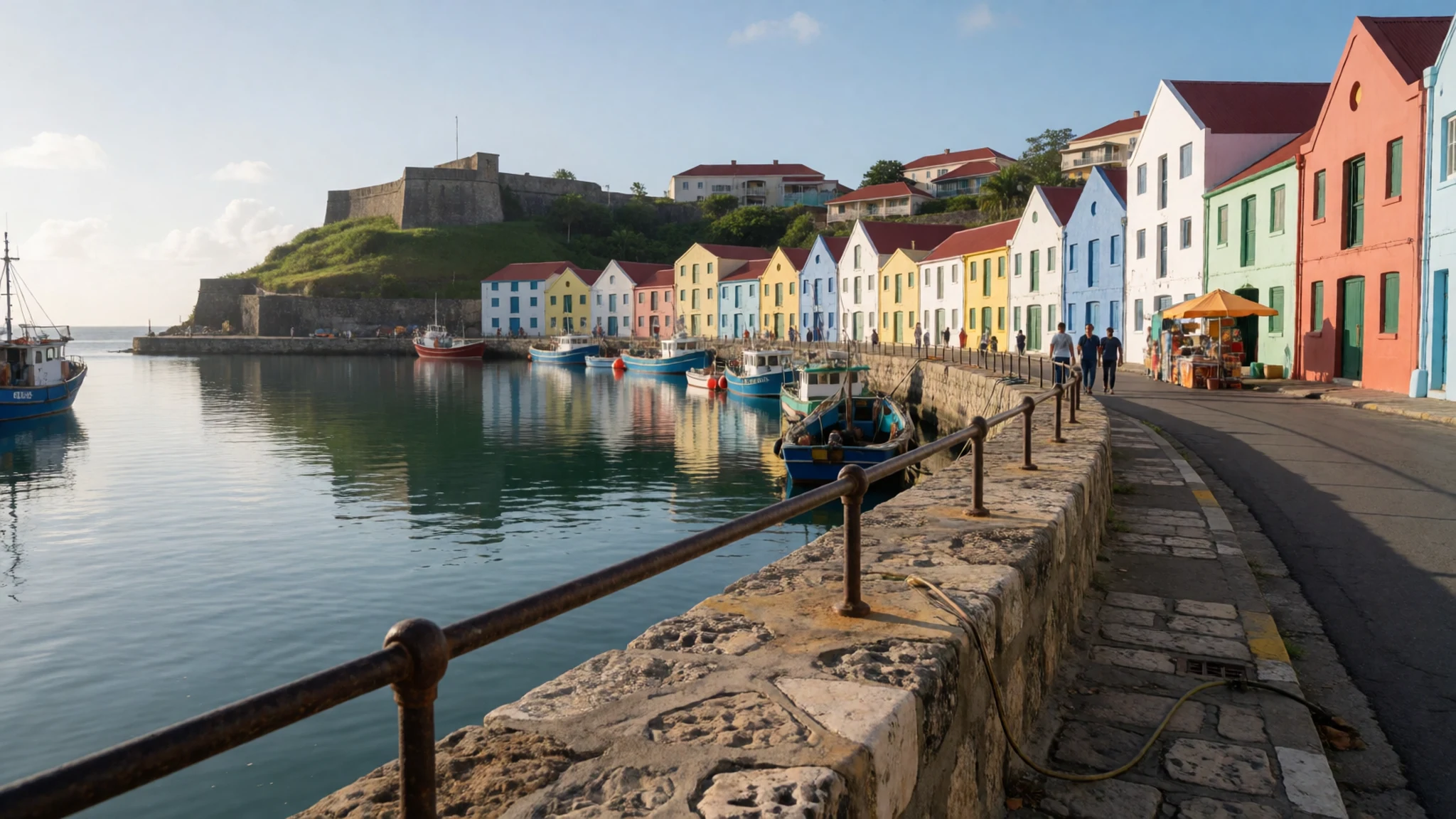
- Fort George — St George's
Fort George stands above the mouth of St George's harbour, on the promontory north of Grand Anse Beach. Stone walls and old gun positions look inward to the Carenage and outward to the open sea. The path up is steep and the ground inside is uneven. From the ramparts the town is easy to read, wrapped around the harbour with hills rising behind the roofs.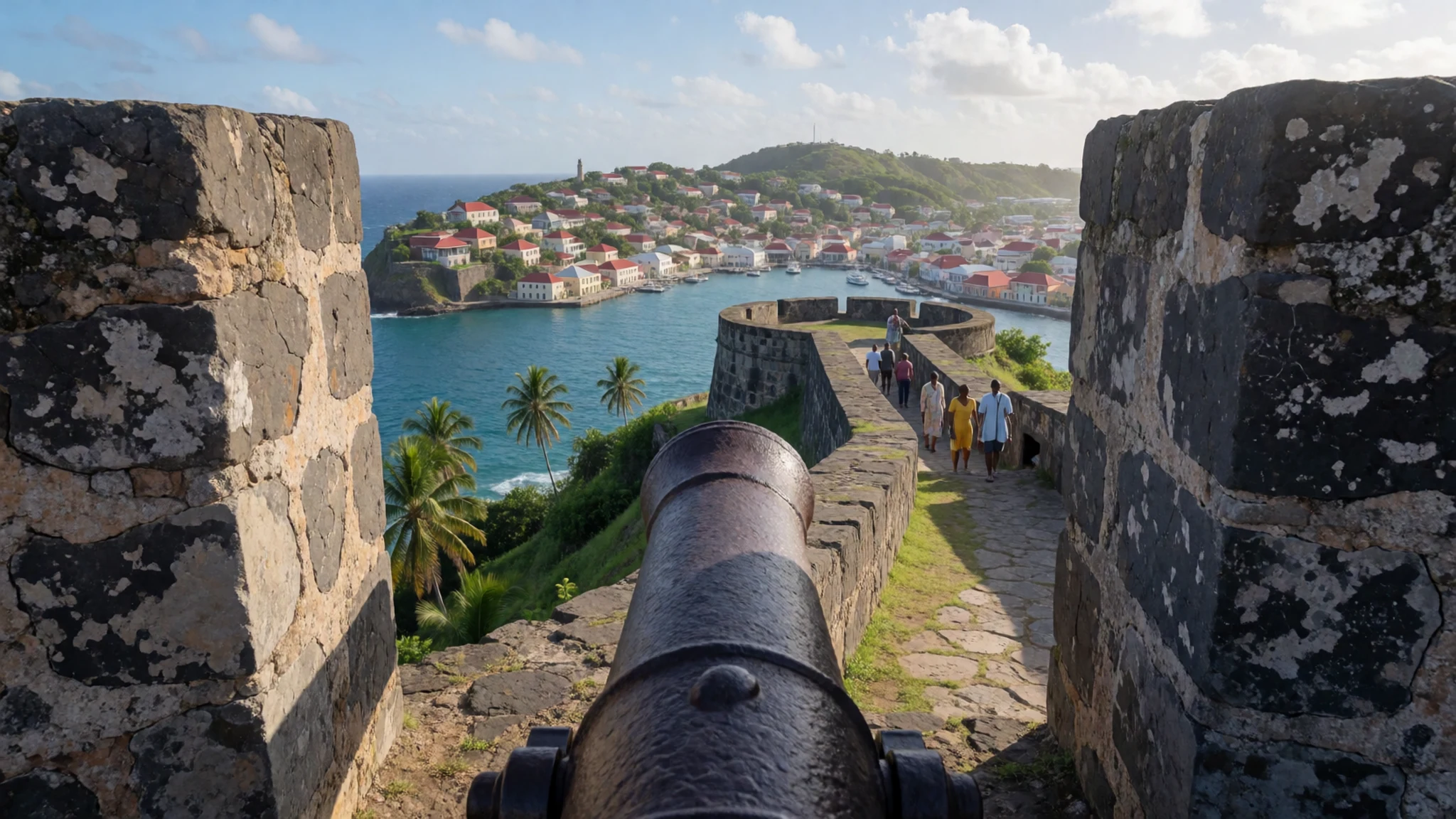
Culture
Grand Anse Beach sits inside a culture that treats the shore as a public room. Grenada's official language is English, coloured by a Caribbean cadence, and older French names such as Grand Anse remain on the map. People lime: they stay on after a swim to talk, share food and watch the evening come in, and a visitor who rushes the conversation misses the point of the place. Sundays and public holidays draw families with pots of oil down and music from a parked car. In carnival season, Spicemas brings costume bands and soca through the streets, and some of that colour reaches the coast.
The spice economy is still everyday culture, not only a souvenir. Nutmeg, cinnamon, clove, cocoa and bay leaf turn up in kitchens and in the baskets carried along this sand. Many Grenadians are Christian, and the pace of the beach changes around Sunday services. Ask before you join a family group or photograph people on Grand Anse Beach; a smile and a greeting come before a camera.
What to wear
Grand Anse Beach is where Grenada's formal folk dress and ordinary beach clothes meet on the same afternoon. For ceremonies, school events and national occasions, many women still wear the island's Madras costume: a bright plaid skirt, a light blouse and a headtie cut from the same cotton check. Men wear a formal shirt with dark trousers, and on ceremonial days a sash or a trimmed jacket. Madras, a checked cotton used across Caribbean national dress, is the textile to know; it signals an occasion, and it is not swimwear.
Day to day, clothes on Grand Anse Beach follow the heat. In the water, swimwear is the norm; on the sand and along the road, shorts, vests, loose cotton dresses and football shirts take over. Toward St George's, and especially near churches, people cover shoulders and lengthen hems.
A visitor does well to copy that division. Swimwear stays on the sand and in the sea. A shirt, a wrap or a light dress is the layer for a bus, a shop or a church. Bare feet or sandals suit the beach; gripped shoes are wiser on the rocks at Quarantine Point and on the fort paths. Madras cloth from a market stall is a fair keepsake; the full costume belongs to the people whose ceremony it is.
What to eat
- Oil down — Weekend cook-ups and eateries inland of the sand
Oil down is Grenada's national cook-up, and weekend gatherings near Grand Anse Beach often centre on it. Breadfruit, salted meat, dumplings and callaloo simmer in coconut milk with turmeric until the sauce is almost gone. Local eateries inland of the sand serve it more often than the resort dining rooms.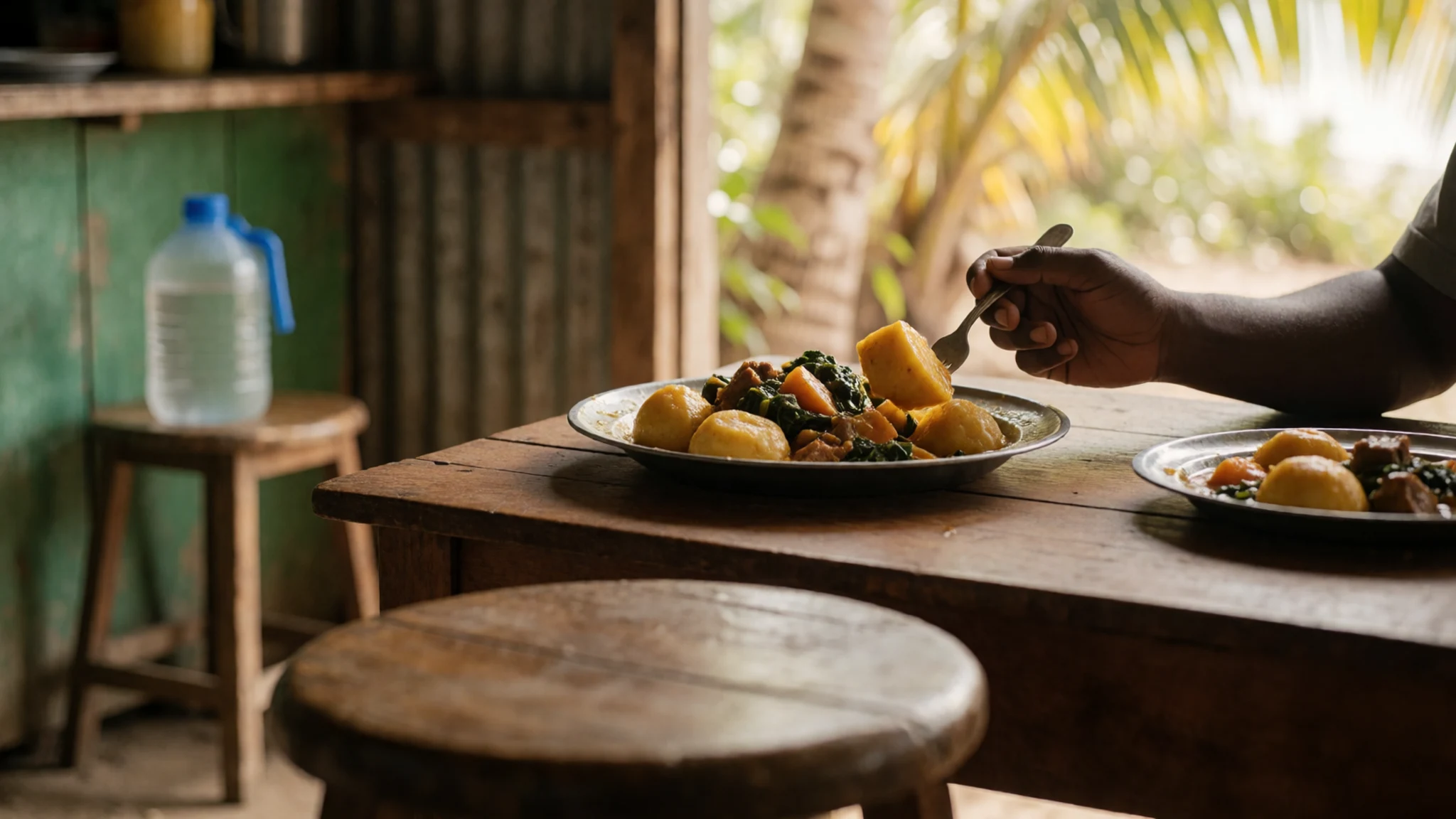
- Roti — Southwest coast road and St George's
Roti on Grand Anse Beach means a soft flatbread wrapped around a curry of chicken, goat, chickpea or vegetables, with a heat that varies by the cook. Stalls and small curry counters along the southwest coast road, and in St George's, sell it from late morning.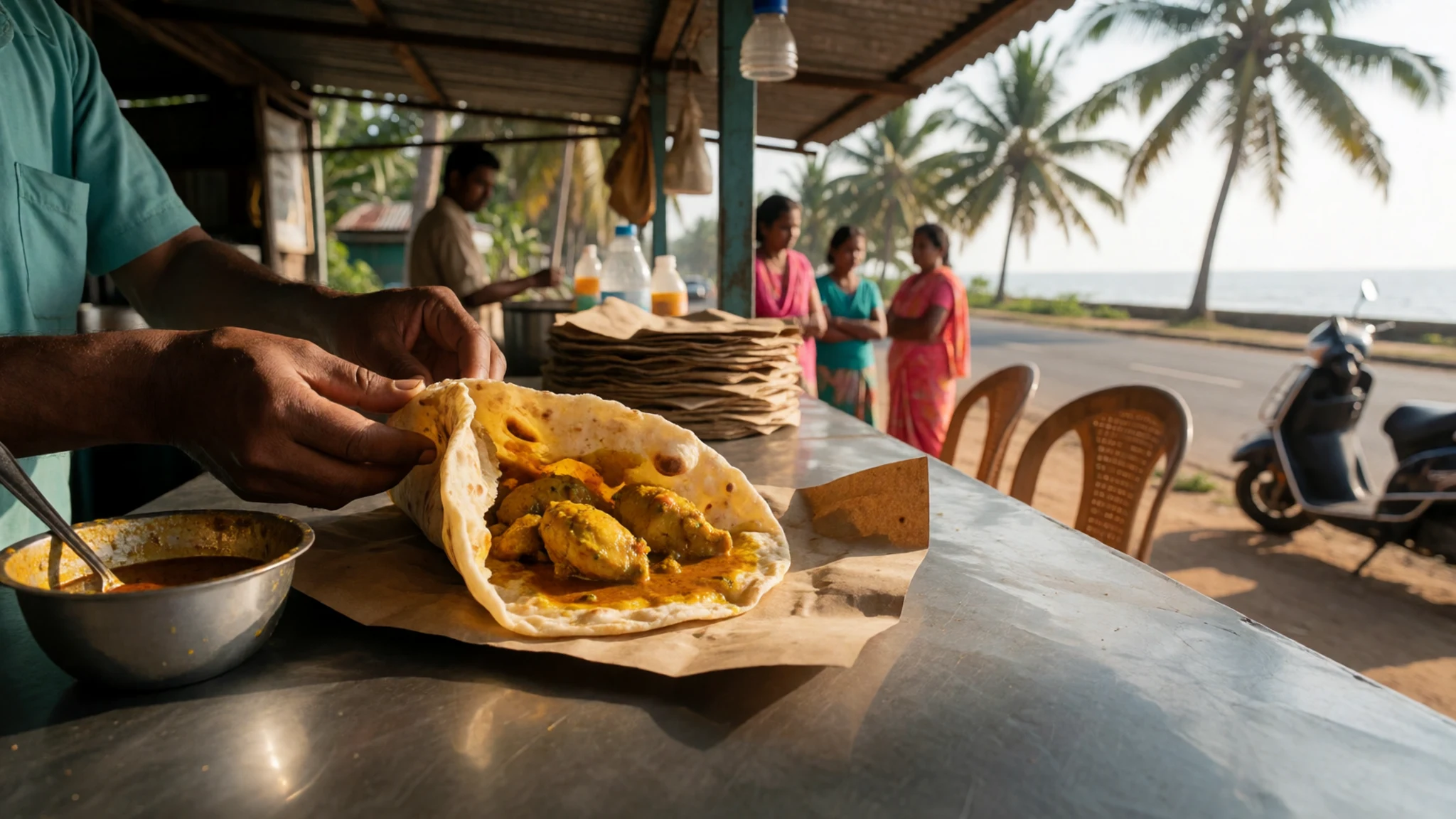
- Lambi — Beach bars on the sand and at Morne Rouge
Lambi is conch, pounded tender and served curried, stewed or in a garlicky butter, and it is a standard on beach menus around Grand Anse Beach. The texture is firm. Beach bars and small seafood eateries along the sand and at Morne Rouge are the places to ask for it. - Bakes and saltfish — Bakeries and roadside counters inland of the beach
Bakes and saltfish are a Grenadian breakfast sold around Grand Anse Beach: a fried or baked dough round split and filled with seasoned salted cod, onion and pepper, sometimes with avocado. Small bakeries and roadside counters inland of the hotels sell them in the morning. - Cocoa tea — Spice stalls near the sand
Cocoa tea around Grand Anse Beach is not tea from a leaf but a hot drink of local cocoa, cinnamon, nutmeg and bay, often sweetened and boiled with milk. Spice stalls near the sand sell the sticks and the cocoa ball used to make it at home.
Plan it
Best time. The drier months, December through April, bring steadier sun and easier swimming on Grand Anse Beach. June to November is wetter, with a higher chance of tropical storms; rain often comes as a short squall rather than a whole grey day. The sea is warm year round. Check a current forecast before travelling in the stormier months.
How long. 2–3
Getting there. Maurice Bishop International Airport lies just inland of Grenada's southwest coast, a short road transfer from Grand Anse Beach. Buses and taxis run between the airport, the beach hotels and St George's. There is no rail. Ferries from nearby islands arrive at the capital's harbour, the Carenage, and the beach is a short ride south from there.
Budget. mid
Tips
- Walk the beach in the early morning if you want space and softer light.
- Carry cash for spice vendors and fruit sellers; card machines are a hotel and town matter.
- Treat the midday sun seriously: hat, water and time in the shade.
- In the wetter months, check the official meteorological forecast before a long swim or a boat trip.
- The public sand is shared with local families on Sundays; leave room and keep speakers low.
Etiquette
- Keep swimwear on the beach; cover shoulders and legs for churches, buses and shops in St George's.
- Ask before photographing people, including vendors and children.
- A polite no is enough if you do not want to buy; do not mock the approach.
- Take rubbish away with you; the crescent is a public shore, not a resort backyard.
- Do not stand on coral, and do not take sand, shells or plants.
Nearby
Sources
- Wikidata (CC0)
- Wikipedia (CC BY-SA 4.0)
- Wikivoyage (CC BY-SA 4.0)