Sauteurs
Sauteurs, Grenada
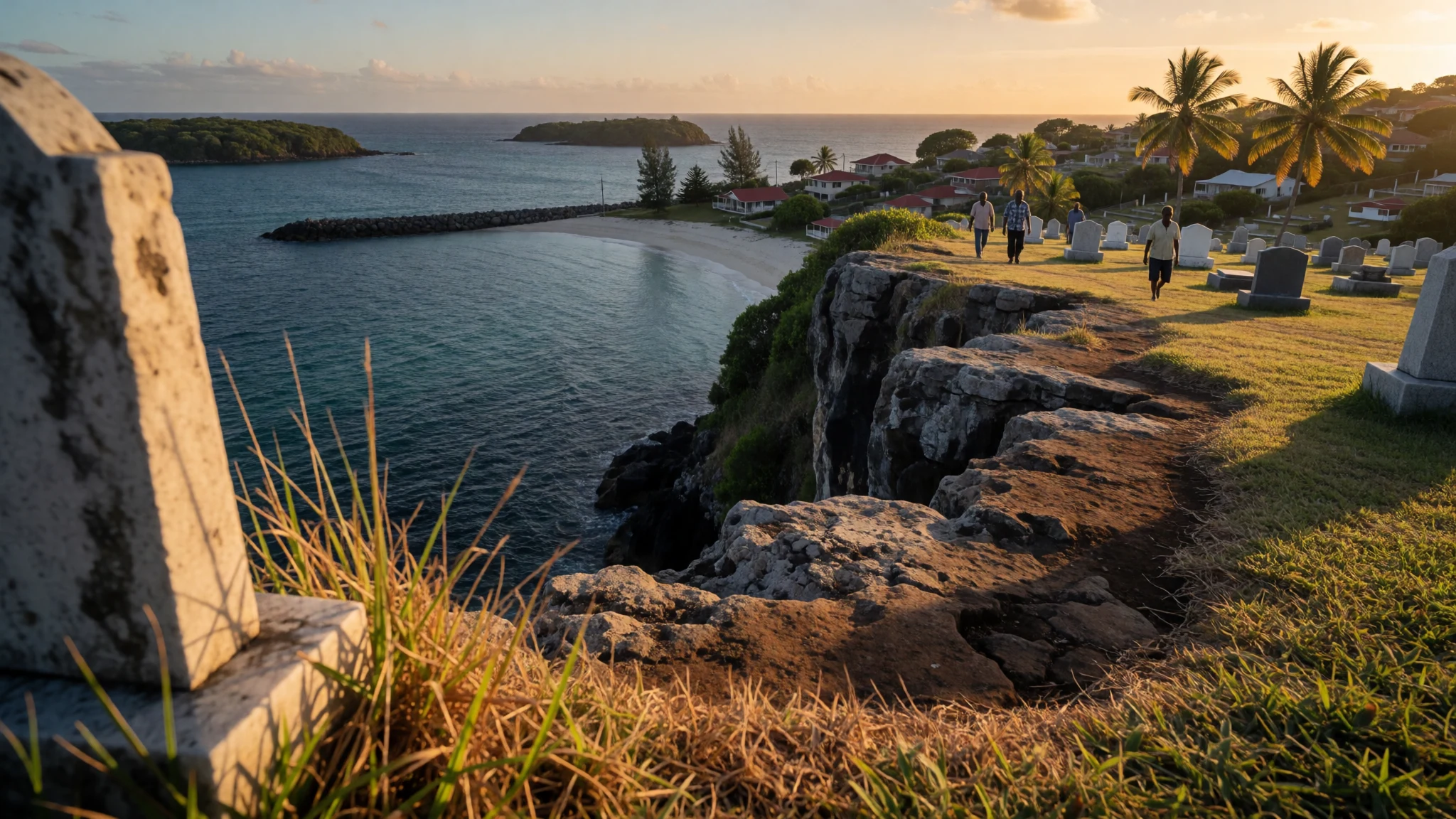
Sauteurs is a quiet fishing town at Grenada's northern tip, where a sombre cliff, mangrove lakes and offshore islets reward slow travel.
The place
Sauteurs is a fishing town on the far northern edge of Grenada, in the parish of Saint Patrick, and its name is pronounced Sau-tez. About 1,300 people live here, and the centre sits roughly 87 metres above sea level, on high ground looking down over Sauteurs Bay. It serves as the parish capital and the practical hub of the north: a place for provisions, bus connections and watching boats come in. The settlement straggles rather than clusters, with a main road, a church, a police station, a cemetery on the headland and houses stepping down towards the water.
The setting is the real attraction. To the north the sea opens out towards a scatter of small islands, some privately owned and some reached by boat, and on clear days the larger shapes of the Grenadines show on the horizon. Inland and to the east lie crater lakes, mangroves and black-sand coves, most of them within easy reach of town by road.
Sauteurs is not a resort. There is no polished waterfront and no long list of attractions; what it offers is everyday island life, with fishing boats, school uniforms, church bells and a pace that suits a half-day stop or a base for exploring the north. A breakwater shelters the bay, which makes the town beach calmer than the Atlantic-facing beaches elsewhere on this coast, where currents can be strong. Most visitors arrive by minibus or hired car from St George's, the capital, and come for the history of the cliff, the wildlife around Levera and the quiet.
Its story
The name Sauteurs is French for 'jumpers', and it points to a grim episode from the colonial struggle for Grenada. In 1650, by the usual account, French forces ambushed a group of Caribs, the island's Indigenous people, on this northern headland. Many were killed, and tradition says that others chose to leap from the cliff rather than be captured. The place is remembered as Leapers Hill. Another source dates the event a year later, so the exact date is uncertain, but the name and the memory have stayed with the town ever since.
Church and state left their marks as well. The French founded a Catholic church here in 1721. After the British took over the island, the building passed in 1784 to the Anglican church, and it was later lost to fire; a police station stands on the site now. The Catholic church in the town today was built in 1840 and is still in use.
A further crisis came in 1796, when Julien Fédon led a revolt against British rule. Insurgents trapped British troops and militia at Sauteurs, and on 1 March naval vessels, among them HMS Favourite and the transport Sally, took the stranded men off by sea. The episode shows how far this northern town lay from the capital and how quickly events elsewhere could reach it.
These layers of French naming, British administration and Carib memory explain why a small fishing town carries more weight in Grenadian history than its size suggests.
What to see
- Leapers Hill — Sauteurs headland, within the cemetery
Leapers Hill is the clifftop spot above Sauteurs that gave the town its name, and it now lies inside the cemetery, just north of the town centre. It is a place for quiet reflection rather than spectacle: a wide view over the bay and a pause with a painful chapter of Carib history.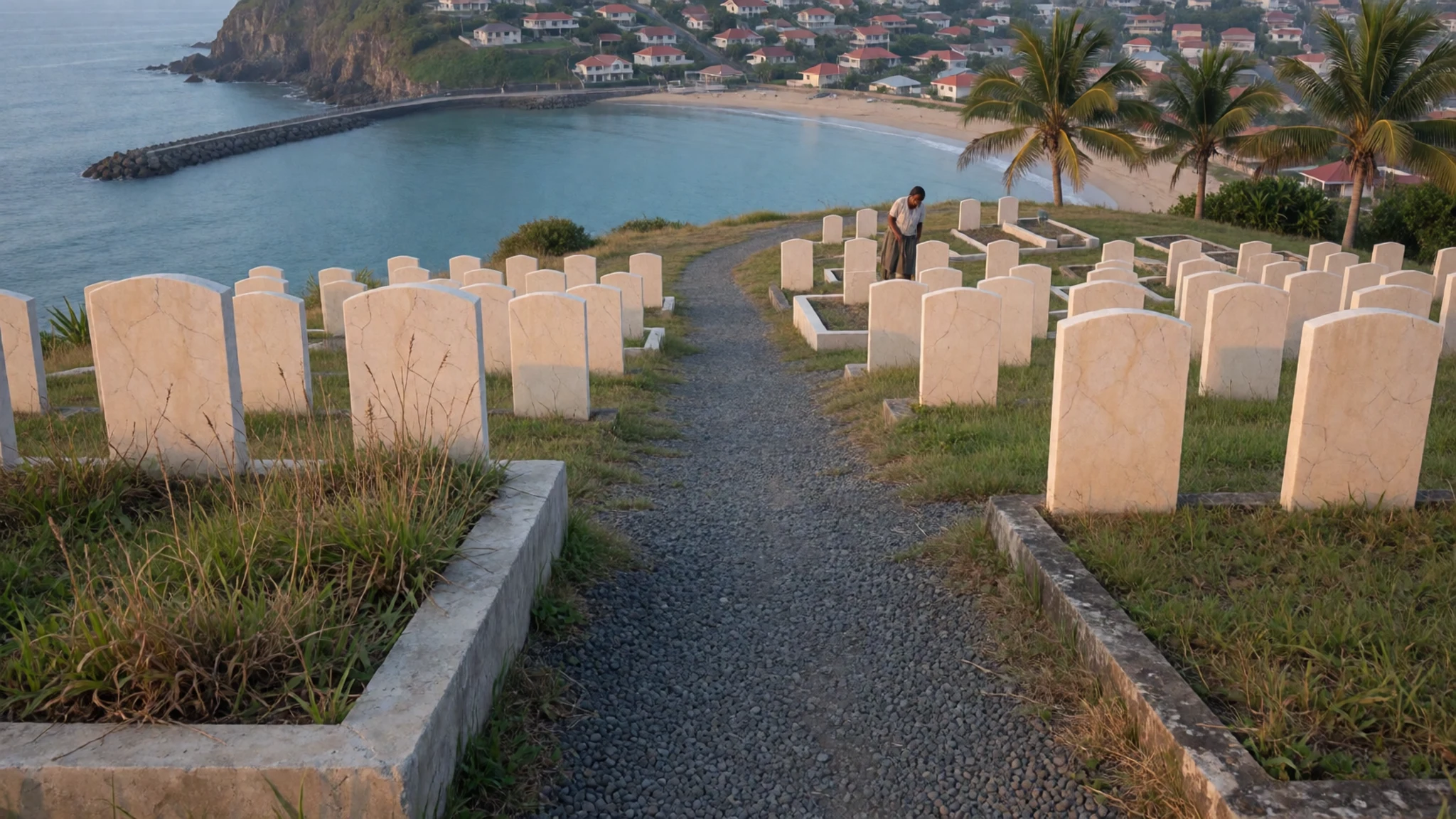
- Levera Natural Park — Levera, east of Sauteurs
Levera Natural Park is built around a crater lake ringed with mangrove, with a circular trail that gives shade and birdwatching. The nearby beach is a turtle nesting site, so follow local guidance on visiting. Old French defences on the hill stand on private land and cannot be visited.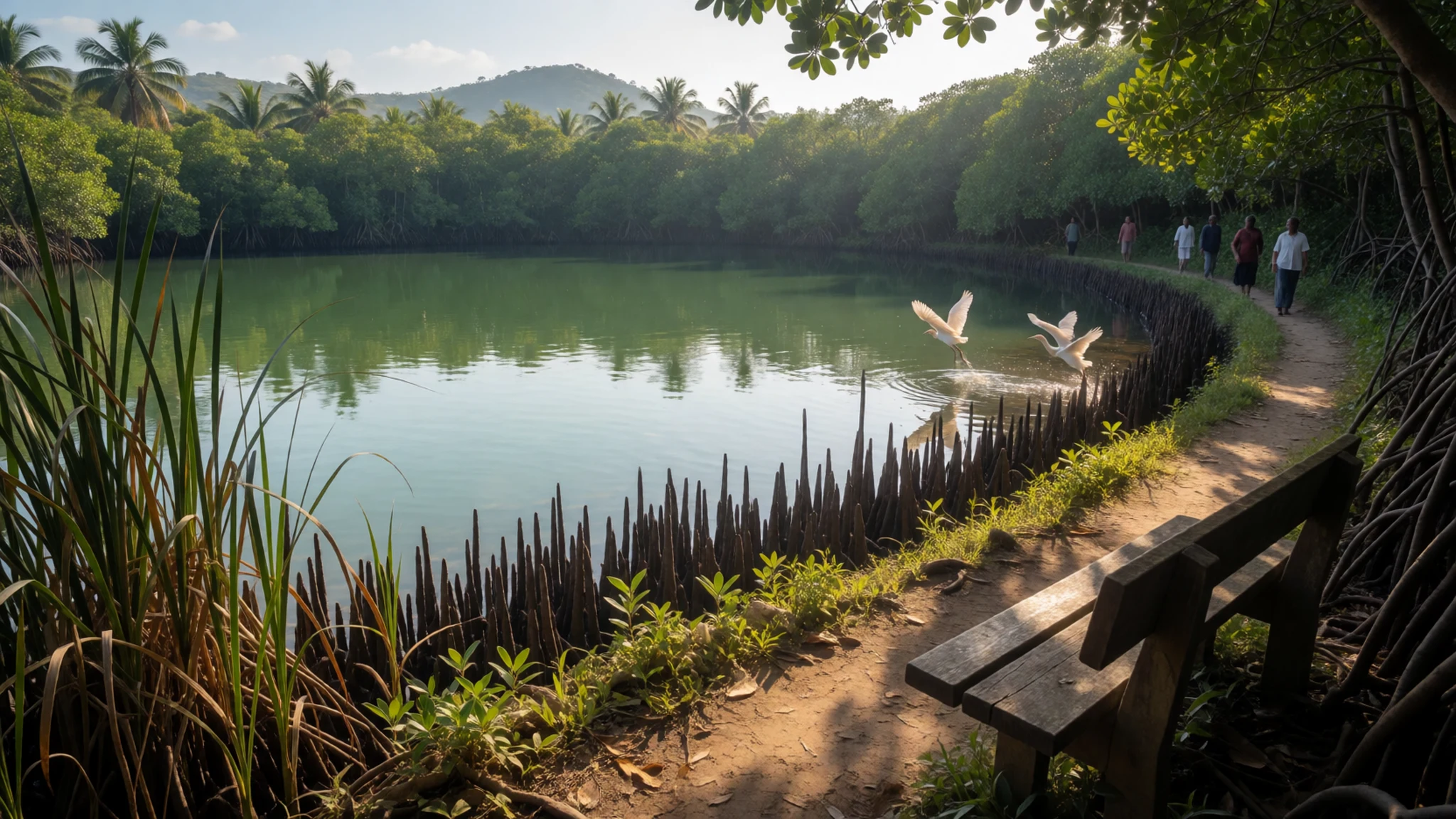
- Sandy Island — Offshore from Levera Beach
Sandy Island is the one islet in the Levera chain that boat trips actually visit. Its sheltered south-west side has a sandy beach and a coral lagoon, while the wooded interior holds a ruined mansion and a wreck lies off the north tip. The others in the chain are private or too exposed to land on.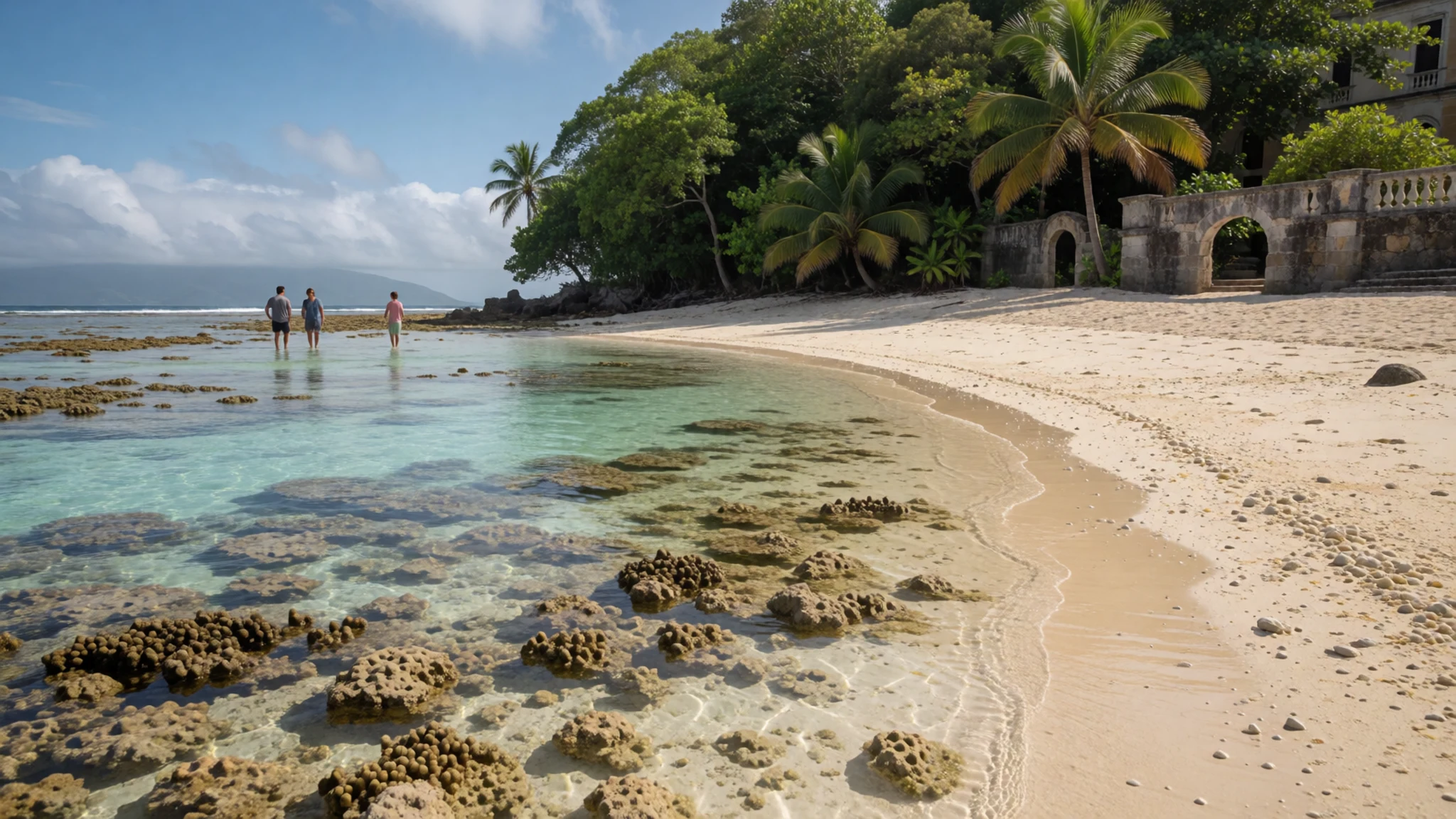
- Lake Antoine and Antoine Bay — East of the town, near River Antoine
Lake Antoine fills another crater and is ringed by mangrove, with a hiking circuit around it that suits a slow morning. A short distance east, Antoine Bay has black volcanic sand. It faces the open Atlantic, so check conditions with locals before swimming rather than assuming the water is calm.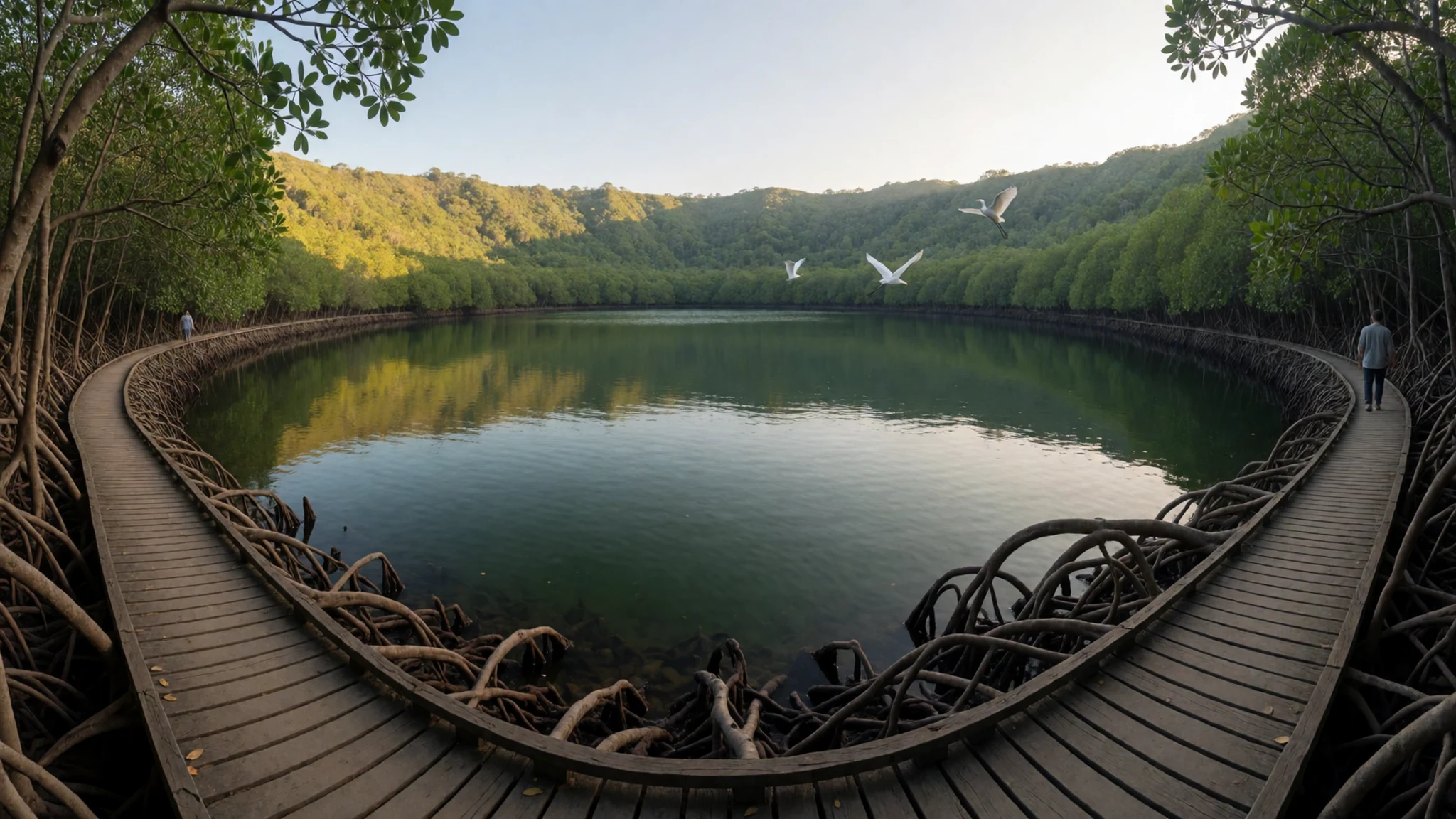
- Mount Rich Petroglyphs — Mount Rich, St Patrick River valley
Mount Rich, in the St Patrick River valley, holds rock carvings made by the Carib people, along with artefacts displayed at a small interpretation centre. The centre was listed as closed in 2023, so ask locally or at the tourist office whether it has reopened before making a special trip.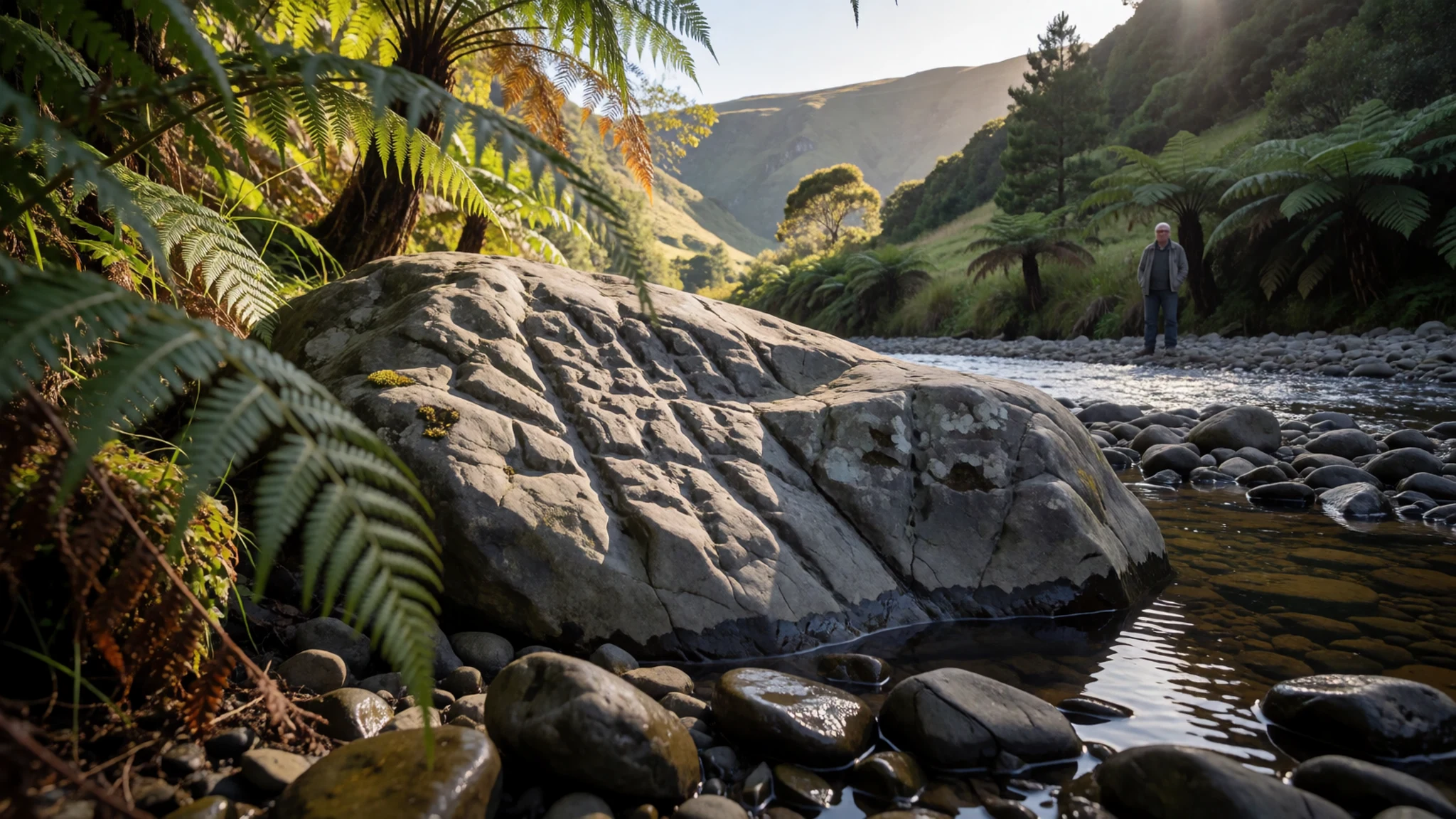
- Belmont Estate — South-east of Sauteurs
Belmont Estate is an old plantation that grows cacao and makes chocolate on site, with the most activity during harvest. An estate of this age belongs to the era of slavery, and good guides cover that history alongside the farming. Check the estate's own channels for current visiting arrangements.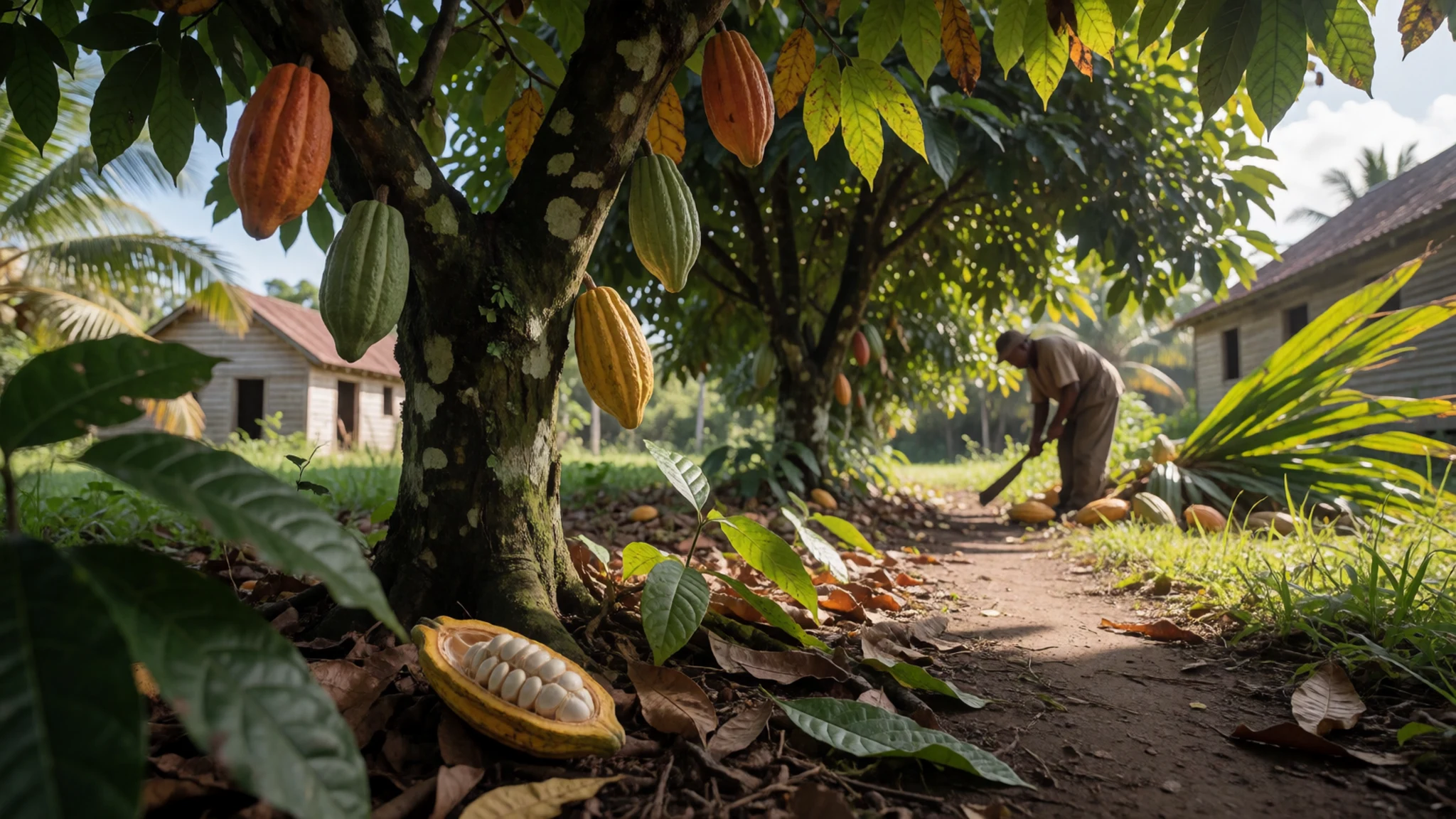
Culture
Sauteurs is a church-going, close-knit town where everyday life moves at a gentle pace. The Catholic parish church anchors the centre, Sundays bring families out in their best clothes, and greetings matter: a 'good morning' on entering a shop or passing someone on the road is expected and returned. English is the everyday language, spoken with a Grenadian lilt, and French-derived place names across the parish recall the island's colonial past. Some older residents may also speak a French-based creole.
Fishing shapes the working rhythm. Boats go out early, the catch is sold locally, and the bay is as much a workplace as a view. Beyond the town, the cacao and rum trades tie the north to the wider Grenadian economy, and estates and distilleries are part of ordinary local life as well as visitor stops.
The Carib past is present in memory rather than in grand monuments. Leapers Hill, the carvings at Mount Rich and the interpretation centre there record a people whose story is still being told, and local guides are usually glad to explain what they know. Visitors who arrive with curiosity rather than treating the history as a backdrop tend to be warmly received.
At Leapers Hill, treat the site as the cemetery it is: keep your voice low, stay on the paths between graves and ask before photographing anyone attending a burial or service.
What to wear
Across the eastern Caribbean, including Grenada, traditional dress is built around madras, a brightly checked cotton. Women's folk costume pairs madras skirts and head-wraps with white blouses, and men may wear a madras shirt or sash. It appears at school events, folk dance, cultural festivals and national celebrations rather than on ordinary days, and the pattern and way of tying a wrap can carry local meaning.
Day to day in Sauteurs, people dress for heat and practicality: T-shirts, light shirts, shorts and skirts, with rubber boots and work clothes for those on the boats. Sunday is different, when church clothes come out and many wear their smartest outfits, so the streets look noticeably more formal.
Visitors should pack light cotton or linen, a sun hat and sunglasses, and a thin rain jacket, since showers can arrive quickly. Sandals suit the beach, but sturdy closed shoes with grip are better for the crater-lake trails, which can be muddy. Swimwear belongs on the beach and boats; in town, put a shirt or wrap over it. For church services or the cemetery, dress modestly with covered shoulders and knees, as a sign of respect.
What to eat
- Roti — Small eateries along the main road and waterfront
Roti, a soft flatbread wrapped around curried vegetables, chicken or other fillings, is an everyday lunch across Grenada. In Sauteurs it turns up at small eateries along the main road, where plates are simple, filling and cooked for local customers.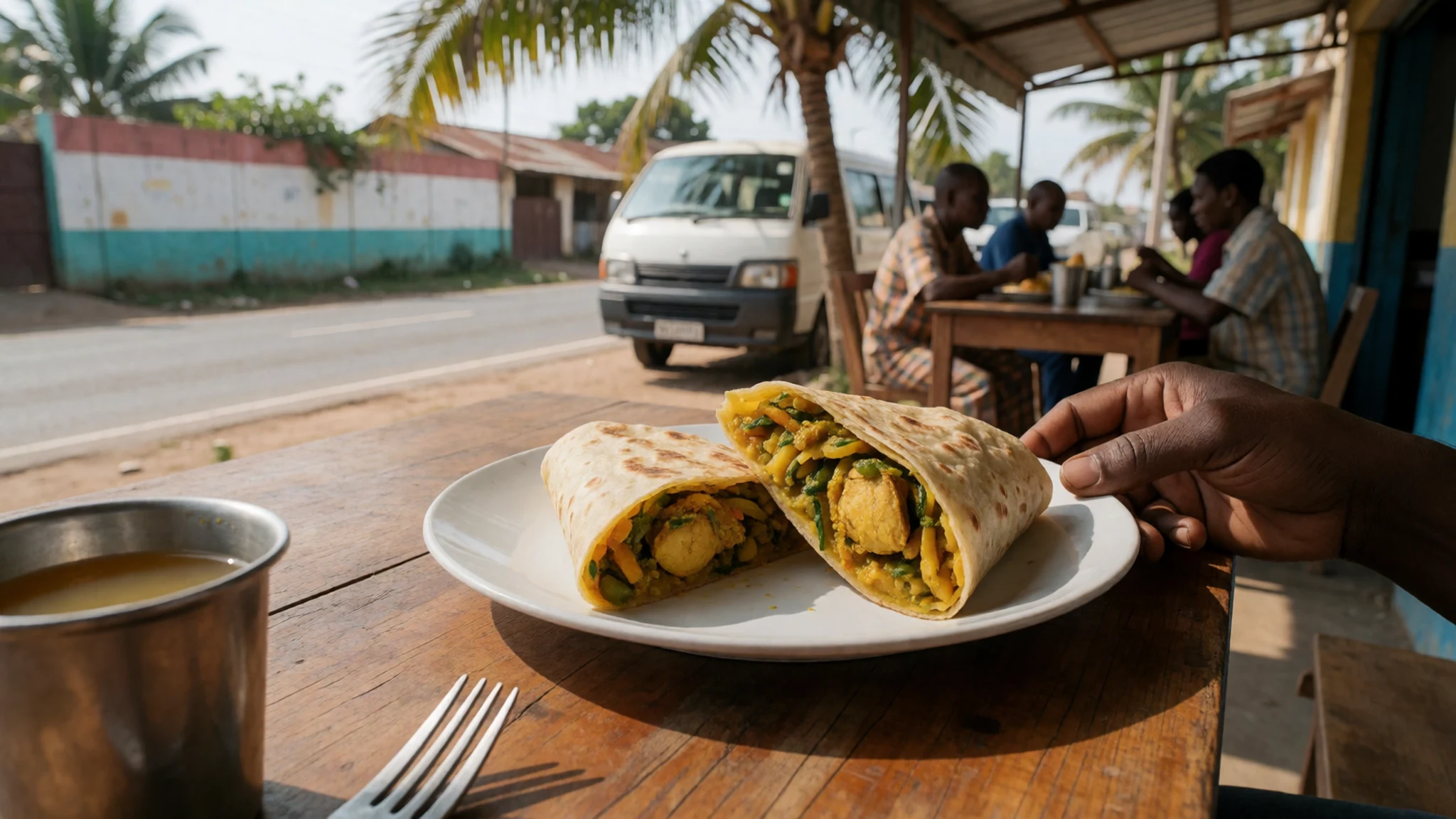
- Rice, beans and vegetables — Local eateries overlooking the bay
A plate of rice and beans with stewed vegetables and salad is the dependable choice for vegetarians. Local eateries in town usually offer it at lunch, sometimes with a view over the bay; ask what is cooking that day.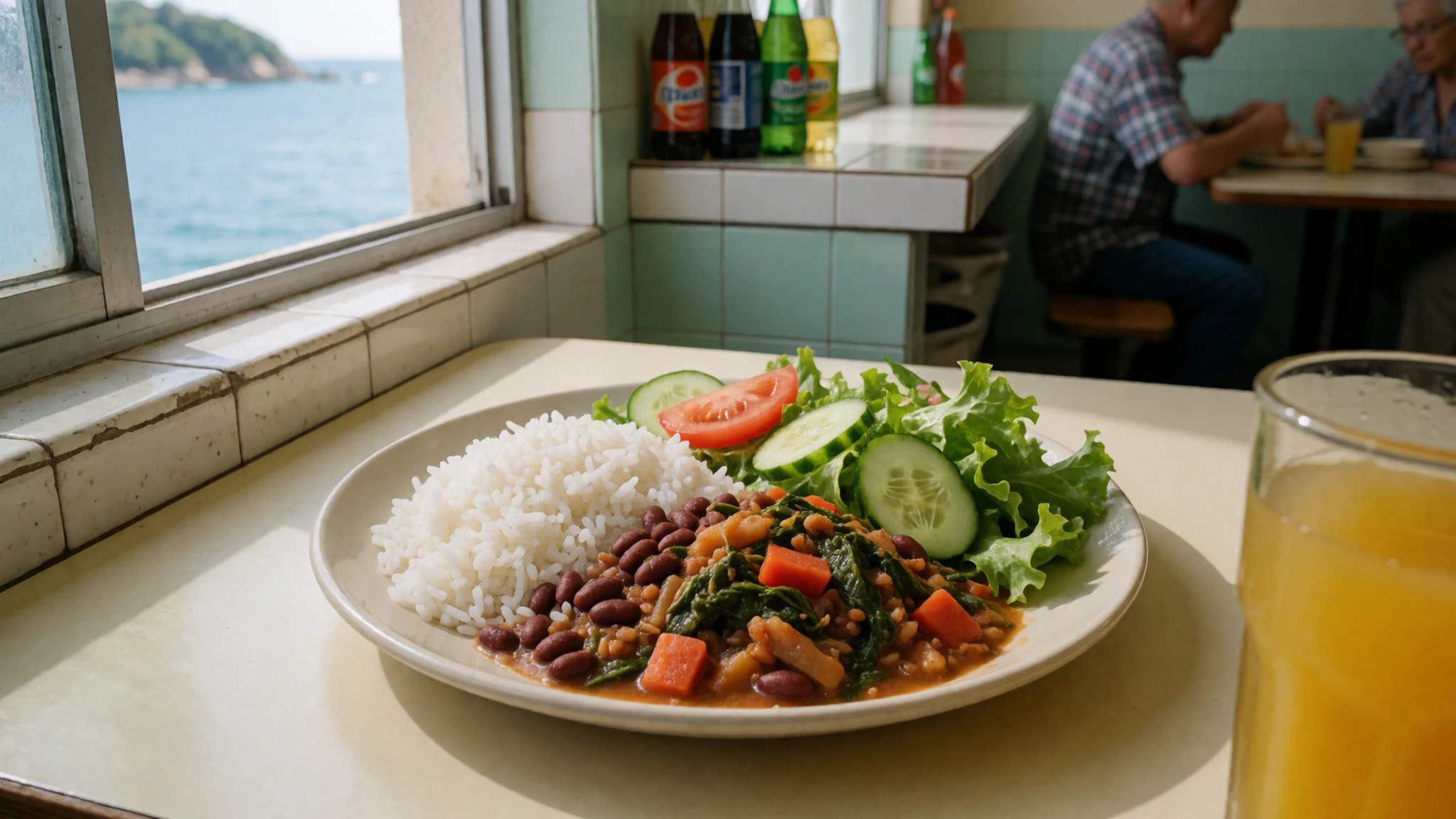
- Fresh fish — Near the bay, where boats come ashore
Sauteurs is a fishing town, so the catch is landed close by, and eateries often cook whatever came in that day, grilled or stewed with local seasoning. Ask what the boats brought in and how it is being served. - Estate chocolate — Belmont Estate, south-east of town
Belmont Estate grows cacao and turns the beans into chocolate, which makes it a tasting stop as well as a farm visit. Harvest time brings the most activity; check the estate's own channels for current visiting arrangements. - River Antoine rum — River Antoine, a short drive south-east of Sauteurs
River Antoine Rum Distillery makes rum by methods that have changed little over generations, and most of it is drunk on the island. Expect a working site rather than a polished visitor centre, and ask locally about tours. - Garden-grown dinners — Guesthouse and resort restaurants along the north coast
Some guesthouses and small resorts in the north cook with fruit and vegetables from their own gardens and welcome non-resident diners. Several ask for advance booking, so ask a day ahead rather than turning up unannounced.
Plan it
Best time. January to May is generally the drier, breezier part of the year and the easiest for walking and boat trips. June to December is wetter, with more humidity and the Atlantic hurricane season, so watch forecasts if travelling then.
How long. 1–2
Getting there. Fly into Grenada's international airport near St George's on the south-west tip. From the capital's main bus terminal, minibuses (shared public vans) follow the west coast through Gouyave and Victoria and end at Sauteurs. A second service links Grenville and Sauteurs, so from the capital you change at Grenville. A hired car or taxi is simpler for the lakes, Levera and the estates.
Budget. low
Tips
- Carry small notes in local cash for minibuses, snacks and small shops, as card payments may not be accepted outside larger places.
- Confirm that the Mount Rich interpretation centre and Belmont Estate are open before making a special trip.
- Swim at the sheltered bay beach by the town; Atlantic-facing beaches can have strong currents and rough water.
- Arrange boat trips to Sandy Island locally, and bring water, sun protection and insect repellent for the mangrove trails.
- Book dinner ahead at guesthouse restaurants, since some serve non-residents only on certain days.
Etiquette
- Greet people with a 'good morning' or 'good afternoon' when entering shops or passing on the road.
- Dress modestly for church and the cemetery, and ask before photographing people.
- Follow local guidance at the turtle nesting beach and keep off private islands.
Nearby
Sources
- Wikidata Q1318103 (CC0)
- Wikipedia: Sauteurs (rev 1376840195) (CC BY-SA 4.0)
- Wikivoyage: Sauteurs (rev 5356161) (CC BY-SA 4.0)
- Photo: Welcome to Sauteurs sign (Kylekieran) (CC BY-SA 1.0)
- Photo: Grenada relief location map (Uwe Dedering) (CC BY 3.0)


Wildlife
- Leatherback sea turtle (animal)
The leatherback is the giant of the turtle world: a sea turtle with no hard shell, only soft, oily, leathery skin across its back. It is the biggest turtle alive and the heaviest reptile apart from the crocodiles. The beach near Sauteurs is a place where these turtles nest, so ask locally about when and how to visit. Follow the guidance you are given there, because the species is vulnerable and some groups are critically endangered, so gentle visitors truly matter.