Molinere Underwater Sculpture Park
Molinere Underwater Sculpture Park, Grenada
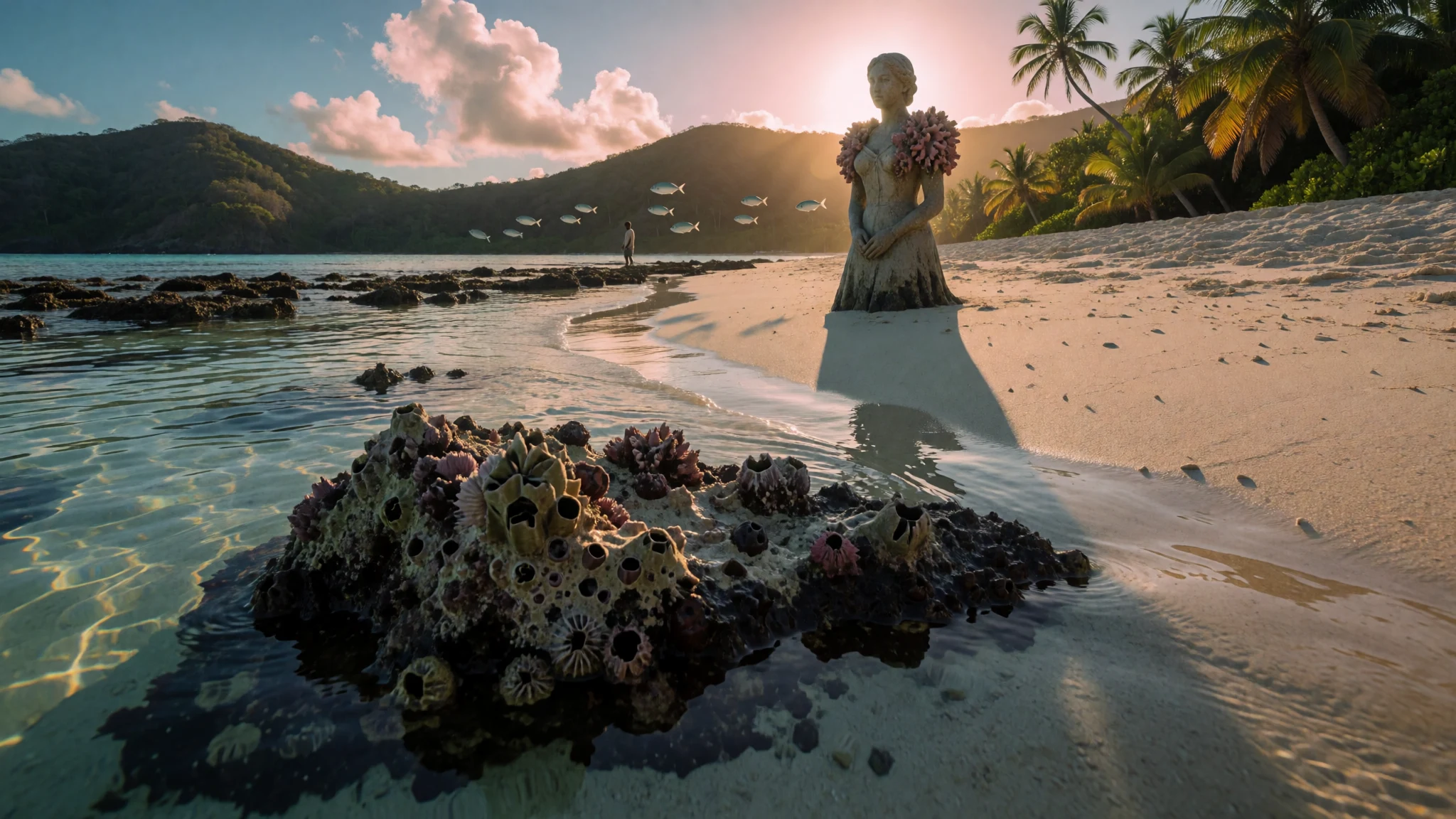
Molinere Underwater Sculpture Park sets human figures on the seabed of Molinere Bay, where art and reef share the same water.
The place
Molinere Underwater Sculpture Park lies in Molinere Bay on the west coast of Grenada, reached by boat from the harbours around St George's. The works stand on the sandy floor rather than in a gallery: human figures, some alone and some in groups, settled among rock and the coral that has begun to use them. Visitors see them in clear tropical water, by snorkel at the surface or with scuba if they are qualified. Closer in, faces, clothes and gestures become readable, and fish move through the same space as the statues.
The bay makes the park a marine outing as much as an art outing. The figures were set where a reef could treat cement as a hard surface, so a visit is a slow circuit by boat and then in the water, not a walk between rooms. Sponges, algae and coral take hold on the casts, and the colour of the scene shifts with cloud and the hour. On a calm morning the seabed is easy to read. After wind or heavy rain the same figures soften into haze, and a careful skipper will say so before anyone enters.
Grenada's west coast frames that choice. The capital sits south of the bay, with its carenage and hillside streets, and the airport is further south again, so the last leg is a boat. Molinere Underwater Sculpture Park cannot be wandered into from a pavement. Visitors meet it from a boat, in swimwear, with a guide. What stays with people is the calm of familiar postures — a worker at a desk, a standing woman, a company of faces — carrying on underwater.
Its story
Molinere Underwater Sculpture Park began as a way to put human portraits in a bay that also needed a rest. The British sculptor Jason deCaires Taylor, working with people in Grenada, made life-casts and translated them into marine cement figures that could be lowered onto the seabed of Molinere Bay. The sitters were local — students and neighbours — so the faces underwater belong to the island, not to a distant studio's models. A severe hurricane had already broken much of the reef, and the new figures gave boats somewhere else to aim and gave marine life a fresh surface. The material was chosen because salt water would not simply destroy it, and because living growth could take hold. A face starts as someone recognisable and becomes habitat: sponge on a cheek, a film of algae, coral along a collar. Storms have moved and broken pieces since the works went in, and repair here means accepting that the sea edits the installation. The Lost Correspondent still suggests a man at his desk. La Diablesse still names a folk woman. Sienna, The Fall From Grace and the Tam CC Project still point at particular people and a particular group, even as detail softens. Molinere Underwater Sculpture Park argues, without a wall label, that care for a coast can start by giving people a reason to look closely. It is a set of portraits lent to Molinere Bay, and the bay decides how long they stay easy to read.
What to see
- La Diablesse — Molinere Bay
La Diablesse is a named figure in Molinere Underwater Sculpture Park, on the sand of Molinere Bay. The title belongs to a Caribbean folk character, a finely dressed woman betrayed by a hoof. Underwater she reads as a poised female form, with fish around her and coral beginning to claim the cement. Divers and snorkellers see her in open water and look without touching figure or reef.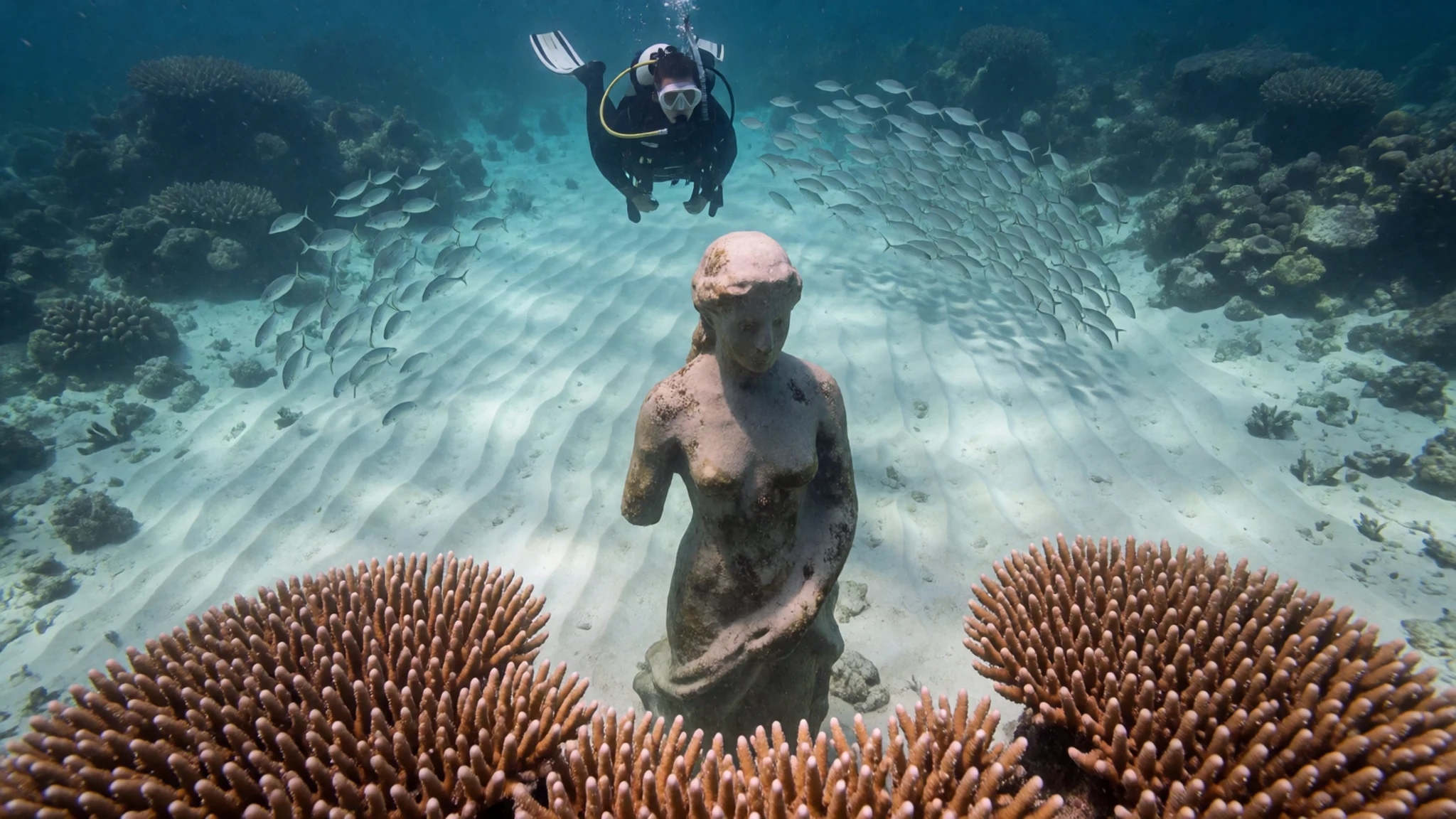
- Sienna — Molinere Bay
Sienna is a named sculpture in Molinere Underwater Sculpture Park, placed with the other figures in Molinere Bay. The work presents a single human form on the seabed, scaled to a real body and left for the water to soften. Boats treat her as one stop on the circuit, best seen on a slow pass with hands kept in.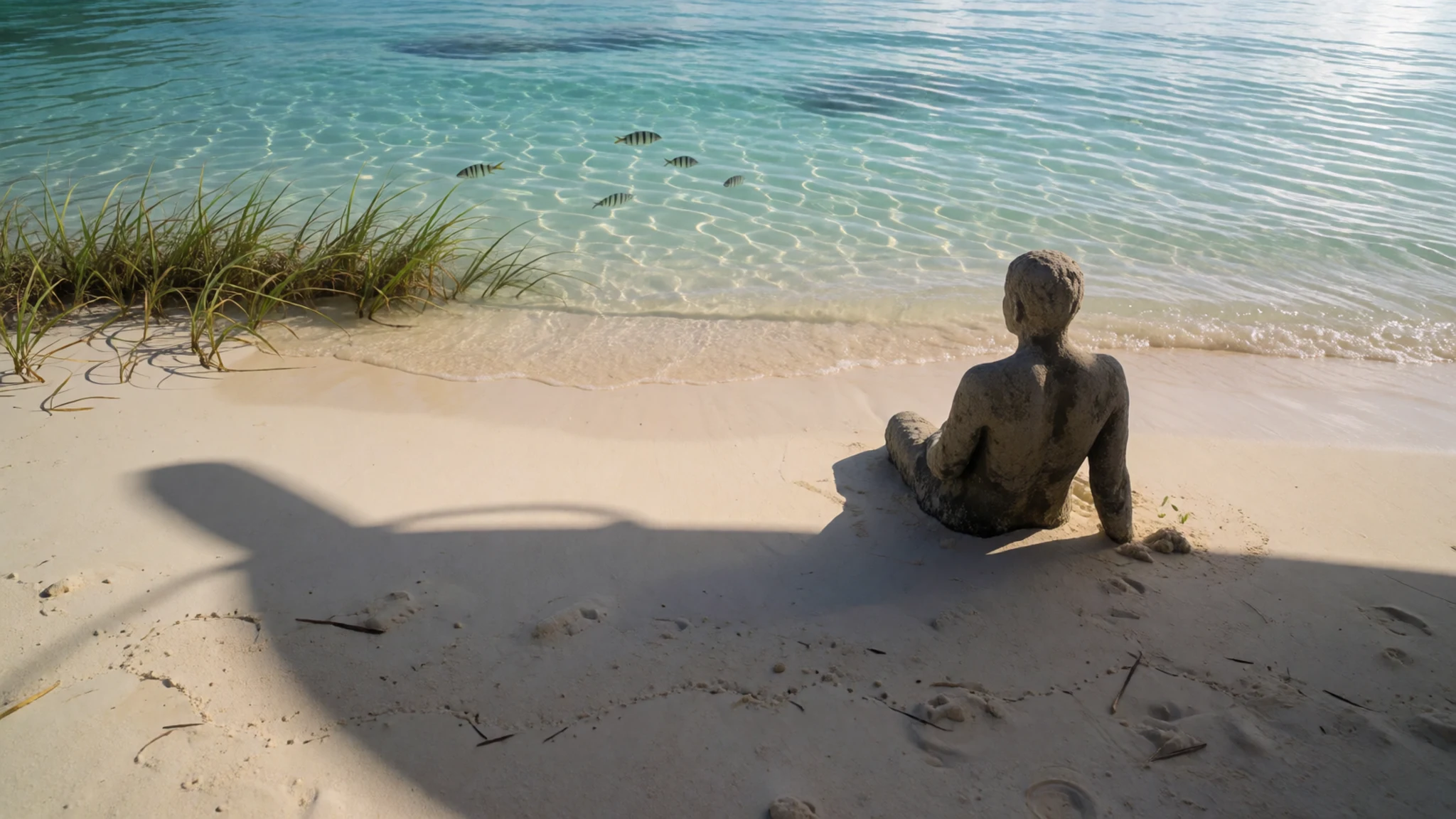
- Tam CC Project — Molinere Bay
The Tam CC Project at Molinere Underwater Sculpture Park gathers a company of faces on a rock face in the shallow water of Molinere Bay. The heads were cast from people in Grenada and placed as a group, so the work reads as a crowd rather than a single sitter. Fish move between the portraits, and the cement has taken on the mottling of a reef.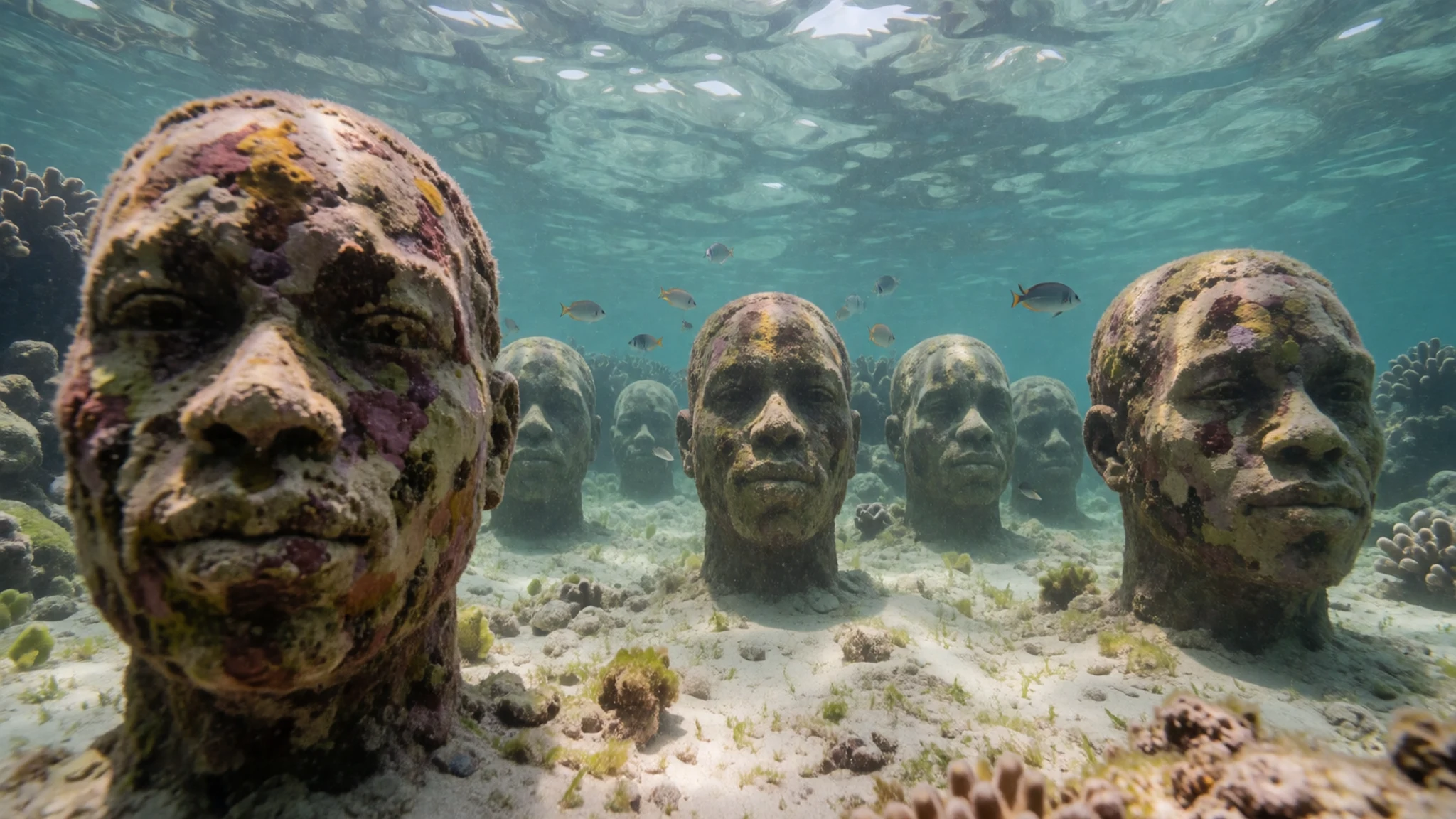
- The Fall From Grace — Molinere Bay
The Fall From Grace is a titled sculpture in Molinere Underwater Sculpture Park, resting in Molinere Bay among the other casts. The name points to a human descent, and the figure rides a bicycle where salt water and marine growth can carry that idea on. Boats pause on the same circuit used for the neighbouring works. Hovering, rather than kneeling on the cast or kicking sand across it, keeps the portrait readable.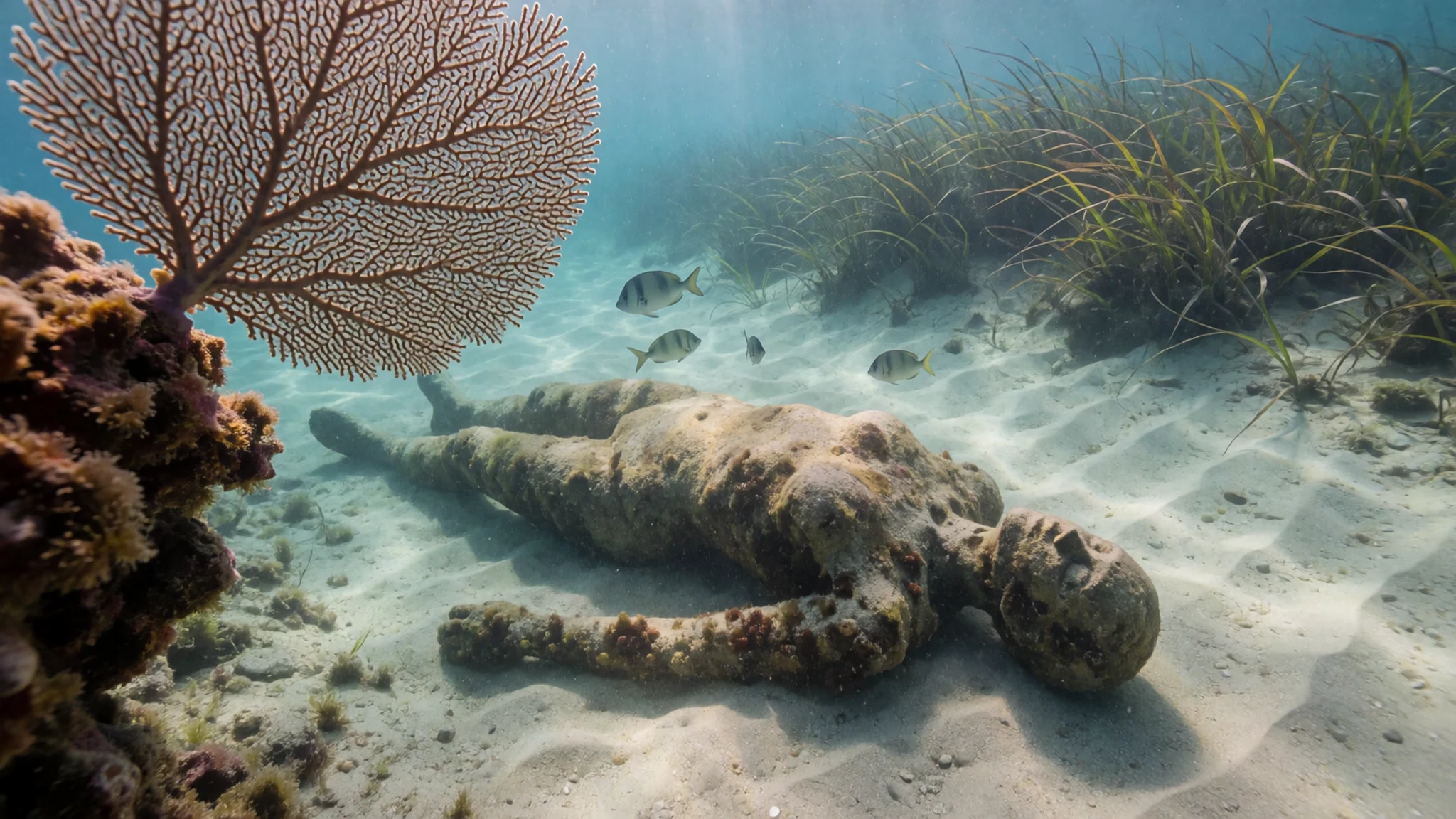
- The Lost Correspondent — Molinere Bay
The Lost Correspondent in Molinere Underwater Sculpture Park shows a man at a desk on the seabed of Molinere Bay, as if the working day had been moved underwater without anyone clearing the table. A typewriter and papers sit with the figure, ordinary tools made strange by the fact that fish now pass where a reader would have stood. The joke and the melancholy arrive together.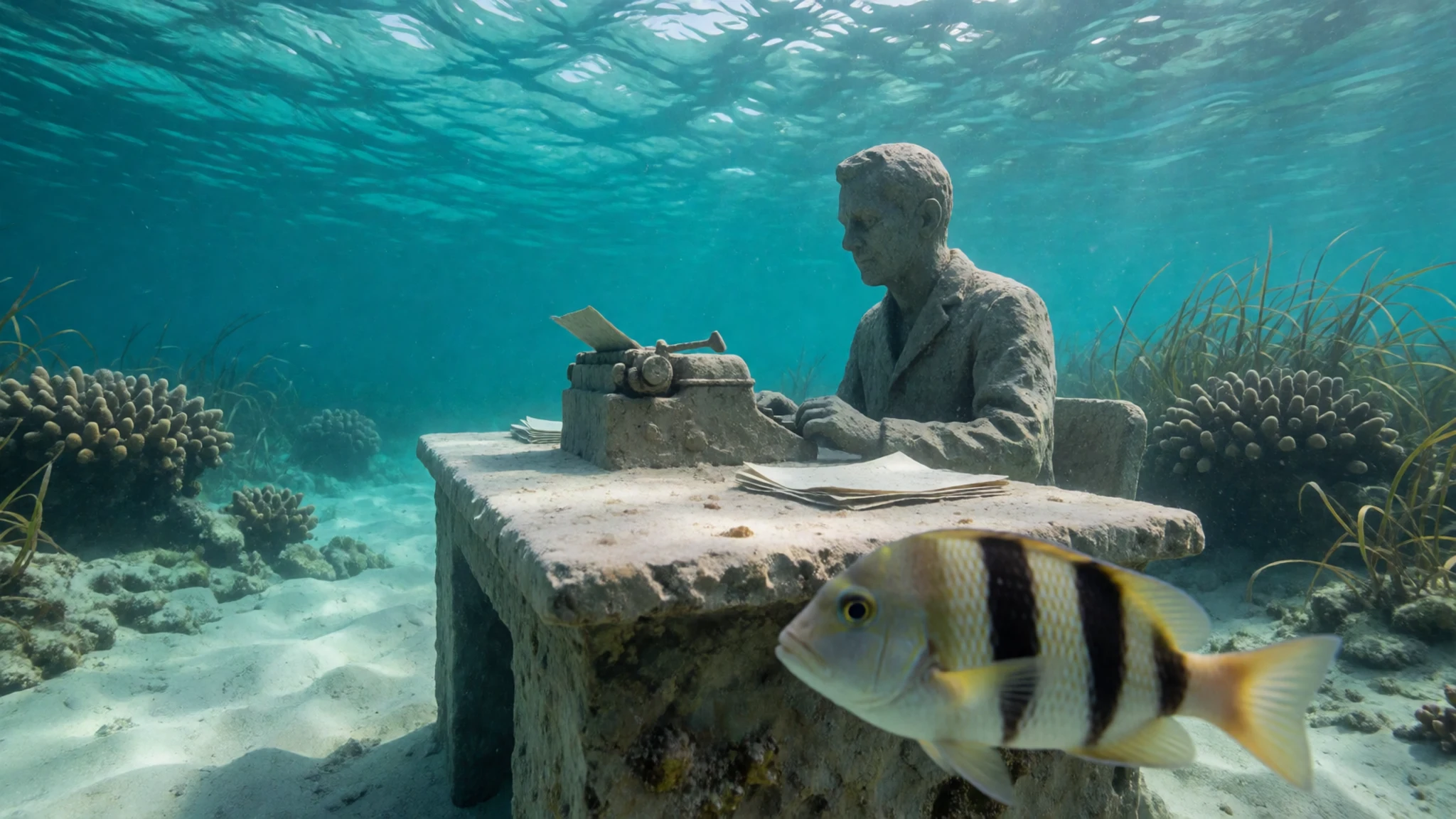
Culture
Molinere Underwater Sculpture Park sits inside a Grenadian culture that already treats the sea as workplace, larder and story. The island's people draw on African, Carib, French and British inheritances, and day-to-day speech is an English that moves easily into local Creole. Folk figures such as La Diablesse still live in that imagination, so a sculpture of that name feels like a neighbour who has gone into the water. On shore, social life gathers in rum shops, churchyards, markets and at carnival, when mas bands fill the streets of St George's and the parishes. Spice is a point of pride as well as a crop: nutmeg, cocoa, cinnamon and clove scent kitchens and market stalls, and the island still introduces itself to visitors through those flavours.
The park adds a newer custom to an old relationship with the coast. Families and students have lent their faces to works that the public then visits by boat, so the art is not only looked at but inhabited by the community that made the models. People talk about the bay in practical terms — whether the water is clear, whether the boat is running — the same way they talk about weather and fishing.
Leave the sculptures and the coral untouched, keep your fins off the sand around them, and follow the guide's signals in the water.
What to wear
Molinere Underwater Sculpture Park is visited in swimwear, but the clothing story of Grenada starts on land. Festive dress still comes out for carnival and for formal community days: women in full skirts of bright printed cotton, often with a headwrap, and men in light shirts, sometimes with a sash or a trimmed jacket. Those prints — florals, checks and African-derived patterns — are the textiles people mean when they talk about dressing for the island rather than for a beach. Carnival pushes that colour further, into beaded and feathered mas costumes made for a street crowd.
In St George's and along the west coast, people wear T-shirts, shorts, sundresses, linen and quick-drying cotton, with a hat against the sun and sandals or trainers. Office and church clothes are neater: covered shoulders, longer skirts or trousers, shoes rather than beachwear. The heat decides more than fashion does.
For Molinere Underwater Sculpture Park itself, visitors need a well-fitting mask and a swimsuit, plus a rash vest or a T-shirt in the water for sun and for the occasional brush with rock. Fins are usual; reef boots help on a rocky entry or a boat ladder. Dangling jewellery is better left on shore, where it cannot catch or go over the side. A long-sleeved shirt and a wrap turn the same outfit into something suitable for a church, a market or a rum shop after the boat returns.
What to eat
- Oil down — Weekend cook-ups and rum shops around St George's
Oil down is the one-pot Grenadians assemble for a gathering after a day around Molinere Underwater Sculpture Park: breadfruit, provisions, salted meat or fish and greens in coconut milk. It is heavy, fragrant and shared. Weekend cook-ups and rum shops around St George's serve it.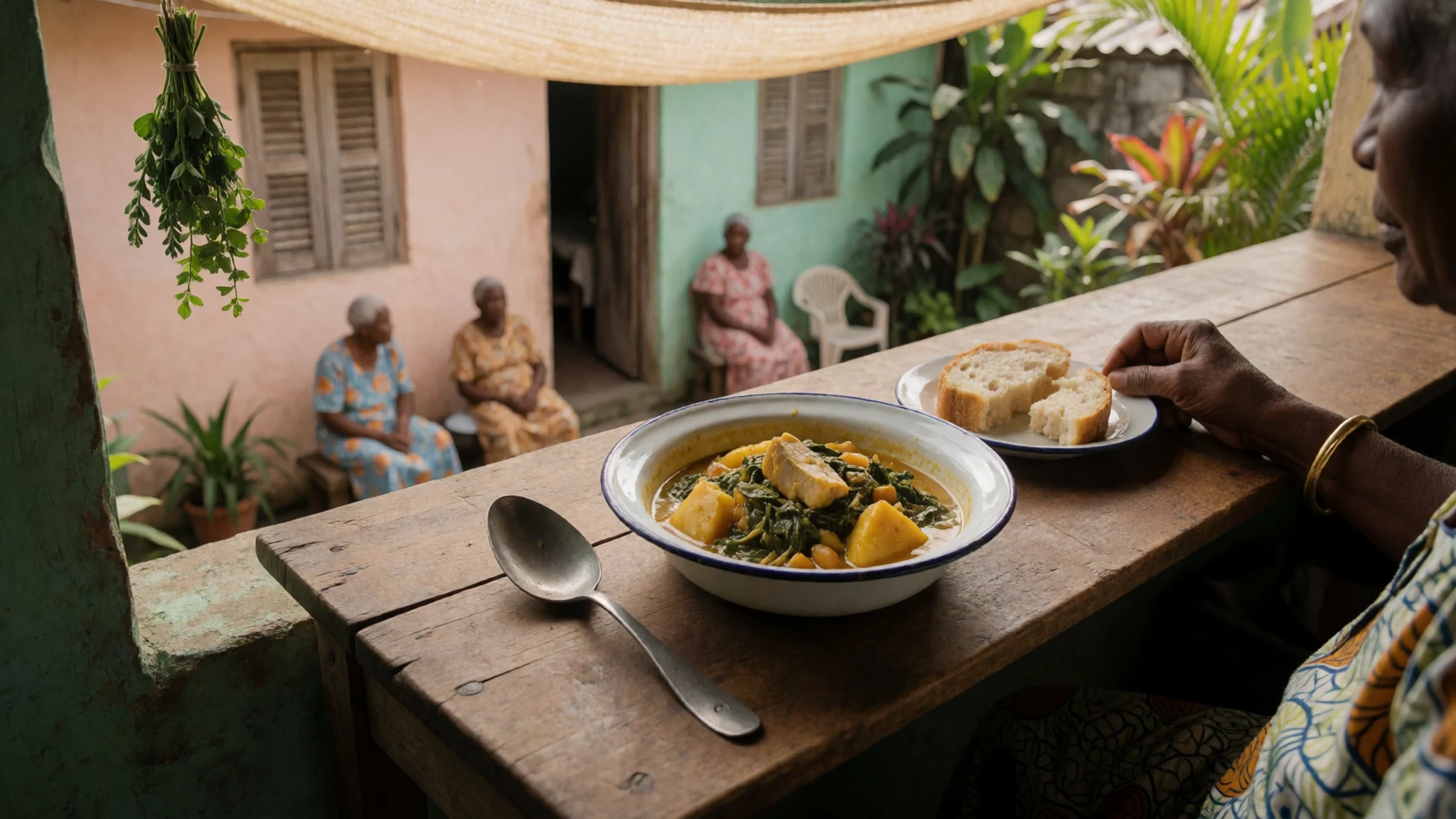
- Roti — Street stalls and takeaways in St George's
Roti is a flatbread wrapped around a curried filling of meat, chicken or vegetables, a legacy of Indian arrivals that is now ordinary Grenadian lunch. The shell should be soft, the curry spiced rather than merely hot. Street stalls and small takeaways in St George's sell it wrapped to carry.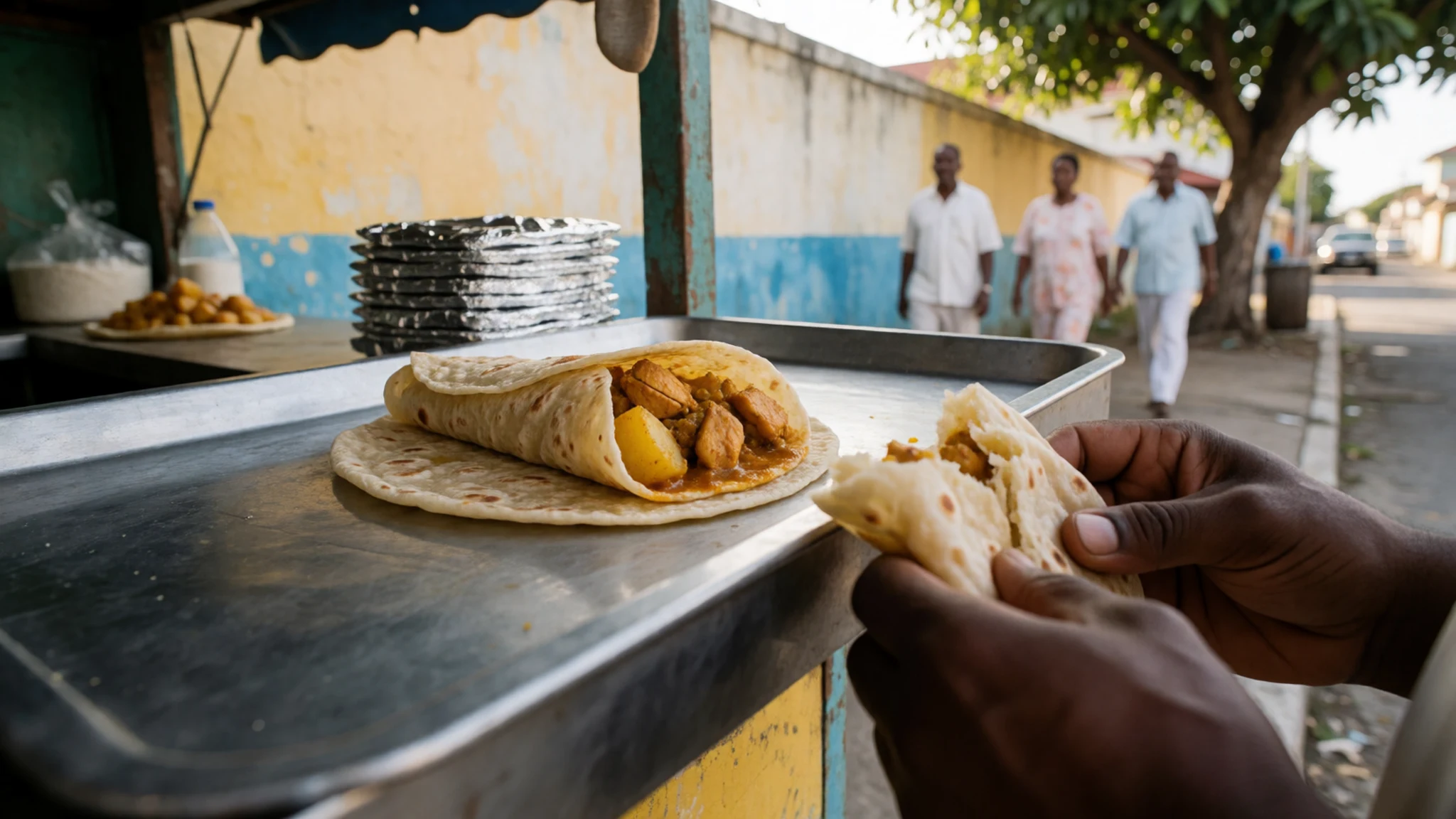
- Lambi — West-coast eateries near the boat landings
Lambi, the local name for conch, is cleaned, tenderised and then stewed, curried or served in a garlic butter at seaside eateries. The meat is firm and marine, closer to a stew than to a raw bar. West-coast eateries near the boat landings serve it later in the day. - Saltfish and bakes — Bakeries and morning stalls near the market in St George's
Saltfish and bakes is the breakfast pair of flaked salted cod, rinsed of its cure, beside fried or griddled dough. Some cooks add a peppery sauce or a little salad onion. Bakeries and morning stalls near the market in St George's have it early. - Callaloo soup — Market cooks and simple eateries in St George's
Callaloo soup is built on dasheen leaves simmered with coconut milk, herbs and often crab or salted meat until the greens turn silky. Market cooks and simple eateries in St George's serve it when the leaves are fresh, sometimes with a dumpling on the side.
Plan it
Best time. Molinere Underwater Sculpture Park is worth the boat when the sea is calm and the water clear. Crews favour the drier part of the year. Wetter months mean heavier showers and a less predictable surface, so confirm the day before and postpone if the wind has risen.
How long. 1-2
Getting there. Fly into Maurice Bishop International Airport on the southwest coast, then take the road to St George's or the west-coast shore. A boat does the last leg out to Molinere Bay. No road ends at the sculptures.
Budget. mid
Tips
- Book a licensed local boat and accept a cancellation when the sea is rough.
- Leave early, while the bay is quieter and the morning calmer.
- Carry cash; cards are uneven beyond big resorts.
- Snorkel with a guide unless you are a certified diver.
Etiquette
- Do not touch sculptures, coral or marine life.
- Keep fins off the sand and never stand on a figure.
- Follow the guide's briefing before anyone leaves the boat.
- Take no fragment, shell or sand as a souvenir.
Nearby
Sources
- Wikidata (CC0)
- Wikipedia (CC BY-SA 4.0)
- Wikivoyage (CC BY-SA 4.0)