St. George's
St. George's, Grenada
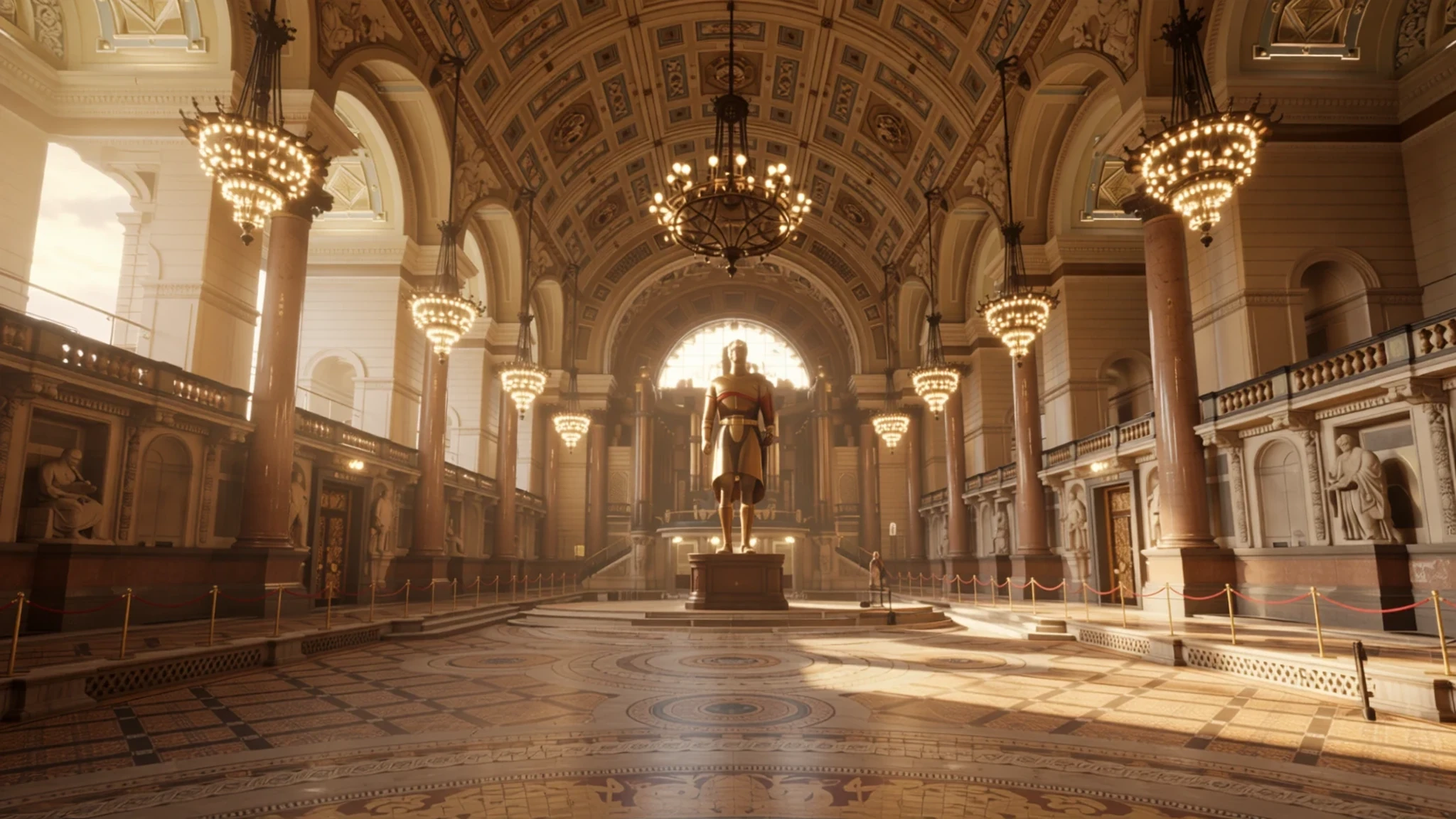
St. George's is a steep spice-port capital where a curved harbour, a hilltop fort and a busy market share the same walk.
The place
Grenada's capital, St. George's, is a harbour town stacked on a ridge between the sheltered inner basin known as the Carenage and the open bay beyond a narrow point. Warehouses, churches and houses step up the slope in tight terraces, their roofs a weathered red against thick tropical green. The streets are short, steep and often too narrow for vehicles to pass each other without a pause. From the higher lanes the whole curve of water reads at once, with fishing boats, inter-island traders and, on busy days, a smaller cruiser in the basin.
The working waterfront is still the town's reason for being. Nutmeg, cocoa, fruit and passengers move through the same small basin that once held colonial shipping. Behind the quay, a street plan never quite settles: lanes bend around the hill, stairways cut between blocks, and a short tunnel punches through the ridge so traffic can reach the outer esplanade without climbing the crest. Shade comes from overhanging upper floors and from the clouds that build over the interior mountains by afternoon.
St. George's is small enough to cross on foot and steep enough that the crossing feels longer than the map suggests. Heat sits in the lower streets; a breeze finds the ridge and the fort. The town is both a capital, with its parliament, cathedral, market and museum, and an ordinary Grenadian neighbourhood where people shop, queue for minibuses and talk on the pavement. Cruise-ship hours change the noise along the water; early morning and late afternoon belong to the people who live here.
Its story
St. George's took its shape from a long argument over a good harbour. French colonists raised a fort on the western point and set a small town along the inner water, still called the Carenage from the old practice of hauling ships over to clean their hulls. Britain later held the island, and the capital thickened in brick and cut stone: warehouses on the quay, a church on the ridge, barracks that now house a museum. English names lie over a French map, which is why the geography of St. George's still sounds bilingual even when the conversation is in English or in Grenadian Creole.
Storms and fires have edited the skyline more often than any planner. The Anglican church on the hill was left open to the weather after a violent hurricane tore its roof away, and it has since been closed in and returned to parish life. The parliament building on the same steep street, York House, holds the House of Representatives, the Senate and the Supreme Court. New work sits beside the old without much ceremony: block and concrete next to Georgian openings, modern paint on salt-bitten stone.
The cargo changed as the island's farms did. Nutmeg, mace, cocoa and the smaller spices became what St. George's sent out, and that trade still scents the market and the warehouses. The town is also the seat of a country that left colonial rule and governs itself. What a person can see without an archive is enough to hold the plot: a fort over a basin, a church repaired after the wind, a market that outlasts governments, and streets that refuse a flat grid.
What to see
- The Carenage — the inner harbour
The Carenage is the inner harbour of St. George's, a curve of water walled by warehouses and painted buildings. Schooners and small cargo boats tie up on the quay, and smaller cruisers share the basin with the inter-island ferry. The curve is nearly level and open to the breeze, looking back at the fort and the roofs above. In the morning it is plainly a workplace.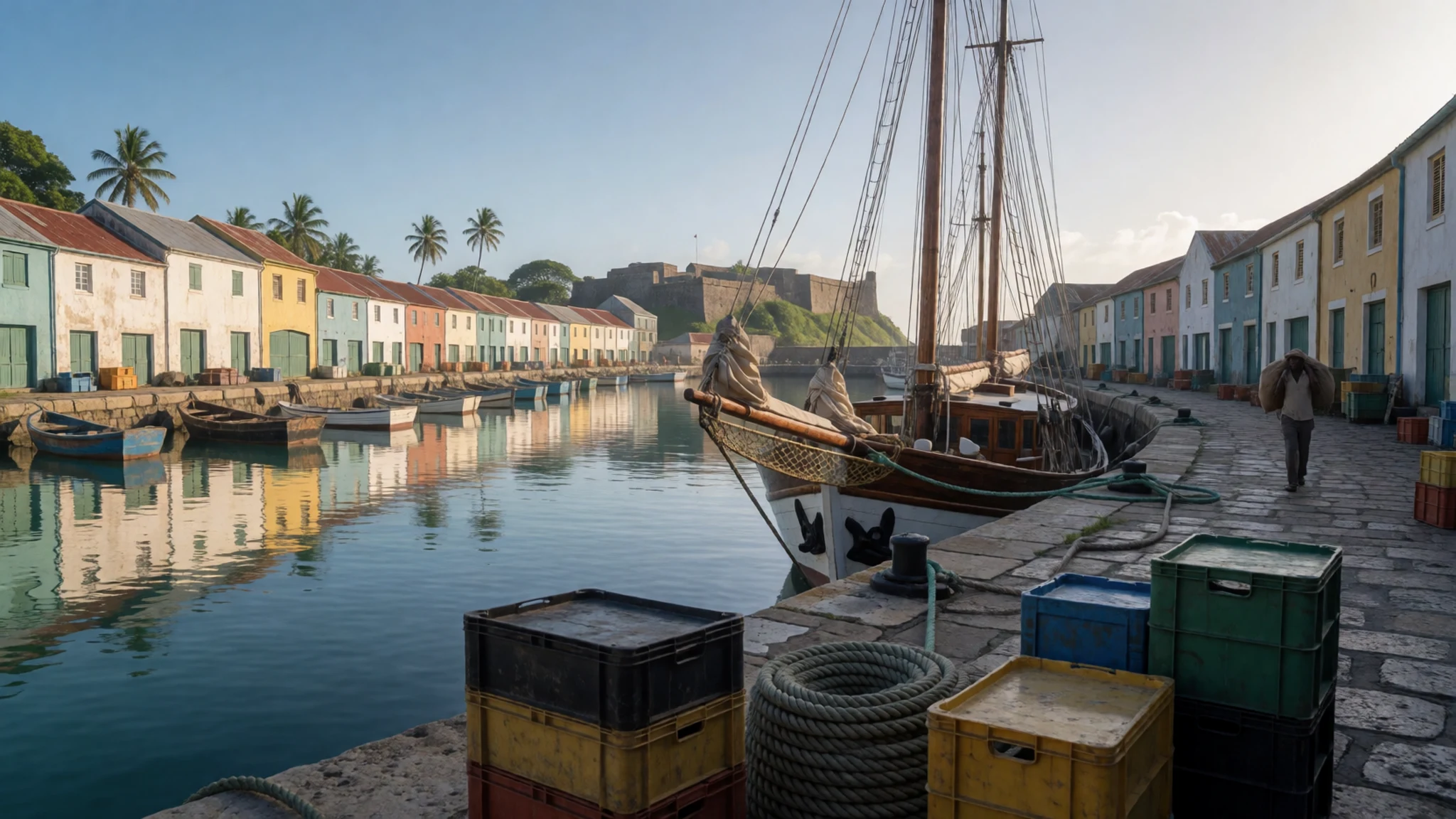
- Fort George — the western point
Fort George stands on the point that closes the harbour at St. George's, a stone fort with ramparts over the Carenage and the outer bay. Raised by the French and kept by later garrisons, it has also served civilian and police uses. The walk up from the waterfront is short and steep. From the walls the town's plan is obvious: basin, ridge and church roofs in a wide view.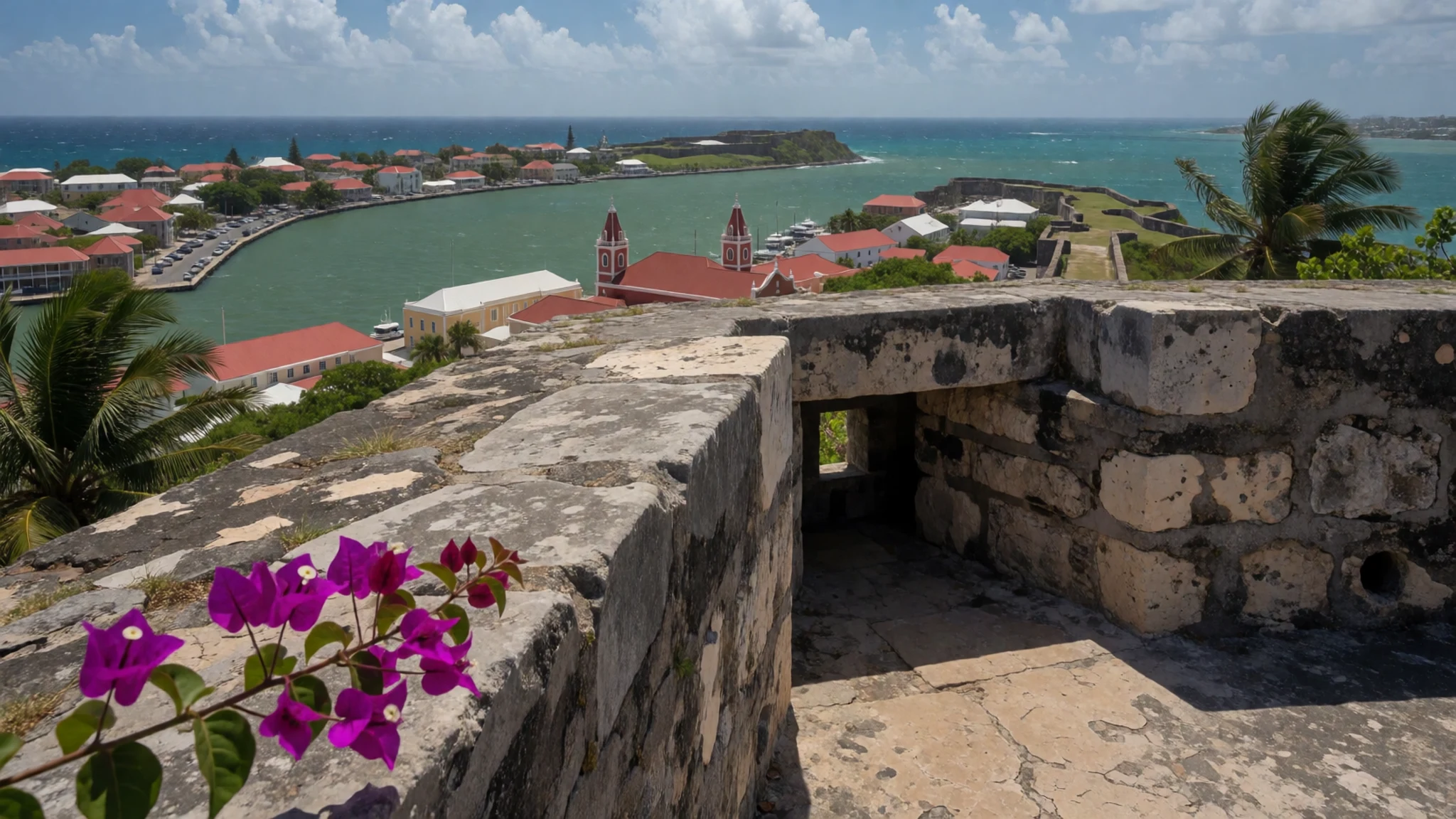
- Cathedral of the Immaculate Conception — the ridge
The Cathedral of the Immaculate Conception rises on the ridge in St. George's, and its tower picks the skyline out from the water. A tower of 1818 crowns the church, and a brightly painted interior fills the nave. It is a parish building first, though visitors do step inside to see the painted interior. Quiet and covered shoulders are expected.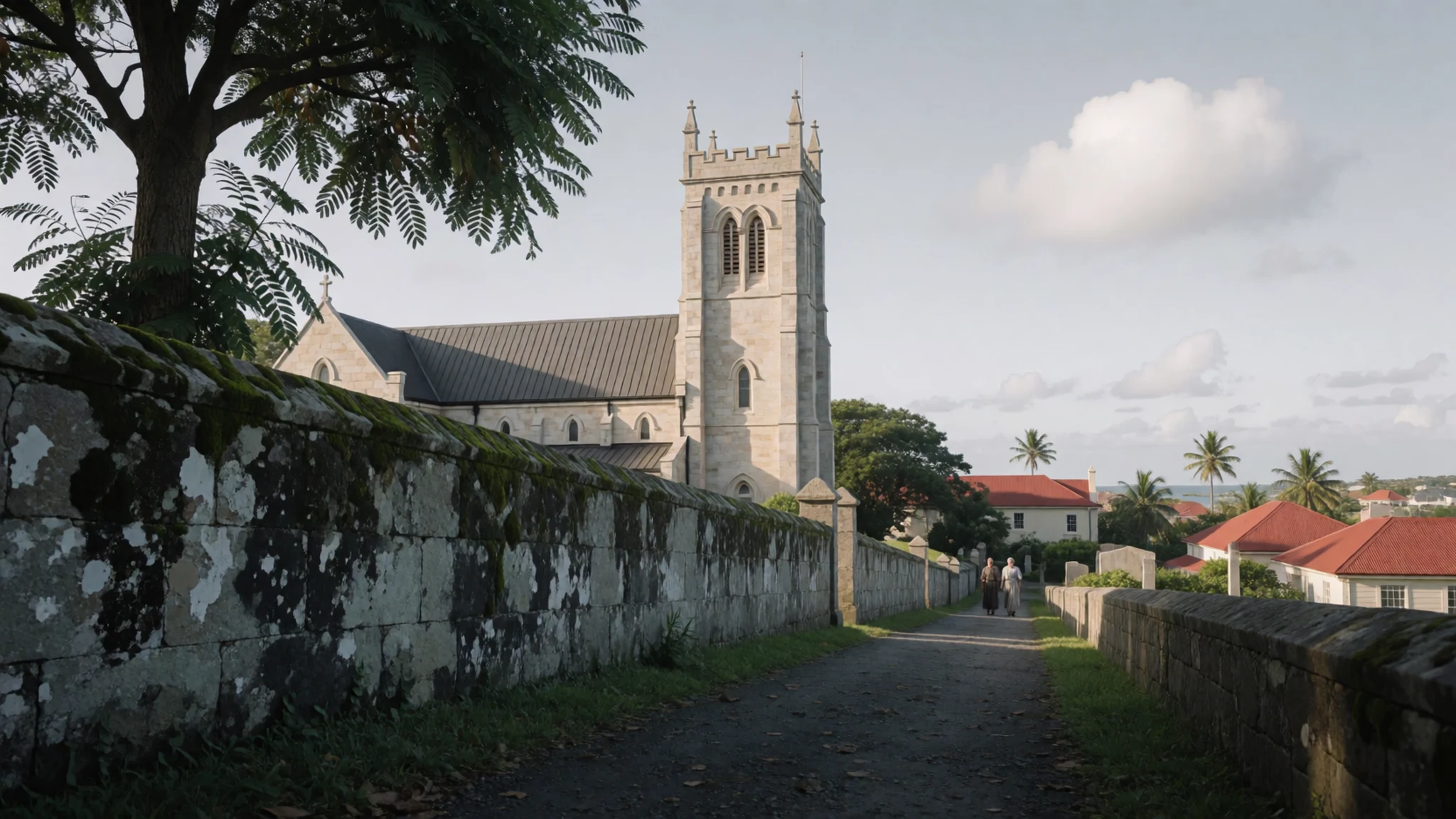
- Market Square — central St. George's
Market Square is where St. George's provisions itself: nutmeg, cocoa, fruit, vegetables, fish and household goods, and Saturday morning fills the aisles. Minibuses work the streets around the square. Visitors buy whole spices to carry home, while cooks buy the week's food. Arriving before the heat builds suits anyone after produce, and a vendor should be asked before a camera comes out.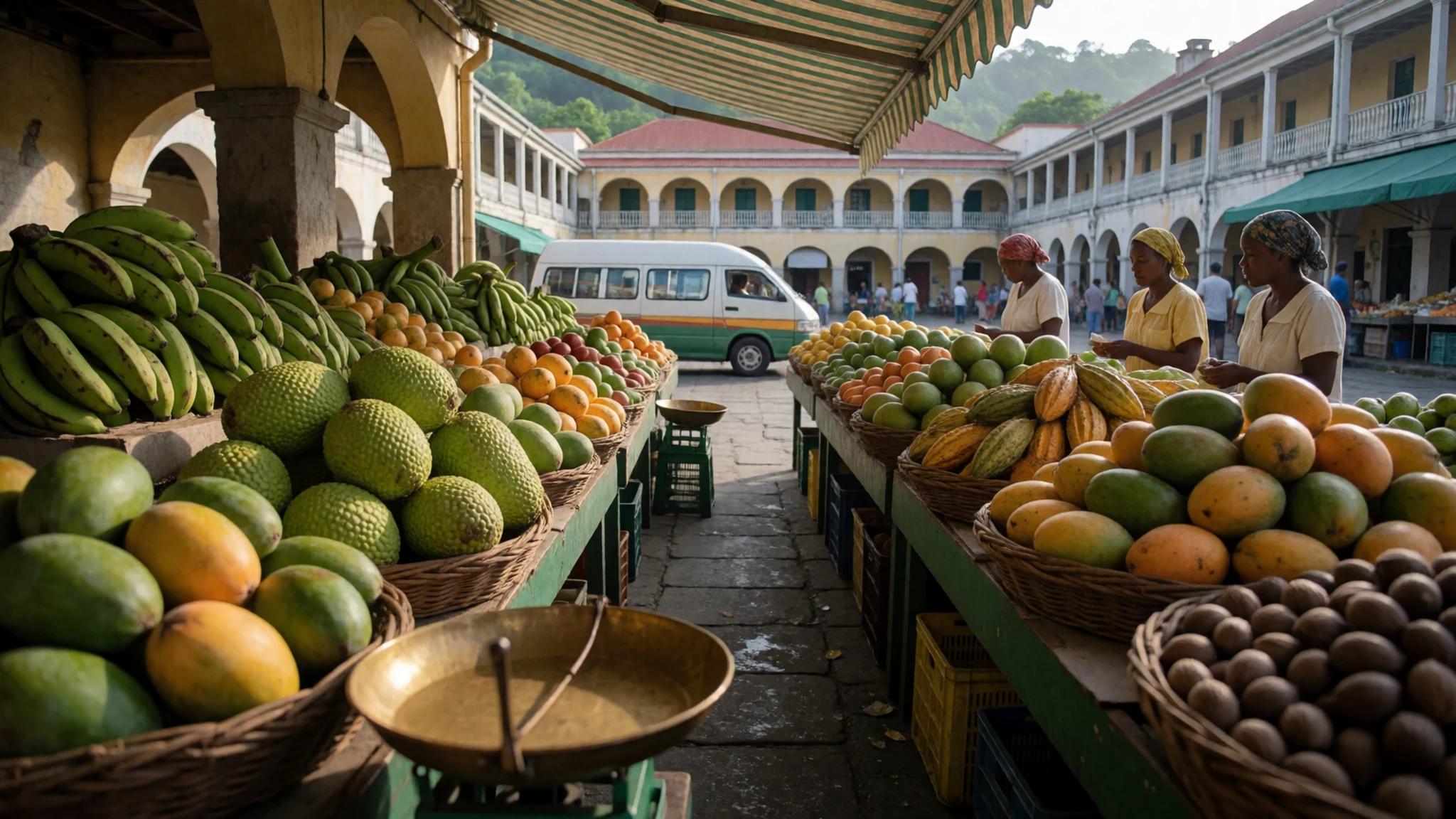
- Parliament building ruins — Church Street
The parliament building on Church Street in St. George's, York House, holds the House of Representatives, the Senate and the Supreme Court. It reads as a working chamber for parliament and the court, rather than as a monument. The cathedral is a short walk away on the same hill. What a visitor finds is parliament and the court at work.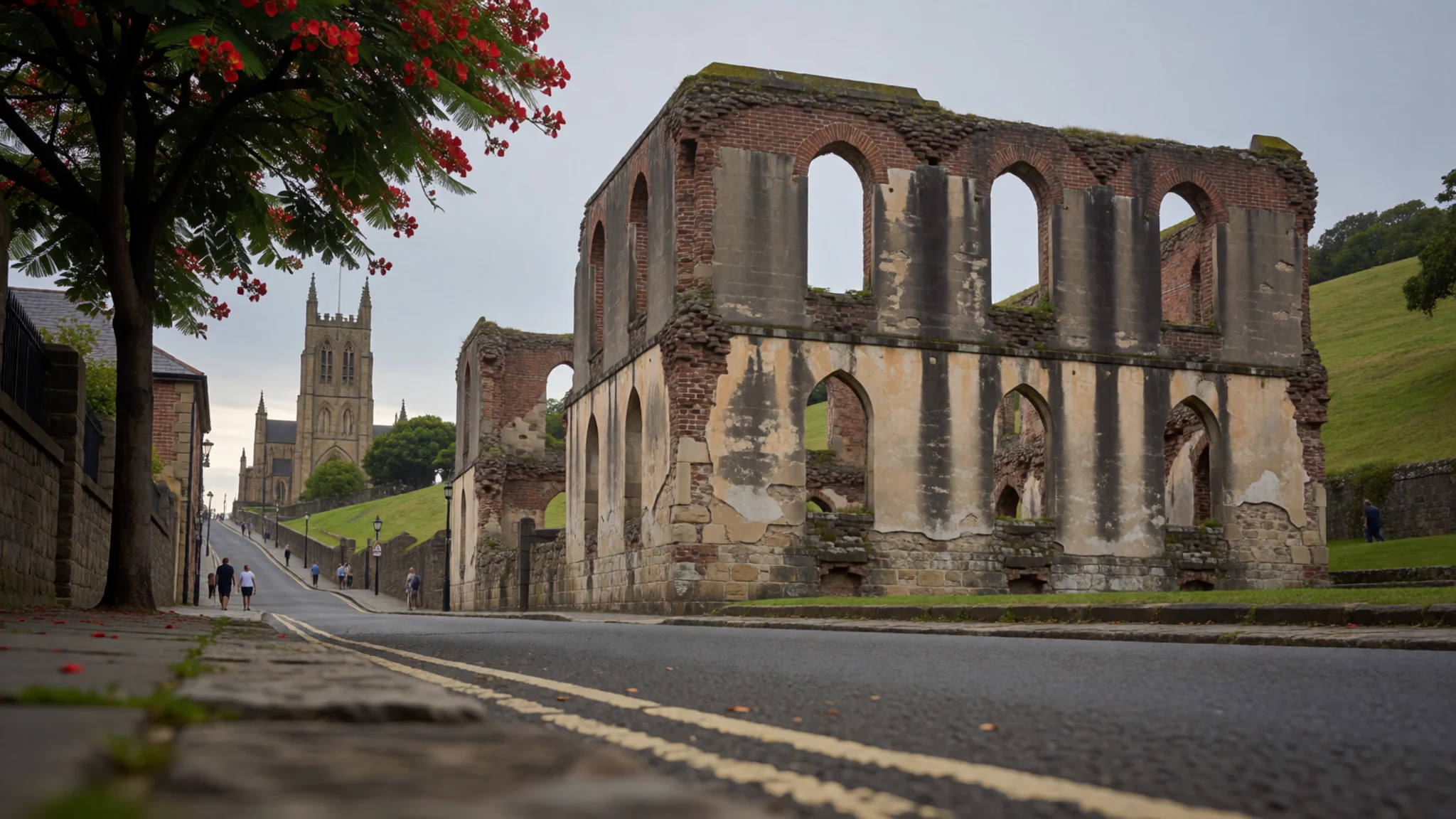
Culture
St. George's carries a Creole culture built from West African, French and British inheritances and from the habits of a small capital. English runs school, church and government. Grenadian Creole English runs the market, the pavement and the minibus. French lingers in the map — Carenage, the bays named Anse — and in surnames, more than in daily speech.
Saturday is for the market and for cooking at home. Sunday still quiets much of the town for church, and people dress up for it. In the hotter months Spicemas, the island carnival, takes the capital over: soca on the streets, pretty mas in beads and feathers, and jab jab bands in oil or paint, with horns and chains, a tradition with its own rules. Between festivals the week is rum shops, cricket talk, church committees and the evening walk. Nutmeg is a national mark as well as a crop, and cocoa and cinnamon sit inside family recipes and inside the story the island tells about itself.
Outsiders are easy to spot and generally made welcome, provided they do not treat the town as a backdrop. In St. George's, greet someone before you ask a favour, cover your shoulders in the cathedral, and ask before you photograph a person at the market.
What to wear
St. George's keeps traditional dress for carnival and for the stage, not for a Tuesday morning. At Spicemas the streets fill with jab jab figures in darkened oil or paint, horns and chains included, and with pretty mas costumes of beads, feathers and bright cloth. Madras plaid, a cotton trade textile long tied to French-Creole dress in the eastern Caribbean, still appears in headwraps and in the formal cultural clothing worn for national events and dance. Sunday around the cathedral has another code entirely: dresses, hats and pressed shirts, chosen to be seen by neighbours.
On an ordinary day the capital dresses for heat and hills. Light cotton, short sleeves, skirts or trousers, and sandals or trainers are what people actually wear. Clerks and officials add a collar; schoolchildren wear uniform. Visitors will be more comfortable copying that weekday habit than copying carnival. Bring a hat, clothing that breathes, and shoes with a grip, because the lanes are steep and rain makes them slick. Keep swimwear for the beach. Carry a shirt that covers the shoulders for the cathedral, and expect a short, heavy shower even in a bright week.
What to eat
- Oil down — Saturday cookshops near the market
Oil down is Grenada's pot of breadfruit, salted meat, coconut milk, dumplings and spice, cooked down until the liquid is absorbed. In St. George's it is more a weekend and home dish than a waterfront performance. Saturday cookshops near the market are the place to ask for it.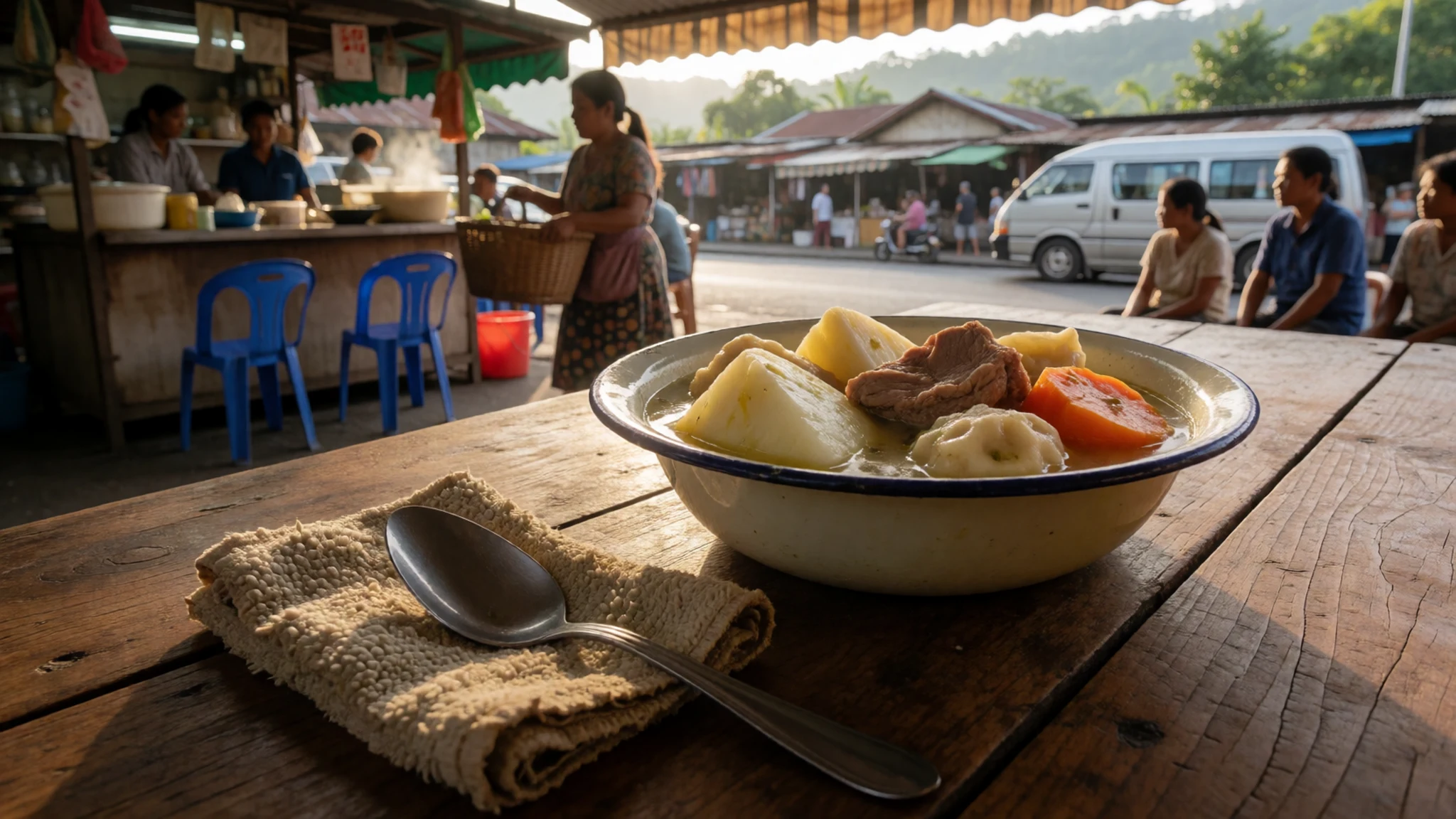
- Roti — lunch counters by Market Square
Roti in St. George's is a flatbread folded around a curried filling of chicken, goat or vegetables, with potato often in the mix. Lunch counters by Market Square and on the busier streets sell it wrapped to carry. It travels well on the walk up to the ridge.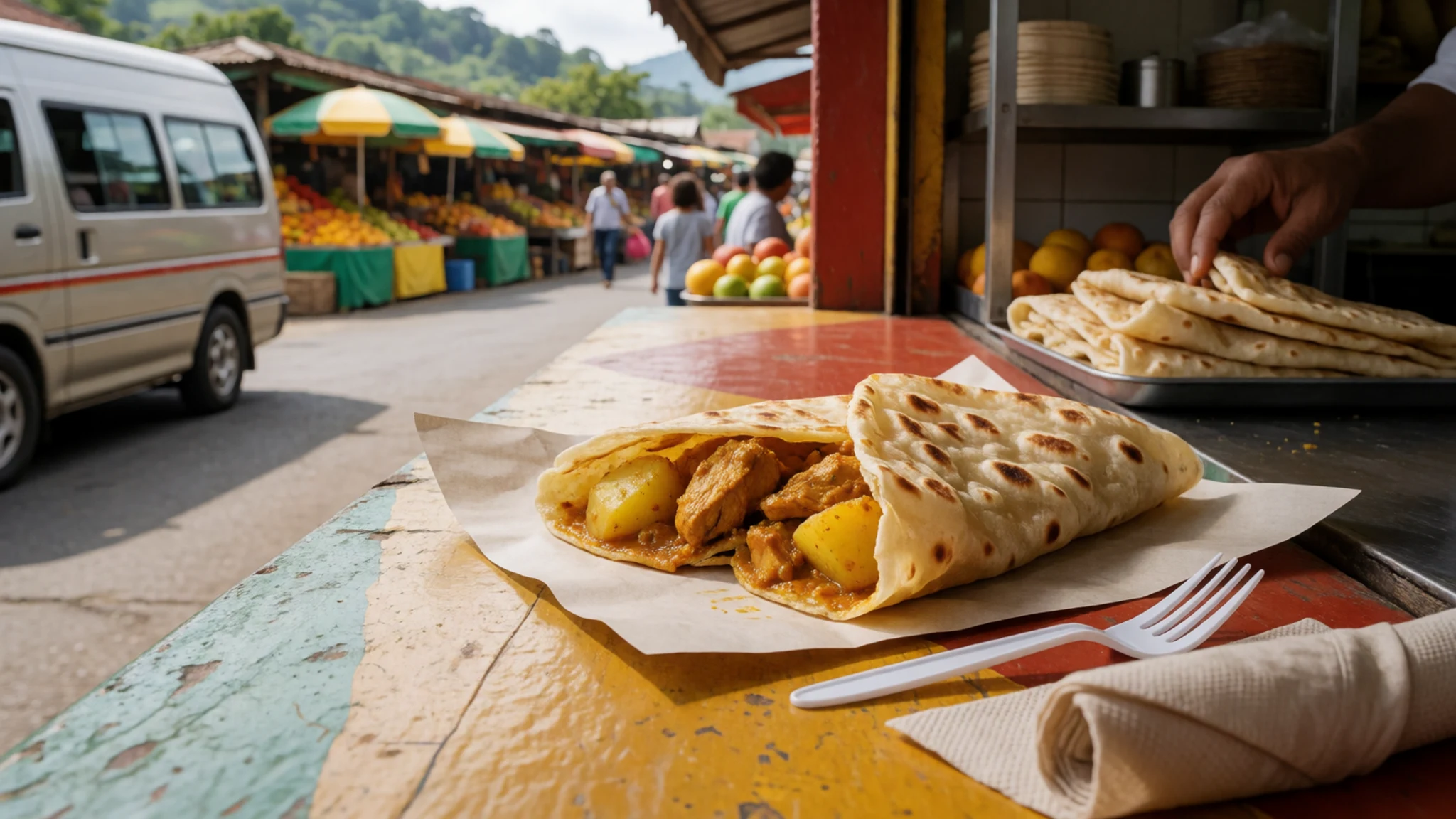
- Lambi — waterfront cookshops and market-side eateries
Lambi is conch, served in St. George's stewed, curried or soused with lime, onion and hot pepper. The flesh is firm and the seasoning leans on local spices. Waterfront cookshops and market-side eateries are where to ask for it. It is everyday island food, not a rarity saved for celebrations. - Callaloo — market cookshops
Callaloo is a thick soup of young dasheen leaves, often with coconut milk, crab or salt meat, okra and a dumpling. In St. George's the market cookshops ladle it when the leaves are in. Eaten with bread or the dumpling in the bowl, it counts as a meal. - Bakes and saltfish — vendors near the market and the minibus stands
Bakes and saltfish is a morning plate in St. George's: fried dough beside salted cod cooked down with onion, pepper and tomato. Vendors near the market and the minibus stands sell it early, to people on the way to work. Pepper sauce on the side is part of the plate.
Plan it
Best time. St. George's is kinder to walkers in the dry season, January to May, and most comfortable in February to April; September is the hottest month and November the wettest, in the wet season from June to December. From June onward rain is more frequent, the sun still fierce between showers, and tropical storms become a real planning risk toward autumn. Any month rewards an early start, before the harbour streets heat up.
How long. 2–3
Getting there. Maurice Bishop International Airport sits on the south-western coast, and the last leg into St. George's is a coastal road that ends at the harbour. Large cruise ships dock west of the inner harbour at a terminal just north of Fort George, while smaller cruisers and the inter-island ferry use the Carenage. The island has no railway. Regional flights and the occasional ferry link other Caribbean islands; confirm those with the operator.
Budget. mid
Tips
- Start on the Carenage early, before smaller cruise ships crowd the quay.
- Wear shoes that grip; lanes in St. George's are steep and can be slick after rain.
- Carry some cash for the market and for minibuses.
- Bring water; shade is patchy in the lower streets and the sun is strong.
- If a storm is in the forecast, check the official site and keep the next day loose.
Etiquette
- Greet a person before you ask a question or a price.
- Ask before photographing people, especially stallholders in the market.
- Cover shoulders and speak quietly inside the cathedral.
- Treat the harbour as working water, not as a place to swim.
Nearby
Sources
- Wikidata (CC0)
- Wikipedia (CC BY-SA 4.0)
- Wikivoyage (CC BY-SA 4.0)