Carriacou
Carriacou, Grenada
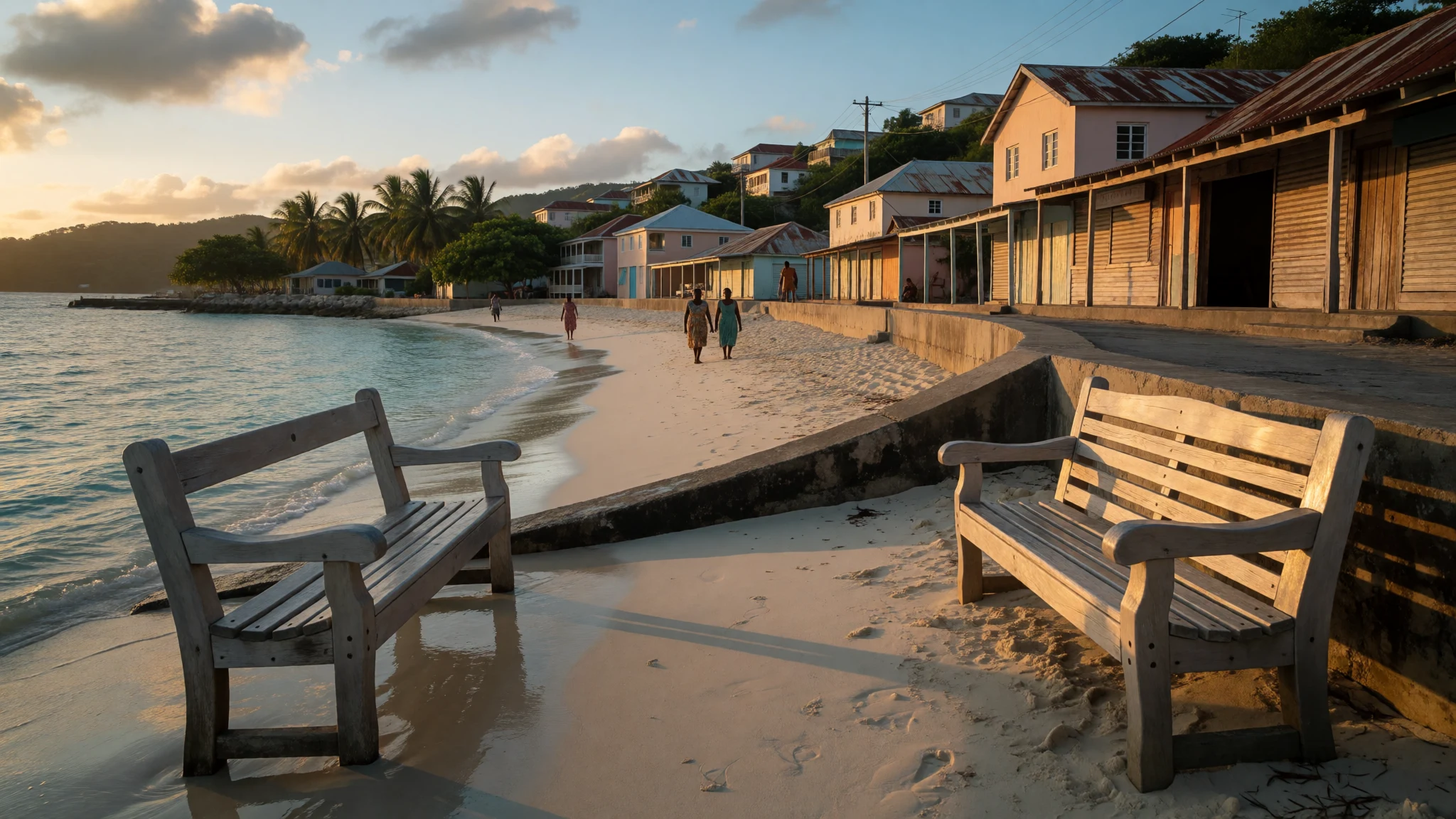
Carriacou offers a working Grenadine harbour, village boatbuilding and quiet bays without a resort strip.
The place
Carriacou is a small Grenadine island belonging to Grenada, set between the Caribbean Sea and the open Atlantic, with Hillsborough as its principal town and Tyrrel Bay as its harbour. The settlement runs along a shallow bay: a jetty, a thin strip of sand, timber and concrete buildings, and low hills rising behind the roofs. South and west, Tyrrel Bay folds into mangroves and a sheltered anchorage used by local boats and visiting yachts; on the windward side, the village of Windward faces the swell, and wooden hulls take shape on the beach. Between these points the island is a patchwork of dry pasture, kitchen gardens, a few taller wooded ridges and narrow roads that climb and drop without ceremony. Life is scaled to the parish rather than the resort. People move by minibus, by foot and by dinghy; the day's noise is outboard engines, roosters, a radio in a shop doorway and, on some weekends, a sound system on the waterfront. Carriacou shares Grenada's laws and public services, yet it feels distinct the moment the ferry or the small aircraft arrives: fewer visitors, more people who know one another, and a coast where fishing and boat work still sit in plain view. Shade is precious at noon. Evenings bring a breeze off the water and a slow gathering near the jetty, the rum shop and the church steps. The island rewards unhurried looking — a hull, a graveyard, a mangrove creek — more than a checklist of viewpoints.
Its story
Carriacou's story runs from Indigenous life in the Grenadines through European rivalry, plantation slavery and a long seafaring aftermath. French and British rule both left marks in place names, in churchyards and in families with cousins on Grenada, on neighbouring islets and in cities overseas. Estates once organised the land; after emancipation they gave way to small plots, fishing and wooden trading boats. At Windward that building became a village art, with sloops lofted on the sand and launched by the people who would sail them, a skill still visible in hulls on the stocks. The public year turns on church feasts, on village fêtes and on the Carriacou Regatta, when workboats race off Hillsborough and absent families come home. In the yards, Big Drum keeps an African inheritance in use: nation rhythms, response songs and rites for the dead, held for the community rather than for a paying audience. Migration has shaped the island as surely as the sea. People have long left for work abroad and returned for regatta, for Christmas and for funerals, so houses pass through empty months and crowded ones. Storms belong in the same memory. Roofs, jetties and boats are rebuilt, and particular hurricanes are spoken of as neighbours would speak of a hard year. None of this is presented as a gallery. It stands in the angle of a grave, the ribs of a hull and the moment a dance begins only when the right people have arrived.
What to see
- Hillsborough — Hillsborough
Hillsborough is Carriacou's chief town, and the ferry lands at Tyrrel Bay. A jetty and a narrow beach face the bay, with shops and guesthouses on the shore road and houses climbing the hill behind. The local museum keeps objects from Indigenous occupation and estate years; hours are informal, so ask in town rather than trusting a timetable. Late afternoon suits the waterfront, when heat eases and people come down to the sand.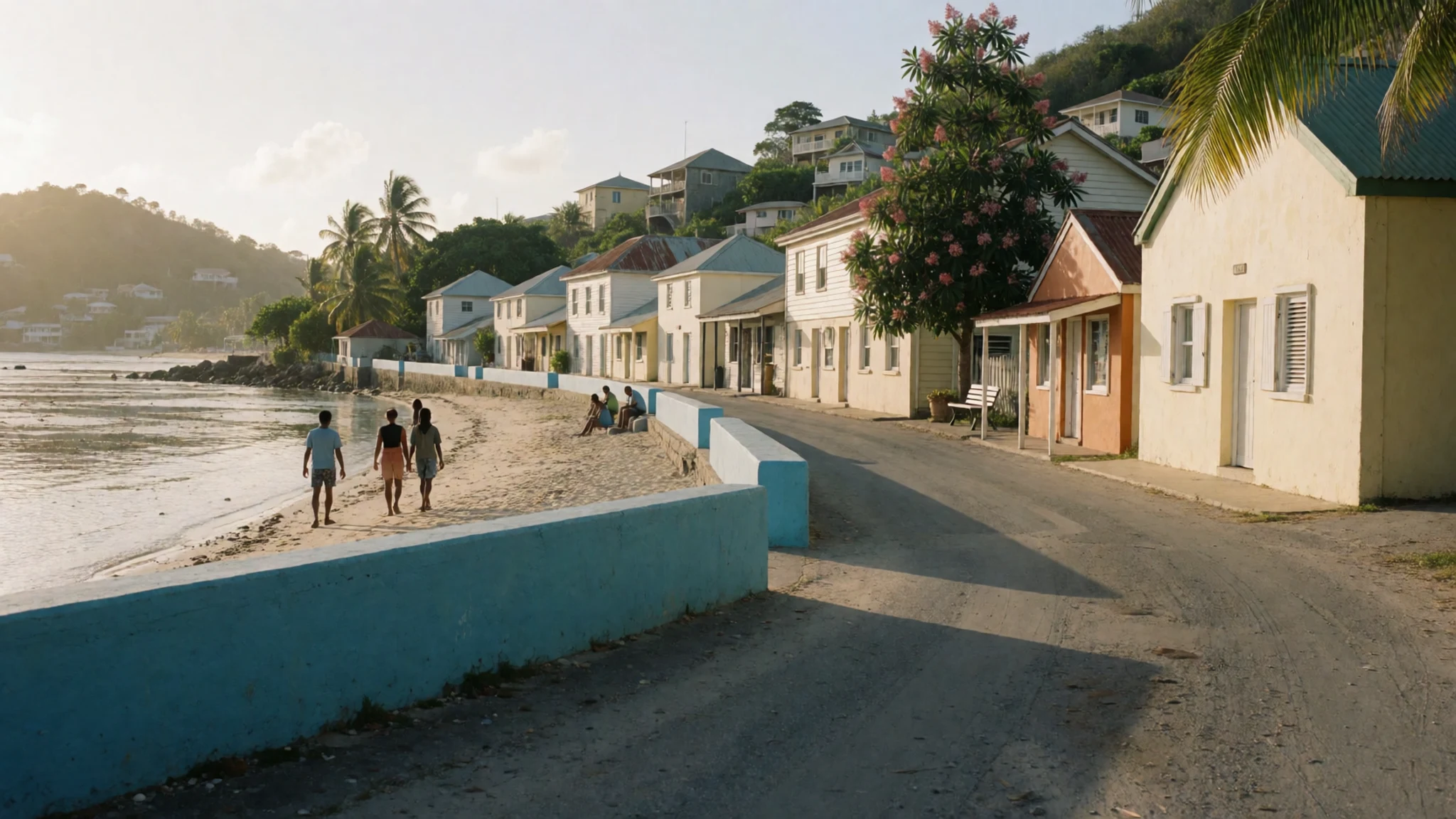
- Windward boatbuilding — Windward
Windward is the village on Carriacou's Atlantic coast where wooden boats are still built in the open. Hulls rest on stocks above the sand, and ribbing, planking and paint happen in public among houses and gear. Builders work by inherited measure, and a launch is still a village occasion. Stand on the road or the beach edge, clear of tools and of any hull underway.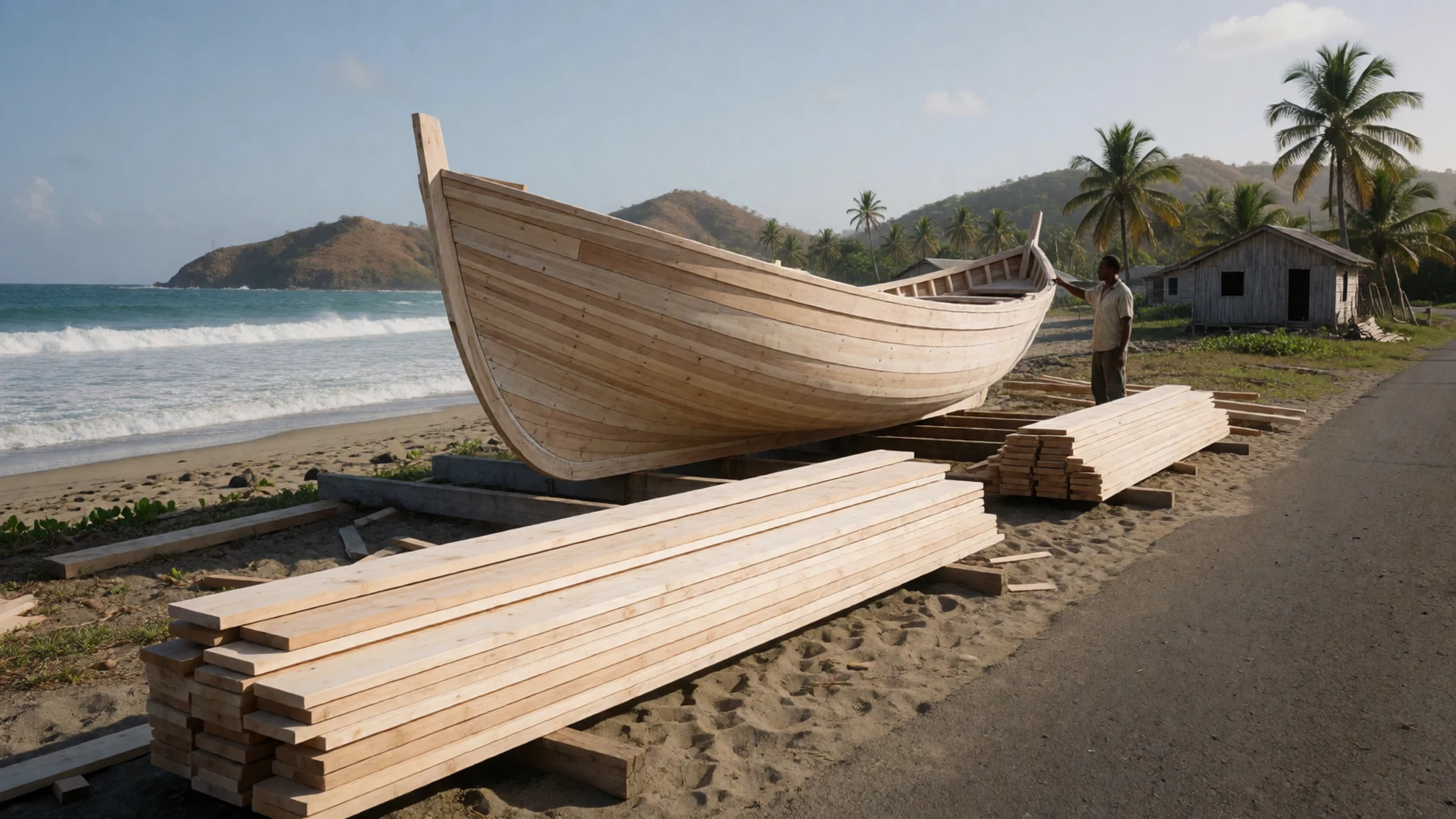
- Tyrrel Bay — Tyrrel Bay
Tyrrel Bay is the mangrove-lined anchorage on Carriacou's south-western shore, used by local craft and visiting yachts. Cookshops, small bars and boatyard work line a short waterfront, with dinghies between the moorings and the dock. The creek is known for oysters, sold when season and picker allow. Morning is the comfortable time to walk. The mangroves are a working habitat: look, and leave roots and beds alone.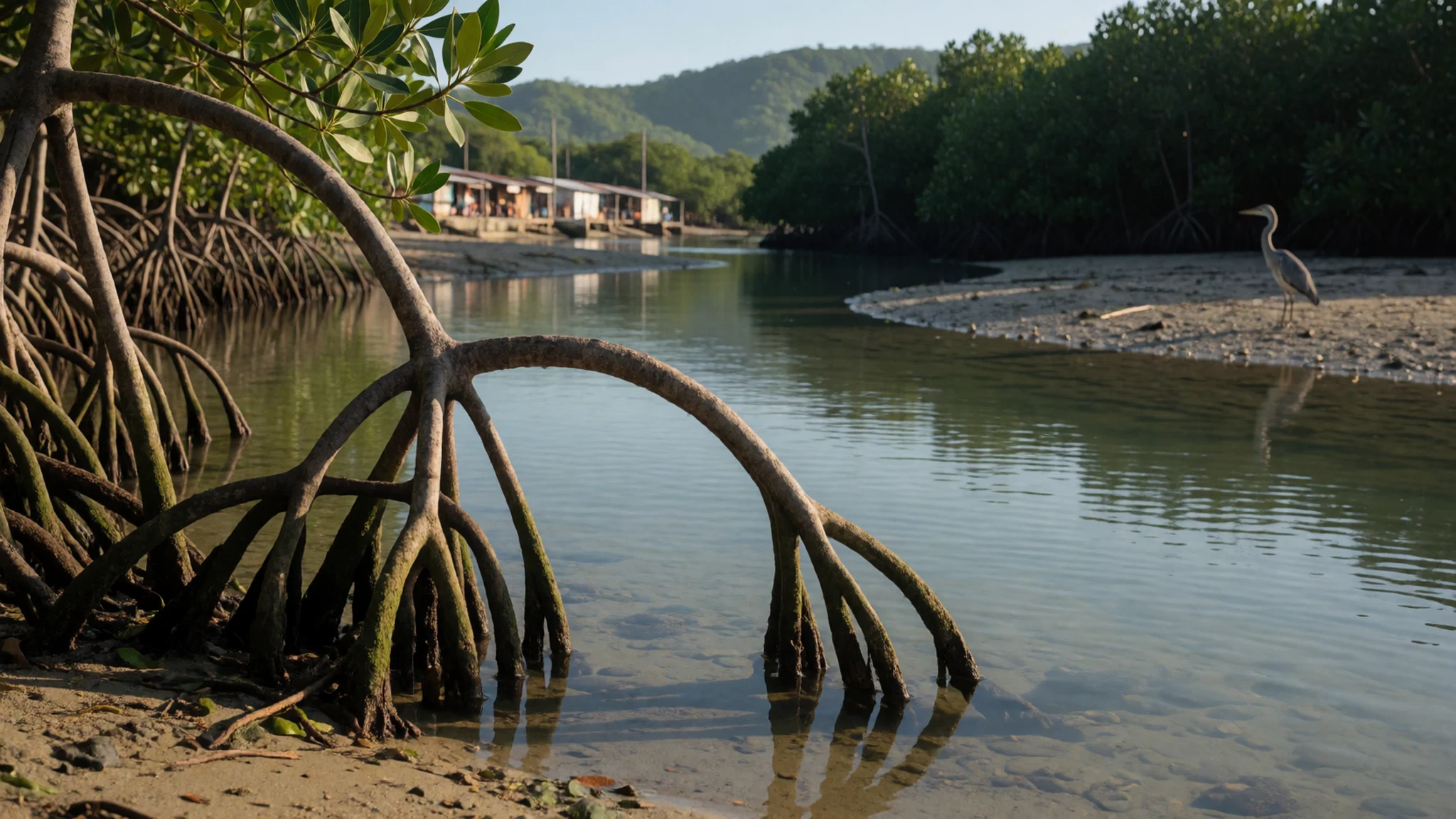
- Sandy Island — Hillsborough Bay
Sandy Island, a short boat ride from Hillsborough on Carriacou, is a thin cay of sand and sea-grape. Calm mornings give clear water and a brief walk around the shore. Shade is scarce, so carry drinking water, and take rubbish away on the boat. Cross with a local boatman; the channel is no place for a casual swim when the wind rises.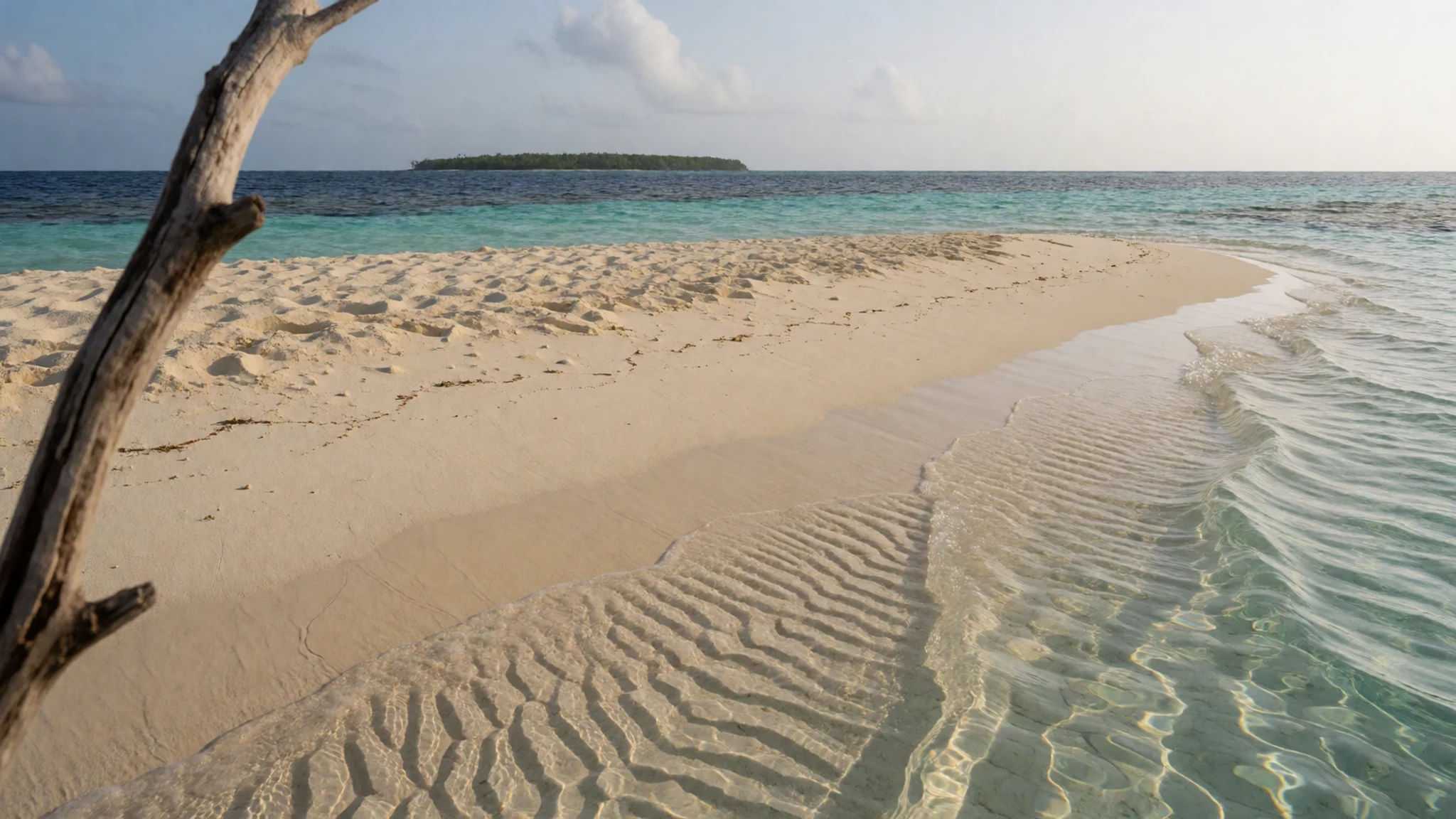
- Belair ridge — Belair
The high ground of Carriacou is High North Peak, with poorly marked trails in dense woodland. From North Point the view is toward Union Island in clear weather. Roads and paths are steep. Walk early, carry water, wear shoes for loose stone, and close any gate that was shut.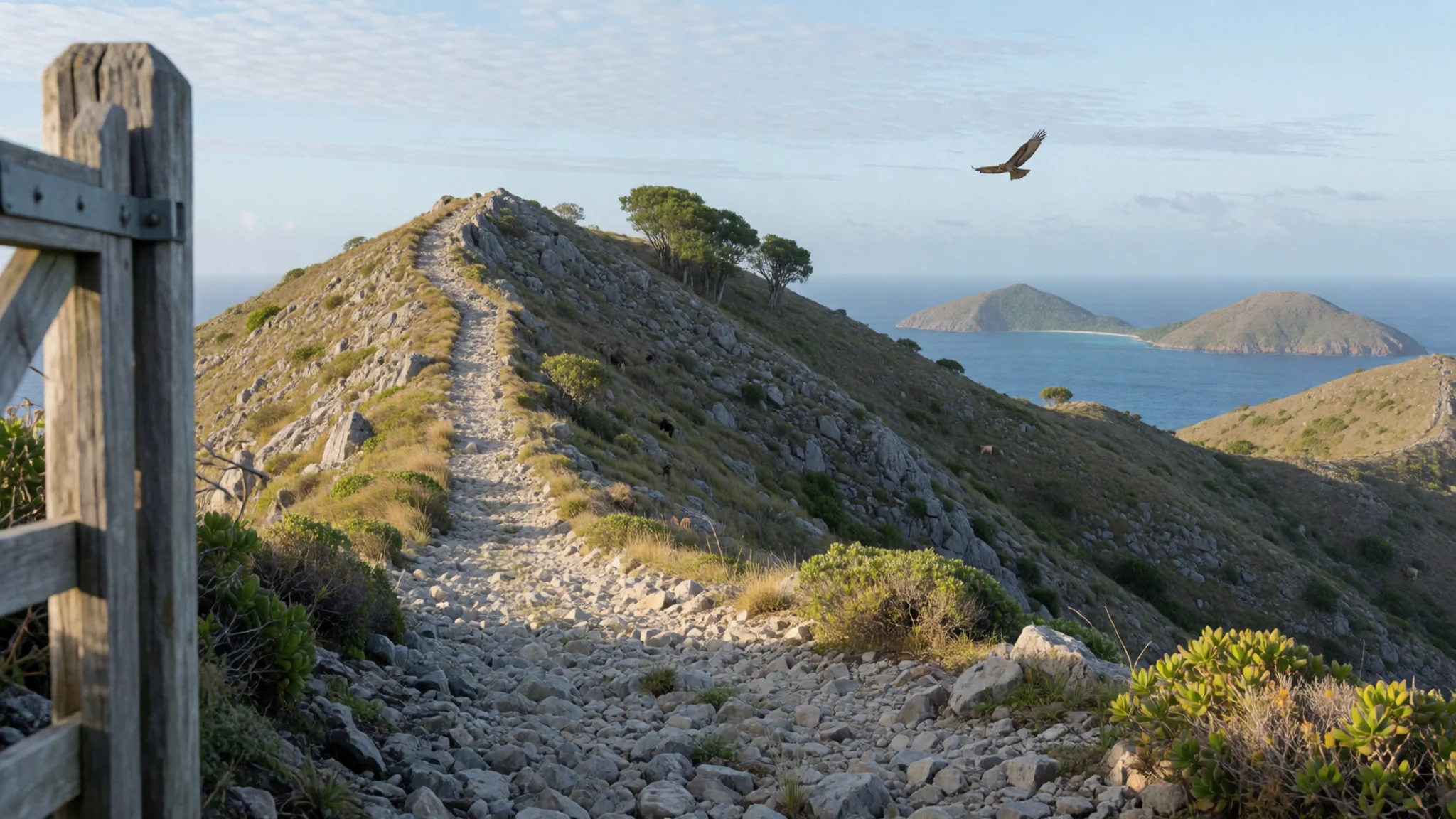
Culture
Carriacou's culture is Grenadian at root and local in the details that matter. Church is central — Catholic and Anglican parishes, plus smaller congregations — and Sundays still shape the week, with families in their better clothes and cookshops quieter until afternoon. The island's distinctive inheritance is Big Drum, a set of African nation dances and songs kept for tombstone feasts, ancestor rites and special gatherings in village yards. The drum, the chorus and the dress are specific; this is a ceremony with hosts, not a show with a ticket window. String-band music, parang in the Christmas season and the crowds of regatta week fill the more public calendar, when boats race, food stalls line Hillsborough and people return from abroad. Speech moves easily between English and Grenadian Creole, and a stranger is placed quickly by how they greet. Ask before photographing people at a Big Drum yard or a boat launch, and stay at the edge unless someone invites you further in.
What to wear
Carriacou's traditional dress shows itself on ceremony days rather than in the street each morning. For Big Drum, women wear full skirts, fitted bodices and tied headwraps in bright cotton, often a checked or Madras-like cloth, with petticoats that flare when the dance turns; men dress in clean shirts and trousers, sometimes with a sash or a hat that marks the nation being danced. Church and funerals bring a more formal register: hats, modest dresses, pressed shirts. Boatbuilders and fishers, by contrast, work in shorts, vests and bare feet or old deck shoes, clothes chosen for salt and varnish. Everyday dress now is the ordinary Caribbean mix — T-shirts, football jerseys, sundresses, jeans on a cooler evening, flip-flops or sandals — with something smarter kept for Sunday and for regatta parties. A visitor does well in light, covering cotton: swimwear on the beach, a shirt and shorts or a dress in town, and shoulders and knees covered for church or a yard ceremony. Hills are stony and village paths uneven, so sturdy sandals or trainers beat flimsy flats. A hat, sunglasses and a light rain layer cover both weathers the island actually offers, hard sun and a sudden shower.
What to eat
- Oil down — Sunday cookshops and family tables in Hillsborough and the villages
Oil down is the coconut-milk one-pot eaten on Carriacou at Sunday cookshops and family tables in Hillsborough and the villages. Breadfruit, ground provisions, salted meat or fish and dumplings cook until the liquid is absorbed. Ask which meat is in the pot; each kitchen seasons it differently.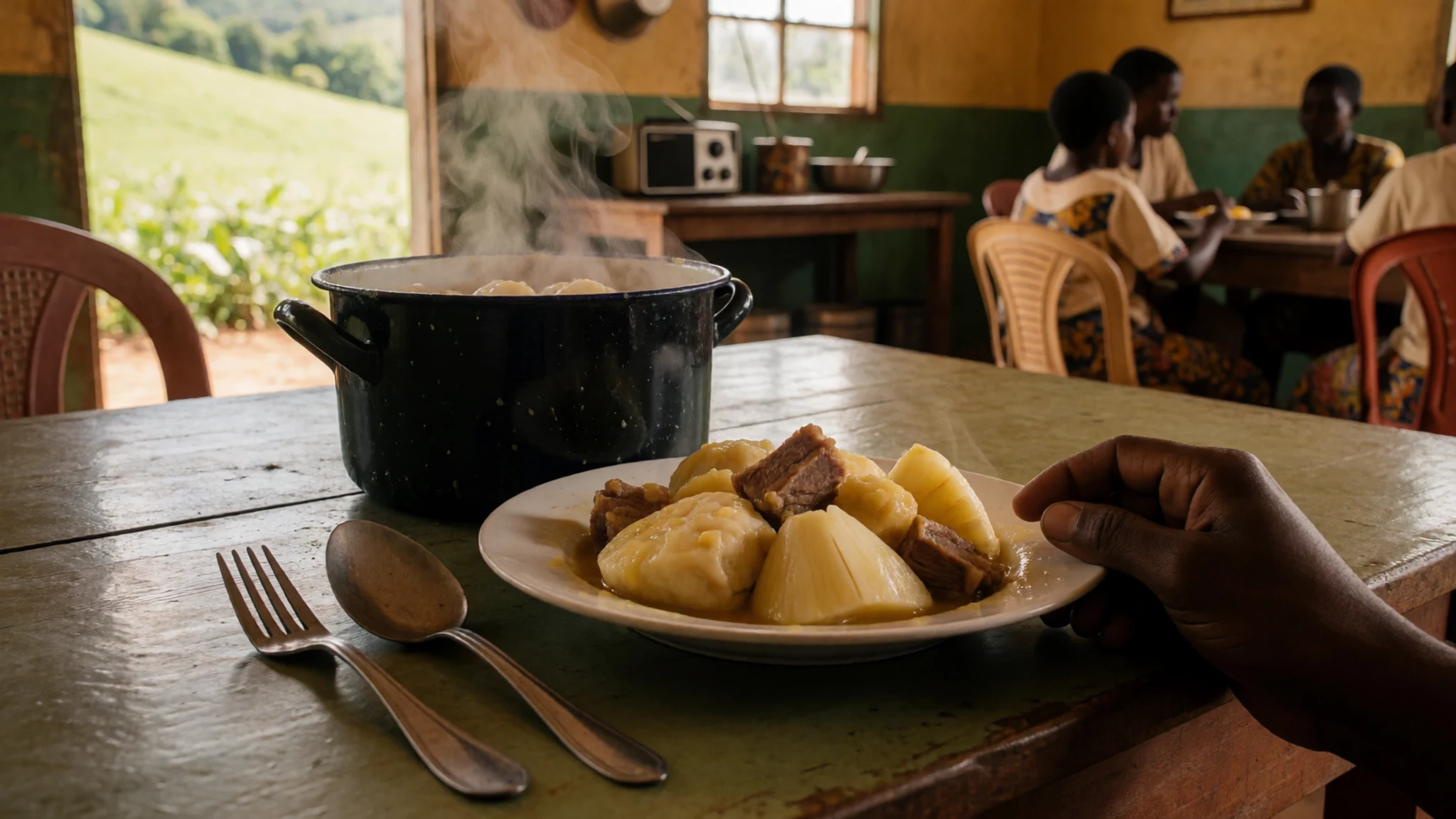
- Lambie — Waterfront cookshops in Hillsborough and Tyrrel Bay
Lambie, the local name for conch, is a Carriacou staple, curried or soused with lime, onion and pepper. Waterfront cookshops in Hillsborough and Tyrrel Bay serve it with rice or provisions when boats have landed. The meat is firm and the pepper noticeable. Availability follows the day's catch.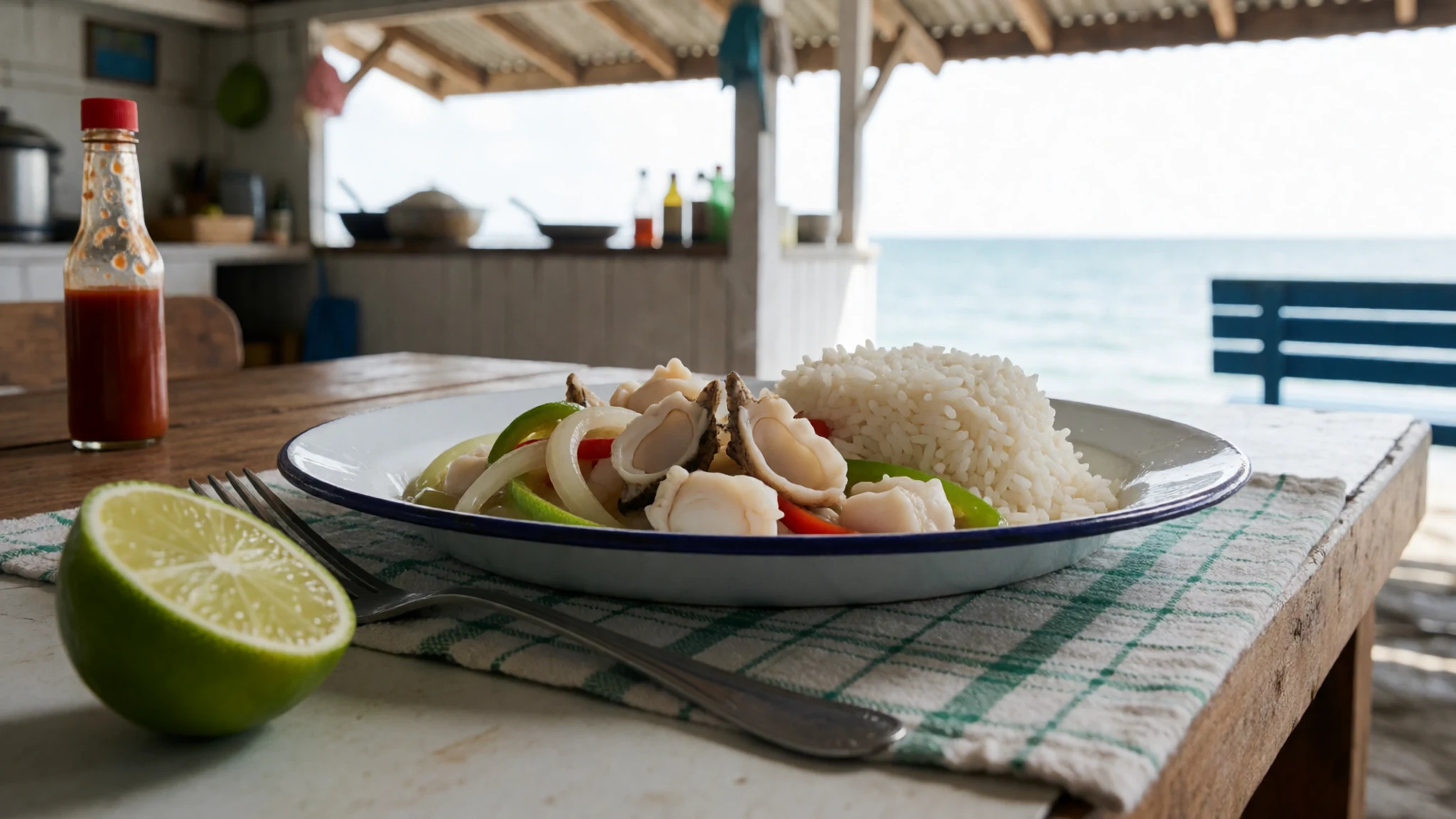
- Fried fish and bakes — Cookshops and weekend stalls by the Hillsborough jetty
Fried fish with bakes, the fried flour rounds, is Carriacou's quick shore meal, sold from cookshops and weekend stalls by the Hillsborough jetty. The fish is whatever the boats brought, seasoned and fried, with pepper sauce on the side. Come early; a small catch does not last. - Roti — Bakeries and lunch counters in Hillsborough
Roti on Carriacou is a soft flatbread folded around curry — chicken, goat or vegetables with potato — sold from bakeries and lunch counters in Hillsborough. Wrapped for the bus or the jetty, it becomes a full midday meal. Pepper is not standardised, so ask how hot the pot is. - Mangrove oysters — Stands and cookshops on the Tyrrel Bay waterfront
Mangrove oysters from the Tyrrel Bay creek are a Carriacou speciality, served raw with lime and pepper or briefly stewed. Stands and cookshops on that south-western waterfront sell them when the beds allow. They are briny and small, a snack rather than a full plate.
Plan it
Best time. February to April is the mildest, driest stretch on Carriacou, the most comfortable time for walking, boat days and the beach. September is the hottest month and October the wettest; June into November is wetter, and the island is quieter and greener. Christmas and regatta week are the busiest local gatherings.
How long. 3–4
Getting there. Most visitors reach Carriacou via Grenada: an international flight to the mainland, then either the passenger ferry to Tyrrel Bay or the short hop into Lauriston Airport. Yacht crews clear at the designated harbour offices. Schedules for the ferry and the light aircraft change, so check the operator's current notice before travelling.
Budget. mid
Tips
- Book ferry or light-aircraft seats ahead around Christmas and regatta week
- Carry some cash; village cookshops and boat taxis often cannot take cards
- Start walks early and carry drinking water; midday sun on the hills is fierce
- Use a local boatman for Sandy Island and other islets when the wind is up
- Treat museum and church opening times as informal and ask locally
Etiquette
- Cover shoulders and knees for church and for ceremonies in a village yard
- Ask before photographing people, especially at Big Drum or a boat under construction
- Do not climb on a hull, a mangrove root or an oyster bed
Nearby
Sources
- Wikidata (CC0)
- Wikipedia (CC BY-SA 4.0)
- Wikivoyage (CC BY-SA 4.0)