Petite Martinique
Petite Martinique, Grenada
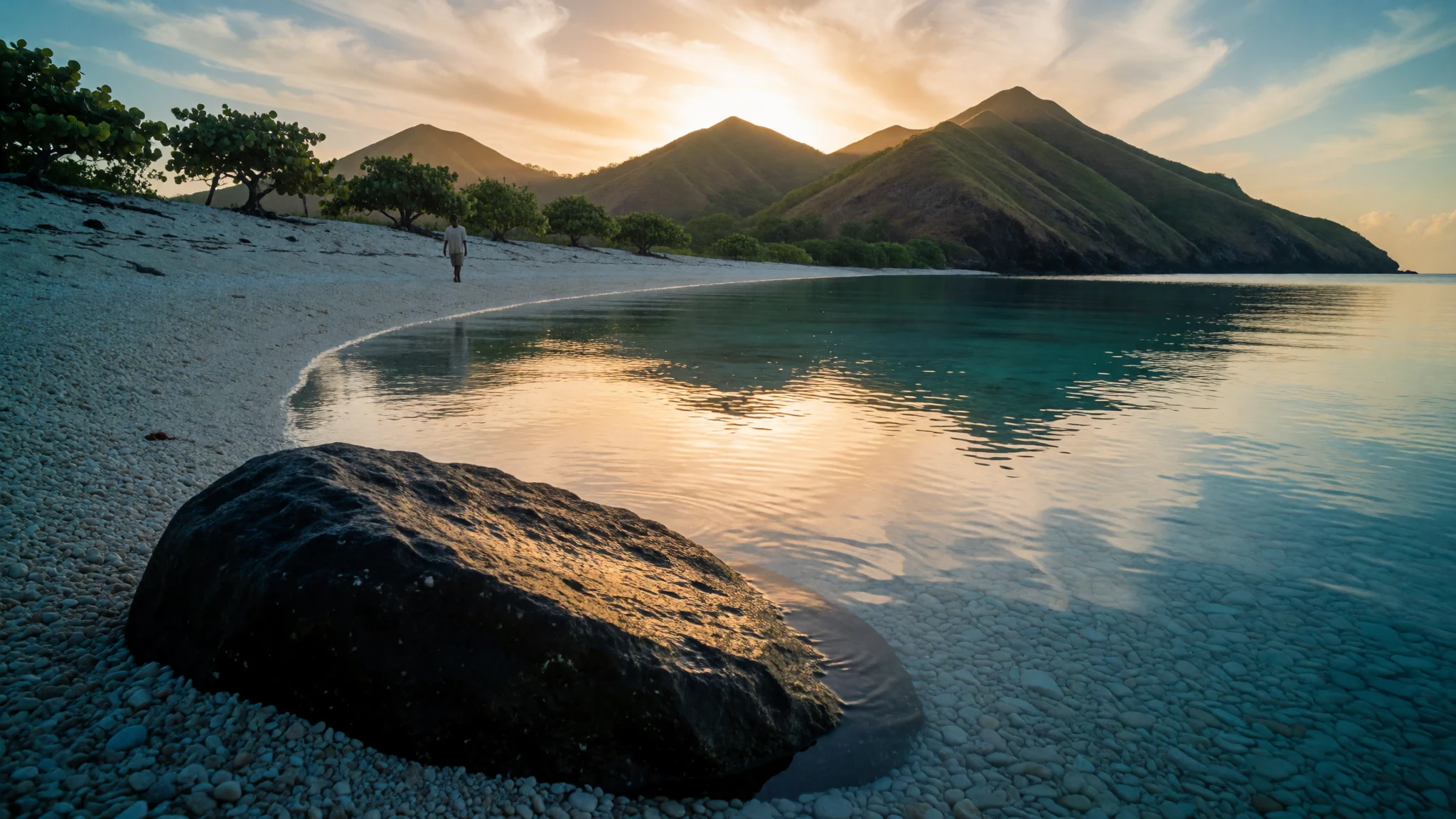
Petite Martinique is a working Grenadine island of wooden boats, a short channel from Carriacou, and a quiet village life.
The place
Petite Martinique is a small Grenadian island in the southern Grenadines, set north of Carriacou and within sight of Petit Saint Vincent across a narrow channel. It is part of Grenada, and daily life faces the water. Houses and workshops sit near the sheltered landing, where open boats are hauled up, timber is shaped, and the crossing to Carriacou serves as the ordinary way to school, shops, and the larger island's harbour. The land rises from the shore into low green hills. From higher ground the Grenadines read as a line of islands and channels, with Carriacou filling the view to the south and Petit Saint Vincent lying to the north. There is no city here. The settlement is a village, and yards, paths, and the waterfront are the shared spaces. Trees around the houses give shade. Midday light on the water is hard; early and late in the day, when boats leave and return, it softens. Work is visible and ordinary. Fishing boats and the wooden craft built on Petite Martinique are not a show arranged for visitors. They are how people move, earn, and stay in touch with Carriacou. Supplies, passengers, and news travel by boat. The channel is short, yet it is still the sea: swell, wind, and the condition of a small engine decide whether a crossing feels routine or wiser postponed. Anyone used to busier islands nearby will notice the slower pace. Petite Martinique has no cruise landing and no row of beach restaurants. The draw is the working shore, the view to Carriacou, and a community that still builds boats in wood. The place suits a visitor who wants a village, and it will disappoint anyone set on a resort beach.
Its story
Petite Martinique takes its name from Martinique, the French island far to the north, and local memory ties the settlement to people who moved south through the Grenadines and made a home on this shore. The story that matters on the island today is less a single founding tale than a craft passed through families: the building of wooden boats. Keels, ribs, and planks are still shaped in open yards by the water, and a launch is a community occasion as much as a piece of work. That craft is also how the island stayed linked to the world beyond the beach. A boat is transport, a way to fish, and the means to reach Carriacou, where parish life for both islands is shared. Church, school, goods, and family duties run across the channel. On a calm day Petite Martinique feels like a neighbourhood of Carriacou set off by water. On a rough day the island simply waits for the next workable morning. The wider Grenadines changed around this pattern. Petit Saint Vincent, within sight of Petite Martinique, developed as a private resort island, and other cays drew sailors and day visitors. Petite Martinique stayed a Grenadian village of households, yards, and shipwrights. A resort island lies across the channel; on this shore the boats are working vessels. Speech on Petite Martinique carries an older layer. English is the language of school and official life in Grenada, while a French-leaning Creole still colours talk here and on Carriacou. The past shows up in that speech, in saints' days and family gatherings, and above all in the boats. History here is a habit of work, not a row of monuments.
What to see
- Boat-building yards — Village shore
The boat-building yards on Petite Martinique are open-air workshops along the shore, where wooden hulls rest on stocks beside the water. Shipwrights shape ribs and planks in plain sight, and a hull in frame says more about the island than a viewpoint does. Treat the yard as a workplace. Stay clear of tools and timber, and ask before photographing someone at work.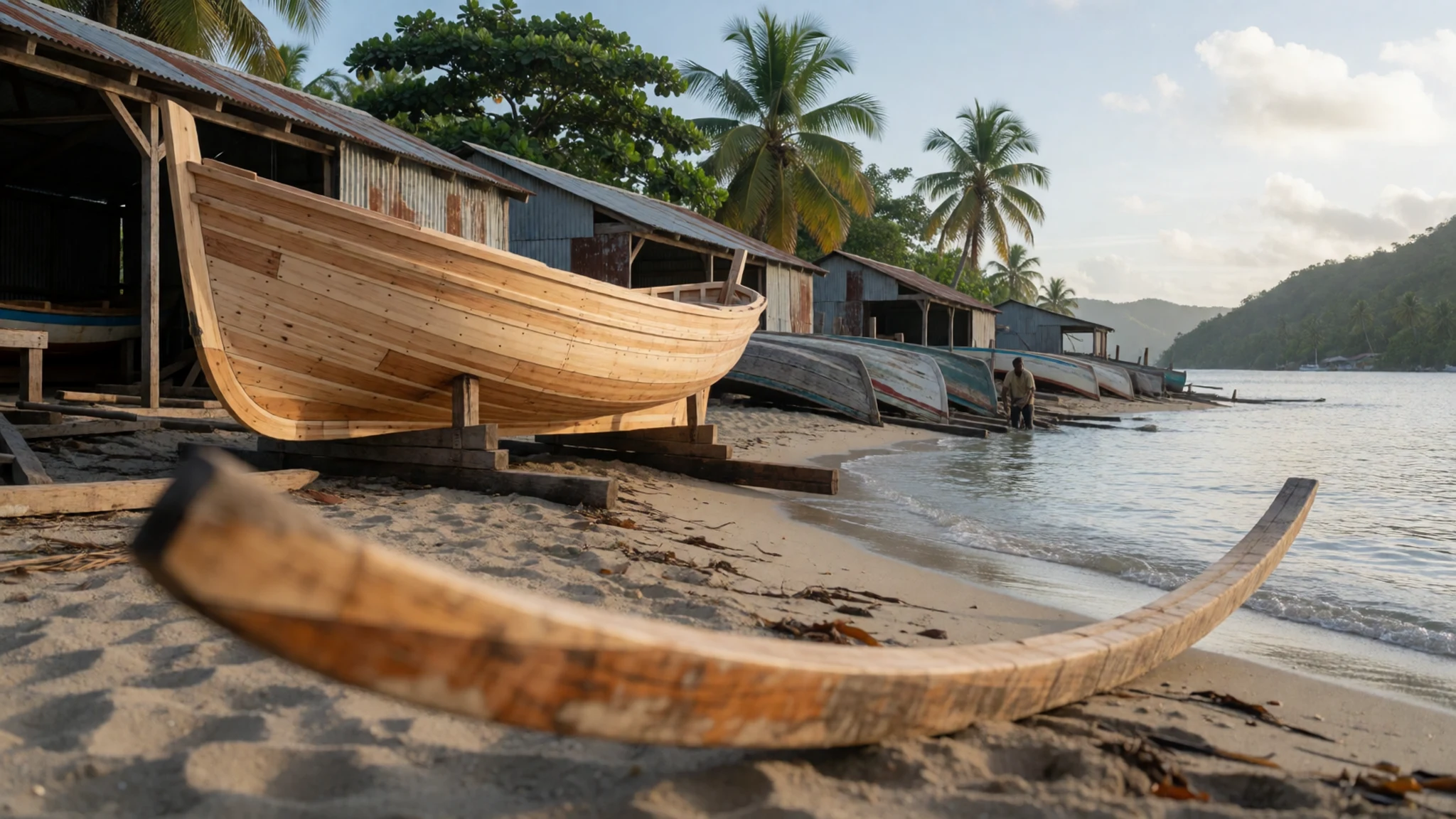
- Village landing — Village waterfront
The village landing on Petite Martinique is where boats tie up and the crossing to Carriacou begins. It is a working beach and jetty, not a marina. People and goods move through it the way they use a bus stop elsewhere. Leave clear space when a boat is loading.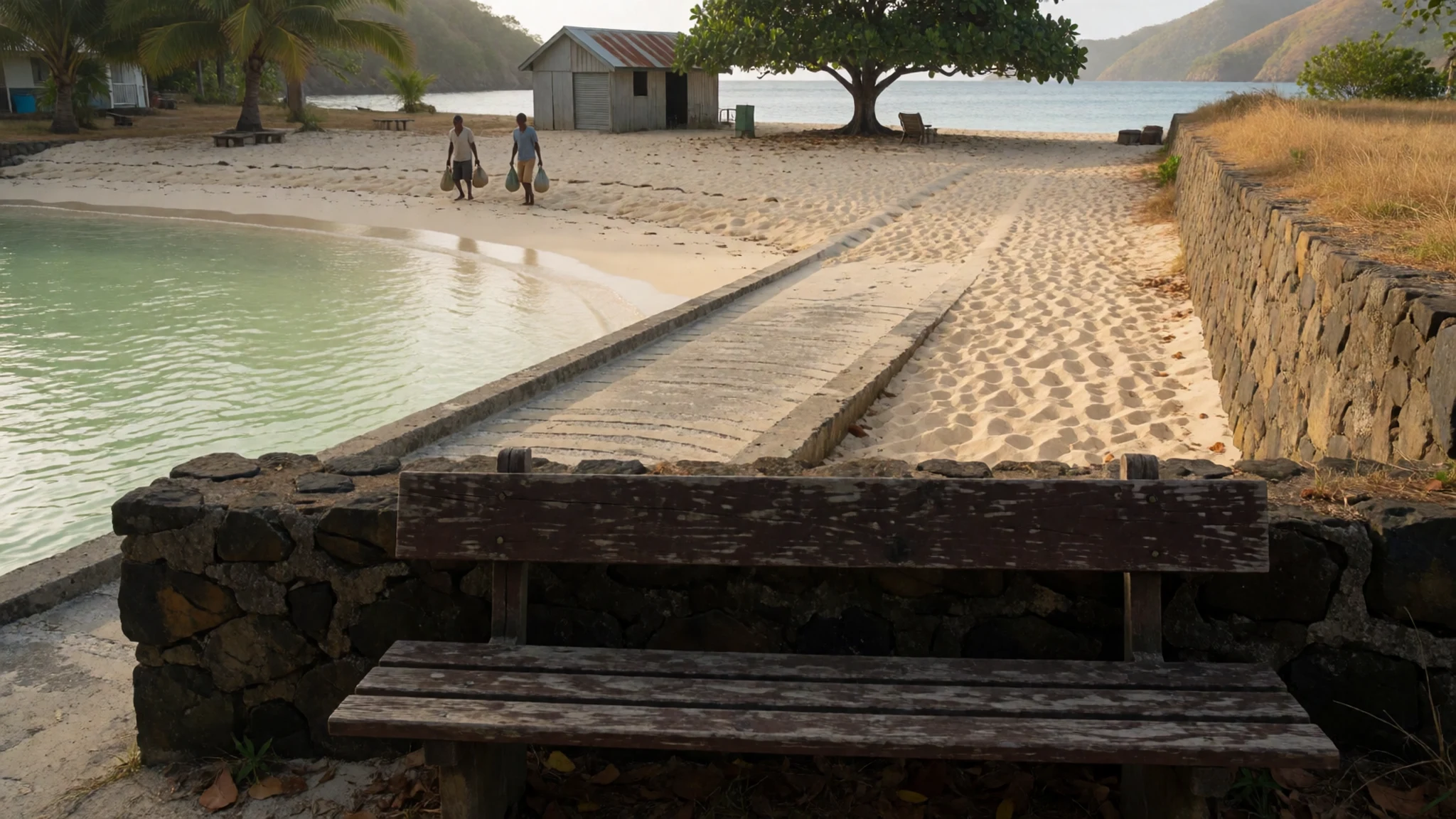
- View towards Carriacou — Shore and slopes facing Carriacou
The view towards Carriacou from Petite Martinique puts the larger island across a short channel, close enough that houses and hills read clearly on a bright day. Boats leave this shore for Carriacou, which is why the view is also a view of the way off the island. Morning is a good time to watch, when boats are crossing and the light is still soft.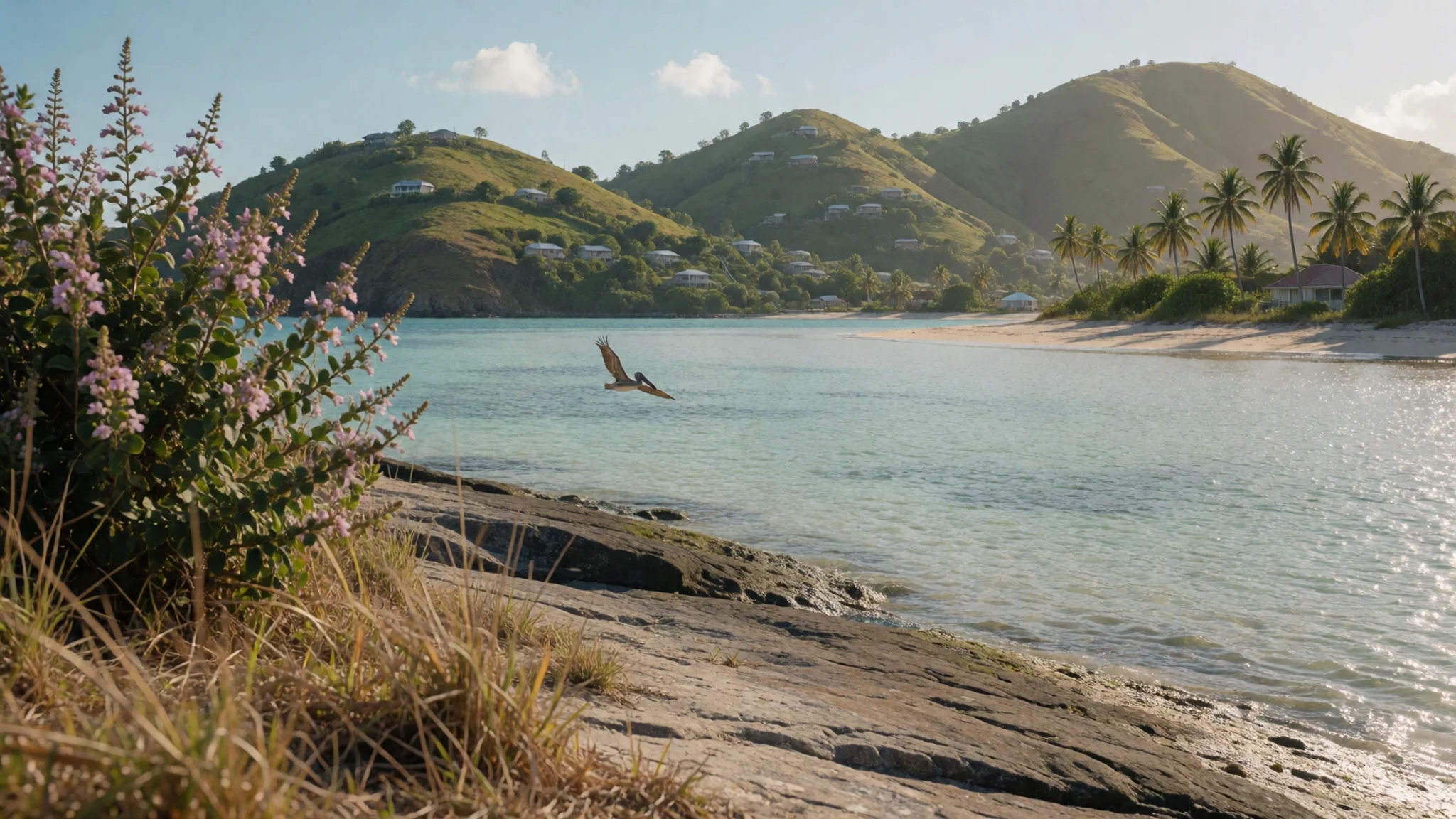
- Petit Saint Vincent across the channel — Shore facing Petit Saint Vincent
Petit Saint Vincent, seen from Petite Martinique, is the next island north and belongs to Saint Vincent and the Grenadines rather than to Grenada. The channel between them is narrow, and the resort island's low shore is easy to read from here. Nothing about the view makes the crossing a casual hop. It marks a border, with a working village on this side and a private resort on the other.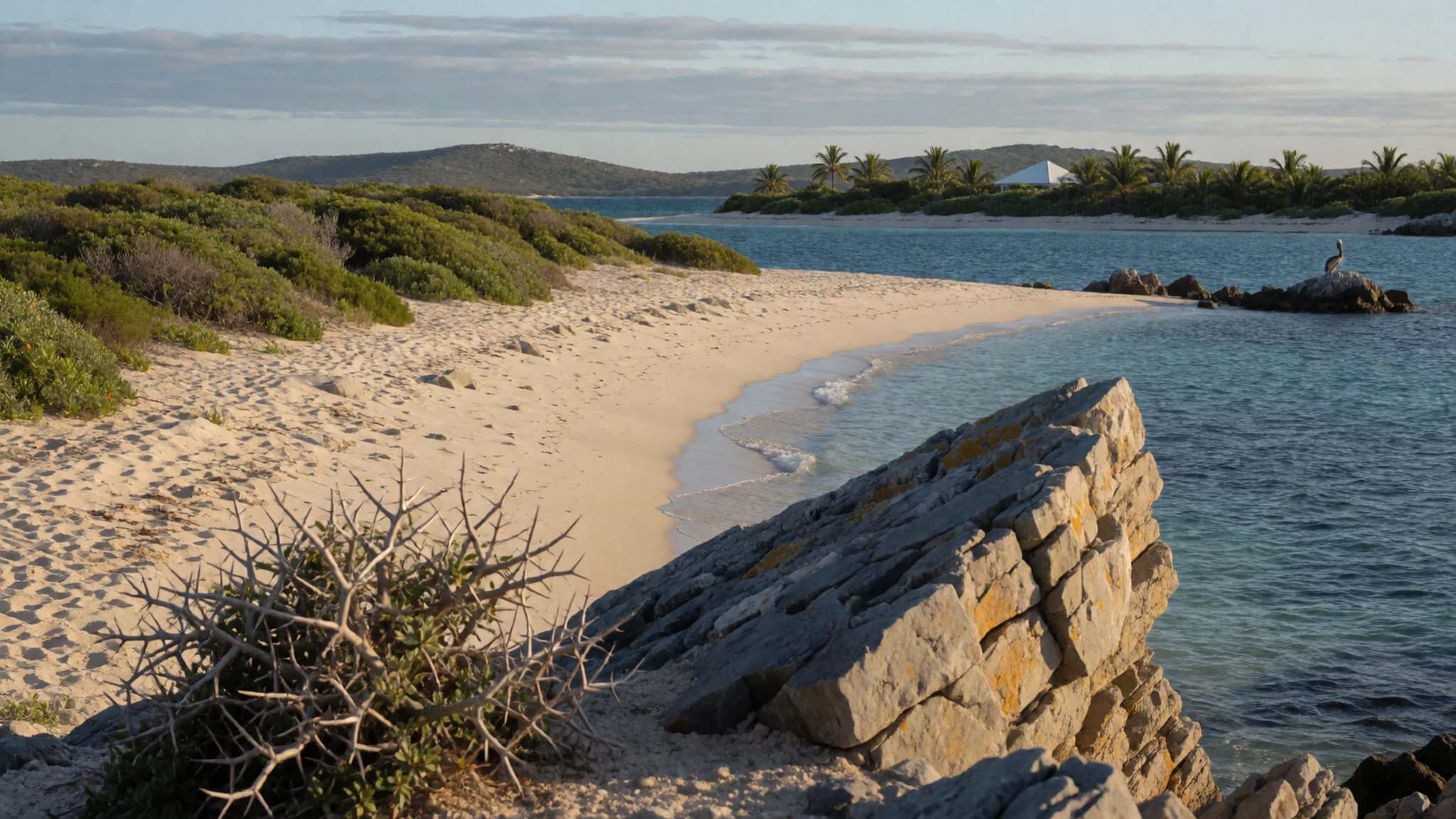
- Ridge above the village — Paths above the village
A walk above the village on Petite Martinique is short and steep enough to feel like a climb in the heat, then open. From the higher ground the neighbouring islands sit together, Carriacou to the south and Petit Saint Vincent to the north, with roofs and boat sheds below. Carry water, wear shoes that can handle rough paths, and keep to tracks between houses rather than cutting through yards.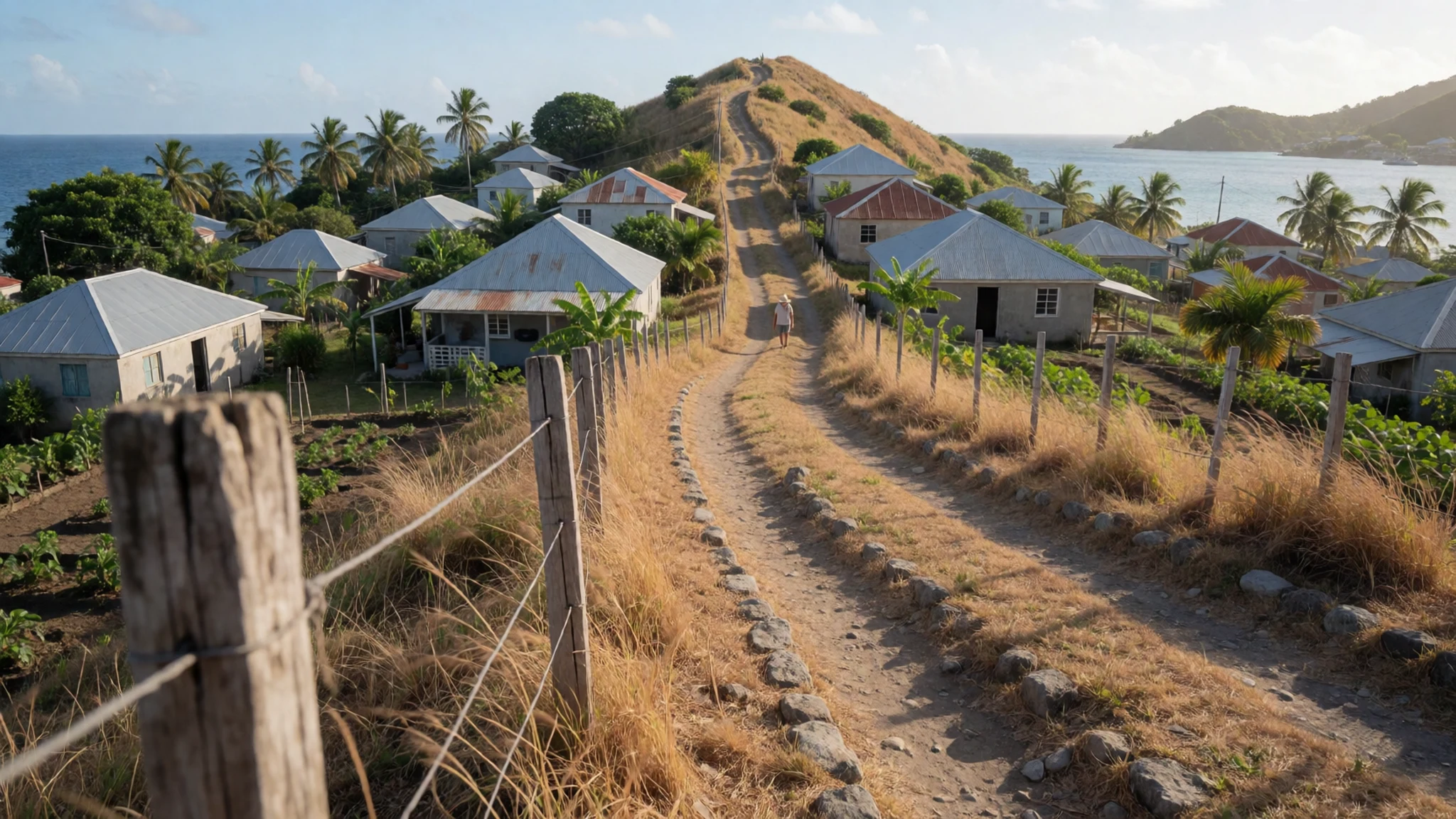
Culture
Culture on Petite Martinique is the life of a small Grenadian island organised around boats, church, and family. The shipwright's yard is social as well as practical: people stop, comment, and lend a hand, and the morning a hull meets the water draws the village without any need for a poster. Fishing shapes the week in the same plain way. When the boats return, talk turns to the catch, the engine, and the weather on the channel to Carriacou. Family life runs across that channel. Weddings, saints' days, boat races, and funerary gatherings are shared with Carriacou, so the island's calendar is wider than its own shore. African-derived drumming and dance that remain part of Carriacou life belong to this same world, even when a particular ceremony is held on the larger island. Everyday speech moves between English and a French-influenced Creole. Grenada's carnival tradition is in the background; the events that fill the village are closer to home: a launch, a church day, a crowded family table. Because Petite Martinique is a residential island, a visitor stands out. Ask before you photograph people at work or at a family gathering, and greet someone before you ask a favour.
What to wear
Dress on Petite Martinique follows the practical life of a Grenadian boat-building village, with formal clothes kept for church, carnival, and family events. For those occasions people bring out brighter cottons: printed fabrics, a pressed shirt, and hats against the sun. Madras-like checks and other bright Caribbean cottons appear at festivals, though everyday cloth is whatever is cool and can be washed after a day of salt and sawdust. Traditional dress here is less a single national costume than clothing that marks respect: covered shoulders for church, and something clean and cheerful for a launch or a boat race. On a working day, people on Petite Martinique wear T-shirts, light trousers or shorts, simple cotton dresses, and sandals, or go barefoot between house, yard, and boat. A cap or a wide hat is common. Cloth gets wet, dries, and is worn again. Few people dress to resemble a resort guest, because the island is not set up as one. Visitors do well to copy that practicality. Lightweight cotton, a shirt with sleeves for the sun, and a hat matter more than a special outfit. Swimwear belongs at the water, with a shirt or a wrap added before a walk among houses or into church. Footwear should cope with a wet deck, hot sand, and a rough path: strapped sandals, or light shoes that come off easily at a doorway.
What to eat
- Oil down — Family tables and weekend cook-ups in the village
Oil down is Grenada's shared pot of breadfruit, coconut milk, salted meat or fish, dumplings, and provisions, and on Petite Martinique it appears at family tables and weekend cook-ups. It is food for a group. A village cookshop is the place to ask if a pot is on.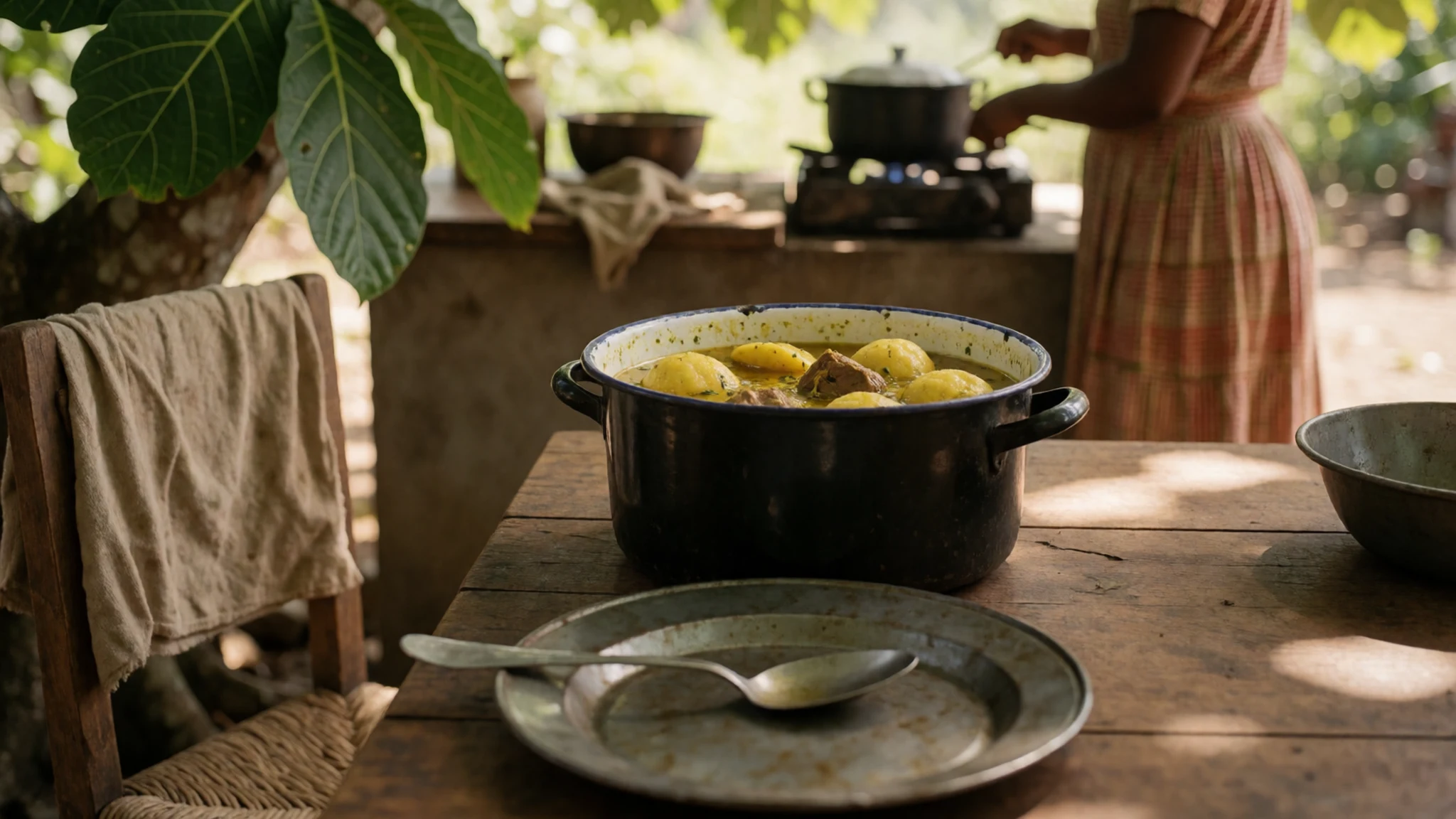
- Stewed fish — Home kitchens that sell plates, and cookshops near the landing
Stewed fish on Petite Martinique is the day's catch cooked with onion, garlic, herbs, and tomato, eaten with rice or ground provisions. It is the ordinary main meal when the boats have done well. Find it at a home kitchen that sells plates, or at a cookshop near the landing.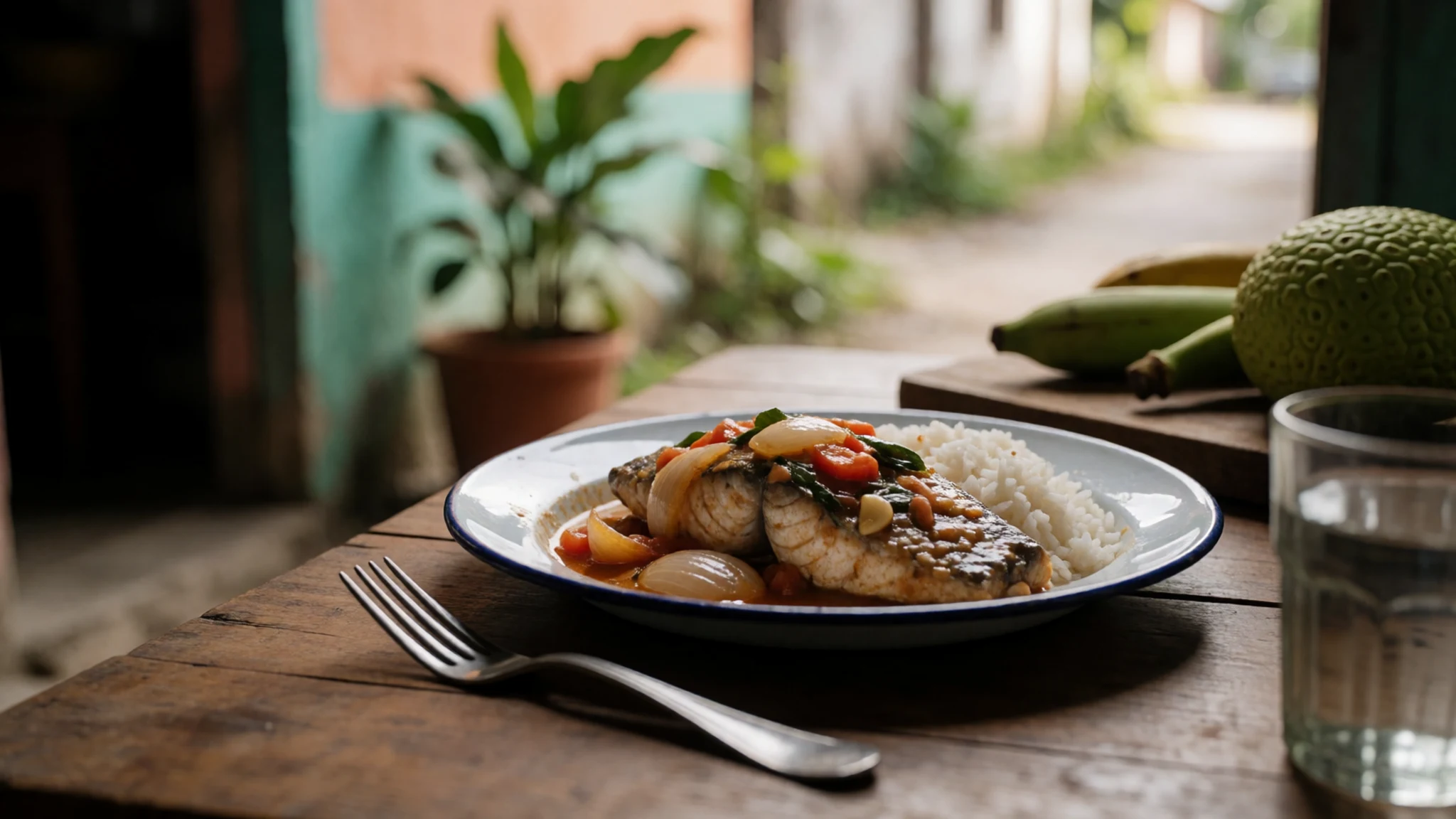
- Lambie — Village cookshops and family tables
Lambie, the local name for conch, is served on Petite Martinique when someone has brought it in, often curried or soused with lime, onion, and hot pepper. It shows up at cookshops and family tables in the village, so ask what came in by boat. - Bakes and saltfish — Morning households and a shop by the landing
Bakes and saltfish are breakfast on Petite Martinique: fried dough, split and filled or served beside seasoned saltfish. They travel well on an early boat. Look for them in the morning from a household that cooks for neighbours, or at a shop by the landing. - Roti — A cookshop near the landing
Roti on Petite Martinique is a flatbread around a curried filling of chicken, goat, or vegetables. It suits a day that includes a boat. Ask at a cookshop near the landing on a day when bread is frying and a curry is on. - Ground provisions — Home kitchens and cookshops that serve lunch plates
Ground provisions on Petite Martinique, breadfruit, plantain, yam, and dasheen, are boiled or roasted and set beside fish or salted meat. They are the starch of an ordinary lunch. Home kitchens and cookshops that serve plates include them whenever the pot is filled.
Plan it
Best time. Petite Martinique is more practical to reach in the drier months, January to May, when boat crossings are simpler to plan. June to November brings heavier rain and a real hurricane risk in the southern Grenadines, so leave spare days if you travel then.
How long. one or two
Getting there. Petite Martinique has no airport. Fly into Grenada and take the Osprey, a foot-passenger ferry from St. George's via Tyrell Bay on Monday, Wednesday, and Friday, about three hours. On Tuesday and Thursday that ferry shuttles between Petite Martinique and Carriacou, and the crossing depends on the weather. Confirm it on Carriacou before you rely on a same-day return.
Budget. mid
Tips
- If the channel looks rough, postpone; the crossing is the plan.
- Carry some cash in small notes; do not rely on cards in the village.
- Bring water and sun cover; shops on the island are few.
- Arrange any overnight stay before you leave Carriacou.
- Ask locally which boat is going that morning rather than expecting a posted schedule.
Etiquette
- Greet people before you ask a question, request a photo, or hire a boat.
- Ask before photographing shipwrights, fishers, or children.
- Wear a cover-up in the village and cover shoulders in church.
- Stay out of private yards and off boats unless you are invited.
Nearby
Sources
- Wikidata (CC0)
- Wikipedia (CC BY-SA 4.0)
- Wikivoyage (CC BY-SA 4.0)