Kick-'em Jenny
Kick-'em Jenny, Grenada
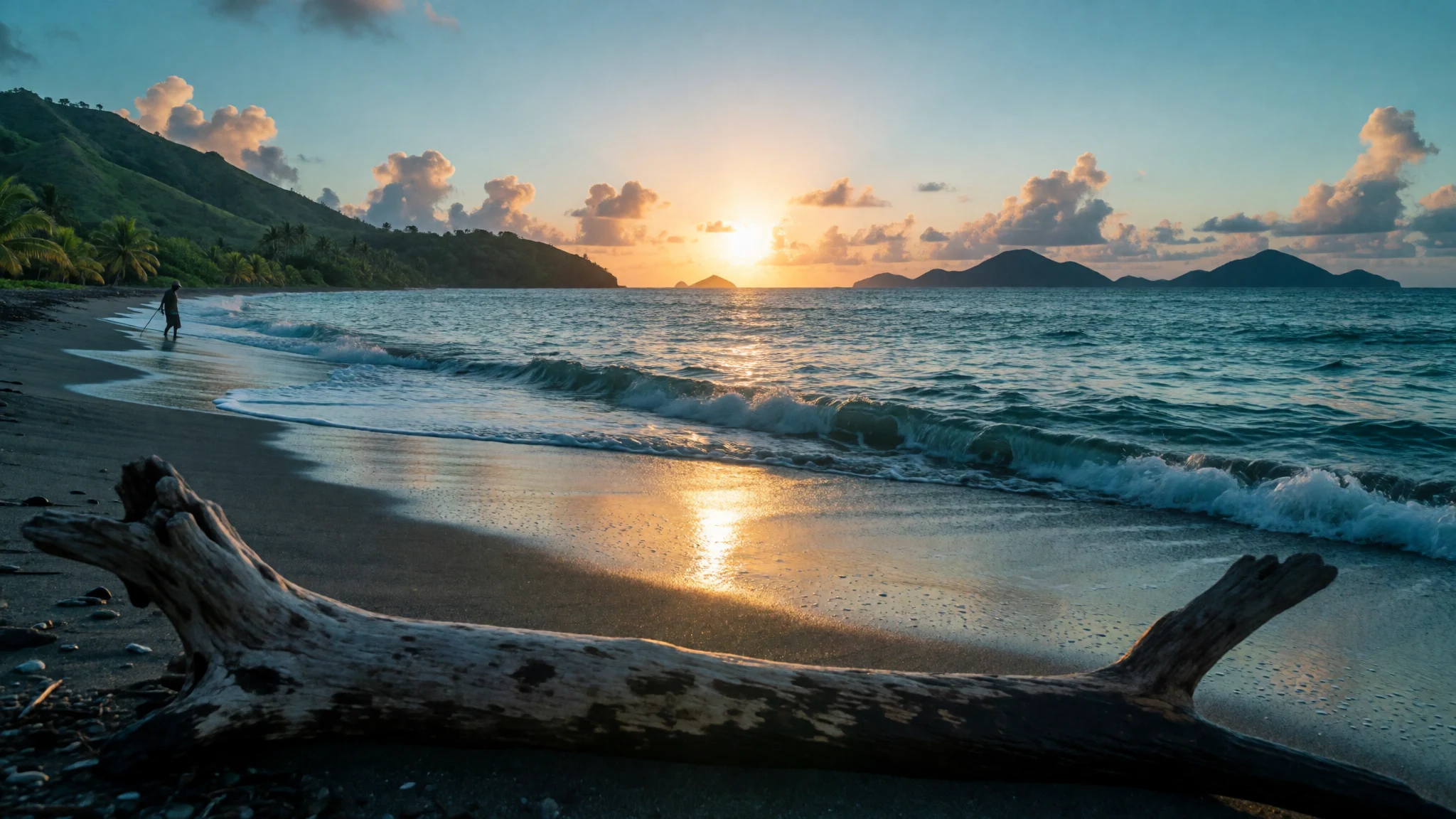
Kick-'em Jenny is a restless volcano hidden beneath the Caribbean just north of Grenada, best understood from the coast and by boat.
The place
Kick-'em Jenny is an active submarine volcano on the floor of the Caribbean Sea, about 8 km north of the island of Grenada and roughly 8 km west of Ronde Island in the Grenadines. Its summit lies 185 m below the surface, so nobody walks on it. It is a seamount, a mountain whose peak never reaches the air. From the sea floor it rises about 1,300 m, up the steep inner western slope of the ridge that carries the Lesser Antilles.
That ridge is an island arc, a curved chain of volcanic islands built where one tectonic plate dives beneath another. Here the South American plate is pushed under the Caribbean plate to the east of the ridge. The heat and pressure that follow feed the volcanoes along the chain, and this one is the part that happens to be underwater.
From a boat the spot looks like ordinary open sea, with the green northern hills of Grenada on one side and the small Grenadine islands on the other. There is nothing to climb and no crater rim to stand on. Surface clues appear only now and then, as disturbed or bubbling water, and boats are asked to keep out of a zone around the vent. The honest way to see this wonder is to treat it as a piece of living geology: visit the coast that faces it, learn how it is watched, and accept that its best views are diagrams, not panoramas.
Its story
Kick-'em Jenny has a story that belongs more to instruments than to explorers. The volcano remained unknown until 1939, as the name 'Kick 'em Jenny' previously referred to a strait or a small island called Diamond Rock. The origin of the name is debated. A popular explanation links it to the churned sea above the vent, which could throw small boats around, though that is lore rather than settled record.
The volcano became better understood once scientists started listening to the ground. Seismometers on the nearby islands picked up swarms of small earthquakes, and surveys with sonar and underwater vehicles mapped the shape of the seamount, its crater and the changes that eruptions leave behind. Over the modern record the volcano has erupted on several occasions, usually in ways that were noticed by instruments rather than by people on the shore.
Since then it has been monitored by regional scientists, and Grenada's disaster agencies publish alert levels and a zone that vessels are asked to avoid. Gas rising through the water can, in principle, make the sea less able to hold a boat up, which is one reason the zone exists. The risk to people on land is generally described as low but not zero, because an underwater eruption can disturb the water above it.
For visitors this means the story is still being written. Current alert levels matter more than anything printed in a guidebook, so check them before planning any boat trip near the area.
What to see
- Levera coast — Northern Grenada, near Levera
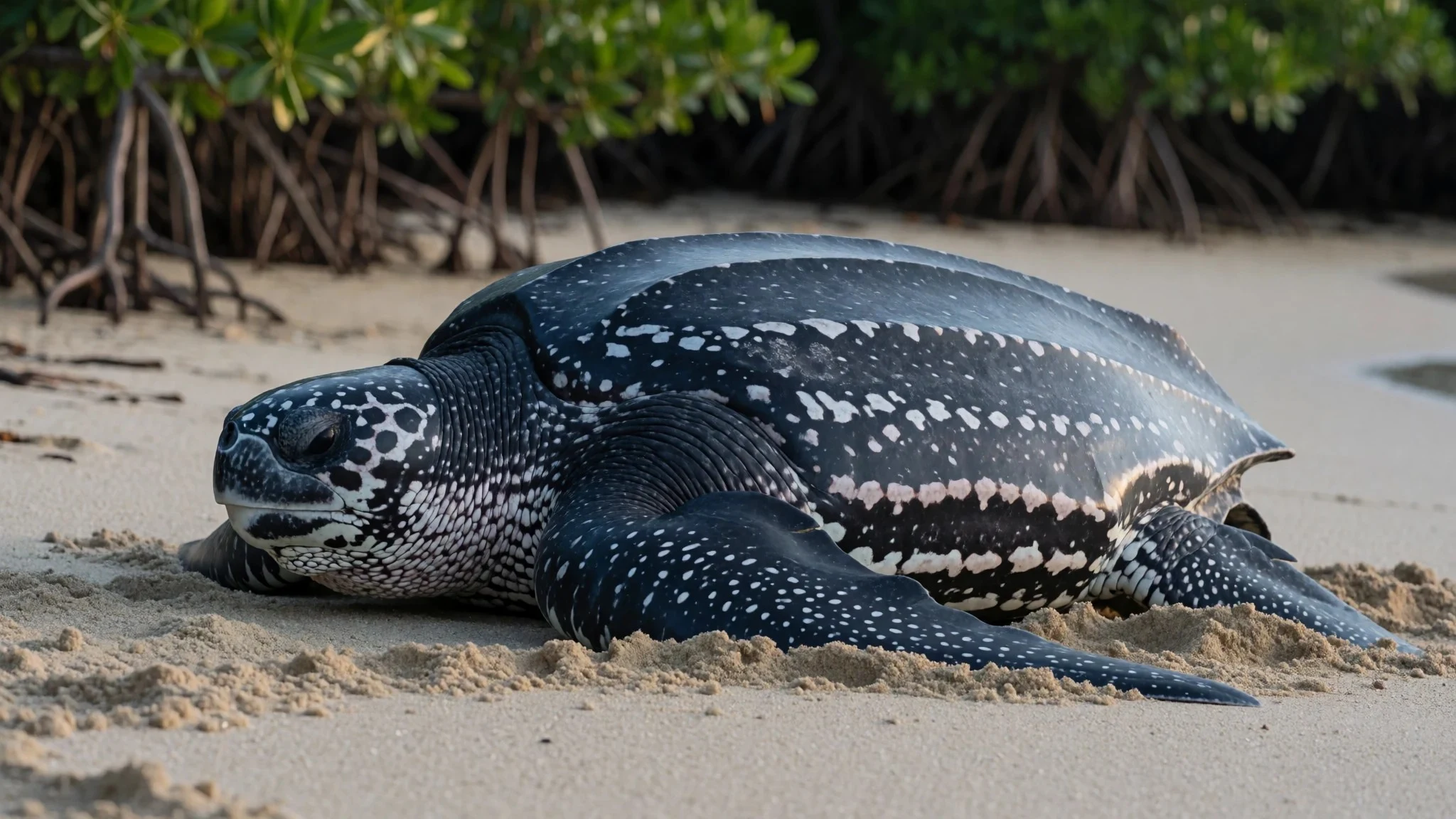
The northern shore of Grenada around Levera is the nearest dry-land vantage for the sea above Kick-'em Jenny. Windswept beaches, mangrove and nesting turtles make it a pleasant stop in itself. Nothing marks the volcano, but looking north across open water gives a real sense of the distance.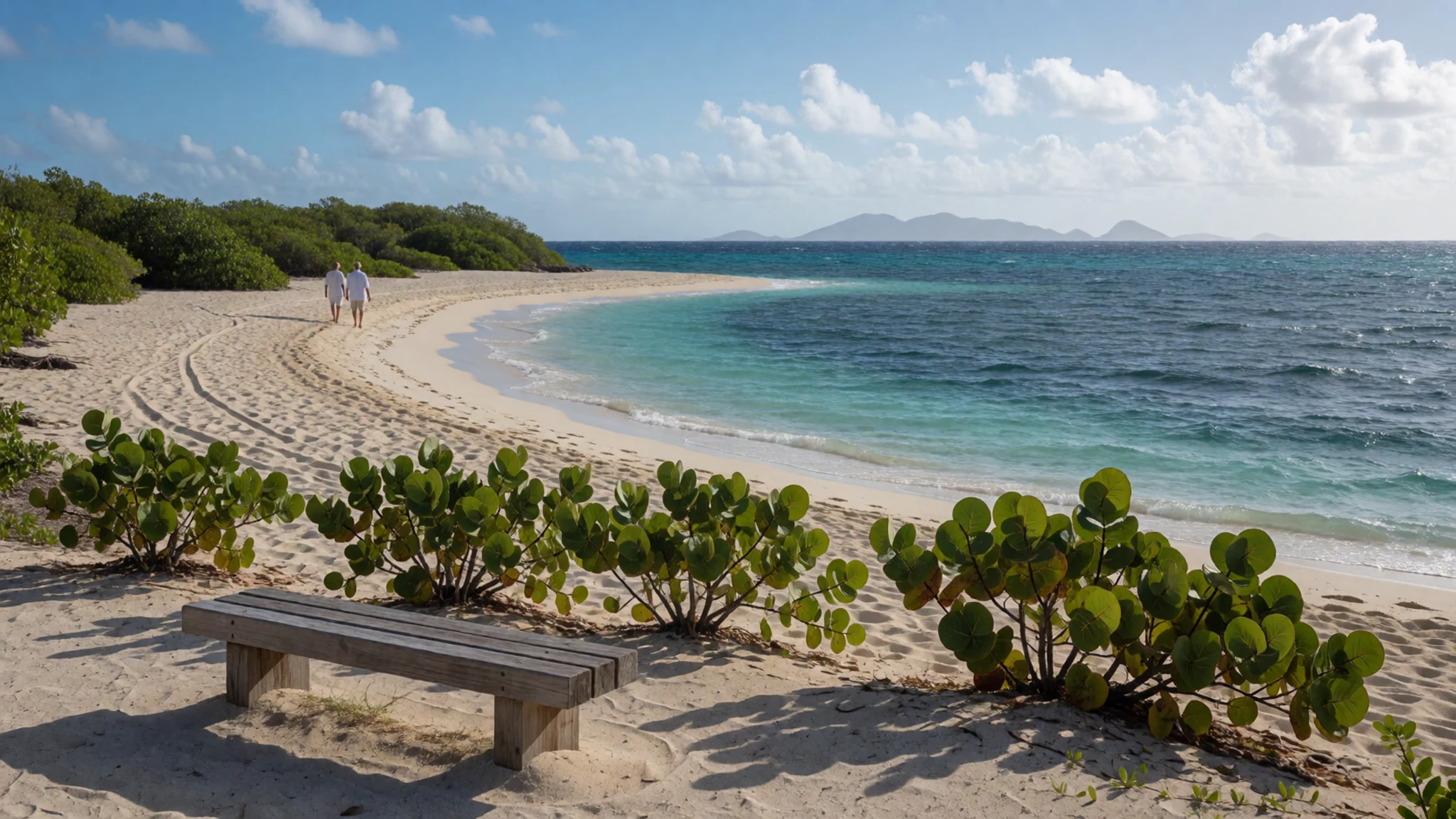
- Sauteurs and Leapers Hill — Sauteurs, northern Grenada
Sauteurs is the small northern town whose name means 'jumpers'. Local history says Carib people leapt from the cliff here rather than surrender to French settlers. The headland is a solemn place with long sea views north towards the Grenadines, and the church and bay below are worth a slow look.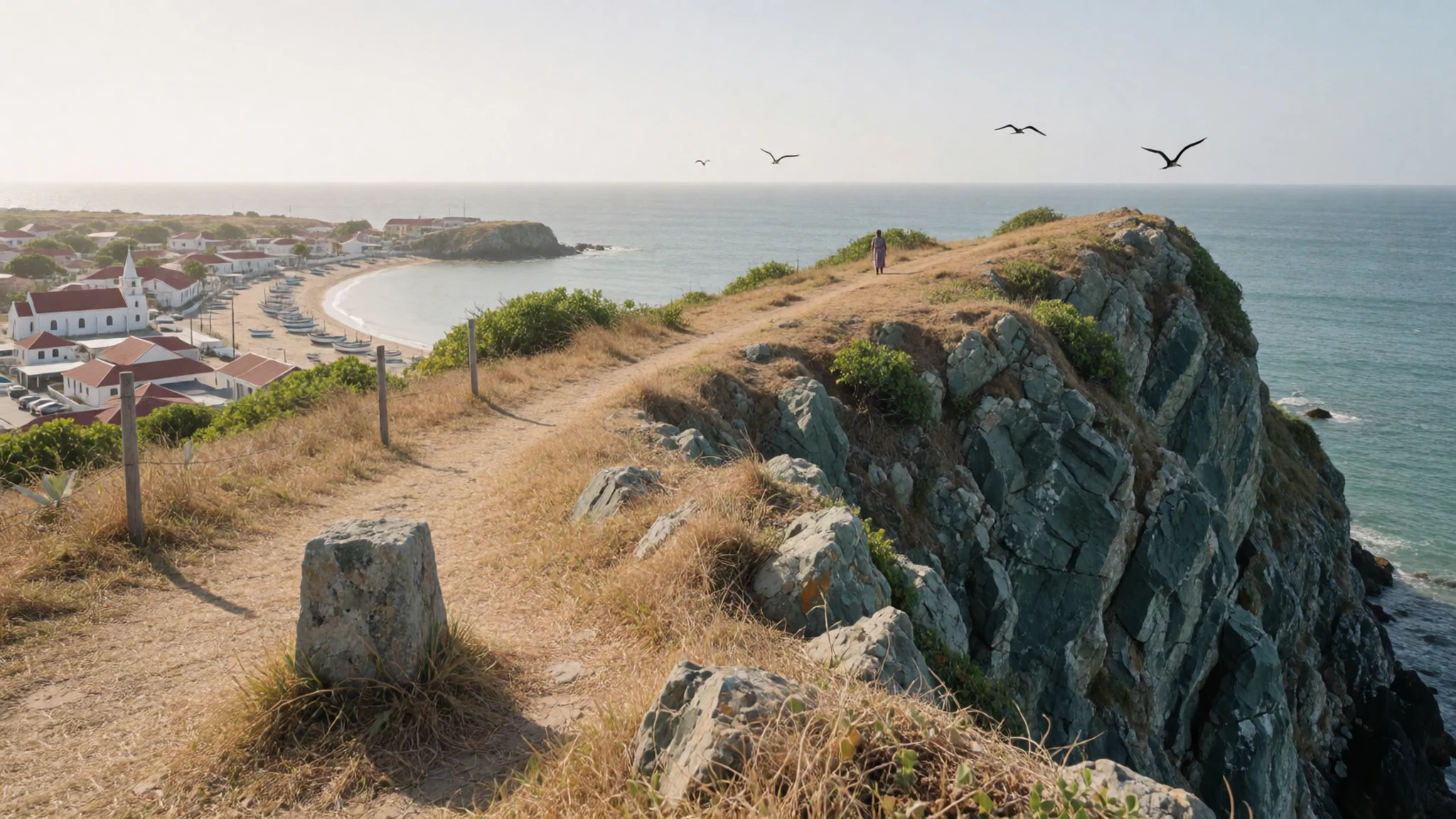
- Ronde Island from the water — Grenadines, north of Grenada
Ronde Island lies about 8 km east of the volcano and is uninhabited, a green lump of an island in the Grenadines. Boat trips towards the northern islands pass within sight of it. Operators know the current exclusion rules, so ask them how the route avoids the area around the vent.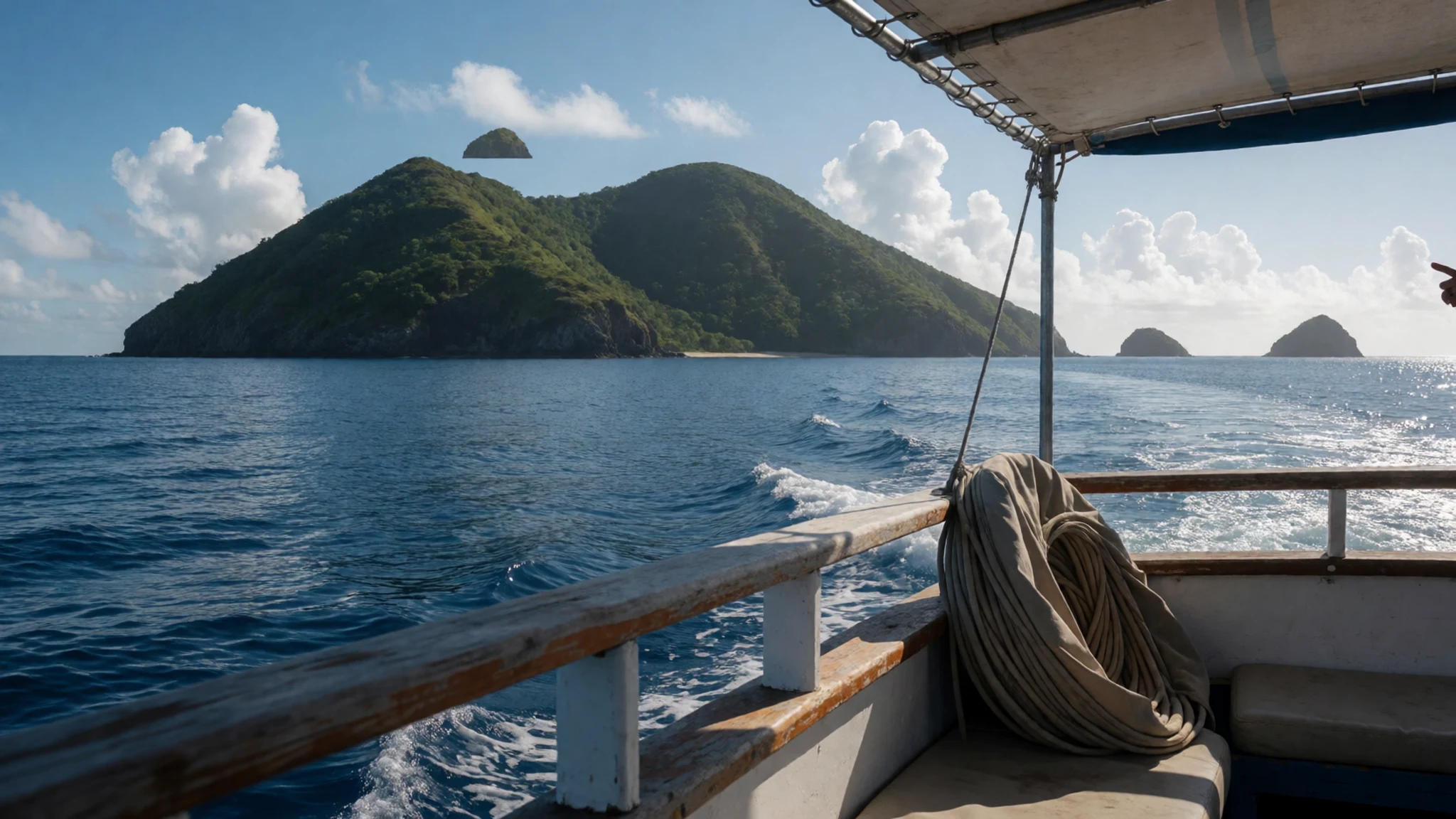
- Carriacou — Carriacou, Grenada
Carriacou, the larger island north of Grenada, is a quiet place of small beaches, boat building and reef snorkelling. It makes a calm contrast to the volcano's reputation, and ferries run from Grenada. The island's drumming and dance traditions are still performed at local festivals, so ask about events.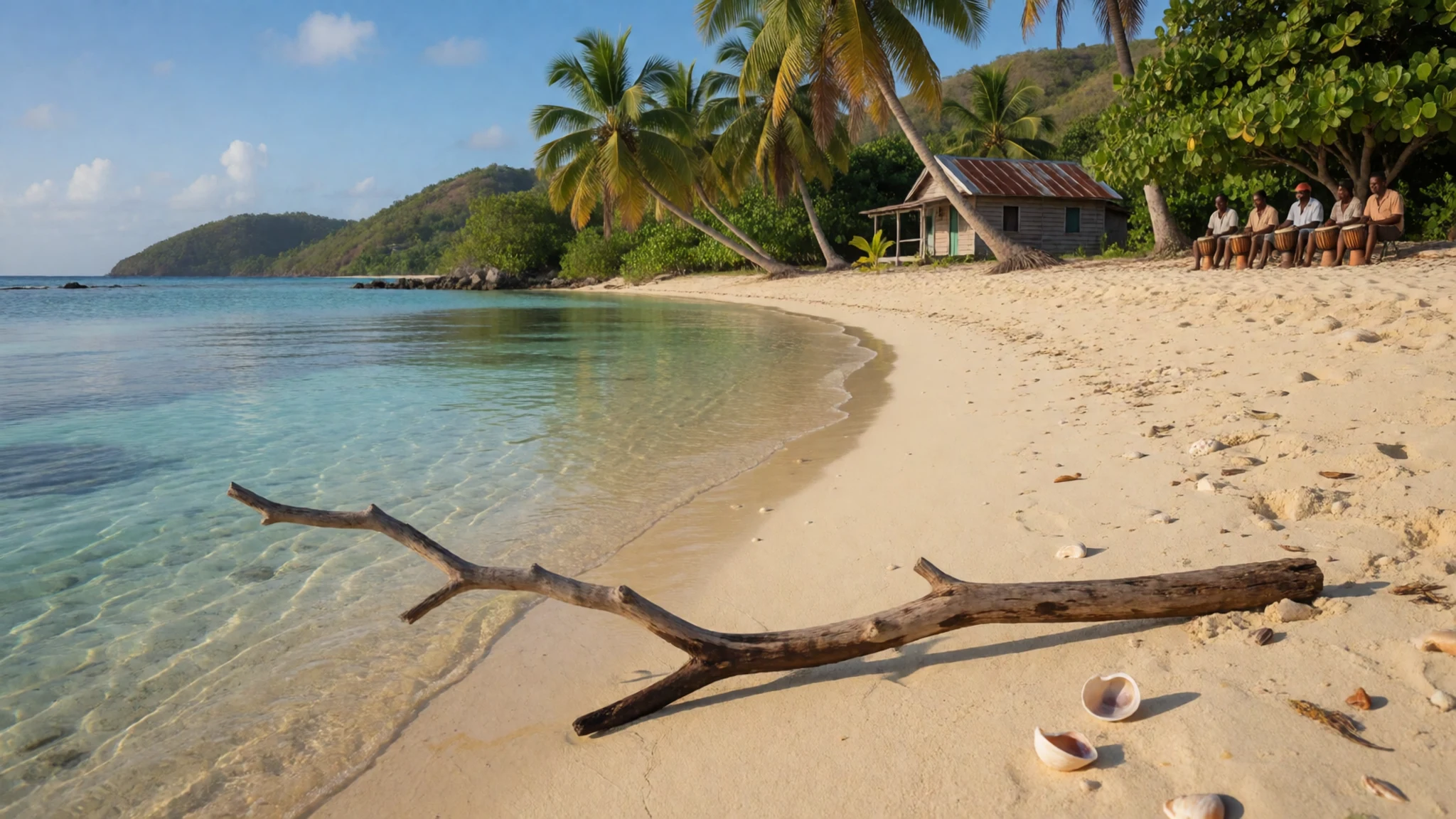
- Molinere Underwater Sculpture Park — West coast, north of St George's
Molinere is a shallow coastal site on Grenada's west side where sculptures sit on the sea bed for divers and snorkellers. It cannot show the volcano, but it is a safe, well-run way to see how the Caribbean looks beneath the surface. Book a guide and check conditions before going.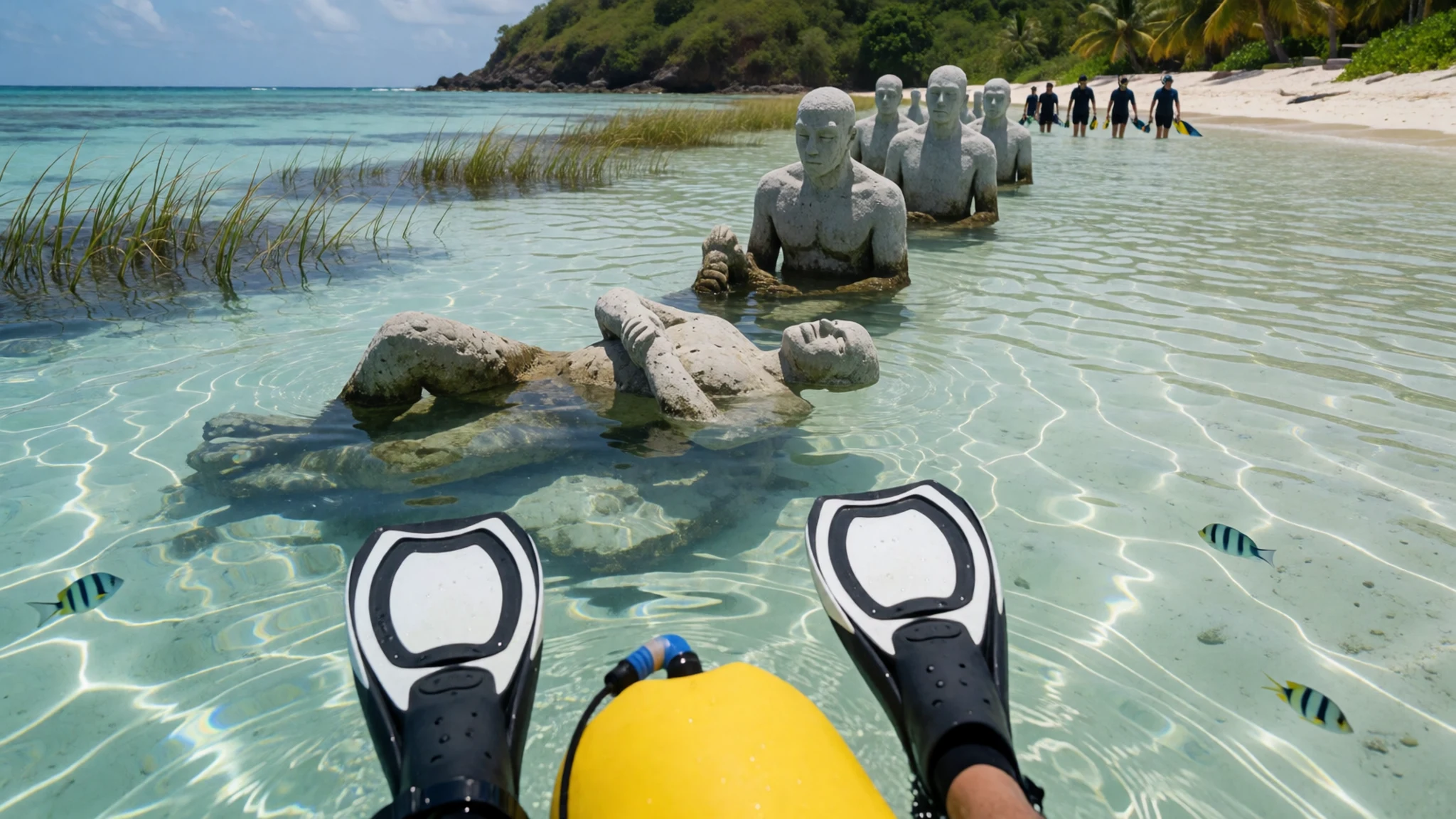
Culture
Kick-'em Jenny sits in waters that shape daily life on Grenada, an island often called the Spice Isle for its nutmeg and mace. Fishing, small-boat trade and farming still carry the economy in many villages, and the sea is treated with a mix of affection and respect. A volcano under it is part of the background, mentioned plainly in local talk, in school lessons and in the alert bulletins that people follow without drama.
Grenadian culture blends African, Carib, French and British threads. French place names such as Sauteurs sit alongside English ones, and the island's Creole speech carries both. Carnival, called Spicemas, brings costume, calypso and steelpan, and on Carriacou the Big Drum tradition keeps older African rhythms alive at gatherings and celebrations. Churches matter, and Sunday is quiet in most towns.
People are generally friendly, a little formal in greeting, and happy to talk about the island's recovery from past hurricanes, its cooperative nutmeg growers and its interest in marine conservation. A guide who knows the northern coast will usually explain the volcano's science in plain terms and also share local stories about the water, which are worth hearing as stories rather than as hard facts.
Greet people with a 'good morning' or 'good afternoon' before asking for anything, and ask before photographing fishers, market sellers or anyone at work.
What to wear
Kick-'em Jenny is a sea feature, so Grenada's fashion is best read through island life and boat days. Traditional dress is linked to the wider Eastern Caribbean: the madras check, a cotton cloth in bold plaids, is tied into head wraps, skirts and shirts, and is worn on national days, at cultural shows and by dance groups. On Carriacou, Big Drum performers wear patterned wraps and head ties, while Spicemas carnival adds sequins, feathers and beadwork, usually in bright colours and made new each year.
Day to day, people wear light cotton and linen, shorts and sandals in the heat, and neat casual clothes for town and church. Fishers and boat crews favour quick-drying shirts, caps and rubber boots or bare feet on the deck. Smart-casual is normal for evenings out, and swimwear stays on the beach.
Visitors should pack for sun, salt and sudden showers. Choose loose cotton or quick-dry layers, a wide-brimmed hat, sunglasses and reef-safe sunscreen. Bring a light rain jacket and non-slip sandals or deck shoes for boats, plus sturdier shoes for coastal walks and viewpoints. Cover up with a shirt or wrap when leaving the beach for towns, shops and churches, and keep shoulders covered for any church service. Sea-sick tablets can help on rougher crossings.
What to eat
- Oil down — Village eateries and weekend cookouts across Grenada
A slow-cooked one-pot dish of breadfruit, salted meat or chicken, dumplings and greens, simmered in coconut milk and spices until the liquid is absorbed. It is a Grenadian staple, often served at family gatherings and weekend cookouts. Look for it at village eateries and roadside stalls.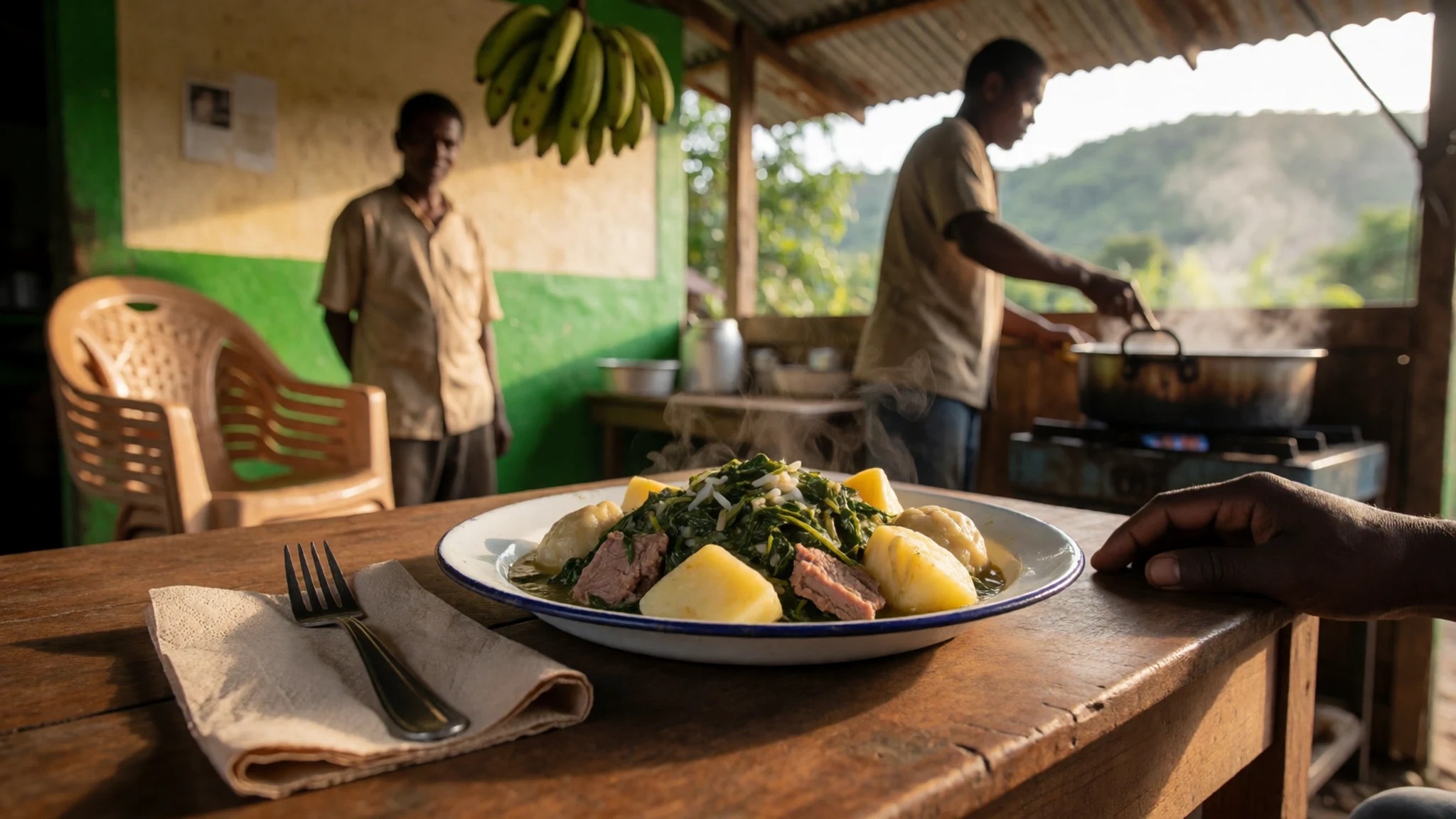
- Callaloo soup — Local restaurants and market food stalls in St George's
A thick green soup made from dasheen or taro leaves with coconut milk, okra and sometimes crab or salted meat. It is mild, earthy and filling, and shows how African and Caribbean cooking meet. Order it as a starter or light lunch.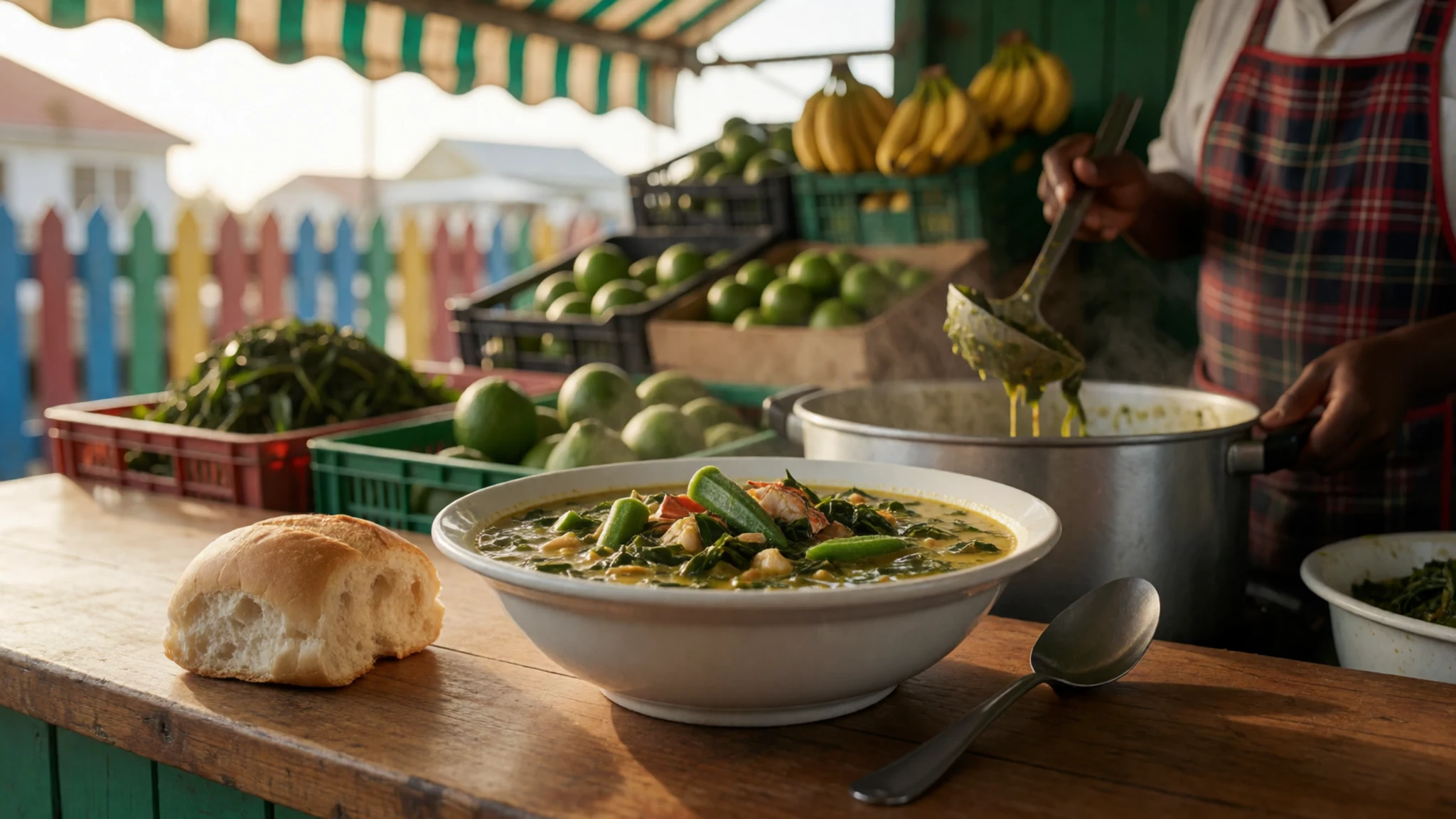
- Fresh grilled fish — Fish landing beaches and seaside eateries, especially Gouyave
Tuna, mahi-mahi and snapper come in daily from the boats that work these waters, usually grilled or stewed with local seasonings and served with rice, plantain or breadfruit. The best value is often right by the landing beach, where fishers sell the catch. - Roti — Roadside roti shops and takeaway counters in towns
Curried chicken, goat or vegetables wrapped in soft flatbread, a dish that arrived with Indian workers in the Caribbean. It is a good lunch for travellers from India or the UK who miss familiar flavours, though the spicing here is distinctly island. - Nutmeg ice cream and spice tea — Spice stalls, ice cream parlours and the main market in St George's
Grenada's nutmeg, cinnamon and cocoa end up in ice creams, teas, jams and rum punches. Try a scoop of nutmeg ice cream or a cup of cocoa tea after a morning on the north coast, and buy whole spices to take home.
Plan it
Best time. December to April is the dry season, with the most comfortable temperatures and the least rain, providing better conditions for boat trips and snorkelling. June to November is the wet and hurricane season, with the highest rainfall and hottest temperatures, so boat trips near the volcano are more likely to be cancelled.
How long. 3–5
Getting there. Fly to Maurice Bishop International Airport at Point Salines, then take a taxi or minibus to St George's or the north coast. For boat trips or Carriacou, take a ferry or charter from St George's or Grenville. Check the official Grenada disaster-management and volcano-monitoring pages for current alert levels before travelling.
Budget. mid
Tips
- Check the current volcano alert level and exclusion-zone notices with local authorities before booking any boat trip.
- Book boat trips and ferries through licensed operators, and ask how they avoid the exclusion zone around the vent.
- Carry some cash for small stalls and village eateries, as card use varies outside the main towns.
- Start boat trips early, when the sea is usually calmer and the heat is lower.
- Carry drinking water, sun protection and a light rain jacket for sudden showers.
Etiquette
- Greet people politely before starting a conversation or asking for directions.
- Respect exclusion zones and operators' safety advice, and do not pressure boat crews to approach the vent.
- Ask before photographing people, and dress modestly away from the beach.
Nearby
Sources
- Wikidata Q1740807 (CC0)
- Wikipedia: Kick 'em Jenny (rev 1374550849) (CC BY-SA 4.0)
- Wikivoyage: Kick 'em Jenny (Understand) (CC BY-SA 4.0)
Wildlife
- Leatherback sea turtle (animal)
The leatherback is the giant of the turtle world, an ocean wanderer with no hard shell, just tough, oily, leathery skin over its back. It is the biggest living turtle, and it is considered vulnerable, so every sighting is precious. Here, nesting turtles are part of the charm of the windswept beaches. Watch with a local guide, keep a respectful distance, stay quiet and let the turtle go about its business. Never touch it, and never feed it.