Gorumara National Park
Gorumara National Park, India
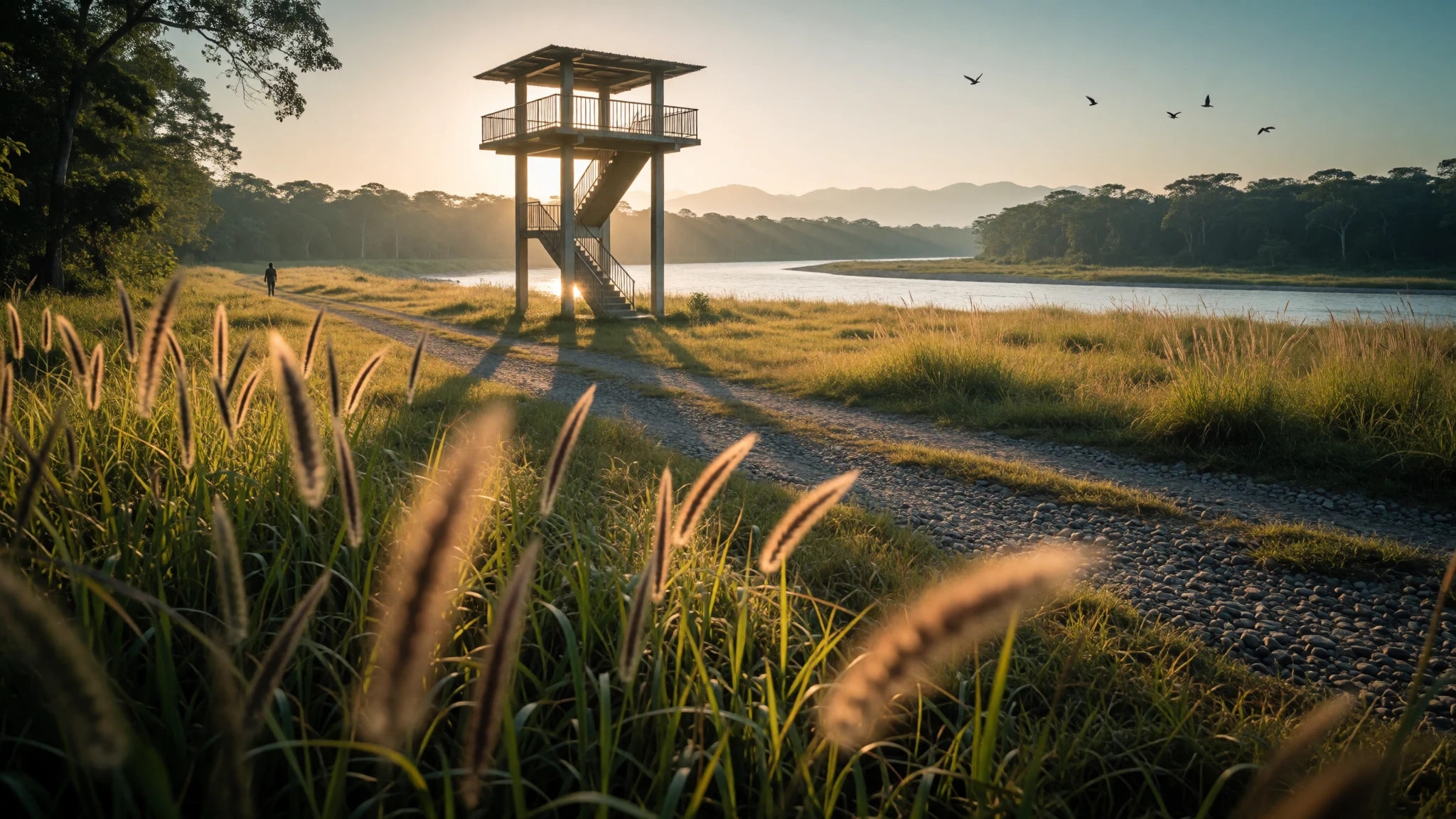
Gorumara offers a compact Dooars forest where Indian rhinoceros, elephants and gaur can be watched from quiet watchtowers above rivers and tall grass.
The place
Gorumara National Park sits in the Dooars, the belt of forest, grassland and tea estates where the Eastern Himalayas flatten into the plains of northern West Bengal. Administratively it belongs to the Malbazar subdivision of Jalpaiguri district. At about 80 square kilometres it is compact, yet it holds sal forest, open riverside grass and clearings from which the foothills show on clear mornings. Two rivers, the Murti and the Raidak, have laid down the flat, flood-prone ground the park stands on, while the Jaldhaka, a tributary of the Brahmaputra system, is its main watercourse. That makes the area a divide between Ganges and Brahmaputra drainage, and the water explains the tall grass that feeds the animals people come to see. The Indian rhinoceros is the headline species, with elephants, gaur and many birds sharing the same ground. Jaldapara National Park and Chapramari Wildlife Sanctuary lie close by, so animals range across a wider forest than the boundary suggests. Seasons rule everything. From November to February days are cool, roughly 10 to 21 °C. March and April warm to between 24 and 27 °C. May to October is hot and wet, 27 to 37 °C, with the heaviest rain from around mid-May until mid-October. Most of the park's character is seen from watchtowers rather than trails, and the point of a visit is patience: a long, quiet look over grass and river, often rewarded with a distant grey shape rather than a close encounter.
Its story
Gorumara National Park began life as a reserve forest in 1895, a status that protected timber rather than animals. The turn came in 1949, when the area was declared a wildlife sanctuary because it held a breeding population of Indian rhinoceros. Full national park status followed in 1992. Along the way the protected land grew: it started at only about 7 square kilometres and absorbed neighbouring ground until it reached about 80. Conservation here has been a story of solving the problems that success creates. Poaching was serious in the 1970s and 1980s, but better-equipped rangers and villagers who earn a living from visitors have made it far less of a threat today. The newer worries are subtler. With few large predators, herbivore numbers can drift out of balance. The usual ratio of male to female rhinoceros has tilted towards parity, which leads to fights between males, and the gaur population has grown enough to raise fears of overgrazing. Cattle from fringe villages and fires lit by people also press on the forest. Railway lines run close to the park, and elephants have died on them; three were killed in separate incidents on a single day in May 2006, and rail and forest authorities have been working on the problem since. The history shows that a boundary line does not end the story. Living beside a forest means managing it constantly.
What to see
- Jatraprasad watchtower — Central Gorumara
Jatraprasad is named after a legendary elephant, and its tower is among the main places to scan the park. From the platform the view runs across grassland and forest edge towards the foothills. Bring binoculars, arrive early, and expect to wait; the reward is often elephants or gaur at the treeline.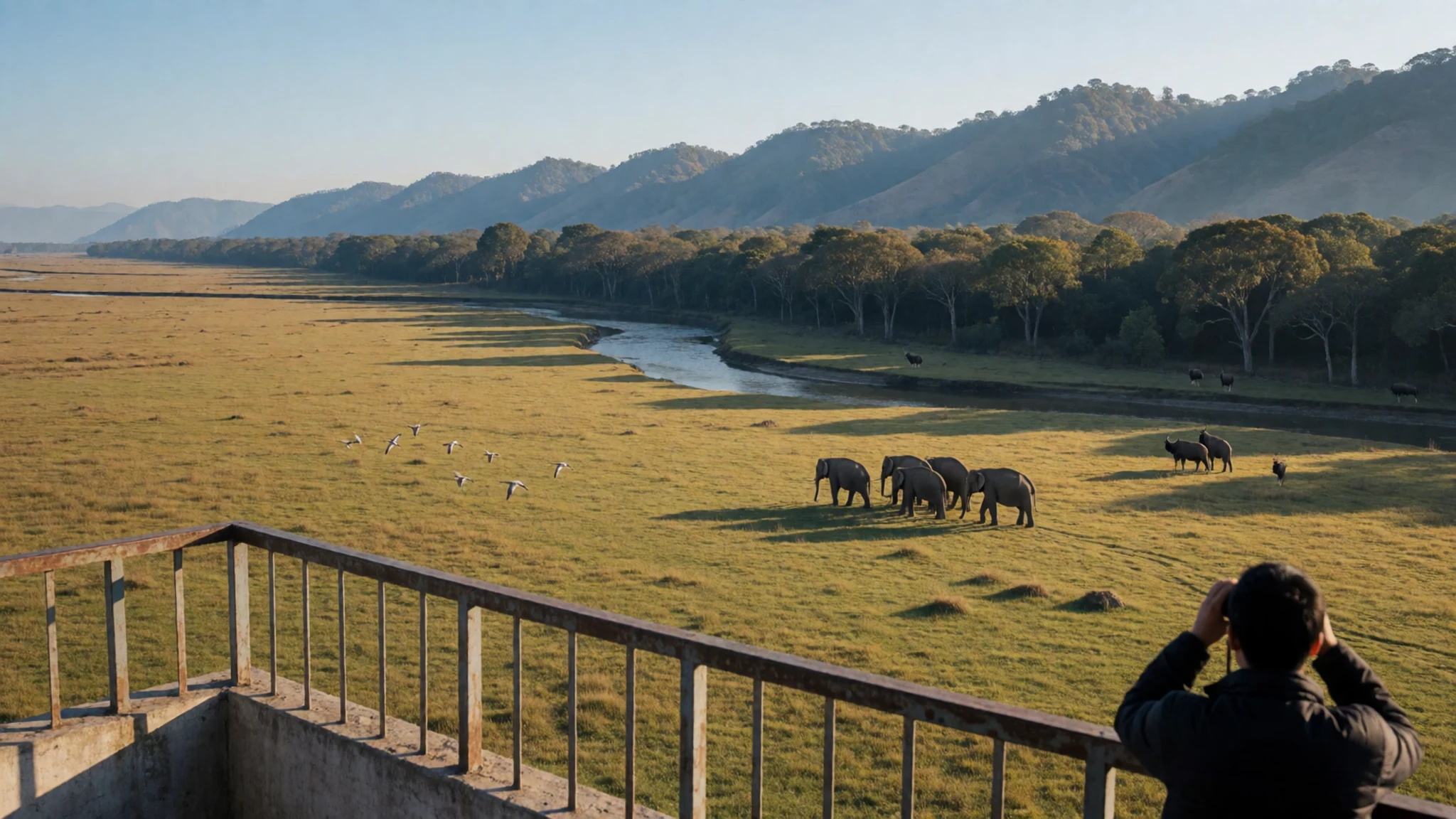
- Medla watchtower — Southern Gorumara
Medla is a rhinoceros-watching spot on the park's open ground. A mother with a calf has been photographed near the tower, which shows what the place can offer in a good hour. Light is best early and late, and silence matters, since animals graze close to the cover line.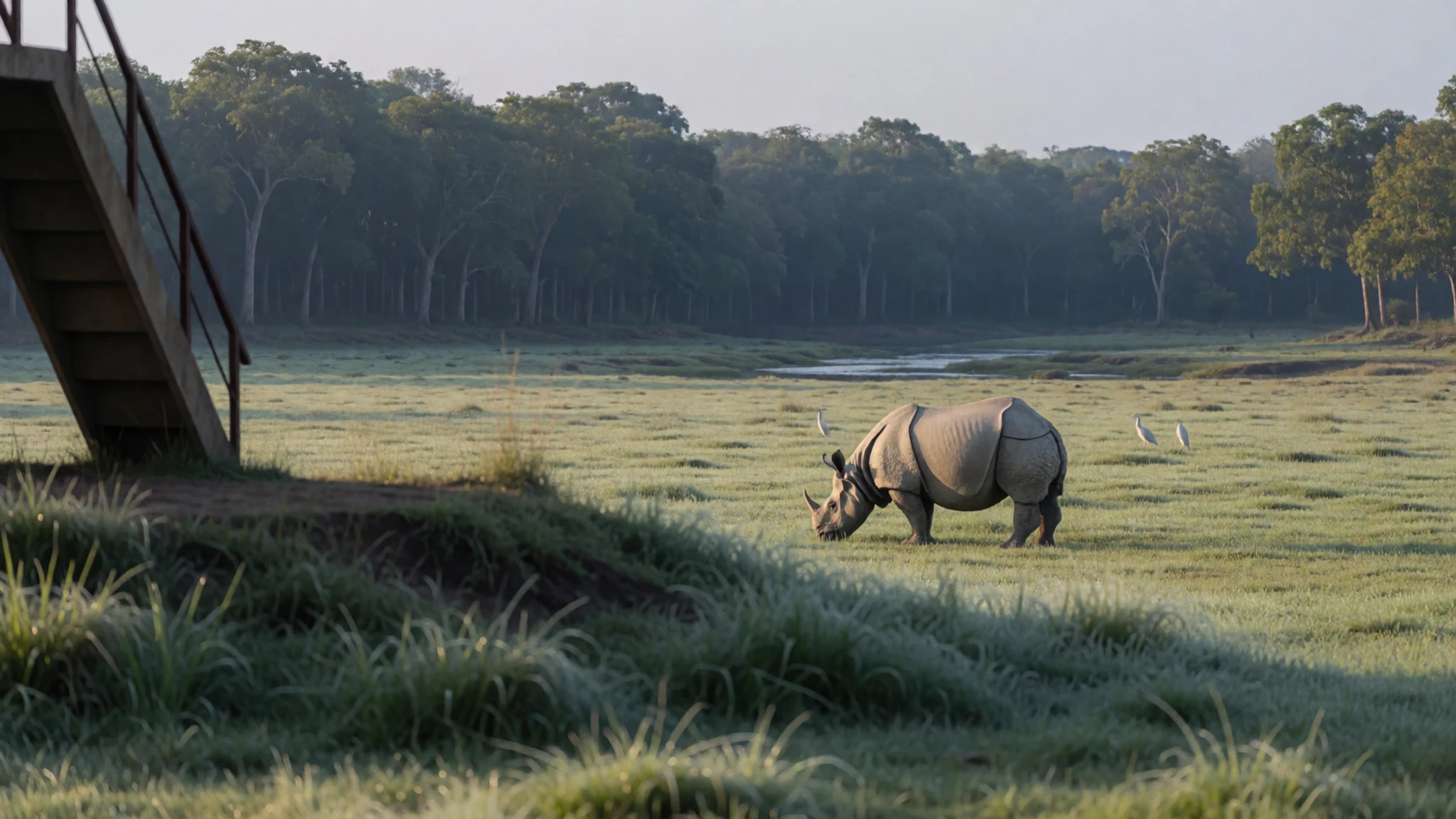
- Chukchuki — Near Lataguri
Chukchuki, near the southern entrance side of the park, is recommended for birding. Forest edge, scrub and grass bring different species into a short walk of tower and track. Carry a field guide, a hat and patience, and let local guides name calls and shapes you might otherwise miss.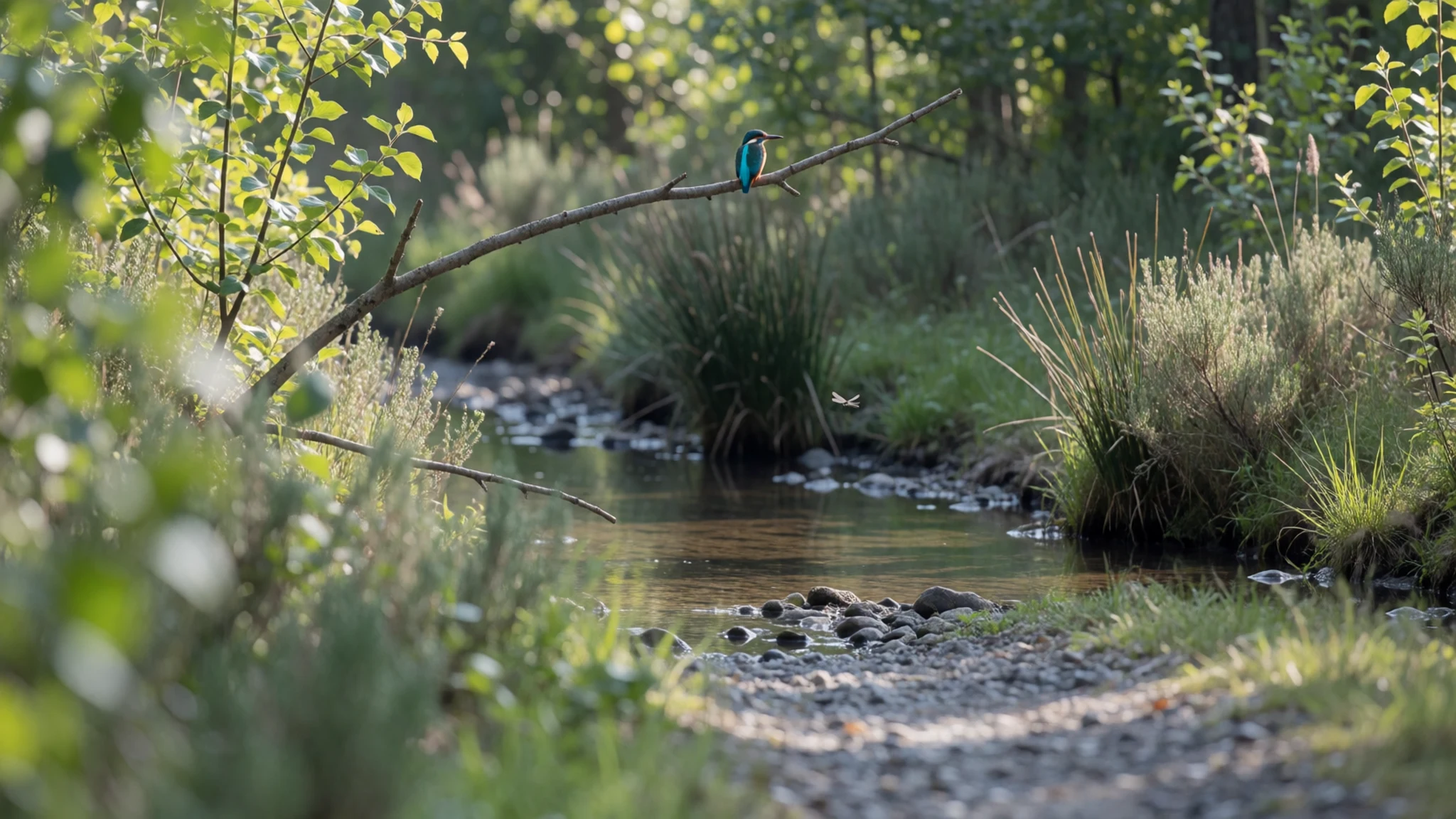
- Dhupjhora — Northern Gorumara
Dhupjhora is an elephant camp with a few cottages and a treehouse, set beside a stream. Working elephants of the forest department are kept here, and a visit gives a close look at how they are cared for. Staying overnight puts forest sounds right outside the door.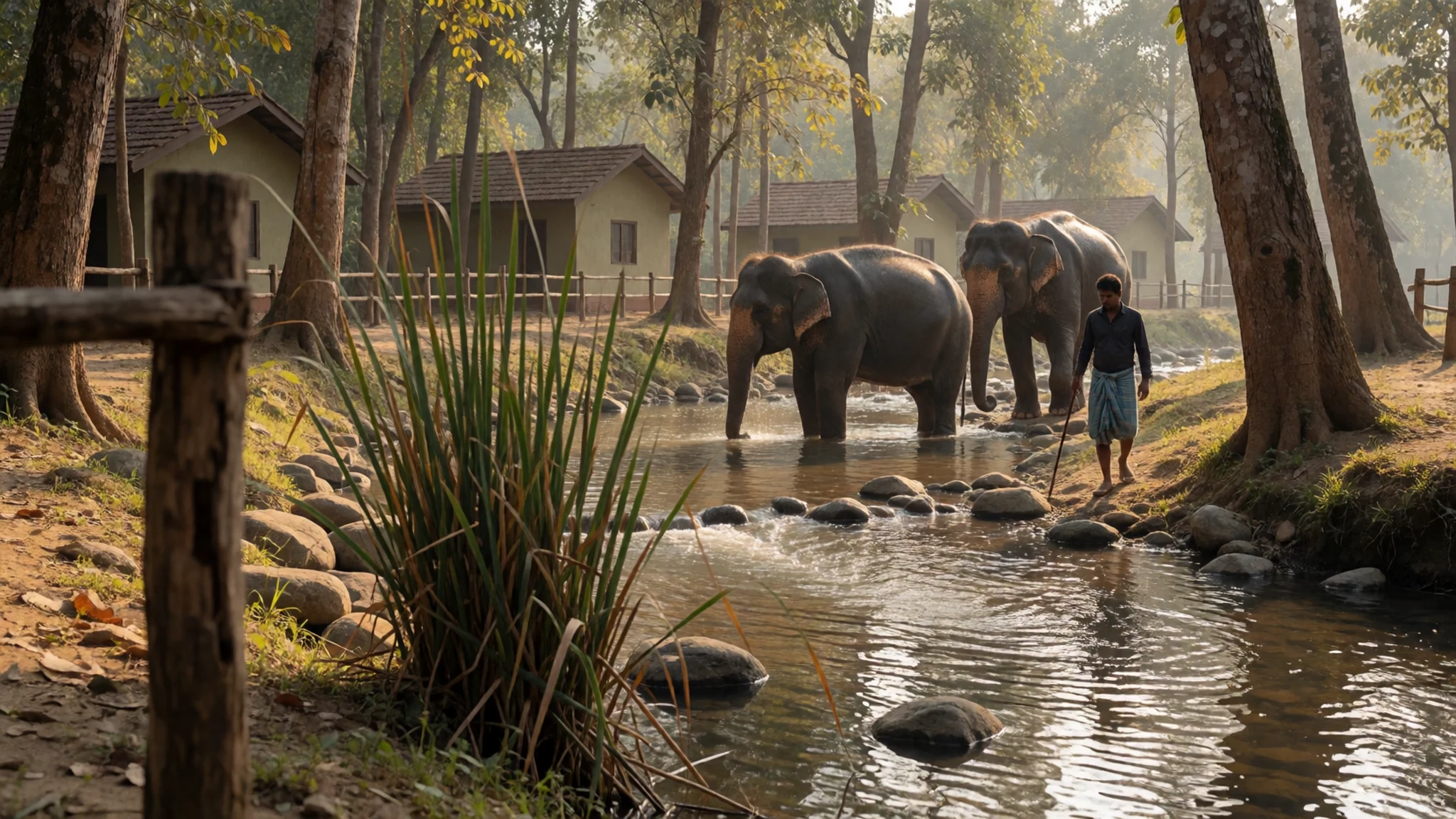
- Chapramari — North of Gorumara
Chapramari is a wildlife sanctuary beside Gorumara, and forest and grass continue across the boundary. Elephants are the animal people most hope for here. A railway station lies inside the sanctuary but no train stops there, so tracks and traffic noise are part of the setting.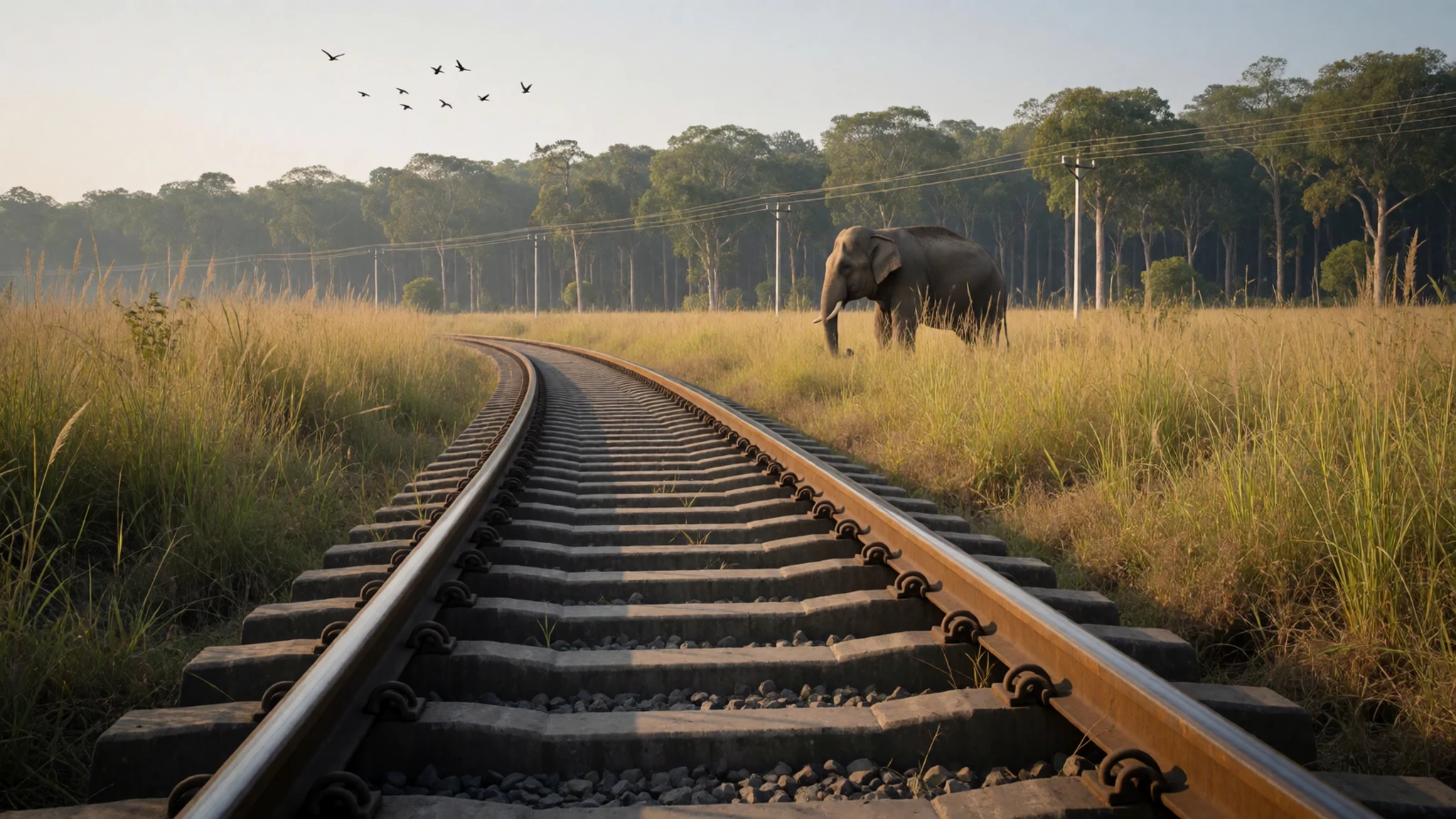
Culture
Gorumara National Park is ringed by a patchwork of communities who shape how the forest is lived with. Rajbanshi farming families, Nepali-speaking Gorkha households, Bengali traders and Adivasi groups such as the Oraon, Munda and Santhal, whose ancestors came to work the tea estates, share the Dooars. Their languages mix in the bazaars of Lataguri, Chalsa and Malbazar. Elephants sit in local memory as well as in the forest: Jatraprasad, a watchtower site, is named after a legendary one. Festivals follow the farming and tea calendar rather than the safari season. Durga Puja in autumn is the big gathering for Bengali families, Dashain and Tihar matter to Nepali-speaking households, and Adivasi communities mark harvest and forest festivals such as Karam with drumming and dance. Tea sets the daily rhythm too: pluckers start early, and a cup of Dooars tea is offered easily. Tourism now supports villagers through guiding, driving, lodges and crafts, which gives local people a stake in keeping rhinoceros safe. Living beside big animals has costs as well. Crops get raided, and villagers know the sound of elephants at night far better than any visitor will, so asking questions with respect for that knowledge is welcomed. Keep your voice low in the watchtowers and do not leave the vehicle or walk off the gravel track, because rhinoceros, gaur and elephants can appear without warning.
What to wear
Gorumara National Park lies among communities whose dress varies by group and occasion. Nepali-speaking families wear the daura-suruwal for men and the gunyo-cholo or a sari for women at festivals, often with a dhaka topi in the hand-woven patterned cloth the cap is known for. Adivasi tea-garden women favour cotton saris with broad borders, wrapped for working in the leaves, and Rajbanshi men and women commonly carry the cotton gamchha, a thin towel-cloth used as scarf, sweat cloth and head cover. Everyday dress today is practical and mostly modern: shirts, trousers, salwar kameez, cotton saris, and rubber sandals or boots for tea and field work. Festivals bring out silk, bright borders and jewellery. Visitors need clothing chosen for the forest more than for local custom. Wear long sleeves and trousers in muted greens, browns or khaki, because bright colours and strong scents can unsettle animals and attract insects. Light cotton or quick-dry fabric copes with humidity, and a rain jacket is essential outside winter. Closed shoes with grip suit gravel roads and wet ground, and leech socks help in the monsoon. Bring a hat, sunglasses and a warm layer for early mornings from November to February. In villages and at any temple, shoulders and knees covered is the sensible standard.
What to eat
- Bhaat with maach — Lodge dining rooms and family-run eateries around Lataguri and Chalsa
Rice with a light fish curry is the everyday meal across North Bengal. River fish are cooked with mustard oil, turmeric and green chilli, and served with dal and a vegetable side. It is the dish most lodge kitchens do well.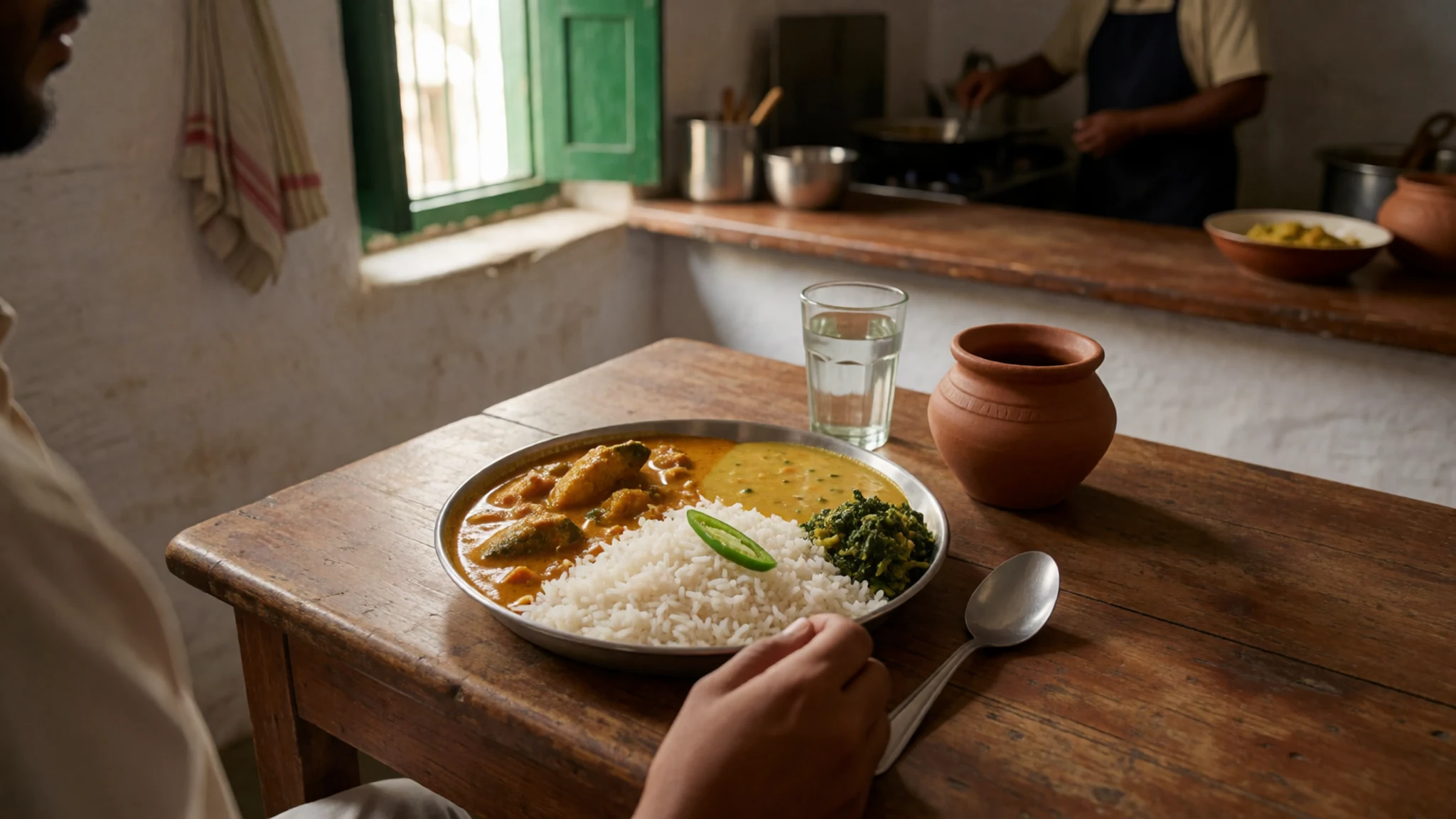
- Momo — Small eateries and bazaar stalls in Malbazar and Chalsa
Steamed dumplings reflect the Nepali-speaking and Himalayan side of the Dooars. Fillings are usually chicken, pork or vegetables, served with a sharp red chutney and a cup of clear soup. They make a good snack after an early tower watch.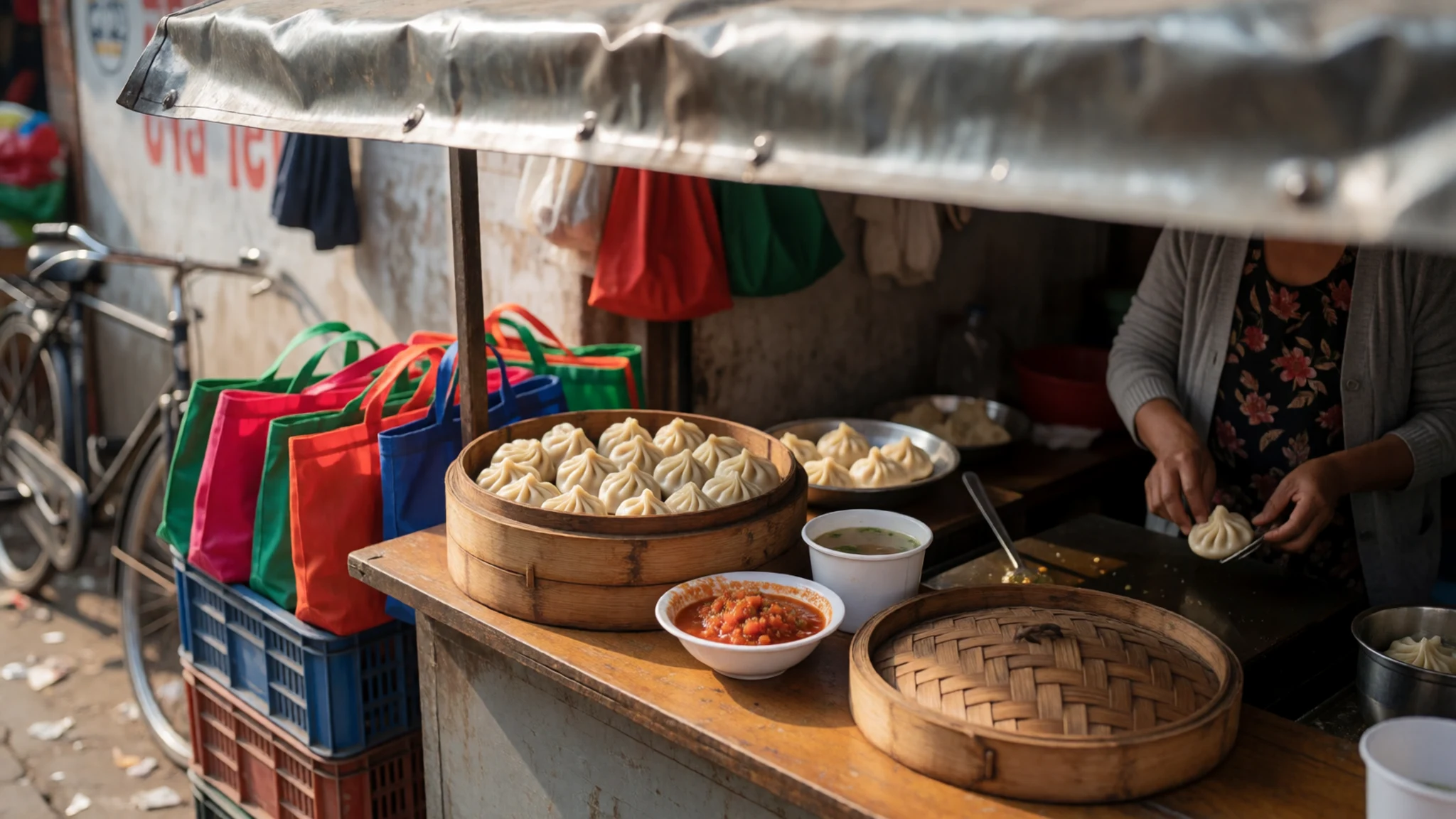
- Thukpa — Bazaar eateries in Malbazar and along the highway
This noodle soup arrives hot and brothy, with vegetables or meat, and warms cold winter mornings. It comes from the Himalayan kitchens that sit just north of the plains and is easy to find where momos are sold. - Khichuri — Roadside eateries and homes during Durga Puja
Rice and lentils are cooked together until soft and served with fried vegetables, papad and pickle. It is the dish of rainy days and festival tables across Bengal, and the right choice when the forest drizzle has set in. - Dooars tea — Tea stalls at Lataguri and Chalsa, and tea estates nearby
The tea estates around the park produce the leaf that fills the local stalls. Served strong with milk and sugar, it is the standard morning drink before a safari. Estate visits show how plucking and processing work.
Plan it
Best time. November to March is the practical window: winter days are cool (roughly 10 to 21 °C), skies are clearer, and animals come to open ground and water. April is warmer, at 24 to 27 °C. May to October is hot (27 to 37 °C) and wet, with the heaviest rain from around mid-May to mid-October, so check with the forest department whether and how the park is open.
How long. 2–3
Getting there. The nearest railway station for a smooth arrival is New Mal Junction at Malbazar; Siliguri is the larger hub on National Highway 31, about 75 km from Lataguri. Lataguri is 1 km from the park and Chalsa 10 km. Hire a vehicle from either town; most lodges will arrange it.
Budget. mid
Tips
- Book government forest lodges well ahead through West Bengal Tourism or West Bengal Forest, and check the official sites for current rules and entry arrangements.
- Be at a watchtower early or late, when animals are most active and the light is soft.
- Bring binoculars, insect repellent, a hat and water; night-vision binoculars help after dark.
- Carry cash for small eateries and tea stalls, as cards are patchy in the Dooars.
Etiquette
- Stay quiet in watchtowers and on tracks, and never feed or approach wildlife.
- Do not walk off gravel roads; rhinoceros, gaur and elephants are present.
- Ask before photographing villagers or tea-garden workers.
Nearby
Sources
- Wikidata Q2985148 (CC0)
- Wikipedia: Gorumara National Park (rev 1366064300) (CC BY-SA 4.0)
- Wikivoyage: Gorumara National Park (rev 5402947) (CC BY-SA 4.0)
- Gateway of Gorumara National Park — Jonoikobangali (CC BY 3.0)
- Location map of India — Uwe Dedering (CC BY 3.0)
- Baby with Mother Rhino near Medla watch tower — Rupeshsarkar (CC BY-SA 4.0)
- Gorumara National Park panorama — njanam92 (CC BY 3.0)
- Koomkie Elephant of West Bengal Forest Department — Rupeshsarkar (CC BY-SA 4.0)
- Jatraprosad Watch Tower — Tanmoy Bhaduri (CC BY 3.0)
- Rhino Point Watch Tower — Tanmoy Bhaduri (CC BY 3.0)
- Gorumara Forest Rest House — Jonoikobangali (CC BY 3.0)


Wildlife
- Indian rhinoceros (animal)
The Indian rhinoceros is a heavy, grey-brown giant with one horn on its nose, skin folded like armour and wart-like bumps across its shoulders. It is Gorumara's headline animal, sharing the forest with elephants, gaur and many birds. The park's quiet watchtowers above the rivers and tall grass are the place to look for it. Stay up there, keep your voice low, follow your guide's advice, and never try to feed it.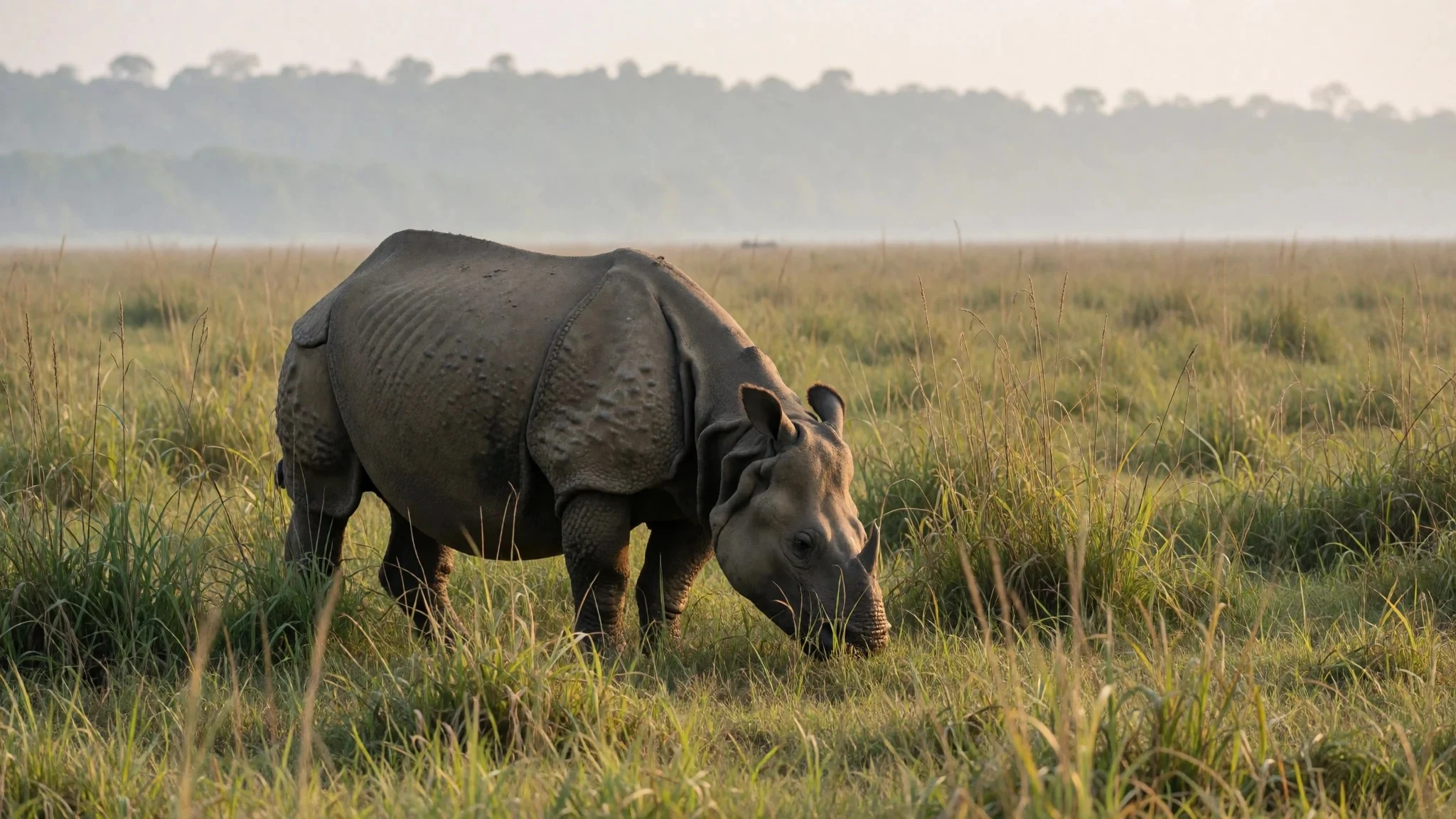
- Asian elephant (animal)
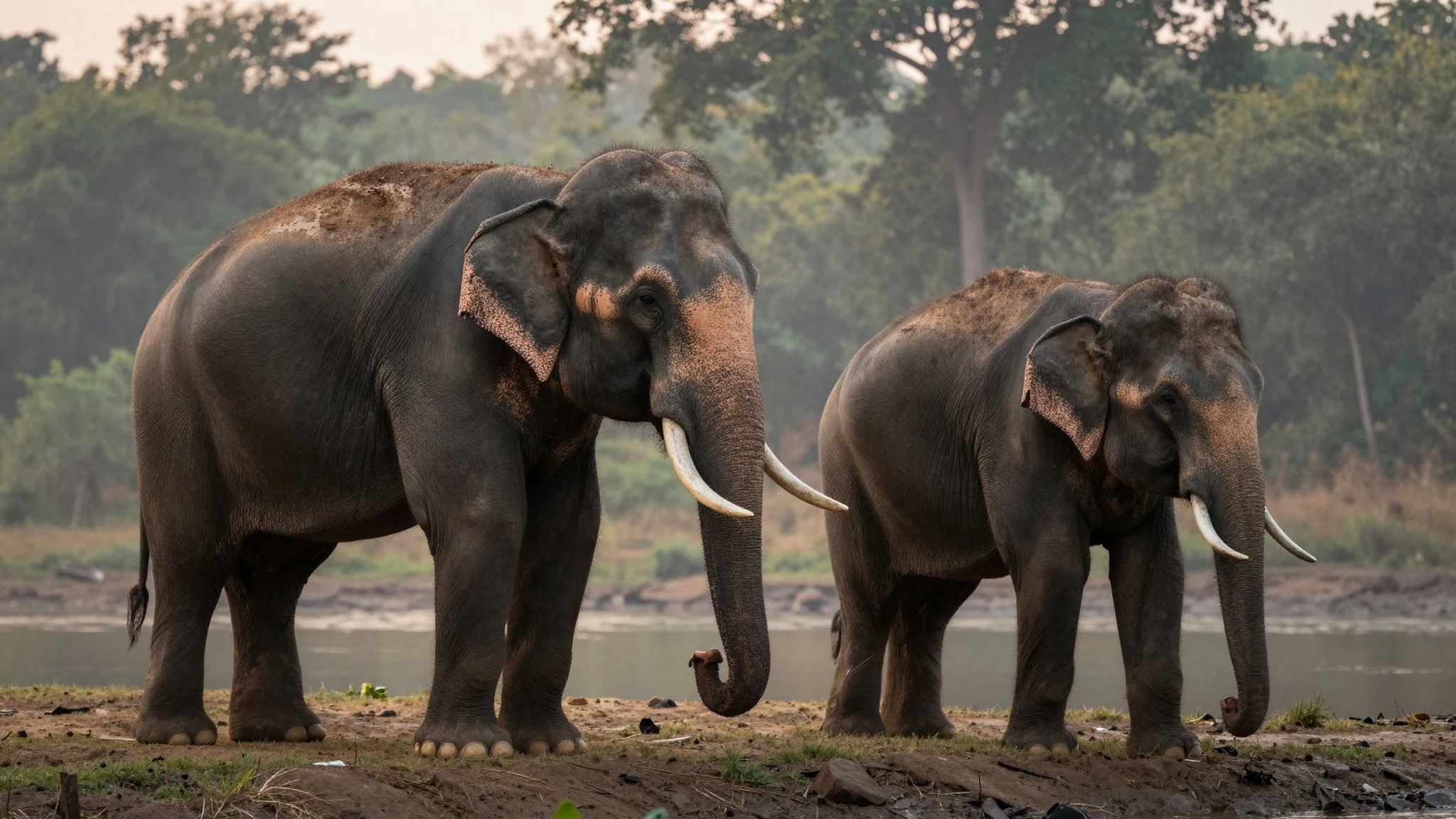
The Asian elephant is the biggest land animal in Asia, with a long trunk, broad folded ears and wrinkled grey skin. It is clever and can show grief and greet others. In Gorumara it shares the compact Dooars forest with rhinoceros and gaur, and you can watch from the quiet watchtowers above rivers and tall grass. Stay high and still, speak softly, listen to your guide, and never offer it food.