Gold Coast
Gold Coast, Australia
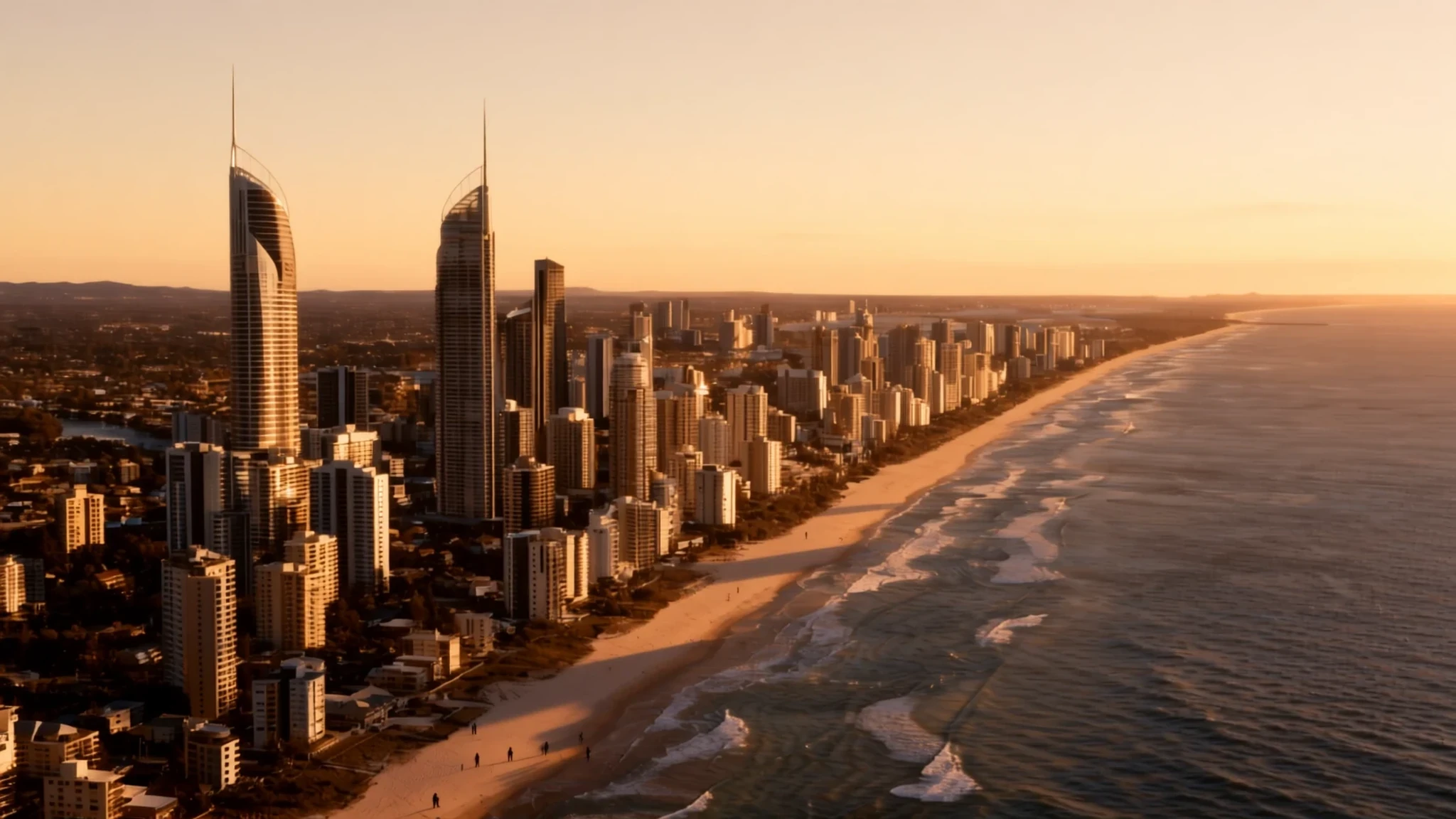
Gold Coast is Australia's surf-and-skyscraper strip: long ocean beaches, a rainforest hinterland close behind, and an easy base for a sunny, unhurried holiday.
The place
Gold Coast is a city of about 607,665 people on Australia's east coast, in the state of Queensland, roughly an hour's drive south of Brisbane. It sits at an elevation of only 12 metres, and almost everything is organised around the Pacific shoreline. The urban area is a long ribbon of suburbs rather than a single compact centre, running from the edge of Greater Brisbane in the north to the border with New South Wales in the south. Locals call it the GC or the Goldy, and the older nickname Glitter Strip hints at the skyline of apartment towers that faces the sea.
The official city centre is Southport, but visitors tend to think of Surfers Paradise, where the tallest towers, the nightlife and the busiest stretch of sand are found. Further south, Burleigh Heads and the airport district feel more like surf villages, while Broadbeach and Main Beach lean towards cafés and restaurants. A light-rail line links much of the strip, which makes it easier to go without a car than the sprawl suggests.
Behind the coast, the hinterland is a different world: mountain ridges, subtropical rainforest, waterfalls, lookouts and a few vineyards. The contrast is the real appeal. A morning on a patrolled beach and an afternoon under tall rainforest trees can sit in the same day. Expect a resort city rather than a historic one: busy, polished, built for leisure, and honest about it. Summer brings heat, humidity and school-holiday crowds.
Its story
Gold Coast is the ancestral country of several Yugambeh clans, among them the Kombumerri, Mununjali and Wangerriburra. Europeans came later: the explorer John Oxley reached the Tweed River in 1823, and by the middle of that century the hinterland's timber was drawing settlers.
Small townships followed. Nerang was surveyed as a base for the timber trade and had a town reserve by 1870. Burleigh Heads was surveyed and its land sold by 1873. In 1875 a settlement near the boat passage at the head of the Nerang River was renamed Southport, and it soon became a quiet getaway for well-off Brisbane families.
Tourism took over in the early twentieth century. After the First World War came the seaside shack: a modest, cheaply built beach cottage that let ordinary families own a slice of the coast, and they spread along the shore for decades. Growth accelerated, and in 1958 the city was founded, with its first high-rise going up soon afterwards. A later building boom filled the shoreline with the skyscrapers that define the view today.
The result is a place whose identity was largely marketed into existence: sun, sand and surf sold first to Brisbane, then to the country, then to the world. Beneath that sits an older Yugambeh story that the glossy image rarely tells.
What to see
- Surfers Paradise beach and skyline — Surfers Paradise
The best introduction is the beach itself, with the wall of towers behind it. Walk the sand early, before the heat and crowds, then look back at the skyline. Swim only between the flags where lifeguards patrol, as ocean currents here are strong.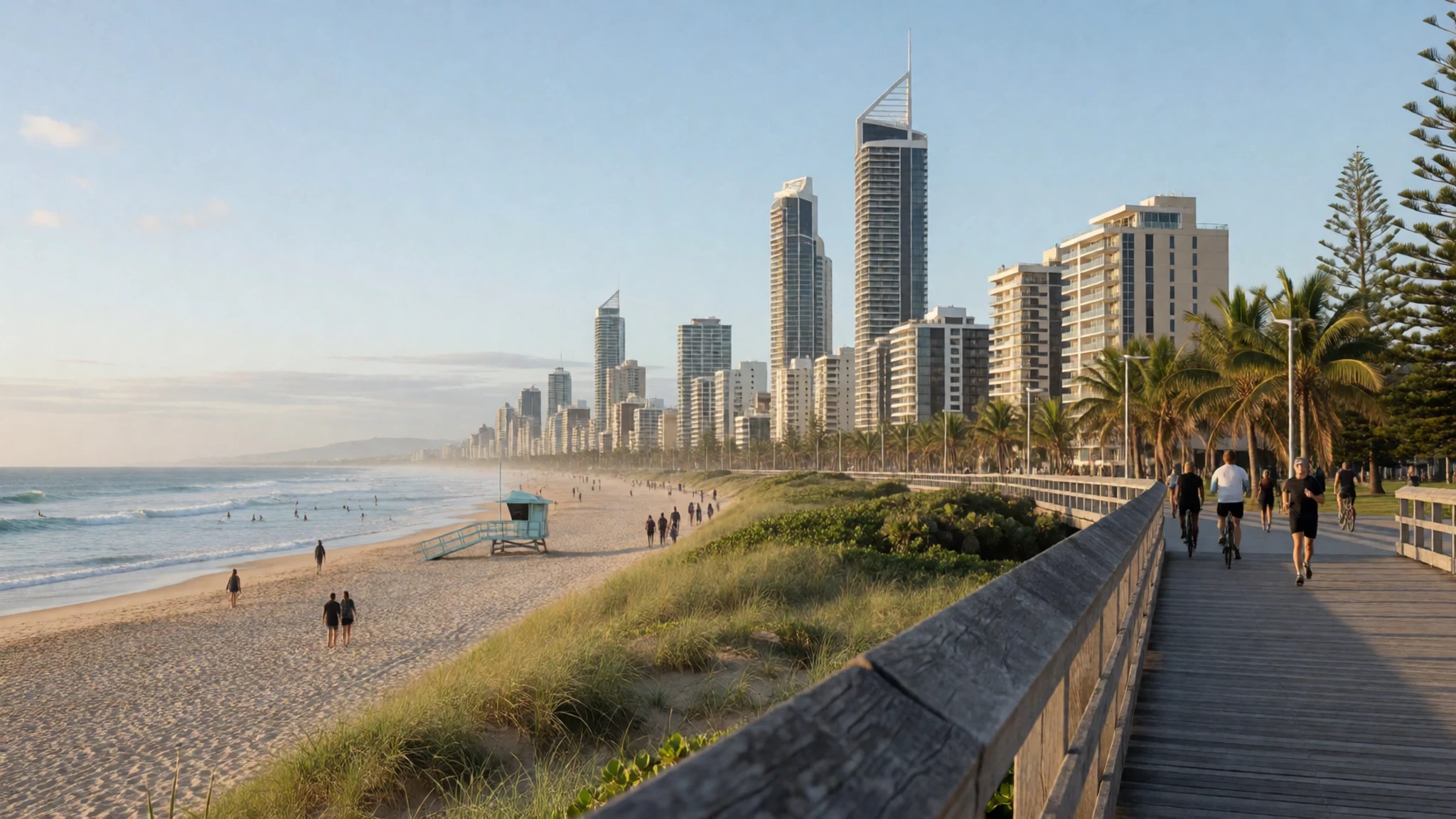
- Burleigh Heads — Burleigh Heads
A headland with a national park walk, a surf break and a relaxed village feel. It is the easiest place to see the Gold Coast as locals use it: surfers at the point, families on the grass and cafés nearby. Good at sunrise.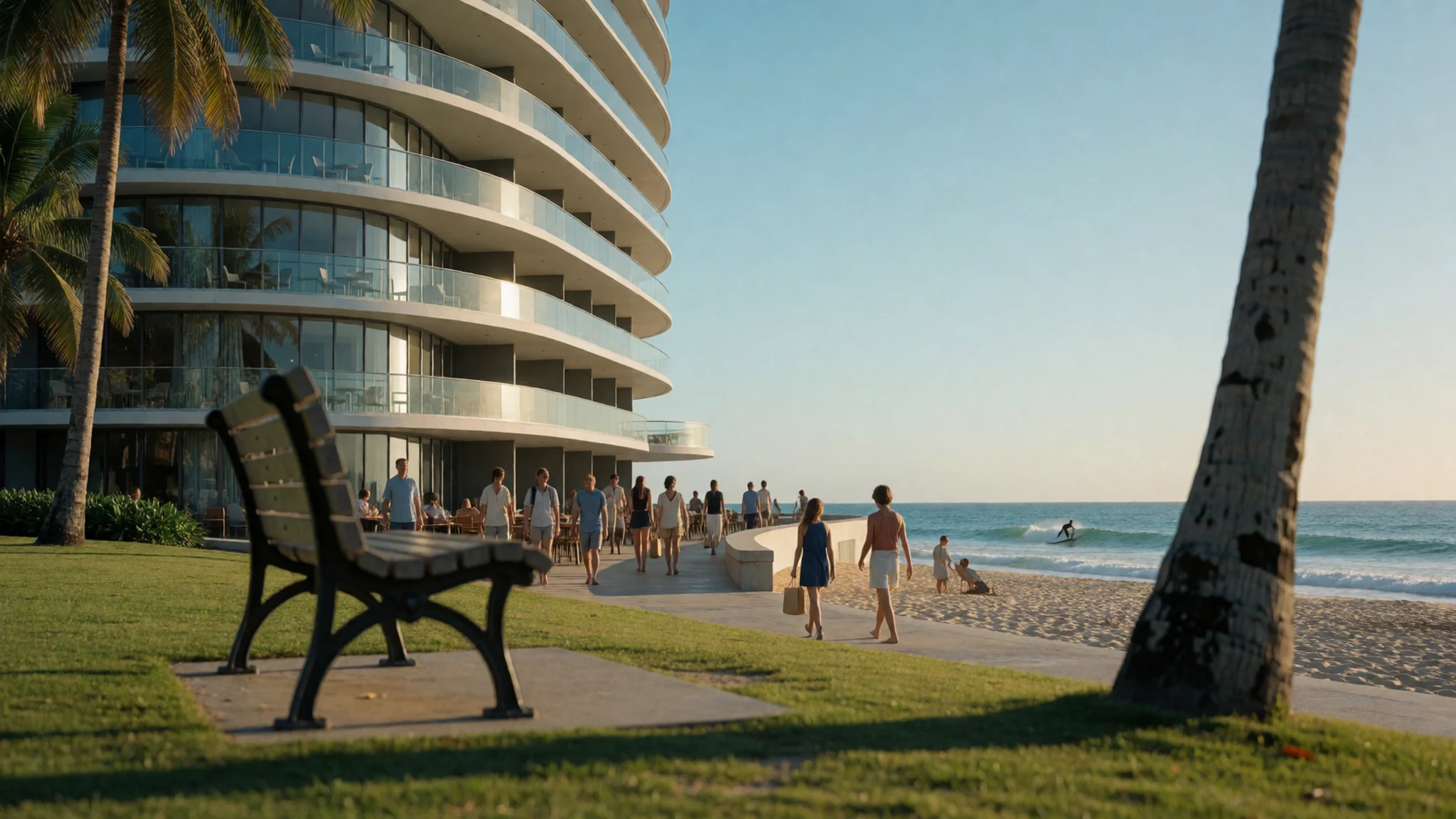
- Broadbeach — Broadbeach
A calmer, more food-focused pocket with a tidy beachfront, parkland and a dense cluster of cafés and restaurants. It suits an evening stroll after the beach, and the light rail makes it simple to reach from elsewhere on the strip.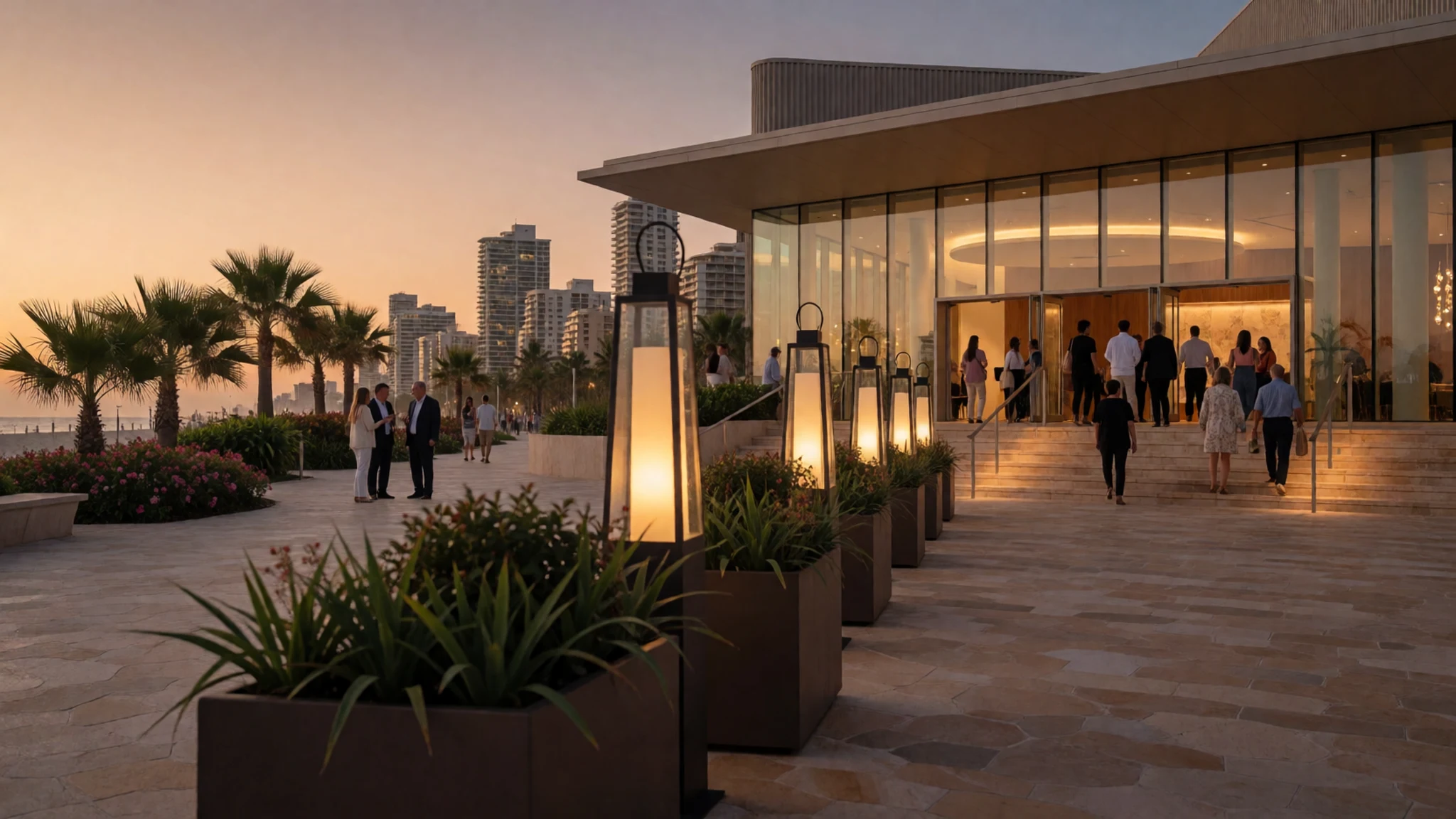
- Gold Coast Hinterland — Inland mountains
Promoted as the green behind the gold, this mountain country has rainforest, waterfalls, lookouts and wineries. The roads wind, so a car or organised bus tour works best. Allow a full day, carry water and wear shoes with grip.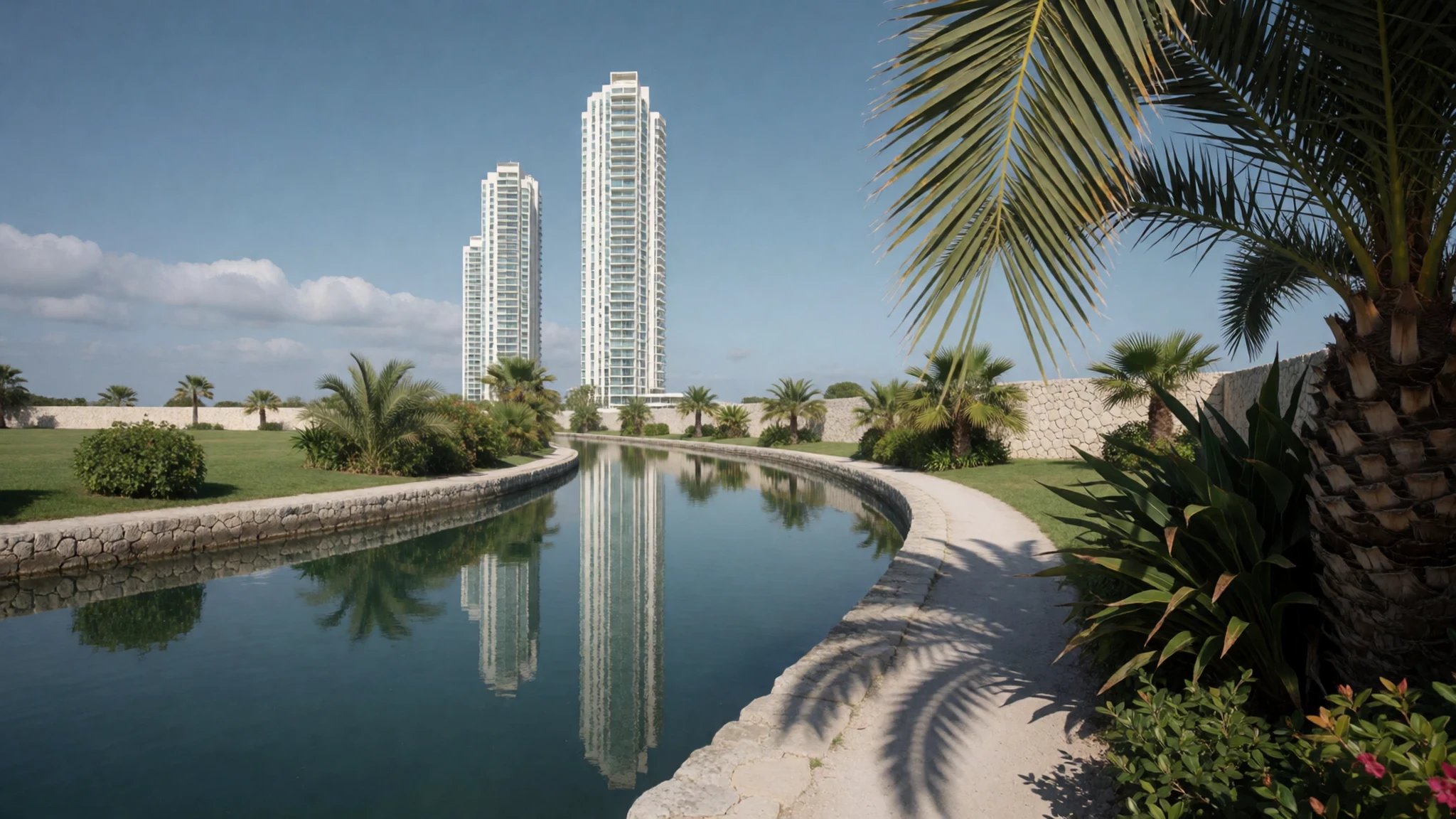
- Calm-water beaches — Along the Broadwater and canals
Away from the surf, sheltered beaches along the waterways are better for small children and nervous swimmers. They have gentle water and often shade and picnic space, a useful alternative on days when the ocean beaches are rough.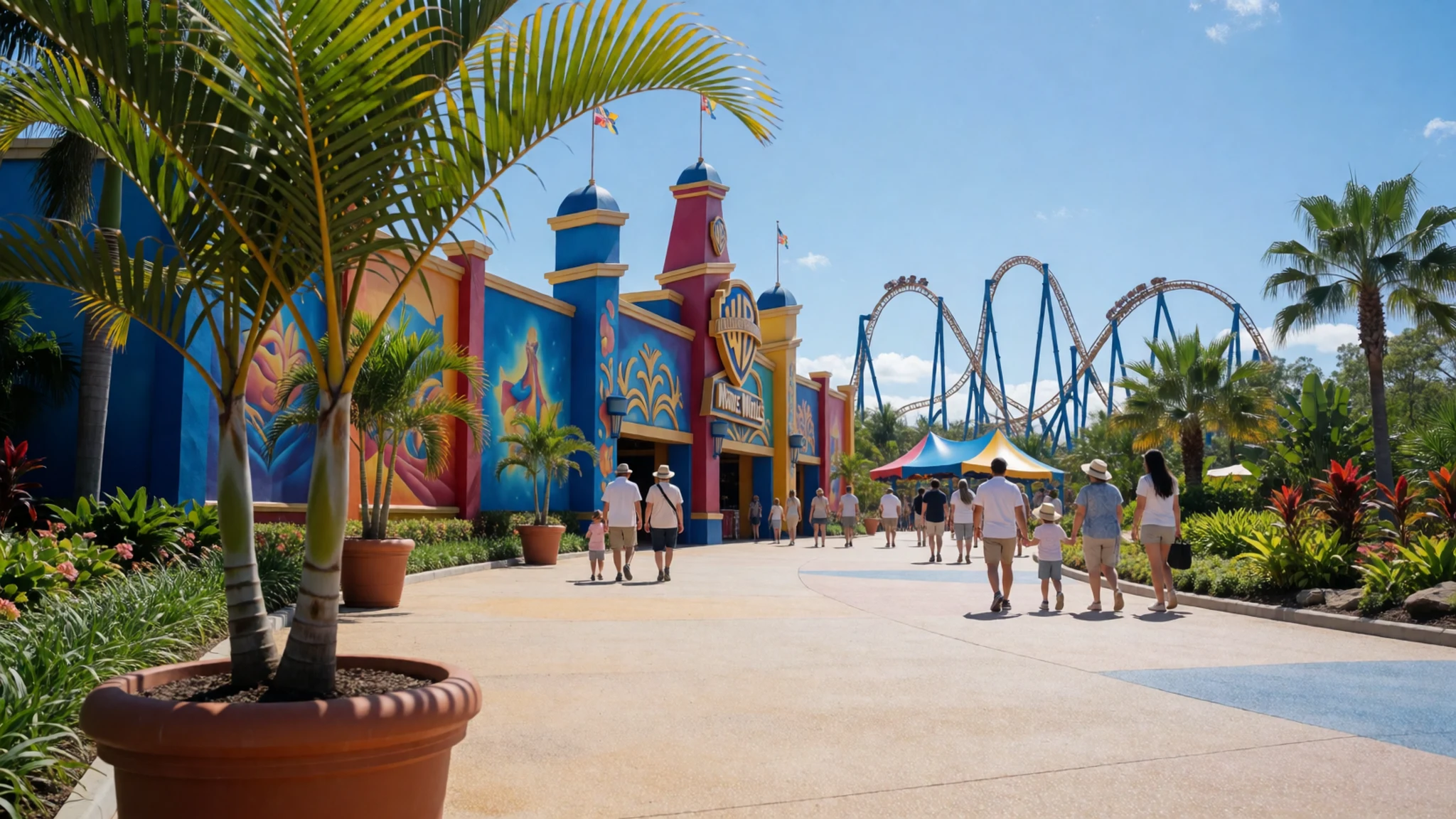
- Home of the Arts — Surfers Paradise
A cultural precinct in Surfers Paradise, showing that the city has more to offer than beaches and theme parks. Check the official city website for current exhibitions and performances before heading out.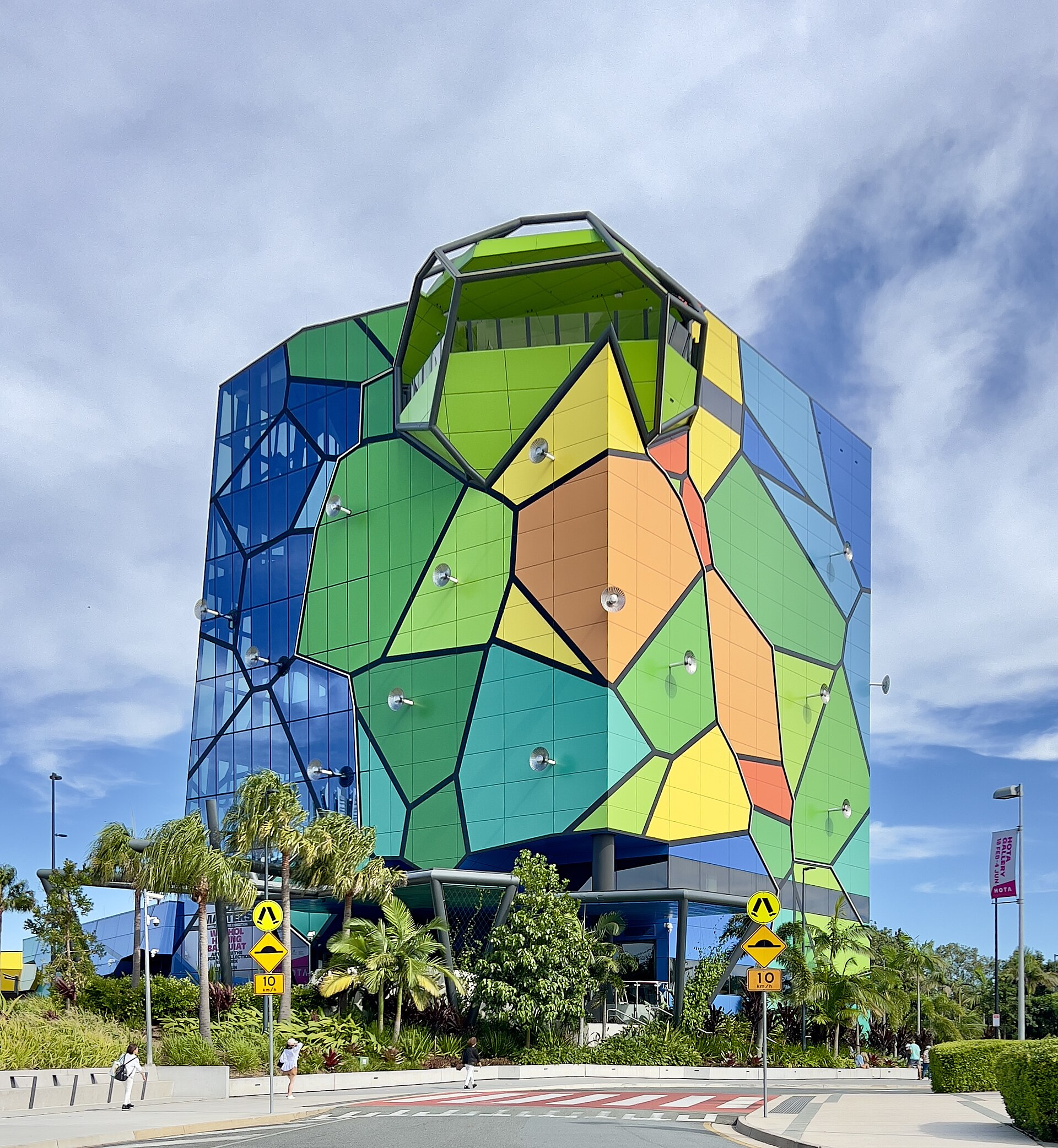
Culture
Gold Coast culture is shaped by beach life and by rapid development. The city has long been marketed around sun, sand and surf, and that image is strong, but it is not the whole picture. In pockets along the coast there is a genuine resident-driven scene, including local surf gangs who guard their breaks, and a broader Gold Coaster identity that has grown out of resort and property marketing.
Daily rhythm follows the water. People swim, surf and run at dawn, cafés fill early, and beach days are planned around lifeguard flags and the heat. Casual is the default almost everywhere; the mood is friendly, sporty and unfussy.
The city also hosts festivals and cultural events that draw residents and visitors alike, and it has produced musicians including Cody Simpson and Ricki-Lee Coulter, as well as the band Operator Please. Regional groups such as the Northern Rivers Symphony Orchestra add a classical side.
It is worth remembering that this land belongs to the Yugambeh people, and acknowledgements of country are common at official events. Visitors who show curiosity about that older history will find it appreciated.
On the beach, swim only between the red and yellow flags and follow the lifeguards' instructions, especially in rough surf.
What to wear
Gold Coast has no single traditional costume in the way many destinations do, and the sensible starting point is the Yugambeh heritage of the land. Traditional Aboriginal dress and adornment here historically drew on natural materials such as skins, fibres and shell, and cultural events may feature ceremonial dress; if you attend one, treat it as a performance of living culture rather than a costume.
What people wear now is beach casual. Board shorts, swimwear, singlets, sundresses, flip-flops (locally called thongs) and sunglasses are everywhere, and even many restaurants accept sandals. Surf-brand clothing is common, and cafés near the beach see plenty of people in wet hair and bare feet. In the evening, Surfers Paradise nightlife leans smarter, with collared shirts or dresses and closed shoes at some venues.
For visitors, think about the sun above all. The Queensland sun is strong even on cloudy days, so pack a wide-brimmed hat, sunglasses, a long-sleeved rash vest for swimming and reef-safe sunscreen. Light, quick-drying cotton or linen suits the humid summer, while winter mornings and evenings can be cool enough for a light jacket. Bring sturdy shoes with grip for hinterland walks, as tracks can be wet and slippery near waterfalls. Modesty rules are relaxed, though cover up when walking away from the beach into shops and restaurants.
What to eat
- Japanese and Korean lunchbox meals — Back arcades of Surfers Paradise
Cheap, generous set meals served in small eateries tucked into the back arcades of the main tourist district. Quality is usually good and portions large, making this one of the easiest budget lunches on the strip.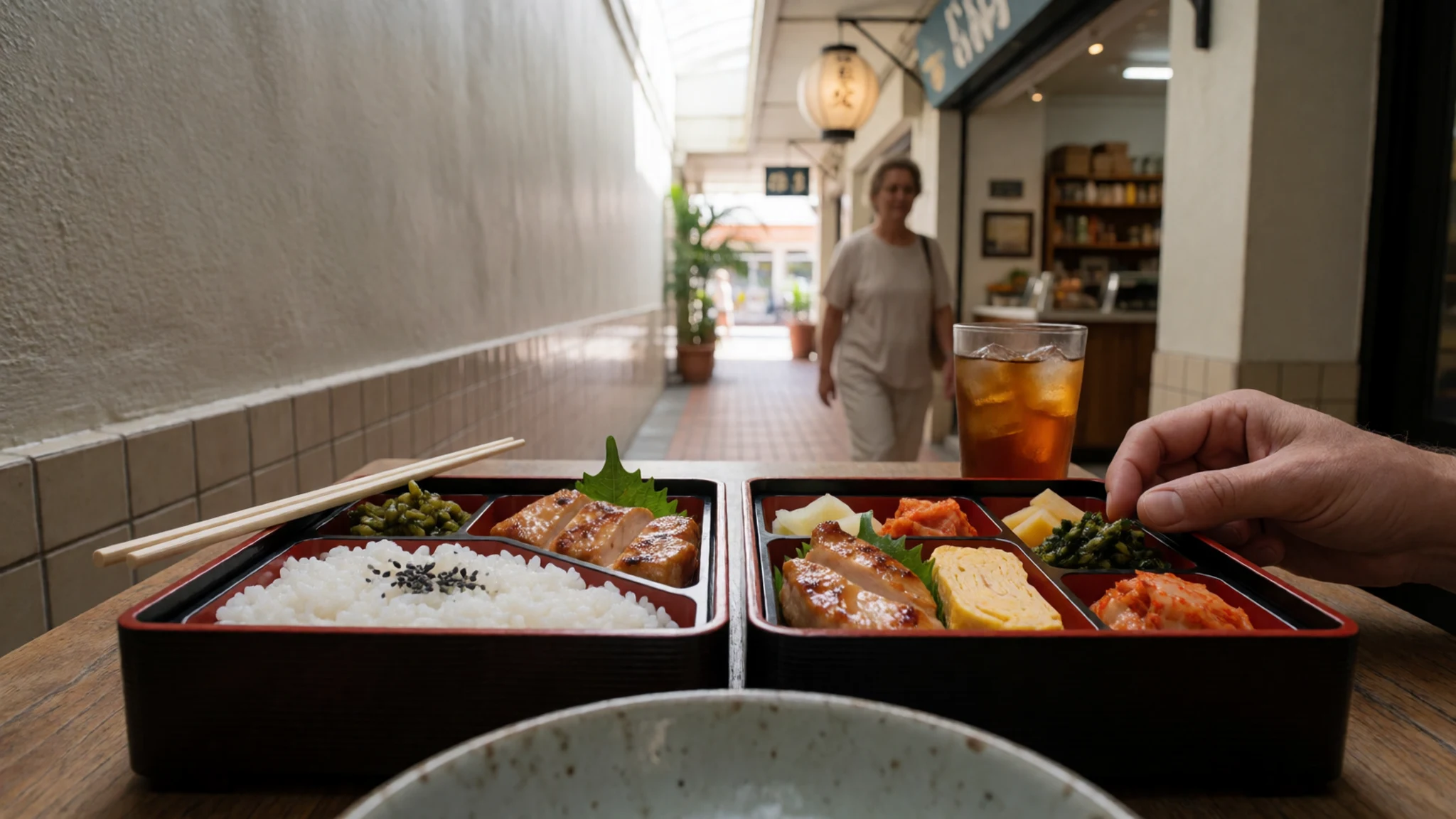
- Sushi train — Streets just off Cavill Avenue, Surfers Paradise
A conveyor belt of small plates that suits a quick, inexpensive bite between beach and shops. Pick what passes, stack the plates and pay at the end. Good for families and for travellers who like to sample.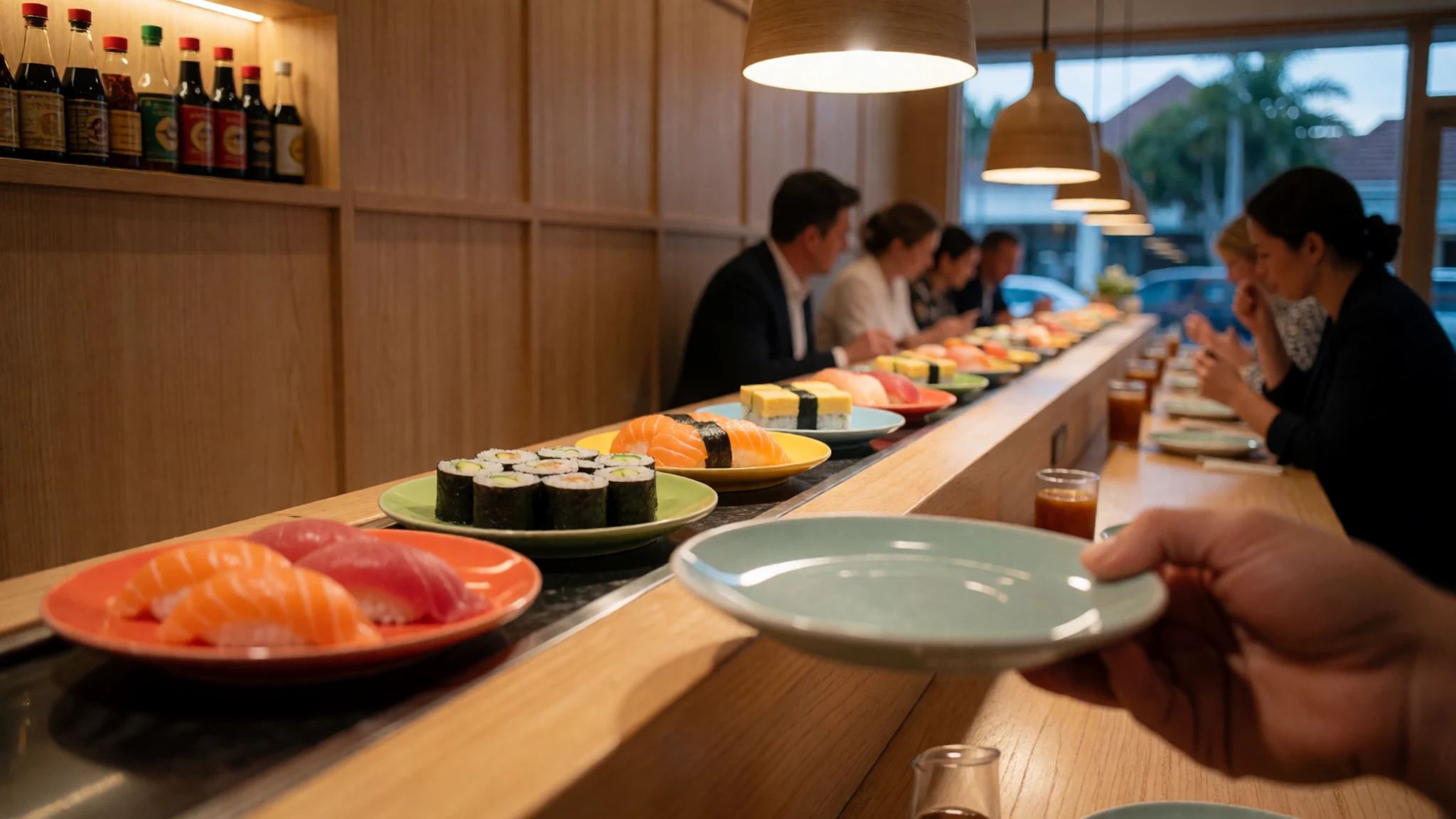
- Fresh seafood — Tedder Avenue, Main Beach, and the Broadbeach restaurant area
Prawns, fish and other local catches appear on menus from casual cafés to gourmet dining rooms. Order grilled fish with salad for a light lunch, or share a seafood platter in the evening. - Pub fare — Pubs and clubs across the strip
Classic Australian pub meals such as fish and chips, steak and salads are served in large portions at relaxed venues. Many are family-friendly at lunchtime and busy with locals at weekends. - Vegetarian quick eats — The mall off Cavill Avenue, Surfers Paradise
The shopping mall off the main tourist street has fast, casual options, including a well-known vegetarian counter. It is a handy stop for travellers who eat no meat and want something quick and filling. - Casino buffet — The casino complex near Broadbeach
An all-you-can-eat spread of hot dishes, salads and desserts, with seafood nights at times. Check the official site for current times and prices. It suits big appetites and groups with mixed tastes.
Plan it
Best time. April–May and September–October bring warm, mostly dry days and fewer crowds. December–February is hot, humid and busy with school holidays, with storms likely. June–August is mild and sunny by day but too cool for comfortable swimming for some.
How long. 3–4
Getting there. Gold Coast Airport (OOL), often called Coolangatta Airport, is about 30 minutes by road from Surfers Paradise; the 777 bus runs to Burleigh Heads, where you can switch to the tram. From Brisbane, take the train to Varsity Lakes and onward by bus or light rail.
Budget. mid
Tips
- Swim only between the flags at patrolled beaches
- Use the light rail along the coast to avoid parking
- Start beach walks and surf spots early to beat the heat and crowds
- Hire a car or book a tour for the hinterland
- Book school-holiday stays well ahead and check the official site for events: https://www.goldcoast.qld.gov.au
Etiquette
- Follow lifeguard flags and signs
- Respect local surfers' space at popular breaks
- Take rubbish with you and keep beaches clean
Nearby
Sources
- Wikidata Q140075 (CC0)
- Wikipedia: Gold Coast, Queensland (rev 1383999544) (CC BY-SA 4.0)
- Wikivoyage: Gold Coast (rev 5346023) (CC BY-SA 4.0)
- View from Q1 looking north, E-CBD (CC BY 3.0)
- Gold Coast skyline, Jordan Gellie (CC0 1.0)
- The Wave building, Broadbeach, Kgbo (CC BY-SA 4.0)
- Jewel towers from Isle of Capri, Kgbo (CC BY-SA 4.0)
- Flexity 2 (G:link) (CC BY 3.0)
- Chevron Renaissance, Donaldytong (Public domain)
- Home of the Arts, Kgbo (CC BY-SA 4.0)
- Movie World 4-D Adventure, Mohd Fazlin Mohd Effendy Ooi (CC BY 2.5)


