Ginzan Onsen
Ginzan Onsen, Japan
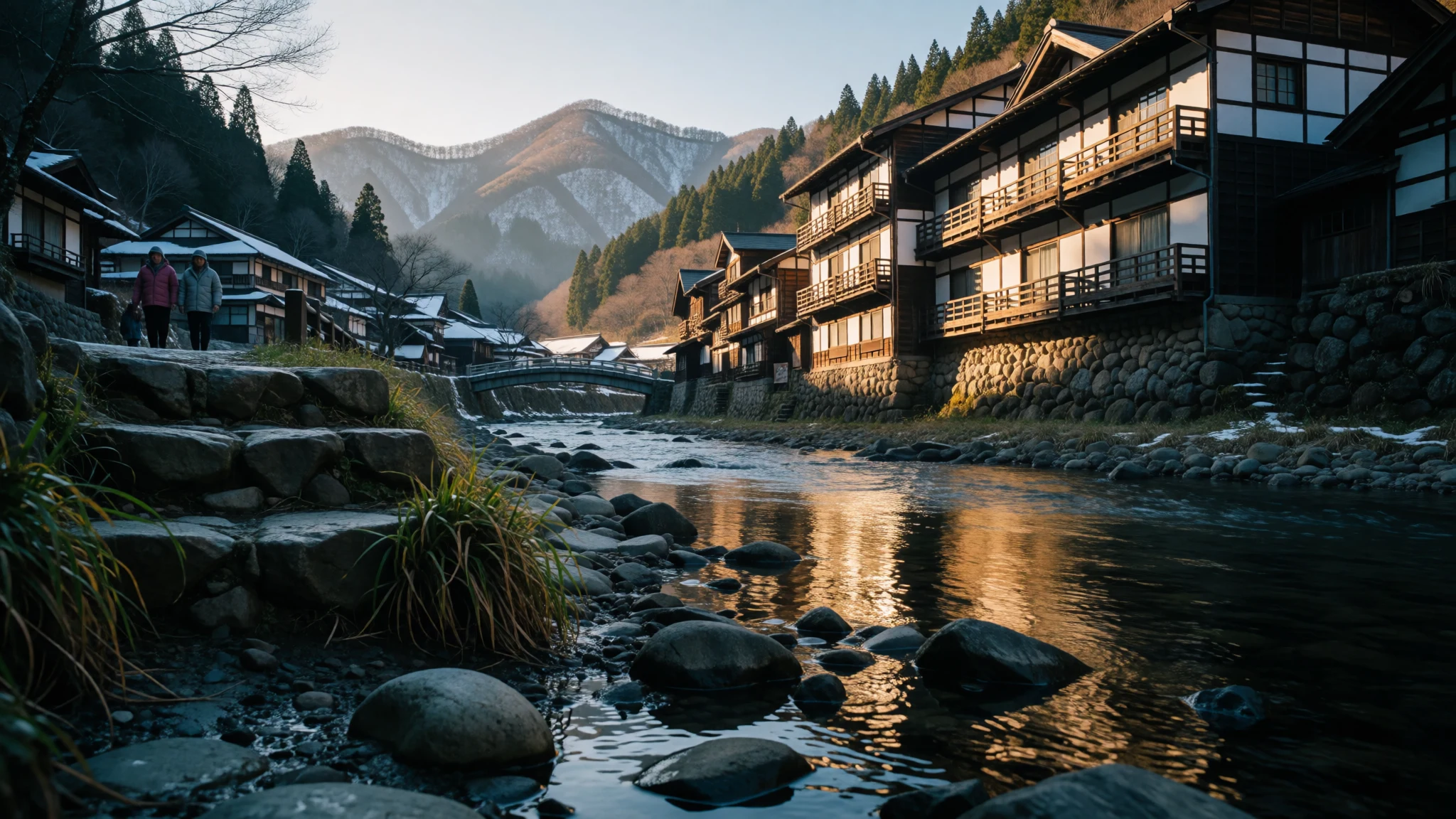
Ginzan Onsen is a lamplit river village of wooden inns and hot springs in Yamagata, most magical on a snowy winter evening.
The place
Ginzan Onsen sits in a narrow river valley in Obanazawa, Yamagata Prefecture, in the northern Tohoku region of Japan. The name means silver mine hot spring, and the village still carries its mining past lightly. A small river runs through the middle, and the wooden ryokan, or traditional inns, stand along both banks, their upper floors leaning out over the water. Forested mountains close in behind them, and those slopes supply the sulphur-rich spring water used by the inns and the public baths.
The centre is closed to cars, so the village can be walked from end to end in a short stroll, with the river and the clatter of wooden sandals for company instead of engines. The buildings are timber-framed with white plaster, and nothing modern interrupts the line of them. That is why the place photographs so well, and also why it can feel crowded: on snowy weekends and around dusk, the narrow bridges fill with people holding cameras.
After dark, gaslight glows along the bridges and lanes. Winter brings heavy snow, and pictures of snow-covered roofs are what put the village on foreign itineraries. Past the last inns, a path leads upstream to a waterfall near the old mine workings. Two outdoor public baths and a foot bath are open to people not staying the night, and some inns let day visitors use their indoor baths. The village is small, so most travellers either stay overnight or make an early, short visit.
Its story
Ginzan Onsen began as a mining settlement. Silver miners working in the hills around the valley found hot water rising from the ground, and a bathing community grew up beside the diggings. As the silver dwindled, the baths lost their reason to exist and the village faded for a long stretch.
The revival came in the Taisho era, when tourism took hold and carpenters raised wooden inns along the banks of the Ginzan River, some of them several storeys tall. Those inns, with their plaster walls and carved timber balconies, are largely what visitors see today. The village did not turn into a modern resort; its timber-and-plaster character survived, and that survival is now its main draw.
National fame came through popular culture. The village features in the television drama Oshin, and it is also tied in the public mind to the animated film Spirited Away. Each year it welcomes hundreds of thousands of Japanese visitors, and in recent years pictures of the snowy lanes have drawn growing numbers from overseas.
The ground itself is much older than the village. Fossils from the Miocene have been found in the surrounding area, a reminder that the same volcanic and mountain geology that heats the springs has been at work for a very long time. The sulphur spring, the silver and the steep valley all trace back to the same hills.
What to see
- The lamplit river lanes and bridges — Village centre, Ginzan River
The heart of Ginzan Onsen is the stretch of river lined with wooden inns, crossed by small arched bridges. Gaslight comes on at nightfall and the whole scene turns amber, especially under snow. It is also where the crowds gather, so go early in the morning or late in the evening for room to stand.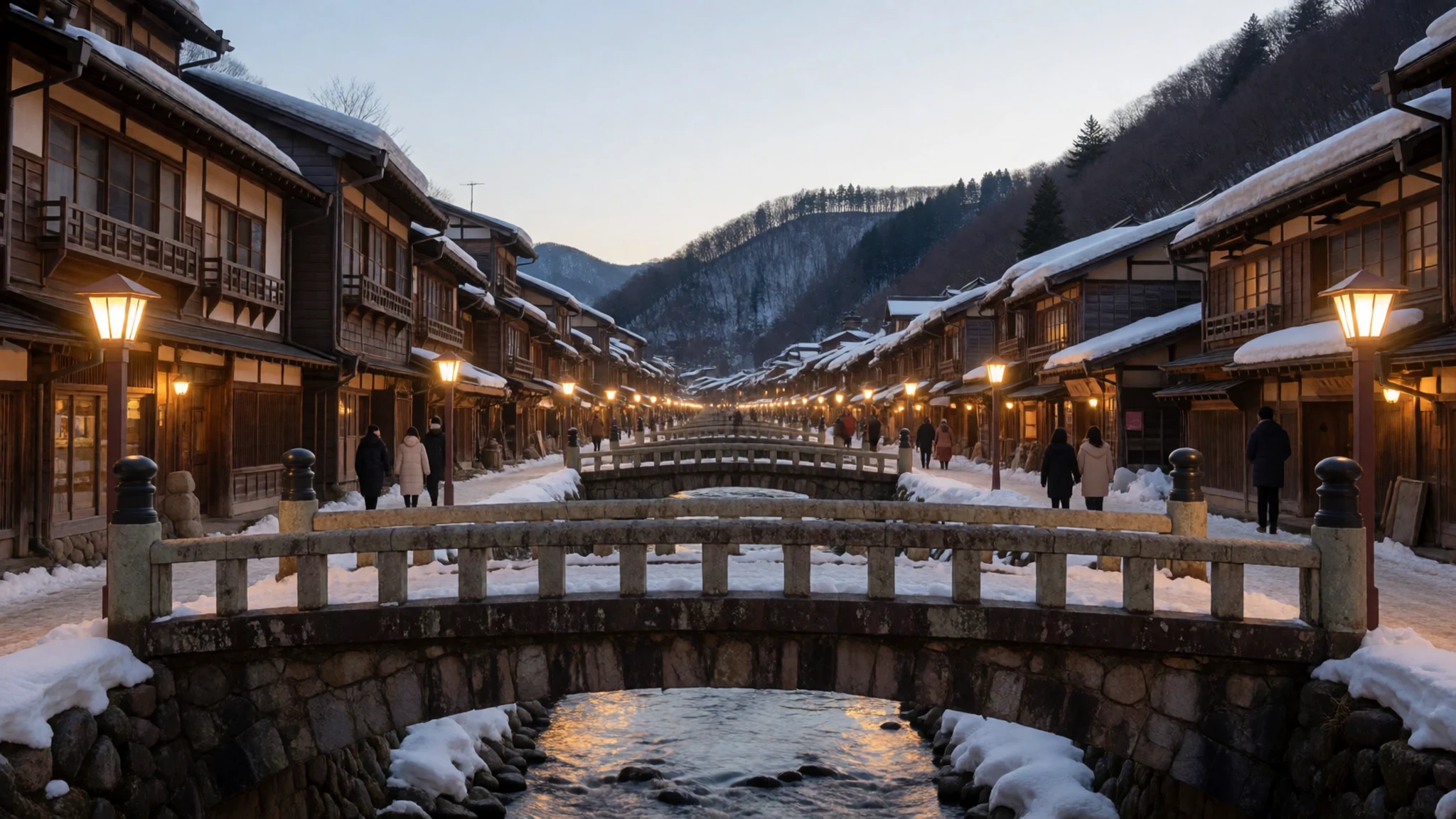
- The timber-framed ryokan — Both banks of the river
The inns are the real sights here: several storeys of dark timber, white plaster, and balconies hung over the water, built in the Taisho era. Even if you are not staying, walking slowly past the facades rewards close looking at the joinery, the lanterns and the carved door signs.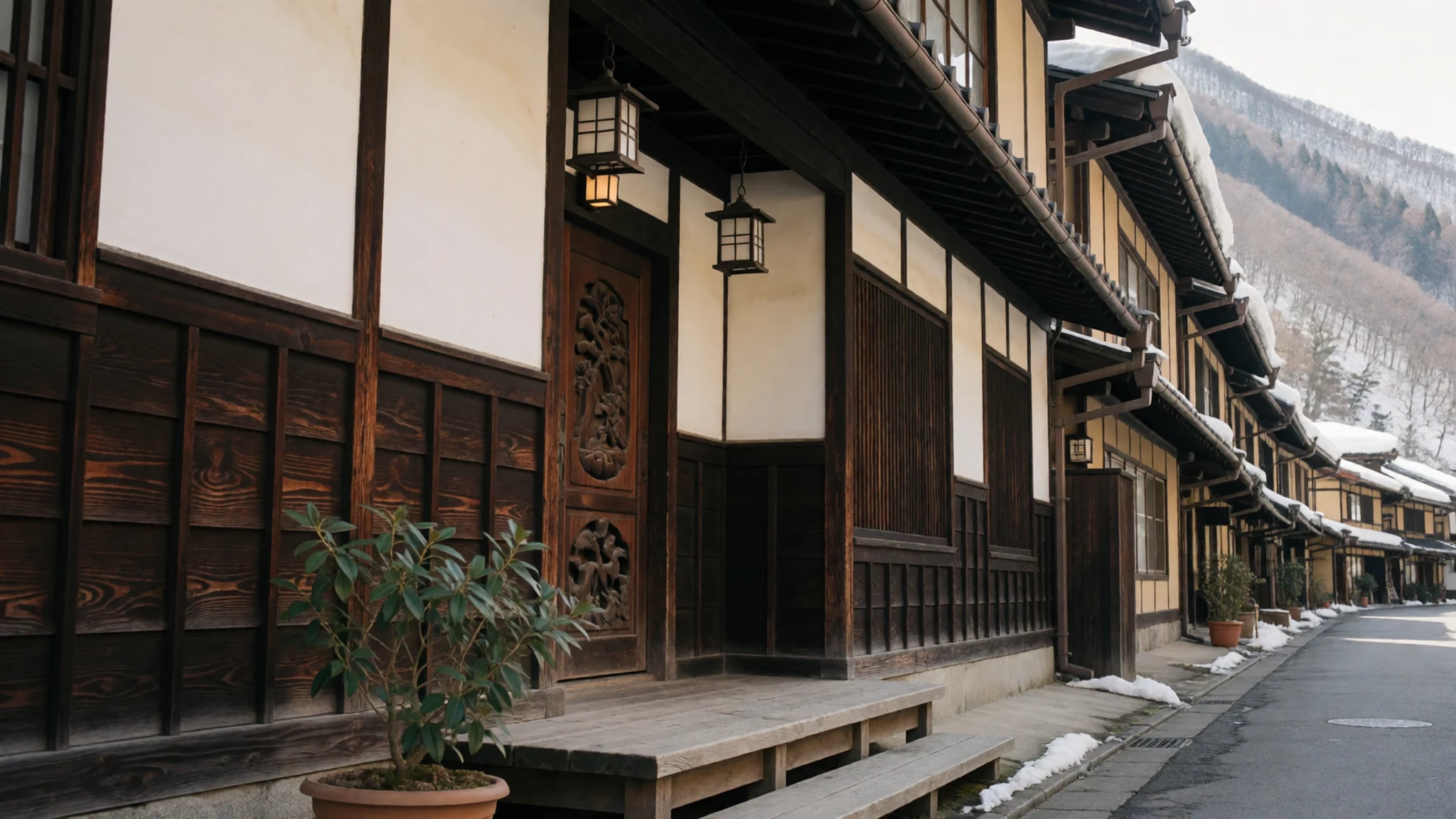
- Public baths and the foot bath — Village centre
Two secluded outdoor public baths serve day visitors, and one was designed by the architect Kuma Kengo. There is also a warashiyu, a free-standing foot bath, which is a gentle way to try the spring water. Some inns also open their indoor baths, including one with a cave bath, so ask at the door.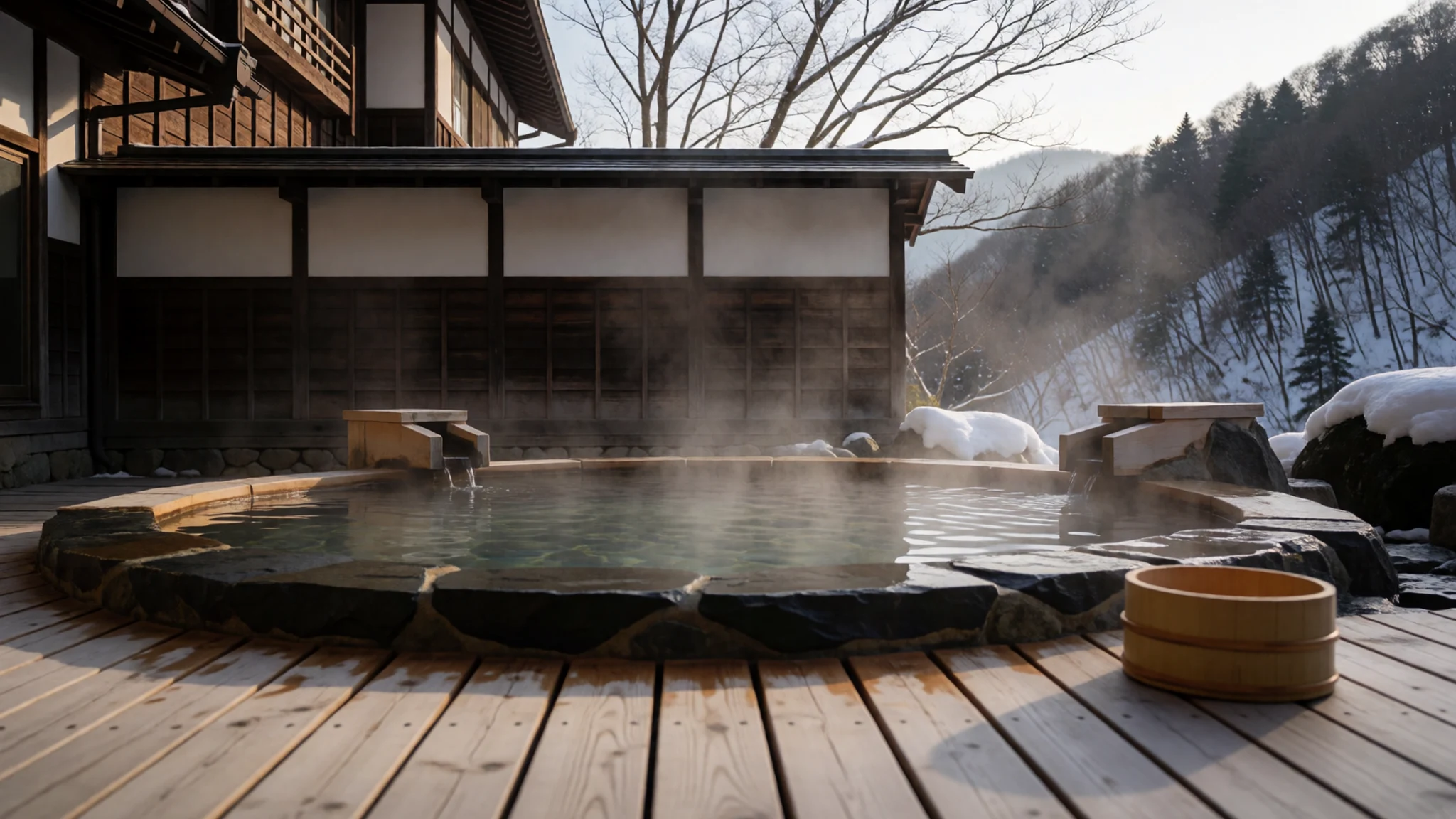
- Shirogane-no-Taki waterfall and the old mine — Upstream edge of the village
A short walk upstream past the last inns leads to Shirogane-no-Taki, a waterfall that drops out of the mountainside near the former silver diggings at Nobesawa Ginzan. It is a quiet counterweight to the busy lanes, and a good place to understand why the village exists. In snow, check path conditions first.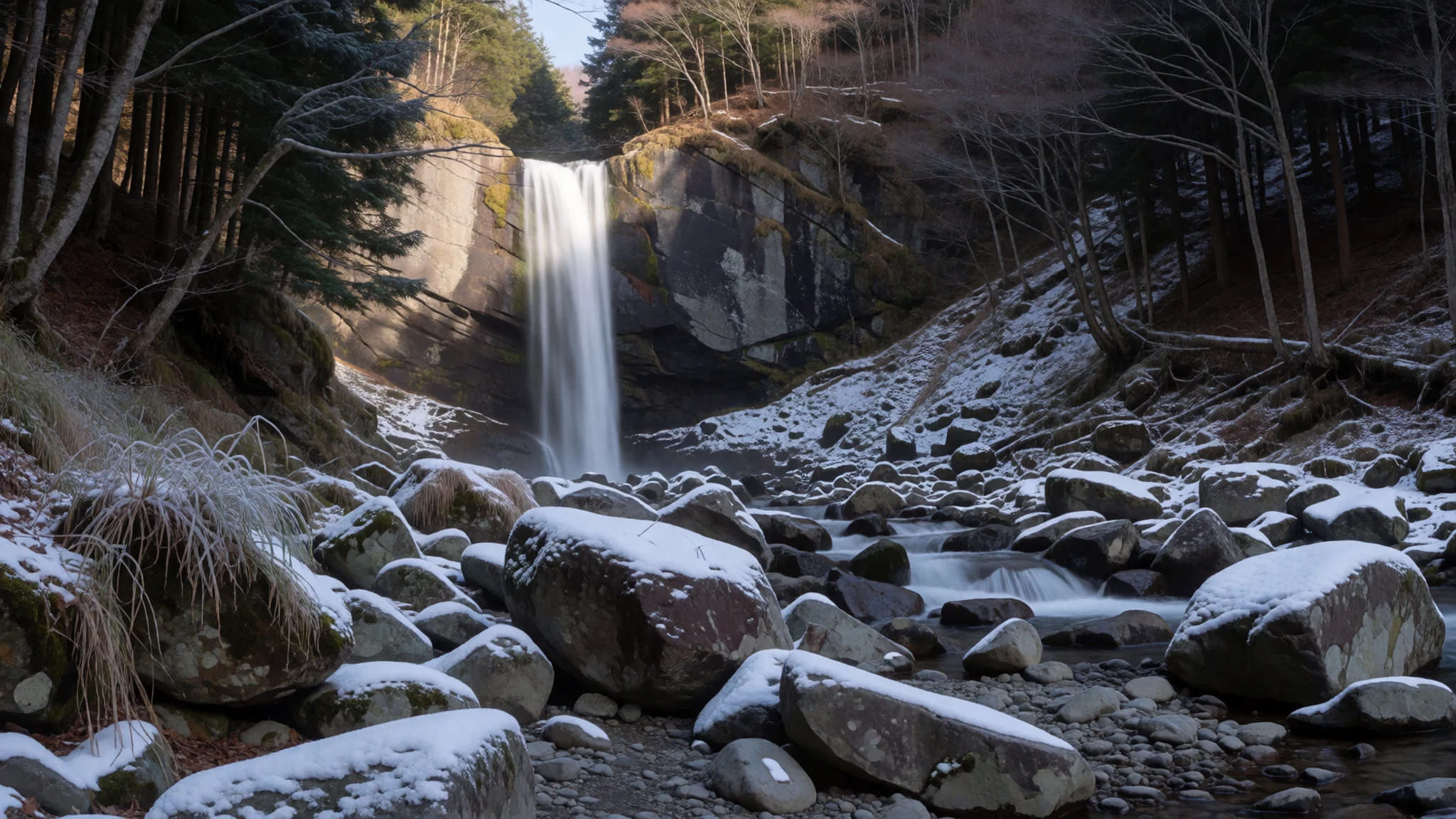
- Yamadera mountain temple — Yamagata, a trip away from the village
Yamadera, a mountain temple complex founded more than a thousand years ago, makes a good day out from this part of Yamagata. Its buildings are scattered up a wooded slope, and the climb to the top is manageable for most walkers. Views change with the seasons, so it suits a different month than a snow visit.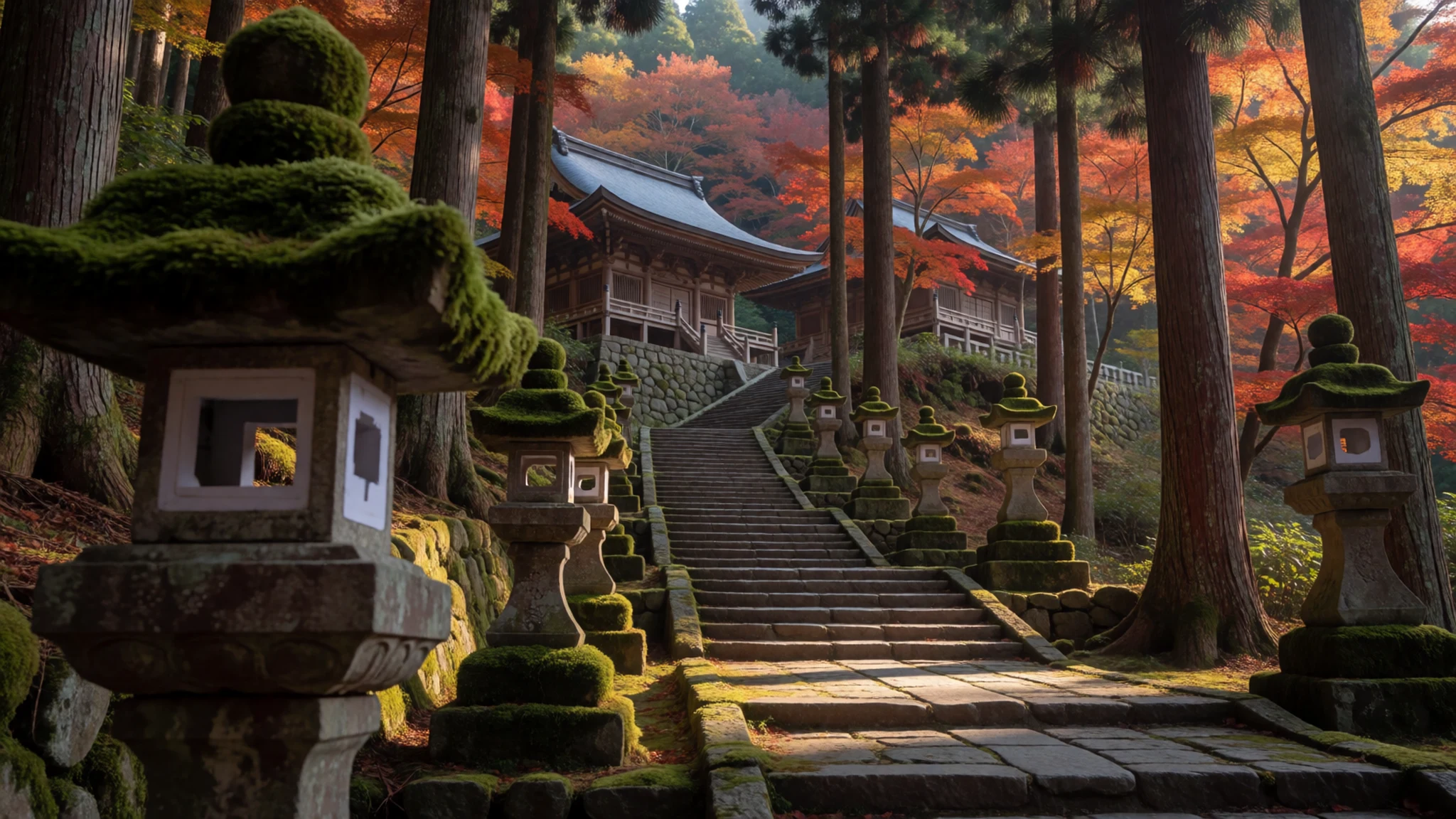
Culture
Ginzan Onsen is a bathing village first, and its customs follow from that. Onsen bathing is a daily pleasure in Japan, not a spa treatment: people wash thoroughly at a tap, rinse, and then soak quietly in the shared water. Staying at a ryokan adds a second layer, with bedding laid out on tatami floors, a set evening meal served in the room or dining hall, and a unhurried rhythm of baths, dinner and sleep.
The village is also a living place. Families run the inns, residents walk the same lanes as visitors, and the plain timber-and-plaster look is kept deliberately, so new signs and buildings are modest. That restraint is part of what visitors come for, and it explains why the lanes go quiet early in the evening.
Northern Yamagata has its own spiritual landscape. The region around the village is known for mountain worship, including the Shugendo ascetic tradition of the Dewa Sanzan mountains further west, and for seasonal rituals tied to harvests and snow. Seasonal food and winter festivals still shape how local people mark the year.
For guests, the practical culture is simple: keep noise low, follow the inn's lead, and treat the baths as shared space. Wash and rinse thoroughly before entering any bath, keep towels out of the water, and speak softly on the lanes in the evening when residents and overnight guests are indoors.
What to wear
Traditional dress around Ginzan Onsen is tied to the ryokan. The yukata is a light cotton robe, usually printed in blue and white or in seasonal patterns, tied with a sash called an obi. Inns lend them to guests, who wear them to dinner and for evening strolls along the river, often with wooden geta sandals. In cold months, a padded jacket called a tanzen or hanten goes over the top, and it is common to see guests in this combination even in snow.
What people actually wear now is practical. Residents and day visitors dress in down jackets, wool hats, scarves and waterproof boots through the long winter, and in light layers and walking shoes in summer. Kimono appear mostly at festivals, weddings and for photographs, rather than daily life.
For a visitor, the winter climate decides everything. Bring a warm coat, thermal layers, gloves and boots with real grip, because the lanes and bridges ice over and the lamplit streets are best seen after dark when temperatures drop. In warmer months, light layers and comfortable shoes are enough. There is no strict dress code in the village, but slip-on footwear helps, since shoes come off at inn entrances. If you plan to wear a yukata outside, ask your inn how to tie it, with the left side over the right, and take care with the shoes. Baths are taken unclothed, so pack a small towel and a bag for wet things.
What to eat
- Imoni — Eateries around Yamagata city and local restaurants in autumn
Imoni is the signature autumn stew of this part of Tohoku, made with taro, beef and konnyaku in a soy or miso broth. It is eaten outdoors at gatherings and also appears on local menus in the cooler months.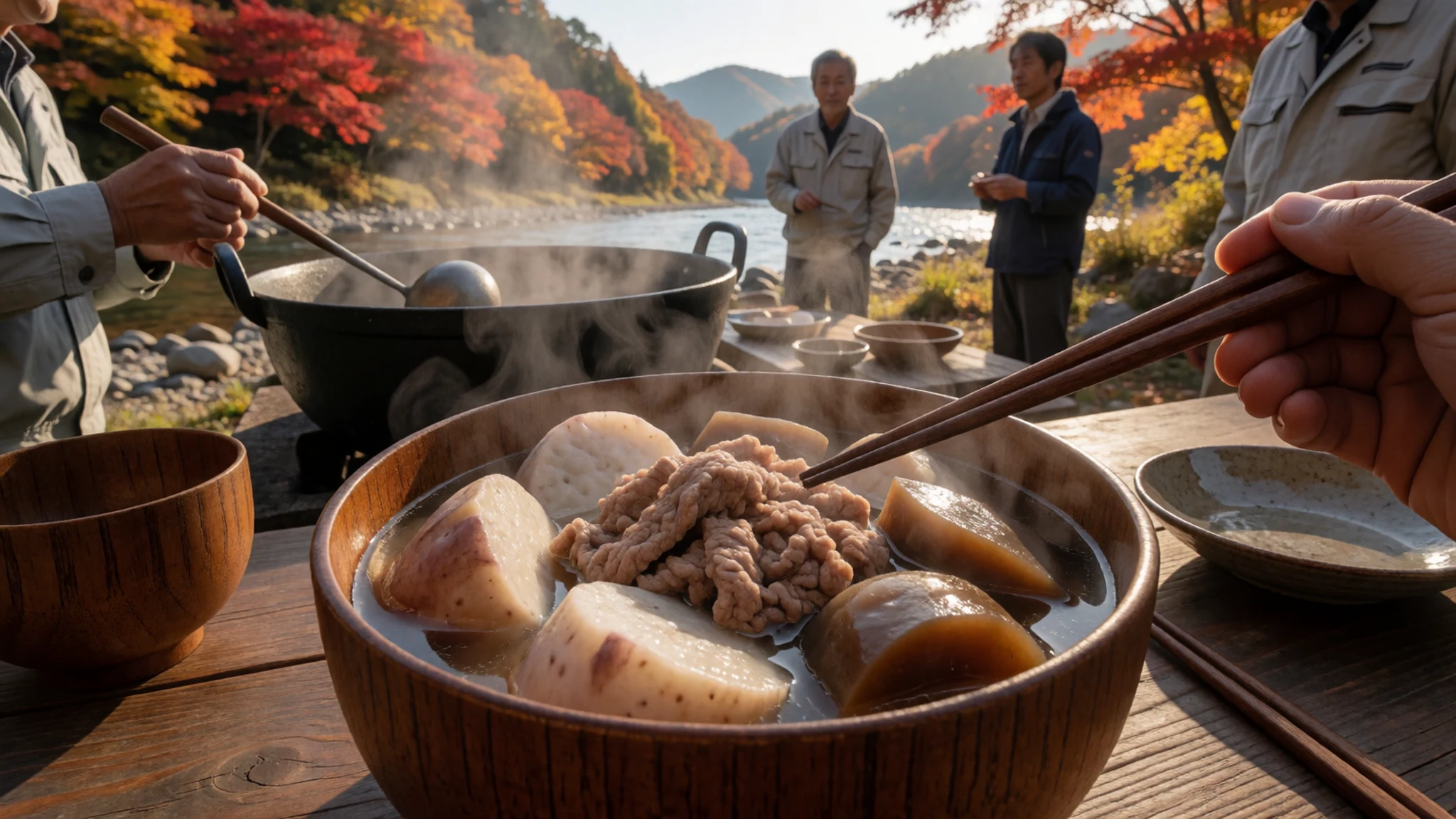
- Soba — Soba restaurants in Obanazawa and nearby towns
Yamagata is serious about buckwheat noodles. Each soba shop has its own style, from cold noodles with a dipping sauce to hot broths. A bowl is a simple, filling lunch before or after a walk in the valley.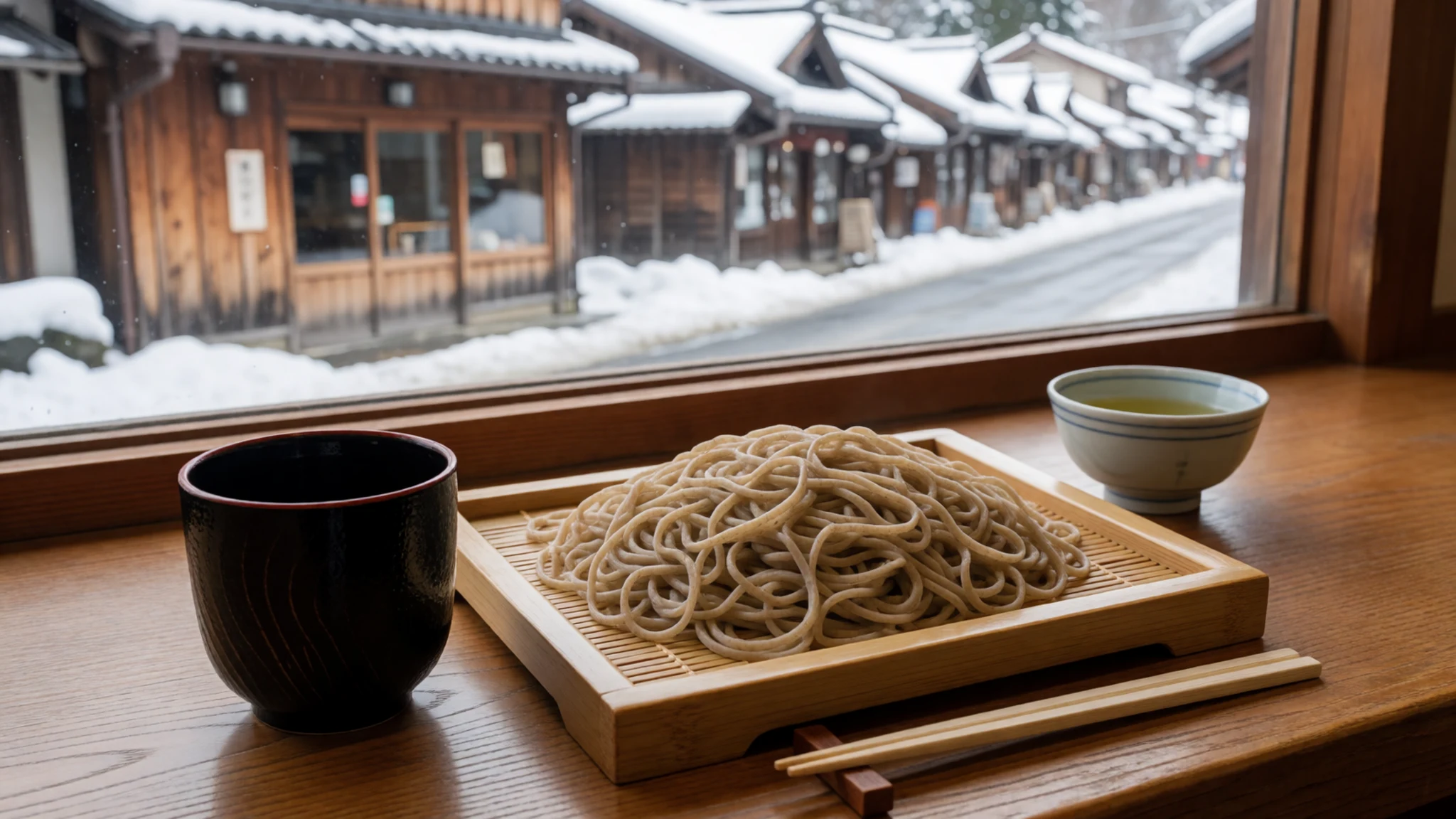
- Yamagata ramen — Ramen shops in Yamagata city and the larger towns of the prefecture
Yamagata people spend heavily on ramen, and the city is known for it. Expect a savoury soy-based bowl, which suits a cold day well. Regional styles differ, so ask what the local favourite is. - Cherries and other Yamagata fruit — Roadside stalls, fruit farms and local markets across the prefecture
Yamagata grows a large share of Japan's cherries, including the red, sweet Satonishiki variety, as well as La France pears, grapes, apples and peaches. Fruit is seasonal, so what you can find depends entirely on the month. - Ryokan evening meal — Served at the inns in the village
Dinner at a ryokan is a set course built on local and seasonal ingredients, often with river fish, mountain vegetables and rice. It is part of the stay, so tell the inn about allergies and diets when you book.
Plan it
Best time. Late December–February for deep snow and lamplit evenings, though weekends are crowded and paths can be icy; October–November for autumn colour on the surrounding hills; summer is green and quieter, with no snow scenes.
How long. 1–2
Getting there. Fly to Tokyo and take the Yamagata Shinkansen north, or fly to Yamagata or Shonai airports; the Shinkansen is the usual route for overseas visitors. The last leg is a bus up the valley from a nearby station, and cars cannot enter the centre, so check the official tourism pages and bus operators for current timetables.
Budget. mid
Tips
- Book inns well ahead, especially for winter weekends, and check each inn's own website for rates and rules
- Stay overnight or arrive early, since day crowds thin after dusk and the lanes feel different once they have gone
- Carry cash for small shops and baths, and check timetables for the last bus before planning an evening walk
- Wear boots with proper grip in winter, as bridges and lanes ice over
- Check path conditions before walking to the waterfall in snow
Etiquette
- Wash and rinse before entering any bath, and keep towels out of the water
- Keep voices low on the lanes and bridges, especially in the evening
- Ask before photographing residents or inn staff, and keep to public lanes rather than entering private doorways
Nearby
Sources
- Wikidata Q5563313 (CC0)
- Wikipedia: Ginzan Onsen (CC BY-SA 4.0)
- Wikivoyage: Yamagata (prefecture) (CC BY-SA 4.0)
- Photo: Ginzan Onsen at night (lumoplank) (CC0 1.0)
- Photo: 銀山温泉 Ginzan Onsen (ume-y) (CC BY 2.5)
- Photo: Ginzan Onsen in Obanazawa, Yamagata, Japan (indri) (CC BY 2.5)
- Photo: 白銀の滝 Hakugin fall (ume-y) (CC BY 2.5)
- Photo: Afternoon in Ginzan Onsen Town in January 2022 (さかおり) (CC BY-SA 4.0)
- Photo: Evening twilight in Ginzan Onsen town January 2022 (さかおり) (CC BY-SA 4.0)
- Photo: Ginzan Onsen (bryan...) (CC BY-SA 2.0)
- Photo: Ginzan Onsen, seen from its other side (lumoplank) (CC0 1.0)


