Gaomei Wetlands
Gaomei Wetlands, Taiwan
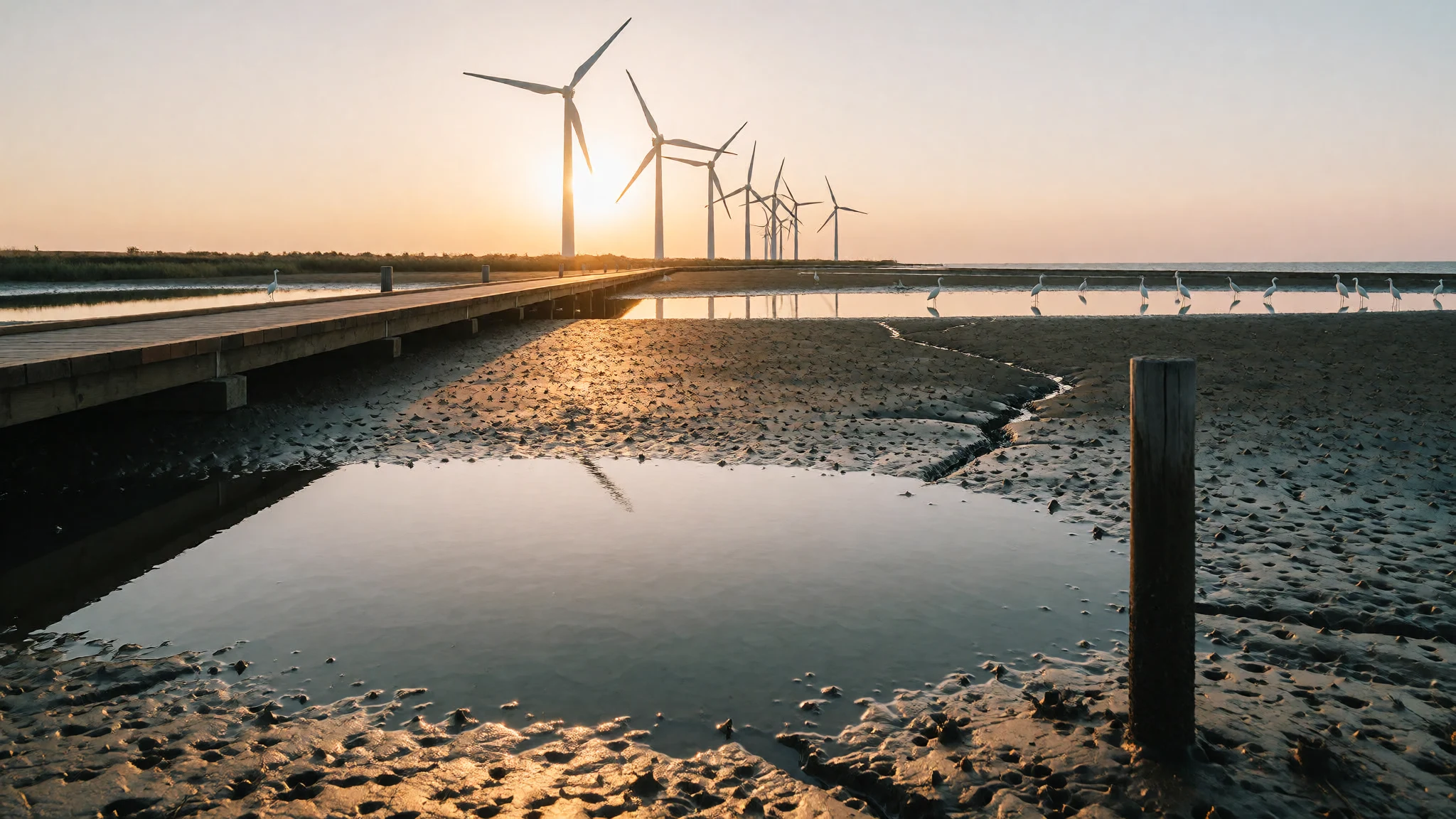
Gaomei Wetlands turns a flat Taiwanese river-mouth shore into a mirror of sky, wading birds and wind turbines at sunset.
The place
Gaomei Wetlands (高美濕地), also spelled Kaomei, lies on the coast of Qingshui District in Taichung, Taiwan, where silt from the Dadu River meets the shallow waters of the Taiwan Strait. Officially it is the Gaomei Wetland Preservation Area, a protected wildlife zone established in 2005, and it forms only a slice of the wider river-mouth wetland around it. The ground is almost perfectly flat: sand, mud and thin sheets of water that change shape with every tide. At high water the flats disappear and the place reads as a quiet shoreline with a row of white wind turbines on the horizon. At low water the mud opens out far towards the sea, small crabs and wading birds work the surface, and the sky is doubled in the pools. That mirror effect is why photographers gather around sunset, and why the light, rather than any single landmark, is the real attraction. Facilities are simple: a walking trail, viewing points and the approach road. Expect wind, strong sun, mud at the edges and plenty of company on weekends and holidays. The centre of Taichung is a long journey away along the coast, so most people treat Gaomei as a half-day trip timed to the tide and the evening. Weekday mornings are calmer, though the famous colours belong to the late afternoon.
Its story
Gaomei Wetlands is a young protected area on a very old stretch of coast. Long before it appeared on tourist maps, the plain around present-day Taichung belonged to Indigenous communities who grew millet and taro and hunted deer; the word for deer survives in several place names across central Taiwan. Under early Qing rule the settlement that became Taichung was founded as Dadun, meaning large mound, and a garrison was placed nearby to secure the western plain. Relations between officials and Indigenous people were often tense, and risings in the region were put down by force. The wetland itself entered the record much later, when it was established as a wildlife preservation area in 2005. Since then its story has been about weather and infrastructure as much as birds. Typhoon Soudelor tore along the coast and wrecked several of the Taiwan Power Company's wind turbines that stand by the shore. Later, the Binhai Bridge (濱海橋), the link between the mainland and the wetland area, failed a safety inspection, shortly after the collapse of another bridge in Yilan County drew nationwide attention. Taiwan International Ports Corporation carried out the examination. The episode is a reminder that the site sits on a working, storm-exposed coast, and that access arrangements can change. Anyone planning a visit should check the official site for current conditions before setting out.
What to see
- The wetland trail — Qingshui District, Taichung
The raised trail at Gaomei Wetlands carries visitors out towards the flats without sinking into them. At low tide the mud is patterned by tiny crabs and shallow channels, and wading birds feed along the edges. It is exposed with little shade, so a hat and water matter more than a long itinerary.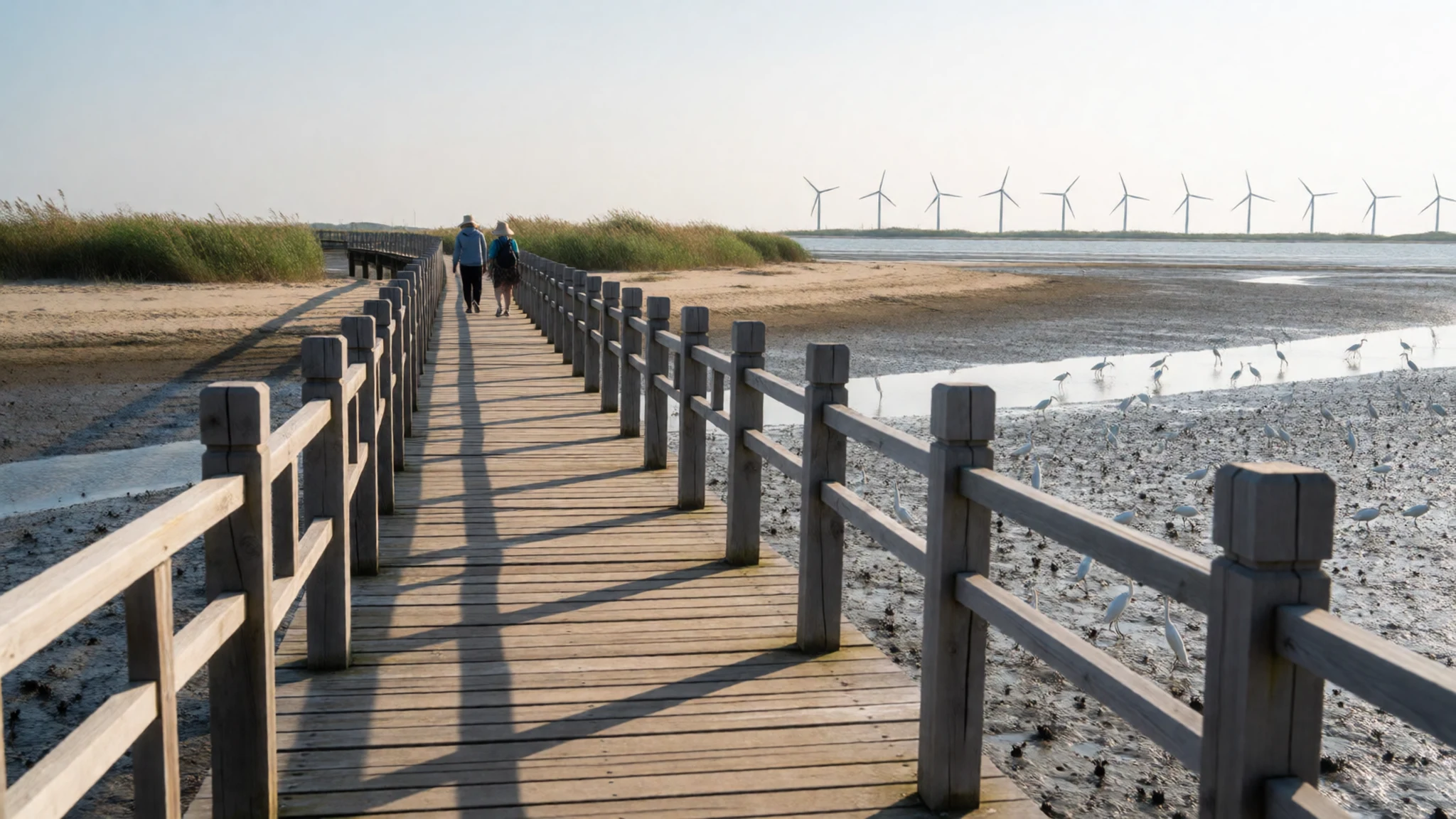
- Sunset on the flats — Western shoreline, Qingshui District
Sunset is the reason most people come to Gaomei Wetlands. As the tide thins over the flats, the sky doubles in the pools and the turbines become dark silhouettes. Arrive well before the light goes, claim a spot early on weekends, and linger a little after the sun drops, when the colours often deepen.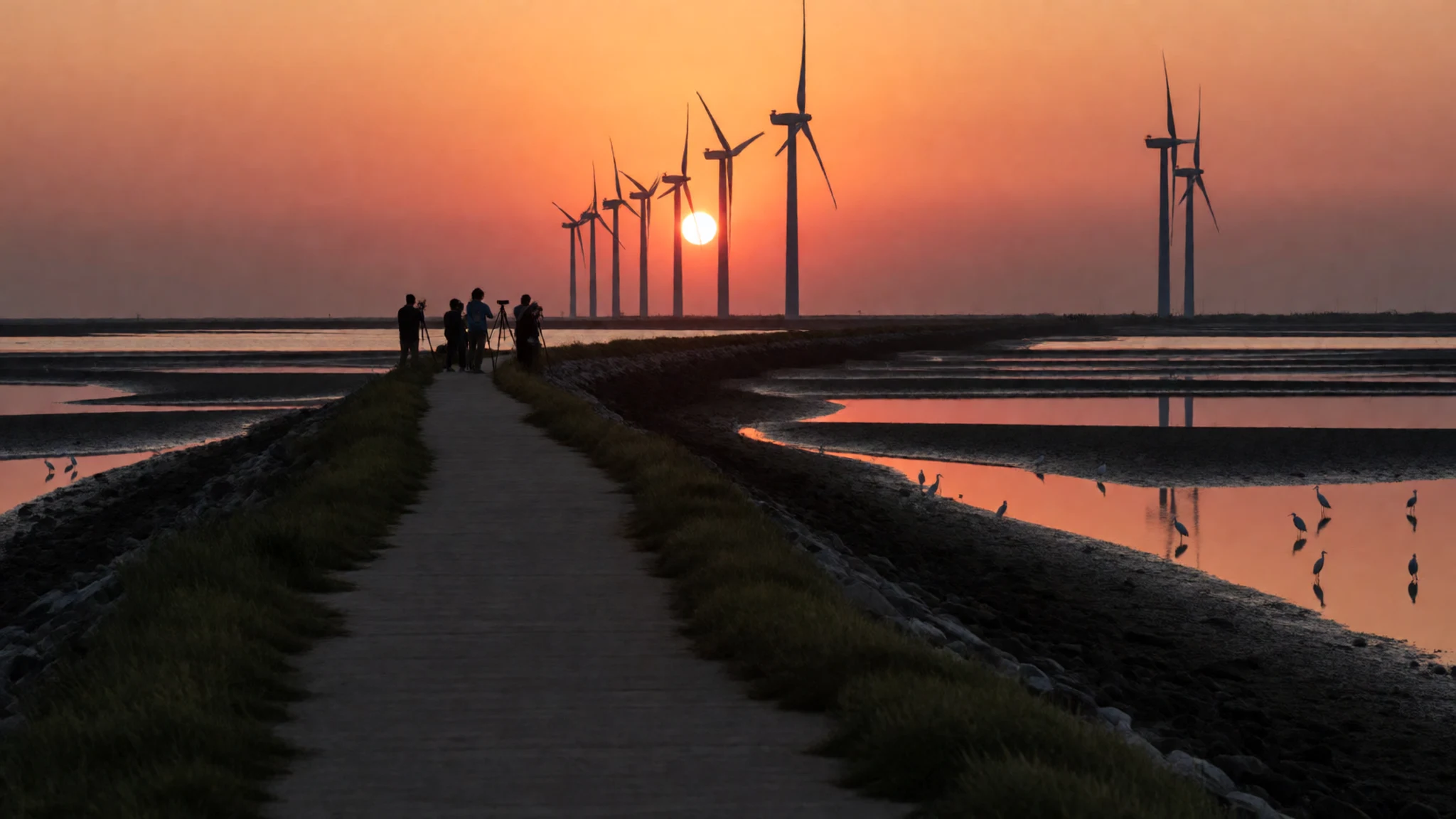
- Wind turbines along the shore — Coastline beside the wetland
A line of wind turbines runs along the coast beside Gaomei Wetlands, giving the flat horizon its vertical marks. They photograph best from the trail with the mudflat in the foreground. Storms have damaged some in the past, so the row may look different from older photographs.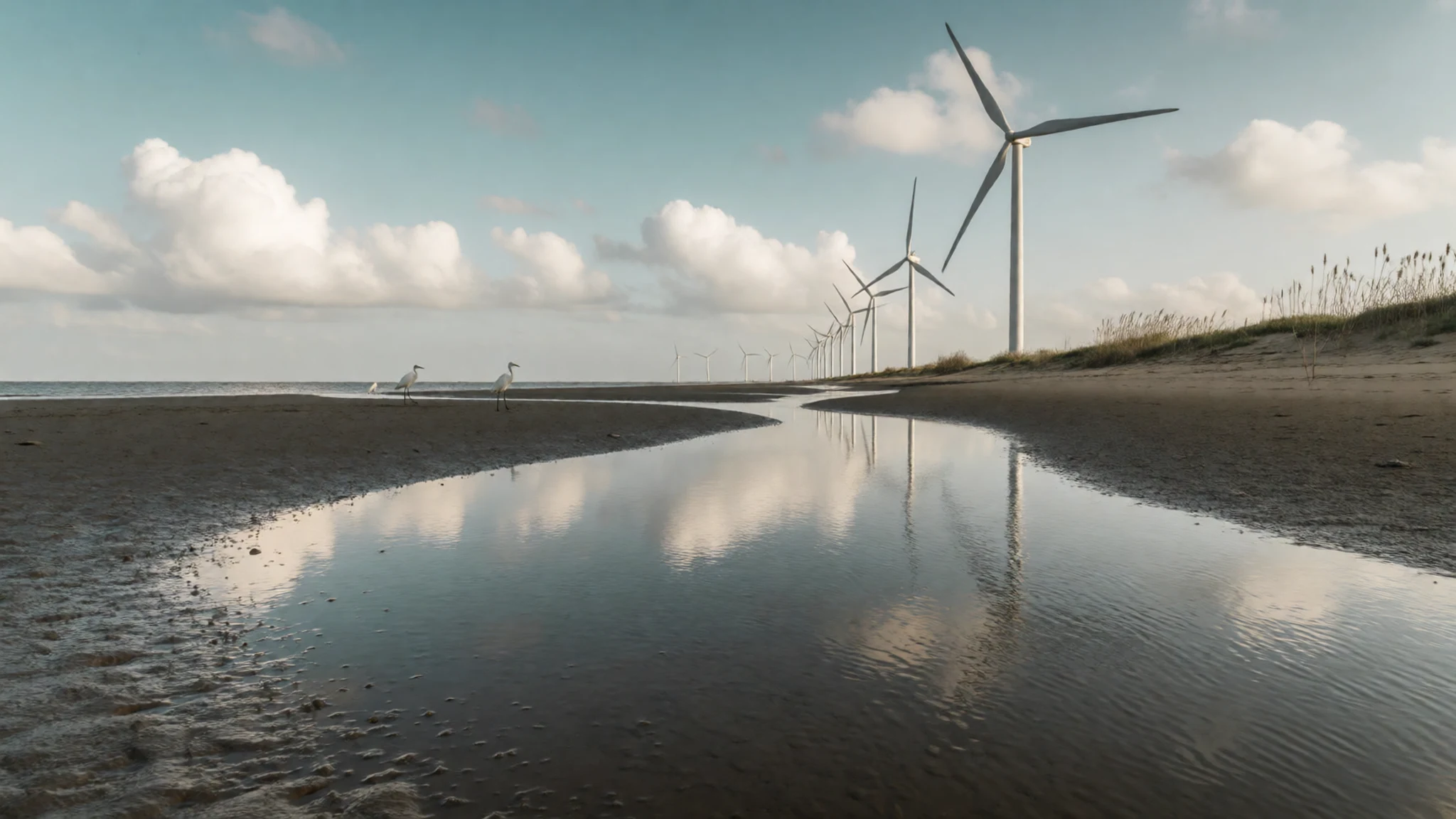
- Binhai Bridge — Wetland entrance, Qingshui District
The Binhai Bridge links the Taichung mainland to the wetland area and has been a main route for visitors. It was examined by the ports authority after a safety scare, so access arrangements may change. Visitors should check the official site for current conditions rather than relying on older blog posts.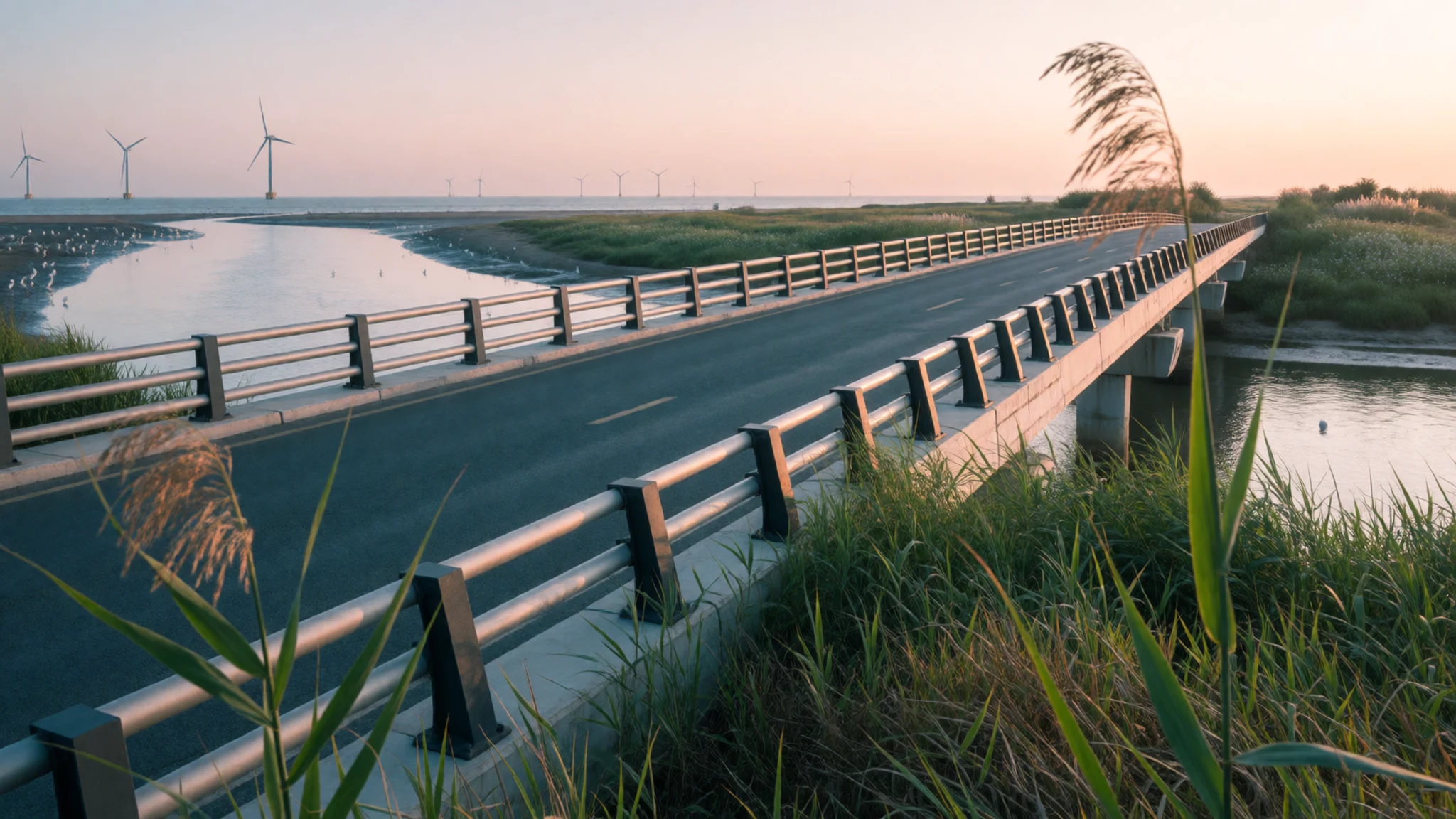
- Dawn on the flats — Qingshui District, Taichung
Dawn at Gaomei Wetlands draws far fewer people than the evening rush. The light is softer and cooler, birds are more active, and the flats are easier to photograph without crowds in the frame. It suits early risers, though the tide decides how much mud or water there is to see.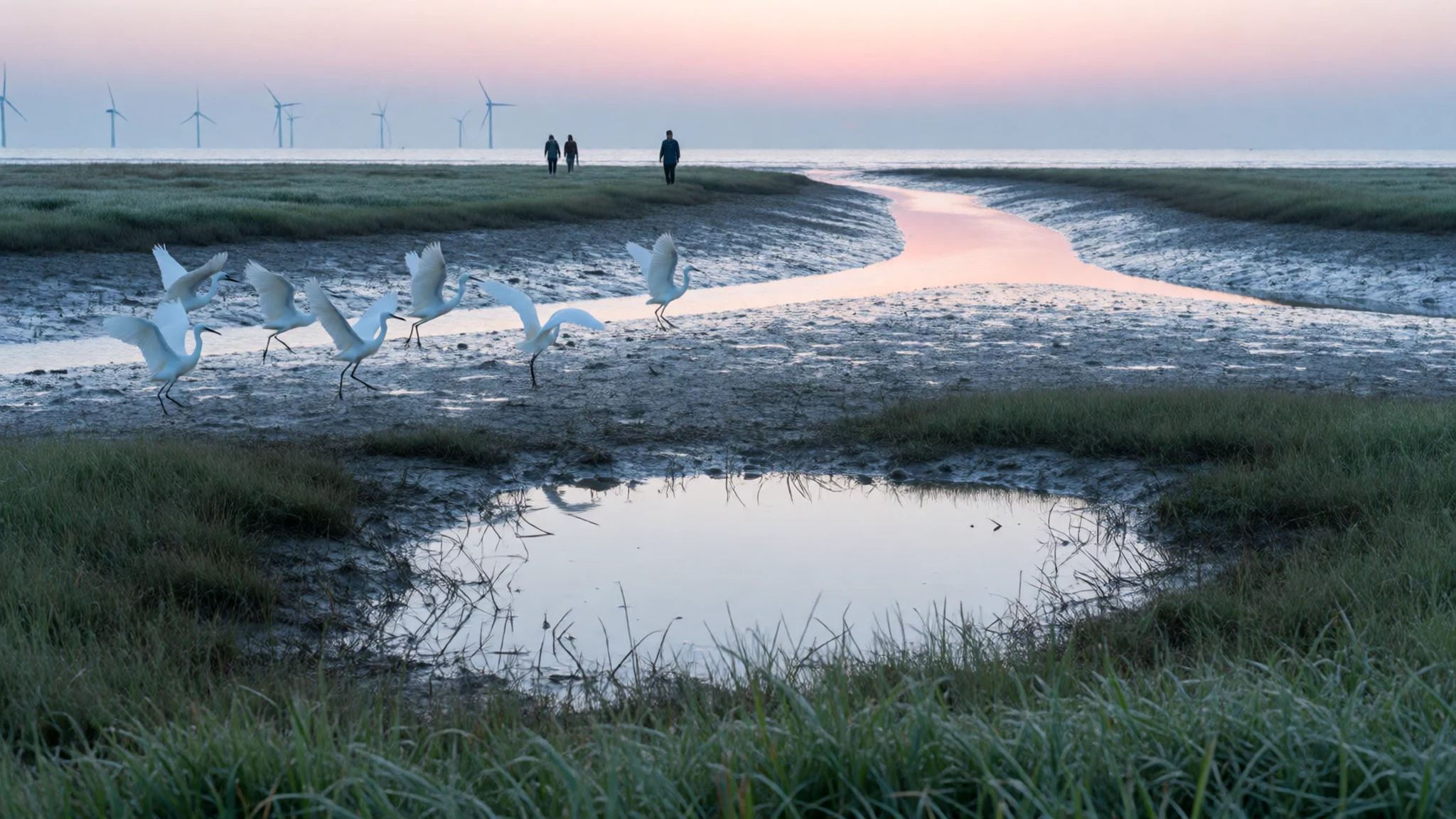
- National Museum of Natural Science — Central Taichung
When the weather turns, the National Museum of Natural Science in Central Taichung makes a sensible indoor alternative. It is a large, elaborate science museum that combines several museums under one roof. It sits a long way inland from the wetland, so it works better as a separate day than a stop on the same evening.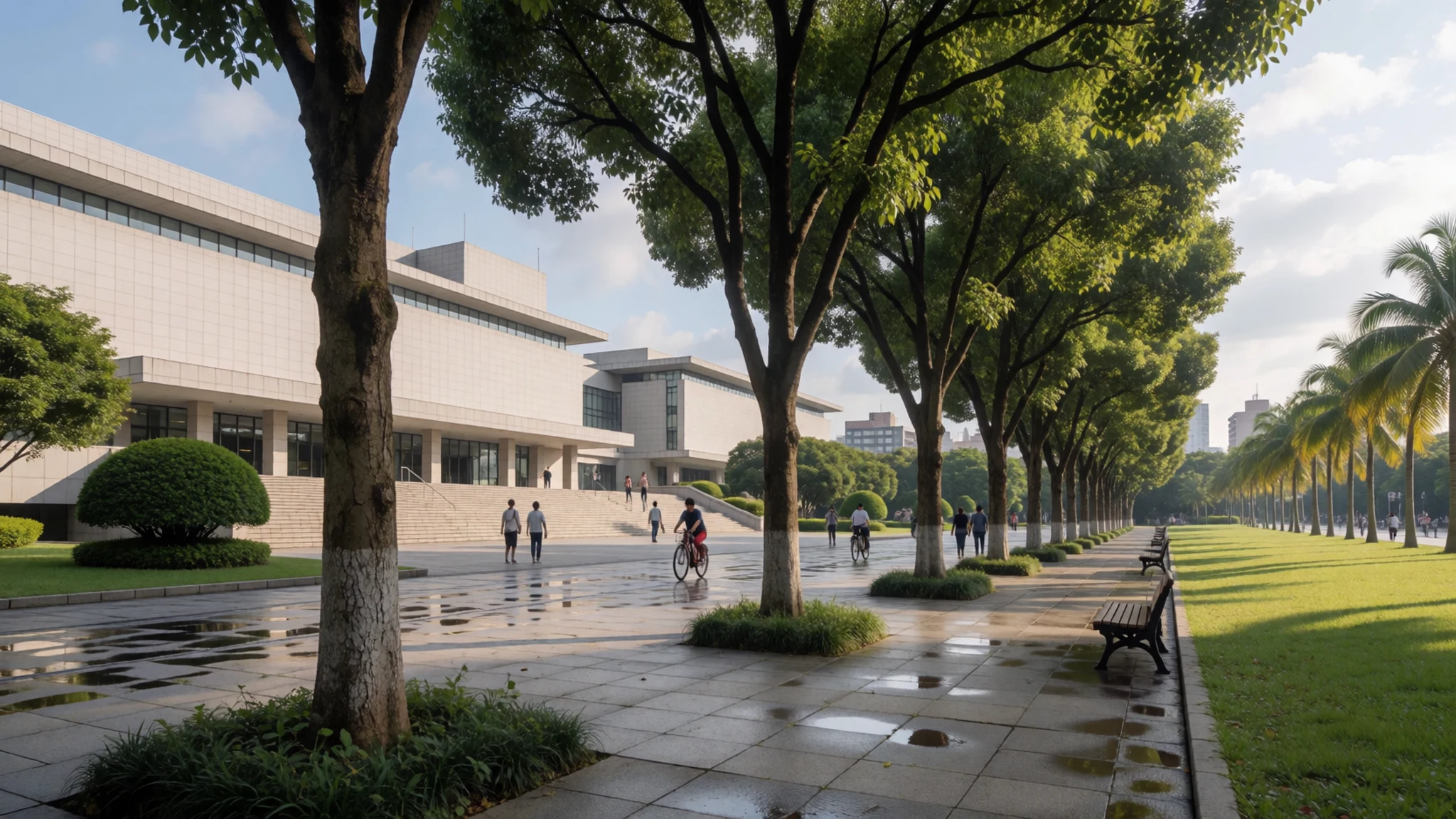
Culture
Gaomei Wetlands sits within the wider culture of Taichung, a region shaped by Indigenous roots, Han settlement under the Qing, and a later Japanese-era influence still visible in places such as the old winery. At the coast, the culture is mostly everyday: families, couples and photographers treat the sunset as a shared evening ritual, and weekends feel like a local outing rather than a tourist event. Taichung is also known for its tea-break habit, its Chinese bakeries and its night markets, and it hosts a jazz festival each October, so a coastal evening often ends with snacks and a drink somewhere inland. Respect for nature is part of the unwritten code at Gaomei, partly because the site is formally protected. Visitors are expected to be patient with crowds, queue politely for the best viewing spots and keep voices low near feeding birds. Photography is relaxed and almost everyone has a camera or phone out, but pointing a lens closely at strangers, especially couples posing for portraits, is poor manners. Ask first if you want someone in your frame. Stay on the marked trail, leave the mud, crabs and birds undisturbed, and carry all your rubbish away with you.
What to wear
Gaomei Wetlands has no dress code of its own, so fashion here means three layers of Taiwanese practice. Traditionally, Indigenous peoples of Taiwan weave cloth from plant fibres such as ramie and from cotton, and decorate garments with embroidery, beadwork and bold colour blocks that differ between communities; these are worn mainly at festivals and ceremonies. Han Taiwanese ceremonial dress draws on Chinese forms such as the silk qipao and the changshan, again kept for weddings, performances and formal events. In daily life, people dress for a warm, damp coast: breathable cotton, T-shirts, light trousers, sports sandals, sunhats and sun-protective sleeves, with a thin rain jacket in stormy months. Evening photographers often choose light, solid colours that stand out against the sky. For visitors, the wetland calls for practical clothes: a hat, sunscreen, sunglasses, a windproof layer for the exposed shoreline after dark, and shoes that can get wet and muddy. White trainers and flimsy flip-flops are poor choices. If you also visit a temple in Taichung, cover your shoulders and knees and carry a light scarf. A small waterproof bag protects phones and cameras from sudden afternoon showers.
What to eat
- Sun cakes (太陽餅) — Chinese bakeries across Taichung
A flaky, lightly sweet pastry that Taichung is known for. Traditional versions use pork lard in the pastry, so vegetarians, Muslims and Jews should ask specifically for vegetarian versions. A box makes an easy gift to carry home.
- Pineapple tarts (鳳梨酥) — Bakeries and gift shops in central Taichung
Buttery, crumbly pastry around a sweet-sour pineapple filling, sold in neat gift boxes. They keep well, travel easily and pair nicely with tea. Bakeries often offer a taster, so try one before choosing.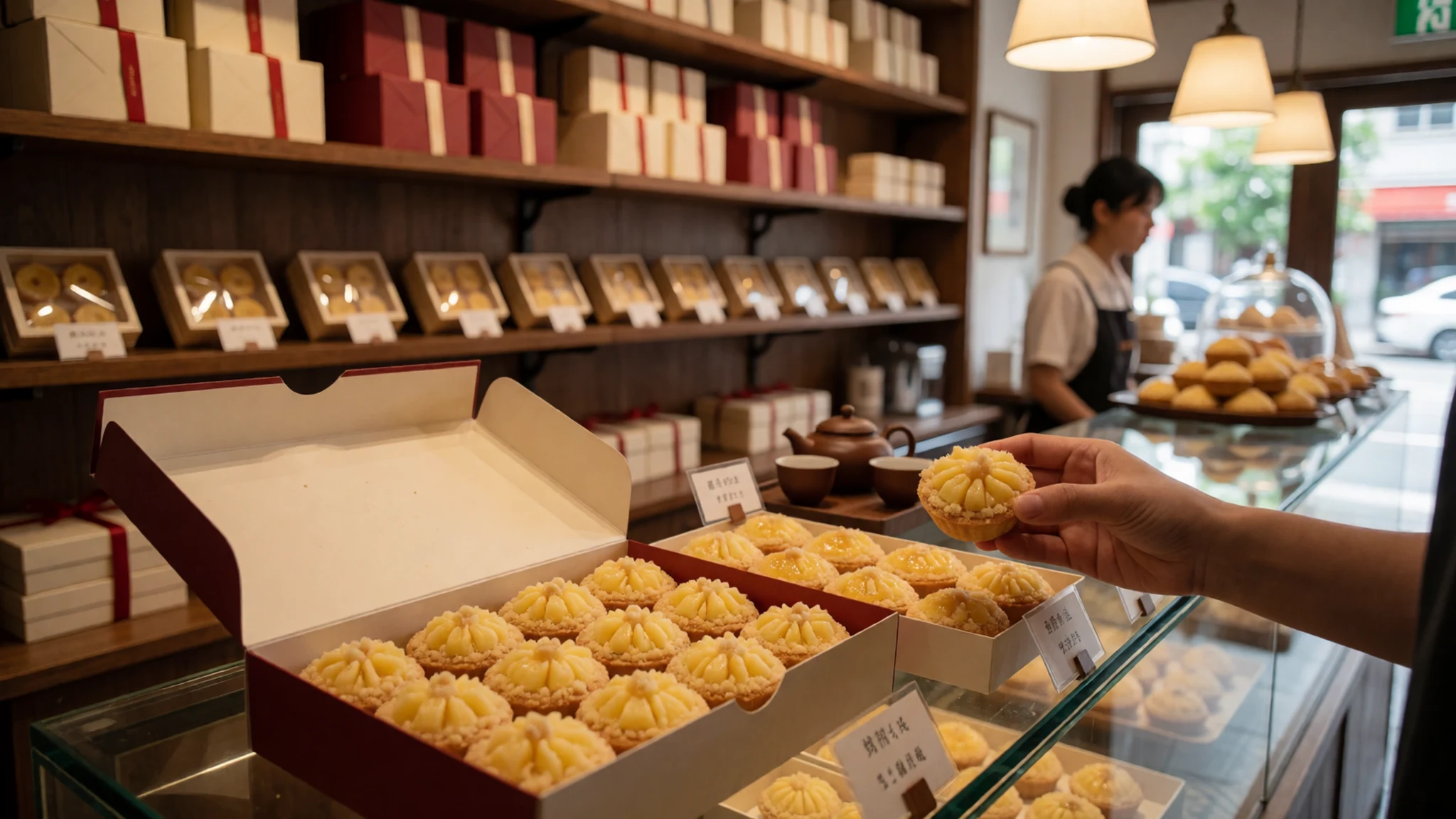
- Noodle-shop bowls — Noodle shops and street vendors in central Taichung
Taichung's streets are lined with noodle shops serving everything from familiar household dishes to more unusual local ones. Point, gesture and ask what the room is eating; staff are used to visitors who do not speak Chinese, and gestures usually work. - Night-market snacks — Feng Chia Night Market, and the Second and Third Markets
Skewers, fried bites, sweet pancakes and small plates are eaten standing or walking, which suits a late evening after the wetland. Go hungry, share portions to sample more, and carry some cash for small stalls. - Tea break and tapioca milk tea — Jin Ming First Street and drinks shops near the markets
Tea shops are part of the Taichung rhythm, from quick takeaway cups with tapioca pearls to a longer sit-down pot. It is an easy way to rest after hours in the wind and sun at the coast.
Plan it
Best time. March–April and October–November, when the weather is milder and evenings are good for sunset; summer is hot with sudden afternoon thunderstorms, and typhoons can disrupt travel and damage coastal facilities.
How long. 1–2
Getting there. Taichung International Airport has limited flights and no rail link, so Taiwan High Speed Rail to Taichung Station in Wuri is the usual route. From central Taichung, the wetland is a long trip along the coast by bus, taxi or car; allow generous time and check local transport before you go.
Budget. low
Tips
- Check the tide before you go: reflective pools need water on the flats, while low tide shows wide mud
- Arrive well before sunset on weekends and holidays, when the evening is busiest
- Carry water, sun protection and a rain layer, as there is little shade on the flats
- Look both ways on coastal roads, as many have no proper pavement and scooters pass quickly
- Check the official site, https://www.gaomei.com.tw/, for current access, opening arrangements and closures
Etiquette
- Stay on the marked trail and do not walk out onto the mud
- Leave crabs, shells and birds undisturbed
- Take your rubbish with you and queue politely at popular viewing spots
Nearby
Sources
- Wikidata Q15622440 (CC0)
- Wikipedia: Gaomei Wetlands (rev 1366012545) (CC BY-SA 4.0)
- Wikivoyage: Taichung (rev 5419408) (CC BY-SA 4.0)
- Photo 01-.jpg, Axjun (CC BY-SA 4.0)
- Photo 02-sunset-of-gaomei-wetland.jpg, 阿爾特斯 (CC BY 3.0)
- Photo 03-.jpg, Lin Wen Hung (CC BY-SA 4.0)
- Photo 04-alick02.jpg, Alick0722 (CC BY-SA 4.0)
- Photo 05-alick03.jpg, Alick0722 (CC BY-SA 4.0)
- Photo 06-dawn-in-gaomei-id555594017.jpg, Xavier Berlioux (CC BY-SA 4.0)
- Photo 07-gao-mei-wdpa-555594035-peterwen-1.jpg, 温文佑 (CC BY-SA 4.0)
- Photo 08-gao-mei-wdpa-555594035-peterwen-10.jpg, 温文佑 (CC BY-SA 4.0)


Wildlife
- Taiwan fiddler crab (animal)
The Taiwan fiddler crab is a small crab that lives out on the mud, like a tiny neighbour of the shore. Look for it on the flats when the tide has gone far out and the mud stretches towards the sea, where small crabs and wading birds busy themselves on the surface. Which season or hour suits it best is not recorded here, so ask a local guide. Watch from a distance, keep quiet and still, and never feed it.