Gangneung
Gangneung, South Korea
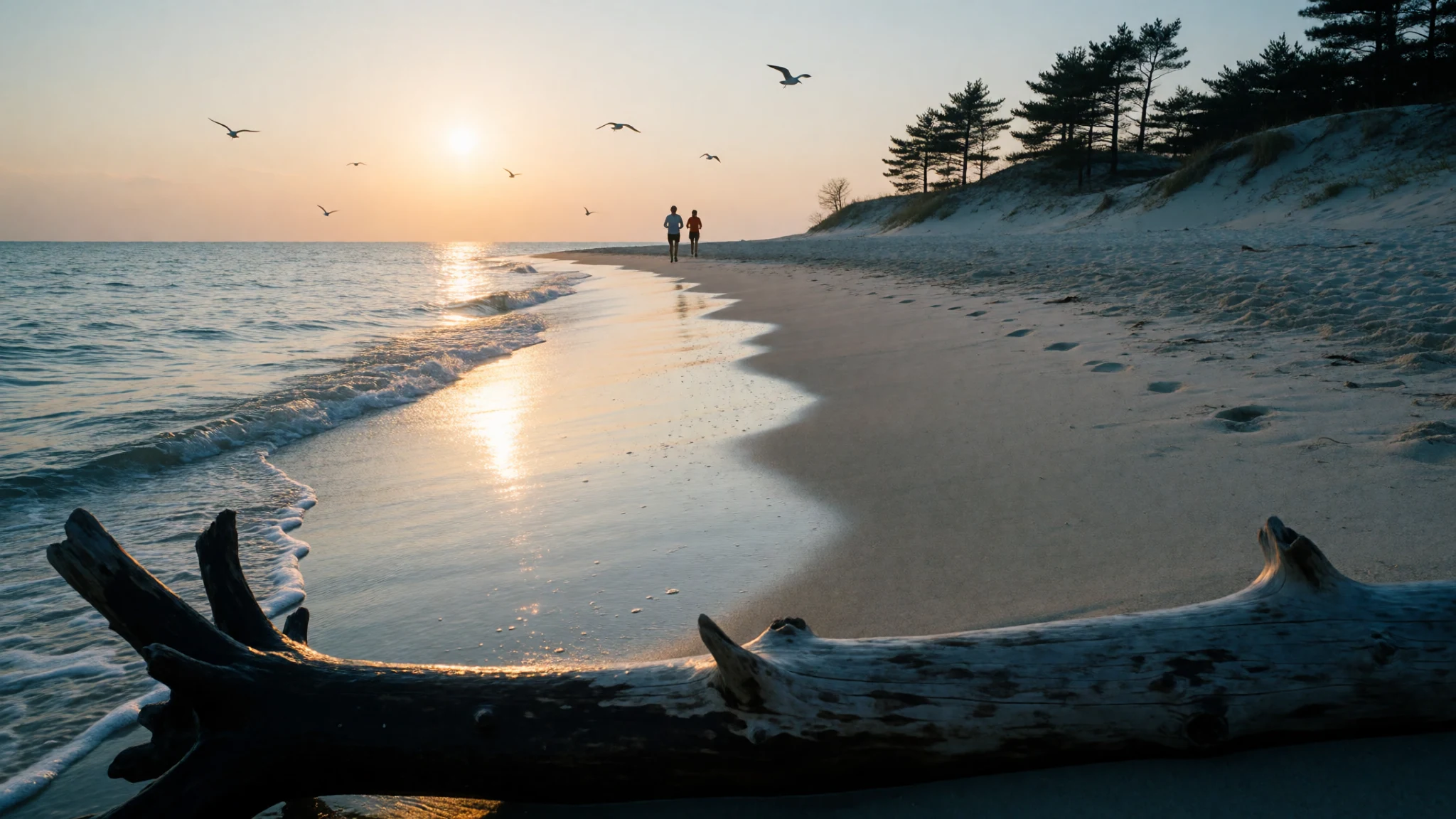
Gangneung pairs a long Sea of Japan beachfront with a blossom-edged lake, a bamboo-shaded scholar's house and bowls of chilled buckwheat noodles.
The place
Gangneung is a coastal city in Gangwon province on South Korea's east side, home to about 206,780 people. It sits only 2 metres above sea level, on a narrow shelf between the Sea of Japan (the East Sea to Koreans) and the Taebaek mountains, whose ridges cut it off from much of the peninsula. Most of the municipal land is forest, so the built-up city is small compared with the area it governs. A lake, a river and several beaches all lie within a short ride of the centre, and buses and taxis cover most of it comfortably. The city is the commercial hub of the Yeongdong coast, and it works well as a base for sunrise at Jeongdongjin, sand and pines at Gyeongpo, and day trips into the hills. Its ice venues were used for the 2018 Winter Olympics, and it later hosted the 2024 Winter Youth Olympics, which gave it a profile well beyond Korea. The climate is humid subtropical. Because of the sea, winters are milder and summers a little cooler than inland Korea, but July and August are still sticky and the beaches fill with Korean families. Spring brings cherry blossom around Gyeongpo Lake, and autumn is usually clear and calm. Coffee is part of the local identity: cafés line the shoreline, and sitting with a cup facing the water is the standard way to spend a slow afternoon. Most visitors come from Seoul for a weekend; two or three days lets the city's pace sink in.
Its story
Gangneung's recorded past begins with the Yemaek people, who lived along this stretch of coast long before the Korean kingdoms took shape. Over the following centuries the area passed between powers: Chinese rule in the last centuries BC, the kingdom of Goguryeo in the early fourth century, and Silla in the seventh. Under Silla it was treated as a secondary regional centre, and its position near the northern frontier gave it a military role as well as an administrative one. It carried several names in this period, among them Sungju and Myeongju, and through the Goryeo era it stayed a regional centre even as titles and borders were reshuffled. By the early fifteenth century, under the Joseon dynasty, the name Gangneung was settled, and it lent part of its name to the new Gangwon province. Those Joseon centuries left the gentry houses, pavilions and scholarly families that visitors now walk among. After 1945 some of the old territory was split off to neighbouring Yangyang, and in 1995 the city and the surrounding Myeongju district were merged into the municipality that exists today. The coast's strategic character resurfaced in 1996, when a North Korean submarine stranded itself on the shore near the city and set off a search for its crew that lasted weeks. More recently, the 2018 Winter Olympics put the city's ice arenas in front of a global television audience.
What to see
- Ojukheon — Southwest of the city centre
Ojukheon is a Joseon-era house compound in Gangneung, named after the dark bamboo (ojuk) growing around it. It was the birthplace of the scholar Yulgok and his mother, the artist Shin Saimdang, and a small municipal museum stands in the grounds. Go early, walk the shaded paths slowly and read the captions to follow the family story.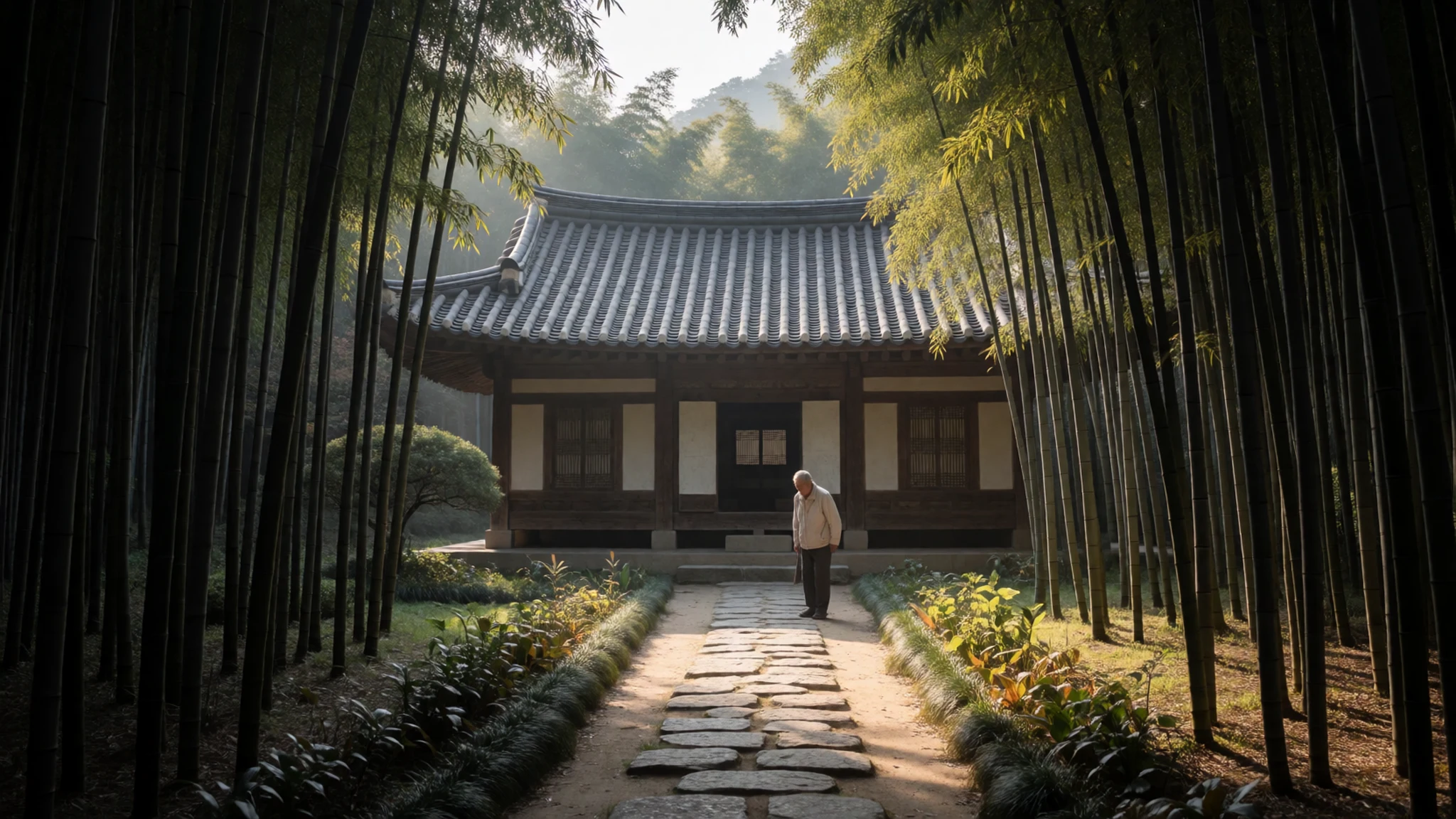
- Seongyojang House — North of the city centre
The City Museum is a local institution in Gangneung, showcasing the history and culture of the region. Its roofs curve upward at the eaves in long, soft lines that locals compare to the toe of a traditional sock. Courtyards, a pavilion and old wooden floors make it a calm, shaded stop on a hot day.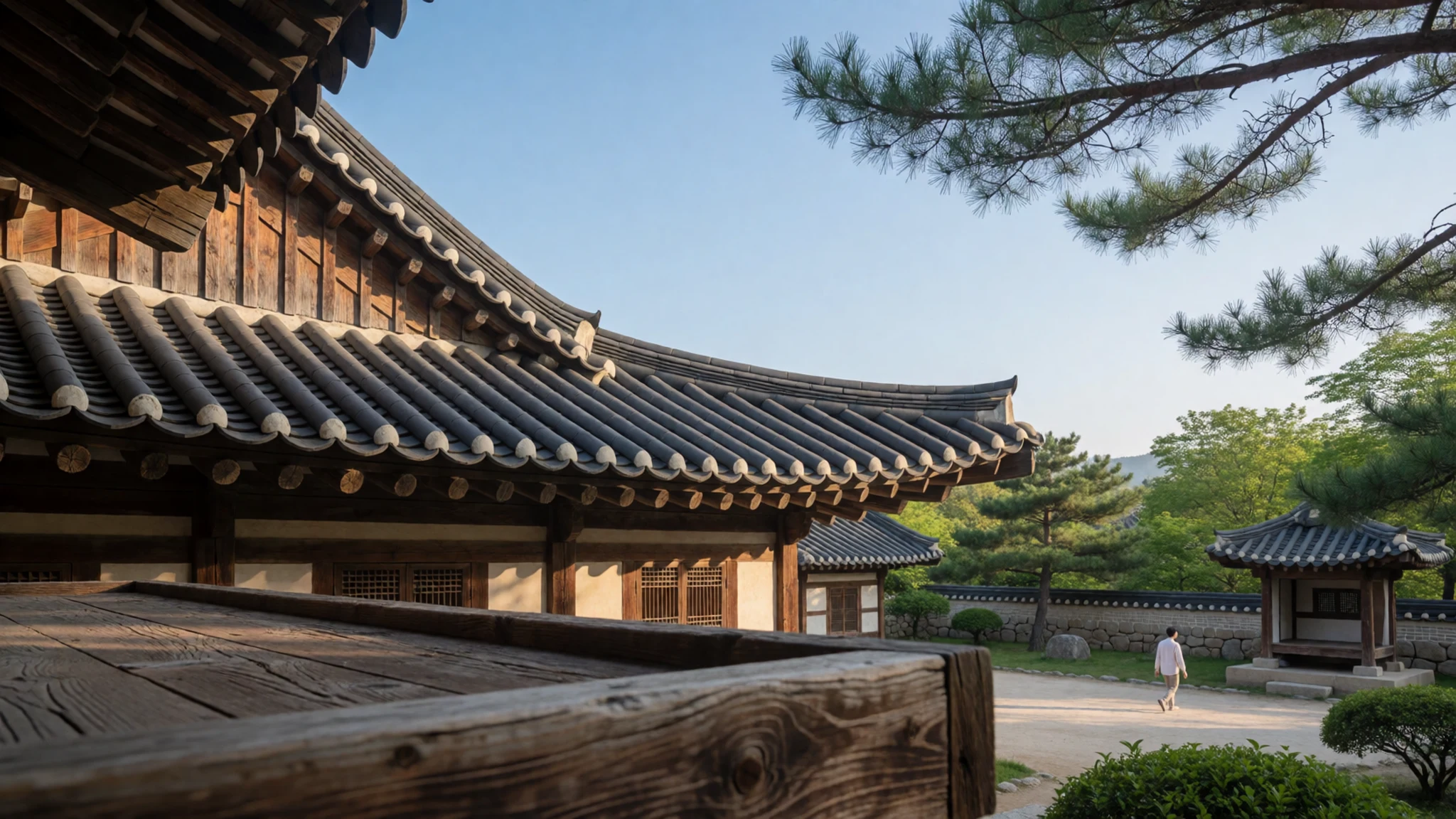
- Daegwallyeong Museum — Near Ojukheon
This museum in Gangneung focuses on the natural history and culture of the Daegwallyeong mountain region. It suits a rainy or very hot hour, and it sits close to Ojukheon, so the two combine easily. Look for how colour, stitch and subject change from one country's tradition to the next.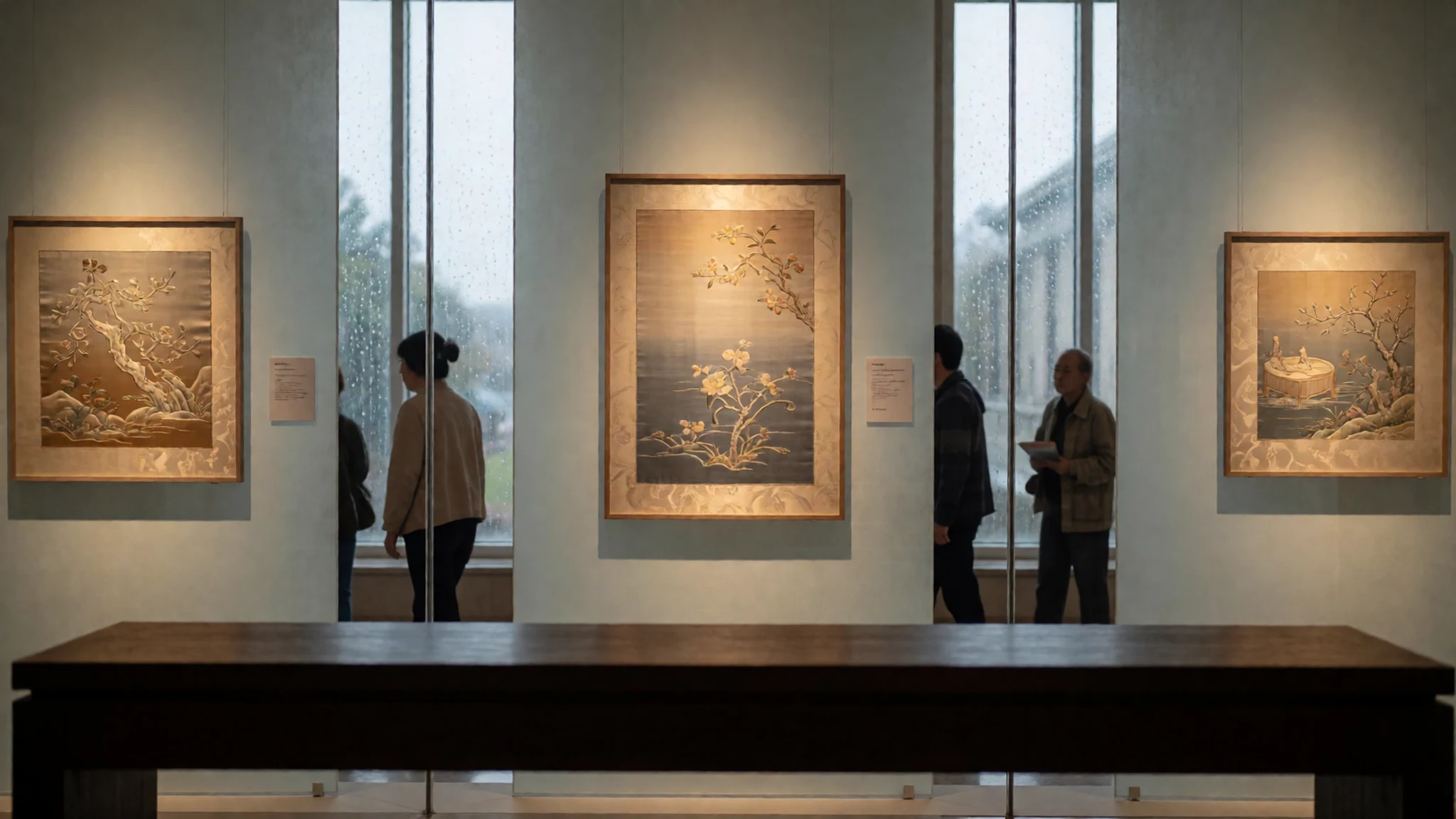
- Gyeongpo Wetland — Gyeongpo, beside the lake
Gyeongpo Wetland was created to bring back the natural ecosystem near Gyeongpo Lake, with habitat for water plants, fish and birds. It is flat, easy walking and much quieter than the beach nearby. Early morning is best for birdwatching, and the reeds and water give a gentler side of the lakeside than the cafés do.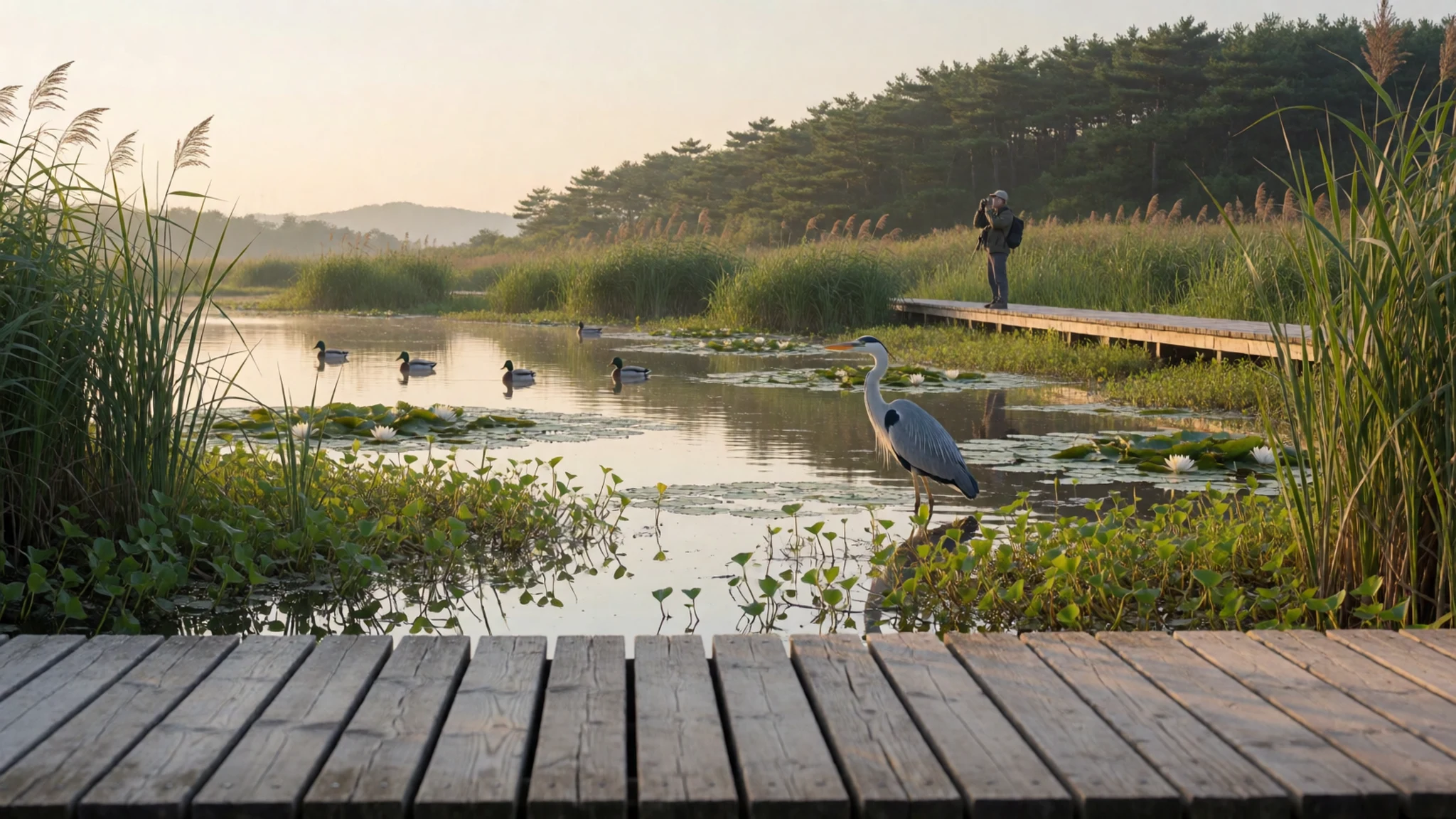
- Gyeongpodae Pavilion and Gyeongpo Lake — Gyeongpo
Gyeongpodae is a Goryeo-era pavilion on the lake's northern side, looking over water and pines. Tradition says moonlight can be enjoyed here in five ways: in the sky, the sea, the lake, a drinking cup and a loved one's eyes. Cherry blossom in spring draws the biggest crowds.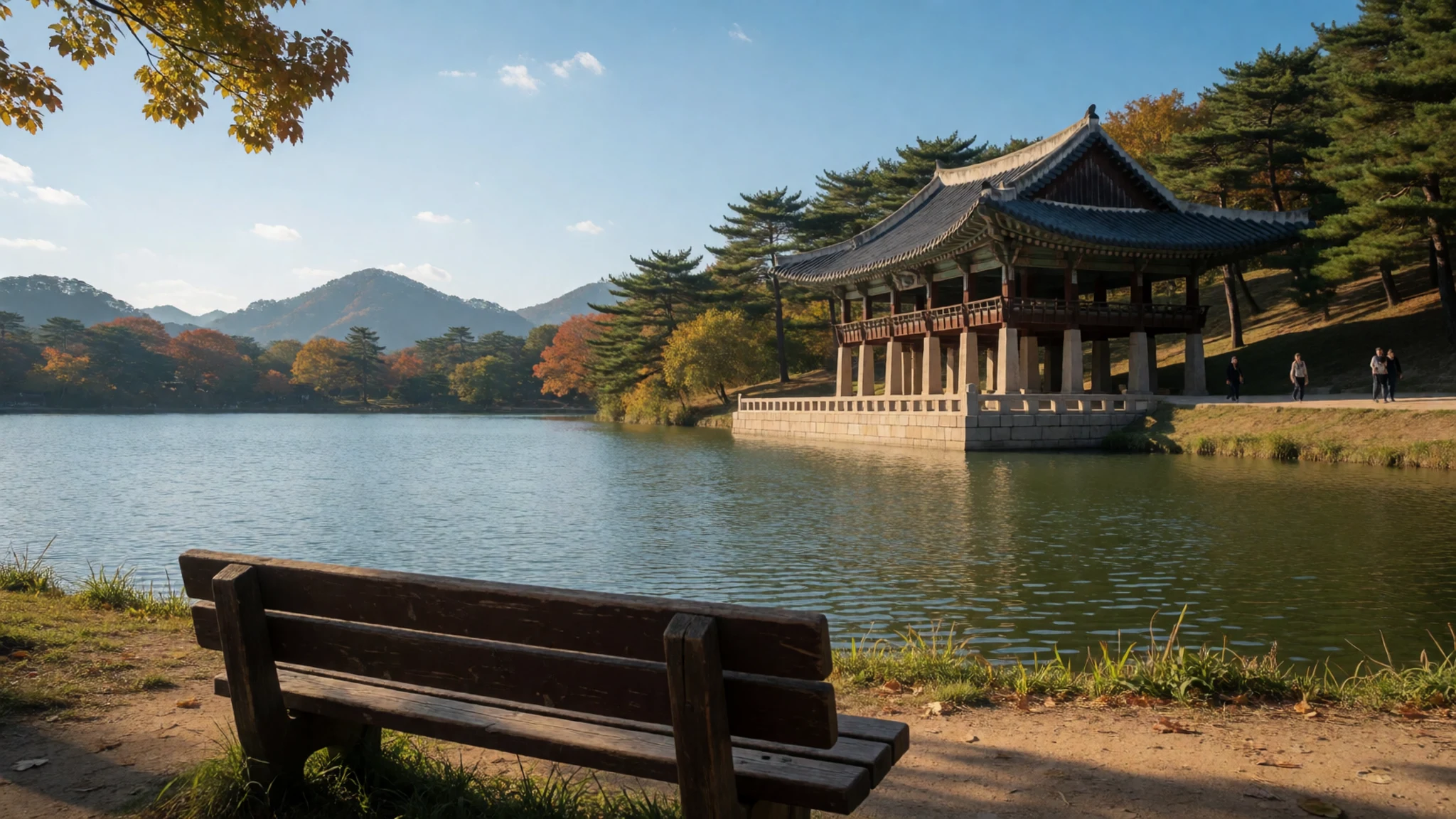
- Gyeongpo Beach — Gyeongpo
Gyeongpo Beach is Gangneung's main city beach, a broad curve of sand backed by pine trees and cafés, a short walk from the lake. It is busy and loud in high summer, but outside July and August it is a pleasant place for a long walk, a coffee and an early look at the sea.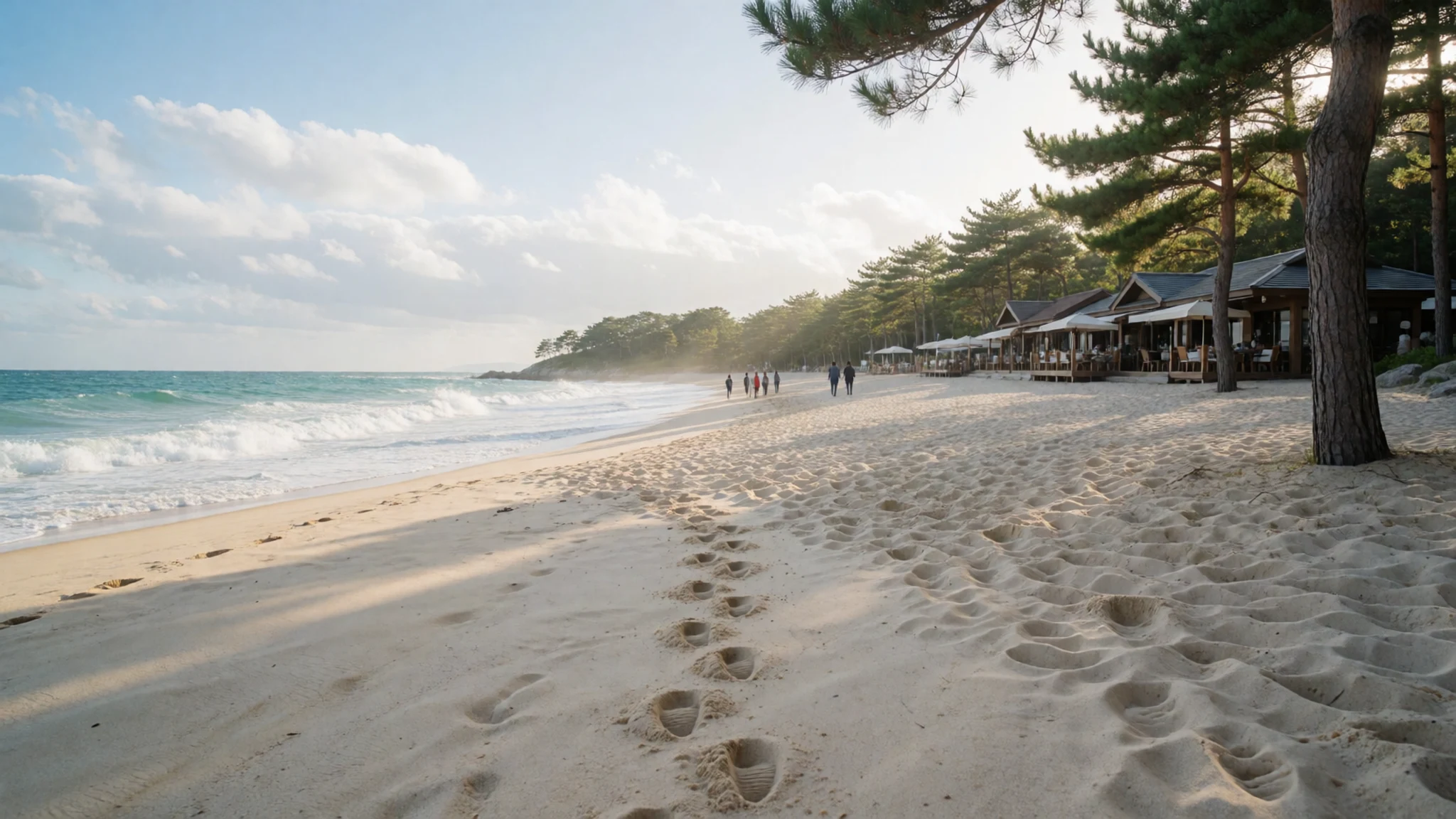
Culture
Gangneung's culture rests on Confucian scholarship, coastal life and a calendar of local festivals. The city has well over a hundred listed cultural properties, a mix of national, provincial and registered sites. Ojukheon, the birthplace of the scholar Yi I (Yulgok) and the artist Shin Saimdang, is the family house most visitors seek out. The old gate of Imyeonggwan, once part of a Goryeo-period official inn, survives as a national treasure. Gulsansa, a temple site founded in the ninth century, sits in the hills, and the Gyeongpodae pavilion overlooks the lake. Imdangdong Catholic Church, from the mid-twentieth century, adds a later layer to the city's history. Each year Gangneung holds Danoje, a festival tied to the lunar calendar, with shamanic rites, folk performance and a large market beside the Namdae stream. Locals take pride in their coffee, and in the habit of watching the first sunrise of the year from the east coast. Respect for scholarship and family lineage still shows in how the old houses are kept: quiet, orderly and open to visitors on gentle terms. At Ojukheon and the temple sites, speak quietly, take your shoes off before stepping onto any raised wooden floor, and stay out of rooms that are roped off.
What to wear
In Gangneung, as elsewhere in Korea, traditional dress means hanbok: a short jacket (jeogori) over a full wrapped skirt (chima) for women, and a jacket with loose trousers (baji) for men. Silk is used for formal pieces, ramie and hemp for summer, and cotton for everyday wear. Hanbok now appears mainly at weddings, the Lunar New Year, Chuseok and festivals such as Danoje, and visitors sometimes hire it for photographs at heritage houses. Day to day, people dress simply and practically: jeans, sportswear, light jackets, and plenty of outdoor gear for hiking in the nearby hills. By the beach the style is relaxed, with surf shorts and sun hats in season and warm layers in winter. A visitor should pack for the sea: light, breathable cotton for July and August, a waterproof jacket for the rainy weeks of early summer, and a windproof coat from late autumn to early spring. Comfortable closed shoes suit the lakeside paths and hill temples, and slip-ons are handy because shoes come off at historic houses. At temple sites keep shoulders and knees covered, and avoid loud colours or slogans, which stand out against the quiet setting.
What to eat
- Sundubu (soft tofu stew) — Family restaurants in the Chodang tofu area
Gangneung is known for soft, freshly made tofu, served as a bubbling stew with a small side of rice and kimchi. Seawater is traditionally used to set it. Look for family restaurants that make their own tofu, especially in the Chodang area on the north-eastern side.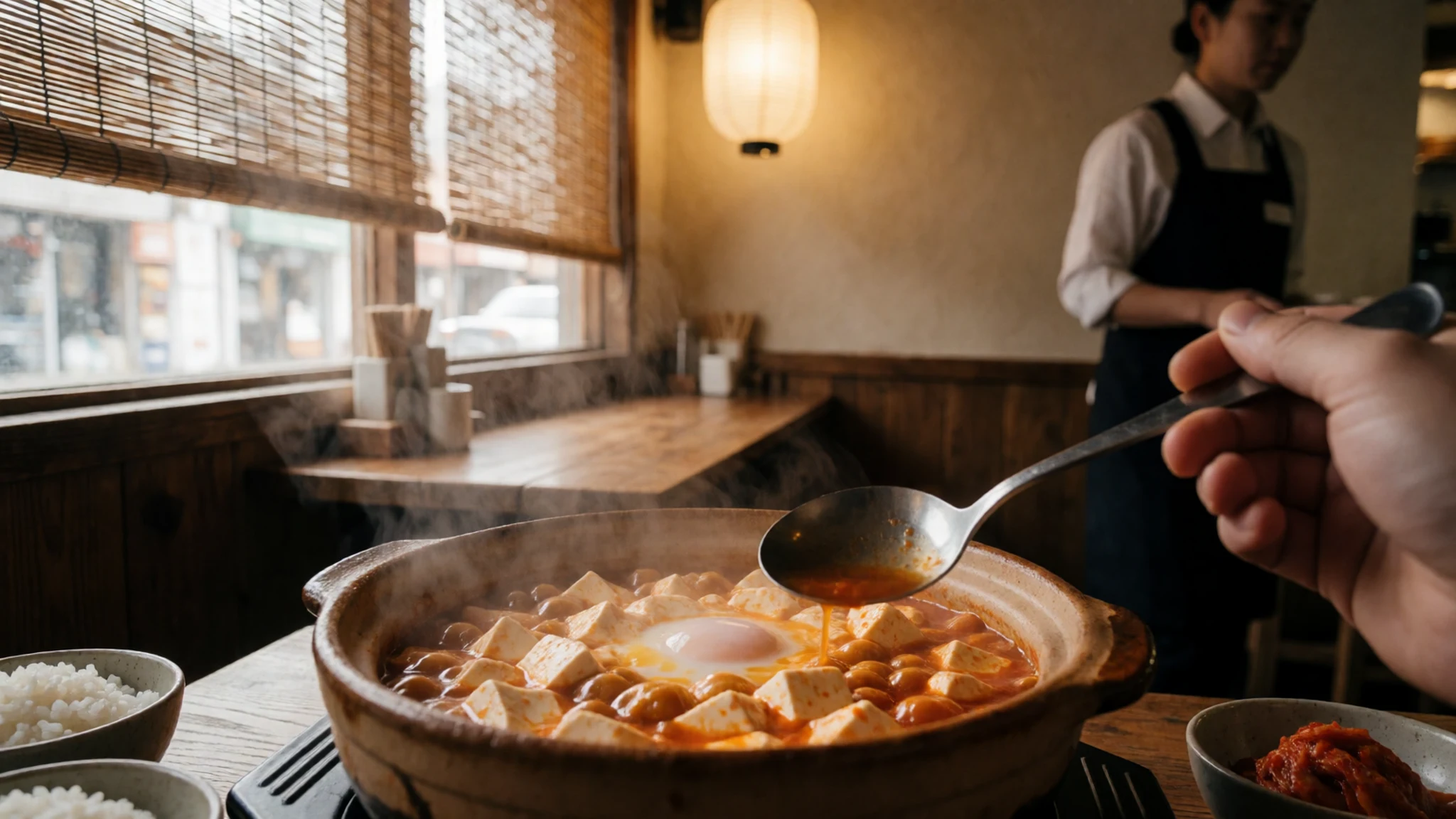
- Makguksu — Local noodle restaurants south of the centre
Makguksu is the Gangwon buckwheat noodle dish, served cold in a tangy broth or lightly dressed with seasoning. The noodles are chewy and earthy, and it is a good meal on a hot day. Local noodle restaurants south of the centre serve it quickly and without fuss.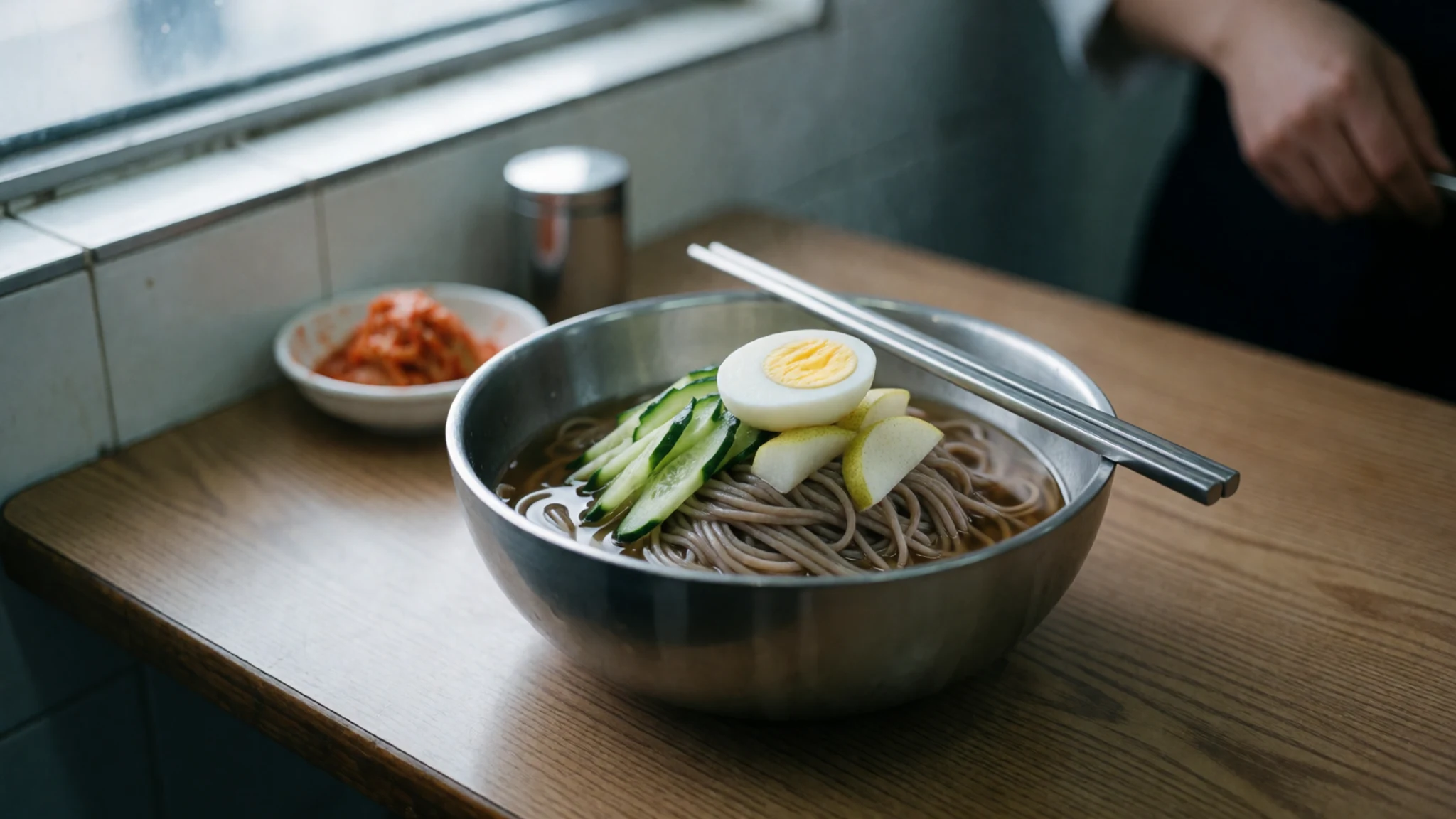
- Gamja ongsimi — Small eateries in the central city
Gamja ongsimi is a dumpling soup made with grated potato, giving a soft, slightly chewy texture in a clear, mild broth. It is a Gangwon mountain-region dish and good comfort food in cooler months. A few small eateries in the city centre have become known for it. - Kalguksu — Simple noodle shops near the main market
Kalguksu is a hot noodle soup with hand-cut wheat noodles, often cooked in a rich seafood or chicken stock. Plain-looking places can serve very good bowls, and locals tend to return to the same few. Eat it at a simple noodle shop rather than a tourist restaurant. - Hoe (raw fish) — Harbour fish markets, such as Jumunjin
Along the Gangneung coast, the harbours sell fresh raw fish sliced to order, usually with leaf wraps, chilli paste and a side soup. Jumunjin port, with its lighthouse, is the usual place to go. Visit at midday when the catch is freshest and the stalls are busy.
Plan it
Best time. April–May for blossom and mild sunny days, and September–October for clear air and quieter beaches. July and August are hot, humid and crowded by the sea; winters are cold but milder on the coast than inland.
How long. 2–3
Getting there. Fly into Incheon, reach Seoul, then take the KTX Gangneung line, which runs from Seoul station in about two hours, or from Cheongnyangni in about an hour and a half. Express buses also link Seoul with Gangneung. From the station or bus terminal, local buses and taxis cover the last leg into town and out to the beaches.
Budget. mid
Tips
- Book the KTX ahead, as tickets go on sale about a month early; check the Korail website or app for current fares
- Visit Gyeongpo Lake early in the morning in blossom season, when the paths are quiet
- Aim for sunrise at Jeongdongjin or the beach and plan a nap or café stop afterwards
- Carry a bank card and a little cash for markets and small noodle shops
- Visit the city's official site for current event dates before planning around a festival
Etiquette
- Take your shoes off before stepping onto a raised wooden floor at historic houses and temples
- Speak quietly at heritage sites, especially in family houses that are still maintained as homes
- Ask before photographing people, particularly at festival ceremonies
Nearby
Sources
- Wikidata Q42056 (CC0)
- Wikipedia: Gangneung (rev 1383732754) (CC BY-SA 4.0)
- Wikivoyage: Gangneung (rev 5431798) (CC BY-SA 4.0)
- Scroozle, Cherry blossoms along Gyeongpo Lake, via Wikimedia Commons (CC BY 3.0)
- Mobius6, Jumunjin Lighthouse, via Wikimedia Commons (CC BY-SA 4.0)
- Basile Morin, Namdae stream water reflection from Wolhwagyo bridge, via Wikimedia Commons (CC BY-SA 4.0)
- Mobius6, Gyeongpo Beach, via Wikimedia Commons (CC BY-SA 4.0)
- Mobius6, Ojukheon, via Wikimedia Commons (CC BY-SA 4.0)
- 장길산, 강릉시 행정구역도, via Wikimedia Commons (Public domain)
- Gloyacks, 강릉시내지역도, via Wikimedia Commons (CC BY 3.0)
- 최광모 (Choe Kwangmo), via Wikimedia Commons (CC BY-SA 4.0)


