Gandikota
Gandikota, India
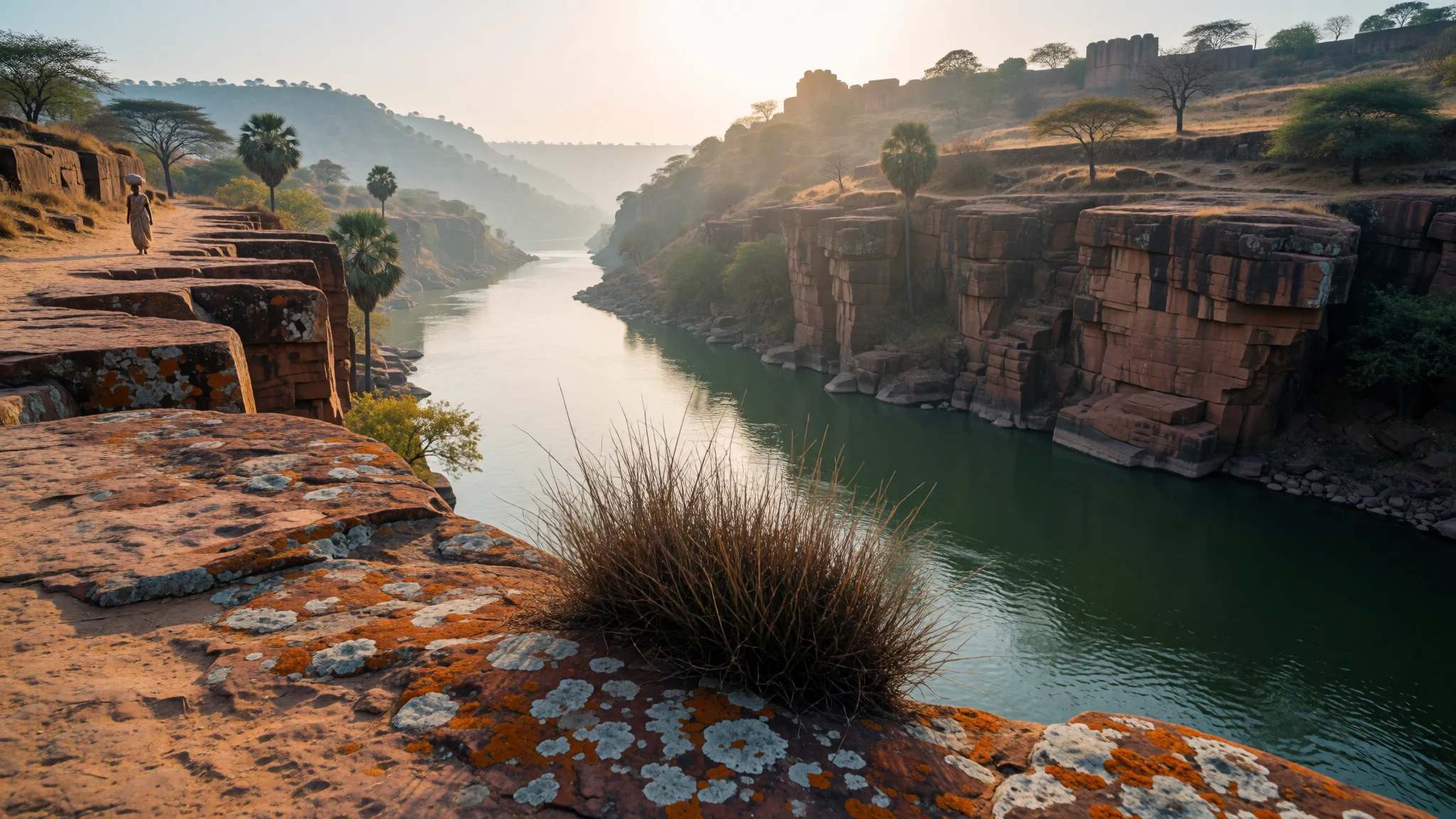
Gandikota pairs a dramatic red-rock river gorge with a quiet fort village, and it rewards an early start and a night by the water.
The place
Gandikota is a small fort village on the right bank of the Penna river, about 15 km from Jammalamadugu in Andhra Pradesh. Its population is 1,118, and nearly everyone lives inside the fort walls, so the ruins double as a working village with washing lines, goats and children on their way to school. The Archaeological Survey of India protects the fort as a national monument. The gorge is what draws visitors. Over a very long time the Penna has cut through a ridge of layered quartzite, part of the old sedimentary rocks of the Cuddapah Supergroup, leaving red-brown cliffs above a slow, green stretch of water. Writers call it the Grand Canyon of India. The scale is far more modest than the American original, but the colour of the rock at sunrise and the view from the rim make the nickname understandable. Inside the walls stand a temple, a mosque, a granary, a water reservoir and a pigeon tower, spread over scrubby ground that takes a couple of hours to walk. Services are thin: a government-run tourist lodge with a canteen, tents rented near the gorge, and little else. Larger choices for rooms and meals are in Jammalamadugu and Anantapur. Weekends and holidays bring day-trippers from Bangalore and Hyderabad, and the main viewpoint can be crowded at dawn, while weekdays are calmer. From April to June the heat on bare rock is punishing and shade is scarce.
Its story
Gandikota's story starts with a sand fort raised by Kaka Raja, a local chieftain who served the Kalyani Chalukya kings. That early work belongs to the twelfth century, and by the thirteenth the area had passed to the Kakatiya dynasty and the officials who governed for them. The place became a serious stronghold only when the Pemmasani Nayakas, a family of military lords, took it in hand and strengthened it. Later the Golconda Sultanate held the fort, and its builders added structures in an Islamic style, which is why a mosque and domed storehouses now stand not far from a Hindu temple. The site was valued for its position, with cliffs and a deep river gorge on one side, and it changed hands between several powers. Among its visitors was Jean-Baptiste Tavernier, a French traveller who called here on his way to Golconda. Local tradition also holds that Vemana, the Telugu poet from the Kadapa region, spent a short time in the area, though the evidence is slight. New evidence still turns up: a historian from Mydukur, Tavva Obul Reddy, found a copper-plate inscription about the fort that dates from the sixteenth century. Much of the fort's history is told by its stones and a handful of inscriptions rather than by signboards, so visitors who want detail are best served by reading beforehand or asking the village guides.
What to see
- Penna Gorge viewpoint — Edge of the fort, above the river
The gorge is the reason most people come. From the rim the Penna bends between steep red-brown quartzite walls, and the light is best soon after sunrise and again before dusk. Walk the rim path slowly, stay well back from unfenced edges because the rock can crumble, and expect company at the main viewpoint on weekends.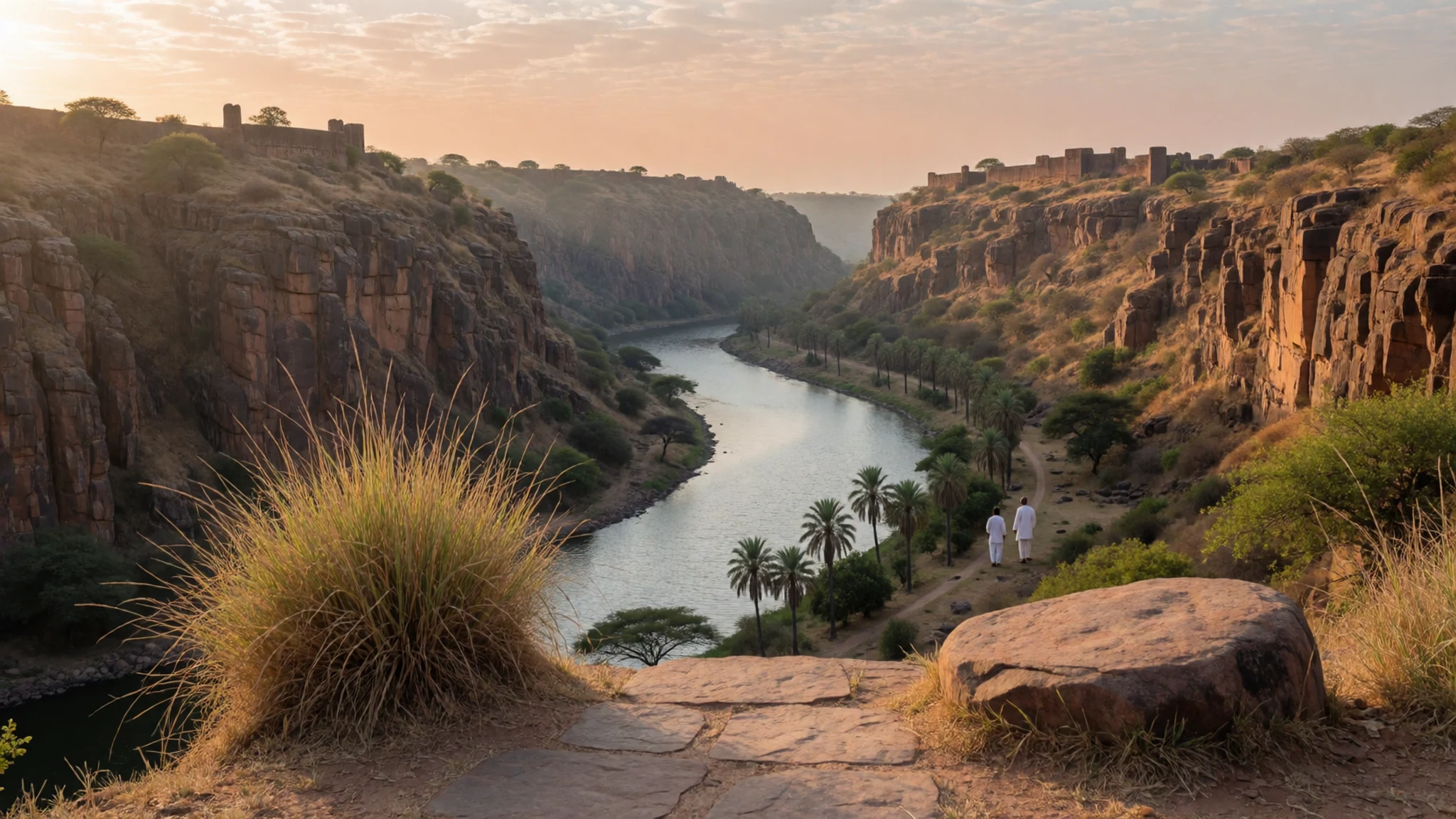
- Madhavaraya Temple — Inside Gandikota Fort
An old stone temple inside the fort walls, its surfaces worn and weathered by centuries of sun and rain. It is a calm stop away from the gorge crowds, good for looking at stonework and for seeing how a religious building sat inside a fortified settlement. Check locally whether the interior is open.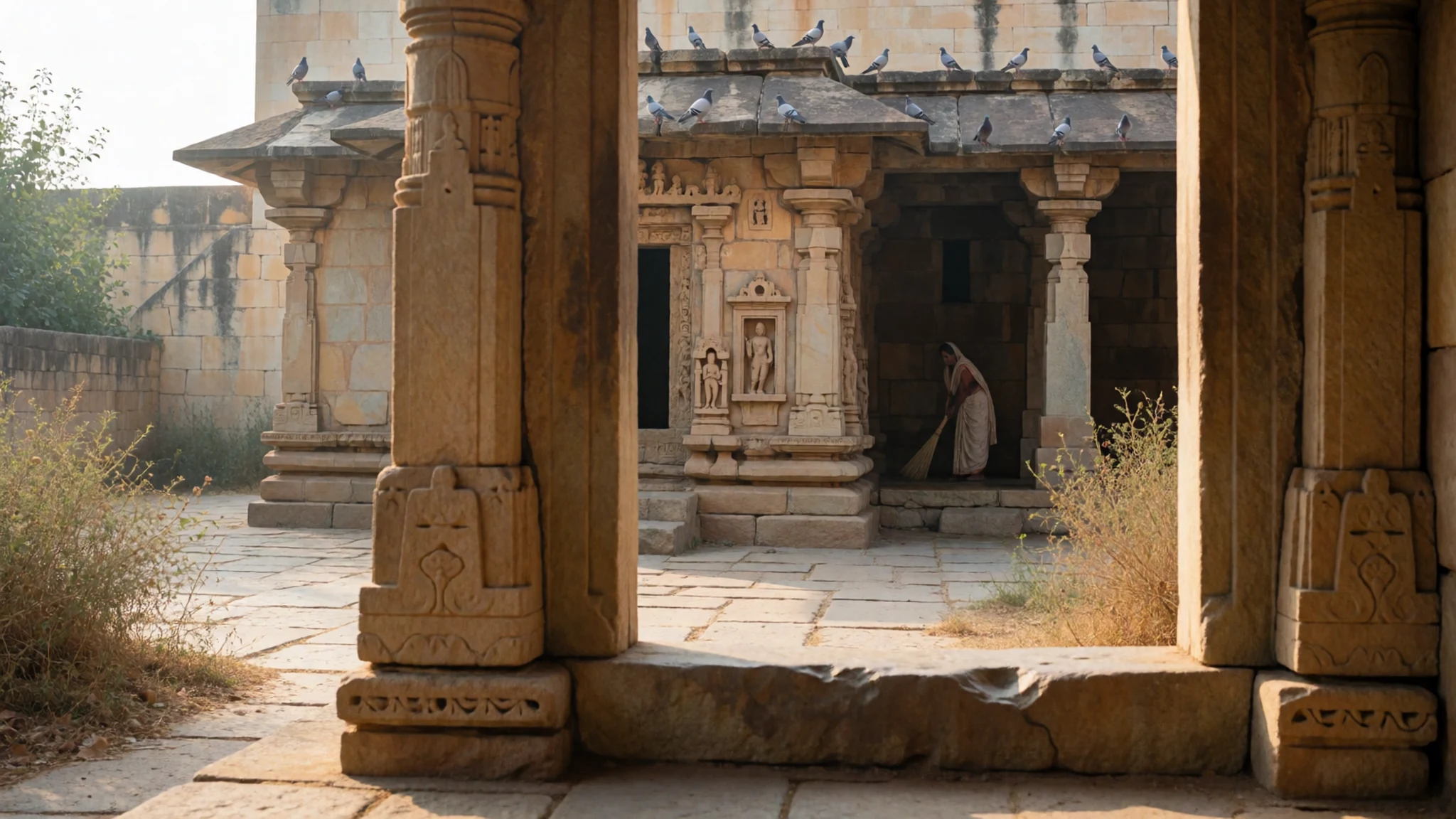
- Juma Masjid — Inside Gandikota Fort, beside the granary
The Juma Masjid stands beside the granary and belongs to the phase of Islamic building that followed the Golconda takeover. Its arches and large prayer hall give the fort a very different silhouette from the temple. Visitors can admire it from outside; if you go in, remove your shoes and ask first.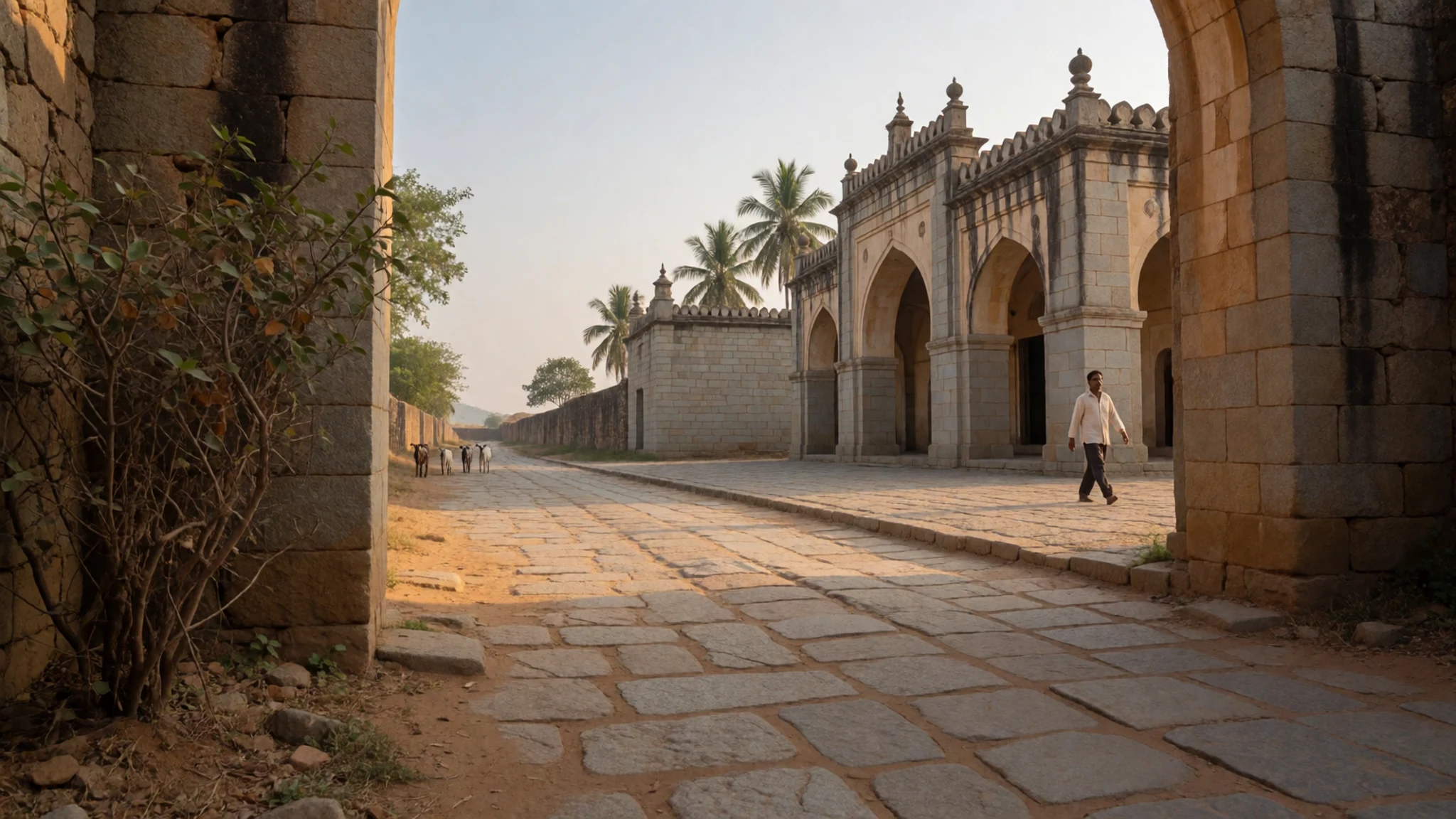
- Granary and water reservoir — Inside Gandikota Fort
The fort's granary and its water reservoir explain how a garrison and a village could survive the dry months on a rocky ridge. Both are plain, functional structures rather than decorated ones, and they are quickest to appreciate on a slow loop of the fort, ideally in the cooler hours of the morning.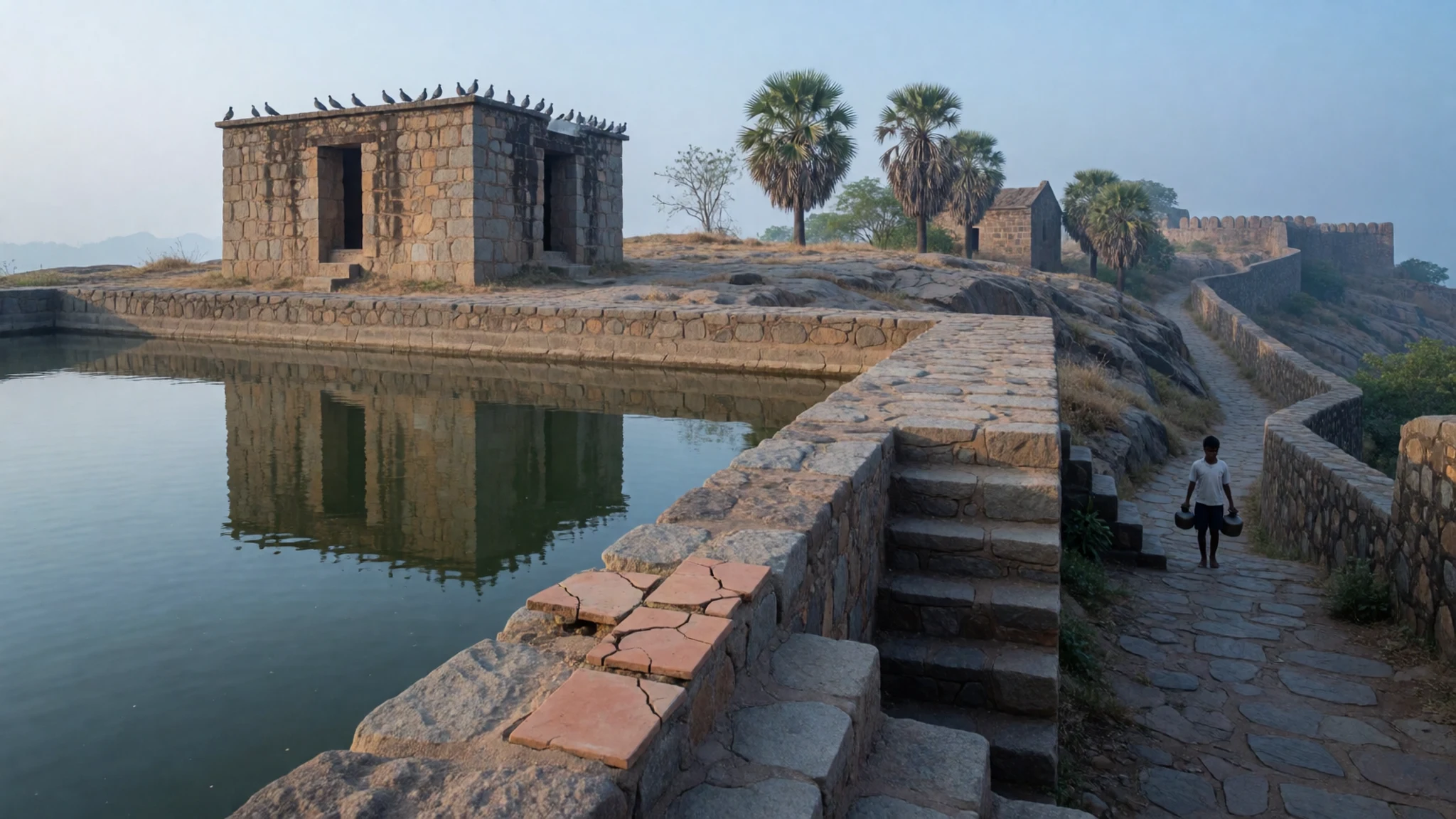
- Pigeon Tower — Inside Gandikota Fort
The Pigeon Tower is one of the smaller structures inside the walls and is named for the birds that gather there. Sources say little about its age or original purpose, so treat it as a curiosity and ask the village guides what they know. It is a pleasant photo stop on the fort circuit.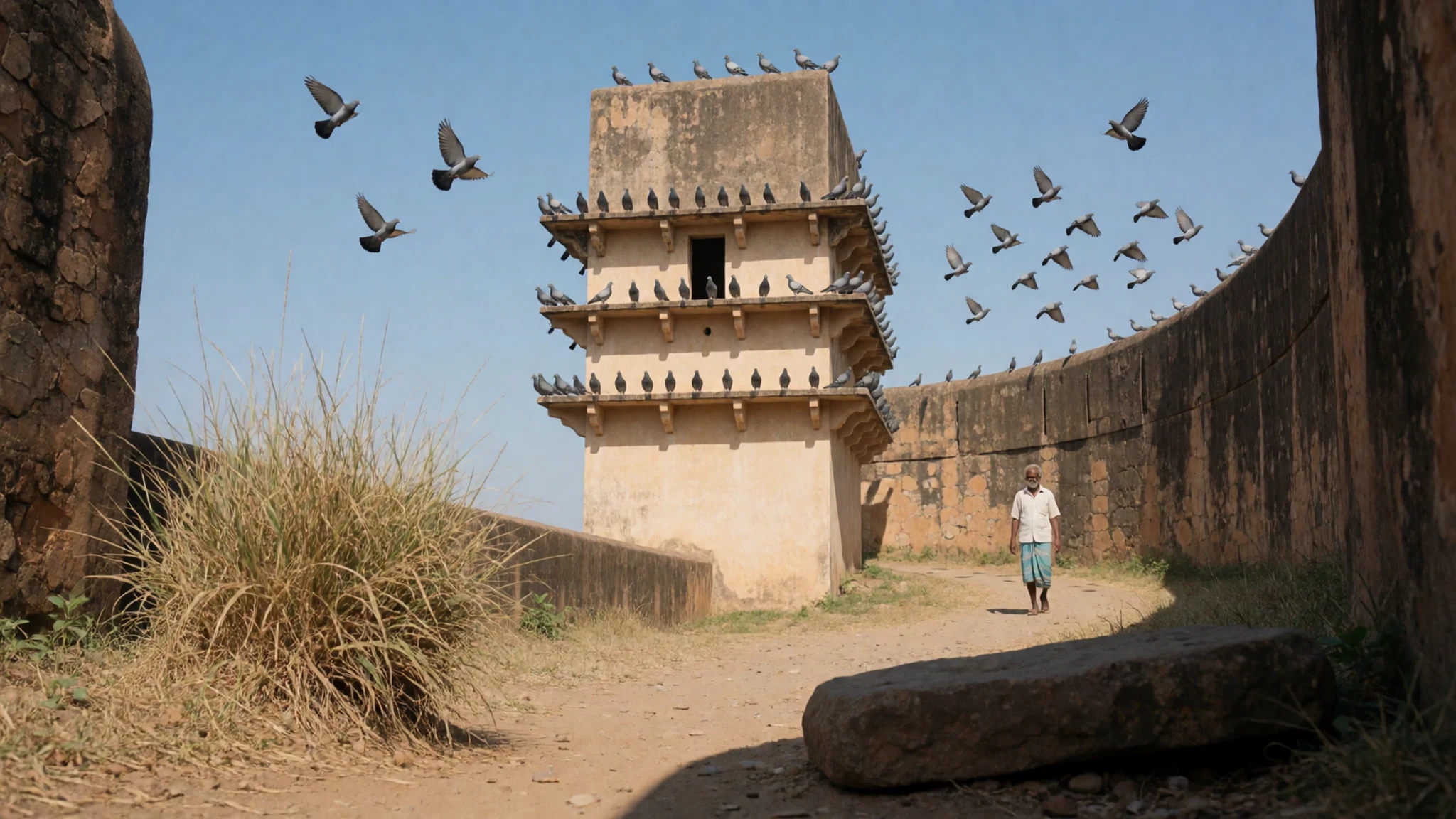
- Ranganatha Swamy Temple — Fort area, across the gorge views
This temple is best seen from a distance, with the fort and the gorge giving it a setting. It makes a good second viewpoint once the main rim has filled with visitors. The path toward it is uneven, so wear sturdy shoes, and check locally about access and any dress expectations.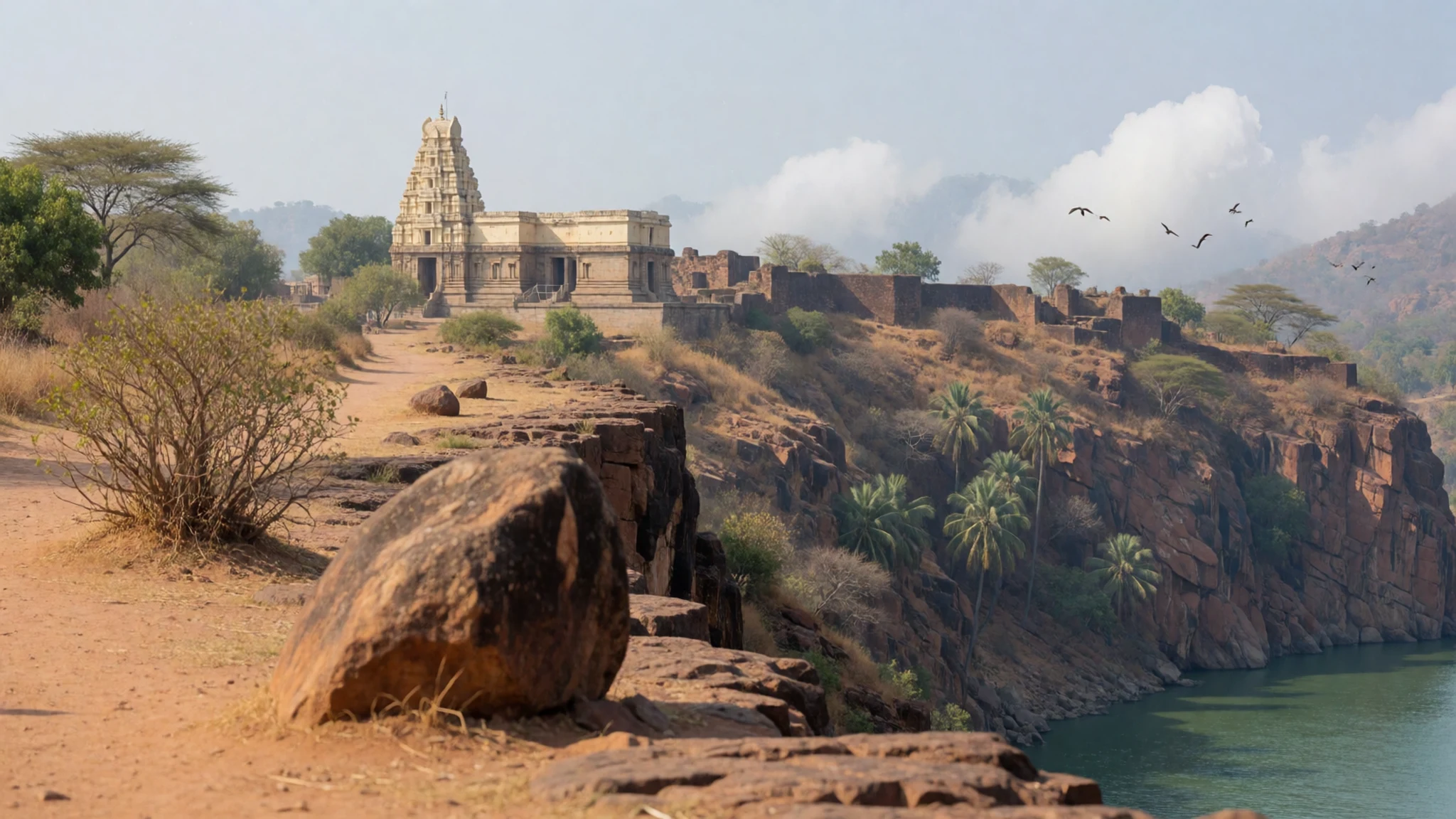
Culture
Gandikota sits in Rayalaseema, the dry interior of Andhra Pradesh, where Telugu is the everyday language and farming life follows the rains. The village is small and close-knit, and the fort is both a heritage site and a home, so visitors are guests in someone's neighbourhood as well as tourists at a monument. The layers of the fort's history are visible in its buildings: a Vishnu temple and a mosque stand within the same walls, a reminder that Hindu and Muslim rulers and builders both shaped the place. Festivals follow the Telugu calendar, with Ugadi in spring and Sankranti in January the best known across the region, though the village has no large festival of its own that the sources describe. Hospitality is informal. Village agents and guides gather near the tourist lodge, will arrange tents and meals, and are glad to talk about the fort, but it is best to agree what is included before accepting. Cleanliness is a concern, because camping and day visits leave plastic and bottles behind on a fragile rim, and locals are rightly protective of it. Visitors who come mid-week usually find it easier to chat with residents and to see the village at its own pace. Remove your shoes before entering any temple or mosque, dress modestly, and ask before photographing residents or people at prayer.
What to wear
Gandikota's traditional dress follows the wider Telugu pattern. Women wear the sari, in cotton for daily life and silk for weddings and festivals, with silk traditions from nearby Andhra towns such as Dharmavaram well known. Men wear the panche, a wrapped dhoti-style cloth, often with a light shirt and a shoulder cloth, especially on ceremonial days. Cotton lungis are common for work and at home. What people wear day to day is simpler and practical: cotton shirts and trousers for men, and for women saris or salwar kameez, often with a dupatta for sun and modesty. Young people in the village and weekend visitors from cities wear jeans, T-shirts and trainers, particularly around the viewpoint. A visitor should dress for heat, sun and rough ground. Choose loose cotton or linen in light colours, carry a hat or scarf, and use sunscreen, since there is little shade on the rim. Shoes with good grip matter more than style, because the quartzite is uneven and can be slippery, and sandals are a poor choice on the fort paths. Shoulders and knees should be covered for the temples and mosque, and a light shawl handles both modesty and cool dawns. Winter nights near the water can feel chilly, so pack a warm layer if camping.
What to eat
- Andhra vegetarian meal — The tourist lodge canteen in the village
A rice-based plate with dal, vegetable curries, sambar, rasam, pickle and curd, served in the style of the region. Vegetarian meals are the easy option at the government-run tourist lodge canteen in the village, though it is sensible to ask about timing when you arrive.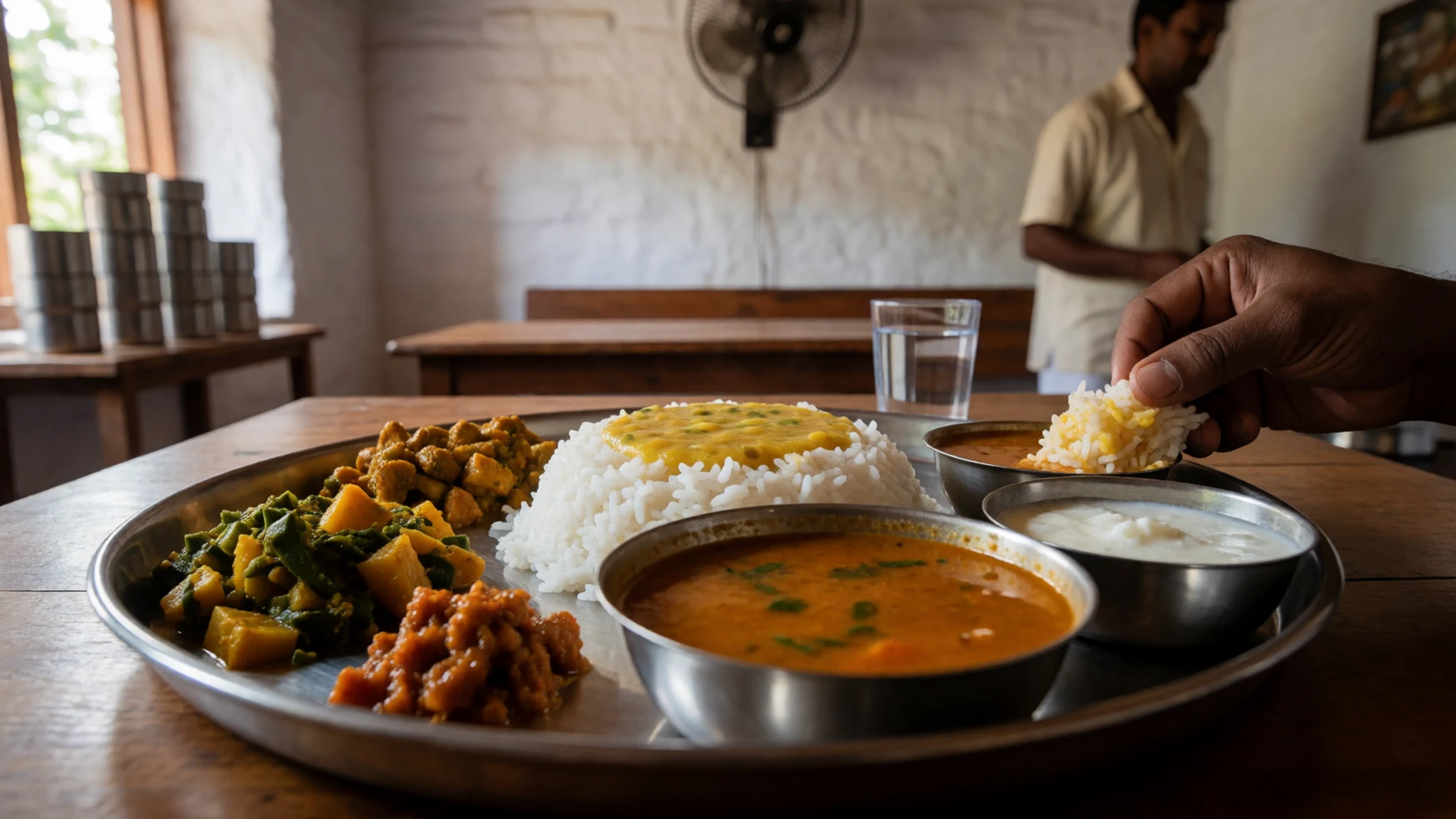
- Non-vegetarian meal by arrangement — Arranged a day ahead through the tourist lodge or village agents
Chicken or mutton curries cooked in a hot, spicy regional style. The village has no wide range of eateries, and the lodge asks for a day's notice for non-vegetarian food, so arrange it ahead. Village agents near the lodge will sometimes cook for guests; agree what is included first.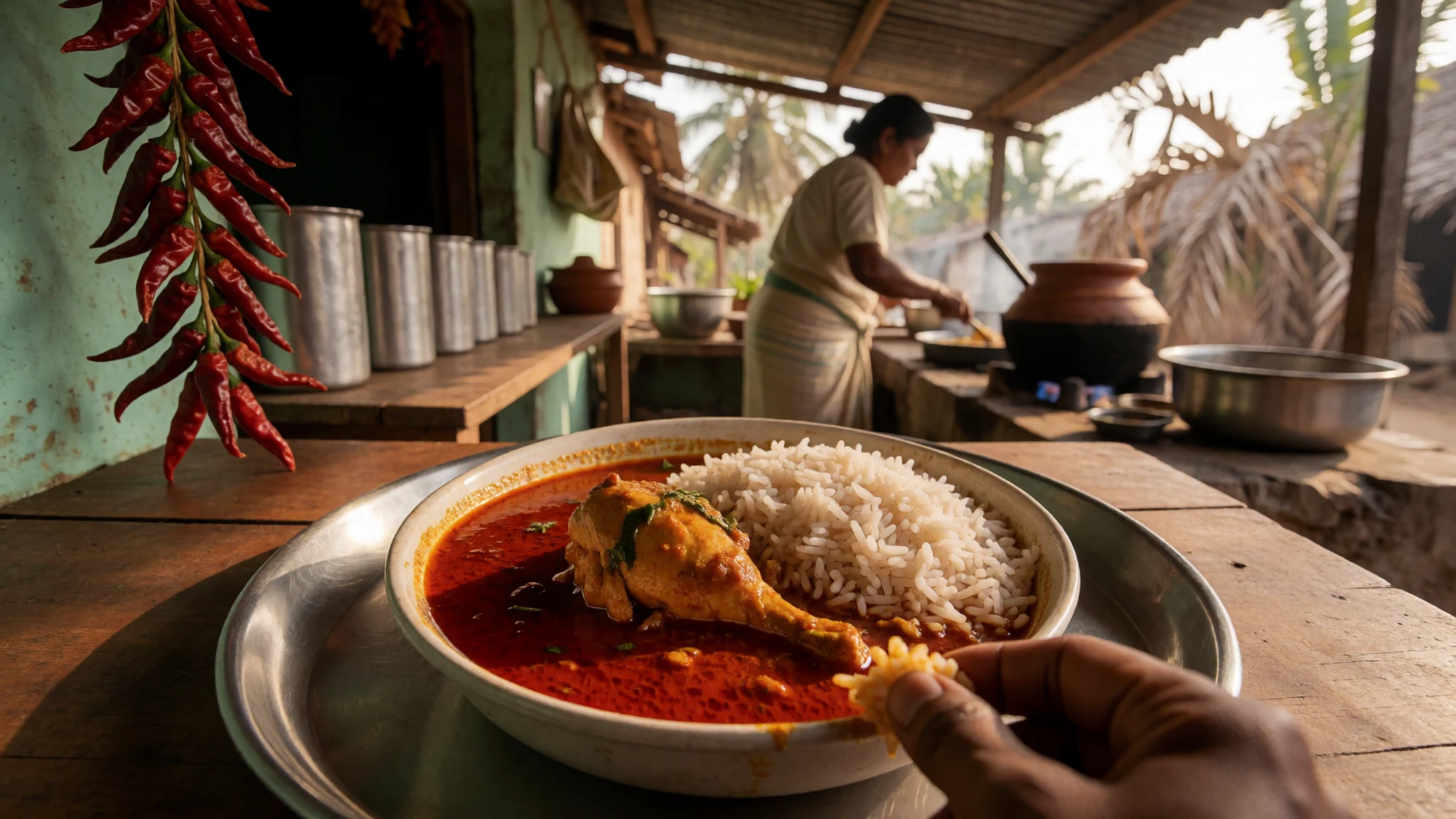
- Chicken or mutton biryani — Eateries in Jammalamadugu town
A spiced rice dish layered with meat, widely eaten across Andhra and Telangana. The brief points to an air-conditioned biryani eatery in Jammalamadugu, which makes a sensible stop on the way in or out when the village itself has few options. - Idli, dosa and karam podi — Tiffin stalls and small eateries in Jammalamadugu or on the roadside
Breakfast tiffin of steamed idli and crisp dosa, often with a dry chilli-and-lentil powder called karam podi, coconut chutney and sambar. It is cheap, quick and useful before a sunrise walk, though village stalls may open late, so carry something light. - Mirchi bajji — Roadside snack stalls on the bus route and in nearby towns
Large green chillies dipped in gram-flour batter and fried, a staple evening snack in Andhra, usually sold hot in paper cones with onion. Mild or hot varies by the chilli, so ask before biting. A pleasant snack after a day on the rim.
Plan it
Best time. November to February, when days are most comfortable and mornings on the rim are cool; the heat from March to June on bare rock is punishing, and the wettest months from July to October can make the rock slippery.
How long. 1–2
Getting there. Kadapa district has railway stations at Muddanuru and Jammalamadugu, and Tadipatri is a useful stop for onward buses, so check current train and bus services before booking. The last leg is by road from Jammalamadugu, 15 km away, by hired auto or local bus. Direct buses run from Bangalore to Tadipatri, then local buses go on to Gandikota.
Budget. low
Tips
- Reach the rim before sunrise for the best light and fewer people
- Book tents or the tourist lodge ahead for weekends and holidays, and ask the village agents what is included
- Carry cash, water and snacks, as shops and card machines are scarce
- Arrange non-vegetarian food a day ahead through the tourist lodge
- Wear sturdy shoes with grip, because the rock is uneven and can be slippery
Etiquette
- Remove shoes before entering any temple or mosque and cover shoulders and knees
- Ask before photographing residents or people at prayer
- Take all litter away with you, especially from the rim and campsites
Nearby
Sources
- Wikidata Q3764632 (CC0)
- Wikipedia: Gandikota (rev 1379619287) (CC BY-SA 4.0)
- Wikivoyage: Gandikota (rev 5219137) (CC BY-SA 4.0)
- Photo: Madhavaraya Temple, Gandikota (TPN Reddy and tvjagan) (Public domain)
- Photo: Indian Grand Canyon (Sudhakarbichali) (CC BY-SA 4.0)
- Photo: Ranganatha Swamy Temple, Gandikota (Sherlockh64) (CC BY-SA 4.0)
- Photo: Gandikota Fort Entrance (Sherlockh64) (CC BY-SA 4.0)
- Photo: Banks Pennar River, Gandikota (Sherlockh64) (CC BY-SA 4.0)
- Photo: Juma Masjid (Shabbir394) (CC BY-SA 4.0)
- Photo: The Penna near Gandikota (TPN Reddy and tvjagan) (Public domain)
- Photo: Grand Canon of India, Gandikota (Eyeofshahvali) (CC BY-SA 4.0)


Wildlife
- Rock pigeon (animal)
Think of the rock dove as the original pigeon: the wild bird whose tame cousins now strut about towns everywhere. It is part of the Columbidae family, often just called the pigeon. At Gandikota you will find it at the Pigeon Tower, a smaller building within the walls that takes its name from the birds gathering there. Stay quiet, keep your distance, go with a guide if you can, and never offer food.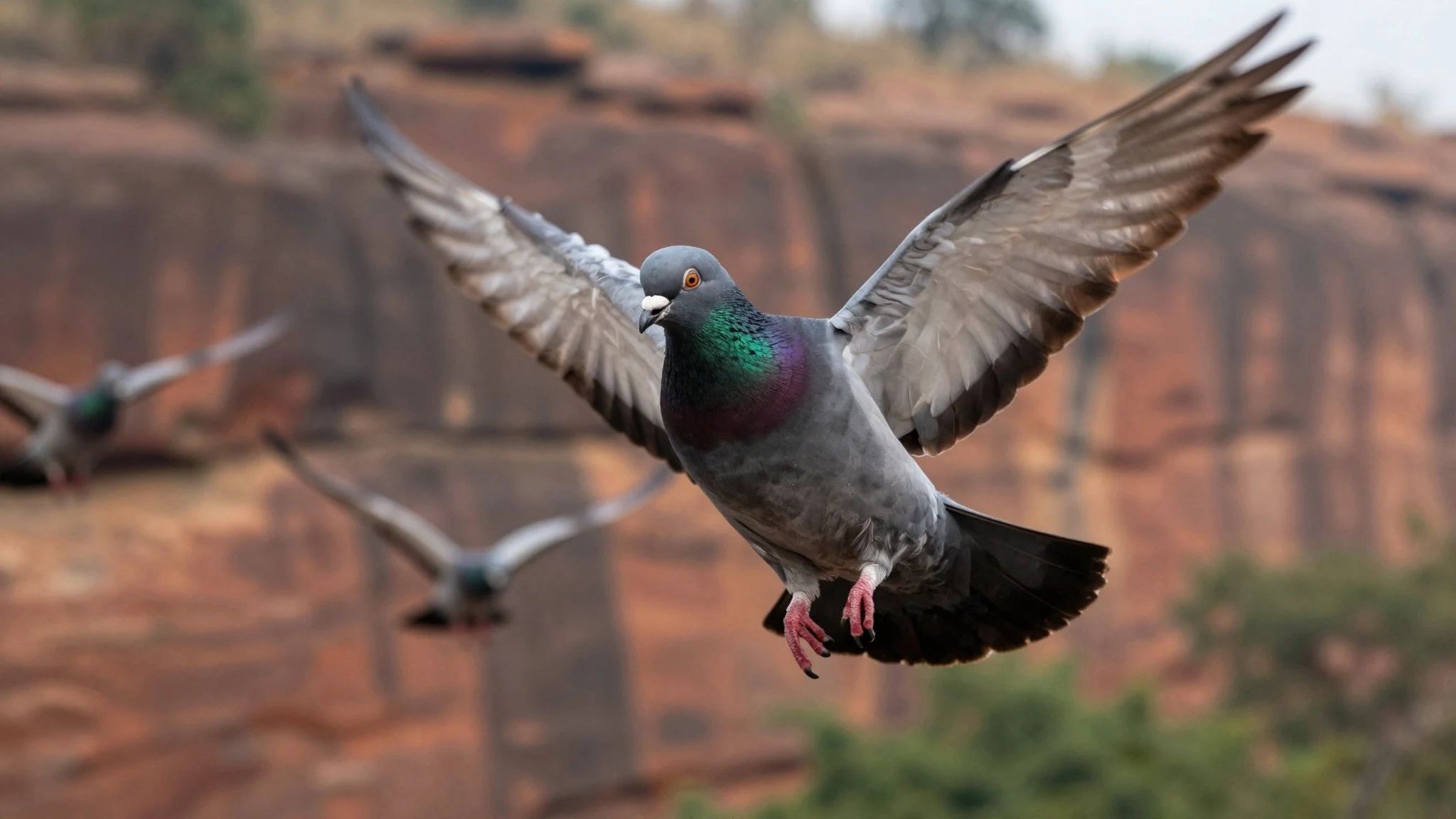
- Rock pigeon (bird)
Think of the rock dove as the original pigeon: the wild bird whose tame cousins now strut about towns everywhere. It is part of the Columbidae family, often just called the pigeon. At Gandikota you will find it at the Pigeon Tower, a smaller building within the walls that takes its name from the birds gathering there. Stay quiet, keep your distance, go with a guide if you can, and never offer food.