Fulong Beach
Fulong Beach, Taiwan
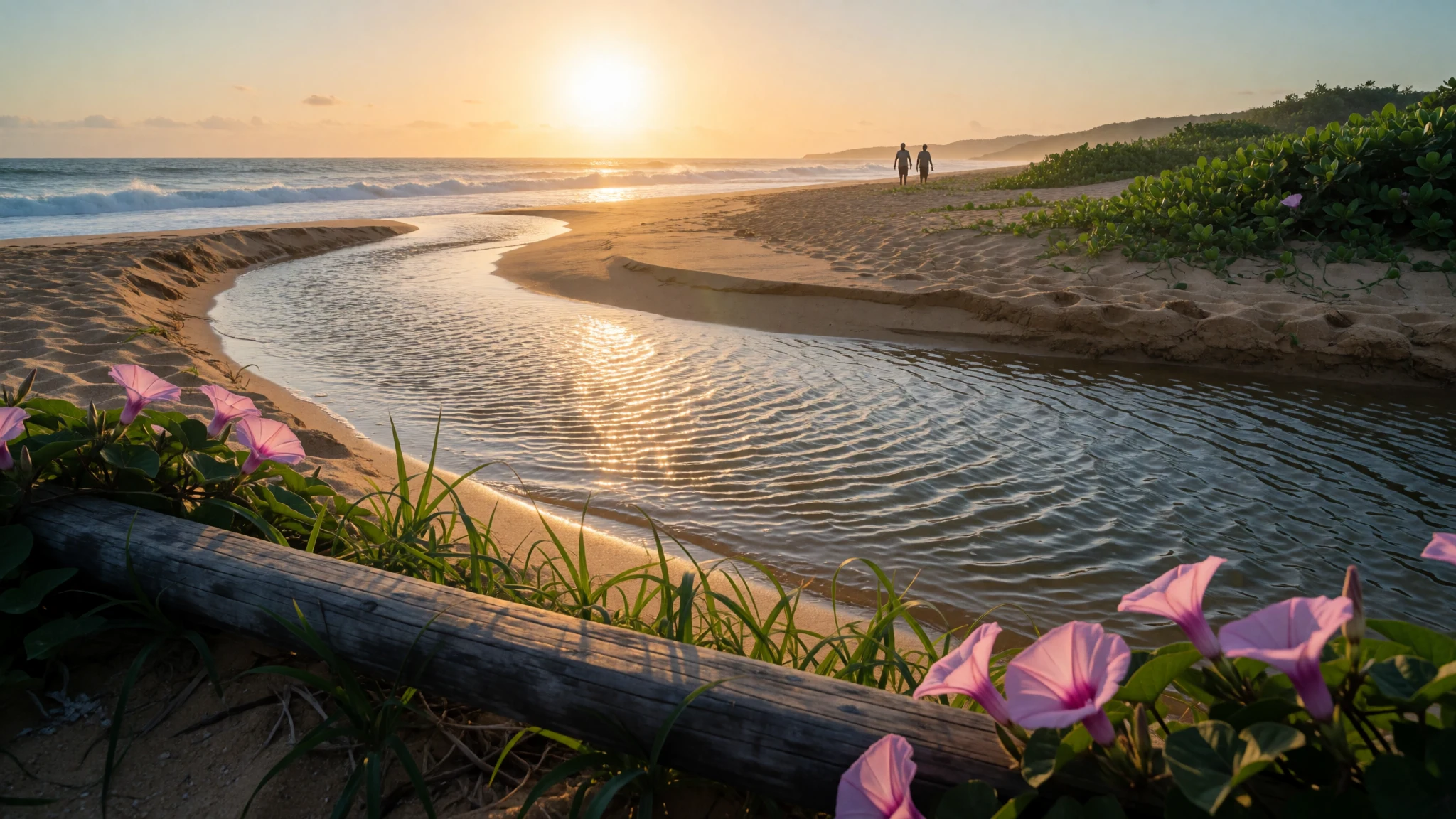
Fulong Beach is a rare golden-sand shore on Taiwan's north-east coast, reached by train from Taipei, with a cycle-friendly railway tunnel nearby.
The place
Fulong Beach lies in Fulong village, part of Gongliao District in New Taipei, on Taiwan's north-east coast. Its Chinese name, 福隆海水浴場, means roughly a seawater bathing place, and the description fits: this is a managed swimming beach with a village, a railway station and a campground close behind it, not a remote shore. The Shuang River empties into the sea here, and its mouth cuts the sand in two, giving an inner beach and an outer one. A bridge carries people across from the village side.
What sets the place apart is the colour of the sand. It is golden, which is uncommon in Taiwan, and that is a large part of why people from the capital make the trip.
The beach works in layers. A paid bathing zone has the usual conveniences, including umbrellas to rent, and it fills up on summer weekends. Further towards the south-east, close to a temple, a free stretch is quieter. The water there is gentle, with hardly any surf, and it looks clean, which suits families and anyone who simply wants to sit and watch. In high summer the sand gets hot enough to burn bare feet, so sandals matter more than swimwear.
The shoreline is not stable. The sand has been thinning over recent years and the waterline has crept inland. One suggested cause is the pier built to land equipment for the fourth nuclear power plant, which may have changed how sand moves along this coast. Whatever the reason, Fulong is best treated as a place that is changing rather than a fixed postcard.
Its story
Fulong Beach became a public resort in June 1975, and its early life was tied to the railway. The resort was first run by Taiwan Railways Administration, which suits a place where the station still stands within walking distance of the sand. Management later passed to the Tourism Bureau's scenic-area administration for the north-east and Yilan coast, the body that now looks after this stretch of shore.
Behind the resort sits a simpler story of a river meeting the sea. The beach exists because the Shuang River delivers material to this point and the waves work it into a shore, a balance that holds only while supply and sea stay roughly even. In recent years that balance seems to have tipped: the sand has thinned and the coastline has moved inland. A pier built for the fourth nuclear power plant is one suggested cause, though the link is possible rather than proven.
Events have added to the identity of the place. A rock festival, the Hohaiyan, takes over the beach every July, and a sand-sculpture festival has also been staged here. The old Caoling railway tunnel, now used by walkers and cyclists, links Fulong with the next stretch of coast and a view of Turtle Island. It is a reminder of how closely this corner of Taiwan is bound up with the railway, from the resort's first operator to the station that still brings most of the day-trippers.
What to see
- The golden beach and river mouth — Fulong village, Gongliao District
The main beach at Fulong is the reason for the trip: a wide band of golden sand split by the Shuang River into inner and outer parts. The paid bathing zone has umbrellas for rent. Check the official site for the current entry fee, and keep sandals handy because the sand heats up fast.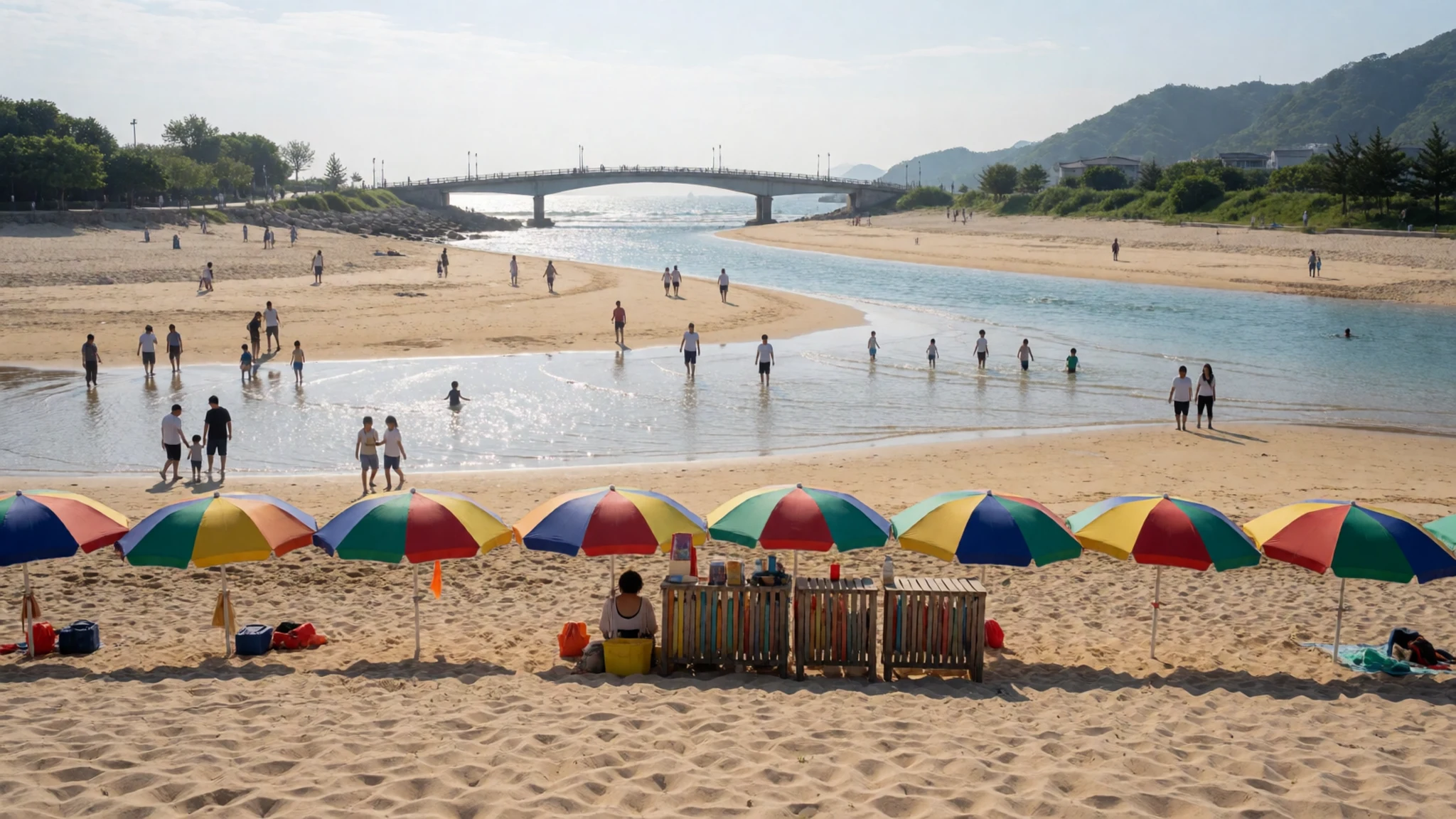
- The free beach by the temple — South-east end of the beach
Towards the south-east, near Dongxing Temple, a free stretch of sand lies beyond the paid zone. Surf is slight and the water is warm, so it works for a slow paddle or a long sit. It is a calmer alternative when the main bathing area is busy on summer weekends.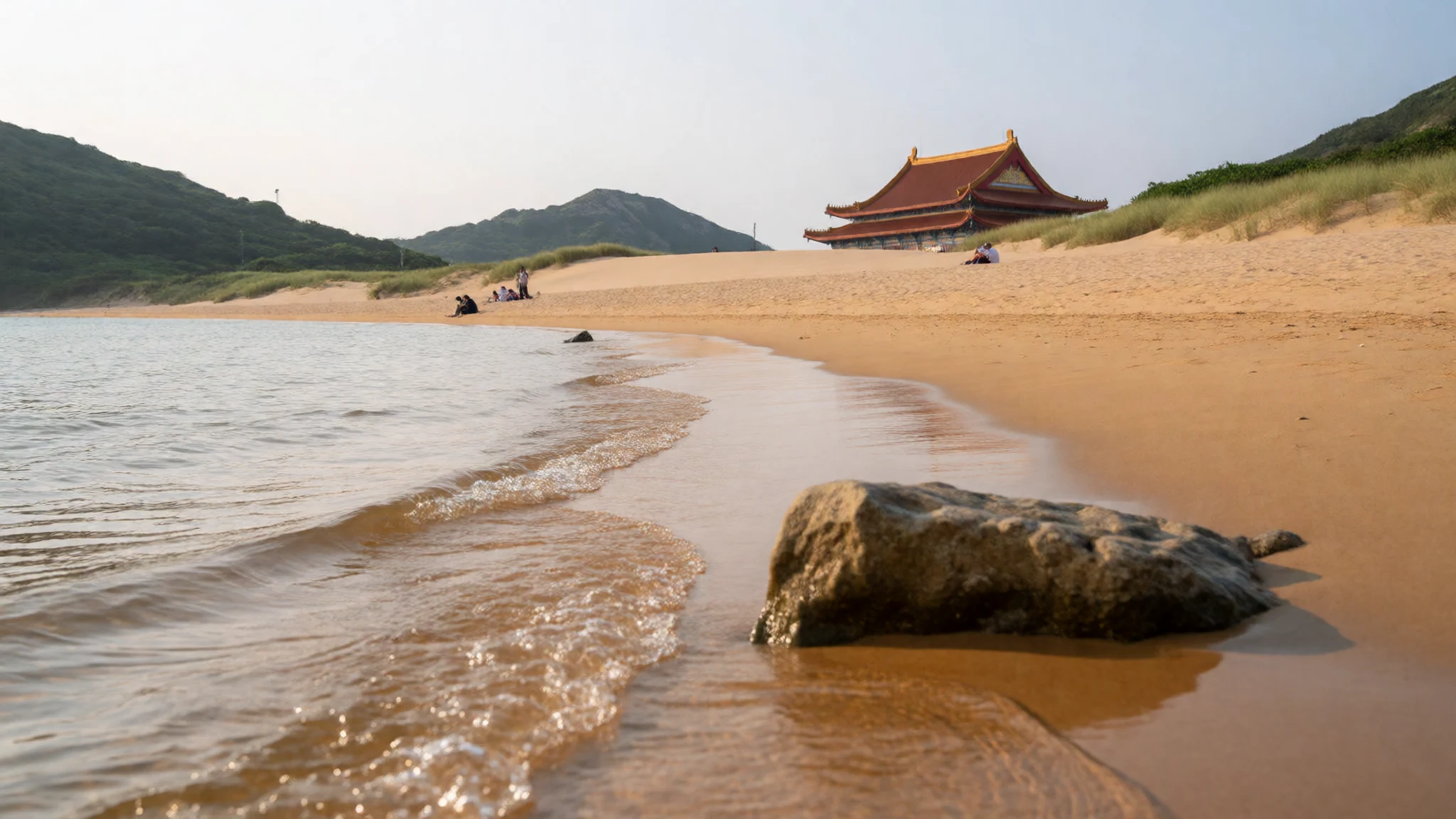
- Ling Jiou Mountain Wu Sheng Monastery — Cliffs above Fulong
A large Buddhist monastery stands on the cliffs above Fulong, looking out over the coast. It is a working religious site rather than a beach attraction, so go for the architecture and the quiet, dress modestly, and expect a short climb or a taxi or bus ride from the village.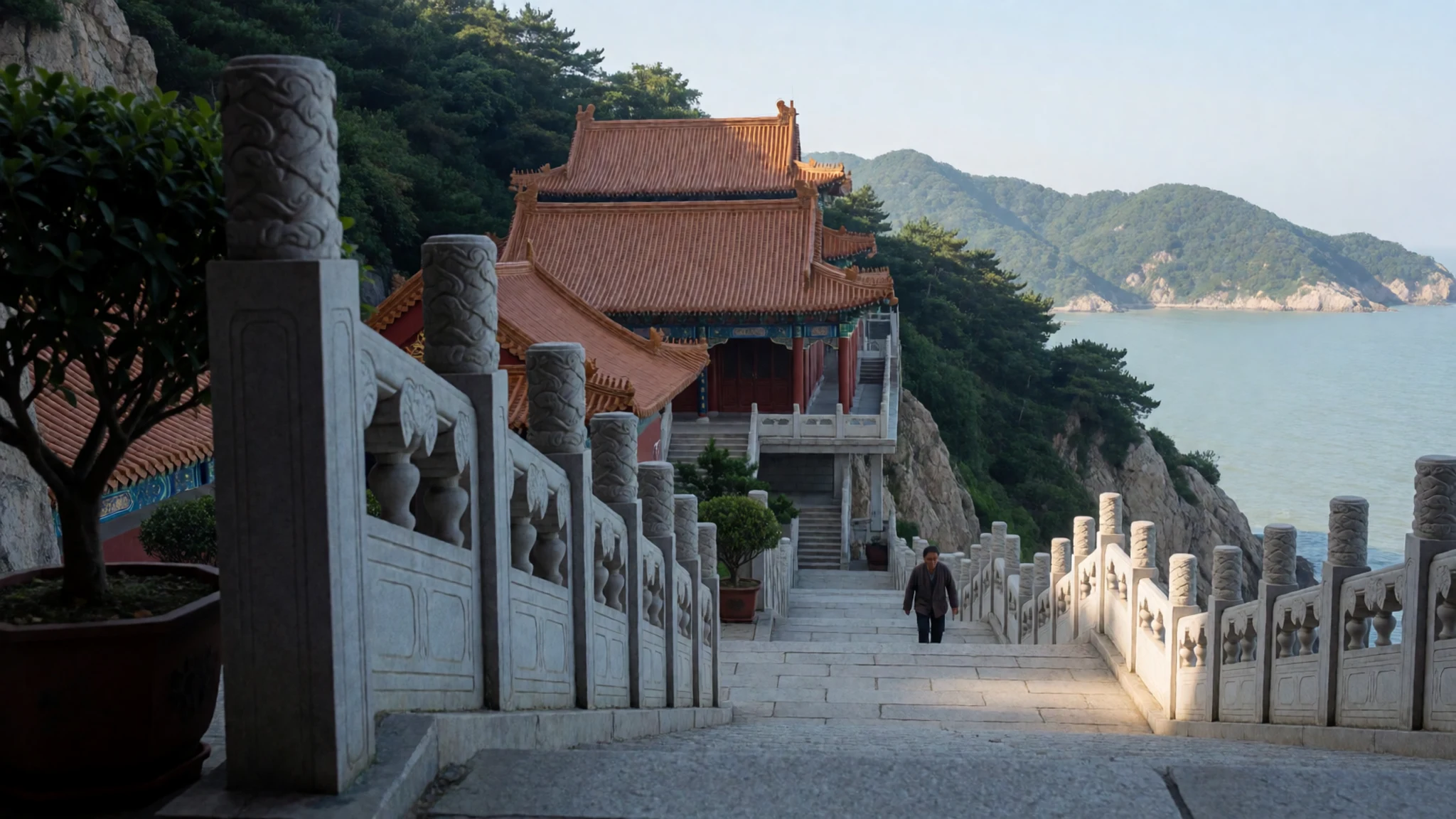
- Old Caoling Railway Tunnel — Just outside Fulong village
A short ride from the station, the former railway tunnel is now a route for walkers and cyclists. It is lit, but cyclists should carry their own lights so oncoming people can see them. The far end opens onto the east coast, with a view of Turtle Island.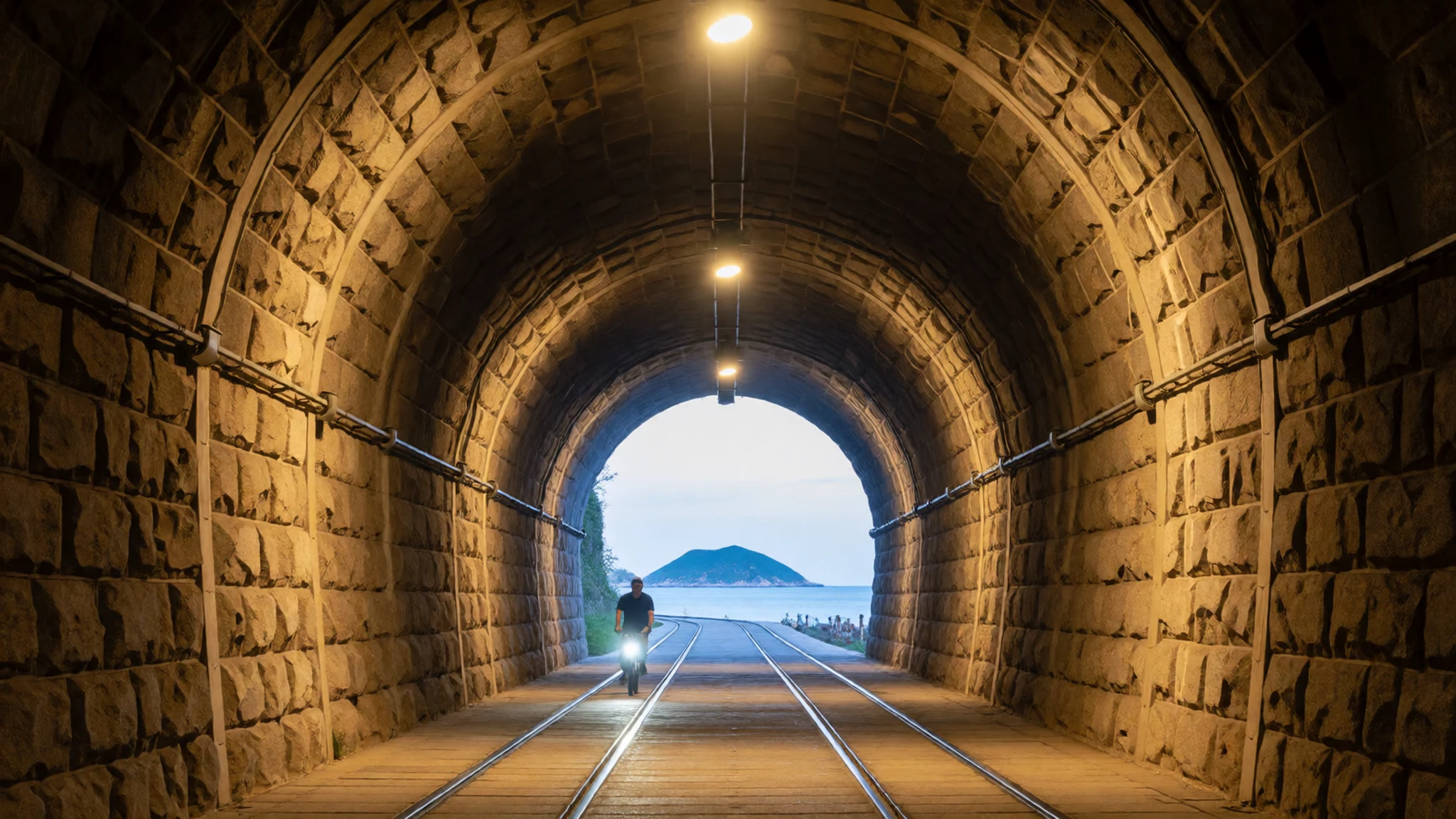
- The Hohaiyan festival stage — Main beach, Fulong
Every July the beach hosts the Hohaiyan Rock Festival (貢寮國際海洋音樂祭), a multi-day music event with a band shell on the sand. It brings crowds and noise, and it suits people who want music with their sea. Anyone wanting a quiet beach should avoid festival weekends.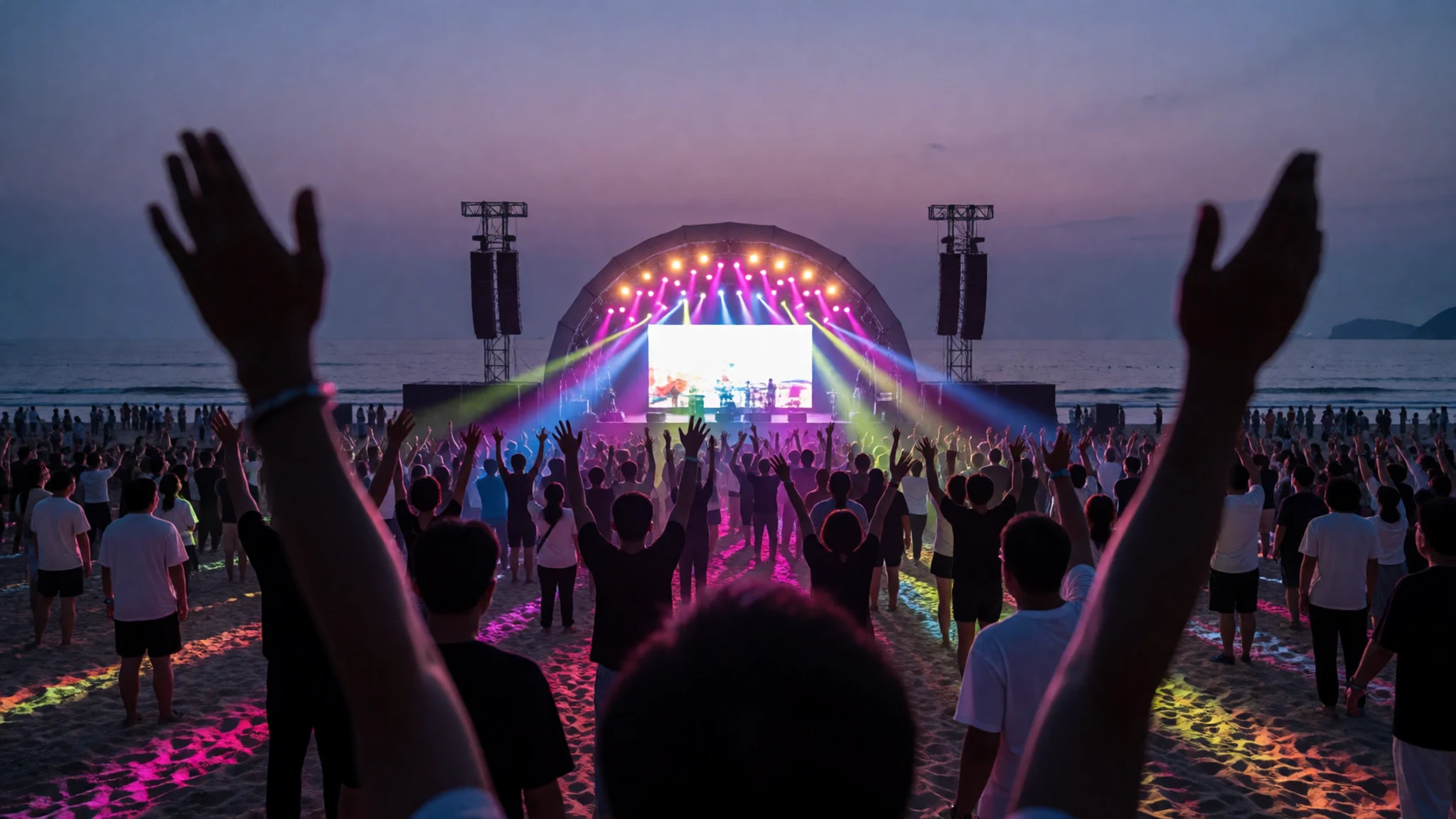
Culture
Fulong Beach is a day-out culture more than a ceremonial one. Families, couples and friends from Taipei arrive by train, rent an umbrella, swim in the paid area and eat a packed lunch bought near the station. The railway link is part of the identity here, and the lunchbox (便當, biandang) sold on the station street is as much a local ritual as the swim. Many shops now sell copies of the Fulong biandang, so regulars talk about finding the original, which is said to be close to the station.
Music gives the beach a second character. The Hohaiyan Rock Festival (貢寮國際海洋音樂祭) is held here each July and turns the sand into a concert site. A sand-sculpture festival has also been held on the beach, which says something about how readily the shore is used as a stage.
Religion sits close by. Dongxing Temple stands near the free section of the beach, and Ling Jiou Mountain Wu Sheng Monastery, a Buddhist monastery, occupies the cliffs above the village. People in swimwear and people in prayer can end up within sight of each other, so the expected behaviour changes over a short walk. Summer weekends are lively and crowded, while a weekday outside the festival is far calmer.
Cover your shoulders and knees before stepping into the temple or monastery, keep your voice low, and ask before photographing worshippers or monks.
What to wear
Fulong Beach is a casual place, but Taiwan's traditional dress still explains some of what is seen at festivals and temples nearby. Among Han Taiwanese and Hakka communities, the older costume was cut from cotton and silk, with the Hakka blue cotton jacket (lanshan) the best-known example, and the qipao a formal descendant of Chinese tailoring. Indigenous peoples of Taiwan have their own woven and embroidered garments, with patterns that differ by community. These are mostly worn today for ceremonies, performances and holidays rather than daily life.
What people actually wear at the beach is practical. Swimwear, rash vests, wide hats and long sleeves are common because many visitors protect themselves from the sun, and shaded umbrellas are a familiar sight on the sand. In the village, T-shirts, shorts and sandals are normal, and rain jackets appear quickly when the weather turns.
Visitors should dress for heat, damp and hot sand. Light, quick-dry clothes and a sun hat work well in summer, and sandals or water shoes protect feet on the beach. A thin waterproof layer is sensible in any month on this coast. For the temple and the monastery, carry a shirt or scarf that covers shoulders, and wear trousers or a long skirt rather than beachwear. If cycling through the Caoling tunnel, closed shoes are more comfortable than flip-flops.
What to eat
- Fulong biandang (lunchbox) — The street in front of Fulong station
The local signature is the Fulong biandang (便當), a lunchbox of rice with a few cooked toppings, tied to the railway tradition. Copies are common, and the original is said to be a shop with a steam-locomotive sign close to the station.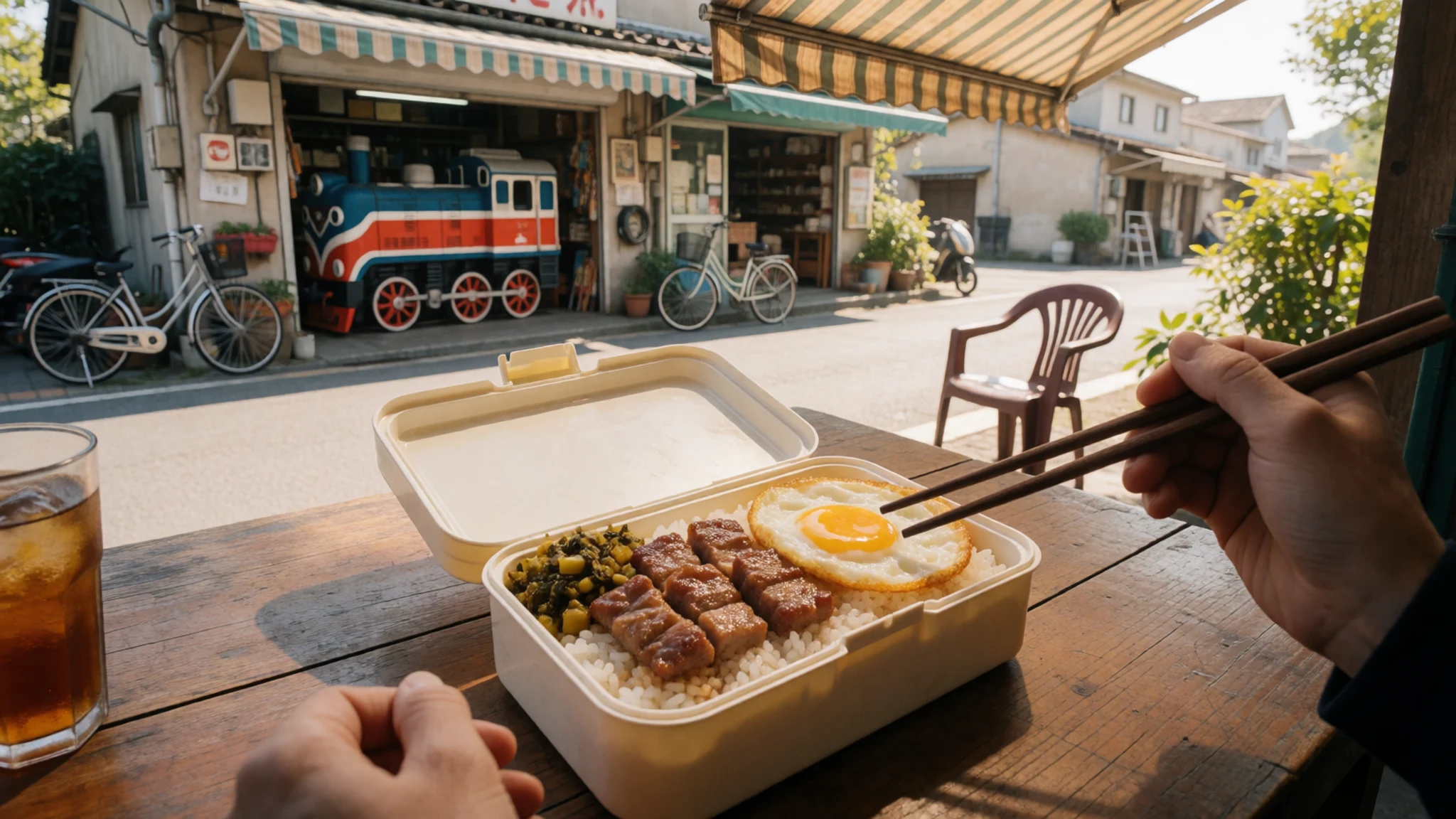
- Fresh seafood plates — Eateries in Fulong village
Small eateries in the village serve fish, squid and shellfish cooked simply, usually with rice and a vegetable dish. Choices follow the day's catch, so ask what is fresh and look at what neighbouring tables are eating before ordering.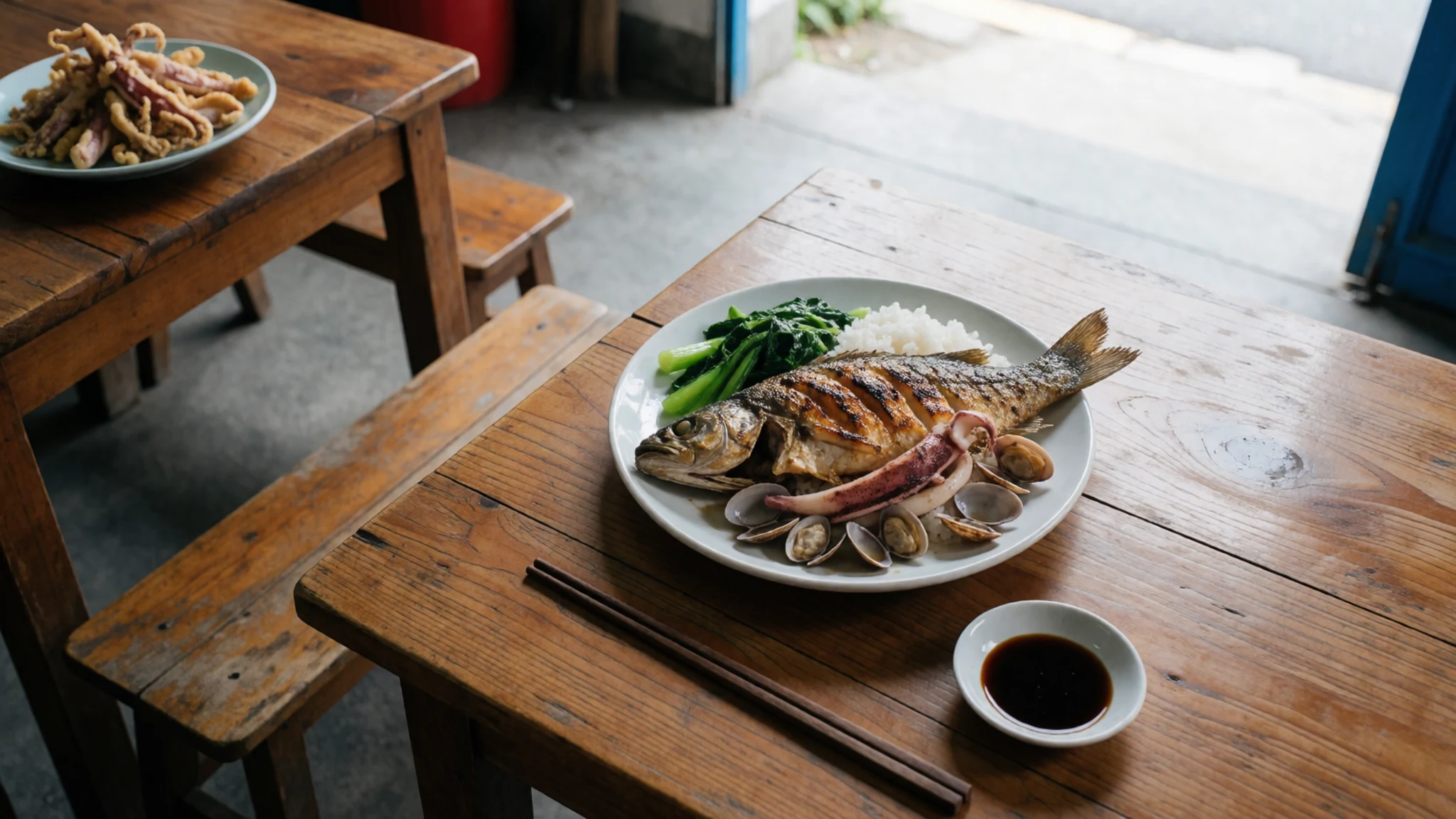
- Shaved ice — Stalls and cafés near the beach entrance
Mounds of shaved ice with toppings such as fruit, sweet beans or syrup are a standard beach treat in Taiwan. They are shareable, cooling and easy to find on hot afternoons, usually from stalls and cafés close to the sand. - Tea eggs — Convenience stores by the highway and station
Eggs simmered in tea, soy sauce and spices are a cheap Taiwanese snack, sold at convenience stores. They travel well, so they suit a walk through the Caoling tunnel or a wait for the train. - Iced milk tea — Drinks shops and stalls in the village
Cold milk tea, often sweetened to order, is the usual drink to carry along the sand. Shops let customers adjust sweetness and ice, which helps in the heat. Drink water as well, since the beach has little shade.
Plan it
Best time. Late May to June and September to October are comfortable for swimming and walking, warm without the worst of midsummer heat. July suits the rock festival but brings hot sand and crowds. Winter on this coast tends to be damp and windy, and typhoons can disrupt late summer and autumn, so check forecasts before travelling.
How long. 1–2
Getting there. Fly into Taipei, then take a train from the city to Fulong station, which is within easy walking distance of the beach. The journey takes about an hour on the express, which runs less often than the slower local, so check the official railway timetable. Buses also run along the coastal highway from north and south.
Budget. low
Tips
- Choose a weekday outside July for a quiet beach; summer weekends and the festival are busy
- Bring sandals for the hot sand and a hat, as shade is limited
- Check the official site for the current entry fee to the paid bathing area and umbrella rental
- Carry a bike light if cycling through the Caoling tunnel, so oncoming people can see you
- Campers should bring their own tents and check the campground's rules in advance, especially in summer
Etiquette
- Dress modestly and speak softly at the temple and monastery
- Take your rubbish away or use the bins, as the beach is shrinking and needs care
- Ring a bell or keep to one side in the tunnel so walkers and cyclists can share it safely
Nearby
Sources
- Wikidata Q31103 (CC0)
- Wikipedia: Fulong Beach (rev 1362317547) (CC BY-SA 4.0)
- Wikivoyage: Fulong (rev 5239102) (CC BY-SA 4.0)
- Photo: Hohaiyan 2006 band shell, Fulong Beach, KasugaHuang (CC BY 3.0)
- Photo: Fulong Beach and Fulong Dongxing Temple, Ash rex (Public domain)
- Photo: Taiwan relief location map, Uwe Dedering (CC BY-SA 2.0)
- Photo: Fulong Beach on a quiet weekday, pacificmorningpost (CC BY 2.5)
- Photo: Fulong sand sculpture festival, Fcuk1203 (CC BY 3.0)
- Photo: Bridge on Fulong Beach, Любарский Сергей Николаевич (CC BY-SA 4.0)
- Photo: Fullon Hotel Fulong rear and sand beach, lienyuan lee (CC BY 3.0)
- Photo: Fulong Beach, July 2025, 阿道 (CC BY-SA 4.0)


